Home Blog Page 633

Obi won’t stop playing role as opposition figure – Campaign spokesperson

0

YUNUSA Tanko, the Presidential Campaign Council spokesperson for the Labour Party (LP) presidential candidate in the 2023 general election, Peter Obi, has said the former Anambra State governor would not stop speaking out on critical national issues as an opposition figure.

He said this in response to allegations by Special Adviser on Information and Strategy to the President, Bayo Onanuga against Obi.

Onanuga, while speaking on a programme titled ‘Mic On podcast’, hosted by Channel TV’s Seun Okinbaloye on Sunday, March 31, accused Obi of promoting “religious and ethnic” issues during the last election.

According to Onanuga, the nation’s democracy is at risk from any political campaign driven by religious or ethnic feelings.


Read Also:

He claimed that Obi’s followers hoped that President Bola Tinubu’s government would fail.

“That was the way the election went at that time. He was inflaming ethnic passions, religious passions, bringing two dangerous dimensions to our politics – ethnicity and religion. That is what he did. And those things were dangerous to Nigerian politics,” Onanuga claimed.

He accused Obi’s supporters of insisting he won the election: “And they are very unapologetic about that. How could somebody who came third think he could have won that election?”

He added that Obi was always eager to tweet about negative news but never praised the government whenever it did well.

Responding to Onanuga’s claims, Tanko, said Onanuga should stop insulting the intelligence of Nigerians.

He blamed Tinubu’s Muslim/ Muslim ticket during the presidential election for religious intolerance.

Tanko claimed in an interview with Vanguard that Onanuga was fabricating allegations against Obi to change the course of history.

“Was it Peter Obi that used ‘Emilokan, Yoruba lokan’ and Muslim/ Muslim ticket; as a battle cry for the elections? What is he talking about? Was it Peter Obi that organised attacks on innocent Nigerians, whose only offence was attempting to exercise their civil duties by voting for candidates of their choice in Lagos and elsewhere?” Tanko asked.

He challenged Onanuga to come up with evidence to prove that Obi did any such thing before, during and after the election.

Tanko also debunked Onanuga’s claims that Obi was working against Tinubu’s government.

He said Obi’s focus had always been nation-building and that he would not shy away from playing his role as a leading opposition figure “when those who grabbed power” are failing and forcing Nigerians to suffer unjustly.

[EXPLAINER] How to become a Senior Advocate of Nigeria (SAN)

0

THE dream of many legal practitioners in Nigeria is to attain the title of Senior Advocate Of Nigeria (SAN), the country’s highest legal rank.

This report highlights the process of becoming a SAN in Nigeria.

A lawyer, Abiola Kolawole, explained to The ICIR in a chat that the requirements to become a SAN are strictly for lawyers who have distinguished themselves in the legal profession.


Read Also:

He said that upon a lawyer meeting the standard of these requirements, they will be conferred the rank of SAN.

According to Abiola, the SAN title is awarded following the Guidelines for the Conferment of the rank of Senior Advocate of Nigeria 2013 pursuant to Section 5(7) of the Legal Practitioners Act 2004.

The title is managed by the Legal Practitioners Privileges Committee (LPPC), which is chaired by the Chief Justice of Nigeria (CJN) and is made up of the Attorney-General of the Federation, the President of the Court of Appeal, the Chief Judge of the Federal High Court, and some SANs, among other people.

Chief Justice of Nigeria (CJN), Kayode Ariwoola SAN
Chief Justice of Nigeria (CJN) Kayode Ariwoola

According to a senior lawyer who has spent 35 years at the bar, Mainasara Kogo Umar, said to be a SAN, you will have to apply.

“Then, people will have to vouch and talk about your good qualities as a senior lawyer. Your temperament, professionalism, excellence, and all the positive things about you.

“The shortlist will be displayed; anybody who has objection to any of them being conferred with the rank of the senior advocate can then object and write a petition against the applicant, so at the end, they will scrutinise.

He added that the rank of senior advocate is a rank of honour if one is given. 

He listed some of the privilege of being a SAN as:

  • Wearing a silk type of gown rather than the cotton type.
  • ‘SAN’ will be added to your name.
  • A SAN will be called a ‘learned silk’.
  • SANs are accorded the front seats. 
  • Order of first call in court proceedings, among others. 

According to both lawyers, only a lawyer who has been called to the Bar (Passed through law school) and stayed there for ten years or more can be an SAN.

[EXPLAINER] What does the law say about defamation?

Difference between the Bar and the Bench

Explaining the difference between the Bar and the Bench, Umar said The Bench means the Judiciary side, the side of the court’s leadership.

“If you choose to be a judge, you are on the Bench whether as a magistrate, or high court judge or appeal court or as a justice of the Supreme court. You have to be in the Bar before you can be at the Bench,” he stated.

According to him, the Bar means private or public legal practice as a barrister or solicitor, whether under the government or whatever. 

“Bar means you have been called to practise. You can go and defend anybody, you can write any instrument, prepare any document, give legal advice. Once you are a lawyer, you are a member of the Bar but for the Bench, it means you have to apply that you want to be a judge. The Bar are the ones that argue cases but the Bench exclusively are judges.”

Other requirements to become a SAN

  • Candidates must be lawyers who are actively practising law in Nigeria. 
  • They must also have been in active legal practice for at least ten years prior to the application date. The Guidelines stipulate that the Committee may confer with the Chief Judge of the state in which the candidate maintains his primary legal office as well as the Local Branch of the NBA in the exact location to ascertain the candidate’s current status of practice.
  • Character and outstanding integrity are also prerequisites.
  • A candidate must pay a non-refundable registration fee.
  • A candidate for the SAN position must provide documentation of their income tax payments for at least three years before the application date.
  • As part of his community service requirement, he has to provide proof of pro bono cases he has completed for financially disadvantaged clients.
  • A lawyer must provide a list of ten superior court judges he has appeared before and successfully argued high-profile matters before; then, LPPC will choose three judges randomly from the list to testify regarding the applicant.
  • Academics must demonstrate that respectable publishers publish their works, whose reputation will be checked and validated by the LPPC academic subcommittee.
  • An applicant must submit the following details about contested cases: eight rulings from the High Court, Six cases from the Court of Appeal, and three from the Supreme Court. Suppose he handled cases from the High Court to the Supreme Court. In that case, he must present three rulings from the Supreme Court to be eligible. However, if he made appearances at the Supreme Court, he must show six rulings from the Supreme Court.
  • Academic lawyers must send LPPC at least 20 copies of their best-published legal publications.
  • The applicant’s firm must be inspected by the LPPC, which will assess the business’s space and facilities, personnel strength and competency, and the quantity and calibre of the applicant’s library.
  • A candidate for a SAN must provide proof that for at least ten years before the year he seeks the award of SAN, he has paid his local branch of the Nigerian Bar Association (NBA) dues and the practice fee.

Please note that the requirement is not limited to the above-listed points and might be updated occasionally.

According to a lawyer, Lucky Ekarume, the requirements for becoming a SAN in Nigeria are designed to uphold the honour and integrity of holding the highest rank in Nigerian legal practice. 

He added that the guidelines’ requirements guarantee that only law practitioners who have excelled in their legal practice will be granted the status.

In October 2023, the LPPC elevated 58 lawyers to SAN.

Among the elevated lawyers were Emmanuel Enoidem, a former legal adviser of the Peoples Democratic Party (PDP) and women’s rights activist Funmi Falana, human rights lawyer Olukayode Ajulo, Abiola Isiaq Oyebanji, Bomo Agbebi, Kehinde Aina, and Folasade Alli among others.

Police confirm abduction of 3 UNICAL students on campus

0

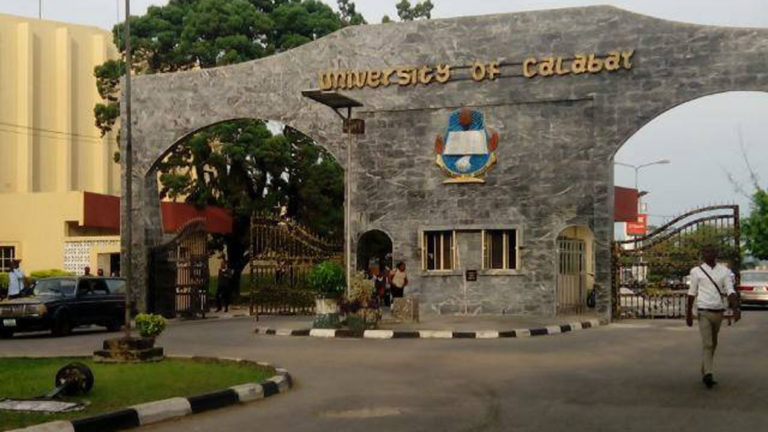
THE Cross River Police Command has confirmed the abduction of three students from the University of Calabar (UNICAL).

Public Relations Officer of the Command, Irene Ugbo, confirmed the incident to the media on Sunday, March 31.

Ugbo disclosed that the incident occurred on Thursday, March 28, and the students were abducted from one of the hostels on the university campus.

She also said the police were working with other security agencies to ensure their release.

Abduction of students has become a source of concern in Nigeria, where the number of out-of-school children is very high.

In 2023, The ICIR reported that Nigeria had 19.7 million out-of-school children and was the country with the third highest number of children deprived of education according to the United Nations Educational Scientific and Cultural Organization (UNESCO) 2020 Model Estimates.

On Thursday, March 7, about 287 students and their principal were reportedly abducted by terrorists from the LEA Primary School in Kuriga, a community within the Chikun Local Government Area of Kaduna State.

The incident generated public outcry, with several leaders, including President Bola Tinubu, calling for their immediate release.

Over two weeks later, the Defence Headquarters announced that the abducted children were not 287, but 137 and confirmed they had been rescued.

Abduction of schoolchildren became common in Nigeria, especially in the North, after nearly 300 students were abducted by terrorists from a school in Chibok, Borno State, in 2014.

Findings by The ICIR show that bandits and terrorist groups have disrupted the Nigerian education system, kidnapping over 1,000 students in the last decade.

Within the past three administrations, the abduction of school children has generated millions in ransom for kidnappers, leaving affected citizens with no hope of a possible end.

Student abduction occurs in primary, secondary and tertiary institutions in Nigeria.

Among the tertiary institutions where students have been whisked away are Federal University Dutsin Ma, Katsina State, in 2023; Federal University, Gusau, in Zamfara state, in 2022, and the Federal College of Forestry Mechanization, Afaka, in 2021.

Kaduna APC suspends women leader for criticising governor

THE All Progressives Congress (APC) in Kaduna State has suspended its women leader, Maryam Suleiman, for criticising the state governor, Uba Sani, over comments he made suggesting that his administration could not pay workers their salaries due to debts inherited from the previous government.

Suleiman’s suspension is contained in a letter dated March 31, 2024, signed by the Kaduna APC Chairman Ali Maishago and Secretary Zakkah Basahuwa.

In the letter, she was accused of gross misconduct, including “defamation of character of His Excellency, the Executive Governor of Kaduna State Malam Uba Sani,” and “unauthorised publicity of the party dispute that discredited the personality of the Executive Governor of Kaduna State.

“Furthermore, from today, Sunday 31st of March, 2024, the leadership of APC Badarawa/Maiali Ward unanimously resolved to suspend Hajiya Maryam Suleiman (Mal Rusau) from the Party pending the further investigation on the matter from the constituted authority,” the letter read.

Suleiman had been captured in a viral video criticising the Sani’s statement in the Hausa language. She accused Sani of maladministration and urged him to step down if he could not govern the state.

“If he is saying there is no money in Kaduna state, he should explain where the money coming into the state is going exactly,” she said in Hausa language.

On Saturday, March 30, Sani announced that his government would not be able to pay workers their salaries and blamed the development on the debts he inherited from the previous administration led by Nasir El-Rufai.

The statement attracted criticism from many Nigerians, including El-Rufai’s son Bashir, who described the governor as incompetent.

Bashir El-Rufai also said Sani was only making excuses, as he was one of the senators who pushed for the approval of loans for the state in the previous government.

Lawmaker threatens to sue Air Peace over delays, flight disruptions

0

A LAWMAKER, Abdullahi Aliyu Ahmed, has threatened to sue Air Peace Limited for alleged breach of contract, including flight delays and disruptions.

Ahmed, who is the Chairman of the House Committee on Interior, told reporters in an interview on Sunday, March 31, in Katsina that he paid about N12 million for a business class ticket on March 22, with his family and was supposed to depart Mallam Aminu Kano International Airport on March 27 to Jeddah for lesser hajj “but the Air Peace changed the ticket to economy class without compensation.”

Ahmed, who represents Musawa/Matazu Federal Constituency of Katsina State, complained further that the Air Peace flight P4752 was supposed to depart Kano airport on Wednesday, March 27, but was delayed till the next day.


Read Also:

He accused the airline of persistent history of flight delays, poor customer service, and inept passenger handling.

 He described his experience as disturbing, inhumane, and unacceptable.

“They should pay back the money; otherwise, I will be left with no option but to approach the court for redress,” Ahmed said.

The lawmaker claimed that his experience with Air Peace was just one of many anomalies that passengers in Nigeria’s aviation industry are made to endure, the reason he vowed to seek redress in court.

He promised to work with his colleagues at the National Assembly to guarantee that Air Peace and other ‘negligent airlines’ are sanctioned accordingly without fear or favour.

All attempts to get Air Peace’s reaction to the accusations were unsuccessful, as calls to its customer care number were not picked up, and an email sent to its call centre address was not responded to hours before publishing this report.

The ICIR, in a report published on October 24, 2023, highlighted how Nigerian air travellers were being frustrated daily by flight disruptions and delayed airfare refunds.

According to data gathered from the Nigeria Civil Aviation Authority (NCAA) website, in 2022, 51,772 flights were delayed. Of this figure, over 47,000 delays were by domestic airlines, while international flights accounted for 4,628.

Also, out of 877 flight cancellations in 2022, 795 were by domestic airlines, while only 82 international trips were cancelled.


Months after extolling El-Rufai, Kaduna governor blames him for state debts

0

IT is becoming clearer that all is not going well between Kaduna State’s former Governor Nasir el-Rufai and his successor, the incumbent Governor Uba Sani.

Months after extolling his predecessor, Sani has come hard on the past administration, blaming it for the state’s debt and his government’s inability to pay salaries.

Whereas Sani helped the state to secure part of the loans that contributed to the debt while representing the state at the Senate.

In his inaugural address to the state on May 29, 2023, Sani extolled el-Rufai, describing him as a leader who left a legacy of transformational leadership in the state.

“Before I end this inaugural address, I must not fail to pay tribute to my boss, mentor and long-standing ally, the pace-setting, innovative and resourceful immediate past Governor of Kaduna State, Mallam Nasir El-Rufai. Mallam Nasir El-Rufai has changed the face of Kaduna State and made it the envy of all. His transformational leadership and developmental drive have redefined and raised the bar of governance.

“The high standards he has set are both a source of pride and a challenge to us his associates and loyalists. Sir, we shall constantly feed off your huge wealth of experience in our journey to consolidate the good works you have already started in Kaduna State,” he had said.

He went on to rename a 15km road after the former governor.

Sani described renaming the road, formerly Rabah Road, as a gesture of appreciation for El-Rufai’s hard work and dedication to good governance.

The close relationship between both men preceded Sani’s election as governor.

In 2020, while he served as Chairman of the Senate Committee on Banking, Insurance and other Financial Institutions, Sani had spoken in favour of a $350 million loan, which the Kaduna state government, then under the leadership of El-Rufai, sought.

He went further to assume responsibility for what he considered the unlikely possibility that El-Rufai would fail in the utilisation of the loan.

“I even insist that I, Senator Uba Sani be held liable if the Governor fails or disappoints. But of course, I know Mallam Nasir el-Rufai will never fail the people of Kaduna State. I am extremely happy and proud of the role some of us played in securing this loan for Kaduna State.

“Like most Nigerians are already well aware, Mallam Nasir El Rufai has totally reworked Kaduna State. The State now boasts of top-notch infrastructures. This loan, once accessed, will enhance the efforts of the Governor in the on-going upgrade of infrastructures in the State. With the approval of the National Assembly for the loan from the World Bank, better times are coming for Kaduna State,” Sani had said.

However, less than a year into his tenure, Sani announced that his government would not be able to pay workers their salaries and blamed this development on the debts he inherited from the previous administration.

“Despite the huge debt burden of $587 million, N85 billion, and 115 contractual liabilities sadly inherited from the previous administration, we remain resolute in steering Kaduna State towards progress and sustainable development. We have conducted a thorough assessment of our situation and are sharpening our focus accordingly,” Sani said on Saturday, March 30.

Sani also said the devaluation of the naira was making it more difficult to pay back the debt, and a huge chunk of the federal allocation was being channelled towards debt servicing, leaving the state with inadequate funds to pay salaries.

This statement has sparked several reactions from Nigerians, especially on social media. Some have accused Sani of being incapable and dug up old reports where he declared support for El-Rufai’s government.

However, one of the most significant reactions came from the former governor’s son, Bashir El-Rufai, who accused Sani of being a key player in the previous government, contributing to the debt.

You are not ready to work – El-Rufai’s son tells governor

Bashir El-Rufai took to his official X handle on Saturday and, reacting to Sani’s comments, said he was only making excuses.

“The current administration in Kaduna is building a banquet hall for seven billion naira and is lamenting about debt left by the previous administration,” he noted in a post.

“He was the Senator from Kaduna who lobbied and approved the loans,” Bashir said in another of his posts on Saturday.

He also reposted some other posts condemning Sani’s statements and was reported as describing the governor as incompetent.

“These guys have realised that they are wholly incompetent, and the only way to mask the nonsense is to deflect. From a Governor that is always sleeping in Abuja to a litany of incompetent aides that were only rewarded for foolish political reasons,” he was reported as posting.

The recent development between Sani and his predecessor further fuels reports of a rift between both men, which began circulating in 2023 during El-Rufai’s ministerial nomination.

The former governor had been nominated for a ministerial appointment by President Bola Ahmed Tinubu, but after the National Assembly withheld his clearance for the position, El-Rufai announced that he was no longer interested in it.

There were reports that El-Rufai suggested a replacement for his position, and his choice was opposed by the current governor, leading to friction between both men.

Traveling by road? you are more likely to die by accident in Kaduna

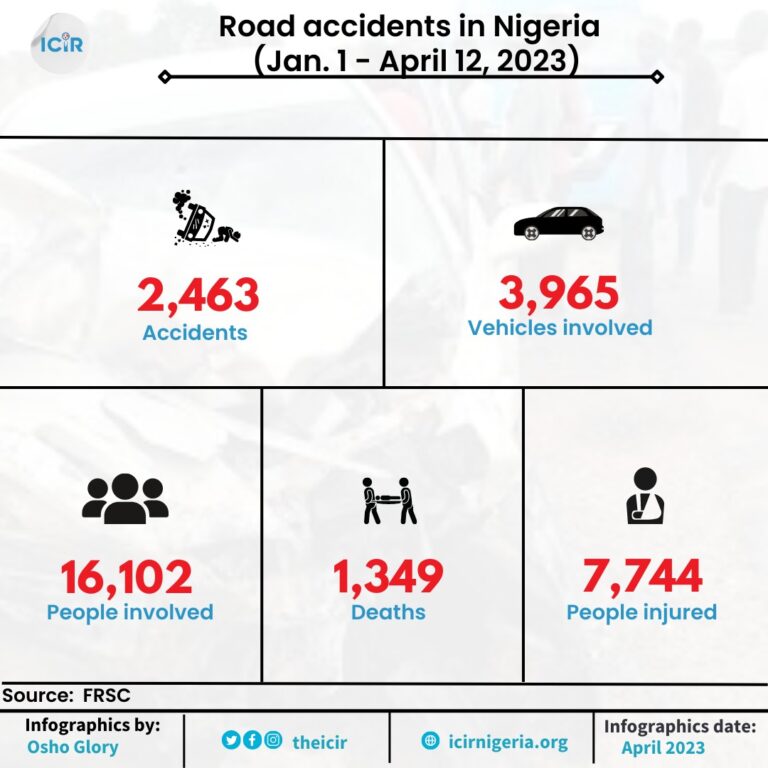
PEOPLE travelling by road in Kaduna state are more likely to experience road accidents than in other states and the Federal Capital Territory (FCT), data analysed by The ICIR from Federal Government agencies have shown.

The National Bureau of Statistics (NBS) report stated that in 2023, 5,081 people were killed in various forms of road accidents. Also, 31,873 people suffered various forms of injury on the nation’s roads within the year.

Kaduna state had the highest incidents of both deaths and injuries. The state recorded 490 deaths; this is almost 10 per cent of the total road deaths recorded across the country within the year.


Read Also:


This is followed by Ogun, Niger and the FCT, with road death casualties of 394, 325, and 316, respectively, reported by NBS. 

Also, 2,907 people, representing 9.12 per cent, sustained injuries within Kaduna, the highest reported in the year. The FCT followed it with 2,457 people, and Ogun with 2,433 people.

The ICIR reported that between January 1 and December 31, 2023, 10,617 road traffic crashes were recorded across the country, representing a 22 per cent decrease as against 13,656 crashes reported in 2022. 

Why Kaduna?

For more than a decade, Kaduna state has been in the spotlight for several deaths recorded due to road crashes.

Data gleaned by The ICIR from the Federal Road Safety Commission’s (FRSC) website show that Kaduna recorded the highest number of casualties and fatalities from road accidents between 2007 and 2016.

Findings showed that 4,025 people were killed in road accidents in the state within those years.

Additional findings from data available at the NBS showed that between 2017 and 2022, 3,307 died in road accidents. 

This would mean that in 17 years, a total of 7,332 people have been killed by road in Kaduna state. 

Year Number of deaths
2007-2016 4,025
2017 558
2,018 515
2019 484
2020 393
2,021 677
2022 680
2023 490
Total 7,822

Deaths recorded from road accidents in Kaduna state/ Source: NBS, FRSC

The ICIR contacted the Kaduna State Traffic Enforcement Authority (KASTLEA) last October, seeking to know the state’s effort to reduce the death rate reported on its roads. 

The Head of ICT and Statistics, Jibril Mohammad, said that the Abuja-Kaduna-Zaria-Kano was one of the busiest highways connecting Nigerians to the North and South. 

“This asserts that the volume of traffic traversing these highways is significantly high due to the strategic geographical location of Kaduna as the major linkage between the northern states and the Federal capital territory, Abuja,” he said.

Mohammad added that KASTLEA implemented and enforced the provisions of the Road Traffic Law Cap 135 Law of Kaduna State 1991 and the Road Traffic Regulation 2007 in Kaduna State.

He said, “The authority also deployed human and digital enforcement. Digital enforcement is embedded with artificial intelligence (e-enforcement) strategies to help in effective traffic control and monitoring, rapid response and social services to improve and better the road user experience in Kaduna state.”

Recapitalisation: Access, Zenith, UBA, others to raise N319bn each to meet requirements

SOME banks will raise about  N319.72 billion or N183.31 billion to meet the Central Bank of Nigeria (CBN) minimum capital requirements for their recapitalisation, findings by The ICIR have shown.

In a release on Thursday, March 28, the apex bank unveiled the guidelines and minimum capital requirements for banks’ recapitalisation.

It said the new minimum capital base for banks with international authorisation would be N500 billion; banks with national licenses, N200 billion; and banks with regional presence, N50 billion.

It also raised the minimum requirements for merchant banks to N50 billion, while non-interest banks with national and regional licences would raise N20 billion and N10 billion, respectively, according to the new guidelines.

It stated that for existing banks, the capital requirements should be paid-in capital (paid-up plus share premium) only.

The CBN also warned that share bonus issues, other reserves and Additional Tier 1 (AT1) capital should not be allowed or recognised to meet the new minimum capital requirements.


Read Also:


Analysis: international, national banks need N319.72bn or N183.31bn on average

A cursory look at the financial statements of the 13 quoted banks on the Nigerian Stock Exchange revealed that most barely have half of the minimum capital to meet the requirements.

Access Holdings, with international exposure, currently has a N251.81 billion total share capital and share premium; Zenith Bank, N270.75 billion; FBN Holdings, N251.34 billion; United Bank for Africa (UBA), N115.82 billion; and Ecobank Transnational Incorporated (ETI), N353.51 billion.

Other banks with international exposure include Guaranty Trust Holding Company (GTCO) with a current share capital and share premium of N138.19 billion; Fidelity Bank, N129.71 billion; Sterling Financial Holdings Company, N57,154; FCMB Group, N125.29 billion; and Stanbic IBTC Holdings, N109.26 billion.

Other quoted banks are Wema Bank, which currently has an N15.13 billion share capital and share premium; Unity Bank, N16.33 billion; and Jaiz Bank, N18.62 billion, which fall in the categories of a national bank.

The ICIR analysis shows that, on average, banks with international authorisation will have to raise as high as N319.72 billion, and banks with national licences will look for N183.31 billion to meet CBN minimum capital requirements.

According to the CBN, all the categories of banks have a deadline of two years to meet the minimum capital requirement effective from April 1, 2024, to March 31, 2026.

It also directed the banks to submit their implementation plans by April 30 this year, indicating the chosen option(s) for meeting the new capital requirement.

The CBN also informed the banks to strictly comply with the minimum capital adequacy ratio (CAR) requirement applicable to their license authorisation.

According to a research firm, Investopedia, paid-up capital is the money a company receives from selling stock directly to investors through its initial public offer (IPO). At the same time, the share premium is the excess money received for issued shares above the par value.

Recapitalising the banks has become inevitable to enhance the financial stability of banks and fit into the Federal Government of Nigeria’s proposed $1.0 trillion economy by 2026.

The apex bank governor, Olayemi Cardoso, had, at the annual bankers’ dinner in November 2023, said it was crucial to evaluate the adequacy of the banking industry to serve the envisioned larger economy.

Since then, the concern over bank recapitalisation has been taking centre stage in most financial and public discourse, The ICIR reported.

Most analysts believe the two-year deadline is enough time for banks to recapitalise, and most banks will have to be taken over by bigger banks or downgraded to a lower category.

According to CBN, to enable banks to meet the minimum capital requirements, banks must consider injecting fresh equity capital through private placements, rights issues, and subscription offers, stressing that mergers and acquisitions and upgrades or downgrades were inevitable.

The ICIR reports that the last time the apex bank recapitalised the banks was in 2005, under the then CBN Governor Charles Soludo, when it pegged the minimum capital requirements at N25 billion from N2 billion.

Analysts foresee inflow of investors

Commenting on the new minimum capital requirements, an economist, Kalu Aja, said, “You (CBN and banks) have to bring in investors that will bring in new cash.”

According to Aja, a lot of naira cash of dollars will flow to the country and Nigerian banks.

He noted that banks in Nigeria have been great wealth creators for investors, adding that the bank recapitalisation looked like an opportunity to buy into the financial services of Africa’s largest economy.

“I will put this on my watchlist until specific banks come with specific offers,” he added.

Also, the Head of Financial Institutions Rating at Agusto&Co, Ayokunle Olubunmi, said the new minimum capital requirements meant that all the banks would have to raise capital, and some would have to merge or be acquired.

“Remember that some banks have already started working towards it. Looking at the experience of what we had in 2005, the banks went down from about 89 to 25.

“Currently, we have about 36 banks (made up of commercial, merchant and non-interest banks); if some have to go, there will be nothing bad in it while others scale down,” Olubunmi said.

He added that there could be no issue for the big banks as they could quickly get other shareholders to invest.

 

Naira loses over N400 to dollar at CBN’s official window in Q1

Edo 2024: Akpata, Ighodalo, Okpebholo, others make INEC list

0

THE Independent National Electoral Commission (INEC) has released the list of candidates for the Edo State governorship election scheduled for Saturday, September 21.

 According to INEC, 17 political parties will participate in the poll.

The INEC displayed the list at its state office in Benin City, the Edo State capital and all the commission’s offices across the state’s 18 Local Government Areas on Saturday, March 30.

The candidates include the Peoples Democratic Party’s (PDP) Ighodalo Asuerinme, All Progressives Congress (APC) Okpebholo Monday, and Labour Party’s (LP) Olumide Akpata.


Read Also:

Others are the Accord Party’s (AP), Enabulele Bright; African Democratic Congress (ADC), Obazele Paul Agbone, Boot Party’s (BP), Osirame Edeipo; People Redemption Party’s (PRP) Key Ndidi and Young Progressive Party’s (YPP) Okungbowa Paul Ovbokhan.

The list also contains Action Alliance’s (AA) candidate, Uwaifo Osaro; the Social Democratic Party’s (SDP) flagbearer, Aner Abdullai Aliu; All Progressive Grand Alliance (APGA), Osifo Isiah; and the New Nigeria Peoples Party (NNPP), Azena Azemhe.

Besides, the African Action Congress (AAC) has Udoh Obersifo David; Zenith Labour Party (ZLP), Akhalamhe Amiemenoghena; Action Democratic Party (ADP), Akhime Kingson Afere; All Peoples Party (APP), Areleogbe Amos Osalumese; and the All People Movement (APM), Ugiagbe Odaro Syvelster.

According to the INEC head of voters’ education and publicity for the state, Timidi Wariowei, releasing the candidates’ list is in tandem with electoral law.

 He also pointed out that parties and the public could assess the details of the candidates and their running mates and raise observations.

Meanwhile, the state deputy governor’s name, Philip Shaibu, is missing from the list.

Shaibu, who contested the ticket under the PDP, claimed he was the authentic candidate of the PDP for the Edo governorship election.

Shaibu was declared the winner of a factional governorship primary election that was reportedly held at his residence in Benin City.

Ighodalo was also announced as the winner of another PDP primary, which took place at the Samuel Ogbemudia Stadium.

After the primary, the Edo State House of Assembly, on Wednesday, March 6, commenced a move to impeach Shaibu.

Shaibu is being accused of perjury and revealing government secrets.

The majority leader, Charity Aiguobarueghian, who issued the impeachment notice during plenary, stated that the petition, dated March 5, was signed by 21 of the 24 members against the deputy governor.

Aiguobarueghian further noted that the number of members who signed the petition was more than the two-thirds requirement stipulated in Section 188 (2a) of the constitution of the Federal Republic of Nigeria.

Shaibu, a former member of the House of Representatives and the ex-Majority Leader of the Edo State House of Assembly was given seven days to respond to the allegations levelled against him.

His impeachment notice might not be unconnected with his face-off with the state Governor, Godwin Obaseki.