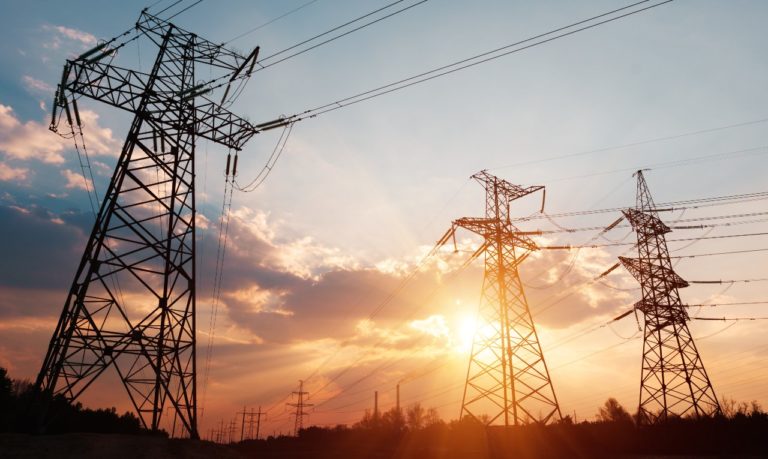
SEVERAL cities across Nigeria have been plunged into darkness once again as the nation’s electricity grid collapsed.
The Transmission Company of Nigeria (TCN)-managed grid went down at approximately 11:51 a.m. on Sunday, February 4, reducing the system’s capacity from 2,407 megawatts to a mere 31MW by noon and reaching zero by 1 p.m.
The reasons behind the grid collapse are still unclear, as there has been no official communication from the TCN on the development.
The ICIRreported several grid collapses in the past years, a concern that has not been effectively addressed.
Despite the Federal Government privatizing the sector over eleven years ago, the grid remains unreliable, failing consumers on more than 141 occasions.
Distribution companies are already alerting customers about the situation, even as the generation companies have repeatedly expressed concerns over the impact on the safety and durability of their equipment.
Kaduna Electric confirmed that the loss of bulk power supply left Kaduna, Sokoto, Zamfara, and Kebbi states in darkness.
Also, the management of Abuja Electricity Distribution PLC has informed its customers that the power outage being experienced is a result of a system failure from the national grid today, which resulted in a nationwide outage.
According to the system operator’s platform, all 20 power plants, except Ibom Power with 31 megawatts, were offline by 11:51 a.m.
NAMIBIA’S President Hage Geingob died at 82 on Sunday, February 4, in Windhoek, the country’s capital, following a battle with cancer.
His death occurred months before the country’s elections, expected to be held in November 2024, which would signal the end of his tenure as president.
In a statement via the official X handle of the Namibian presidency on Sunday, the country’s Acting President Nangolo Mbumba, disclosed that the cabinet would convene to make necessary state arrangements following his principal’s death.
“It is with utmost sadness and regret that I inform you that our beloved Dr Hage G Geingob, the president of the Republic of Namibia, has passed on today. At his side was his dear wife, Madame Monica Geingos and his children.
“At this moment of deepest sorrow, I appeal to the nation to remain calm and collected while the government attends to all necessary state arrangements, preparations and other protocols,” Mbumba noted.
Geingob had revealed in January that he was receiving treatment for cancer after cancerous cells were discovered during a routine medical check-up.
The deceased had been the country’s first president who did not hail from the Ovambo ethnic group where the majority of the country’s population hail from.
He was an advocate for Namibia’s independence as a young man and lived in exile for nearly three decades.
His party, Swapo, upon which he rose to the presidency, won the first elections in 1990, and he served as Prime Minister for over 12 years before becoming president in 2014.
However, high unemployment rates, recession and allegations of misappropriation characterised his first tenure as president.
Documents published by WikiLeaks in 2019 revealed cases of bribery by officials of Geingob’s government in what is now known as the Fish Rot scandal.
There were also allegations that his government granted contracts to foreign companies rather than those owned by locals.
Namibia may get first female president
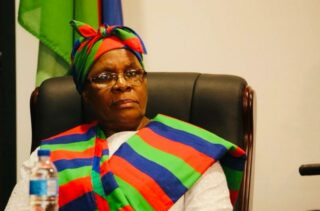
Following Geingob’s death, Namibia may be on its way to having its first female president, as the ruling party, Swapo, choses a woman, Netumbo Nandi-Ndaitwah, to be its vice president.
Netumbo Nandi-Ndaitwah
According to the party’s constitution, this nomination puts Nandi-Ndaitwah in line to be the presidential candidate at the next elections, as Swapo has remained in power since Namibia gained her independence in 1990.
Although the number of women heading governments in Africa is low, more women are occupying positions of leadership across various countries on the continent.
In 2005, Liberia produced Africa’s first elected female president in the person of Ellen Johnson Sirleaf, who led the country till 2018 when she stepped down.
Although Sirleaf maintained peace in the war-torn Liberia, extreme poverty persisted in the country during her time as president.
Others include Joyce Banda of Malawi, who rose to presidency from the position of Vice President after the death of her principal, Catherine Samba-Panza, who was elected transition president of the Central African Republic between 2014 and 2016.
In 2021, Tanzania got its first female president when Samia Suluhu Hassan rose to the position following the death of her predecessor John Magufuli.
Two other women have emerged as ceremonial heads of state in different African countries.
In 2015, Ameenah Gurib-Fakim was elected by the National Assembly in Mauritius, while Zewde Sahle-Work was elected in 2018 by the Ethiopian parliament.
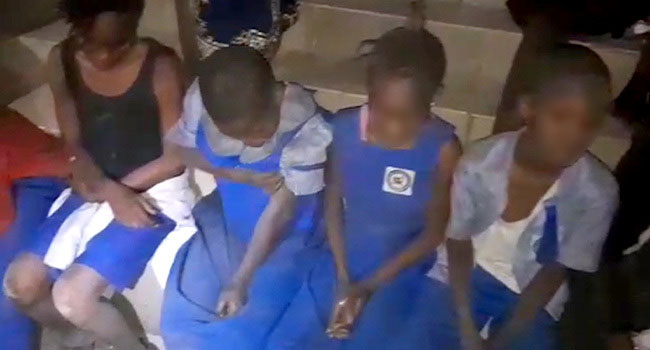
THE school pupils and teachers of the Apostolic Faith Montessori School in Emure Ekiti kidnapped on January 29 have regained their freedom.
The pupils and their teachers were released in the wee hours on Sunday, February 4, and brought to the Elemure’s palace around 4am.
However, the driver, who was also among the abductees, was killed and burnt by the kidnappers.
Although there were rumours that the students had regained freedom early on Saturday, February 3, the spokesperson of the state police command, Sunday Abutu, toldThe ICIR that news of their release was untrue.
Meanwhile, confirming the latest development, the Ekiti state government, in a statement on Sunday, February 4, quoted the governor, Biodun Oyebanji, as expressing his gratitude to President Bola Tinubu, the security agencies and Ekiti people for their support, which he said led to the abductees release.
He added that he had instructed the state Commissioner for Health and Human Services, Oyebanji Filani, to take the children to the Teaching Hospital in Ado-Ekiti, the state capital, for appropriate medical care and post-trauma therapy.
“The Governor, who kept vigil with Senate Leader, Senator Opeyemi Bamidele, till 3.00 am to ensure the release of the children, acknowledged the solidarity shown by his fellow governors, former governors of the state as well as religious leaders and traditional rulers.
“He also thanked members of the Ekiti State caucus in the National Assembly and members of the state House of Assembly for their support. “And more importantly, we thank God for everything,” the statement read.
Oyebanji reiterated his administration’s commitment to eradicating crime and criminal activities in the state by creating an inconducive environment for those engaged in criminal activities, regardless of their tactics.
Although the governor failed to disclose if the abductors were arrested, he reassured that the killers of the two Ekiti monarchs would be fished out and made to face the law.
He, therefore, urged the state’s people to remain vigilant and report any suspicious movement in their communities to the authorities.
The pupils, three teachers and their school driver were abducted in the state on Monday, January 29.
The ICIR reported that the state government confirmed the abduction on Tuesday, January 30, saying the school bus driver was also kidnapped, bringing the total of abductees to 10.
The abductors, who threatened to kill the children, initially demanded N100 million as ransom but reduced the sum to N15 million.
The incident happened the same day armed men shot dead two traditional rulers in the Oke-Ako axis of Ikole Local Government A+rea of the state.
The rulers were said to have been attacked along Oke Ako – Ipao Ekiti – Aiyedun road on Monday evening, January 29, while coming from a meeting.
The two traditional rulers- the Onimojo of Imojo Ekiti, Oba Olatunde Samuel Olusola and the Elesun of Esun Ekiti, Oba David Babatunde Ogunsola, were killed in an ambush by armed men while the traditional ruler, the Alara of Ara –Ekiti, Oba Adebayo Fatoba escaped the attack.
THE People’s Democratic Party (PDP) has won the State Assembly seats in Sokoto, Zamfara and Adamawa following the re-run elections held on Saturday, February 3.
In Sokoto, where the PDP is in opposition, its candidate, Magaji Abubakar, was declared the winner of the Bodinga North Constituency by the Independent National Electoral Commission (INEC).
The returning officer Farouk Tambuwal, who announced Abubakar’s victory on Sunday, February 4, said he polled 6,488 votes, defeating his closest opponent, Yusuf Marafa Danchadi of the All Progressives Congress (APC), who gathered 5,893.
“Having satisfied the requirements of the law, Magaji Abubakar of the PDP is hereby declared the winner and is returned elected,” Tambuwal said.
The party also won the Shinkafi constituency in Zamfara State, where its candidate, Mustapha Sadauki, defeated the APC candidate, Usman Shinkafi, with only 32 votes.
INEC returning officer in Zamfara, Femi Rufus, said Sadauki had met all constitutional requirements while declaring him the winner.
During the governorship elections held in March, the PDP’s Dauda Lawal defeated the incumbent governor of the state, Bello Matawalle.
Lawal was the first candidate to unseat an incumbent governor in the 2023 elections, winning over 65,000 votes.
In the Mayo Belwa constituency of Adamawa State, the PDP candidate, Mahmoud Musa Kallamu, won the by-elections with 1,306 votes. He polled the highest votes in six out of the seven polling units in the elections, while his closest opponent, Ibrahim Musa Italiya of the APC, scored 874 votes.
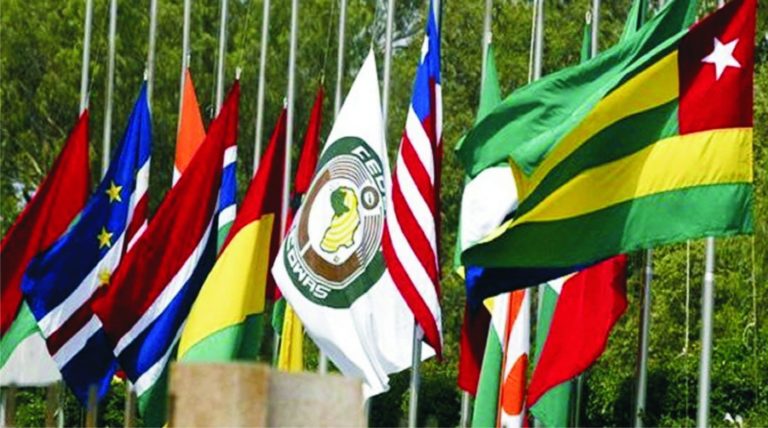
THE Economic Community of West African States (ECOWAS) has expressed concerns over the postponement of the presidential elections in Senegal, originally slated for February 25, 2024.
In a statement signed on Saturday, February 3, the Commission urged Senegal to hasten the process of selecting a new date for the elections.
“The Commission of the Economic Community of West African States takes note of the decision that the Senegalese authorities have taken to postpone the presidential elections scheduled to take place on 25 February 2024.
“The ECOWAS Commission expresses concern over the circumstances that have led to the postponement of the elections and appeals to the competent authorities to expedite the various processes in order to set a new date for the elections. The Commission further urges the entire political class to prioritise dialogue and collaboration for transparent, inclusive and credible elections,” the statement read.
The ECOWAS urged Senegalese President Macky Sall to defend Senegal’s democracy amidst its political crisis.
Sall postponed the elections indefinitely on Saturday, following heightened tension that trailed the decisions of the country’s Constitutional Council, to prevent some political hopefuls from contesting.
The President said he would begin an open dialogue to create the right environment for a free and fair process, as the current situation could affect the credibility of the election.
“These troubled conditions could seriously undermine the credibility of the ballot by sowing the seeds of pre- and post-electoral disputes,” Sall said.
He also added that the exclusion of some major contenders in the elections cast doubt on the process.
The ICIR reports that some of the prominent contenders in the exercise were barred by the Council for various reasons, including a libel conviction and allegations of dual citizenship.
Sall further suspended a November 2023 decree that he had signed, which fixed the elections for February 25.
Members of the opposition have described Sall’s move as a constitutional coup and threatened to challenge the decision in court.
THE Economic and Financial Crimes Commission (EFCC) is responsible for investigating all financial crimes, such as money laundering, counterfeiting, advance fee fraud, contract scams and unauthorised cash transfers.
One of its duties also includes synchronising and applying all legislation on financial and economic crimes.
Some laws backing the EFCC are the Money Laundering Act of 1995, the Money Laundering (Prohibition) Act of 2004, and the Advance Fee Fraud and Other Fraud Related Offences Act of 1995.
By what the EFCC does, Nigerians must have simple access to the commission to support its efforts to combat financial and economic crimes.
One of the ways to do this is by filing petitions.
The commission receives petitions on financial crimes, including bank fraud, advance fee fraud, money laundering, and economic sabotage.
EFCC chairman, Ola Olukoyede
The EFCC spokesperson, Dele Oyewale, in a chat with The ICIR on Monday, January 29, explained how to write a petition to the commission.
To send the EFCC petitions, below are the essential guidelines you must follow as provided by the commission.
According to the anti-corruption agency, the petition should be addressed to the executive chairman of the EFCC.
Having established that it is a financial or economic crime, you now decide whether you want it to be investigated at the corporate headquarters or any of our zonal commands.
If the petition is directed to the corporate headquarters, it should be addressed to the executive chairman of the Economic and Financial Crimes Commission at 301/302 Institutions and Research District, Opposite the National Open University Jabi. Abuja.
But if it is to the zonal headquarters, then you address it to the zonal command; for each of these commands, it is important to get the detailed address.
It should include the contact details of the fellow that is involved. That will assist us in locating the fellow.
The petition being sent must have a subject. For instance, “a petition against so and so person for so and so economic/financial crime.”
You now begin to narrate what happened. The fact of the matter is, if money is involved, has there been an exchange of money? You say that and attach evidence showing that such a thing has happened.
Having provided everything that has to do with the transaction, evidence should be attached.
It must be signed. Every petition to the EFCC must be signed.
It must be submitted in duplicate copies because we will retain one copy and acknowledge another for the petitioner to take away.
It can also be sent through email at info@efcc.gov.ng.
Petitions submitted via email must also be signed.
A petition can also be anonymous, but it must include a phone number if certain documents need to be confirmed.
According to the commission, the petition can only be written to the EFCC if there is a presumption or an assumption that an economic or financial crime has occurred or a business transaction or contract has a colouration of economic and financial crime.
The commission said it welcomed issues within its mandate but would not entertain petitions on matters like husband and wife, children, and other issues outside its jurisdiction.
On land matters, the EFCC said, “Land matters can be sent to us because we have our land and property section because there may be some evidence of fraud or stealing under pretence even in land matters.”
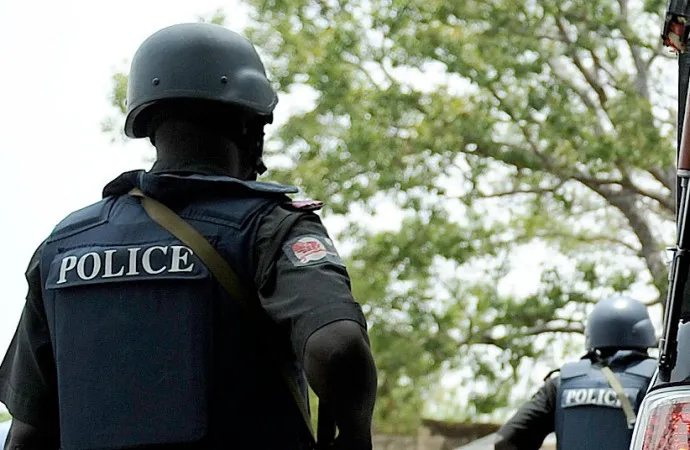
THE Kano State Police Command has arrested some thugs allegedly hired to disrupt the re-run election in the Kunchi Local Government Area of the state.
The state Commissioner of Police, Usaini Gumel, who did not disclose the exact number of thugs arrested while speaking with newsmen on Saturday, February 3, said the suspects were allegedly hired by a politician contesting in the election.
According to him, the thugs were arrested around the Kunchi/Tsanyawa area, where a rerun election was taking place.
“We saw a truck that was faulty by the roadside. We saw people in large numbers by the roadside. At first, they gave us the impression that it was the fuel of the vehicle that was finished. But upon close observation, we saw them in possession of arms.
“One Abdulrazaq Muhammad aka Mai Salati, from Kano Municipal, told us one man who is contesting in the area invited them over.
“We will get the man to know if he is truly a candidate contesting and why he invited them to the area. We suspect they are in the bush to lay ambush on the electoral officers while on their way with the election results,” Gumel said
The ICIR, in a video post shared by Channels Television, observed that one of the thugs arrested alleged that a lawmaker, representing the All Progressive Congress (APC), sent them to disrupt the elections.
He said the politician hired them to help him protect his votes, adding that others who participated in the election hired thugs for similar purpose.
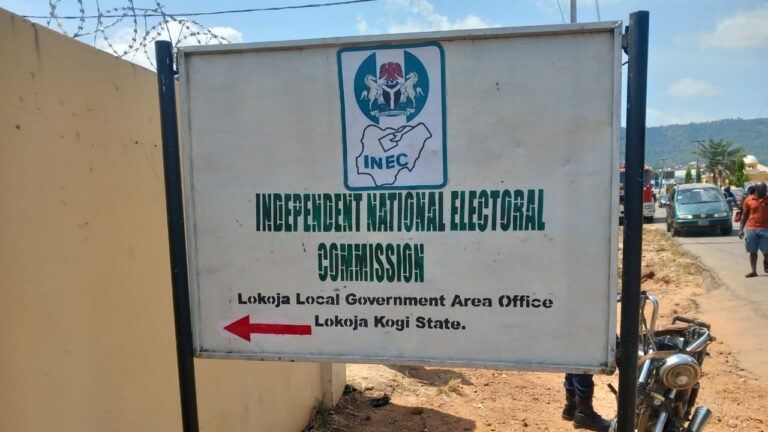
THE Independent National Electoral Commission (INEC) has declared the candidate of the All Progressives Congress, Fuad Laguda, as winner of the Surulere Federal Constituency 1 Bye-Election for the House of Representatives.
While announcing the winner on Saturday, February 3, the returning officer for the election, Simeon Adebayo, a professor, stated that the APC candidate scored a total of 11, 203 votes.
The People’s Democratic Party’s (PDP) candidate, Jerry Afemikhe, came second having secured 278 total votes.
Laguda, who was a former chairman of the All Progressives Congress in the Surulere Local Government became the party’s flag bearer after the resignation of Femi Gbajabiamila from the House of Representatives.
Gbajajbiamila, who won election to represent the constituency six times, was appointed by President Bola Tinubu as his Chief of Staff on Friday, June 2, 2023.
The ICIRreported that 12 candidates representing various political parties vied for the Surulere Federal Constituency I seat.
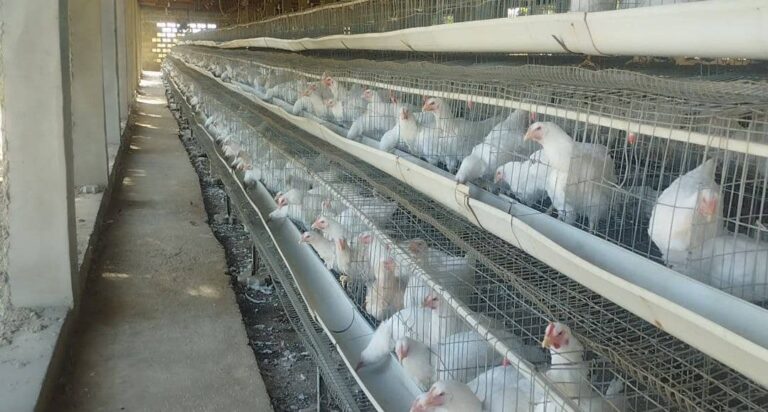
NIGERIA has the largest annual egg production and second-largest chicken population in Africa, according to the Commonwealth Scientific and Industrial Research Organisation (CSIRO). But rising temperatures in states like Sokoto are causing heat stress and frustrating business for farmers, some of whom have been forced out of business.
NIGERIA has the largest annual egg production and second-largest chicken population in Africa.
In December 2021, Zubaida Abba, a resident of Sokoto, Sokoto state, began a small poultry business with 25 birds.
By February 2022, her birds were grown, but the heat had also set in, and they began to die one after the other. By the end of the same month, Abba lost 22 of her birds.
“I just abandoned the business after that. I could not take that risk again,” she told The ICIR.
Abba is aware of the adverse effects of heat stress on poultry farming, but she also told The ICIR that a lack of experience might have contributed to her loss.
However, in another part of the town, Amina Suleiman, a poultry farmer who has been in the business for over a decade, lost a quarter of her birds in 2023 alone.
Suleiman, who rears birds in the backyard of her Gwiwa residence in Sokoto, stared at three of her week-old chicks as they lay dying in their pen while sharing her farming experience with The ICIR.
A dying chick. Photo: The ICIR.
In a different section of the poultry, two big broilers also lay on the ground, legs stretched in opposite directions as they struggled with death.
“This is how they die nearly every day. I had about 200 birds. For the smallest ones, the one-week-old, 25 have died. Then the bigger ones, about 15 birds, have died. I have lost almost 50 birds. Most of my big birds died because of heat,” Suleiman said.
Heat stress is one of the most significant challenges of poultry farming. It occurs mostly during periods of high temperatures, causing birds difficulty in balancing heat production and loss.
According to a Journal of Agriculture Science & Technology, heat stress causes several physiological changes, such as suppressed immune competence and acid-base balance, leading to reduced feed intake and conversion ratio, reduced meat and egg quality, and sometimes mortality. This results in financial loss for poultry farmers.
States like Kebbi, Kano and Sokoto are among the hottest in the country, and in 2023, Sokoto state was predicted to be one of the states to exceed 40 degrees, according to the Nigerian Meteorological Agency (NiMET).
For farmers in Sokoto, high temperatures pose a major business challenge, as older birds are usually more prone to developing respiratory and other diseases during the heat, usually after a lot of investments have been made by the farmers.
Heat stress is even more difficult to manage for smallholder farmers, who often have less financial capacity.
In Nigeria, these smallholder farmers mostly consist of women, who, though responsible for about 70 per cent of farmers in the country, are often found in small-scale enterprises.
According to the Food and Agriculture Organization of the United Nations (FAO), 85 million Nigerians are involved in poultry production, many on a small to medium scale.
As a result of financial constraints, most small-scale farmers run backyard poultry farms, which limits the level of ventilation available to the birds. This places the birds at more risk of developing respiratory problems during the heat period, which can ultimately lead to death.
In 2017, a Policy Research Brief prepared for USAID/Nigeria by Michigan State University (MSU), the Federal Ministry of Agriculture and Rural Development (Nigeria), and the International Food Policy Research Institute (IFPRI) also found that about 68 per cent of poultry farmers believe that temperatures have increased significantly.
Almost 50 per cent of the poultry farmers studied said they had observed an increase in the length of the heat period in their states, and 10 per cent have experienced losses of products due to unfavourable weather conditions.
As part of efforts to help their birds survive heat stress, smallholder farmers like Fatima Isah Wasagu explore various options.
“We don’t put down the drapes that period. We always keep them up. Sometimes we make thatch and place it on top of the roof to reduce the heat, as we are not big enough to install artificial cooling mechanisms,” she said.
Roof of a pen on a farm in Sokoto, covered with thatch. Photo: The ICIR.
This did not prevent her from losing at least a tenth of her birds during the hot season in 2022.
“We tend to lose them when they are bigger. When the heat is too much, they cannot breathe well. You see them fine just now. You go away and come back to meet them dead,” she said.
Although smallholder farmers are more likely to lose birds to heat stress because of inadequate ventilation and financial constraints, large-scale farmers are also faced with similar challenges.
Zayytun Integrated Farms, located within the Kwakalawa area of Sokoto, has a capacity of 7,000 breeders.
Zayyanu Abubakar, who owns and manages the poultry, told The ICIR that he loses hundreds of birds to heat stress annually despite investments in alternative cooling methods.
“During the heat period, we try to save our birds from heat stress. But due to our climate and the weather, which is very harsh, no matter how you provide some artificial ways to reduce the temperature, you must get mortalities. Here, we try as much as we can to reduce the mortality, but in a year, we lose like 300 birds.
“Last year, we had 4,000 birds on this farm. We lost about 320 just during the heat period alone,” he said.
Zayyanu Abubakar, owner of Zayytun Integrated Farms. Photo: The ICIR.
To reduce the deaths, some measures Abubakar has taken include using foggers, sprinklers, exhaust fans and regular room fans. The cost of purchasing such equipment takes its toll on his profits.
“We are spending a lot of money to save our birds through these mechanisms, like diesel. Every day, we consume N20,000 worth of diesel. Just to save our birds from dying.
“We have to turn on the generators to power the fans, foggers and sprinklers. The profits that we are supposed to gain, we put it back into the poultry. So we are not getting that much profit because of the extra expenses. If you don’t have any way to protect your birds from the heat, you can lose all of your birds in one day,” Abubakar said.
Worsening climate conditions raise cost of meat, eggs
Speaking on the issue, a Professor of Veterinary Medicine at the Veterinary Teaching Hospital, Usmanu Danfodiyo University, Sokoto (UDUS) Usman Musa, identified climate change as a significant problem for farmers.
“Climate change is a reality and a serious problem. If you look at it, there is late coming of rain and early cessation of rain. All these things, we can attribute it to climate change. If you look at what happened this year, the rain ceased earlier than what happened in the past,” Musa said.
Beyond weather conditions directly causing harm to birds, Musa also stated that they affect the cost of poultry products in the market.
“As a result of climate change, if the farmers do not harvest enough, the feed millers will purchase the grains at high cost. The poultry farmers also have to increase the price, to make a profit and recover the cost of his feed. All these are factors that increase the cost of the chicken and its product,” he said.
In 2019 alone, residents spent N800 billion naira on the consumption of poultry products, according to the Nigerian Bureau of Statistics (NBS).
The prices of these products have significantly increased due to the high cost of production. Between 2022 and 2023, the cost of eggs surged by nearly 100 per cent, going from an average of N70 to N120.
Musa added that many poultry farmers are thrown into a state of panic during the heat.
However, for Salaudeen Adekunle, General Manager Sarkin Gobir Adiya (SGA) Farms located in Sokoto with a capacity of 50,000 birds and a production rate of 1500 eggs daily, proper planning is a significant step towards mitigating mortality, even in states with high temperatures.
Funding, adequate planning can reduce mortality –Experts
Adekunle, who has been in the poultry business for over 15 years, told The ICIR that SGA Farms recorded only about one per cent mortality due to adequate planning and funding.
He encouraged poultry farmers to be more conscious of the weather conditions and note what breed of birds thrive in different seasons, as the planning process would depend largely on the birds being reared.
“For broilers, the life cycle is within six weeks. So if you do it right, you can get a broiler of nothing less than a 2kg life weight in six weeks. This means that during the heat period, you will not engage in production of broilers because once you engage in that and you don’t have the facilities to manage the heat, you will run at loss,” he said.
Salaudeen Adekunle, General Manager, SGA Farms
He encouraged farmers to make use of thermometers to get accurate weather readings, ensure proper ventilation and use fans, foggers and chillers to regulate the temperature of the birds during hot periods.
According to Adekunle, biosecurity, which is the management of human and other movements within the poultry to avoid the transfer of pathogens and likely infections, is one of the most important steps to ensure the survival of birds.
“Biosecurity measures are very paramount. Because if you don’t do it, all we have talked about will amount to zero. We have different sections on the farm. We make sure that people that are working with the layers don’t go to the broilers section. People working with the poulette don’t have anything to do with others,” he said.
He, however, noted that such measures are cost-effective and pointed out that smallholder farmers may find it difficult to manage heat stress without adequate finances.
Other limiting factors
Adekunle noted that government policies and the unavailability of raw materials for feed were other factors worsening the poultry business for farmers in Nigeria.
“There are some policies made by government that don’t favour the farmers, and that is part of the reason why some of the raw materials used in the production of the feed, especially maize and soya, are not easily accessible and are very expensive,” he said.
Farmers like Zayyanu Abubakar also spoke on the high cost of feed and its impact on business.
“Feed companies are always increasing their prices. Sometimes in a week, the prices can change three times. Now, the lowest standard feed starts from N10,000 and above, and we need about 20 bags in a day. Profit that we are supposed to get goes to feed. And when they heat comes, the birds cannot even eat very well,” Abubakar said.
Adekunle and Abubakar noted that the increasing price of feed is another key factor responsible for the hike in the price of poultry in the country.
For Adekunle the unavailability of foreign exchange further worsens the situation, as it limits farmers from importing items like maize and others which are not being produced in adequate measures within the country.
“What makes the cost of eggs go up is the feed. The people buying raw materials also want to make money from the production. The people suffering it the most are we, the poultry farmers. Even the prices in the market are not the real price we should be selling it. The profit margin is very low.
“In Nigeria now, many farms have closed down. So we that are in the business it is just by the grace of God and trying to use our own expertise to mitigate situations and improvise so that we can still be in business,” he said.
Smallholder farmer Binta Manga also cited insecurity in the northern part of the country as a significant reason for the shortage of feed, as farmers no longer have access to their farmlands to plant or harvest the required grains.
“This soya beans and maize is something that we grow in the North. We have capacity to produce them, but insecurity has done a lot of damage to the cost of production. These are things we grow on the soil here, but now we cannot grow them, because majority of the people that grow them are off their farms,” she said.
While large-scale farmers with access to funds can plan better and manage the heat, smallholder farmers like Zubaida have been kicked out of business as a result of harsh weather conditions.
*This reportwas sponsored by the Centre for Journalism Innovation and Development with funding support from the Public Diplomacy Section of the U.S. Embassy, Abuja.*
NOTE: The report (first paragraph) was updated to reflect that Nigeria is the second-highest producer of chicken and not the highest producer of chicken as earlier stated.
“The affected areas are as follows: Ikono/Ini Federal Constituency, Akwa Ibom State. Suspension of elections in two polling units (Village Hall, EdemUrua 003 in Ini LGA and Village Hall Mbiabong Ikot Udo 003 in Ikono LGA) where all election materials were carted away by hoodlums.
“Enugu South 1 State Constituency, Enugu State: Suspension of elections in all eight polling units where the original results sheets were not available for inspection by voters before the commencement of polls. Kunchi/Tsanyawa State Constituency, Kano State: Suspension of elections in all 10 polling units in Kunchi LGA due to invasion, vandalization, and disruption by thugs,” Olumekun noted.
Earlier, INEC had disclosed that there were reports of thuggery in the said states. In a post via its official X handle, the commission announced that it was investigating the allegations and would provide updates on them.
“In Ikono/Ini Federal Constituency of Akwa Ibom State, we are investigating reported incidents in Village Hall, EdemUrua 003 in Ini LGA and Village Hall Mbiabong Ikot Udo 003 in Ikono LGA. In Enugu South 1 State Constituency of Enugu State, we are investigating reports of disruption in 8 polling units in Uwani West Ward.
“In Kunchi/Tsanyawa State Constituencies of Kano State, processes have been disrupted in Kunchi Local Government Area involving 10 polling units. We will provide regular updates on the situation,” the post read.
Voting and accreditation commenced in 26 states on Saturday to fill up vacant positions in the national and state Assemblies.
There have been reports of low voter turnout in many states where the elections are being held.