ANOTHER missing Zamfara journalist, Hamisu Danjibga, has been found dead.
A statement issued by the secretary of the state chapter of the Nigerian Union of Journalists (NUJ), Ibrahim Ahmad, on Wednesday, September 20, said the deceased’s body was found dumped in a soakaway by those who murdered him.
While extending its condolences to his family members, the union charged the security operatives to investigate the death and bring the perpetrators to justice.
Danjibga, a reporter with Voice of Nigeria (VON), was declared missing on Monday, September 18.
According to the News Agency of Nigeria (NAN), his killers had demanded one million naira for his release, but the amount was later increased.
Confirming the death, the NUJ said Danjibga’s body was found in a soakaway behind his house three days after missing.
According to the group, the discovery of his corpse resulted from an unpleasant odour observed by Islamiya Children (Muslim children group) on Wednesday, September 20, who drew their teachers’ attention.
The NUJ added, “After breaking the soakaway, the dead body was confirmed to be Danjibga by his family and some neighbours. His funeral rites have since been observed according to Islamic injunctions.”
The police have arrested one person allegedly involved in the journalist’s killing.
The ICIR had on Wednesday, September 20, reported how a missing Kwara journalist was found dead in Ilorin.
Mubarak, a new media journalist who hails from Ilorin, went missing on Wednesday (September 13), but his remains were eventually found three days later around the Unity area of Ilorin, the state capital, on Saturday, September 16.
Reacting to his tragic death, the Coalition for Whistleblowers Protection and Press Freedom (CWPPF) stated that the “circumstances surrounding the death of Yusuf Mubarak are both shocking and deeply concerning,” adding that the loss sent shockwaves through the media sphere and highlighted the need for swift and thorough investigations.
It also called on the security agencies to thoroughly investigate the incident and uncover the mystery surrounding his death.
FOR weeks, Omuo and Ilawe communities in Ekiti state have been at loggerheads over who hosts the newly-created Federal College of Education approved by former President Muhammadu Buhari weeks to the end of his tenure. The ICIR’s Marcus Fatunmole visited the communities, interviewed stakeholders, and presented his findings in this report.
The two communities are among the scores of Ekiti towns sharing common traditions, language and heritage. But the quest to host a Federal Government institution has pitched them against each other.
It all started on April 18, 2023, when Ibrahim Gambari, a professor and the Chief of Staff to former President Buhari, signed a letter approving the establishment of the Federal College of Education in Ilawe, Ekiti State, and six other schools in other states.
The letter sent shock waves to Omuo when the news broke. The town had waited for the President to sign a bill backing the school creation and siting in the community, but Buhari opted for Ilawe as the host community and ignored the bill.
While streams of joy flowed in Ilawe over the news, tempers rose in Omuo, and protests raged.
Turns of events saw the communities hurling a barrage of abuses at each other in the media, but they were too far apart to engage in physical combat.
The letter from the Presidency approving the Federal College of Education and others in April 2023
The genesis
The senator who represented Ekiti South in the eight and ninth Senate, Biodun Olujimi, sponsored a bill for the school creation. She hails from Omuo.
The bill, titled the “Federal College of Education Omuo-Ekiti, Ekiti-State, 2021,” was first read at the Senate on February 13, 2020.
It passed through the second and third readings on October 30, 2020, and September 21, 2021.
It also had a concurrence at the House of Representatives and was transmitted to the President for signing in 2022.
The government sealed its decision to establish the school in Ilawe by appointing the institution’s principal officers through a letter carrying Sunday, May 28 date – a day before the end of the administration. Earlier, the chief of staff of the then president Ibrahim Gambari issued a memo with SH/COS/02/A/3342 on April 18 stating that the school was approved.
Top government officials who have worked in the Presidency and ministries interviewed by The ICIR said government documents could not carry Sunday dates because government offices do not open on weekends.
The Federal Ministry of Education’s letter appointing the provost of the Federal College of Education on Sunday, May 28
The officials, in the rank of director, claimed anonymity for fear of being punished and called for a probe into the letter.
In the letter with reference number FME/PS/569/C.I/II/89 and signed by the Permanent Secretary of the Federal Ministry of Education, Andrew David Adejo, the government appointed Ajigbade Ikuejube, a doctorate holder, as the college provost.
The ICIR observed that the ministry misspelled the new provost’s name as ‘Ijkuejube’ instead of ‘kuejube’.
Ikuejube is a former Acting Provost of the Federal College of Education, Ondo, Ondo State. He worked for several years at the college and served in various capacities.
Days after the ministry released the circular, Alawe of Alawe, Adebanji Ajibade Alabi, Afuntade 1, broke the news of the college’s take-off to his community at a media briefing.
The monarch’s briefing evoked more rage in Omuo, which accused Ilawe of hijacking the college.
Youth and other residents took to the streets in protest for at least three days. The demonstrations affected commuters and other travellers plying the border town. Omuo borders Kwara, Kogi and Ondo States.
Omuo residents attributed ‘high-level politicking’ at the Presidency to why Buhari approved the school for Ilawe.
A cross-section of Omuo residents interviewed claimed that the victory of Yemi Adaramodu, an Ilawe indigene and candidate of the ruling All Progressives Congress (APC) over Olujimi of the Peoples’ Democratic Party (PDP) at the February 25 National Assembly poll conferred an advantage on Ilawe to get the school from the Buhari government.
Others blamed Omuo’s loss in hosting the institution on Olujimi’s staying in the PDP rather than defecting to the ruling APC before the general election.
The ICIR reports that the two communities parade an array of illustrious sons and daughters, including Femi Bamisile, a member of the House of Representatives (from Omuo), and Femi Falana, a prominent senior advocate ( from Ilawe).
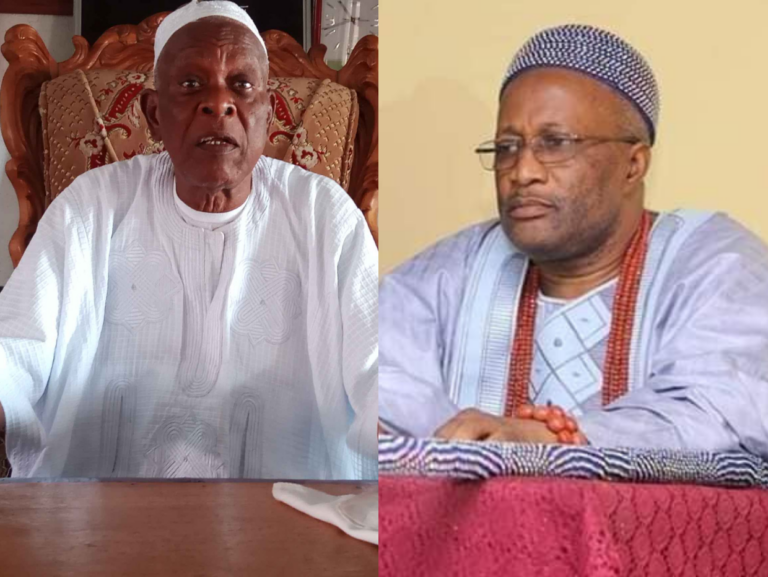
Speaking with the ICIR reporter in his palace on August 26, Olomuo of Omuo Kingdom, Oba Noah Adejuwon Omonigbehin (Okinbaloye II), described siting the school in Ilawe as a ‘mystery’ and a ‘hijack’.
He argued that there was never a time when Ilawe requested any Federal College of Education from the Federal Government.
Olomuo of Omuo Kingdom, Oba Noah Adejuwon Omonigbehin (Okinbaloye II). Photo: Marcus Fatunmole/The ICIR
“There was never a time when Alawe and Ilawe community were invited by the Committee of the Senate on Tertiary Institution and TETFund,” he said, stressing that his community, including himself, was invited to Abuja by the government and National Assembly over the institution.
The Olomuo said he and other stalwarts from his community attended public hearings on the school bill, and nobody represented Ilawe.
“To our dismay, we just heard that the school had been approved for Ilawe. I don’t know what parameter they used,” he said.
He added, “We want him (Alawe) to show when he was invited by the Senate, to the House of Representatives, the Committee of TETFund and Tertiary Institution. Even the bill that was passed was duly signed by the President of the Senate and the Clerk of the Senate.
“We wonder how someone who did not ask for a thing would come up that they have been given that thing.”
He called on President Bola Tinubu to investigate and do justice to the matter.
Monarch blames Education Ministry, Senator
The Olomuo accused the Education Ministry of being the mastermind of the ‘hijack.’ He also said Adaramodu could not absolve himself from the matter.
“You can see the hasty attitude and action of the Federal Ministry of Education. Federal Ministry of Education issued a letter that is contestable. In the letter they wrote, they appointed principal officers dated May 28, which is a Sunday. Our question is: has it been a new policy of the Federal Ministry of Education to open office on Sundays?”
The monarch contended that the government should look into the equitable distribution of federal institutions in the state.
Speaking on how his part of Ekiti was ‘deprived’ of any higher institution of learning, he said the Ikere community, neighbouring Ado, had the state University of Education, Ado got the Federal Polytechnic and the State University, and Ilawe, also neighbouring the state capital, wanted the Federal College.
He said Omuo had taken the matter to the Public Complaint Commission in Abuja, and the commission had forwarded its report to the Presidency. He added that the community planned to meet the President over the matter.
A letter from the Senate inviting Omuo community leader to a public hearing on the college bill
The ICIR reports that Omuo and Ilawe are in the same senatorial district but about 100 kilometres apart.
“Ilawe to Ado Ekiti is not up to 30 minutes. If you look at Ilawe to Ikere, it is about 25 minutes. Look at this axis here, as a senatorial district, nothing at all—no Federal Government presence. Omuo is strategically located. It is a nodal town, having a border with Ondo, Kwara and Kogi States. It is also a gateway to Abuja. Such an institution is more suitable for Omuo than any other area in Ekiti State,” the Olomuo said.
He explained that he had no issue with the Alawe or his community but said it was shocking that the town could “come through the back door” to claim what Omuo had worked for many years.
According to him, the issue could have deteriorated to a physical clash between the two communities, but for the distance.
He said he had appealed to his people, especially the youth, to be patient to allow Omuo to use diplomacy and peaceful means to reclaim the institution.
Media have no role to play in crisis – Alawe
The reporter was at the palace of Alawe on August 25. The monarch said he was out of town. The reporter got his phone number from a youth in the community, called him and explained his mission for coming to the palace.
The monarch asked a series of questions on the phone and concluded that The ICIR had an ‘interest’ in the matter.
Some of the questions he asked the reporter include, “Who is funding you?”, “What’s your interest in the matter?”
Frontage of the palace of Alawe of Ilawe, Oba Adebanji Ajibade Alabi, Afuntade 1. Photo: Marcus Fatunmole/The ICIR
He eventually asked the reporter to wait for him in the palace. “I travelled. I’m on my way back. I will soon be in the palace,” he explained.
Some 30 minutes later, he called the reporter and told him he would not be available again that day. The reporter pleaded to return to his hotel and meet him the following day. He said he wasn’t funding the reporter’s work and would not ask him to wait till another day.
The reporter told him he had enough funds to care for himself for many days in the state. The monarch retorted, “What is your interest (in the matter) that you’re funding yourself? You don’t have an appointment with me, and I’m unavailable.”
He promised to call the reporter, and he never did.
While concluding the investigation, on Friday, September 8, the reporter again called the king to obtain his reaction to the allegation levelled against his community.
“I’m not interested in any discussion with you. You don’t have any role to play,” he said, ending the call abruptly.
Bills not law, of no effect on executive decisions – Adaramodu
Adaramodu said bills not signed by a President are not laws and can’t be binding on the society.
He denied having a hand in the school’s location in his community.
He argued that he had superiors in Ilawe – more educated, influential and exposed – who worked for the community’s development and would not stop them.
He said the town’s monarch is a retiree from the Ministry of Foreign Affairs who could ask for projects in his community from Abuja and anywhere.
A section of the Ilawe community. Photo: Marcus Fatunmole/The ICIR
“Those people who alleged must have told you how I was instrumental, whether I am law to myself or whether I am the President of the Federal Republic of Nigeria, who approved school. They should tell. We all know how a school can be sited. It is the prerogative of the executive. Moreover, I was in the Ninth Assembly (as a Rep.) We all know that if there is any law that is existing, nobody can change that law.
“When they sited the school, I was just two weeks old in the Senate. How can somebody who is two weeks old in the Senate change any law? Is it possible? Does it speak well at all? Anything done by the Ninth Assembly, the Tenth Assembly cannot touch it. If a bill has not become law, you cannot even touch it at the Tenth Assembly. It went away with that Assembly, and then you have to start again,” he said.
The lawmaker said Ilawe people also went for the public hearing in Abuja over the siting of a Law School, and the government gave the institution to its sister community.
He also explained that Iyin Ekiti went for public hearing over the siting of the University of Health Sciences, and the government denied the community.
He alleged that Olujimi used the bill she sponsored for the Federal College to deceive the Omuo people to enable her to win a re-election.
“Politicians are just manipulating the people. They are just using the ignorance of the people in law-making…They are just playing politics with our people. Auntie Olujimi said that she sponsored the bill. Ask her if that amounts to a law. Has it been assented to? Several legislators will say they want schools in their communities. Does the executive site those schools?”
Aerial view of United High School, which the Ilawe community offered as the temporary site for the new Federal College of Education in the town. Photo: Marcus Fatunmole/The ICIR
He said the National Assembly had passed “several thousand” bills, which didn’t become law, adding that the National Assembly would not create a school or any institution but the executive.
Adaramodu said he invited Omuo stakeholders to Abuja to join him in finding the truth about the school’s creation and siting, but they shunned him.
When told that the letter appointing the school’s principal officers was issued and signed on Sunday, May 28, he said it was not his business but of the Ministry of Education.
He called for peace and understanding between the communities, as, according to him, there is no way the towns will not work together.
He urged Omuo to discover the truth, stressing that he loved the two communities as others in the state.
Education Ministry declines interview with The ICIR
The reporter was at the Federal Ministry of Education on Thursday, August 31, to hear from the Permanent Secretary why he signed the letter appointing the principal officers on a Sunday and to get his reaction to the allegation that the ministry colluded with some people to convince Buhari to site the school in Ilawe.
At his office door on the first floor of the ministry, every visitor fills out a form stating why they want to see him. The reporter did, and the private security guard manning the door took the note to him.
Andrew David Adejo, Permanent Secretary, Federal Ministry of Education.
The Permanent Secretary refused to attend to the reporter, who spent nearly three hours in his waiting room. Adejo attended to everyone in the waiting room except the reporter, who waited till after 5 p.m. before leaving.
It’s not time for me to talk over college – Olujimi
Meanwhile, Olujimi, who is challenging Adaramodu’s victory in court, declined to react. She texted the reporter, who requested having an interview with her on the government siting of the college in Ilawe, saying, “Sorry, I don’t intend to speak on it for now. It’s not yet time.”
A leader in Omuo, Segun Akanle, was among the first people who went for the first reading of the bill.
He told the reporter during an interview, “I was shocked when we heard that Ilawe people were jubilating a few weeks ago when they were receiving the principal officers of the school. That was the first news about the school. There was no pronouncement from the Federal Government and the Federal Ministry of Federal Education.
“We just read online that the principal officers for the Federal College of Education had resumed in Ilawe. We were shocked. We also learnt from Alawe’s media briefing that he had set up a committee that would see to the smooth take-off of the school. That was where we picked the whole thing up.”
He said the Omuo community petitioned the Federal Character Commission, the Presidency and the Federal Ministry of Education.
He said when Omuo stakeholders attended the public hearing in Abuja on the bill, the Senate announced that if any community had an interest as Omuo, it should indicate. No town showed up, he stated.
“But to my dismay, when we went for the petition in Abuja recently, the Ministry of Education told us that Ilawe had written for request since 2017. “Where was Ilawe since 2018?.”
A leader in Omuo community, Segun Akanle
He said the name of Ilawe just came up between March and May this year.
The ICIR contacted Buhari’s Chief of Staff, Gambari, to request his reaction to the allegation of collusion between the Education Ministry and the Presidency officials over the siting of the college in Ilawe.
He did not respond to calls and messages sent to him in this regard.
This organisation also reached out to Femi Gbajabiamila, the Chief of Staff to President Tinubu and the Speaker of the Ninth House of Representatives, under whose leadership the bill had a concurrence at the Lower Chamber.
The ICIR sought to know if he was aware of the crisis the school’s siting was causing between the two towns and how the President would resolve the matter.
He did not respond to calls, texts and WhatsApp messages sent to his phone number.
Why communities want college – Findings
Apart from guaranteeing the socio-economic transformation of the host community, The ICIR found that none of the two communities has a commercial bank.
This organisation reports that while the only bank in Ilawe had shut down because of fear of armed robbery attacks on banks in communities in the state, Omuo does not have any, except the one in Omuo-Oke, its neighbour.
Many houses are unoccupied in the two communities, and economic activities in the largely agrarian towns are low.
In Omuo, there has been no grid electricity for eight years.
In 2022, The ICIRreported how Omuo and its environs had not seen grid electricity for seven years.
A section of the Amunnu Comprehensive High School, which the Omuo community offered for the take-off of the anticipated Federal College of Education in the town. Photo: Marcus Fatunmole/ICIR
When the reporter carried out this investigation in late August 2023, the community had yet to get the light, but work was ongoing.
Residents interviewed said with the school, the light would return faster than expected.
The ICIR reports that while Omuo lies on a plateau, Ilawe is enveloped by hills and valleys.
The reporter contacted Yinka Oyebode, the Chief Press Secretary to the Ekiti State Governor Biodun Oyebanji, to know how the state government is handling the crisis. He did not pick up the reporter’s calls or respond to the text and WhatsApp messages sent to him.
Similarly, efforts by the reporter to know how the Ekiti State Police Command is maintaining the peace in both communities proved abortive, as the command’s spokesperson, Sunday Abutu, has yet to respond to the text and Whatsapp messages sent to him.
He had promised to call the reporter back when he called him earlier.
Communities pick temporary sites for college
Ilawe and Omuo have picked a temporary campus for the new college.
The ICIR visited the secondary schools the towns offered for the school’s take-off.
Omuo picked Amunnu Comprehensive High School along Ikare (Ondo State) Road, while Ilawe chose United High School along Igede Ekiti.
Each school has about 20 classrooms, administrative offices, a large hall and wide land space.
The ICIR reports that given the conditions of the schools, it is unlikely the institution will commence operation immediately because both lack the infrastructure for a comfortable take-off for the institution.
The reporter gathered that prominent indigenes in both communities donated their houses to the school to boost its operations.
One of the houses donated by an Ilawe indigene to ease the school’s take-off
A resident of Ilawe, Akinniyi Bada, a pastor, said the institution was a great development for the community. He expressed delight with the college coming to the town.
“We have been agitating for it for a long time. The community is very happy to receive the school.”
He said the town was waiting to receive the students and the college’s workforce.
“We are ready to accommodate everyone. We are ready to accept the students as friends, daughters and children because we’ve been expecting the school for a long time.
He said the school would bring development to the community.
The translator will collaborate closely with the IJNet French editor to add valuable articles and resources for journalists to the French site and the IJNet home office team to ensure the site runs smoothly.
Additionally, the translator will look for, write about, and publish training opportunities in French for IJNet and training opportunities from French to English and English to French.
English to French translators with three to five years of experience are welcome to apply.
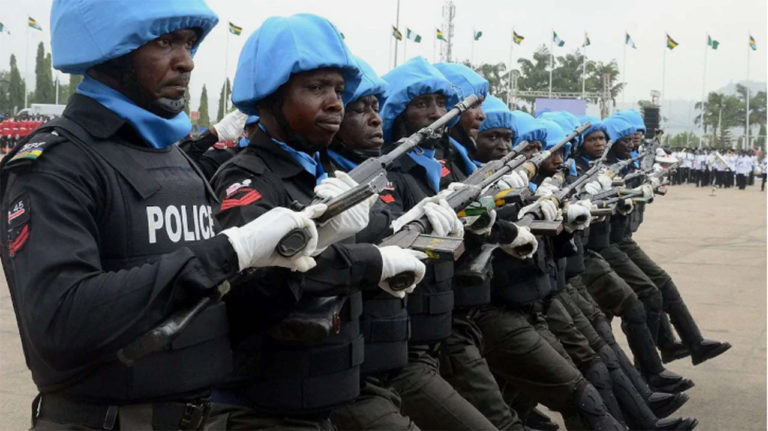
THE Kano State Police Command has declared a 24-hour curfew across the state.
The state Commissioner of Police, Muhammad Usaini Gumel, disclosed this in a statement he signed Wednesday evening.
His decision followed growing apprehension across the state after the State Governorship Election Petition Tribunal sacked Abba Kabir Yusuf as the state governor and declared theAll Progressives Congress candidate, Nasir Gawuna, as the winner of the March 18 governorship poll.
Yusuf was the candidate of the New Nigeria Peoples Party (NNPP) led by the state’s former Governor, Rabiu Kwankwaso.
The Independent National Electoral Commission (INEC), through its returning officer, Ahmed Ibrahim, a professor, had declared Yusuf the winner.
The commission said Yusuf won with 1,019,602 to beat Gawuna, whom it claimed polled 890,705.
Delivering its judgement, the three-person tribunal on Wednesday ordered INEC to withdraw the certificate of return issued to Yusuf and give it to Nasiru Gawuna.
The panel, presided over by Oluyemi Akintan-Osadebay, deducted 165,663 votes from Yusuf’s total votes.
The court declared the deducted votes as invalid because the ballot papers were not stamped or signed.
Police in the state said on Wednesday that they had dispatched a combined team of officers across the city to enforce the curfew.
The ICIR reports that the sacked governor ordered the Police to declare a curfew.
“In view of the constitutional mandate of the Nigeria Police Force alongside the relevant internal security and law enforcement agencies to preserve law and order in the state, the Kano State Police Command has mapped out strategies in that direction and call on the good people of the state to give the necessary confidence and supports.
“Going forward, Kano State residents are called upon to note that the combined security forces have already been dispatched to the nooks and crannies, including the entry and exits of the state, to ensure enforcement and strict compliance with the 24-hour curfew order as communicated by the state government via letter with Reference No: K/SEC/H/435/T.1/153 dated September 20, 2023 taking effect from 6 p.m. of Wednesday, September 20 to 6 p.m. of Thursday, September 21 2023.”
The Police vowed to arrest violators and make them face the law.
The ICIR reports that fear enveloped the state shortly after the tribunal gave its judgment via Zoom.
THE Coalition for Whistleblowers Protection and Press Freedom (CWPPF) has expressed shock over the murder of a 27-year-old journalist, Yusuf Mubarak, in Kwara state.
In a statement on Wednesday, September 20, the Coalition condemned Mubarak’s death and extended its condolences to his family members.
Mubarak, a new media personality who hails from Ilorin, went missing on Wednesday (September 13) night, but his remains were eventually found three days later around the Unity area of Ilorin, the state capital, on Saturday, September 16.
Reacting to his tragic death, the Coalition stated that the “circumstances surrounding the death of Yusuf Mubarak are both shocking and deeply concerning,” adding that the loss sent shockwaves through the media sphere and highlighted the need for swift and thorough investigations.
While appreciating Governor AbdulRahman AbdulRazaq’s swift response to the tragedy, the organisation called for a comprehensive investigation into the circumstances behind his passing.
It also called on the security agencies to thoroughly investigate the incident and uncover the truth.
“Journalists, like Mr Mubarak, play a vital role in our society by advocating for justice, good governance, and the free flow of information. It is essential that their safety and security are guaranteed as they continue to serve as watchdogs of democracy.
“The Coalition for Whistleblowers Protection and Press Freedom calls for a swift, impartial, and transparent investigation into the murder of Yusuf Mubarak to ensure those responsible are swiftly brought to justice, and increased security measures to protect journalists and citizens in Kwara State from the rising threats of cult violence and other criminal activities,” part of the statement read.
On September 16, the state government condemned Mubarak’s death and demanded an “immediate and thorough” investigation into the death of the deceased to bring his assailants to justice.
“No resources should be spared to get justice for Mubaarak and his family. We charge the security agencies to cast their nets as widely as possible to answer all pending questions around his painful death,” the state government said.
THE Kano State Governorship Election Petition Tribunal has sacked Abba Kabir Yusuf as the state governor.
The tribunal consequently declared the All Progressives Congress candidate, Nasir Gawuna, as the winner of the March 18 governorship poll in the state.
In its judgement on Wednesday, September 20, the tribunal ordered the Independent National Electoral Commission (INEC) to withdraw the certificate of return issued to Yusuf of the New Nigeria People Party (NNPP) and give it to Nasiru Gawuna.
The three-person panel presided over by Oluyemi Akintan-Osadebay deducted 165,663 votes from Yusuf’s total votes.
The court declared the deducted votes invalid because the ballot papers were not stamped or signed.
The tribunal had earlier on Monday, August 21, reserved a ruling on a petition filed by the APC against Yusuf’s victory.
Through its lead lawyer, Offiong Offiong, APC is contesting Yusuf’s victory as the election winner.
The APC claimed that Yusuf’s name should have been added to the NNPP membership registry thirty days before the election.
It requested that the tribunal uphold the APC petition and approve all requested reliefs.
According to Yusuf’s lead counsel, Adegboyega Awomolo, the sacked defendant is a legitimate member of the NNPP.
He added that it was not the APC’s business to decide whether someone is an NNPP member.
Awomolo requested that the tribunal dismiss the APC case since it was without merit.
After hearing from all the addresses, the three-judge panel, presided over by Osadebay, reserved a day for the ruling.
The ICIRreported that the Kano State Police Command had banned all protests in the state.
The command, in a statement on Monday, August 21, signed by the Commissioner of Police (CP) Mohammad Usaini Gumel, said intelligence received by the command indicated that two dominant parties, the APC and the NNPP, had gathered a crowd to launch a protest, and possibly disrupt peace in the state.
The Financial Times (FT), in partnership with One World Media (OWM), offers an African Journalism Fellowship.
It’s a unique opportunity for a mid-career journalist based in or covering Sub-Saharan Africa to write an ambitious piece for one of the world’s most influential newspapers.
The programme seeks an experienced writer who can expertly explain a complicated story in simple yet compelling language, making it universally accessible and approachable.
The selected fellow will produce a piece of long-form journalism—an economic or business report from the region that resonates with the global FT audience.
This opportunity comes with a range of benefits, including:
£1,000 reporting grant
The opportunity to publish the piece in the Financial Times
One-on-one mentoring by OWM and senior FT editors
Workshops and webinars conducted by industry experts
A network of like-minded Fellows and Alumni
The application deadline is Thursday, 5 October 2023. Interested fellows can apply here
A UNITED States Court has ordered the Chicago State University (CSU) to release the academic records of the Nigerian president Bola Tinubu.
Jeffrey Gilbert, the judge of the US District Court, Northern District of Illinois, gave the ruling on Tuesday, September 19.
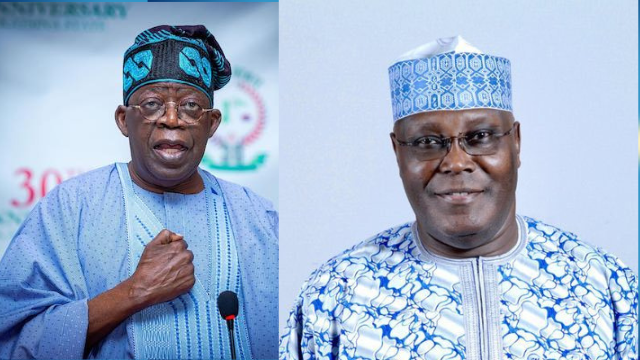
According to the Court, the CSU should produce all relevant and non-privileged documents to Atiku Abubakar (Tinubu’s key opposition in Nigeria’s 2023 presidential election) within two days.
“This matter is before the court on Atiku Abubakar’s application pursuant to 28 USC § 1782 for an order directing discovery from Chicago State University for use in a foreign proceeding (“Application”) [ECF No. 1]. For the reasons discussed below, the application is granted,” the judge ruled.
Atiku Abubakar, who is Nigeria’s former Vice President and the presidential candidate of the Peoples Democratic Party (PDP) in the 2023 election is the plaintiff in the matter. Abubakar is requesting the academic records of Tinubu at CSU through his lawyers in the US.
Abubakar, through his lawyer, Angela M. Liu, requests documents that include records of his enrollment and admittance to the university, dates of attendance, and any degrees, honours, and honours Tinubu may have received at the institution.
Abubakar informed the court that the subpoena was issued to investigate the accuracy and truth of Tinubu’s claims, adding that Tinubu is currently the president of Nigeria and is involved in numerous legal battles over his election and the validity of documents proving his enrollment at Chicago State University.
The legal team for Tinubu has argued that their client is unwilling to waive his right to privacy, and the court’s decision acknowledges this by referring to certain documents as “non-privileged.”
The university consistently attested to Tinubu’s attendance at the University and 1979 graduation in its deposition before the court.
The ICIR reported in August that the CSU responded to a request by Abubakar, seeking to release Tinubu’s academic records.
In its response, the CSU restated that Tinubu is the institution graduate.
In a document shared by the PDP on its official Twitter account on Thursday, August 24, the CSU said it needed to understand why Tinubu’s academic records could have any bearing on a 2023 election challenge in a foreign country.
However, it stated that Tinubu’s academic record would be made public whenever an order is issued by a court in the United States.
“Bola Tinubu, the President of Nigeria, graduated from the UniversityUniversity in 1979.
“The student records Abubakar seeks from the University via a documents subpoena (Doc.1-1) and the information Abubakar seeks the University to provide pursuant to a deposition subpoena (Dec. 1-2) concern Tinubu’s private educational records. But since Tinubu has intervened to oppose this discovery, the university defers to Tinubu on the privacy issues implicated by Abubakar’s application,” the statement reads.
The university said it struggled to understand how Tinubu’s grades and other student records from the 1970s till date and subsequently issued ceremonial diplomas could have any bearing on a 2023 election challenge in a foreign country.
The university admitted that it was not familiar with the issues in the Nigerian proceeding or the evidentiary and other legal principles applicable therein.
Accordingly, the CSU said it deferred to Tinubu, who is involved in that foreign proceeding, to move objections to the Abubakar’s application.
On Tuesday, Abubakar approached the Supreme Court to nullify the Presidential Election Petition Court (PEPC) judgement of September 6 that affirmed Tinubu’s election.
In the notice of appeal based on 35 grounds, Abubakar argued that the tribunal’s findings and judgement in the suit contesting Tinubu’s election as president by INEC had significant errors and had been unfairly rendered by Justice Haruna Tsammani.
The notice of appeal filed by Abubakar’s lead counsel, Chris Uche Atiku, requested that the Supreme Court overturn all of the tribunal’s findings and judgements because they did not accurately reflect the reasons for his client’s petition.
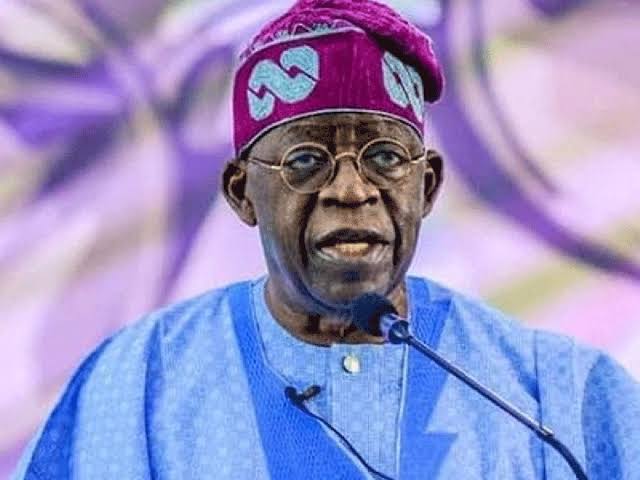
PRESIDENT Bola Tinubu has called on the United Nations to support Africa to curb the influx of illegal arms trade and illicit mining by foreign firms.
He made the call on Wednesday, September 20, while addressing the 78th United Nations General Assembly (UNGA).
He said illegal arms deals had resulted in inhumane commercial activities, especially in Sub-Saharan Africa, while noting that illegal mining had been a persistent concern, posing significant economic and environmental threats to several African countries, particularly Nigeria.
Speaking on illegal arms, the President said, “Our entire region is locked in a protracted battle against violent extremists. In the turmoil, a dark channel of inhumane commerce has formed. Along the route, everything is for sale. Men, women and children are seen as chattel.
“Yet, thousands risk the Sahara’s hot sand and the Mediterranean’s cold depths in search of a better life. At the same time, mercenaries and extremists with their lethal weapons and vile ideologies invade our region from the North,” he said.
He described the practice as harmful, which could adversely affect the region’s stability.
Tinubu noted that African nations were committed to developing their economies to limit the emigration of citizens to other regions under life-threatening circumstances for menial jobs.
He also said the continent was committed to ridding itself of terrorist groups, adding that the international community had a role in achieving this goal.
“We also shall devote ourselves to disbanding extremist groups on our turf. To fully contain this threat, the international community must strengthen its commitment to arrest the flow of arms and violent people into West Africa,” he said.
According to a report by SB Morgen Intelligence, ammunition from about 21 countries has been used in Nigeria’s conflict zones since the nation began to witness insurgency over a decade ago.
Nigeria’s porous borders contribute significantly to the smuggling of these arms as there are over 1400 illegal and poorly manned borders in the country.
Similarly, The ICIR, in different reports, had detailed how foreign illegal miners exploit Nigeria’s natural resources, fueling insecurity in the country.
The ICIR reports also exposed how traditional rulers engaged in arbitrary land grabs, conniving with illegal gold miners to destroy the ecosystem and natural vegetation in several communities in southwestern Nigeria.
While highlighting the adverse environmental impacts of illegal mining, Tinubu urged world leaders at the 78th UNGA to collaborate and implement stringent measures to curb the practice.
He said: “The fourth important aspect of global trust and solidarity is to secure the continent’s mineral-rich areas from pilfering and conflict. Many such areas have become catacombs of misery and exploitation. The Democratic Republic of the Congo has suffered this for decades despite the strong UN presence there. The world economy owes the DRC much but gives her very little.
“The mayhem visited on resource-rich areas does not respect national boundaries. Sudan, Mali, Burkina Faso, CAR, the list grows.”
According to him, billions of dollars meant to improve Nigeria go into fueling violence and insecurity, adding that the situation remained a grave risk to the country if left unchecked.
He warned that the UN member nations must respond by working with African nations to deter their firms and nationals from the pillage of Africa’s resources.
He further stated that Africa had abundant land resources and possessed a populace known for their creativity and industry, but “man has too often been unkind to his fellow man, and this sad tendency has brought sustained hardship to Africa’s doorstep.”