Home Blog Page 79

FCT elections: Key responsibilities of Area Council chairpersons

0

AS residents of Nigeria’s capital prepare for the next Area Council elections in the Federal Capital Territory (FCT), there is growing public interest in what elected chairpersons at the grassroots level are exactly responsible for.

Local government elections, known as Area Council elections in the FCT, are conducted under the supervision of the Independent National Electoral Commission and play a crucial role in shaping everyday life in communities across the territory.

While national politics often dominates public attention, decisions taken at the area council level directly affect roads, markets, schools, healthcare centres, sanitation, and local services that citizens interact with daily.

Many residents, however, mistakenly blame the federal government or the FCT Administration for problems that legally fall under the authority of area council chairmen. This confusion has weakened accountability over the years, allowing service delivery failures to persist without consequences.

Area councils were created to bring governance closer to the people — ensuring that local needs are addressed faster and more efficiently than higher levels of government could manage. When properly run, they serve as the foundation of development, public health, education, and community welfare.

In the FCT, there are six area councils: Abuja Municipal Area Council, Bwari Area Council, Gwagwalada Area Council, Kuje Area Council, Kwali Area Council and Abaji Area Council. Each is headed by a chairman elected to manage local affairs and oversee community-level development.

This explainer outlines the core duties of area council chairpersons as provided in the 1999 constitution:

1. Construction and maintenance of local roads and drainage

Area councils are directly responsible for building and maintaining community roads, streets, street lighting, drains, parks and public open spaces.

When inner roads are damaged, flooded, poorly lit or abandoned, it is primarily the duty of the area council leadership to intervene.

  1. Management of primary and adult education

Local governments participate in the provision and maintenance of primary schools, adult literacy centres and vocational education facilities. This includes school infrastructure, basic learning environments and community education programmes. Poor classrooms, collapsed buildings and neglected schools reflect a failure of grassroots governance.

3. Primary healthcare services

Area councils are tasked with maintaining health centres, dispensaries, maternity clinics and preventive health services in their communities. When clinics lack basic equipment, sanitation or staff support, responsibility largely lies at the local government level.

4. Environmental sanitation and refuse disposal

Waste collection, sewage management, gutter clearing and sanitary inspections fall within the area councils’ authority. Persistent refuse heaps, blocked drainage systems and unhealthy neighbourhood conditions signal breakdowns in local administration.

5. Regulation and development of markets, motor parks and public conveniences

Area councils establish, manage and regulate markets, slaughter slabs, motor parks and public toilets. These spaces are both economic centres and revenue sources. Their cleanliness, safety, orderliness and maintenance are direct reflections of council performance.

6. Registration of births, deaths and marriages

Local governments are legally responsible for registering vital events within their jurisdictions. Proper documentation helps in population planning, school enrolment, inheritance matters and access to government services.

7. Community development projects and social welfare

Area councils are expected to provide community centres, recreational parks, public libraries, water supply in rural and semi-urban areas, and support homes for the destitute, infirm and orphans. These services improve the quality of life and social stability.

8. Support for agriculture and natural resources development

Local governments participate in agricultural extension services, veterinary clinics and rural development programmes aimed at boosting food production and livelihoods, excluding mineral exploitation, which remains outside their control.

9. Regulation of shops, food outlets, advertising and local businesses

Area councils license and regulate kiosks, bakeries, restaurants, laundries, outdoor advertising, liquor sales and other small businesses to ensure public safety, hygiene and order in communities.

10. Town planning and building control

They help regulate buildings, name streets, number houses, and support local planning efforts to prevent disorderly development and unsafe structures.

11. Collection and management of local revenues

Area councils collect property rates, market levies, motor park fees, parking charges and other local taxes. These funds are meant to be reinvested into infrastructure, sanitation, health services and community projects. Poor development despite steady revenue collection is a major accountability issue.

12. Public safety support and basic emergency services

Local governments participate in fire services, environmental protection, traffic and community safety efforts in collaboration with higher authorities, helping maintain peace and respond to local emergencies.


This report is republished from The FactCheckHub

Plateau confirms dozens feared killed in mining explosion

0

THE Plateau State Government has confirmed a deadly explosion at a mining site allegedly owned by Solid Unit Nig. Ltd in Kampani Zurak, Wase Local Government Area.

In a press release issued on Thursday, February 18, and signed by the Commissioner for Information and Communication, Joyce Lohya Ramnap, the government said its preliminary findings revealed that about 33 persons were inside the mining tunnel at the time of the explosion.

The government noted that many were feared dead, while several others who sustained injuries were receiving treatment at nearby hospitals.

“The Plateau State Government has received with deep shock and profound sadness reports of a tragic explosion at a mining site in Kampani Zurak, reportedly owned by Solid Unit Nig. Ltd.

According to preliminary information, about 33 persons were said to have been inside the mining tunnel at the time of the explosion. Sadly, many lives are feared lost, while others who sustained injuries are currently receiving treatment in nearby hospitals,” the commissioner said.

Ramnap explained the state was working closely with security agencies, emergency responders, and health officials to contain the situation. She added that efforts were ongoing to secure the site, provide urgent medical care to the injured, and prevent further casualties.

“On behalf of the government and the good people of Plateau State, we extend heartfelt condolences to the families of those who have lost their loved ones in this unfortunate incident.

“We share in your grief at this painful moment. Government is deeply concerned about the development and is working closely with relevant security agencies, emergency responders and health authorities to ensure that the situation is brought under control,” she added.

The commissioner disclosed that a high-powered team of experts from the Federal Ministry of Environment was expected in Wase from Abuja to assess the situation and determine the cause of the explosion.

“Meanwhile the Minister of Environment, Balarabe Abbas Lawal had earlier reached out to the Governor and directed the immediate and total shutdown of all mining activities in the affected area pending further investigations. In furtherance of this directive a high powered team of experts from the Federal Ministry of Environment will arrive Wase tomorrow from Abuja to assess the situation.

The Government assures the public that no stone will be left unturned in addressing this tragedy and safeguarding lives across mining communities in the state,” she said.

Ramnap urged residents of Kampani Zurak and surrounding communities to remain calm and law-abiding, while the public has been cautioned against spreading unverified information that could heighten tension or panic.

“Government calls on residents of Kampani Zurak and surrounding communities to remain calm and law-abiding. We urge the public to avoid spreading unverified information that may heighten tension or panic.

“Furthermore, we appeal to all relevant federal and state agencies responsible for mining regulation, safety enforcement, and disaster response to urgently intervene, conduct a thorough investigation into the cause of the explosion and ensure that appropriate safety standards are strictly enforced to prevent future occurrences,” the commissioner added.

Beyond US airstrikes and the resilience of Lakurawa in Sokoto

0

By Malik SAMUEL

On Friday, February 6, when Lakurawa fighters visited seven villages in Kebbe Local Government Area (LGA) of Sokoto state, it was a stark contrast to a month earlier when the group ran helter-skelter, facing an existential threat following the U.S. 2025 Christmas Day bombing. The Kebbe trip targeted villages that the group had hitherto not extended its influence over.

For Dando Sibu, the group’s northwest Nigeria head, and his team that trip was a follow-up to earlier messages sent notifying the communities of the group’s intention to visit.

The Kebbe visit marked a remarkable recovery and regrouping for a group that a month earlier was only prevented from leaving Nigeria for Niger Republic by a resolute blockade of routes by Nigerian security forces. It also shows how resilient jihadi and violent extremist groups are, especially when responses to the threats they pose are sporadic, reactionary and not consistent.

As of February 1, this year, residents of Gidan Madi and Magoho communities in Tangaza local government areas of Sokoto State reported the presence of Lakurawa fighters. While local vigilante in Gidan Madi were able to repel their arrival twice, the group managed to kidnap once person. In Magoho, the group faced less resistance, prompting fighters to establish a sort of permanent presence there. A source reported an encounter with them in the community.

“They asked a community leader that I was walking with who I was and why I was there. Before we arrived at the location where they were seated, I had told the community, in case they asked, to tell them that I was there as part of efforts to bring infrastructure to local communities. I was there for an assessment. ‘So, he’s an engineer’, they said and we said yes”, the source explained.

As more communities in the northwest report the resurgent presence of fighters, Lakurawa appears to have weathered the storm wrought by the temporary U.S. pressure, that resulted in the deaths of over 150 fighters.

 Nigeria’s least understood terrorist group

For years, the popular narrative has been that Lakurawa arrived in Nigeria around 2018 on the invitation of community leaders to protect them from bandits. This narrative has been widely shared by both researchers, journalists, government officials and the international community. The same has been said of the group’s affiliations, with many claiming the group is an extension of the Islamic State Sahel Province, an argument that seems to have gained international acceptance, especially as the U.S. airstrike in Sokoto, which hit the group’s camp, claimed to have been aimed at Islamic State fighters.

Another school of thought posits that that Lakurawa is linked to the al-Qaeda affiliate, JNIM. This lack of consensus about its affiliation has also fuelled the speculation that the group may not be singularly aligned to any specific jihadi group, as it may be comprised of fighters from different jihadi sects.

It is understandable to see where the arguments and confusion come from – there has not been much research specifically dedicated to unravelling what exactly Lakurawa is.

Pending research report by this author reveals that Lakurawa’s presence in Nigeria predates 2018 and goes back more than a decade, with the sect’s journey to Sokoto beginning from Mali to Borno through Lake Chad and then to Niger and Kebbi states. While in Borno, the group teamed up with Boko Haram under late Abubakar Shekau. By the time it arrived Kebbi in 2017, community leaders in Sokoto had invited people from Niger Republic to protect their communities from rampaging bandits crossing over from neighbouring Zamfara. Lakurawa’s appearance in Sokoto in late 2018 coincided with the presence of these other men from Niger Republic tasked with the protection of communities.

From interviews with Lakurawa members, community members and leaders, including four of the nine community leaders that took the decision to hire gunmen from Niger Republic, Lakurawa is Al-Qaeda linked and is different from those invited from Niger to protect communities. The community leaders insisted that they knew every one of the 100 men they invited  because these men, paid a monthly stipend of N30,000 by the communities, lived within, from where they went on daily patrols to the forests to take on bandits.

Problems arose between the communities and their armed protectors when the men started robbing community members, rustling their livestock and harassing people. The major problem, however, was when they started disrupting marriage proposals because the women they were interested in were already engaged to other men, with some on the verge of getting married.

In Gidan Madi, one of the eight communities the men were deployed to, one of them met a girl and said he liked her. She turned him down, saying she was already engaged and close to getting married. On the day of the wedding, they came and disrupted the ceremony. While the community tried to resolve the problem, the groom was traced to his rice farm and killed. This completely broke the relationship between the community and the men.

The decision was taken by the same community leaders that invited them to disengage their services and to ask them to leave. This was around 2018. The men moved into the forest, from where they attacked communities. It was around this time that Lakurawa arrived Sokoto from Kebbi State.

How Lakurawa drew attention of security forces

The group’s presence in Nigeria had largely been under the radar, particularly in Sokoto, because they did not attack communities. Their arrival coincided with communities in Tangaza and Gudu falling out with the men they hired from Niger Republic, who had turned around to perpetuate the same problem they were recruited to curb. When Lakurawa members arrived in communities, it was first to preach about jihad.

To get the people’s buy-in, they promised to protect them from attackers. Lakurawa fighters went after these armed men, endearing itself to the communities. Sometimes, they would capture these men in the forest, bring them to the communities and kill them in the presence of community members. So, when Lakurawa asked for Zakat from the communities, people gladly obliged because in addition to being mandated in Islam, the people saw Lakurawa as a group that was keen to propagate Islam through jihad and the implementation of Sharia.

It shied away from attacking communities, focussing on attacking bandits, security forces and the armed men hired from Niger Republic by the communities. This explains why communities tolerated the group when it exerted some control on people’s lifestyle – how to dress, how to use mobile phones, what traders could sell, etc.

This control soon turned into outright criminality, where people were forcefully dispossessed of their belongings, especially livestock. The group moved from collecting zakat to outright seizures of properties. Those who resisted were subjected to punishment, including abductions and killing. Gradually, attacks became indiscriminate, with whole communities targeted by fighters for being uncooperative. Consequently, the Nigerian military in November 2024 announced the presence of a “new terrorist group” in Northwest Nigeria. By January 2025, the Nigerian government had designated Lakurawa a terrorist organisation.

Despite the official acknowledgement of the presence of Lakurawa, there was no real sustained efforts from the government to deal with the challenge the group posed, as focus was more on the rampaging banditry. Most of the efforts against Lakurawa had come from community security actors popularly called Yan Sakai.

However, with the abduction of the Deputy Speaker of the Kebbi State House of Assembly on 31 October and the 21 November Papiri abduction of more than 250 students and teachers in Niger state, the Nigerian military ramped up operations targeting group’s camps in Sokoto and Niger states. While the Kebbi State Deputy Speaker was abducted by Lakurawa, the Papiri school abduction was carried out by the Sadiku-led Jama’atu Ahlis Sunna Lidda’awati Wal-Jihad faction of Boko Haram. Some of the students were, however, kept in Lakurawa’s Borgu camp in the state, which further exposed the group’s presence in the state to security forces.

How many Lakurawa fighters have been killed?

Based on tracking of the group, including information from sources around it, Lakurawa has suffered serious casualties in the last three months, from December 2025 to February 2026.

As part of efforts to locate the students and also deal with violent actors that have dominated Niger State, security forces on December 3, 2025 attacked Lakurawa’s camp in Borgu, resulting in the death of 46 fighters and forcing the group’s Nigeria head, Amir Tajudeen, to flee to the neighbouring Ngaski forest in Kebbi State. A week later, from December 9 to 10, vigilante members in Birnin Yauri killed 11 fighters in one of the most successful attacks by local vigilantes.

Around this period, U.S. President Donald Trump’s Christian genocide narrative and threat of military action in Nigeria had created global headlines, bringing back debates about the effectiveness of U.S. interventions in countries like Afghanistan, Iraq, Libya, etc. On December 25, 2025, the U.S., and later the Nigerian government, announced that it had carried out strikes targeting ‘Islamic State’ fighters in Sokoto. Trump’s justification of the strike as an effort to protect Nigerian Christians was ironic, given that not only is Sokoto state overwhelmingly Muslim, but both the perpetrators of violence and their victims in Northwest Nigeria are overwhelmingly Muslims.

Leaving the Islamic State West Africa Province (ISWAP), a group known to openly targeting and calling for the targeting of Christians as part of its campaign in the northeast of Nigeria and the Lake Chad, to target a group un-affiliated with the Islamic State in a different region was a clear case of mis categorisation of conflict or violent actors.

Nevertheless, the U.S. strikes proved successful, with group sources claiming more than 150 fighters were killed as a result of the strikes.

The impact of the strikes was such that Lakurawa considered fleeing from Nigeria, through Niger Republic to Chad. The attention that followed the strikes, including the deployment of Nigerian security forces in different communities in Sokoto state, made this attempted escape a difficulty. From January 2 to 17, 2026, security forces killed 55 Lakurawa fighters during this failed escape. The attacks against this foiled escape took place in different communities in Sabon Birni local government area of Sokoto State.

What next for the fight against Lakurawa?

There appears to have been some quiet in the offensive against Lakurawa, as the group has continued to regroup, reinforce its ranks with the recruitment of bandits, expand its predatory reach against civilians and foster its warped governance on communities.

Lakurawa received reinforcements from Mali in early January this year, brought by the group founder, Amir Habib Tajje. In the same vein, more than 200 bandits from Katsina were successfully recruited to the group in February through a local resident in Gidan Madi, Sokoto state. To mitigate future losses, Lakurawa has opened another camp in Gudu Forest, still in Sokoto State. This is to avoid the concentration of fighters in a single camp, as shown by the impact of the U.S. strike. The Gudu camp is headed by Isa Bello, popularly called Abu Yazid, a trusted lieutenant of Dando Sibu, the group’s northwest Nigeria head. Sibu heads the Tangaza forest camp.

The fight against terrorism has now largely shifted to the northeast, where ISWAP and JAS continue to wreak havoc. Since Gen Christopher Musa assumed office as defence minister, the Nigerian military has conducted strategically focused attacks against ISWAP, typified by the successful overrunning and destruction of the group’s camps within the famed Alagarno forest, otherwise called Timbuktu. The Timbuktu operation, led by the popular Special Force commander, Col Ishaya Aliyu Manga, gave Nigerians a peek into the barbarity, yet, ingenuity of ISWAP, with pictures and videos emerging showing underground storage facilities and detention centres entirely made up of iron.

As focus is redirected towards the northeast, authorities must not lose sight of the northwest and northcentral, with the latter likely to become the most dangerous region, given the possibility of connecting the north and south with insecurity. With Jama’at Nusrat al-Islam wal-Muslimin (JNIM), the Sahel al-Qaeda-linked group now operating in northcentral Nigeria, it is only a matter of time before it operationally links up with Lakurawa, given their ties to al-Qaeda.

Malik Samuel is a senior researcher at Good Governance Africa-Nigeria. Before joining GGA, he was a researcher with the Institute for Security Studies, specialising in the Boko Haram conflict in the Lake Chad Basin Region.

ICPC detains El-Rufai after spending two nights with EFCC

0

THE Independent Corrupt Practices and Other Related Offences Commission (ICPC) has confirmed that former Kaduna State governor, Nasir El‑Rufai, is in its custody.

In a statement signed by its spokesperson, J. Okor Odey, on Wednesday, February 18, the commission said El-Rufai was in its custody as of the close of work but did not disclose the nature of its probe.

The development followed the former governor’s detention by the Economic and Financial Crimes Commission (EFCC), where he presented himself on Monday, February 16, after an invitation over alleged financial improprieties during his tenure as Kaduna State governor between 2015 and 2023.

In 2024, the Kaduna State House of Assembly indicted the former governor over the alleged diversion of N423 billion in public funds and money laundering, urging anti-graft agencies to investigate him.

Report indicated that El-Rufai, who spent two nights in EFCC custody, was granted bail at about 8 p.m. on Wednesday but was immediately re-arrested by armed operatives who reportedly laid in wait at the EFCC premises.

Backstory

Days before his detention by the ICPC, El-Rufai had alleged that Nigeria’s National Security Adviser, Nuhu Ribadu, personally ordered his arrest upon arrival in the country.

Speaking in an interview on Arise TV on February 13, the former governor claimed the ICPC deployed the State Security Service to ‘abduct’ him at the airport without prior communication.

The ICIR reported how the former governor’s media aide said security personnel attempted to arrest him on arrival from Cairo at the Nnamdi Azikiwe International Airport, Abuja, leading to a brief confrontation captured in viral videos.

“The DSS was procured to abduct me by the ICPC. The ICPC that has never communicated with me ever,” he said.

“I asked for a letter of invitation, and none of them had a letter of invitation to present. I refused to follow them without this invitation, and they tried to force me to go with them. One of my aides was beaten up, and my passport was seized from him,” he said.

The former governor further alleged that ICPC officials later delivered a letter inviting him for questioning on February 13, adding that his legal team indicated willingness to honour the invitation after meeting with the EFCC.

FG arraigns El-rufai

While details of the investigation by the ICPC is still sketchy, the former minister had been charged with 3-count charges bordering on unlawfully interception of the phone communications of the National Security Adviser, Nuhu Ribadu.

The three-count charge, instituted at the Federal High Court, Abuja, and dated February 16, 2026, also stemmed from statements El-Rufai made during his appearance on Arise TV’s Prime Time programme.

In count one, prosecutors alleged that the former governor admitted during the interview that he and unnamed associates “unlawfully intercepted the phone communications” of Ribadu, an offence said to be punishable under Section 12(1) of the Cybercrimes (Prohibition, Prevention, etc.) Amendment Act, 2024.

Count two further accused him of acknowledging knowledge of individuals responsible for the interception but failing to report them to security agencies, contrary to provisions of the same law.

In count three, the prosecution alleged that El-Rufai and others still at large used technical systems that compromised public safety and national security by intercepting the NSA’s communications, an offence punishable under Section 131(2) of the Nigerian Communications Act, 2003.

Tinubu strips NNPC of power to deduct revenue, orders direct remittance to FAAC

0

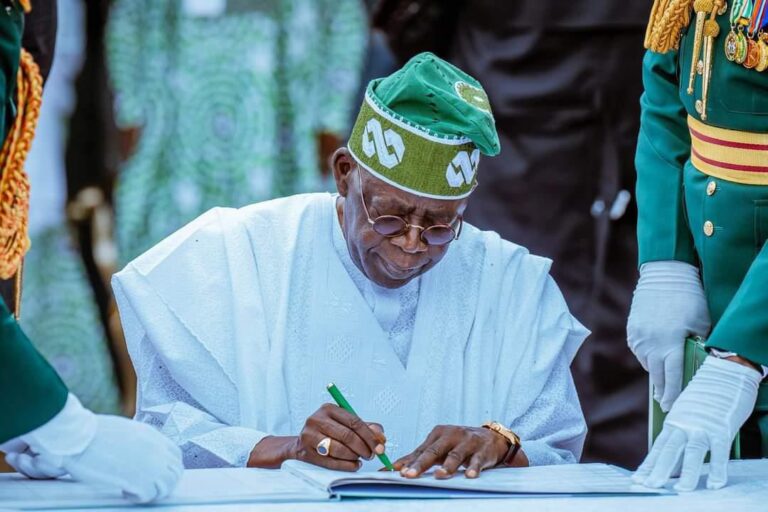
PRESIDENT Bola Tinubu has signed an executive order on direct remittance of oil and gas revenues to the Federation Account Allocation Committee (FAAC).

By this order, all taxes, royalties and profits under Production Sharing Contracts (PSCs) are to be fdully remitted to the federation account, effectively blocking deductions at source by the national oil company.

The decision was disclosed in a statement issued on Wednesday, February 18, by presidential spokesperson, Bayo Ononuga,

The executive order, the Presidency said, will safeguard and enhance oil and gas revenues for the federation, curb wasteful spending, and eliminate duplicative structures in the oil and gas sector.

According to the order, which has been officially gazetted, the NNPC will no longer collect and manage the 30 per cent frontier exploration fund.

“NNPC Limited will ensure that the 30 per cent profit from oil and gas from production sharing, profit sharing, and risk service contracts currently earmarked for the frontier exploration fund is henceforth transferred to the Federation Account,” the Presidency said.

It added, “NNPC Limited will no longer be entitled to the 30 per cent management fee on profit oil and profit gas revenues, which should go to the federation account.

“In the same vein, all operators/contractors of oil and gas assets held under a production sharing contract shall, from the date of the Executive Order, which is February 13, 2026, pay royalty oil, tax oil, profit oil, profit gas, and any other interest howsoever described which is due to the government of the federation directly to the Federation Account.”

The Presidency said Tinubu had also suspended payments of the gas flare penalty into the midstream and downstream gas infrastructure fund.

“The Commission shall, from the date of the Executive Order, pay proceeds from all penalties imposed on operators for flaring gas into the Federation Account and cease payment of such proceeds into the Midstream and Downstream Gas Infrastructure Fund (MDGIF)

“All expenditure from the MDGIF shall be conducted in line with extant public procurement laws, policies and regulations.”

The president, according to the statement, signed the order in pursuance of Section 5 of the Constitution of the Federal Republic of Nigeria (as amended).

“The Executive Order is anchored on Section 44(3) of the Constitution, which vests ownership, control, and derivative rights in all minerals, mineral oils, and natural gas in, under, and upon any land in Nigeria, including its territorial waters and Exclusive Economic Zone, in the Government of the Federation,” the statement noted further.

More revenue accruals to the federation account

According to the Presidency, the directive seeks to restore the constitutional revenue entitlements of the federal, state, and local governments, which were taken away in 2021 by the Petroleum Industry Act (PIA).

It said the PIA created structural and legal channels through which substantial federation revenues “are lost through deductions, sundry charges, and fees”.

“Under the current PIA framework, NNPC retains 30 per cent of the Federation’s oil revenues as a management fee on profit oil and profit gas derived from production sharing contracts, profit sharing contracts, and risk service contracts.

“In addition, the company retains 20 per cent of its profits to cover working capital and future investments. Given the existing 20 per cent retention, the additional 30 per cent management fee is considered unjustified by the Federal Government, as the retained earnings are already sufficient to support the functions NNPCL performs under these contracts.

“NNPC Limited also retains another 30 per cent of its profit oil and profit gas under the production sharing, profit sharing, and risk service contracts, as the frontier exploration fund under Sections 9(4) and (5) of the PIA.”

According to the statement, a fund of this size, being devoted to “speculative exploration”, could build up idle cash and encourage inefficient exploration spending, diverting resources from urgent national priorities like security, education, healthcare, and the energy transition.

“There is also the Midstream and Downstream Gas Infrastructure Fund (MDGIF) under Section 52(7)(d) PIA, funded by the collection of gas flaring penalties provided under Section 104,” it said, stressing that “The fund is to be used for supporting environmental remediation and relief for host communities impacted by gas flaring.

The Presidency, however, observed that Section 103 of the PIA had already established a dedicated environmental remediation fund, administered by NUPRC, specifically designed to fund the rehabilitation of communities negatively impacted by upstream petroleum operations, including gas flaring.

“Furthermore, Section 103 already imposes a fee on lessees to contribute to this fund for precisely this purpose.”

All the deductions, the Presidency said, far exceed global standards, diverting over two-thirds of potential remittances to the federation account.

The Presidency said the ongoing decline in net oil revenue inflows was largely due to these deductions and the fragmented oversight structure under the current PIA framework.

Nurses decry fresh attack on colleague in Abuja, demand urgent security action

0

THE National Association of Nigeria Nurses and Midwives, the Federal Capital Territory (FCT) chapter, has condemned the attack on a nurse by suspected “one-chance” criminals shortly after closing from duty at Wuse General Hospital.

In a statement on Wednesday, February 18, the association said the nurse had stayed behind after her afternoon shift to assist a colleague on night duty in  stabilising a patient at the intensive care unit before boarding a vehicle home.

She was allegedly attacked, beaten and left seriously wounded. Her colleagues said she is currently receiving treatment.

The union described the development as part of a troubling pattern of attacks targeting healthcare workers across the FCT.

According to the statement, nurses working in the FCT now operate under constant fear, particularly when commuting during early mornings and late evenings.

The association called for an immediate and thorough investigation into the latest assault, urging security agencies to identify, arrest and prosecute those responsible.

It also appealed to the Minister of the FCT, Nyesom Wike, to direct the police, the State Security Services (SSS) and other security agencies to strengthen surveillance around hospitals and patrol vulnerable bus stops.

“No healthcare worker should risk their life simply for serving humanity. Nurses, especially the female gender are no longer safe commuting to and from work. Bus stops around hospitals have become death traps, and fear now shadows our daily duties. Nurses cannot continue to serve under constant threat to their lives.

“We demand immediate, decisive, and sustained action to guarantee the safety and security of all nurses and healthcare workers in the Territory,” the statement added.

The latest attack comes weeks after two women were found dead in separate locations in Abuja in incidents suspected to be linked to one-chance criminal gangs.

One of the victims, Chinemerem Pascalina Chuwumeziem, a nurse at the Federal Medical Centre, Jabi, was killed after reportedly boarding a vehicle home from work on January 3, 2026.

Her body was later dumped and discovered by the roadside.

The killing drew condemnation from the FCT council of the nurses’ association, which described it as not only an attack on the nursing profession but “an assault on healthcare workers and humanity at large.”

On the same day, another woman, Princess Ochigbo, was found lifeless at a different location in Abuja under circumstances also suspected to be linked to one-chance operations.

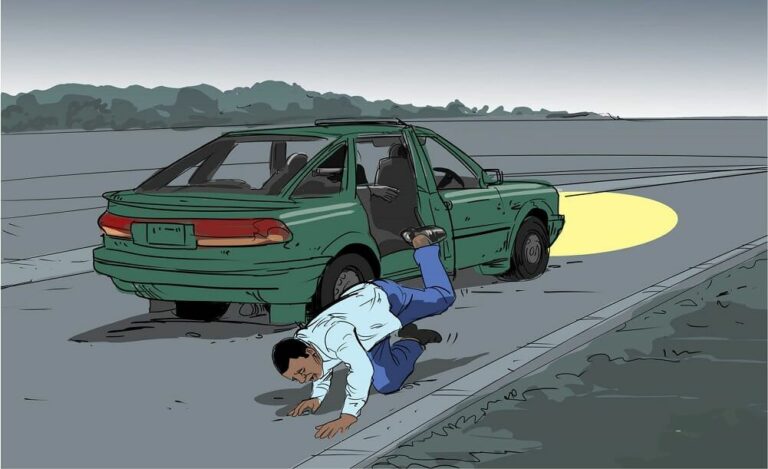
Investigations and previous reports have shown that criminals often pose as commercial drivers, lure unsuspecting passengers into vehicles, rob them and, in some cases, assault or abandon them along isolated roads.

Security analysts have linked the continued prevalence of the crime to gaps in organised public transportation within the capital. The decline in operations of the Abuja Urban Mass Transport Company Limited (AUMTCO), alongside insufficient commercial buses, has forced many residents to rely on unregistered taxis and private vehicles, especially during off-peak hours.

Reacting to the earlier killing, the nurses’ association had urged authorities to strengthen security around hospitals and major junctions and to provide safe and organised transport options for healthcare workers on shift duty.

Group tasks UniAbuja students on justice, civic duty, distributes food items

0

STUDENTS of the University of Abuja have been charged to uphold justice, demand accountability and contribute actively to nation-building.

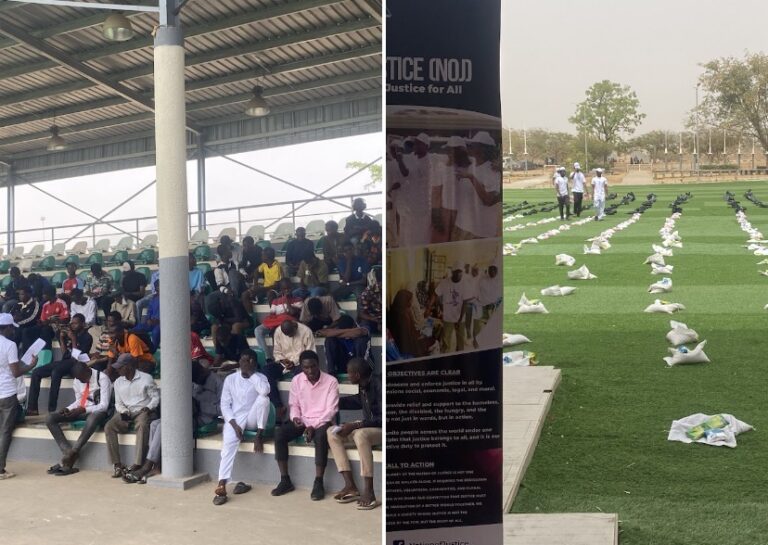
A non-governmental organisation, the Nation of Justice (NOJ) made the call while concluding a two-day enlightenment and humanitarian outreach at the institution on Wednesday, February 18.

The programme focused on educating students about the rule of law, constitutional responsibility and social justice.

Addressing participants while distributing palliatives to the students, NOJ founder, Jyde Adelakun, urged students to see civic responsibility as a constitutional obligation.

He said supporting the government should not be through blind loyalty, silence or fear, but through responsible questioning and active contribution to national development.

“This call is not optional. It is your constitutional duty and my constitutional duty as well,” ” he told the students.

Citing Section 24 of the Constitution, he said every Nigerian is obligated to abide by the Constitution, promote national interest, assist lawful authorities in maintaining law and order, and contribute positively to the well-being of the nation.

According to him, discipline, integrity, dignity of labour, social justice, religious tolerance, self-reliance and patriotism are binding moral and civic responsibilities for every youth.

Adelakun further challenged the students to reflect deeply on the meaning of justice.

“Justice is not a slogan. Justice is not selective enforcement. Justice is not delayed until it loses meaning,” he said.

He described justice as freedom under the rule of law, where rights are protected, duties are enforced and power is held accountable.

“True freedom does not mean the absence of responsibility. It means the courage to act rightly, the discipline to obey the law and the sacrifice to serve the common good,” he added.

Quoting former United States President John Fitzgerald Kennedy, he urged the youths to ask what they could do for their country rather than what the country could do for them.

The NOJ founder further listed practical expressions of justice to include adequate facilities in universities, campus security, access to food, healthcare and shelter, stable food prices, electricity supply, good roads, and credible elections where votes count.

He called for zero tolerance for corruption, abuse of power and unconstitutional prosecution, warning that a democracy that tolerates selective justice and judicial delay is merely “performing democracy.”

“Justice delayed is justice denied,” he said, urging students not to be too young to matter in shaping Nigeria’s future.

Support for students

The enlightenment programme was followed by the distribution of food packs to more than 1,000 students, who are currently sitting for examinations.

Each beneficiary either received 3.5kg of garri, beans or rice, alongside sachets of cornflakes, milk, vegetable oil, instant noodles, notebooks and pens.

Some students, who spoke with The ICIR described the gesture as timely, while also noting the importance of youths’ engagement and involvement in politics.

A 100-level student, Steven Blessing, said the support would ease the pressure of feeding during exams. “This is a big offer to me. This will really help. I am very grateful,” she said.

Blessing, a Public Administration student, called on well-meaning Nigerians and corporate institutions in the country to support people in need.

Another student, Favour Abeh, said the message of unity across ethnic and religious group stood out to her during the programme.


Tinubu signs amended Electoral Act into law

0

PRESIDENT Bola Tinubu has signed the Electoral Act 2026 (Amendment) Bill into law.

The bill was passed on Tuesday by the National Assembly following weeks of intense debates, reviews, and amendments by both chambers.

The signing ceremony was held at the State House on Wednesday at about 5:00 p.m., with principal officers of the National Assembly in attendance.

The ICIR reported that Tinubu signed the Act just about 24 hours after it was passed by the National Assembly, against the wishes of many lawmakers.

The House of Representatives revisited some clauses of the Act on Tuesday during an executive session convened after opposition lawmakers attempted to block the move to reverse the earlier passage in December 2025.

Opposition lawmakers staged a walkout and proceeded to the House of Representatives Press Centre, following the rejection of the amendment of the Act demanding that votes should be transmitted electronically and real time to the Independent National Electoral Commission (INEC) IReV portal immediately after they are counted at the polling unit.

The Minority Leader, Chinda led the lawmakers to chant “APC, Ole (thief)” and alleged that the process was driven by partisan interests rather than national good. Some claimed that certain members had collected money, although no names or parties were mentioned.

Chinda said opposition members opposed the approved versions of Sections 60 and 84. On Section 60, he maintained that results should be “transmitted electronically without any proviso that reverts to manual collation in the event of transmission failure.”

The ICIR reported a similar rowdy session in the Senate last week over the Electoral Act, a development that prompted the Senate President, Godswill Akpabio, to reconstitute the harmonisation committee to resolve outstanding differences between both chambers.

Akpabio subsequently reappointed Simon Lalong (APC, Plateau South) as chairman of the committee.

Meanwhile some Nigerians, including the 2023 presidential candidate of the Labour Party, Peter Obi, have joined the coalition of civil society organisations to demand the inclusion of a compulsory provision for real-time electronic transmission of election results in the Act, warning that Nigeria’s democracy would not survive without credible polls.

They made their demand in a peaceful demonstration at the National Assembly in Abuja all through last week.

WSCIJ seeks entries for AI RUSH training

THE Wole Soyinka Centre for Investigative Journalism (WSCIJ) is seeking entries from local radio and audio journalists across Nigeria for its RUSH with AI: Strengthening Your Radio and Audio Stories Beyond First Air.

The one-day virtual training is scheduled to hold on Thursday, February 26, 2026, in commemoration of World Radio Day 2026.

It is designed to equip radio reporters, producers, editors, podcasters, and print journalists working in audio storytelling with practical artificial intelligence (AI) tools to enhance accountability reporting and deepen the impact of their stories beyond first broadcast.

The organiser says, “As the media landscape continues to evolve, the programme aims to support journalists in responsibly integrating AI into their workflows, not as a replacement for editorial judgment, but as a tool to strengthen investigation, tracking, follow-up reporting, and audience engagement.

“Radio remains one of the most accessible and trusted mediums for reaching diverse communities. However, many accountability stories lose momentum after initial airing. RUSH with AI seeks to address this gap by providing participants with hands-on guidance on how to use AI tools for monitoring developments, analysing data, generating follow-up angles, expanding distribution, and sustaining public engagement around critical issues.”

The training is open to local radio journalists (reporters, producers, editors), podcasters and audio journalists, and print journalists engaged in audio storytelling.

Participants will benefit from an interactive learning experience that blends practical demonstrations with strategic conversations on the ethical and responsible use of AI in journalism.

The deadline for the application is February 20, 2026. Interested applicants can apply here.

Gabon suspends social media amid rising protest

0

GABON has suspended social media platforms “until further notice” due to concerns over content allegedly causing conflict and division in the country.

The country’s High Authority for Communication cited “inappropriate, defamatory, hateful, and insulting content” was undermining human dignity, public morality, the honour of citizens, social cohesion, the stability of the Republic’s institutions and national security”.

The government also linked the suspension to issues including spread of false information, cyberbullying, and unauthorised disclosure of personal data.

The regulator’s spokesperson, Jean-Claude Mendome, said the suspension was necessary.

“These actions are likely to generate social conflict, destabilise the institutions of the Republic, and seriously jeopardise national unity, democratic progress, and achievements,” he stated.

Despite the ban, the government claimed that “freedom of expression, including freedom of comment and criticism,” remains “a fundamental right enshrined in Gabon“.

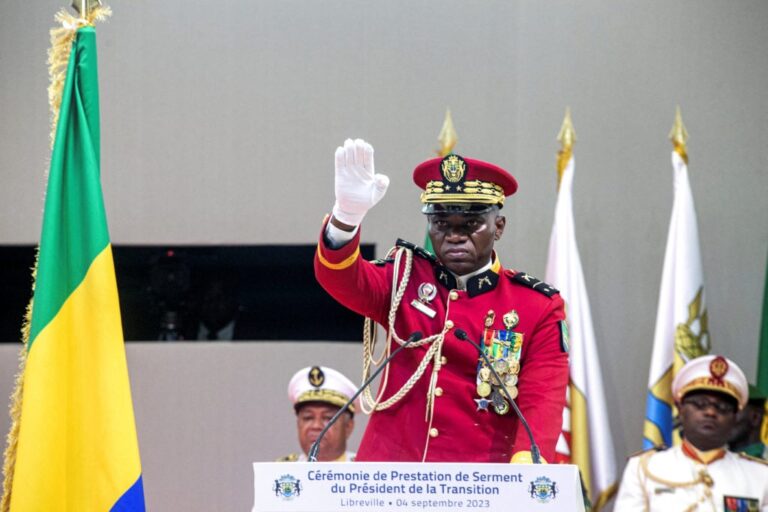
The move comes as President Brice Oligui Nguema faces growing social unrest. Teachers have been on strike since December over poor pay and working conditions, with other public sectors joining the protests.

The government assured that the suspension would be temporary, stressing that the decision aimed to protect the country’s stability and democratic values.