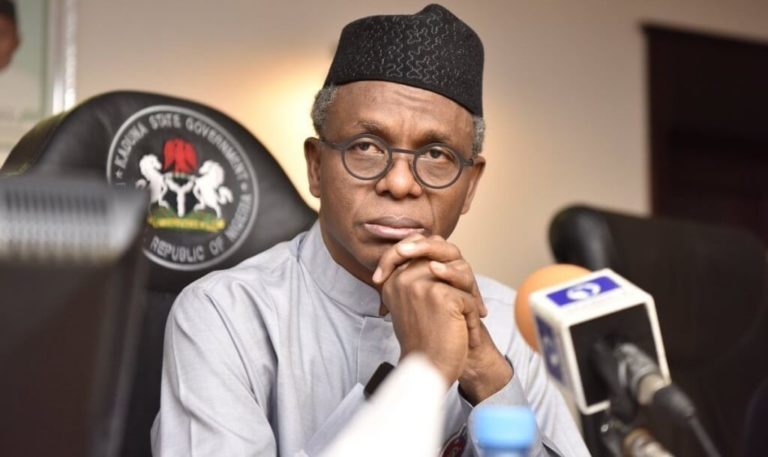
THE HOUSE of Representatives was thrown into chaos on Tuesday as lawmakers clashed over a motion seeking to reconsider the Electoral Act Amendment Bill 2025.
Francis Waive, Chairman of the House Committee on Rules and Business, moved to withdraw the bill passed on December 23, 2025, citing the need to address irregularities in the electoral system before the 2027 general elections.
Even with the ‘nays’ exercising dominance over the voice vote, Speaker Tajudeen Abbas ruled in favorr of the ‘ayes’, leading to protests from lawmakers. The session was eventually moved to an executive session, in the face of opposition from some members.
The controversy centres on the real-time transmission of election results to the Independent National Electoral Commission’s (INEC) Result Viewing Portal (IReV). The House had accepted this proposal, but the Senate initially rejected it. However, the Senate later withdrew its decision and approved electronic transmission with a fallback to manual collation if technology fails.
“The presiding officer shall electronically transmit the results from each polling unit to the IReV portal in real time, and such transmission shall be done after the prescribed form EC8A has been signed and stamped by the presiding officer and/or countersigned by the candidates or polling unit agents, where available at the polling unit,” the approved clause states.
A conference committee has been established to align the differences between the House and Senate versions. Civil society organisations are urging the National Assembly to adopt the House’s version on result transmission.
The National Assembly has assured INEC of its support for the 2027 general elections, with Senator Simon Lalong and Representative Bayo Balogun cautioning INEC against making unachievable promises.
“IReV was not even in the Electoral Act; it was only in INEC regulations. So, be careful how you make promises,” Balogun advised.
THE ICIR reported that the Senate President Godswill Akpabio issued the directive in a memo signed by the Clerk of the Senate, Emmanuel Odo, dated February 8, and circulated to senators, announcing the emergency sitting without stating the reason for the emergency plenary.
Although the amendment introduced several changes to the law, public debate has centred largely on one contentious provision: the rejection of mandatory electronic transmission of election results from polling units to INEC’s Result Viewing Portal (IREV).
However, many political parties, politicians and civil society actors have criticised the clause and called on lawmakers to reverse it, as some advocacy groups have also threatened mass action. A coalition operating under the banner Enough is Enough has begun mobilising supporters for a protest at the National Assembly, using the hashtag #OccupyNASS.
THE South-east region of Nigeria has lost an estimated N17 trillion in almost five years because of the enforcement of sit-at-home orders from non-state actors, comprising mainly the Indigenous People of Biafra (IPOB), according to research data from The ICIR.
The enforcement of the sit-at-home order every Monday was an approach IPOB adopted to protest the federal government’s continued detention of its leader, Nnamdi Kanu.
While reaffirming the colossal loss to the region, the Onitsha Chamber of Commerce, Industry, Mines and Agriculture (ONICCIMA) reported that over N12 trillion was lost in businesses and related investments in the Southeast region due to the enforcement of the sit-at-home directives.
In counting the cost of the enforcement, they said the investment climate in the region was all time low, as some investors severed investment and supply chains
The enforcement of the Monday sit-at-home order lasted for almost 5 years, with its commencement on August 9, 2021. However, there was respite following the intervention of Governor Chukwuma Soludo and other governors in the region, who issued a directive for economic activities to resume on Mondays, with sanctions for violators already being enforced.
Other states, such as Enugu, Ebonyi, Imo, and Abia, have also been assuring businesses and banks of security provisions on Mondays as banks and traders cautiously return to business.
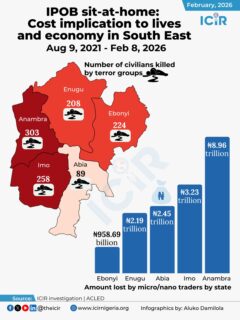
Infographics data on economic losses due to the sit-at-home
Currently, businesses, banks and schools ‘cautiously’ go about their economic activities on Monday, as most Southeast governors have issued a directive calling for an end to the sit-at-home.
The President of ONICCIMA, Chinedu Nwonu, who recounted the loss to businesses and affirmed the over N12 trillion losses, said many businesses lost supply chains, which affected investors’ confidence.
He recalled that Onitsha, as a trading and business hub with transport, logistics and banking systems interconnected, got weakened because of the directives largely enforced by non-state actors.
“Onitsha has transportation links to every part of Nigeria for business linkups. This is why logistics, banking and textile industries were adversely affected. Investment confidence and supply and logistics chains got broken as a result of the sit-at-home enforcement,” he said.
“In most cases, clients have to incur extra costs by staying in Asaba from the weekend to Monday to meet up with their business partners at the Onitsha main market and other link-up markets, which inflates trading costs,” he added.
While admitting that people still express fears about their activities, he described the days lost to the sit-at-home as a national tragedy.
“It would still take time for most of the businesses to recover and consolidate fully as a result of the sit-at-home. Onitsha is a big West-African market hub and has linkages across the country and beyond. Logistics and business match-making links are broken.
He also noted that industrial and hospitality hubs are gradually finding their feet, adding that banks are some strategic businesses are still opening with caution.
What data says
Notably, The ICIR data highlighted colossal losses from micro, small and medium enterprises agencies.
The data relied on figures from the National Bureau of Statistics (NBS), Nigeria’s data agency, and the Small and Medium Enterprise Development Agency of Nigeria (SMEDAN) 2021 survey reports.
The survey classified Nigerian businesses into four categories: nano, micro, small and medium enterprises.
In Anambra, The ICIR data showed micro businesses lost N1.3million on Mondays. It also said individual micro traders lost N29,409 each Monday. The amount lost in the State for every sit-at-home is N38.1 billion. For a period of 235 days, the state lost N8.96 trillion to the sit-at-home.
In Enugu, micro businesses lost N1.1 million on Mondays, while individual traders lost N8,090 on each Monday.
Enugu State lost N9.3 billion every Monday and N2.19 trillion for a period of 235 days that the site at home lasted.
In Imo state, micro businesses lost an average of N1.2 million every Monday, and each trader lost N11,156 on Mondays.
The state lost N13.7 billion every Monday in businesses, while N3.23 trillion was lost cumulatively in the 235 days traders sat at home for five years.
In Abia, another commercial hub, small businesses lost N764,844 on Mondays to sit at home. Individual traders lost N13,613 and N10.4 billion each Monday to sit at home. The state lost N2.4 trillion cumulatively in 235 years that made up the five years.
In Ebonyi state, small businesses lost N561,284 each Monday to sit-at-home. Each trader lost N7,268.18.
The state lost N4.1 billion every Monday to sit at home and N958 billion in 235 days that made up the five years of every Monday lost to sit-at-home.
Meanwhile, an earlier report by the SBM Intelligence titled: ‘Four Years of Disruption’. The report shows how a protest that started to demand freedom for IPOB leader Nnamdi Kanu has become a long-lasting economic and humanitarian crisis. The crisis includes violence, fear, and destroyed jobs.
In most parts of Abia, Enugu, Imo, Ebonyi, and Anambra states (which make up the south-east), SBM said Mondays now have no business activity. Streets stay empty, and businesses remain closed.
People stay home not just because they support the cause, but also because violent groups attack anyone who tries to work on Mondays, the report said.
“The sit-at-home protests, enforced by IPOB since 2021, have transformed from a symbolic act of dissent into a protracted crisis with devastating socioeconomic and security consequences for Southeast Nigeria,” the report reads.
According to the report, the region has suffered staggering losses, including N7.6 trillion in economic damage, 776 fatalities, and systemic disruptions to education, governance, and livelihoods.
“Initially rooted in legitimate grievances over marginalisation and the detention of Nnamdi Kanu, the movement has been hijacked by violence, criminality, and internal fragmentation, eroding public support and deepening instability,” the report stated.
Small businesses lose about N4.6 trillion every year, while transport companies lose between N10 billion and N13 billion every Monday when groups force the shutdown, the SBM report said.
SBM Intelligence said IPOB started the weekly Monday shutdown across the south-east in 2021. At first, people followed it mainly to show support.
“These losses stem from widespread market closures, disrupted supply chains, and the inability of businesses, particularly SMEs, to operate effectively,” the report said.
“Micro-businesses have been particularly hard-hit, with annual losses reported at approximately N4.6 trillion due to the recurring sit-at-home days.
“The impact is evident in both urban and rural areas. Large commercial hubs like Onitsha Main Market, one of Africa’s largest, have been repeatedly forced to close, resulting in missed transactions and financial strain for traders and consumers.”
The report also found that 776 people died and 332 violent attacks happened between 2021 and 2025. Imo and Anambra states had more than half of these deaths.
IPOB’s armed wing — the Eastern Security Network (ESN) — and other criminal gangs force people to follow the sit-at-home order by burning buildings, kidnapping people, and killing targeted victims, according to SBM Intelligence.
SBM said government forces have tried to bring things back to normal in states like Enugu and Ebonyi. Peter Mbah, the governor of Enugu, imposed penalties for compliance with the sit-at-home order, which helped bring some normalcy back to Enugu.
FORMER Kaduna State governor, Nasir El-Rufai, has spent his first night at the headquarters of the Economic and Financial Crimes Commission (EFCC) in Abuja after presenting himself for questioning over corruption allegations.
His media aide, Muyiwa Adekeye, confirmed the development in a statement on Monday, February 16, noting that the former governor honoured the commission’s invitation and held discussions with its officials.
According to the statement, El-Rufai had a “frank and fruitful interaction” with EFCC investigators, adding that his legal team described the officials’ conduct as professional.
Adekeye added that the former governor remained with the commission after the engagement.
“Malam Nasir @elrufai today honoured the invitation extended to him by the EFCC.
“He had a frank and fruitful interaction with the EFCC officials, whom his counsel noted were entirely professional in their approach and conduct,” he wrote.
The ICIR on Monday reported how El-Rufai’s appearance drew opposing groups of demonstrators to the EFCC headquarters in Abuja.
The former FCT minister arrived at the complex around 11am with a group of supporters and lawyers.
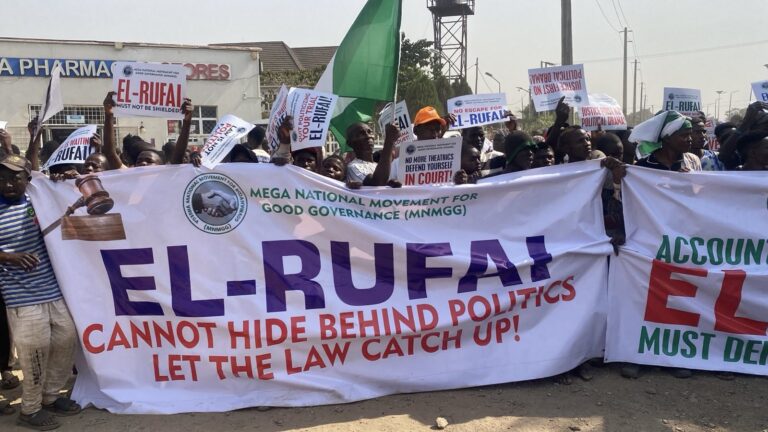
The anti-El-rufai group of protesters, who had gathered long before El-rufai arrived, carried placards and banners with bold inscriptions, demanding that the anti-graft agency investigate and prosecute the former governor over alleged financial impropriety.
Some of the inscriptions read: “El-Rufai cannot hide behind politics. Let the law catch up,” and “No one is above the law.”
However, tensions escalated when another group of demonstrators, who identified themselves as El-Rufai’s supporters stormed the area and displayed placards with the inscription: “El-Rufai is a citizen not a suspect,” “We stand with El-Rufai”, and We stand with the law.”
The ICIR reports that the former minister has also been charged with 3-count charges bordering on unlawfully interception of the phone communications of the National Security Adviser, Nuhu Ribadu.
The three-count charge, instituted at the Federal High Court, Abuja, and dated February 16, 2026, stemmed from statements El-Rufai made during a February 13 appearance on Arise TV’s Prime Time programme.
In count one, prosecutors alleged that the former governor admitted during the interview that he and unnamed associates “unlawfully intercepted the phone communications” of Ribadu, an offence said to be punishable under Section 12(1) of the Cybercrimes (Prohibition, Prevention, etc.) Amendment Act, 2024.
Count two further accused him of acknowledging knowledge of individuals responsible for the interception but failing to report them to security agencies, contrary to provisions of the same law.
In count three, the prosecution alleged that El-Rufai and others still at large used technical systems that compromised public safety and national security by intercepting the NSA’s communications, an offence punishable under Section 131(2) of the Nigerian Communications Act, 2003.
THE Nigerian government, through the Nigeria Data Protection Commission (NDPC), has ordered an immediate investigation into the data processing activities of Chinese-owned e-commerce platform Temu over alleged violations of the Nigeria Data Protection Act (NDPA).
The decision raises fresh concerns about how foreign technology companies collect, store, and transfer Nigerians’ personal data.
In a press release dated February 16, the NDPC said its National Commissioner and Chief Executive Officer, Vincent Olatunji, authorised the probe following mounting concerns around online surveillance, excessive personal data collection, lack of transparency, weak accountability mechanisms, and cross-border data transfers.
“The investigation of Temu was triggered by concerns around online surveillance through personal data processing, accountability, data minimisation requirement, transparency, duty of care and cross-border data transfer,” the statement read in part..
Preliminary findings by the Commission indicate that Temu processes the personal data of an estimated 12.7 million Nigerian users, while serving about 70 million daily active users globally, raising serious questions about how Nigerians’ data are collected, stored, shared, and protected.
“The National Commissioner warned that processors who engage in processing activities on behalf of data controllers without verifying their compliance with the NDP Act may be liable under the NDP Act,” the Commission added.
According to data, Nigeria is Africa’s most populous country and one of the continent’s fastest-growing digital markets with millions of its citizens relying on mobile apps, social media platforms, fintech services, and e-commerce sites for daily transactions often with little understanding of how their personal information is being used.
Civil society groups and digital rights advocates say the Temu investigation represents a crucial test of Nigeria’s willingness to enforce its data protection laws against powerful global technology companies.
The ICIR reports that in January 2019, the National Information Technology Development Agency (NITDA) established the Nigeria Data Protection Regulation (NDPR), the country’s first comprehensive framework governing how organisations collect, process, and store personal data.
The NDPR introduced consent requirements for data collection, rights of data subjects, obligations for organisations to implement security safeguards, sanctions for data breaches and non-compliance, but because the NDPR was a regulation rather than an Act of Parliament, enforcement powers were limited, and penalties were often contested.
In February 2022, the Federal Government established the Nigeria Data Protection Commission to replace NITDA as the primary data protection authority – a move aimed at strengthening independence, enforcement capacity, and regulatory clarity.
In June 2023, President Bola Ahmed Tinubu signed the Nigeria Data Protection Act (NDPA), 2023 into law. The Act gives the NDPC statutory backing, expands enforcement powers and penalties, establishes lawful bases for data processing, regulates cross-border data transfers, and mandates data protection impact assessments for high-risk processing.
Analysts believe that the NDPC probe sends a message that Nigeria is no longer a soft landing for companies that treat user data carelessly.
THE National Bureau of Statistics (NBS) said the Nigerian inflation rate has sustained a downward trend and dropped to 15.1 per cent in January, from 15.15 per cent recorded in December 2025.
The NBS announced the increase in its consumer price index (CPI) on Monday, February 18.
According to NBS, the January 2026 headline inflation rate showed a decrease of 0.05 per cent compared to the December 2025 headline inflation rate.
“On a year-on-year basis, the headline inflation rate was 12.51 per cent lower than the rate recorded in January 2025 (27.61 per cent). This shows that the headline inflation rate (year-on-year basis) decreased in January 2026 compared to the same month in the preceding year (i.e., January 2025).
“On a month-on-month basis, the headline inflation rate in January 2026 was -2.88 per cent, which was 3.4 per cent lower than the rate recorded in December 2025 (0.54 per cent),” the statistics office said.
The NBS also explained that the rate of increase in the average price level was lower than the rate of increase in the average price level in December 2025.
It disclosed that the food inflation rate for January was 8.89 per cent on a year-on-year basis.
This, the bureau said, is 20.74 points lower compared to the rate recorded in December 2025 (29.63 per cent).
“On a month-on-month basis, the food inflation rate in January 2026 was -6.02 per cent, down by 5.66 per cent compared to December 2025 (-0.36 per cent),” the report said.
The NBS explained that the inflation ease could be attributed to the rate of decrease in the average prices of water yam, eggs, green peas, groundnut oil, soya beans, palm oil, maize (corn) grains, guinea corn, beans, beef meat, melon (egusi) unshelled, cassava tuber, cow peas (white), etc.
“The average annual rate of food inflation for the twelve months ending January 2026 over the previous twelve-month average was 20.29 per cent, which was 18.18 per cent points lower compared with the average annual rate of change recorded in January 2025 (38.47 per cent),”it said.
The NBS further said that in January 2026, food inflation was the highest year-on-year in Kogi (19.84 per cent), Benue (18.38 per cent), and Adamawa (17.29 per cent).
On the other hand, states such as Ebonyi (1.69 per cent), Abia (3.23 per cent), and Imo (3.74 per cent) recorded the slowest rise in food inflation on a year-on-year basis.
THE Federal Government of Nigeria has filed criminal charges against former Kaduna State governor, Nasir El‑Rufai, accusing him of unlawfully intercepting the phone communications of the National Security Adviser, Nuhu Ribadu.
The three-count charge, instituted at the Federal High Court, Abuja, and dated February 16, 2026, stemmed from statements El-Rufai made during a February 13 appearance on Arise TV’s Prime Time programme.
In count one, prosecutors alleged that El-Rufai admitted during the interview that he and unnamed associates “unlawfully intercepted the phone communications” of Ribadu, an offence said to be punishable under Section 12(1) of the Cybercrimes (Prohibition, Prevention, etc.) Amendment Act, 2024.
Count two further accused the former governor of acknowledging knowledge of individuals responsible for the interception but failing to report them to security agencies, contrary to provisions of the same law.
In count three, the prosecution alleged that El-Rufai and others still at large used technical systems that compromised public safety and national security by intercepting the NSA’s communications, an offence punishable under Section 131(2) of the Nigerian Communications Act, 2003.
Counsel from the State Security Service (SSS) are listed as prosecutors in the case.
Backstory
The charges followed El-Rufai’s public claim that he knew about his attempted arrest through tapping of Ribadu’s phone, stressing that the NSA ordered his arrest upon arrival in Nigeria.
Speaking on Arise TV on February 13, the former governor alleged that security operatives attempted to detain him at the airport at the instance of anti-corruption authorities, describing the move as an abduction attempt.
“Nuhu made the call and made the order that I must be in custody,” he said.
When asked how he became aware of the alleged directive, El-Rufai added: “The government thinks that they’re the only ones that listen to calls… Someone tapped his phone.”
He acknowledged that tapping phone calls without court authorisation was illegal but argued that state agencies routinely monitor communications without judicial approval.
El-Rufai presents self at EFCC
The ICIR reports that the litigation came after the former governor presented himself at the headquarters of the Economic and Financial Crimes Commission (EFCC) in Abuja on February 16 for questioning over separate allegations.
His arrival triggered tense demonstrations by opposing groups outside the EFCC complex.
While anti-El-Rufai protesters demanded his investigation and prosecution, his supporters carried placards reading, “El-Rufai is a citizen not a suspect” and “We stand with El-Rufai.”
FORMER Kaduna State governor, Nasir El-Rufai, has arrived the headquarters of the Economic and Financial Crimes Commission (EFCC) in Abuja, as counter groups stagged tense demonstrations at the commission’s complex.
A group of protesters carried placards and banners with bold inscriptions, demanding that the anti-graft agency investigate and prosecute the former governor over alleged financial impropriety. Some of the inscriptions read: “El-Rufai cannot hide behind politics. Let the law catch up,” and “No one is above the law.”
Security operatives were heavily deployed around the commission’s headquarters, forming barricades and controlling access points to prevent a breakdown of law and order. Armed personnel were also seen stationed at strategic locations, while entry into the premises was tightly controlled.
Tensions escalated when another group of demonstrators, who identified themselves as El-Rufai’s supporters stormed the area and displayed placards with the inscription: “El-Rufai is a citizen not a suspect,” “We stand with El-Rufai”, and We stand with the law.”
They complained that they were prevented from moving close to the commission’s headquarters while anti–El-Rufai demonstrators were allowed to move closer to the EFCC gate. One of the supporters, speaking angrily, accused security agencies of bias and described the situation as unjust.
“They are insulting El-Rufai and humiliating him for nothing. They allow them to come close to EFCC and insult El-Rufai, while we that are the people of El-Rufai, they stopped us from the junction. This is not justice; we should fear God. It’s not all about money, it’s not all about politics, it’s not all about power,” a female protester on El-Rufai’s team chanted.
The supporter further defended the former governor, insisting that appearing before the EFCC should not automatically imply guilt.
Amid the growing crowd and rising tension, EFCC officers allegedly intimidating pro El-rufai protesters with dogs, tear-gas, demanding their dispersion.
The development comes amid renewed public debate over accountability of past and present public office holders, with many Nigerians calling for transparent investigations and equal application of the law, regardless of political status or influence.
The ICIRreported that security operatives attempted to arrest El-Rufai at the Nnamdi Azikiwe International Airport, Abuja, after arriving from Cairo, Egypt, on Thursday, February 12.
His legal team said he arrived to honour invitation sent to him by the EFCC in December 2025.
FEAR of government officials’ and of speaking up to avoid further intimidation, that the government meant to protect them now haunts small scale business owners in Niger State with different forms of taxes. The ICIR findings show that shop closures and dissatisfaction that promises made by the government to harmonise taxes, reduce burden on them haave failed to provide reief.
Hannah Osifeso used to own a Point-of-Sale (POS) stall in Suleja area of Niger State. Her hopes were high when the business started, even though she struggled to raise little capital. She thought that doing the business would offer support to her struggling business.
Seven months into the business, she shut down, because she couldn’t cope with the myriads of taxes.
“The taxes were burdening, I only did business with a small amount, and I was usually asked to pay different taxes. I had to shut down because it was no longer profitable,” she noted.
Niger State Waste Management Levy Issued at Bida
Her case is not isolated. Other respondents spoken to from different parts of the State, including, Bida, Lapai, Madalla, Suleja and Tunga low cost, Kure Ultra Modern market, Chanchaga area, in Minna, the state capital, shared similar concerns.
Government promises on tax harmonisation fail
In January 2024, in a much-publicised statement the Niger State government announced that as part of efforts to block leakages and boost revenue generation, the State Internal Revenue Service (NGSIRS) had flagged off harmonisation of revenue collection aimed at reducing the multiplicity of taxes between tiers of government.
Chairman of the Niger State Internal Revenue Generation, Mohammed Madami Etsu, said at the official flag-off in Suleja that the efforts were to block leakages and boost revenue generation for the state.
He was quoted as saying the efforts were to make the collection process less cumbersome and consolidate it to attract more investors.
Tax receipt issued
“The practice in the past was that the state government would come and collect taxes, levies, and charges, and the local government staff would also come to collect their own.”
“At the end of the day, you will see so much uncertainty in the system on who is paying what and who is responsible for what.”
“Tax harmonisation will give a consolidated back notice containing all taxes, levies, and charges that business owners are to pay to the state and local governments in a year,” he said.
He added that henceforth, all tax collections will be done through ICT platforms and Points of Sale (POS) terminals to give taxpayers confidence that their monies are going directly into state government funds.
Findings, however, indicate that the claims of the government are far from reality, about two years since it made the declaration.
In the Madalla area of Suleja, State government officials in April, 2025 gave a bill of N24,000 to different shops under the label “environmental sanitation levy”. The payment was tagged under “Demand notice for Harmonised Local Government.”
The payment was said to have been demanded by Suleja local government council area of the state. The shop owners were given two days to pay the tax with the date of collection listed as April 25, 2025.
“When they came, irrespective of what you do, you got the same bill, even new shops and existing ones,” a shop owner simply identified as Faith told this reporter.
Another shop owner recounted the threats that came with the payment. “If tax officials come around, you get a short notice to pay and this is regardless of whether you make sales or not.”
“While the officials came for enforcement, many traders were not issued receipts, paying without receipts is a norm for the shop owners,” said the shop owner who sought identity protection.
“When they came for enforcement, they collected N10,000 with begging. Some persons paid N5000, but these monies were paid so we didn’t get a receipt,” another respondent said.
“The most important thing for us is that they do not lock our shops, we really don’t know how they go about accountability,” a trader noted.
As against the government claims of POS terminals or ICT for terminals, the officials collect cash from the business owners, another trader said.
Deceptive environmental protection levy
Despite claims of harmonisation, in September 2025, barely five months after a N24,000 environmental sanitation levy was brought, another bill of N100,800 was brought again to shops around Kwata, Madalla all in Suleja area. This time it was issued by the Niger State Environmental Protection Agency (NISEPA), it was gathered.
It was also quoted as “Demand notice for Harmonised levies.” This time businesses were given one month to pay the N100,800.
Environmental protection agency levy of N100, 800 demanded in Bida
Traders narrated how officials of the State government came to their shops, dropped the payment demand and threatened to lock up shops if they refused to pay.
“It was like a film for us; the officials came and dropped the demand for payment notice. When we complained about how much we were asked to pay, they refused to listen to us. How do you ask businesses to pay N100, 800 for the same thing you brought a bill of N24,000 months earlier,” a business owner who does not want to be mentioned told this reporter.
Another business owner simply identified as Daniel lamented the constant bills the state government brings regardless of whether they make sales or not.
“Nobody even asks us if we have sold anything, nobody actually cares about the state of the shop. They just demand payments using their own discretion. It is killing business in Niger State,” he lamented.
Soon after there were agitations against the payment, the State government denied ever asking business owners to pay such an amount.
The General Manager, Niger State Environmental Protection Agency, Abubakar Muhammad, denied that any fee of N100,800, while briefing journalists in his office in Minna.
The general manager claimed that the agency has an “established system of categorising businesses and defining levies that have not been arbitrarily created but rather exist as part of a historical framework.”
He said, “NISEPA has introduced a ‘pay-as-you-throw’ initiative designed to support petty traders. Launched on October 10, 2024, this programme allows owners of small businesses to purchase a litter bag for only N150.”
The transaction number of one of the documents issued to shops was subjected to checks on the NISEPA website. It confirmed that the demand for payment of N100,800 was truly issued by the Niger State government. The government listed the transaction number and put N100,800 against it as unpaid, expecting the business to pay the amount on January 6,2026.
Similarly, a check on the phone number listed on one of the documents shared to traders demanding N100,800 showed that the contact is that of a NISEPA official whose name is withheld to protect traders and avoid victimisation by tracking shops where the official took the letters.
The N100,800 demanded by the state is also alien to the Niger State tax administration and consolidation law, 2022 reviewed during the course of this investigation.
The claim of the government on “pay-as-you” throw initiative was also scrutinised. However, none of the petty traders spoken to during the course of this report were aware of any such initiatives or effectiveness.
Multiple taxation increases cost of doing business
A business owner identified as Ahmed close to Etsu Yahaya Complex in Bida, lamented the activities of tax officials in Niger State.
“Tax collectors do come with different types of taxes which we pay such as Fire Service Tax, Environment Tax. Local governments have different tax collectors and state governments also have different tax collectors.”
He noted that despite the frustration suffered in the hands of the government, what is paid as tax is unaccounted for.
Tax receipt issued
“We don’t feel the impact of using our tax money to make provision for streetlights or drainage or something that will have greater developments to the community.”
He also lamented that the activities of the government officials affect what “they are supposed to have to pay for our yearly shop rent” because of the multiple taxes “we are compelled to pay.”
“The officials usually collect cash or sometimes demand for transfer using their own personal account, sometimes not government accounts. This simply means they would be the one to use the money not reporting to the government,” he said.
Another business owner at Gbangbara area of Bida also lamented the increase in the number of taxes. He recalled how NISEPA issued him N180,000 tax demand to dispose environmental refuse, adding that sometimes when he opens his business at the start of the year, the people he sees are tax collectors instead of real customers.
The respondent who wouldn’t want his name in print for fear of victimisation, said: “I have a patent store and I’m a regular taxpayer. I paid a lot of taxes such as board of internal revenue from local government, fire service and other tax too that accumulated to a lot of money. If I want to make an analysis, the tax we pay cannot even be counted.
“This year we have been mandated to register our business under local government for security purposes, and we paid N3000 for it again. As a taxpayer if you default, they lock up your shop, especially that of the state. If you are supposed to pay and you fail in time an extra key would be added to your shop.
“You have to go to their office and clear it up. Since coming on board of this administration there has been much more tax compared to previous ones such as the fire service. This year NISEPA even served me one hundred and eighty thousand for packing of refuse which most times is done by us the shop owners.”
“The major challenges small scale businesses like mine own have is the government itself. Instead of government empowerment they end up suffocating them with unbearable taxes. Sometimes, in a new year, you discover that your first customer is the tax collector instead of a real customer that would buy your goods.”
These lamentations come even as there are over one million micro businesses in Niger State with only 2121 small and medium scale enterprises in the state according to data published by National Bureau of Statistics-SMEDAN business survey.
In October, 2025, the Niger State government, issued another N10,000 as Niger State Fire Service levy. However, what was rampant afterwards was collection of different amounts from small businesses with no documentation.
Threats of shops closure
A business owner in the Suleja area narrated how the officials threatened to close shops, but suspicion was raised when they collected money with no receipts issued. “How do your account for money when there is no documentation whatsoever.”
Salisu Fatima, a foodstuffs seller in Kure Ultra-Modern market, Minna noted that the cost of her food would have been cheaper if not for the extent of taxes they are expected to pay.
“The taxes we are asked to pay are outrageous and we have to add them to what we sell, if not we won’t survive.”
James Ephraim, a POS Operator in the Chanchaga area of Minna, also lamented about finding it hard to survive due to a plethora of taxes.
“In Niger State, there are many people who want to do business but cannot, including me doing this POS. I am considering quitting because of too much expenditure from the state.”
One thing was constant; traders now pay without expecting evidence of payments as Niger State officials refuse to issue such after collection.
Zero accountability
Another business owner in Anguwa Husawa area of Lapai, Khalid, also narrated what they face in the hands of Niger State tax officials.
”I have been doing business here for up to three years. Tax collectors usually come. Local government tax collectors do come. State government tax collectors also come. Sincerely if I’m asked what they are using the tax to do I don’t know. We always have to pay and it is increasing every day. We are pleading with the government to look into it.”
Tax receipt issued
Another trader, Abdullahi Musa, who sells provisions in Lapai narrated how they are asked to pay into personal accounts.
“I sell provisions like biscuits, seasonings and other things. This year, revenue collectors from state and fire service all came. The way they collect these taxes is not helping matters for us because if we increase the prices goods in our shop our customers would not be happy and revenue people don’t pity our situation.”
“Sometimes if they come, instead of giving us an official account they give us their personal account for payment. This makes us doubt the sincerity and we don’t even want to pay because we feel our money is going into personal pockets not government accounts. We want people to raise this concern for us. The government should assist us in reducing the taxes to help our small business.”
Some of the taxes small businesses were asked to pay and evidence obtained during this investigation include; Niger State Fire Service fee, Niger State NISEPA environmental levy, business premises permit, Niger State local government environmental levy, personal income taxes. Others mentioned by traders include business registration, maintenance fee among others that traders say they cannot recall.
Business owners closing shops, others Planning Relocation
In different areas of Niger State, shop owners while expressing frustration kept noting that they may be forced to close businesses.
In Suleja area, a trader noted that with the persistent taxes and unfavourable business climate, he is considering shutting down his business and moving back to his village.
“My rent will be due in January 2026, and I have not even made substantial sales, yet the government keeps frustrating me. Imagine my shop rent which is huge and the thousands I pay as taxes. I have to feed my family also. I am sincerely planning relocation because surviving here is hard and if you talk you will face victimisation,” he told this reporter.
Data on small businesses in Niger state
His case is similar to that of a female tader, Hannah who shut down her Point-of-Sale business due to the weight of taxes.
Many business owners who spoke during this investigation echoed the same sentiments. While officials of Niger State revenue board ‘harass’ shop owners for different forms of taxes, government presence is rarely felt.
“When they come to collect money for environmental sanitation, you would expect to see them come for such, but we take care of our sanitation needs ourselves,” a business owner told this reporter.
Echoing similar sentiments, Zayanu Iliya in the low-cost business area of Minna, noted that while different taxes are paid, the government presence is not felt.
In Suleja, business owners also shared the same sentiments.
Niger government threatens traders with jail, fine
It was gathered that not only do officials of the state government forcibly demand payments of taxes, even without any accountability, traders are also threatened with court action.
Documents seen during this investigation show that the state government does threaten traders with imprisonment or fines, citing state laws.
For instance, when the bill of N100,800 was given to the traders under the guise of “environmental Sanitation tax” it came with a threat.
Bill of N100,800 was given to the traders under the guise of “environmental Sanitation tax”
A section of the document reads: “It is an offence for any person/facility not to pay to the agency such rates/charges as contained in this invoice pursuant to section 33 of the Niger State Environmental Sanitation and Waste Control Regulations of 2025. Failure to comply may lead to a fine not exceeding N100,000 or an imprisonment not exceeding one month or to both such fine and imprisonment, in addition to the payment of any amount which has been due.
“Failure to pay fire service levy will result in arraignment before the mobile court and possible seal off of premises in accordance with the law. Your prompt response is highly subscribed,” a part of the document read in part.
Niger government denies multiple taxation
On October 17, 2025, Niger State government through NISEPA denied high or multiple taxation.
According to the General Manager, Niger State Environmental Protection Agency, Abubakar Muhammad, such allegations were unfounded. He referred to reports about high taxation as “misinformation’ and unfounded.”
THE Ejigbo Local Council Development Area (LCDA) in Lagos State has refused to disclose details of ten projects executed between 2024 and 2025, citing “vague and overbreadth (sic) of the request,” “protection of confidential and commercial information,” and an ongoing ICPC investigation.
None of these reasons is a justifiable cause for refusing to grant request for information under the Freedom for Information Act (FOIA) of 2011.
In a letter dated February 12, 2025, and signed by the Deputy Director of Legal, Okoya A. Adegoke, the council said that it could not comply with The ICIR’s FOIA request.
The ICIR had sent a formal FOIA request seeking comprehensive information on the award of contracts for selected roads, drainage, and other infrastructure projects executed by the council between 2024 and 2025, including project timelines, contract details, releases and procurement procedures.
The FOIA request specifically asked for information on the purchase of vehicles, construction of roads drainages, and sand filing and grading of some roads in the council area.
The request was intended to provide insight into how contracts were awarded, executed, and monitored by the local government council.
However, the council claimed the request was “broad and sweeping” and therefore “administratively impracticable and legally unsustainable.”
“The request as presented lacks sufficient specificity as to the particulars of projects, documents, timelines, or categories of information sought. The broad and sweeping nature of the request renders it administratively impracticable and legally unsustainable in its current form,” it claimed in its response.
The council further claimed that some of the requested documents, contracts, financial statements, and procurement records are protected as confidential and commercially sensitive.
It also added that the projects are under investigation by the Independent Corrupt Practices and Other Related Offences Commission (ICPC), maintaining that disclosure could interfere with ongoing proceedings.
Response violates FOI law
Under the Freedom of Information Act, individuals or organisations have the right to access information from government ministries, agencies and departments.
Apart from making proactive disclosures about inormation in their possession, public institutions are legally mandated to provide requested information within seven days or issue a clear, written denial citing the relevant legal sections of the access to information law.
Section 1(1) of the FOI Act guarantees the right of any person to access information in the custody of any public official or agency, while Sections 4 and 5 spell out strict timelines for response and transfer of requests.
Also, Section 2, subsection 4, of the Act mandates public institutions to ensure that information requested by an individual or organisation is widely disseminated and made readily available to members of the public through various means, including print, electronic and online sources, and at the offices of such Public institutions.
The council’s claim of “confidentiality” is without legal basis, as FOIA explicitly states in Sections 11 and 12 that information related to contracts, project implementation, and procurement funded by public money cannot be withheld on commercial confidentiality grounds unless it would lead to actual harm to third parties, which is clearly not the case here.
The ICIR reports that contracts, project budgets, timelines, and procurement documents do not fall under Act’s exemptions clauses.
Section 11 permits withholding information only if its disclosure could harm international affairs or national defence.
Section 12 permits denial of information in law enforcement or security matters if disclosure would interfere with investigations or compromise security.
Section 11, subsection 1, states “a public institution may deny an application for any information the disclosure of which may be injurious to the conduct of international Affair and the defence of the Federal Republic of Nigeria.”
Subsection 2 adds “Notwithstanding subsection (1), an application for information shall not be denied where the public interest in disclosing the information outweighs whatever injury that disclosure would cause.”
FORMER Governor of Kaduna State, Nasir El-Rufai has written to the Office of the National Security Adviser seeking clarification over the reported procurement of about 10 kilograms of thallium sulphate, a highly toxic chemical substance.
In the letter dated January 30, 2026, and addressed to the National Security Adviser in Abuja, El-Rufai said the information, allegedly linked to the opposition leadership, raised serious public safety and accountability concerns.
He noted that thallium salts are tightly controlled due to their extreme toxicity and urged authorities to disclose key details surrounding the purchase, including the intended use, supplier identity, quantity and concentration, storage arrangements, and regulatory oversight.
The former governor also requested clarity on whether the chemical was imported under appropriate defence or chemical permits and if any public health risk assessments had been carried out to mitigate potential dangers.
He asked for clarity on “the total quantity and specific form or concentration being procured or already procured, the storage and security arrangements for the material upon arrival, the regulatory oversight and coordination in place with NAFDAC, NCDC, and relevant public-health and environmental agencies.
“Whether any public-health risk assessments or hazard-mitigation plans have been developed, given the compound’s extreme toxicity.”
He said conflicting reports surrounding sensitive procurements could erode public trust if not openly addressed by relevant authorities.
Recall that El-Rufai is facing backlash over his claim that the phone of the National Security Adviser, Nuhu Ribadu, was bugged.
Aides of the President and politicians, including former Kano State governor, Abdullahi Ganduje, as well as legal practitioners and security experts, called for El-Rufai’s probe over the claim, arguing that his confession on national television was sufficient grounds for prosecution.
El-Rufai, who appeared on Arise TV on Friday, disclosed that he learnt of an alleged plan to arrest him upon his return to the country on Thursday through a leaked conversation from the NSA’s phone.
“Ribadu made the call because we listened to their calls. The government thinks that they’re the only ones that listen to calls. But we also have our ways. He made the call. He gave the order that they should arrest me,” he said.