Home Blog Page 823

Protesters did not burn down Nigerian embassy in Niger -Ambassador

0

THE Nigerian embassy in Niger Republic has refuted reports that its building was razed down by irate protesters in Niamey.

In an official statement by the Nigerian Ambassador to Niger, Mohammed Sani Usman, the embassy clarified the incident on Saturday, August 12.

According to the statement, the protesters attempted to breach the embassy’s premises, but concerted efforts of the Nigerien military and law enforcement effectively kept the situation under control.

“The Embassy wishes to inform the general public that even though protesters tried to gain access to the Embassy on July 30, 2023, the Nigerien Military and Police Authorities promptly curtailed the situation.

“At the moment, the Embassy is well guarded by the Nigerien Military and other Security Authorities. We reiterate that the videos are fake and as such, the general public is enjoined to disregard such videos,” the statement read.

A video of some young men setting a building ablaze was circulated on social media with captions suggesting that the Nigerian Embassy in Niger was being burnt down by an angry mob.

This followed protests by coup supporters in Niger against the Chairman of the Economic Community of West African States (ECOWAS) and Nigerian President Bola Ahmed Tinubu for what they described as interference with their country’s affairs.

The protesters in Niger kicked against plans by ECOWAS to invade the country if putschists, who ousted the elected president Mohamed Bazoum through a military coup, failed to restore him to power.

The military government in Niger, backed by Mali and Burkina Faso, two countries suspended by the ECOWAS over military coups, also threatened the Community with war should there be a case of military intervention, and many Nigerians have warned against it.

Kano residents protest

In a related development in Kano state, protesters took to the streets on Saturday, August 12, to express displeasure over the proposed use of force by ECOWAS following the Niger coup.

They were spotted chanting anti-war phrases and flying both Nigerian and Nigerien flags.

“Nigeriens are our brothers; Nigeriens are also our family. Niger is ours. We don’t want war; war against Niger is injustice, a plot by the Western forces,” they chanted.

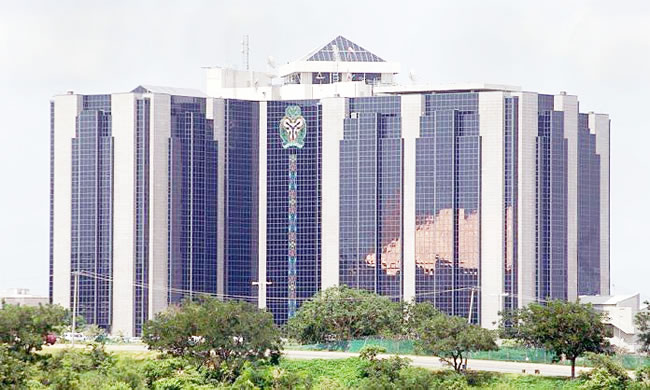
CBN’s financial statements exposes poor oversight, bad debts

Audited financial statements released by the Central Bank of Nigeria (CBN) showed unevaluated lending to the Federal Government and other financial institutions, revealing poor oversight by Nigeria’s National Assembly.

The apex bank released the Consolidated Financial Statements for the last seven years, making it the first time since 2015 it will be making its book available for public scrutiny.

The released Consolidated Financial Statements are for 2016, 2017, 2018, 2019, 2020,2021 and 2022.

According to the CBN Act 2007, the apex bank is expected to publish its report within two months after the end of each financial year.

The ICIR has reported persistently reported how the CBN kept violating its extant laws by overlending to the Federal government to the tune of N23.18 trillion, a situation that has seen Nigeria pressured with higher inflation.

The concern was further worsened by the apex bank owing JP Morgan and Goldman Sachs a combined sum of $7.5 billion as of the financial year ended December 2022.

Also included as part of its liabilities is another $6.3 billion owned in foreign currency forwards.

This is contained in the audited financial statements of the apex bank, gazetted and published on its website.

CBN in the report, stated it owes Goldman Sachs $500 million and JP Morgan $ 7 billion in what it classified as securities lending.

“The Group entered into a securities lending agreement with Goldman Sachs and J. P. Morgan, and as part of the agreement, the Group pledged its holdings on foreign securities in return for cash.

The cash received from Goldman Sachs is N0.23 trillion ($500 million), 2021: N0.22 trillion ($500 million), and JP Morgan N3.23 trillion ($7 billion), 2021: N3.05 trillion ($7 billion) is recognised in other foreign securities.”

The securities lending forms part of the CBN’s total external reserves of about N14.3 trillion or $29 billion using the official exchange rate of N494/$1 as of 2022.

However, the apex bank also owes another N3.15 trillion ($6.3 billion) in foreign currency forward which are forex obligations it needs to make to foreign investors.

The Senate President Godswil Akpabio said in an earlier report by The ICIR that the Senate has plans to amend some sections of the CBN Act to whittle down the powers of the CBN governor on some key decisions.

He also admitted that the Senate has not performed its oversight optimally, which prompted the risk exposure of the CBN to the Nigerian economy, as seen by several of its poor decisions.

Economists and Industry analysts are worried that the risk exposure of not publishing the audited financial statement is huge, as they cited further violation of CBN extant laws.

“CBN, according to extant laws is expected to publish its accounts two months after its financial year. Accountability and transparency are key as the new government takes charge, and I suggest they become consistent with the publication. There are several bad loans and issues, “an economist analyst, Chuka Mbonu, said.

“The CBN is a bank to the Federal Government and bank to Nigerians. The apex bank makes money by lending. In the statement, total lending to the Federal Government in ways and means is above N23 trillion. They are making money via interventions, lending, treasury bills and licenses they issued,” Mbonu said.

For development economist Kelvin Emmanuel, the Acting CBN Governor publication of the audited financial statements showed deeper problems on how the apex bank has been managed over time.

“Remember I said about two weeks ago that some senior treasury officials and portfolio managers told me privately that they don’t believe the official foreign numbers of the CBN?

“It is commendable that the Acting Governor has bitten the bullet in line with sections 50(1)(3) of the CBN act, to publish the accounts of the Central Bank to the Senate and Gazette it to the public,” said Emmanuel.

Emmanuel noted that the situation is bad, but admitting that there’s a problem is the first step to solving it.

Experts worried about external reserves and foreign exchange management 

Following the release of the CBN financial statements, Nigerians and the global community are getting to know the state of Nigeria’s financial health as managed by the apex bank.

Analysts who also spoke with The ICIR argued that the CBN debts to foreign companies were worsened by how the apex bank managed the country’s foreign exchange market and external reserves.

The financial statements seem to have exposed the CBN management of the country’s external reserves in past years, the head of financial institutions ratings at Agusto and Co, Ayokunle Olubunmi, told The ICIR.

“Since 2015, the CBN has faced many issues in terms of managing foreign exchange and not disclosing its accounts. It was apparent that something was not right.

“We could have so much at our reserves and have issues with foreign exchange management. On the surface, it looks as if the reserves are enough to meet our foreign exchange needs, but on the other hand, we are saying there are issues in the foreign exchange market, Olubunmi said.

The hallmark of the last CBN administration has been to hoard information and keep many things undisclosed.

According to him, it is clear why foreign exchange market issues persisted as it is evident that the funds that CBN had were encumbered – owing somebody and keeping it as part of reserves.

“Although it is one of the ways of managing the foreign exchange, it requires care that by the time the facility is due, the CBN has the funds to repay it.

“Where we should be concerned is that if we take the debts out from the reserves, what is left of the reserves? Olubunmi asked.

“I have maintained that based on the global market facts and records that Nigeria’s foreign reserves is around $22 billion net account balance,” a development economist, Kazeem Bello, said.

Bello, chief executive officer and principal partner of Afrique Capital and Equity Funds Limited established that when the $13 billion is net out from the about $34 billion external reserves, it could mean that Nigeria would have appropriately $22 billion in its reserves.

He said, “Contrary to CBN posture, global investors dumped and shunned the Nigerian forex investment simply because of consistent evidence of round tripling and illegal arbitrage that does not make genuine investors make real investment accrue benefits or make cognate investment choices.

“We are now learning from the CBN that inflows dropped from $23 billion in 2019 to $6 billion in 2022. The answer is simple and foreign investors will not stake trading bets on a manipulated or fraudulent market.

The development economist said he cannot still comprehend how the CBN could have been authorised to create or get into a debt obligation that ultimately results in cash debt to Goldman Sachs and JP Morgan to the tune of $13 trillion.

“Who authorised that debt obligation, and what did the CBN use it to settle or pay for? These and several questions should be raised and investigated,” Bello said.

Who authorised that debt obligation, and what did the CBN use it to settle or pay for? These and several questions should be raised and investigated

The latest disclosure have made it clear that the Nigerian debt structure has swelled from N77 trillion as left behind by the immediate past administration with the addition of a whopping $13 billion debt incurred by the disposed CBN governor, he pointed out.

Foreign Direct Investment (FDI) dropped from over $23 billion under President Goodluck Jonathan’s administration at a point in time to $6 billion in 2022 under President Muhammadu Buhari.

Bello said contrary to the impact of the Covid 19, Egypt, South Africa, Morocco, Senegal, Kenya, Angola, Cote de Ivoire and other countries all recorded net increases in FDIs within the same time frame that Nigeria was bitterly losing those FDIs.

During the period, Nigeria was also confronted with an unprecedented capital flight, which as of 2021, ending in a relative comparative analysis, was about $25 billion in less than 10 years.

For a country struggling with huge infrastructure deficits, declining economic fortunes and massive unemployment and declining industrial productivity, this was seriously unhealthy and needed to be reversed, Bello said.

Despite being the largest economy in Africa, unfortunately, Nigeria ranked as one of the lowest in FDIs in the continent in recent years.

“We surely will see more until the new government move into place to ascertain the proper financial health of the apex bank and take cognate responsibility to amend this problem.

He, however, urged the new administration to move quickly with the proposed reforms at the apex bank and get the place sanitised appropriately.

“This is the fastest way to reassure the foreign investors and gain their confidence in the market,” Bello asserted.



FactCheckHub at 3: Experts proffer solutions to tackling AI disinformation campaigns

0

EXPERTS working in the disinformation space on Friday identified the need for more advanced methods in addition to the traditional fact-checking process to check the spread of misinformation.

The experts spoke at the webinar FactCheckHub hosted as part of activities to mark the organisation’s third-year anniversary.

The webinar themed: The Impact of Artificial Intelligence and deep fake technologies on information space, had in attendance Christopher Guess, a Lead technologist at Duke Reporter’s Lab, a senior investigations manager at the Code for Africa, Allan Cheboi, David Ajikobi Nigeria editor of the Africa Check.

During the webinar, the editor of the International Centre for Investigative Reporting, Bamas Victoria , sought how fact-checkers could develop better capacity to address sophisticated online misinformation in the future.

Responding to the question, Guess raised the for fact-checkers to start investigating disinformation campaigns rather than individual pieces of disinformation content.

He said fact-checkers should consider investigating the source of disinformation campaigns, the motive behind the campaign, and who is funding it.

Guess pointed out the need to incorporate investigative journalism in fact-checking, urging fact-checkers to combine fact-checking tools and investigative research in unravelling disinformation campaigns.

“Collaboration between fact-checkers and investigative journalists is going to be the next big win,” he added.

Giving tips on how to manually identify AI-generated images, Guess, highlighted that a common feature to note is the way some parts of the body look distorted in the images.

He stated that AI-generated images are difficult to detect because they are generated from complete randomness.

“One way to identify AI images is to look at their hands, ears, shadows and edges. Instead of five fingers, the fingers may look twisted or three or four fingers instead. The ears are often missing. They are all telltale signs for the next few years.”

“One of the kickers as technology moves forward, a lot of these problems would be fixed is”

He added that looking at the text, language, and characters which are often gibberish is also away to tell an AI-generated image.

While sharing tools and techniques that can be used to fact-check AI-generated images, he stated that regular journalism techniques need to be deployed.

“The thing about artificial intelligence and generated AI images and texts is that you have to do regular journalism; you have to treat it just like it’s a politician that is lying to you but is an actual human being talking.

“Assume and act like it’s fake. Regular journalism and fact-checking techniques that is what you want to do. Anything that has been purported has been real… how old is it? Has it appeared on the internet before? Was the person where it says they were? Does it make sense? Treat it like regular reporting and check it out,” Christopher emphasised.

On his part, Cheboi charged fact-checking organisations to devise technology that will promote easy identification of behaviours, narratives around disinformation contents and the actors behind its dissemination.

“When we focus on content alone, we will never beat the bad guys. Now that AI is here, they will keep churning out [false] contents that are very convincing, but you will never know,” he said.

Flyer from the webinar

He urged stakeholders to tackle disinformation holistically by looking at the ABC template – Actors, Behaviour and Content,

He explained how disinformation actors use emojis, wrong spellings and other means to evade detection, adding that the actors need to be fished out using technology and research to unravel the source of a disinformation campaign.

Cheboi highlighted the struggles that social media platforms face in containing toxic content such as disinformation and hate speech across Africa. The reason being the context of the narratives are in the local vernacular.

“In Africa, we have more than 2,000 languages. In Nigeria alone, the number of languages can’t be estimated. In Kenya, we have about 42 languages. For the platforms to detect content that is created in all these languages, it’s really hard. That is why AI is becoming something that a lot of investment is being put in place for us to be able to do that.”

Citing examples of how AI can be used for disinformation campaigns, he shared videos that were created by an extremist group with fictitious people pretending to be American pan-Africanists in support of what was going on in their countries while highlighting the influx of generated AI content in Africa.


READ ALSO:


“We’re talking about AI, and you know, maybe people imagine that in Africa, no one really produces AI to produce content that is divisive, content that at the end of the day would be polarising to citizens, but it is here, it is being used already, and that is the reason we are having this conversation,” Allan said.

Guess further stated that there is a need for disinformation experts to start discussing the policy, advocating and pushing for the criminalisation of misinformation, while Allan emphasised the need for social media platforms to invest more in the African region in order to counter disinformation, hate speech and polarising contents on their platforms.

You can watch the full video of the webinar here


Military better off in a democracy, faults report on welfare – DHQ

THE Defence Headquarters (DHQ) said the military is better off under democracy, while it further condemned calls for it to interfere in the nation’s democracy.

The defence headquarters stance was disclosed in a statement by the Director of Defence Information, Tukur Gusau, on the evening of Friday, August 11, in Abuja.

According to the statement, the call for military intervention in democracy is highly unpatriotic and wicked.

It also warned against attempts by unpatriotic elements to distract the military from performing its constitutional responsibilities.

Gusau added that the DHQ frowned at the report being circulated online about welfare issues in the Armed Forces of Nigeria.

He said the armed forces leadership has prioritised the welfare of its personnel and will continue to do so.

“The military hierarchy detests any attempt by any individual or group to instigate the law-abiding military to embark on any unconstitutional change of government in the country.

“We wish to state unequivocally that the military is happy and better under democracy and will not get involved in any act to sabotage the hard-earned democracy in our country,” Gusau said.

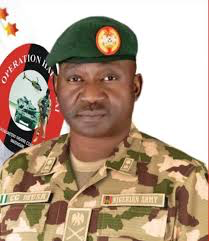
He remarked that the armed forces, under the leadership of a general, Christopher Musa, is determined to ensure its complete subordination to constitutional authority under President Bola Tinubu.

The statement added that it would not be distracted from its roles that are well defined in the 1999 constitution (as amended).

There have been calls on social media recently for the military to intervene in Nigeria.

The call was heightened by the difficulty faced by Nigerians after the fuel subsidy removal and the recent successful coup in the neighbouring Niger Republic.

Meanwhile, the DHQ said troops of the Nigerian army have killed 38 suspected terrorists in one week across the country’s six geo-political zones.

The Director of defence media operations, Edward Buba, disclosed this to journalists yesterday.

Buba said soldiers also apprehended 242 suspects and rescued 89 hostages during different operations nationwide.

He said the suspects include 175 gunmen, 20 kidnappers, 30 collaborators and 17 pipeline vandals.

He continued by saying that the troops had also found stolen crude oil worth N607 million.

Police confirms arrest of officers caught extorting commuters in Osun

0

OSUN State Police Command has confirmed the arrest of some of its personnel for extorting commuters along the Ile-Ogbo-Iwo road, in Osun state. 

Public Relations Officer of the Command Yemisi Opalola disclosed this in a statement on Friday, August 11, adding that disciplinary action will be carried out against the detainees after investigations are concluded.

“The Police officers involved in this unprofessional and unethical behaviour have been identified, arrested and detained. The Command frowned and condemned the act in totality as the erring police officers are currently in detention since Thursday, 10 Aug. 2023.

“They are undergoing investigation and eventual disciplinary procedure of orderly room trial for their unprofessional conduct while the senior officers among them have been queried accordingly,” she noted.

Speaker of the Osun State House of Assembly Adewale Egbedun helped some commuters recover money extorted by police officials stationed along their route.

The speaker was captured in a viral video confronting the officers over the allegations of extortion by commuters.

Egbedun’s Chief Press Secretary, Olamide Tiamiyu, disclosed in a statement that three of the travellers had been extorted of N25,000 each.

Force Public Relations Officer Muyiwa Adejobi also confirmed the arrest of the policemen on Friday.

Adejobi warned other officers to desist from visiting Acting Inspector-General of Police (IGP) Kayode Egbetokun with money or gift items.

“The IGP has made it clear severally. In fact, at the last IGP’s conference with senior officers in Abuja on Tuesday, the IGP warned that no officer should bring money or gifts to him.

“He said, ‘I don’t need your money. Don’t bring any money to me. Use your legitimate money to improve the policing of your area of responsibility. So, no officer should use IGP’s name to extort. We have sent out IGP’S monitoring squad to arrest any erring officer, not only the Police but other law enforcement agents who dwell in corruption and inappropriate behaviours,” Adejobi noted via his official Twitter handle.

Police extortion and harassment and brutalisation have been a long-standing issue in Nigeria.

In October 2020, youths across the country embarked on a nationwide protest against police harassment and brutality, which lasted for weeks.

The protest was brought to a halt when officials of the Nigerian Army opened fire on unarmed protesters at Lekki Toll Gate, Lagos, on October 20, 2020.

Despite government promises to check harassment of citizens following the protest, extortion and other forms of indiscipline still persist within the Nigeria Police Force (NPF).

LASTMA warns skit makers against unapproved use of its uniform

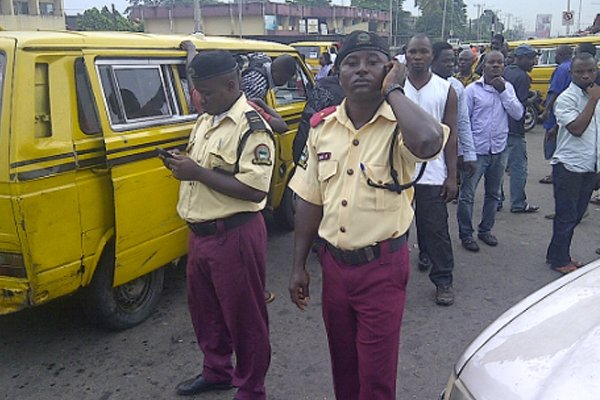
THE Lagos State Traffic Management Authority (LASTMA) has warned against the unapproved use of the agency’s uniform by skits and filmmakers.

The General Manager of LASTMA, Bolaji Oreagba, in a statement released on Friday, August 11 and signed by the Director of Public Affairs and Enlightenment Department, Adebayo Taofiq, warned against the unauthorised use of its uniforms in movies and comedy skits.

LASTMA stated that using its uniforms, Kits, and other accoutrements by film and skit without approval is illegal.

According to the statement, LASTMA disapproved of the degrading way the movie and skit creators portrayed LASTMA institutions in their productions.

The agency noted that it violates Section 79 of the Lagos State Criminal Law 2015 and termed the unauthorised use of official clothing as a criminal conduct.

Oreagba cautioned film or skit makers who portray themselves as LASTMA officers “without applying for, and being duly issued a permit letter for such portrayals, to desist with immediate effect or face the full wrath of the Law.”

He claimed that the complete LASTMA outfit worn by a woman in the Yoruba film “Gbogbo Lowo” was an example of how the uniforms should not have been worn.

Therefore, Oreagba urged for rules governing the ownership of LASTMA uniforms.

He pleaded with the National Association of Nigeria Theatre Arts Practitioners (NANTAP) and other connected groups to alert their members of the possibility of prosecution for anyone found utilising LASTMA Uniform without a valid permit.

The ICIR reported in July 2022 that the former Inspector General of Police, Usman Baba, ordered the arrest and prosecution of skit and movie makers who use the police uniform without approval.

The order was in a statement issued by Force Public Relations Officer (FPRO) Olumuyiwa Adejobi.

The statement explained that skits and filmmakers had not been stopped from using the police uniform to act. However, they must get permission from the force’s Public Relations Officer, with the desire to promote the Nigerian police much more positively.

The statement also denounced dealers selling police equipment and supplies illegally in stores and open establishments not authorised or recognised by the police authority.

According to the statement, the IGP also disapproved of the “demeaning manner in which movie and skit producers portray the police institution in their films and skits, using the police uniform without reference to Section 251 of the Criminal Code law or Section 133 of the Penal Code law, which criminalises such unauthorised use and accompanying necessary sanctions.

We have no partnership with Asari Dokubo – Nigerian Army

0

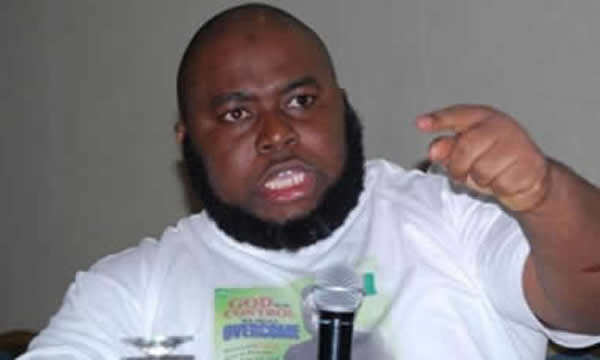
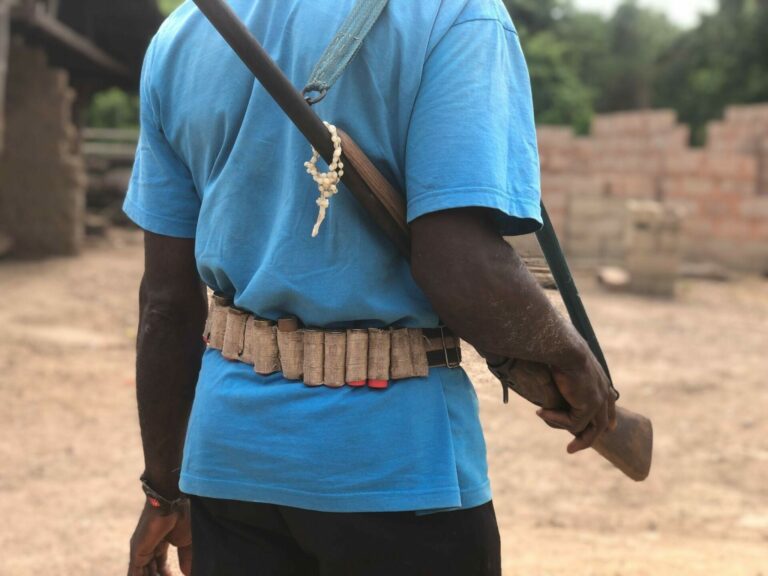
THE Nigerian Army has said it is not involved in any collaboration with leader of the Niger Delta Volunteer Force (NDVF), Asari Dokubo.

According to a report, Director Army Public Relations Onyema Nwachukwu disclosed this during an interview with PUNCH newspapers while reacting to claims by Dokubo that his security outfit operates in collaboration with the Nigerian Army.

“It must be clarified that the Nigerian Army is not in any form of partnership or collaborative pact with the ex-militant or whatever private security outfit he claims to own.

“It is also expedient to place on record that contrary to his claims, the Nigerian Army has never conducted any operation jointly or side by side with Asari or the organisation he represents, in any of those areas he mentioned or in any theatre of operations,” Nwachukwu said.

In a video that went viral earlier in the week, Dokubo said he owns a private military company which has been contracted by the government to fight alongside the Nigerian Army.

“I have a private military company that is engaged by the government, and we are fighting side by side with the Nigerian military in many places. Like Niger, Plateau, Abia, Imo, and parts of Rivers State. We were in Anambra too. We are doing a good job, and we are being commended by the host communities,” he said.

Dokubo has made similar claims in the past, including taking responsibility for the relative calm being experienced along the Abuja-Kaduna road.

In the recent past, the route was notorious for terror activities in Nigeria, as non-state actors randomly abducted or killed commuters. However, there has been a decline in reports of banditry along the road, which Dokubo claimed was achieved by his company’s efforts.

Although the Nigerian Army had stayed silent on the issue for a while, Dokubo’s claims were later rebutted by Director Defence Information (DDI) Tukur Gusau during an interview with The ICIR.

“All we know is that it is the Armed Forces that are in charge of the security of that road. We have Operation Whirl Stroke and Operation Deep Punch on that road. There are certain things we don’t even need to bother ourselves responding because Nigerians know better. We did not intend to waste our time responding to issues on which Nigerians know better,” Tukur told The ICIR.

The possibility of the government’s engagement with private military companies, such as Dokubo’s, is a source of concern for many citizens, some of who have described it as dangerous.

Amid probe CBN releases 7 years financial statements

THE Central Bank of Nigeria has released its Consolidated Financial Statements for the last seven years amid an investigation into its financial management.

The long-awaited statements had raised concerns about integrity in the apex bank’s financial management.

According to information from the CBN website, the financial statements released are for 2016, 2017, 2018, 2019, 2020, 2021 and 2022.

The ICIR had on July 5 reported why the CBN and other public interest entities should disclose their financial statements yearly, as it is a core of transparency and accountability surrounding the activities of public interest entities.

The suspended CBN Governor, Godwin Emefiele, had come under attack for not releasing the apex bank’s financial statements to the public, a gross violation of the CBN Act 2007.

Since 2005 when it started publishing details of its annual report on its website, CBN never failed to publish the report until 2016, when it abruptly stopped the publication of the crucial documents in deviance of the law regulating its operations.

According to the CBN Act 2007, the apex bank is expected to publish its report within two months after the end of each financial year.

“The Bank shall, within two months after the close of each financial year, transmit to the National Assembly and the President a copy of its annual accounts certified by the Auditor.

“A report required to be submitted to the National Assembly and the President shall be published by the Bank in such a manner as the Governor may direct

“The Board shall ensure that accounts submitted pursuant to this section shall as soon as possible, be published in the Gazette.

“The Bank shall, as soon as may be practicable after the last day of each month makeup end, publish a return of its assets and liabilities as at the close of business on that day, or if that day is a holiday, as at the close of business on the last preceding business day,” the Act stated.

The ICIR also reported that President Bola Tinubu had appointed a Special Investigator, Jim Obazee, to probe the CBN seven weeks after the suspension and arrest of Emefiele.

The appointment dated July 28 came with immediate effect, and Obazee was to report directly to the President.

The President had directed Obazee to investigate the CBN and related entities using a suitably experienced, competent, and capable team and to work with relevant security and anti-corruption agencies to deliver on the assignment.

A Punch report on Friday, August 11, showed that the CBN owes JP Morgan and Goldman Sachs a combined sum of $7.5bn as of the financial year ended December 2022.

Included as part of its liabilities is another $6.3bn owned in foreign currency forwards.

“The Group entered into a securities lending agreement with Goldman Sachs and J. P. Morgan, and as part of the agreement, the Group pledged its holdings on foreign securities in return for cash. The cash received from Goldman Sachs is N0.23tn ($500m), 2021: N0.22tn ($500m), and JP Morgan N3.23tn ($7bn), 2021: N3.05tn ($7bn) is recognised in other foreign securities,” it stated.

Securities lending forms part of the CBN’s total external reserves of about N14.3tn or $29bn using the official exchange rate of N494/$1 as of 2022.

However, the apex bank also owes another N3.15tn ($6.3bn) in foreign currency forward, which are forex obligations it needs to make to foreign investors, it showed.

Fresh terror attacks spark protest in Benue

FOLLOWING fresh attacks on some communities in the Guma Local Government Area (LGA) of Benue, which occurred on Thursday, August 10, residents have taken to the streets to protest against the incessant killings in the state.

The protesters, mostly women and young people, blocked the Markurdi-Abuja highway very early on Friday, August 11, demanding an end to the attacks.

A resident of Benue state Gabriel Yev, confirmed to The ICIR on Friday that suspected herders attacked the Ngban community in Guma.

“There were killings yesterday around Ngban. Right now, women are protesting over it,” Yev said.

Though Yev could not provide information on the number of people murdered, locals claim that at least five people were killed in separate attacks carried out within Mgban and Niyan communities on Thursday.

Security Adviser, Guma LGA Christopher Waku confirmed the killings, saying three people were killed in Ngban, while the other two murders occurred in Niyan.

“Three people were killed at Ngban yesterday night and two people killed at Nyian this morning. The women have said that they are not going to leave the road until the governor comes and talks to them. I’m right now on the road, the women are protesting waiting for governor, Rev Fr Hyacinth Alia,” Waku said.

Benue state has been one of the hotbeds of terror attacks in Northern Nigeria.

According to the state’s commissioner for Information, Mike Inelagwu, over 5,000 people have died in Benue as a result of terror attacks in the last seven years.

The state is also overwhelmed with Internally Displaces Persons who have lost their homes and other property to the attacks.

In April, at least 95 persons were killed during attacks on different LGAs within the state, including Otukpo and Guma, over a period of three days.

The killings sparked up a protest by young people in the state, who blocked vehicular movement along the Otukpo-Abuja highway for hours.

The ICIR reported that about 55 people were killed in four communities within Otukpo LGA in April.

Residents of Umuogidi, one of the affected communities, told The ICIR that the attacks, which also saw the demise of children, were unprovoked and unexpected.

Fact-checking multiple claims by El-Rufai at ministerial screening

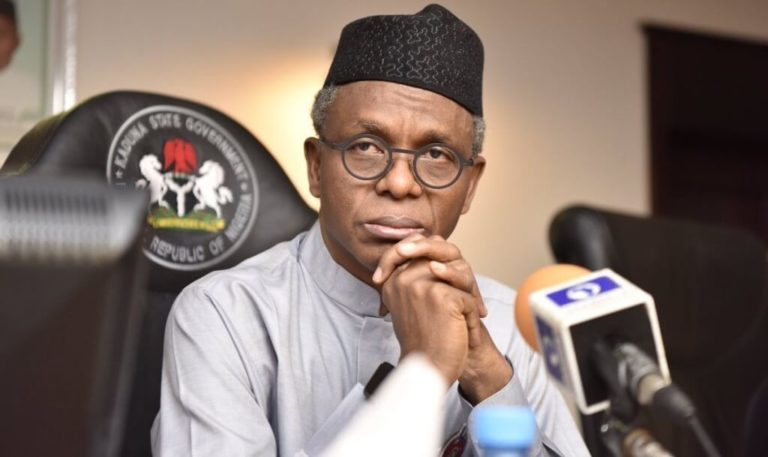
ON Tuesday, August 1, the former governor of Kaduna State, Nasir El-Rufai appeared before the Senate following his nomination by the President, Bola Tinubu, as a minister in his cabinet. 

He was among a number of Ministerial nominees who were screened by the members of the National Assembly (NASS).

El-Rufai shared his plans on how he intends to increase Nigeria’s electricity generation and distribution if made the power minister.


Read Also:

This was in response to a question posed to him by Abdulaziz Yari, the Senator representing Zamfara West Senatorial District, regarding revamping the power sector if approved as a minister.

He said Tinubu’s vision in the next seven years is to achieve a constant power supply in the country. He made several other claims to affirm his competence and why he should be offered the job as a cabinet member.

In this fact-check, we examine four of his major claims while sharing his plans to stabilise the Nigeria power sector.

CLAIM 1

Nigeria has about 13000 MW of installed generation capacity

THE FINDINGS

Findings by FactCheckHub show that the claim TRUE.

Nigeria has been grappling with persistent power supply challenges for decades. The country’s generation capacity has consistently fallen short of demand, leading to frequent blackouts and load shedding. The country generates most of its power through hydro, gas and thermal.

Between 2010 and 2022, reports showed the country recorded 222 partial and total power collapses.

The inadequate generation capacity to meet the rising demand for electricity has been identified as primary challenge facing Nigeria’s power sector. It is also made worse by old transmission infrastructure.

Data obtained from the Nigeria Electricity Regulatory Commission (NERC) revealed the nation’s total installed capacity stands at 10,396 MW. But The FactCheckHub discovered the data is old because the website is hardly updated, except for its quarterly report.

A check on the Nigeria Electricity System Operator, a platform under the Transmission Company of Nigeria (TCN) showed as of Wednesday, August 2, the total installed capacity of the grid as 13,014.14 MW.

The system provides information on the daily and hourly distribution and generation of power from the Gencos, among other detailed information. They basically monitor the functionality of the power systems.

Though the former minister of power Abubakar was quoted as saying Buhari’s administration would leave an installed capacity of about 22,000 megawatts (MW) of electricity, the official data as of the time of the fact-check states otherwise.

THE VERDICT 

The claim that Nigeria has installed power capacity of 13,000 MW is TRUE, according to data from Nigeria Electricity System Operator.


CLAIM 2 

Nigeria hardly generates 4000mw to 5000mw of electricity.

THE FINDINGS 

Findings by FactCheckHub show that the claim is true.

Nigeria produces an average of 5,000 megawatts of electricity which is insufficient for the consumption of about 200 million of its population.

Successive governments have tried but failed to reform Nigeria’s energy sector. Nigeria’s former Minister of Power, Abubakar Aliyu admitted this fact before he left the office, attributing the challenge to the shortage of gas supply.

According to the latest NERC quarterly report, Nigeria’s average available generation capacity in the fourth of 2022 stood at 4,503.59MW.

THE VERDICT 

The claim that Nigeria still struggles to generate 4000-5000MW is TRUE according to public records.


Claim 3

Eighty per cent of Nigeria’s electricity generation is from gas.

THE FINDINGS

Findings by FactCheckHub show that the claim is TRUE.

Natural gas is the primary fuel source for power generation in Nigeria. However, inadequate gas supply, pipeline vandalism, and pricing challenges have affected the availability of gas to power plants, leading to reduced electricity generation.

El-Rufai attributed the country’s epileptic power system to gas constraints, hampering the production capacities of generating companies (GenCos). He says 80 per cent of power generation is sourced from gas.

Findings show that out of the 28 electricity generation companies (GenCos), merely three operate as hydro plants: Shiroro, Kainji, and Jebba. The rest are gas-fired power plants, which means they rely on a steady gas supply to produce electricity.

According to International Energy Agency , 80 per cent of power generation comes from gas; most of the remainder comes from oil. The latest quarterly report released by the NERC shows that approximately 75 per cent of the available generation capacity is gas-based. The report, made public on July 31, stated that most of the power plants in Nigeria’s Electricity Supply Industry (NESI) are dependent on “associated Gas.”

Moreover, as of the last quarter of 2022, insufficient gas, according to NERC “resulted in the reduced generation from Geregu National Independent Power Project (NIPP) (97,201.07MWh), Olorunsogo (176,090.50MWh), Omotosho NIPP (106,295.57MWh), and Rivers IPP (156,890.67MWh).

THE VERDICT

El-Rufai’s position that gas is the major source of electricity in Nigeria is correct, and that 80 per cent of power generation comes from gas is mostly TRUE.


CLAIM 4

Banks have taken over 5 to 6 of our electricity companies due to liquidation.

THE FINDINGS 

Findings by FactCheckHub show the claim is TRUE.

Nigeria’s power sector was unbundled and privatised in 2013 with a view to creating a competitive market that would improve management and efficiency, attract private investment, increase generation, and provide a reliable and cost-efficient power supply.

However, the quest to deliver a cost-efficient power supply to Nigerians remains a pipe dream due to poor leadership and weak regulatory intervention.

The situation has defied successive governments as the sector continues to falter in inefficiency. Most private DISCos are also struggling financially to run the companies.

As a result, the federal government, in collaboration with Fidelity Bank and AMCON, took over the affairs of five electricity distribution companies, also known as DISCOs, over debts owed to Fidelity Bank.

The step is to save the companies from insolvency, among other reasons.

The affected companies are Kano Eectricity Distribution Company (KEDCO), Ibadan Electricity Distribution Company (IBEDC), Benin Electricity Distribution Company (BEDC), Kaduna Electric, and Port Harcourt Electricity Distribution Company (PHED).

THE VERDICT

The claim by EL-Rufai that about five to six DISCOs have been taken over by banks is TRUE, according to public records.

This report is republished from the FactCheckHub, read the original here.