Home Blog Page 828

NED’s Reagan-Fascell Democracy Fellowship programme opens

THE National Endowment for Democracy (NED) is inviting applications for its Reagan-Fascell Democracy Fellows Programme.

The programme strives to give democratic practitioners, academics, and journalists the tools they need to understand democracy better and advance democratic change.

Application for the fellowship is all-embracing to journalists who wish to learn more about democracy.

The International Forum for Democratic Studies in Washington expects fellows to reside there from March 1 to July 31, 2024, or from October 1 to February 28, 2025.

Working knowledge of English is required to be eligible.

Finally, fellows will receive a monthly stipend for living expenses, plus health insurance and reimbursement for travel.

The deadline for the submission of the application Is October 31, 2023. Interested individuals can apply here

Nigeria announces closure of borders with Niger

0

THE Nigeria Customs Service (NCS) announced the closure of land borders connecting the country to Niger Republic.

The NCS Acting Comptroller-General Bashir Adewale Adeniyi disclosed this on Friday, August 4, according to the News Agency Nigeria (NAN).

Adeniyi said the move was in compliance with the decision of the Economic Community of West Africa States (ECOWAS) to suspend trading between Niger and member-states till further notice.

He said affected border communities will be sensitised, adding that the decision was in the interest of peace and stability between both countries.

“Our president as a regional leader is an apostle of regional trade but where there is no peace, you cannot talk of trade,” Adeniyi said.

The ECOWAS, under the leadership of Nigerian President Bola Tinubu, imposed sanctions on Niger Republic following a military coup, which ousted democratically elected President Mohamed Bazoum and ushered in Omar Tchiani, who was previously the head of the presidential guards.

Following the coup, Tinubu vowed that the ECOWAS community would defend democracy and ensure its firm establishment among member states.

The Community also imposed a no-flight zone on Niger Republic, cut off electricity supply from member-states, mobilised international support for the implementation of the provisions of the ECOWAS communique and reactivated the border drilling exercise.

In a joint statement on Monday, Mali and Burkina Faso backed the actions of the Nigerien military and threatened ECOWAS with war.

The Russian Federation also warned against the use of force in Niger to avoid jeopardising the spirit of Pan-Africanism.

There have been rising concerns over the frequency of coups in African countries recently.

In May, military officials successfully overthrew the sitting government in Mali, citing a relaxed attitude towards the Touareg tribes as reason.

Burkina Faso also recorded two successful coups in 2022, and there were other cases of failed attempts in Gineau Bissau, The Gambia among others.

The ICIR seeks entries for its Promoting Democratic Governance project

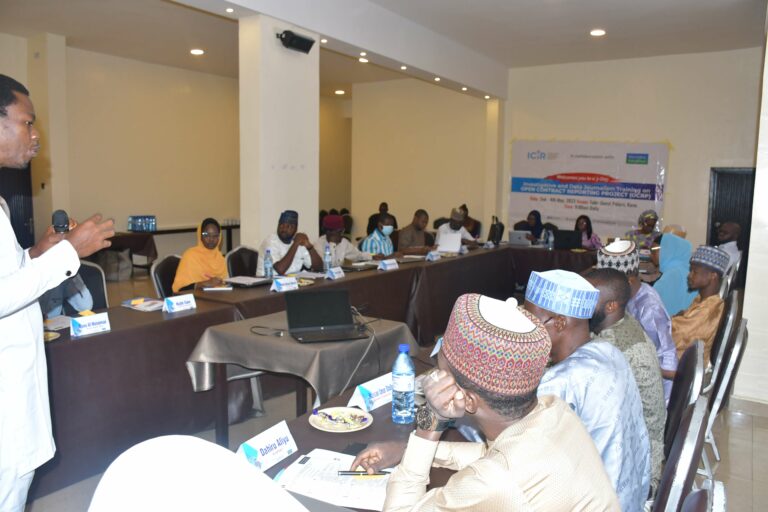
THE International Centre for Investigative Reporting (ICIR) is inviting applications from suitable and qualified journalists for its “Promoting Democratic Governance in Nigeria Project”.

The Promoting Democratic Governance in Nigeria Project aims to strengthen the capacity
of the media to promote transparency, accountability, and good governance in Nigeria,
particularly in the Northwest.

The Project is supported by the U.S. Embassy in Nigeria under its “Public Diplomacy Small Grants Programme”.

The application is for journalists in media houses in the Northwest states of Sokoto,
Kebbi, Katsina, Kano, Kaduna, Jigawa, and Zamfara across print, electronic and digital
media.  Twenty journalists will be selected.

The project will build capacity and provide financial support for selected journalists to
work with Civil Society Organizations and the ICIR to undertake investigative and
data-driven reports on transparency and accountability issues.

Candidates with a minimum of two years experience practising as journalists working in
print, electronic, and online media from the Northwest geo-political zone can apply. They
would be expected to report on accountability issues in their respective states. Freelancers
with a track record of critical reporting are also welcome.

Intending journalists must provide proof of prior critical reporting in the last 12 months.
Applications are therefore requested from journalists who meet the stipulated eligibility
criteria.

Being a gender-inclusive organisation, the Centre strongly encourages qualified female
journalists to apply.

The organiser says in the last five years, the Centre has worked to build the capacity for journalists to undertake investigative, data-driven reporting, thus strengthening accountability and engendering effective service delivery for the welfare of the citizens, particularly at the sub-regional level.

The deadline for the submission of applications is August 18, 2023. interested applicants can apply here.

Lagos Assembly sets up committee to probe elevator accident at government hospital

0

THE Lagos State House of Assembly inaugurated an eight-member committee to probe an elevator accident at Odan General Hospital, Lagos Island, claiming the life of a doctor Diaso Vwaere.

The House’s Speaker, Mudashiru Obasa disclosed this during plenary on Friday, August 4, while promising that justice would be served.

The committee, inaugurated on Thursday, August 3, would be headed by Deputy Speaker of the House Mojisola Meranda, and the investigations would last for two weeks.

“The eight-man committee, to be headed by the Deputy Speaker, Mrs Mojisola Meranda, includes Mr David Setonji, Mr Lara Oyekan, Mr Olayinka Ajomale, Mr Shabi Adekola, Mrs Omolara Olumegbon, Mr Akanbi Oluwa and Mr Olarenwaju Afinni.

“They have a mandate to report their findings to the House in two weeks. It is unimaginable the pain that the loss of the medical doctor would bring to her immediate family. It is saddening to lose such a young promising daughter,” Obasa said.

Vwaere died on Tuesday, August 1, when the elevator at the hospital staff quarters crashed from the ninth floor to the ground with her in it.

The deceased, who graduated from Babcock University, was said to be undergoing her mandatory one-year Housemanship at the hospital with less than two weeks to complete the programme at the time of her death.

Vwaere did not die immediately after the crash, though she was stuck in the elevator for about an hour before engineers arrived.

Long history of fault

The ICIR reported that the elevator had been faulty for about three years, and there had been no serious efforts by the hospital management to see to its repair.

Sources disclosed that the elevator capacity had been reduced from eight people to just two before the fatal accident.

“Particularly aggrieved because we’ve complained for a long time about this elevator. We’ve manoeuvred, managed and prayed each time we had to use it. Empty promises will be made to fix it….till it killed one of us,” a doctor Olarenwaju Aiyepola wrote on Twitter.

In 2020, Medical Guard, an association of all Lagos State Medical and Dental Doctors, made a post on Twitter on the state of the elevator.

“FACT: The doctors’ quarters at General Hospital Lagos has 10 floors. It has a non-functional elevator and no running water. Doctors who live on the 10th floor, including pregnant women, climb the stairs multiple times daily,” the tweet read.

 Lagos doctors declare strike action

Following Vwaere’s death, hospital workers staged a protest while the Lagos State Chapter of the Nigerian Medical Association (NMA) declared a strike action at the three government hospitals situated on Lagos Island.

The association declared a five-day mourning period for the deceased, while the strike was scheduled indefinitely.

Meanwhile, Governor of Lagos State Babajide Sanwo-Olu earlier called for an investigation into the mechanical fault of the elevator, describing the accident as distressing via social media on Wednesday, August 2.

“In light of this tragedy, I have taken immediate action to initiate a thorough investigation into the cause of the mechanical failure. It is my sincere commitment that this investigation will be conducted with utmost transparency and fairness, leaving no room for any biases or favouritism,” Sanwo-Olu noted.

Zambia’s head coach accused of sexual misconduct

0

THE head coach of Zambia, Bruce Mwape, has been accused of sexual assault over a player at the Women’s World Cup.

The ICIR had reported that Zambia is the only African side that failed to progress to the knock-out stage at the women’s world cup.

According to a report by BBC, FIFA has waded into the action of investigating the official complaint it received about the sexual assault the Zambia head coach meted on one of his players.

Mwape is accused of rubbing his hands over the chest of one of his players during a training session in New Zealand on 29 July.

The BBC reports that the Football Association of Zambia (FAZ) said “it has not received any such complaint” and it is a “surprise”.

FAZ also noted that “All the training sessions for the Copper Queens (Zambia) were filmed by the FAZ media team and offer no such footage”.


Tinubu writes Senate, seeks support to deploy troops to Niger

0

PRESIDENT Bola Tinubu has informed the National Assembly about ECOWAS plan to deploy military personnel to enforce compliance of the military junta in Niger Republic, should they remain recalcitrant.

The President of the Senate, Godswill Akpabio revealed the plan while reading the letter addressed to the senate by Tinubu, who’s also the chairman of the Economic Community of West African States (ECOWAS) on Wednesday, August 4. 

The coup, which took place on Wednesday, July 26, and ousted democratically elected President Mohamed Bazoum while bringing in Omar Tchiani, the head of presidential guards, has led the ECOWAS leadership to take action against the country.

As part of the sanctions imposed on Niger, Nigeria decided to cut off its power supply to the country, resulting in recent electricity shortages, according to Nigelec, Niger’s electricity company.

The ICIR reports that the country is heavily dependent on Nigeria as its main electricity supplier. In 2019, Nigelec’s chief executive said Niger relied on Nigeria for up to 70 per cent of its electricity supply. Kainji Dam in western Nigeria generates Niger’s electricity. 

ECOWAS also suspended all commercial and financial transactions between Niger and its member states, froze Niger’s assets in ECOWAS central and commercial banks, and imposed a travel ban and asset freeze on the military officials involved in the coup attempt.

Similarly, Tinubu’s letter unveiled ECOWAS’s determination to return the country to its democratic government.

Part of the letter read, “Following the unfortunate political situation in Niger Republic culminating in the overthrow of its President, ECOWAS under my leadership condemned the coup in its entirety and resolved to seek the return of the democratically elected govt. In a bid to restore peace, ECOWAS convened a meeting and came out with a communique.

“Closure and monitoring of all land borders with Niger Republic and reactivating of the border drilling exercise.

“Cutting off Electricity supply to Niger Republic. Mobilising international support for the implementation of the provisions of the ECOWAS communique. Preventing the operation of commercial and special flights into and from Niger Republic

“Blockade of goods in transit to Niger especially from Lagos and eastern seaports Embarking on sensitization of Nigerians and Nigerians on the imperative of these actions, particularly via social media. Military build-up and deployment of personnel for military intervention to enforce compliance of the military junta in Niger should they remain recalcitrant.”

Earlier today, the military junta in Niger Republic was reported to have cut off ties with Nigeria, France, and other countries on Friday after the peace talks delegates sent by the Economic Community of West Africa States failed.

The delegation of ECOWAS, which was led by a retired general, Abdulsalami Abubakar only met with representatives of the junta.

The delegation arrived in Niamey with the aim of establishing a dialogue with the junta in order to obtain a return to constitutional order. However, the meeting didn’t yield a positive result. 

“The putschists also decided to put “an end to the functions of the extraordinary and plenipotentiary ambassadors of the Republic of Niger” from four countries: France and the United States, two allies of President Bazoum, Nigeria, whose President Bola Tinubu is also at the head of ECOWAS and which imposed sanctions against Niger – suspension of financial and commercial transactions, freezing of the assets of putschists, cut in electricity supply… –, and Togo.” the Radio France International was quoted by the punch report

Tinubu withdraws Shetty’s nomination as minister, adds Keyamo

0

PRESIDENT Bola Ahmed Tinubu has written to the Senate to replace a ministerial nominee Maryam Shettima popularly known as Maryam Shetty, from Kano state, with Mairiga Mahmud.

This move may be connected to the backlash that greeted her nomination from some quarters on social media.

The President also added a former minister of state for Labour, Festus Keyamo, to the list of ministerial nominees.

This was disclosed on Friday, August 4, during the Senate resumption of screening of the second batch of ministerial nominees sent to the Senate.

Akpabio had, on Tuesday, August 2, unveiled 19 additional ministerial nominees sent by President Bola Tinubu.

The chief of staff to the President, Femi Gbajamiabila, presented the new ministerial list to the Senate during the plenary session.

Former governors Adegboyega Oyetola, Atiku Bagudu, Bello Matawalle, and Simon Bako Lalong were prominent Nigerians who made it to the new list of nominees.

Others names on the list are Maryam Shetti, Ishak Salako, Tunji Alausa, Tanko Sununu, Ibrahim Geidam, Ahmed Tijani, Bosun Tijjani, Lola Adejo, Shuaibu Aninakar, Zephaniah Jossalo, Tahir Mamman, Aliyu Sabi, Alkali Ahmed, Heineken Lokpobiri and Uba Maigari.

The nomination of Maryam Shetty from Kano State by President Tinubu generated a lot of reactions from Nigerians on social media, particularly Twitter.

While some Nigerians praised President Tinubu for nominating Shetty, others criticised him for nominating her.

The new nominee Mairiga was the commissioner for higher education in Kano State under former Governor Abdullahi Ganduje during his second term as Governor.

Keyamo was Minister of State for Labour under former President Muhammadu Buhari.

The ICIR reported on Thursday that Tinubu nominated former Governor of Zamfara state Bello Matawalle, accused of N70 billion fraud by the EFCC as minister.

In May 2023, the EFCC revealed that it is investigating Matawalle over alleged N70 billion theft through fraudulent contracts awarded by his administration.


Augmentin, Ammoxil, others to cost more as GSK exits Nigeria

PRESCRIBABLE medicines produced by GlaxoSmithKline (GSK), a British multinational pharmaceutical Group, like Augmentin, Amoxil will now cost more as the firm has announced plans to exit Nigeria after 51 years of operation.

As a result of the exit, Nigeria would now have to import and pay higher for these prescribable and off-the-counter drugs that, hitherto, were being produced largely in Nigeria by the company.

The firm is a healthcare company that researches, develops, and manufactures pharmaceutical medicines, vaccines, and consumer healthcare products.


READ ALSO:

Why over 70% of Nigerian foods are rejected abroad – NAFDAC

Lagos doctor’s death: Witnesses speak up on poor maintenance, negligence of hospital’s elevator


The company’s product line includes panadol, Andrews liver salt, Macleans, Ampiclox, Sensodyne, and others.

The Group has hinted at its exit plans, as the government policies on foreign exchange unification keep creating currency problems for the manufacturing sector, with dollar scarcity taking its toll on its production.

“In our published Q2 results, we disclosed that the GSK UK Group has informed GlaxoSmithKline Consumer Nigeria PLC of its strategic intent to cease commercialisation of its prescription medicines and vaccines in Nigeria through the GSK local operating companies and transition to a third-party direct distribution model for its pharmaceutical products,” GSK Nigeria Plc said in a statement seen by The ICIR.

It added, “The Haleon Group has also separately informed the Board of its intent to terminate its distribution agreement in the coming months and to appoint a third-party distributor in Nigeria for the supply of its consumer healthcare products.”

“The Board of GlaxoSmithKline Consumer Nigeria Plc has concluded that there is no alternative but to cease operations,” GSK Nigeria said in an official statement signed by its company secretary, Frederick Ichekwai.

“Today, we are briefing our employees whom we will treat fairly, respectfully and with care, meeting all applicable legal and consultation requirements,” the company said.

The company noted that its board is conscious that shareholders will have many questions; “We have been working assiduously with our professional advisors to agree on the next steps, and we will be shortly submitting to the Securities and Exchange Commission (SEC) a draft Scheme of Arrangement which may if approved, see shareholders other than GSK UK, receive an accelerated cash distribution and return of capital.”

“The Board acknowledges the support of the GSK Group in its intentions to make this possible, full details of which we hope to publish shortly. In the meantime, however, we cannot give you assurance of the final terms of any scheme, or that any scheme will be approved by the SEC or by shareholders,” GSK said.

It added, “Shareholders are advised to seek professional advice and continue to exercise caution when dealing in the company’s shares until a further announcement is made.”

GlaxoSmithKline Consumer Nigeria Plc was incorporated in Nigeria on June 23, 1971 and commenced business on July 1, 1972, under the name Beecham Limited. Its Head office is located at 1 Industrial Avenue, Ilupeju, Lagos.

The Company was quoted on the Nigerian Stock Exchange in 1977. In 1982, in order to expand  the operations in the country, an ultra-modern drinks factory was established in Agbara Industrial Estate, Ogun State, which has since been expanded to include facilities to manufacture Oral Healthcare (OHC) and Wellness products.

In line with our commitment to continuous improvement, we regularly update our facilities to meet the ever-increasing demands of our consumers.

Analysts’ reaction to GSK’s exit from Nigeria

Following the disclosure on Thursday, August 3, by the board of directors of GSK Consumer Nigeria to cease operations, a capital market operator, David Adonri, told The ICIR that the company had barely become a shadow of itself in the capital market.

“Well, from the fundamentals of the company, as stipulated in their financial reports, the company has not been performing well like it did in those days which made it very attractive to investors.

“It is probably losing its ability to compete in the industry and has lost its competitive edge,” Adonri, executive vice chairman of Highcap Securities Limited, said.

Adonri said, “the condition is likely driving them (GSK Nigeria) out of the stock market.”

A check by The ICIR showed that GSK Nigeria’s half-year sales dropped to N7.75 billion ($9.82 million) from N14.8 billion in the same period a year ago.

The company’s shares, in which British drugmaker GSK has a 46.4 per cent stake and Nigerian shareholders the remaining 53.6 per cent, closed at N8.10 on Thursday, August 3, down from a peak of N42.24 in 2014.

Reacting further and relating it to the realities of the fuel subsidy removal and exchange rate unification of apparently distorting many businesses, Adonri said, “I think it is a panic measure.”

“You can, therefore, see that the sustainable growth and development of the Nigerian economy cannot be built on the activities of foreign multinational companies because they are like briefcase investors; any little thing happens, they carry their bags and disappear.

“We are probably going to see more of that with a lot of these foreign enterprises that are only in another country to make a profit as long as their profit-making objective is not being realised,” Adonri said.

He, however, asserted that the unification of the exchange rate had created a blockage to the avenue through which a lot of multinational companies engaged in over-invoicing and siphoned capital away from Nigeria.

His words, “So with the floating of the naira and the foreign exchange market now allocating hard currency in the economy, everything is now transparent. Nobody can involve itself in the criminality of over-invoicing as a means of siphoning capital flight.

“They (multinational companies) have been profiting from the imperfection of the Nigerian economy for a very long time. Now that those imperfections are being removed, they are giving up.”

Adonri believes that the real investors required to make Nigeria’s economy development are Nigerian investors.

He added, “So, you can see why it is important for Nigerians to take control of their productive economy and not rely on foreign investors who can only come and take advantages and leave.”

An investment and portfolio analyst, Abel Ezekiel, noted that many companies are now exiting the Nigerian equities market.

He corroborated that GSK, which operates a “very big production facility” at Illupeju in Lagos state, where its manufactures its product, had since it sold off its main brand, Lucozade Boost, not been doing well and gaining investors sentiments in the equities market.

He also told The ICIR that the reality is that companies are exiting the equities market, primarily because of post-listing requirements, which compels quoted companies to disclose their quarterly and annual reports, among others.

NNPCL partnership with NIPCO on CNG to reduce demand for fuel

0

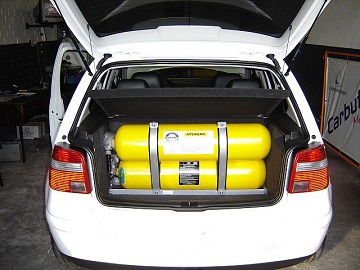
IN a partnership deal expected to reduce demand for Premium fuel Motor Spirit (PMS), the Nigerian National Petroleum Company Limited (NNPCL) has struck a strategic partnership deal with NIPCO Gas Limited to deploy Compressed Natural Gas (CNG) stations across the country.

The National Oil Company said the partnership is focused on providing cheaper alternative PMS to motorists.

Most Nigerians have been embroiled in the high cost of PMS since the removal of petroleum subsidy, but the NNPCL assured the deal would provide alternative options for Nigerian motorists.

The Chief corporate communications officer of the NNPCL, Garba Deen Muhammad, in a statement said, the collaboration aims to expand the CNG infrastructure, improve access to CNG, and accelerate the adoption of cheaper and cleaner alternative fuel for buses, cars and Keke NAPEP,which will significantly reduce the cost of transportation and engender sustainable national economic growth.

“Under the NNPC-NIPCO strategic partnership, 35 state-of-the-art CNG stations will be constructed nationwide, including three (3) Mother stations,” the statement said.

According to the NNPCL, once fully operational, the stations can service over 200,000 vehicles daily, thereby significantly reducing the cost of automobile fuel for Nigerians and the cost of transportation.

“The project will be rolled out in phases. The first phase, comprising 21 CNG stations, will support intra-city transportation and be ready by the first quarter of 2024; While the second phase, comprising 35 CNG stations, will support inter-city transformation and will be ready by late 2024.

“This will be further complemented by an additional 56 stations to be deployed by NNPC Retail across the country,” the statement read.

NIPCO Gas Limited is currently operating 14 CNG stations across Nigeria and has converted over 7,000 vehicles to run on CNG.

“NIPCO’s technical competency and field experience will bolster this initiative’s success and amplify its positive impact on the Nation’s economy.”

According to the NNPC, this initiative will leverage Nigeria’s abundant natural gas resources to bring multiple benefits to Nigerians, including access to cheaper fuel, reduced cost of transportation, reduced carbon emissions, and create new business value chains and streams of job opportunities.

NNPC Limited expects further private sector participation by oil marketing companies to broaden CNG penetration and availability.

The National oil company said it remains committed to reliably delivering energy while continuously creating value for Nigeria’s prosperous future alongside its partners.

The ICIR has earlier reported how the Independent Petroleum Marketers Association of Nigeria (IPMAN) have advanced negotiations with banks to support them on CNG as a proven alternative for the rising Costner of PMS.

IPMAN chairman, Chinedu Okoronkwo, assured that CNG would provide a good alternative to the PMS as its rising cost bites harder.

Women’s World Cup 2023: 75% of African countries escape group stage exit

0

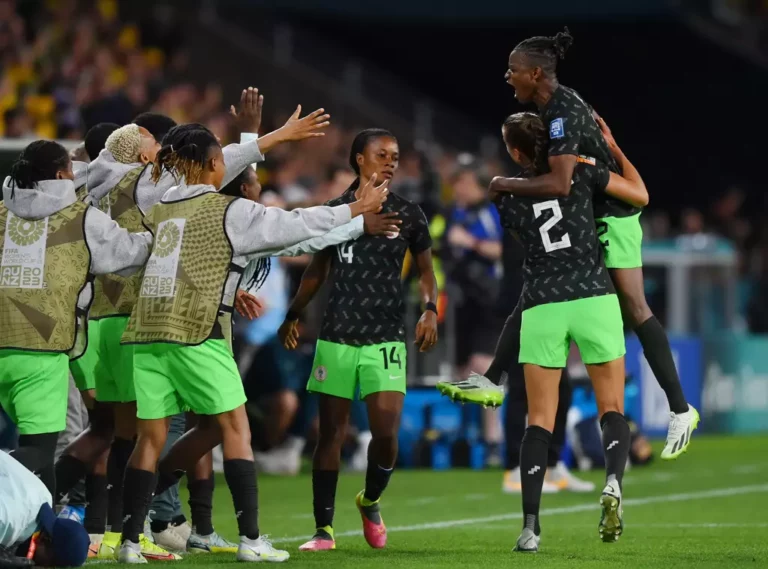
FOLLOWING the round-up of the group stage matches, three out of four of the African women’s football teams have scaled the hurdles from their respective groups to qualify for the knock-out stage of the 2023 FIFA Women’s World Cup.

Out of the four African representatives that qualified for the world cup, they are Morocco, Nigeria, South Africa and Zambia. Only Zambia failed to progress to the next round of 16.

The ICIR had reported that none of the four African teams won their opening matches, casting doubt on their strengths on the global stage.

But, The ICIR observed that out of the total 12 matches played by the African quartet at the ongoing FIFA women’s world cup in Australia and New Zealand, each one of them won at least one match apart from Morocco winning two in a row.

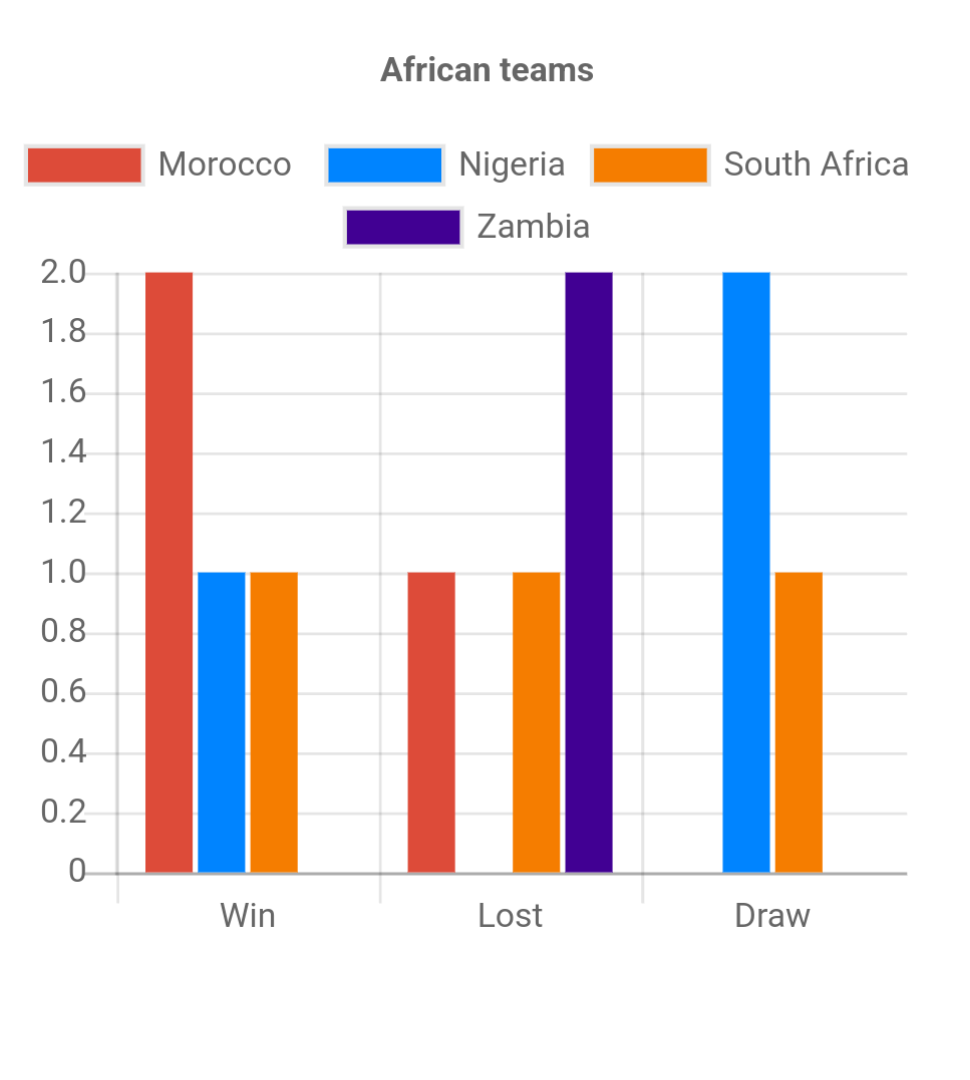
The bar chart analyzes the wins, losses and draws of the 4 African teams from the group stage of the ongoing 2023 FIFA Women's world cup.
The bar chart analyses the wins, losses and draws of the 4 African teams from the group stage of the ongoing 2023 FIFA Women’s world cup.

Results from the group stage revealed that African sides won 5, lost 4 and drew 3 matches.

Nigeria and Cameroon are the only two African countries that have reached the knockout stage in the past. Nigeria became the first African side to progress to the knockout rounds in the USA in 1999, while Cameroon matched them in 2015 later in Canada.

It is believed this is the first time Africa had more than two teams advance from the group stage at the Women’s World Cup. However, this feat falls in the context of the tournament’s recent expansion to include more teams.

Round of 16 encounters

All three African sides qualified as the second from their groups. Due to this, they will fight tough teams to get to the top.

As the group stage commences tomorrow, 5, August, African representatives have another barrier to break. South Africa will face the Netherlands on Sunday, August 6, while, the next day, Monday, Nigeria will slug it out against England.

On Tuesday, August 8, Morroco will square against France.