Home Blog Page 84

Corporate sanitisation:CAC deregisters 400,000 non-compliant companies in 2025

8

THE Corporate Affairs Commission (CAC) has deregistered more than 400,000 companies in 2025 as part of an aggressive drive to sanitise Nigeria’s corporate registry and strengthen trust in the country’s business environment.

The Registrar-General of the commission, Hussaini Magaji, disclosed this in Abuja on Saturday, February 7, during activities marking the CAC’s 35th anniversary.

“In 2025 alone, the commission de-registered over 400,000 companies in a bid to clean up its database from inactive and non-compliant entities,” he said.

Magaji said the sweeping action targeted companies that had remained inactive for years or failed to meet statutory obligations under the Companies and Allied Matters Act (CAMA), describing the exercise as necessary to protect the integrity of the national companies register.

According to him, removing dormant and defaulting companies will enhance transparency, reduce regulatory abuse, and improve confidence among local and foreign investors.

Beyond enforcement, Magaji said the commission is also deepening support for Micro, Small and Medium Enterprises (MSMEs). He disclosed that CAC, in partnership with the Small and Medium Enterprises Development Agency of Nigeria (SMEDAN), facilitated free business registration for 250,000 entrepreneurs nationwide.

The initiative, he explained, was aimed at lowering the cost of formalisation, easing entry barriers, and encouraging small businesses to operate within the regulated economy.

The mass deregistration follows earlier notices by the commission indicating plans to strike off at least 100,000 companies that had stopped carrying on business, remained inactive for a minimum of 10 years, or failed to file annual returns and disclose Persons with Significant Control.

Affected companies were given a 90-day window to regularise their status by submitting outstanding filings and, where applicable, sending activation requests to activation@cac.gov.ng

Magaji also revealed that the commission has fully operationalised a Beneficial Ownership Register, allowing members of the public to identify the true owners of companies operating in Nigeria.

He said the register has become a global reference point in promoting corporate transparency and supporting efforts to combat money laundering, terrorism financing, and other financial crimes.

CAC has been accelerating the digitisation of its operations to improve service delivery and boost Nigeria’s ease-of-doing-business ranking.

The ICIR reported in July 2025, that the commission unveiled an AI-powered registration portal designed to speed up approvals, enable instant name reservations, and drastically cut processing time for business certificates.

The platform is expected to deliver registration certificates in under 30 minutes once a user’s National Identification Number (NIN) is verified-marking a decisive shift from physical, office-based procedures to fully digital registration.

The commission also upgraded and optimised its portal to improve user experience and simplify compliance and announced the removal of 247 companies from its database for operating with false Registered Certificate (RC) numbers.

US lawmaker Moore rejects claim of plans to divide Nigeria

UNITED States Congressman Riley Moore has dismissed claims that his recent visit to Nigeria involved discussions about dividing the country.

He reaffirms his commitment to strengthening United States–Nigeria security cooperation and addressing the ongoing insecurity that has devastated communities across the country.

In a statement posted on his official social media on Saturday, February 7, Moore said he had travelled throughout Nigeria to meet with government officials, church leaders, aid groups and internally displaced persons (IDPs) to better understand the complex security crisis unfolding in the country.

He stressed that “the idea of dividing the country has not come up in any serious way” during his engagements.

“I have travelled to Nigeria and engaged in multiple high-level meetings with Nigerian officials, the Church, aid groups across the country, and IDPs, to get a better understanding of the rampant persecution of Christians in Nigeria.

“In my discussions, the idea of dividing the country has not come up in any serious way. Efforts to embolden separatists hurt Christians in Nigeria – especially in the North and Middle Belt. A destabilised Nigeria would embolden terrorists and make Christians less safe in Nigeria and across the continent,” Moore wrote.

The congressman also highlighted the recent security cooperation agreement between the US and Nigeria as an important step toward tackling the violence and deepening bilateral relations.

“I remain committed to working to save the lives of our brothers and sisters in Christ – and for that matter, all Nigerians – suffering from the instability wrought by terrorists throughout Nigeria.

“The US and Nigeria have just entered into a security cooperation agreement, and that is an important step in tackling the violence in Nigeria and deepening and strengthening the bilateral relationship between our great nations,” he added.

Moore’s visit comes against a backdrop of improving cooperation between Washington and Abuja on security issues.

The ICIR reported in December 2025 that the US forces conducted airstrikes on Islamic State-linked targets in northwest Nigeria with Nigerian cooperation, marking deepening military collaboration aimed at degrading extremist capabilities

High-level security talks, including meetings between Moore and Nigeria’s National Security Adviser Nuhu Ribadu, have focused on counter-terrorism cooperation and tangible actions to enhance protection for all citizens.

Moore has also praised Nigerian efforts such as the rescue of abducted schoolchildren from kidnappers, which he said showed a growing commitment to tackling insecurity.

The ICIR reported on Tuesday that the US confirmed that a small team of its military personnel had been sent to Nigeria to support counterterrorism efforts.

US Africa Command (AFRICOM), Dagvin Anderson, disclosed that the US team was sent after Nigeria and Ghana agreed that more work needed to be done to combat the terrorist threat in West Africa, confirming reports that the US had been conducting surveillance flights over Nigeria.

Nigerians are writing ‘gift’ on bank transfers to evade tax — why it won’t work

1

FOLLOWING the implementation of the new tax law in January 2026, many Nigerian business owners have mandated their customers to use misleading narrations in bank transfers in an attempt to avoid possible tax deductions. In this report, The FactCheckHub examines what Nigerian tax laws actually say about transfer narrations and whether they have any bearing on tax obligations.


Since January 1, when the Federal Government announced that the new tax law would take effect, Hamza Arabbi Kuraye, a provisions seller in Kubwa, Abuja, has instructed his customers to always write “gift” as the narration when making bank transfers for purchases.

He said he took the step after hearing rumours that the Federal Government would begin deducting taxes from payments for goods and services based on the narration attached to bank transfers.

“I tell people to write ‘gift’ as narration if the transfer or amount of goods bought is ₦10,000 or less than ₦10,000,” Hamza said.

He is not alone. A Point-of-Sale (POS) agent in Lugbe, Abuja, Ruth Ozobu shared a similar belief. “It was explained to us that if someone is buying something from you, it is better to write a narration like ‘gift’ so that when the government wants to remove tax from your money, they will not touch it,” Ruth said.

“Just like when your parents send you ₦50,000 for foodstuff or allowance, it’s better to add ‘foodstuff’ or ‘gift’ as narration so the government will understand that it isn’t income.

As a POS attendant, I get more than ₦500,000 a month—now imagine how much I would make in six months. Will they remove tax from that money? And on days I receive gifts, will they also remove tax from that money, thinking it was income?” she asked.

The experiences of Hamza and Ruth reflect a growing practice among Nigerian business owners and informal sector workers who believe that bank transfer narrations determine whether a transaction is taxable, a perception that has spread largely through rumours and informal explanations rather than official guidance from tax authorities.

Deluge of misinformation around Nigeria tax law

The misconceptions about transfer narration join a stream of misinformation that has clouded the New Tax Act, 2025 (NTA), since its announcement in 2025.

The Tax Act is a comprehensive legislation that consolidates and replaces several existing tax laws, including the Companies Income Tax Act, Personal Income Tax Act, Capital Gains Tax Act, Value Added Tax Act, Petroleum Profits Tax Act, and Stamp Duties Act.

The Act which has been followed by criticism and controversy was signed by President Bola Ahmed Tinubu into law on June 26, 2025 and took effect on January 1, 2026.

The process began in July 2023 with the creation of the Presidential Committee on Fiscal Policy and Tax Reforms, led by Taiwo Oyedele.

The ICIR reported that the Act was said to have been introduced to simplify Nigeria’s tax system, harmonise tax administration, expand the tax base, and modernise tax practices in line with global standards. The report also outlined what business owners need to do and the things to put in place.

The FactCheckHub reported that there has been a deluge of misinformation surrounding the law. For instance, a claim that under the new tax law, Nigerians would pay N500 as tax on every 10,000 spent on fuel circulated online in September 2025.

The claim was circulated on the internet since the announcement of the 5 per cent tax on petrol and diesel.

The regulation requires that the surcharge be applied to every supply or sale of refined fossil fuel products in Nigeria, whether locally produced or imported, with the money collected at the point of purchase. Cleaner fuels, such as renewable energy sources, household kerosene, cooking gas (LPG), and compressed natural gas (CNG), are exempt.

According to the purveyors, the regulation was recently introduced in the new tax law. However, findings by The FactCheckHub show that the Tinubu administration has not introduced a new tax, but rather reactivated an existing provision that had long remained unenforced.

The claims that starting in January 2026, Nigerians earning ₦800,000 and above annually will be required to pay 20 per cent personal income tax, under President Bola Tinubu’s new tax reforms, also spread like wildfire last year.

But checks by The FactCheckHub show that under the new Nigeria Tax Act 2025, individuals earning ₦800,000 or less per year are fully exempt from personal income tax. The progressive rates start at 15 per cent for incomes above that threshold, with the highest 25 per cent rate applying only to incomes above ₦50 million.

What is transaction narration and what the tax law actually said

A transaction narration refers to the short description attached to a bank transfer or payment. It is commonly used to indicate the purpose of a transaction, such as payment for goods, services rendered, loan repayment, or gifts. While narrations may help the sender and recipient understand a transaction, they do not determine the tax treatment of the funds involved. Under Nigerian tax administration, transactions are assessed based on their economic substance rather than the wording used in bank transfer descriptions.

Claims suggesting that Nigeria’s new tax regime allows authorities to deduct taxes automatically based on bank transfer descriptions are unfounded. A review of the country’s tax laws shows that transaction narrations play no role in determining whether a transfer is taxable.

Officials involved in shaping the reforms have consistently rejected the notion that tax agencies are tracking or analysing transfer descriptions to impose deductions.

They say no mechanism permits tax authorities to monitor individual bank transactions or debit accounts simply because a transfer is labelled as a payment for goods or services.

Taiwo Oyedele, who chairs the Presidential Committee on Fiscal Policy and Tax Reforms, has addressed the concern publicly, describing it as a misconception.

He explained that Nigeria does not operate a system where taxes are automatically pulled from personal bank accounts based on transfer activity or wording.

“There is no tax man in the world that has the capacity to go after everyone,” he said while speaking on Channels TV in December.

Oyedele explained that ordinary bank users should not worry about how they describe transfers.

“Any amount of money you transfer, whether it’s $1 billion, whether it’s $1,000, it doesn’t matter how you describe it.”

“Nobody will debit your bank account. At the end of the year, you tell the government yourself,” he said.

He added that the reformed tax system relies on self-declaration.

“You know the amount that is your income. You know the one that is not your income.

“So you tell the government, this is my income, and here is the tax. If you’re exempted, you don’t need to pay any tax. Just say this is my income, and I’m exempted from tax,” Oyedele said.

Oyedele further noted that the ongoing tax reforms do not assign banks the role of policing everyday financial transactions on behalf of the government. Instead, the tax system relies on established assessment processes.

An examination of the Nigeria Tax Act 2025 shows that taxation is built around voluntary disclosure and formal assessment. Individuals and businesses are taxed on identifiable income streams such as wages, business earnings, rent, dividends, and similar sources not on the mere movement of money in and out of bank accounts.

As such, routine transfers, gifts, and internal movements of funds do not, by themselves, trigger tax liabilities under Nigeria’s current tax framework.

The FactCheckHub reached out to a financial expert, Adeniyi Aside, Associate Chartered Accountant, Association of Chartered Certified Accountants. He explained that there is no existing mechanism that enables tax authorities to automatically debit individuals’ bank accounts based on the narration attached to it.

On how misinformation concerning tax emerged, he said, “Tax avoidance sentiments are a major driver of the rapid spread of misinformation. Many individuals are naturally resistant to paying taxes, so any narrative that appears to offer a way to “beat the system’ tends to gain quick traction.

On the implications of using misleading narrations, he noted that an entire year’s worth of transactions consistently described as gifts or donations is unlikely to be accepted at face value and may be reclassified for tax purposes based on economic reality.

“Incorrect or misleading narrations could expose taxpayers to additional tax assessments, penalties, and compliance issues,” he added.

He stressed that while transaction narration remains a helpful record-keeping tool, it should be used accurately and honestly, adding that compliance under the Nigeria Tax Act, 2025, is ultimately determined by the true nature of transactions, not merely how they are described.

“Tax assessments are therefore based on actual financial activity and statutory provisions rather than informal descriptions attached to transactions.”

Meanwhile, at the sub-national level some state governments has said they would recover unpaid tax through bank, tenants and other such means, this still has nothing to do with  narrations on transactions.

This is republished from the FactCheckHub.

Audit-query: Reps give FCT council chairmen ultimatum over ‘N100bn irregularities’

0

THE House of Representatives has issued a February 11 ultimatum to chairmen of the six area councils in the Federal Capital Territory (FCT) to appear before its Committee on Public Accounts over alleged financial irregularities exceeding N100 billion.

In a statement on Friday, the chairman of the House Committee on Public Accounts, Bamidele Salam, said the committee had invited the leadership of the area councils to respond to the audit queries, but they failed to honour the summons.

Salam said the council chairmen have now been given a final opportunity to appear before the committee on February 11, warning that failure to comply would force the House to invoke its constitutional powers to order their arrest.

He revealed that an audit report by the Auditor-General of the Federation for the year ended December 31, 2021, indicted Abaji, Abuja Municipal, Bwari, Gwagwalada, Kuje and Kwali area councils for widespread financial mismanagement.

According to the report, the councils recorded outstanding liabilities of N7.65 billion as of December 2021. These include unremitted pension deductions, Pay-As-You-Earn (PAYE), Value Added Tax (VAT), withholding taxes, unpaid capital project obligations and other statutory payments owed to the Nigeria Revenue Service, FCT Inland Revenue Service, pension fund administrators and contractors.

A breakdown of the liabilities shows that Abuja Municipal Area Council (AMAC) owed N2.19 billion, Bwari N1.49 billion, Kwali N1.46 billion, Gwagwalada N1.01 billion, Kuje N892.2 million and Abaji N593.8 million.

The audit also faulted the councils for poor asset management, noting that fixed asset registers were either not maintained or not updated. In the Gwagwalada Area Council alone, non-current assets valued at N336 million were not properly documented, raising concerns about possible losses. Similar weaknesses were observed across the other councils.

In addition, the report raised concerns over the total expenditure of N24.87 billion incurred by the councils in 2021 on personnel costs, overheads and capital projects. Although total spending rose by 89 per cent, an increase of N11.7 billion compared with 2020, about 37 per cent of funds reportedly allocated to capital projects could not be properly accounted for.

Spending figures show that AMAC spent N5.03 billion, Gwagwalada N4.66 billion, Kuje N3.85 billion, Kwali N3.84 billion, Bwari N3.74 billion and Abaji N3.71 billion.

Further audit findings for 2022 and parts of 2023 revealed continued violations of financial regulations, including understatement of internally generated revenue, unauthorised disposal of assets, non-disclosure of statutory revenue and failure to remit withholding taxes.

The ICIR reported last year that primary school teachers in the FCT were on strike for over three months after walking out on March 24, 2025, in protest over the failure of area council chairmen to implement the new N70,000 national minimum wage and pay owed arrears.

In July, the FCT minister, Nyesom Wike, approved the use of 10 per cent of the FCT council Internally Generated Revenue (IGR) to help offset some teacher dues in a bid to resolve the strike.

The strike was eventually suspended after more than three months when some demands were partially met and agreements reached.


Health workers suspend 84-day strike

0

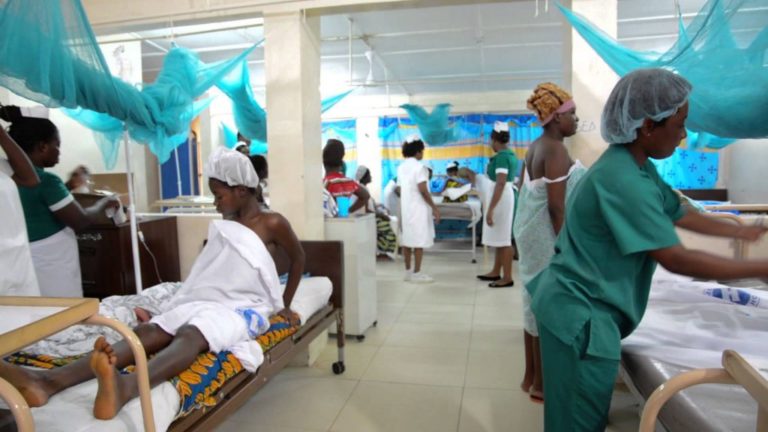
THE JOINT Health Sector Unions (JOHESU) has called off its nationwide strike after 84 days, following fresh commitments by the Federal Government to address lingering salary and welfare concerns affecting health workers.

The resolution was reached during an expanded emergency meeting of the union’s National Executive Council (NEC), held in Abuja on Friday.

The meeting was convened to assess the outcome of a conciliation meeting between JOHESU and representatives of the Federal Government, which took place on Thursday at the Federal Ministry of Labour and Employment.

JOHESU had shut down services across public health institutions nationwide from November 15, 2025, protesting the government’s continued delay in implementing the reviewed Consolidated Health Salary Structure (CONHESS), alongside other long-standing structural and welfare-related grievances within the health sector.

Announcing the suspension in a communiqué released after the meeting, the union explained that the decision was taken to allow the agreements reached with the government to take effect.

“After exhaustive deliberations and review of the terms of settlement of the conciliation meeting, the expanded NEC session voted unanimously to suspend the ongoing indefinite nationwide strike action to allow for the implementation of the FG–JOHESU terms of settlement,” the communiqué stated.

The union also acknowledged the patience shown by Nigerians during the prolonged shutdown of health services, while maintaining that the action became necessary due to persistent failures by authorities.

“While appreciating the masses for their understanding throughout the period of the industrial action, we appeal to consumers of health that a recurring infliction of injustice and a huge trust deficit necessitated this unfortunate and avoidable JOHESU nationwide strike,” the communiqué said.

JOHESU further urged the federal and state governments to take proactive steps to prevent similar disruptions in the future.

“We hope that the Federal Government as well as other state governments show both sensitivity and responsibility in ensuring Nigerians avoid this depth of suffering in the foreseeable future.”

According to the union, several attempts were made to resolve the dispute before the strike was suspended. It disclosed that meetings were held with the Federal Ministry of Health on January 15 and January 22, during which both sides presented proposals aimed at ending the impasse.

Providing further details, JOHESU said the breakthrough came during a final conciliation meeting held on February 5, 2026.

“The third meeting was the emergency conciliation meeting convened on February 5, 2026, arising from the 14-day ultimatum issued by the Trade Union Congress of Nigeria and the Nigeria Labour Congress to the Federal Government on the implementation of the adjustment of CONHESS,” the communiqué stated.

The union revealed that the agreements reached include provisions for the adjusted CONHESS to be reflected in the 2026 national budget. It also confirmed that the Federal Government agreed to reverse the “no work, no pay” policy and immediately settle outstanding January 2026 salaries owed to its members.

JOHESU added that assurances were given that no worker would face disciplinary action or victimisation for participating in the strike.

FG earmarks N300bn for Maitama maintenance, as Kuje school water projects get N140m

0

THE Federal Government earmarked N300 billion for the maintenance of Maitama 2 District infrastructure in its 2026 budget for the Federal Capital Territory (FCT)

It also has another N140 million allocation for solar-powered motorised boreholes in selected primary schools in Kuje Area Council.

The total proposed capital budget for the FCT is estimated at N460,737 billion with major focus on urban infrastructure, particularly in districts like Maitama and Maitama II, which together account for a disproportionately large share of the total budget.

It proposed the extension of inner southern expressway within the FCC at N35 billion; provision of infrastructure to Maitama II district N35 billion ;provision of pedestrian access control at interchanges in the FCC, an ongoing project, at N6.3 billion; full scope development of FCT highway 105 (Kuje road) from Airport Expressway to OSEX, with spur at Kyami District at N7 billion; construction of 30 kilometre road across six area councils at N10.5 billion; and Abuja metrolight rail – 5.7 kilometre extension, currently ongoing, at N31,3 billion.

Others include the settlement of residential and office accommodation rent for international organisations in the nation’s capital at N437 million; and provision of satellite towns water projects at N35 billion.

The magnitude of funds going into projects in elite districts in the nation’s capital has drawn criticism from residents, civil society groups and development watchers who argue that it underscores deep inequalities in how public funds are distributed in Nigeria’s capital.

While Maitama’s infrastructure receives hundreds of billions of naira, basic facilities in rural and peri-urban centres remain underfunded, like the solar-powered motorised boreholes in Kuje primary schools, a vital project for providing clean water to children and surrounding communities receive N140 million.

The ICIR further reports that while a chunk of the budget is allocated to projects in the city centre, there have been concerns over infrastructure deficits in FCT’s satellite towns and rural communities, where access to clean water, well-maintained roads and reliable electricity are unavailable. 

Residents of communities like Gaube and Kaido-Tsoho have raised concerns about poor road conditions in their areas and lack of basic amenities that impact lives, health outcomes and economic activity outside the city centre. Even though many of these facilities are what the FCT Administration, through the Minister, Nyesom Wike, should provide, several communities remain in dearth of them.

Critics say the FG’s budget for the FCT reveals a political choice to prioritise the comfort and appeal of the city centre over essential services for the broader population, where urban elites benefit from massive road upgrades and extensive maintenance projects, while rural districts that need basic infrastructure like school water systems receive little support.

The ICIR reported how the city has been overwhelmed with filth, and how criminals have continued to unleash mayhem on residents.

US reacts to killing of over 100 Kwara residents by terrorists

0

THE UNITED States has condemned the deadly attack on Woro and Nuku communities in Kaiama Local Government Area of Kwara State, where more than 160 people were reportedly killed.

Reacting to the incident in a social media post on Friday, February 6, the US Mission in Nigeria expressed concern over the horrific attack and condoled with the affected families.

“The United States condemns the horrific attack in Kwara state in Nigeria, which claimed the lives of more than 160 people, with the death toll still unconfirmed and many still unaccounted for.

“We express our deepest condolences to the families of those affected by this senseless violence. We welcome President Tinubu’s order to deploy security forces to protect villages in the area and his directive to federal and state officials to provide aid to the community and bring the perpetrators of this atrocity to justice,” the mission noted.

THE ICIR reports that the attack came nearly two months after President Bola Tinubu declared a state of emergency on security in Nigeria.

The massacre is also one of the deadliest attacks recorded in the country this year.

Reports indicate that death toll from the carnage could have gone up to about 170.

Villagers fled into surrounding bushland as gunmen rounded up residents, bound their hands, and executed many, according to a state lawmaker Sa’idu Baba Ahmed.

Homes, shops, and the palace of the local king identified as Salihu Umar were set ablaze, and several people have since been missing.

THE ICIR also reported that the killers operated for 10 hours before security operatives eventually arrived.

Speaking on ARISE Television on Thursday, February 5, the village head, Umar Bio Salihu said the attackers stormed the community at about 5 p.m. and continued unchallenged until roughly 3 a.m. the following day, when soldiers finally reached the area.

“I called after 5pm, but they did not come until about 3am. That was from 5pm to about 3am. That is about 10 hours. The military did not attack them. The bandits had gone when the military came,” he added.

He further noted that the community had remained largely unprotected for months following the earlier withdrawal of troops previously stationed there after their base was attacked.

According to him, the absence of a sustained security presence gave room for repeated incursions by armed groups.

“Initially, we had a military base there. We had about 15 soldiers there. About three to five months ago, they attacked the soldiers. Since then, they evacuated them. We have no security presence in that area.

“That gave them the opportunity to come anytime, enter anytime and do whatever they like,” he stated.

The village head linked the latest violence to tensions between residents and a militant faction he identified as the Mamuda group, claiming the attackers struck after locals resisted pressure to accept the group’s ideology.

“Our people are not ready to take that ideology. I think that is what made them angry to come and attack the communities.”

He also dismissed suggestions that the killings reflected religious divisions, stating that most of those killed were Muslims.

“When they brought the letter, they brought it directly to me. That night, I sent the letter to the DSS in Kiama.

“The following day, I took the letter myself to the Emirate Council. They photocopied it. In that process, I think they lost the appropriate contact.

“When the security agents went on patrol after the letter, the terrorists became angry.”

He disclosed that at least 75 people killed during the attack had been buried, warning that the toll could rise as search efforts continued in surrounding bushes.

He said several houses, including parts of his own residence, were razed during the onslaught.

The casualty figure he provided differs from earlier reports that estimated the casualties from the coordinated attacks on Woro and neighbouring Nuku communities at between 160 and 170 people, according to multiple accounts cited by officials and residents.

50 years after Murtala Muhammed, African leaders warn against dependency

0

AFRICAN leaders, scholars, and policy experts have issued a warning that the continent risks sliding into a new form of dependency unless it deliberately asserts its strategic autonomy and resists external domination.

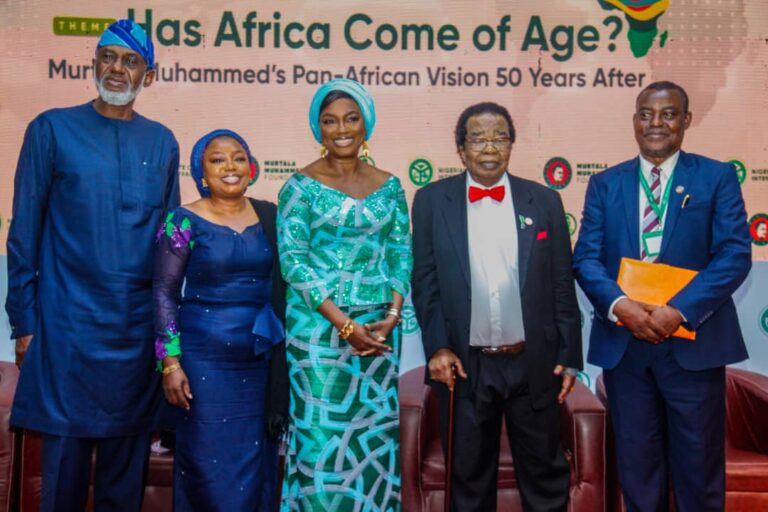
They issued the warning at a strategic policy workshop in Lagos themed, “Has Africa Come of Age? Murtala Muhammed’s Pan-African Vision 50 Years After,” jointly organised by the Murtala Muhammed Foundation (MMF) and the NIIA, to commemorate the 50th anniversary of the assassination of the former Head of State.

Speakers argued that despite Africa’s vast natural resources, youthful population, and expanding diplomatic footprint, the continent remains trapped in cycles of economic vulnerability, political fragility, and external influence,noting that conditions that contradict the bold vision articulated by Muhammed in his historic January 11, 1976 speech at the Organisation of African Unity (OAU) extraordinary summit in Addis Ababa.

“When General Muritala said Africa had come of age, he was saying to the world, don’t think Africa is an appendage anymore. Don’t think Africa is what you like to put today as copycat. To say Africa has come of age is actually to put on the stamp the meaning of strategic autonomy,” the Director-General of Nigerian Institute of International Affairs, Eghosa Osaghae, said.

Osaghae stressed that continued dependence on foreign aid and externally driven development models has failed to deliver sustainable progress.

“African solutions to African problems must be more than a slogan. It must become a governing principle,” he added.

Delivering the keynote address, former Minister of External Affairs and Professor of Political Science, Bolaji Akinyemi, cautioned against interpreting “coming of age” as a declaration of success.

“To say that Africa has come of age is not a declaration of perfection, but a recognition of responsibility,” Akinyemi said. “It demands that we examine our political maturity, economic resilience, institutional strength, and cultural confidence.”

He described Murtala Muhammed as “a man of several parts” who restored national pride and pursued governance with uncommon boldness.

Akinyemi argued that Africa must confront unfinished business from independence, including weak institutions, elite capture of resources, and fragmented regional cooperation.

“Without clarity and confidence in global affairs, Africa will continue to be acted upon rather than acting,” he warned.

The Chief Executive Officer of the MMF, Aisha Muhammed-Oyebode, explained that the workshop was designed not only to reflect on history, but to challenge a new generation to take ownership of Africa’s destiny.

“My father stood at the forefront of Africa’s liberation struggle,” she said. “This event is also about inspiring young Africans to see themselves as future diplomats, policymakers, and leaders

During a panel session, the Deputy Director of Research at NIIA, Joshua Bolarinwa, said Africa has not yet realised the self-reliance and courageous leadership envisioned by Murtala Muhammed nearly five decades ago.

Similarly, President of the Nigerian Political Science Association (NPSA), Hassan Saliu, said both Nigeria and Africa have fallen short on key pillars of Muhammed’s vision which is sovereignty, unity, liberation, and freedom.

He pointed out that persistent conflicts, external military footprints, and economic dependency expose the fragility of Africa’s independence.

Why we seek independence, enforcement powers for the Auditor-General – CSJ

0

THE Centre for Social Justice (CSJ) has argued that granting independence and enforcement powers to the Auditor-General’s Office would ensure it functions optimally and enable it to muster enough power to sanction defaulting government agencies without interference.

The Centre expressed worry that over time, exposing graft by the Auditor-General’s Office was not followed with commensurate sanctions because of limitations of its powers in the current audit law.

The Lead Director for CSJ, Eze Onyekpere, who disclosed this at the official launch of the Audit Opportunities Assessment Study on Thursday, February 5, in Abuja, said Nigeria was borrowing more because there were no adequate sanctions for misappropriations revealed in audit reports.

“Our fellow African countries like Gambia, Sierra Leone and South Africa have embraced the independence of the Auditor-General’s Office. In our country, it’s a different scenario as the National Assembly that should push for the Federal Audit Service Bill are still singing “on your mandate we shall stand,” (a slogan indicating absolute loyalty to President Bola Tinubu”, “he said

In a strategic recommendation for strengthening Nigeria’s audit system, Onyekpere stressed the importance of the enactment of the Federal Audit Service Bill, which would grant statutory independence and enforcement powers, establishing the Auditor-General of the Federation Office as an autonomous constitutional authority.

He also suggested the need to amend sections 85-87 of the Constitution to compel executive and legislative responses within fixed timeliness, ensuring that audit findings trigger mandatory corrective actions.

Onyekpere urged the Budget Office to withhold funds from ministries, departments and agencies of government that are non-compliant with audit rules.

He further suggested multi-stakeholder oversight forums involving civil society organisations, media and development partners to strengthen external accountability and sustained public engagement.

Also in his submission, a senior official of the Fiscal Responsibility Commission (FRC), Charles Abana, suggested that the legislature, specifically internal and external auditors, should utilise the submissions in the study to support audit work in the country.

Earlier reports by The ICIR revealed auditor-general’s reports indictments on several agencies of the government, which have come with a tap on the wrist warning in most cases because of a lack of enforcement and prosecutorial powers.

Notably, the office of the Auditor-General of Nigeria has indicted the Nigerian National Petroleum Company Limited (NNPCL) of N514 billion in fraud.

The allegation was contained in the 2021 Auditor-General’s annual report, published in November 2024 and released recently.

It disclosed that the NNPCL misappropriated funds and diverted revenue meant for the Federation in 2021.

A breakdown of the allegations revealed that the auditor-general indicted the NNPCL for unauthorised deductions of N82.9 billion from federation revenue for refinery rehabilitation.

It also knocked the state-owned oil company for its irregular deductions of funds from domestic crude sales at the source.

Former NEXIM Bank MD Robert Orya jailed 490 years over N2.4bn fraud

0

A FEDERAL Capital Territory (FCT) High Court has convicted and sentenced a former managing director of the Nigerian Export-Import Bank, NEXIM, Robert Orya, to a cumulative 490 years in prison over a ₦2.4 billion fraud.

The Economic and Financial Crimes Commission (EFCC) secured the conviction on Thursday, February 5, after a prolonged trial bothering on financial crimes he allegedly committed while in office between 2011 and 2016.

Delivering judgment, the judge, F. E. Messiri, found Orya guilty on all 49 counts filed against him, bordering on fraud, abuse of office and related offences.

The court sentenced him to 10 years’ imprisonment on each count, resulting in a total sentence of 490 years.

In a statement issued on its social media handles after the judgment, the anti-graft agency said the conviction marked the conclusion of a case that exposed large-scale financial abuse at the development finance institution.

“The EFCC, today, February 5, 2026, secured the conviction of Robert Orya, a former managing director of the Nigerian Export-Import Bank, NEXIM, for fraud amounting to about ₦2.4 billion.

“Orya, who was prosecuted by EFCC counsel Samuel Ugwuegbulam, was convicted by Justice F. E. Messiri of the FCT High Court, Abuja, and sentenced to ten years’ imprisonment on each of the 49-count charges,” the statement read.

Orya was first arraigned before the court on November 25, 2021, on charges including criminal breach of trust, impersonation, misappropriation of public funds, official corruption, fraud and abuse of office.

According to the prosecution, he abused his position as managing director to unlawfully obtain more than ₦1.368 billion from NEXIM Bank, alongside other fraudulent transactions that formed the basis of the 49 counts.