Home Blog Page 843

Palliative: N8,000 is lot of money to many poor families – Gov. Sule

0

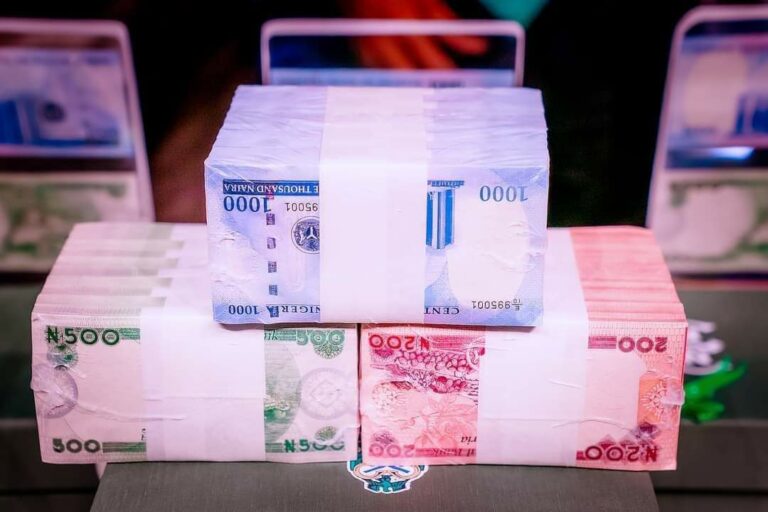
THE governor of Nasarawa state, Abdullahi Sule, has described the proposed N8,000 palliative by the Federal government as “a lot of money” to many poor Nigerians.

Sule said this in an interview with Channels Television’s Politics Today on Friday, July 21.

President Bola Ahmed Tinubu had proposed a cash transfer of N8,000 to 12 million poor households (60 million Nigerians) in Nigeria for a period of six months to cushion the harsh effects of the removal of fuel subsidy.

The initiative came under attack from many individuals and groups, who regarded it as too small to cushion the harsh results of the subsidy removal.

Tinubu bowed to pressure on Tuesday, July 18, ordering the review of the proposed scheme.

Reacting to the development, Sule insisted that the proposed N8,000 would help in reducing the impact of the subsidy removal.

“We were sharing only N5,000 and, believe me, there were so many people that were waiting for that N5,000 every month. Indeed there were some communities that were able to do some kind of contributions and they were able to do a lot in their various communities.

“So, N8,000 may not be so much money to some people, but it is a lot to so many other people who are from very poor families that don’t see N8,000 every month. The only thing is that let us identify those families,” Sule said.

Benue to prosecute workers collecting double salaries

0

THE Benue State government says civil servants receiving multiple salaries will be reported to the Economic and Financial Crimes Commission (EFCC) for investigation and prosecution.

Kula Tersoo, the Chief Press Secretary (CPS) to the state governor Hyacinth Alia disclosed this on Friday, July 21.

Tersoo said some of the workers were receiving salaries from up to three sources within the administration, including the Universal Basic Education Board, state and local governments.

“We already know some of them and they have been removed from the entire payroll. We are waiting for them to report that they have not been paid and that would be them reporting themselves.

“Those who were collecting double salaries as senior staff will be handed over to the EFCC for investigation and possible prosecution,” Tersoo said.

On Thursday, July 20, Governor Alia revealed that, at least, 2,500 ghost workers were discovered on the payroll of the state, according to a statement by Tersoo.

The discovery was made during a payroll audit and staff verification exercise carried out by the state, which led to a delay in payment of workers’ salaries for two months.

“He identifies ghost workers, ghost schools, double dipping, unlawful employment, salary padding, payment to dead or retired individuals, unlawful replacement, and inflation of the wage bill, as some of the payroll infractions discovered from the audit.

“He assures that workers who were successfully screened will receive their salaries before the end of this week, noting that government is not only fishing out ghosts workers and removing the padding associated with payroll fraud, but is also putting in measures to ensure the systems are protected, going forward,” Tersoo noted.

Alia also disclosed that the state saved N1.2 billion as a result of the verification exercise.

In June, the state suspended 23 local government chairmen and councillors  allegedly for their involvement in mismanaging public funds.

Palliatives: Kaduna state governor faults cash transfer scheme, calls it a scam

0

THE Governor of Kaduna state, Uba Sani, has faulted the cash transfer policy of the Federal government, describing it a scam.

Sani said cash transfers should not be something to be talked about at this period.

The governor declared this while speaking on Arise Television’s News Night on Friday, July 21.

He said, “That cash transfer, in my opinion, is a scam. Completely is a scam. I can be very certain about that, because who are you transferring the money to?

“Let me give an example. Go and check the current statistics. As chairman of the Senate committee on Banking for four years, I oversight Central Bank, I oversight all the commercial sectors of our economy for the last four years, and I looked at the statistics.

“About 70 to 75 per cent of the rural population in North West are financially excluded completely.”

He urged that the people in the rural areas be captured in the scheme.

“We are talking about important people in the society. They do not even have bank accounts, so who are you transferring the money to?” he asked.

He called on development partners like the World Bank to put in more money towards bringing more people into the financial services and target the vulnerable.

“Let’s put more money to ensure that we open accounts for them, get them involved. If we don’t do that, no matter what we do and however you do it, money will go to the wrong people. That’s the fact,” the governor declared.

The National Economic Council (NEC) on Thursday, July 20, dumped the national social register used in the former president Muhammadu Buhari’s administration for palliatives.

The council mentioned a lack of credibility as the reason for discarding it.

The decision was part of the outcome of the meeting by NEC members at the State House on palliatives for the people to ameliorate sufferings arising from the recent fuel subsidy removal.

The council, led by Vice President Kashim Shettima, advocated initiating a system for cash transfers to states based on their social records, as well as a six-month cash reward programme for public employees.

But NEC suggested that state governments undertake cash transfer programmes using state-generated social registers.

The council further suggested that the implementation be based on each state’s specific capacity and priority.

Meanwhile, the Christian Association of Nigeria (CAN) has urged the Federal government to implement policies and consider other options to lessen the economic impact of the fuel subsidy removal.

In a statement on Friday, July 21, CAN also appealed to Nigerians to “work together to build an economy that is inclusive, resilient, and offers opportunities for every Nigerian to thrive.”

Why we increased tuition fees – Unilag

0

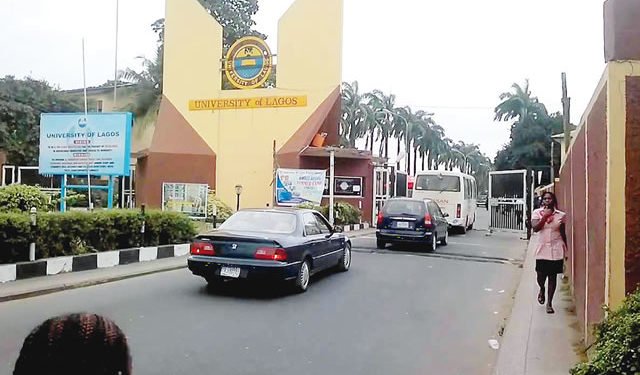
THE University of Lagos (UNILAG) management has explained its decision to hike tuition fees for new and returning undergraduate students.

statement the management ssued via the institution’s website on Friday, attributed the development to what it described as the “prevailing economic realities, and needs” to meet its obligations to students and staff.

The statement noted that the adjustment in fess would take effect from the first semester of the 2023/2024 academic session.

Part of the statement read: “After careful deliberations with its stakeholders (students, parents/guardians, staff unions, alumni among others), the University of Lagos (UNILAG) Management has reviewed the obligatory fees (mandatory charges for an academic session/year) of new and returning undergraduate students of the University.

“The adjustment in fees, which will take effect from the 1st Semester, 2023/2024 Academic Session, is in view of the prevailing economic realities and the need for the University to be able to meet its obligations to its students, staff, and municipal service providers, among others.

“It is also pertinent to note that the University has not increased its obligatory fees in recent years. Management, therefore, seeks the kind understanding and support of students and other stakeholders with the assurance of its commitment towards ensuring that students get the best learning experience.”

The breakdown of the adjusted obligatory fees shows that fresh students who study courses without the use of laboratories and studios are expected to pay N126,325, while students whose courses require the use of laboratories or studios will pay N176,325.

The new students are also expected to pay N10,000 and N20,000 for the toxicology test for screening and utility charges, respectively.

Fees for returning students range from N100,750 to N140,250, depending on whether the course requires the use of a laboratory and studio. The returning students are also expected to pay N20,000 as utility fee, while every final year student is expected to pay N30,000 as convocation fee. 

Total fee returning students (who are not in the final year) studying laboratory and studio-required courses will pay is N120,750, while final year students of that category are expected to pay N150,750.

For students (not in final year) who study courses that require laboratory use, the total fee they will be paying is N160,250, while final year students in that category will pay N190,250. 

Also, the payable fee for returning medical students falls within the range of N210,250 to N240,250. This fee covers the N20,000 utility fee and the N30,000 charge for convocation ceremonies.

We can’t live on philanthropism – Unilag VC

The Unilag Vice-Chancellor, Folasade Ogunsola, said in an interview with the Premium Times that the university had been recording deficits of about N1 billion annually for the past three years.

Ogunsola said, “The truth is that the charges had been going up for quite some time but we kept managing in spite of the inflation. And, honestly, in the last three years or thereabouts, we have been having deficits of about N1 billion annually. We have been cutting down our costs to give quality education. But we can’t live on philanthropism.

“Our expenditure has continued to outstrip our income. Our roles as lecturers shouldn’t be to be going around on how to make money. We are supposed to be thinking, doing research, and engaging in serious community services. We are losing lecturers per second because the university system does not work.”

She explained that the process of introducing new fees was prior to the subsidy removal, as the university had commenced engagement with relevant stakeholders, including students and parents, since January.

On May 1, 2023, The ICIR had reported how the University of Abuja had increased its tuition fee.

According to the report, the returning students in the Arts and related faculties in the university would pay N82,000, while their medical counterparts pay N225,000.

The fees differed from the acceptance fee of N30,000 and other departmental and Students’ Union Government (SUG) fees.

The Vice Chancellor of the university, Abdulrasheed Na’Allah, had warned the students to resist the urge to disrupt the peace in the school because of the hike. 

He said any student caught engaging in violent activities on campus would face the penalty, including expulsion.

He warned, “The repercussion is swift and merciless. If anyone is caught anywhere destroying anything or simply disturbing the peace of our campus, I promise you I will descend heavily on such a person by showing him or her a way out.”

About three weeks later, Cyprian Igwe, an undergraduate student of the Sociology department at the University of Abuja, was rusticated from the institution allegedly for urging colleagues to dialogue on the school’s hike of its fees.

Igwe and Oladeru Samson Olamilekan, the Students’ Union’s director of Sports, were “banned from all the university campuses pending the determination of the case” for allegedly calling for a protest.

Palliatives: CAN urges FG to look beyond cash transfers

0

THE Christian Association of Nigeria (CAN) has urged the Federal Government to implement policies and also consider solutions beyond cash transfers to reduce the economic impact of fuel subsidy removal on Nigerians.

CAN in a statement on Friday, July 21, also proffered some possible solutions to mitigate the effects of the fuel price hike, appealing to Nigerians to “work together to build an economy that is inclusive, resilient, and offers opportunities for every Nigerian to thrive”.

“The fuel subsidy palliatives being considered by the government should go beyond cash transfers. Government should consider introducing mass transport across the states to reduce the cost of transportation. The multiplier effect of this will be profound.


READ ALSO:
Palliatives: Kaduna state governor faults cash transfer scheme, calls it a scam

Palliatives: NEC dumps Buhari’s register, states to produce new roster

World Bank, IMF laud Tinubu’s economic reforms, urge timely palliative

Reps approve Tinubu’s request for N500bn to fund palliatives


“Government should take measures to reduce the price of fuel. Such measures should include removal of unnecessary levies and taxes on imported petroleum products, the stabilisation of the foreign exchange market, and putting back our local refineries to functional and effective use,” CAN stated.

The religious body commended the administration of President Bola Tinubu for showing commitment towards building a united, peaceful, and progressive Nigeria.

Parts of the statement read: “Given the massive corruption that had characterised the fuel subsidy regime over the years, there was a general consensus that the removal of fuel subsidy had become inevitable if the Nigerian economy is to experience sustainable growth. However, it was also generally agreed that this must be done in such a way that Nigerians will not be subjected to untold hardship. In other words, what is idealistic must be balanced with what is realistic.

“Against the backdrop of the recent unprecedented hikes in fuel prices and alarming inflation, the national leadership of the Christian Association of Nigeria wishes to express its deepest concerns over the prevailing hardships faced by Nigerians and calls for immediate steps to mitigate the situation.

“While Nigerians were trying to adjust to the initial increase in the fuel price to N540 and its consequential effect on the cost of transportation, food, goods and services, and the general cost of living, another hike alluded to market forces took the price to N617.”

According to CAN, the hike in fuel price  has placed an enormous burden on the already struggling masses, while further widening the gap between the rich and the poor.

It added that the purchasing power of ordinary citizens has been eroded, making it extremely difficult to afford the basic necessities of life.

“The situation is just unbearable for millions of Nigerians who were already suffering poverty. While CAN acknowledges the complex and difficult decisions that government must take to manage the nation’s economy, there is an urgent need to prioritise measures that will alleviate rather than exacerbate the existing poverty level and hardships of Nigerians. It is therefore imperative that economic policies are formulated and implemented with utmost care and consideration for the prevailing hardships experienced by Nigerians.”

CAN appealed to the government to consider some of the recommendations it presented in the statement.

 “Government should engage with critical stakeholders in a meaningful dialogue to explore sustainable solutions to the current situation. It is pertinent to develop comprehensive economic policies that promote inclusive growth, job creation, and social well-being.

“Government should focus on diversifying the economy, reducing dependency on volatile commodities, and promoting investments in sectors with the potential to create sustainable employment opportunities. This will not only bolster economic resilience but also contribute to the overall well-being of citizens.

“While we agree that there is no gain without pain, the pain must not be unbearable. Consequently, we again urge the government to take into account the impact of its policies on the most vulnerable segments of the society, and ensure they are not disproportionately burdened and subjected to unnecessary hardships.

“Government must listen to the concerns of the Nigerian people and implement sound economic policies that prioritise the well-being of all citizens. By addressing the prevailing hardships caused by the recent fuel price hikes and high inflation, we can pave the way for a brighter future for Nigeria.”

[Flood series] Mapping out areas in Abuja prone to flooding

THE Federal Capital Territory, Abuja, reported its first flood incident in June 2023, following a heavy downpour that exacerbated into a flood submerging several houses in an estate. 

The impact of the flood, which had become a regular incident, submerged 166 houses and displaced several residents from their homes. The ICIR captured it here and here.

Last year, flooding displaced 1.4 million people across various parts of the country from their homes and killed over 500 people.  The federal government attributed the incident to unusual rainfall as a result of climate change and the excess water released from the opening of the Lagdo dam in Cameroon that flowed into the Nigerian River and its tributaries. 


READ ALSO:

Benue, Kogi States mostly unprepared, despite early flood predictions

Flooding: What is Jigawa state doing to mitigate future disaster?

Flooding: What is Niger state doing to mitigate future disaster?

[Flood series] Abandoned to fate: the resettlement struggle in Anambra 


In Abuja, the Federal Capital Territory Emergency Management Agency said that the flood affected about 24,713 inhabitants in three of the six area councils of the FCT.  This development forced the government to demolish houses on waterways as part of an effort to mitigate the flood. 

However, experts told The ICIR that the government may need to develop a sustainable drainage system to channel water within communities, especially rural areas.

The ICIR captured the ordeal of residents who were impacted by the flood in 2022. 

Mapping out flood zone areas

At the beginning of this year, Abuja was listed as part of the state at risk of heavy flooding in 2023.  Weather25 forecasted that FCT would have 74 days of rain in 2023 with the highest rainfall impact from May and September. 

However, the recent incident in the Tradmore estate showed that the emergency response of relevant authorities to flooding has been poor, Taiwo Ogunwumi, a flood risk consultant, told The ICIR.

Source: Google Earth (An image showing the locations in FCT prone to flooding)/ Kehinde Ogunyale

“Yes, the authorities in charge of flood risk identification and predictions are doing their best. However, there is more to be done. An example is the provision of highly detailed flood risk maps indicating the major natural and anthropogenic features  (quantification and providing information on the economic cost loss that may arise from the future flood) that might be affected by floods,” Ogunwumi said. 

Meanwhile, The ICIR analysed several media reports of flood occurrence in Abuja in the last four years and learnt that 20 communities within the six local councils have reported at least one incident of flooding. 

Source: Aqueduct (An image sowing the water channels that runs into FCT)/ Kehinde Ogunyale

These communities include Lugbe, Lokogoma, Garki, Wuse, Damagaza, Gwagwa, Nyanya, Galadimawa, Gaduwa, Mpape, Kubwa, Dutse Makaranta, Giri, Yangoji and Kwaita.

Some other areas are located in Karmo, Apo, Apo-Dutse, Abbattoir,  Angwan-Dodo, and some communities around Kuje local council.

Findings showed that the Abuja Municipal Area Council has the highest number of communities that have been impacted by floods. This, however, may not be unconnected to several water settlements (lake, river and creeks) found within the council.


(The map [zoomable] above shows water settlement across the FCT)

As a result of these settlements, communities around these riverbanks are eventually impacted when the water level rises due to heavy rainfall. For instance, a report captured how one person died in the Galadimawa axis of Abuja after heavy rainfall increased the water settlement in the area. 

Climate expert Daniel Oladoja also told The ICIR that in the last century, human activities have disrupted the natural order of things climatically, which resulted in the excess precipitation that brought about flooding.

He said, “Excess rainfall places a strain on natural ecological systems and, in the absence of structural buffers, could lead to destructive flooding. Plainly speaking, excess rainfall could significantly swell the volume of water in the river systems and when those reach their carrying capacity, they will spill over on residential and agricultural lands.” 

Mitigating the flood

Speaking at The ICIR Twitter Space the NEMA Assistant Chief Information Officer, Abdulkadir Ibrahim, said the agency has begun to sensitise people on flood mitigations and set up emergency structures across all state levels. 

He said, “Presently, NEMA has already released climate disaster-related preparedness and migration strategy, which it is trying to downstream to the local government level. 

“The major challenge we have in this is that most of the state emergency management agencies are not as functional as they should be. According to the Act which set up the National Emergency Management Agency, we have to work with the state and local disaster management agencies, which of course is virtually not available in most of the local governments.”

Ogunwumi, while projecting more flooding this year, said there is a need to improve the details of the early warning report, that is, the quantity of the possible impacts of the flood e.g. population, farmland, and market stall that can be affected by this flood. 

Man caught stealing cables at Lagos airport weeks after runway lights theft

0

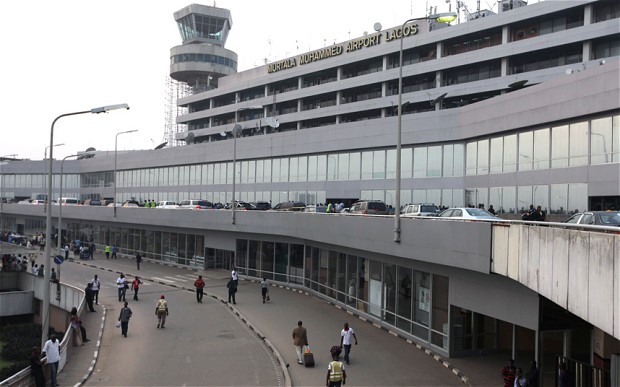
OFFICIALS of the Nigeria Air Force (NAF) have arrested a man for attempting to steal underground cables at the Murtala Muhammed International Airport (MMIA) Lagos.

Director, Public Affairs & Consumer Protection of the Federal Airports Authority of Nigeria (FAAN) Abdullahi Yakubu-Funtua disclosed this in a statement on Friday, July 21.

According to the statement, three men were spotted digging out the airport underground cables by guards on duty at the Nigeria Airforce HQ NADC gate.

The men fled upon sighting the guards, however, one of them, was shot and apprehended by the officials.

The injured suspect, identified as Usman Musa , 28, was taken to General Hospital Oyingbo where he is recieving treatment for his injuries.

“Usman Musa will be properly interrogated after he has stabilised.

“The Authority believes that this incident could be a relevant clue to unraveling the theft of the Runway Lighting at the Murtala Muhammed International Airport, Ikeja,” Yakubu-Funtua noted.

On July 12, FAAN confirmed that runway lights at the MMIA were stolen from the airport.

Some Heads of Departments were suspended following the theft based on the directives of the Permanent Secretary, Ministry of Aviation, Emmanuel Meribole.

The second runway of the MMIA, Lagos operated without airfield lighting for about 16 years until November 2022.

The runway was shut for three months before it was re-opened in November 2022 for flight services, after the successful installation of the CAT III Airfield ground lighting system.

This is not the first robbery attempt recorded at the Lagos airport.

In December 2021, Arik Air complained to the Nigerian Civil Aviation Authority (NCAA) about an attempted robbery of its taxiing aircraft by unknown men that encroached on the runway.

Yakubu-Funtua said that investigations had commenced into the theft, and described allegations that FAAN officials were involved in the incident as speculations.

“Once the investigations are concluded, we will let the public know,” he said.

FG, states, LGAs’ allocations rise by 15.4% in June to N907.054bn

THE Federation Account Allocation Committee (FAAC) on Thursday, June 20 shared a total sum of N907.054 billion among the Federal government, states and local government areas in June.

The sum represented a 15.4 per cent appreciation from the sum of N786.161 billion shared in May 2023.

A report by The ICIR had projected a higher rise in federation allocation from gains expected from the removal of fuel subsidy and unification of the foreign exchange rates.

A statement by FAAC’s spokesman, Bawa Mokwa, said a FAAC meeting today that announced the sharing was chaired by the Accountant General of the Federation, Oluwatoyin Madein.

Mokwa disclosed that the N907.054 billion total distributable revenue comprised distributable statutory revenue of N301.501 billion, distributable value added tax (VAT) revenue of N273.225 billion, electronic money transfer levy (EMTL) of N11.436 billion, and exchange difference revenue of N320.892 billion.

FAAC noted that in June 2023, the total deductions for the cost of the collection were N73.235 billion, while total deductions for transfers and refunds were N979.078 billion.

It added that the balance in the excess crude account (ECA) was $473,754.57

The statement explained that the Federal government received N345.564 billion, state governments received N295.948 billion, and local government councils received N218 billion.

Bauchi govt sacks six monarchs over partisan politics, misappropriation of funds

BAUCHI State Government, through the Local Government Service Commission, has dismissed six traditional rulers over offences bordering on misappropriation of funds, partisan politics and deforestation.

This development came barely three months after governor Bala Mohammed was reelected for a second term.

A statement dated Thursday, July 20, signed by the Acting Permanent Secretary Nasiru Ibrahim, disclosed that the affected monarchs are from Bauchi and Katagum emirate councils.


Read Also:

Parts of the statement read, “The Local Government Service Commission has approved the dismissal of six traditional rulers in Bauchi and Katagum emirates.

“This followed their involvement in partisan politics, misconduct, illegal forest reserve encroachment and felling of trees, misappropriation of public funds and insubordination which is contrary to the Public Service Rules.

“Those affected include Alhaji Aminu Muhammad Malami, District Head of Udubo; Alhaji Bashir Kabir Umar, District Head of Azare; Umar Omar, Village Head of Gadiya; and Umar Bani, Village Head of Tarmasawa, all in Katagum Emirate Council.

“While those dismissed from Bauchi Emirate Council are Bello Suleman, Village head of Beni and Alhaji Yusuf Aliyu Badara, Village Head of Badara.”

The affected traditional rulers were directed to hand over to their secretaries and the emirate councils, who are to appoint overseeing officers pending the appointment of substantive officials by the Commission.

The governor had, in November 2022, warned traditional rulers in the state against involvement in partisan politics, noting that his administration would not tolerate such behavior. 

“By urging traditional rulers to mobilise the citizens to support the government’s policies and programmes, we do not mean that they should engage in partisan politics. Traditional rulers are not involved in partisan politics under any circumstances.

“The involvement of traditional rulers in partisan politics under any guise is not only an aberration but a desecration of our traditional institutions, and that would not be taken lightly by anybody,” Mohammed said.

The governor, in the same vein, noted that he had been receiving reports that some traditional rulers in the state were involved in shoddy practises with the grazing and forest reserves, as well as cattle routes in the state and warned that he would not spare anyone found wanting.

“Let me warn that any traditional ruler or official of the state or local governments found to be involved in such malpractices will not be spared,” he said, adding that “existing laws of the Land Use Act are to be strictly adhered to, to ensure a harmonious relationship between farmers and herders”.

DW Akademie calls for podcasting trainers on climate change

THE Deutsche Welle (DW) Akademie is seeking podcasting coaches and trainers for West Africa and Namibia, with the focus on climate change.

Planning, arranging, and delivering podcast training (online) with media organisations and media makers from West Africa are among the responsibilities of the trainers.

The Initiative intends to assist media organisations and media producers in developing, producing, and disseminating crisis podcasts by assisting them in doing so.

August 4, 2023, is the application deadline. Interested applicants can apply here