NIGERIAN pilgrims from Osun State participating in this year’s Hajj in Saudi Arabia staged a protest over the weekend, expressing their dissatisfaction with the quality of meals provided by the state’s organisers.
A video capturing the incident has gone viral, showing the pilgrims rejecting dinner delivered to their hotel in Madinah and vocally criticising the inadequate provisions.
According to reports, the pilgrims had paid approximately N3 million for the Hajj pilgrimage, raising expectations for satisfactory services and facilities.
In the video, the pilgrims, adorned in white Jellabiya, can be heard speaking in Yoruba as they dumped their food on the doorstep of Maruf Isola, the Amir-ul-Hajj, leader of the state government delegation to the pilgrimage, at the Makkah hotel where they were accommodated.
One of the pilgrims lamented, “For the past four days, they have been feeding us with four slices of bread and two eggs. But now we can no longer endure because the officials and board members are being fed with special food. It is from the money that we paid that they are being taken care of. That’s why we are protesting.”
Responding to the allegations, the Osun State Muslim Pilgrims Welfare Board, represented by the Board’s Administrative Secretary Bolaji Sanni, on behalf of the Amir-ul-Hajj, Ishola, refuted claims of poor feeding and described them as baseless and unfounded.
In a statement, Sanni said the reports were politically motivated, aimed at tarnishing the reputation of the Board.
“The alleged poor food being purportedly served to the pilgrims was a political mischief intentionally fabricated by fifth columnists to willfully disparage and malign the good reputation of the Board.
“The board will not leave any stone unturned to correct such erroneous impressions being created in the minds of the innocent public,” the statement said.
However, the incident has raised concerns about the overall welfare and care provided to Nigerian pilgrims in Saudi Arabia.
On Saturday, the head of the Nigerian medical team for the Hajj pilgrimage, Usman Galadima, announced that out of 95,000 Nigerian pilgrims airlifted for the 2023 Hajj exercise, six had passed away.
Incidentally, two of the deceased were from Osun State. The causes of death were cited as cardiac arrest and undisclosed illnesses.
Galadima also provided an update on the medical conditions of the Nigerian pilgrims, stating that 30 individuals were being treated for mental health challenges but were now in stable condition.
Additionally, seven pregnancies were recorded among the pilgrims, with two from Sokoto State and one each from Adamawa, Kwara, Yobe, Plateau, and Katsina. Unfortunately, two miscarriages were also reported, and a diabetic pilgrim had to undergo a leg amputation.
It remains to be seen what steps the Nigerian government will take to address the grievances raised by the Osun State pilgrims and ensure the better well-being of the country’s pilgrims.
HOSTWRITER is accepting entries for the 2023 edition of its Annual Award.
The award is open to teams of two or more journalists who have worked or will work on a story together and have used or will use their platform in some way during the research.
Hostwriter is a platform that lets vetted journalists contact each other for collaboration opportunities, and will award cash prizes for works of collaborative journalism among professional and amateur journalists.
Works may be published in any language, but works not in English must include a translation.
There are two prize categories – the story prize which will be awarded €1,000 ($1,094), and the pitch prize which will attract €1,500 ($1,642).
Works must be published by July 31.
The deadline is August 31, 2023. Interested applicants can apply here.
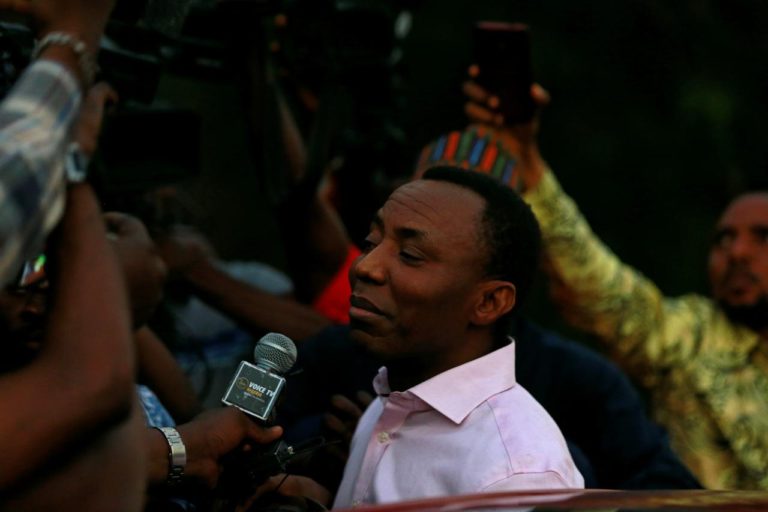
THE African Action Congress (AAC) presidential candidate, Omoyele Sowore, said he spent about N40 million on his 2023 presidential election campaigns.
Sowore, who stated this in a statement by his party’s spokesperson, Femi Adeyeye, said about N38.3 million was realised from donations.
In the document sighted by The ICIR, the presidential candidate noted that about N1.8 million came from his personal funds. He added that as of March 31, 2023, the sum of N90,101.21 was in the bank account.
Explaining how the funds realised from donors was spent, he said N5,030,000.00 was spent on campaign action/party activities; N1,233,623.89 for subscription; N3,198,000.00 on printing cost; N2,500,000.00 on media logistics and N21,065,820.00 for conveyance.
He added that N2,290,000 was used for security and other volunteers, N1,627,000 for maintenance cost, N20,000 for consumables, N1,343,800 for welfare and N80,302.14 for bank charges during the period.
The breakdown of expenses from the personal funds, which was N1,805,000 include: N200,000 for printing cost, N1,535,000 for conveyance and N70,000 for maintenance cost.
Meanwhile, the Sahara Reporters publisher and his party have called on other presidential candidates, including President Bola Tinubu of the All Progressives Congress (APC), to make public their campaign financing sources and expenses in the election.
According to AAC and the Sowore Political Action Committee (SPAC), the public release of the final breakdown of the 2023 Presidential election campaign donations, sources of finance, and expenditure, was in keeping with best campaign practice and the spirit of accountability.
“Recall that the committee gave monthly updates during the campaign and this is not the first time the committee will be releasing a breakdown such as this. In 2019, the AAC candidate also released a complete breakdown of campaign expenses, the first recorded in the history of electioneering campaigns in Nigeria’s history.
“We sincerely hope that those who sought public donations during the campaign season will also show to Nigerians the donations they got from the campaign donors across Nigeria and beyond.
“We can’t have a clean leadership recruitment process in this country with people who shroud their campaign spending in secrecy. We believe that those who can’t keep books of campaign expenses and transparently account for the expenses incurred can’t run a country like Nigeria properly.”
Political analysts have commended Sowore’s decision to provide a detailed breakdown of his campaign finances.
In an interview with The ICIR, Jane Adewole, a lecturer in the department of Political Science in Federal University Oye Ekiti (FUOYE), commended Sowore’s move, highlighting that transparency and accountability are often lacking in Nigeria’s political landscape.
“Sowore’s decision to publicly disclose the details of his campaign financing is commendable. In a country like Nigeria, where transparency and accountability in politics are often lacking, this move sets a positive precedent,” she said.
By openly sharing the details of his campaign funding, Adewole said Sowore has set a positive precedent and promoted a culture of trust and openness in politics.
She noted that such transparency was crucial for voters to make informed decisions and regain confidence in the electoral process.
“It is crucial for voters to know how campaign funds are utilised, and this transparency can help build public confidence in the electoral process.”
Also, the immediate Deputy Vice Chancellor of FUOYE, Shola Omotola, echoed Adewole’s sentiments, emphasising the significance of Sowore’s call for other candidates, including Tinubu, to disclose their campaign finances.
Omotola, a professor of Political Science, stressed that transparency in campaign funding was a vital component of democracy.
He said it allows political leaders to maintain their integrity and independence from hidden interests, ultimately contributing to good governance.
“Sowore’s call for all candidates to disclose their campaign finances demonstrates a commitment to upholding democratic principles,” he said during an interview with The ICIR.
“In a democracy, it is essential for political leaders to be transparent about their funding sources and expenditures. By doing so, candidates ensure that they are not beholden to any hidden interests and can maintain their integrity while governing.
“Sowore’s decision reflects his dedication to good governance and may set a new standard for electoral campaigns in Nigeria.”
NIGERIAN superstars Burna Boy and Tems emerged winners in the Best International Act and Best Collaboration categories, respectively, at the 2023 edition of the Black Entertainment Television (BET) Awards.
The award show was held at the Microsoft Theater in Los Angeles, California, United States on Sunday, June 25.
Burna Boy was honoured as the Best International Act, while Tems bagged the prize for Best Collaboration for her contribution in Future’s ‘Wait for U’. The wins recorded by the two musicians continued to showcase the immense talent and global impact of Nigerian artists on the international stage.
In a similar vein, the Nigerian sensation Davido took to the stage during the event, captivating the audience with his electrifying performance of the chart-topping single ‘Unavailable’ from his latest album, ‘Timeless’.
Davido performing at the BET 2023. Source: Instagram
Notably, this marked the second consecutive year that an Afrobeats artist graced the main event, following Fireboy’s remarkable performance last year.
This year’s event was organised in honour of the 50th anniversary of Hip Hop. The occasion witnessed performances by renowned rap icons including KRS-1, Big Daddy, Fat Joe among others.
Meanwhile, The ICIR had reported that Wizkid, Asake and Ayra Starr were among the nominees for the awards in diverse categories. Their nominations further highlighted the widespread recognition and impact of their respective contributions to the music industry.
LAST year, The ICIR captured the impact of flooding in Jigawa state in this report, ‘Displaced by flood, struck by hunger; life inside Jigawa IDP camps’. The state has been described to be the worst hit across Nigeria and highly vulnerable to potential flooding this year – 2023. As a follow-up, Nurudeen AKEWUSHOLA visited households and farming communities affected by the flood to assess communities and government preparation to manage the flood.
Lima Jakada, a farmer in Kalgwai community in Jigawa state, had made arrangements to harvest his agricultural produce and transport it to the market to get enough to feed his family. But, his hopes were dashed by the devastating floods that swept through Nigeria in 2022 and wreaked havoc on farmlands in his village, Kagwai, and numerous locations in Jigawa state.
The rainy seasons in Jigawa, located in northwest Nigeria, evoke feelings of anxiety and sorrow among its residents. During the period between mid-August and September 2022, the state faced one of the most devastating floods it had experienced in years. Despite being familiar with the recurring floods, the magnitude of destruction witnessed was immense.
Lima Jakanda, a farmer in Jigawa community
Recounting his loss, Lima, who is one of the victims of the disaster, said, “As a result of torrential rainfall and the overflowing river, our farmland became flooded with water. Personally, I had cultivated rice, meticulously preparing the soil, planting the seeds, and providing necessary fertilisers, eagerly anticipating a bountiful harvest with faith in God’s intervention. But, the devastating flood swept away all my rice crops.
” I had anticipated a yield of at least 30 sacks of crops, yet not a single sack was salvaged. The flood mercilessly claimed everything I had worked for, leaving me with nothing.”
He said he was given N18,000 by the government as compensation, but it is nothing compared to the loss and expressed fear about the potential of another flood as the rainy season approaches.
Jigawa is one of the states prone to annual destructive flood incidents, but in 2022, The ICIRreported that the state witnessed one of the most devastating floods in its history.
According to the Ministry of humanitarian affairs, disaster management, and social development, the state was the worst hit by the flood disaster in 2022, and the Nigeria Hydrological Services Agency (NIHSA) has identified Jigawa as one of the states that fall within the highly probable flood risk areas for 2023.
Residents left with no option
In 2022, Jigawa experienced devastating floods that submerged numerous houses and forced residents to seek shelter in makeshift IDP camps. During the visit to severely affected communities, The ICIR observed that community members had successfully returned and resumed their daily routines.
In Malgodo community, for instance, the flood submerged many buildings, leading to casualties and property damage. Despite the looming threat of another flood this year, the community members rebuilt their mud houses, while others are still rehabilitating.
A resident of Jigawa state rebuilding his mud house that was destroyed by flood/ Credit : The ICIR/ Nurudeen Akewushola
Suleiman Hassan, a resident of Sabon Uyo community recounting his harrowing experience during the 2022 flood, told The ICIR “Almost 99% of people in this village left their homes. The houses here were completely abandoned. Everything was submerged in water, including my house. The water reached my chest. The rooms, clothing, and belongings of my wife were all destroyed. Even our food supplies were ruined”.
Suleiman Hassan
According to Hassan, the villagers built an embankment around farmlands and their homes as protection, but it was not enough to prevent the flood.
Hassan highlighted the need for frequent dredging of the Hadejia River and the necessity for an embankment to protect the community from future calamities.
On why they came back to the community, Hassan said, “Because we don’t have anywhere else to go. If we had a proper place to stay, we would have sought shelter there instead of living in uncertainty. Only Allah knows what the future holds, but we live in constant fear for our lives.”
“The government often claims money and food have been sent out and given to the victims of the flood, but it is not reaching us as it should be; that is the truth. Help is coming, but not as much as it should be,” he said.
Despite the National Emergency Management Agency (NEMA) urging residents of flood-prone communities to relocate to higher ground before the start of the flood season, some communities in Jigawa, particularly those near the Hadejia Dam, seem to disregard the advice which, according to them, is due to lack of alternatives.
For instance, Ya’u Maragwado, a 29-year-old resident of Maragwado village, was found rebuilding his mud house that was destroyed by the previous year’s flood when this reporter visited his community.
He expressed a desire to leave the community and if he finds a safer location for farming without the constant fear of floods. However, he currently had no other viable options.
Ya’u Maragwado rebuilding his mud house destroyed by flood. The ICIR
“The flood affected me as it destroyed my crops and my house. Now, you find me here rebuilding because we have no other means to help ourselves. This is where I live and farm, my only resort. It’s something I must do,” Maragwado explained why he refused to relocate away from the flood-prone community.
Maragwado appealed to the government for support, urging them to consider providing assistance to those whose homes were affected. He suggested the possibility of changing their environment or implementing other measures to help alleviate their situation, if feasible.
Jigawa a highly probable flood risks area in 2023 – NIHSA
The Nigeria Hydrological Services Agency (NIHSA), in its prediction of the 2023 Annual Flood Outlook (AFO), with the theme “Flood Prediction and its Impact on Socio-Economic Livelihood of Nigerians” has identified Jigawa and other 31 states of the federation and the FCT as states that fall within the highly probable flood risks areas for 2023.
The report stated that floods in highly probable flood-risk states are expected to be high in terms of impact on the population, agriculture, livelihood, livestock, Infrastructure and the environment between April and November.
According to the report, Nigeria has traditionally focused on post-disaster flood response rather than risk control that can lessen the impacts of the disaster.
The agency called for an efficient national flood early warning system which needs to be implemented at various governing levels: Federal, State and Local, in order to truly address Nigeria’s flood situation.
What is the state government doing?
The ICIR visited various communities in Jigawa to examine government mitigation plans ahead of probable flooding in 2023.
(I) Rehabilitation of destroyed roads and bridges
The ICIR observed that the government has started rehabilitating some roads and bridges destroyed by last year’s flood in some communities.
During a visit to one of the roads destroyed by flood, Auyo Kafin Hausa road, The ICIR observed that the government has already commenced its rehabilitation. An Engineer with Retercha and Co. Nigeria Limited, a company in charge of the rehabilitation, Usman Mohammed, told The ICIR the rehabilitation would be completed before the rainy season commences fully.
A broken bridge under construction in Auyo, Jigawa state./ The ICIR.
“So far now as you are seeing, we will go more with the filling, and our target is to complete the project before the next rainy season. Gradually now, the work is going very fast, and you see now everything is ready. We bring our iron and all the items we need for this, including the culverts.“
Adamu Issa, a community resident, told The ICIR that the deteriorated condition of the road has posed challenges for the residents in terms of mobility. He emphasised that the rehabilitation process should have been initiated much earlier.
Issa urged the government to expedite the work to prevent it from becoming a major inconvenience for the residents when the rainy season arrives.
(II) Dredging of Hadejia River
The River Hadejia in the state is known for overflowing every rainy season. In 2018, no fewer than 30 people died due to flooding within the river, destroying over 68,000 hectares of farmlands. About 421 communities across Jahun, Miga, Auyo, Kafin Hausa, Guri, and Hadejia LGAs were severely affected.
Amphibious excavators for the dredging of Hadejia river/ The ICIR
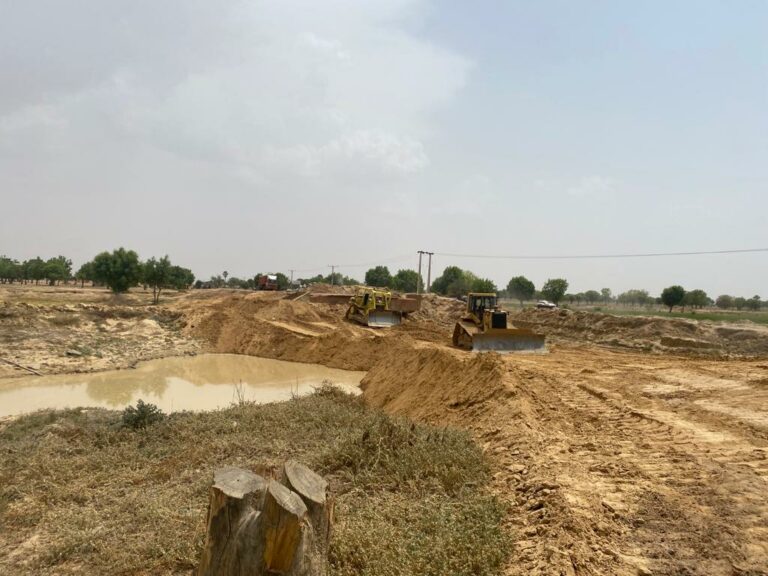
Meanwhile, during a visit to the river, The ICIR observed that the government has procured two amphibious excavators worth N645 million, according to the state government, for the river’s dredging.
An amphibious excavator is a specialised machine used for river dredging. It can operate in waterlogged or marshy areas and is equipped with dredging attachments to remove sediment, silt, and debris from the riverbed and increase the capacity of the river to carry water during heavy rainfall or flood events.
Dredging also improves the natural drainage capacity of rivers. By clearing the channel, water can flow more freely and efficiently, minimising the chances of water pooling or becoming trapped in certain areas. This helps prevent localised flooding caused by inadequate drainage.
Umar Isa, one of the operators of the dam, told The ICIR that the height of the water in the dam used to oscillate between 45-50 meters, but it went up beyond their expectations in 2022 when it rose to 65 metres.
Umar Issa
He, however, said the government is actively implementing measures to mitigate the potential reoccurrence of such incidents in the future. “That is the reason behind the provision of excavators, which will aid in clearing waterways from debris and vegetation, as well as excavating sand and sediment from dams to ensure improved water flow,” Issa said.
Isa recalled that the dredging commenced earlier in May 2023 after the dam site’s assessment by the federal government’s delegations for the commissioning of the excavator machine by government agencies.
(III) Construction of drainages
Following the 2022 flooding, the Jigawa state government, through the Ministry of Environment, awarded contracts for the construction of nine drainage projects in seven Local Government Areas (LGAs) of the state.
The benefitting LGAs are Hadejia, Babura, Birniwa, Dutse, Bubura, Miga and Kafin Hausa. Also, the benefitting contractors are Samplus Nigeria Limited, Tasiu Investment Limited, General Enterprises Limited, Triacta Limited and SDY Nigeria Limited.
A drainage project situated at Danmasara in Dutse Local Government
The ICIR visited the seven Local Government Areas where the projects are situated, and findings show that all of them have been executed except the one N600 million project situated at Danmasara in Dutse that is still ongoing.
However, while the projects would help in allowing the free passage of water during the rainy season, the indiscriminate dumping of refuse inside the gutter could impede the free flow of water and undermine the essence of the project.
Residents begin to dump refuse in a drainage project located in Babura Local Government
Residents who spoke with The ICIR expressed optimism that the projects would allow the free flow of water during the rainy season and help to mitigate destruction by erosion and flood.
NEMA says residents ignore early warning
The Coordinator Kano and Jigawa Territorial Office, National Emergency Management Agency, Nurudeen Abdullahi, told The ICIR that the agency has begun engagement with stakeholders to ensure the implementation of preventive measures in line with this year’s prediction and outlook.
He explained that the Nigerian Hydrological Services Agency has produced the annual flood outlook, which shows that there is a possibility of a high amount of rainfall this year, which may lead to flooding in some parts of the country.
He noted that the agency released names of local government areas that may face the risk of flooding this year.
He said the agencies also outline mitigation plans and strategies for the state government agencies to protect the lives and properties from impending floods.
“So, that was part of what we discussed during our meetings and engagements. How to identify safer grounds, because a lot of people have gone back to that place. NEMA is not an enforcement agency; NEMA works with the state emergency management agency. The act that established NEMA is the same act that established the state emergency agency. Ours is to coordinate and inform them, educate them, and we are doing it. So the government, the state government, has to take appropriate action on that kind of issue.”
He appealed to the residents to adhere to the early warning messages and listen to the authorities.
“People don’t agree with the early warning messages and advice. If you tell some people to leave this place because it is a lower land, move from that place. Somebody will tell you my forefathers were born here and were buried here. I don’t want to leave this place but when disaster comes, it doesn’t know about your forefathers that were buried here, it will strike you. And then you will be calling governments and people will start accusing the government that they are doing nothing while the government is doing its best.”
State Government reacts
When contacted, the Executive Secretary of Jigawa State Emergency Management Agency, Yusuf Sani Babura confirmed that the state government has purchased two dredging machines and commenced dredging of Hadejia River to clear the waterway and prevent overflowing.
“They are working day and night dredging the river to remove the grasses blocking the waterways, ” he said.
He also said the state government is collaborating with experts from the Netherlands to find a solution to the flooding.
He accused the residents of refusing to move to high lands despite financial support from the state government.
“When it comes to politics, people don’t always react to what the government is saying. Even land has been provided to them at the upper land, and money was given to them to go and construct houses and transfer from the former one, but unfortunately, most of them do not want to cooperate with the government. Some of them have moved while some of them refuse, and that’s the problem we are facing.”
The Director of Flood and Erosion Control, Jigawa state ministry of Environment, Ado Yusuf explained that the state is battling river and coastal flooding.
He said one of the factors that caused destructive flooding in 2022 was that the water in the dam was not released for irrigation purposes, which later led to an excessive increase in the volume of water in the dam during the rainy season.
“So, the major problem there last year was because the water was not released from the dam at all throughout last year because of the activities being carried out at Kadawa and Hadejia irrigation programme at Auyo and as a result of that, the water level increased within a short period of time and it started coming out.”
Yusuf, however, said the government has improved the dry season irrigation this year, releasing the water for farming purposes to reduce the volume.
“To avoid what happened last year. We have started talking to them, and they have started releasing the water at about 20cm cube per second, and we are still talking to them to increase it to 80cm cube per second so that the water would not come out like last year.”
He explained that the government has formed a flood mitigation committee which is working on identifying high grounds where citizens can be evacuated if the situation warrants it.
He noted that the government has commenced the dredging of the river channels with amphibious machines and also ensure effective control of the diversion of the water channels by the construction of dykes.
Yusuf added that the government would make provisions for control gates in some locations, enabling them to open water from the dam when they want to use it for irrigation and close it back after use.
According to him, lack of drainages and poor management of drainages by citizens, which prevent water from flowing when it rains, as one of the major factors that led to destruction by flood last year, noting that the government has started building drainages in several parts of the state.
He advised the residents of the state living in riverine areas to avoid farming along river banks as it causes diversion of water, which often leads to flooding.
Preventing flood
Speaking with The ICIR, an environmentalist and founder of Plogging Nigeria, Mayokun Iyaomolere blamed the government for not providing resettlement for flood victims, citing this as the reason some of the victims go back to the flood-prone communities despite the risk.
“It is their community, it’s their heritage, it’s their source, it’s where some people have known all their life. It’s where some people were born. It’s where they have grown, schooled, where they have made a living, it’s where they are still making a living. They go back to their communities with this hope that it will not happen again or it will not happen again so soon,” Mayokun said.
He added that “If there are no provisions for resettlement areas for people to relocate to and actually get help to rediscover their lives, they are most likely to go back because they had to leave because of the danger at the time of being affected by the water directly leading to death in their state, but now that the water has subsided and they observed for few weeks, few months, they will go back”.
He said the government needs to declare flood-prone areas such as river banks as red zones and put a measure or system that would prevent the residents from returning to such areas. He pointed out the need for the government to support its residents through loans, money gifts or donations to resettle to other areas.
”The areas that are closed to the river should be declared as red zone and people should not be allowed to live in those areas even if they have been staying there before.,” he said.
He added that early warnings should be given and the information transmitted using local languages.
On the overflowing of the Hadejia River, he urged the government to dredge all possible parts of the river and build embankments across the possible areas to prevent the water from going to some particular locations, this is in addition to building channels for water to flow freely within communities and ensure proper planning that would be adhered to strictly.
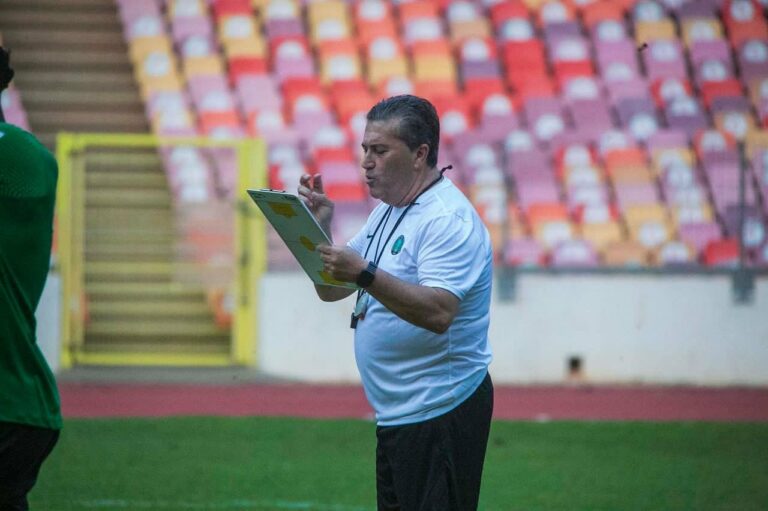
THE uncertainty of the future of Jose Peseiro as Super Eagles coach got a new twist as his employer, the Nigerian Football Federation (NFF) has promised to throw it open to football enthusiasts to make their decisions about his stay as the coach.
The NFF President, Ibrahim Gusau made this known during an interview on the Gbamm! LovingFootball Show, on the backdrop of the criticisms that have greeted the Portuguese results.
It could be recalled that The ICIRhad analysed Peseiro’s one-year performance as the Super Eagles coach which was below par.
Reacting to critics about the Super Eagles coach, the NFF president, said the football governing body will give room for public opinions to determine the future of coach Peseiro.
Gusau added that the decision-making process would be conducted through social media and SMS polls.
“We have that plan to push it to Nigerians and to hear their views [about the decision].
“We tried the foreign coaches and also the home-based coaches, and it seems all were having some kind of problems.
“But maybe we did not get it right in the area of getting the right person [for the role]. But we are surely going to push it to the public whether to continue with Peseiro or let him go,” the NFF president said.
He, however, stressed that the NFF will gauge public sentiment on the idea of appointing a Nigerian coach.
“And on the question of going for an indigenous coach, we are still going to push that to Nigerians. on the phone, to tell us ‘Do you think going for a Nigerian coach would be best for Nigeria? then we would look at it as a board and come out with a decision.” he added.
THE Lagos State Deputy Governor, Obafemi Hamzat, has refuted an allegation that he once renounced his Nigerian citizenship.
The controversy arose when a United States immigration lawyer, Olubusayo Fasidi, informed the Lagos Governorship Election Petitions Tribunal that Hamzat had taken an oath of allegiance in the US renouncing his Nigerian citizenship.
Fasidi had appeared as a witness for the Labour Party (LP) governorship candidate Gbadebo Rhodes-Vivour in his petition against the election of the state governor, Babajide Sanwo-Olu.
Reports of Hamzat’s alleged US citizenship had caused a lot of stir online.
However, Hamza, in a statement through his media office on Saturday, June 24 labelled the claim as “misleading and inaccurate.”
The Lagos state deputy governor said the viral report did not accurately reflect the proceedings at the tribunal.
According to him, the witness presented two documents as evidence — an empty US naturalisation application form and an empty oath of US allegiance document, identified as forms 8CFR/337 and N400.
The tendered documents were accepted and marked as exhibits by the tribunal.
He explained that the witness, when confronted with the fact that her claim was based on blank documents, admitted to downloading them from the official website of the US Embassy.
He said that the witness was unable to produce the actual documents specifying the jurisdiction of the US or the date when he allegedly applied for naturalization or took the oath of allegiance.
The statement read, “She equally admitted that she had not attended the ceremony admitting Dr Hamzat as a citizen of the United States of America.
“During her cross-examination by counsel to the 4th respondent (APC), the witness admitted to the fact that the American constitution recognizes dual citizenship with particular reference to the 14th amendment to the constitution of the United States ratified on July 9, 1868.
“The witness was challenged further that the documents she tendered support the process of application for naturalisation which ultimately culminates in the issuance of an American passport and nothing more.
“The witness, in reaction to additional questions, confirmed that she did not need to obtain a Nigerian visiting visa because she entered the country with her Nigerian passport.
“With respect to the question whether the witness was aware that Dr Hamzat fully disclosed the details of his American citizenship in the Form EC9 submitted to INEC, the witness answered in the affirmative.”
Hamzat urged the public to disregard the “deliberate falsehood” being spread, asserting that the credibility of the witness’ testimony was severely challenged.
THE Enugu State police command has debunked a video circulating on social media about a kidnap, which was alleged to have occurred along the Enugu-Ugwogo highway.
The command’s public relations officer, Daniel Ndukwe, in a statement he issued on Saturday, June 24 described the video as “misleading” and “untrue.”
Ndukwe said, “There was no such serial or repeated incident of kidnapping on the same day as reported, or shooting and chaotic incident as relayed in the video at the mentioned location or any other part of the state.”
The video, which went viral on social media recently, showed a group of people running into the bush at the sound of gunshots.
Captions accompanying the video suggested that three kidnap cases occurred along the route on the same day. Other Twitter users who shared the video called on the state governor to address the issue, or resign.
Ndukwe admitted in the statement that although there had been cases of abductions along the route, the incident in the video did not occur within the state.
“As a matter of fact, forensic analysis of the video indicates that it did not happen anywhere in the country, let alone in Enugu State. In the same vein, the command sees the unverified and unfounded report of repeated kidnapping incidents on the same day as a misleading and mischievous act of misinformation, aimed at creating panic in the state,” he noted.
He added that necessary measures were being put in place to address the insecurity, adding that sensationalisation of the situation would cause more harm than good.
However, the state’s Commissioner of Police, Ahmed Ammani, has deployed security operatives to the said area.
Residents of areas prone to abductions and other criminal activities were urged to report such cases to the nearest police station, or call the command’s emergency hotlines on 08032003702, 08075380883, 08086671202 or 08098880172, or send an email to infoenugupolice@gmail.com.
Security in Enugu state has been a cause of concern recently following many cases of abduction recorded in different communities.
On the same day that Ndukwe issued the statement, Ohanaeze condemned the activities of kidnappers in the state despite the presence of military and police checkpoints on the roads.
In January, six residents were abducted within a week in the Ikem community in Isi-Uzo Local Government Area.
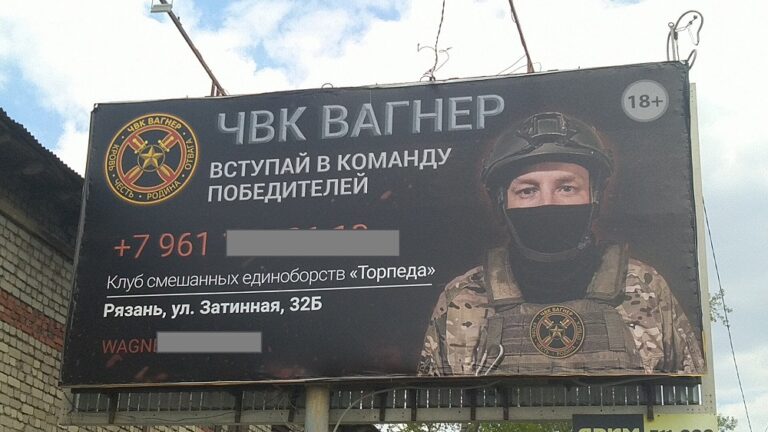
YEVGENY Prigozhin, the leader of the Wagner Group, staged a revolt against Russia after claiming the Russian army deliberately attacked his forces. Prigozhin demanded justice — and that took the form of an armed insurrection.
The attempted insurrection is largely the result of both the Russian army and the Wagner Group’s deployment in Ukraine — and the political system that underpins their actions.
Providing plausible deniability
The bonds between the Wagner Group and the Russian army broke down immediately after the start of the war in Ukraine. Prior to the conflict, the Wagner Group advanced Russian state interests in an unofficial capacity.
In areas where Russia had a vested interest but wanted to limit its direct involvement, like in Syriaand Sudan, the Wagner Group provided the Russian government with plausible deniability.
For example, Russia used the Wagner Group to assist in its annexation of Crimea in 2014. Russia’s use of the Wagner Group in the Donbas region of eastern Ukraine in 2014 also allowed the Russian army to deny involvement. The Wagner Group and Russian military’s domains, in other words, supported the other’s objectives.
The Russia-Ukraine War altered the dynamic between the two groups. The Russian army expected a rapid military victory in Ukraine. Instead, it suffered setbacks almost from the outset of the conflict. These setbacks were so substantial that they forced Russia to deploy the Wagner Group to directly support its operations.
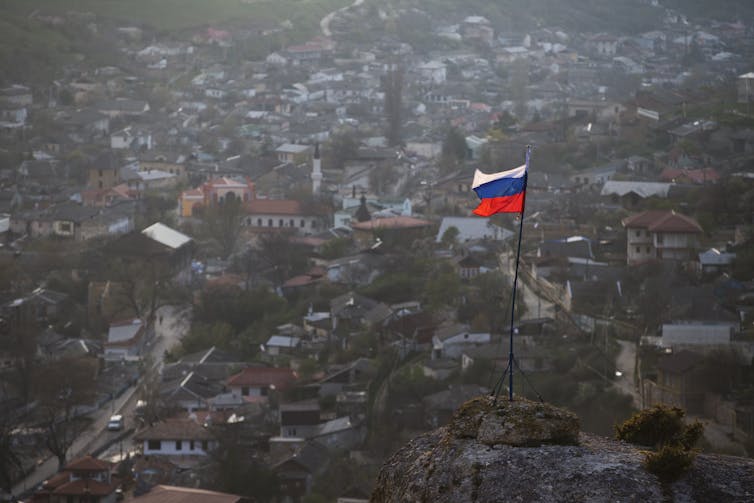
In this March 2014 photo, the Russian flag flies on a hilltop near the city of Bakhchysarai, Crimea. (AP Photo/Pavel Golovkin)
Helping Russia in Ukraine
In military terms, Russia’s deployment of the Wagner Group helped stabilise its operations in Ukraine.
In 2022, the Wagner Group, in contrast with the bulk of the Russian army, was a highly trained force. Wagner Group soldiers, in fact, were responsible for many of Russia’s early successes, such as the Battle of Sievierodonetsk.
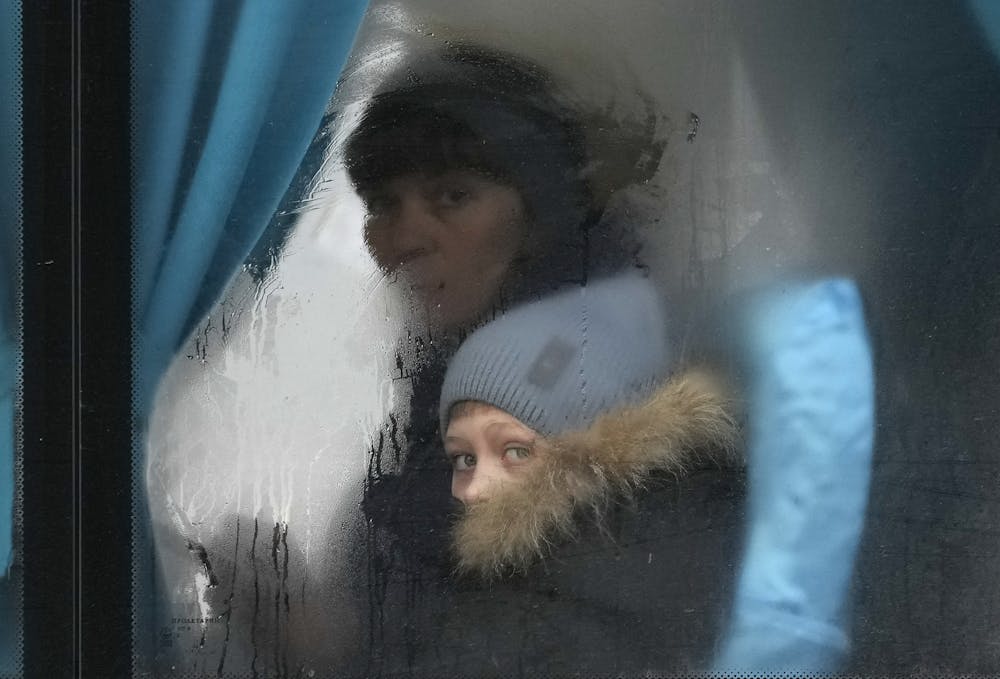
A woman and child peer out of the window of a bus as they leave Sievierodonetsk in eastern Ukraine in February 2022. (AP Photo/Vadim Ghirda)
These operations, however, weren’t without cost. The Wagner Group suffered such significant casualties that it couldn’t maintain its traditional tactics. Instead, the Wagner Group initiated mass recruitment efforts, including from Russia’s prisons, to replenish its depleted forces.
That blurred the lines between the Wagner Group and the Russian army. Whereas previously the two organisations had distinct spheres of influence, both now operated as, essentially, conventional forces.
Overlapping domains of influence, while forced by necessity in the case of the Russian army and the Wagner Group, aren’t exceptional for Russia.
In fact, they’re a feature of the Russian political system, and one person is responsible — Vladimir Putin.
Putin’s influence
Ultimately, only the Russian president can arbitrate disputes among his subordinates. This not only limits the ability of Putin’s subordinates to build power bases that can challenge him, but also reinforces his importance to the political system.
This aspect of the Russian political system is highly effective in peacetime, so long as the goal is for Putin to maintain his influence and power. In times of looming conflict or outright war, however, overlapping functions can easily become a liability.
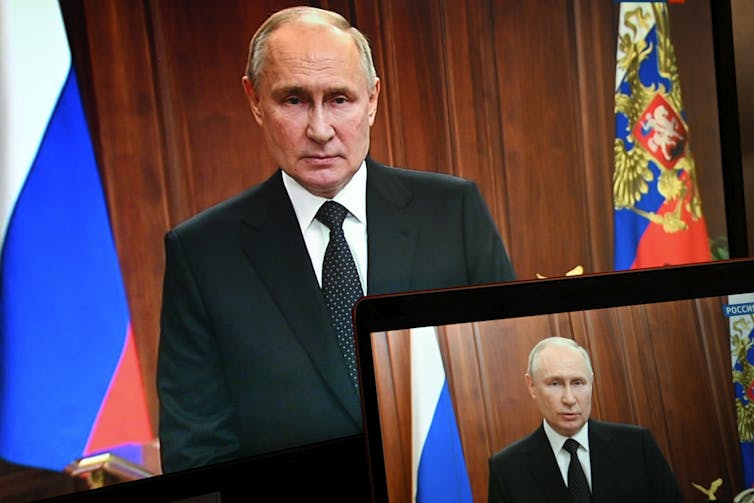
Russian President Vladimir Putin is seen on monitors as he addresses the nation after Yevgeny Prigozhin, the owner of the Wagner Group military company, called for armed rebellion. (Pavel Bednyakov, Sputnik, Kremlin Pool Photo via AP)
In the lead-up to Russia’s invasion of Ukraine, it became evident that Putin’s subordinates didn’t provide him with an accurate and clear picture of the capabilities of either the Ukrainian or Russian armed forces.
During the conflict itself, that meant co-operation among competing factions — in this case the Russian army and paramilitary forces — has been nominal, at best. In the worst-case scenario, these tensions can lead to open conflict, as we’ve witnessed between the Wagner Group and the Russian army.
While this tempest has seemingly passed for Putin for now, the Wagner Group is only the most prominent example of simmering discontent among paramilitary forces towards Russia.
Escape hatch for Putin?
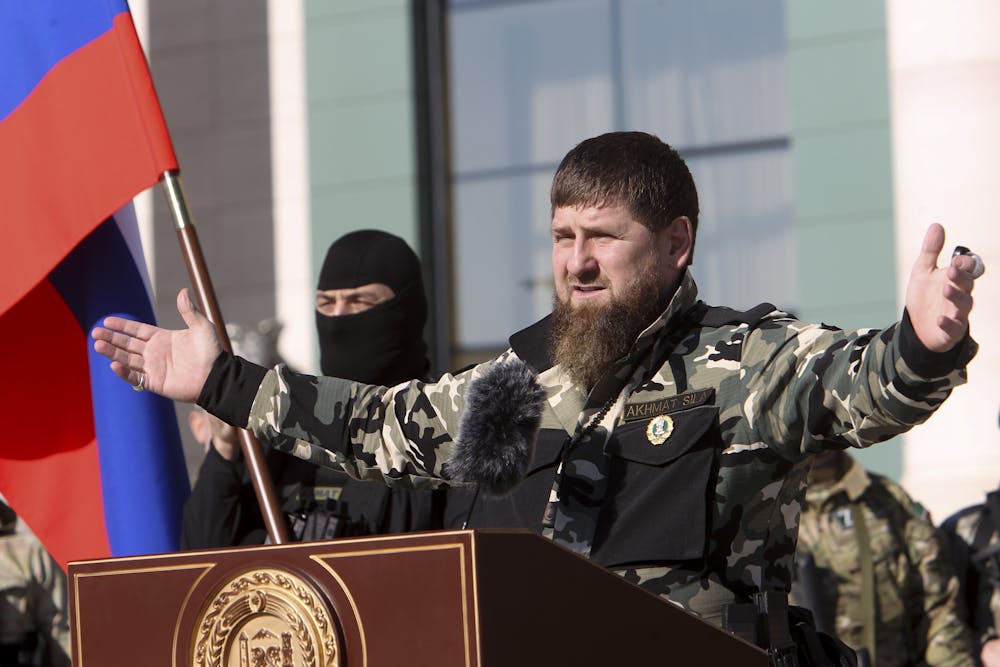
Ramzan Kadyrov, the Chechen leader who commands a paramilitary group of 12,000 soldiers, has previously noted problems between his forces and the Russian army.
Ramzan Kadyrov, leader of the Russian province of Chechnya, gestures while speaking to about 10,000 troops in Chechnya’s regional capital of Grozny, Russia, in March 2022. (AP Photo)
It’s important to note that while Putin appeared to condemn the Wagner Group in his address to the nation as Prigozhin’s revolt was under way, he didn’t mention its leader by name. This omission was assuredly by design: it kept Putin’s options open in depending upon the success — or failure — of Prigozhin’s revolt.
The short-lived insurrection could still be a turning point in the war in Ukraine, but how it will shift the conflict is still uncertain.
Had it gone on longer, the revolt could have potentially provided Putin with a way to end the conflict and save face. From the outset of the conflict, Putin knew he couldn’t afford to suffer a loss in Ukraine. If he could shift blame for the defeat onto one or several scapegoats — like Wagner Group forces or other paramalitary groups who are still agitating about Russia — it could provide an exit ramp.
It could still cause a shift in the power alignment beneath Putin. He is arguably in one of the most vulnerable positions of his presidency since winning the 2000 election, but he won’t relinquish control easily.
To maintain his influence, Putin will consider any and every possibility for reasserting his dominance over Russia, with direct implications for the war in Ukraine.
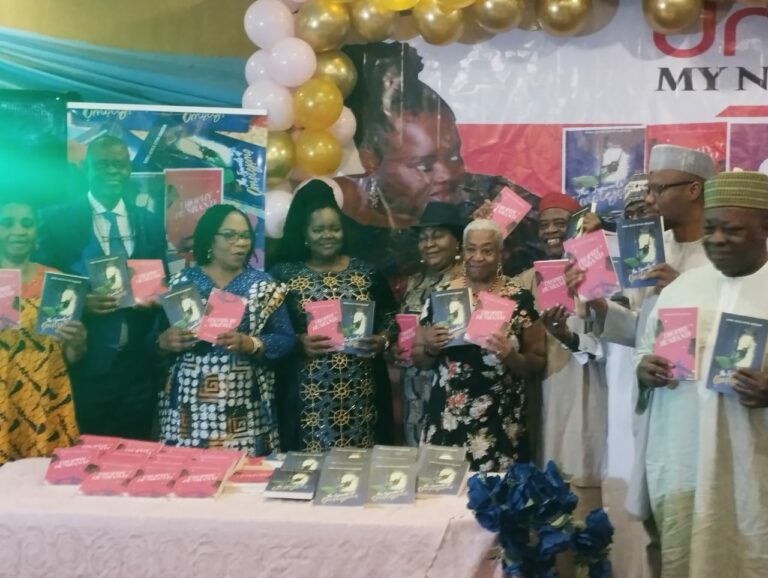
NIGERIAN author Ejiro Otive-Igbuzor has urged parents and guardians to be more involved in sexual orientation, saying the silence on sexual violence is resulting in death for victims.
Otive-Igbuzor made the appeal at the launch of two of her books: The Travails of Omotejomo and Trophy Husband, on Saturday, June 24, in Abuja, the Federal Capital Territory (FCT).
“The books were written to achieve some purposes; first of all, to break the silence around sexuality. That silence has driven many girls and women to their graves.
“The problem with boys is that they get abused, but they don’t complain because they are ashamed, and because the society expects men to be strong. And so when a man is facing gender-based violence, they tend to hide it, and many have died silently,” she said.
Otive-Igbuzor also condemned the undervaluing of female children and forced child marriage, which she said were issues addressed by the books.
A former director of political parties and liaison office of the Independent National Electoral Commission (INEC), Regina Omo-Agege, who was the chairperson of the occasion, saw the books as a reflection of the Nigerian society.
“The Travails of Omotejomo is more than just a story. It is a powerful mirror reflecting the realities faced by many individuals, particularly women who endure the consequences of a society steeped in gender inequality.
“Through the eloquent prose of the author, we are reminded of the importance of raising our voices and fighting for a world where everyone is treated with dignity and respect,” Omo-Agege said.
The Travails of Omotejomo was reviewed by the chief executive officer (CEO), ElsieWrite, Elsie Oghenekaro, who described it as a gender manual and a guide for better treatment of the girl-child.
The CEO of Profiles and Biographies, Kammonke Abam, reviewed Trophy Husband, which he described as a guide for the society.
“Trophy Husband is a story that vividly captures the practice of wife material, which is prevalent in most parts of Nigeria and is made worse by the mentality of marrying an abroad husband.
“This puts a lot of pressure on our young African girls to be culturally and marriageably correct. The author has brilliantly used mirth, humour, and drama to bring to fore the perennial problem of sexual harassment, sex trafficking, competing for men’s attention, and being silenced and browbeaten by both conventional cultural expectations and gendered constructions,” Abam said.
He pointed out that sexual abuse was a prevalent issue that left many survivors without the courage to speak about their experiences, adding that the book could serve as a guide.
Abam recommended that the book be sent to ministries of Education in the country for adoption due to the moral, cultural and religious lessons infused by the author, which he said would be beneficial to students.