Home Blog Page 873

Africa No Filter invites entries for Kekere Storytellers Fund

The Kekere Storytellers Fund, organised by Africa No Filter, is seeking entries from African content creators, performance artistes, visual artists or journalists.

The Fund pays micro-grants to emerging storytellers who are already creating and publishing unique and compelling content that offers fresh and alternative perspectives of Africa, to show a continent that is innovative, evolving and creative.

Applicants must have a track record of producing ground-breaking work that challenges stereotypical narratives about their community, country or the continent.

Selected applicants will receive grants from US$500 to US$2,000.

Interested applicants can apply here

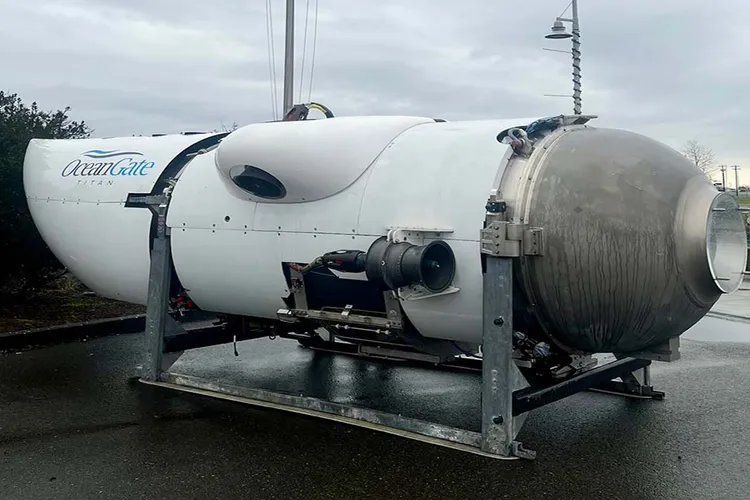
What was the ‘catastrophic implosion’ of the Titan submersible?

0

By Eric Fusil, University of Adelaide

THE four-day-long search for the missing Titan submersible has come to a tragic end. Reports have confirmed the vessel was subject to a “catastrophic implosion” at some point during its voyage towards the Titanic shipwreck, which would have killed all five passengers instantly.

A debris field comprising “five different major pieces of debris” of various sections of the submersible was found on the sea floor by a remotely operated vehicle, about 500 metres away from the bow of the Titanic, officials said.

These findings are in line with previous news that an acoustic signature “consistent with an implosion” was detected by the US Navy on the same day the Titan began its descent.

The navy’s seabed sensors detected the signature in the general area the vessel was diving when it lost communication with its mothership. At the time the signature was considered “not definitive”.

What is a ‘catastrophic implosion’?

We can assume the implosion actually happened on the first day of the dive – but perhaps not exactly at the same time communication was lost with the mothership. But why did it happen?

Most, if not all, submersibles and submarines operating at depth have a pressure vessel made of a single metallic material with high yield strength. This is typically steel for relatively shallow depths (roughly less than 300m), or titanium for deeper depths.

A titanium or thick steel pressure vessel is usually a spherical shape that can withstand the crushing pressures you might expect at 3,800m – the depth at which the Titanic wreck lies.

The Titan, however, was different. It’s pressure vessel was made of a combination of titanium and composite carbon fibre. This is somewhat unusual from a structural engineering perspective since, in a deep-diving context, titanium and carbon fibre are materials with vastly different properties.

Titanium is elastic and can adapt to an extended range of stresses without any measurable permanent strain remaining after the return to atmospheric pressure. It shrinks to adjust to pressure forces, and re-expands as these forces are alleviated. A carbon-fibre composite, on the other hand, is much stiffer and does not have the same kind of elasticity.

We can only speculate about what happened with the combination of these two technologies, which do not dynamically behave the same way under pressure.

But what we can say almost certainly is that there would have been some kind of loss of integrity due to the differences between these materials. A composite material could potential suffer from “delamination”, which leads to a separation of the layers of reinforcement.

This would have created a defect which triggered an instantaneous implosion due to the underwater pressure. Within less than one second, the vessel — being pushed down on by the weight of a 3,800m column of water — would have immediately crumpled in from all sides.

The final moments

When everything is designed, manufactured and tested perfectly, you’ve got a shape close enough to perfection that can withstand the overall pressure being applied from all directions. In this scenario, the material can “breathe” – shrink and expand as needed with depth. The Titan’s implosion means this was not happening.

The implosion itself would have killed everyone within less than 20 milliseconds. In fact, the human brain can’t even process information at this speed. As much as the news is devastating, perhaps it is somewhat reassuring the Titan’s passengers would not have suffered a terrifying and drawn-out end. The Conversation

Eric Fusil, Associate Professor, School of Electrical and Mechanical Engineering, University of Adelaide

This article is republished from The Conversation under a Creative Commons license. Read the original article.

I’m pained, my children come back from school and talk about Wizkid – Kcee

RENOWNED Nigerian singer, Kingsley Okonkwo, widely known as Kcee, has mentioned his children’s affection for Wizkid as one of the reasons behind his new style of music.

Kcee, in an interview with Dotun on June 7 on the Cool FM, Lagos, Super Wednesday programme, said, “What I’m doing right now with my music is intentional. My kids go to school and they are talking about other artists. They talk about Wizkid each time they come back. I’m pained, kind of. I need to make them know that their papa know better old school.”

The singer said he felt so fulfilled when his daughter called him one day from school to inform him about the students choosing his new song, Ojapiano, for their graduation party.

“The year-12 students told their teacher they wanted to change their song to Ojapiano. My kids ran out from where they were rehearsing, like, ‘This is our father’s song.’ My daughter was saying it on the phone. I almost cried. This was what I wanted. When I got that call from my daughter, I felt so fulfilled,” he said.

Ojapiano, Kcee’s new song, is a blend of native flute and amapiano, giving a thrilling melody. The song he released this year is going viral and getting streams on different music streaming platforms.

Kcee’s metamorphosis 

Kcee’s rebranded fashion style. Source: Instagram

The artiste, having dedicated over 24 years to creating music, expressed his decision to transform not only his musical style, but also his overall appearance.  Explaining the rationale, he shared that after crafting songs for an extensive period, he strongly felt the urge to embrace a fresh approach in his music and fashion. He believed that as someone who values personal growth and evolution, change is essential for his artistic journey.

“I have been around for over 24 years. They know my face, they have been seeing me every other day so I just decided this time, nobody sees my face. Like, I just want to catch this vibe and cruise, you know, change the style of music, dressing, and all. I always love to just evolve and change myself. So this is one of those days. So now I’m going to be masked up if I like, and I will take it off if I like because you already know me.”

Expanding on the motivation behind his revamped dressing style, the artiste revealed during another interview with Hip TV that he aimed to embark on a rebranding journey.

“It’s just a new Kcee. It’s a new season of dum dum, and I decided to cover up my face. You guys have been seeing my face for over 24/25 years, so this time around, I chose just to cover it up and just give you some Lagbaja 2.0”.

During his conversation with Dotun on Cool FM, Kcee revealed that his decision to transition from a renowned mainstream artiste to a gospel singer was a significant risk he courageously undertook. However, the outcome exceeded his expectations as it not only brought him a fresh fan base, but also proved financially rewarding. Despite facing doubt and enduring hurtful comments from sceptics.


READ ALSO:


“When I did the gospel one, a lot of people were, like, ‘He is actually going close to his village. He is taking the music to the village, he is moving from town to the village.’ When I heard it, I was like, let’s see how that works but it didn’t happen. I made money from it than ever before in my whole career,” he said.

Kcee said that his latest song, Oja, was a labour-intensive project that consumed many his sleepless nights. He encountered challenges when collaborating with various producers who struggled to capture the essence of the song.

Despite being told by some producers that the sound couldn’t fit harmoniously in a specific key, he said he persisted in his search until he discovered a producer who could bring his vision to life. This achievement, he enthused, marked the realisation of a dream he had nurtured for approximately three years.

UNICEF: 61,000 children in Southeast Nigeria not vaccinated

0

ABOUT 61,000 children across the five Southeast states have not received any vaccination, according to the United Nations International Children’s Emergency Fund (UNICEF).

The UNICEF Representative in Nigeria, Cristian Munduate, revealed the number at the ongoing First Quarterly Review Meeting of the South-East Zone Traditional Rulers’ Committee on PHC Delivery (SETRC) in Awka.

The meeting was organised by the Federal Ministry of Health, in collaboration with the National Primary Healthcare Development Agency (NPHCDA).

Munduate explained that the situation was worse in Anambra and Imo states, representing more than 30 per cent and 25 per cent of the total number, respectively.

He said, “There are almost 61,000 children spread across the five states who have not received any vaccination in this time and age when the vaccines are freely available.

“This calls for emergency action on our part to ensure these children are located and vaccinated to ensure they thrive and live to achieve their maximum potential.

“Vaccines are available all year round in the health facilities. We need to mobilise families, including fathers, to ensure their children are vaccinated in line with the directive of health workers in our health facilities.”

The Country Representative, who was represented by Juliet Chiluwe, UNICEF Chief Field Officer, Enugu, stated that the number “must be reduced by, at least, 30 per cent before the end of the year through our concerted efforts,” adding that Nigeria had a long way to go towards achieving the well-being of women and children.

According to him, the rate of anaemia in pregnant women in the Southeast states stood at an alarming range of 48 per cent to 61 per cent and needed to be urgently arrested and reversed.

In the Southeast region, a low prevalence was observed in the practice of initiating breastfeeding within one hour of birth and maintaining exclusive breastfeeding for six months, ranging from 13 per cent to 41 per cent, as he mentioned.

“It is even declining in Imo, Abia, and Anambra states. Statistics showed a higher downward trend of 13 per cent, 19 per cent and 24 per cent respectively.

“The role of exclusive breastfeeding in the reduction of infant deaths and accelerating growth of the baby, and benefits to the family, the community, and the nation cannot be overemphasised.

“If there is only one Sustainable Development Goals’ target that Nigeria can easily achieve, it is that of birth registration (SDG16. Indicator 9), but unfortunately, this is also declining in almost all the states.

“About 1.25 million children in the South-east are expected to be registered this year, but less than 10 per cent of this has been achieved so far,” he said.

Munduate assured UNICEF would maintain its collaboration with traditional leaders to enhance the adoption of antenatal and postnatal care, skilled birth attendance, and child immunization at sub-national levels.

“UNICEF values her collaboration with the Government of Nigeria to promote the well-being of the citizens of the country.

“Working with traditional leaders to address these issues discussed will help the zone and the country move towards the SDGs,” he said.

He, therefore, called on the traditional leaders to mobilise their people to demand service from the health facilities and hold the health authorities in their communities accountable for quality service delivery.

Lagos state holds half of 97,000 uncollected passports nationwide – NIS

THE Nigeria Immigration Service (NIS) has revealed that approximately 97,000 passport booklets issued across the country, including the Federal Capital Territory (FCT), remain uncollected.

The Service Public Relations Officer (SPRO), Tony Akuneme, a Comptroller, disclosed this during an interview with the News Agency of Nigeria (NAN) in Abuja, saying Lagos State accounted for half of the uncollected passports.

Akuneme mentioned the challenge of reaching out to the owners due to inadequate documentation caused by the involvement of third-party agents in the passport processing.

“Some of them engaged agents to help them in their passport processing, and these agents might be doing for a lot of persons.

“They end up dropping wrong contacts and thereby making it difficult to reach out to the owners of these passports when they are ready for collection. This is a big challenge,“ he said.

The Acting Comptroller-General, Caroline Adepoju, recently declared a state of emergency on passport collection to draw attention to the need for passport reforms and improvement of the passport collection process.

He acknowledged that many applicants faced difficulties related to human and technical factors, such as slow internet speed, and emphasised that there was no shortage of booklets.

The NIS attributed the recent surge in demand for passports to factors such as increased travel aspirations and assured the public that measures were being taken to address passport issuance challenges effectively by improving facilities nationwide.

The NIS spokesperson highlighted the significance of immigration in Lagos, a renowned tourism destination.

He expressed appreciation to Governor Babajide Sanwo-Olu for granting land allocation for the construction of staff quarters in the state.

Floods overrun Abuja TradeMore estate

FLOODS from a downpour in Abuja on Friday, June 23, have overrun Trademore, a popular estate in Abuja. 

Videos from several parts of the estate showed several homes submerged and a few residents struggling to salvage some of their belongings.

The ICIR saw some buildings and fences already caved in into furious floods.

“Residents are swimming in the floods. Vehicles, homes, and many valuables have been submerged. Firefighting vehicles have been moved in here. The National Emergency Management Agency (NEMA) has deployed its officials here.

“Even before the rain, the road had been bad. So, people are panicking. There are fears people might have died in the floods,” a resident, who identified himself simply as Alfred, said.

Alfred explained that the floods affected the estate’s entrance and several buildings around the area. Alfred was driving out of his compound and discovered the bridge linking his street had collapsed.

“I need to wait on this spot and see what happens from here. The situation is worrying,” he told The ICIR.

Some residents in the videos seen by The ICIR could be heard saying people had climbed their rooftops to escape death.

The videos suggest people could have been trapped in their homes.

The rain began around dawn and continued to pound the city at 1pm when this report was being filed.

It started drizzling in some parts of the nation’s capital in the early hours until it grew into heavy downpour for many hours after most residents had gone to work.

“I have been told everything in my house is under the water. I left home this morning with my children, whom I dropped in school before heading to my office in town,” Ebere Prisca, a resident of the area, told The ICIR reporter on the telephone.”

The ICIR reports that a similar situation could have played out in the Galadimawa, Giri, Gwagwalada and Bwari, which have a history of flooding in the city.

Trademore has a yearly history of flooding, with human casualties.

In 2021, at least three persons died in the estate from a flood disaster.

To mitigate the impact of flood, the Federal Capital Territory Administration (FCTA) demolished 30 houses in the estate in 2023.


PTDF overseas scholarships: 190 South-East applicants screened, only 25 to secure coveted spots

NO fewer than 190 applicants from the South-East region underwent screening for the 2023/2024 Petroleum Technology Development Fund (PTDF) overseas scholarships on Wednesday, June 21.

The Team Leader of the PTDF South-East Zone, Samson Amadi, said this during the ongoing selection interview in Enugu.

Amadi said out of 190 Master’s and Ph.D. students that applied, only 25 successful candidates, five from each state in the region, would be chosen based on merit and the agency’s budget.

“The fully funded PTDF scholarships are primarily focused on oil and gas courses such as geology, chemical engineering, environmental biochemistry, and management,” Amadi stated.

He added that the selection interviews were being conducted simultaneously across all six geopolitical zones of Nigeria, highlighting that the programme aimed to assist Nigerians.

It will cover all expenses, including tuition, visa, living allowance, and accommodation.

The initial application process was conducted online through the agency’s social media platforms, with candidates selected for screening after meeting the required criteria.

The screening process involved verifying documents using fluorescent technology to detect any fake certificates.

A panelist and lecturer from Sokoto State University, Jamilu Usman, described the screening process as seamless, adding that with the assistance of fluorescent lighting, they were able to differentiate genuine WAEC, NECO, and other certificates from forged ones, with a view to ensuring the integrity of the selection process.

Atiku’s witness says INEC deleted results from FCT BVAS

A witness of the Peoples Democratic Party (PDP) has accused the Independent National Electoral Commission (INEC) of deliberately deleting election results from the Bimodal Voter Accreditation System (BVAS) machines used during the February 25 presidential election in the Federal Capital Territory (FCT).

The witness, Hitler Nwala, a digital forensic analyst, stated this before the Presidential Election Petition Court (PEPC), where he testified on behalf of the PDP on Thursday, June 22.

Nwala said that he meticulously examined 110 BVAS devices used during the presidential polls in the Federal Capital Territory (FCT) and, according to him, the data in all the machines had been deleted.

Nwala considered it unnecessary to remove the FCT presidential poll result data, as no governorship election held there.

However, during the cross-examination of the witness, counsel to INEC, Abubakar Mahmoud, challenged the credibility of the witness’ testimony.

Mahmoud contended that the witness’ examination of 110 BVAS devices did not constitute a sufficient sample size to substantiate the allegations against the Commission.

He pointed out that the witness’  report was based on approximately 3.5 per cent of the total number of BVAS used in the FCT, and 0.06 per cent of the total BVAS employed nationwide for the presidential poll.

Following the witness’s discharge, the petitioners presented electoral documents from four states as evidence.

The documents comprised certified true copies of polling unit results (form EC8A) from Ogun (20 LGAs), Ondo (17 LGAs), Jigawa (27 LGAs), and Rivers (20 LGAs).

The court adjourned proceedings to June 23 for further hearing.

INEC had declared Tinubu as the winner of the February 25 presidential election.

According to the Commission, Tinubu secured 8,794,726 votes, Abubakar had 6,984,520, while Obi polled 6,101,533.

Atiku and the PDP rejected the result and approached the tribunal with their petitions to challenge Tinubu’s victory.

In the petition, Atiku and the PDP said Tinubu’s election “is invalid by reason of non-compliance with the provisions of the Electoral Act, 2022.”

Atiku also argued that INEC’s “failure to electronically transmit the election results in real-time” compromised the outcome of the presidential poll.

He added that the alleged substantial non-compliance with the law affected the result of the election, in that Tinubu “ought not to have been declared or returned as the winner of the election.”

Atiku further contended that INEC “wrongly returned” Mr Tinubu “as the winner of the election, allocating to him 8,794,726 votes, while ascribing to him (Atiku) 6,984520 votes.”

He explained that contrary to repeated assurances by the INEC chairman, Yakubu Mahmoud, in the build-up to the general elections to conduct the best election in Nigeria’s democratic history, the electoral umpire failed to electronically transmit results in real-time from polling units to INEC’s “electronic collation system and Results Viewing Portal (IReV)” using the Bimodal Voters Accreditation System (BVAS) machines.

He said, “By reason of the foregoing, there could not have been any valid and lawful collation and announcement of the result of the election under the Electoral Act, without the prior electronic transmission from the polling units to INEC …IReV portal using the BVAS.”

The petitioners said INEC failed to comply with Section 66 of the Electoral Act, which is incorporated with Section 134 of the Nigerian constitution. They also argued that the law provides for “geographical spread”, which must be met by the winner of the election.

Atiku equally premised his petition on the ground that the margin of lead – 1,810,206 votes – was less than the number of permanent voter cards (PVCs) collected in “the polling units where elections were cancelled and did not hold across the country.”

Consequently, Atiku argued that INEC’s declaration of Tinubu as the winner of the poll was “hasty, premature and wrongful.”

The petitioners further accused INEC of manipulating votes as electoral officials “suppressed” Atiku’s votes, crediting Tinubu and Obi with the said stolen votes.

He said Tinubu was also not elected by a majority of lawful votes cast at the poll.

He urged the court to determine that Tinubu was “not duly elected by a majority of lawful votes cast, and therefore the “president-elect’s victory is unlawful, wrongful, unconstitutional…null and void.”

Atiku prayed the court to determine that Mr Tinubu at the time of the election was not qualified to contest the said election.

He urged the court to declare him the winner of the presidential election, as he “scored the majority of lawful votes cast at the presidential election.”

In the alternative, Atiku asked the court to make an “order directing” INEC to conduct a second election (run-off) between him and Tinubu.

NLC condemns planned electricity tariff hike

THE Nigeria Labour Congress (NLC) has kicked against the plan to increase electricity tariff by 40 per cent on July 1.

According to the NLC president, Joe Ajaero, the plan reflects the organised indifference to the welfare of poor citizens.

In a statement he issued on Thursday, June 22 in Abuja, Ajaero expressed disapproval of the proposed tariff hike, describing it as “insensitive and callous.”

The tariff is set to increase by 40 per cent despite a monthly subsidy of about N50 billion still in the electricity sector.

According to the Nigerian Electricity Regulatory Commission (NERC), the increase was in response to the rise of the pump price of premium motor spirit (PMS), the rise in inflation rate which is currently at 22.41 per cent, and a shift in the exchange rate from N441 to N750.

However, the NLC chairman asked the government to stop the proposed implementation of the new tariff plan.

“The plan to increase electricity tariff by 40 per cent by July 1st is insensitive and callous and reflects an organised indifference to the well-being of consumers, especially the poor ones.

“The issue of capacity to pay and quality of service delivery is not only germane, but is superior to any rationalisation by market logic. The service providers, in spite of sundry support, have not been able to meet the threshold of 5,000 megawatts,” the NLC president said in the statement.

He added that such an increase would affect the cost of every other commodity and increase the hardship of many Nigerians.

“Coupled with this, there have been surreptitious increases without notice in violation of statutes; the inherent risk in the new regime of tariff is that there is no control, implying that by August, consumers will pay new rates.

“The other risk is that by the time other products or service-rendering entities come up with their new prices or rates, the ordinary person would have been compacted into dust.”

“We would want to advise apostles of the Market who have called NLC all sorts of names to check their conscience; the rate at which they are going is highly combative and combustible,” he said.

CBN contributed to Nigeria’s inflation – Moghalu

0

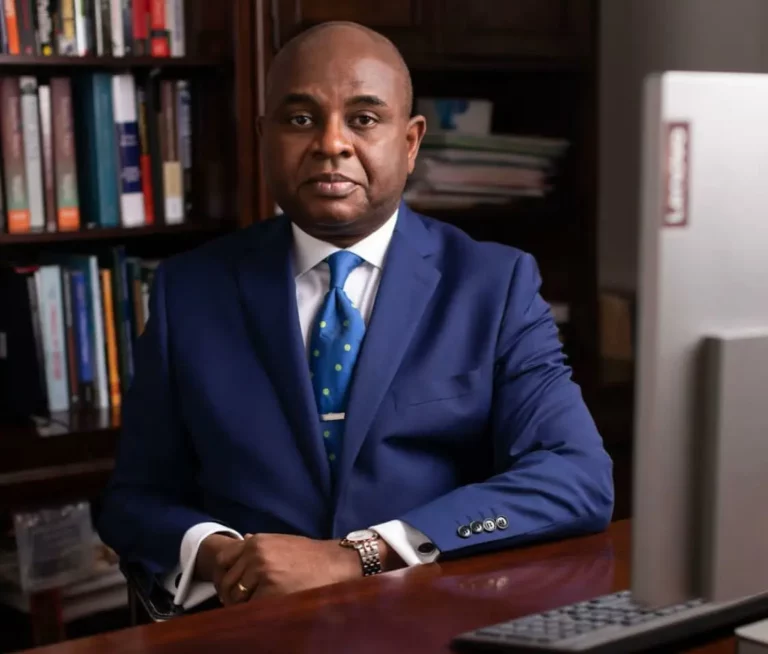
A FORMER deputy governor of the Central Bank of Nigeria (CBN), Kingsley Moghalu, has said the apex bank contributed to Nigeria’s high inflation figure through illegal financing of the Federal government’s massive deficits.

Moghalu said this on an ARISE NEWS programme on Thursday, June 22.

“The central bank itself was contributing to inflation through the monetary phenomenon of illegal financing of the Federal government’s massive deficits to the tune of N23 trillion, in ways and means lending.

“You’re contributing to inflation with one hand, but you say you’re fighting inflation with the other hand.  Why was the ways and means lending so high? It is because you have a government that could not manage its fiscal books,” Moghalu said.

According to him, the new policies by President Bola Ahmed Tinubu are “necessary but difficult” and should have been taken many years ago by previous administrations.

Moghalu, however, offered some words of caution.

“It’s important that we are not carried away by the joy of foreign investors. An economy is meant to sell the people of Nigeria. And the reality is that the people of Nigeria have suffered greatly because the cost of living has risen far beyond their means so the government cannot move fast enough. 

“For example, on the matter of the new minimum wage. Things like this should be addressed with alacrity. They should be addressed with the same determination of things we have seen in terms of this reform. 

“I believe that the reforms are moving in the right direction and there are structural bottlenecks that must be opened,” he said.

He explained that the reforms were the beginning of a series of reforms that have to take place in the Nigerian economy.

He added that in order to mitigate the shock and adverse effects on the country’s citizens, the government should support foreign exchange reform policies with trade reform policies. 

Moghalu stressed that the government should explore strategies to establish a thriving economy with a more favourable naira exchange rate in the global market.

“Nigerians don’t understand that the CBN doesn’t operate like a commercial bank. It’s not after deposits. We have the concept of what we call the impossible trinity. We cannot have a fixed exchange rate, an independent monetary policy, and a free float of capital all at the same time. You have to make a choice,” he said.