Home Blog Page 967

Child trafficking: Mother sells baby to settle bank loan

0

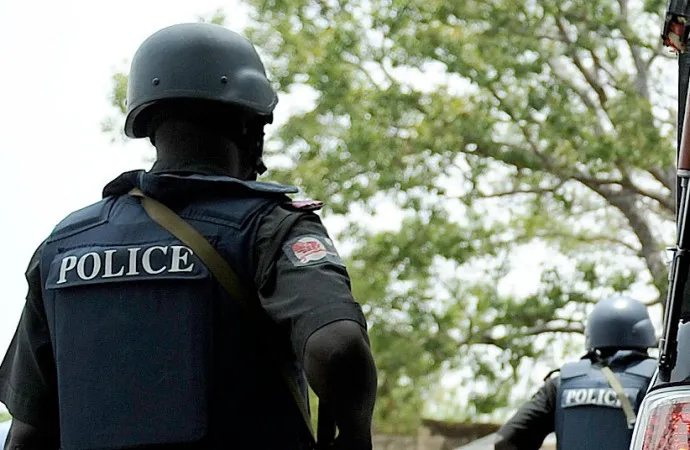
A mother in Ogun State has been arrested for allegedly selling her 18-month-old baby for N600,000 to pay off a loan she obtained from a microfinance bank.

Spokesman of the Ogun State Police Command Abimbola Oyeyemi, in a statement on Monday, April 17, revealed that the buyer, who is yet to be identified, purchased the baby in Lagos.

The suspect, identified as Olaide Adekunle, was apprehended following a report at the Sango Divisional Police headquarters by her husband, Nureni Rasaq.

According to Rasaq, his wife left their home for Lagos in March with their baby girl, Moridiat Rasaq, but returned without the child.

He said that all attempts to get information about the baby’s whereabouts from his wife proved futile.

Oyeyemi said the DPO Sango Division, Dahiru Saleh, immediately detailed his detectives to arrest the suspect.

He said during the interrogation, the suspect confessed to have sold the baby for N600,000.

“On interrogation, the suspect confessed that she has sold the baby to someone in Lagos at the rate of six hundred thousand naira (N600,000),” he said.

“When asked the reason for her action, she stated that she borrowed money from a microfinance bank, and when she was unable to pay back the money, the bank agents started dragging her and threatening to deal decisively with her. It was consequence upon this that she ran to Lagos and started hawking sachet water.

“It was while hawking that she met a man who introduced her to the woman that eventually bought the child in Lagos.”

Oyeyemi disclosed that the acting Commissioner of Police, Babakura Muhammed, has directed that the suspect be transferred to the State Criminal Investigation Department for further investigation and possible recovery of the baby.

He said the identity of the buyer is still unknown, and the police are actively searching for her.

Child trafficking is a significant problem in Nigeria, with many young children sold into forced labor, prostitution, and other forms of exploitation.

A 2020 report by the United Nations Office on Drugs and Crime (UNODC) noted that Nigeria is a major source, transit, and destination country for human trafficking.

The report stated that “the most prevalent form of human trafficking in Nigeria is forced labor, which accounts for approximately 70% of cases detected in 2018”.

The sale of children is also a common practice in some parts of Nigeria, where people often buy children as domestic servants or to work on farms and homes.

Also, some childless couples buy children, rather than going through legal adoption processes, which are seen as cumbersome. Some suspects arrested for engaging in child buying claim ignorance of the country’s adoption laws.

However, such transactions are illegal under Nigerian law, and offenders face up to 14 years in prison.

The Nigerian government has taken steps to address the issue, including the establishment of a National Agency for the Prohibition of Trafficking in Persons (NAPTIP) and the adoption of anti-trafficking laws.

Despite these efforts, child trafficking remains prevalent, with poverty and lack of education often cited as the primary reasons for the crime.

To tackle the issue, experts suggest that there needs to be a comprehensive approach that involves addressing poverty, improving education, and increasing awareness about the dangers of child trafficking.

Adamawa: APC senator says INEC can’t nullify result declared by REC

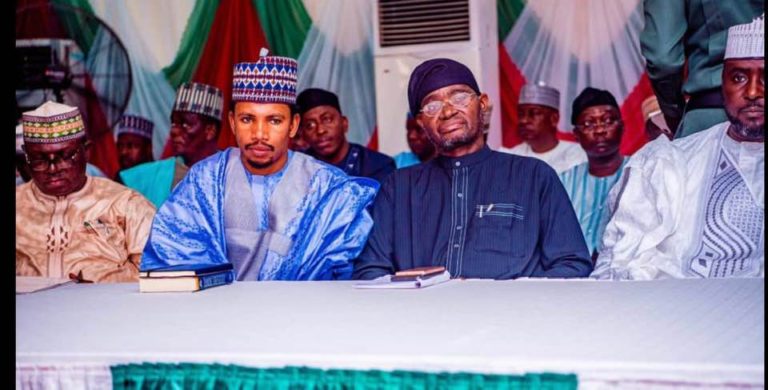
AN All Progressives Congress (APC) lawmaker Senator Ishaku Elisha Abbo has said the Independent National Electoral Commission (INEC) lacks the power to nullify the controversial Adamawa governorship supplementary election result declared by the state Resident Electoral Commissioner (REC).

The REC, Hudu Ari, had on April 16 declared the candidate of the APC, Aishat Dahiru, popularly known as Binani, winner of the supplementary governorship election in the state.


READ ALSO:
INEC suspends Adamawa REC

Fintiri says Adamawa REC’s action on governorship supplementary election provocative

Atiku alleges plot to provoke violence in Adamawa

Adamawa: How PDP had demanded removal of REC over alleged malpractices


However, INEC nullified the REC’s action, noting that he lacked the powers to declare the result of the election.

Reacting to the development on Channels Television on Monday, April 17, Abbo said provisions of the Electoral Act, 2022, as amended, forbids INEC from voiding the results declared by the REC.

Abbo argued that, according to the Electoral Act, further proclamation by INEC on the Adamawa supplentary election would be insignificant.

“They (INEC) cannot suspend collation. INEC cannot nullify an election that has been announced, they don’t have that power,” he said.

The lawmaker further argued that the declaration by the REC can only be challenged through legal means.

“Elections have been announced, it is out of their (INEC) hands. The result has been announced by the REC. Section 65 does not operate in isolation, there is Section 149.

“Notwithstanding any other provisions of this Act, any defect or error arising from any actions taken by an official of the Commission in relation to any notice, form, or document made or given or other things done by the official in pursuance of the provisions of the Constitution or of this Act, or any rules made thereunder remain valid, unless otherwise challenged and declared invalid by a competent court of law or tribunal.”

Abbo further stressed that it is futile to contest the already announced result.

The APC lawmaker accused the PDP of electoral violation.

“It has already been announced; you cannot review a result that they told us. They said the reason why they have not reviewed Fufore was that it was announced. We prepared for the elections and the elections went smoothly, with the introduction of BVAS, we all voted in line with the dictates of the Electoral Act and the INEC regulations.

“Election has taken place, the election was collated. PDP sent someone when they discovered that we had 37,000 votes in favour of APC and went and snatched election results. The chairman of the local government sent someone and snatched election results and disappeared,” he alleged.

Claiming that the incumbent governor, PDP candidate Ahmadu Fintiri coerced the Returning Officer to announce another result under duress, he said, “They went again and computed another result when they mobilized themselves in their thousands and chased out APC supporters and moved the collation centre to a police station.

“The governor drove in the presence of the former commissioner of police to Fufore and declared the result under duress.

“They forced the electoral officer to declare the result under duress, the governor was there, the commissioner of police was there.”

Abbo accused that the PDP and INEC commissioners of connivance to subvert the democratic process.

“The supplementary elections went very well until the national commissioners came from Abuja. In collaboration with the PDP, they decided to subvert the process and do a coup against the APC

“You cannot have a supplementary election without having the main election. It was the failure of the conclusiveness of the main elections that gave out supplementary elections. What happened in Fufore was a coup.”

The ICIR earlier reported that the Independent National Electoral Commission (INEC) through a statement on Sunday, April 7, summoned the Adamawa REC, Hudu Ari, to Abuja after he declared Binani winner of the supplementary governorship.

Ari reportedly declared Binani Governor-elect midway into collation of results of the supplementary election held on Saturday, April 16. However, the INEC Returning Officer is the official empowered by the Electoral Act, 2022, to make such a pronouncement.

Adamawa State governor Fintiri, described the REC’s action as provocative and illegal, and called on President Muhammadu Buhari to intervene in the matter.

APC controls more than half of Senate seats

THE All Progressives Congress (APC) has won more seats than all six other political parties that have secured at least a seat at the nation’s 10th Senate.

After the announcement of the results of the supplementary elections on Sunday, April 16, the APC had 59 seats out of the 109 available at the Senate.

The number represents 54.1 per cent of the seats but less than the two-thirds required to take crucial decisions at the National Assembly.

The party is poised to lead the Senate for the third consecutive time – in 2015, 2019, and 2023, but will need the support of other parties to produce and deliver efficient leadership.

Six political parties sharing the remaining 50 seats not won by the APC are the Peoples Democratic Party (36), Labour Party (8), Social Democratic Party (2), New Nigeria Peoples Party, (2), Young Peoples Party, (1), and All Progressives Grand Alliance (1).

The APC won the presidency through its candidate, Bola Tinubu, in the February 25 presidential election and will be forming the government after the swearing-in of the President-elect on May 29.

Tinubu polled 8,794,726 votes to defeat Peoples Democratic Party’s (PDP) Atiku Abubakar and Labour Party’s (LP) Peter Obi, according to the presidential election result announced by the Chairman of the Independent National Electoral Commission (INEC), Mahmood Yakubu, who was the election’s returning officer.

Atiku, a former vice president, got 6,984,520 votes, while Obi, a former Anambra State governor, garnered 6,101,533 votes. 

Tinubu raked in 12 states, Atiku won 12 states, and Obi won 11 states plus the Federal Capital Territory (FCT).

However, both Atiku and Obi claimed they won and are challenging Tinubu’s victory in court.

Some senators are already contesting the position of President of the 10th Senate, which will be inaugurated in June.

Among the major contenders are former Abia State governor and senator representing Abia North, Orji Kalu, former Akwa Ibom State governor and senator representing Akwa-Ibom North, Godswill Akpabio, senator representing Kano-North, Jibrin Barau, and his Niger-East counterpart, Sani Musa.

The Senate appears to have been a retirement home for governors.

In the Ninth National Assembly in 2019, about 20 former governors were elected, including Rochas Okorocha (Imo), Ibikunle Amosun (Ogun), Abdulaziz Yari (Zamfara), Kabiru Gaya (Kano), Abdullahi Adamu (Nasarawa), Chimaroke Nnamani (Enugu), Orji Kalu (Abia), Gabriel Suswam (Benue), and Ibrahim Shekarau (Kano). 

But the calculation changed for some incumbent governors who eyed the Senate at the just-concluded poll.  

The ICIR reported how incumbent governors, who will complete their two terms on May 29, vied for the Senate and lost.      

The governors are Samuel Ortom (Benue), Ifeanyi Ugwuanyi (Enugu), Darius Ishaku (Taraba), Simon Lalong (Plateau), and Ben Ayade (Cross River).    

Others not captured in the report are Abubakar Bagudu (Kebbi) and Okezie Ikpeazu (Abia).

However, some incumbent governors won the Senate seat. They include Aminu Tambuwal (Sokoto) and David Umahi (Ebonyi).

Security in Nigeria: Bola Tinubu will increase tension in some parts of the country and reduce it in others

0

By Jana Krause, University of Oslo and Imrana Buba, University of Oslo

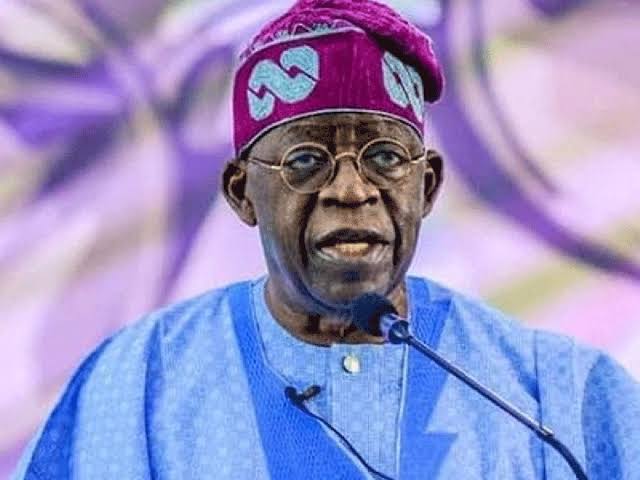
BOLA Ahmed Tinubu will be sworn in as president of the country on 29 May 2023. That’s if the courts uphold his election victory.

Tinubu won the highly contested 25 February presidential election with 37% of the total votes. At least two leading opposition candidates have filed separate legal challenges to the election results.

The new president will face many challenges, chief of which is insecurity. Multiple armed conflicts, high levels of organised crime and worsening food insecurity persist around the country.


READ ALSO:
What to know about Nigeria’s President-Elect, Bola Tinubu

From age, bagman to education: Bola Tinubu’s many controversies

2023: Photoshopped picture of Peter Obi in Bola Tinubu’s ‘cap’ circulates online

Osinbajo congratulates Bola Tinubu on victory at APC presidential primary


The United Nations High Commissioner for Refugees estimates that some three million Nigerians have been internally displaced by insecurity. The country’s geographical regions are associated with distinct ethnicities and religions. Each has experienced different forms of insecurity:

We have published work on communal conflict in Northern Nigeria, South Sudan, the Central African Republic, and Kenya and have worked in community development. Based on the lead author’s work on conflict in Nigeria, we are of the view that Tinubu’s presidency could increase tensions in central and south-east Nigeria, while reducing violence in the north.

Our research indicates that Nigeria’s sociopolitical environment is characterised by strong patronage networks. And that ethnic and religious identities strongly overlap and reinforce political cleavage. The perceived exclusion of one religion or ethnic group can fuel tensions that quickly turn into a violent ethno-religious crisis.

Tinubu’s unprecedented choice of a fellow Muslim as vice-president is likely to increase ethnic and religious tensions in the north-central zone. Allegations of discrimination against Igbos in Lagos could spur Biafra-related activism and violence in the south-east.

His promises to create more employment opportunities and establish civilian neighbourhood watch groups hold potential for reducing the Boko Haram conflict and banditry in the north-east and north-west.

In the north-central region, Tinubu’s presidency will likely face more communal conflicts between farmers and herders. These have long interlinked with ethnic and religious tensions.

The drivers of violence

Tinubu, a Muslim from the south-west, won the election alongside another Muslim from the north-east. Thus the new administration is a “Muslim-Muslim ticket”.

Since 1999, all past administrations have semi-officially shared power in religious and ethnic terms to manage sectarian sentiment. Nigeria is a secular country with almost equal Muslim and Christian populations.

The Christian Association of Nigeria denounced the Muslim-Muslim ticket. Religious mobilisation was evident throughout the campaign.

Tinubu received the most votes and met the constitutional requirement of at least 25% of the vote in 25 of Nigeria’s 36 states. This indicates a nationwide appeal. But the “Muslim-Muslim” perception may increase religious polarisation. It may undermine the new government’s ability to address the causes and consequences of communal violence.

In the south-east region, the Indigenous People of Biafra will likely continue to agitate for independence. The separatist group has been protesting the marginalisation of the ethnic Igbo population.

The presidential candidate Peter Obi, an Igbo, enjoys a massive youth following in southern Nigeria. Numerous Igbo elders and Obi’s allies dissuaded the group from attempting to sabotage the election.

But Obi’s third-place finish, amid the electoral body’s logistical challenges, allegations of voter suppression and ethnic profiling of Igbos in Lagos, will likely increase Biafra-related activism and violence.

During the campaign, Tinubu pledged to negotiate with Indigenous People of Biafra. In contrast, Buhari had treated it as a terrorist group.

In the north-east region, Boko Haram and the Islamic State of West Africa are expected to challenge Tinubu’s administration. They previously challenged Buhari’s and Goodluck Jonathan’s.

Tinubu’s manifesto frames the insurgency as a security problem spawned by a socioeconomic crisis. It outlines the need to create jobs and revamp the nation’s security architecture. But his policy document is silent on reintegrating Boko Haram members into society.

In 2013, Tinubu sparked controversy when he advocated amnesty for Boko Haram members. Two years later, the Buhari administration set up “Operation Safe Corridor” for those who surrendered. The military claims the programme has reduced Boko Haram’s fighting force.

A recent survey shows that people appear to be more receptive to the return of former insurgents than previously thought. Tinubu’s vice-president-elect, Kashim Shettima, has previously called for amnesty – so Tinubu will likely continue the programme.

Finally, in the north-west, militias known as bandits continue kidnapping for ransom, stealing cattle and killing people. According to the Armed Conflict Location and Events Dataset, bandits killed more than 2,600 civilians in 2021. This is a staggering increase compared with 2020. Bandits have no stated political aim.

The conflict began as a land dispute between Hausa farmers and Fulani herders. It has been partly linked to the impact of climate change. In January 2022, Buhari (a Fulani) banned the militias as terrorist groups and deployed the military.

Since then, military air raids have repeatedly killed civilians instead of militants.

Contrary to Buhari’s approach, Tinubu called for engagement with violence-affected communities. His policy document emphasises using civilian neighbourhood watch groups to address banditry. Whether these groups will be limited to non-violent conflict resolution or engage in armed vigilantism is unclear.

Armed vigilantes may increase violence, as research on civilian defence militias in the Boko Haram conflict indicates.

Way forward

The new administration faces enormous challenges in addressing widespread armed conflict and deep societal divisions.

Lawmaking and law enforcement are critical to dealing with the root causes of insecurity, such as poverty and unemployment. It’s also important to have ethnic and religious balance in the appointment of crucial security positions.

This could reduce tensions and make dialogue possible, particularly with community leaders and religious associations.The Conversation

Jana Krause, Professor of Political Science , University of Oslo and Imrana Buba, PhD Candidate in Political Science, University of Oslo

This article is republished from The Conversation under a Creative Commons license. Read the original article.

Fintiri says Adamawa REC’s action on governorship supplementary election provocative

0

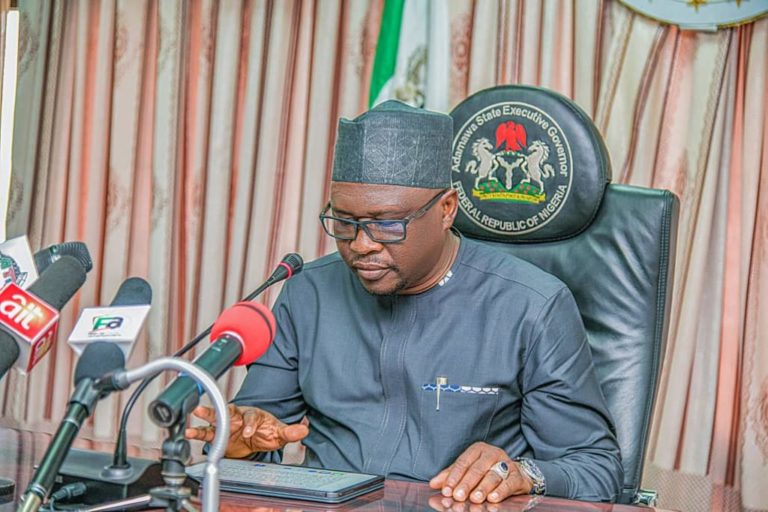
THE governor of Adamawa state and candidate of the Peoples Democratic Party (PDP) in the 2023 governorship election, Ahmadu Fintiri, has described the action of the state Resident Electoral Commissioner as “provocative and illegal.”

Fintiri said the decision of the REC, Yunusa Ari, to declare a winner in the governorship supplementary election when the collation of results was not yet concluded was an action that should not be ignored.


READ ALSO:

Atiku alleges plot to provoke violence in Adamawa

Adamawa: How PDP had demanded removal of REC over alleged malpractices

INEC summons Adamawa REC to Abuja after Binani governor-elect declaration

Police reportedly bar journalists from Adamawa collation centre


The supplementary election had held on Saturday, April 15, and Ari had on the afternoon of Sunday, April 16 declared Binani as the winner. But the Independent National Electoral Commission (INEC) quickly declared Ari’s declaration as null and void.

Fintiri, addressing journalists today at a press conference at the state house in Yola, the Adamawa state capital, asked President Muhammadu Buhari to wade into the matter.

“We call on him to make a statement. We call on him to take a decision. I believe he will not be a party to this,” he said.

Ari’s declaration was made midway into the collation of results, when only results from 10 of the 20 local governments where supplementary polls were held had been announced and the exercise was not yet concluded.

ICIR reported that shortly after the declaration, the INEC national commissioner Festus Okoye nullified Ari’s position, saying the REC was not the qualified INEC official to announce the result.

The commission also suspended the collation of results and invited Ari, the returning officer and all those involved in the collation process to its headquarters in Abuja.

Queens College Lagos suffers fire outbreak

0

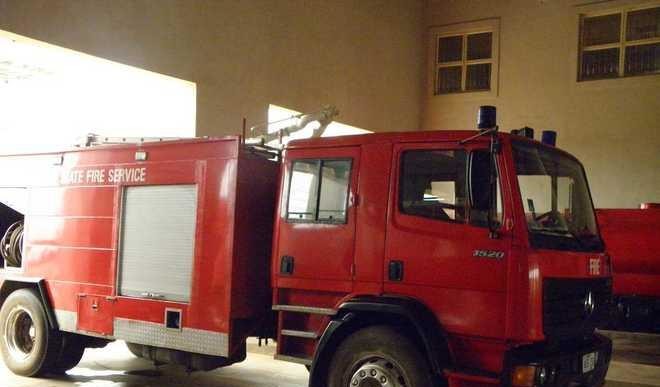
THE Lagos State Fire and Rescue Service has confirmed a fire outbreak at Queens College, in the Onike area of the state.

The director of the service, Margaret Adeseye, said in a statement on Sunday, April, 16, that the fire started in a two-room apartment located behind the school staff quarters.

According to Adeseye, there was no casualty in the incident as men of the state fire service quickly put out the fire.

“The cause of the fire is yet to be ascertained.

“Meanwhile, the fire has since been put out by a combined effort of the Lagos State Fire Service and Federal Fire Service, while the police, who were also alerted, prevented hoodlums from forcefully gaining access to the school premises.

“No life was lost in the incident,” she said.

Lagos, being a densely populated city, had experienced many fire outbreaks that resulted in loss of lives and property.

In 2019, a fire outbreak occurred at the popular Balogun market on Lagos Island, which is known for huge volumes of sale of textile and fashion items. The inferno destroyed many shops and goods worth millions of naira.

Similarly, in 2020, a fire outbreak was recorded at the popular Abule-Egba pipeline area of Lagos, which led to the loss of lives and property.

Last month, fire gutted a spare parts market in the Ajegunle area of Lagos state, destroying items worth millions on naira.

The cause of these fire incidents has often been attributed to factors like power surge, poor safety measures, inadequate fire-fighting equipment, and poor infrastructure.

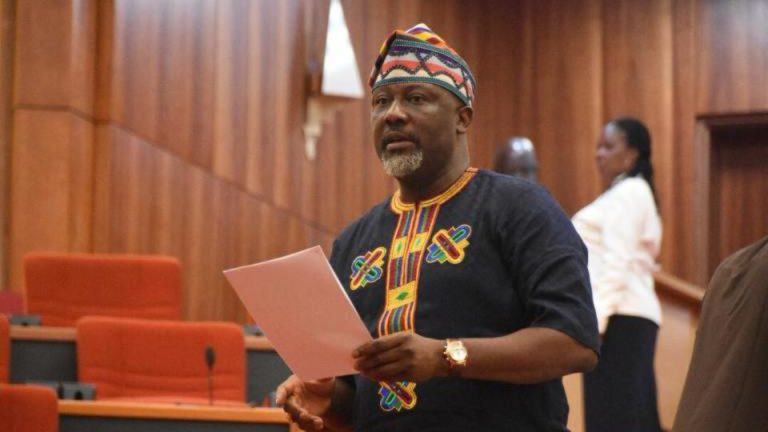
Dino Melaye wins PDP governorship primary in Kogi State

FORMER senator Dino Melaye has emerged as the winner of the Peoples Democratic Party (PDP) governorship primary in Kogi state.

Melaye was declared the winner after obtaining over 50 per cent of the votes cast in the primary held on Sunday, April 16.

He scored over 300 votes, while his closest rival, Kabiru Usman, secured over 100 votes.


READ ALSO:
[Fact-Check] Dino Melaye spreads false claim about INEC chairman

Dino Melaye recommends drug test for Tinubu, Atiku

Video of Dino Melaye talking about Peter Obi goes viral under misleading context

Wike’s outbursts: Atiku facing persecution for being a democrat – Melaye


The PDP primary election in Kogi state was not without its challenges, as protests erupted over the delegates’ list.

However, with the supervision of the Independent National Electoral Commission (INEC), the process went on smoothly.

Melaye won an election to represent the Kogi West senatorial district on the All Progressives Congress’ (APC) platform in 2015. He later defected to the PDP.

He won his re-election in 2019 but was sacked at the tribunal.

He would fight out with the former Auditor-General for Local Governments in Kogi State, Ahmed Usman Ododo, who is the APC candidate in the November 11, 2023 governorship election.

Court orders removal of monarch in Ondo

THE Ondo State High Court in Ondo town has issued a ruling ordering the removal of the Olu-Oke of Oke-Igbo in the Ile-Oluji/Oke-Igbo Local Government Area, Oba Babajide Oluwole.

The court found that Oluwole, who was crowned the traditional ruler of the community in 2018, was not a member of the ruling house designated to fill the vacant throne of the town.


READ ALSO: 
Buhari’s visit: Kogi govt rejects monarch’s response to query

Residents protest alleged plan to dethrone Osogbo monarch

Taraba governor vows to deal with monarchs engaging in anti-peace activities

Zamfara govt bars monarchs from conferring chieftaincy titles without approval


The lawsuit challenging Oluwole’s appointment was brought by two princes from the Aare Kugbaigbe Ruling House – Rufus Adekanye and Temitope Adeoye – who served as Head and Secretary of the House respectively.

The town’s kingmakers were also named as respondents in the suit.

According to the claimants’ lawyer, Sola Ebiseni, the defendants argued that Oluwole was not a member of the Aare Kugbaigbe Ruling House, which was designated to present a candidate to the throne, and that the stool was still vacant.

In a judgment delivered by Justice Ademola Enikuemehin, on Friday, April 14, the court held that Oluwole was not qualified to be presented as a candidate for the throne, as he was not a member of the ruling house designated to produce the king.

The judge also ordered that the Olu-Oke of Oke-Igbo chieftaincy is subject to the Declaration in Part Two of Justice Adeloye Judicial Commission Of Inquiry On Chieftaincy Matters and the Chiefs Law CAP 27 Volume 1 Laws of Ondo State 2006.

The judge stated that the Olu-Oke of Oke-Igbo Declaration contained in Part Two of Justice Adeloye Judicial Commission Of Inquiry On Chieftaincy Matters restricts eligibility to the throne to descendants of five male lineages, who are constituted as the five ruling houses of the chieftaincy.

According to him, only members of the Aare Kugbaigbe Ruling House of the male linage are qualified to be proposed as a candidate(s) and be made an Oba at the turn of the ruling house.

The judge further held that the fifth defendant (Oba Oluwole) was not a descendant of the Aare Kugbaigbe Ruling House and was, therefore, not qualified under the declaration to be proposed as a candidate for the vacant stool of, or be made the Olu-Oke of Oke-Igbo.

He, therefore, ordered an injunction restraining Oluwole from parading himself or allowing himself to be paraded as, or accorded the rights and privileges pertaining to the person, title and office of the Olu-Oke of Oke-Igbo.

The court also restrained the defendants “jointly and severally” from parading as, or according to the fifth defendant, the recognition, rights, and privileges of the Olu-Oke of Oke-Igbo.

Former NUT president wins Kebbi governorship election for APC

THE All Progressives Congress (APC) has won the 2023 governorship election in Kebbi state.

The victory followed the party’s lead in the supplementary election conducted by the Independent National Electoral Commission (INEC) in the state on Saturday, April 16.

Declaring the APC candidate, Nasiru Idris, a former president of the Nigeria Union of Teachers (NUT), winner of the poll, INEC’s returning officer in the state, Sa’idu Yusuf, a professor, said Idris polled the highest number of votes, which is 409,225.

The Peoples’ Democratic Party (PDP) candidate, Aminu Bande, a retired general, came second after securing 360,940 votes.

Announcing Idris as the election winner, Yusuf said, “I, Sa’idu Yusuf, returning officer of the Kebbi State governorship election, hereby declare Nasiru Idris of the APC winner of the governorship election, having polled a total of 409,225 and having satisfied the requirements of the law.”

The ICIR reported how INEC declared the Kebbi State governorship poll inconclusive on March 20.

The returning officer, Yusuf, who works at the Danfodio University in Sokoto, said cancellations occurred across several registration areas (RAs) in various voting districts in 20 of the 21 local government areas in the state.

According to him, the declaration of the election as inconclusive was in line with provisions of the Electoral Act 2022.

Idris had led with 388,258, while Bande trailed with 342,980.

The ICIR reports that the governor-elect, Idris, was the Nigeria Union of Teachers (NUT) president until he vied for the APC governorship ticket in the state in 2022.

He defeated Yahaya Abdullahi, the Senate majority leader, and Abubakar Gari-Malam, another aspirant, to win the ticket.

Atiku alleges plot to provoke violence in Adamawa

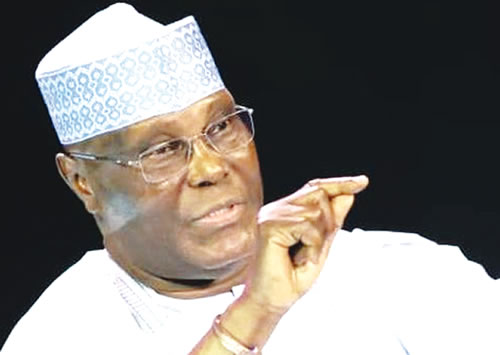
THE presidential candidate of the Peoples Democratic Party (PDP), Atiku Abubakar, says there is a plot to undermine democracy and incite violence in Adamawa state.

Abubakar said the Independent National Electoral Commission (INEC) was perpetrating a scheme to upturn the democratic wish of the people in the state.


READ ALSO:

Atiku Abubakar salutes Mary Katambi, other Chibok girls for pursuing education after abduction

False claim circulates that Atiku is retiring from politics, congratulates Tinubu

Presidential poll: INEC asks tribunal to dismiss Atiku’s petition

Atiku to Nigerians: Don’t allow promoters of religious, tribal divisions succeed


Abubakar said this in a press release issued on Sunday, April 16.

According to him, the Resident Electoral Commissioner in Adamawa State declaring the APC candidate, Sen. Aisha Binani, as the election winner was proof of the “shambolic nature of the 2023 elections in general.”

Yunisa Ari, the Adamawa REC official, had declared the APC Binani winner of the state governorship election.

Ari announced Binani as the winner of the poll midway into the collation,  when only results from 10 out of 20 of the local government areas where the supplementary polls were held had been announced, and Fintiri, the PDP candidate, was in the lead.

Constitutionally,, the state returning officer, Mele Lamido, is the INEC official empowered to declare the winner.

Reacting to this, Abubakar described the situation in Adamawa as a novel practice in Nigeria’s election.

“It is not in doubt that INEC has approached the Adamawa State election with a preset agenda of declaring the APC winner at all costs.

“It is, therefore, on this note that we wish to call the world’s attention to the scheme being perpetrated by INEC to compromise the electoral wishes of the people of Adamawa State.

“We also wish to inform the world that such behaviour by INEC has a natural consequence of unsettling the peace and security of the society.

“We have seen how INEC conducted the February 25 and March 18 elections against the run of play and challenging cheated candidates to go to the court, knowing full well the agenda they are up to,” he said.

Abubakar called for the arrest of the REC and other parties complicit in declaring Binani the winner.

He asked that the arrest and prosecution follow procedures for treason.

He said this would deter those “who may want to torpedo our democracy and provoke violence in our country.”