Home Blog

Court upholds David Mark-led ADC leadership, dismisses Abejide’s suit

A FEDERAL High Court in Abuja has affirmed the leadership of the African Democratic Congress (ADC) under former Senate President David Mark, dismissing a suit filed by House of Representatives member Leke Abejide challenging the party’s current leadership.

Delivering judgment on Thursday, July 2, one of the court’s judges, Musa Liman, held that Abejide’s suit lacked merit. He upheld the preliminary objections raised by the ADC, its former National Chairman Ralph Nwosu, David Mark and the party’s National Secretary, Rauf Aregbesola.

The judge ruled that the dispute bordered on the internal affairs of a political party, making it non-justiciable and outside the court’s jurisdiction.

Liman further held that Abejide failed to establish that his legal rights had been violated by the emergence of the Mark-led leadership, adding that the lawmaker did not exhaust the party’s internal dispute resolution mechanisms before approaching the court.

The court also resolved all three substantive issues in the suit in favour of the defendants.

On the legality of the emergence of Mark and Aregbesola as the party’s national chairman and national secretary respectively, the judge held that their appointment complied with the ADC constitution and relevant electoral laws.

Liman ruled that the July 2, 2025, meeting, during which former National Chairman Ralph Nwosu handed over the party’s leadership to Mark, was a stakeholders’ meeting that preceded the National Executive Committee (NEC) meeting held on July 29, 2025.

According to the court, the NEC meeting, monitored by the Independent National Electoral Commission (INEC), validly produced Mark and Aregbesola as the party’s leaders.

The judge consequently declared that their emergence complied with the party’s constitution, the Electoral Act 2026 and other applicable laws.

As part of the judgment, the court ordered Abejide to pay N2 million in costs to each of the defendants. Liman also awarded N10 million in costs against Abejide’s counsel in line with the provisions of the Electoral Act 2026.

Abejide had filed the suit seeking to invalidate the transfer of the party’s leadership from Nwosu to Mark and Aregbesola.

In the suit marked FHC/ABJ/CS/1637/2025, the lawmaker asked the court to declare the July 2, 2025, handover at the Shehu Musa Yar’Adua Centre in Abuja illegal, null and void.

He also sought orders restraining Mark and Aregbesola from presenting themselves as the party’s leaders and preventing INEC from recognising them, arguing that their emergence did not comply with the requirements of the Electoral Act.

Background

Although the case is different from the suit filed by the former Deputy National Chairman of the ADC, Nafiu Gombe, Thursday’s judgment marks a new development in the party’s prolonged leadership crisis ahead of the 2027 general elections.

The crisis began after the party’s former National Chairman, Nwosu, handed over the leadership of the ADC to Mark and Aregbesola during a stakeholders’ meeting held on July 2, 2025, at the Shehu Musa Yar’Adua Centre in Abuja.

The stakeholders’ meeting was later followed by the party’s NEC meeting on July 29, 2025, where Mark and Aregbesola formally emerged as the party’s national chairman and national secretary in a process the party said was monitored by INEC.

The transition, however, sparked opposition from another faction within the party, leading to multiple lawsuits over who should legitimately control the ADC ahead of the 2027 general elections.

In April, the Supreme Court set aside an earlier Court of Appeal order directing parties to maintain the status quo ante bellum and returned the substantive leadership dispute to the Federal High Court for hearing.

The apex court described the Appeal Court’s order as “unnecessary, improper and unwarranted” and held that the matter should proceed before the trial court for determination.

Before the Supreme Court’s intervention, INEC had removed Mark and Aregbesola’s names from its official portal after relying on the Appeal Court’s directive, effectively leaving the party without a recognised national leadership at a critical period ahead of preparations for the 2027 elections.

The decision sparked protests by members of the Mark-led faction, who accused INEC of interfering in the party’s internal affairs. The faction also proceeded with its planned congresses and national convention despite the commission’s refusal to recognise its leadership.

Following the Supreme Court’s judgment on April 30, INEC reinstated Mark as the ADC National Chairman and Aregbesola as National Secretary on its website, restoring the leadership pending the outcome of the substantive suit at the Federal High Court.

Troops foil second attack on NIPSS within 2 weeks, recover stolen rifle

TROOPS of Sector VI Joint Task Force Operation “ENDURING PEACE” have foiled an attack by suspected armed assailants on the National Institute for Policy and Strategic Studies (NIPSS), Kuru, in Plateau State.

The Nigerian Army disclosed this in a statement on its verified Facebook and “X” Handle on Thursday.

The army said the attack occurred at about 12:10 a.m. on Thursday, July 2, when the assailants attempted to breach the institute’s perimeter under the cover of darkness.

It said vigilant troops swiftly engaged the attackers in a gun battle, neutralising one suspect, while others escaped with gunshot wounds towards the surrounding high ground.

The army said no casualty was recorded during the encounter, except for one of the assailants who died.

It added that troops recovered an AK-pattern rifle bearing registration number CO-3175 loaded with 16 rounds of 7.62mm special ammunition from the neutralised suspect.

According to the army, preliminary investigations confirmed the weapon belonged to a Nigerian Army soldier killed in action during an earlier encounter with unidentified militia elements at the Federal College of Land Resources Technology, Vom, on April 11.

It noted that the recovered rifle had been taken into military custody, while the remains of the neutralised suspect were evacuated to a mortuary through the appropriate authorities.

The army said troops had intensified area domination patrols, clearance operations and pursuit of the fleeing suspects around NIPSS Kuru and adjoining communities.

It said the measures were aimed at denying criminal elements freedom of action and ensuring the safety of residents, institute staff and other critical national assets.

The service reaffirmed its commitment to protecting lives, securing strategic institutions and restoring lasting peace in Plateau, urging residents to report suspicious movements to security agencies.

The latest attempted attack comes barely three weeks after gunmen stormed the staff quarters of the NIPSS, killing two soldiers and a police officer assigned to protect the facility.

Following the June 16 attack, NIPSS confirmed the deaths of the security personnel but assured that the situation had been brought under control through the swift intervention of security agencies, adding that participants, staff and facilities of the institute were safe.

Reports at the time indicated that the attackers appeared to have targeted the residences of the institute’s Acting Director of Studies, Nima Salman-Mann, and another senior official, Haruna Dabin, with both officials earlier receiving handwritten threat notes pasted on their doors demanding $100,000 and N15 million, respectively, days before the attack.

Police confirm 15 burnt to death, 3 others shot in Niger land dispute

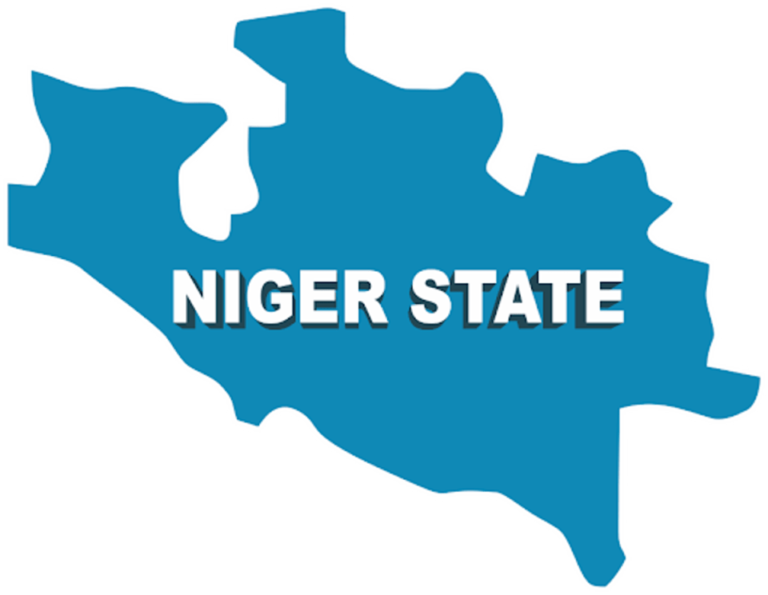
THE Police Command in Niger has confirmed the killing of 18 people following a land dispute in Angwan-Baago community, Katako District, Rafi Local Government Area of the state.

The Police Public Relations Officer, Wasiu Abiodun, a superintendent of police, disclosed this in a statement made available to newsmen on Thursday, July 2.

He said the crisis, which began on Monday, escalated on Wednesday, leading to the burning of 15 persons, and shooting of three others.

According to him, suspected armed men, on Monday, shot dead a 25-year-old man, Ibrahim Musa, in Godoro village.

He said some local vigilantes, popularly known as Yansakai, in a suspected reprisal attack, blocked the road and killed a 28-year-old man, Bashir Mazi.

Abiodun explained that the initial attack, linked to a lingering land dispute between two tribes in the area, escalated into further violence, resulting in the deaths of 16 additional people and bringing the total death toll to 18.

“On 30/6/2026 at about 2 p.m., a report was received from the Katako District area of Rafi LGA indicating that on 29/6/2026 at about 11:30 p.m. at Godoro village, suspected armed men fired gunshots at one Ibrahim Musa, 25, who died on the spot.

“As a result, a group of Yansakai blocked the road and killed one Bashir Mazi, 28. This attack was allegedly linked to a lingering land crisis between two tribes in the area,” the police spokesperson said.

He added: “Furthermore, on 1/7/2026 at about 10 p.m., a report was received indicating that 15 persons were burnt to death in a two-bedroom flat at Angwan-Baago via Godoro village, while one other person was also killed at another location, bringing the death toll to 18.”

Abiodun said a reconciliation committee led by officials of the local government council was working with security agencies to address the crisis.

He added that joint security operatives comprising the Police and the military had been deployed to the area to restore peace. (NAN)

Three-year-old rescued alive six days after Venezuela earthquakes

EMERGENCY workers have pulled a three-year-old child alive from beneath collapsed rubble in La Guaira six days after two powerful earthquakes struck Venezuela.

The toddler’s rescue comes as Venezuela battles the aftermath of twin earthquakes measuring 7.2 and 7.5 magnitude, which struck less than a minute apart on June 24, triggering one of the country’s deadliest natural disasters in more than a century.

According to authorities, La Guaira is one of the hardest-hit regions, where search-and-rescue teams have continued combing through destroyed buildings despite fading hopes of finding more survivors, as they confirmed nearly 2,000 deaths.

More than 6,400 people have been rescued since the catastrophe unfolded, as thousands of families remain homeless, sleeping outdoors amid fears of fresh aftershocks.

The United Nations (UN) said that humanitarian needs were escalating rapidly, as the UN Refugee Agency (UNHCR) highlighted the growing demand for emergency shelter, healthcare, clean water and protection services.

Meanwhile, specialists from the UN Disaster Assessment and Coordination (UNDAC) team are assessing the extent of destruction to help humanitarian agencies determine where aid is needed most.

The earthquakes have left widespread devastation across six affected states which has left approximately 1,000 buildings, including hospitals, damaged or destroyed and more than 400 schools have also been affected, alongside critical water infrastructure.

In response, the UN Children’s Fund (UNICEF) 47-tonne shipment of emergency supplies arrived in the country this week, complementing an earlier consignment transported from Panama, with enough relief materials to support more than 100,000 children and families over the next three months.

The emergency supplies include medical kits, safe childbirth equipment, newborn care materials, medicines, water purification systems, storage containers, tents for child-friendly spaces, wheelchairs and educational materials designed to help children regain a sense of normalcy.

UNICEF Regional Director for Latin America and the Caribbean, Roberto Benes, warned that many survivors remained without access to safe drinking water or healthcare.

According to UNICEF, around 680,000 children require humanitarian assistance across the six earthquake-affected states.

The crisis has been compounded by more than 600 aftershocks, keeping communities on edge and complicating rescue and relief efforts.

UNICEF estimates it requires $52 million to respond to the earthquake emergency, part of its broader 2026 Humanitarian Action for Children appeal for Venezuela, which seeks $137.6 million.

While the rescue of the three-year-old has inspired hope amid overwhelming tragedy, humanitarian agencies warn that Venezuela faces a long road to recovery as thousands of survivors continue to await shelter, clean water, medical care and protection.


PFIPC puzzle: Budget allocation, public activities contradict Presidency’s denial

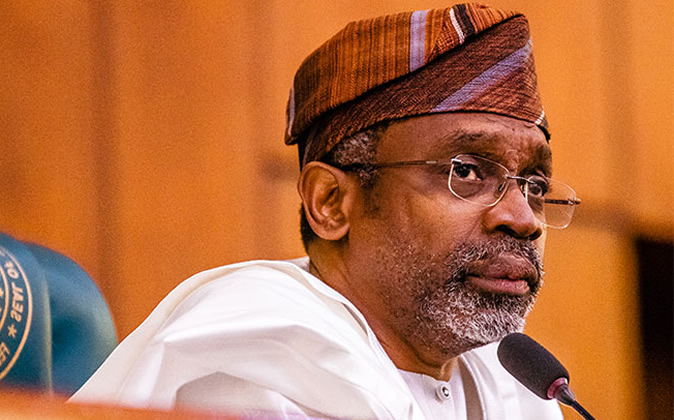
THE Presidency has defended the Chief of Staff to the President, Femi Gbajabiamila, against allegations linking him to the controversial Presidential Foreign Intervention Promotion Council (PFIPC), insisting that no such council ever existed under President Bola Tinubu’s administration.

However, the Presidency’s defence, contained in a statement issued on Wednesday, July 1, did not explain why the council appears in the 2026 Appropriation Act with a budgetary allocation of more than ₦1.3 billion.

The development comes days after Adeniyi Adeyemi Matthew, who had identified himself as Director-General of the PFIPC, accused Gbajabiamila of demanding part of the council’s alleged take-off grant and challenged the Presidency’s claim that the agency did not exist.

Adeyemi had questioned how Gbajabiamila could describe him as an impostor while he was demanding 58 per cent of the agency’s alleged N27.4 billion take-off grant. 

He further alleged that the Chief of Staff received N400 million through proxies to facilitate his appointment as director-general of the council, with an outstanding balance of N200 million yet to be paid.

Responding to the allegations and outrage, the Special Adviser to the President on Information and Strategy, Bayo Onanuga, described Adeyemi as an impostor who had created a fictitious government agency and used forged documents to deceive government institutions, foreign missions and the public.

According to Onanuga, the Office of the Chief of Staff first became aware of the alleged activities of the council in October 2025 after officials of the Nigerian Investment Promotion Commission (NIPC) raised concerns that another agency appeared to be carrying out similar responsibilities.

He said Gbajabiamila subsequently petitioned the Department of State Services (DSS) and the Nigeria Police Force on October 17, 2025, requesting an investigation into individuals allegedly forging appointment letters purportedly issued from his office.

According to the statement, the petition was accompanied by copies of the alleged forged appointment letter, a request seeking a note verbale from the Ministry of Foreign Affairs to facilitate visa applications for members of the council, and photographs of engagements obtained from the organisation’s website.

The Presidency said the Ministry of Foreign Affairs had also become concerned about the council’s activities after Adeyemi reportedly convened a meeting with ambassadors at the Wells Carlton Hotel in Abuja on October 10, 2025, without involving the ministry.

It said the ministry wrote to both the Office of the National Security Adviser (ONSA) and the Office of the Chief of Staff on October 15, seeking clarification on the status of the organisation.

According to the Presidency, the Office of the National Security Adviser subsequently referred the matter to the Office of the Secretary to the Government of the Federation (OSGF), which also sought clarification from the Chief of Staff after receiving enquiries from government and non-governmental organisations about the council.

The Presidency said Gbajabiamila responded that he neither appointed Adeyemi nor recognised the council, adding that appointments into such offices fell within the responsibility of the Office of the Secretary to the Government of the Federation.

It added that police investigations established that the council was fictitious and that Adeyemi allegedly forged appointment letters and other government documents, falsely represented himself as a presidential appointee and used the documents to solicit official recognition.

The statement further said police investigations found that Adeyemi operated 34 bank accounts, including nine allegedly opened in the names of fictitious organisations such as the FCT Investment Promotion Agency and Public Private Partnership (FIPA-APP).

The Presidency also stated that Adeyemi allegedly used forged documents to open a Central Bank of Nigeria (CBN) account through the Office of the Accountant-General of the Federation but maintained that no public funds were transferred into the account.

According to the statement, Adeyemi and two other persons were arraigned before the Federal High Court on November 27, 2025, on an eight-count charge bordering on forgery, impersonation and obtaining by false pretence. The matter is scheduled to come up in court later this month.

No explanation on budget allocation

However, the Presidency in its statement did not address the inclusion of the council in the 2026 Appropriation Act.

A review of the Appropriation Act had shown that the Presidential Economic Advisory Council/Presidential Foreign Intervention Promotion Council is listed under the Presidency with a total allocation of N1,302,978,784.

The allocation consists of N802,978,783 for personnel costs, N200,000,001 for overhead expenditure and N300 million for capital expenditure.

The inclusion of the council in the budget has drawn attention because the federal appropriation process requires spending proposals from ministries, departments and agencies to pass through multiple stages before becoming law.

Budget proposals are first prepared by the relevant institutions before being reviewed by the Budget Office of the Federation. They are subsequently considered by the Federal Executive Council (FEC), transmitted to the National Assembly for legislative approval and later signed into law by the President. 

The Presidency’s statement did not indicate how the council came to be listed in the budget or whether its inclusion is being reviewed.

It is also surprising that details of the accused’s trial were not made public. The alleged impostor has continued to move freely across the country, including addressing press briefings and attending other public events, despite facing such serious allegations. This stands in contrast to the treatment of suspects accused of less serious offences, some of which are non-bailable under Nigerian law.

Conflicting claims

The controversy first gained public attention after Gbajabiamila, on June 11, publicly disowned Adeyemi’s claim that he had been appointed director-general of the Presidential Foreign Intervention Promotion Council.

The Chief of Staff stated that no such office existed under President Bola Tinubu’s administration and urged foreign missions, development partners, financial institutions and the public to disregard any claims made by Adeyemi on behalf of the Presidency.

“It has come to the notice of the Federal Government of Nigeria and specifically the Office of the Chief of Staff to His Excellency, President Bola Ahmed Tinubu, GCFR that a certain Prince Adeniyi Adeyemi, under the auspices of an alleged organisation styled as the “Presidential Foreign Intervention Promotion Council” is portraying himself to the general public, as having been appointed by my office,” the statement reads. 

But Adeyemi reportedly rejected the disclaimer, insisting the council had offices at the Federal Secretariat, operated accounts with the Central Bank of Nigeria and received approval for more than 300 staff members from the Office of the Head of the Civil Service of the Federation.

Speaking at a press conference in Abuja on Thursday, June 25, he argued that if the council did not exist, it would have been impossible for it to appear in the 2026 Appropriation Act.

“If Honourable Femi Gbajabiamila, who is supposed to be the Chief of Staff to the President and also the administrative gateway to the Presidency can make such an administrative error, by allowing the president to sign a document with a fake agency in it, he should possibly resign his appointment now,” he said.

He challenged the President to establish an independent investigative panel to review official records relating to the council and determine how it appeared across multiple government documents.

He also claimed that the council maintained both Treasury Single Account and domiciliary accounts with the Central Bank of Nigeria, and obtained approval for more than 300 personnel through the Office of the Head of the Civil Service of the Federation.

He questioned at what stage references to a supposedly non-existent agency entered official government records.

“The national budget does not emerge in isolation. It passes through multiple layers of technical drafting, executive coordination, ministerial inputs, budget office review, and finally legislative scrutiny by both chambers of the National Assembly, where COS has meritoriously served for good 20 years and rose from Minority to Majority leaders and Speaker for four years.

“So, the question becomes unavoidable: at what point in this process did references to a non-existent agency allegedly enter the official record? And if they are indeed present in official documentation, what does that imply about the integrity of the process that produced and approved those documents?”

Official engagements

Although The ICIR could not yet find any official statement announcing his appointment like many other Tinubu’s appointments, the council has engaged with public institutions and officials in the previous year. 

Publicly available information shows that Adeyemi, while acting as Director-General of the council, held meetings with officials of the Economic and Financial Crimes Commission (EFCC), the Nigerian Electricity Regulatory Commission (NERC), the Raw Materials Research and Development Council (RMRDC) and representatives of the China Investment Business Development Commission (CIBDC).

In September 2025, the EFCC said its Chairman, Ola Olukoyede, received Adeyemi and members of his delegation during discussions on promoting foreign direct investment.

On September 9, 2025, the Nigeria Electricity Regulatory Commission (NERC) also announced engagements with the said council over preparations for the proposed World Investment Summit.

He also met with Chinese investment officials on plans to establish a Nigeria-China Investment Group.

The Presidency’s statement did not comment on those engagements.

Questions trail presidency’s defence

Meanwhile, many Nigerians on social media, particularly on X, have called for further explanations from relevant government institutions.

The Executive Director of the Centre for Journalism Innovation and Development (CJID), Akintunde Babatunde, in his reaction on X, questioned why government institutions continued exchanging official correspondence over the status of the council after Adeyemi had reportedly been arrested in October 2025.

He also asked how the alleged agency operated from an office within the Federal Secretariat, held meetings with foreign diplomats and reportedly opened a CBN account if it was fictitious.

According to him, while the Presidency’s statement addressed allegations against Adeyemi, it did not explain whether there were lapses in institutional verification processes within agencies including the Ministry of Foreign Affairs, the Nigerian Investment Promotion Commission, the Office of the National Security Adviser, the Office of the Secretary to the Government of the Federation, and the Central Bank of Nigeria.

Also, a social media user, Oluomo of Derby, questioned how the alleged fictitious agency was able to operate within government premises and appear in the federal budget.

“Are we seriously expected to believe that fake documents were used to open an account with the CBN without any internal checks?” he further asked.

Another X user, Nimsy, questioned how the disputed council remained in the 2026 Appropriation Act if, as the Presidency stated, investigations into the alleged fraud had commenced months earlier.

“If he was caught as a scam in 2025, how did the 2026 Budget (signed months after his arrest) still allocate N1.3 billion to this exact same setup?” the user wrote.

Similarly, another commentator, Abdulherphyz, questioned the budget allocation in light of the Presidency’s position that the council never existed.


Applications open for Africa-China trade, political relations reporting workshop for W/African journalists

THE Media Foundation for West Africa (MFWA), in partnership with South Africa-based Wits Centre for Journalism (WCJ), invites applications from journalists across Anglophone West Africa for a three-day capacity-building workshop on reporting critically on the multiple dimensions of Africa-China relations.

Dubbed “Building Capacity to Cover a Complex Story – Africa and China relations”, the workshop is scheduled to take place in Accra, Ghana, in the last quarter of 2026.

Funded by the University of Witwatersrand, the workshop aims at strengthening the capacity of journalists to better understand Africa-China relations in an increasingly multipolar global setting, and the implications of these developments for African communities and development. It will offer both subject matter knowledge and journalism techniques in covering stories pertaining to Africa-China relations.

Beyond the training, participating journalists will have the opportunity to apply for reporting grants to support the production and publication of in-depth stories on Africa-China relations and related issues. Three excelling journalists may also have a fully funded opportunity to participate in the Africa Investigative Journalism Conference (AIJC) scheduled for 10-12 November 2026 in Kenya to speak to their stories.

Applications are invited from journalists who are based in an Anglophone West African country, that is Ghana, Nigeria, Sierra Leone, Liberia and the Gambia; work in print, radio, television, or digital media; and report on areas such as politics, economy, business, trade, development, environment, extractives, infrastructure, or international affairs.

The call is also open to those who are available in the last quarter of 2026 (September – October) and can secure a formal permission letter from their editor to participate fully in the training workshop in Accra.

They must be ready to produce in-depth stories upon completion of the training.

Deadline for applications is July 30, 2026. Interested applicants can apply here.

Full list: CBN revokes licences of 46 microfinance banks

THE Central Bank of Nigeria (CBN) has revoked the operating licences of 46 microfinance banks nationwide over their failure to meet regulatory requirements for continued operations.

The apex bank announced the decision in a press statement on Wednesday, July 1, stating that the revocation took effect immediately.

According to the CBN, the action was taken pursuant to Sections 12 and 13 of the Banks and Other Financial Institutions Act (BOFIA), 2020, and was approved by the Governor of the Central Bank of Nigeria, Olayemi Cardoso.

The bank said the affected institutions failed to satisfy one or more of the regulatory conditions required for continued operation as licensed financial institutions.

It listed the reasons for the revocation to include insufficient assets to meet liabilities, closure of operations without the approval of the CBN, inactivity and cessation of financial intermediation, failure to commence operations within 12 months of licence approval, and failure to maintain minimum capital funds unimpaired by losses.

“The revocation of the licenses is part of the Bank’s ongoing efforts to safeguard the stability of the financial sector, protect depositors, and ensure that licensed institutions comply with current laws and regulatory requirements,” the statement read.

The CBN added that it remained committed to promoting a safe, sound and resilient financial system and would continue to take appropriate supervisory and regulatory actions where necessary to maintain public confidence in Nigeria’s financial system.

Full list of affected microfinance banks

  1. Minji-Se Churchill MFB – Rivers (Tier 1)
  2. Merchant MFB – Abia (Tier 2)
  3. Janmaa MFB – Kwara (Tier 1)
  4. Busu MFB – Niger (Tier 2)
  5. Gold MFB – Lagos (Tier 1)
  6. Zain MFB (formerly Dawakin Tofa MFB) – Kano (Tier 2)
  7. Bompai MFB – Kano (Tier 1)
  8. Ajwa MFB (formerly Gezawa) – Kano (Tier 2)
  9. NOW NOW Digital MFB – Kano (Tier 2)
  10. Crystabel Microfinance Bank – Bayelsa (Tier 1)
  11. Chanelle MFB – Lagos (State)
  12. Abia SME MFB – Abia (Tier 1)
  13. Kamba MFB – Kebbi (Tier 2)
  14. Iwade MFB – Ogun (Tier 2)
  15. Winview MFB – FCT (Tier 1)
  16. Zuru MFB – Kebbi (Tier 2)
  17. Minjibir MFB – Kano (Tier 1)
  18. Shamono MFB – Kano (Tier 2)
  19. Sumaila MFB – Kano (Tier 2)
  20. Rimin Gado MFB – Kano (Tier 2)
  21. Mwaghavul MFB – Plateau (State)
  22. Sycamore MFB – Kano (Tier 2)
  23. TOFA MFB – Kano (Tier 2)
  24. Safegate MFB – Lagos (Tier 1)
  25. Creekline MFB – Delta (Tier 2)
  26. Bestar MFB – Oyo (Tier 1)
  27. Livingspring MFB – Cross River (Tier 1)
  28. Apple MFB – Ogun (Tier 2)
  29. Stanford MFB – Akwa Ibom (State)
  30. Frontline MFB – Anambra (Tier 2)
  31. Zafec MFB – Kaduna (Tier 2)
  32. Supreme MFB – Lagos (Tier 1)
  33. Bejin-Doko MFB – Niger (Tier 2)
  34. Kanopoly MFB – Kano (Tier 1)
  35. Bellbank MFB (formerly Tsanyawa) – Kano (Tier 2)
  36. Yeneng MFB – Plateau (Tier 2)
  37. Creditville MFB – Lagos (Tier 1)
  38. MBAG MFB – Lagos (Tier 1)
  39. Straight Sahara MFB – Benue (Tier 1)
  40. OurPass MFB – Ondo (Tier 2)
  41. Verdant MFB – Lagos (Tier 1)
  42. Basawa MFB – Kaduna (Tier 2)
  43. CASHA MFB – FCT (Tier 2)
  44. Esteem MFB – Kano (Tier 2)
  45. Entrepreneur MFB – Lagos (Tier 1)
  46. Avantus MFB – Osun (Tier 2)

Oyo teachers end strike as abducted pupils, teachers remain in captivity

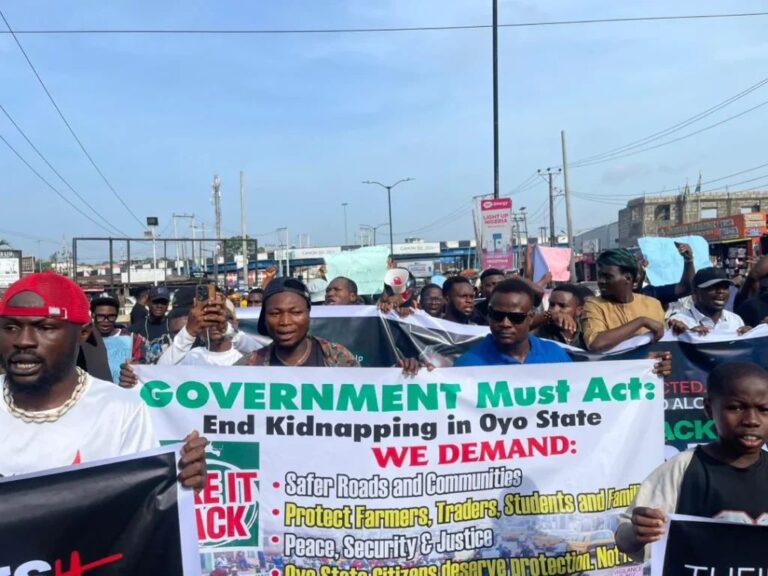
 THE Nigeria Union of Teachers (NUT), Oyo State Wing, has suspended its strike and directed public primary and secondary school teachers to resume duties on Thursday, July 2.

The NUT directed teachers in public schools to suspend their services in the aftermath of the abduction of teachers and schoolchildren in three schools in Oriire Local Government Area in the state in May.

The union announced the suspension of the strike in a statement jointly signed by its Chairman, Fatai Hassan, and Secretary, Olukayode Salami, on Wednesday in Ibadan.

It said the suspension followed assurances by the state government to strengthen security in schools.

According to the NUT, the strike was suspended after renewed engagements with the Oyo state government, appeals by key stakeholders and a directive from the union’s national leadership after reviewing the prevailing security situation.

It said the decision was taken in the collective interest of teachers, learners and the general public.

“The government assured the union that sustained efforts were ongoing to secure the safe release of the abducted teachers and learners while strengthening security around schools and surrounding communities. The government pledged to strengthen the Safe School Initiative through public sensitisation and early warning systems, improve emergency response mechanisms, address criminal hideouts, upgrade school infrastructure, tackle illegal mining and open grazing in forest reserves.

“Also, the government would enhance community intelligence gathering, ensure speedy prosecution of criminal suspects, improve the welfare of security personnel and deploy technology to improve school security,” it said.

The union listed government commitments to include intensified rescue efforts for the abducted victims and the establishment of a well-equipped Joint Security Task Force to patrol vulnerable schools and access routes.

Other measures, it said, included continuous engagement with affected families, psycho-social support and rehabilitation for rescued victims, and payment of gratuities and other entitlements to the families of deceased teachers.

The union commended its members, as well as the All Nigeria Confederation of Principals of Secondary Schools (ANCOPSS), and the Association of Primary School Head Teachers of Nigeria (AOPSHON), for their discipline, solidarity and compliance during the industrial action.

It described their support as instrumental to advancing the welfare and security of teachers and learners.

The group urged teachers to remain vigilant, obey the law and promptly report any security threats within their schools and communities to the appropriate authorities.

It reaffirmed its commitment to protecting the welfare and security of teachers, adding that it would continue to engage the government until all outstanding concerns over the safety of teachers and students are fully addressed.

The ICIR reported that terrorists launched a coordinated raids on Baptist Nursery and Primary School, Yawota; Community Grammar School, Ahoro-Esiele; and L.A. Primary School in Oriire Local Government Area on May 15 and whisked away 39 pupils and seven teachers. The attackers reportedly killed at least one teacher during the operation before marching the victims into the forest.

The attackers also beheaded one of the teachers they abducted days after they struck the LGA.

The ICIR reports that the kidnappers have continued to hold the victims for nearly 50 days, with coordinated efforts by tiers of government yet to secure their release.

Oyo State teachers downed tools in solidarity with public outrage that greeted the attack. The continued detention of the victims prompted teachers in the state to embark on industrial action.

The teachers argued they could not continue normal academic activities while their colleagues and pupils remained in captivity. They insisted that schools would not reopen in the state until the security situation improves.

Attack on schools by terrorists has continued unchecked in Nigeria since the nation first experienced the crisis with the Chibok school abduction in 2014.

A report by The ICIR details how gunmen have unleashed mayhems on schools in Nigeria, kidnapping children and teachers for ransom and other purposes.

On the same day terrorists stormed the Oyo schools in May, another group of attackers swooped on Primary and Junior Day Secondary School, Mussa, and surrounding communities in Askira-Uba Local Government Area of Borno State, abducting 42 students and teachers. The terrorists have since held the victims.

In a related development, the Borno State Police Command confirmed the abduction of students sitting for the National Examinations Council (NECO) examination after terrorists attacked a secondary school in Lassa community, Askira/Uba LGA of the state on Monday, June 29.

These incidents are just a few of the many cases of insecurity that Nigeria records almost daily, with the nation’s security forces battling tirelessly to confront the menace.


Dozens dead in Accra, Abidjan, Lagos floods

FLOODS triggered by days of torrential rainfall have killed dozens of people and displaced hundreds across three major West African cities – Lagos, Accra and Abidjan – raising fresh concerns over climate change, poor urban planning and inadequate drainage infrastructure.

In Ghana, authorities confirmed that at least 13 people have died after intense rainfall submerged large sections of the capital, Accra, with emergency officials warning the death toll could rise as rescue operations continue and several people remain missing.

The Ghana National Fire Service (GNFS) said it had rescued more than 470 residents trapped by floodwaters, while emergency teams drawn from the military, police, fire service and the National Disaster Management Organisation remained on the ground searching flooded communities.

The government urged residents to remain indoors where safe or move immediately to higher ground, warning that another storm system approaching from the east could trigger additional flooding.

President John Mahama disclosed that preliminary data showed approximately 140 millimetres of rainfall fell on Accra within a short period more than double the city’s highest single-day rainfall recorded in 2025.

“That increase points to climate change,” Mahama wrote on X, while also blaming clogged drainage channels and illegal construction on waterways for worsening the disaster.

Following an aerial assessment of the city, the president ordered the demolition of structures obstructing natural waterways.

The floods also forced the temporary shutdown of electricity in parts of Accra after floodwaters damaged key power substations, while a major fire broke out at a rubber factory amid the flooding.

Residents described scenes of widespread devastation, as authorities braced for further rainfall forcing markets, businesses and roads to remain closed.

Ivory Coast records about 20 deaths

Neighbouring Ivory Coast also suffered deadly flooding after heavy rains that began over the weekend.

Although authorities had yet to release an official casualty figure, a source close to firefighters and the country’s Interior Ministry told Journalist that about 20 people had died in the commercial capital, Abidjan, following floods and landslides.

The disaster has compounded concerns over increasingly frequent extreme weather events affecting coastal West Africa.

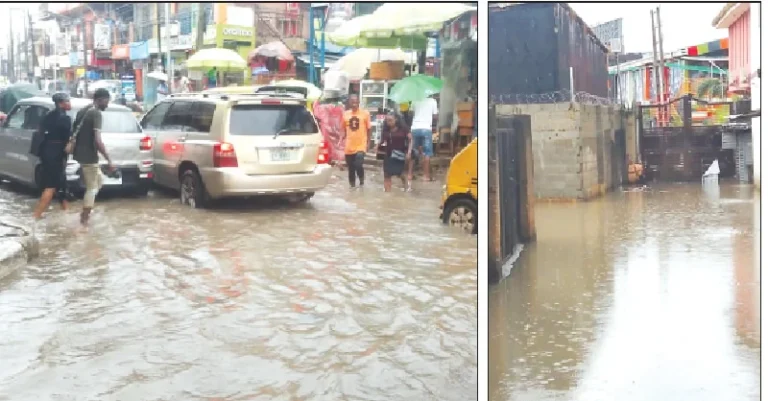
In Lagos, hours of heavy rainfall on Tuesday submerged roads, homes and businesses across several parts of the state, disrupting transportation, knocking out electricity in several communities and forcing some residents to abandon their homes.

Communities affected included FESTAC, Gbagada, Ikeja, Ajah, Evans, Olushi, Anikantamo, Adeniji Adele, Victoria Island, Lekki, Mushin and Mafoluku, where videos circulating online showed residents wading through knee-deep floodwaters while stranded motorists struggled to navigate submerged roads.

Residents blamed the recurring floods on blocked drainage systems, poor road construction and unchecked urban development.

“The way the road was constructed contributes to the flooding,” Ikeja resident Abidemi Raji said, alleging that construction activities had obstructed an important drainage channel connecting neighbouring streets.

In FESTAC, resident Okeke Mmesoma described the flooding as an annual ordeal.

“Anytime it rains heavily, this place gets flooded. My shoes were soaked this morning on my way to work,” she said.

The flooding also disrupted electricity supply after floodwaters damaged critical equipment at the Oworo 132/33kV Transmission Station.

Power distribution company Ikeja Electric confirmed that two transformers and multiple 33kV feeders were affected, resulting in outages across communities including Ladilak, Bariga, Oworo, Pedro, Agboyi, Araba and Gbagada.

In neighbouring Ogun State, residents of Gloryland Estate in Ibafo appealed for urgent government intervention after floodwaters damaged homes and forced some families to relocate temporarily.

The ICIR reports that flooding is a recurring yearly tragedy in Nigeria.

Between January and August 2025, the National Emergency Management Agency (NEMA) said at least 165 people had died and 82 were missing due to flooding.

In a data dashboard released on August 1, the agency said 119,791 people were affected, with 138 injured and 43,936 displaced across 43 Local Government Areas in 19 states.

Former minister Uche Nnaji arrested

0
FORMER Minister of Science, Technology and Innovation, Uche Nnaji, has been arrested.
He was arrested at the Nnamdi Azikiwe International Airport in Abuja, shortly after his arrival on a chartered flight from Enugu State.
Nnaji was a cabinet member in President Bola Tinubu’s government until he resigned on October 7, 2025, following a certificate forgery scandal.
He is expected to be handed over to the Independent Corrupt Practices and Other Related Offences Commission (ICPC) for prosecution, following a recent Federal High Court order in Abuja directing the ICPC to arrest him for certificate forgery.
The court gave the ruling following an ex parte motion by the ICPC in suit number FHC/ABJ/CS/1160/2026.
The ICIR reports that the embattled former minister is the governorship candidate of the Peoples’ Democratic Party (PDP) in Enugu State for the 2027 poll.

On October 4, The ICIR reported how a two-year-long investigation by Premium Times found that both Nnaji’s university certificate and his National Youth Service Corps (NYSC) discharge certificate were forged.

According to the report, the University of Nigeria, Nsukka (UNN) disowned the Bachelor of Science certificate Nnaji claimed to have obtained from the institution, stating that there were no records showing he graduated in July 1985 as alleged.

The report quoted a response to a freedom of information request sent by the newspaper, which stated that while Nnaji was admitted in 1981, there was no record that he completed his studies or graduated in July 1985, as his certificate claimed.

In a letter dated October 2, 2025, and signed by the Vice-Chancellor, Simon Ortuanya, a professor, UNN disowned the certificate paraded by the minister.

Further checks by the newspaper showed that although Nnaji was admitted to study Biological Sciences, he failed several courses before he was advised to withdraw.

The case has since been at the Federal High Court, Abuja, where Nnaji is challenging the accusation.


.