THE Gombe State Government and the Nigeria Union of Journalists (NUJ) have expressed deep shock and grief over the death of seven journalists who lost their lives in a tragic road accident along the Biliri–Kumo Road in Gombe State.
The journalists were returning from the wedding ceremony of a colleague in Kaltungo when the fatal crash occurred on Monday, December 30.
Those who died in the accident, according to reports, are: Zarah Umar, Manager of News at the Nigerian Television Authority (NTA), Gombe, and Senior Special Assistant to the Governor in the Office of the First Lady; Manu Kwami, Manager, Administration, NTA; Isa Lawan; Musa Tabra, a retired Manager of News; Aminu Adamu, a senior driver; Adams Danladi of StarTimes; and Judith Kutus, an Information Officer with the Gombe State Universal Basic Education Board.
Reacting to the incident, Governor Inuwa Yahaya described the deaths as a devastating loss to the state, the media profession, and public service.
“This loss is not only to the families of the deceased but also to the media community and the public service in our state,” the governor said in a statement, adding that the tragedy had plunged Gombe into mourning.
Yahaya further described the deceased as dedicated professionals whose work played a key role in informing the public and supporting governance in the state.
The governor extended condolences to the families of the victims, the NUJ, the management of the Nigerian Television Authority, and the wider media community within and outside Gombe State.
He also assured those injured in the crash of the state government’s support and prayed for their recovery.
“This is a dark moment for Gombe State. We mourn together and pray that God grants eternal rest to the departed and comfort to the families they have left behind,” Yahaya said.
Similarly, the Nigeria Union of Journalists (NUJ) said it received the news with “profound shock and deep sorrow,” describing the incident as a huge blow to journalism in Nigeria.
In a statement signed by its National President, Alhassan Yahya, the union said the deceased were committed professionals who served the public with courage, integrity, and professionalism.
“The untimely passing of these dedicated media professionals is a devastating blow to the journalism community, not only in Gombe State but across Nigeria. They were committed practitioners who served the public with courage, integrity, and professionalism, and their loss has left an irreplaceable void in our noble profession,” the statement read.
The NUJ also called for improved road safety measures, noting that journalists are frequently exposed to road risks in the course of their duties.
“The tragic incident again underscores the urgent need for improved road safety measures and responsible driving to prevent avoidable loss of lives, especially for professionals who are often on the road in the line of duty, he added.
In the same vein, the NUJ FCT Council in a statement signed by its chairman, Grace Ike, said the death of the seven journalists was a great loss to the media community and Nigeria at large.
The union extended its “most sincere condolences to the bereaved families, the NUJ Gombe State Council, and the entire NUJ family.”
The statement reiterated that the deaths “leaves an irreplaceable void in our ranks, but their legacy of fearless reporting and unwavering service to humanity will endure forever. May the gentle souls of our departed colleagues find eternal peace in the bosom of the Almighty God.
“The NUJ FCT Council stands in solidarity with you during this period of unimaginable grief. We pray for God’s comfort and strength upon the families, colleagues, and all affected by this tragedy.”
SEVERAL parts of Nigeria were thrown into darkness on Monday as the national grid collapsed again in 2025.
The Nigerian Independent System Operator (NISO) confirmed the collapse in a statement on its official social media handles on Monday, December 29.
NISO, responsible for overseeing the national power supply to electricity distribution companies, stated that the supply had dropped to 50 megawatts as the restoration of the grid began.
As of the time of filing the report, NISO stated that only Abuja and Ibadan had 50 megawatts (MW) of electricity, as opposed to the 3,660 MW allocated on Sunday, December 28, 2025.
Benin, Eko, Enugu, Ikeja, Jos, Kaduna, Kano, Port Harcourt and Yola DisCos all recorded 0 MW, indicating a widespread outage across major cities and regions of the country.
Total electricity distributed nationwide after the collapse stood at just 50 MW, far below normal operating levels and insufficient to sustain power supply to homes, businesses and critical sectors of the economy.
Nigeria’s national grid has experienced repeated system collapses in recent years, often resulting in nationwide blackouts and prolonged power restoration efforts.
There is still currently no end in sight to the challenge, as the latest report from the Nigerian Electricity Regulatory Commission (NERC) showed unresolved grid weaknesses.
Most Nigerian businesses, homes and industrial clusters are worst hit by the incessant grid collapse, which industry stakeholders say was a result of managerial and technical incompetence and misalignment of various power value chains.
THE National Agency for Food and Drug Administration and Control (NAFDAC) has warned Nigerians about the sale and distribution of counterfeit Kiss condoms across several markets in the country, citing serious public health risks.
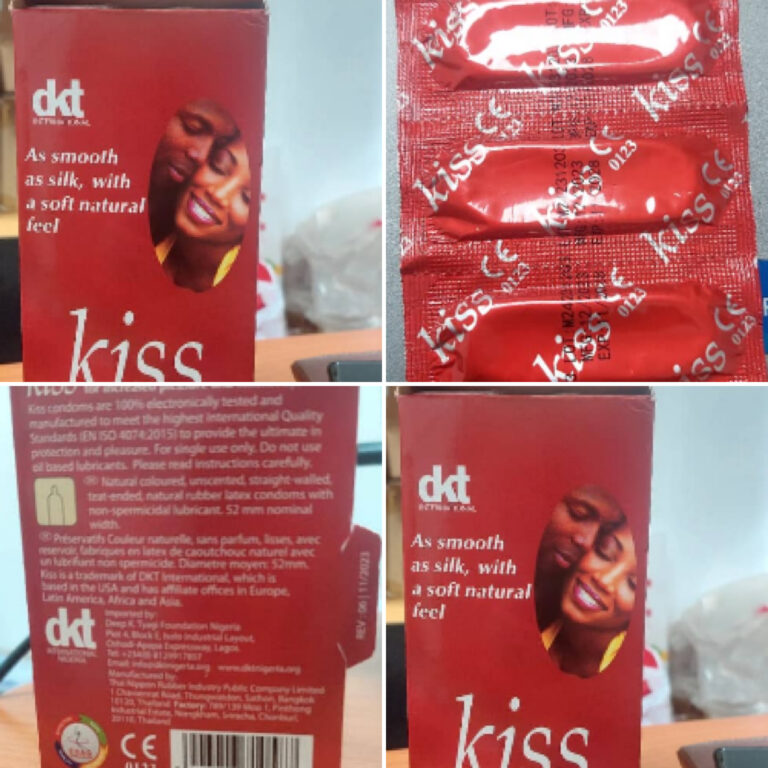
In Public Alert No. 042/2025, shared on its X handle on Monday December 29, 2025, the agency said it received intelligence from DKT International Nigeria, a non-governmental organisation involved in contraceptive social marketing, indicating that fake versions of the product are in circulation.
According to NAFDAC, the counterfeit condoms have been spotted in Onitsha and Idumota Markets, as well as Trade Fair Market, with reports also coming from markets in Kano, Abuja, Uyo, Gombe, Enugu, and other locations nationwide.
Kiss Condom is a male latex condom brand designed to prevent unwanted pregnancies and sexually transmitted infections (STIs), including HIV, gonorrhoea, and syphilis.
The NAFDAC warned that “the falsified versions do not meet safety or quality standards and may expose users to serious health risks.”
The agency outlined several differences between the original DKT Kiss condoms and the fake products, including darker packaging, incorrect or incomplete manufacturer addresses, absence of storage and caution information, inconsistent barcodes, and poorly printed instructions.
It also noted differences in the condom packs and wallets, such as variations in colour, text alignment, lubrication levels, and condom shape and size.
The NAFDAC cautioned that the use of counterfeit condoms could result in product failure, infections, allergic reactions, and a false sense of protection, due to poor quality, lack of sterilisation, and absence of regulatory oversight.
“All NAFDAC zonal directors and state coordinators have been directed to carry out surveillance and mop up the falsified product Kiss condoms in various Nigerian markets within the zones and states,” the agency said.
It also advised distributors, retailers, healthcare professionals, and caregivers to source medical products only from authorised and licensed suppliers, and to carefully verify product authenticity before sale or use.
The agency urged the public to report suspected counterfeit or substandard medical products to the nearest NAFDAC office, via its toll-free line 0800-162-3322, or by email at sf.alert@nafdac.gov.ng.
TWO people have been confirmed dead following a road accident involving Nigerian-British boxing champion, Anthony Joshua, along the Lagos–Ibadan Expressway in Ogun State.
The crash occurred around 11 a.m. on Monday, December 29, in the Makun area, near Sagamu, when a Lexus SUV conveying Joshua reportedly collided with a stationary truck under circumstances that are still being investigated.
The spokesperson of the Federal Road Safety Corps (FRSC), Ogun Command, Afolabi Odunsi, confirmed the incident, stating that although Joshua survived the crash, two occupants of the vehicle died on the spot.
“It’s true, but he (Joshua) is alive. About five people were involved, two died. I will send you a release shortly,” Odunsi told Daily Trust, adding that a detailed report would be issued later.
Reports indicated that the Lexus SUV was part of a two-vehicle convoy, with a security vehicle following behind.
According to a viral video of the accident scene, Joshua was seated at the back of the Lexus alongside another passenger.
The ICIR also sighted bystanders and other road users assisting in rescue efforts before officials of the FRSC arrived at the scene.
Although the former world heavyweight champion, who hails from Sagamu Local Government Area of Ogun State, reportedly sustained minor injuries, he was said to be conscious and stable after the crash.
Several videos from the scene, which circulated widely on social media, showed the damaged vehicle and emergency responders at work.
The crash occurred just days after Joshua returned to the spotlight with a sixth-round knockout victory over YouTuber-turned-boxer Jake Paul in a high-profile bout held in Miami, United States.
The win marked another statement performance for the two-time world heavyweight champion, who had entered the fight amid widespread attention and scrutiny.
Despite exceeding expectations by lasting into the later rounds, Paul was eventually stopped in the sixth round, with the bout broadcast globally on Netflix.
We, the undersigned civil society organisations and leaders, express grave concern and deep alarm over the recent U.S. air strike carried out on Christmas day on Nigerian territory, and the troubling silence, absence, and abdication of responsibility by Nigeria’s political and military leadership in its aftermath.
This event raises fundamental questions about sovereignty, constitutional governance, civilian protection, and the integrity of Nigeria’s social contract.
It is apparent that Nigeria is in a dual crisis of leadership and security, and at the heart of this crisis is the apparent abdication by the President of the Federal Republic of Nigeria, Bola Ahmed Tinubu, of his constitutional role as Commander-in-Chief of the Armed Forces.
By inviting a foreign government to manage what is fundamentally an internal security challenge, the President ceded sovereign authority in a manner that undermines Nigeria’s constitutional order. Even more disturbing is that during and after the operation, the President, the Service Chiefs, and the leadership of the National Assembly were either on vacation or completely silent, leaving the Minister of Foreign Affairs, Ambassador Yusuf Tuggar, to publicly rationalise decisions that strike at the core of national sovereignty and democratic accountability.
This silence reflects a profound breakdown of institutional accountability mechanisms. Section 14(2)(b) of the 1999 Constitution (as amended) is unequivocal: “the security and welfare of the people shall be the primary purpose of government.” This provision represents a central pillar of Nigeria’s social contract. Any security action, especially one involving foreign military forces, must be grounded in transparency, civilian protection, and democratic oversight. None of these standards were met.
While we acknowledge the importance of international counterterrorism cooperation, there is an urgent need to critically assess Nigeria’s National Counter Terrorism Strategy (NACTEST), as well as its Policy Framework and National Action Plan for Preventing and Countering Violent Extremism, in light of the recent U.S. operation on Nigerian soil, to determine whether it aligns with these frameworks or exposes significant gaps within them.
We are particularly troubled by the severe deficit of information regarding the nature, scope, legal basis, and rules of engagement governing the collaboration between the Nigerian and U.S. governments. Since the incident, Nigerians have not been informed of the basis for authorising the strikes, under what legal framework they were conducted, what safeguards were in place to protect civilians, or what accountability mechanisms exist for harm caused. This opacity fuels mistrust and undermines public confidence in government at a time when trust is already dangerously low.
In addition, at the time of issuing this statement, there has been no confirmation that any actual belligerent targets were hit. Instead, reports that debris from expended munitions fell on farmlands in Jabo, Tambuwal Local Government Area of Sokoto State, and in Offa, Kwara State, near the premises of a hotel, underscore the very real risks to civilian life and property. While the Nigerian Air Force inaugurated a “Civilian Harm Mitigation and Response (CHMR) Board” in July 2025, no publicly articulated civilian harm mitigation protocols have been presented for this offensive.
In contemporary military operations, particularly those involving air strikes, responsible governance demands clear standards for target verification, proportionality assessments, post-strike damage evaluations, and accessible avenues for civilian complaints, investigation, compensation, and redress. The absence of such frameworks in this operation constitutes a serious governance failure.
We caution that the government’s inept management of this crisis is capable of aggravating narratives that escalate religious and communal tensions in an already fragile national context. Nigeria’s security challenges cannot and must not be framed in ways that deepen polarisation or stigmatise communities. What is required is a united, inclusive, and rights-respecting approach that prioritises peace, social cohesion, and long-term stability.
We emphasise the urgent need to address the harms suffered by civilians as a result of the strike action. This includes transparent investigations, public disclosure of findings, prompt assistance to affected communities, and adequate compensation where harm has occurred. Without these steps, the already wide public trust deficit between citizens and the state will continue to deepen.
Finally, the office of the President carries the fundamental expectation that President Bola Tinubu possesses the capacity, judgment, and resolve to serve as Commander-in-Chief of Nigeria’s armed forces. The authorisation of a foreign military to conduct strikes within Nigerian territory without any public explanation of the necessity or legal basis for such action, coupled with the continued silence of the President, the Service Chiefs, and the National Assembly in the face of these grave developments, is wholly unacceptable.
If the President and his security leadership have concluded that they lack the capacity to manage Nigeria’s internal security challenges and would rather cede such authority to a foreign power, then constitutional responsibility and democratic integrity demand that they resign.
Nigerians deserve accountable leadership and security rooted in sovereignty, the rule of law, and respect for human life.
Signed:
21st Century Community Empowerment for Youth and Women Initiative
Abubakar Mohammed
Accountability Lab
ACE-Nigeria
Advocacy Centre for Development
African Centre for Media and Information Literacy (AFRICMIL)
African Law Foundation (AFRILAW)
Alliances for Africa (AFA)
Alliance on Surviving Covid-19 and Beyond (ASCAB)
Amnesty International Nigeria
Baobab for Women’s Human Rights
Bauchi Human Rights Network
BENDEF
BOCODEP
BudgIT
Bwatiye Community Development Association
Cedar Seed Foundation
CEE- HOPE
Centre for Community Excellence (CENCEX )
Centre for Social Justice
Centre LSD
CISLAC
Centre for Information Technology and Development (CITAD)
Center for Transparency Advocacy
Chidi Anselm Odinkalu
Citizens Advocacy for Social & Economic Rights (CASER)
Clean Technology Hub
CLEEN Foundation
Community Life Project (CLP)
Community Outreach for Development and Welfare Advocacy (CODWA)
Companions for the Development of Jibia Local Government Area
Connected Advocacy
Conscience for Human Rights and Conflict Resolution (CHRCR)
Corporate Accountability and Public Participation Africa (CAPPA)
Disabled People in Leadership Initiative and Network of Women with Disabilities
Dorothy Njemanze Foundation (DNF)
Enough Is Enough
F. S. A. F. C. I
FEMBUD
FENRAD
Gatefield
Gender Relevance Initiative Promotion
Global Rights
Grassroots Development Centre
HEDA
HOMEF
Human Rights Network Jigawa
Initiative for Social Development
Keen and Care Initiative (KCI)
Kebetkache Women Development & Resource Centre
Koyenum Immalah Foundation
Life and Peace Development Organisation
Media Rights Agenda
Mowalek Centre for Sustainable Community Development
Neighbourhood Environment Watch Foundation
Nextier SPD (Security, Peace and Development)
Network of University Legal Aid Institutions (NULAI)
Online Hub NG
OrderPaper Advocacy Initiative
Organization for Community Civic Engagement (OCCEN)
Partners West Africa Nigeria (PWAN)
Partnership for Justice and Network of Nigerian Human Rights Defenders
Policy Alert
PRAWA International
Praxis Center
Publish What You Pay (PWYP) Nigeria
Rule of Law and Accountability Advocacy Centre (RULAAC)
SBM Intelligence
Sesor Empowerment Initiative to Sesor Empowerment Foundation
SIPJAD
Social Action
Socio-Economic Research and Development Centre
Sokoto Youth Council
South Saharan Social Development Organisation
Stephanie Peacebuilding and Development Foundation (SPADEV)
Support Initiative for Sustainable Development
Tap Initiative
TechHerNG
The Kukah Centre
The Resource Centre for Human Rights & Civic Education (CHRICED)
Urban Alert
We The People
West African Drug Policy Network (WADPN)
Woman in Media Communication Initiative (WIM)
Women in Mining Nigeria (WIMNG)
Women’s Rights Advancement and Protection Alternative (WRAPA)
FOUNDER of the Mountain of Liberation and Miracle Ministry, Chris Okafor, a pastor, has publicly apologised on Sunday, December 27, after weeks of controversy involving actress Doris Ogala.
He knelt before his congregation and admitted to past mistakes while disputing key allegations against him.
A video of the apology, later shared on Ogala’s Instagram page, showed the cleric asking for forgiveness and saying he was willing to make restitution to anyone he had offended.
However, Okafor maintained that several claims made against him were untrue.
“To the lady called Doris Ogala. Listen, we’re not joining issues. Mistakes have been made in the past, and I tender an apology to everybody, but not everything that was said is true. Take note, everything that was said isn’t true. There are so many lies in most of the things that were said. For now, I apologise to everyone who was offended. To Doris Ogala, I’m sorry. I apologise to everyone.
“Once again, I’m ready to make restitution to anyone. To any lady, anywhere, that I have offended, I’m sorry. I’m not perfect, I’ve never been perfect, but I can tell you, I’ve had a new beginning since the arrival of this father of faith in my life. I’m kneeling before everybody and before the church, asking you to forgive me. You can judge me. Pray for me,” he said.
The apology came amid public debate following Okafor’s recent marriage to his wife, Pearl, and the arrest of Ogala in connection with allegations of blackmail, which further fuelled the dispute. She was arrested after accusing the pastor of destroying her life following the sudden end of their nine-year relationship, alleging that he failed to honour a promise to marry her.
Following her release the actress alleged that after her arrest in Abuja, she was held in isolation and, upon being transferred to Lagos, was denied access to her relatives, legal counsel, and mobile phones for several days.
Reacting to the apology, Ogala said she accepted it but rejected Okafor’s assertion that her allegations were false.
“Pastor Chris, please don’t kneel. This was all I wanted. Apology accepted. Chris Okafor, I forgive you, but there’s a problem.
“Where you said everything is a lie. I have a problem with that because I don’t lie”, she wrote.
PRESIDENT Bola Tinubu has departed Lagos for Europe as part of his end-of-year schedule, following a series of official engagements across Borno, Bauchi and Lagos states, the Presidency has said.
According to a statement by the President’s Special Adviser on Information and Strategy, Bayo Onanuga, Tinubu left Lagos on Sunday, December 28, continuing his end-of-year break ahead of an official trip to Abu Dhabi in the United Arab Emirates.
Earlier, the President had embarked on a three-state visit, beginning with Borno State, where he commissioned projects executed by the state government under Governor Babagana Zulum and the Federal Government.
While in Maiduguri, Tinubu also attended the wedding ceremony of Sadeeq Sheriff, son of former Borno State governor, Senator Ali Modu Sheriff.
From Borno, the President travelled to Bauchi State to commiserate with the state government and the family of Sheikh Dahiru Bauchi, the late Islamic cleric and leader of the Tijjaniyya Muslim Brotherhood, who died on November 27.
Tinubu thereafter proceeded to Lagos, where he spent the end-of-year holidays and participated in several activities, including attending the Eyo Festival held at Tafawa Balewa Square on December 27.
The festival honoured notable figures, including the President’s mother, Abibatu Mogaji, and former Lagos State governors, Lateef Jakande and Michael Otedola.
The presidency announced that he has now left for Europe ahead of his participation in the 2026 Abu Dhabi Sustainability Week (ADSW) Summit, scheduled to take place in early January.
According to the statement, he was invited to the summit by the President of the United Arab Emirates, Sheikh Mohamed bin Zayed Al Nahyan.
The weeklong summit convenes global leaders from government, business and civil society to discuss sustainable development, with the 2026 edition themed “The Nexus of Next: All Systems Go.”
The presidency further noted that Tinubu is expected to return to Nigeria after the conclusion of the summit.
GLAMOUR and elegance filled Ilorin and Ipee, Kwara State, in the closing days of December as two staffers with the International Centre for Investigative Reporting (ICIR) walked down the aisle in colourful wedding ceremonies that drew family members, colleagues, and well-wishers from across the country.
The celebrations marked the union of Nurudeen Akewushola, a senior investigative journalist and fact-checker with ICIR, and Shifau Lawal, a princess of Ipe town in Oyun Local Government Area of Kwara State.
They also celebrated the wedding of Abdul, ICIR’s Head of Information and Communications Technology (ICT) Gobir Abdulazeez, who tied the knot with his partner Shuaib Khairat, after years of courtship.
The weddings, held across two different venues in Ilorin and Ipee, featured nikah ceremonies, engagements, and receptions, which blended Islamic and cultural traditions with modern flair.
Despite the tight schedules and multiple social engagements that typically characterise December, guests travelled from within Kwara State and beyond to witness the joyous occasions.
Akewushola dancing with his beautiful wife during a wedding photo session
Nurudeen, whose wedding was held on Saturday, December 27, was done in three folds, starting with Nikkah, an Islamic wedding done privately at the bride’s family town. It was followed by a traditional marriage, where the couples and friends had a blast. The reception ceremony commenced at around 4 p.m.
After the ceremonies, Nurudeen, on behalf of the couples, expressed heartfelt appreciation to everyone who supported them in different ways.
“Yesterday marked the beginning of a new chapter in our lives, and we would like to sincerely appreciate you for supporting us in different ways. Your prayers, messages, calls, and kind gestures meant a lot to us and contributed to the joy of the day,” he said.
He particularly acknowledged those who travelled from Ilorin and other locations to Ipe despite the distance and the busy December calendar.
“Your decision to still be present speaks volumes, and we do not take that sacrifice lightly. May Allah reward you for every step taken and every inconvenience endured for our sake,” Nurudeen added.
A night class to forever
Nurudeen’s love story with Shifau began on the campus of Usmanu Danfodiyo University, Sokoto (UDUS) around 2018.
Nurudeen with his wife
One evening, while in one of many classrooms in Usmanu Danfodiyo University, Sokoto, Nurudeen walked into a lecture hall and met Shifau, who was studying quietly in A63. He introduced himself and collected her contact, but did not reach out immediately.
Months later, their paths crossed again at a Rotaract fellowship of the Rotaract Club of UDUS (Rotafodiyo), where Nurudeen was then serving as Director of Training and International Director. Recognising her, he approached Shifau to remind her of their earlier meeting.
She stood out at the event and caught the attention of many, including Nurudeen, who reached out to her later that night. Their renewed conversations soon blossomed into a relationship, followed by months of dating and courtship.
Last year, the couple held a mini family introduction and an indoor nikah, where Nurudeen Islamically married Shifau in the presence of the royal majesty of Ipe, her father, family members, and representatives of the groom’s family.
Abdul’s journey
For Abdul, the ceremony began in the morning with his wife Walimah before then moving to the proper Nikkah. He had first celebrated his own Walimah on Friday, December 26.
Abdul during his Walimah ceremony
ICIR’s Head of ICT, the journey to marriage began during his university days.
We met in university, and we’ve been dating ever since,” he said. “We’ve shared so many laughs and memories.”
Gobir Abdul during a pre-wedding photo session with his wife
He added that the couple is excited to begin a new chapter together. “Now, we’re excited to start this new chapter, and we’re so happy everyone is here to celebrate with us.”
Colleagues at The ICIR described the weddings as moments of joy and sent their wishes to the couples.
Update:
Earlier in the year, specifically on February 1, 2025, The ICIR celebrated the wedding of one of its staff members, formerly Miss Blessings Otoibihi. The wedding ceremony took place in Nigeria’s capital city, Abuja.
The ICIR was well represented at the event, with virtually all staff members in attendance.
Mr. Akpomodid Ebireri and Mrs.Blessing Ebireri (ICIR staff) at their wedding held on Feb 1,2025 in Abuja.
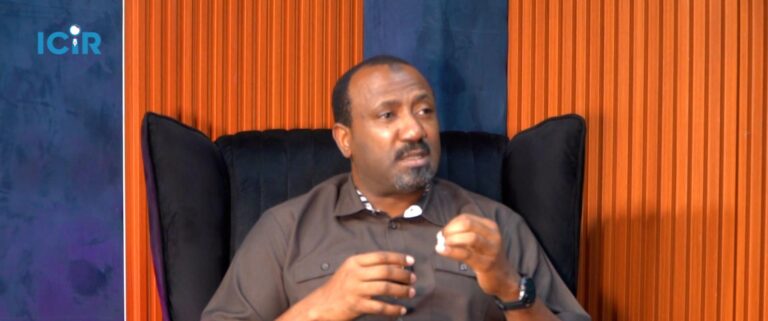
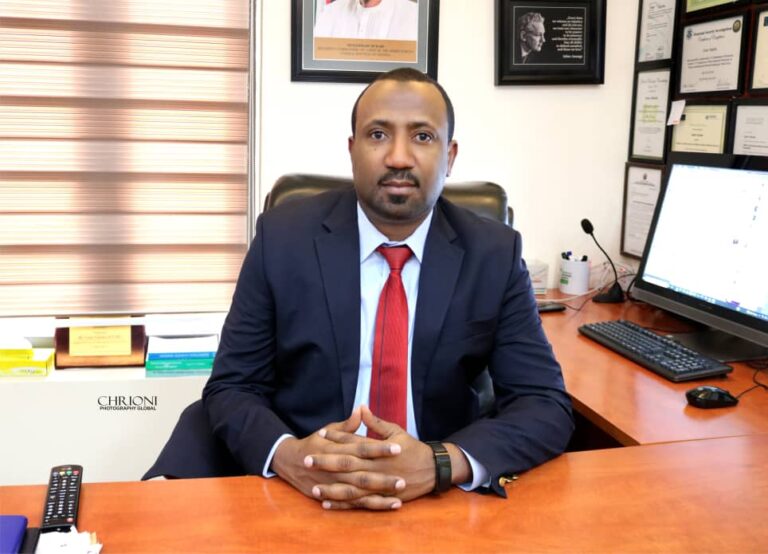
NIGERIA continues to lose billions of naira to corruption as weak oversight and broken systems allow fraud to thrive, according to founder of the Centre for Fiscal Transparency and Public Integrity (CeFTPI), Umar Yakubu.
Yakubu told the International Centre for Investigative Reporting (ICIR) that corruption thrives because the structures meant to prevent it are weak and inefficient.
He also highlighted institutions like the Independent National Electoral Commission (INEC) and the Auditor General of the Federation, which have been strategically weakened by political interference.
“If you look at the role of the Auditor General of the Federation, it is very strong and the law empowering that organisation is very strong. But the political system has found a way of weakening that office. If you check the constitution, if I’m correct, they are one of the three agencies, INEC, Code of Conduct Bureau and Auditor General, that are actually created by the constitution, so they are that powerful.
“But to even enable their agency is that their report is supposed to go to the National Assembly. But when they don’t have the support of the National Assembly, probably because they are in bed with the executive when it comes in terms of all this public sector corruption, they have strategically weakened their agency to perform its duty,” he said.
According to him, CeFTPI has exposed the scale of the problem through its Transparency and Corruption Risk Assessment (TACRA) and Transparency and Integrity Index, tools that measure how federal, state, and local agencies handle public funds.
He added that the results of their assessment are stark, noting that most federal ministries show little improvement and states reverting to old habits after donor programs ended.
He stressed that over 300 local governments fall into the “extreme risk” category for accountability, with only three publishing records of their spending.
“We analysed the local government, 774 of them, using eight pillars around accountability mechanism and the analysis shows that only three are categorised as low tier, meaning they have semblance of accountability. So there is low risk, there is medium risk, there is high risk, there is critical risk, there is extreme risk. Now, you have over 300 local governments in the extreme risk category.
“So, you see only three; Nasarawa local government in Nasarawa state. I think Ikeja in Lagos state and Kaduna north. I think one of the local governments also in Jigawa. So just about three or four even publishes their records. Publishing doesn’t even mean nothing has gone behind, but at least one step has been taken to publish. I will have to give them credit for even publishing,” he added.
IN a country where trillions of naira move through government coffers with little public scrutiny, the battle for transparency is often fought against powerful interests. For UMAR Yakubu, founder and Executive Director of the Centre for Fiscal Transparency and Public Integrity (CeFTPI), confronting corruption is not about chasing headlines or individuals, but dismantling the systems that enable waste, fraud and impunity in Nigeria’s public sector.
In this ICIR accountability series interview, Yakubu explains CeFTPI’s evolution, its data-driven tools, and why fixing Nigeria’s electoral and accountability systems may be central to breaking the cycle of corruption. Below are excerpts from the conversation.
The ICIR: What inspired the creation of CeFTPI and how has the organisation evolved?
Yakubu: We registered in 2016, but we effectively took off 2020 just after COVID and that’ was when we actually started operations. Between 2016 and 2020, we were doing a low-level advocacy around things that breed fraud, corruption, organised crime, human trafficking.
We were going to schools to talk to children to avoid human trafficking, prostitution, fraud, crimes, and all those kinds of things. We did a lot of advocacies online and write-ups because I write too for a lot of media houses. But from post-COVID, we went full-fledged and our focus revolved around several areas.
We try to advocate in areas of the problems in whatever ill we see in society, if it’s corruption, we look at the primary enablers. That is where we target advocacy. If it’s organised crime, depending on which one, human trafficking, we look at the primary enabler. If it’s drug trafficking or whatever element or part of public sector corruption, we look at those enablers because we have been going around in circles for too long.
If we do not look at the factors that cause those problems, we will not resolve them. For example, if we look at public sector corruption, instead of the normal people to advocate against through EFCC, ICPC, we look at the primary source of all this public sector corruption, which is usually the political class.
Now, how do the political class get to where they are? They have a regulator called INEC, (Independent National Electoral Commission). Our work will now focus more on INEC. For example, if you get your electoral system right, you will not have these pressure on the system. That is usually our approach. We look at fiscal transparency issues because once there’s transparency, the level of accountability will increase.
We look at public sector reforms because a lot of problems we have in Nigeria, aside corruption, is a lot of waste. It’s mostly about waste and low level of efficiency.
Thirdly, we look at the integrity of systems, not of individuals. What are the integrity mechanisms within those organisations that allow them or doesn’t allow them to prosper and provide what they’re supposed to do for Nigerians? . Then we’ll look at organised crime resilience.
Yakubu:We look at fiscal transparency issues because once there’s transparency, the level of accountability will increase.
We actually do that because when your public sector is not efficient, and weak, it breeds a lot of the criminality we see in the country today.
Lastly, we believe in data. Whatever we do, we are backed by data. We have several databases that were built mainly from open sources, depending on the segment you want to do.
The ICIR: In September, you introduced the Transparency and Corruption Risk Assessment (TACRA). How do these tools work?
Yakubu: Actually, in September, we had two tools. One was the Transparency and Integrity Index, and the second one was Transparency and Corruption Risk Assessment, which is the TACRA.
On the TACRA, we take each individual MDA. There are over 600 of them at the federal level, and the 36 state governments, as well as the seven hundred and seventy-four local governments. We started doing for the TACRA twice a month, sometimes three times. We picked one agency and critically analysed it in terms of its integrity, its mechanism, transparency, in terms of accountability, several indicators. Also, in terms of open-source information on how many investigations have been carried on, in terms of its whole mandate by law. There’s a law guiding every federal agency in Nigeria.
In terms of mandate, we look at how well has it done on all those integrity and accountability mechanisms? That’s the TACRA. We have started with the Customs Service. We have also done JAMB. We have done NNPC, which is taking a lot of time because they have a whole backlog of accountability issues.
We are taking every agency, then we’ll start going to the state governments, maybe pick one state, and start spreading around because this is a lot of work.
For the Transparency and Integrity Index, it’s something we started in 2021 as well. Actually, it’s a global tool for the measurement of corruption.
Nigeria did not have that. So, what we decided to do was to develop a tool that we can see whether we’re improving or regressing. The Transparency and Integrity Index is just based on five pillars: fiscal transparency, public procurement, human resources, citizen engagement, and control of corruption.
Under these five thematic areas, you have other variables which are about 29, which we measure. As we measure every MDA for the last five years, we score them all in September of every year, which is a United Nations International Day for Universal Access to Information. We release that report every year and give them their scores.
The ICIR: How have MDAs responded so far?
Yakubu: Under the federal, MDAs are in about 11 categories. You have the core ministries, the commissions, the government-owned enterprises, the research institutions, the educational institutions, you have the water business. Now depending on the category you look at, those that are the core agencies, commissions, all those ones that you see, universities commission, communications commission, Economic and Financial Crimes Commission (EFCC), those that have some degree of improvement. The core ministries are about 23, including agriculture, finance, industries, all of them that are static.
There’s really no improvement in terms of transparency. The same with the educational institutions too, they are not really improving. For the states, initially when we started, they were doing well, but there was a reason why they were doing well. That time we were borrowing money post-COVID.
One of the criteria for the World Bank to give loans to states was the proactive disclosure of certain kinds of information. That have been called the SIFTAS, the (State Fiscal Transparency and Accountability Initiative) or something like that or support.
As soon as the World Bank pulled out, the states went back to status quo. Their level of transparency has now gone back to where they were before the SIFTAS came in.
The ICIR: What are the major challenges of fiscal transparency and public integrity in Nigeria, particularly in the light of the country’s recent economic struggles?
Yakubu: I think it’s from the demand side. Citizens are not demanding enough. The only people doing this work are usually civil society like us, you and I, and a couple of media. There needs to be more demand for transparency and accountability because what evidence has shown is that citizens are not demanding and they leave it only to the media, though the media is very important and critical and an avenue where citizens can voice their concerns.
Right now we have the new media in terms of social media, people can go there and voice their concerns too. But there needs to be more intensive demand for transparency and accountability where it will improve this level of transparency. An example is, let’s say the NNPC. Now you can see once in a while they release their audit reports.
Yakubu: The Law empowering the Office of the Auditor General of the Federation is very strong
Recently, I read where the Auditor General queried the spending of about 15 million pounds on one of their assets in the United Kingdom. So, you see, this needs to go across board, across all MDEs, especially those government-owned enterprises that happen to have a lot of money with them, and that is where most of the corruption goes through in Nigeria.
The ICIR: Where did Nigeria get it wrong despite repeated revelations?
Yakubu: If you look at the role of the Auditor General of the Federation, it is very strong and the law empowering that organisation is very strong. But the political system has found a way of weakening that office. If you check the constitution, if I’m correct, they are one of the three agencies, INEC, Code of Conduct Bureau and Auditor General, that are actually created by the constitution, so they are that powerful.
But to even enable their agency is that their report is supposed to go to the National Assembly. But when they don’t have the support of the National Assembly, probably because they are in bed with the executive when it comes in terms of all this public sector corruption, they have strategically weakened their agency to perform its duty. So, what we need to do is to continue our advocacy to strengthen the office of the Auditor General of the Federation because they have powers to do all these things.
Even if they don’t give them powers to sanction, their reports can easily serve as a platform where the law enforcement agencies cannot do their jobs, even when the National Assembly don’t want to do their job. This is my own view regarding strengthening the office of the Auditor General of the Federation.
The ICIR: What is your assessment of accountability at the state and local government levels?
I don’t want to say zero because I can’t statistically prove the number. But it is a very critical risk in the sense that the institutions for accountability at state level are just non-existent. One, there is no state assembly that has shown demand for accountability from any state governor in the last 10-15 years that I’m aware of. There is no state assembly that has impeached, not even questioned any governor demanding accountability about public funds.
There is no state where you see a lot of strength of civil society at the sub-national level and there are accusations. Some say they have been bought over. Those that have not been bought are not allowed to do their duty. So, the accountability mechanisms at the state level are very low.
For the local government, we actually have another report we released when the Supreme Court said the local government should be receiving their funds.
We analysed the local government, 774 of them, using eight pillars around accountability mechanism and the analysis shows that only three are categorised as low tier, meaning they have semblance of accountability. So there is low risk, there is medium risk, there is high risk, there is critical risk, there is extreme risk. Now, you have over 300 local governments in the extreme risk category.
So, you see only three; Nasarawa local government in Nasarawa state. I think Ikeja in Lagos state and Kaduna north. I think one of the local governments also in Jigawa. So just about three or four even publishes their records. Publishing doesn’t even mean nothing has gone behind, but at least one step has been taken to publish. I will have to give them credit for even publishing.
The ICIR: How can states be better monitored, especially around budgets?
Yakubu: I don’t subscribe to the tracking of funds in the sense. If you go to the Federal Reserve Finance website, you see actually how much goes to every state. I know, for example, N10 billion has gone to A state, for example. Now, what needs to be tracked is not the remittance, it’s utilisation.
How they’re utilising those funds. If you look at the research now, you see most public sector corruption is through procurement fraud. So, what to do for each state is simple; just focus on their procurement data.
Three cardinal principles. Who are the contractors for whatever project? You go and look at what the companies get; the directors, who are the beneficial owners of those companies, that is one. Two, the details of the contract, because that’s why you see every year they are buying cars, because they have no idea on how to actually serve the people.
I have not seen at our centre, that publishes a procurement implementation report. Because you are not publishing or providing any manner a procurement implementation report, you find that every year you keep seeing the same items being repeated. And nobody’s really asking questions.
Okay, the cars we bought last year, what happened to them? Have they expired? Or do cars have an expiry date?. That is why you see that states are always rushing to build roads, and we don’t look at the quality of those roads.
Every one or two years, they are doing the same road because of the margin of returns in whether a bribe or a kickback, whatever name you want to call it.
The same for the local governments, when they start getting their funds, because there’s no evidence that has been shown whether they’re actually receiving those funds directly now. But if you just focus on the procurement data alone, under these three pillars, it will be good enough for us to monitor the states.
The ICIR: What role can technology play in fiscal transparency?
Yakubu: One of the things we use a lot is technology. We have actually used artificial intelligence and blockchain technology. I’m saying this for the first time in the public domain. We have managed to gather all procurement data of all MDAs for the last five years. And, we have built the risk parameters. Now, in 10 seconds, the technology has given us the risk analysis of every procurement that was done in this country in the last five, six years.
It is only technology that can do that for you even if you have 10 billion dollars. You know how AI works. When you set the parameters, what it should give you, it gives you back those data. So, we assess the risk level on each level of procurement.
The ICIR: What are your priorities in the next two to three years, and how do you plan to address emerging challenges?
Yakubu: A lot of money is going through so many places. So, our priority is to see how to enhance the utilisation of technology because we are using a lot of technology to get this data and share it because we have active relationships with a lot of MDAs where we share the data. We are not too confrontational because we want them to do better.
That seems to have worked better instead of standing aside and just hitting them from the outside, we tell them, this is the data. Please, we think they should do better. I think we need to do more of that. We also need to do more at sub-national level. Everybody is in Abuja focusing on federal government.
Anywhere I go, I advocate on INEC, because INEC is the sole agency responsible for the problems we have in the political class. They are the sole agency. They have a very strong regulation, very strong law and regulation to monitor political party finance, and they are not doing it. Now, when you don’t do that, you unleash all these guys on us. That’s why they’re scrambling for money everywhere to go and maintain their political structures, to win elections, and all of these problems we have.
So, we appeal to the ICIR to join us in doing a lot of advocacy, they have a new chairman at INEC, let him regulate the political parties. The elements of political party financing, they have not done anything on that.
ICIR: Like campaign funding?
Yakubu: Yes, that’s the political party financing. INEC itself does not even release its own audit report. So, how can you regulate people when you yourself have violated the law? Once INEC is good, a lot of this pressure will reduce on the system.