Home Blog Page 108

Trump pulls out US ambassador from Nigeria, over 20 others

0

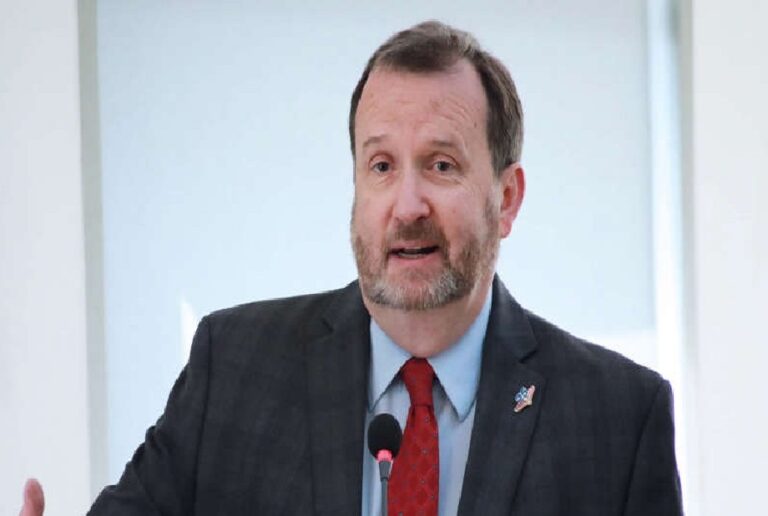
UNITED States (US) President Donald Trump has recalled the US Ambassador to Nigeria, Richard Mills, in what appears to be part of a broader diplomatic shake-up across the country’s foreign missions.

State Department officials told The Guardian that the changes took place on Wednesday, when chiefs of mission began receiving notices from officials in Washington DC, informing them that their tenures would end in January.

The officials clarified that the recalled ambassadors were not losing their positions in the foreign service and would return to Washington for other assignments if they chose.

Nigeria is among 15 African countries affected by the shakeup. Others are Algeria, Burundi, Cameroon, Cape Verde, Gabon, Côte d’Ivoire, Egypt, Madagascar, Mauritius, Niger, Rwanda, Senegal, Somalia and Uganda.

Out of more than two dozen countries reportedly affected, Africa is the most hit continent.

In the Asia-Pacific region, affected countries include Fiji, Laos, the Marshall Islands, Papua New Guinea, the Philippines and Vietnam.

In Europe, Trump recalled US envoys in Armenia, Macedonia, Montenegro and Slovakia, while Guatemala and Suriname were affected in the Western Hemisphere.

All the ambassadors were appointed during the Joe Biden administration and had initially survived an early purge in the first months of Trump’s second term, which largely targeted political appointees.

Envoys typically serve terms of three to four years, and Mills was confirmed as the US ambassador to Nigeria in May 2023.

His recall comes amid strained US–Nigeria relations over visa disputes and security concerns, even as both countries continue to pursue initiatives aimed at strengthening their partnership.

The ICIR reports that Mills met with Nigeria’s Minister of Foreign Affairs, Yusuf Tuggar, last week to discuss areas of bilateral cooperation, following remarks by US Congressman Riley Moore that the two countries were close to finalising a “strategic security framework” to address terrorism in Nigeria.

2025 in review: social media moments Nigerians couldn’t stop talking about

IN 2025, Nigeria’s social media was alive with viral moments, ranging from celebrity news and sports triumphs to humanitarian crises and political developments.

This report highlights the some of the most talked-about events of the year.

Achalugo nickname trend

The nickname “Achalugo,” popularised by the YouTube film Love in Every Word, emerged as a major social media trend, spilling into skits, songs and couple endearments across digital platforms. The trend, which also revived the use of Igbo praise names such as “Odogwu” and “Achalugo,” dominated conversations on social media at the start of the year, sparking widespread engagement and reactions.

Rooted in Igbo culture, Odogwu and Achalugo are traditional praise and endearment names often used to express admiration, affection and respect. Their renewed popularity in the film resonated with audiences, turning the expressions into viral terms of endearment used by couples and content creators alike.

State of emergency in Rivers State

In March 2025, President Bola Tinubu declared a state of emergency in Rivers State following prolonged political turbulence in the state. The president blamed both Governor Siminalayi Fubara and the Minister of the Federal Capital Territory (FCT), Nyesom Wike, for allowing the crisis to escalate.

The state of emergency, which lasted six months, led to the appointment of Vice Admiral (Rtd) Ibok-Ete Ekwe Ibas as administrator of the state. Following the expiration of the emergency rule, President Tinubu announced its termination, paving the way for Governor Fubara to resume office

Super Falcons’ WAFCON win

The Super Falcons’ stunning 3–2 comeback victory to secure their 10th continental title ignited national pride, drawing widespread praise and cash rewards from President Bola Tinubu and other Nigerians following their triumph at the 2024 Women’s Africa Cup of Nations (WAFCON).

According to The ICIR, Nigeria’s Super Falcons clinched their 10th African title in the final of the 2024 WAFCON in Rabat, Morocco, producing a remarkable comeback to defeat the host nation. The prize money sparked widespread debate, particularly because the president announced it in dollars.

Akpabio and Natasha drama

In 2025, a senator, Natasha Akpoti-Uduaghan’s confrontation with Senate President Godswill Akpabio sparked intense national debate around politics, gender, and accountability. The dispute followed her suspension from the Senate for six months amid a sexual harassment petition she filed against Akpabio, an action taken despite court orders restraining the Senate.

During the suspension, Akpoti-Uduaghan was barred from speaking to the media on the matter and maintained that she was denied a fair hearing before the Senate imposed the sanction. The controversy later expanded to include moves for a constituency recall.

Six months later, she was reinstated in the Senate after the expiration of her suspension, following months of legal battles and public exchanges with Akpabio. The ICIR reported that the suspension, which was ordered after she rejected the reassignment of her seat, stripped her of her salary, aides’ pay, and other legislative benefits.

Hilda Baci’s jollof record

Hilda Baci trended online after cooking a 8,780-kilogram pot of jollof rice to set a Guinness World Record.

The ICIR reported that the Guinness World Record holder successfully completed the ambitious feat of cooking the world’s largest pot of Nigerian jollof rice, overcoming a dramatic setback when the giant custom-made pot collapsed during the weighing process at the venue.

Political party defections

In 2025, Nigeria’s political landscape witnessed heightened instability as party loyalties shifted, with politicians crossing party lines in pursuit of strategic advantage and political influence. In the second quarter of the year, The ICIR reported on several high-profile politicians who defected to the All Progressives Congress (APC) between January and June 2025.

In October alone, The ICIR reported that six lawmakers from Enugu and Plateau states defected from the Peoples Democratic Party (PDP) and the Labour Party (LP) to the APC and other parties, moves widely seen as efforts to secure political advantage ahead of the 2027 general elections.

Nigeria designated ‘Country of Particular Concern’ by US

In November 2025, the United States reissued Nigeria’s classification as a “Country of Particular Concern” (CPC) under the International Religious Freedom Act, citing ongoing systemic violations of religious freedom. The designation, first assigned under former President Donald Trump in 2020, quickly trended online and became a major subject of debate, particularly on X, where it sparked widespread controversy, including claims of a “Christian genocide.”

According to The ICIR, the renewed focus on Nigeria followed the introduction of a bill by US Senator Ted Cruz aimed at protecting what he described as “persecuted” Christians in the country. The bill was prompted by reports of killings in Plateau, Benue, and Kwara states, which further intensified public discourse.

Critics, however, argued that the violence is not limited to Christians, noting that Muslims have also been targeted in attacks on their communities and places of worship.

Mass killings and kidnappings 

In 2025, attacks across several Nigerian states, including Plateau, Benue, and Kwara, emerged as a troubling trend, with widespread fatalities and abductions reported throughout the year.

The attacks became a major subject of conversation on social media, fuelling debates that eventually tied into claims of a “Christian genocide” in Nigeria. The ICIR notes that these incidents reflect a recurring pattern of violence in Plateau State, highlighting persistent security challenges that shaped much of 2025.

2Baba, Annie & Natasha saga +  Ned-Regina separation

The personal lives of Nigerian celebrities also took centre stage on social media, sparking widespread speculation, debates, and viral conversations.

Music icon Innocent Idibia, popularly known as 2Baba, was embroiled in another marital controversy following his separation from former wife Annie Macaulay. His current marriage to Natasha Osawaru, a member of the Edo State House of Assembly, made headlines after reports of family interference, personal altercations, and a reported UK arrest emerged. Social media was flooded with reactions after a public argument between 2Baba and Natasha in a UK mall, which later escalated during a heated live-stream hosted by media personality Daddy Freeze. In response, Idibia broke his silence, urging fans to “cease fire” amid concerns over threats to his pregnant wife.

Similarly, the separation of Ned Nwoko, billionaire businessman and politician, and Regina Daniels, Nollywood actress kept fans engaged, with speculation about the reasons behind their split and the implications for their families.

School abductions

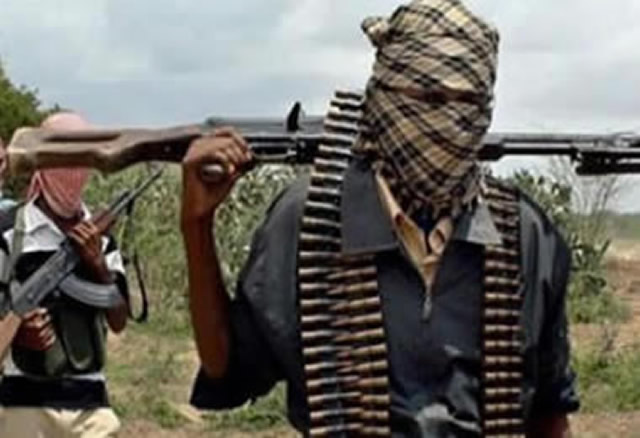
The spate of school abductions in Nigeria sparked widespread outrage and intense discussion across social media platforms. Terrorists stormed Government Girls Comprehensive Secondary School, Maga, abducting 26 female students in the early hours of the night. In a separate incident, Mary’s Private Catholic Primary/Secondary School in Papiri, Niger State, saw 253 students and 12 staff members kidnapped, one of the largest school abductions in the state in recent years.

The abducted students and staff were later released after several nights of negotiations with the Federal Government of Nigeria, but the incidents generated a flurry of online debates, trending hashtags, and calls for stronger security measures. The ICIR reported the incidents, highlighting the recurring security challenges facing schools in Nigeria. Read the reports here and here . 

Let us know in the comment section, what else should be here.

Remaining 130 abducted Niger schoolchildren released, says Presidency

0
THE remaining 130 schoolchildren abducted by terrorists at St Mary’s Catholic School in Papiri, Niger State, on November 21, have been released.
Bayo Onanuga, Special Adviser on Information Strategy to President Bola Tinubu on Information and Strategy, announced this in a statement Saturday evening.
He said they were expected to arrive in Minna on Monday and rejoin their parents for the Christmas celebration.
“One hundred were released earlier by the terrorists, taking the total of freed students to 230. The freedom of the schoolchildren followed a military-intelligence driven operation,” he stated.
The ICIR reports that 100 of the students were released earlier on December 7.

Terrorists rode into the remote Papiri community around 2:00 a.m. and spent about three hours moving through the school dormitories. A total of 315 people were reportedly taken, that is 303 students and 12 teachers.

Security personnel and local hunters launched a search operation across the surrounding forests to track down the gunmen. Within the first 24 hours, 50 students successfully fled from their abductors and were safely reunited with their families.

Despite this, 265 others, comprising 253 children, and 12 teachers were held by the gunmen.

The ICIR reported how the children’s family and the entire Papiri community have been in tears over the incident.

The attack underscored the continuing decline in security across Nigeria.

A similar attack and abduction of schoolchildren was carried out by terrorists on Maga Comprehensive Girls’ Secondary School in Kebbi State, where about 25 female students were whisked away and a staff member was killed. A guard was also injured during the early-morning assault.

Within the same period, terrorists abducted several other Nigerians, including dozens of worshippers whisked away by terrorists from Eruku town in the Ekiti Local Government Area of Kwara State on Tuesday, November 18.

Following the persistent attacks and palpable fear enveloping the nation, Tinubu implemented wide-ranging changes to the nation’s security architecture, including the resignation of the Minister of Defence, Mohammadu Badaru, and appointment of immediate past Chief of Defence Staff, Christopher Musa, as a new Defence Minister.

The president withdrew police officers from VIPs to enable them to face core policing duties. He also ordered the recruitment of more officers into the nation’s security forces and the police.


The Supreme Court’s emergency politics

0

By Chidi Anselm Odinkalu

ALL judges are politicians whether they know it or not.” – Enrique Petracchi, former Chief Justice of Argentina, (2002).

Among lawyers trained in the traditions of the Common Law, judicial power is often mis-understood. In Nigeria, the 1999 Constitution divides the powers of the federation between the legislature, the executive and the judiciary. The first two are elected. Judges are not. In the elected arms, it vests the legislative and executive powers of the federation. In turn, the same constitution vests the “judicial powers of the Federation” in the courts. This suggests that judicial power is political not institutional.

Yet, the tradition of Nigerian law is largely to equate judicial powers with the jurisdiction of courts to both adjudicate over cases and fashion remedies in accordance with the pleadings of the parties and with judicial interpretation of the applicable laws. That is an error. Jurisdiction is inherent in the judicial office; judicial power is functional in how the judicial deploys its jurisdiction behind the party or cause that it prefers. This is the sense in which lawyers trained in the methods of the Civil Law system speak of le pouvoir judiciaire – the judicial power.

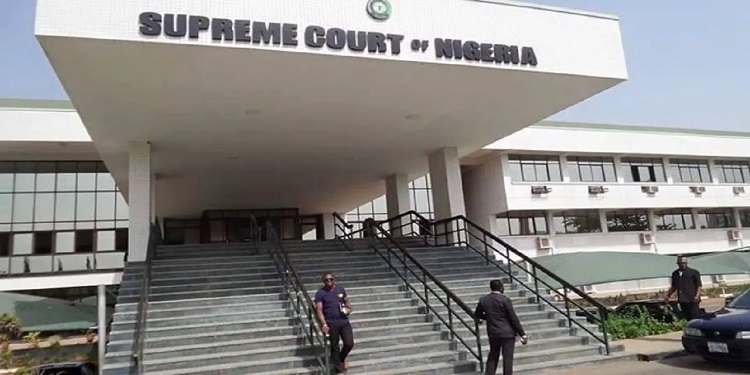
On 15 December 2025, Nigeria’s Supreme Court indulged in a dramatic demonstration of judicial power in a case in which it determined that it lacked jurisdiction on the facts. The dispute arose over the proclamation by President Bola Ahmed Tinubu of a State of Emergency in Rivers State on 18 March 2025. The declared duration of the emergency was an initial period of six months. In the proclamation, the president also pronounced the suspension of the elected governor and House of Assembly of the state.

At the time, the governor of Rivers State, Siminalayi Fubara – who has recently christened himself a lifelong “progressive” – was in supposedly retrograde company in the Peoples’ Democratic Party (PDP), on whose platform he was elected.

Twenty three days after the emergency proclamation, 11 governors elected on the platform of the PDP – naturally suffering from a profound bout of “there but for the grace of geography go I” – invoked the original jurisdiction of the Supreme Court to challenge the constitutionality emergency proclamation. Under Nigeria’s constitution, the Supreme Court is the final court of appeal in the country and most cases get to the court by way of an appeal from lower courts. However, the court also has original jurisdiction as a court of both first and final instance in legal disputes between the federation and states or between states among themselves.

When this case was filed, the emergency still had five months and one week to run. A Supreme Court which desired could easily have accorded it due priority and dealt with it expeditiously. The case concerning Local Government autonomy filed in May 2024 (which arrived the court by similar means), for instance, took only 45 days from filing to judgment on 11 July of the same year.

In this case concerning emergency rule in Rivers State, however, the Supreme Court chose a deliberately somnolent route to scheduling. Everything the court did subsequently appeared to have been underpinned by that imperative.

On 18 September 2025, the emergency proclamation in Rivers State became spent and the suspended institutions and officials were restored to office. By the time the Supreme Court found time to address the issues posed for it in the case three months thereafter, five of the 11 governors who filed the original action had relocated their party loyalty from the PDP to the president’s All Progressives Congress (APC). Two more would do so in the days immediately following the judgment. No one will ever truly know whether the jurisprudence of political coercion confirmed in this case had anything to do with the desperation of these gubernatorial acts of party political transfiguration.

After their judgment, the Supreme Court released an unsigned, 14-page media summary of the majority judgment of Mohammed Baba Idris, who led a majority of six of seven Justices. There followed a public race to unravel what the Justices had decided. The media reported that the Supreme Court had licensed the president to suspend elected state officials under colour of an emergency. Femi Falana SAN, provided a spin on the judgment from a segment of the legal profession initially in shock, which argued that the court did not go as far. In reality, it did that and much more and the initial media reports were very accurate.

Five things are notable about the decision of the court in this case. First, in a mere four pages, all seven Justices made short shrift of the case as filed, declining jurisdiction on the basis that “the plaintiffs failed to disclose any reasonable or justiciable dispute between them and the federation capable of invoking the original jurisdiction of the court.”

At this stage, the job of the court was done. However, the Justices decided to “undertake a considered discussion on the scope and exercise of the powers” under the Constitution concerning emergency proclamations. It is notable that the court framed what it undertook in the remaining two-thirds of its “summary” as a “discussion”, rather than an exercise in judicial decision making. Scholars and jurists will expend considerable froth in the years to come on the import of what may well become known as “Supreme discussion”.

Second, the court embarked on its self-appointed discussion by locating the bases of emergency powers in an invented doctrine of “a temporary expansion of federal powers” which lacks any foundations in the text or structure of Nigeria’s Constitution. Indeed, emergency powers under Nigeria’s federal system are not an expansion of federal powers. On the contrary, they are contingent powers, ripe to be exercised upon the fulfilment of twin requirements of substantive and procedural compliance with constitutional pre-conditions.

Third, turning to the constitutional pre-conditions, the Supreme Court continued its disquisition by pronouncing the emergency proclamation in Rivers State as having fulfilled the substantive pre-conditions under the Constitution.

Fourth, the Court turned to the procedural arithmetic preceding the emergency proclamation. Nigeria’s Constitution requires an emergency proclamation to be sustained by a joint resolution supported by two-thirds majority of each chamber of the National Assembly. The court ruled that this implies that the voting “process adopted renders the attainment of the two-thirds majority clearly ascertainable.” In this case, the National Assembly used a voice vote to ram through its joint resolution in support of the emergency rule. The Supreme Court managed to see this as competent constitutional computation, not parliamentary voodoo.

Fifth, the court discussed whether the president had the power under an emergency proclamation to suspend elected state officials, including the governor and legislators. It laid down one constraint to the effect that “emergency measures must be temporary, corrective, and proportionate”; and added that “any permanent displacement or abrogation of democratically elected institutions would constitute a constitutional aberration.” “Outside a validly declared state of emergency”, the court further discussed “the President possesses no power whatsoever to interfere with State executive or legislative institutions.”

It was an odd way to phrase arguably the most cynical and gratuitous expansion of presidential power in the history of the Nigerian Supreme Court. In other words, the Supreme Court clearly discussed its way to supporting the assertion by the president of a power to suspend any governor he does not like under colour of an emergency proclamation. It is also cynical because the court does not offer this as a decision but as a discussion, without even the ceremony of a declaratory import.

One of the seven Justices, Obande Ogbuinya, concurred in the decision that the court lacked jurisdiction but reportedly dissented on judicial tolerance of a presidential power to suspend elected state officials. Unlike the majority decision, the court did not bother to provide a summary of his dissent.

The decision of the Supreme Court to become a “discussion” forum on such an issue of extraordinary constitutional significance is guaranteed to roil governance and politics in Nigeria for a long time. As an exercise of judicial power, it supremely wilful, cynical, and political.

A lawyer and a teacher, Odinkalu can be reached at chidi.odinkalu@tufts.edu


Dufil Prima reassures consumers as NAFDAC flags imported Indomie noodles

0

DUFIL Prima Foods, the manufacturer of Indomie noodles in Nigeria has issued a clarification following a recent public alert by the National Agency for Food and Drug Administration and Control (NAFDAC) on the recall of an Indomie noodles product in France.

In a statement on Sunday, December 21, the company said the product referenced in NAFDAC’s warning, “Indomie Noodles Vegetable Flavour”, was not manufactured, imported, distributed or sold in Nigeria while explaining that the recall cited by the regulatory agency originated in France in August 2025 and was issued as a precautionary measure to protect Nigerian consumers.

“As clearly stated in NAFDAC’s official press release, the affected product recall was from France in August 2025 and the alert was issued purely as a precautionary measure to safeguard the Nigerian public.

“Indomie Nigeria does not produce or market any noodle variant called Vegetable flavour, and no such product exists within Indomie Nigeria’s portfolio. All Indomie noodles produced by Dufil Prima Foods in Nigeria are safe for consumption under strict quality control processes and in full compliance with NAFDAC regulations.” the statement read in part.

The company also distanced itself from images and videos circulating online in relation to the recall, stating that the packaging shown did not align with Indomie Nigeria’s approved branding, labelling or packaging specifications.

On Thursday, December 18, NAFDAC issued a public alert announcing the recall of Indomie Noodles Vegetable Flavour over “undeclared allergens”.

The NAFDAC said the product contained milk and eggs, substances that could cause serious or life-threatening reactions in individuals with allergies or intolerances.

In a notice titled Public Alert No. 041/2025, the agency explained that the recall followed information received from France’s food safety authority, Rappel Conso, which identified the product for failing to disclose the presence of milk and eggs on its label.

The agency added that the recall applies to all batches of Indomie Noodles, Vegetable Flavour, with a best-before date of February 6, 2026.

“Although the official risk of these products entering Nigeria is low due to the Federal Government’s ban on noodle importation, there remains a need for heightened vigilance to prevent possible illicit entry or circulation of the implicated Indomie brand.

“NAFDAC has commenced vigilance actions to guard against possible entry of the brand into the country, as acquisition of the product through online purchase or international travel cannot be excluded,” the agency stated.

It further urged distributors, retailers and consumers to remain vigilant throughout the supply chain and to refrain from importing, selling or consuming the recalled product

Super Eagles gun for 4th title as AFCON 2025 kicks off in Morocco

0

THE 2025 Africa Cup of Nations (AFCON) kicks off on Sunday, December 21, with the opening match between hosts Morocco and Comoros.

Scheduled for 19:00 GMT at Stade Prince Moulay Abdallah in Rabat, the fixture marks the start of the 35th edition of Africa’s flagship football tournament, which will run until January 18, 2026.

For the first time, the competition will take place over the Christmas and New Year period.

The Confederation of African Football (CAF) announced the refereeing team for the Morocco–Comoros match, signalling full readiness for the tournament.

AFCON 2025 features six groups: Group A has Comoros, Mali, Morocco, and Zambia; Group B includes Angola, Egypt, South Africa, and Zimbabwe; Group C features Nigeria, Tanzania, Tunisia, and Uganda.

Group D has Benin, Botswana, DR Congo, and Senegal; Group E comprises Algeria, Burkina Faso, Equatorial Guinea, and Sudan; and Group F, the “group of death,” features Cameroon, Gabon, Ivory Coast, and Mozambique.

Group F stands out with stars like Aubameyang and Bryan Mbeumo, while Nigeria’s Super Eagles in Group C face a tough challenge to improve their recent World Cup qualifying form.

AFCON has been held 34 times, with 14 different nations winning the trophy. Egypt leads with seven titles, followed by Cameroon with five and Ghana with four. Nigeria and Côte d’Ivoire are tied for fourth with three titles each, with Nigeria winning in 1980, 1994, and 2013.

CAF announced prize money of $10 million for the winner, $4 million for the runners-up, and $2.5 million for each semi-finalist. The Super Eagles have finished as runners-up four times and third on eight occasions. All kick-off times are in GMT.

US approves $2.1bn grant to strengthen faith-based healthcare in Nigeria

2

THE United States has entered into a five-year health partnership with Nigeria.

The project is designed to reinforce Nigeria’s healthcare system, with particular emphasis on faith-based health services.

A statement from the US Department of State said the memorandum of understanding, signed on Saturday, December 20, provides for about $2.1 billion in US support for programmes targeting HIV, tuberculosis, malaria, polio, as well as maternal and child health.

Under the agreement, Nigeria is expected to significantly scale up its health financing, committing close to $3 billion over the duration of the partnership.

The deal, announced by Principal Deputy Spokesperson Thomas Pigott, falls under the framework of the America First Global Health Strategy.

In the statement, the State Department said Nigeria’s funding pledge marked the largest co-investment made so far by any country under the America First Global Health Strategy.

“Today, the United States Department of State signed a five-year bilateral health Memorandum of Understanding with the Federal Republic of Nigeria to strengthen Nigeria’s health system, with a strong emphasis on promoting Christian faith-based health care providers.

“Under this MOU, the Department of State, working with Congress, intends to commit nearly $2.1 billion to expand essential preventative and curative services for HIV, TB, malaria, maternal and child health, and polio.

According to the department, the agreement is linked to recent reforms by the Nigerian government aimed at safeguarding Christian communities from violence. As part of the deal, specific funding will be directed to Christian health facilities, particularly those providing integrated care for infectious diseases as well as maternal and child health.

The department noted that the MOU was negotiated in the context of Nigeria’s efforts to prioritise the protection of Christian populations and includes substantial funding to support Christian healthcare institutions, with a focus on expanding access to combined HIV, tuberculosis, malaria, and maternal and child health services.

The State Department said Nigeria had about 900 faith-based clinics and hospitals, which currently serve more than 30 per cent of the population. The US officials explained that investing in these facilities was meant to complement government-run health services and strengthen the country’s overall healthcare system while stressing that US support under the agreement remained conditional.

They noted that all foreign assistance was subject to review, and that the US President Donald Trump and the Secretary of State reserved the right to suspend or end any programme that did not serve US national interests.

The MOU was signed at a time of increased US scrutiny of Nigeria, following recent travel restrictions introduced by the Trump administration over national security concerns and visa overstays.

Unveiled in September 2025, the America First Global Health Strategy applies to countries receiving US health funding and marks a shift toward bilateral partnerships, greater financial commitments from partner governments, and intensified efforts to tackle HIV, tuberculosis, malaria and other priority diseases, alongside broader health system strengthening.

Tinubu renames varsity after late Sheikh Dahiru Bauchi

0

PRESIDENT Bola Tinubu has renamed the Federal University of Medical Sciences, Azare, Bauchi State, in honour of the late Islamic scholar, Sheikh Dahiru Usman Bauchi.

The President announced the decision on Saturday during a condolence visit to the cleric’s family at his residence in Bauchi.

He said the move was to immortalise the late cleric and recognise his lifelong contributions to humanity and Islamic scholarship.

“From today onward, I announce this change of name to immortalise him. The Federal University of Medical Sciences, Azare, Bauchi State, will from today be known as Sheikh Dahiru Usman Bauchi University. May God bless his memory,” Tinubu said.

Describing the cleric’s death as a great national loss, the president said Sheikh Bauchi was known for his humility, selfless service, and unwavering commitment to the propagation of Islam and peaceful co-existence.

He prayed for Allah’s mercy upon the late scholar and for his admission into Jannatul Firdaus.

Tinubu also prayed for strength for the family, as well as the government and people of Bauchi State, to bear the loss, while calling on Nigerians to continue to pray for peace and unity in the country.

Responding on behalf of the family, the eldest son of the late cleric, Ibrahim Usman Bauchi, thanked the president for the visit, prayers, and the honour accorded to their father. He also expressed gratitude to Bauchi State Governor, Bala Mohammed, for his continued support.

In his remarks, Governor Mohammed thanked the president for honouring the family and Bauchi State, describing the renaming of the institution as a fitting recognition of Sheikh Bauchi’s enduring legacy.

Tinubu was accompanied on the visit by the Speaker of the House of Representatives, Tajudeen Abbas; the Governor of Yobe State, Mai Mala Buni, among other senior government officials.

The president arrived at the Sir Abubakar Tafawa Balewa International Airport, Bauchi, at about 4:09 p.m., where he was received with a guard of honour by the Nigerian Air Force.

He was welcomed by Governor Mohammed; Plateau State Governor, Caleb Mutfwang; the Coordinating Minister of Health and Social Welfare, Prof. Ali Pate; the Minister of Foreign Affairs, Yusuf Tuggar; and the Senator representing Bauchi South, Shehu Buba.

The condolence visit formed part of the president’s engagements to commiserate with the family and followers of the late scholar, whose influence and contributions to Islamic learning spanned decades within and beyond Nigeria.

The renaming of the Federal University of Medical Sciences, Azare, adds to a growing list of tertiary institutions whose identities have been altered under Tinubu’s administration, often to honour prominent Nigerians or reflect historical and regional significance.

One of the earliest was the renaming of the University of Maiduguri to Muhammadu Buhari University, in honour of the late former president.

The Federal University of Education, Kano, was also renamed Yusuf Maitama Sule University of Education, after the late diplomat and elder statesman.

Similarly, the Federal University of Technology, Minna, was renamed Abubakar Tafawa Balewa University of Technology, Minna, to recognise the legacy of Nigeria’s first prime minister.

World Bank approves $500m to boost MSME financing in Nigeria

THE World Bank has approved a $500 million financing package to expand access to finance micro, small, and medium enterprises (MSMEs) in Nigeria under the Fostering Inclusive Finance for MSMEs in Nigeria project.

In a statement issued on Saturday, December 20, the World Bank announced the approval, which included a $400 million loan from the International Bank for Reconstruction and Development and a $100 million credit from the International Development Association (IDA) for Nigeria.

According to the statement, the project, known as FINCLUDE, will be implemented by the Development Bank of Nigeria. At the same time, credit guarantees will be delivered through its subsidiary, Impact Credit Guarantee Limited.

“The World Bank today approved the Fostering Inclusive Finance for MSMEs in Nigeria project, a $500 million financing package to the Federal Republic of Nigeria.

“The operation comprises a $400 million International Bank for Reconstruction and Development loan and a $100 million International Development Association credit, which will be implemented by the Development Bank of Nigeria, with credit guarantees delivered through DBN’s subsidiary, Impact Credit Guarantee Limited,” the statement read.

The World Bank noted that MSMEs accounted for the majority of businesses in Nigeria, contributing nearly half of the country’s gross domestic product, and providing a large share of jobs, but persistently facing barriers to access formal finance.

It said less than one in 20 MSMEs had access to bank credit, while available loans were often short-term, costly, and dependent on collateral requirements that excluded many viable businesses. Women-led enterprises, which make up a significant share of MSMEs, were said to be disproportionately affected by higher rejection rates and limited access to tailored financial products.

Similarly, agribusinesses, which play a critical role in food security and rural livelihoods, were identified as facing challenges in securing longer-term financing for equipment, processing, storage, and logistics.

The World Bank explained that FINCLUDE was designed to address these constraints by expanding affordable, longer-term finance and tailored solutions for segments with the greatest development impact, particularly women-led businesses and agribusinesses.

Commenting on the approval, the World Bank Country Director for Nigeria, Mathew Verghis, said the project was centred on jobs, opportunity, and inclusion.

“FINCLUDE is about jobs, opportunity, and inclusion. By opening finance for viable MSMEs -particularly women-led firms and agribusinesses – Nigeria can accelerate growth and deliver tangible benefits in communities nationwide.

“The project will make it easier for deserving small businesses to get the finance they need to grow and hire workers. With better support for lenders that practise inclusive finance and fairer, longer-term loans for entrepreneurs, we are backing the people who power Nigeria’s economy – especially women and those in agriculture,” Verghis was quoted as saying.

The World Bank added that the project would help mobilise private investment and expand access to inclusive and innovative financial products for MSMEs across the country.

Through the Development Bank of Nigeria, it said the operation would strengthen the capacity of banks, including microfinance banks and non-bank financial institutions such as financial technology firms, to provide larger loans with more reasonable repayment periods.

Through Impact Credit Guarantee Limited, the project will also scale partial credit guarantees to enable lenders to extend credit to businesses they might otherwise consider too risky.

The statement further said targeted technical assistance would be provided to modernise loan appraisal through AI-enabled digital platforms to speed up credit decisions, improve data use, strengthen impact measurement, and build capacity for both MSMEs and participating financial institutions.

The Task Team Leader for FINCLUDE, Hadija Kamayo, said the project is expected to mobilise about $1.89 billion in private capital and expand debt financing to 250,000 MSMEs, including at least 150,000 women-led businesses and 100,000 agribusinesses.

The approval adds to Nigeria’s growing portfolio of World Bank-supported programmes. As of June 30, 2025, Nigeria’s external debt stood at $46.98 billion, according to the Debt Management Office.

The World Bank Group remains Nigeria’s largest single creditor, accounting for $19.39 billion of the total external debt, comprising $18.04 billion from the IDA and $1.35 billion from the IBRD. This represents 41.3 per cent of Nigeria’s external debt.

Bauchi shuts major roads ahead of Tinubu’s condolence visit

0

THE Bauchi State Government has announced the temporary closure and diversion of major roads in the metropolis ahead of President Bola Tinubu’s condolence visit to the state.

Tinubu is expected in Bauchi on Saturday, December  20, to commiserate with the family and followers of the late Islamic scholar, Sheikh Dahiru Usman Bauchi.

The development was disclosed in a statement issued late Friday by the Special Adviser on Media and Publicity to the Governor, Mukhtar Gidado.

According to the statement, major routes leading to the late cleric’s mosque and other strategic locations will be closed or diverted between 1 pm and 6 pm for security and traffic control.

Gidado said the measures were put in place to ensure public safety and the smooth conduct of the president’s visit, urging residents to plan their movements, obey traffic directives and avoid restricted areas.

The government also appealed to residents to remain peaceful and cooperate with security agencies, expressing regret over any inconvenience caused.

“The Bauchi State Government appreciates the understanding and cooperation of the public,” the statement added.

Meanwhile, the Special Adviser to the President on Information and Strategy, Bayo Onanuga, had earlier announced that Tinubu would embark on a three-state visit to Borno, Bauchi and Lagos on Saturday.