Home Blog Page 1080

National Council of State supports naira redesign, faults implementation gaps

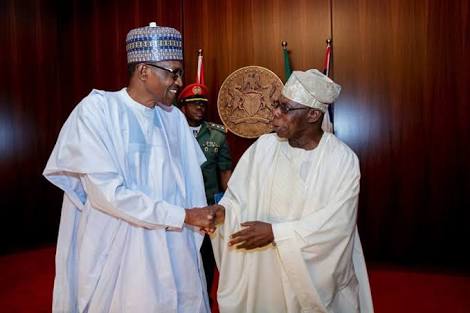
MEMBERS of the National Council of State met today with President Muhammadu Buhari at the State House, Abuja, and expressed support for the naira redesign policy of the Central Bank of Nigeria (CBN). 

The members, however, faulted gaps in policy implementation, which has led to acute agonies in accessing cash by the people at commercial banks and automated teller machines (ATM).


READ ALSO:
How Buhari sacked sole administrator over naira redesign in 1984 – Buba Galadima

Naira redesign: Ekiti seeks to join other states in suit against FG

Naira Redesign: Much ado about a monetary policy 

Naira redesign: Opposition parties against deadline extension – FG


The Council has asked the CBN governor, Godwin Emefiele, to make new naira notes available to the public, or allow the new and old bank notes to circulate concurrently to ease the tension caused by the scarcity of cash.

Addressing State House correspondents after the meeting, the Attorney General of the Federation, Abubakar Malami, flanked by governors Darius Ishaku of Taraba State and Babajide Sanwo-Olu of Lagos State, stressed the need for aggressive action by the CBN to ensure adequate supply of the naira to enable proper implementation of the policy.

Governor Ishaku said the meeting proffered a number of suggestions to the President, particularly on the currency swap challenge which dominated discussions, following a briefing from Emefiele, and expressed the hope that Buhari would make a decision soon.

On the 2023 elections, Malami expressed the Council’s satisfaction with the level of preparation by the Independent National Electoral Commission (INEC) and other institutions.

Those who attended the Council meeting, chaired by Buhari, included former heads of state Yakubu Gowon and Abdulsalami Abubakar, as well as ex-president Goodluck Jonathan

Former president Olusegun Obasanjo participated in it virtually.

Also present were Vice President Yemi Osinbajo, Senate president Ahmad Lawan, and Speaker of the House of Representatives Femi Gbajabiamila.

Some state governors were also in attendance

The Minister of the FCT, Mohammed Bello; Secretary to the Government of the Federation, Boss Mustapha; and Attorney General of the Federation and Minister of Justice, Abubakar Malami also attended the meeting.

The INEC chairman Mahmood Yakubu was also physically in attendance and briefed the Council on preparations ahead of the 2023 polls.

All service chiefs and heads of security agencies were also present.

Atiku’s Rivers campaign DG, Sekibo, escapes assassination in PH

0

THE Director General of the Peoples Democratic Party (PDP) Presidential Campaign Council (PCC) Abiye Sekibo reportedly escaped assassination on Thursday, February 9.

It was gathered that unidentified gunmen, dressed in police uniform, opened fire on Sekibo’s vehicle, a Toyota Landcruiser bulletproof jeep, at the Rainbow Town in Port Harcourt, where he went to inspect the venue ahead of a PDP presidential campaign rally in the state.

Sekibo, while confirming the incident, said his car was riddled with bullets. He added that the venue of the planned rally was set on fire while policemen watched the inferno. 

He also linked Rivers State governor Nyesom Wike to the alleged assassination attempt.

“As we approached the site, those policemen who were watching the fire opened fire on our vehicle. I looked at the Hilux vehicles; they were Police Hilux vehicles attached to the Governor of Rivers State,” he said. 

The presidential candidate of the PDP, Atiku Abubakar, has been at loggerheads with Wike since the party’s presidential primary in May 2022, where Atiku emerged as the winner.

In October 2022, the crisis in the party deepened after Wike declared that the state chapter of the party would not campaign for Atiku ahead of the 2023 general elections.

Wike also accused Atiku of excluding him from the party’s presidential campaign council.

In November, the PDP Presidential Campaign Council (PCC) in Rivers State demanded a probe into an alleged attack on Atiku’s supporters in the state.

Spokesman of the PCC in Rivers State, Leloonu Nwibubasa, condemned the attack and called on the police to immediately commence an investigation to arrest those behind the incident.

In November, some of Atiku’s supporters were reportedly attacked in Omuma Local Government Area (LGA).

Also, in December 2022, the Rivers State government warned the Atiku/Okowa Campaign Organisation against disobeying a court order which sealed its campaign office in Port Harcourt.

The ICIR had reported how Rivers State governor, Nyesom Wike, shut down the Atiku/Okowa campaign office in Port Harcourt barely two months before the 2023 polls using Executive Orders 21 and 22.

The Rivers State governor has consistently demanded the resignation of PDP National Chairman, Iyochia Ayu, as the only solution to his differences with Atiku.

Kano asks Supreme Court to stop FG’s naira redesign policy

0

THE Kano State Government has filed a lawsuit against the Federal Government over the naira redesign policy introduced by the Central Bank of Nigeria (CBN).

The suit was filed at the Supreme Court on Thursday, February 9.

The Kano State government is asking the apex court to reverse the policy for failure to comply with provisions the 1999 Constitution (as amended).

The state government said the policy would adversely impact the economic well-being of over 20 million Kano residents.

Among other reliefs sought, the state government asked for “A Declaration that the combined reading of the provisions of the section 148(2) of the 1999 constitution and Part 1, and Paragraph 19 of the Third Schedule thereof, the President cannot unilaterally without recourse to the Federal Executive Council and National Economic Council, respectively, give approval to the Central Bank of Nigeria for the implementation of cash withdrawal limit pursuant the demonetisation economic policy of the Federal Government of Nigeria”.

The Kano State government also asked the Supreme Court to declare that the President’s directive to the CBN on implemention of the cash withdrawal limits is null and void.

The Supreme Court had, on Wednesday, restrained the Federal Government from implementing the February 10 deadline for the use of old naira notes as legal tenders.

The court held that the CBN and the commercial banks shouldn’t continue with the deadline pending the determination of a suit filed by the Zamfara, Kogi and Kaduna state governments against the Federal Government and it’s naira redesign policy.

Two Nigerian startups win LEAP2023 global awards

THE Nigerian delegation to the 2nd edition of the LEAP Technology Exhibition in Riyadh, Saudi Arabia, led by the Minister of Communications and Digital Economy Isa Ali Ibrahim Pantami, has won two out of six categories of awards in the Rocket Fuel Pitch Competition.

Over 10,000 Startups submitted applications for the global annual ICT event from different countries and after a rigorous screening process only 90 startups, including eight from Nigeria, were selected to pitch their business ideas in the semi-final.


READ ALSO:
Twenty-three Nigerian businesses among 60 African startups to receive Google $4m grant

Trade War: US blacklists China’s top AI startups, 25 others over human rights violations

2023: Economic indicators portend challenging time for businesses

Despite tech layoffs, Nigerian start-ups seek employees


Two Nigerian startups – RiceAfrika Technologies and Wicrypt – made it to the final stage and emerged as the global best in ‘The Tech for Humanity Award’ and ‘The Into New World Award’ categories, respectively.

RiceAfrika Technologies, founded by Ibrahim Maigari Ahmadu, is a tech-driven agric optimisation startup that deploys IoT-enabled harvester and its FARMEasy mobile app for smallholder farming communities in Africa, while Wicrypt, founded by Aronu Ugochukwu, is an innovative tech startup decentralising Internet globally.

Expressing delight at the performance of his team, Pantami noted that Nigeria was on track in implementing its National Digital Economy Policy and Strategies to ensure that Nigerian Startups add value to the global tech ecosystem, thereby creating a more conducive environment for nurturing innovation-driven enterprises.

“I am so proud of our Startups who emerged as the global best in these categories. It is quite a long journey that followed rigorous process until the end; from over 10,000 applications to the final 12, in which three Nigerians took part and two emerged winners.

“Our startups are creating solutions for the local market that can easily scale to the global market. They did not only pitch to win grants but also attended various knowledge-sharing sessions,” the minister said.

He attributed the success of the team to President Muhammadu Buhari’s commitment to ensuring a digital Nigeria that saw him unveil the National Digital Economy Policy and Strategy (NDEPS) in 2019.

“The recent successes are the fruit of policies we put in place to ensure our Startups walk shoulder to shoulder with their counterparts in Europe, Asia and other parts of the world,” he said.

Pantami also appreciated the Digital Cooperation Organization (DCO) Headquarters, Riyadh, for sponsoring the country’s innovative startups to participate and showcase their innovations to the world at the competition.

The startups had the opportunity of interacting with some of the world’s best mentors, angel investors and venture capitalists, and each winner received $150,000.

This year’s LEAP brought together breakthrough innovative ideas and emerging developments in technology under one roof. It was a landmark technology event that galvanised public and private organisations in the Kingdom of Saudi Arabia.

Other members of the Nigerian delegation include: the Director General of the National Information Technology Development Agency (NITDA) Kashifu Inuwa, the Executive Vice Chairman, Nigerian Communication Commission (NCC) Umar Garba Danbatta and the Managing Director, Nigerian Communication Satellite (NIGCOMSAT) Tukur Muhammad Funtua.

National Press Club Journalism Institute teaches masterclass in copy-editing

THE National Press Club Journalism Institute, in coordination with the National Press Club Freelance Team, is inviting registrations for its webinar themed ‘Exploring Craft: A masterclass in copy-editing from the author of Dreyer’s English’.

Benjamin Dreyer, Random House executive managing editor and copy chief and author of the New York Times bestseller Dreyer’s English, will give a behind-the-editor’s desk viewpoint on sharpening your writing and elevating your use of language. Dreyer will share his tips and tools for writing.

Seasoned and aspiring authors, journalists, communicators and students can register for a copy-editing masterclass.

The free webinar will be held February 17, 2023.

Participants are advised to give a taxable donation of US$10 to US$15 to support the educational programs.

Registration is ongoing and interested applicants can apply here.

Nigeria ranks 1st in use of bleaching creams in Africa, NAFDAC declares health emergency

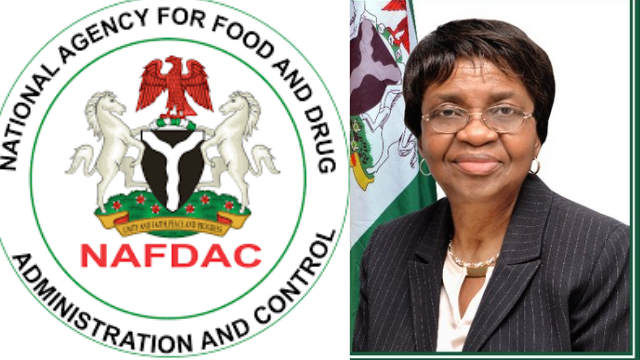
THE NATIONAL Agency for Food Drug Administration and Control (NAFDAC) has declared the use of bleaching creams as a serious national health emergency in the country.

The development is coming after Nigeria was ranked number one in the use of bleaching creams in Africa.

The Director General of NAFDAC, Mojisola Adeyeye, disclosed this on Thursday, February 9, in Kano.


READ ALSO:
Buhari re-appoints Mojisola Adeyeye as NAFDAC DG

NAFDAC, NPHCDA destroy over one million expired COVID-19 vaccines in Abuja

NAFDAC confiscates suspected unhealthy cereals worth over N60 million 

‘Blood of Jesus, quench this fire…’ Woman screams as part of Imo Airport goes up in flames


Speaking at the flag-off of a media sensitization workshop on the dangers of bleaching creams organised by the Association of Nigerian Health Journalists, Adeyeye revealed that Nigeria ranks first in Africa among the countries that use bleaching creams.

She noted that 77 per cent of Nigerian women use bleaching creams.

The World Health Organisation study in 2018 revealed that the use of skin bleaching cream is prevalent amongst 77 per cent of Nigerian women, which is the highest in Africa compared to 59 per cent in Togo, 35 per cent in South Africa and 27 per cent in Senegal.

“These scary statistics have shown that the menace of bleaching creams in Nigeria has become a national health emergency that requires a multi-faceted regulatory approach,” she said.

Adeyeye added that the Federal Government is working assiduously to implement stringent measures against the menace.

According to the NAFDAC boss, sensitization workshops in the six geo-political zones were part of the measures being taken to discourage the use of bleaching creams.

“This sensitization workshop is a training of trainers program with the great expectation that participants will assume roles of champions in the vanguard of the campaign against the use of bleaching creams.

“I wish to assure you that NAFDAC will henceforth constantly engage the mass media as we strive to bring down to the grass levels the positive impact of our regulatory activities.”

Adeyeye further warned against the harmful effects of bleaching.

“Even though I have assigned some of my competent officers to carry out this training, it has become imperative for me to warn that some of the harmful effects of bleaching creams include cancer, damage to vital organs in the body, skin irritation and allergy, skin burn and rashes, wrinkles, premature ageing and prolonged healing of wounds,” she stated.

Cross River North: Ayade wins at Appeal Court

0

THE Court of Appeal Abuja Division has dismissed a suit that challenged the emergence of Cross Rivers State governor Ben Ayade as the candidate of the All Progressives Congress (APC) for Cross River North Senatorial District in the 2023 general elections.

The appeal was filed by Cecilia Adams, an aspirant in the May 28, 2022 senatorial primary election.

Adams, who scored zero votes in the primary, had earlier lost at the Federal High Court, Abuja before proceeding to the appeal court.


READ ALSO:
Ben Ayade’s in-law behind Agba Jalingo’s arrest – Report

2023: Ben Ayade joins presidential race

Ayade did not participate in senatorial primary – Aide

Defection to APC: Court to rule on suit seeking Ayade’s sack on Friday


She had refused to partake in another primary conducted on July 14, 2022 for the Cross River North Senatorial District.

In a ruling on Friday, February 10, a panel of the Court of Appeal led by Justice Stephen Adah upheld the verdict of the Federal High Court in a unanimous decision.

The appellate court rejected the reliefs sought by the plaintiff in her originating summons, which included ordering the Independent National Electoral Commission (INEC) to recognise, accept and publish her name as the candidate of the APC for the Cross River North Senatorial District.

The Respondents in the matter include Ayade, the APC, Martin Orim and INEC (the 1st, 2nd and 4th Defendants, respectively).

Ayade was elected at a primary election rerun unopposed when the 2nd defendant, Orim, who had earlier won the May 28, 2022 primary, resigned to enable a fresh primary to be conducted by INEC.

However, challenging the development, Adams petitioned the Federal High Court in Abuja through an originating summons that was submitted on July 26, 2022, asking the court to restrict INEC and others from recognising Ayade as the candidate for the Cross River North Senatorial district.

Nigerians await Buhari’s decision on scarcity of new naira notes

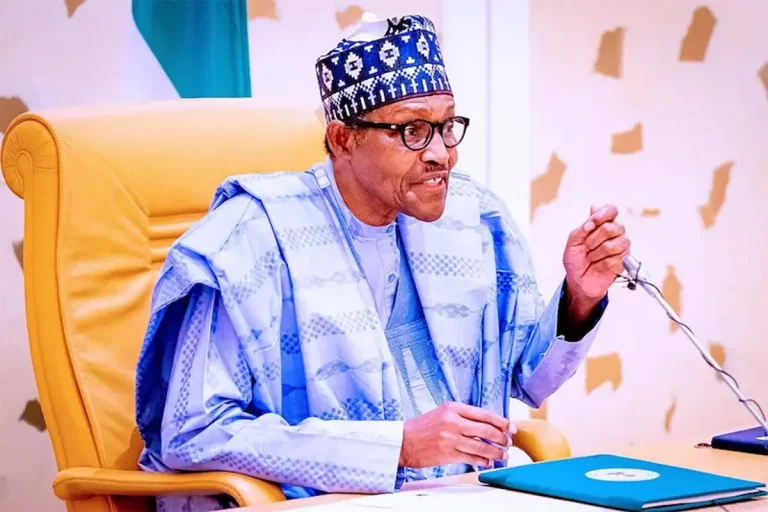
NIGERIANS are eagerly waiting for President Muhammadu Buhari to take the decision he promised on the scarcity of new naira notes.

On February 3, the President pledged to take a crucial decision on the matter after meeting with the governors elected on the platform of his party, the All Progressives Congress (APC).

The governors met him to express their frustration over the scarcity of the new banknotes.

The ICIR reports that the seven days requested by Buhari will elapse today.

The Central Bank of Nigeria (CBN) introduced the new N200, N500 and N1000 notes into circulation on December 15, 2022, and announced that the old notes would cease to be legal tender from January 31, 2023.

Following pleas and protests by Nigerians, the apex bank extended the deadline till February 10 and said people with the old notes could take them to the bank to exchange for new ones or save them after the deadline.

Despite the deadline extension, the currency swap has caused multi-dimensional harm to businesses, households and individuals, with the 2023 general elections kicking off in two weeks.

In the first week of February, many banks could only issue the sum of N1,000 over their counters. Some gave out bundles of N5 notes.

Many ATMs had no cash, and people queued for hours, hoping they would get some money.

Point-of-sale (POS) operators have been charging as high as ten-fold what they used to charge their customers – a development that has worsened the crisis.

The ICIR reported how Nigerians have gone nude and fought in banks in protest over the scarcity of the new notes. Many banks have also shut down over the crisis.

Despite efforts by anti-corruption agencies, namely the Independent Corrupt Practices and Other Related Offences Commission (ICPC) and the Economic and Financial Crimes Commission (EFCC), to compel banks hoarding the notes to release them to the public, the scarcity has persisted.

The scarcity has led to a protest by Nigerians in Ogun, Oyo, Ondo, and Delta States.

Three APC governors approached the Supreme Court to halt the currency swap, which would make the old N200, N500 and N1,000 notes cease to be legal tenders on February 10.

The governors of Kaduna, Nasir El Rufai; Kogi, Yahaya Bello; and Zamfara, Bello Matawalle, filed the suit.

They expressed concern over the consequences of the CBN policy on people in their states.

In its ruling on February 8, the Court issued an exparte order halting the plan.

Meanwhile, Buhari’s government approached the court to dismiss the suit after the ruling, making Nigerians anxious over the fate awaiting them as the February 10 deadline and the seven days the President promised to take an action elapses today. 

Sokoto, Kano, others highly prone to manipulation in 2023 elections — Report

0

SOKOTO, Jigawa and Kano are some of the states with the highest risk of election manipulation in the forthcoming general elections, according to an analysis conducted using the Election Manipulation Risk Index (EMRI) by YIAGA Africa.

The Election Manipulation Risk Index EMRI is an evidence-based tool designed to reduce election manipulation and promote strategic election planning.

The YIAGA Africa, a non-profit organisation committed to promoting democratic governance, initiated the new technology.


READ ALSO:
NUC orders closure of universities for elections

CODE to collaborate with ICIR on election observation

Adeleke: INEC appeals tribunal’s judgment on Osun election

There will be no clear winner in February 25 presidential election – NEXTIER Poll


As preparation advances, attempt to disrupt and distort election outcomes using means that jeopardise the integrity of the process is on the rise, and 22 of the 36 Nigerian states are more prone to such attempts, according to the report.

The report noted that Sokoto, Katsina, Jigawa, Kano, Bauchi, Jigawa, Adamawa, Kaduna, Niger, and Plateau states are at a higher risk of experiencing illegal interference in the electoral process of the February 25 poll.

Other states in the category are Kwara, Oyo, Osun, Ekiti, Lagos, Taraba, Enugu, Ebonyi, Anambra, Abia, Imo, Rivers and Akwa Ibom.

The report also noted that 12 states have a medium risk of experiencing illegal interference in the poll.

These states are; Zamfara, Kebbi, Yobe, Borno, Ogun, Edo, Delta, Bayelsa, Kogi, Nasarawa, Benue, and Cross River.

Ondo, Gombe and the Federal Capital Territory (FCT) are the only states with little chance of manipulation in the presidential election.

Factors that impact election credibility

With February 25 just a few days away, the integrity of Nigeria’s general election is a topic on the national radar.

The YIAGA Africa report identified voter suppression and tampering of voter registers as factors that impact the credibility of the polls.

The report indicated that voting by underaged children and foreigners is one form of inclusion of unqualified persons that inevitably compromises electoral outcomes.

Also, buyout by politicians to neutralise the voting strength of target communities, theft of PVCs, and vandalisation of INEC offices and election materials has hampered the past elections and are factors to also look out for, according to the report.

Using the EMRI, YIAGA conducted its analysis based on six factors. These factors were selected due to their impact on elections.

According to the report, INEC capture, tampering with the voter register, resistance to election technology like BVAS and IReV, and a history of electoral fraud have a high impact on election credibility.

On the other hand, voter suppression and election litigation have a medium impact.

What can be done?

YIAGA Africa, in the report, said enhanced security at storage facilities where the BVAS is stored, timely production and distribution of PVCs, and a decentralised PVC collection process, would held to improve the credibility of elections.

It asked INEC to avoid entertaining frivolous litigations against the use of the BVAS and IReV.

The report emphasised the need for civil society and media to ensure adequate deployment of pre-election observers to monitor INEC officials at the local levels. It also stressed the need for improved security deployment at all INEC facilities across the country.

YIAGA Africa also noted that the prosecution of INEC officials involved in manipulating voter registers is another way to reduce the risk of election manipulation.

It asked the judiciary to “dismiss cases instituted to undermine the preparations for the general elections and take disciplinary actions against legal practitioners engaged
in the election manipulation using the judicial process and an improved understanding of judicial officers on provisions of the Electoral Act 2022”.

Evolution of voting technology

Nigeria has explored the use of technology to improve the reliability of its election results over the years.

The country first introduced technology to its polls in 2011 when the Independent National Electoral Commission (INEC) initiated an automated fingerprint identification system to stop voters from registering more than once.

Since then, Nigeria has evolved voting technology peculiar to its open secret ballot system.

Nigeria has explored these tools, from biometric voter registration, smart card readers, and voters’ cards to contain electoral fraud. Although, the reliability of these devices initially generated some controversy among Nigerians.

Also, some non-profit agencies have launched technological tools to tackle the gaps that affect election credibility in Nigeria.

Earlier in the year, YIAGA launched EMRI to tackle election fraud and manipulation in Nigeria.

Similarly, ARise Networks, a Data Science and Artificial Intelligence Company, also launched the “Run-Am” mobile app to verify fake news and combat the spread of misinformation during the 2023 presidential poll.

The tool can ensure efficiency and accountability of information during the 2023 elections using its news and image verification feature to check misinformation that may cause violence during elections.

Last year, Connected Development, CODE, a civil society organisation dedicated to empowering marginalised communities in Africa, launched a Real-Time (Web-Based Map) Situation Technology, Uzabe.

The tool can gather real-time security intelligence while observing the electoral process.

It can provide early warning systems for communities and voters. This will mitigate violence and increase emergency response during elections.

These tools have been designed to ensure transparency and accountability in elections.

Abuja small businesses struggle amidst naira notes scarcity; but what of cashless?

As the scarcity of new naira notes bites harder, residents and operators of small businesses are concerned about the day-to-day running of activities with limited funds. In Abuja, entrepreneurs, especially those heavily reliant on cash, recount the adverse effects of the scarcity on their businesses, Ijeoma Opara reports.

FOR John Anyaso, a cab driver who plies the Wuse-Life Camp axis of Abuja, the naira scarcity has led to a significant decline in his daily income.

In an interview with The ICIR, Anyaso spoke on the adverse effect of the scarcity on his business.

“These days, you see people offering N100 for a journey of N150. I collect it sometimes because there is no cash. But it affects me; my money is short at the end of the day.


READ ALSO:

High cost of bank credit squeezes Nigeria’s small businesses

SPECIAL REPORT: How inefficiency, lack of transparency flaw CBN’s N50bn COVID-19 loan to small businesses

Electricity failure is gradually killing small businesses in Nigeria’s Power State

How bill to ban electricity generators will affect small businesses in Abuja


“I had the experience even yesterday. A girl entered my cab, she didn’t have cash and she didn’t say anything. After wasting my time, she asked for my account details. How can I collect transfer of N200? I had to let her go. That is what we are facing. There is no cash. It is only those who sell food that are getting by; people must eat,” Anyaso said.

But a food vendor who identified herself as Maria Kennedy and owns a stall in the Life Camp area of the city insisted that the situation was no different.

Maria told The ICIR that it has been taking longer than usual to sell her food recently due to low customer turnout.

“It is affecting us, too, as we sell food. If you don’t have cash, how can you eat? I can’t sell food on credit. And I won’t accept transfers because where will I get the cash to go to the market? It is only a person with cash that can pay for food. If I sell all the food on credit, what will I sell tomorrow?” she asked.

In October 2022, the Central Bank of Nigeria (CBN) announced that it would be redesigning the N200, N500 and N1000 notes.

The CBN governor, Godwin Emefiele, said the redesign was part of efforts to control the currency in circulation.

Emefiele said N2.7 trillion out of N3.3 trillion of the country’s currency in circulation was outside commercial banks’ vaults and described this as a worrisome trend.

He noted that new notes would be in circulation by December 15, 2022, and a deadline of January 31 was fixed for old notes to be returned to banks.

However, as the January 31 deadline inched closer, Nigerians found it more challenging to access the new notes.

Long queues surfaced at ATM points, and The ICIR reported that new naira notes were being sold in some areas of the FCT.

In Nigeria, point-of-sale (POS) machines serve business purposes, acting as a time-saving substitute for banks.

However, the recent scarcity has led to a drastic increase in POS charges. In Abuja, residents paid as much as N1000 as charges to get N10,000 from POS agents as of January 30, 2023.

Two days before the deadline, Emefiele issued a statement extending the deadline for the use of old naira notes to February 10, 2023.

Scarcity lingers despite extension

Regardless of the extension, the scarcity has persisted. Many ATMs have remained empty, and POS charges are even higher.

A POS operator in the Life Camp area of Abuja, Nafisat Aliyu, now charges N700 to pay customers the sum of N5000 and N1500 for N10,000.

She, however, does not give out more than N10,000 at a time due to the scarcity.

Speaking to The ICIR, Nafisat explained that she now charges at least six times the usual amount due to the extra effort she puts into getting cash.

“The funniest part of it is that it is only one ATM you can use to withdraw just N20,000 a day at the machine. And if you do not have many ATMs, you can’t get money. And sometimes, you’ll be in the queue for almost three to four hours. Before it gets to your turn, there will be no more money in the machine. All the time spent there, wasted.

“That is how you will be spending money on transportation from one place to another just to get money. Sometimes, you waste transport fare to some places, and you cannot even get money from there. I left my house around 6am in the morning and got back round 3pm. But it was only N20,000 I could get,” she said.

Aliyu pointed out that old notes had become scarce as well. She said the cost of transportation and the difficulty in getting notes were factored into the POS charges.

Is cashless policy feasible?

Beyond controlling the amount of cash in circulation, the CBN also announced its attempt to steer the country towards a cashless economy.

In December 2022, the CBN announced cash withdrawal limits which allow residents only withdraw a maximum of N20,000 daily.

The maximum over-the-counter cash withdrawal limit by individuals and corporate organisations per week was placed at N100,000 and N500,000, respectively. Withdrawals above these limits would attract processing fees of five and 10 per cent, respectively.

After meeting with a lot of resistance, the CBN reviewed the weekly limits to N500,000 and N5 million for individuals and organisations.

The apex bank noted that the limits were aimed at a cashless economy to combat terrorism and kidnapping for ransom, a challenge which has witnessed a steady rise in Nigeria.

However, the goal of a cashless economy seems unattainable, as unstable bank networks seem to be limiting its success.

Many Nigerians who now depend on transfers and payments with POS machines get debit alerts without being paid.

A resident of Gwarimpa, Jennifer Adah, shared her experience with The ICIR.

“I went into a shop on Monday and decided to pay through POS, since cash is hard to get now. I was debited the sum of N4,500, but the POS machine was showing ‘declined’. Till now, the money hasn’t been reversed,” she said.

This also discourages small business owners, including Helen Chimezie, who sells food in the Wuse area of the city, from receiving online payments.

“People come here and ask to make transfers, but you running a business know that there are network issues. So you ask yourself: what if the person makes a transfer and I don’t see the money due to the network? How do you get your money after the person has left? That is another problem. That is what we are going through. I do not accept transfers because of this,” Helen told The ICIR.

Way out

The ICIR contacted the CBN spokesperson, Osita Nwanisobi, on the naira note scarcity. He was yet to respond to text messages at the time of filing this report.

However, a professor of Economics at the Lagos Business School, Adi Bongo, described the scarcity as artificial and called for the arrest of those responsible for it.

“Some people have created artificial scarcity so that they can exploit people and make life difficult for fellow citizens. I strongly suggest to the central bank that they go after the bank CEOs. Any bank that has received a cache of these funds and is hoarding it, the CEO of that bank should be answerable for it. They should be arrested and removed from that position,” Bongo noted.

He added that the Nigerian president, Muhammadu Buhari, should order an investigation into the scarcity and punish whoever is found guilty, including the CBN.

“Currency note replacement is something that happens seamlessly without any brouhaha everywhere in the world. I can understand that there is a political undertone to this. There are suspicions that some people have hoarded currency that they want to use in influencing elections and to destroy their plans, this thing is being enforced now. That is fine.

“But that shouldn’t be an excuse to impose undue hardship on people who are already pressed by high inflation and others. It is uncharitable. The president needs to give an executive order mandating a joint security sting operation against the banks, including the CBN or anybody who is culpable,” Bongo said.

While uncertainty and hardship continue to result from the shortage of naira notes in circulation, residents and business owners remain unsure of how long the scarcity will persist.