THE Nigerian Midstream and Downstream Petroleum Regulatory Authority (NMDPRA) has threatened to sanction filling stations rejecting bank transfer and use of point-of-sale (POS) machines across the country.
NMDPRA’s directive was contained in a statement issued by its General Manager, Corporate Communications and Stakeholders Management, Kimchi Apollo, on Thursday, February 9, 2023.
The regulator said it had been brought to its attention that some retail outlets were not accepting the use of PoS machines at their filling stations due to the recent cash crunch brought about by the new naira design.
It expressed concern at the recent behaviour of such retail outlets, which has been causing untold hardship to fuel consumers.
“All retail outlets are directed to ensure the free use of PoS and bank transfer for the sale of petroleum products to alleviate the suffering of customers at this critical time.
“The Authority and security agencies will be at retail outlets to ensure compliance with this directive and any filling station found violating this directive will be duly sanctioned,” the statement read.
The NMDPRA reassured the general public of its commitment to ensuring good quality service in the sale and distribution of petroleum products nationwide.
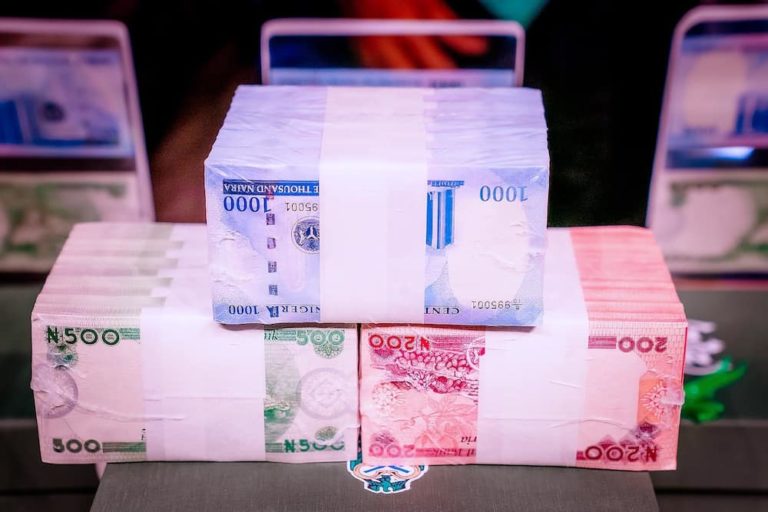
THE confusion over the expiry date as legal tender of the three naira notes of 1000, 500 and 200 being rested continued on Wednesday, February 8 when the Supreme Court stopped the Central Bank of Nigeria (CBN) from retaining its February 10 deadline for the use of the notes.
There were reports on Wednesday night that the Attorney-General of the Federation and Minister of Justice, Abubakar Malami, had promptly filed a suit before the Supreme Court opposing the judgment.
Malami is arguing that the Supreme Court lacked the jurisdiction to hear and pass judgment on the matter.
The CBN had announced last October that it would be redesigning the three notes with a view to mopping up unregulated money outside the banking vault, which it estimated to be 80 per cent.
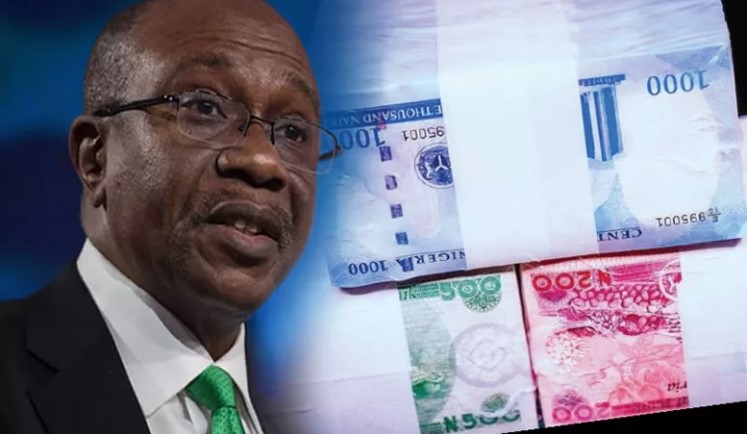
The CBN governor, Godwin Emefiele, also said redesigning the naira would enable the Federal government tame terrorism and banditry, as well as curb vote-buying during the forthcoming general elections in February and March.
Emefiele said the new, redesigned notes would go into circulation on December 15, 2022, while the old notes being rested would cease as legal tender on January 31.
But scarcity of the redesigned notes and the attendant agonies experienced by the people to access them, coupled with pressure from the House of Representatives and some state governors, compelled the CBN to extend the deadline to February 10, despite Emefiele’s initial insistence that there would be no extension.
The CBN initially banned cash withdrawals in banking halls and encouraged the public to access cash through alternative payment platforms like the automated teller machines (ATMs) and point-of-sale centres. The CBN, Emefiele, said, was intent on implementing its
cashless policy.
Emefiele: in the eye of the storm over naira redesign
But even with the new date looming, there has been no succour, as the new notes remain as scarce as hen’s teeth. The situation had degenerated in the past few days, with protests in some states, and angry customers vandalising banks’ properties.
Three states controlled by the ruling All Progressives Congress (APC) – Kaduna, Kogi and Zamfara – had headed to the Supreme Court on February 3 praying for an order to stop the CBN from sticking to its February 10 deadline on the old notes. The applicants cited the
sufferings being experienced by the people as cause for their action.
In its judgment on Wednesday, a seven-man panel of the court led by John Okoro issued an order of interim injunction restraining the Federal government through the CBN or the commercial banks “from suspending or determining or ending on 10 February the time frame with which the now older version of the 200, 500 and 1000 denominations of the naira may no longer be legal tender pending the hearing and determination of their motion on notice” regarding the issue.
Legal controversies over ruling
The Supreme Court ruling itself has been generating further confusion. The apex court’s decision has seemingly overshadowed another order given by a Federal High Court in Abuja on February 7 to the CBN not to extend the February 10 deadline for the naira swap.
Four political parties- the Action Alliance, Action Peoples Movement, Action Peoples Party and National Rescue Movement – had approached the court seeking an injunction to ask President Muhammadu Buhari, the CBN and commercial banks not to extend the deadline.
In his ruling, Justice Eneojo Eneche, granted an order of interim injunction restraining the defendants from suspending, stopping, extending, varying or interfering “with the extant termination date of use of the old N200, N500 and N1000 bank notes being 10th day of February 2023 pending the hearing and determination of Motion on Notice.”
There have arisen arguments over the validity of the Supreme Court judgment, and whether the CBN could be bound by it. A post, the original writer yet unknown, was widely shared on facebook after the judgment, assuring whoever wishes to believe that the Supreme Court decision was a mere “academic exercise” that could not stand.
A former philosophy lecturer at the Olabisi Onabanjo University, Ago-Iwoye, Ogun State, Akinyemi Onigbinde, urging readers on his facebook post on Wednesday to “play safe by abiding by CBN guideline”, and “legal tender old naira expires10/02/2023”, forwarded the shared post.
It partly read, “The deadline won’t change. Neither CBN nor commercial banks was joined as parties to this suit. The 3 state governments simply took advantage of the fact that in matters purely between the state and the Federal Government , the Supreme Court can serve as a court of first and only instance. Joining the CBN in the matter would immediately rob the Supreme Court of jurisdiction.
“The Attorney-General cannot issue a binding order on the CBN Governor. The CBN Act didn’t contemplate such and the interim order is simply an academic attempt at grandstanding. Only the CBN is empowered by law to determine what is termed legal tender.”
A Lagos lawyer, Benjamin Umudjoro, managing partner at Umudjoro and Co, disagreed. Umudjoro told The ICIR that the Supreme Court decision superseded all other verdicts on the matter since the Federal government, which controls the CBN, had been bound by it.
He added that the judgment would stand and only an order by the Supreme Court can vacate it. Reminding that the judgment is interim, the lawyer said it would be interesting what would happen next on the naira swap debacle on February 15 when the Motion on Notice begins before the Supreme Court.
A senior advocate, Mike Ozekhome, agreed with Umudjoro on the superiority of the Supreme Court on the matter, while quickly pointing out that the judgment was only temporary.
Ozekhome, speaking on Wednesday evening on a Channels TV live programme, ‘The 2023 Verdict’, said the High Court judgment restraining the CBN from extending the February 10 deadline would have stood if the Supreme Court had not issued a contrary order.
He added that lower courts can only “blow muted trumpets” when matters are being heard in the highest court.
But the Lead Director, Centre for Social Justice and lawyer, Eze Onyekpere, told TheICIR that the Supreme Court acted on the deposition of the three state governors without yet giving an opportunity to the Federal government and the CBN to respond.
Onyekpere says Supreme Court order could be vacated on February 15
Onyekpere noted, “That is why it is an interim injunction stopping the CBN and the Federal Government from stopping the legal tender status of N200, N500 and N1000 on February 10. The case was, however, readjourned till February 15, which is a return date when all the parties would have been served, and the lawyers would have joined issues and take it up from there.
“This is an interim order, which stands until February 15, and could possibly be vacated if the CBN and others joined in the suit would show cause for such.
“For now, the implication is that those currencies which would have been supposed to have been legal tender by February 10 would still be legal tender unless the court directs otherwise after February 15.”
A people divided
The CBN’s naira swap move has torn the citizens apart, barely three weeks to the presidential election. The APC had been calling for the extension of the deadline. Its presidential candidate, Ahmed Bola Tinubu, had alleged political undertones to the policy, saying it was introduced to stop him from winning the presidential election.
Tinubu has already lauded the Supreme Court judgment. In a statement issued on Wednesday on his behalf by the APC Presidential Campaign Council Director of Media and Publicity, Bayo Onanuga, Tinubu said, “Our country was dangerously careering toward anarchy and economic shutdown. But with the Supreme Court interim ruling, our country has been pulled back from the precipice.”
On the contrary, the Peoples Democratic Party (PDP) and the Labour Party (LP) the two major contenders against the APC in the presidential election, supported the CBN’s insistence on not extending it.
In a statement on February 1, the PDP presidential candidate, Atiku Abubakar, urged the CBN not to extend the February 10 deadline, saying the initial purpose and initiative of redesigning the currency would be destroyed.
“The CBN and the Presidency should be steadfast. The merits of the new naira policy far outweigh the little inconvenience we are experiencing.
“This is one policy that will benefit the country in the long term. We should not allow those selfish, parochial people with narrow vision to derail it,” he stated.
While many Nigerians, hit hard by the cash crunch that the naira swap had caused, rejoiced at the Supreme Court ruling that would enable them more time to access cash, some others stormed the CBN headquarters and the office of the Attorney-General of the Federation to protest against it.
In his Twitter reaction, a former Aviation minister and chieftain of the APC, Femi Fani-Kayode, expressed his thanks to the Supreme Court for “displaying remarkable insight and sensitivity” on the matter.
Fani-Kayode tweeted, “At least, now we have a chance to change the narrative and take away the immense suffering that has been imposed on our people over the last few days.”
A civil servant in Lagos, Biodun Famakinwa, was joyous of the judgment, saying he had been unable to access cash from the bank his account is domiciled at, and from ATMs.
Famakinwa said he and his family had been surviving on shylock withdrawals from PoS operators.
“At least, now there is hope there will be improvement in cash withdrawals at ATMs and banks in the next few days. Let’s see what the CBN will say on February 15. That February 10 deadline was so scary,” he said.
A spokesman of the PDP, Dino Melaye, tweeted his support for the CBN. Melaye berated governors of the three states that dragged the Federal government to court on the matter for doing so in the first place.
The World Bank and the International Monetary Fund (IMF) also weighed in on the issue in favour of extending the deadline. In a statement on Wednesday by the IMF Resident Representative to Nigeria, Ari Aisen, the body urged, “In the light of hardships caused by disruptions to trade and payments due to the shortage of new bank notes available to the public, in spite of measures introduced by the CBN to mitigate the challenges in the bank
note swap process, the IMF encourages the CBN to consider extending the deadline should problems persist in the next few days leading up to the February 10, 2023 deadline.”
Agonies, hunger, anger as scarcity persists
So much drama has trailed the introduction of the new notes as their scarcity persists and the people struggle to obtain them. The CBN disclosed it had been able to suck in about N2.7 trillion in its effort to mop up the N3 trillion cash outside the banking hall.
But according to critics like the Governor of Kaduna State, Nasr El-Rufai, the apex bank had not pumped enough of the new notes into circulation to ensure that supply meets public demand. El-Rufai gave a figure of about only N300 billion of the new notes that the CBN had released.
The result has been chaos. Dramas, from the preposterous to the comic, have been playing out in banking halls, and at ATMs and point-of-sale centres. People requiring cash have been crowding ATMs daily to seek for cash. But many of the machines have been empty. In the best instance, by today, where cash is available, people can only withdraw a maximum of N20,000, and that has to be for cards issued by the owner-banks. Other cards can only get a maximum of N5,000. The banks claimed they are cash-strapped, so much so they are discriminating in payments both at their ATMs and over the counter.
Chaos at the Union Bank ATM in Kubwa, FCT.
“What, for God’s sake, can N5,000 take care of in my family of five?”
an automobile mechanic, Habeeb Oyawale, complained on Tuesday at the Stanbic IBTC ATM on Market Street, Somolu, Lagos State.
Two weeks ago when the situation was grave, a woman who had come into the same Stanbic Bank branch at Somolu seeking to withdraw N20,000 was told she could get only N1,000, and in N5 denomination. The denomination had virtually gone into extinction, but the raging naira swap crisis seems to be enabling the CBN an opportunity to push it out into circulation.
Some banks have also hidden under the current scarcity to be dispensing mutilated notes.The ICIR checks in Abuja showed most commercial banks in the Federal Capital Territory dispensing mutilated notes of the N50 denomination, claiming they had run out of stock of the new notes.
“I could not get the new cash. The banks for days now have been issuing us older and mutilated N50,” a PoS merchant in Dei-Dei, Abuja, Musiliu Ahmed, told The ICIR.
Ahmed displaying the mutilated currency he got from a commercial bank
Many banks have even shut their banking halls against customers, as protesters started taking to the streets and destroying banking facilities. In Ogun State, videos of protesters stoning a GTBank branch in Abeokuta went viral on Monday February 6. And there were confirmed reports that the police shot dead one protester in the state on Tuesday.
Another video this week showed workers of another bank scaling a fence to escape the wrath of protesting workers.
Yet, there were too other videos showing, one a woman half-nude in a banking hall shouting at the top of her voice she wanted to close her account since she was unable to get cash to feed her family, and another one of a man unabashedly in his birthday suit also in a banking hall declaring he was not leaving the scene until he was given cash.
PoS operators have been doing brisk business exploiting the situation, with a ready excuse that they are also finding it difficult to access cash with which they do their transactions. They have upped their commission of only N200 on a withdrawal of N10,000 to N1,000 on every withdrawal of N5,000.
INEC raises concern on election
The Independent National Electoral Commission (INEC) has expressed a
fear that the raging scarcity of cash could disrupt the 2023 elections. On Tuesday, February 7, the INEC chairman, Mahmood Yakubu, met with the CBN governor to tell him that many service providers to INEC had no bank accounts and needed to be paid fully in cash.
“The Nigerian election is a huge and complex one. It requires the
engagement of critical services, and in line with the provisions of the exchange laws and regulations, service providers are generally paid by means of electronic transfer to their accounts.
“However, there are crucial areas such as transportation and human support services that have to be immediately enumerated, either partially or in full because services are rendered,” Yakubu told Emefiele.
The CBN governor has, however, assured the INEC boss that enough cash would be available to the body to ensure a hitch-free election.
The Institute of Chartered Accountants of Nigeria (ICAN) has appealed for calm on the crisis.
In a statement issued on February 8 titled, ‘Call for Calm’ and signed by the association’s president, Tijjani Isa, ICAN urged the CBN and other key stakeholders to see the interim suspension of the deadline as an opportunity to rapidly improve the supply and distribution of the new naira notes (alongside the old notes), stabilise the alternative financial payment solutions, and expand public awareness on the indisputable benefits of a cashless economy.
ICAN believed that these actions would gradually restore public trust in the country’s presently challenged financial system and calm all frayed nerves.
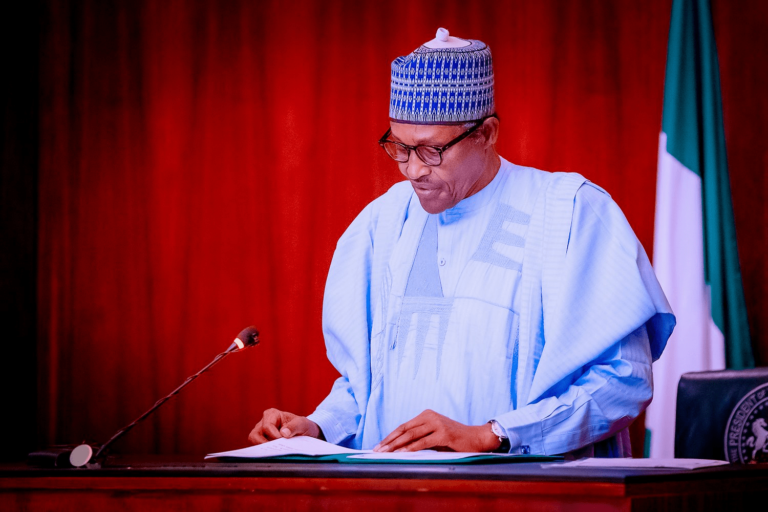
PRESIDENT Muhammadu Buhari has signed an order to establish a Presidential Transition Council for the 2023 transition programme.
The Transition Council will be inaugurated on Tuesday, February 14.
The development was disclosed in a statement released on Thursday, February 9, by the Director of Information, Office of the Secretary General of the Federation, Willie Bassey.
According to the statement, the move will ensure.that the transition of power from one presidential administration to another is seamless.
Boss Mustapha, the Secretary to the Government of the Federation (SGF), will head the Council.
Members of the committee include the Head of the Civil Service of the Federation and Solicitor-General of the Federation and Permanent Secretary Federal Ministry of Justice.
Also in the Council are Permanent Secretaries from the following Ministries and Offices: Defence, Interior, Finance, Budget and National Planning, Foreign Affairs, Information and Culture, Federal Capital Territory Administration, Special Duties and Intergovernmental Affairs, Cabinet Affairs Office, Office of the Secretary to the Government of the Federation, General Services Office, Office of the Secretary to the Government of the Federation, Economic and Political Affairs Office, Office of the Secretary to the Government of the Federation and State House.
Others are the National Security Adviser, Chief of Defence Staff; Inspector-General of Police; Director General of National Intelligence Agency; Director General, of State Security Services; Chief Registrar of the Supreme Court of Nigeria and two representatives who the President-elect will nominate.
The President also signed Executive Order No. 14 of 2023 on the Facilitation and Management of Presidential Transitions.
This development is coming a few days to the Presidential and National Assembly polls, which are slated for February 25.
Governorship and state assembly elections will hold on March 11.
THE International Press Institute (IPI) is inviting journalists to its 2023 World Congress and Media Innovation Festival themed ‘New frontiers: Press freedom and media innovation in the age of AI’.
The program is designed to bring journalists together to explore the rapidly evolving global and technological landscape of independent journalism.
The event will take a deep dive into emerging challenges for press freedom and independent journalism, including a special lens on the impact of AI and other new technologies, all in a global context of rising authoritarianism and pervasive disinformation.
The two-day event will be held from May 25, 2023, to May 26, 2023.
Journalists worldwide can attend a hybrid and in-person press freedom event in Vienna, Austria.
Online registration is free, and donations are welcome. Registration for the in-person event is US$150 for IPI members and US$175 for new members.
Register by May 23, 2023, for the in-person event. Registration for the online event continues until May 27, 2023. Interested applicants can apply here.
THE NATIONAL Universities Commission (NUC) has ordered the closure of universities across the country for three weeks to enable students exercise their franchise in the February 25 and March 11 elections.
According to a letter addressed to the vice-chancellors of all universities and directors of inter-university centres, the NUC stated that the directive was based on an order issued by the Minister of Education, Adamu Adamu.
“As Vice-Chancellors of all Universities and Director/Chief Executive of Inter-University Centres are quite aware the 2023 General Elections have been scheduled to hold on Saturday, February 25, 2023, for the Presidential and National Assembly, and Saturday, March 11, 2023, for Gubernatorial and State Assembly, respectively.
“In view of the foregoing and concerns expressed on the security of staff, students and properties of our respective institutions, the Honourable Minister of Education, Mal. Adama Adamu has following extensive consultations with the relevant security agencies, directed that all Universities and Inter-University Centres be shut down and academic activities be suspended between February 22 and March 14, 2023 for election,” the statement said.
The ICIR has earlier reported that there were concerns that many students will likely not vote in the election.
Some institutions, especially universities, normally give a few days break for elections.
But students who spoke to The ICIR noted the a few days break would not be enough to enable them participate in the elections.
According to them, a few days break would not be enough for journeys that may take a day or two to their destinations.
LILU Specialist Hospital, an illegal facility operated by a Korean, Jongsu Kim, in Abuja, has reacted to The ICIR’s findings about its activities.
In its reaction to the report, the hospital denied its name and gave itself another identity.
The reporter’s registration card at the hospital
Speaking through one Muhammad Mahmood, its media adviser, the facility also denied that it shut down, even though it had closed its doors since the ICIR published its first reporton January 31, 2023.
As of the time of filing this report at 2: p.m. on February 9, the hospital was not open to the public, though its workers were indoors.
The ICIR’s reports detailed how the hospital’s manager drives around Abuja in an SUV bearing a diplomatic number plate, enjoyed by only diplomats.
Presidency officials, a former Attorney General of the Federation, Michael Aondoakaa, and at least four senior advocates of Nigeria are among those that receive treatment at the facility.
The Private Health Establishments Registration and Monitoring Committee (PHERMC), a department under the Federal Capital Territory Administration (FCTA) Health Secretariat, is the agency that registers and monitors private hospitals’ operations in Abuja.
PHERMC’s bus conveyed the Department’s officials to Lilu Specialist Hospital on Friday but the hospital was locked
The PHERMC confirmed to The ICIR that the hospital never applied for registration and is not registered to operate in the city.
The hospital does not have a signboard. It did not have a bank account when the larger part of this investigation was carried out between June and October 2022 and was not paying tax to the government as required by law.
For instance, the hospital was not paying the “Pay As You Earn” (PAYE) tax to the Federal Capital Territory (FCT) Internal Revenue Service (IRS), even though it has Tax Identification Number 20913237. PAYE is the tax companies deduct from their employees’ salaries and remit to the government.
The ICIR learnt that its reports on the hospital’s operations were causing some storms within the highest level of power in the country.
However, a source in the medical community, who pleaded anonymity, said prominent Nigerians and government officials aid foreign doctors coming to Nigeria because they want to cut the cost of travelling abroad for treatment.
The source said no matter what anyone does to stop the operations of hospitals where those sponsored doctors work, the people who bring them into the country would have their way.
Responding to the ICIR’s findings, the hospital said in its rebuttal, “The facility was not forced by any authorities to shut down its activities as claimed, but they are attending to some functions approved by the Korean Embassy since they are not operating a full-time organisation.”
The ICIR describes this statement as untrue. Lilu Specialist Hospital has operated fully since it moved to its Wuse Zone 2 centre in early 2022.
Similarly, Mahmood said in the statement that “reports online show that the expatriates were operating a hospital by the name of LILU. This is to inform the general public that the Korean has never operated under Lilu Hospital, it is just a mere speculation, but they only operate Acupuncture as an alternative therapy for body muscle straightening and a Spa”.
This is a deliberate falsehood. More than four documents The ICIR obtained when its reporter had an undercover test at the hospital bear “Lilu Specialist Hospital.”
Certificate of Incorporation bearing Lilu specialist hospital on the hospital’s wall
The ICIR reports that Lilu Specialist Hospital might be attempting to change its name because a businessman based in Awka, Bartholomew Chigozie Awugozi, one of its directors, claimed he owned the facility.
The ICIR contacted Awugozi, who expressed shock that the hospital he opened in Port-Harcourt some years ago and had shut down because it was not yielding returns was running in Abuja by people he claimed not to know.
When contacted, the hospital’s lawyer, Matthias Adeyemi, agreed that “some” of the ICIR findings were true.
The ICIR finds it curious that the hospital now parades a media adviser, except it has just hired him.
All through the period the investigations lasted, the hospital only referred the ICIR reporter to its lawyer. The lawyer never mentioned the facility had a media adviser.
A second report on February 3, 2023, revealed that the facility had shut down and health officials from PHERMC were on Kim’s trail and other workers at the hospital.
In its rebuttal, Lilu Specialist Hospital referred to itself as “Acupuncture Therapy and Spa,” a name it never bore before The ICIR’s findings.
Mahmood further exposed the hospital by claiming its manager is not Jongsu Kim but ‘Hak’.
Lilu Specialist Hospital’s flier
The hospital’s manager had told the ICIR reporter he was Jongsu Kim and had given his bank account to the reporter to pay for services the hospital rendered to him while investigating the facility.
As of September 2022, when The ICIR was investigating the facility, Kim received payment of bills by patients into his personal account rather than the hospital’s. The facility treated each patient for between N150,000 and N500,000 and attended to many patients.
During the investigation, The ICIR contacted several government agencies, including the Nigerian Immigration Service (NIS), Federal Inland Revenue Service (FIRS), FCT Internal Revenue Service (FCT IRS), Medical and Dental Council of Nigeria (MDCN), Federal Road Safety Commission (FRSC), Corporate Affairs Commission (CAC), and the Chinese and Korean embassies.
The ICIR was also at the Lilu community in Ihiala Local Government Area of Anambra State, where the hospital was initially registered to operate. Lilu community bears the same name as the hospital.
A NON-governmental organisation Connected Development (CODE), which provides technological platforms to enhance effective democratic governance and accountability to close the feedback loop between citizens and the government, is collaborating with THE ICIR to observe the 2023 general elections.
The CEO of CODE, Hamza Lawal told The ICIR that the organisation has two different platforms (Uzabe Ushaidi and AI), which are used to get accurate data during the election observation before disseminating information to the general public.
Lawal said CODE has strengthened it’s capacity on election observations over the years and 20,000 observers have been trained to be on the field while focusing on using the AI platform.
He added that election observations begin before the elections.
“For us, observing elections is not on the day of election, we have pre-election observation, election observation and post-election observations. Most times violence erupts, it erupts when the results are being announced,” Lawal stated.
He added that 13,000 observers would stay in polling units within their vicinities to observe events while 7,000 would travel around their states to observe.
Lawal noted that every information given out would be on verified incidents, adding that there would also be monitoring and gathering of opinions from social media platforms to generate analytics for the general public.
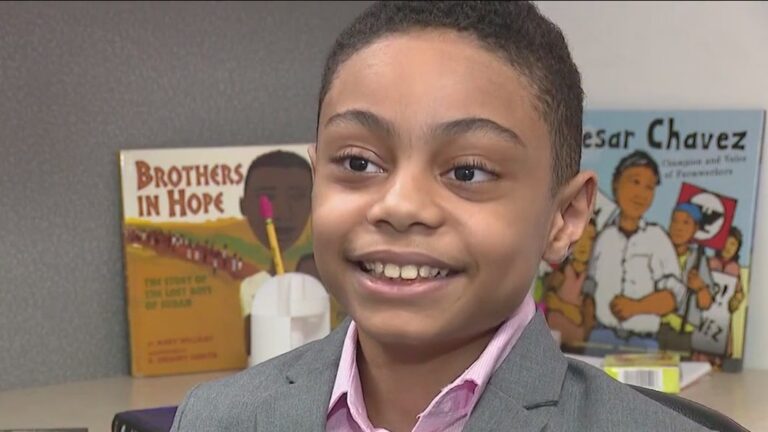
NINE-YEAR-OLD David Balogun who made history as one of the youngest-ever high school graduates, has already finished a semester at Bucks County Community College, Pennsylvania, United States, The Guardian has reported.
David lives with his family in Pennsylvania, US.
The only person on that list younger than David is Michael Kearney, who still holds the Guinness world record for youngest high school graduate that he set when he was six in 1990, before obtaining master’s degrees at ages 14 and 18 years.
David’s science teacher, Cody Derr, remarked: “David was an inspirational kid, definitely one who changes the way you think about teaching.”
The young Balogun began high school just before the COVID-19 pandemic in 2020 at Reach Cyber Charter School and graduated with an over 4.0 GPA before the end of 2022.
His mother, Ronya Balogun, said he was tested for giftedness in Grade 1 and later skipped several grades in elementary school when it was discovered he had the brain capacity to understand and comprehend a lot of concepts beyond his years and sometimes beyond her understanding.
David, who is already a member of Mensa, the largest high-IQ society in the world, has a particular interest in science and computer programming and wants to be an astrophysicist who studies black holes and supernovas in the future. He also plays sports and the piano and is working on his martial arts black belt.
His parents who both have advanced degrees admitted that raising a young son with extraordinary intellectual gifts was challenging.
The NAMIP Sustainability Challenge seeks applications from media organisations that are building innovative news and information products that explore opportunities to reach and connect with broader audiences through digital platforms and technologies, or develop new revenue generation opportunities or sustainable business models.
Winners will receive grants and join NAMIP’s three-year innovation and capacity-building program.
The program is designed to increase capacity, generate sustainable and diverse revenue streams, and build audiences of independent media in Nigeria, particularly those reaching underserved communities.
Independent media outlets in Nigeria can compete for project grants up to US$50,000.
The deadline for submission of applications is February 28, 2023. Interested applicants can apply here.
Idris was subsequently arraigned alongside Godfrey Olusegun Akindele, Mohammed Kudu Usman, and a firm — Gezawa Commodity Market and Exchange Limited.
According to one of the charges, the EFCC alleged that Idris received gratification from one Olusegun Akindele, worth N15.1 billion, in exchange for “accelerating the payment of 13% derivation to the nine oil-producing states in the federation”.
Idris was released on administrative bail from the custody of the anti-graft agency in Abuja on June 1, 2022.
He was later arraigned alongside the other accused persons on July 22 before a vacation judge, Justice Adeyemi Ajayi, on 13 counts bordering on the misappropriation of N109.5 billion.
The case was then adjourned to July 27 for continuation of trial.
A Federal Capital Territory (FCT) High Court sitting at Maitama on July 28 granted bail to Idris and two others.
Justice Ajayi, in a ruling, adopted all the terms and conditions of the administrative bail the EFCC earlier gave the ex-AGF and his two co-defendants.
In November 2022, an EFCC witness told the Federal Capital Territory High Court in Maitama, Abuja, that Idris voluntarily returned about $900,000 in cash.
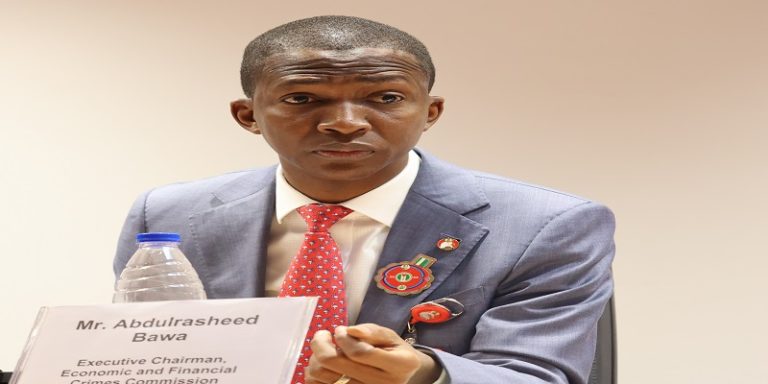
In December, while appearing at the Ministerial Media Briefing organised by the Presidential Communications Team at the Presidential Villa, Abuja, EFCC chairman Abdulrasheed Bawa disclosed that the anti-graft agency recovered over N30 billion out of the N109 billion alleged to have been stolen by Idris.
Bawa spoke on December 15 while responding to a question on the independence of the Commission.
Also, on December 21, 2022, a Federal Capital Territory High Court ordered forfeiture of $900,000, and properties that were recovered from Idris by the EFCC.
The forfeited items are a sum of $899,900, N304.5 million and 15 choice properties in Kano and Abuja.
Nine properties linked to the second respondent, Mohammed Kudu Usman, located in Abuja, Niger and Nasarawa States, were also forfeited in the interim.
Kogi State governor Yahaya Bello’s nephew Ali Bello
The ICIRreported in December 2022that the EFCC arraigned Ali Bello, identified as a nephew of Yahaya Bello, governor of Kogi State, before a Federal High Court in Abuja in December 2022.
He was arraigned alongside one Dauda Suleiman on a 10-count charge of alleged misappropriation and money laundering before James Omotosho, a judge.
Ali Bello, Nephew to Kogi state governor Yahaya Bello,
The Commission stated that the pair, along with one Abdulsalami Hudu, a cashier at the Kogi State House of Assembly who is now at large, took N10.2 billion for personal use out of the state’s coffers.
However, the accused entered a “not guilty” plea to the accusations.
In its decision on the bail request, the court mandated that the defendants provide bail in the amount of N1 billion apiece, along with two sureties who must provide N2 billion bonds and landed property worth N500 million each.
The court also ordered that they be remanded in prison pending the fulfilment of their bail conditions.
The case was then adjourned till February 6, 2023.
Speaker of Ogun State House of Assembly
The ICIRreportedthat the EFCC arrested the Speaker of the Ogun State House of Assembly Olakunle Oluomo on September 1, 2022, at the Murtala Muhammed International Airport, Ikeja, Lagos, and took him to its Lagos office, where he was detained until he was released on administrative bail.
Oluomo is accused of conspiring, forging documents, and stealing more than N2.5 billion.
Speaker of the Ogun State House of Assembly, Olakunle Oluomo,
The Speaker and two other people were brought before Justice Daniel Osiagor.
When the matter came up in November 2022, the Federal High Court in Abeokuta shifted the hearing to January 23 to enable the judge clear pre-election issues before the court.
On the adjourned date, the court could not hear the fraud case because the judge, Justice Joyce Abdulmalik, was reportedly slightly ill.
Former General Manager NSITF Adebayo Adebowale Aderibigbe
The EFCC also arraigned a former General Manager (GM) of the Nigeria Social Insurance Trust Fund (NSITF), Adebayo Adebowale Aderibigbe.
Aderibigbe was arraigned alongside Ogundele Mura Yisa-Yemi before Justice O. A Musa of the Federal Capital Territory (FCT) High Court, Jabi, Abuja.
former General Manager and Head of Legal Services of the Nigeria Social Insurance Trust Fund (NSITF), Adebayo Adebowale Aderibigbe
They were arraigned on a three-count charge bordering on conspiracy and obtaining the sum of N60.4 million by false pretence.
The judge granted the defendants bail in the sum of N50 million and one surety each in like sum.
The judge adjourned the matter till February 21 and 23 for trial.
Former governor of Ekiti State, Ayodele Fayose
Another high profile case being handled by the EFCC is that of the former governor of Ekiti State, Ayodele Fayose.
A Federal High Court in Ikoyi presided by Justice Chukujekwu Aneke, on February 1, adjourned the trial to March 20.
The former governor and his company, Spotless Investment Limited, are being tried over an alleged N6.9 billion fraud.
File Photo: Ayodele Fayose, former Ekiti State governor
The EFCC, on July 2, 2019, re-arraigned Fayose and one other person on an 11-count charge bordering on money laundering and stealing.
The case was adjourned to March 20 and 21 for a continuation of trial.
Ex-NIMASA DG Akpobolokemi
The case of alleged N754.8m fraud against Ex-NIMASA Director General Patrick Akpobolokemi is still pending in court.
Justice R.I.B Adebiyi of the State High Court, sitting in Ikeja, Lagos, on January 30 adjourned the matter to March 6 for the adoption of final written addresses in no-case submission filed by Akpobolokemi.
Former DG, NIMASA Patrick Akpobolokemi
Akpobolokemi and one Agaba are alleged to have defrauded NIMASA of N754.8m.
Former Accountant General of the Federation, Jonah Oguniyi Otunla
In a judgment, a three-member panel of the Court of Appeal, on Monday, January 30 held that a former Accountant General of the Federation, Jonah Oguniyi Otunla failed to prove that there was actually a non-prosecution agreement between him and the EFCC.
The court upheld the arguments of EFCC’s lawyer, Sylvanus Tahir, SAN, and resolved the four issues identified for determination in favour of the Commission.
Otunla reportedly refunded N6.4 billion from the N24 billion he allegedly stole.
He was the Accountant-General of the Federation between June 2011 and June 2015.