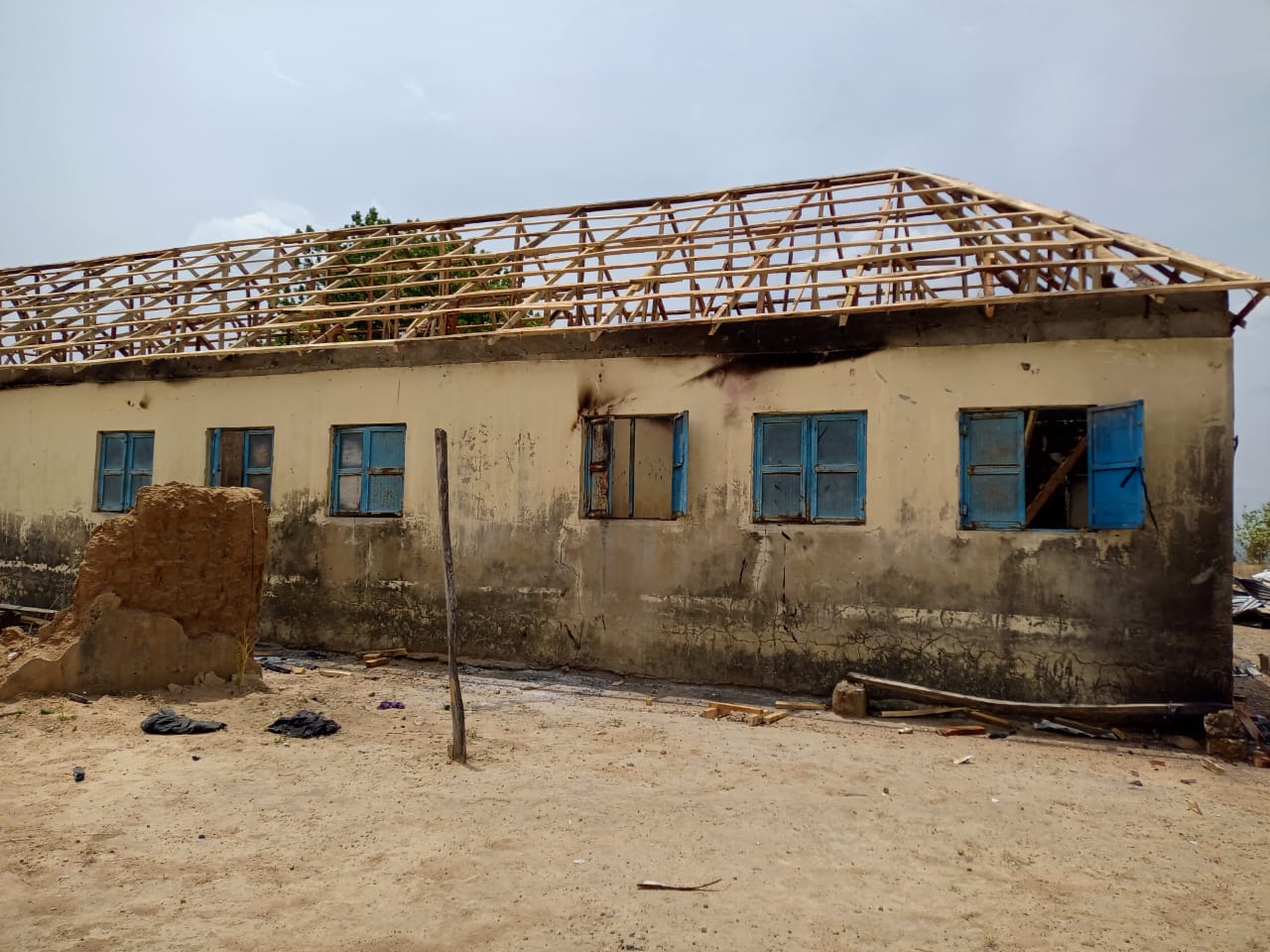
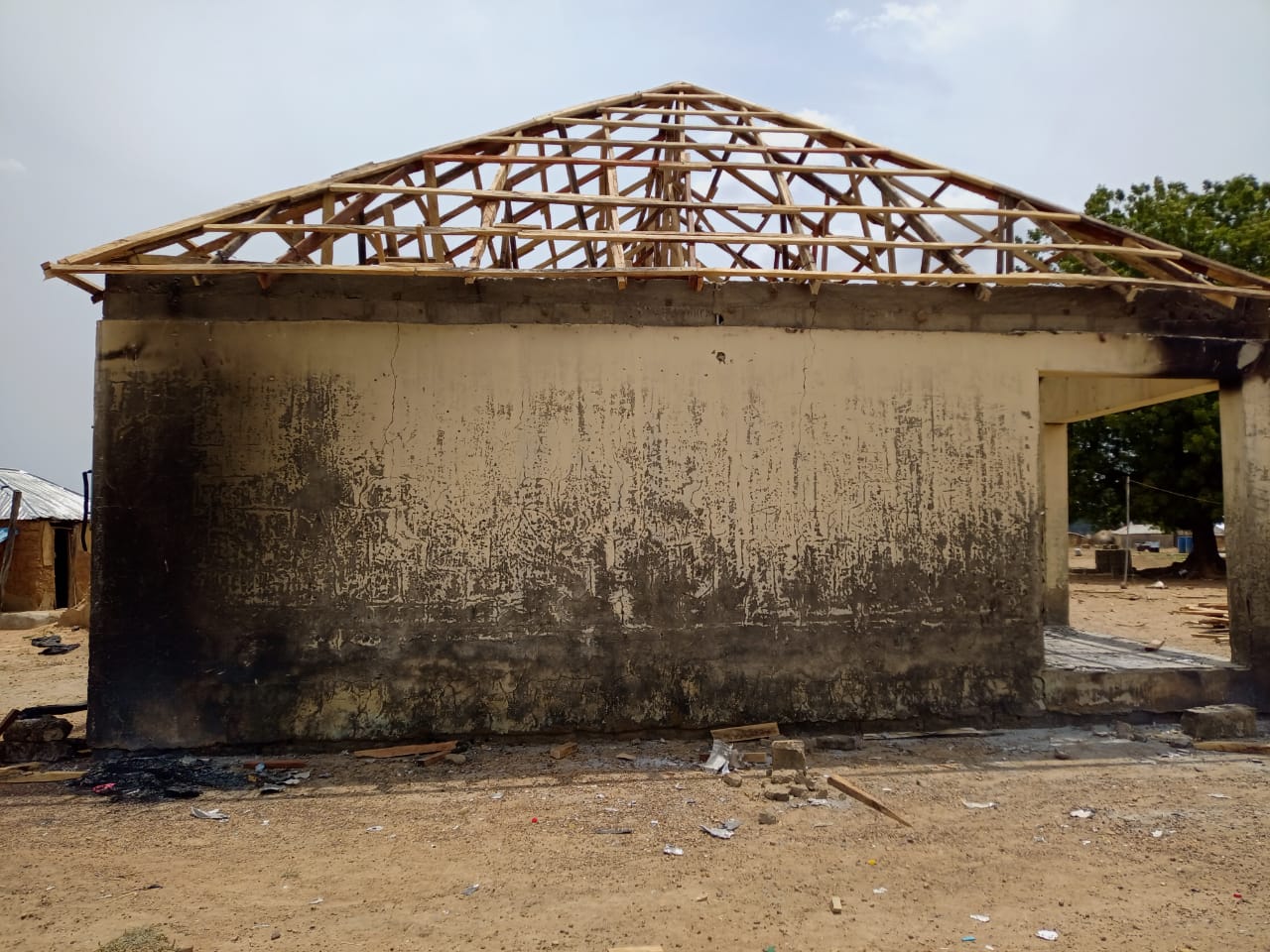
EDO State Government has ordered the immediate closure of three secondary schools in Akoko-Edo Local Government Area following intelligence reports of a kidnap threat against students.
The directive, contained in a circular issued by the State Ministry of Education and signed by its Permanent Secretary, Enodolomwanyi Otamere, said the affected schools were Ososo Grammar School, Ososo Comprehensive High School and Makeke Secondary School.
The circular dated June 9, was obtained by the News Agency of Nigeria (NAN) on Wednesday in Benin.
NAN reports that the closure came against the backdrop of a security intelligence report by the State Security Service (SSS), also known as Department of State Services (DSS).
The reports in a memo dated June 5, and sighted by NAN, warned of an alleged plan by suspected bandits to carry out a mass abduction of school children in Edo North Senatorial District.
According to the intelligence memo addressed to the Nigeria Security and Civil Defence Corps (NSCDC), the SSS intercepted communications between two suspected bandits.
The two suspects allegedly discussed targeting school children after earlier attempts to kidnap wealthy individuals failed to yield expected financial gains.
The report indicates that the suspects believed abducting students will attract greater government attention and increase their chances of securing substantial ransom payments and other concessions.
The memo further revealed that a 25-year-old suspect, was arrested on June 4, while allegedly conducting surveillance around Makeke Secondary School in Makeke community, one of the schools subsequently shut by the government.
According to the document, the suspect’s activities heightened fears that preparations for the planned operation may already have been underway.
Responding to the threat, the security agency advised authorities to strengthen protection around schools and educational institutions across the state, particularly in Edo North.
The SSS also recommended the deployment of additional security personnel, enhanced collaboration among security agencies, local vigilante groups and hunters, as well as intensified patrols and surveillance in vulnerable communities.
Meanwhile in the memo directing the closure of the schools, the permanent secretary said that the decision followed security advisories from relevant agencies warning of threats to the safety of students, teachers and surrounding communities.
“The Ministry of Education has received intelligence reports and advisories from relevant security agencies regarding credible threats to the safety of students, staff, and school communities in some parts of Akoko Edo Local Government Area,” he said
He added that all academic and non-academic activities in the affected schools had been suspended until further notice as part of efforts to safeguard lives and property.
Otamare said that in spite of the closure, candidates sitting for the ongoing West African Senior School Certificate Examination (WASSCE) would continue to have access to examination centres under strict security arrangements.
“Candidates currently participating in the ongoing West African Senior School Certificate Examination (WASSCE) shall be allowed access to sit for their examinations under strict security arrangements and supervision as may be provided by the relevant security agencies and community stakeholders,” he said.
He directed school principals to ensure the orderly release of students to their parents and guardians, secure school facilities and maintain close communication with government authorities and security agencies.
He also urged parents and residents of the affected communities to remain calm and cooperate with security agencies as efforts continue to neutralise the threat and restore normal academic activities.
The ICIR reports that schools closure came hours the state Governor Monday Okpebholo blamed opposition politicians for rising insecurity in Nigeria. He alleged that they kidnap Nigerians to undermine President Bola Tinubu’s leadership.
“There is no vacancy in Aso Rock. They can even kidnap all of us. Yes, there is no vacancy in Aso Rock. What is happening today is in the hands of the opposition. They have failed. Have they not failed?
“Is it by kidnapping children? Then who are you going to govern? There will be nobody for you to govern. So, let them give us peace so that the president and other elected officials can govern effectively,” Okpebholo said.
Nigeria has seen a sharp rise in kidnapping and other criminal activities by armed non-state actors in recent months.
Schools and communities have come under repeated attacks, with pupils and residents being whisked away, respectively.
The ICIRreported the incident in Oriire Local Government Area of Oyo State, where gunmen stormed three schools and abducted dozens of pupils, students, and staff. A teacher was killed while the attack was being carried out, while another was beheaded by the assailants after the incident. The remaining victims have yet to be freed.
This organisation also recently reported how the Nigerian security forces freed 360 civilians, mainly women and children, abducted by terrorists from Ngoshe community in Gwoza Local Government Area of Borno.
THE PRESIDENTIAL candidate of the Nigeria Democratic Congress (NDC), Peter Obi, has sued his former ally and actor-turned-politician, Kenneth Okonkwo, over comments he allegedly made during a live television appearance.
In a pre-action letter dated June 9, 2026, Obi, through his legal team led by Alex Ejesieme, a senior advocate, accused Okonkwo of making damaging allegations during an interview on Channels Television’s Sunrise Daily programme on June 8.
According to the lawyers, the statements were later circulated widely by news outlets, blogs and social media users, further amplifying their reach.
Okonkwo allegedly claimed that Obi and senior NDC figures in the South-East demanded money from aspirants seeking tickets to contest legislative positions under the party platform.
The pre-action notice notes that “Obi, together with the leaders of the Nigeria Democratic Congress (NDC) in the South-East, informed the party’s aspirants that any person seeking to contest as a member of the House of Representatives must, after paying the prescribed expression of interest fee, pay a bribe of ten million naira (N10,000,000.00) to the NDC and to the caucus leaders.”
Obi’s lawyers said Okonkwo also suggested that evidence existed to support the accusation and further alleged that Obi personally handled the selection of candidates from a hotel room.
According to the pre-action notice, Okonkwo allegedly warned party members that Obi would deceive them, adding that the presidential candidate collected funds from Nigerians abroad and was involved in unlawful activities alongside other party officials.
The legal team argued that the claims portrayed the former Anambra State governor as someone engaged in corruption, fraud and other criminal conduct.
In the letter, the lawyers stated: “The above statements, in their natural and ordinary meaning, and by necessary implication, falsely and maliciously represent our client as a person who demands, solicits, organises and collects bribes; who extorts, defrauds and swindles political aspirants of their money; who is a fraudster, a scammer and a dishonest political actor; and who, in concert with others, is engaged in criminal conspiracy and is actively perpetuating criminality.”
They maintained that the allegations lacked any factual basis and exceeded the limits of ordinary political criticism.
Describing the statements as “false, baseless, malicious, reckless, defamatory and wholly unsupported by any fact,” the lawyers insisted that the comments caused serious harm to Obi’s reputation and public image.
As part of the demands, Obi asked Okonkwo to publicly withdraw the statements and issue an apology within seven days. The apology, the notice said, must receive equal or greater publicity than the original allegations.
The letter further demanded: “Pay to our Client, through our chambers, the sum of five billion naira (N5,000,000,000.00) only, as general, aggravated and exemplary damages for the grave injury occasioned to his hard-earned reputation, character and public standing by the said false, malicious and defamatory statements; and deliver to us a written undertaking that you shall cease and desist from making, publishing, circulating or causing to be published any further false, malicious or defamatory statement concerning our client.”
The lawyers warned that failure to meet the conditions would lead to court action seeking damages, injunctive orders, legal costs and other remedies.
Reacting to the legal threat, Okonkwo dismissed the demand in a post on his X account, claiming he had yet to review the notice.
He wrote: “It has been brought to my notice that there is a letter circulating online from the hypocrite, Peter Obi, and his lawyers that I should pay him N5 billion. Hahaha! If Peter Obi is looking for money to campaign, he should privately ask me for assistance, not come from extortion, and I will help him.”
The former Labour Party campaign spokesperson, the party on which Obi vied for the presidency in 2023, added that he would provide a detailed response after reading the document.
“I will reply to the letter whenever I have the time to read it later in the day. Please, send it here if you have it. It will be a shame to Peter Obi and his lawyers if they do not take this case to court. I don’t have time or patience for scammers,” he stated.
Okonkwo also suggested that a court case could expose information he obtained while serving as Obi’s spokesperson during the 2023 election campaign.
“Anyone who decides to sue his former spokesperson for defamation is indeed very unwise,” he added.
Obi and Okonkwo were close political associates during the 2023 presidential election when the actor joined the Labour Party after leaving the All Progressives Congress (APC). He later became one of the prominent voices of Obi’s campaign team.
However, the relationship between both men has since deteriorated, leading to a series of public disagreements.
UNITED States President Donald Trump’s decision to retaliate after Iran allegedly shot down his country’s Apache helicopter while it was patrolling the Strait of Hormuz has put the fragile ceasefire between the two nations under threat.
In a post on social media on Tuesday, Trump said the two pilots on the jet survived unharmed after it went down near Oman’s coast, noting that a US military drone later rescued the crew.
“I have just been informed by our Great Military that last night the Iranians shot down one of our highly sophisticated Apache Helicopters while patrolling over the Strait of Hormuz. There were two pilots involved, both are safe and uninjured,” Trump said on his Truth Social.
He described the development as an attack that required a response, raising fresh concerns about the fragile ceasefire and ongoing efforts to reach truce between Washington and Tehran, following months of war.
Reacting to the claim, Iranian Foreign Minister Abbas Araghchi did not directly confirm or deny involvement but warned that foreign military forces operating near Iran’s territory risked accidents or being caught in crossfire.
Araghchi warned that foreign military forces operating near Iranian territory to leave the region following Trump’s remarks.
IAraghchi stressed that the Strait of Hormuz is not international waters but a shared waterway between Iran and Oman, adding that maritime boundaries in the area are clearly defined.
“Foreign forces operating close to our territory are constantly exposed to risks arising from their own mistakes, accidents, or the possibility of being caught in crossfire,” Araghchi said.
He noted that Iran’s armed forces remained on high alert to respond to any violation of the country’s airspace, territorial waters, or land borders.
He urged foreign forces to withdraw from the region, stating that doing so would be the best way to reduce tensions and avoid attacks.
While reiterating Tehran’s preference for diplomacy, the Iranian minister added that the country was prepared to respond through other means if necessary.
The incident comes amid heightened tensions in the Middle East, with clashes continuing between Iran and Israel, as Israeli strikes on the southern Lebanese city of Tyre on Tuesday, reportedly killed at least eight people, marking one of the deadliest attacks on the city since fighting began on February 28 this year.
The Strait of Hormuz remains a critical global shipping route, carrying a significant share of the world’s oil and gas exports, while ongoing hostilities continue to threaten regional stability and international energy markets.
THE House of Representatives has directed the National Security Adviser, Nuhu Ribadu, and heads of Nigeria’s security institutions to appear before it to provide explanations on the deteriorating security situation in the country.
The decision was reached during Tuesday’s sitting of members of the lower national legislative chamber after lawmakers considered and approved a motion by Sulaiman Gumi, who represents Gummi/Bukkuyum Federal Constituency in Zamfara State.
The move comes as many parts of the country continue to grapple with violent attacks linked to banditry, terrorism, kidnappings, and other criminal activities that have left hundreds of families displaced and grieving.
During deliberations, legislators expressed dissatisfaction with the persistent violence despite repeated promises from both the Federal Government and security agencies that the situation would be brought under control.
The invitation followed growing public concern over a series of recent attacks, including incidents targeting educational institutions. The abduction of pupils and teachers in parts of Oyo and Borno states has further heightened fears among citizens and renewed questions about the effectiveness of current security measures.
Pressure has also mounted on the administration of President Bola Tinubu, with some Nigerians calling for changes within the nation’s security architecture, with the hope of achieving better results against the menace.
The latest parliamentary action comes not long after Tinubu addressed the plight of victims still being held by kidnappers. In a statement personally signed to commemorate Children’s Day on May 27, the president acknowledged the pain faced by affected families.
“As we mark this special day, which coincides with Eid-el-Kabir, some Nigerian children and their teachers in Oyo and Borno should be with their families but are being held captive by criminals. Some children have been forced into fear. Some parents cannot join today’s celebration because their hearts are set on one prayer: ‘Bring our children home.”
The president assured citizens that efforts were ongoing to secure the release of those in captivity. However, fresh incidents have continued to fuel concerns over safety in several communities.
One of the attacks that drew national attention occurred on May 15 when gunmen stormed Community High School in Ahoro-Esinele, Oyo State. The assailants took away the school principal, several members of staff, and dozens of students. A teacher lost his life during the assault, while another victim who was abducted was later beheaded by the attackers.
The incident sparked demonstrations by teachers in Ogbomoso and intensified demands for stronger protection around schools.
Education stakeholders have also voiced alarm. The Nigeria Union of Teachers described the attacks as “barbaric and inhuman,” warning that continued threats against schools could force educators nationwide to reconsider their services.
FOR many Nigerian families, living with sickle cell disease means enduring persistent pain, exhausting sleepless nights, and the heavy emotional and financial toll of constant medical care.
These discomforts are shadowed by the constant fear of losing a loved one too soon.
The excruciating pain of sickle cell anaemia has claimed countless lives and left families drowning in grief and emotional trauma across Nigeria.
In recognition of the trauma associated with sickle cell, the United Nations designated June 19 annually as World Sickle Cell Day.
Its mission is to shed light on the societal impact of Sickle Cell Disease (SCD), drive research advancements, and advocate for improved clinical care and early detection procedures.
Experts define SCD as a genetic blood disorder that causes red blood cells to become abnormally shaped, blocking blood flow and leading to severe pain, infections, organ damage, and sometimes death.
According to the Centre for Policy Impact in Global Health, Nigeria remains the global epicentre of SCD.
The country records more than 150,000 babies born with the condition every year, representing over 33 per cent of the global burden.
The disease continues to cause high mortality, especially among children, with many dying before reaching adulthood due to limited access to quality healthcare and funding for treatment.
For Shiva M’ouul-Kondoun, Bursar of the University of Abuja, now Yakubu Gowon University, childhood memories are filled not with joy or laughter but with repeated tragedy.
She recounted how sickle cell disease wiped out half of her siblings.
Born into a family of 12, she watched six of her siblings die from the disease before turning 16.
“I watched my siblings lying side by side in one room, gasping for breath, while my mother stayed with them and the rest of us ran around seeking help.
“Months and years passed. One after another, without much of a gap, they died; it was a painful cycle of hope and grief,” she said.
Her voice trembled as she described the helplessness her family endured, watching young lives fade away despite desperate efforts to save them.
M’ouul-Kondoun’s story reflects the painful reality faced by so many families across Nigeria, where sickle cell disease remains one of the country’s most devastating but often neglected health conditions.
Binta Salisu also recalled her ordeal.
She still remembers the pain her son, Ismaila Salisu, suffered before he died.
He was a playful and lively child whose life gradually became overshadowed by the unbearable pain of SCD.
She said the sign started shortly after his first birthday.
“He would cry through the night holding his hands or legs as if something was biting him from inside.”
She said at first, her family thought it was just a normal childhood illness.
Medical tests later confirmed that Ismaila had SCD. From that moment, life changed completely for the family.
“It became a cycle of hospital visits, medications, and sleepless nights. He was always in pain.
Sometimes he wouldn’t eat. Sometimes he would just lie there and stare at me.”
The emotional burden became unbearable for her as a mother. “I used to pray and ask God to take my life instead and spare him because he was too young.”
She said a doctor later explained that Ismaila suffered repeated sickle cell crises, episodes of intense pain caused by blocked blood vessels, which gradually weakened his body system.
On the day he died, Salisu said her son struggled for breath.
“He held my finger so tight, like he did not want to let go, then suddenly he became still.
“He was gone forever,” she said.
Beyond the physical pain suffered by patients, families also battle financial hardship, especially when emergency medical care is needed.
Ruqqayya Abdulrahman, 27, knows this reality too well.
She narrated how she lost the man she intended to marry to sickle cell disease in 2025.
Describing him as kind, loving, and full of dreams, she said his death shattered her world.
“He was the man of my dreams.”
She said the tragedy happened after they attended his younger sister’s graduation ceremony.
Abdulrahman said her former partner started complaining of stomach pain.
“We thought it was just the usual crisis, so he took painkillers and the pain reduced briefly.
“But after some time, the pain became severe and we rushed him to the hospital.”
At the hospital, doctors reportedly recommended an urgent blood transfusion.
However, the family struggled to raise money for the blood.
“After spending so much on tests and treatment, they said he needed blood urgently, but there was no money.
“The delay in getting a blood transfusion was what led to his death on September 7, 2025, a date I will never forget,” she said.
Across Nigeria, similar stories echo in homes, hospitals, and communities: stories of parents burying children, lovers losing partners, and families silently battling emotional and financial exhaustion.
Health experts say that in spite of advances in treatment, many sickle cell patients in Nigeria still lacked access to adequate care, essential drugs, and proper counselling.
They also point to poor genotype awareness, inadequate newborn screening, and weak healthcare systems as major factors worsening the burden of the disease.
However, a pharmacist at the Federal Medical Centre, Keffi, Nasarawa State, John Uwaya, points out that there is hope for people living with SCD.
He said advanced stem-cell approaches or gene-based correction of haematopoietic stem cells could functionally reduce sickle cell disease by establishing erythropoiesis that produces non-sickling haemoglobin.
“It can be curative when a compatible donor is available, but it requires rigorous compatibility testing and carries risks related to conditioning, compatibility, and procedure-related complications.
“Stem cell-based or gene therapies are emerging options described as potentially less invasive but currently technologically complex and costly.”
Uwaya said stem cell therapy and bone marrow transplantation worked by increasing the number of healthy red blood cells in the body so that they outnumber the sickled cells.
As a result, patients experience fewer crises, less severe pain, and a better quality of life.
However, he stressed that the treatment did not necessarily mean that a person’s SS genotype completely changed to AA or AS.
While stem cell therapy and bone marrow transplantation offer hope for curing sickle cell disease, they remain out of reach for average Nigerians due to high cost.
Uwaya said that treatment could cost over N5 million, making it unaffordable for most families, particularly those already burdened by the economic challenges associated with managing the disease.
“Although some patients have benefited from grants and special intervention programmes, access to curative treatment is still limited because the technology is expensive and not widely available,” he said.
These challenges have pushed non-governmental organisations and advocacy groups to intensify efforts toward supporting patients and creating awareness.
One of them is the Crystal Shape Sickle Cell Foundation, which has continued to advocate for better healthcare access and support for persons living with SCD.
Mariam Hassan, co-founder of the foundation established in 2016, said many families suffered silently because treatment remained expensive and inaccessible.
According to her, poor awareness, inadequate advocacy, high cost of drugs, especially hydroxyurea, and difficulty accessing safe blood continue to threaten the survival of patients.
“Many people still do not understand the seriousness of sickle cell disease until it affects their family directly,” she said.
She stressed the need for stronger government intervention, subsidised treatment, public education, and improved healthcare services for patients.
Hassan said that beyond medical treatment, there was also an urgent need for emotional and psychological support for families living with the condition.
For many of them, SCD is more than a health challenge; it is a lifelong emotional battle marked by fear, uncertainty, and painful loss.
Above all, rather than mere sympathy, families navigating Nigeria’s sickle cell crisis are demanding broader awareness, affordable treatments, accessible care, and the prospect of a better future. (NAN)
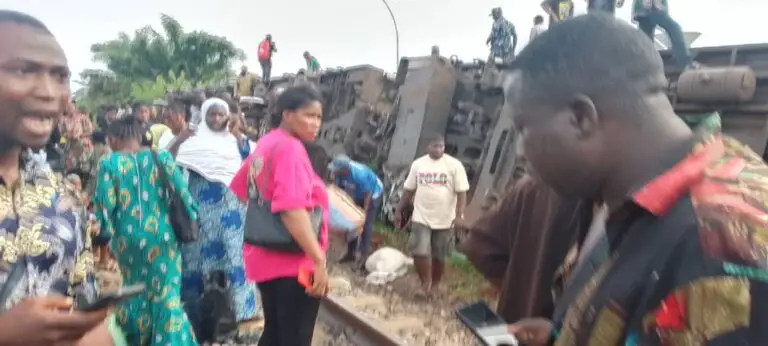
THE Nigerian Railway Corporation (NRC) has confirmed the death of four passengers and injuries to at least 24 others after four coaches of the Warri–Itakpe Train Service (WITS) capsized and another derailed near Agbor, Delta State.
The NRC disclosed details of the incident in a statement released on Tuesday, June 9, through the Federal Ministry of Transportation and signed by the ministry’s Permanent Secretary, Funsho Adebiyi.
The ICIRreported that the accident, which occurred on Monday, June 8, is the latest in a series of operational setbacks that have plagued the rail corridor in recent years, raising renewed concerns about safety on one of Nigeria’s major standard-gauge railway lines.
“The Nigerian Railway Corporation (NRC) regrets to confirm that a serious train accident occurred yesterday along the Warri–Itakpe Train Service (WITS) corridor near Agbor, Delta State,” the statement partly read.
“Preliminary reports indicate that four coaches capsized while one coach derailed, resulting in the unfortunate loss of four lives, comprising two adult females, one adult male, and one infant passenger,” the statement added.
The ministry said a total of 442 passengers had booked for the journey, while 40 crew members, security personnel and third-party service providers were also on board, bringing the total number of persons on the train to 482.
It stated that emergency rescue and evacuation operations were immediately activated with support from the Delta State Government and relevant emergency agencies.
“Rescue and evacuation operations were immediately activated with the support of the Delta State Government, NEMA, FRSC, the Police, Civil Defence, local authorities, security agencies, and other emergency responders, and were completed by 6:30 p.m. Injured passengers were evacuated to medical facilities in Agbor for treatment,” the statement said.
The ministry disclosed that among those onboard were Ede Dafinone, a senator representing Delta Central Senatorial District, and former Delta State Secretary to the State Government, Patrick Ukah.
“As of the time of this release, 24 serious injuries have been recorded, while several other passengers sustained varying degrees of injuries and are receiving medical attention. One NRC staff member suffered a traumatic limb injury and is currently receiving treatment and is reported to be in stable condition,” the statement noted.
The ministry expressed condolences to the families of the deceased and wished those injured a speedy recovery.
The corporation also commended the Delta State Government, emergency responders, security agencies, medical personnel, members of the public, the NRC Mechanical Directorate and the Special Rescue and Emergency Team for their swift response to the incident.
According to the ministry, the train’s full passenger manifest has been recovered and would be made available to relevant authorities. It added that efforts were ongoing to identify all injured and deceased persons for proper documentation.
The latest derailment adds to a series of operational setbacks that have plagued the Warri–Itakpe rail corridor in the last couple of years.
In May 2026, the Nigerian Railway Corporation (NRC) suspended services on the route, citing operational challenges and technical advice from its engineers to allow for safety checks, maintenance and system assessments.
Recall that in November 2025, the Warri–Itakpe train derailed in the Agbor area of Delta State just four days after the route resumed operations following months of suspension linked to technical faults and track repairs.
The NRC subsequently halted services again to conduct safety and security audits.
Before the November derailment, the NRC had suspended operations on the Warri–Itakpe route on August 2 following a series of train breakdowns and technical faults.
Meanwhile, the Ministry of Transportation said a full investigation had commenced to determine the cause of Monday’s accident.
“A full investigation into the cause of the accident has commenced, while efforts will continue to account for all passengers and provide the necessary support to those affected.”
THE Nigerian Labour Congress (NLC) has confirmed the demise of prominent trade unionist, Domingo Adeleke, who passed away in Geneva, Switzerland, while attending the 114th Session of the International Labour Conference (ILC).
Confirming the development to The ICIR, the NLC spokesperson, Benson Ukpa, said Adeleke died on Tuesday after a brief illness.
“It is with deep sorrow that the Nigeria Labour Congress and the entire trade union movement in Nigeria, especially the 2026 Workers’ Delegates to the International Labour Conference, announce the passing of Comrade Domingo Michael Adeleke, who died today in Geneva after a brief illness while attending the 114th Session of the International Labour Conference,” the NLC said.
The congress explained that Adeleke was part of Nigeria’s delegation to the annual conference organised by the International Labour Organization (ILO), which brings together governments, employers and workers’ representatives from across the world to deliberate on labour and employment issues.
“Comrade Domingo was a committed trade unionist whose dedication to Nigerian workers and the struggle for decent work took him to the global stage right to the end. His loss is felt deeply by all who knew him and worked alongside him,” it added.
The NLC noted that its leaders visited the hospital where Adeleke’s body is being kept and commenced arrangements for its repatriation to Nigeria.
The workers union extended its condolences to the deceased family, colleagues and members of the labour movement, as it described his passing as a significant loss to organised labour in Nigeria.
The ICIR reports that until his passing, Adeleke was the chairman of the Lagos State Joint Negotiating Council (JNC) and a member of the Nigeria Civil Service Union (NCSU), among others.
His death has cast a sombre mood over Nigeria’s participation at the ongoing International Labour Conference in Geneva, where delegates are discussing key issues affecting workers and employment worldwide.
Tributes have continued to pour in from labour leaders and workers across the country, many remembering him for his contributions to labour relations, advocacy for workers’ welfare and his commitment to social justice.
A wave of coordinated bandit attacks has devastated communities in Shiroro Local Government Area of Niger State, leaving deep scars on livelihoods and social life. Families are abandoning their homes, children are forced to drop out of school, and farmlands lie abandoned. For those who remain, fear, grief, and uncertainty shadow their lives. This ICIR report examines how relentless bandit attacks on communities have shattered lives and displaced countless people in Niger State.
On a Tuesday morning in April 2026, Hussaina Aminu was preparing for the market day when gunmen stormed her village of Bagna, Shiroro Local Government Area of Niger State and killed her father.
Bagna is surrounded by several villages, including Lanta, Bota, Unguwan Tuta, and Erena town, which serves as the central hub for socio-economic activities in the area.
Before the attack, there had been rumours that armed men were loitering around Majiba and Lanta villages. But such warnings had become a familiar part of life; many heard them often enough and had learned to dismiss them, clinging to hope that danger would strike elsewhere. On that Tuesday, the 18-year-old and her family did the same. They had readied themselves for the market, but soon enough, the rumours turned to reality as gunfire cracked the air, shattering the fragile peace of Bagna community.
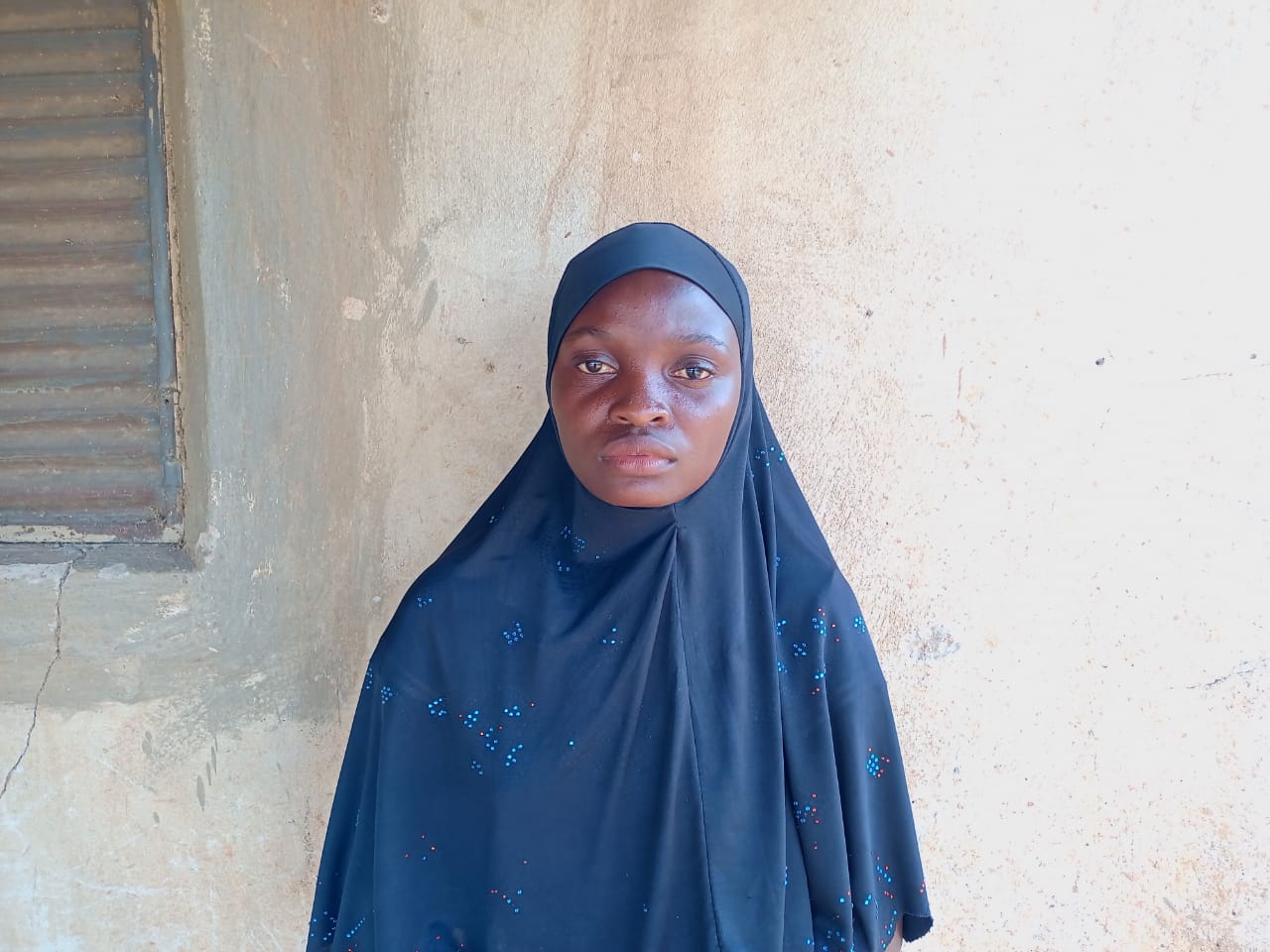
Eighteen-year-old Hussaina Aminu
Weeks later, she recounted to The ICIR how the attack had taken them by surprise. “Nobody thought the attackers would come directly into their area,” she said, adding that they had assumed the armed men were headed elsewhere, “perhaps Bassa, as previous rumours had suggested.” She, however, said even when the sound of gunfire crept closer, many had ignored it until it was too late for families to escape.
In the aftermath of the attack, Hussaina Aminu lost her father and some relatives. Since then, her education has been interrupted, but more than that, she suffers from Post-Traumatic Stress Disorder (PTSD).
“Every loud sound now reminds me of that Tuesday. I can no longer sleep easily, and when I do, it often brings back the same memories,” she said. “I dream about the attack and often wake up unsettled,” she added.
Her experience mirrors the ordeals of countless young girls, children and elderly persons in Shiroro, where relentless attacks by gunmen, often called bandits, have claimed hundreds of lives and left thousands displaced.
At a nearby village of Rafin-Sanyi, 14-year-old Victoria David was helping her mother with home chores when the shooting started. As everyone ran for safety, David and her brother took cover in a nearby forest, but their father was not so lucky; he was shot in the chest.
The teenager said the attack has left her emotionally exhausted. She battles insomnia and often replays the tragic event, wondering where to find sustenance. “With my father now deceased. I have lost hope,” she said.
Fourteen-year-old Victorial David
Across Bagna, Erena, Rafin-Sanyi, Lanta, Bota, Unguwan Tuta, and neighbouring communities of Erena ward in Niger’s Shiroro LGA, the air carries echoes of vulnerable voices like Hussaina Aminu and Victoria David, whose lives have been altered forever.
How it started
Days before the April 8 attack on communities of Erena, an administrative ward in Shiroro LGA, dangerous signs had manifested through unusual movements of motorcycles reported around Majiba, near Bagna and Lanta villages. Residents said they noticed unfamiliar motorcycles using bush paths and gathering in a forest.
Although such signs are often taken seriously in an area scarred by constant insecurity and the menace of bandits, they do not always come with certainty. For residents, the presence of armed men has become eerily familiar; sometimes they pass through without striking, other times, the attack occurs dozens of kilometres away.
Ateiro Abakaro, Erena community leader
Ateiro Abakaro, the 54-year-old community leader of Erena, said the first clear sign manifested when the attackers struck Lanta village days before they proceeded to Erena and environs.
He said the armed men had moved into the village on Sunday, killed one person and rustled livestock. “At the time, many residents assumed that was the extent of the attack. They believed the armed men had already carried out their mission and would disappear into the forests again.”
But they were mistaken. Even when villagers reported continued movements of suspected bandits around Majiba, no one could say with certainty where their next target would be.
Graveyards of some of the victims of the April 7 attack in Erena
“The uncertainty itself created fear,” Ateiro said, adding that local leaders and residents passed the intelligence to security agencies, but not much was done to prevent the attack. In the aftermath of the attacks, the ICIR gathered that at least 61 people had been killed across the neighbouring communities.
Terrorists overwhelm security forces
Findings revealed that the attackers first confronted the State Security Service (SSS) at their camp in Bagna. Eyewitnesses said security personnel stationed there had tried to resist the invasion, while local vigilantes from nearby communities provided support. But they claimed the overwhelming number of the attackers made resistance a challenge.
Back view of the SSS office overrun by terrorists in Bagna
The ICIR gathered that the bandits arrived in large numbers, riding from the forest into the town. Ateiro estimated about 300 motorcycles, with each motorcycle carrying two or three armed men. By community estimates, nearly 900 armed attackers invaded the area.
“The SSS officers fought back, and local vigilantes reinforced them, but the attackers were too many,” he said, noting that the terrorists eventually overpowered the camp and set it ablaze.
Overran SSS office in Bagna, Shiroro LGA of Niger State
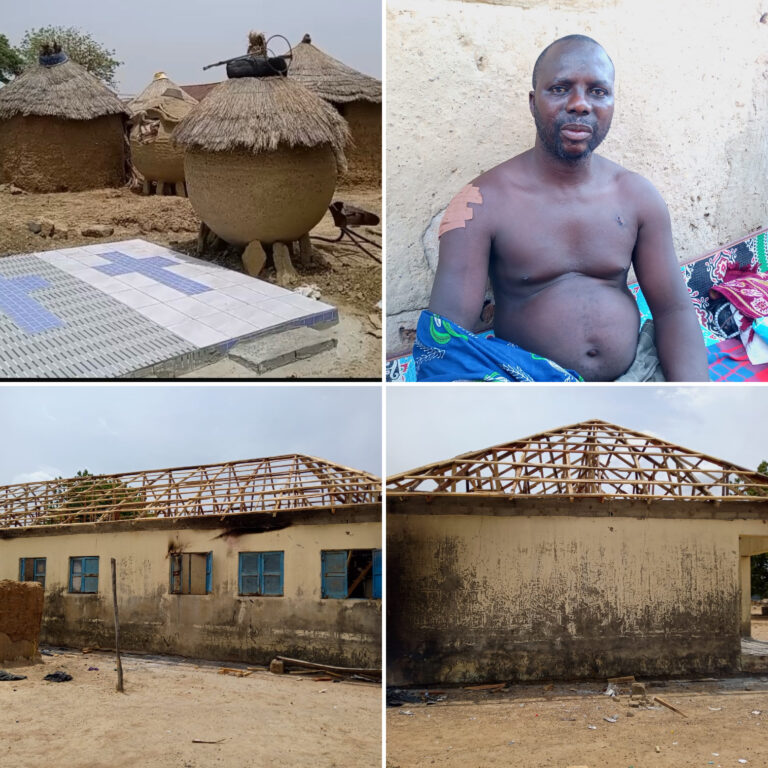
When The ICIR visited the SSS office in April, renovation work was underway. However, parts of the building showed clear signs of destruction, with sections burnt and visibly damaged. The attack also left dented and scorched structures behind.
Once the SSS position in Bagna fell, residents said the armed men advanced toward other towns. Eyewitnesses believed that the terrorists moved towards Erena town due to the visible movements of civilians in that direction. They said it was during that push that many vigilante men and residents were killed.
When The ICIR contacted the Deputy Director, Public Relations and Strategic Communications of the State Security Services (SSS), Favour Dozie, on May 25, she declined to comment on the attack on the SSS facility in Bagna. Instead, she forwarded an earlier statement issued by the Niger State Government urging residents to remain vigilant as security operations intensified in Shiroro LGA.
However, the ICIR observed that the statement also did not specifically respond to questions regarding how the SSS facility in Bagna was overrun and set ablaze by the attackers.
Running through gunfire
Fifty-seven-year-old Solomon Ado, a resident of neighbouring Bagna Bota, remembers the attack through the image of his brother, who was fatally shot in front of him. The arrival of the bandits had caused pandemonium as residents ran towards Erena, believing it would offer safety.
Solomon Ado, a 57-year-old resident of Bagna Bota
It was in such chaos that Ado said the armed men surrounded them. With no clear path out for most of them, the bandits opened fire, and his brother Jude, alongside another relative, Peter John, were killed.
“They came in more than 100 motorcycles, with about three people on each bike,” he recalled, adding that “Peter John, and Jude Solomon were killed in my compound.”
His account reflects what many survivors described as a pattern where the attackers used both mobility and numbers to trap fleeing residents. With over a hundred motorcycles reported in some sections alone, the bandits moved faster than civilians on foot. Many who tried to outrun them were intercepted on open paths between villages.
Villages turned into ghost towns
Days after a terrorist attack in Bagna village, residents fled the community.
A day after the deadly attack on Bagna and neighbouring communities, the fear of further invasion spread across other communities, forcing hundreds of residents from Bassa and environs to flee their homes. Many were seen carrying their luggage and what little belongings they could carry on their heads and shoulders as they moved towards Erena town.
Erena town is a nearby garrison town, less than 30 kilometres from Bagna, where many displaced families usually take refuge during attacks or impending invasions. Soon after the attacks, many residents of Bagna, Rafin-Sanyi, Lanta, Bota, and Unguwan Tuta had abandoned their homes, food supplies, and farmlands for refuge in Erena.
While some were killed while trying to reach Erena’s Haven, Ahmed Tanko, who made it to Erena, explained that Bagna and neighbouring communities have been emptied, saying residents were afraid to return. As a witness to the attack, he told The ICIR that Bagna and the surrounding communities were once peaceful farming settlements where residents depended on maize, yams, beans, and livestock for survival. He, however, said repeated attacks have turned the once-peaceful but economically charged communities into ghost settlements.
Mary Bitrus, a displaced mother of four now taking refuge in Erena, said the attack destroyed everything her family had worked for. Sitting outside an unfinished building where she now sleeps with her children, she recalled how they fled with only the clothes they were wearing.
“Before this happened, we had food in the house, we had our farm, and my husband was working. Now we depend on people to survive,” she said. “Sometimes my children cry because they are hungry, and I cannot do anything. We don’t know when we can go back, and even if we return, we don’t know what we will meet there.”
The mother of four said many families remain separated after the attack, adding that some women arrived in Erena without their husbands or children, while others are still searching for missing relatives who disappeared during the chaos.
One of the affected villages in Erena is already deserted.
When the ICIR visited Bagna, it appeared deserted, with only occasional sightings of residents who had returned briefly to salvage remaining belongings or assess damages to their homes.
Findings also indicate that several deserted communities have effectively ceased normal economic activities, as markets, schools, and places of worship remain closed. Community sources further suggest that the continued attacks have forced more families to move repeatedly between makeshift shelters, particularly in Erena and other safer towns.
Displaced, struggling to survive
Blessing Dogara survived the siege on Bagna but now struggles to feed while taking refuge in Erena. The 25-year-old had lost three brothers on the day of the attack and, like many others, has now left behind a farmland, harvested produce, and little savings built from farming and trade.
One of the IDP camps in Erena, where many people like Blessing are camping, following attacks on their villages
“We can’t go back home yet,” she said, adding that they fear their attacks could launch further attacks in the near future.
Habiba Aliyu, a resident of Gbaita village, said her family survived the attack, but life afterwards has been difficult. Before the attack, the 36-year -old said farming sustained her family. “Our children’s school fees were paid through that. It provided us with food and supported our daily living. But now, going to the farm feels like taking a risk many are not ready to take,” she said.
Habiba Aliyu
Nigeria’s broader displacement figures reflect the scale of that reality. According to the United Nations High Commissioner for Refugees (UNHCR), Nigeria has over 3.7 million internally displaced persons as of March 2026, driven by armed conflict, banditry, terrorism, communal violence, and natural disasters. UNHCR noted that the crisis continues to disrupt livelihoods and leaves many families dependent on temporary humanitarian support rather than long-term recovery.
The National Bureau of Statistics (NBS) also reported that more than 3.3 million Nigerians are living as internally displaced persons across 14 states in 2023.
Niger State remains one of the states repeatedly affected by displacement, with attacks by armed groups and repeated violence in rural communities forcing people out of their homes.
Strained, overstretched local security
The ICIR gathered that about 18 vigilante officers died while defending their communities, and their remains were later recovered from Erena. Among them was a staff member of the Local Education Authority and another who had just completed secondary school.
While this reporter could not establish a breakdown of vigilante members killed in each community, Ateiro Abakaro, the Erena community leader, said about seven of them were from Erena, while others were from neighbouring villages.
“The attackers were too many, too many to be handled. Too many. Our guys actually tried,” he added.
He said their deaths were particularly painful because they represented the future of the community.
Haruna Adam’s brother Balapada was a member of the community vigilante group who lost his life defending his community
Among the dead was Balapada, who died protecting the people of Erena. His elder brother, Haruna Adam, told The ICIR that Balapada fully understood the danger before joining the vigilante group, adding that the deceased believed he was protecting the lives and properties of residents.
“He had taken that responsibility seriously, even though the men confronting the bandits were often outgunned. He was aware it was dangerous, but he still accepted the risk. He took an oath to protect the lives and properties of the Erena community in general,” he noted.
Yakubu Dada was one of the lucky vigilante members. He was seated among his kinsmen when news broke that terrorists were advancing towards the SSSoffice in Bagna. Having defended Erena community for four years, Dada rushed into his room, grabbed his pump-action gun, and headed towards Bagna alongside several of his colleagues.
Yakubu Dada, while nursing his gunshot wound at his house in Erena
He described the attackers as overwhelming in number, saying they came like flies and surrounded the area. He said the vigilantes had moved in to assist SSS operatives, but were overran while others attempted to retreat and take cover.
Unfortunately, he said it was during that retreat that he was shot in the shoulder. “There were many of them on motorcycles, and they were shooting at us from different directions. It was an open field with no place to hide,” he said. “That was why many of our people were killed.”
Dada, who was later hospitalised, told The ICIR the attackers had chased after them, hoping they had AK-47 rifles, adding that “that was what they were asking us to surrender.”
Now weeks after the attack, Dada laments neglect. “When I was wounded, no one came to my aid. It was only the vice-chairperson, Janet S. Auta, and the DPO of Erena Police Station who gave me N10,000 each. My uncle, Danjuma Goma, paid all my hospital bills,” he added.
The ICIR reached out to the Shiroro Local Government Chairman, Isyaku Bawa, on Monday, May 25, over allegations of neglect and inadequate support for injured vigilante members and the families of those killed during the attack, but his line was unreachable, and a text messages sent to him were not replied to.
We rely on pump-action guns, lack formal training- Vigilante
Aliyu Yakubu, Assistant Chairman of the Vigilante group and Intelligence Officer of the Erena branch, lamented that vigilantes have no formal training, no institutional backing, and no reliable government assistance, adding that they rely mostly on pump-action guns while confronting attackers with military-grade weapons.
Aliyu Yakubu, Assistant Chairman of the Vigilante group and intelligence officer of the Erena branch
This was the position of several local security operatives protecting Erena and the neighbouring villages.
The ICIR reports that in many cases, local security forces are often sacrificed against terrorists carrying sophisticated firearms and arriving in large numbers. Nigeria’s security framework allows for community-based support groups in some states, but their capacity varies widely depending on local funding and government coordination.
In many of these communities, vigilante formations are locally organised and community-funded, with members typically drawn from residents familiar with the terrain. However, they often lack structured training, modern equipment and legal protections, which has continued to raise concerns about their effectiveness and safety in high-intensity confrontations.
Education, livelihood under strain
Across the affected villages, the impact of the recent attacks has been far-reaching. Many households that spoke with The ICIR said the attack has disrupted education, weakened livelihoods, and created uncertainty over how to sustain basic needs.
Marcus Audu
For farmers, the situation has been equally difficult. The start of the planting season, which should signal renewal, has instead been marked by hesitation and fear. Marcus Audu, a resident of Bagna Baro village, said insecurity has made it difficult to return to farmlands.
“For food and feeding, we have challenges because we cannot farm peacefully,” he said, explaining that communities in the Lakpma axis of Shiroro LGA possess vast fertile land suitable for yams, maize, rice and guinea corn cultivation, but persistent insecurity has made farming nearly impossible.
According to him, several communities within the axis, including Allawa village, have become inaccessible due to the activities of armed groups.
“They have turned Allawa into their own territory. That is where they do their training and everything now because nobody dares go there,” he said.
Attack on Erena, Bagna barbaric — Niger govt
Meanwhile, the Niger State Government on April 8, condemned the attack on Erena, Bagna and other villages in Shiroro LGA, describing it as “senseless, barbaric and inhumane.”
In a statement, the Secretary to the State Government, Abubakar Usman, expressed grief over the incident and extended condolences to affected families, noting that such violence against innocent citizens would not be tolerated.
He said the government was working with security agencies to intensify operations aimed at flushing out criminal elements across the state. The government also urged residents to remain vigilant and support security efforts with credible information, while assuring that those responsible for the attacks would be brought to justice.
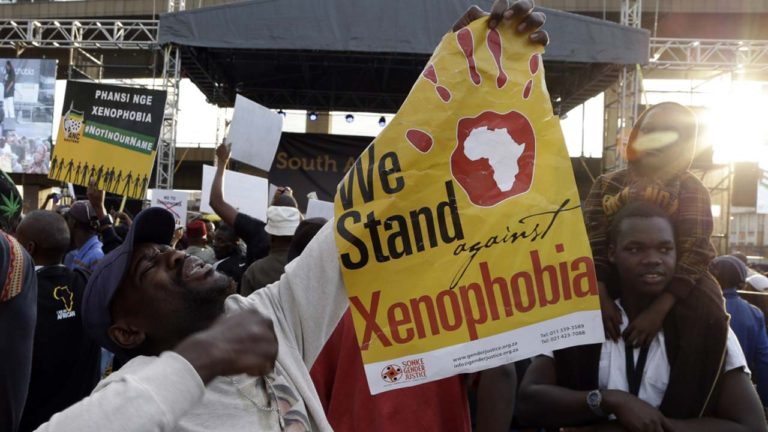
THE FEDERAL Government has again strongly condemned the attacks, harassment and forced displacement of Nigerians in South Africa, saying it is considering appropriate measures in response.
The Minister of Foreign Affairs, Bianca Odumegwu-Ojukwu, stated this while speaking with State House Correspondents on Monday, June 8, in Abuja.
According to the minister, many Nigerians are unhappy with the treatment of their compatriots in South Africa, considering Nigeria’s historical support for the country’s anti-apartheid struggle.
“Nigeria is not happy because Nigeria sacrificed much for the South African struggle for independence. Nigeria committed funds and resources. Seats were reserved for South African students, and many Nigerians actively supported the anti-apartheid movement,” she said.
Odumegwu-Ojukwu said the Federal Government had not ruled out any response, including possible retaliatory measures, although any decision would be taken at the highest level of government.
“That is a situation that we are considering. This is up to our legislature and the highest levels of government, but it is not off the table,” she said.
On the evacuation of affected Nigerians, the minister said arrangements were ongoing to repatriate those willing to return home.
She explained that although the airlift did not commence on Monday as expected, documentation and other formalities were being concluded.
“The repatriation is on course. Mr President has reiterated that the aircraft will go to South Africa and our citizens who are affected will have the opportunity to return home,” she said.
Odumegwu-Ojukwu said the number of Nigerians seeking evacuation continued to rise, adding that screening processes involving both Nigerian and South African authorities were ongoing.
She disclosed that President Bola Tinubu had directed the immediate establishment of a crisis response unit at Nigeria’s Consulate in Johannesburg and the country’s mission in Pretoria to coordinate assistance for affected citizens.
The minister dismissed claims that the affected Nigerians were illegal migrants, insisting that many were legitimate residents and business owners.
According to her, some Nigerians had suffered attacks on their businesses and properties, while others faced intimidation and insecurity.
“To say that Nigerians in South Africa doing legitimate business are illegal migrants is absolutely untrue,” she said.
Odumegwu-Ojukwu added that the Federal Government, working with the National Emergency Management Agency (NEMA) and other relevant agencies, had put plans in place to support and rehabilitate returnees.
“This evacuation is being undertaken with NEMA and other government agencies to ensure that those who return are properly rehabilitated,” she said.
THE ICIRearlier reported that South African President Cyril Ramaphosa said his government would act against groups linked to a renewed wave of xenophobic attacks targeting foreign nationals in the country.
The violence prompted evacuation plans by several African countries, including Nigeria, which extended the screening of citizens seeking voluntary return. Mozambique also reported that five of its citizens were killed during the unrest.
Ramaphosa condemned the attacks and warned against using concerns over illegal immigration to incite violence, while authorities vowed to arrest and prosecute those involved.
THE Nigerian Railway Corporation (NRC) says its Warri–Itakpe Train Service has derailed, with four coaches capsizing.
The Managing Director of NRC, Kayode Opeifa, said in a statement in Lagos on Monday, June 8, evening that NRC would provide updates on the accident as more details would emerge.
Opeifa said that emergency response teams had been deployed to the scene to manage the situation and assist passengers
“The corporation is closely monitoring developments and will provide a comprehensive update as more details emerge on the cause and extent of the derailment,” he said.
He urged the public to be calm and rely only on official communication channels for information regarding the accident.
The latest derailment adds to a series of operational setbacks that have plagued the Warri–Itakpe rail corridor in the last couple of years.
In May 2026, the Nigerian Railway Corporation (NRC) suspended services on the route, citing operational challenges and technical advice from its engineers to allow for safety checks, maintenance and system assessments.
Recall that in November 2025, the Warri–Itakpe train derailed in the Agbor area of Delta State just four days after the route resumed operations following months of suspension linked to technical faults and track repairs.
The NRC subsequently halted services again to conduct safety and security audits.
Before the November derailment, the NRC had suspended operations on the Warri–Itakpe route on August 2 following a series of train breakdowns and technical faults.
In July 2024, the NRC temporarily suspended operations after a train travelling from Itakpe to Ujevwu derailed, prompting safety inspections before services resumed days later.
Authorities have repeatedly blamed some of the disruptions on infrastructure vandalism.