Home Blog Page 1772

Why Senate should not confirm Lauretta Onochie as INEC commissioner – CSOs

SOME Civil Society Organisations (CSOs) have petitioned the Nigerian Senate to demand that President Muhammadu Buhari’s aide Lauretta Onochie should not be confirmed as a commissioner of the Independent National Electoral Commission (INEC).

The petition was addressed to Senate President Ahmad Lawan and dated 16th 2021. It was signed by Yiaga Africa, Premium Times Centre for Investigative Journalism (PTCIJ), Centre for Democracy and Development (CDD) and CLEEN Foundation.

Other CSOs who signed the petition included: Peering Advocacy and Advancement Centre in Africa (PAACA), International Press Centre (IPC), Institute for Media and Society (IMS), The Albino Foundation, Centre for Citizens with Disability (CCD), Nigerian Women Trust Fund (NWTF) and Civil Society Legislative Advocacy Centre (CISLAC).

The groups’ petition was received by the Office of the Senate President on June 18.

The CSOs, in the petition, said Onochie’s nomination contravened the Third Schedule, Part 1, Item F, paragraph 14 (1) of the Nigerian constitution, which stated that an INEC national commissioner shall be non-partisan and a person of unquestionable integrity.

The organisations said Onochie was not only a card-carrying member of the ruling All Progressive Congress (APC) and a special assistant to the president on social media, but she was also notorious for her partisan, biased and in some instances, inflammatory comments on national issues targeted at perceived or imagined enemies of the Buhari government.

The ICIR had reported that on many occasions, Onochie publicly declared her support for APC on social media, especially during election periods.

The CSOs said given Onochie’s antecedents, it was “highly unlikely that she will remain neutral and objective if successfully screened as one of INEC’s National Commissioners.”

“We contend that her appointment will greatly undermine the neutrality and impartiality of the Independent National Electoral Commission and it will increase mistrust in the INEC and Nigeria’s electoral process,” the CSOs added in the petition.

They further observed that by the provisions of Section 156 (1)(a) and Third Schedule, Part 1, Item F, paragraph 14 (1), Onochie was constitutionally prohibited from any appointment as a member of the electoral umpire.

The CSOs stressed that it was ‘against the sacred spirit’ of the Nigerian Constitution to accept her nomination.

Furthermore, the groups argued that Onochie is a British Citizen and has been involved in active politics in the United Kingdom.

“Up till recently, she has been a full, card-carrying member of the British Conservative Party. To be specific, Mrs Onochie in 2010 contested elections for a councillorship position in Thames Ward in the London Borough of Barking and Dagenham as a member of the UK Conservative Party.

“Therefore, her dual loyalty will undermine national interest and it could potentially threaten the independence of INEC,” the CSOs said while insisting that the presidential aide should not be confirmed for the position.

The premeditated killings in Alaigbo must stop

By Ikechukwu AMAECHI


I have received a lot of response to my article titled Is another war for ‘Biafra’ inevitable?” where I argued that President Muhammadu Buhari is baiting Ndigbo for war and that it is unwise to give him a reason for another genocide.

Igbos are genuinely aggrieved but they unanimously reject war. They also unequivocally condemn the senseless violence and avoidable loss of lives in the South-East.

One response stood out in its toxicity. A Yoruba friend, who is also a professional colleague and a fervent supporter of Buhari, fired off almost immediately.

He wrote: “Ikechukwu Amaechi! Your conclusions are great but based on a faulty premise. Buhari is not Igbo problem. The Igbo that radiate uncritical hate, but insist being repaid by love, are the delusional one.

“I would have thought that a people who had gone through avoidable catastrophe in the past would be doubly wary. But everyone played the ostrich until that lunatic Nnamdi Kanu is again pushing them to the brink – a hardworking people that have assets, baiting war!


READ ALSO:

Buhari reads riot act to Biafran agitators

Fact Check: Did Late COAS say over his dead body would there be Biafran and Oduduwa nations?

We will organise police, military to pursue IPOB – Buhari


“But my pitch is not really for the Igbo. It’s for my peacocky Yoruba folks tolerating another IPOB Yoruba variant, Sunday Igboho, an idiot who doesn’t even know what the problem is and is insistent on solving it!

“PMB is not the Igbo problem. The Igbo penchant to play the ostrich, when they should promptly act, is it. But I hope good sense would prevail.”

I knew where he was coming from. I had tolerated his incendiary comments against Ndigbo for too long. This time, I decided not to suffer fools gladly.

“Kunle, ordinarily, I don’t respond to comments such as yours. I don’t know what issues you have with Ndigbo. I know that left for you, you would wish all of them be killed for whatever reason. You wouldn’t mind another holocaust,” I riposted.

“My friend, the joke is on you and your unreasonable type who see Ndigbo as Nigeria’s problem and want them exterminated.

“But have you asked yourself why Benue, Plateau, Southern Kaduna people are all crying? They also hate Buhari? Soyinka hates Buhari? Ayo Adebanjo hates Buhari? Even the Northern governors that are now crying over banditry hate Buhari? The reasonable Yoruba clamouring for change hate Buhari?

“Ndigbo radiate uncritical hate, insist being repaid with love and they are delusional. Really? I wish you luck. What goes around comes around. Those who helped to massacre Ndigbo in the past are today being massacred. It is called karma. It never fails. When you support evil, you reap bountifully from it.

“But let me tell you something. Ndigbo don’t reckon with your like. Like them, hate them, they are here to stay. You can stew in your animosity for all they care. Your insult is inconsequential.

“You can join hands with the likes of your soul mate, Adeyinka Grandson, to masturbate in your evil fantasy, but you are the one hurting, not Ndigbo. So, find a way of dealing with your hate before it consumes you.”

He scurried away!

It is surprising that anyone can accuse the Igbo of uncritical hatred against other Nigerians, when in fact they are the cord that binds the disparate tendencies in the country together.

In any case, Ndigbo are not seeking to be loved. They are asking for a Nigeria that works for all. That is not a crime. How can a people’s legitimate desire to be treated with fairness and justice in their own country be adjudged hatred?

Suddenly, Northern elders have found their voices. They are pleading with Buhari to let Ndigbo go. Their women are demonstrating with placards. Their farmers are boycotting Southern markets.

Their most celebrated crime buster, Deputy Chief Superintendent of Police, Abba Kyari, has been deployed in the South East; he and his personnel kitted with assorted military hardware; in a desperate bid to subdue the Igbo.

While these deployments were being made, on June 6, no fewer than 27 people were killed when armed Fulani herdsmen invaded Odugbeho in Agatu Local Government Area of Benue State.

In April 2021, more than 100 people were massacred in several communities in Zamfara. The state government shut down four major markets – Magami and Wanke markets in Gusau Local Government, Dansadau market in Maru Local Government and Dauran market in Zurmi Local Government – to prevent reprisals by vigilante members.

There was no outrage from the presidency. Northern women did not complain. Northern elders lost their voices. Last Saturday, 11 people were slaughtered in Igangan in the Ibarapa area of Oyo State by Fulani herdsmen. There was no outrage from the North.

The 136 children abducted by bandits penultimate Sunday from an Islamic school in Tegina, Niger State are still in captivity. Except for a statement issued on May 31 by Aso Rock saying that security agents were searching for the children – some as young as six years – nothing has been heard from Buhari.

Everyone seems to be waiting for Islamic cleric Ahmad Gumi, who has become prolific in negotiating ransom, to make his next move.

There have been at least six kidnappings of students in the North since December 2020 and more than 800 students and staff abducted, with some fatalities.

SB Morgen, a geopolitical research consultancy based in Lagos, said recently that at least $11 million (N5.5 billion at the current exchange rate of N500 to $1) has been paid to kidnappers between January 2016 and March 2020, most of them negotiated by Gumi, all of them in the North. Aso Rock didn’t mobilise the security assets of the country to hunt down the bandits. The president never vowed to teach them the lessons the U.S. taught al-Qaida and Osama bin Laden in Afghanistan.

The most brazen of these evil acts was the abduction of 23 students, including a staff, of Greenfield University in Kaduna State, on April 20. The bandits killed one person during the raid and, in the days after the attack, murdered five of the students.

Thereafter, their leader, Sani Jalingo, spoke to the Hausa Service of the Voice of America on May 3, and demanded N100 million and 10 motorcycles before the remaining 14 students would be released.

The hapless parents ended up paying over N150 million and bought eight motorcycles for the bandits to secure the release of their children on May 29, 40 days after they were abducted.

None of the bandits has been arrested. Gumi, who negotiated the deal, is still walking the streets, waiting for the next deal. Nobody has invited him to explain what happened.

The joke is on Buhari because it takes a certain level of shamelessness for a leader under whose watch these atrocities are committed to turn around and threaten fire and brimstone against relatively peaceful regions.

As Prof Wole Soyinka poignantly noted recently, “When Benue was first massively brought under siege, with the massacre of innocent citizens, the destruction of farms, mass displacement followed by alien occupation, Buhari’s language – both as utterance and as what is known as “body language” – was of a totally different temper. It was diffident, conciliatory, even apologetic.”

Why is the same Buhari ordering his troops to kill youths whose only crime is being Igbo? The argument that the ongoing carnage in the South-East is a response to the alleged threat posed by the Indigenous Peoples of Biafra (IPOB) led by Nnamdi Kanu is untenable.

Let’s be clear, any attack on security infrastructure in the South East, and, indeed, anywhere else is condemnable and the killing of policemen is a criminal act that must be punished. But that must be in accordance with the laws of the land. Extra-judicial killings have no place in a supposedly civilised society under a constitutional democracy.

And in doing that, the wrong people should not be held vicariously liable for a crime they knew nothing about. Making every Igbo a collateral damage for crimes committed by unidentified felons is a crime against humanity. Unknown gunmen remain unknown until the government removes their veil. But if the Buhari government in its ineptitude fails to do that, venting his spleen on innocent Igbo population is most unfair and a crime against humanity.

Imo State Governor, Hope Uzodimma, who invited the military, has said repeatedly that unknown gunmen are not IPOB activists. Recently, his Chief Press Secretary, Oguwike Nwachuku, issued a statement that no fewer than 400 people who carried out recent attacks in Imo have been arrested and charged to court.

“The good thing,” Nwachuku stressed, “is that over 70 per cent of them are not Igbo.”

When Ahmed Gulak, former political adviser to former President Goodluck Jonathan, was brutally murdered in Owerri, Uzodimma insisted it was political assassination.

There is no love lost between Uzodimma and IPOB and he is not saying that because he wants to save their skin. So, why is nobody listening to him?

Assuming without conceding that the unknown gunmen are indeed IPOB activists, does that mean that every Igbo youth is a felon that must be gunned down on the street?

Was businessman Oguchi Unachukwu – who was killed by an Air Force officer on his way to Sam Mbakwe International Cargo Airport, Owerri on May 31, 2021 – a member of the Eastern Security Network?

The Catholic Archbishop of Owerri Archdiocese lamented in a video recently that he counted 35 corpses of Igbo youths dumped at the Federal Medical Centre (FMC) Owerri mortuary. Who killed them? For what crime? How can Buhari rationalise the fact that over 90 per cent of Igbo youths brutally gunned down on the streets are neither members of IPOB nor ESN.

Mr. President, these premeditated murders in the South-East must stop. Ndigbo don’t want a war. They only demand justice, fairness and equity in a country where they are equal stakeholders. That is not a crime, not to talk of one deserving of capital punishment.

NIMET warns of thunderstorms in Ekiti, Rivers, 22 other states

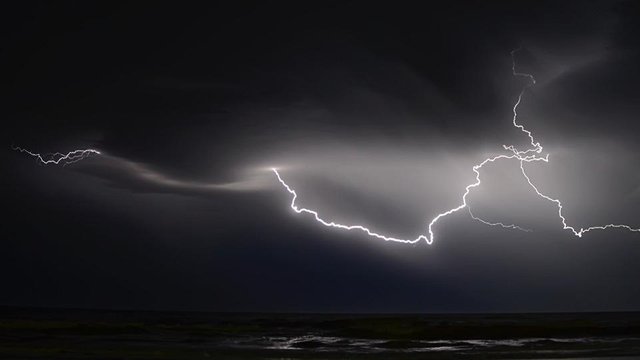
THE Nigerian Meteorological Agency (NIMET) has warned residents across 24 states and airline operators of thunderstorms and severe turbulence in the coming days.

The concerned states in the northern region include Kaduna, Gombe, Kebbi, Taraba, Adamawa, Bauchi, and Borno.

In its forecast outlook released at the weekend, the agency also listed Plateau, Niger, Benue, Kwara, and the Federal Capital Territory (FCT) in the north-central part of the country.

“It should be predominantly cloudy over the inland and the coastal cities in the morning hours with chances of a few thunderstorms over Lagos, Cross River, and Akwa Ibom.

“Later in the day, thunderstorms are envisaged over parts of Oyo, Ondo, Edo, Ekiti, Abia, Enugu, Rivers, Cross River, and Akwa Ibom.”

The Director-General of the NIMET Mansur Matazu also announced that the rainy season would witness electrical charges in the atmosphere that could result in thunderstorms.

According to Matazu, the bad weather would affect flight operations in the aviation sector as it could cause severe turbulences, especially at touchdown and certain flying levels.

He warned pilots to adhere to precautionary measures produced by the agency and issued to the Air Traffic Controllers.

“Microbursts are mini-thunderstorms that emanate from the cloud because of the low temperature of the cloud.

“These microbursts which happen around the airports cause wind shear problems and that is why we have an alert system by which we issue alerts to pilots through the Air Traffic Controllers,” Matazu stated.

“Now, the negative implications of these weather issues include the fact that they cause severe turbulence during descent or at certain flying levels.

“You can also experience clear air turbulence and it happens during the onset period of the rainy season.”

NIMET usually releases annual Seasonal Rainfall Pattern (SRP), also known as Seasonal Climate Prediction (SCP) reports, to prepare Nigerians ahead of precipitations in the country.

In the 2021 SCP, the nation is expected to witness a volume of rainfall from 400 millimeters (mm) in the north to over 3000mm in the south.

Described as an invisible enemy to pilots, wind shear is one of the causes of air crashes across the globe.

It was reported as being responsible for the death of 137 of 163 passengers aboard a Delta Airline in an accident that occurred on August 2, 1985.


Fear of victimisation, lack of trust hindering Nigeria’s Whistle-blowing Policy– PACAC

THE Presidential Advisory Committee Against Corruption (PACAC) has said that fear of victimisation and lack of trust have been the major challenges of the Whistle-blowing Policy in Nigeria.

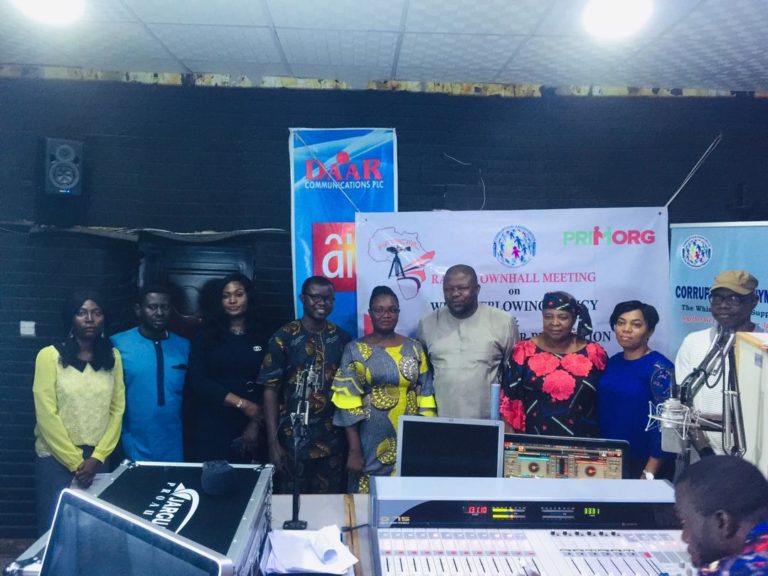
A lawyer and public analyst with PACAC Segun Adesanya said this on Friday in Abuja during a Radio Town Hall Meeting on Whistle-blower Protection organised by the African Centre for Media & Information Literacy (AFRICMIL) in collaboration with the Progressive Impact Organization for Community Development (PRIMORG).

“Some of the challenges we have observed since the policy has been in place are cynicism and citizens finding it difficult to trust the government,” said Adesanya.

He noted that some people had also been using whistle-blowing as an opportunity for personal vendetta.

However, Adesanya urged citizens to continue to raise their voices against incidents of corruption in official quarters to save Nigeria from the evils of the vice.

Adesanya called on Nigerians to trust the system, advising whistle-blowers against taking their complaints to multiple anti-graft agencies in order to reduce victimisation.

“Do your best as much as possible to hide your identity. If you do that, then the issue of victimisation would be reduced. Try as much as possible to protect your identity. If you have reported to ICPC and they give you feedback, I think you should take that as the position of the government, rather than duplicating the reportage across all available channels,” he warned.

A Development Programming Strategist and Promoter of Inclusion and Diversity Ene Ede, who was also at the meeting, said cultural, environmental, and religious factors were limiting women from reporting corruption.

According to Ede, “There are a lot of women who would want to blow the whistle but the framework, politicians, religious leaders do not do much to encourage them.

“The laws are not strong enough, not biting enough to deter corruption, women are most affected by corruption, unfortunately.”

A Public Policy Analyst Babatunde Oluajo faulted the Federal Government’s mechanism of protecting whistle-blowers following rising fear of victimisation. He said that the adverse effect of corruption knew no gender, tribe, or religion, hence Nigeria had got to the point where corruption was killing citizens.

“It is individuals who feel the pain that blows the whistle. Whether an individual is exposing a corrupt act due to vendetta or any other reason, the government and relevant agencies must focus on the crime committed and not the sentiment that led to the expose.”

Oluajo said for Nigeria to fully take advantage of whistle-blowing, the country must make the protection of whistle-blowers paramount and ensure the system guaranteed the anonymity of the individuals and deploy information and communications technology in tackling corruption.

Co-founder of Amputee Coalition of Nigeria Florence Marcus said that Persons with Disabilities (PWDs) had the capacity of whistle-blowing but were the most marginalised and vulnerable people.

Marcus stressed that PWD’s needed to be assisted to understand the Whistle-blower Policy through technology and accessible information.

“There is need for the brail but there are a lot of technology that they use to read and it will be better if they are put in audio format for the blind; visual or video for the deaf.

“This policy can be in simplified versions, like in pidgin English and in our local languages for them to have access to and through billboards.”

Marcus urged the government to implement anti-corruption laws that would give assurances and protection to whistle-blowers, while ensuring transparency and accountability for the funds recovered from corruption.

One student confirmed dead, four others rescued from terrorists in Kebbi – Army

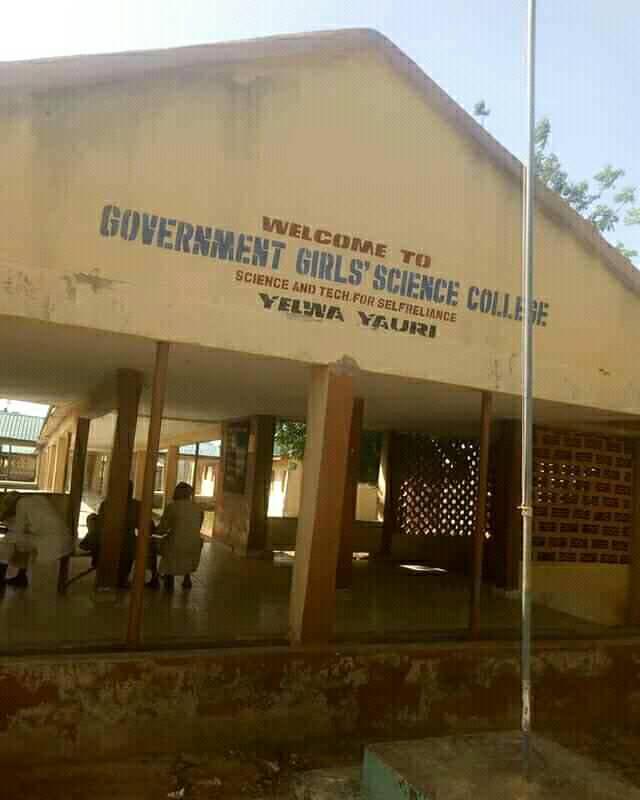
ONE student has been confirmed dead following the attack by terrorists on Federal Government College, Birnin Yawuri, in Kebbi State.

Two other students and two teachers were rescued from the terrorists by troops of the Nigerian Army.

The ICIR had reported how the terrorists stormed the school on Thursday morning with motorcycles from the neighbouring Rijau forest.

The terrorists were said to have overpowered the mobile policemen guarding the school, killing one before gaining entrance into the compound.


READ ALSO:

Chief of Army Staff commends troops for successes recorded against IPOB

Police deny reports that 60 persons were killed in Zamfara attack, say ‘only over 30’ died

Nigerians trust local news more than Americans, British, others


But in a statement released on Friday, Director Army Public Relations Onyeama Nwachukwu said troops of a military task force known as ‘Operation Hadarin Daji’ had rescued two students and two teachers from the terrorists.

“The rescue followed an initial encounter with the abductors in the early hours of today 18 June 2021 after trailing the kidnappers from Yawuri through Riyao to Sombo community, where the kidnappers who had split into two groups fled, with one group conveying the abducted children, while the second group conveyed rustled cattle.

“The land troops in conjunction with elements of the Nigerian Air Force, who provided close air support during the rescue mission intercepted the two groups at about 2.30 am and engaged them in a firefight leading to the successful rescue of the teachers and students.

“The troops also recovered 800 cattle rustled by the bandits” the statement said.

While explaining that one of the students, a girl, died from exhaustion, Nwachukwu added that the soldiers were still on the heels of the terrorists so as to rescue the remaining hostages who still in captivity.

He disclosed that the rescued teachers and students would be handed over to the Kebbi State Government.

When contacted, Spokesperson of the Kebbi State Police Command Nafiu Abubakar told The ICIR that the police were still on the trail of the kidnappers.

“We are on it,” he said.

“You can use the statement from their own side,” Abubakar added, when asked to confirm the statement by the Nigerian Army.

FG earmarks N1.13bn for cattle grazing projects, insists on routes recovery

THE Federal Government has earmarked about N1.13 billion for cattle grazing projects even as it insists on the recovery of grazing routes across the country.

This is coming after the controversial move by President Muhammadu Buhari to revive old grazing paths for herders .

Through the Federal Ministry of Agriculture and Rural Development (FMARD), findings have shown that the National Grazing Reserves Development was allotted about N1.1 billion (N1,084,434,975), as revealed in the 2021 approved budget of the ministry.

The sum of N39.4 million (N39,356,203) was set aside for the development of pasture and fodder feeds at the grazing reserves and pasture corridors. It was labeled as an ongoing project, with ERGP30154570 as the budget line.

Another budget line (ERGP30152789) identified as a new project was the survey of tsetse fly and animal trypanosomiasis at the grazing reserves. This activity is also expected to gulp N3.5 million.

Similar to the above project is N3.2 million (ERGP30153103) allotted for the control of tsetse fly and animal trypanosomiasis at the grazing reserves.

The ministry would as well spend N4 million (ERGP30153515) as a new project for the surveillance and population suppression of tsetse flies in grazing reserves across the country. Implementing the entire grazing projects as found in the ministry’s budget is expected to cost about 1.13 billion (N1,134,491,178).

Meanwhile, popular belief, especially from those residing in the south, is that grazing routes and reserves are strictly within the northern laws and boundaries.

The ICIR reported how the proposed policy had continued to stir more tensions as state governments, policymakers, lawyers, and other opinion shapers from the region kicked against it.

Despite the growing concerns and positions of lawyers over the controversial gazette designed in 1963, the Ministry of Agriculture has already commenced retracing and recovery of the cattle routes.

Buhari had earlier directed the Attorney-General of the Federation and Minister of Justice Abubakar Malami to see to the cattle paths recovery.

We won’t recover cattle routes where govt. infrastructure exists – Agric Ministry  

The Ag. Director of Animal Husbandry Department at the FMARD Winnie Lai-Solarin further reemphasised the proposed plan, stressing that not every pastoralist could afford to ranch, even though it was one of the options provided to address the lingering farmer-herder crisis.

She disclosed that cattle routes situated in non-violent locations could be retraced as well as those already taken over by farmers, and other human activities. The non-encroached paths, she said, would be given preference.

“There are some stock routes that we have across the country, and in the past, we had monuments along these stock routes, particularly the primary stock routes. And in the course of farming or other human activities along those stock routes, the monuments were altered, but we know where they are. So we are saying that some of them can be retraced,” Lai-Solarin told Punch.

“And this is particularly for areas that are not encroached upon as of now. The pastoralists know the routes, and on some of those routes, you will see the pieces of the monuments along them.”

She added that “So for those that are not encroached upon and are not in conflict zones, we will go ahead to retrace and guide the pastoralists along them. We didn’t get to where we are today in one day and so we cannot expect that every pastoralist should suddenly start ranching now.

“Some would still have to move but let’s keep the movement as safe as possible and in areas that are not conflict zones. That is what I am saying. We are not going to retrace stock routes where there are infrastructures that are for the public good.”

Despite the president’s announcement, most state governors from the South still insist on ban on open grazing.

There will always be controversy over voters’ register in Nigeria – Lawyer

HUMAN rights activist and lawyer Clement Nwankwo has said that there will always be controversy surrounding the voters’ register in Nigeria.

Evaluating the distribution of the newly created polling units in Nigeria in an interview with The ICIR, Nwankwo observed that he did not “think the allegations of padding of the voters’ register has disappeared.”

Ahead of the 2023 general elections, Chairman of the Independent National Electoral Commission (INEC) Mahmood Yakubu has announced the creation of 56,827 new polling units.

The development brought the total number of polling units in Nigeria to 176,846 from the existing 119,974.

The distribution of the polling units

Lagos and Kano have been reported as states with the highest number of new polling units. Both states received 4,861 and 3,148 new polling units respectively.

The ICIR noted that from the regional distribution of the new polling units, the North West (12,117), North Central (11,533) and South West (10,227) regions had the highest numbers.

They were followed by South-South (9,367) North-East (7,546) and the South-East (6,082).

NEW POLLING UNITS IN NIGERIA/ THE ICIR

When the old and new polling units are added, the North-West (41,671) has the most voting units.

The North-West is followed by the South+ West (34,898), North-Central (27,514), South-South (27,126), North-East (24,006) and South-East (21,631).

TOTAL POLLING UNITS IN NIGERIA/ THE ICIR

Number of registered voters determine the distribution – INEC

The INEC chairman stated in his address to the resident electoral commissioners (RECs) on June 16 that the number of registered voters in a polling unit and the voting point settlement were used to determine the polling units “based on the upper and lower thresholds of 500 and 750 voters respectively.”

Commenting on the system used to determine the distribution of polling units, the human rights lawyer, Nwankwo, said the units were allocated on the basis of the number of voters in the existing register.

He added that he did not think “INEC carried out fresh registration of voters” and since certain regions had, for a very long time, “had a spill-over of voters on the register, they will have more polling units than other parts of the country.”

Earlier in 2020, a report showed that INEC already had plans of increasing the number of polling units.

Political parties need to ask INEC questions over number of polling units 

Reacting to the situation whereby some regions have fewer polling units, Nwankwo said political parties needed to get involved and ask INEC questions.

“Political parties need to get serious and ask INEC questions about the allocation of polling units especially where some regions have over-populated themselves with fictitious names, voters that are underage and unverifiable numbers,” he said.

He added that political parties must ask themselves what they should be doing differently to help in checking the poor voter registration system.


READ ALSO:


Reflecting on voter registration in the country, Nwankwo observed that Nigeria “as a country today will not pass the rigorous test of strict credibility.”

But he added that he was not saying that the INEC voters’ register was not credible.

The INEC Electoral Act 2010 Part III, Item 1, states: “The Commission shall compile, maintain, and update on a continuous basis, a National Register of Voters, in this Act referred to as the ― Register of Voters which shall include the names of all persons entitled to vote in any Federal, State or Local Government or Area Council elections.”


TCN creates Kano Transmission Region, targets constant power for commercial activities


THE Transmission Company of Nigeria (TCN) has carved out a new transmission region from the old Kaduna Region. 

Known as Kano Transmission Region, the newly established unit brings the number of TCN regional centres to 10. 

The TCN believes the step will improve commercial activities in the state.


The creation of the Kano Transmission Region became necessary owing to the rapid economic and industrial development being witnessed within Kano State and its environs, as well as the gradual implementation of TCN’s strategic ‘Nigerian Electricity Grid Maintenance, Expansion and Rehabilitation Programme (NEGMERP),’ which has enabled the transmission company to complete some ongoing projects and increase the number of substations within that axis.


General manager of Public Affairs Ndidi Mbah explained on Friday, in a statement, that the  Kano Transmission Region had, under its supervision, one sub-regional office and several work centers, all housing 13 transmission substations (TS), including the Kumbotso TS, Dan Agundi TS, Dakata TS, Tamburawa TS, Kwanar Dangora TS, Wudil TS, Kankia TS, Katsina TS, Daura TS, Dutse TS, Hadejia TS, Azare TS, and Gagarawa TS.


“The new Kano region currently has ongoing transmission substation projects which when completed would further increase bulk transmission capacity in the new region.”


The new Kano Transmission Region, the company said, would deepen operational efficiency within the region and enable its engineers to readily access and resolve technical issues within the new region.


Mbah explained that prior to the creation of the new Kano Region, major decisions had to be referred to Kaduna Region for directives, and the supply of materials was sometimes delayed due to logistic issues from Kaduna.

Mbah noted that the proximity of the new region would radically reduce downtime and eliminate time lost when materials had to be conveyed from the Kaduna Region.


Nigeria seeks to expand transmission infrastructure to lessen grid pressure, avoid concerns of grid collapse and improve transmission expansion for available power in the national grid.


The TCN and the power distribution companies in the country have constantly been at daggers drawn over the recurring incidence of grid collapse in the country, which often occurs as a result of load shedding and non-adherence to the grid code and load rejection due largely to poor infrastructure.


Already, the government has commenced efforts to expand the transmission infrastructure.

Energy experts say unbundling the transmission company will bring more private investments into the sector and ensure proper regulation of the system operator from the market operator.


Presidential Adviser on Infrastructure and Power Ahmed Zakari had earlier stated that the National Council on Privatisation members were currently looking at the unbundling the TCN.


The Nigeria Transmission Expansion Project – Phase 1 (NTEP1)- is part of the National Transmission Rehabilitation and Expansion Programme (TREP), which aims to support the rehabilitation and upgrade of Nigeria’s electricity transmission substations and lines, to increase power transmission network and allow distribution companies to improve supply to consumers.


NTEP1 is located in the North-West, South -East and South-South regions of Nigeria, and cuts across Kano, Kaduna, Delta, Edo, Anambra, Imo, and  Abia states.


Energy lawyer and power sector governance expert  Chuks Nwani told The ICIR that the seamless collaboration between the Central Bank of Nigeria (CBN)) and the TCN in advancing transmission infrastructure in the country was a good step towards safeguarding the national grid and addressing concerns of aggregate commercial and technical losses.


He stressed that the TCN should take a deeper step towards its unbundling to ensure harmonisation of the market operator and system operator responsibility in driving power access in the country, while addressing concerns of grid collapse.


Zaria-Kano auto crash victims cry out over slow pace of work on Abuja-Kano highway

By Mohammed Dahiru LAWAL


ON the morning of June 5, when 27-year-old Abba Ahmad Dahiru was keeping up with logistics of mutual acquaintances bound for the wedding ceremony of a childhood friend in Zaria, little did he know that the cold hands of death would come calling. Dahiru was a Computer Biology student of Sa’adatu Rimi College of Education, Kaduna State.

Road accident survivor

“When I got the news, I was devastated beyond measure, confused even, because I didn’t know if my son was among those who survived until the hospital in Zaria released the corpses and all of us whose wards were on that trip started sorting out the dead bodies and identifying our own,” said Ahmad Bele, an ex-employee of Sa’adatu Rimi College of Education and father of one of the deceased victims of a fatal motor accident along Zaria-Kano Highway.

The victims’ 18-seater Kano Line Bus collided with a Toyota RAV 4 at one of the numerous diversions on the road owing to the ongoing construction of the Abuja-Kaduna-Zaria-Kano highway by Julius Berger Nigeria Ltd. An investigation published last December by The ICIR showed that the slow pace of work on the Abuja-Kaduna-Zaria-Kano Expressway had contributed to the high rates of accidents along the corridor.

Nearly 5,000 road traffic accidents were recorded in the Kano-Kaduna zone of the road between 2017 and 2019, when the contract for the reconstruction of the road was approved, and 2020, months to its initial delivery date before it was again extended to 2023.

In 2017, the Federal Executive Council (FEC) approved the award of N155.48 billion to Julius Berger Plc, for the construction of a hybrid two-lane-six-lane road network that starts from Abuja through Kaduna-Zaria to Kano.

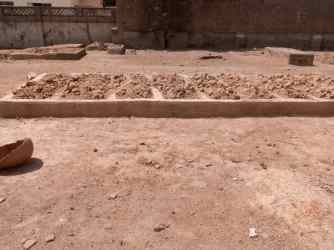
The grave where the eight dead youths were buried after the road accident

The FEC, on February 12, 2020, again approved another N867 million for the engineering design to add an extra lane on both sides of the 375-kilometer road. With barely 30 per cent of the road project completed during the period of investigation under review, several attempts to get an official explanation were unsuccessful. Freedom of Information (FOI) requests sent to the Federal Ministry of Budget and Planning for details of budgetary allocations and releases on the road project were not responded to.

A similar request sent to the Federal Ministry of Works and Housing (FMWH) for details of the project completion and projected time of completion also got no response. Julius Berger, the contractor handling the project, has not been forthcoming on the status of the project. Despite several FOI requests, the company refused to give information on the road, particularly specifications, costing and reasons for the delay. Beset with no fewer than eight major diversions, dangerous potholes, loss of lives and disruption of economic activities, the road has aggravated the sufferings of commuters and residents along the Abuja-Kano corridor.

READ ALSO: 

Accidents, deaths and kidnappings escalate as FG drags feet on Abuja-Kaduna-Kano road construction

INVESTIGATION: Ten years after, communities count losses as AfDB, Cross River govt abandon road project

Kaduna, the state you are most likely to die on the road

Exclusive medical records of road traffic accident victims along the route obtained during the investigation, which was done with support from MacArthur Foundation and the International Centre for Investigative Reporting (ICIR), revealed that men between the ages of 21 and 62 years accounted for about 81 per cent of accident victims on the road during the period. Except for 2020, analysis showed that there had been a steady rise in the rate of road accidents since 2017 when the contractor for the road moved to site. The Kaduna zone recorded the highest number of accidents in 2018 and 2019, according to the annual report by the Federal Road Safety Corps (FRSC). The FRSC officials confirmed that the state of the road was largely responsible for the record of high casualties along the Kaduna zone.

Bandits have also taken advantage of the poor condition of the road to carry out their criminal and nefarious activities, including kidnapping people for ransom. But for most families and communities along the highway, the road has become a memorial of near misses, injuries and untimely deaths.

“When I informed my wife of the tragedy, she took it as a silent shock but when relatives and other family members started trooping in, the reality dawned on her, and they all began to scream. It took some level of comforting before I was able to calm her and the other family members down,” Bele said. He narrated how he watched his son preparing for the entire trip that morning before he left for Zaria.

“I watched him prepare for the trip. He even uploaded it on his Whatsapp status praying for journey mercies. They got to Zaria safely, conducted their business and while on their way back, some few kilometers away from Tashar Yari, they took one of those numerous diversions on the highway. Unfortunately, the Toyata RAV4, whose occupants were also traveling back from another wedding in Kano, was coming from the same lane so there was nowhere to swerve or divert and they collided head on into each other.”

Disputed number of Deaths

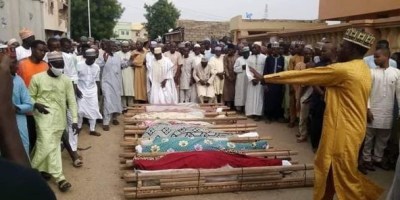
Funeral proceeding of the dead victims

It was further gathered that of the 15, there were six survivors in critical condition with various degrees of fractures. Only two of the victims, who have since been discharged, had one fracture each.

Initial media reports (not The ICIR) claimed that 17 people involved in the auto crash died, but findings revealed that six persons out of that number had so far survived the accident, putting the total death toll 13.

“The Kano Line bus was an 18-seater, but they sat three in a row instead of four. In all, they were 15, including the driver. Seven of them died on the spot, one died the following day after we buried the initial seven, making it eight. If the driver from Tofa is added and has since been buried there, the number of deaths in the Kano Line bus equals nine and that of the other vehicle is four,” Mallam Ahmad, an eye witnessed disclosed.

It was further gathered that of the 15, six survivors were in critical condition with various degrees of fractures. Only two of the victims, who have since been discharged, had one fracture each.

Mysterious survivors

The mysterious road accident survivor

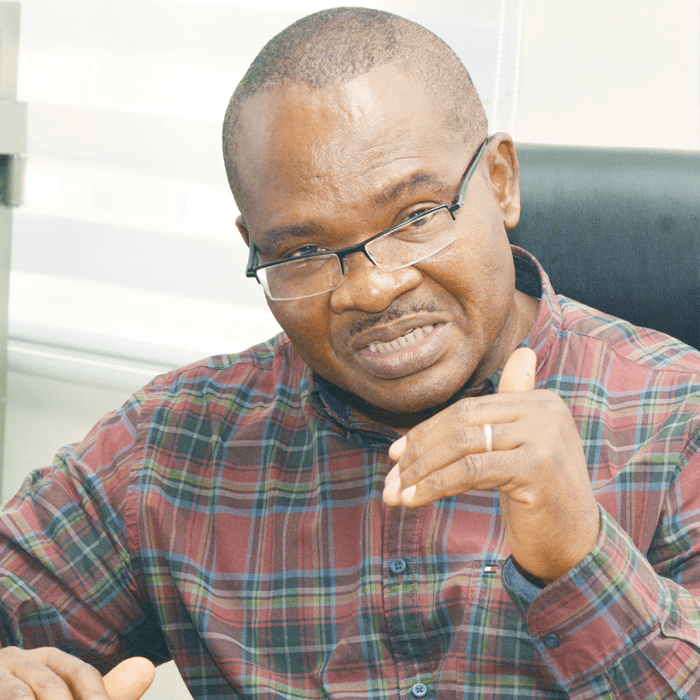
One of the survivors Ibrahim Bashir Ibrahim, who spoke on the incident, said he could not recall what transpired as he had plugged in his earpiece and dozed off immediately after they had taken off from Zaria. “I just woke up and found myself surrounded by dead bodies and overhearing onlookers saying this one is not dead,” Ibrahim recounted.

Musa Abdullahi, one of the passengers who was part of the ill-fated trip and also boarded the bus from Zaria, said he disembarked minutes into the journey and returned to Zaria after he felt a strong urge to discontinue the trip. Ten minutes after disembarking, Abdullahi got the call that shook his life – his friends were involved in a ghastly motor accident, and some were dead.

“That prompting to disembark came from the fact that I had promised some family members in Zaria that I will visit them after the wedding. Somehow, I lost my SIM card as we were about leaving Kano, and I couldn’t reach them to tell them I was no longer coming. I just had to make it up,” Abdullahi explained. It was not the same fate for another victim identified as Abba.

Narrating how Abba made the trip, Musa said he had to join the bus because his transport fare was not sufficient. “He had only N1,000 with him, but I pleaded with our friends to support him to make the trip. When he came to board the bus, there was even no space, so one of us – also a deceased victim – offered to lap him. That was how he made the journey.”

A cry for help

Family of the dead victims from the road accident

Parents of thevictims have called on the Federal Government to concentrate on the speedy completion of the Abuja-Kaduna-Zaria-Kano Expressway as it has taken too long and causing so much loss of lives. They called on concerned parties, including state governors and federal legislators, to play their part in ensuring that the Federal Government expedite action on the road. “Our sons are gone already, but with the speedy completion of the road, others don’t have to feel the pains we are now forced to go through,” Ahmad Bele, who spoke on behalf of the concerned parents, said.


Northern groups place N100m bounty on Nnamdi Kanu

A coalition of 75 northern groups has announced a reward of N100 million for persons who can produce the leader of the Indigenous People of Biafra (IPOB) Nnamdi Kanu.

The coalition said Kanu had committed ‘crime against humanity.’

The coalition, under the aegis of the Northern Consensus Movement (NCM), disclosed this at a press briefing in Abuja on Thursday.

According to NCM’s Spokesperson Awwal Abdullahi Aliyu, Kanu has been the one instigating hate speech and killings of some northerners doing legitimate businesses in the South-East part of the country.


READ ALSO: 

The premeditated killings in Alaigbo must stop

After ICIR investigations, Imo govt sets up panel to probe extra-judicial killings

One student confirmed dead, four others rescued from terrorists in Kebbi – Army


“We are declaring Nnamdi Kanu wanted for crimes against humanity and for instigating the killing of innocent Northerners in the southeast via his hate speech.

“We want him to answer for the killing and destruction of Northerners residing and undertaking lawful businesses in the southeastern part of Nigeria.

“So, we are placing a bounty of N100m as an offer to anyone who can produce him alive, hale, hearty, and uninjured to us for onward delivery to the security agencies for the continuation of his prosecution.”

Aliyu urged the United States of America, the United Kingdom, and the European Union to facilitate Nnamdi Kanu’s repatriation to Nigeria to face the continuation of his trial for alleged treason.

“We call on both the US, the UK, and the EU, a champions of democracy, rule of law, and freedoms of speech and expression to kindly and humbly respect Nigeria’s sovereignty and facilitate the repatriation of Nnamdi Kanu to Nigeria.

“This is so he can face his treason, and possibly fresh terrorism and genocide charges against innocent citizens of Nigeria.”