Home Blog Page 1782

How misinformation drives low uptake of COVID-19 vaccine in Nigeria

By Kelechukwu IRUOMA


CHIAMAKA Ani was at the Uruan Local Government Secretariat of the National Youth Service Corps (NYSC) in Akwa Ibom State in South-South Nigeria when health workers from the National Primary Health Care Development Agency (NPHCDA) arrived to administer coronavirus (COVID-19) vaccine on corps members. 

Upon seeing the health workers, Ani, who is a member of NYSC, a programme established by the Federal Government to involve Nigerian graduates in nation-building and the development of Nigeria, became afraid.


READ ALSO:

How conspiracy theories surrounding deaths of African leaders fuel COVID-19 misinformation

WHO did NOT rank Nigeria 4th best in COVID-19 response

Hundreds of Benue transporters sidelined from accessing N30,000 Covid-19 palliative


“I did not take [the vaccine] because I was confused,” the 23-year-old said.

“I never had anyone explain to me what the vaccine was all about and if there were any side effects after receiving it,” she said, stressing that some of the COVID-19 vaccine misinformation she received on social media discouraged her. “I saw some conspiracy theories on WhatsApp status, Facebook and Instagram about the vaccine.”

COVID-19 is caused by acute respiratory syndrome coronavirus 2 (SARS-CoV-2), which was first identified in the city of Wuhan, China, and reported to the World Health Organization (WHO) in December 2019.

Nigeria confirmed its first case on February 27, 2020. The virus was later declared a pandemic by the WHO on March 11, 2020, as the number of cases and deaths continued to increase globally.

Scientists began to team up with pharmaceutical companies to develop vaccines that would reduce the spread of the virus. Vaccines have been identified as the best method of preventing and controlling viral diseases. According to the WHO, there are vaccines developed to protect people from at least 20 diseases.

There was, however, a breakthrough in the development of vaccines, which were distributed to countries, including Nigeria, to vaccinate their population.

But Nigerians, especially those in rural communities, are not willing to take the COVID-19 vaccine due to misinformation, leaving them susceptible to the virus.

More than 170 million people have been infected with the virus globally as at June 4, according to the WHO, of which three million people have been confirmed dead as at June 2.

In Nigeria, about 166, 000 people have been infected with the virus and 2, 000 people have died, according to the Nigeria Centre for Disease Control (NCDC).

In March 2021, Nigeria received 3.94 million doses of COVID-19 vaccine developed by the University of Oxford and aimed at vaccinating 20 per cent of the population.

The Nigerian government said it planned to vaccinate 40 per cent of its total population in 2021, with an additional 30 per cent in 2022 and aimed to vaccinate at least 70 per cent of the country’s population.

The vaccines were immediately distributed to various states with the NPHCDA assigned the responsibility to vaccinate Nigerians, starting with frontline healthcare workers.

“I will not be willing to receive the vaccine because I don’t really have factual reasons [I should],” Ani said. “A lot of people perceive the vaccine to be substandard. People do not know if the vaccine is the right one.”

How COVID-19 misinformation spreads

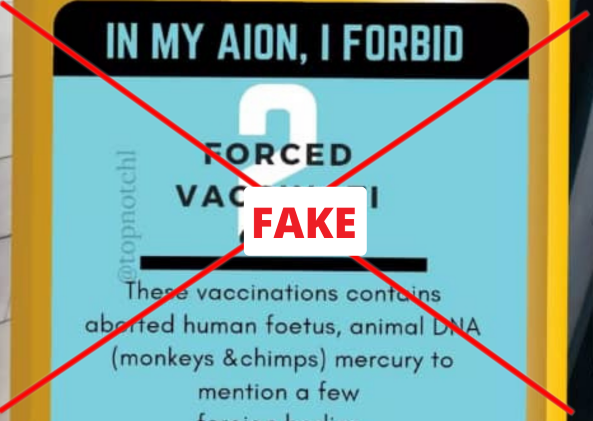
Misinformation has been spreading across social media platforms such as Instagram, Facebook, and Whatsapp about how harmful the vaccine is when taken.

There was misinformation that the Messenger RNA vaccines developed for COVID-19 changes the DNA.

Many people said they were afraid to take the vaccine because they did not believe in the existence of COVID-19 in Nigeria.

“I won’t take [the vaccine] because I do not believe in the virus,” said Judith Ohakwe. “I do not believe we have it here [in Nigeria].”

Ohakwe said she received several messages on Twitter, Facebook, and WhatsApp, making her not to believe that the virus was present in the country.

“The messages were mostly voice notes shared to me privately and on WhatsApp groups I belonged to. I saw several Facebook posts,” Ohakwe said, stressing she no longer had access to the messages.

She received several conspiracy theories that influenced her decision to not believe the existence of the COVID-19.

“You might not necessarily believe in it [conspiracy theory], but it has a way of creating fear in you,” she said.

“Since I will still be alive, even though I will not take the vaccine, there is no point. Let me live my normal life. If death comes, I will die.”

The lack of trust in the Nigerian government has been referenced as a significant factor discouraging Nigerians from taking the vaccine.

“I do not believe that the Nigerian government will be so compassionate to give us the vaccine [for free], considering what is happening presently in the country. Nigeria does not love its citizens to give us vaccines,” Ohakwe continued.

“I know that President Buhari does not like us, I do not believe anything that comes from the administration. Had it been we had a good president that we believe in, if he says anything, we will believe him. Because we have someone like Buhari, I do not believe in vaccines.”

This is not the first time Nigerians have refused vaccines to reduce the spread of disease. The Kick Polio out of Africa Campaign led to the rejection of polio vaccination in northern Nigeria following misinformation by northern leaders that the vaccine was contaminated with antifertility agents (estradiol hormone), HIV, and cancerous agents.

This brought the immunisation campaign to a halt as leaders called on parents not to allow their children to be immunised. It took years for the government to debunk the misinformation.

In 2017, misinformation about the Nigerian Army injecting children with vaccines that inflicted monkeypox spread in South-East Nigeria, disrupting the immunisation programme of the Nigerian Armed Forces.

Implications of COVID-19 misinformation

An epidemiologist and technical assistant to the Presidential Steering Committee on COVID-19 Onyebuchi Onovo said the spread of misinformation, which had influenced the people to reject the vaccines, would prolong the fight against COVID-19 in Nigeria.

“Vaccine is a lifesaver and it has been proven to be so over time,” he said. “The low uptake of the vaccine means that the virus will continue to linger or continue to be within the population.”

He said one of the best strategies of addressing COVID-19 misinformation was giving out credible information at the right time and through the right sources, which included the government, religious leaders, and traditional rulers.

“These are people at the local levels who have presence and influence. If a traditional ruler comes out to say that these vaccines are safe and I encourage you to receive them, of course, the majority of the followers will receive them. The same with a religious leader.”

Ani said unless she was well enlightened and sensitised, she would not take the vaccine, adding that there was a lack of awareness on the part of the government and health workers.

“The mistake they [health workers] made was to send the vaccine to people without enlightening them and telling those more about the vaccine,” she said. “I feel there should be proper awareness about getting people convinced before bringing the vaccine to rural areas.”

This publication was produced as part of IWPR’s Africa Resilience Network (ARN) programme in partnership with the International Centre for Investigative Reporting (ICIR) and the Centre for Information Resilience (CIR), and Africa Uncensored.
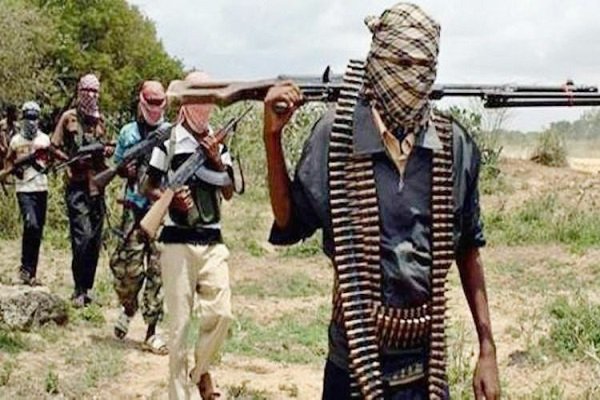
Terrorist attacks: 60 women kidnapped in Zamfara

TERRORISTS have attacked three villages in Maru Local Government Area of Zamfara State, killing four people and kidnapping 60 women in the process.

The attacks, which took place on Tuesday in Munawa, Malele and Randa villages, led to the killings and kidnap of residents, and the burning of huts and buildings within the area.

According to a report, the men in the villages had fled the town based on information received prior to the attack.

Efforts made by The ICIR to reach Spokesperson of the Zamfara State Police Command Mohammed Shehu and the Army Spokesperson Mohammed Yerima yielded no result as both neither picked their calls nor respond to WhatsApp messages sent to them.

Security in Nigeria has declined over the past few years, particularly in the North, due to the incessant killings and increased rate of mass abductions.

Kidnappings such as these have become a disturbing trend, leaving residents in constant fear and anxiety.

In April, The ICIR reported the killing of over 80 people in attacks by terrorists across five villages in Zamfara.

A few days ago, over 30 people were reportedly killed in terrorist attacks across villages in  Zurmu Local Government Area of Zamfara.

Bauchi governor sacks commissioners, dissolves executive council

GOVERNOR of Bauchi State Bala Mohammed has dissolved the state’s executive council.

This is contained in a statement signed by Special Adviser on Media and Publicity to Bauchi Governor Mukhtar Gidado  on Wednesday.

According to the statement, the dismissed appointees included: secretary to the state government (SSG), chief of staff (COS) for the government house and all special advisers.

However, the governor retained the services of special adviser in charge of security; special adviser for the National Assembly and state assemblies liaison; special adviser responsible for social investment, and special adviser for media and publicity.

Mohammed said all state commissioners were to hand over the affairs of their ministries to respective permanent secretaries, while the secretary to the state government (SSG), the chief of staff (COS) and other affected special advisers were to hand over to the most senior permanent secretary in the government house.

He noted that an inventory of all property belonging to the Bauchi State government should be taken during the hand-over.

The statement read that the governor while thanking the affected political appointees for their meritorious service to the state, wished them the very best in their future endeavours.

State governors in Nigeria have been sacking political appointees and dissolving executive councils.

The ICIR can confirm that about two months, no fewer than 60 state commissioners and special assistants/advisers were sacked across four states in the country.

Earlier in May, the Zamfara State government had sacked secretary to the state government, all commissioners and advisers.

Governor of Cross River State Ben Ayade sacked four commissioners and five aides following his defection from the People’s Democratic Party (PDP) to the All Progressives Congress (APC).

On May 12, Imo State Governor Hope Uzodinma sacked 20 commissioners in what he tagged an attempt to ‘rejig’ his government.

Also, Governor of Kaduna State Nasir El-Rufai had sacked 19 political appointees, saying that it was an effort geared towards rightsizing the government.

Twitter ban is in favour of criminals, terrorists -PDP National Assembly caucus

THE joint caucus of the People’s Democratic Party (PDP) in the National Assembly has said that the Federal Government’s ban on Twitter is in favour of criminals and terrorist elements whose activities fester in an environment of suppressed information flow in the country. 

In a joint statement issued by the Senate Minority Leader Enyinnaya Abaribe and House Minority Leader Ndudi Elumelu, on Wednesday, the caucus described the ban as draconian.

The statement noted that lawmakers under the party were concerned about the anguish Nigerians, especially the youths, were passing through as a result of the ban.


READ ALSO:

Northern elders are playing politics with insecurity in South-East -Ekweremadu

Twitter ban undermines fight against corruption – Stakeholders

PDP calls on US, UK, Canada to impose visa ban on Buhari, Malami, Mohammed


“As lawmakers, the joint caucus is pained by the anguish Nigerians, especially the youths, who find the use of Twitter as a means of livelihood and genuine social interaction, are passing through just because the APC-led Federal Government feels slighted that an individual’s post, was deleted by Twitter for ethical violation,” part of the statement had said.

“The joint caucus, therefore, calls on Nigerians to use various opportunities offered by technology and continue making use of Twitter since such does not violate any law in our country.

“It is agonising that Nigeria and Nigerians have been losing billions of naira on a daily basis since the ban on Twitter. This is completely unacceptable as it is worsening the already biting economic hardship and frightening unemployment level in the country.

“Moreover, the ban on Twitter in Nigeria appears to be in favour of criminal and terrorist elements, whose activities fester in an environment of suppressed information flow.”

While urging Nigerians to disregard threats of prosecution by the president, the caucus charged them to take advantage of technology to circumvent the ban as they would not be contravening any law in the country or any international statute.

The lawmakers said they recognised the provisions of Articles 19 and 20 of the United Nations Charter on Fundamental Human Rights, which Nigeria was a signatory to, as well as provisions of Sections 39 and 36 (12) of the 1999 Constitution (as amended), stating that “by these provisions, no one will be violating any law for using Twitter in Nigeria.”

It sympathised with regional, state, local governments as well as members of the international community whose genuine and constructive activities had been crippled by the prohibition of Twitter in Nigeria.

The caucus also identified with traditional rulers, who had found Twitter as a means of communicating with the constituents, especially in the era of insecurity in the country, the statement added.

The caucus berated the APC-led government for abandoning its duty of addressing the serious economic and security problems confronting the nation to focus on “victimising  Nigerians over their disagreement with Twitter for deleting a post by an individual.”

It called on the Buhari’s government to swallow its pride, accept its misdoing and settle whatever issue it had with Twitter instead of resorting to inflicting pains on Nigerians.

Senate set to screen Onochie as INEC commissioner despite protests

0

NIGERIAN Senate President Ahmad Lawan has asked the Senate Committee on the Independent National Electoral Commission (INEC) to screen Lauretta Onochie as a national commissioner of the electoral body.

Lawan gave the directive following a motion moved to that effect by the Senate Leader Yahaya Abdullahi during Wednesday’s plenary.

The motion was protested against by Senate Minority Leader Enyinnaya Abaribe, noting that the upper chamber had dealt with Onochie’s nomination. He said it was surprising that she was being brought up for screening again.


READ ALSO:

Joe Igbokwe deceives Nigerians, alleges Greenfield University students’ abductors arrested with ransom

Nigerians compare Abacha’s military regime to Buhari’s civilian administration

Worried over Lai Mohammed’s role in Twitter ban, experts demand ‘Office of ICT General of the Federation’


“In seconding this motion, we had dealt with the matter of renomination of Lauretta Onochie,” he said.

“We feel surprised that that same name has resurfaced not as a national commissioner but as a Delta state commissioner, Mr President, reluctantly, I second the motion.”

Clarifying that Onochie was nominated as national and state commissioner, Lawan said the committee had four weeks to conclude the screening and report back to the red chamber at plenary.

Onochie, who is a card-carrying member of the ruling All Progressive Congress (APC) and spokesperson of President Muhammadu Buhari, was nominated alongside five other persons in October 2020.

Her nomination by the president has attracted a lot of protests by the opposition People’s Democratic Party (PDP), the Christian Association of Nigeria (CAN) and several Nigerians on social media.

What the Constitution says

In appointing the members of the INEC, the 1999 Constitution requires the president to consult with the Council of State pursuant to section 154 (3) of the Constitution.

In addition, Paragraph B of Part 1 of the Third Schedule provides that “The Council of State shall have the power to advise the president in the exercise of his powers with respect to (iv) the Independent National Electoral Commission including the appointment of the members of the commission.”

The constitution adds that pursuant to Section 154 (1) of the Constitution, the appointment of the members of the Independent National Electoral Commission shall be subject to confirmation by the Senate.

Paragraph 14 of Part 1 of the Third Schedule, as amended by Section 30, Act No 1 of 2010, clearly states that a member of the Independent National Electoral Commission “shall be non-partisan.”

The Coordinator of Anambra Voters Forum Ebube Umeh said Onochie’s screening, despite stiff oppositions from Nigerians, would bring the integrity of the electoral body to disrepute.

He told The ICIR in a phone interview that having a staunch supporter of the president and a card-carrying member of the ruling party on INEC would seriously compromise future elections

“Onochie’s nomination and screening would bring the integrity and independence of INEC to question. Her presence on the board of the country’s electoral body would seriously affect the outcomes of future elections,” he said.

Multiple times Lauretta Onochie, Buhari’s aide declared she is APC member

“Someone like her, who is a strong defender of the president, should not be an umpire in a sensitive institution like INEC. She portends great danger for our democracy. Nigerians and the opposition parties should be worried.”

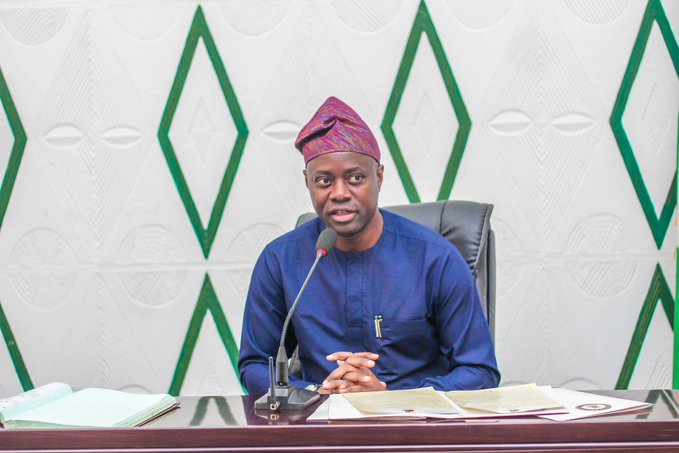
Do not take laws into your own hands, Makinde tells Igangan residents

GOVERNOR of Oyo State Seyi Makinde has appealed to residents of Igangan community of Ibarapa Local Government Area in the state not to take laws into their hands.

He said this at a visit to the community after an attack that killed some residents on Sunday.

A statement signed by the Chief Press Secretary to Oyo Governor Taiwo Adisa on Tuesday quoted Makinde as appealing to the residents for calm, while promising government action.


READ ALSO:

We will organise police, military to pursue IPOB- Buhari

Six Nigerians make Forbes Africa U-30 2021 list, 44 since 2015

How misinformation drives low uptake of COVID-19 vaccine in Nigeria


“Please, don’t take laws into your hands. I urge all the families that lost their loved ones to this attack because sometimes, emotion can really be high.

“Once again, I beg of you; give us the opportunity to come back and rebuild things, and put a more solid architecture such that you will be able to go to farms and do whatever you want to do without fear,” he said.

He also urged the residents to give the state government another chance to fix the insecurity and recurring attacks on farmers.

Makinde promised the residents that such bad occurrences would never happen again in Igangan or anywhere in the state.

“It is not a situation where there is any magic we can do. We have to work through this and work together through it but I promise you, this is the last time anything like this will ever happen here.

“It is a promise I am making to you, and it is a promise I will come through with,” he stated.

Following the attack on Sunday, South-West governors had directed the Western Nigeria Security Network, code-named Operation Amotekun, to call for a meeting in view of a joint operation across six states in the region.

No fewer than six persons were killed on Sunday morning when some herdsmen attacked the community. Makinde condoled with the families who lost their loved ones during the attack.

For many years, residents of the Igangan community have lived in fear of attacks orchestrated by violent herders residing in the state.

A suspected Fulani man Iskilu Wakili was recently apprehended by members of the Oodua People’s Congress (OPC) in Igangan for fuelling attacks on residents of the agrarian community.

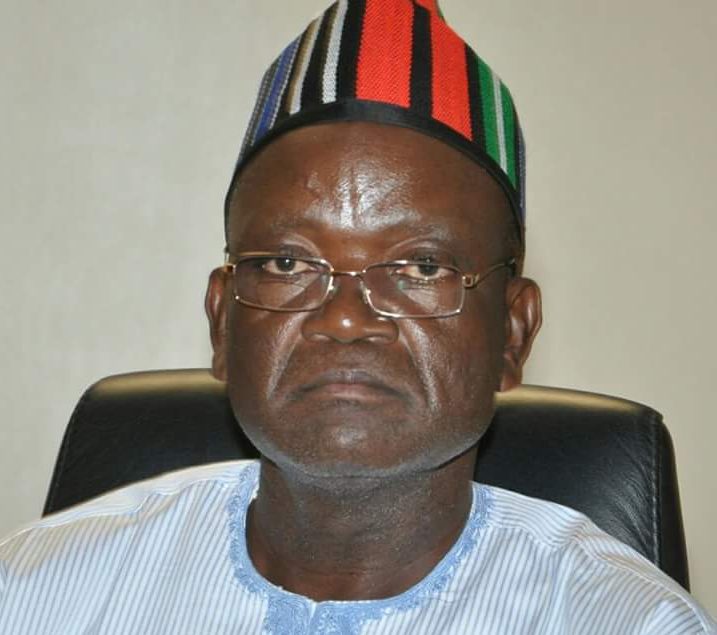
Twitter ban, an attempt to divert attention from FG’s failures

BENUE State Governor Samuel Ortom has stated that Nigerian government’s ban on Twitter is aimed at diverting citizens’ attention from its failure to tackle insecurity issues in the country.

Defying the ban, the governor took to his Twitter handle on Tuesday to describe the Federal Government’s actions as illegal, ill-advised and a suppression of the fundamental human rights of the Nigerian citizens.

“The ban on Twitter is not only illegal but it is also an ill-advised move to divert the attention of Nigerians from the FG’s failure to tackle insecurity in parts of the country. It amounts to suppression of fundamental human rights and gagging of social media,” he said.

The Twitter ban in Nigeria was announced last Friday, a few days after a controversial tweet made by the Nigerian President Mohammadu Buhari was deleted.

Telecommunication operators in Nigeria have complied with the directives of the government, blocking all access to the platform.

Nigerians have, however, resorted to the use of Virtual Private Networks (VPN) to gain continuous access to the platform, despite threats of prosecution by the Attorney General of the Federation Abubakar Malami.

In a meeting with envoys from Canada, the United Kingdom and the European Union, Minister of Foreign Affairs Geoffrey Onyeama stated that the ban would be lifted by the Nigerian government only if the platform could be used responsibly.

Nigerians compare Abacha’s military regime to Buhari’s civilian administration

AS Nigerians commemorate 23 years of the death of former military dictator Sani Abacha, some have compared his despotic regime with the current civilian administration of President Muhammadu Buhari.

Outraged by the recent suspension of  Twitter in Nigeria, the citizens said Buhari’s action was similar to Abacha’s regime when he stifled freedom of expression.

Nigerians say several human rights infringements under the Abacha military regime are similar to the ones being recorded in the current Buhari’s administration.

A Nigerian identified as Ovie @OvieO tweeted that Abacha’s rule might be better than the administration of Buhari.


READ ALSO: 

Senate set to screen Onochie as INEC commissioner despite protests

PDP mulls nationwide protest against  Twitter ban, insecurity, others

Nigerians set to hold nationwide protest on June 12


“Abacha might be better than Buhari,” Ovie posted.

Another social media user Onye Nkuzi, who tweets  @cchukudebelu, said Abacha’s administration shut Tell Magazine and Newswatch during his time.

“Abacha used to send soldiers to shut down ‘Tell’ and ‘Newswatch’ operations and seize all the copies of their newsmagazines they could find.

“This is merely the 21st Century equivalent of that behaviour – and they are just getting started,” Onye Nkuzi said.

What happened during Abacha’s regime?

Abacha, a general, ruled Nigeria between 1993  and 1998 after gaining power from the interim transition government of former head of state Ernest Shonekan.

Abacha’s administration was marred by several human rights abuses, clampdown on the press and opposition, among others.

In an appendix to a letter sent to the then Pope of the Catholic Church on March 13, 1998, the Human Rights Watch (HRW) said the highlights of Abacha’s regime included arbitrary detention of Nigerians, human rights abuses, killing of opposition leaders and activists.

The letter read that journalists who were critical of the Abacha regime were subjected to harassment and detention by security operatives.

It also stated that the judicial process was being manipulated through the creation of special tribunals to hear cases in favour of the government.

One of those tribunals ordered the execution of a popular human rights activist Ken Saro-Wiwa and eight other members of the Movement for the Survival of the Ogoni People (MOSOP).

Saro-Wiwa and the other activists were executed on November 10, 1995.

Why Nigerians are worried

Many Nigerians are beginning to express concerns about some of the actions of the current Buhari civilian administration that have shown some elements of Abacha’s regime.

Since the inception of the administration, journalists and the media have been  gagged through the National Broadcasting Commission (NBC) and the State Security Service (SSS).  All TV and radio stations have been ordered by the NBC to disconnect from Twitter – an action criticised by many Nigerians.

Nigerians were shocked that Attorney-General of the Federation Abubakar Malami threatened to prosecute users of Twitter, even when there is no law upon which this could be achieved.

Those who have criticised the current administration such as Olusegun Obasanjo, Matthew Kukah, among others, have been insulted.

Beyond that, the former Chief Justice of Nigeria Walter Samuel Onnoghen was removed in a manner described as unconstitutional.

Also, the Buhari government, on many occasions, flagrantly disobeyed court orders, most especially in cases of persons that were critical of his government. Examples were Sambo Dasuki and Nnamdi Kanu.

Another example was the continued detention of the Publisher of Sahara Reporters and human rights activist Omoyele Sowore after the court had granted him bail.

Sowore was arrested inside the courtroom against the verdict of the court.

In 2020, a 75-year-old man and others were arrested by the Nigerian police for ‘insulting Buhari’ in a video.

The Buhari administration has also clamped down on peaceful protesters, thereby violating the constitutional rights of Nigerians to protest peacefully.

In cases where Nigerians protested, they were either shot at or violently dispersed by security officials, thereby showing the government’s resistance to peaceful assemblies.

Section 40 of the Constitution of the Federal Republic of Nigeria provides for peaceful assemblies to protect their interest. It reads: ‘Every person shall be entitled to assemble freely and associate with other persons, and in particular he may form or belong to any political party, trade union or any other association for the protection of his interests:

“Provided that the provisions of this section shall not derogate from the powers conferred by this Constitution on the Independent National Electoral Commission with respect to political parties to which that Commission does not accord recognition.”

There has also been an onslaught on freedom of expression in Nigeria through the ban of Twitter, where many Nigerians criticise the inadequacies of the government.

Nigeria must adopt innovative technologies to lessen carbon emission – Analysts

AS global energy firms and their funding partners trend towards energy transition, analysts have called on Nigeria’s government to ensure it prioritises innovative technology usage in the hydrocarbon business to lessen carbon emission and drive fossil energy relevance in the near future.

The experts spoke as panellists at the ongoing Nigerian Petroleum Summit in Abuja, with the theme, ‘From Crisis to Opportunity, a New Approach to Hydrocarbon.’

The panellists, in their respective submissions, said the Federal Government’s continued reliance on fossil energy must be driven by technology and innovation to lessen carbon emission and sustain its relevance in the near future.

“Let’s be clear again on energy transition. Oil and gas will still be relevant in the next 50 years. However, the fraction will be reducing. The focus should be that we must lessen carbon emission through the use of technology, which is the bigger focus of energy transition geared towards lessening carbon emission in the environment,”   Former Head of the Department of Petroleum Resources (DPR) Osten Olorunshola said at the panel on Tuesday.

READ ALSOHope rises for PIB as Lawan sets June deadline for passage

He stressed that the Federal Government must make the best use of hydrocarbon energy before it went into extinction.

“Let’s get it clear, the discussion on energy transition is the race to carbon emission reduction. Hence, we must make the best from our fossil energy,” he said.

General Manager of Citadel Group and an oil and gas expert  Nicholas Odunuwe said he had been looking at what would make his company remain relevant following the digital transformation in the oil sector.

“We have been looking at what will ensure our relevance, given global energy transition. We have been employing the usage of big data, robotics and digital oil fields. We have been understudying some of the technologies we see at the Oil and Gas Technology Conference in the United States and have been working on domesticating them to advance our operations technologically.”

Executive Secretary of Nigerian Content Development and Monitoring Board (NCDMB) Simbi Wabote, at the event, said government had put its feet on research and development with a $50milion funding war chest.

Wabote stressed that many countries’ Gross Domestic Product (GDP) entered negative territory during the early days of the pandemic, prompting lots of innovations and protectionist strategies to drive their own economies.

Wabote insisted that despite the energy transition drive, some countries would not do without hydrocarbon at some point, stressing that Nigeria must employ innovation and technology to sustain relevance in fossil fuel.

“I expect complete technological innovation to drive our oil sector such as smart oil fields, smart platforms and remote operator capabilities to become the norm in the industry,” he said, noting that the agency under his control was committed to that innovation drive.

He pointed out that COVID-19 had already put everyone on the path of technology, insisting that Nigeria’s oil and gas sector must sustain relevance with these technologies.

Between pulpit conspiracy and COVID-19 vaccine

By Jennifer UGWA


In a world overrun with fake news and conspiracy theories, the outbreak of the COVID-19 virus ushered in a wave of global fear and doubt, especially on coronavirus vaccine. In this report, Jennifer Ugwa writes on how religious leaders’ perspective of the vaccine sways pentecostalist acceptance of the jab.

FOR the second time that cold Sunday morning in her sparsely decorated sitting room in Iba Estate,  Ojo, Lagos, Nigeria, Ngozi Obidike, 46,  a devoted member of the Assemblies of God Church, emphatically reiterated that she was not going to take the COVID-19 vaccine. Her pastor’s sermon about the jab was not positive – neither was it encouraging. 

“Have you not heard what they (pastors) have said about it? Anybody who takes it does so at their own risks. It is part of the sign of end-time,” she said.

Obidike had made her choice and joined the rapidly-increasing number of Pentecostalists saying that the vaccine contradicted their religious beliefs

Just ahead of China’s big Lunar New Year festival in 2020, health experts announced the outbreak of COVID-19, a novel virus similar to the Severe Acute Respiratory Syndrome (SARs) that led to the death of nearly 800 persons globally between 2002 and 2003.

The virus’ origin is yet to be identified, but it was reported to have first jumped from animal to human in Huanan seafood market in Wuhan, Central China. With 3.5 million deaths, preventive measures and vaccines are the world’s main defence against the virus. However, conspiracy theories and unverified information have created an aversion for the shots even before the arrival of the first COVAX doses in Nigeria.

What will happen to those who have already taken the vaccines? What will happen to them in five years? Normally, these things(vaccines) will be tested for 10 years.

“Those that are giving you the vaccine do not plan for you to ever again have a normal life. Forget it. The plan is for you to never have a normal life. And this is not a conspiracy theory.”

These were the words of the popular televangelist, Chris Oyakhilome, founder of LoveWorld Incorporated —also known as Christ Embassy— in a live cable broadcast preached in 2020 during the early stages of the outbreak.

Oyakhilome claimed the virus was illusory and the Polymerase Chain Reaction(PCR) test was a fraudulent means to fulfil an inoculation ruse by world governments that would upturn the normalcy of life and Christian activities.

With a population of over 200 million and deep religious roots, where 45.9 per cent of the populace are Christians, 35.3 per cent as Pentecostalists or non-Catholics, the position of religious leaders on some issues often constitute the basis for some citizens’ decision-making. 

For a Pentecostal megachurch like Christ Embassy with over 300 branches in Nigeria and an approximate 13 million members globally, the position of the Oyakhilome quickly became a footing for scepticism and distrust for the vaccine.

In Lagos, Sandra Enyinna, a member of Christ Embassy church, said she “won’t take the vaccine for as long as it is not compulsory.”

“If you listen to Pastor Chris’s sermons, he said these things with facts, he has proof and who are we to question how he got them,” she said.

Enyinna, who also acknowledged the possibility of the existence of the virus, said she got ‘healed’ when she contracted the virus by using herbal remedies.

“I have a lot of objections about that vaccines. Why are they not creating vaccines for sickness like Hepatitis B and all of a sudden COVID-19 came, and they already have a vaccine for it and are making it compulsory for people to take,” she said.

A random search using ‘covid’ as a keyword on Yookos, an online social networking platform owned by Oyakhilome exclusively for church members but later expanded to allow public access, revealed over 35 trending hashtags on the App like #covidfiasco #covid19debacle  #covidscam #notovacine #chippedvaccine. 

Public discussions on Yookos about the virus and vaccine revealed antipathy for the jab and the coronavirus. 

“As far as I am concerned it’s (COVID-19) dead when the Man of God declared by the Spirit last year March 27 global day of prayer,” said Tifaglory, a user on Yookos 

Another user, identified as ‘ikoso,’  shared a 2011 edition of The Sovereign Independent, a dissolved newspaper alleged to have published controversial opinion pieces and conspiracy theories that were reshared under other trends in support of this belief.

Perhaps, if the disposition of this Pentecostal assembly about the vaccine on Yookos were determined via popular opinions and video contents, a  majority—if not all— members of the church might never accept the COVID-19 jab.

Oyakhilome’s sermons on COVID-19 have been fined and criticised and may even rank top on the list of disputed religious leaders’ opinions about the vaccine. However, he is not the only member of the clergy who believe there is a sinister motive to COVID-19.

Christopher Okotie is another influential televangelist and pastor who claims there are conspiracy agenda underfoot and says that Bill Gates, co-founder of Microsoft Foundation, is “the protagonist of everything(Coronavirus) we see today.”

In a 15-minute video on Youtube, which he titled ‘The COVID-19 Mystery,’ Okotie claimed the vaccine’s introduction was “an attempt to copy the pattern of the communion” by the propagators of evil.

The video has over 1759 views.

Expert Perspectives 

Conspiracy theories and doubts on the origin of the virus aside, rapid development and side effects of the vaccines are also reasons for apprehension by believers in Pentecostal circles who spoke with this journalist.

In a phone interview, Bola Oyefolu, a Professor of Virology with the Department of Microbiology at Lagos State University, said the distrust for the vaccine was not unfounded as new variants indicated that the virus epitope or antigenic determinant predictions were incomplete.

“There is more to this than the eye can see, and I don’t understand why they are producing the vaccine and making it mandatory for people to take it,” said Oyefolu.

“It is not the best to roll out a vaccine that is not totally protective. A vaccine should be all-encompassing in respect to what the pathogen could be.”

The virologist said that the production of the vaccines was fuelled by international political propaganda. 

Meanwhile, Doctor Tobin Ekaette, Consultant Public Health physician Irrua Specialist Teaching Hospital, Edo State, said popularly held opinions about the use of the vaccine and virus to usher in a ‘new world order’ was unfounded and ‘very terrible information.’

“I understand that these developments could be scary for the layman, but it is about striking a balance between withholding and saving lives, ” she said.

Ekaette noted that under the emergency use authorisation, positive phases of laboratory results had proven the efficacy of the vaccine.

“The vaccine is still going through phase three—marketing evaluation—but nonstop research is still be carried out every day.”

While some popularly held misconceptions about the coronavirus and the vaccines have been debunked, citizens’ apathy still stalls the acceptance of the vaccine in Nigeria three months after the country received its first dose of the vaccine,


This publication was produced as part of IWPR’s Africa Resilience Network (ARN) programme, administered in partnership with the Centre for Information Resilience (CIR), the International Centre for Investigative Reporting (ICIR), and Africa Uncensored. For more information on ARN, please visit the ARN site.