THE Media Rights Agenda (MRA) said there was a need to implement the Freedom of Information (FOI) Act religiously to enable the law achieve its ultimate objectives of transparency and accountability within the Nigerian government.
In a statement commemorating the 10th anniversary of the signing of the FOI into law, the MRA noted that the implementation of the Act had provided easy access of information for citizens, making them more aware of various actions and government policies.
The MRA, however, condemned the poor implementation of the Act by the government agencies and public institutions who had opposed the application of the law, to enable them run their government in secret.
“The Federal Government has had neither bark nor bite in the implementation of the FOI Act in the last 10 years as there has been no concerted effort to ensure compliance with the provisions of the Act by public institutions under its authority and control,” it read.
The organisation urged the Federal Government to work towards achieving compliance by public institutions with the Act so as to strengthen the fight against corruption in Nigeria.
The Attorney-General of the Federation, Abubakar Malami was advised to ensure that administration of sanctions against public institutions who failed to comply with the Act, based on the powers conferred on him by the constitution.
The FOI Act was enacted in 2011 under the administration of former President Goodluck Johnathan, with a view to guaranteeing the right of public access to documents held by government institutions and relevant private entities in Nigeria.
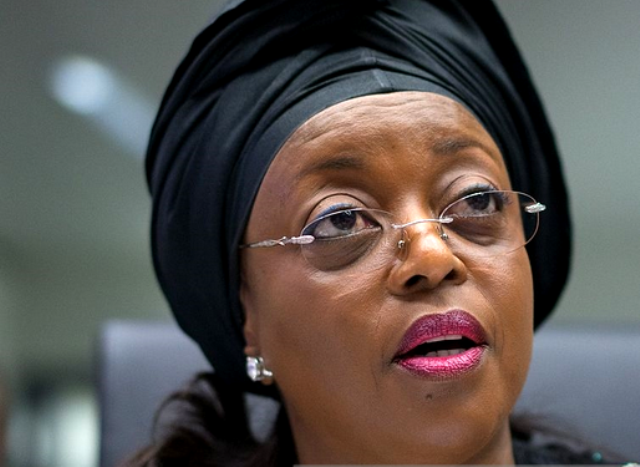
CHAIRMAN of the Economic and Financial Crimes Commission (EFFC) AbdulRasheed Bawa has said that pieces of jewellery seized from Nigeria’s former Minister of Petroleum Resources Diezani Alison-Madueke were worth N14.460 billion.
Bawa disclosed this while appearing before the House of Representatives ad-hoc committee probing the status of recovered loot on Friday.
He said that about 80 houses forfeited by the embattled ex-minister had been valued at about $80m.
The commission had, during a raid on one of the minister’s residences in Abuja, recovered the items which included: 419 bangles, 315 rings, 304 earrings, 267 necklaces, 189 wristwatches, 174 necklaces and earrings, 78 bracelets, 77 brooches, and 74 pendants.
A customised gold iPhone was also recovered during the raid.
The anti-graft agency alleged that she started acquiring the jewellery in 2012 while she was already a serving minister.
In 2019, a Federal High Court in Lagos had ordered the final forfeiture of the items to the Nigerian government.
Similarly, in 2017, Justice Chuka Obiozor of the Federal High Court, Lagos, ordered the permanent forfeiture of N7.6 billion linked to Alison-Madueke.
Justice Obiozor, in a separate suit, also ordered the permanent forfeiture of $37.5 million Banana Island mansion linked to the former minister.
In addition to the building, the court also ordered the permanent forfeiture of the sums of $2.740 million and N84.537 million realised as rents on the property.
Earlier this month, the EFCC had said in its monthly publication that it had recovered $153 million.
Bawa said the commission was still pursuing another case of $115 million INEC bribery by the fleeing minister who had been outside the shores of the country since leaving office in 2015.
He noted that efforts were ongoing to extradite Alison-Madueke to answer to her crimes in the country.
“There are several cases surrounding Diezani’s case. I was part of that investigation, and we have done quite a lot. In one of the cases, we recovered $153 million. We have secured the final forfeiture of over 80 properties in Nigeria valued at about $80 million. We have done quite a bit on that,” he said.
“The other case, as it relates to the $115 million INEC bribery, is also ongoing across the federation. We are looking forward to the time we will, maybe, have her in the country, and, of course, review things and see what will happen going forward. The case has certainly not been abandoned.’’
In challenging the seizure, Alison-Madueke said the EFCC violated her fundamental right to own property.
According to her, the search of her home that led to the seizure was conducted without any court order, hence making it illegal.
Since 2015, Alison-Madueke has been holed up in the United Kingdom where she faces a separate probe for alleged bribery, corruption and money laundering.
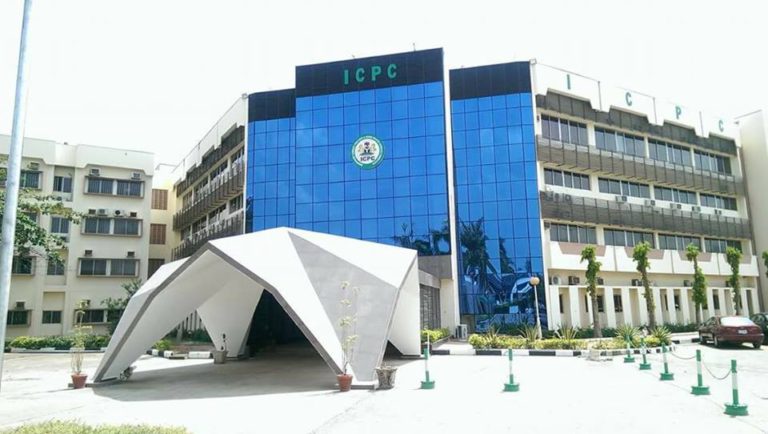
THE Independent Corrupt Practices and Other Related Offences Commission (ICPC) has nabbed two Federal Road Safety Corps (FRSC) officials over alleged certificate forgery.
In a joint statement signed by ICPC Spokesperson Azuka Ogugua and FRSC Spokesperson Bisi Kazeem, which The ICIR sawon Friday, the culprits were identified as Edwin Onyuwe and Achigili Ogoli.
According to the statement, the Commission also arrested two members of a certificate forgery syndicate, Sunday Okpara and Abdulrahman Razak, for forging the certificate of the University of Abuja for the two officials of FRSC.
Their arrest in Abuja followed a petition by the FRSC Marshal Boboye Oyeyemi to the Commission, in which he alleged that the two officials had approached the management of FRSC with forged Bachelor of Science degrees in Public Administration from the University of Abuja, to be upgraded to officer cadre.
The two officials were alleged to have also presented fake statements of result from the same institution to the management of FRSC for the same purpose of upgrading to officer cadre.
It noted that before their arrest, FRSC had contacted the University of Abuja to ascertain the authenticity of the certificates, but the school wrote a reply to FRSC confirming that the degree certificates were forged.
The statement added that Onyuwe and Ogoli maintained that they were originals approved by the university, having allegedly paid an N500,000 bribe to university staff to falsify records to back their claim.
“ICPC, in the course of an investigation, found that the two FRSC officials were students of the Distance Learning programme of the University. However, they could not graduate due to poor results, as documents from the university showed they had multiple carry-overs in the courses registered.
“This allegedly made them approach the forgery syndicate to prepare the forged degree certificates for them to present to their organization for the upgrade of their cadre.
“The amount of N430,000 was found to have been paid to the syndicate for the forgery, with Onyuwe paying N230,000 while Ogoli paid N200,000 respectively.”
The statement added that a member of the syndicate, Razak, who claimed to be a printer, told ICPC operatives that he used an original certificate from the university obtained from a friend to perfect the forgery.
Other members of the syndicate include Matthias Ibitiye, Usman Danjuma, and Uchenna Ifeonu. The matter will be charged to court upon the conclusion of the investigation.
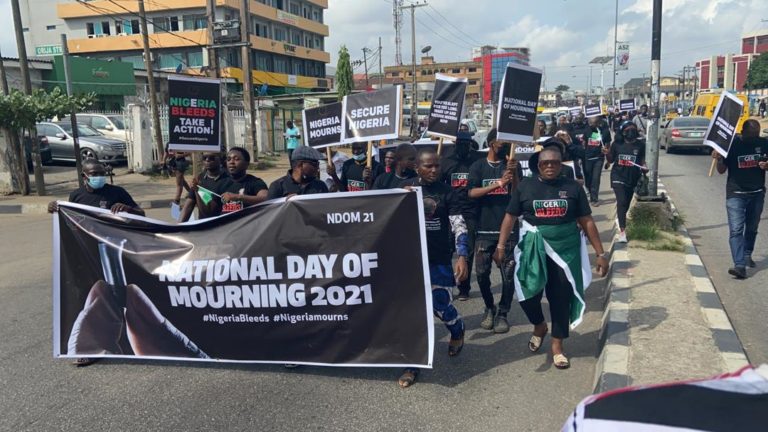
THE Joint Action Civil Society Coalition/Nigeria Mourns Secretariat has urged Nigeria’s President Muhammadu Buhari to take urgent steps towards addressing the issue of incessant killings across the country.
In commemoration of the National Day of Mourning on Friday, the coalition of 127 civil society organisations issued a statement, decrying the incessant killings within the country and the ‘indifference’ of the president towards the plight of Nigerians.
Citing the silence of the president on the recent massacre of over 130 Nigerians in Benue and Plateau states, the coalition hinted that Buhari appeared unwilling to provide leadership to address the insecurity challenges facing the country.
“President Buhari remains indifferent to the growing toll of massacres, industrial scale abductions and lawless abuse of Nigerians all over the country,” the statement read.
The statement highlighted the killing of security officials, the targeting of schools by terrorists, the strike action by judicial workers, among others, as major issues plaguing the country.
It stated that rather than find solutions to the issues, the government was further deepening the crisis through nepotism, and persecution of civic actors and the media.
“We have come together on this fourth National Day of Mourning to ask the president to take urgent steps to #securenigeria by addressing these priority areas that we have identified above. There is no time to waste, the time to act is now,” it read.
The civil society organisations had, in February, called the attention of the public to the violence and atrocities carried out across several states in the country. They had also issued a statement earlier in May, calling on Nigerians to participate in a series of mass actions against the present administration.
They embarked on a march on Friday, in peaceful protest against insecurity and impunity spreading throughout the country.
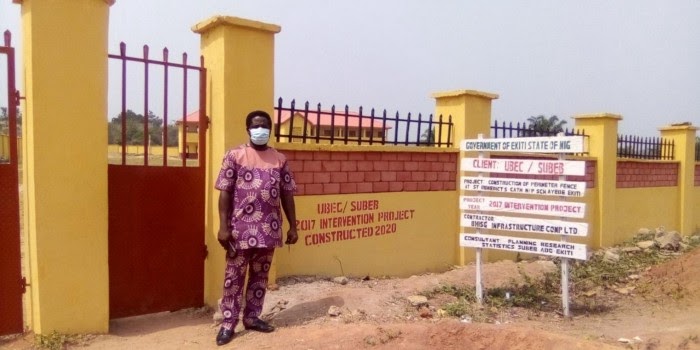
AJAYI Omotayo, the headteacher of St Benedict’s Nursery and Primary School Ayede Ekiti, was bewildered when the construction work on the perimeter fence around the school stopped abruptly.
At a time attacks on schools and abduction for ransom by terrorists are rising, Omotayo had every reason to be worried because Ekiti State, Southwest Nigeria, has also become a hot-spot for kidnapping.
More than 600 students have been abducted from schools in Northwest Nigeria since Dec. 2020, a BBC report highlighting a worrying development in the country’s kidnap-for-ransom crisis.
In 2020, the Ekiti State government had initiated a project to construct perimeter fences around public schools in the state, including St Benedict’s, as parts of measures to fortify schools against attacks and abduction.
Checks on Ekiti Procurement Portal revealed that in Nov. 2020, the State Universal Basic Education Board (SUBEB) awarded contracts to various contractors to implement the safe school project. One of the contractors, BHISG Infrastructure Company, limited, was awarded the perimeter fence of St Benedict’s Nursery and Primary School.
After mobilising to the site, the project was stopped, and the contractor left due to the non-supply of some of the materials, like irons and red bricks, needed for its completion. It was not clear if the state government was aware until after a group of independent procurement monitors discovered that the project was stalled by a lack of supplies of key materials.
“We reached out to the contractor and extracted a commitment from him to return to the site,” says Odeyemi Dotun, one of the monitors whose organisation, Center for Social Reconditioning and Development (CEFSORD), like several other Civil Society Organisations (CSOs) in Ekiti state, is committed to open contracting in the state.
Dotun said his organisation was inclined towards completing the project because of “its significance to the safety and security of the pupils and teachers who are the direct beneficiaries.”
“Due to this advocacy, the contractor returned to the site, completed, and delivered the project in January 2021. The school environment is now safer from what it used to be with the building of the fence and the school gate, which serves as a shield against invaders,” the CEFSORD team lead said.
Convergence of CSOs for good governance
In 2018, the Public and Private Development Centre (PPDC), a citizen sector organisation focusing on open contracting through procurement and contract monitoring activities in Nigeria, trained members of civil society organisations, professional bodies, and media practitioners on open contracting using the Freedom of Information as a tool for sourcing data. This was with the support from the MacArthur Foundation.
By the end of 2020, PPDC had at least 10 state governments in Nigeria signed up to its Open Contracting Data Standards (OCDS) and currently leads the charge in demanding its full implementation in states.
The Open Contracting Data Standards (OCDS) makes it easy for citizens, including those in civil society organisations, to monitor the award of contracts and their implementation.
Ekiti State currently has an open contracting portal where according to Dotun, information on the award of the perimeter fence project at St Benedict’s Nursery and Primary School was extracted. The state’s Bureau of Public Procurement also makes procurement information available on its Facebook page, enhancing public trust and confidence in how contracts are awarded.
Like Dotun, Kayode Teslim and Wahab Adeniyi, who are also procurement monitors, have taken advantage of the procurement portal in Ekiti State to monitor the progress of some projects.
In Oct. 2020, the duo of Teslim and Adeniyi of the Foundation for Sustainable Health Promotion and Development (FOSHPAD) went on a project monitoring at Ansar-Ud-deen (AUD) Comprehensive High School, Ado Ekiti.
They were on the trail of a contract awarded to reconstruct a block of classrooms in the school at the sum of N11, 343,321.00 to Bisteam Golden International Limited in 2018. Teslim, who led the team, told HumAngle that the contract details were extracted from Ekiti Open Contracting Portal.
The monitors, he explains, help to bridge the gap between the government, the contractors, and the people who the projects are meant to serve.
“During the monitoring exercise, we confirmed the completion of the project, which is currently in use by Junior Secondary School (JSS) students,” he said.
But the school has more infrastructural challenges, according to findings by their group.
Students who have been receiving lectures under dilapidated structures shared their grievances with the monitors. Despite the newly completed classroom block, the 40-year-old school is over-populated; close to 2000 students are in the school.
*Olorunsola A.T, a resident and a parent of one of the students in the school, attested that AUD Comprehensive High School is one of the most populated secondary schools in Ekiti State.
Students learning in a dilapidated classroom at the school
“The team visited the classroom blocks being used by JSS 2 students; on getting to the classrooms, we discovered that these classrooms were in a deplorable state; they were unsafe and unsuitable for learning as they had no ceiling, windows, and doors,” the team lead revealed.
“Adjacent to this block of classrooms is an entire classroom block that has been abandoned as the entire roof has been blown off.”
Apparently, the students were not happy with the learning environment. “We are learning in an open roof classroom, directly under the sun, and the rain has spoiled some of our books inside the desk,” one of the students, Ademola Ogunlade, was quoted as saying.
Open contracting: the place of the people
Open contracting is about “publishing and using open, accessible and timely information on public contracting to engage citizens and businesses to fix problems and deliver results,” Open Contracting Partnership, a Washington DC-based organisation, says.
This was the kind of opportunity Olowolayemo Lawrence of Inspiration Care and Development Center (ICDC) says he was always looking forward to. Lawrence was once worried about infrastructure and the absence of essential ones at the Igirigiri community in Ado Ekiti.
Igirigiri is one of the farm settlements in the capital city, Ado-Ekiti. His first visit to the farm settlement was in 2018, when he was an election observer.
According to him, the story of the Igirigiri community is one of the success stories recorded after the open contract initiative was launched.
“After attending a series of training conducted by PPDC, and selected to participate in the monitoring exercises, I saw this as a real opportunity to advocate for this community and ensure the government takes a serious step in tackling some of the issues identified,” Lawrence recalls his second journey to the community with no government’s presence.
“My first focus was on the only primary school on the farm. I believe that most of the young people in the rural areas lack access to good education, which is the bedrock for building a successful future.”
He said the visitation to the community with other monitors opened a window of opportunity to engage the state government on the people’s plights. Soon after the ease of the lockdown in 2020, they arrived at the community.
“We saw the need to engage with the government on this issue for the first time immediately after the first phase of the lockdown in 2020 when we visited the community to identify some of their urgent needs.”
“With just a constructive tweet to the state governor @Kfayemi and the DG Bureau of Public Procurement in Ekiti state @egghead to state the dilapidated conditions of the School, this generated some reactions from the @egghead and the chairman of Ado Local Government. This was also followed up with Advocacy visits to all the relevant stakeholders,” Lawrence wrote.
This seems to be what the government was waiting for. The advocacy paid off, and the classroom was reconstructed. Another project was awarded.
“The government promised to take proactive steps to contract the project and ensure completion in due time,” he said, adding, “with our efforts, we have now confirmed that the abandoned block of the classroom had been completed and a sum of N10,804,838.35 has been approved for the construction of a new three classrooms with an office at Igirigiri.”
“We are currently monitoring this process to ensure that proper work is delivered by the contractor handling the project.”
E-library project reactivated
Construction work at the foundation level
During his first administration in the state, Kayode Fayemi, Ekiti state governor, had established Ekiti State College of Agriculture and Technology, Isan-Ekiti, in 2014, focusing on middle-level workforce development in the agricultural sector.
The college suffered a setback after Fayemi’s first term lapsed. However, the governor has, since his return to power has reactivated the project, and one of those given priority attention is the e-Library complex.
Open data obtained from the government portal says the project was awarded to Kouris Construction Nig LTD at N131,196,167, Oluwabukola Adekunle of Life And Peace Development Organisation (LAPDO) says.
When completed, the state government envisages that the project would serve as a heritage for the next generation −a reservoir for the storage of facts. However, after two visits in August and October 2020, work had stopped, and the project was still at the trench level.
LAPDO sent a Freedom of Information request to the Ekiti State Ministry of Education, Science & Technology demanding why the project was suspended, Adekunle revealed.
“The team, in turn, paid advocacy to the State Ministry of Education, Science & Technology and the Ministry of Agriculture and Food Sustainability also had several engagements with Directors, HOD amongst others,” he said.
“It is worthy to note that construction has resumed on the site, and we are currently monitoring the process to ensure that the complex is completed successfully.”
The open contracting model allows Ekiti State citizens and Civil Society Organisations (CSOs) to monitor government projects.
NATIONAL Broadcasting Commission (NBC) has suspended Human Rights Radio Station on the grounds of violating broadcasting codes and betrayal of the public’s trust.
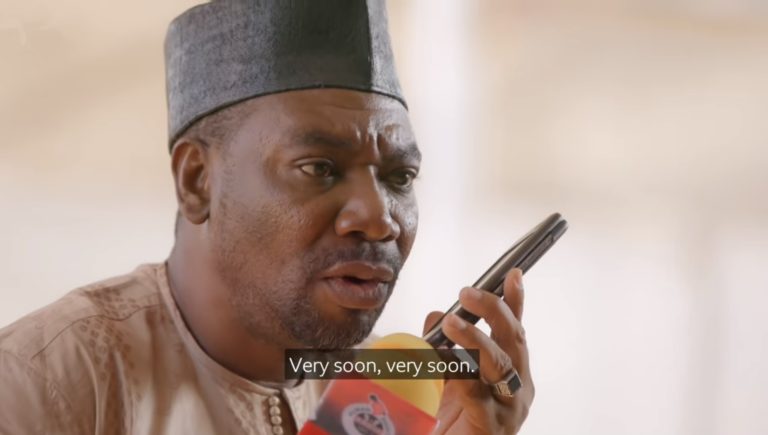
The NBC suspension came after the radio show host, Ahmed Isah, otherwise known as “ordinary president,” was shown in the British Broadcasting Commission (BBC)’s investigative programme, Africa Eye, where he physically assaulted an interviewee during his Berekete family show.
NBC announced that by May 31, the suspension of the broadcaster’s license, which would last for one month, will be effective.
“The commission states however that the action of the broadcaster is in clear violation of the broadcasting code and a betrayal of the confidence reposed on him by the people and Government of Nigeria on whose behalf he holds the trust,” the NBC stated in a press release.
The NBC faulted the actions of the “ordinary president,” citing Section 0.1.1.2.1 of the Broadcasting Code that held broadcasters to a standard of “promoting accepted civic and social responsibilities and respect for the dignity of man.”
Earlier warning
The NBC acknowledged that it had “over the years, advised, cautioned, warned and fined the station” over repeated cases of outright abuse of broadcast ethics, including intimidation and use of denigrating remarks.
The commission also noted that it had conducted training sessions for the station and the host of the Berekete show in particular.
The NBC stated that the aim of the suspension was to bring Mr. Isah to “put his house in order” and abide by “ethical and professional broadcasting” standards, at the end of which he is to pay a recommencement fee.
“Berekete family show” was known for advocacy
NBC recognised that the Human Rights radio station “tuned its programming to the yearnings of the people,” as it spelt out the sanctions.
Mr. Ahmed Isah was also identified in the BBC ‘Africa Eye’ documentary as a ‘human rights advocate’, and after the documentary was aired and knowledge of the assault made public, Mr. Isah reportedly apologized for his actions.
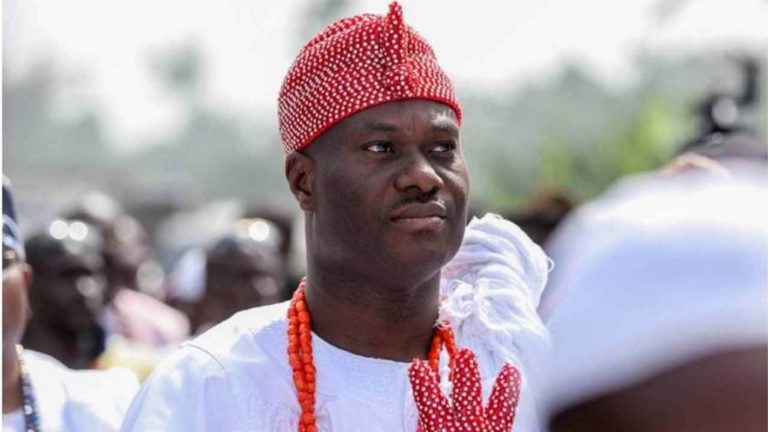
THE Ooni of Ife Adeyeye Enitan Ogunwusi has said that Nigerian youths, who make 70 per cent of the country’s population, are angry with the state of the nation and hungry at the same time.
The Yoruba traditional ruler, who spoke alongside the leadership of the National Assembly and other traditional leaders at a National Security Summit in Abuja on Thursday, lamented that the youths have been neglected from strategic and key policy areas in the country.
Ogunwusi, also lamented that politicians only remember the youths when they want to perpetrate violence and anarchy during elections, noting that the youth must be productively and positively engaged for Nigeria to overcome its current woes engaged.
“On average, the age of each one of us here is between the bracket of 50 and about 60, the early 60s. And anybody can challenge me if I’m wrong. Our dear country that has brought all of us together here, the youngest governor is only 46 years old,” he said.
“We all know the demography of this country. The demography of this country is above 50. All the way to the age of dependency is less than 30 per cent. But between the age of 18 to under 40, we have them in numbers of more than 70 per cent.
“And we are talking about security here. Who are the active participants whenever we have a breakdown of law and order? It is the average age of 18 to 39. That’s the truth.
“Let us tell ourselves the truth, they are hungry, and they are angry. I repeat, they are hungry, and they are very angry.”
He stressed that leaders are only concerned about talking without showing commitment that would better the lots of Nigerian youths.
The Ooni agreed with Nigerian Senate President Ahmed Lawan that the local governments in Nigeria, which could have effectively engaged the youths on insecurity matters, had been completely rendered useless due to lack of funding and due process.
THE United Nation’s International Children Emergency Fund (UNICEF) has described the COVID-19 crisis as a child rights crisis in Nigeria, which has resulted in as increase in the perpetration of violence against the Nigerian child.
A statement released by the UNICEF’s Country Director Peter Hawkins on Thursday in commemoration of the Nigerian Children’s Day stated that the celebration had arrived at a challenging moment for Nigerian children.
Hawkins stated that the pandemic posed a threat to decades of progress on child development as violence was perpetrated against one in four Nigerian children. He also noted that one in three Nigerian girls was sexually abused.
“The longer the pandemic goes on, the more intense the impact on women and children. On this Nigerian Children’s Day, let us all agree that we cannot let one crisis compound another,” he said
Hawkins, however, described Nigerian children as resilient and talented with aspirations to do great things and urged society to provide adequate encouragement for the realisation of these dreams.
Describing child protection as an effective means for national development, Hawkins encouraged more commitment towards protection mechanisms for all children.
“As we celebrate our children today, we must act in their best interests and deploy innovative solutions to fast-track learning and health services to build back better, for every Nigerian child,” he said.
THE Nigerian Police Force has said it arrested 1173 suspects between April and May 2021, but criminal activities prevail in the country.
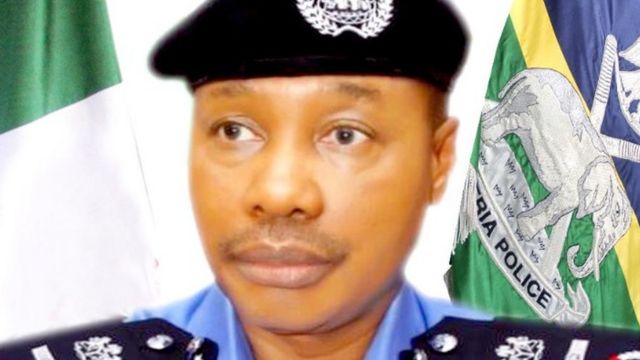
Inspector-General of Police Usman Baba said this on Thursday during a media briefing in Abuja, noting that the arrested suspects included 398 armed robbery suspects and 222 murder suspects.
“Between April to May, 2021, a 1,173 high-profile suspects have been arrested by the police during various operations conducted by operatives of the Nigeria Police,” Baba said.
He stated that the force also arrested 258 cult-related offenders, 202 bandits and 86 kidnapping suspects across the country.
Baba further noted that 431 firearms and 10,120 ammunition were recovered while 152 kidnapped victims were rescued.
The IGP said among the arrested suspects were the principal actors involved in the March 20 attack on Governor of Benue State Samuel Ortom.
However, despite the various arrests and arms recoveries across the country, criminal activities have continued in the country.
Between April 1 and May 20, there were a total number of 378 crises across Nigeria, according to data obtained from the Armed Conflict Location & Event Data Project (ACLED), a crisis data collection organisation.
The data show that during the period in question, there were 1,238 reported fatalities in Nigeria.
The violent activities and fatalities cut across battles, riots, explosions and remote violence, as well as violence against civilians.
Between April 1 and May 21, there were 170 battles, 35 riots, 18 explosions/eemote violence and 155 violence against civilians in Nigeria, according to the data obtained by The ICIR.
Currently, the security crisis in Nigeria has not improved, as the regions of the country continue to battle the challenges.
In the southern part of the country, there are ongoing clashes between security forces and the Indigenous People of Biafra, herders/farmers crisis, destruction of electoral offices, among others.
In the northern region, there are cases of kidnapping, abduction, killings and other insurgent activities.
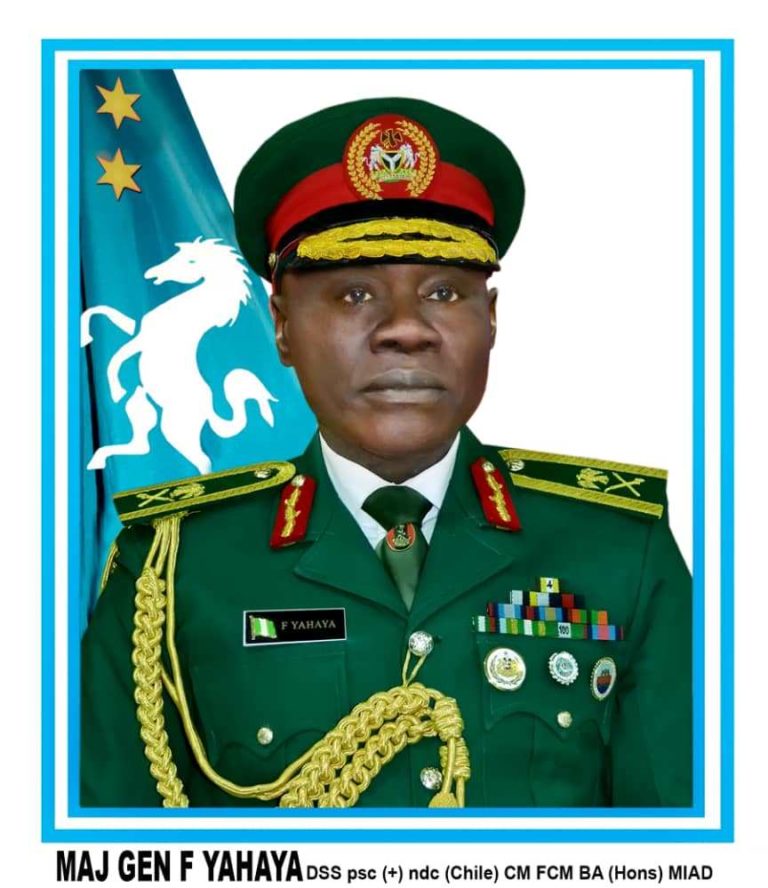
ON Thursday, President Muhammadu Buhari appointed Farouk Yahaya, a Major General, to replace the late Ibrahim Attahiru as the new chief of Army staff (COAS).
Yahaya’s appointment was contained in a statement signed by the Acting Director of Defence Information Onyema Nwachukwu.
Although his appointment is trending with positive and negative sentiments, his profile is important for the readers.
According to the military, Yahaya was born on January 5, 1966, in Sifawa, Bodinga Local Government Area of Sokoto State. He is a member of the 37 Regular Course of the Nigerian Defence Academy (NDA). He started his cadet training on September 27, 1985, and was commissioned into the Nigerian Army Infantry Corps on 22 September, 1990.
He has held several appointments, including: staff, Instructional and Command. Notable among the appointments held by the new COAS are: garrison commander in charge of Headquarters Guards Brigade; directing staff at the Armed Forces Command and Staff College (AFCSC); deputy director of Army Headquarters Department of Military Secretary; deputy director, Army Research and Development; and the chief of staff, Headquarters Joint Task Force Operation Pulo Shield.
He also served as the principal general staff officer (PGSO) to minister of defence; the commander, Headquarters 4 Brigade, and 29 Task Force Brigade (Operation Zaman Lafiya). He was also director of manpower at the Army Headquarters; military secretary, Army Headquarters; and general officer commanding (GOC) 1 Division of the Nigerian Army.
Until his appointment as the COAS, Yahaya had been the theatre commander of Operation ‘Hadin Kai’ responsible for Counter-Terrorism and Counter-Insurgency operations in North-East Nigeria.
The new COAS is a holder of several honours and awards, some of which include: Forces Service Star, Meritorious Service Star, Distinguished Service Star, Grand Service Star, Passed Staff Course (Dagger); National Defence Course (Chile); Economic Community of West Africa State Monitoring Group Medal; Command Medal; Field Command Medal; General Operations Medal; Silver Jubilee Medal, and Golden Jubilee Medal.