Home Blog Page 180

Fire erupts at UBA branch on Broad Street, Lagos

0

A major fire broke out on Tuesday afternoon at Afriland Tower, Broad Street, Lagos Island, where one of the branches of United Bank for Africa (UBA) is located.

The incident sparked chaos in the area as thick smoke engulfed the high-rise building, forcing some staff to attempt escape through windows.

Videos circulating on social media showed dramatic scenes of employees climbing down with the aid of fire service ladders, while others were seen trying to jump from upper floors in panic.

According to Deputy Controller General of the Lagos State Fire and Rescue Service, Ogabi Olajide, the alarm was raised at 1:38 p.m., with crews from Ebute Elefun and Sari Iganmu stations responding swiftly to the scene. The fire is believed to have started in the basement inverter room before spreading to multiple floors.

In a statement, UBA clarified that while the affected building houses one of its branches, it is not the UBA House, Marina, which serves as the bank’s head office. The bank also assured that the safety and well-being of its staff and customers remained its priority.

“As against reports online and social media, the affected building is not the UBA House, Marina, the Bank’s head office. We have ensured the safety and well-being of our staff and customers in the branch,” the bank said.

As of press time, no casualties have been officially confirmed, though emergency teams continue rescue and containment efforts. Authorities have urged the public to avoid the area while operations are ongoing.

The viral footage has fueled public concern, with many Nigerians calling for urgent reviews of safety standards in commercial buildings across Lagos Island.

My side of the story-BUK lecturer accused of sexual harassment speaks 

0

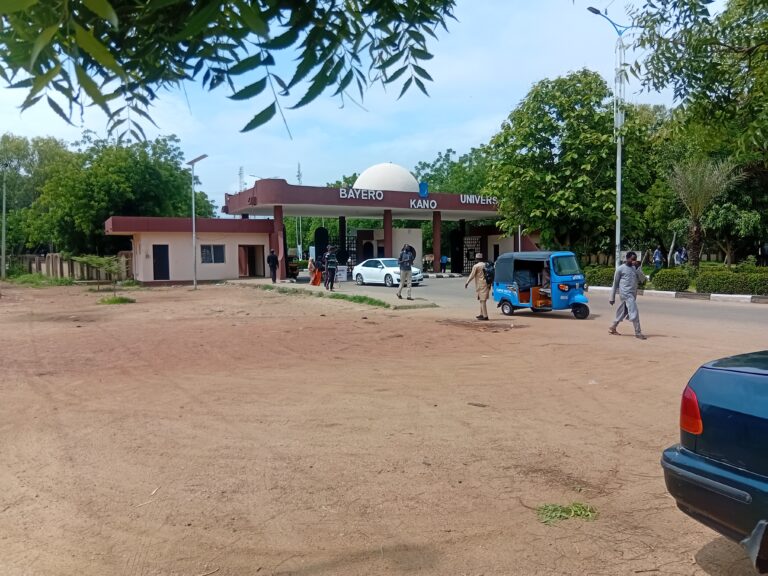
A LECTURER at Bayero University Kano, has dismissed allegations of sexually harassing a former student of the institution, describing it as character assassination and a deliberate attempt to tarnish his reputation.

Reacting to an ICIR report that exposed the persistence of sexual harassment at BUK despite a strict policy and featured the account of a former student who said she was harassed in a lecturer’s office,the lecturer, whose identity is withheld, shared a statement and a folder containing screenshots of Whatapp conversations, audio recordings and documents with the ICIR on Monday, September 15.

The report detailed how female students in the famous institution admitted being aware of a strict sexual harassment policy but declained commenting for fear of being rusticated. They revealed that sexual harassment has not abated at the institution despite the existence of a strict policy against such practice.

The lecturer, whom The ICIR had contacted via email on August 13, 2025, for an interview regarding the allegation but received no response,  contacted this medium to refute the student’s account after publication. He dismissed the student’s story that highlighted how she missed a test during her second year and had to call the lecturer to request for a make up. He insisted that his encounter with the lady in question began precisely on  October 16, 2023 when he received a WhatsApp message from her.

On  the allegation where the former student said the lecturer agreed to give her the make up test but ended up harassing her in his office, the lecturer insisted that as at when she contacted him she had dropped out of school already and was never at any time in his office for a test.

“Sometime in 2024 I received an audio conversation telling me she was in Kano, and wanted to see me, a request I obliged and she came into my office to see me. After a heated conversation because I turned down her request, she felt so embittered realising she came all the way to Kano hoping I would accept her for all she had told me earlier . She left my office angry and vowed to do her worst, and how I made her felt so stupid in the presence of her friends whom she already told we were having an affair. That was how my first encounter with her ended,” he said.

The lecturer explained that after engaging in a long WhatApp conversation he had an understanding of her family background, and only wanted to assist her in getting admission to another university,  to enable her move on with her life.

“My mistakes are sympathetically accepting to listen to her on the premise that she was a victim of a broken home and what she described as rape by her husband from a so called forced-marriage, accepting to go on long conversations that warranted her to send me nude pictures of herself, but refused to accept her for her intentions,” he explained.

The ICIR submitted a Freedom of Information Act (FOIA) request on August 13, to the office of the director of the Centre for Gender Studies  requesting information and documents regarding sexual harassment allegations involving lecturers and students between January 2022 to August 2025, including names, departments of alleged perpetrators and dates.

The Registrar of the Institution, Haruna Aliyu, responded with a letter dated August 20 on September 3, after a reminder email, stating that the FOIA request contained serious allegations which appear litigious.

He claimed that pursuant to Section 14 of the Freedom of Information Act, the records and information on sexual harassment and assault requested were exempted from disclosure under the Act. 

However, Section 14 of the Act does not envisage the kind of information requested, which is the record of sexual harassment cases, a criminal offence, contrary to Haruna‘s claim.

Court endorses Kano scholarship funds’ probe by ICPC

0

A HIGH Court of Federal Capital Territory, Abuja, has dismissed the move to stop the Independent Corrupt Practices and Other Related Offences Commission (ICPC) from investigating alleged financial misconduct in the management of scholarship funds in Kano State.

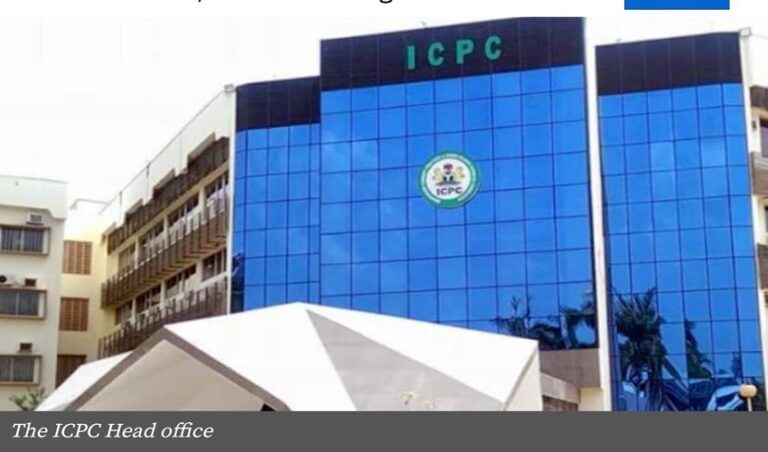
A statement released by the ICPC on Tuesday, September 16, said the commission received a petition alleging mismanagement of scholarship funds in Kano State. 

“In the course of the investigation, ICPC invited officials from the Kano State Ministry of Higher Education and the Kano State Scholarship Board to provide documents and clarifications,” part of the statement read.

The commission explained that instead of cooperating, the officials, led by the Ministry’s Permanent Secretary, Hadi Bala, approached the court with the file suit No. CV/2857/2025 sued the Attorney-General of the Federation and the ICPC, alleging that such invitations violated their fundamental rights.

“Delivering judgment on the matter, Justice Obanor ruled that the officials of the Kano State Scholarship Board be properly joined as parties in the suit and that the Attorney-General of the Federation be struck out as a party, as his joinder was unnecessary,” it added.

The ICPC noted that the judge held that an invitation letter from the commission, for an investigation purpose, did not constitute a breach of fundamental rights.

“The court held that the applicants failed to show any violation of their rights and reaffirmed that ICPC cannot be restrained from performing its lawful duty of investigation. Consequently, the suit was dismissed for lack of merit.

“This ruling reinforces the commission’s authority to investigate cases of alleged corruption and financial misconduct in line with its statutory mandate,” it added.

Reacting to the judgement, the commission assured Nigerians that it remained committed to upholding transparency, accountability, and the rule of law in public service.

Excitement builds as UEFA Champions League returns

0

FOOTBALL fans are eager to see action as UEFA Champions League returns on Tuesday, September 16, promising drama and spectacle as usual.   

Europe’s top club competition ushers in its new expanded league phase. With 36 teams battling for continental supremacy, every match is significant, and both newcomers and regulars must prove their mettle.

Starting from Tuesday, attention will be on 18 fixtures stretching from the Basque Country to Manchester, offering heavyweight duels, historic rematches, and fresh storylines.

The opening matchday is no ordinary opener, as it brings back memories of past finals and debuts for newcomers.

Among the standout ties this week is Juventus against Borussia Dortmund, a revival of the 1997 final that Dortmund won.

Ajax against Inter Milan reminds fans of the 1972 decider, while Bayern Munich against Chelsea rekindles memories of Chelsea’s dramatic triumph in the 2012 final in Munich.

Meanwhile, giant Real Madrid are chasing another Champions League glory while Manchester City striker Erling Haaland is on the search for his 50th goal in the competition.

The expanded format also introduces new challengers. Belgian side Union Saint-Gilloise, Cyprus’ Pafos, Norway’s Bodo Glimt and Kazakhstan’s Kairat Almaty are making their group stage debuts, eager to write themselves into Champions League history.

For the big boys in the lucrative tournament, the mission is clear: win the competition.

Clubs like Bayern, Liverpool, and Real Madrid have made a habit of stamping their dominance on opening nights, while newcomers enter with nothing to lose and everything to gain.

Meanwhile, clubs with long European struggles, such as Marseille, Sporting CP, and Galatasaray, see this season as an opportunity to rewrite their story.

In Manchester, prolific midfielder Kevin De Bruyne makes a return, this time playing for Napoli against his former club, while Kylian Mbappe of Real Madrid looks to extend his record of scoring on matchday one in consecutive seasons.

African pride, Mohamed Salah, another consistent performer, will be hoping to continue his group stage scoring streak when Liverpool hosts Atletico Madrid at Anfield.

The global love for the Champions League remains unmatched. UEFA says this season’s edition will reach more than 200 territories, with record viewership expected.

In Nigeria, where the competition enjoys a massive following, viewing centres usually record heavy turnout, while online platforms keep buzzing with predictions and comments.

For many football fans, the Champions League is not just football; it is a ritual and embedded passion.

In other fixtures, Arsenal travel to Spain to face Athletic Bilbao, unbeaten in their last eight opening day matches, while Tottenham host Villarreal in London in a clash of familiar faces.

Benfica, one of the most experienced clubs in European football, will lock horns with Qarabag of Azerbaijan.

Elsewhere, Paris Saint-Germain (PSG) faces Atalanta in what promises to be a goal-filled affair, while Newcastle hosts Barcelona in a nostalgic clash that goes back to their famous 3-2 win in 1997.

In Germany, Bayer Leverkusen travel to Copenhagen, while Frankfurt welcome Galatasaray in a battle of clubs desperate to make their mark.

As the tournament kicks off today, the Champions League’s anthem will once again ring through stadiums across Europe, setting the stage for nine months of high drama.

From Madrid to Munich and Lisbon to Lagos, the world is ready for football’s biggest theatre to begin.

FG drags Sowore to court ‘for calling Tinubu criminal’

0

THE Federal Government has filed a five-count criminal charge at the Federal High Court in Abuja against human rights activist and former presidential candidate, Omoyele Sowore,  accusing him of using social media to defame President Bola Ahmed Tinubu and spread information capable of disturbing public order.

The charge sheet, marked FHC/ABJ/CR/184/2025, accuses Sowore of publishing false and defamatory statements on his verified X handle and Facebook page on August 25 and 26, 2025. The charges were filed on September 16, 2025, by, Director of Public Prosecutions at the Federal Ministry of Justice, M.B. Abubakar alongside counsels M.E. Ernest, U.B. Bulla, C.S. Eze, and E.G. Orubor.

The Nigerian government stated that the posts described the president as a ‘criminal’ and alleged he falsely claimed there was no more corruption in Nigeria.

The government further said the comments were intended to cause a breakdown of law and order and to tarnish the president’s reputation. 

It also cited violations of Section 24(1)(b) of the Cybercrimes (Prohibition, Prevention, etc.) Amendment Act, 2024, as well as Sections 375 and 59 of the Criminal Code Act.

Count two reads: “That you, Omoyele Sowore, adult male on or about the 26th day of August, 2025, within the jurisdiction of this Honourable Court, did use your official Facebook page, Omoyele Sowore, to send out a message/ post as: ‘THIS CRIMINAL @ OFFICIAL PBAT ACTUALLY WENT TO BRAZIL TO STATE THAT THERE IS NO MORE CORRUPTION UNDER HIS REGIME IN NIGERIA. WHAT AUDACITY TO LIE SHAMELESSLY!”, which you know the said message/post to be false but posted it for the purpose of causing a breakdown of law and order in the country, especially among individuals who hold divergent views on the personality of the President and Commander-in-Chief of the Armed Forces of the Federal Republic of Nigeria, Bola Ahmed Tinubu (GCFR) and thereby committed an offence contrary to Section 24 (1) (b) of the Cybercrimes (Prohibition, Prevention, etc) Amendment Act, 2024.”

Counts three and four allege that Sowore defamed the president in his August 25 X post and August 26 Facebook post, both of which described the president as a ‘criminal’ and accused him of making false claims.

The fifth count charges him with intentionally sharing false information on both platforms on August 26, purportedly to stir public anxiety and tarnish the president’s reputation.

Also named in the suit are X Incorp and Meta Platforms Incorp (Facebook), whose platforms carried the posts. 

Backstory

The latest development came just days after Sowore rejected a directive from the State Security Service (SSS) ordering him to delete the same post.

On September 12, Sowore publicly rejected the SSS demand in a letter to the agency’s Director-General, describing the order as “unlawful, insidious, and fundamentally defective.” 

He argued that the SSS lacked the power to act as a proxy for the president in a defamation dispute and invoked a 1985 Court of Appeal decision (Arthur Nwankwo v. State) which declared criminal defamation unconstitutional.

Citing Section 39 of the Nigerian Constitution and Article 9 of the African Charter on Human and Peoples’ Rights, Sowore vowed to continue his activism: “You have no business telling me how to criticise the president. The determination of the Nigerian people to reclaim their country from thieves in power is unwavering,” he said.

The SSS had earlier petitioned X Corps, demanding the suspension of Sowore’s verified handle, @YeleSowore, over a post it described as “misleading, offensive, and a threat to national security.”

In a letter dated September 6, 2025, the agency claimed Sowore disparaged the president in a post he made on August 25, 2025, part of which read: “This criminal @officialABAT actually went to Brazil to state that there is NO MORE corruption under his regime in Nigeria. What audacity to lie shamelessly!”

September 18: Fubara set to return as Rivers governor after six-month suspension

0

AS September 18 approaches, marking the end of the six-month emergency rule in Rivers State, attention has shifted to Government House in Port Harcourt, where Governor Siminalayi Fubara, who was suspended in March, is set to reclaim his mandate as the democratically elected leader of the state.

A sign of the end of the State of Emergency rule was announced by Fubara’s predecessor and Minister of the Federal Capital Territory (FCT), Nyesom Wike, who boasted on Saturday, August 30, that it would expire on September 18.

Wike said he was optimistic that with the conduct of the Rivers State Local Government elections, the end of emergency rule in the coastal state was imminent. 

What is clear is that the sole administrator, Ibok-Ette Ekwe Ibas, a retired vice admiral, who has piloted the state since President Bola Tinubu declared a state of emergency in the oil-rich state, is preparing to bow out.

In preparation for his exit, an interdenominational thanksgiving service was held in the state last Sunday to mark the end of his tenure.

Fubara’s suspension

Tinubu forced Fubara out of office on March 18, 2025, following prolonged crisis between the governor and 27 lawmakers loyal to Wike. The same rift had also escalated between the governor and Wike.

Tinubu justified the emergency rule by citing insecurity and a breakdown of governance. He suspended Fubara, his deputy, Ngozi Odu, and the entire House of Assembly. He then installed Ibas as the sole administrator of the state.

The decision, defended under Section 305 of the Constitution, sparked outrage from the Nigerian Bar Association (NBA), civil society groups, and concerned Nigerians who described it unconstitutional. But to Tinubu and his supporters, it was the best decision taken to save the state.

Ibas’ six-month tenure

Ibas began his six-month tenure with sweeping removal of all political appointees, and the appointment of local government administrators.

He led the conduct of election of officials into the 23 LGAs of the state. Wike’s allies swept the poll, leaving Fubara’s camp completely shut out.        

Ibas said he fulfilled his mandate. He pointed at the ‘peaceful’ LGA polls, new projects that include the rehabilitation of Diete-Spiff Secretariat and revival of the Songhai Farm as some of his achievements.

He also listed N5 billion he allegedly saved from civil service verification exercise as part of his success, adding that the state’s civil servants would remember him as the most worker-friendly leader.

Gains and losses of the emergency rule

Supporters of the emergency rule said it brought peace to the state and averted chaos, while those opposed to it said it denied them the governance they expected from those they elected.

Obinna Ebogidi of the Rivers Peace Initiative described it as a bridge rather than a destination.

For Enefa Georgewill of the Rivers State Civil Society Organisation, the regime amounted toa quasi-military rule that strangled democracy.”

Law and emergency rule debate

Nigerians remain split over the emergency rule. APC chieftain Okoi Obono-Obla said the emergency rule was necessary, giving Fubaratime to reflect and return with humility.

Justice Osai Ahiakwo, a lawyer and cleric, called it anabuse of constitutional powerakin to a political coup.

For Fubara, even if he reclaims the Brick House, he must work with a legislature that once sought to impeach him and work with the LGA leaders fully in Wike’s hands.

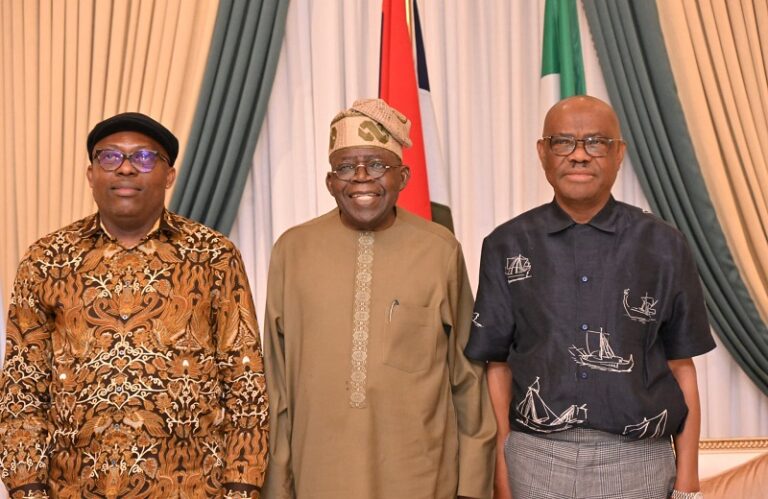
Nigerians expect all stakeholders in the state to work in harmony after Tinubu brokered truce between Wike and Fubara.

Since the president met both leaders at the Presidential Villa, in Abuja, their supporters have sheathed their swords. Fubara and Wike were also seen attending an event together shortly after the meeting.

All eye on Tinubu

Though no official announcement of Fubara’s return has been made yet, Nigerians are expecting Tinubu to announce and end to the emergency rule and return Fubara as the democratically elected leader of the state.

September 18 will not just mark the end of emergency rule; it will begin the next chapter of Rivers’ political life that observers believe requires a balancing act between reconciliation, power, and the people’s expectations.

Police hound whistleblower after exposing payroll racket

0

FOR over a decade, Mubarak Bello ran a modest business centre inside the Katsina State police headquarters complex, where he handled many secretarial jobs, including typing documents, processing loan applications to promotion letters for the command. 

On September 14, the police issued a statement over the arrest of 38-year-old Bello, accusing him of impersonation, being in possession of a fake police identity card, and unlawful possession of firearms.

The Katsina state police command claimed Bello’s arrest on September 13, 2025, came after a routine night patrol team intercepted his Toyota Corolla. The state police PRO, Abubakar Sadiq Aliyu, said officers recovered a locally made rifle, live cartridges and a ‘fake’ police ID card. 

However, The ICIR can authoritatively report that Bello’s arrest is an act of victimisation by the Katsina state command to silence him, after blowing the whistle on a ghost police workers scheme, allegedly perpetrated by the Katsina State police command many years ago.

As far back as 2021, Bello blew the lid on a ghost workers’ racket in the police payroll in Katsina State when he petitioned the Economic and Financial Crimes Commission, EFCC, the Independent Corrupt Practices and other related Offences Commission, ICPC providing details about the payroll fraud, which he was privy to while running a business centre at the State Police headquarters. 

It was gathered that Bello had also petitioned the office of the Attorney General of the Federation and Minister of Justice, when his petition to the two anti-corruption agencies made no headway.

The petitions and documents Bello had filed years earlier, some seen by The ICIR, show that he had reported his troubles to the Ministry of Justice, ICPC, EFCC, and even the Police Service Commission, PSC.

Bello insisted in a petition written to the Minister of Justice that the ID card and attempt to enlist his name and one Muhammad Hussaini, was part of a paper trail he began compiling in 2017, when he said the officers first drew him into a multi-million-naira payroll racket.

In a series of oral statements made to the ICPC, he narrated how he had faced attacks and threats on his life. Although The ICIR could not confirm if he obtained a license for possessing such a gun, these circumstances, sources said, could explain why he carried a locally made gun to protect himself.

How it began

Documents reviewed by this medium show that Bello first petitioned Nigeria’s Attorney General on July 20, 2020, through a letter acknowledged a month later. In the petition, he described how senior finance officers at the Katsina State command used his shop to secretly create employment records and bank accounts for ghost officers.

In Nigeria, ‘ghost workers’ are people who appear on a government or organisational payroll but do not actually work there. They are essentially fictitious employees whose names and details, sometimes even bank accounts, are inserted into salary records so that someone else can collect their wages.

Bello in his petition to the Attorney General in 2017 said he was asked to process what he believed were new recruitment papers. At first, he was unaware of its illegality and even when he tried to ask, the officers claimed, “it’s a new recruitment process.”

He claimed that he was misled by the officers to forge certificates, open bogus accounts, create appointments and confirmation documents, generate fake promotion and transfer letters.

He would also gain illicit access to the IPPIS payroll platform to register non-existent employees to divert government funds.

When the officers returned for a second phase, Bello said they asked if he had additional names to include in the enlistment, but he declined. He further claimed that the officers did not give up and later demanded that he submit his own name and that of an acquaintance, Muhammad Hussaini, and produced police ID cards for both.

Fake Police ID card showing Bello

While he admitted giving in to the pressure and subsequent threats, he declined to open the bank accounts required to collect the fraudulent salaries.

During the first and second processes, he listed more than a dozen officers for some of the policemen, including one Bashir Abubakar in the finance unit of the Katsina police command. 

His petitions detailed how salaries were diverted through fake service numbers and promotion letters. 

He identified the accused officers to include: CSP Bashir Abubakar, the Katsina Command Finance Officer; ASP Yakubu Ibrahim, the Assistant Finance Officer; and ASP Garba Shinkafi together with his assistant.

Others are, Jibrin Usman, Nasir (Auditor General responsible to the Katsina police), SP Ya’u Idris O/C, Bashir Abubakar (cashier, Katsina command), Idris Mani (O/C variation), Ahmed “Manchester”, Alhaji Ibrahim Kambarawa, Jamilu Abubakar, Kamala Lawal, Sailas Tanko, Safiya Usman, and Michael Victor, along with some unnamed bank managers.

Years of threats, attacks

According to Bello, his resistance triggered several acts of intimidation, adding that the moment he refused and vowed to report the incident, he was persistently intimidated.

Bello had in 2020, explained to ICPC investigators who interviewed him after his petition to the commission how police stormed his home in Sabon Unguwa, Katsina, and his office at the command headquarters, carting documents and machines. 

At the time, he was also arrested and detained on alleged false charges of ‘parading himself as a police officer,’ which Bello described as untrue.

He also recounted in his petition being beaten by officers at the Katsina Divisional Crime Officer’s office in 2020.

Mubarak Bello after suffering attacks from some thugs suspected to be sent by the accused officers

Independent findings by The ICIR also show how thugs attacked him with machetes, leaving deep cuts in October 2024. His head was macheted and his hand suffered deep cuts. In a voice note obtained by The ICIR, he appealed to acquaintances for help, saying he had been ambushed the previous evening and was receiving treatment at the Federal Medical Centre Katsina.

Bello said although he fought back during the assault, he was badly wounded and unsure how much longer he could withstand the pressure.

“Can you help me to do this thing, or l should just give up about these people,” he appealed in the recorded voice note, adding, Even yesterday they attacked me, I’m currently at FMC. I wounded two people, and they also wounded me severely.”

Sources privy to the matter at the ICPC confirmed that the whistleblower had in fact faced several attacks on his life since exposing the rot in the Nigerian police.

Earlier, before the attack, The ICIR gathered that Bello had also been arrested and detained by the police in Kaduna. He was later charged to court before eventually regaining freedom after spirited efforts by lawyers.

Officers decline ICPC investigation, as IGP ignored invitation letters

Following the receipt of Bello’s petition, The ICIR gathered that the ICPC, Kaduna office, began investigating the allegations in June 2020, and found substance in the whistleblower’s claim. 

ICPC sources confirmed that officers discovered that some of the payroll numbers Bello provided matched suspicious IPPIS entries already flagged in a separate ghost-worker probe by the commission.

Despite this, ICPC invitations to the accused officers in August 2020 and March 2021 were not honoured. The commission had first written to the accused officers, some of whom ICPC also found suspicious transactions in their accounts, to appear between August 18-20, 2020. However, they did not honour the invitation, citing the need for approval from the Inspector General.

The Commission subsequently wrote to the then IGP Mohammed Adamu in March 2021, requesting him to release the officers for interview and questioning at the commission Kaduna’s office on March 15. But despite acknowledgement, the police headquarter never gave the go ahead for the officers to appear at the agency.

A senior official of the ICPC close to the investigation of Bello’s petition said that it was the uncooperative attitude of the police authorities that stalled the matter until now. The official stated that he was sure that Bello’s arrest amounts to victimisation for blowing the whistle to anti-corruption agencies, noting that the police ID card that is now claimed to be fake was issued to him as part of the scheme to include his name in the police payroll.

“Rather that arrest him, this man, a whistleblower and patriotic Nigerian should be given a national honour and protected from further harassment,” the official stated.

Police mum on findings

Meanwhile, the Katsina State Police Command has yet to comment on the allegations of a ghost-worker scheme within its ranks and the provide response to findings by The ICIR.

The command’s spokesperson Abubakar Sadiq Aliyu, was contacted via WhatsApp messages but he failed to respond by press time.

When called again, he told The ICIR: “I am currently on transit.”

Lagos Police Command gets new spokesperson

0

ABIMBOLA Adebisi, a superintendent of police, has assumed duty as the new spokesperson for the Lagos State Police Command.

The command announced the appointment in a statement issued on Monday, September 15, by Deputy Police Public Relations Officer Babasayi Oluseyi, on behalf of the Commissioner of Police.

According to the statement, Adebisi comes into the role with “a wealth of academic, professional, and operational experience.”

He holds a BA (Ed) in English Language and Literature from Tai Solarin University of Education, a postgraduate diploma in Peace Studies and Conflict Resolution, and a Master’s degree in English Language from the National Open University of Nigeria.

She has also undergone professional training in child protection at the Kofi Annan International Peacekeeping Training Centre in Ghana.

She also holds certificates in human rights, psychology, and conflict management.

Her career spans several postings, including serving as Staff Officer to the Deputy Inspector-General of Police (Operations) and Personal Assistant to the Commissioner of Police, Special Protection Unit (SPU). Until her latest elevation, she was the Police Public Relations Liaison Officer at the SPU, Force Headquarters, Abuja.

She is a member of the Nigerian Institute of Public Relations and belongs to several international professional bodies, including the International Public Relations Association, the International Association of Women Police, and the International Association of Chiefs of Police.

The Lagos Command, while welcoming her, assured residents and media stakeholders of her readiness to deepen police-community engagement.

Her appointment follows the redeployment of her predecessor, Benjamin Hundeyin, who was recently promoted as the new Force Public Relations Officer (FPRO) to Abuja..

The ICIR reported that Hundeyin’s elevation was confirmed in a statement signed by his predecessor, Muyiwa Adejobi, who has since been redeployed to the Delta State Police Command as Deputy Commissioner in charge of Operations.

Hundeyin, who previously served as Lagos Police spokesperson, holds degrees in English Language from Lagos State University and in Legal Criminology & Security Psychology from the University of Ibadan.

He also trained in civil-military coordination at the Martin Luther Agwai International Leadership and Peacekeeping Centre in Kaduna and was part of Nigeria’s contingent to the UN Peacekeeping Mission in Darfur in 2020.

Police arrest 48-year-old man for defiling minor in Rivers

0

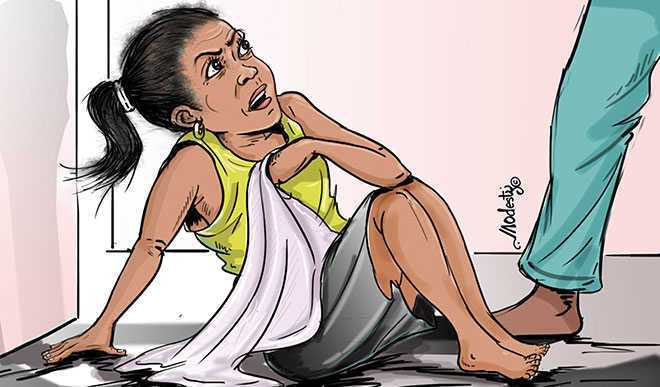
THE Rivers State Police Command has arrested a 48-year-old man, Emmanuel George, for allegedly defiling a 12-year-old girl in Port Harcourt.

In a statement on Monday, the command’s spokesperson, Grace Iringe-Koko, a superintendent of police, said the incident happened on September 6 at Mini Orlu, off Ada-George Road, where the survivor, who was spending her holiday with her aunt, was assaulted while returning from an errand.

Iringe-Koko said that George, an Akwa Ibom indigene, residing in Port Harcourt, the Rivers State capital, lured the girl into a parked tricycle before assaulting her.

“The suspect dragged the victim into a stationary tricycle, popularly called Keke Napep, tied her hands, covered her mouth to prevent her from raising an alarm, and forcefully had carnal knowledge of her before fleeing the scene,” the police spokesperson said.

She said operatives of the CP Strike Force promptly responded to a distress call and escorted the girl to the Police Hospital for medical examination.

“At about 2200hrs the same day, the suspect was apprehended through coordinated intelligence,” she said.

The police spokesperson revealed that items recovered from the scene included a bundle of rope allegedly used to bind the victim’s hands, a wrap of fufu, and the blue tricycle.

“The suspect voluntarily confessed to the crime during interrogation. He is currently in custody alongside the exhibits while a discreet investigation continues,” Iringe-Koko added.

Similarly, the Commissioner of Police in the state, Olugbenga Adepoju, reiterated the command’s commitment to ensuring that all perpetrators of crime in the state are brought to justice.

Adepoju also urged parents and guardians to closely monitor their children and wards, warning that predators often lurk within communities.

The ICIR reported that in Nigeria, six out of every 10 children suffer from one or more forms of physical, sexual or emotional violence before the age of 18, and more than 70 per cent children experience this violence repeatedly, according to the United Nations Children’s Fund (UNICEF).

World Democracy Day: Calls for home-tailored democracy grow amid criticisms of western style

WHEN Nigeria returned to civilian rule in 1999, hopes were high that democracy would provide stability, prosperity, and accountable governance. Twenty-six years later, that optimism is fading, with many calling for a Nigerian-style democracy that is patterned to solve our domestic challenges.

At the 60th birthday colloquium of former Deputy Speaker of the House of Representatives, Emeka Ihedioha, in Abuja on March 24, 2025, the country’s leading political voices engaged in a debate: Is democracy working in Nigeria, or has it already failed?

Former President Olusegun Obasanjo, who led Nigeria between 1999 and 2007, did not mince words. Serving as chairman of the occasion, he declared that democracy, as currently practiced in Africa, is not only failing but also “dying.”

His argument was rooted in the belief that Western liberal democracy, imported wholesale into African societies, bears little semblance to the continent’s traditions of governance.

“Democracy in Africa has failed, and why has it failed? Because in context and in content, it is not African. It does not have any aspect of our culture, our way of life, what we stand for, what we believe,” Obasanjo said.

For Obasanjo, Africa had working systems of governance before colonialism, systems that were participatory in their own right. By contrast, he argued, the current system fosters elite capture.

“Today, we have democracy, which is a government of a small number of people, by a small number of people over a large number of people, who are deprived of what they need to have in life. That is not democracy that will endure.”

He insisted that Africans must craft their own model, which he called “Afro-Democracy”, to prevent further deterioration.

Also speaking at the occasion, the Labour Party (LP) presidential candidate in the 2023 election, Peter Obi, shared a grim outlook but tailored it to Nigeria’s reality.

According to Obi, who was the former governor of Anambra State, democracy in Nigeria had “collapsed,” as successive governments undermined institutions rather than building on them.

“If you looked at where we are today, it’s like they started in 1999, laid the foundation. Some people came and took it to the decking, and some people were trying to take it to the first floor when some people came and knocked everything down. That is the situation we are in now. Everything has been knocked down, and nothing works,” Obi lamented.

He recalled his own rise to office through the courts without inducement, contrasting it with today’s climate, where, he argued, judicial independence has deteriorated.

The event also provided space for those who disagreed with the idea that democracy had collapsed. Matthew Kukah, Bishop of the Catholic Diocese of Sokoto, described democracy as “work-in-progress.”

He likened its imperfections to the U.S. Constitution, which has been amended many times since its independence.

“Democracy gives you the opportunity to try if you failed and gives you greater opportunity to correct the former mistakes,” he said.

For the vibrant clergyman, the quarrelsome nature of democracy was not a flaw but part of its resilience. The real challenge, he suggested, was in managing disputes without destroying institutions.

Former Sokoto governor, Aminu Tambuwal, echoed that view. According to him, “When we play by the rules, democracy works. Democracy is a work-in-progress,” he told the audience.

He recalled how the National Assembly followed due process when declaring states of emergency under Obasanjo, in contrast to what he described as procedural lapses in recent actions concerning Rivers State.

For Tambuwal, the survival of democracy depends less on its structure and more on the willingness of leaders to respect the rules.

Another notable Nigerian, Emeka Anyaoku, warned that the rise of military coups in sub-Saharan Africa posed a grave threat to democratic governance.

Anyaoku, a former Secretary-General of the Commonwealth, also used the platform to call for urgent constitutional reforms, particularly a review of the 1999 Constitution to establish true federalism and better manage Nigeria’s diversity.

Without such reforms, he warned, Nigeria’s fragile democratic experiment could slide backwards.

CSOs, lawyers weigh in

Civil society leaders have added their voices to the chorus of concern. At a press conference in Abuja on September 10, the Women’s Rights Advancement and Protection Alternative (WRAPA) and the African Centre for Leadership, Strategy and Development (Centre LSD) warned that Nigeria’s democracy faces three critical threats: shrinking civic space, entrenched poverty, and weak trust in the electoral process.

According to Yemisi Nathaniel of WRAPA, the civic space is the heartbeat of democracy, but when it is under siege, freedoms shrink, and the foundations of participatory democracy and accountable governance are painfully eroded.

Both organisations stressed that over 133 million Nigerians live in multidimensional poverty, a condition routinely exploited during elections through vote buying. They also called for reforms in the appointment of electoral commissioners to restore confidence in the process.

Legal luminaries have also weighed in on the issue. Olisa Agbakoba, a senior advocate, told Channels TV in May that Nigeria must rethink its political system entirely.

“After more than 25 years of civilian rule, something is fundamentally wrong in a process that is not delivering,” he said.

Agbakoba argued that the western “Oyibo model” of democracy is not working in Nigeria, suggesting instead that the country needs to devise a system suited to its social and economic realities.

He cited China’s developmental model and stressed that Nigerians care less about ideological structures and more about whether leaders deliver food, housing, schools, and roads.

Democracy strong, alive in Nigeria – Presidency

The growing chorus of doubt has not gone unanswered. In April, the presidency, through Special Adviser on Information and Strategy, Bayo Onanuga, dismissed claims that democracy is in danger.

The government said, contrary to the false claims in circulation, democracy is not under any threat in Nigeria. He accused opposition figures of peddling alarm following defections of prominent politicians to the ruling All Progressives Congress (APC).

According to him, freedom of association and freedom of speech remain intact, and under President Bola Tinubu, “democracy is strong, and the multiparty democratic system will continue to flourish unhindered.”

Factors undermining democracy – Observers

For observers of the government, the real problem lies not in the system itself but in the conduct of political actors.

Segun Adeniyi, chairman of THISDAY’s Editorial Board, said at a colloquium that democracy is designed to serve the people, but its operators often bend the rules.

According to him, the real challenge is how to ensure that the operators of democratic processes play by the rules.

Similarly, Reno Omokri, a former presidential aide, rejected Peter Obi’s claim of collapse. According to him, Obi should be careful about making claims that democracy has collapsed in Nigeria.

He added that Obi’s lamentation was more about his failed presidential bid than about Nigeria’s political health.

The clash of perspectives highlights the tension at the heart of Nigeria’s democratic journey. On one side are voices calling for a radical rethinking, probably an “Afro-Democracy” rooted in communal values, proportional representation to reflect Nigeria’s pluralism, and constitutional reforms to address deep-seated ethnic and regional divisions.

On the other side are leaders urging patience, insisting that democracy, though flawed, remains the best mechanism for correcting mistakes and ensuring accountability.

Should Nigeria continue with Western democracy?

For Obasanjo, Obi, and Agbakoba, the answer is clear: without adaptation, the current system will keep failing.

For Kukah, abandoning democracy would be premature and dangerous. For civil society, democracy cannot thrive without tackling poverty, protecting civic freedoms, and restoring trust in elections.

As Nigeria prepares for the 2027 general elections, the debate is no longer academic. Whether through reforms, reinterpretations, or resilience, the nation must decide whether its democracy will endure or crumble under the weight of its contradictions.