Home Blog Page 182

Sexual harassment persists at BUK despite strict policy

FEMALE students in the famous Bayero University Kano have admitted being aware of a strict sexual harassment policy but resisted commenting, saying they feared being rusticated. This investigation reveals that sexual harrassment has not abated at the institution despite the existence of a strict policy against such practice.


When the Joint Admissions and Matriculation Board announced the release of the 2025 results, Amina* (Not real name) said she was filled with joy because it was her chance to finally return to the classroom after her education was cut short at Bayero University, Kano, (BUK).

Amina was only 19 when she first walked the corridors of BUK in 2021, after gaining admission into the Faculty of Education, Department of Special Education (changed to protect survivor). Although she had always wanted to be a lawyer, her ordeal began in the second semester of her second year when some course mates informed her that a lecturer (name withheld to protect the survivor) had given a test shortly after the mid-semester break, at a time when she had not yet resumed.

“I requested his number from the class representative, and I called him to request a makeup test,” she said, recounting her experience in Hausa, the predominant language spoken in Northern Nigeria.

The former student remembered how the lecturer politely agreed to give her the test when she told him she was coming back to school that Friday.

“It was on a Wednesday when I called him, and I noticed he chatted with me that evening on WhatsApp and kept calling and texting on WhatsApp before Friday,” she recalled.

Amina recalled that the lecturer called her just some minutes after she arrived in school and scheduled the test for the next day, being Saturday, at 3 p.m.

“I asked why Saturday because it was a weekend and asked if it could be on a weekday, but he said if I don’t come for it on Saturday, he would not fix the test again,” Amina recalled.

Although she chose to sit on a chair near the door of his office when she went for the test, he insisted she sit in the one directly in front of his desk.

“I wore  a long plain abaya gown ( a long, loose-fitting, rope like garment that covers the entire body, except for the face, hands and feet), a veil, and a cap,” Amina said, asking Oga Lecturer if her dressing was not decent enough. “His office is in a quiet, dim corner of the faculty, and I arrived at there before 3 p.m., but some male students in his office and he allowed me to enter when they left.

“I waited for him to begin the test, but he seemed more interested in discussing unrelated matters. Later, he stepped out for the Asr prayer and locked me inside his office,” she added.

She said she maintained her cool despite how scared she was, because she did not want anything to jeopardise her chances of graduating with good grades, noting that it would affect her widowed mother who has struggled to pay her education.

“The moment he came back into the office, he demanded my phone. When I tried to leave out of fear, he blocked the doorway, locked it, pushed me to the floor and tore my gown,” she recounted.

Amina said she pleaded with him not to violate her and mentioned that she was menstruating. Hearing what she said, he repeatedly pressed himself between her breasts until he ejaculated. 

“He grabbed a rag hanging on his desk, wiped himself and my chest, then leaned close to my ear and warned, ‘If you dare tell anyone, I will hunt you down.”

Amina said she felt too ashamed to talk about the terrible ordeal she went through, because in that part of the country, society blames and shames the woman for it.

“I heard that most lecturers are involved, so I didn’t want to risk reporting to a lecturer who is also involved and end up creating more problems for myself” she added.

Amina’s experience reflects a 2024 survey by Alliances for Africa (AFA) and the Committee of Gender Directors in Nigerian Universities (CGDNU) which reported that 63 per cent of female students across 12 universities, including BUK, had experienced sexual harassment, a crisis thriving unchecked and eroding trust in Nigeria’s educational institutions.

Findings across over 20 Nigerian universities, polytechnics and colleges of education by Premium Times report in 2024 also revealed that BUK and other tertiary institutions in the country have either scanty or no policy documents on sexual harassment. 

According to the report, BUK has a detailed policy but hardly implements.

BUK has a strict policy

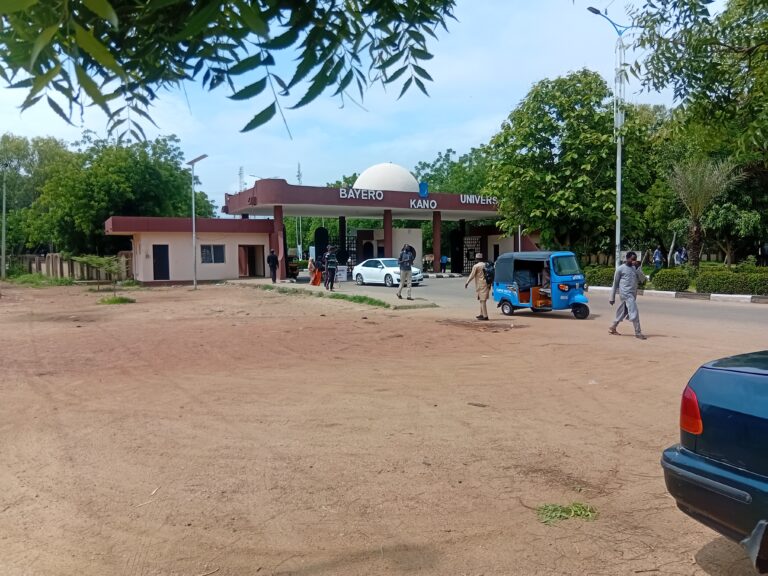
BUK, one of Nigeria’s foremost institutions, located in Kano, the capital of Kano State in Northern Nigeria, prides itself as having one of country’s most comprehensive sexual harassment policies. The document, published on its website, declares zero tolerance, sets out penalties, and promises prompt action.

While BUK’s sexual harassment policy promises a prompt and effective response to all reports with appropriate action taken, accounts from survivors and students paint a different picture of widespread fear to speak out on the issue.

“Sexual assault and sexual harassment can therefore be viewed as an outright violation of human dignity. Regulations of the Bayero University, Kano provides that disciplinary action may be taken against a member of staff or student on grounds of misconduct,” a part of the sexual harassment policy states.

However, female students who spoke with Oga Lecturer during field visits on campus admitted awareness of the school sexual harassment policy but resisted commenting on it, saying they feared being rusticated.

“My school has zero tolerance for sexual harassment, but I could be rusticated. I will be if I speak to you,” one student tells Oga Lecturer. When assured that her identity will not be revealed, she said, “My school is a crazy place; nothing hides.”

Another student said, “If you’re found saying anything that brings ‘bad image’ to the university, you can be rusticated. So, we just keep quiet.”

The National Universities Commission recommended public disclosure of sexual harassment cases to vice chancellors, stating that the public should be aware when any disciplinary action is taken against a lecturer or student for sexually harassing a student. 

The commission also suggested that the VCs should collate the names of the offenders monthly and advertise in newspapers to expose them as perpetrators of sexual harassment, saying the effort will yield the desired result of sanitising the system.

However, Oga Lecturer observed that BUK has no public record of disciplinary action in the media or other public space against any lecturer or student for sexual misconduct in recent time, unlike other universities that have continued to name and publicise cases of dismissal and rustication for sexual misconduct.

Oga Lecturer reported how some universities have dismissed and disciplined sexual misconduct cases in line with the NUC recommendation.

Recently, the Lagos State University (LASU) dismissed two lectures over allegations of sexual harassment, financial misconduct, and inhumane treatment of students.

In April, the management of Lagos State University of Science and Technology (LASUSTECH) dismissed three lecturers over sexual harassment, and the institution mentioned their names as Nurudeen Hassan from Mass Communication, Kareem Arigbabu and Olayinka Uthman from the Arts & Design department.

Similarly, the management of the Federal University Lokoja (FUL) in 2024 posted on its official website of the suspension of a lecturer in the department of English and Literary Studies over alleged sexual harassment of a 300 level student from the same department and has set up a committee to immediately commence investigation into the matter.

Policy on paper, fear grips students

Amina’s case is far from isolated, as a student who spoke to Oga Lecturer on condition of anonymity said the most recent case of rape happened near the department of Agriculture without providing further details for the fear that she might be discovered by the school.

“Their identities had been hidden by the school with threat of punishment for anyone who spread the rumours,” the student shares.

Oga Lecturer observed that cases of sexual harassment are only rumoured amongst students without verification or accurate information. The students say no official statement has ever been issued by the university on the case or any sexual harassment case, even when the students know about them.

Oga Lecturer contacted the recently graduated Student Union Government Welfare Director, Khairullah Ahmed, who claimed that the case was a rumour.

“A friend in the hostel told me about the case. I investigated further and learnt that it was not a rape case at all but a case of harassment by a guy who we couldn’t catch,” Ahmed said.

The former Welfare Director claimed that it was the case of a male student who flashes his private part at female students in the school premises he unravelled instead.

“He wears a long garment without any trousers, so when ladies come passing by, he just opens his private parts. That was the case that I actually got a witness for,” he explained.

Ahmed said he tried catching the male student in the act, but the student stopped. 

“Yes, we tried to strengthen security in those areas,” he said when asked if he reported the matter to the school authority, since he knows the culprit and had a witness.

When asked what action the school took, he said, “I don’t speak for the school,” noting that it was his initiative to strengthen security in those areas without explaining the type of security measures he implemented.

Ahmed noted that BUK has a strict policy, but he would not deny the existence of sexual harassment in the school. “I was in the student union for almost all my stay in the university. If we were speaking in an unofficial manner, I could have given you some stories,” he said, insisting he would not speak further. 

He went on to say that there are available reporting mechanisms in the school, but students don’t use it because of the culture in northern Nigeria.

Another student shares an incident of rape by the former Head of Department of Library Information Science, Kabiru Dahiru Abbas, that led to the death of a married female student in 2024.

Responding to the Abbas rape allegation, the former student welfare director shared a different case that happened in 2024 instead, stating that he was not part of the investigation panel and cannot provide accurate details.

“I was not at the core of this investigation, because I was indisposed, it was the Public Relations Officer that was a part of this investigation,” he said.

Ahmed provided the contact details of Abubakar Gbagba, the former PRO, for further clarification, explaining that he could not confirm whether the person involved was a lecturer or the HOD.

“What he told me was that the lady was called into his office after a lecture to submit an assignment and when she went, he started touching her,” Ahmed said, without confirming how the lecturer was punished after the investigation of the panel.

Ahmed replies, “I can’t say a figure, but I know some staff were expelled for that, students too,” when asked how many lecturers or students he can remember have faced disciplinary action for sexual misconduct since he has been in the SUG for years. 

Oga Lecturer contacted the former PRO of the SUG, Abubakar Gbagba, for clarification on the case of the LIS lecturer but he stopped responding to messages after realising the conversation was on the case. 

Kabiru Dahiru Abbas, who is currently the school Liberian, confirmed that he was the LIS HOD from 2022 to 2024.

“But in the interim, the tenure of the university librarian has finished. And you know the position is an academic one. So, anybody who is interested and qualified, can apply as long as you have a Ph.D. in Library and Information Science and at least 10 years of experience. I applied and I was successfully appointed.

“I want you to know that I was never involved in any of these cases. Talk less of somebody dying”, he said.

Abbas said that the incident happened in the Faculty of Education, department of Adult Education and Community Development in 2024 involving a lecturer who impregnated a married student who died in the process of terminating his pregnancy.

“His name is Tanimu and he has been expelled by the university. The victim was a married woman. In fact, she even took some pills, and in the process, she lost her life. I see you reached out to the university, they are going to even send the minutes of the council meeting which they decided on his expulsion” he added.

The Librarian clarified that the case of sexual misconduct that resulted in death in the institution that he is aware of happened only twice in the.

“That only happened twice, which I know in the history of my university. One, which involves somebody from my department and the department of Adult Education. The person from my department has retired. And the recent one is that of Tanimu and he has been expelled by the university,” he explained.

BUK responds

Oga Lecturer submitted a Freedom of Information Act (FOIA) request on August 13, to the office of the director of the Centre for Gender Studies  requesting information and documents regarding sexual harassment allegations involving lecturers and students between January 2022 to August 2025, including names and department of alleged perpetrators and dates.

Oga Lecturer FOI request

The Registrar of the Institution, Haruna Aliyu, responded with a letter dated August 20 on September 3, after a reminder email, stating that the FOIA request contains serious allegations which appear litigious.

“We write with respect to the request for information under the Freedom of Information Act (FOIA) dated August 13, 2025, with reference number ICRIR/ED/FOV1325/BUK.01 to hereby provide the following response’ Haruna wrote.

He claimed that pursuant to Section 14 of the Freedom of Information Act, the records and information on sexual harassment and assault requested are exempted from disclosure under the Act. 

However, Section 14 of the Act does not envisage the kind of information requested, which is the record of sexual harassment cases, a criminal offence, contrary to Haruna‘s claim, which reinforces the accusation of secrecy and official cover up and protection of perpetrators of sexual harassment.

Sub section 1 of Section 14 of the Act says, “Subject to subsection (2), a public institution must deny an application for information that contains personal information and information exempted under this subsection include: (a) files and personal information maintained with respect to clients, patients, residents, students, or other individuals receiving social, medical, educational, vocational, financial, supervisory or custodial care or services directly or indirectly from  public institutions;

(b) personnel files and personal information maintained with respect to employees, appointees or elected officials of any public institution or applicants for such positions;

(c)  files and personal information maintained with respect to any applicant, registrant or licensee by any government or public   institution cooperating with or engaged in professional or occupational registration, licensure or discipline;

(d) information required of any tax payer in connection with the assessment or collection of any tax unless disclosure is otherwise requested by statute; and training of officials on the right to information and on the effective of this Act.

(e) information revealing the identity of persons who file complaints with or provide information to administrative, investigative, law enforcement or penal agencies on the commission of any crime.

While warning Oga Lecturer to tread with caution, Haruna did not provide at least  total number of cases of sexual harassment the institution has handled from 2022 to 2025.

“On the alleged incident from Agricultural Sciences department, the University is not aware of and has never received any formal or informal report about such matters. As such, no records can be transmitted regarding the issue. On the second incident contained in your letter (item 6b), our records indicate that there exists no case with the same particulars which you have provided. You are kindly requested to note that no allegation has ever been brought against the staff mentioned in your letter and you are thus advised to tread with caution,” he said.

Responding to the case of the student who flashes his private part in the school compound, Haruna said, “No formal report of the occurrence of such activity has been brought to the attention of any of the University organs despite the existence of various reporting mechanisms,” stating that the university can only act when cases are reported.

He also said that the institution has available reporting mechanism through the University Sexual Harassment Committee, Confidential Corner at the Centre for Gender Studies, and the Counsellor at Student Affairs Unit.

He also warned Oga Lecturer to be mindful of allegations that may be damaging to the reputation of the university or any member of staff which might incur grave legal consequences. 

“Publishing erroneous information containing serious allegations can result in gross violation of the constitutional rights of individuals and carries consequences with grave legal implications,” he warned.

BUK FOI response
BUK FOI response

Expert insights 

The Independent Corrupt Practices and other related offences Commission (ICPC) has been collaborating with Gender Mobile Initiative and other stakeholders to develop and implement a Model Sexual Harassment Prevention Policy since 2019 after the BBC sex for grades investigation.

The ICPC says it views sexual harassment as a form of corruption, as it often involves the abuse of office and power. The model policy was approved by the Federal Ministry of Education and is meant to serve as a benchmark. Institutions have been encouraged to adopt or adapt it to their specific context, ensuring it goes beyond paper and is fully implemented.

According to the policy, institutions should set up accessible and confidential reporting systems and offer multiple avenues for reporting, including its website, toll-free lines.

Oga Lecturer contacted Gender Mobile Initiative for a policy expert, since it’s a pioneer partner in the campaign on sexual harassment policy to clarify the implementation gaps surrounding the sexual harassment policy in BUK that students are often too afraid to use or report cases.

Gender Mobile Initiative Communications Officer of Gender Mobile Initiative, Abubakar Abdullahi, who responded to Oga Lecturer’s enquiries requested that the questions be sent to him to share with the policy expert. Abdullahi shared a document draft of the organisation’s response a few days later.

Responding to the situation in BUK where students are scared of speaking out about sexual harassment, Gender Mobile Initiative stated in the document that BUK has continued to prioritise consistency in leadership commitment, ensure adequate resources for implementation, strengthened confidential reporting channels, and taking actionable steps to ensure that offenders will be held accountable regardless of status.

“For instance, BUK Centre for Gender Studies launched ‘Confidential Corner’, which is a safe space for students to report incidents of sexual harassment and receive valuable support, last year,” the  response read.

On the danger in the vaccum of transparency for both survivors and the university’s credibility in stories of harassment and rape spread as rumors, with BUK rarely issuing official information or outcomes, the response said BUK is adopting confidential and survivor-centred reporting channels that caters to the physical and psychosocial wellbeing of victims, and it is ideal to make public disclosure of such cases.

“I do not think this is the case because BUK upholds ethical, transparency and accountability values in public disclosure of disciplinary actions. For instance, BUK made a publication in print media about the arrest of two fake lecturers who paraded themselves as academic lecturers in 2024,” the document read in response to universities failure to follow the recommendation by National Universities Commission on public disclosure of disciplinary actions.

 “Victims sometimes prefer non-public disclosure to protect their identities, adding that such requests must be respected which I assume to be the case at BUK” it added.

Abdullahi was told that these, and other responses did not address the questions and concerns raised but he explained that Gender Mobile Initiative has a smooth partnership with BUK and would not risk be jeopardising it by responding to  the questions.

Oga Lecturer requested for the name of the policy expert from Abdullahi but when he realised that the organisation’s response would be published in this report, he requested to see the context and quotes that would be used first before publication because they did not want anything to jeopardise the partnership.

“We are not going to ask you to change it or influence what you write but we can request to see how our words are represented in your work. This is important because of our understanding of where your piece is headed, otherwise we would have to retract her responses because we don’t want anything that jeopardises the partnership we have been pursuing for years, or even something that affects the trust of our other partner institutions in the future,” Abdullahi said.

However, when Oga Lecturer insisted that it is unethical to do so, Abdullahi said, “For the purpose of clarity and confirmation, after our conversation and seeing we are not going anywhere with this, we would like to formally retract our entire interview on this piece. Please kindly respect this decision and let’s all move forward with the incredible work we are doing.”

A Multi-level Education Specialist and Public Commentator, Ishowo Oluwatosin, was also contacted. He noted that cases of sexual harassment and abuse in Northern Nigeria are often underreported and quietly handled because of cultural reasons.

“In a very cultural environment as we have in the core north, religion and some cultural supremacy kind of guides the public perception. It is a thing for society to see you in one kind of way like you are no longer a complete person,” Oluwatosin said.

He explained that the existence of the policy does not limit punishment for sexual harassment to the institution alone, such as rustication of students or dismissal of lecturers, suggesting that offenders should be handed over to law enforcement agencies for proper prosecution.

“Rustication cannot take the place of criminal prosecution because the person is meant to face the law. Because this individual you are rusticating can go to another school outside or without the country,” he added.

He called on students to seek legal support from government agencies, whether or not their schools have a sexual harassment policy in place.

“No way any institution regulations or by-law will be superior to rights as established in the constitution,” the commentator said.

Oluwatosin also recommends that institutions should publish disciplinary actions against sexual misconducts in the school without sharing the names of survivors, to help mitigate rumours and misinformation on sexual harassment in schools.

Shaming of sexual harassment in Northern Nigeria

An Islamic scholar, Imam Muhammad Baba-Ibrahim, maintained that while Islam condemns the shaming of sexual abuse and harassment survivors, the practice still persists in places like Kano because of the conservative culture.

“You know culture is different from religion. A woman’s dignity is tied to her chastity in the Hausa culture. When harassment happens, people wrongly assume she invited it by her dressing, her movements, or even speaking with men. This misplaced blame keeps many women silent, even though the Qur’an states punishment for perpetrators of such acts and encourages the public to support the survivor,” Baba-Ibrahim said.

He explained that in cases of rape, the woman bears no sin while the man deserves punishment, adding that Surah An-Nur (24:2) prescribes one hundred public lashes for an unmarried offender, and stoning to death for a married perpetrator.

Baba-Ibrahim explained that Surah An-Nur (24:33) warns against coercing or exploiting girls and women for worldly gain.

“And if anyone should compel them, then indeed, Allah is (to them), after their compulsion, Forgiving and Merciful,” he added.

He further noted that women who are shamed or discriminated against for speaking up can seek redress in a Sharia court, noting that the Qur’an, in Surah An-Nur (24:4), prescribes punishment for those who slander or falsely accuse women.

The cost of silence

Amina said that she stopped attending classes, spending her days brooding and crying, but couldn’t tell her family because of the stigma and shame.

“Every time I closed my eyes, the memories came back. I couldn’t sleep for weeks and would break down in uncontrollable tears without explaining anything to my room mates,” she explained.

She noted that she decided to end her studies at BUK when the lecturer continued to send her threatening messages and harassing her on voice calls.

“I decided not to resume the following semester. I am happy now because I am sure to get admitted to another school and follow my dream of becoming a lawyer,” she added. 

For Amina, silence meant dropping out of the school, but for others, it meant death, trauma, or living with deep scars.
NEMA confirms one dead in Lagos building collapse

0

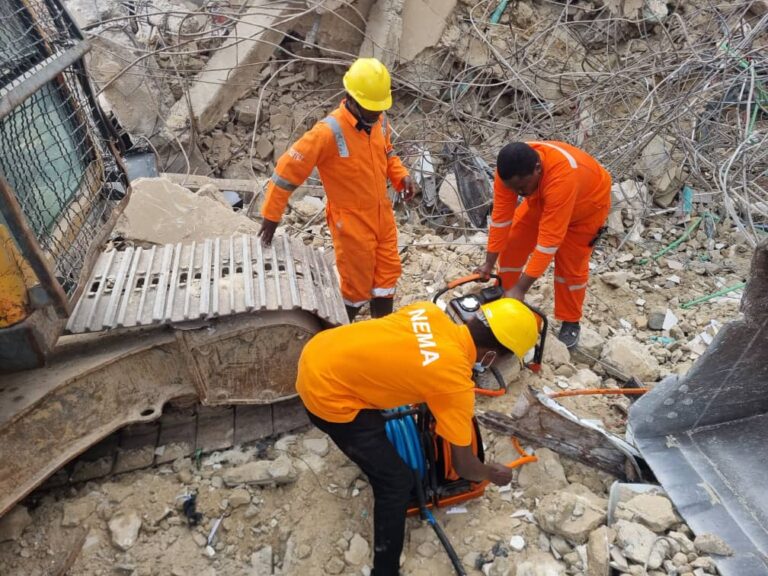
The National Emergency Management Agency (NEMA) has confirmed one person dead in a three-storey building that collapsed at Alagomeji in Yaba, Lagos State.

NEMA’s day-two incident report on Saturday, September 13, disclosed that the body of a male victim was recovered from the debris during the ongoing search and rescue efforts.

An earlier report by The ICIR stated that four people were rescued alive after the building collapsed around 7:46 p.m. on Friday, September 12.

“The search and rescue operation is still ongoing at the building collapse scene. NEMA, LASEMA, Fire Services, Police, FRSC and NSCDC are on the ground. The number of persons rescued remains four; they are in stable condition. No additional person has been rescued at the time of this report, but there is speculation of two more persons under the rubble,” NEMA wrote on its official social media handle.

In a later update, the agency reported that a body had been recovered from the rubble, while rescue efforts continue to ensure no one remains trapped.

“One body (male) has just been recovered from the rubble. Search and Rescue operation is still ongoing,” it said.

Meanwhile, the Lagos State Fire Service disclosed that eight construction workers were pulled out from the collapsed building site.

In a statement signed by its Deputy Comptroller, Olajide Ogabi, today, the Lagos State Fire and Rescue Services said three people were rescued shortly after the incident.

“The building collapse at 333 Borno Way, Alagomeji, Ebute-Metta, Lagos, has all relevant emergency responders, including the Lagos State Fire and Rescue Service, at the scene with three male adult victims already rescued alive, while search and rescue continues for the remaining two construction workers still trapped in,” he stated.

While giving an update on the development, he noted that the search-and-rescue operations had reached ground zero, with no further casualties reported.

“All reported trapped eight victims (all adult male construction workers) have been rescued alive as search and rescue reached ground zero while evacuation of rubble continues,” he added.

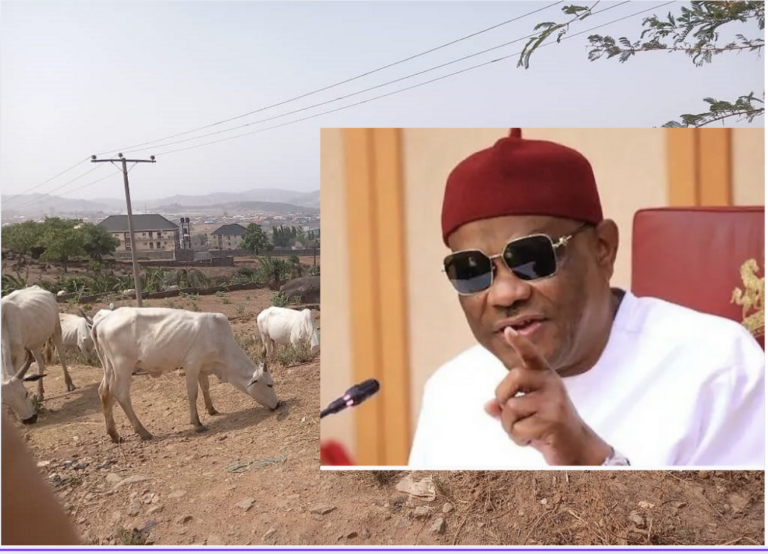
Presidency, MACBAN meet to curb open grazing in Abuja

0

THE presidency has opened talks with the leadership of the Miyetti Allah Cattle Breeders Association of Nigeria (MACBAN) to stop cows from roaming freely in Abuja, Nigeria’s capital.

The dialogue, held on Friday, September 12, was convened by the Sultan of Sokoto and Chairman of MACBAN’s Board of Trustees, Sa’ad Abubakar, alongside the Minister of Livestock Development, Idi Maiha.

Senior Special Assistant to the President on Livestock Development, Idris Abiola-Ajimobi, said the meeting was part of efforts to provide lasting solutions to pastoralist challenges and end open grazing in the city.

“We are working together with the Ministry of Livestock Development and other relevant agencies to address the root causes of the problems.

”The issue of livestock moving around the streets of Abuja. We must first solve the issue of greasing reserves; we are working on ranches, and we are working on the Special Agro Industrial Processing Zone,” Ajimobi said.

He explained that the government was working on reviving grazing reserves, developing ranches, and establishing Special Agro-Industrial Processing Zones to provide pastoralists with essential facilities such as veterinary services, water, and schools.

Accordingly, the Special Assistant to the Minister of Education on Almajiri and Out-of-School-Children Education, Balarabe Kakale, also disclosed that the session focused on the education of pastoralist children, many of whom form a large share of Nigeria’s out-of-school population.

He said MACBAN leaders had agreed to move into designated grazing reserves once the facilities are ready.

National President of MACBAN, Baba Othman-Ngelzarma, said the dialogue was aimed at finding a workable model for Abuja, with the possibility of replicating it in other parts of the country.

” You can see we have invited all the stakeholders, the leadership of MACBAN from the six Area Councils of the FCT, and those families whose cows are roaming the streets of the city centre.

“We all invited them to hear from them. Let’s know what the process is that is bringing them into the city, and how can we stop it?” Othman-Ngelzarma said.

He acknowledged that over 80 per cent of the estimated 20 million out-of-school children in Nigeria come from pastoralist communities.

News Agency of Nigeria (NAN) reports that the committee will be set up to monitor the implementation of the resolutions.

The development comes months after repeated warnings by the Federal Capital Territory (FCT) Minister, Nyesom Wike, that open grazing would no longer be tolerated in Abuja.

In April 2025, The ICIR reported that despite Wike’s threats, cows continued to roam the streets of the FCT. Cattle were spotted in several highbrow areas of the city, including Maitama, Katampe, Jabi, Wuye, and along Airport Road, with residents forced to stop their vehicles to allow herds to cross.

Residents interviewed by The ICIR attributed the persistence of open grazing to political interference, claiming that many of the herds belonged to powerful figures. Others said the absence of ranching facilities has made it difficult to enforce the ban.

The Federal Government had earlier created the Ministry of Livestock Development in July 2025, raising expectations that the ministry would resolve the long-running problem of herder–farmer clashes and open grazing in cities. But months after its creation, cattle still roam freely in the capital.

Wike’s critics say his record of broken promises also undermines confidence. Aside from open grazing, his bans on street begging and the operation of second-hand markets (Panteka) were repeatedly flouted by residents and traders across Abuja.


Air Peace refutes NSIB’s positive alcohol test result on staff

0

Air Peace has disputed a report by the Nigerian Safety Investigation Bureau (NSIB) against two of its staff, alleging they tested positive for alcohol and a hard drug.

The NSIB stated that both crew members returned positive results for alcohol and marijuana following a runway incursion involving their flight on Sunday, July 13, 2025.

The Air Peace aircraft reportedly veered off the runway while attempting to land at Port Harcourt International Airport.

According to the Bureau, the plane touched down 2,264 metres from the runway threshold—far beyond the recommended touchdown zone—and eventually stopped 209 metres into the clearway.

While all on board disembarked safely, the incident raised immediate safety concerns.

The preliminary report NSIB, signed by its Director of Public Affairs and Family Assistance, Bimbo Oladeji, and released on Friday, September 12, disclosed that toxicological tests carried out on the flight crew returned positive results.

According to the report, alcohol was detected in the systems of the crew. In contrast, one cabin crew member tested positive for tetrahydrocannabinol (THC), the active ingredient in cannabis, commonly known as “Indian hemp.”

“Initial toxicological tests conducted on the flight crew revealed positive results for certain substances, including indicators of alcohol consumption.

A cabin crew member also tested positive for THC, the psychoactive component in cannabis. These results are being reviewed under the human performance and safety management components of the investigation,” the statement read in part.

The statement further noted that the Toxicological test was conducted on the flight crew at the Rivers State Hospital Management, Department of Medical Laboratory, Port Harcourt, on July 13, 2025, and they tested positive for certain substances.

Toxicological screening conducted post-incident revealed: captain and first officer: tested positive for Ethyl Glucuronide, indicating recent alcohol consumption.

In its reaction to the preliminary report, Air Peace said it had not received any official notification from the NSIB regarding the findings, even more than a month after the incident.

The airline added that the alcohol tests on the crew were conducted less than an hour after the event.

“As a responsible airline, we place utmost priority on safety, transparency and compliance. It is important to set the record straight,” it stated in the official reaction.

“Air Peace conducts frequent alcohol and drug tests on our crew. We have a very strict alcohol use policy that is stricter than the 8 hours before the flight as provided in the regulations. Drug use is a no-no,” it added.

Air Peace clarified that the captain of the affected flight was suspended from duty for failing to follow Crew Resource Management principles and ignoring a go-around call from his co-pilot, not for testing positive for alcohol, as the NSIB has yet to officially communicate such results.

The airline noted that the co-pilot, who had advised a go-around, had been cleared by the Nigerian Civil Aviation Authority (NCAA) and reinstated, stressing that any involvement with drugs or alcohol would have prevented his return to active duty.

Air Peace added that if the captain did test positive, it would warrant stricter and more frequent alcohol and drug testing, alongside enhanced Crew Resource Management training, rigorous fitness-for-duty checks, and tougher internal monitoring to uphold its zero-tolerance safety policy.

NSIB Director-General, Alex Badeh, dismissed the airline’s allegations, noting that such reactions were expected from those directly involved.

He explained that the Bureau has published numerous preliminary reports in the past and stressed that the toxicology tests were officially conducted by the Rivers State Hospital Management, not the NSIB.

He further disclosed that both blood and urine samples were taken on July 13, with results released the following day.

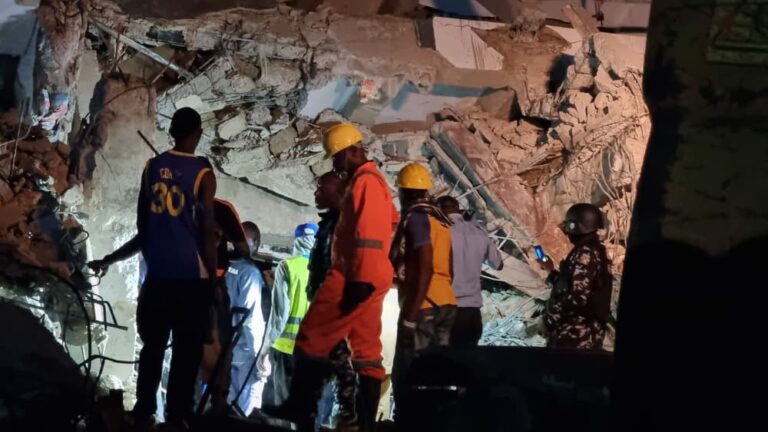
Four pulled out alive as 3-storey building collapses in Yaba

0

THE National Emergency Management Agency (NEMA) has confirmed that a three-storey building under construction collapsed on Friday night, September 12, 2025, at 333 Borno Street, Alagomeji, Yaba, Lagos State.

In a post on its X handle on Saturday, NEMA said the incident occurred around 8:30 p.m., trapping several people beneath the debris.

While eyewitness accounts vary, with some saying six people were trapped and others reporting five, emergency responders have so far rescued four adult males alive and taken them to the hospital for treatment.

“Teams from the National Emergency Management Agency, Lagos State Emergency Management Agency, Lagos State Fire and Rescue Service, and other responders quickly mobilised to the scene and commenced search and rescue operations,” the agency said.

NEMA said the number of people still trapped in the collapsed Yaba building is yet to be determined, but rescue operations are ongoing.

Photo from the incident PC : NEMA /X
Photo from the incident PC: NEMA /X

It stated that emergency officials have sealed off the site to ensure safety and smooth evacuation, while search efforts continued through the night with assurances that no effort would be spared to save lives.

Sadly, building collapses are a recurring problem in Lagos and other major Nigerian cities, frequently attributed to shoddy construction, the use of inferior materials, and weak regulatory oversight.

Records from the Lagos State government and civil society organisations indicate that dozens of such incidents are recorded each year, leading to fatalities, injuries, and displacement.

Authorities in Lagos have repeatedly cautioned developers against unsafe practices, with several buildings previously sealed for flouting building-related regulations.

Hilda Baci succeeds at cooking ‘world largest’ pot of jollof despite pot collapse

0

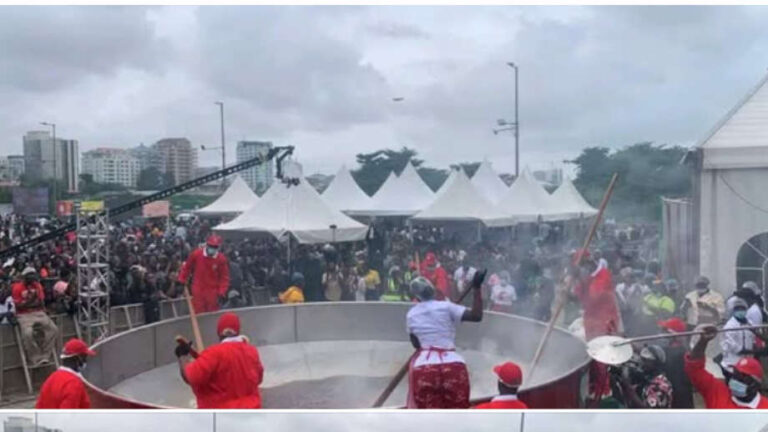
GUINNESS World Record holder Hilda Baci has completed her ambitious attempt to cook the world’s largest pot of Nigerian Jollof rice, overcoming a dramatic setback on Friday night when her giant custom-made pot collapsed during weighing at the Eko Hotel and Suites, Lagos.

The free event, tagged “Gino World Jollof Festival with Hilda Baci”, had drawn long queues of eager fans, with more than 20,000 participants registered and celebrities including actress Funke Akindele and musician Falz among those in attendance. Security operatives worked to control the surging crowds, while vendors and entertainers kept the festive spirit alive.

Pot Collapse Drama

The giant pot, measuring six metres wide and six metres tall with a capacity of 22,619 litres, was meant to hold 250 bags of basmati rice. But due to weighing challenges, Hilda reduced it to 200 bags (4,000kg).

On Friday evening, a crane was deployed to lift the pot onto a scale for official verification, but the container gave way under its own weight, sparking panic among spectators. Videos of the incident quickly went viral on social media.

Event staff halted operations to ensure safety, with Hilda’s team assuring supporters that the attempt would continue.

“We are reviewing the footage and the process. Safety was our priority, and the record attempt will proceed for certification,” a team representative said.

Successful Feat

By Saturday, Baci had successfully cooked about 200 bags of rice in the massive pot over nine hours. The prepared jollof was then shared with more than 30,000 people, with food distributed in takeaway packs and attendees encouraged to bring coolers due to the surplus.

The Minister of Information and National Orientation, Mohammed Idris, who commended Baci’s effort, described it as a symbol of Nigeria’s global excellence.

“We encourage more young Nigerians to channel their creativity and talents into ventures that will not only benefit them personally but also contribute to national development and global recognition,” Idris said in a statement issued on his behalf by the Director-General of the Advertising Regulatory Council of Nigeria, Olalekan Fadolapo.

Star Support

Influencers and Nollywood stars such as Bamike Olawunmi-Adenibuyan, Enioluwa Adeoluwa, and Tomike Adeoye joined thousands of fans to cheer Baci on, turning the festival into a star-studded cultural celebration.

Rivers begins transition back to democratic governance with thanksgiving service

0

THE Rivers State Government has announced the start of activities marking its transition from emergency rule to democratic governance.

A statement issued on Saturday, September 13, by the Secretary to the State Government, Ibibia Worika, announced that an interdenominational thanksgiving service would be held on Sunday, September 14, at the Ecumenical Centre, located on Abonima Wharf Road, Port Harcourt.

Worika invited key stakeholders, including permanent secretaries, local government chairmen, security chiefs, traditional rulers, members of governing councils, and captains of industry, to attend.

He said all guests were expected to be seated by 9:30 am, ahead of the service scheduled to begin at 10 am.

The Rivers Administrator, Ibok-Ete Ibas, appointed by President Bola Tinubu to oversee the state during the emergency, will serve as the Special Guest of Honour.

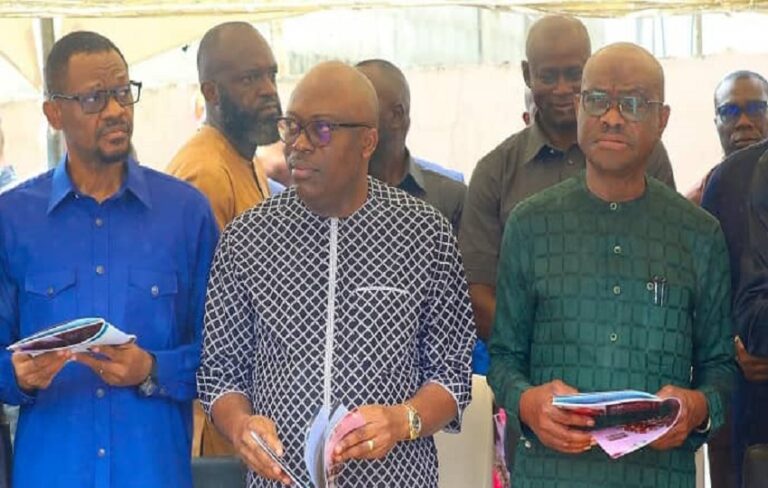
President Tinubu had declared a state of emergency in Rivers on March 18, 2025, suspending Governor Siminalayi Fubara, his deputy Ngozi Odu, and members of the State House of Assembly for six months.

The decision followed months of political crisis in the state, including clashes between Fubara and his predecessor, Nyesom Wike, now Minister of the Federal Capital Territory (FCT).

The crisis was marked by the demolition of the State Assembly complex in 2023, disputes over legislative legitimacy, and security concerns, including pipeline vandalism.

The Supreme Court later criticised Fubara’s handling of the Assembly as “despotic,” ruling that governance in Rivers had collapsed.

Tinubu subsequently appointed Ibas to administer the state.

Findings show that the feud began when the list of commissioners, special advisers, and other key aides, as well as their portfolios, was reportedly handed over to Fubara by his predecessor, Wike.

Fubara was said to have had no input into his cabinet appointments, as his ‘godfather’ was solely responsible for their selection and appointment.

The resignation of some of the commissioners afterwards was believed to be a confirmation that they were not the governor’s choices but were imposed by Wike.

Some of those who resigned from the Fubara-led State Executive had worked as commissioners under the administration of Wike for eight years before being reappointed by Fubara.

The political turbulence took another dramatic turn when 27 lawmakers defected from the People’s Democratic Party (PDP) in the state to the All-Progressives Congress (APC).

This development, which sparked a fresh power tussle between Fubara and Wike, forced the legislators to relocate to the Government House in Port Harcourt for their sessions, raising questions about the separation of powers as well as the legitimacy of the laws passed by the state assembly.

This was followed by the alleged setting of the State House of Assembly ablaze by political thugs believed to be loyal to the governor.

The ICIR reports that the political brouhaha also led to initial moves to impeach Governor Fubara and the consequent declaration of the defected lawmakers’ seats vacant by a factional speaker of the State Assembly loyal to the governor.

Although President Bola Tinubu had intervened, proposing an eight-point peace agreement aimed at restoring harmony in the troubled state, the crisis failed to abate.

Among other things, the agreement, which was signed by both parties, required that “all matters instituted in the courts by the Governor of Rivers State shall be withdrawn immediately.”

The agreement also provided that “all impeachment proceedings initiated against the governor of Rivers State by the House of Assembly should be dropped immediately…”

However, implementation became another controversial issue, with Governor Fabura challenging some of the provisions in the peace deal.

Nepal calm as first female prime minister takes charge after deadly protests

0

PEACE is gradually returning to Nepal after days of violent protests that left more than 50 people dead, hundreds injured, and key government institutions in ruins.

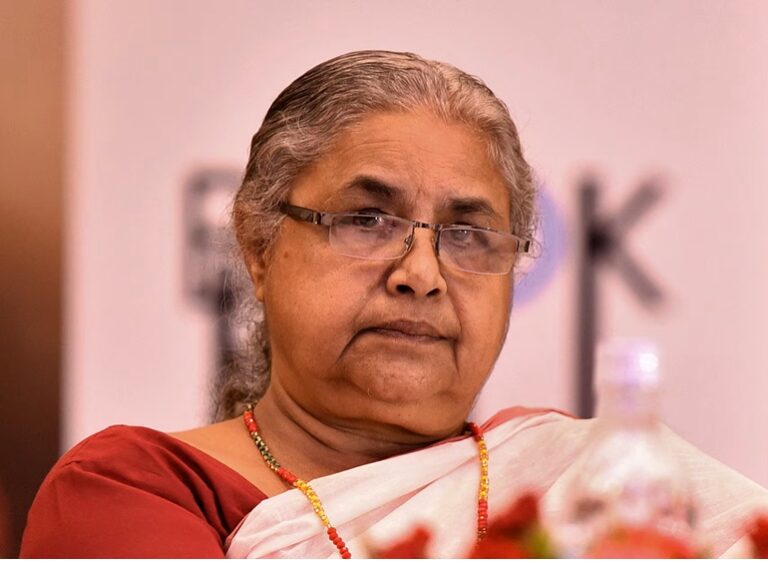
Shops were reopened, traffic flowed, and families returned to temples on Saturday following the swearing-in of former chief justice Sushila Karki as interim prime minister.

The 73-year-old, who became Nepal’s first female leader, has been tasked with restoring order and responding to protesters’ demands for a corruption-free government.

Her appointment followed the resignation of KP Sharma Oli, the veteran Communist Party leader, whose fourth term collapsed after mass demonstrations against corruption, economic hardship, and a controversial social media ban. Parliament has since been dissolved, with fresh elections scheduled for March 2026.

The ICIR had earlier reported that the protests, led largely by young Nepalis under the banner of “Gen Z,” erupted after the government shut down 26 social media platforms, including Facebook and YouTube.

The decision, authorities claimed, was aimed at curbing fake news and hate speech. But protesters saw it as a crackdown on free expression, coming on the heels of a viral “nepo kid” campaign that exposed the lavish lifestyles of politicians’ children.

The unrest quickly escalated. Protesters stormed Kathmandu, torching the Supreme Court, the Attorney General’s office, the Prime Minister’s residence, and Parliament. At least 20 people, including Rajyalaxmi Chitrakar, wife of former prime minister Jhalanath Khanal, were killed in the initial violence. By Wednesday, security forces reported that more than 12,500 prisoners had escaped from jails amid the chaos.

Karki’s emergence as prime minister came after high-level negotiations involving the army chief, Ashok Raj Sigdel, and President Ram Chandra Paudel, as well as consultations with youth activists who had mobilised on Discord to press for her nomination.

Her reputation for independence and integrity has raised hopes among protesters that the interim government can break with what many describe as a cycle of “musical chairs” among ageing political elites.

For many citizens, the symbolism of a woman leading the government for the first time is equally significant. “Nepal has got its first woman prime minister,” said Suraj Bhattarai, a social worker in Kathmandu. “We believe she will push forward the fight against corruption and promote good governance.”

Neighbouring India has welcomed the transition, with Prime Minister Narendra Modi pledging support for Nepal’s peace and stability. But within the country, expectations are high that Karki’s interim government will not only calm the streets but also tackle entrenched corruption, the very issue that ignited the deadliest protests since the abolition of Nepal’s monarchy in 2008.

My stewardship at NEITI: Oil and gas contracts are no longer awarded by complimentary cards – Orji

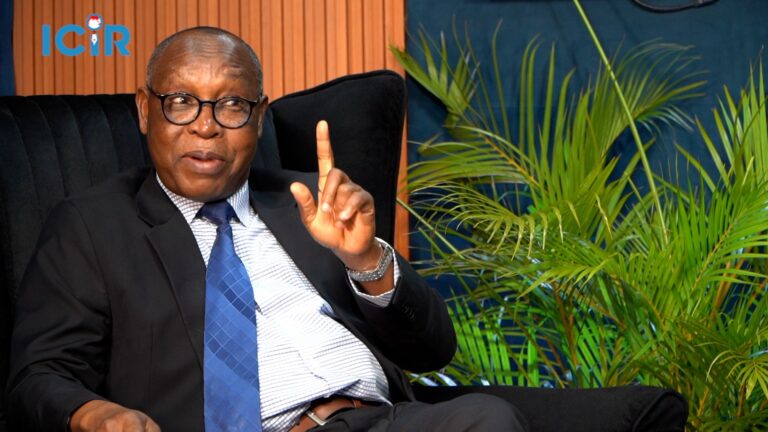
ORJI Ogbonaya Orji is the Executive Secretary of the Nigeria Extractive Industries Transparency Initiative (NEITI). In this exclusive interview with the ICIR, he spoke on a wide range of issues affecting the oil, gas and mining sectors, dwelling on the mandate of the transparency watchdog in driving accountability. Excerpts:

ICIR: Last year, you clocked four years of your tenure as the Executive Secretary of NEITI. Fast forward to this year, around March, you were quoted during a press conference as saying: “We inherited an institution at crossroads…” Can you briefly take us through your journey at NEITI so far?

 Orji: My journey is quite long and a story that could be told for a whole day, even a whole month if I have to. But I think I need to be brief. I came into NEITI in 2010 after a competitive interview process. By then, I was Special Adviser, Communication, to the then Minister of Information. But my path with NEITI crossed in 2005 when I was working at the Presidential Villa with Oby Ezekwesili under the public procurement reforms.

Under her leadership, she had two projects. The first was public procurement reforms. The second was extractive sector reforms through the framework of the Extractive Industries Transparency Initiative (EITI), which Nigeria had joined.

I was engaged as Director of Communications in NEITI in 2010 — a role that exposed me to working very closely with civil society, the media, the public sector, and extractive companies in the area of public education, enlightenment, and advocacy. I served in that capacity for 11 years and six months. During this period, we developed a comprehensive communication strategy twice, which we implemented. The visibility and public knowledge that NEITI has today were as a result of that team, which I led.

I assumed my current role in 2021, precisely February 19, 2021, following the expiration of the tenure of the former Executive Secretary, my friend and brother, Waziri Adio, from whom I took I over. What I meant by “at crossroads” was that I assumed office at the emergence of COVID-19. when Nigeria was under lockdown — 2020, 2021. The whole world almost collapsed because of COVID.

At that time, public attention was more on repositioning global public health. Donor funding was being channelled towards public health, and there was nothing left for extractives. That’s why I said we were at a crossroads, because the impact of COVID was heavy on NEITI and on the EITI globally.

Secondly, by the time I took over, NEITI had no permanent accommodation. We were in an abandoned property under AMCON, which we were paying rent for. That place was nothing befitting — just two flats where a lot of people were congested together. The owner of the building was already on our neck, having sent several letters for ejection.

Orji: What I meant by “at crossroads” was that I assumed office at the emergence of COVID-19. when Nigeria was under lockdown

To the staff I had worked with — and I knew them inside out — morale was very low, including mine, because of poor access to budgets, poor funding, lack of training, and a lot of other issues.

I quickly addressed staff to reassure them that, yes, I was part of management over these years, but now in charge. Some of them didn’t believe me because I was still the same person among them all these years. But when you are in charge, there is always a difference; you can now make decisions.

The first decision I made was to secure a permanent office — to address institutional legacy and sustenance. Because I didn’t know how long we would continue begging government for accommodation.

The second was to energise staff capacity. At that time, we were barely less than 43 in total staff strength — including drivers. Graduate staff that could really get things done were less than 32. And if you removed those on secondment or outside postings, we had very little capacity. Oil companies would even ask us, “How will you, these few people, gather this much data?”

The third was to provide tools to work, including digitalising our procedures. I also assured staff that I was going to tackle welfare issues and improve budgetary allocations to NEITI.

More importantly, I planned to expand our content — engagement, industrial reporting, dissemination, public education, enlightenment, and remediation. I listed seven items. The last was to review the NEITI Act.

When I look back — and you can cross-check from my staff — I’ve done all except one: the review of the NEITI Act. NEITI now has a permanent office building. I recruited 70 more staff, raising the strength from 43 to 118 as we speak. I expanded training opportunities. I reviewed upwards the salaries and emoluments of staff to boost productivity and morale.

I also expanded international partnerships. Currently, in the process of digitalisation, we are building a data centre. My simple policy is that every staff must have tools to work — laptops, phones, everything.

So, like I said, out of the seven promises, I have fulfilled six fully and verifiably. The only one outstanding is the review of the NEITI Act, and that’s because it is complex and involves divergent interests. But I think that’s good because whoever succeeds me must have something to work on.

I must say that I achieved all these with the support of the past and present administration. First, late President Muhammadu Buhari who gave me the privilege to serve NEITI and our country at the highest level and to President Bola Ahmed Tinubu who sustained the appointed, strengthened deepened and expanded the support. The National Stakeholders Working Groups (NSGs) that I worked with are equally supportive.

ICIR: At the core of your mandate is advancing transparency and accountability in Nigeria’s oil, gas, and mining sectors. To what extent would you say you have achieved this mandate so far?

Orji: To a large extent, we have gone far. The cup is more than half full than half empty. We have not got there, but we’ve made very significant progress.

Within the space that I took over, the Petroleum Industry Act (PIA) was passed into law. I served on the implementation committee for the PIA.

Orji: Contract transparency is a requirement in the global EITI standard

The NNPC that used to be wholly public has gone private. The transition is not yet completed, but the NNPC has gone private. Under the PIA, in terms of advancing transparency, we now have two strong regulators: one for the downstream, another one for the upstream.

I was with the Chief Executive of the Nigerian Upstream Petroleum Regulatory Commission, and we had extensive discussions on advancing and deepening reforms. Now, you cannot award oil and gas assets by complimentary cards. It has to be advertised. Bidding rounds are conducted openly, and they are raising a lot of revenue for government.

So, for NEITI, our obligation is advocacy — supporting these reforms with credible data and information. That has been our lead responsibility.

I was also with the GCEO of NNPC. We outlined certain corporate responsibilities in terms of transparency. We advised him to follow through, and we have already set up a technical committee. We’re drafting an MoU on our rules of engagement, specifically on transparency in that sector.

For the wider oil and gas companies, we work with the Oil Producers Trade Section (OPTS) of the Lagos Chamber of Commerce on the same issue of transparency. The responsibility of the IOCs to Nigeria, to the corporate world, and the private sector has been heightened.

Using the NEITI framework, we are calling attention to oil theft. Using the NEITI framework, we are calling attention to revenue remittances. Using the NEITI framework, we are widening the space for civil society to scrutinise what is going on in the sector.

Before, nobody had information on oil and gas — production data, export data, domestic consumption data, subsidy data. All that information is now in the public domain.

For instance, I can tell you at the touch of a button how much Nigeria has earned from oil and gas since 1999 to date. We’re in the region of $831.15 billion between 1999 and today. In solid minerals, you have almost ₦1.5 trillion between 2007, when we began to collect data, and now.

In terms of availability of information and data, NEITI has made impact. In terms of advocacy for reforms, working with the National Assembly and relevant committees, the oil and gas industry is now wider open.

Have we got to a level where our sector operates like it is done in the developed world? No. But the journey has started, and our job will not be done until the sector is open, accountable, and impactful in terms of poverty reduction to Nigerians. It’s a process, and we have not given up. We’re pushing.

ICIR:  But there still seems to be secrecy surrounding the country’s oil and gas contracts. What is NEITI doing to address this issue?

Orji: When the EITI began in Nigeria in 2003, we began implementation in 2004. The focus then was on revenue disclosure — payments by companies and receipts by government.

Since then, the EITI has moved from revenue disclosure to data mainstreaming, open data. From open data to beneficial ownership disclosure — to know who owns oil and gas assets. From beneficial ownership, we moved to open government partnership, which provides collaboration among agencies to share knowledge and information on disclosure.

Currently, we are at the level of domestic resource mobilisation using the EITI framework. The next one, which you just mentioned, is contract transparency.

Contract transparency is a requirement in the global EITI standard. As you may be aware, I was elected chairman of the Contract Transparency Network globally by the EITI, comprising 22 countries. I chaired that for a year and I’m about handing over to the next global chair.

But one of the issues is that we are yet to really agree on a framework for disclosure. For Nigeria, our engagement with the NNPC, NUPRC, NMDPRA, and all the relevant agencies is centred on questions: At what point do we disclose contracts? Is it at conception, signing, implementation, monitoring and evaluation, or at project exit?

Orji: My journey at NEITI is quite long and a story that could be told for a whole day, even a whole month if I have to

How will these disclosures affect or jeopardise the interest of competing companies and partners? If I’m signing a contract with Shell, how will disclosure not jeopardise similar contracts by other companies? These are the issues we’re debating.

Have other countries defined it? Some may have, but I am not aware of any that has fully resolved it. Is contract transparency implementable? Yes. Have we started? Yes. Consultations have started.

But the way the EITI works is that companies, civil society, and government must all agree. Civil society pushes from the angle of public conscience and morality. Companies push from the angle of profit protection. Government provides institutional ownership. The convergence of these three is still being worked out.

ICIR: With the global shift towards cleaner energy, how is NEITI positioning Nigeria’s extractive industries to adapt to this energy transition?

Orji: For Nigeria, it’s a reality we cannot ignore. But we approach it considering our national interest and sovereignty. What sustains Nigeria now is oil and gas revenue. Government is just beginning to expand to the non-oil sector — ICT, entertainment, agriculture, and so on.

But oil has sustained us, and it’s what governors gather every month to share. Energy transition suggests that oil will give way to green energy. Our question is: when that happens, what happens to jobs? To the budget? To revenue that sustains the country? To energy security? To livelihoods tied to oil and gas?

Developed countries are ready — they have Teslas, carbon-free cars, renewable infrastructure. Are we ready in Nigeria? Our infrastructure cannot support it immediately. Our institutions are not ready.

For NEITI, we commissioned a study on the impact of energy transition on the Nigerian economy with support from the Ford Foundation. We are reviewing the interim report. We want an empirical basis for engaging government on a national policy.

Government has developed a national energy transition plan with a net-zero target of 2060. But the road to 2060 has not fully started. The vehicle has not moved — maybe it’s still loading.

ICIR: Let’s talk about your industry reports. Can you discuss specific instances where these reports have directly influenced policy reforms or led to tangible changes in the extractive industries?

Orji: Our reports have led to revenue recoveries. And when revenues are recovered and remitted to government, it influences policy. The amount of money available affects the kind of projects government undertakes.

Our reports also improved government’s understanding of the importance of data in national planning. In the past, planning was done without facts. Now, government relies on credible data.

Our interventions raised awareness of corruption and its consequences on development and poverty reduction. We name and shame, we expose. This has led to government strengthening sanctions and incentives in institutions to hold people accountable.

We were behind the implementation of the FOI Act, working with civil society organisations like Media Rights Agenda.

Another area is investment. NEITI reports are circulated globally and feed into the Natural Resource Governance Index. Investors look at that index before making decisions.

We also share information with anti-corruption agencies. Many ongoing investigations rely on NEITI data, especially revenue-related.

We were instrumental to the Petroleum Industry Act. Before it, the only law was the Petroleum Act of 1959. Our recommendations influenced the PIA’s passage.

So, in revenue recovery, remittances, planning, corruption fight, legal framework, investment, and data transparency — our reports have been very impactful.

Before NEITI, the industry was completely black — nobody knew what was going on. Today, because of the Act, we have strong institutions regulating the industry.

In other words, we’re owing over $6.07 billion. I named the companies; we named exactly what each company is owing. I’m not satisfied that all the revenues have been recovered — no.

Orji: Some companies now look at where they have competitive advantage.

I’m also not satisfied with the transition of the NNPC to a limited liability company. We should have moved faster than we have. I’m also not satisfied that after the PIA was passed, there was no well-grounded, stakeholder-developed implementation strategy to drive the reform.

In the solid minerals sector, I’m not satisfied with the level of development. Efforts have been made, but those efforts haven’t taken us to where we should be. Our recommendations on how to reform the solid minerals sector are clear, visible, and available.

ICIR: In terms of divestment of assets and liabilities with the PIA on stream, how do the companies that take over manage the process so that we don’t lose from both ends when we have divestment of assets?

Orji: Divestment of assets, in the way in Nigeria we used to look at this, is not also right. People were reporting it as if it was because companies were packing out of Nigeria to other destinations. It’s not really so. Divestment of assets comes in three major areas.

One, expansion of capacity or production. Some companies now look at where they have competitive advantage. Is it in the upstream, deep water, shallow water, or completely in the downstream sector? So, they maximise their capital expenses and make investment decisions.

That’s one area. The other area is the fact that Nigerian companies are now controlling over 60 per cent of oil production in Nigeria. Nigerian companies are now buying over assets owned by IOCs, which is a good development. Renaissance Group just took over one of the IOC’s concerns. Oando just took over.

These consortiums are now asserting themselves in both downstream and upstream operations. But to answer your question specifically, when companies divest, that means they are leaving a particular operation to another jurisdiction, or they are leaving the country entirely, whichever is the case.

There are implications. There are implications for jobs that will be laid off. There are implications for environments that may be polluted as a result of abandoned oil wells.

There are also host community implications, because some of these responsibilities that the companies have for them might be jeopardised. So, we developed a policy framework, working with civil society, that brought this up. It wasn’t there before.

We weren’t capturing that in our reports. But beginning from 2024, it’s going to occupy a place in our report. That when you are leaving a particular operation, you must take responsibility for environmental violations that may have occurred and put the place back as it was when you started.

You must also take responsibility for jobs that may have been lost by ensuring that all those jobs are fully compensated. You must equally take responsibility for the community responsibilities that you were responsible for before. Some of these companies, during operation, are responsible for hospitals, schools, and the welfare of those communities.

You don’t just leave those communities anyhow. You don’t just wake up one morning and say, you’ve gone. No.

There must be a discussion. There must be accountability. That’s why we developed what we call the Climate, Energy Transition, Divestment, and Climate Accountability Framework.

It’s a policy that came out of our board meeting held in Umuahia from May 6-9 this year. We have shared that with civil society. We have developed an implementation plan. We are also developing a template for this to be captured in our Oil and Gas 2024 report. The first thing is to know where these divestments are located. You have to know where they are, how they are involved.

ICIR: What specific oversight mechanism is NEITI implementing to its Energy Transition and Climate Accountability Framework, and how will the public know the benefit of sales to Nigeria, rather than just serving as convenient exits for international companies?

Orji: It’s all contained in that framework, and we’ve just developed it. We’ve just captured it. We don’t want to go into advocacy and engagement without credible data.

Like I said, implementation will start with this current report. When this report is published, hopefully by the end of the year, the recommendations will be specific and clear. Now, what happens when you develop a framework is that you share it with those who know more than you.

Orji: Nigerian companies are now buying over assets owned by IOCs, which is a good development.

You share it with the companies that are going to divest. They have to provide information on what they are divesting, provide information on the responsibilities they had before, information on what they have done in the past with the environment, information on what they will not do now that they are going. The communities where they are operating also have a say.

Do not say, we have been working with this company during their stay, these are the things they were doing. Our question, now that you are leaving, what happens to these responsibilities you were providing before? We don’t say you should remain there forever.

You could come in form of compensation. Because you are leaving, there are backlogs you may not have paid. Some just leave with a lot of backlogs.

If there are remittances they were doing, schools they were building, hospitals they started, but they may not have paid the contractor — they may just leave and go. Once they leave, the job stops. We say, no, you have started this project, sort it out before you go.

Because there are responsibilities that need to be accounted for. That’s all we say. We are able to speak specifically on those responsibilities and their cost when we have done this report.

ICIR: You recently released a policy document tagged ‘Beyond Federal Allocations: The Cost of Borrowing and Debt Servicing at State Level in Nigeria’; what actually is the objective of this policy brief?

Well, you know, most developing countries are always exposed to debts and borrowing. And that is always the easiest way to address capital funding gaps in their local operations. But while there’s so much awareness about how much we are owing at the federal level, no information is available to many at the state level.

You know at the federal level, institutions are stronger. You can see the National Assembly inviting public officials openly and televising it, having engagements with them on certain issues. Have you ever seen any such engagement by any state house of assembly with a commissioner or anybody being invited to give account? State governments’ legislative engagement at the state level is so low and almost being controlled by governors.

I’m not a politician. I don’t want to go into politics. But I’m looking at this in front of you. So, we know that most states, from that policy brief, have borrowed so heavily that by the time after FAAC meeting, revenues are released, even before they have access to a dime of that — what is due to them — there’s instant deduction because they tie some of these debts to direct deduction. Some states lose almost 30 percent of their revenue every month, deducted at source.

If these deductions are tied to projects, you now understand. But some of them are tied to debts that the people of the state cannot have an idea how it came about. So we highlighted that in the policy brief and shared that widely.

Our point is that if borrowing at state level is not checked, the expectations of the average citizens for rural electricity, markets, primary health care, and all that at that level will continue to be in vain, because the government you are waiting for to provide doesn’t have the money.

The other one is that policy brief also highlighted the importance of internally generated revenue, which most states ignore. Most of them just wait and come to Abuja to be given handouts in the form of FAAC allocations. The third one we highlighted there was on the implication of debts, huge debts, to rural development.

You know that the state governments are the nearest at that level. That Debt Management Office should be equipped with technocrats and professionals who could, from time to time, call attention to the magnitude of debts that are mounting. We don’t have any of that since 2002 or 2003.

The Debt Management Office here in Nigeria at the federal level has existed, providing sound advisory services to guide debt management at the federal level. But those kinds of advice are not going down to the subnational level. Under the EITI mandate of domestic resource mobilization, we published that policy brief.

And I’m using this opportunity to also say that the next policy brief we’ll be releasing next week is on implementation of the new tax laws. There are four, five tax laws that have just been released and signed into law. Implementation will start in January 2026.

Nigerians are yet to understand how this will affect them. So that policy brief will explain some of these intricacies and the details. And then we specifically advised on how this can be implemented to address the concerns and fears that citizens may have to deal with.


CJID opens entries for 2025 Excellence in Journalism Awards

0

THE Centre for Journalism Innovation and Development (CJID) has announced a call for entries for the second edition of its Excellence in Journalism Awards.

The award is created to recognise outstanding contributions to journalism, fact-checking, media innovation, and community reporting across West Africa.

The awards are open to journalists, fact-checkers, and media organisations in Nigeria, Ghana, Liberia, Sierra Leone, The Gambia, Senegal, and the Ivory Coast, with submissions due by September 30, 2025.

Eligible works must have been published or broadcast between September 1, 2024, and August 31, 2025.

According to CJID, the initiative reflects its commitment to advancing independent media that drives accountability and sustainable development in the region.

Categories include fact-checking, health reporting, climate change reporting, solutions journalism, community reporting, sexual and gender-based violence, and social accountability.

This year’s edition will also spotlight newsroom leadership with an “Editor of the Year” award.

All entries will be reviewed by a panel of experts and later assessed by independent judges drawn from journalism, civil society, and media development.

Winners will be announced at a ceremony in Abuja in November, during the organisation’s Media and Development Conference.

CJID said the awards were designed to honour journalists whose work demonstrates innovation, rigour and impact while strengthening the role of the media in shaping an inclusive and accountable society in West Africa.

Here’s the link to the call and form..