Home Blog Page 1822

Bill proposing 111 exclusive seats for women passes second reading

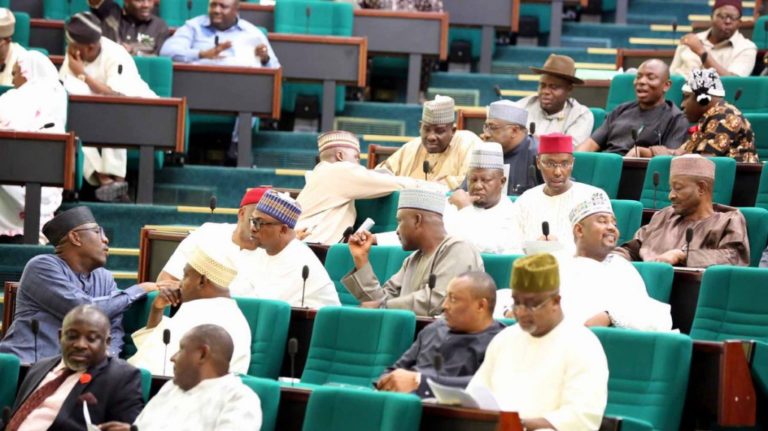
THE bill seeking to create additional 111 seats exclusively for women in the National Assembly has passed second reading.

This was announced on the Twitter handle of the House of Representatives on Thursday.

“A bill for an Act to Alter the Provision of the Constitution of the Federal Republic of Nigeria, 1999 to create Additional Special Seats for Women in the Federal and States Legislative Houses has passed second reading,” the House tweeted.

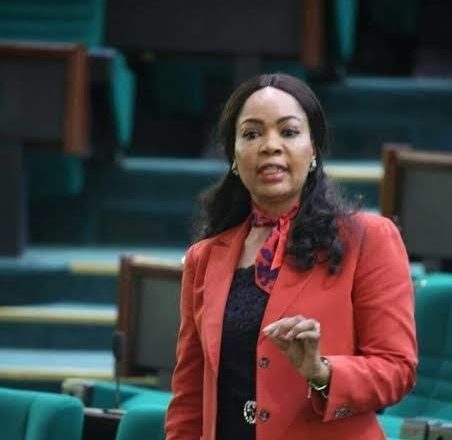
The bill, which was first read on Thursday, April 22, was sponsored by the Deputy Chief Whip Nkiruka Onyejiocha.  It sought to create additional exclusive seats for women in both the Senate and  the House of Representatives.

According to a report, the bill would create 37 additional seats in the Senate and 74 in the House of Reps if passed into law.

Onyejiocha explained in the debate on the bill held on Wednesday that it would serve as a remedy to the “low representation of women in legislative houses by providing additional seats to be contested and filled by only women in both the National Assembly and the state Houses of Assembly as a temporary measure to promote women’s representation.”

READ ALSONational Assembly may call for Buhari’s resignation – Bagos

Subject to a review after four general election cycles or a period of 16 years, Onyejiocha stated that bill sought to amend Sections 48, 49, 71, 77, 91 and 117 of the Constitution of the Federal Republic of Nigeria.

The House of Representatives currently has 360 seats while the Senate has 109 seats. Only about 18 seats are presently occupied by women in the National Assembly.

If passed into law, the bill would bring the Senate to a total of 146 seats and the House of Reps to a total of 434 seats.

It was not clear whether the increase in the number of women would affect that of men in the National Assembly.

Experts say Nigeria should cut the cost of governance by running a unicameral legislative system ( one legislative arm). This is because the country’s revenue is dwindling and economic indices are worsening. But the National Assembly’s bill could balloon the country’s budget for the legislature.

Nigeria, others to spend $157bn on COVID-19 vaccines by 2025


NIGERIA and other countries in the world would spend a total of $157 billion on COV1D-19 vaccines by 2025, a United States health data company IQVIA Holdings Inc (IQV.N) projected in a report released on April 29.

IQVIA provides data and analytics for the healthcare industry.

In the report, IQVIA said it expected the first wave of COVID-19 vaccinations to reach about 70 per cent of the world’s population by the end of 2022

Based on current data on the duration of the immunological effect of the vaccines, the report noted that booster shots were likely to follow initial vaccinations every two years.

Senior Vice President of IQVIA Murray Aitken, who released the report, said vaccine spending was expected to be highest in 2021 at $54 billion but would eventually decrease to $11 billion in 2025.

Aitken said increased competition and vaccine volumes would drive down the price of vaccines.

Noting that the “meteoric growth in sales for a new class of drugs was unmatched” in the case of the COVID-19 vaccines, Aitken observed that the situation was reminiscent of the $130 billion spent on the new Hepatitis C drugs between 2014 to 2020.

The report added that the spending forecast for COVID-19 vaccines represented two per cent of the roughly $7 trillion forecast for all prescription medicines by 2025.

The report further noted that the COVID-19 pandemic had caused major disruptions to doctor visits, procedures and medicine use, leading to a decline in medical spending.

IQVIA further projected that, excluding the cost of COVID-19 vaccines, overall spending on drugs would decline by $68 billion over the six years from 2020 to 2025 than what it would have been without the pandemic.

Aitken, however, stressed that the $157 billion projected total global spending on COVID-19 vaccines by 2025 was in the interest of humanity.

“While COVID-19 vaccines will cost $157 billion over the next five years, that is a very small price to pay relative to the human cost of the pandemic,” he said.

The Nigerian government commenced administration of the COVID-19 vaccine on Nigerians after 3.94 million doses of the AstraZeneca vaccine, manufactured by the Serum Institute of India (SII), arrived in the country on March 2, 2021.

The Nigerian government acquired the vaccine through the COVAX Facility, a partnership between CEPI, Gavi, UNICEF and the World Health Organisation (WHO).

The government intends to inoculate 40 per cent of the country’s population in 2021, and another 30 per cent in 2022.

A recent statement by the National Primary Health Care Development Agency, (NPHCDA) said about 1.043 million eligible Nigerians had so far been vaccinated with the first dose of the vaccine.

The amount so far spent by the Nigerian government on COVID-19 vaccines is unclear – the cost of buying and distributing vaccines was not included in the N13.6 trillion ($35.70 billion) 2021 budget.

However, Minister of Finance Zainab Ahmed had, in February, said Nigeria would draw up a supplementary budget to cover the cost of COVID-19 vaccinations.

World Press Freedom Day: IPC, IFEX train journalists on safety, security

IN commemoration of the World Press Freedom Day (WFPD), the International Press Centre (IPC) in collaboration with the International Freedom of Expression Exchange (IFEX), on Thursday, trained no fewer than 50 journalists on safety, security, and management of trauma while covering dangerous assignments.

The IPC Executive Director Lanre Arongundade, while speaking during the training held via Zoom, stated that the training of journalists drawn from different parts of the Northern part of the country was the first of a two-part training in pursuant of the 2021 WPFD day tagged, ‘Information as Public Good.’

He noted that the second part of the training would capture another set of 50 journalists from the southern part of the country.

A representative of IFEX Gillo Cutrupi, who took the participants through a session tagged, ‘Safety Reporting and the Challenges Online and Offline,’ geared the participants on the need to be security conscious with their dealings both online and offline.

Cutrupi said there was a need for journalists to always employ the service of strong security locks on their gadgets, particularly mobile phones, in order not to be exposed to danger.

He added that secured anti-virus and emails were also strong measures journalists needed to put in place for their safety.

Executive Director of the Foundation for Investigative Journalism (FIJ) Fisayo Soyombo, who taught the participants on the safety best practices in investigative reporting and coverage, urged them to always ensure adequate security backup whenever on any investigative assignment.

“It is not enough to be brave, the highest standard of protection should also be applied on the field,” Soyombo said.

The multiple award-winning investigative journalist, however, charged the journalists to always strive to stay alive while working so hard to stay on stories.

He also admonished the participants never to endanger their families and friends while discharging their duties.

In her words,  Consultant Clinical Psychologist at Department of Psychology of the University of Lagos Uzo Israel urged the participants to always take cognisance of their mental health while going about their day-to-day activities.

She urged the participants to always ensure they took long work, deep breaths, and relax well to purge themselves of any stress that could inhibit their wellness.

She added that there was no way a journalist could toe the investigative line without being physically and mentally healthy.

Earlier in his statement, Arogundade had said apart from the training for the select journalists, the IPC in partnership with the Nigeria Union of Journalists (NUJ), the Nigerian Guild of Editors (NGE), the Radio Television Theatre and Arts Workers Union, and other stakeholders, would, on May 5,  hold a forum on ‘Information as Public Good and the Quest for Press Freedom in Nigeria’ in Abuja.

Review IPOB ban, ex-SSS director tells Buhari

FORMER Director of the State Security Service (SSS) Mike Ejiofor has advised President Muhammadu Buhari to review his proscription of the Indigenous People of Biafra (IPOB).

Ejiofor made the call when he appeared as a guest on Arise TV ‘Morning Show’ on Thursday.

He said the Federal Government should engage leaders of the South-East region, the interest of which the group claims to represent, in meaningful discussion to stop the unrest in the region, with consequential effects on overwhelming insecurity in the country.

Ejiofor, who said Nigeria was drifting into anarchy because of dimension insecurity was taking across the nation, opposed the call for a state of emergency as advocated by the National Assembly last Tuesday, saying that government should accord more priority to security by seeking help from other countries and investing more in technologies and intelligence.

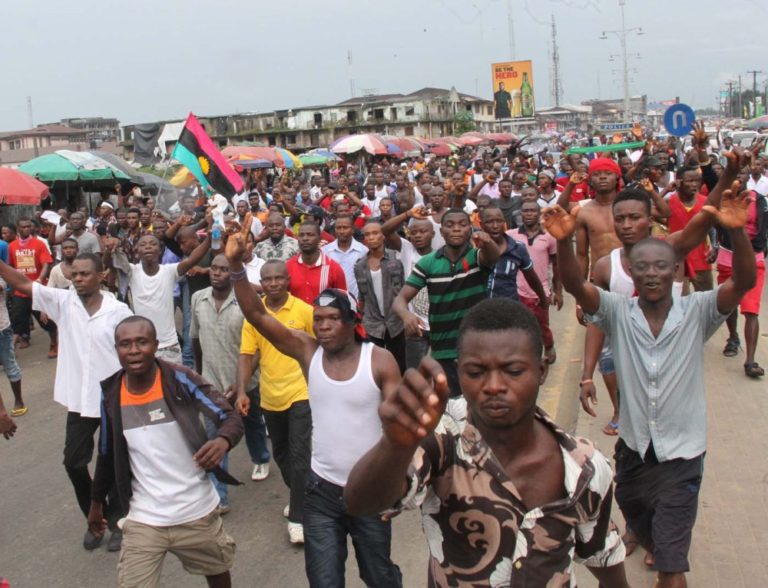
IPOB created the Eastern Security Network, its security arm, with a view to stopping herders and other criminals in the South-East. It is also seeking secession of the South-East from Nigeria.

The group was proscribed by Nigeria’s government in 2017.However, the group, led by fugitive Nnamdi Kanu, did not agree with the proscription, but has continued with its secessionists activities.

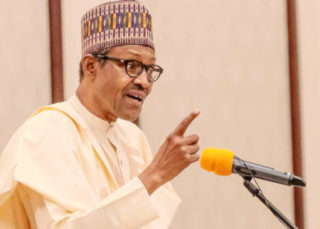
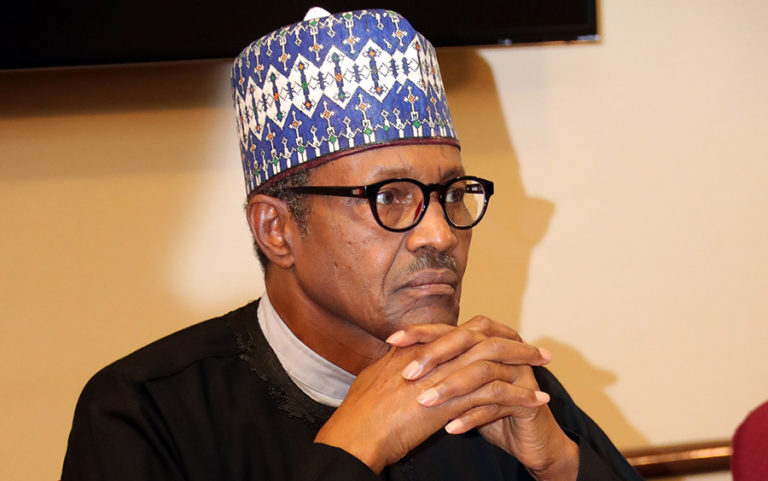
Muhammadu Buhari
File Copy: President Muhammadu Buhari

Since the formation of the group, there have been recurring attacks on security formations, police officers, soldiers and civilians in the region.

The SSS had, on Wednesday, accused IPOB of importing bombs into the South-East, among other allegations.

The group had also alleged that the secret police (SSS) was planning to attack banks in the region and blame its members for the crime.

Fielding questions on state of on insecurity in Nigeria from Arise TV programme anchors, Ejiofor said he had warned the Federal Government against the proscription of the IPOB.

He said injustices were the reasons insecurity was escalating in the country. “Take South- East, for instance, there is agitation for IPOB and they formed Eastern Security Network (ESN) and I warned in 2017 that the consequences of proscribing IPOB would be greater than IPOB itself.

“They were proscribed, and they went underground. When they went underground, it (IPOB) became difficult to handle. Government can now reconsider the issues of the proscription, call the elders of the South-East. Let us sit down. What are the grievances? What are the issues? Put them on the table so that we discuss.”

READ ALSOThose burning police stations in South-East are hired bandits, not IPOB -Umahi

He also said there were different forms of injustice in every region of the country that called for immediate redress.

He said the earlier the government intervened, the better the nation would get out of the precipice.

Speaking on calls for state of emergency by the National Assembly and other Nigerians, Ejiofor said he did not believe in state of emergency because the president could select some parts of the country for the emergency situation while people would read different meanings to his decision.

He explained that government should only be more serious in dealing with issues causing insecurity, rather than acquiring armaments.

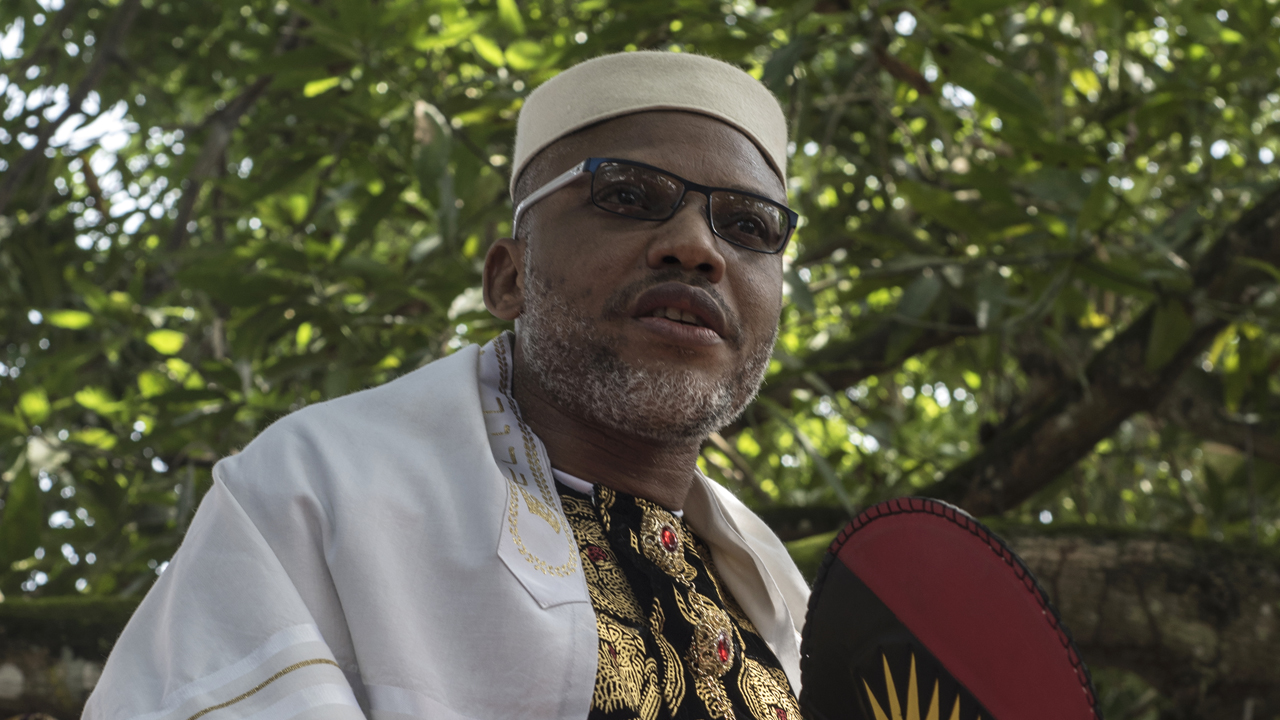
Nnamdi Kanu
Nnamdi Kanu

He noted that what he expected the National Assembly to do was to create state police, given the diversity of challenges in the country, stressing that nobody was spared of insecurity in the nation following the toll it was taking.

He also argued that military approach alone to dealing with the challenge would not yield desired results “because except you want to kill everybody, we cannot continue to rely on military, but the greatest challenge we’re facing is this issue of kidnapping and ransom payment, which I think the government should deploy the necessary technologies.”

Insecurity has worsened in Nigeria in recent months with banditry, kidnapping, farmer-herder crisis and guerilla war ravaging the country.

Ejiofor said it was time the president addressed Nigerians to raise their confidence.

“This is a very critical time that people should hear from the president, build confidence and visit some of the areas where we have the challenges. He is our president,” he further said.

National Assembly may call for Buhari’s resignation – Bagos

A member of the House of Representatives Dachung Bagos, who represents Jos South and Jos East of Plateau State, has said that the National Assembly might call for President Buhari’s resignation if nothing is done about the state of insecurity in Nigeria.

Speaking in an interview on the Channels TV programme, Sunrise Daily, on Thursday, Bagos that a 14-man security committee had been inaugurated by the House of Representatives in an effort to tackle the menace of insecurity in Nigeria.

The committee was established by the House of Representatives to examine the issue of insecurity more closely, and to organise a summit which would have members of the executive in attendance, and in which solutions would be proffered on the insecurity spreading across the country.

Admitting that several summits had been held in the past which yielded little or no results, Bagos stated that the summit would be different and “a last hit to examine all the options available to the nation.”

He also stated that a different approach would be applied this time, as the summit would determine why the problem of insecurity had lingered this long despite the resolutions reached by the House of Representatives in previous years.

READ ALSO: Mbaka makes U-turn, calls for Buhari’s impeachment

“If the executive had implemented just thirty per cent of the resolutions and advice that the National Assembly has been giving them, I can assure you that we couldn’t have reached this level,” he said.

Agreeing that there had been derelictions of duty by the executive, Bagos stated that if results from the forthcoming summit were overlooked by the executive, the National Assembly would call for the president’s resignation on the basis of incapability -as a matter of last resort.

“If thexecutive would not take what will come out of this summit very seriously, I can assure you, as Parliamentarians and as representatives of the people, we would no longer have a role if we don’t call for the resignation of the president,” he said.

Speaking briefly on the call for a declaration of a state of emergency, Bagos said that the declaration of a state of emergency on insecurity would not disrupt the democratic process, but would give the presidency an opportunity to figure out where the problem of insecurity lied within the government.

An executive session was held on Tuesday by members of the House of Representatives, in which 12 resolutions were reached, one of which was the organisation of a security summit.

An ad-hoc security committee was set up by the House on Wednesday to organise the security summit which would be held between May 24 and May 28.

Nigerian trying to rescue a woman drowns in London

CHAIRMAN of Nigerians in Diaspora Commission (NIDCOM) Abike Dabiri-Erewa has commiserated with Folajimi Olubunmi-Adewole’s family 20-year old Nigerian who lost his life trying to save a woman who fell off the London Bridge.

Adewole, popularly known as Jimi, was in the company of his friend Bernard Kosia as he returned home from work at a central London restaurant around midnight on Saturday when they heard a woman shouting for help.

In a statement signed by the Commission’s Head of Media, Abdur-Rahman Balogun, she described Adewole as a martyr and hero that should never be forgotten.

“This is a very painful and sad incident for a young promising Jimi to die this way sacrificing his life,” the Chairman said and encouraged the family to take solace in the fact that their son died a fearless hero.

Adewole’s friend Kosia said they were approached by two men who showed them a video of a woman “jumping over the bridge,” One of them asked Adewole if he could swim. He answered in the affirmative, and both men dived into the River Thames.

“I just remember him saying, ‘Bernard, I have to save her, I’m going to save her,” he told ITV’s Good Morning Britain.

Detective Chief Superintendent Oliver Shaw, from the City of London Police, described him as a “brave, kind and selfless young man”.

He said officers arrived extremely quickly at the scene, but two public members had already entered the water.

“One man had managed to swim to the woman, and they were both seen above water by the coastguard. Sadly, there was no sign of the other rescuer,” Shaw said.

Adewole’s body was later recovered at about 6 am. His father describes him as a “good soul” and wanted his name immortalized for his act of bravery.

A campaign to petition the Government to get Jimi a posthumous George Cross has been established following his death.

The George Cross is the highest civilian medal for bravery awarded for acts of great heroism and courage in extreme danger.

No sunny side for Nigeria despite $66 oil price

Nigeria may not totally reap the gains of the rising oil price in the global oil market, following the Federal Government’s inability to deal with the overburdening subsidy regime which, alongside multiple exchange rate, rising debt concerns and insecurity, has put the nation’s economy on the edge.

Brent crude sold for $66.68 on Wednesday in the global oil market, which naturally gives the nation $26.68 more than  oil price the budget benchmark of $40per barrel.  However, the Nigerian National Petroleum Corporation (NNPC) has already issued an alarm reminding the nation that states may not have any federal allocation to share in May despite rising oil price.

The corporation said its projected monthly remittance to the Federation Accounts Allocation Committee (FAAC) in May would be zero, stressing that closing the gap of underpayment of premium motor spirit by Nigerians would put its financials under distress.

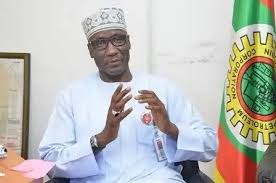
“The price could have been anywhere between N211 and N234 to the litre. The meaning of this is that consumers are not paying for the full value of the PMS  that we are consuming and therefore someone is paying that cost, ” Group Managing Director of the NNPC Mele Kyari said in a recent statement.

Mele Kyari, NNPC Group Managing Director

Nigeria is currently engulfed in subsidy payment in both  electricity and gasoline. These subsidies have raised the cost of governance, putting pressure on government’s already distressed finances.  There have been several unsuccessful attempts to prune down governance cost, but this has not happened, in line with Steven Oronsanye report on rationalisation of Nigeria’s civil service.

The Federal Government  has relied on $1.5 billion World Bank Support Facility to help the federating states cushion the effects of coronavirus pandemic on the country’s revenue, and support the federating states to drive their fiscals. This development, however, has not yielded the desired result as several states still rely on federal allocation from proceeds of crude oil sales for payment of workers’ salaries.

Analysts stress that  the lingering negotiation between  the Nigerian Labour Congress (NLC)  and the Nigerian government on subsidy removal both in gasoline and electricity sector has been a major issue stretching the already  distressed finances, causing the government to go on borrowing spree amid scarce resources to fund the unsustainable subsidy.

For instance, each month, more than N120 billion is pumped into an unsustainable subsidy regime amid dwindling revenue resources confronting Africa’s most populous nation. The Nigerian government confronted by internal conflict printed N60 billion to augment March allocation to states -reflecting the precarious finances of the country.

Nigeria has no budget for subsidies, but has been paying subsidy for petroleum. The situation, analysts say, breeds corruption in the already opaque sector that makes little efforts to  show records of  imports done through direct sales and purchase agreement.

“It is no longer sustainable and we have been saying it. I don’t know why we keep mixing politics and the economy in a very bad way,”  President of Major Oil Marketers Association of Nigeria Adetunji Oyebanji told The ICIR.

“The result is what the GMD has already revealed to us, that there would be zero allocation from the corporation in May. By implication, those states with poor internally generated revenue (IGR) may not be able to pay salaries to state workers and other municipal workers.”

Oyebanji said the labour union needed to be more strategic in its demands, stressing that they were more political than economical.

The number of PMS trucks shipped per day is estimated at 80.23 million litre, as confirmed by the Petroleum Product Pricing Regulatory Agency (PPPRA), pushing up the subsidy costs. Energy experts allege that some Nigerian petroleum products find their way to neighbouring West African countries which benefit largely from a corruption-ridden subsidy regime.

Industry stakeholders blame the NNPC for this, raising concerns on the opacity that characterise its sole importation role, which boosts the rising unsustainable subsidy.

The present administration has pledged to lift 100 million people out of poverty through several of its initiatives, emphasing that it is strengthening existing social safety nets by increasing access to enrollees who fit into its numerous programmes  in the scheme.

To achieve this plan, the government needs financial resources which are in short supply at the moment. Unemployment is 33.3 per cent at the moment and almost half of the population are extremely poor. Insecurity is also ravaging the country, including poor infrastructure. All these require money, which subsidies do not allow Nigeria to have.

“We must be able to create the right balance between subsidy payment and and lifting people out of poverty. It is by doing that we would be able to achieve tangible results and create opportunities for the masses,” Governor Kayode Fayemi of Ekiti State said in a monitored Television programme on Tuesday.

Mbaka makes U-turn, calls for Buhari’s impeachment

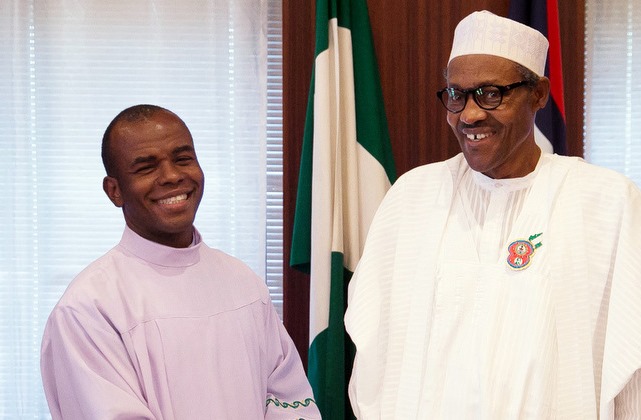
THE Spiritual Director of Adoration Ministry Ejike Mbaka has called for the impeachment of President Muhammadu Buhari over rising insecurity in the country.

In a viral video on social media on Wednesday, Mbaka said Buhari had failed Nigeria woefully and therefore should resign now.

He maintained that if Nigeria had been to be a civilised country, Buhari would have either resigned or impeached because of the manner in which he was handling the nation’s security.

Mbaka explained that Nigerians were crying because they did not have a shepherd and Buhari should resign or be impeached.

“Let me tell you, if it is in a civilised country, by now, President Buhari would have resigned with what is happening,” Mbaka said.

“Nigerians are crying because there is no security in the country, the House of Representatives should impeach the president if he doesn’t want to resign.”

Mbaka warned that should lawmakers fail to impeach the president and begin to attack him, something worse than what they could ever imagine ”will happen to the members of the Senate and House of Representatives.”


You may wish to read

Review IPOB ban, ex-SSS director tells Buhari

Insecurity: Buhari wants US to relocate military base to Africa

National Assembly may call for Buhari’s resignation – Bagos


He emphasised that the nation would not continue like this and prayed to God to change its leaders.

Mbaka also frowned at the activities of herdsmen destroying farmlands of people without any repercussion.

He warned church leaders and Nigerians not to come after him because he supported Buhari earlier.

”A good coach cannot watch his players to be defeated when he has players sitting down on the bench. It is either Buhari resigns by himself or he will be impeached.

”This statement is too mysterious and supernatural. I know many people will begin to fight it, saying did you not pray for Buhari? Did Samuel not anoint Saul? Am I the creator of Buhari? God created him, Nigerians supported him because he did well sometime. But now, how can people be dying and the chief security officer of the country will be sitting down without making any comment? Gunmen attacking people everywhere.”

“I pray that the church leadership will understand me as a messenger of God and not begin to attack me because the danger is going to affect the church.

“When gunmen begin to strike inside the church, they will begin to kill one man of God or the other or even members of the church. Who will go to church again? The priests will lose their job, the bishops will lose their jobs. So you better keep quiet or support what I am saying,” Mbaka added.

In the run-up to the 2015 presidential election, Mbaka, an Enugu-based Catholic priest, had thrown his weight behind Buhari, urging his teeming followers to cast their votes for him as the solution to the pervading corruption and insecurity in the country.

In 2018, he made a controversial claim that plans were being hatched to murder President Buhari over his uncompromising stand on corruption. He then urged his followers to desist from speaking evil against the president.

The same year, he also declared, in his new year message, that Buhari would be totally disgraced if he took a shot at the presidency after his first tenure. Buhari did not only participate, but also won.

Insecurity: Police commissioner orders patrols around schools in FCT

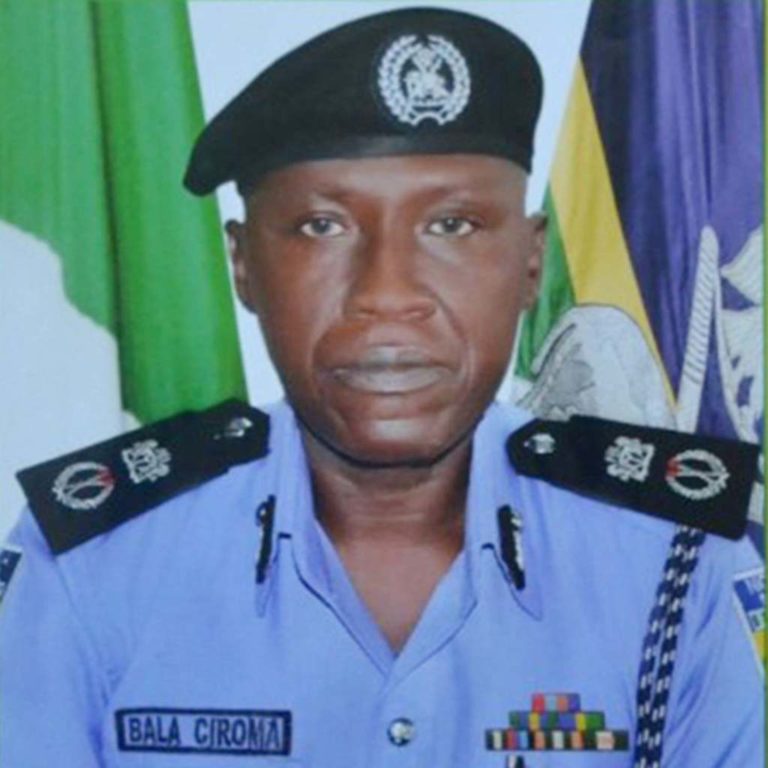
FOLLOWING the rising spate of insecurity in Nigeria, the Federal Capital Territory (FCT) Commissioner of Police Bala Ciroma has ordered uninterrupted patrols around schools within the nation’s capital.

Spokesperson for the FCT Police Command Mariam Yusuf confirmed this to The ICIR, saying that the order was given in a statement released by the FCT Police Command on Wednesday, debunking earlier claims that the University of Abuja had been attacked by bandits.

“The FCT Police Command wishes to debunk the viral message in some sections of the social media purporting that the University of Abuja has been attacked by bandits,” she said.

“The Command wishes to state categorically that there is no record of such incident as at 2200hrs of Tuesday, 27th April, 2021,” she noted.

She urged members of the public to disregard the rumours which she described as ‘mischievous’ and intending to create tension among residents of the FCT.

She enjoined residents to remain calm and law-abiding, and to verify every information received to avoid panic.

Reaffirming the undeterred resolve of the Police towards the protection of lives and property, she urged residents to report all emergencies or suspicious movements through phone numbers published in the statement.

“The Command implores residents to report all suspicious movements, emergency or distress, through these numbers: 08032003913, 08061581938, 07057337653, 08028940883 and to report the conduct of Police Officers, call the Public Complaint Bureau (PCB) number: 09022222352,” she said.

The past few weeks have witnessed incessant attacks by suspected bandits on schools across Northern Nigeria, resulting in the kidnapping and killing of students in the country.

With 71 attacks in one week, Kaduna, Zamfara top states hit by terror incidents

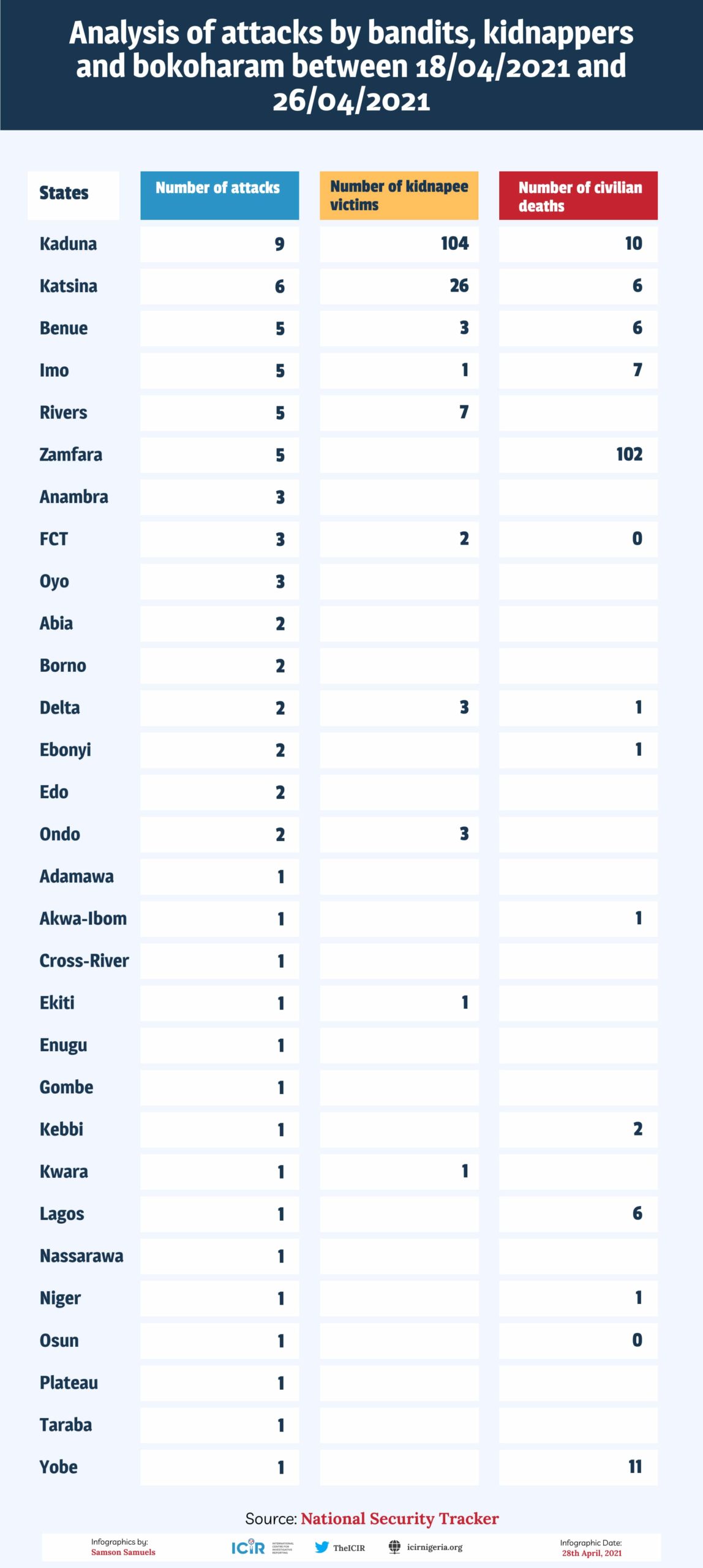
THERE were 174 kidnap victims and 154 civilian deaths from 71 violent attacks across the country in the last week, analysis of insecurity data from the Nigeria Security Tracker (NST) shows.

Leading the list with the highest number of attacks was Kaduna State, where nine attacks,  104 kidnaps and 10 civilian deaths occurred.

In Kaduna, students of Greenfield University, a private university, were kidnapped on April 21. The bodies of three abducted students were later found after being killed by the bandits. On Monday, April 26, two more students were found dead, increasing the number of the dead to five. Before the incidents, kidnappers had  demanded N800 million ransom for the release of the students, reports said.

Next to Kaduna was Katsina, the home state of President Muhammadu Buhari. Katsina experienced six attacks, out of which 26 persons were kidnapped with six deaths.

In the South West, Oyo State recorded three attacks, resulting in the kidnap of 23 victims, making it third state with the highest number of victims from kidnapping incidents in the past week.

In terms of deaths, Zamfara State recorded grim 102 civilian deaths from five attacks, the highest in all the states across the country. Yobe came second as state with the second-highest number of deaths in the past week. 

READ ALSOInsecurity: Police commissioner orders patrols around schools in FCT

On April 23, Boko Haram was reported to have attacked Geidam in Yobe and according to the NST, 11 civilians were reported to have died in the attack. Geidam is the hometown of the Acting Inspector General of Police Usman Alkali Baba.

Insecurity has been rising at an unprecedented rate in Nigeria, with kidnappings and other violent attacks the order of the day.

According to the NST, out of the 36 states and the Federal Capital Territory (FCT), Bauchi, Bayelsa, Jigawa, Kano, Kogi, Ogun, and Sokoto were states without any reported insecurity challenge in the week under review. 


Benue State also experienced five attacks in the week under review. From the attacks, six civilians were reported to have died.

In the South-East part of the country, Imo State recorded the highest number of attacks, with five incidents resulting in seven deaths. They ranged from attacks on Police stations and the invasion of the home of Imo State Governor Hope Uzodinma.