BARELY two weeks after Richard Okorogheye’s lifeless body was discovered in an Epping Forest pond, another British-Nigerian Toby Olokodama has been declared missing in London by the Metropolitan Police in Newham, United Kingdom.
In a tweet on Sunday, April 18, the Essex Police said Olokodama, who is autistic and has learning difficulties, disappeared from home at midnight on Saturday, April 19.
The 28-year-old is known to frequent transport hubs and travel on trains and his family is concerned for his welfare. The Police have asked anyone who comes in contact with him to call 101 Ref 2068/18Apr.
According to his bio on Facebook, Toby studied at Newham College and Cumberland Sports College.
Meanwhile, Metropolitan Police have disclosed that an initial post-mortem carried out on Richard was inconclusive and that further tests are required to ascertain the cause of death.
With more tests underway, the police say it could take weeks before the confirmed cause of his death is known.
CHAD’s President Idriss Deby has died of injuries suffered on the frontline in battle with rebels in the troubled part of the country, where he had gone to visit soldiers battling rebels.
The country’s Army spokesman Azem Bermandoa Agouna was quoted to have said in a statement on Tuesday that Deby “breathed his last defending the sovereign nation on the battlefield.”
The Army said Deby had been commanding his army at the weekend as it battled against rebels who had launched a major incursion into the north of the country on election day.
The rebel group Front for Change and Concord in Chad (FACT), which is based across the northern frontier with Libya, attacked a border post in the provinces of Tibesti and Kanem on election day and then advanced hundreds of kilometres south, but suffered a setback over the weekend.
Chad’s military spokesman Agouna told the reporters that troops killed more than 300 fighters and captured 150 on Saturday in Kanem province, around 300 kilometres from the capital Ndjamena.
He said that five government soldiers were killed while 36 were injured.
He noted that a military council led by the late president’s 37-year-old son Mahamat Idriss Deby, a four-star general, would replace him. A curfew has been imposed, and the country’s borders have been shut in the wake of the sudden death of the president, the Army said.
The shock announcement is coming a day after Deby, who came to power in a rebellion in 1990, won a sixth term, as per provisional results released on Monday. Deby took 79.3 percent of the vote in the April 11 presidential election, the results showed.
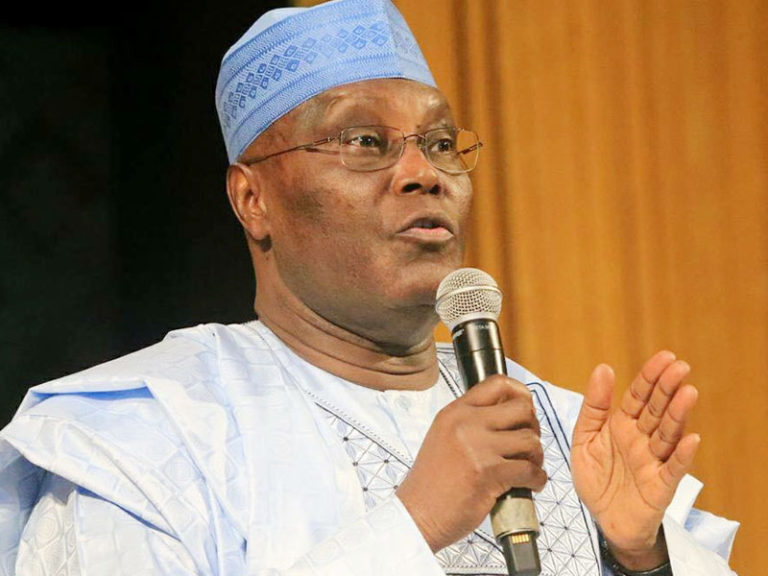
A former vice president of Nigeria Atiku Abubakar, on March 28, 2021, made several claims about Nigeria, saying the country was world’s headquarters for extreme poverty, out-of-school children, and the nation with the highest unemployment rate on earth.
Abubakar made the claims on a Twitter thread he titled ‘World’s Highest Unemployment Rate: Time To Help This Government Help Nigeria.’
His thread was prompted by a Bloomberg report which stated that Nigeria was heading towards taking the position of the country with the highest unemployment rate.
Abubakar rounded off his thread with: “In a situation where we are simultaneously the world headquarters for extreme poverty, the world capital for out of school children, and the nation with the highest unemployment rate on Earth, there is a very real and present danger that we might slip into the failed states index – God forbid!”
The thread has attracted over 14,000 engagements and has been the subject of several news reports.
Claim 1
Is Nigeria the world headquarters for extreme poverty?
The United Nations defines extreme poverty, also known as absolute or abject poverty, as “a condition characterised by severe deprivation of basic human needs, including food, safe drinking water, sanitation facilities, health, shelter, education and information. It depends not only on income but also access to services.”
The World Bank Commission on Global Poverty tags individuals living below the international poverty line of $1.90 per day as the benchmark for extreme poverty.
In 2018, Nigeria overtook India to become the poverty headquarters of the world. This was based on the number of people in poverty.
By June of 2018, Nigeria had over 86 million people – making it nearly 50 per cent of the population – living below the $1.90 poverty line compared to India’s 71.5 million.
A Washington-based research organisation, Brookings, gave a rounded figure of 87 million for Nigeria compared to 73 million for India, noting that “extreme poverty in Nigeria is growing by six people every minute, while poverty in India continues to fall.”
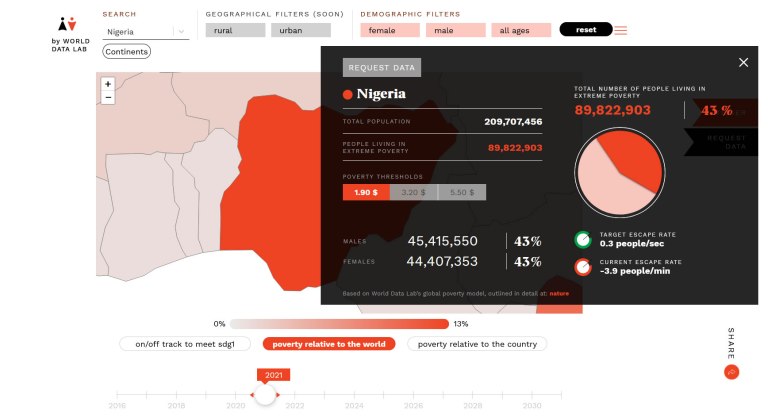
Fast-forward to April 2021, data from the World Poverty Clock, a web tool produced by the World Data Lab and statistical projections from the International Monetary Fund’s World Economic Outlook, put Nigeria’s figure at over 89.8 million, making it 43 per cent of an estimated 209 million population.
On the other hand, India has 86.7 million extremely poor people, which was six per cent of its nearly 1.4 billion estimated population.
This figure still pegged Nigeria as the country with the most people in extreme poverty. As such, the claim by Abubakar is TRUE.
The World Poverty Clock data is updated in April and October.
The world poverty clock showing Nigeria’s extreme poverty data.The world poverty clock showing India’s extreme poverty data.
Claim 2
Is Nigeria the world capital for out-of-school children?
Earlier in 2021, the Minister of Education for Nigeria Adamu Adamu had said that the number of out-of-school children, which was 10.1 million in 2019, had reduced to 6.946 million in 2020.
However, by March 2021, the country’s Minister of State for Education Emeka Nwajiuba added the figure had increased by 3.054 million, bringing the total to 10 million out-of-school children.
Nwajiuba, while speaking at the official flag- off of the World Bank-sponsored Better Education Service for All (BEDSA) in Dutse, Jigawa State, said: “With an estimated 10.193 million children out-of-school, Nigeria has the highest number of out-of-school children in Sub-Saharan Africa.”
The United Nations Children Fund (UNICEF) spokesperson in Nigeria Geoffrey Njoku, in response to the FactCheckHub enquiry on whether Nigeria was the world capital for out-of-school children or not, said: “I don’t think so. It should be India or Pakistan.”
He directed the FactCheckHub to the UNICEF’s website.
A report on the website placed Nigeria out-of-school children at 10.5 million, another report put India’s number at about 6 million, and one other report placed Pakistan’s number at 22.8 million. This report went on to state that “Pakistan has the world’s second-highest number of out-of-school children (OOSC) with an estimated 22.8 million children aged 5-16 not attending, school”. It, however, did not state the first.
These reports were all not dated and it was difficult to determine at what point these countries had these figures.
UNESCO Institute for Statistics database (UIS) records no entry for Nigeria’s out-of-school children.
Missing data
Data released in November 2019 by UNICEF had the figure for Nigeria missing. The data from The World Bank had no entry for Nigeria, Pakistan and some other countries. The same applied to data from UNESCO Institute for Statistics (UIS) database – which used dots to signify ‘Data not available.’
A UIS Fact Sheet, no 56, released in September 2019, mentioned the countries with the highest out-of-school rates to include: South Sudan (62 per cent), Equatorial Guinea (55 per cent), Eritrea (47 per cent), and Mali (41 per cent).
This could indicate that Nigeria does not have the highest out-of-school rate. It, however, does not answer the question of whether Nigeria has the highest number (population) of out-of-school children or not. As such, the available information cannot debunk or substantiate the claim.
Claim 3
Is Nigeria the nation with the highest unemployment rate on earth?
The International Labour Organisation (ILO) has certain criteria to determine unemployment. Some countries apply only a part of these criteria. This inevitably distorts cross-country comparisons.
As a result of this disparity, the claim by Abubakar that Nigeria is the nation with the highest unemployment rate on earth would be tested against various rankings, including the harmonised ranking by ILO.
Key terms
The labour force consists of all employed and unemployed people within an economy. Unemployment refers to the part of the labour force that is without a job and has been seeking employment.
Source: NBS
The Nigerian National Bureau of Statistics (NBS) considers individuals between ages 15 to 64 as unemployed if they have no work or have worked for less than 20 hours within the reference period -which is a week.
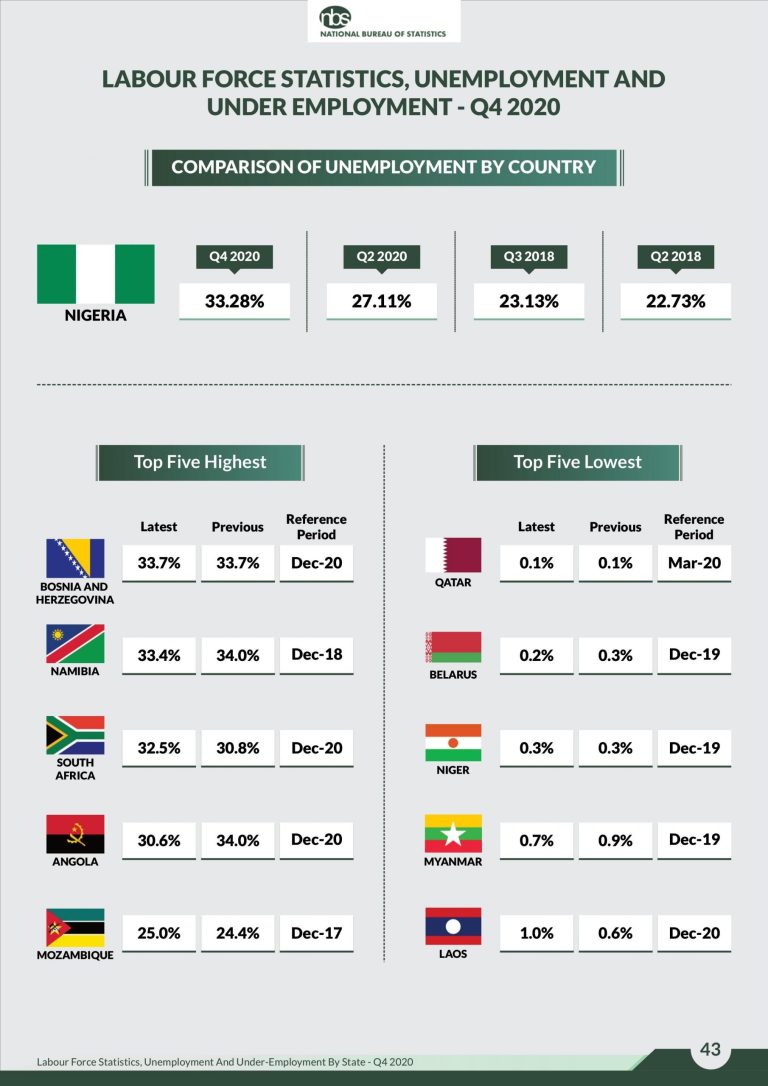
The most recent data from the NBS as of when this claim was made was for the fourth quarter of 2020. This data has the country’s unemployment rate at 33.3 per cent for a labour force population of 69.8 million and a total unemployed population of 23. 2 million people.
However, the NBS stated that using the international metric, Nigeria’s unemployment rate would be 17.5 per cent. This puts Bosnia & Herzegovina and Namibia at the top of the list with 33.7 per cent and 33.4 per cent respectively.
The ranking done by Trading Economics also lists Bosnia & Herzegovina and Namibia at the top with 33.89 per and 33.4 per cent respectively.
However, the Index Mundi, citing the CIA World Factbook which was updated on January 21, 2021, placed Bosnia and Herzegovina at number 10 while Burkina Faso topped the list at 77 per cent.
Source: World Population Review
ILO harmonised unemployment rate for countries
As a result of the disparity in the selection of criteria by different countries, ILO harmonises the data to ensure comparability across countries and over time by accounting for differences in the data source, the scope of coverage, methodology, and other country-specific factors.
From the data presented by The World Bank and dated January 2021, Nigeria’s unemployment rate, which stood at nine per cent, does not top the table list. South Africa has 28.5 per cent rate; Botswana, 17.2 per cent; Libya, 18 per cent; Gabon, 20.5 per cent, and Namibia, 20.4 per cent.
This and the different sources presented above negate the claim that Nigeria is the unemployment capital on earth.
The Verdict
The claim that Nigeria is the world headquarters for extreme poverty is TRUE.
Secondly, there is no sufficient data to substantiate or debunk the claim that Nigeria is the world capital for out-of-school children.
However, the claim that Nigeria is the nation with the highest unemployment rate on earth is FALSE.
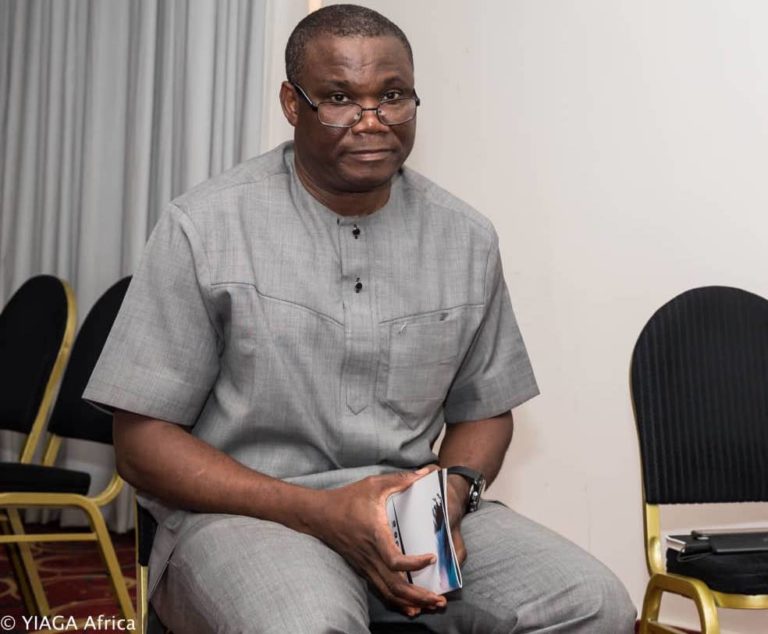
TWO weeks ago, I lost a comrade, brother, and friend, Innocent Chukwuma. Innoma, as I called him, was 55, and until a few months ago when he retired, the Regional Director (West Africa) of Ford Foundation. Every waking moment in the last two weeks has left me thinking about life and Innocent Chukwuma’s death.
I had a busy day on Saturday, April 3. Earlier that day, my spouse had informed me of the news of the death of the political activist and National Publicity Secretary of Afenifere, the Pan-Yoruba socio-cultural group, Yinka Odumakin. At 2:22p.m. Pacific Standard Time, I was about to put my phone on flight mode for a nap when I received a message from Dr. Chidi Odinkalu. The first message read: “Good evening sir. How are you doing?” It was followed by two questions; all three messages in a space of one minute: “Family?” “Have you heard about Innocent…? I replied immediately, “Good. Thanks. Innocent?” I became apprehensive when I didn’t get an immediate reply. My apprehension soon turned into distress. I couldn’t take my eyes off the phone. A minute later, I sent another message: “Are you there?” I asked. No response. My anxiety increased. I was about to dial his number when Dr Odinkalu called with the devastating news. “We may have lost Innocent,” he intoned. My stomach tightened. I didn’t know how to process the news. All I could ask was, “When, how, what happened?” He went on to explain how Innocent had taken ill and had been diagnosed with Acute Myeloid Leukemia (AML) two days earlier and was about to start chemotherapy the day he died.
I first came across the word leukemia many years ago in an article about the death of the psychiatrist and political philosopher from Martinique, Frantz Omar Fanon. He died of leukemia in the US in December 1961 after military expeditions in Algeria, Tunisia, and Morocco. He was 36. For many in my generation, Fanon was the quintessential primer for political education. In his seminal work, The Wretched of the Earth, Fanon admonished: “Each generation must out of relative obscurity discover its mission, fulfill it, or betray it.” In life, Innocent Chukwuma epitomised the words of Fanon, one of the most important philosophers of the 20th century. He discovered his mission and fulfilled it, and he is deservedly being honoured in death.
A lot has been written about Innocent and his contribution to the civic space in Nigeria and outside. Every sector has a story to tell about his impact. I have nothing to add. My tribute is to pay homage to our friendship, his humanism and good-naturedness. Innocent and I became close the moment we met. We had a relationship that bordered on brotherly love. I don’t know what it was, but we seemed like kindred spirit. Many years ago, in the middle of a conversation about the trouble with Nigeria, he averred that a big part of the trouble with Nigeria started in 1966 when the first military coup took place, propelling a chain of brutal events—including a civil war—that have left the country comatose. He proposed that those of us born in 1966—we were born two months apart—should spearhead the effort at national redemption. He then suggested the formation of a group, the Class of 66, to undertake that task.
Like many in our generation, we met and became friends in the student movement. Our first contact must have been in 1988, but what I remember now is how he frequented my hostel at the University of Calabar in the late 80s for refuge anytime he was in ‘trouble’ at the University of Nigeria, Nsukka.
Fate would bring us together again exactly thirty years ago at the Kashim Ibrahim College of Education, Maiduguri, Borno State, for our national service. It was a great reunion. I worked as a reporter with the camp radio. I needed an ally like Innocent to stand up to the highhandedness of the impetuous camp commandant. Just as he did in secondary school, he led the quest to ensure that corps members got what they were supposed to get at the cafeteria. And he was always willing to be interviewed by the camp radio. For our actions, we were ‘punished’ and posted to far-flung places. He was posted to Monguno for his primary assignment while I was posted to the remote village of Kwajafa, Biu, about 200 kilometres from Maiduguri.
While Innocent was keen on national service, the dreary condition in Monguno left him with no choice. He returned to Lagos. I wanted to explore. Even though I had travelled extensively across the country as Vice President, Special Duties, of the National Association of Nigerian Students in 1989, up until my posting, I had not been to Borno and Sokoto states. After a few months in Kwajafa, I redeployed to Maiduguri and travelled to Sokoto State immediately after service and then back to Lagos where I reconnected with Innocent who had spent the remainder of his service year at the Civil Liberties Organisation (CLO).
I visited the CLO office regularly to see Innocent and other friends. During each visit, he would ensure that I had the latest publications and materials I needed to file stories on the human rights situation in the country. When I joined The News in 1995, Innocent’s three-bedroom apartment at Cement Bus Stop in the Iyana Ipaja area of Lagos became my weekend hangout. Every Friday, after work, I would head to the apartment he shared with hometown friends, Geoffrey Anyanwu and Okey Nwanguma, Executive Director of Rule of Law and Accountability Advocacy Centre (RULAAC).
Innocent Chukwuma loved life and he enjoyed it to the fullest. You couldn’t get bored in his company. He had a joke as a solution to every problem. His uproarious humour stood him out in every gathering. He loved to curse in Igbo, but not out of anger or disrespect. The fecundity of his mind reminded you of a griot, the repository of oral tradition in West Africa. Innocent was friendly and accessible. The influence he wielded did not change his disposition towards friends or younger associates.
When he took up the job at Ford Foundation eight years ago, he called to inform me. About the time he joined Ford Foundation, my teacher, mentor, and current chair of the Spanish Radio and Television Corporation (RTVE), José Manuel Pérez Tornero, invited me to apply for a doctoral programme in communication and journalism at the Autonomous University of Barcelona (UAB), Barcelona, Spain. I was 47. I told Prof. Tornero that I was not interested in taking up the offer. Even though I had been a part of the faculty of UAB’s Journalism Summer School for a few years prior to 2013, I was not planning a life as an academic. Prof. Tornero persuaded me and pledged his support.
Three years into the programme, I was at my wits’ end. Living in Canada, studying in Spain and working in Nigeria had left me mentally and financially drained. Worse still, instead of focusing on school, I had spent the early part of 2016 working on a book. A few days after the book was published in May 2016, I called Prof Tornero who was my supervisor and informed him of my plan to abandon the programme. He was alarmed. He insisted that I had to finish the programme if it meant switching to part-time. What I didn’t tell him was the financial strain, particularly travel cost. Amid my turmoil, Innocent had called to invite me to an event he and his spouse, Josephine, were planning for their 50th birthday in Lagos. He tried to cheer me up by telling me that Dr. Mathew Hassan Kukah was the keynote speaker and that while in Lagos he would arrange some television appearances to promote my book.
We had a great time. It was an opportunity to meet friends we had not seen for many years and to reminisce about life as students. Unfortunately, I lost a bag containing personal effects. When the party ended, I went to Innocent and Josephine to tell them what had happened. While Josephine was comforting me, Innocent was teasing me that I had enjoyed myself so much that I had lost my belongings. The couple arranged for a hotel accommodation for the night and came back the following day to take me out to lunch. During lunch, Innocent asked about my research and when I was planning to finish my programme. I explained my situation and the decision to abandon the programme. Typical of him, he teased me about the effect of ‘adult education.’ For someone who described himself as a ‘lifelong learner,’ I knew he was only being mischievous. He asked me the most pressing need concerning my programme. I told him I needed fund to travel to South Africa and Spain to complete my field research. He said if that was the only problem, I had no reason not to finish the programme. He said he would ask his people to get in touch with me. Before I left Lagos, I received an email from Ford Foundation asking me to fill out a form for a research grant. That grant enabled me to complete my programme.
Innocent was a big man, tall and imposing. But it wasn’t just his frame that defined him. He was a man of ideas, big ideas. He was also practical in every sense of the word. There was hardly any problem Innocent did not have a solution to. Whether you agreed with him or not, you had to respect the depth and originality of his ideas. A few years ago, during a conversation on the political turmoil in Nigeria, he told me how worried he was and that he was planning to discuss with the country’s business elite to support the quest to rein in the political class to save the country. I told him I shared his idea. You couldn’t argue with that. The business community needed a safe environment for their business to thrive. Much earlier, he had shared with me his idea of the Oluaka Institute in Imo State, a technology incubation village which he set up to bridge the technology gap and tackle youth unemployment.
In 2019, when the current government and its spokesperson, Lai Mohammed, upped the ante in their anti-press rhetoric, I spoke with Innocent about the need to do something. He asked me to share a concept note for a conference to address the challenge of the shrinking media and civic space in Nigeria. That conference held in November 2019 with the support of Ford Foundation, Amnesty International, and Open Society Justice Initiative.
A month after the conference, I shared the idea of a book project to mark Nigeria’s diamond jubilee. He found the project fascinating. Then COVID-19 struck, causing major dislocation globally. For a while I didn’t hear from Innocent. Then, last September, I got a call from him asking if I was still keen on the book project. I told him we had started the project with support from the Open Society Initiative for West Africa (OSIWA). He offered to lend additional support through Ford Foundation. The result is the book, Remaking Nigeria: Sixty Years, Sixty Voices, a collection of essays by post-civil war Nigerians on what ails the country and how to tackle it. A day before I received the news of his death, I had planned to send him an advance copy of the book through a mutual friend returning to Nigeria from the US. I didn’t know death had other plans. Innocent’s death reminds us of our mortality; his life, a testament to selfless service and its impact on humanity.
A man close to his roots, Innocent never stopped talking about retiring to his village in Mbaise in Imo State and starting a local musical group. I still remember teasing him about it during his farewell party at Ford Foundation a few months ago. Whether he meant it or not, we will never know. What we know, sadly, is that we have lost our Innocent, and it hurts!
Onumah is the Coordinator of the African Centre for Media & Information Literacy (AFRICMIL). Twitter: @conumah
AFTER two unsuccessful appeals in the US, a Rwandan woman is headed back to Kigali where she stands to face prosecution for her active role in the 1994 Rwanda genocide.
In an application for political asylum, Beatrice Munyenyezi denied that she had been involved in the killing of Tutsis in Rwanda. But witnesses were found and told a court how Munyenyezi had inspected identity cards at a notorious roadblock where ethnic Tutsis were singled out for slaughter. Her nickname, ‘the Commander,’ triggered brutal memories of a killer, the victims testified, who committed multiple acts of violence, including beating a small Tutsi boy to death with a spiked club.
She served 10 years in prison for lying in an asylum application that gave her the right to remain in the US with her three daughters.
Munyenyezi also denied affiliation with any political party when she applied for asylum, despite her husband being a leader of the Interahamwe militia – the youth wing of the then-governing MRND – the Hutu political party that formed roving bands of killers that slaughtered hundreds of thousands of their Tutsi countrymen. She was stripped of her US citizenship after she was convicted in 2013 – she had already spent nearly two years in custody.
Munyenyezi’s conviction came about after US federal agent Brian Andersen and other federal officials traveled to Rwanda several times to locate victims who remembered her committing multiple acts of violence.
“Her deportation means a lot in terms of justice delivery to genocide victims,” said Spokesperson for the Rwanda Investigation Bureau Thierry Murangira,, according to The New Times, an English language newspaper in Rwanda.
About 800,000 people, mainly ethnic Tutsis and moderate Hutus, were slaughtered in Rwanda in 100 days in 1994 by Hutu extremists, many of whom later fled the country.
Her husband, Arsène Shalom Ntahobali, and her mother-in-law, Pauline Nyiramasuhuko, who was a government minister, were both found guilty in 2011 by the UN International Criminal Tribunal for Rwanda for their role in the genocide and are serving long prison sentences. Both were deemed to be high-ranking members of the Hutu militia party, which orchestrated the attacks on Tutsis.
US District Judge Steven McAuliffe, who sentenced her, said Munyenyezi “was not a mere spectator… I find this defendant was actively involved, actively participated, in the mass killing of men, women and children simply because they were Tutsis.”
The 51-year-old is expected to be arrested on her arrival home and charged over her role in the genocide.
When SARS officers arrested Ugochukwu Oraefo, the 34-year-old sought to know what his crime was. Instead, what he got as a response from the vicious officers was a traumatic experience that took four days of hospitalization to recover from.
IN the early hours of April 30, 2018, three heavy-looking men in a Toyota Camry 2.2 stormed my ALUCOBEST Aluminum Store in the southeastern Nigerian town of Ogidi. The men wielded AK-47 rifles.
My name is Ugochukwu Oraefo. I am 34 and a father of five children. I sell aluminium roofing sheets, metra roofing sheets, stone-coated roofing tiles and other kinds of roofing materials.
That fateful day three years ago, I was in my store with my wife. The men wielding the guns told me they were police officers. They asked me to act as if I knew them and follow them. I was confused, so I refused. I asked to know if anyone had written a petition against me. They said they would tell me everything I needed to know only if I would enter their car.
Later, the three men identified themselves as officers of the Special Anti-Robbery Squad (SARS) in Awkuzu, a town in Anambra. When I continued to insist on not following them, they began to assault me with their guns.
Awkuzu SARS station
Soon, concerned people gathered. They asked what the problem was, but the SARS officers did not say what offence I had committed. Instead, they said anybody who wanted to know my offence would have to follow them to their office. I told the crowd that I had refused to follow the men because they could be kidnappers for all I knew.
I asked for an arrest warrant, but the SARS officers sarcastically asked whether I thought I was the governor of Anambra State, Willie Obiano, for me to think they needed to obtain a warrant from me.
“We will kill you if you fuck up,” they threatened.
I told them that it was better for them to kill me there, in the presence of onlookers, than to take me away and kill me anyhow they wanted, in the presence of no one. By that, I seemed to have angered them the more because they started beating me again.
One of the SARS officers told me he was a soldier, claiming that what they were doing was ‘teamwork’. I asked what this supposed ‘teamwork’ was, but they only continued to beat me.
Later, the SARS officers gave me their phone and asked that I speak with their Officer in Charge (OC).
I had taken a sound beating by then and was not exactly in the mood to speak, but I pulled myself together and asked the OC what my offence was. The OC told me to stop asking “stupid” questions and follow his men. I stood my ground and refused to comply, insisting that the OC let everyone know the offence they claimed I had committed. The OC told me to return the phone to his men. I did as I was told. Unfortunately, the men resumed beating me.
After some time, I began to cave in. I asked my wife to call my lawyer, Justus Ijeoma. Ijeoma asked her to give the phone to the SARS officers, but they refused to speak to him. When the officers noticed I was unwilling to follow them unless they spoke to Ijeoma, they asked my wife to call him again. She did. This time, the officers told Ijeoma who they were, and he agreed for me to follow them.
When we reached the SARS office, the officers threatened me. They said they would ‘treat’ my stubbornness.
They later took me to the backyard of their office. There, they tied my hands and legs behind my back, then they brought out a metal rod, which they put between my bound hands and legs. They placed two heavy concrete blocks on my back before hanging me up.
They said they would ‘deal’ with me because I was ‘spoiling’ their ‘show’, whatever that meant. They later asked me how much I was willing to pay for my freedom. It was this request for a bribe that got me convinced I had indeed been kidnapped.
Burdened by the discomfort, I asked them how much they wanted. I don’t remember much of what happened afterwards because I passed out from being hanged for a long time. They eventually brought me down and untied me, taking me to a cell.
In the evening of that same day, they brought me out and asked if I was ready to tell them how much I wanted to pay.
I asked them again to tell me what crime I had committed, at least.
“You still want to know what your offence is?!” they responded rudely. “Okay! No problem.”
I broke into tears at that point. I was tired of it all. I pleaded with them to let me know how much they wanted so everything would come to an end.
The SARS officers said they wanted N20 million. I offered to give them two million. They were displeased. They mocked my offer, asking me if I thought I had come to their station to sell crayfish.
As the negotiations continued, and with some of their colleague officers calling me a criminal, the SARS officers took me back to the backyard and threatened to tie me up again. I pleaded and promised to increase the money to N3 million.
Mind you, during the entire period, the SARS officers did not allow anybody to visit me. My wife continued to run my shop while waiting for my lawyer to return from his travels.
The officers, at a point, threatened to kill me, believing that I was not willing to pay the money they were demanding.
They asked for my account number, and I provided it. They then took me back to my cell.
The next day, they brought me out. They asked me if I wanted to ‘die’ in their station. I kept pleading. The officers remained unmoved.
On the third day of my detention, which was May 2nd, the three SARS officers who arrested me told me they would take me to an undisclosed location where they would ‘kill’ me for being difficult about giving in to their demand. I was blindfolded, handcuffed and driven away.
The drive took almost an hour. When the car stopped, the SARS officers brought me down and, still able to see slightly through the blindfold, I realized the place was in neighbouring Delta State, given the inscriptions on the signboards I was slightly able to see.
I also saw a pit filled with water, which one of the three officers asked me to move close to. The other officers were pointing their guns at me. The commanding officer asked why I did not want to give them money. “I’ve given my account number,” I responded desperately. “I don’t have up to N20 million.”
I asked them why they wanted to kill me, but they still wouldn’t tell me what I’d done. They only said they were ready to ‘finish’ me.
The commanding officer instructed the other officers to shoot me on the count of three. I was broken at this point. I wept. I begged. I asked them to take all the money in my account and spare my life. All I had then was N5million.
The officers, though, insisted they would still kill me – but that they would take the money as well.
On the commanding officer’s count of three, I shut my eyes and heard the sound of gunshots.
I regained consciousness to find out it had been a mock execution.
They took me back to their station, where one of the officers asked if I knew where I was. “Yes, Sir,” I remember responding.
Another popped up and said he wanted to ‘finish’ me, but their commanding officer, Sunday Okpe, asked them to bring me to him. Okpe asked the officers to leave after they brought me to him.
After I took a seat, Okpe asked how much money I would give him so he could save me from the grips of his men. I told him that apart from promising his men that I was willing to give them all the money in my account, I did not know what to do again.
Okpe wasn’t moved. He insisted I give him “something tangible” so he could persuade his men to leave me alone. When I said I could only provide N200,000 to that effect, he took offence and ordered me out of his office.
Worried that I had blown a good opportunity to secure my freedom, I began to negotiate.
I told him I would make it N500,000. He refused. I upped it to one million, telling him I would find out if my workers had cash in the office so I could access it.
He seemed okay with it and ordered me to make sure the money was brought to his office physically, as against a transfer.
He then freed me so I could go and arrange the money.
Monday Bala Kuryas, Anambra Police Commissioner
On Saturday, May 5, 2018, I went to see the SARS officers. I went in the company of the father of an apprentice at my shop, who also brought one Andrew Modili, a local politician who wields some influence in our area. The officers told us to transfer five million naira into the account of Modili.
I honestly do not know how Modili later settled the SARS officers after we sent the money to his account. The officers did not allow anyone else to see them apart from Modili.
Meanwhile, the officers took me to see Okpe, who asked to know how he would receive his agreed fee of N1million. I promised him I would bring the money to his office on Monday, given the fact that his workers were closing for the day and the next day was set to be a Sunday.
Okpe told me that he would let me pay on Monday, May 7, because of Modili’s intervention. He then warned: “No ear must hear what has happened. Otherwise, I will finish your family, your entire generation and everything you have.”
I promised to do as agreed.
At home, I did not confide in my wife concerning my ordeal at the hands of the SARS operatives. I also kept away from her the amount of money I had invested in my freedom. I was afraid that if I did, she would tell others out of concern, which would have led to the news spreading.
I also did not confide in Ijeoma, my lawyer, who at that time was outside Nigeria. I believe that if I had told him everything, he would have called the SARS officers to demand a refund – which would have put me at risk, as the officers could make a move to hurt me before Ijeoma returned from his trip.
I planned to tell Ijeoma everything when he returned, as I wanted the SARS officers to pay me back in damages.
On May 7, 2018, I went to the SARS office and gave N1 million to Sunday Okpe, as agreed.
Pleased that I had fulfilled my promise, Okpe gave me his phone number, claiming that we were now friends and that I should call him anytime. He said he wondered how I had been in Anambra for years and not heard of him. He promised to offer me ‘protection’ from trouble. I told him that I was not a criminal, that I was engaged in a genuine, legitimate business, so I did not expect to run into any trouble.
Okpe later told me I was ‘lucky and that I ought to thank my God because he had planned to pursue my family at my house and take everything I own.
He told me he had heard I was a cultist, but I told him it was a lie, and that I know only God. He then revealed that SARS had looked for me in several locations to arrest me, but had not succeeded. He said they had monitored me at my store so many times. He also said he was the one who had guaranteed his men that my store was the best place to capture me.
After two months, my lawyer Ijeoma returned. I told him everything that had happened.
When he asked why I hadn’t told him all that had happened, I told him I feared nothing but talk would have come out of it. I was aware of many people SARS had killed whose families were yet to receive compensation.
My lawyer and I wrote a petition to the Inspector General of Police (IGP) in Abuja. The SARS officers were summoned to the police’s headquarters for questioning, where they accepted they had collected N6million from me. They refunded the money after a month, thankfully.
I later sued them for damages. But they never showed up.
I believe the government does not hold SARS accountable because they work for the government.
My experience with SARS messed me up. I spent four days in the hospital to recover from the physical and psychological trauma I underwent in their custody. My legs and hands felt alien to me from all that beating.
Life afterwards was tough. Some of my store customers stopped patronizing my business after hearing about my arrest and detention, never bothering to find out what my supposed crime was. Some concluded I was a thief, while others believed I was a kidnapper. My reputation was torn to shreds.
You know, people who the SARS officers arrest are often painted as kidnappers and armed robbers by the public, but I believe the real kidnappers and armed robbers are the SARS officers themselves, who have poisoned Ogidi and Anambra State with their intimidation of innocent people. They are heartless criminals who are worse than the criminals they claim to pursue.
I am an honest businessman. I don’t steal.
Imagine what would have become of my five children if anything unfortunate had happened to me in SARS custody. They wanted to kill me, or at worst, make me poor.
Thank God for saving me from their hands.
This story is part of a multimedia project by Tiger Eye Foundation and media partners across Nigeria, documenting police brutality in Nigeria, and advocating for police reform.
PARTICIPANTS rising from a Litigation Workshop for Lawyers on the Safety of Journalists have called on the Federal Government to take urgent steps to domesticate relevant regional and international instruments and standards on the safety of journalists in order to give impetus to compliance and enforcement processes at the national level as a way of ending impunity for crimes against journalists.
They also urged the government to live up to its international treaty and guarantee the safety of journalists and other media practitioners, including preventing attacks on them whenever possible and ensuring that all such attacks were investigated and perpetrators prosecuted and punished.
These were some of the recommendations made by legal practitioners who participated in a two-day Litigation Workshop on Safety of Journalists held in Abuja organised by Media Rights Agenda (MRA) with support from the Global Media Defence Fund (GMDF) through the United Nations Educational, Scientific and Cultural Organization (UNESCO).
The participants urged media organisations in Nigeria to undertake periodic and regular safety training for their journalists and other workers to ensure that they were able to carry out their work safely and professionally, adding that the organisations should also kit journalists and workers with the appropriate equipment, including protective gear, where necessary, to prevent or minimise their exposure to various hazards that they might confront while carrying out their work.
They advised lawyers and civil society organisations to liaise with relevant organisations, institutions and agencies, such as the National Judicial Institute (NJI), the Nigerian Institute of Advanced Legal Studies (NIALS), the Nigerian Bar Association (NBA) as well as the heads of various courts in organising sensitisation programmes and activities for judicial officers on the safety of journalists so that judges would be appropriately informed about the importance of the safety of journalists and their role in the process.
The participants suggested that lawyers litigating cases touching on the safety of journalists and other media workers should prepare their written addresses or briefs of argument with the objective of enlightening and sensitising the judges handling such matters about the issue of the safety of journalists, adding that they should also prepare diligently for their cases and familiarise themselves sufficiently about the issue in order to adequately respond to questions or queries that the judges might raise.
In order to ensure speedy adjudication, the participants pointed out that for cases touching on the safety of journalists in Nigeria as well as to ensure that judges handling such matters had the requisite knowledge and expertise, the heads of various courts in the country should designate judges to hear cases on the safety of journalists.
Besides, they said, as part of efforts by Nigeria to meet its obligations under regional and international instruments to prevent attacks against journalists and ensure accountability for any such crimes, ‘Practice Directions’ should be issued to guide the hearing and determination of such cases in order to improve the effectiveness of judicial mechanisms in addressing the challenge of crimes against journalists.
The participants said it was a shocking irony that attacks on the media, particularly the killing of journalists, had escalated during the period of civilian democracy with the result that attacks on journalists had risen far above the levels recorded during the period of military regimes in Nigeria, pointing out that it meant that the democratic environment had become far more hostile and dangerous for journalists than the period of military rule.
They pointed out that if journalists were frequently intimidated into distorting the information that they provided to the society or if they were too afraid to report truthfully and accurately because of constant attacks, legal practitioners and the entire society would be worse for it because most, if not all members of the public, made serious and sometimes life-changing economic, political, professional and other decisions based on the information that they received through journalists and the media.
In the light of this, the participants noted, lawyers had a self-interest in ensuring that journalists and the media had a conducive and enabling environment to practise their profession so that they could continue to provide members of the public with news and information that were reasonably accurate and reliable and that in turn enabled the lawyers and other members of the public to make good and informed decisions.
AN environmentalist Furoebi Akene, on Monday, urged Bayelsa government to reopen the blocked Silver River to check the spread of cholera, which has claimed over 25 lives in the Southern Ijaw Local Government Area (LGA).
Executive Director of Centre for Environmental Preservation and Development (CEPAD) Furoebi Sheba Akene said in an interview that the blockage had worsened the spread of the infectious disease.
According to him, it had made the once freshwater, which the residents along the river depended on for drinking and domestic purposes, stagnant.
He noted that the construction of the Yenagoa-Oporoma, which led to the blockade, was avoidable as there were many alternatives that would not require blockage of the water channel.
He also appealed to the government to ensure that bridges across the rivers have sufficient clearance to allow cargo boats and light fishing vessels to operate in the rivers.
“With particular reference to the Yenagoa – Oporoma section of the road under construction, I must not fail to condemn in strong terms the closure of the Silver river near Aguobiri.
“The pattern of closure of the river is quite unprofessional and unethical of river crossing of that class of river that have so much economic value and maritime activities.
“The blockade of the silver river suggests to me that there is gap somewhere, otherwise the Environmental Impact Statement (EIS) would have recommended the most appropriate method without constituting environmental economic hazards.
“Apart from the stagnation of maritime activities, already the environmental setting of the area is going through a lot of changes due to the adverse equilibrium of the ecosystem.
“Also the ecology of the area, particularly the ambient environment, including the emergence of the growth of algae and siltation of the bathymetry of the river,” Akene said.
Commissioner for Health in Bayelsa Newton Igwele had, on April 8, confirmed the outbreak of cholera in Southern Ijaw LGA and assured that the state had deployed epidemiologists and acquired vaccines to tackle the menace.
YOU’VE hailed an Uber, waved down a taxi – now a Nigerian start-up will take you to the next level. Their company – Plentywaka – will let you call a bus.
Founder Onyeka Akumah and his team are planning to make their international debut in the Canadian market after recently receiving $120,000 backing from Techstars Toronto. Their firm, which started in 2019, provides transport options via app using its own buses and in partnership with other bus firms, and says it has transported more than 300,000 commuters since its launch. It is one of four Nigerian startups chosen for the accelerator programme, as reported by Grace Akinosun of Quartz Africa.
Onyeka Akumah
“Public transportation is complex, and stakeholders’ engagement is critical for expansion. Canada came in well for us with its government support, and this makes the environment conducive,” Akumah says. “We’ve been in talks with some African countries over expansion too. So far, this market has been extremely promising. We intend to hit the ground running once we finalise our seed round this quarter.”
“Nine million people shouldn’t have to hustle for buses and we are going to change that. Our app allows commuters to book the cheapest city-city bus tickets and enjoy in-city rides,” the innovators say on their website.
Managing director of Techstars Toronto Sunil Sharma says his firm is backing the Nigerian mobility startup because it’s solving a massive problem in Nigeria that can be likened to urban transportation challenges in other populated cities worldwide.
The startup, which launched in Lagos in September 2019, uses Android and iOS apps that allow riders to book seats and schedule their journeys from one part of the state to another. Riders can pay for their trips using an in-app ‘Wakapurse’ e-wallet.
PlentyWaka’s mission is to “change the transportation landscape” by decongesting the road and “providing a safe and convenient transport system for bus drivers.” The current transport system is not only uncomfortable for commuters, it is also riddled with challenges that limit the earnings of drivers.
“Our new solution will be targeted at disrupting and massively improving the transportation system and solving some of its age-old problems.
“This new solution will create a profound impact in the transportation sector. It will create employment opportunities for bus drivers, vehicle assistants, engage vehicle maintenance personnel, and also create a better and safer transportation system for daily commuters in Lagos state,” Akumah says.
Lately, African companies have been branching out across the world with their innovations. Last year, Trella, an Egyptian truck marketplace, picked Saudi Arabia and Pakistan over an African market for its expansion (as did Egyptian bus-hailing service Swvl). Nigeria’s credit startup, Migo, branched out to Brazil, while Nigerian mobile money service Paga picked Mexico and the Philippines. Naspers’ African investment vehicle, Naspers Foundry, has elected to focus on South African-based startups that have the potential to scale globally, in any market.
“If the smallest country in the world offers me that, then I’ll go for that market,” Akumah says. “I don’t see expanding to Canada or Ghana or South Africa as one better than the other.”
MAJOR combat operations by French troops in Mali have drawn fire from local officials who accuse the French military of killing civilians, including at a recent wedding.
Nineteen wedding guests and three armed men died in the strike in the village of Bounti, central Mali.
Now, a scathing report by the U.N.’s mission in Mali, known as MINUSMA, concurs with Malian authorities and upholds the claim that the victims were protected under international law. The French defense ministry rejects the report’s findings.
Those killed at the party were civilian males aged 15 to 20, and they were hunting birds with one gun among them, local officials said.
“I know all these young people. Some are from my family,” Mayor of the nearby Talataye village Mohamed Assaleh Ahmad told Reuters by telephone.
“We have seen these airstrikes in the past here. We have never said anything, but this time, it’s 100 per cent an error.”
The newly released report by the U.N. raises the stakes for France whose military footprint has grown to 5,100 from 3,000 since the start of their anti-terror operations in Mali. At the same time, opposition among Malians is growing against the former colonial power.
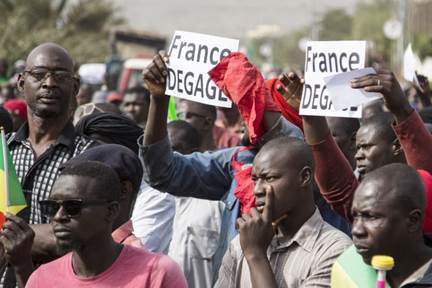
Anti-French demonstrations have been taking place since 2013 on a regular basis, according to the French newsmagazine ‘Liberation’ in an article titled, ‘A Rejection of Colonialism.’
A Sahel expert at the University of Kent’s Brussels School of International Studies Yvan Guichaoua said of the French: “(They) want to stay influential in their former colonies and have leadership in this sort of global division of labor” by major powers.
“But the longer you stay, the greater the chance that you become part of the problem,” he warned, in an interview with the Associated Press.
According to Africa specialist Marc-Antoine Perouse de Montclos, French authorities have ignored local realities, like inter-communal vengeance and armies operating brutally with impunity to promote the narrative of jihadis with direct links to Iraq and Syria. As a result, a future French exit strategy may be as elusive as victory.
French Defense Minister Florence Parly insists that the military strike on Jan. 3 was legit and rejects the U.N. probe’s methodology, calling the investigation based on unreliable sources.
Some 7,000 people have died in what has been called France’s ‘forever war,’ according to data by the Armed Conflict and Location Event Data Project.