Home Blog Page 184

Power sector liquidity crises worsens as GENCOs debt rises to N5.6 trillion

0

THERE appears to be no end in sight to Nigeria’s current power sector liquidity problems, as the power generation companies (GENCOS) said the debt owed them by the Federal Government had risen to N5.6 trillion as of August 2025.

The Managing Director of the Association of Power Generating Companies (APGC), Joy Ogaji, stated this on Wednesday, September 10, in a monitored broadcast on Arise Television.

She disclosed that the liquidity crisis had been an existential threat to Nigeria’s power sector, a situation that has created lots of problems for most players in the sector’s value chain.

Ogaji revealed that there was also no clear financing strategy to deal with the sector’s liquidity problems, which have been compounding.

“Every month, the GENCOs’ invoice ends up in an average of N280 billion of power that is taken, not what they can generate. It is a huge problem. As of December 2024, the debt owed to us was N4 trillion, and that was the subject of our meeting with Mr. President. This is why we appeal for this payment, and this is not a subsidy; it’s for power consumed.

“As for 2025, I told you that there’s a monthly invoice of N280 billion. After deductions of the amount that’s not paid, you’re looking at a monthly average of N200 billion. From January till now, if you do the maths, it is N1.6 trillion in addition to the outstanding N4 trillion, which raises it to N5.6 trillion,” she added.

She disclosed that from 2013 to date, power had been increasing, but utilisation dropped to 3,500 megawatts from 4,000 megawatts, noting that for the 3,500 megawatts that are being utilised, only 35 per cent of that is paid for.

Ogaji said President Bola Tinubu was on the right track in meeting with GENCOs to discuss the way forward for sorting out their debts, but noted that two months later, there were no updates on the funding model to defray such debts despite assurances from the meeting held with the president.

“As a father, he promised to intervene immediately with a N4 trillion bond issuance after we had a meeting with him on July 25, 2025.

“Today is the 10th of September. We have not heard the outline plan for how this bond is being designed, what its scope is, or what the timeline for this bond is,” she disclosed further.

According to Ogaji, the N4 trillion debt does not belong entirely to the GENCOs, noting that some creditors in the gas value chain, such as the thermal plants, are also waiting for the money.

It would be noted that the rising debt has posed a challenge to strengthening the power sector for optimum service delivery.

The ICIR reported that the Federal Government promised to sort out the outstanding N4 trillion debt payment in two ways: part of it in cash, and the rest through promissory notes, which are legal documents that act as a promise to pay money at a later date.

Findings have also shown that Nigeria’s power sector has relied on interventionist funds from the World Bank and the African Development Bank (AfDB) to pull itself out of various liquidity crises, since sector’s privatisation in 2013.

There are several instances of World Bank support for the sector, including a $500 million loan in 2021 for the Nigeria Distribution Sector Recovery Program (DISREP), a $750 million facility approved in 2023 for the Power Sector Recovery Operation (PSRO) and Distributed Access through a Renewable Energy Scale-Up (DARES), and pledged support with 1.2 million meters in 2023 to address the metering gap.

Qatar denies issuing fresh visa requirements for Nigerians

0

THE Qatari Ministry of Interior has dismissed claims that it had introduced broad visa restrictions on Nigerian passport holders, including an alleged ban targeting male applicants.

A ministry official made the remark on Wednesday when speaking with BBC Pidgin on Wednesday.

The official said, “There are no restrictions on Nigerians seeking to visit Qatar,” stressing that the visa application process remained unchanged.

“There has been no suspension or changes to the current procedures. If any updates are to be made, they will be announced on our official platforms,” the country’s digital visa platform, Hayya, also stated.

The clarification followed the confusion sparked by a flyer from TravelTank, a Nigerian travel agency, which listed what it claimed were new visa requirements for Nigerians travelling to Qatar.

According to the flyer, the alleged changes included compulsory booking of return transfers with hotel reservations, limiting eligibility to women and families, and requiring applicants to book only 5-star hotels to qualify for a visa.

The flyer claimed that “These requirements apply to all pending visa approvals,” and advised clients to adhere to them to prevent delays or denials.

The notice linked the alleged changes to repeated incidents of Nigerian visitors overstaying their visas, claiming Qatari authorities were tightening entry rules to enforce stricter compliance with immigration regulations.

The ICIR reported in July that the United Arab Emirates (UAE) introduced tougher entry requirements for Nigerian travellers to Dubai, including a ban on transit visa applications, nearly a year after the UAE and Nigeria settled a two-year visa ban previously imposed on Nigerians.

Agents familiar with the new directive from Dubai Immigration said that transit visa applications would no longer be accepted, following a review of the visa process for Nigerians.

Meta pulls down FIJ’s Facebook page as Ekiti Police summon founder Fisayo Soyombo

0

META has taken down the Facebook page of the Foundation for Investigative Journalism (FIJ), citing alleged violations of its community standards on cybersecurity.

The organisation noted that a pop-up notification sent by Meta on Sunday, September 7, indicated that the page was pulled down for going against cybersecurity rules. 

FIJ, however, disputed the claim and submitted an appeal for restoration. 

However, the company has yet to officially respond to the appeal.

The development came weeks after FIJ’s website suffered downtime on August 21 following what the newsroom described as coordinated cyberattacks traced to the headquarters of the National Identity Management Commission (NIMC).

Meanwhile, in a separate development, the Ekiti State Police Command on Tuesday, September 9, invited FIJ founder and editor-in-chief, ‘Fisayo Soyombo, for questioning over allegations of conspiracy, criminal defamation, cyberbullying, and blackmail.

The summon, signed by Musa Hadi, Assistant Commissioner of Police in charge of the State Intelligence Department (SID), ordered Soyombo to appear before the Commissioner of Police at the command’s headquarters in Ado-Ekiti on September 15.

The invitation came barely an hour before FIJ senior reporter, Sodeeq Atanda, was released after spending 11 hours in police custody on similar allegations. 

Atanda was initially invited on September 1 following a petition by Abayomi Fasina, a professor and the on-leave Vice Chancellor of the Federal University Oye-Ekiti (FUOYE).

“This office is investigating case [sic] of conspiracy, criminal defamation, blackmailing and cyber-bullying in which your name featured,” the invite reads.

“You are kindly requested to interview the Commissioner of Police, Ekiti State Command, on 15th September, 2025, at 12:00 noon through the Assistant Commissioner of Police, in charge of State Intelligence Department (SID), Police State Headquarters, Ado-Ekiti,” the invitation read in part.

FIJ had reported how Fasina sexually harassed a senior university official, Folasade Adebayo and humiliated her after she repeatedly rejected his advances. 

The reports contained audio recordings in which Fasina allegedly admitted to bribing two former governing council members to secure the appointments of the current bursar and registrar of the university. 

Additionally, the reports said the governing council further traumatised Adebayo by downplaying Fasina’s actions as a mere friendly relationship and demanding that she apologise to the council.

Police rescue children from violent father armed with a gun

0

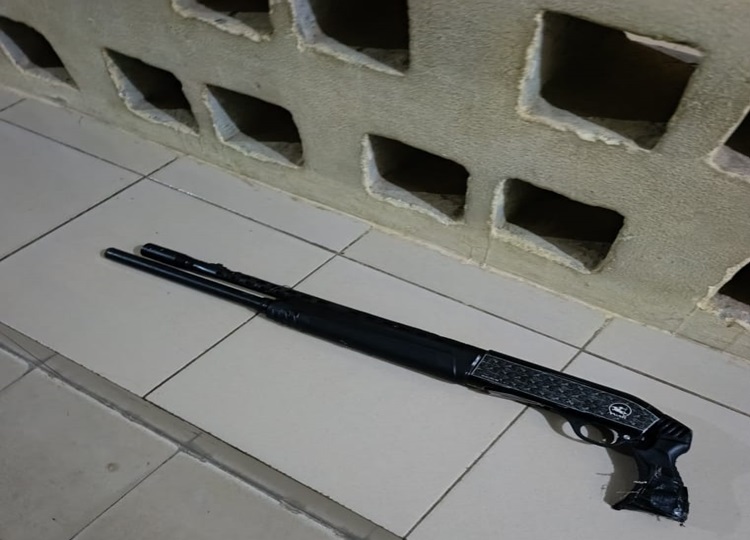
THE Federal Capital Territory (FCT) Police Command has rescued three children from their 45-year-old father, David Tersoo, who was armed with a pump-action gun.

The FCT police command, in a statement issued by its Public Relations Officer (PRO) Josephine Adeh, on September 10, 2025, said the police received a distress call about an assault on an eight-year-old girl, her three-year-old sister, and their mother.

“The mother had been forced out of the house in the middle of the night with her nine-month-old baby.

“The Commissioner of Police, FCT, promptly deployed the DPO Mpape Division and operatives of the Command’s Gender Unit to the scene, where, in collaboration with the Ministry of Women Affairs, the children were rescued. One of them was found with visible bruises. Their mother was later traced and placed in protective custody with her children,” the police stated.

The police said they identified the suspect as Tersoo, a contractor with a history of abuse.

According to the police, Tersoo had locked himself behind a bulletproof door while armed, but after sustained efforts, operatives arrested him without casualties.

Recovered items included a pump-action firearm, white powder, and other suspected illicit substances.

Tersoo was later taken for drug testing as part of ongoing investigations.

Police said investigations continue and promised to release additional updates.

FCT Police CP, Adewale, commended the Ministry of Women Affairs and neighbours whose quick actions prevented tragedy.

He advised victims of domestic violence to report abuse without apprehension.

The command said it remains committed to protecting lives, ensuring justice, and tackling all forms of abuse.

INEC officially recognises Mark, Aregbesola as leaders of ADC

0

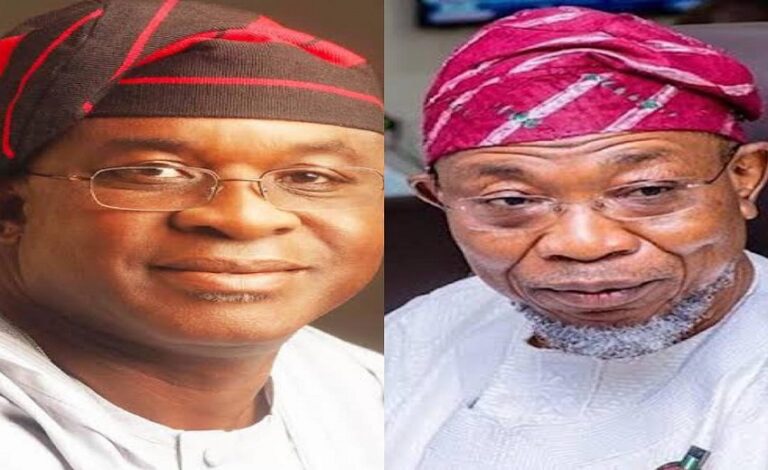
THE Independent National Electoral Commission on Wednesday, September 10, officially recognised the David Mark-led and Rauf Aregbesola leadership of the African Democratic Congress (ADC).

This came after a phase of internal restructuring in the party, which led to the selection of new national officers tasked with repositioning the ADC for upcoming elections.

Alongside Mark and Aregbesola as National Secretary, others recognised by INEC include Ibrahim Mani as National Treasurer, Akibu Dalhatu as National Financial Secretary, and former Edo State governor Oserheimen Aigberaodion Osunbor as National Legal Adviser.

The National Publicity Secretary of the ADC, Bolaji Abdullahi, disclosed the development on his X handle on Wednesday.

“Game on!” Abdullahi tweeted on X after posting the INEC link to the story.  

Following this official endorsement, the ADC leadership is set to launch a nationwide reconciliation and mobilisation drive aimed at boosting the party’s strength and visibility across the country in preparation for the 2027 general elections.

The opposition coalition in July formally adopted the ADC as its official political platform for the 2027 elections.

The ICIR reported that the former National Chairman of the ADC, Ralph Nwosu, formally handed over the party’s leadership to Mark and former Osun State Governor Aregbesola as the protem national chairman and national secretary in Abuja on Wednesday, July 2.

Nwosu also presented the party’s membership card to the new leaders during their unveiling with other opposition coalition members at the Yar’Dua Centre in Abuja.

The 2023 presidential candidate of the Peoples Democratic Party (PDP), Atiku Abubakar; the presidential candidate of the Labour Party (LP), Peter Obi; former governor of Kaduna State, Nasir El-Rufai; and former Rivers State governor, Rotimi Amaechi, were present at the meeting.

Other dignitaries at the meeting were former senator Dino Melaye; former Minister of Youth and Sports, Solomon Dalong; founder of Ovation magazine, Dele Momodu; former Benue governor, Gabriel Suswam; the senator representing Federal Capital Territory (FCT), Ireti Kingibe; former Deputy Speaker of the House of Representatives, Emeka Ihedioha; and a former Chief of Air Staff, Sadique Abubakar.

While speaking at the event, Mark admitted that the coalition’s attempt to unseat President Bola Tinubu in 2027 would be challenging.

He emphasised that despite the challenges, his team was prepared to make sacrifices for the sake of Nigeria’s survival and progress.

Mark said the coalition was beyond seeking power, and it was about rebuilding Nigeria.

The ICIR reported that Mark and Aregbesola emerged as the interim chairman and secretary on Tuesday, June 1.

Owo church attack: Court rejects bail for accused Al-Shabaab linked terrorists

0

THE Federal High Court in Abuja has refused a bail application filed by five men accused of carrying out the June 5, 2022, attack on St. Francis Catholic Church in Owo, Ondo State, which killed  dozens of worshippers and injured over 100 others.

The defendants – Idris Abdulmalik Omeiza, Al Qasim Idris, Jamiu Abdulmalik, Abdulhaleem Idris, and Momoh Otuho Abubakar – are facing multiple terrorism charges under the Terrorism (Prevention and Prohibition) Act, 2022. 

The federal government accused them of belonging to Al-Shabaab’s Kogi State cell and using Improvised Explosive Devices (IEDs) and AK-47 rifles during the deadly church attack. 

The accused pleaded not guilty when the charges were read to them on August 11. They also applied for bail, pleading with the court to order their release from the custody of the State Security Service (SSS), 

However, on Wednesday, September 10, the trial judge Emeka Nwite, a justice of the federal high court, dismissed their bail application, ruling that the terrorism charges against them were capital offences and releasing them would pose a significant security threat. 

The defence counsel Abdullahi Awwal Ibrahim had argued that the defendants had secured ‘reliable and responsible sureties’ and would not jump bail. 

But the prosecution, represented by State Security Services (SSS) lawyer Callistus Eze, opposed the application, while also warning that the men could abscond and intimidate witnesses.

Nwite agreed with the prosecution, stating that the defendants had failed to provide convincing grounds for release or credible sureties. 

He added that granting bail in such circumstances would amount to a ‘judicial risk.’

The judge also faulted the bail application for procedural irregularities, including the absence of the defendants’ names on the motion paper and the filing of a joint two-paragraph affidavit instead of individual affidavits as required by law.

Nwite further ordered that the defendants remain in DSS custody and granted an accelerated hearing of the case, fixing October 19, 2025, for trial to commence.

The court had earlier granted the Federal Government’s request to shield the identities of witnesses who will testify against the defendants, following an ex parte application by the prosecution citing safety concerns. 

The five accused were arrested in 2022 after the then Chief of Defence Staff, General Lucky Irabor, announced that troops, in collaboration with other security agencies, had apprehended the gunmen behind the Owo attack. 

The Federal Government, in charge number FHC/ABJ/CR/301/2025, alleged that the men participated in planning meetings, stockpiled IEDs and rifles, and executed the church bombing as part of Al-Shabaab’s extremist agenda in Nigeria.

Darkness envelopes Nigeria cities as national grid collapses again

0

MANY Nigerian cities have been thrown into darkness as the national grid experienced yet another collapse  on Wednesday, marking the third this year.

Data obtained from the Independent System Operator (ISO) showed that the megawatt (MW) generated dropped from 2,917.83 MW to 1.5 MW between 11 am and 12 pm on Wednesday, September 10, 2025.

The Abuja Electricity Distribution Company (AEDC) confirmed the collapse in a statement to its customers on Wednesday.

The AEDC said the loss of electricity in the system franchise area is due to a loss of supply from the grid around 11:23 am.

“Please be informed that the power outage currently being experienced is due to a loss of supply from the national grid at 11:23 hrs today, affecting electricity supply across our franchise areas.

“Rest assured, we are working closely with the relevant stakeholders to ensure power is restored once the grid is stabilised.

“Thank you for your patience and understanding,the statement said.

The ICIR reported in February that many Nigerian cities were plunged into darkness as the national grid experienced a second collapse that year.

Grid collapse affects households, businesses, and critical sectors, such as healthcare, where a consistent power supply is essential.

The February grid disturbance came after the one that occurred on January 11, 2025.

The ICIR reported that the national power grid has experienced several collapses in recent times. This comes at a huge cost to power infrastructure and businesses relying essentially on grid power.

In 2024, the national grid collapsed about 11 times, raising concerns over grid stability and reliance on a centralised grid system.

Energy analysts say the decentralisation of the grid is feasible with states now keying into the new electricity and establishing their regulatory commissions to attract investments.

Further findings revealed that one of the major causes of grid collapse is instability and overload.

When the electricity demand exceeds the capacity of the transmission lines, they can become overloaded. It may lead to overheating, equipment failure, or cascading outages.

The ICIR in April revealed that Nigerians are still battling with epileptic power supply in their households, despite the government’s claim that it has reported notable progress in the stability of the power grid.

The  government credited the grid stability to the addition of 700 megawatts (MW) in transmission capacity.

2027 elections: Again, INEC reads riot act over early campaigns by politicians

0

THE Independent National Electoral Commission (INEC) has raised concerns over the growing early campaigns by politicians and their followers towards the 2027 general elections.

According to INEC national commissioner and Chairman of the Board of The Electoral Institute (TEI), Abdullahi Zuru, a professor, the early campaigns are a clear violation of extant laws.

Zuru stated this at a stakeholders’ roundtable convened to examine “The Challenges of Premature Political Campaigns” in Abuja on Wednesday, September 10.

According to INEC, politicians and their followers are now using “appreciation” or “philanthropy,” done via billboards, social media, and even physical gatherings, to conceal early campaigns.

This is not the first time INEC has complained about early campaign by politicians. In August, the electoral body warned politicians and political parties not to start campaigning ahead of the 2027 general elections.

The warning was issued by the Chief Press Secretary (CPS) to the INEC Chairman, Rotimi Oyekanmi. He said the electoral body had not yet released the timetable for the 2027 elections, so any form of campaigning now is against the law.

“The Independent National Electoral Commission has not released the timetable and schedule of activities for the 2027 general elections. As such, no political party has conducted primaries or nominated any candidate for the election,” the statement revealed in August.

Quoting Section 94(1) of the Electoral Act, INEC reminded politicians that campaigns are only allowed to begin 150 days before an election and must stop 24 hours before the election starts.

The statement further pointed to Section 95(1), which says that all campaigns must follow INEC’s rules.

The commission noted that while individuals are free to express their political views, organised endorsements, mobilisation drives, and campaign-style adverts in support of candidates are not permitted before the official campaign period.

It added that the issue had been raised at its last meeting with political parties, where all actors were warned to comply with electoral laws.

He appealed to politicians and their supporters to uphold the electoral process and refrain from campaign activities until the official timetable is released.

The warning followed the increasing circulation of public endorsements and posters promoting President Bola Tinubu and other politicians’ bids for a second term in different parts of the country.

Nigerians are expected to head to the polls in 2027 to elect a new set of leaders. Although the election is still nearly two years away, it has already begun to stir significant tension across the country.


Childhood obesity now main form of malnutrition worldwide – UNICEF

0

CHILDHOOD obesity has overtaken underweight for the first time worldwide, affecting one in ten school-age children and adolescents, according to a new UNICEF report.

The study, ‘Feeding Profit: How Food Environments are Failing Children,’ which was released on Tuesday, September 10, finds that 188 million children between the ages of 5 and 19 now live with obesity. 

While the prevalence of underweight in this group has declined from nearly 13 per cent in 2000 to 9.2 per cent, obesity has more than tripled over the same period, from 3 per cent to 9.4 per cent.

When we talk about malnutrition, we are no longer just talking about underweight children,” said UNICEF Executive Director Catherine Russell. “Obesity is a growing concern that can impact the health and development of children. Ultra-processed food is increasingly replacing fruits, vegetables and protein at a time when nutrition plays a critical role in children’s growth, cognitive development and mental health.”

According to the report, obesity now exceeds underweight in every region of the world except sub-Saharan Africa and South Asia. 

It noted that Pacific Island nations record the highest rates, with 38 per cent of children in Niue, 37 per cent in the Cook Islands, and 33 per cent in Nauru living with obesity. 

In high-income countries, obesity affects 27 per cent of Chilean children, 21 per cent in the United States and 21 per cent in the United Arab Emirates.

Globally, about 391 million children are overweight, with many already obese. 

UNICEF warned that the trend poses long-term risks such as diabetes, heart disease and certain cancers, and could cost the global economy over $4 trillion annually by 2035.

“The report warns that ultra-processed and fast foods – high in sugar, refined starch, salt, unhealthy fats and additives – are shaping children’s diets through unhealthy food environments, rather than personal choice. These products dominate shops and schools, while digital marketing gives the food and beverage industry powerful access to young audiences.

“For example, in a global poll of 64,000 young people aged 13-24 from over 170 countries conducted through UNICEF’s U-Report platform last year, 75 per cent of respondents recalled seeing advertisements for sugary drinks, snacks, or fast foods in the previous week, and 60 per cent said the advertisements increased their desire to eat the foods. Even in conflict-affected countries, 68 per cent of young people said they were exposed to these advertisements. 

“Without interventions to prevent childhood overweight and obesity, countries could face lifetime health and economic impacts exceeding, for example, US$210 billion in Peru, due to obesity-related health issues. By 2035, the global economic impact of overweight and obesity is expected to surpass US$4 trillion annually,” the report added.

UNICEF therefore urged more countries to act by banning junk foods in schools, restricting food marketing, enforcing clearer labelling, and expanding social protection so families can afford nutritious meals.

“In many countries, we are seeing the double burden of malnutrition – the existence of stunting and obesity. This requires targeted interventions,” said Russell. “

“Nutritious and affordable food must be available to every child to support their growth and development. We urgently need policies that support parents and caretakers to access nutritious and healthy foods for their children.”

France protesters push to ‘block everything’ as Macron confronts political chaos

0

PROTESTERS took to the streets across France on Wednesday, blocking roads, setting fire to rubbish bins, and clashing with police in a campaign to “Block Everything” in anger against President Emmanuel Macron and proposed budget cuts.

Many protesters directed their frustration at President Macron, who is already grappling with political upheaval after his government was defeated in parliament on Monday by a united opposition.

The ICIR reported that Prime Minister François Bayrou’s government collapsed on Monday following a failed confidence vote, raising uncertainty over President Emmanuel Macron’s future and the stability of the eurozone’s second-largest economy.

France’s parliament voted out Bayrou over a disputed budget plan that sought $52 billion in spending cuts to reduce the fiscal deficit. 

President Macron named his fifth prime minister in less than two years on Tuesday, choosing close ally Sebastien Lecornu, a move that sparked outrage among left-wing politicians.

Police said on Tuesday that they prevented around 1,000 protesters from storming the Gare du Nord train station in Paris, and Interior Minister Bruno Retailleau reported that demonstrators set a bus ablaze in the western city of Rennes and hurled heavy cobblestones at police.

Retailleau, told reporters that 80,000 security forces had been deployed throughout the country, including 6,000 in Paris. Nearly 200 people were arrested, and sporadic clashes broke out.

In Paris, police used tear gas to disperse youth protesters blocking a high school entrance, while firefighters cleared burnt debris from a barricade.

In Nantes, protesters blocked a highway with burning tires and rubbish bins, while police fired tear gas to disperse crowds attempting to take over a roundabout.

In the southwestern city of Montpellier, clashes broke out as protesters erected a barricade to block traffic at a roundabout. Police responded with tear gas after demonstrators threw objects at them, while some carried a banner reading: “Macron resign.”

Officials said the “Block Everything” movement, a loosely organised protest with no central leadership and coordinated mainly through social media, first emerged online in May among right-wing groups but has since been taken over by left- and far-left activists.

The “Block Everything” drawing comparisons to the 2018 “Yellow Vest” protests, which arose over fuel price hikes but morphed into a broader movement against Macron and his plans for economic reform.