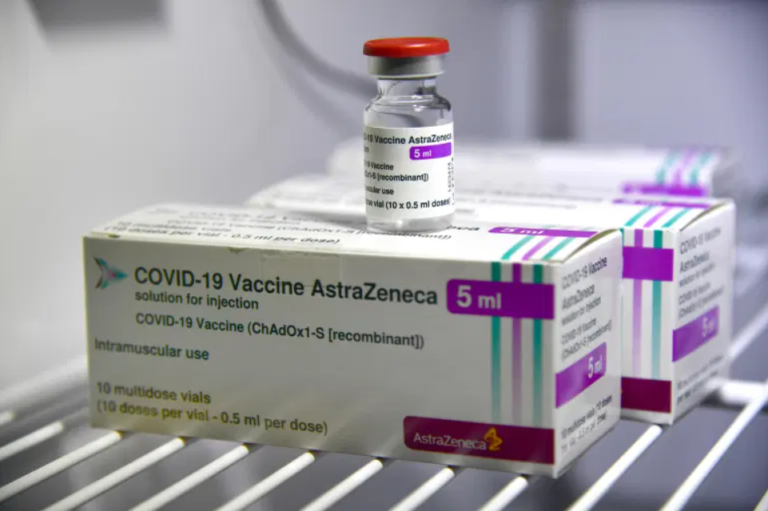
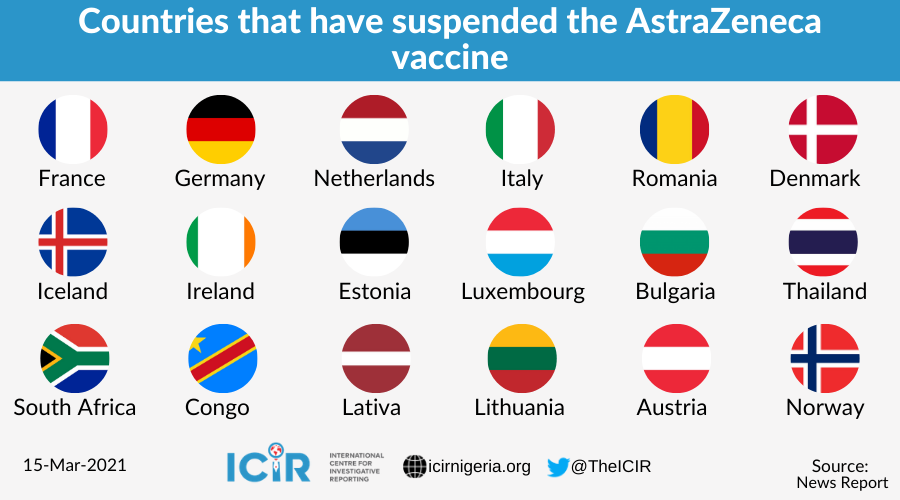
No fewer than 18 countries have suspended the Oxford/AstraZeneca vaccine administration across the world as of Monday, March 15.
The trend has continued in many parts of the world despite the World Health Organisation(WHO) and European regulators expressing confidence in its safety.
The ICIR gathered that there were more blood clot reports among people who received the vaccine in parts of Europe and Oceania.
The countries that have suspended the vaccine are Italy, Iceland, Bulgaria, Thailand, Congo, Estonia, Lithuania, Luxembourg, Romania, and Latvia.
Austria, South Africa, Norway, Denmark, Ireland, Netherlands, Germany, and France. Germany and France became the world’s largest countries to suspend the use of the AstraZeneca COVID-19 vaccine following reports of blood clots in people who were vaccinated.
List of countries that have suspended the use of Oxford/AstraZeneca vaccine as of March 15. Infographics by Damilola Ojetunde
According to AstraZeneca, there had been 15 instances of deep vein thrombosis (DVT) and 22 pulmonary embolism events reported among more than 17 million people vaccinated in the European Union and the UK.
However, AstraZeneca said there was no scientific evidence of any link between its coronavirus vaccine and recent deaths in Europe from blood clots. It further said in a statement that the rate of blood clots in people who had been inoculated with the vaccine was “much lower than would be expected to occur naturally in a general population.”
The death of a recipient of the vaccine was reported in Austria, which was among the first countries to halt the vaccine’s use. In rapid succession, other countries followed suit, pointing to blood clot instances potentially linked to batches of the AstraZeneca vaccine.
The AstraZeneca vaccine is currently being administered to Nigerians after 3.94 million doses, manufactured by the Serum Institute of India (SII), arrived in Nigeria on March 2, 2021. The Nigerian government acquired the vaccine through the COVAX Facility, a partnership between CEPI, Gavi, UNICEF, and the World Health Organisation (WHO).
Despite the suspension of the vaccine in some countries due to severe side effects that have led to fatalities, the Nigerian government, on March 12, insisted on going ahead with the administration of the vaccine in the country.
A statement released by the National Primary Healthcare Development Agency (NPHCDA), on behalf of the federal government, said the doses of the vaccine received by Nigeria were not part of ABV5300, a specific batch of the AstraZeneca vaccine suspected to be linked to the alleged adverse side effects.
The NPHCDA acknowledged the existence of side effects on Nigerians who had been vaccinated. However, it said the effects were mild.
According to an earlier report, Bola Oyefolu, a virology professor at the Lagos State University (LASU), warned against continuing with the AstraZeneca vaccine in the country.
Oyefolu stressed that AstraZeneca and other developed vaccines for COVID-19 disease would fail because they were produced without adequate information and knowledge about the virus responsible for the condition.
The virologist further told The ICIR that the federal government would not continue to give the vaccine to Nigerians if it loved its citizens.
He said, “If all facts are on the table, and if the government loves the citizens, and you know that several other countries are rescinding the decision to take the vaccine, if the government is sincere and loves the people and also knows that the economy of the country depends on the health of the people, I think the government should rescind that decision to administer the vaccine on Nigerians. They should not allow it.
“If you kill all your people or you make your people diseased, I do not know the country we are going to be in.”
Innocent Ujah, president of the Nigeria Medical Association (NMA), a professor of medicine, suggested that the Nigerian government should get complete information concerning the vaccine’s side effects.
“I do not have full information (about the side effects). I need to study why those countries are stopping the vaccine. We need to know the side effects and have full information on the situation,” the NMA president said in an interview with The ICIR.
At least two million doses of the AstraZeneca vaccine have distributed by the NPHCDA across different states in the country.
THE Ogoja division of the High Court of Cross River State has granted an order restraining any person from entering the premises housing Magistrate Court 2 in Ogoja magisterial division pending the determination of the motion on notice filed by the Nigerian Bar Association (NBA).
The Ogoja branch of the NBA approached the court to stop the sale of the premises to the leader of the Cross River State House of Assembly Peter Odey (PDP, Ogoja) after it became public knowledge that Governor Benedict Ayade had approved the land for him to build his personal house.
The case has been adjourned until March 18, 2021, for hearing.
Odey, who just completed his private residence at the Cross River State Water Board Limited premises in Calabar, wrote to Ayade for land to be allocated to him in Ogoja Local Government Area to build another private residence.
Ogoja is almost 300 kilometers north of the southern port city of Calabar.
By the virtue of his office as governor, Ayade is empowered by the Land Use Act of 1978 to hold land in trust for the people and issue certificates of occupancy (C of Os). Owing to this, he approved and directed lands commissioner John Inyang to allocate land to Odey.
However, experts say the power of the governor is limited to the extent that he cannot revoke public property, in this case judiciary property, and allocate same for private interest or to a private individual.
Inyang, who is the brother in-law to the governor’s wife, is said to have showed Odey a plot directly behind the Ogoja Local Government Secretariat, next to the Ministry of Justice annex at the government residential area in Igoli.
The land is where Court 2 of the Ogoja Magisterial division, presided over by senior magistrate Eno Iyamba, is situated.
Magistrate Iyamba sits alongside chief magistrate Ekong Imona on rotational basis in Court 1 after years of neglect led to a decay of Court 2, which was worsened by a windstorm that blew off the roof.
As at press time, it remained unclear whether Ayade and Inyang’s decision to allocate Court 2 to Odey was deliberate. But sources said the magistrates quickly informed the chief judge Akon Ikpeme and the police who arrested workers who appeared on the site last Saturday.
Judiciary sources said the workers were to be arraigned earlier on Monday but were released following pressure from Odey, a claim he denied.
“That is not true. I never went to the police station. As I am talking to you now, I am in Calabar,” Odey said.
However, he did not deny that he directed work to start but claimed he had no knowledge the land allocated was court premises.
“I did not ask that a court be given to me. I only applied to the governor for a piece of land in Ogoja to build a house and the governor approved. The commissioner allocated that space to me. I did not even know it is a court. If there is contention around it, it is the commissioner that should address it. If anyone has any question, it should be directed to the commissioner,” he told CrossRiverWatch late Monday morning.
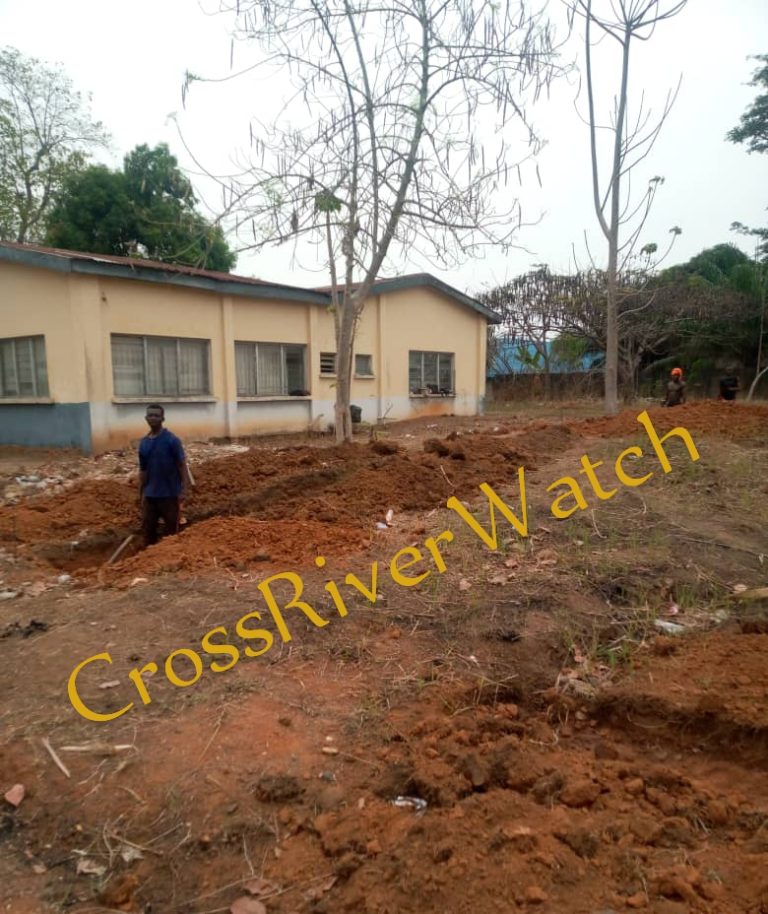
A foundation dug by workers employed by lawmaker Peter Odey near the dilapidated Court 2 of the Ogoja Magisterial division at GRA, Igoli, Ogoja
But, earlier on Monday morning, the workers had resumed, with the magistrates reporting to the Nigerian Security and Civil Defense Corps, a security outfit charged with the responsibility of protecting sensitive public infrastructure. This led to the arrests of two people and the confiscation of some work materials.
Odey, on his part, said he had directed that work should stop. “I have directed that work should stop on the site until matters are sorted. I do not want a court. I just need a land to build a house. If anyone even came up to me to tell me there is an abandoned court there that needs repair, I would have contributed to fixing it for my people.”
As at press time, work had stopped at the premises.
Efforts to get lands commissioner Inyang to respond to the allegation proved futile as several calls to his mobile phone were neither answered nor returned.
VIRAL posts on Sunday, March 14, 2021, claimed that Nigerian artistes Damini Ebunoluwa Ogulu, popularly known as Burna Boy, and Ayodeji Ibrahim Balogun, otherwise called Wizkid, were the first Nigerians to bag Grammy Awards.
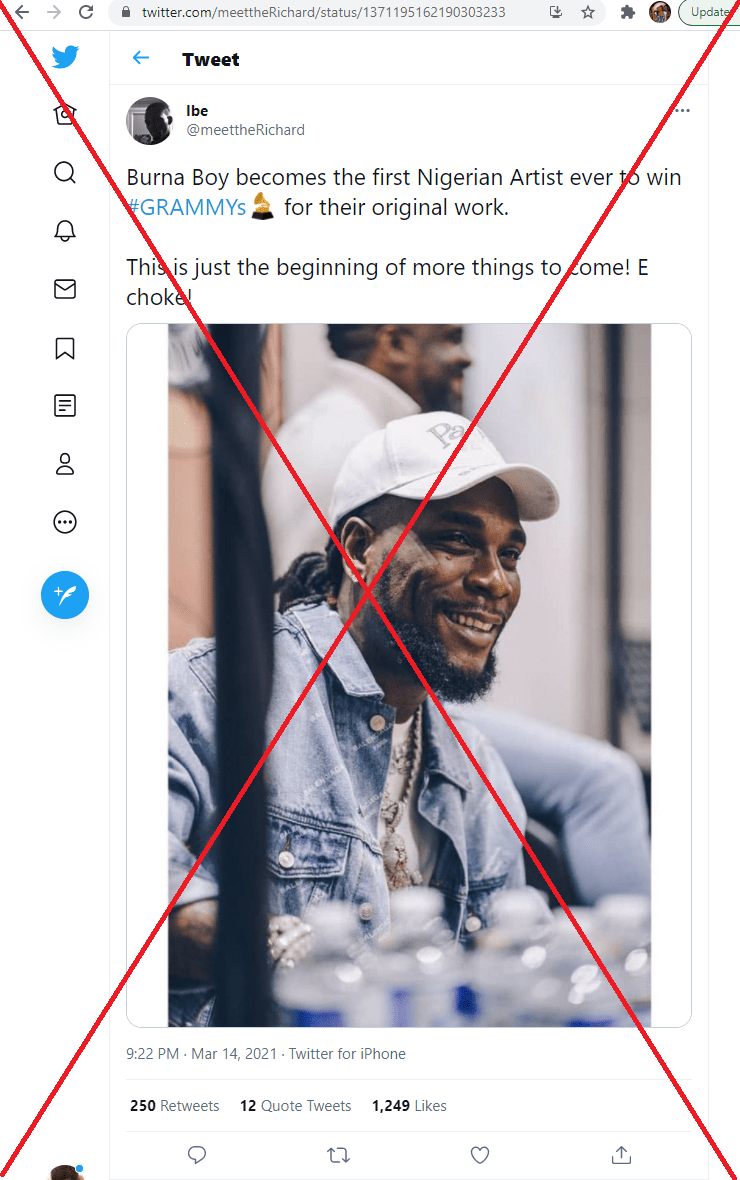
A Twitter user, Ibe, with the username @meettheRichard, tweeted that Burna Boy was the first Nigerian artiste ever to win Grammy Awards.
His tweet read: “Burna Boy becomes the first Nigerian Artist ever to win #GRAMMYs for their original work. This is just the beginning of more things to come! E choke!”
As of 12 noon of Monday, March 15, 2021, the tweet had already garnered 1,247 likes and 249 retweets.
A separate blog post, on the same day, also claimed that Wizkid was the first Nigerian to win the Grammy Award. The headline read:
“Breaking !! Wizkid becomes the first Nigerian to win a ‘Grammy Award.”
The Claim
Burna Boy and Wizkid are the first Nigerians to win the Grammy Award.
A tweet claiming Burna Boy is the first Nigerian to win the Grammy.
The Findings
The Grammy Award, otherwise known as Grammy, is an award presented by the Recording Academy to recognise achievements in the global music industry.
The first edition of the award held on May 4, 1959. Its latest edition – the 63rd in the series – was held on Sunday, March 14, 2021.
Two Nigerians, Damini Ebunoluwa Ogulu and Ayodeji Ibrahim Balogun were part of those that won at the 63rd edition.
Burna Boy won ‘Best Global Music Album’ for his album Twice as Tall, while Wizkid together with Beyoncé and Blue Ivy won ‘Best Music Video’ for the song Brown Skin Girl.
The FactCheckHub findings revealed that although Burna Boy and Wizkid won at the 63rd Grammy, the duo were not the first Nigerians to win a Grammy.
A blog post claiming Wizkid is the first Nigerian to win the Grammy.
In 1991, Sikiru Adepoju and Babatunde Olatunji won a Grammy for their work in the album Planet Drumproduced by Mickey Hart, which won the Best World Music Album category.
In 2009, jazz percussionist, Olalekan Babalola, won a Grammy for his work on Ali Farka Toure’s In the Heart of the Moon album.
Babalola also won a second Grammy in 2006 for his work on Cassandra Wilson’s album titled Loverly
Also, artistes of Nigerian descent like beatboxer, Kevin Olusola; rapper, Chamillionaire; singer, Seal, have all won the Grammy.
Sade Adu, who is also of Nigerian descent and was born in Nigeria, won her Grammy in 1985 for the Best New Artiste category.
She also won Grammy in other categories in 1993, 2001 and 2010.
The Verdict
The claim that Burna Boy and Wizkid were the first Nigerians to win Grammy is FALSE. Nigerians and artistes of Nigerian descent have at different points in time won the Grammy Award prior to 2021.
THE Ogun State police command has confirmed the kidnap of two female students of Olabisi Onabanjo University (OOU) by unknown gunmen.
Abimbola Oyeyemi, police spokesperson, said the victims, identified as Adeyemo Precious and Oyefule Abiola, were of Department of Forestry and Wildlife Management, and Department of Agricultural Economics, respectively
He said they were kidnapped while returning to their halls of residence located at Olowu area in Ayetoro campus of the institution, Yewa North Local Government Area of the state on Sunday evening.
He stated that a manhunt led by the area commander, in conjunction with local hunters, had been launched to rescue the victims unhurt and reunite with their families.
According to Channels Television, the kidnappers had reached out to the families and demanded a sum of N50 million for the release of the students.
A source disclosed that the abductors linked up with the relatives of the victims through their phones.
The source could not, however, confirm whether the kidnappers were herdsmen or not, saying that it was the kidnapped students that spoke with the families and not the abductors.
“The kidnappers have not spoken with the families. It was the students that spoke and echoed the demands.
“We do not know whether they are Yoruba or Fulani because the families have not heard directly from them.”
Yewa North Local Government Area has, in recent times, been a hotbed of insecurity caused by the activities of suspected herdsmen. Many residents of the area have been fled to Niger Republic as a result of growing insecurity.
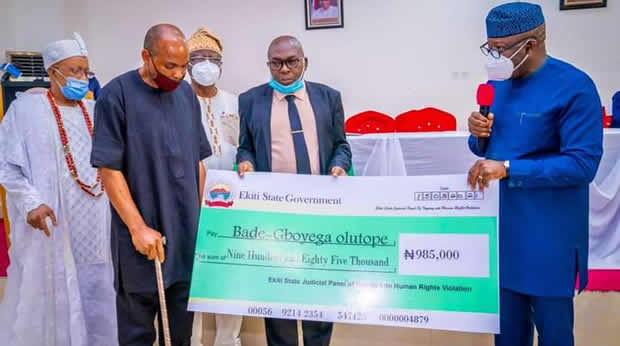
Ekiti State governor Kayode Fayemi has presented a cheque for N7.4 million to victims of police brutality recommended for compensation by the judicial panel of inquiry in the state.
The governor apologised to the victims for any brutality or damage suffered, saying that he hoped the compensation would help them rebuild their lives.
“I hereby apologise to the victims of human rights violations in Ekiti for the hurt and damage they had suffered emotionally and psychologically. These monetary compensations would help to alleviate your feelings and what you have suffered. Please accept my very best wishes as you continue the process of rebuilding your lives.”
Fayemi promised that his government would carry out law reforms, policy change and institutional strengthening to fight crime in Ekiti and ensure justice for all.
A petitioner getting compensated
He also stated that his government was working to ensure that offenders were also brought to book while compensation was given to victims of brutality.
“In most cases, we pay attention to the offenders while not trying to remedy the emotional and psychological damage done to the victims. The House of Assembly has begun work on Ekiti criminal code with the task of ensuring that victims of crime are put side by side with the offenders and get compensations while the offenders got punishment.”
The chairman of the panel of inquiry Justice Cornelius Akintayo(rtd) applauded Fayemi for approving the compensations to the petitioners, saying it would boost people’s confidence in the government.
Another petitioner getting compensated
“We thank the government for not waiting until we round off before starting paying compensations. This will instill confidence and trust in governance. If we recommend and there was no political will to implement, then nothing has happened,” he said.
Also, about 700 farmers, whose pieces of land were acquired for the construction of the airport project, got over N500 million.
While presenting cheques to farmers and owners of 4,017 hectares of land acquired for the airport, Fayemi said the money would be distributed to farmers from Afao, Ago Aduloju, Araromi Obo, Ijan, Igbogun, Ogbese and others, to alleviate whatever they had suffered through the process of construction.
“The construction of the airport will in the long run create jobs, drive investments, and our crops will be better marketed locally and international when operational.
“We have been able to surmount all initial problems and we have settled all issues with those whose farms were acquired in the construction. Ekiti is purely agrarian, and this airport will help us maximise our gains in this sector,” the governor said.
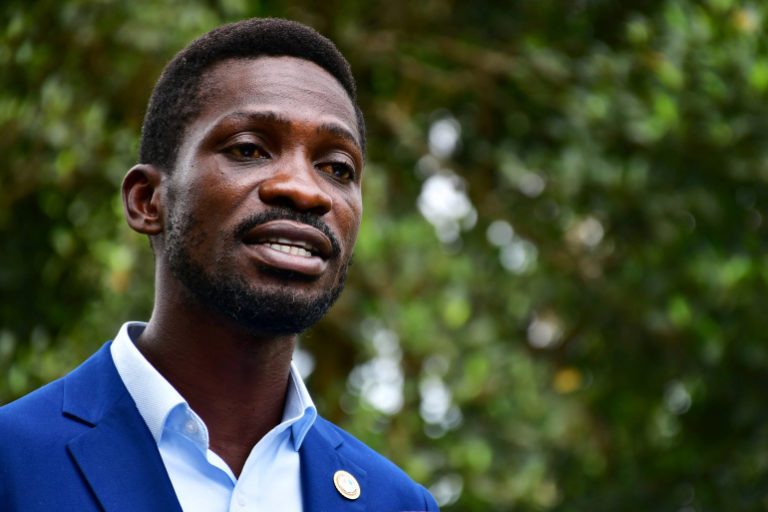
THE residence of Ugandan opposition leader and presidential candidate of the National Unity Platform, Robert Kyagulanyi, popularly known as Bobi Wine, has been surrounded by police and military officers for staging a protest.
This is contained in a series of tweets on Wine’s official Twitter handle @HEBobiwine on Monday morning, an hour after he revealed he had been arrested by the police.
In his initial tweet, Wine announced that he had been arrested, among other protesters, by officials of the Ugandan police.
“Bobi Wine arrested as he led MPs and other leaders in a peaceful protest against the abduction, torture and murder of his supporters. The protest was taking place at City Square, Kampala,” the tweet read.
Bobi Wine arrested as he led MPs and other leaders in a peaceful protest against the abduction, torture and murder of his supporters. The protest was taking place at City Square, Kampala. ~ ADMIN
According to the tweet, Wine was protesting over ‘hundreds of missing Ugandans’ whose families had not heard from them for months. The tweet read that those who showed up for the protest were ‘grossly tortured’ and man-handled by the security operatives.
After he announcing his arrest, Wine disclosed that the police had dropped him off at his home, now surrounded by security operatives.
UPDATE: Bobi Wine driven in police truck, and dropped at home. His home now surrounded by police and the military.
The protest is part of the post-election crisis in Uganda following the January 14 election that perpetuated Youveri Mueveni’s 35-year reign in the country.
The ICIR had reported how Wine was arrested during the electioneering period and eventually placed on house arrest on Thursday 14, January 2021, after voting at the Ugandan presidential elections in his local government.
The January 14 Ugandan election was marred by voter suppression and opposition intimidation. Wine was not allowed to receive visitors for 11 days before a court judge ordered the military personnel to vacate his residence.
A few days to the election, the Ugandan government, led by Museveni, had shut down the internet, arguing that ‘it was no good’ to its people.
Also, both the European Union and the United States did not observe the election due to the government’s failure to implement previous electoral recommendations and accredit electoral observers respectively.
BANDITS have kidnapped some pupils and teachers of UBE Primary School at Rama in Birnin-Gwari Local Government Area in another fresh attack on education in Kaduna State.
A resident was quoted as saying that the school was invaded on Monday morning.
It is not immediately clear how many persons were taken hostage.
Samuel Aruwan, state commissioner for internal security and home affairs, confirmed the attack but could not provide details of those kidnapped.
“The Kaduna State Government is receiving security reports of kidnapping of some pupils and teachers in a primary school located in Rema, Birnin Gwari local government area,” he said in a statement.
“According to preliminary reports, the incident occurred at an LEA Primary School in the LGA.
“The Kaduna State Government is currently obtaining details on the actual number of pupils and teachers reported to have been kidnapped and will issue a comprehensive statement as soon as possible.”
The attack took place just three days after a similar one at the Federal College Of Forestry Mechanisation in Igabi LGA.
The 39 students abducted from the school are yet to be released.
President Muhammadu Buhari warned that the federal government would not allow the destruction of the school system by bandits — but this might be coming late.
In 2021, there have been two cases of the mass abduction of school children in northern Nigeria during attacks by bandits.
THE Academic Staff Union of Universities (ASUU) has hinted at another strike action, saying that the federal government has breached the agreement reached with the union in December 2020.
According to a report by The Punch, Ayo Akinwole, chairman of ASUU, University of Ibadan, said this on Sunday, stating that another strike action might be inevitable.
Akinwole was quoted to have said that the government had refused to pay the salaries of some of its members.
The ASUU chairman said the government’s action was a breach of ‘no victimisation clause’ agreement reached before the nine months strike was suspended.
“The suspension of the strike was based on an agreement reached and a ‘Memorandum of Action’ signed in good faith between the government and ASUU at the stakeholders’ meeting held on Tuesday, 22nd December 2020,” Akinwole said.
However, he lamented that the Office of the Accountant General of the Federation had made the payment difficult due to the demand for ‘loads of paper work’ from the union and bursary units of various universities.
“The requested documents have consistently been provided on a monthly basis, yet the salaries remain unpaid. In the University of Ibadan, March 10, 2021, about 67 ASUU members that are on regular nominal payroll have their salaries ranging from two to 10 months still unpaid as of March 10, 2020.
“Over 80 ASUU-UI members in the Faculty of Veterinary Medicine have their medical allowances of over eight months still unpaid,” Akinwole added.
Biodun Ogunyemi, national president of ASUU, was not available for comments as calls and text messages sent to him were not responded to as of the time of filing this report.
Residents say they heard gunshots, then everyone scampered for safety. Some moments later, Usman was found lying unconscious in the market, blood oozing out of his skull. He had been hit.
ON Thursday, April 9, 2020, ten days after Nigeria entered a partial lockdown due to the COVID-19 pandemic, officers of the Nigeria police, army, correctional service and others had extra-judicially killed 13 while enforcing the curfew – the virus had only claimed six lives by then. By May 4, when the government eased the lockdown, about 20 persons had been killed in similar circumstances. For three months, investigative journalist, Kemi Busari, followed the trails of these arbitrary killings which have left many families devastated, with no hope of justice. This is the last part in the series.
When not in school, Usman Abdulkadir, would either go for Arabic lessons, play with other children in his father’s compound or engage in this third activity, one most of his family members are not aware of.
“Usman was only a boy that was industrious,” says his father, Abdulkadir Sulaiman. “I did not know (he engages in this third activity) until after the incident. He was there, only helping people to put animals in the car. You buy a goat, he helps you put it, at least you give him N5. That way, he thought he could do something for himself.”
On April 20, 2020, a time most of Jigawa State was on lockdown, 10-year-old Usman had left home to engage in menial labour at Sankara market located in Ringim Local Government. The market, covering a small expanse, opens every Monday and thrives around the evening. Although there was a lockdown in force, residents of Sankara had trooped out to stock up.
The assault on Sankara market is similar to that which happened in Trikania Kaduna. The police had first approached the traders to tell them to clear off the market but only a few did. On a return, the officers unleashed terror.
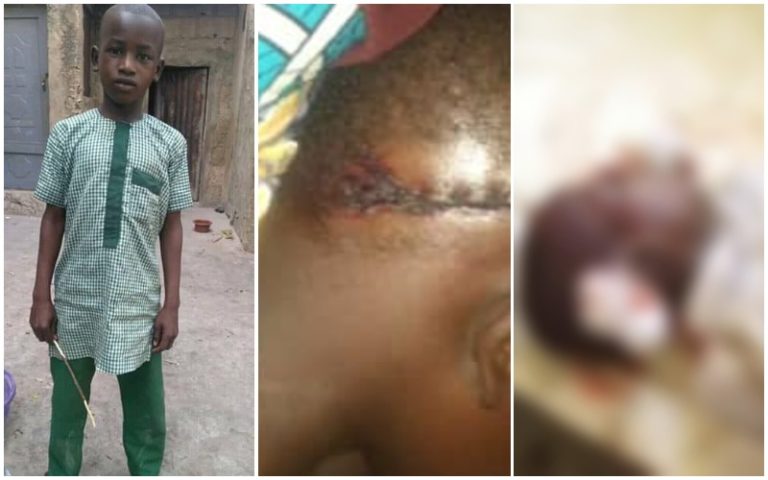
Residents say they heard gunshots, then everyone scampered for safety. Some moments later, Usman was found lying unconscious in the market, blood oozing out of his skull. He had been hit.
Kamal Abdulrasaq, an older friend, was the first person to reach Usman.
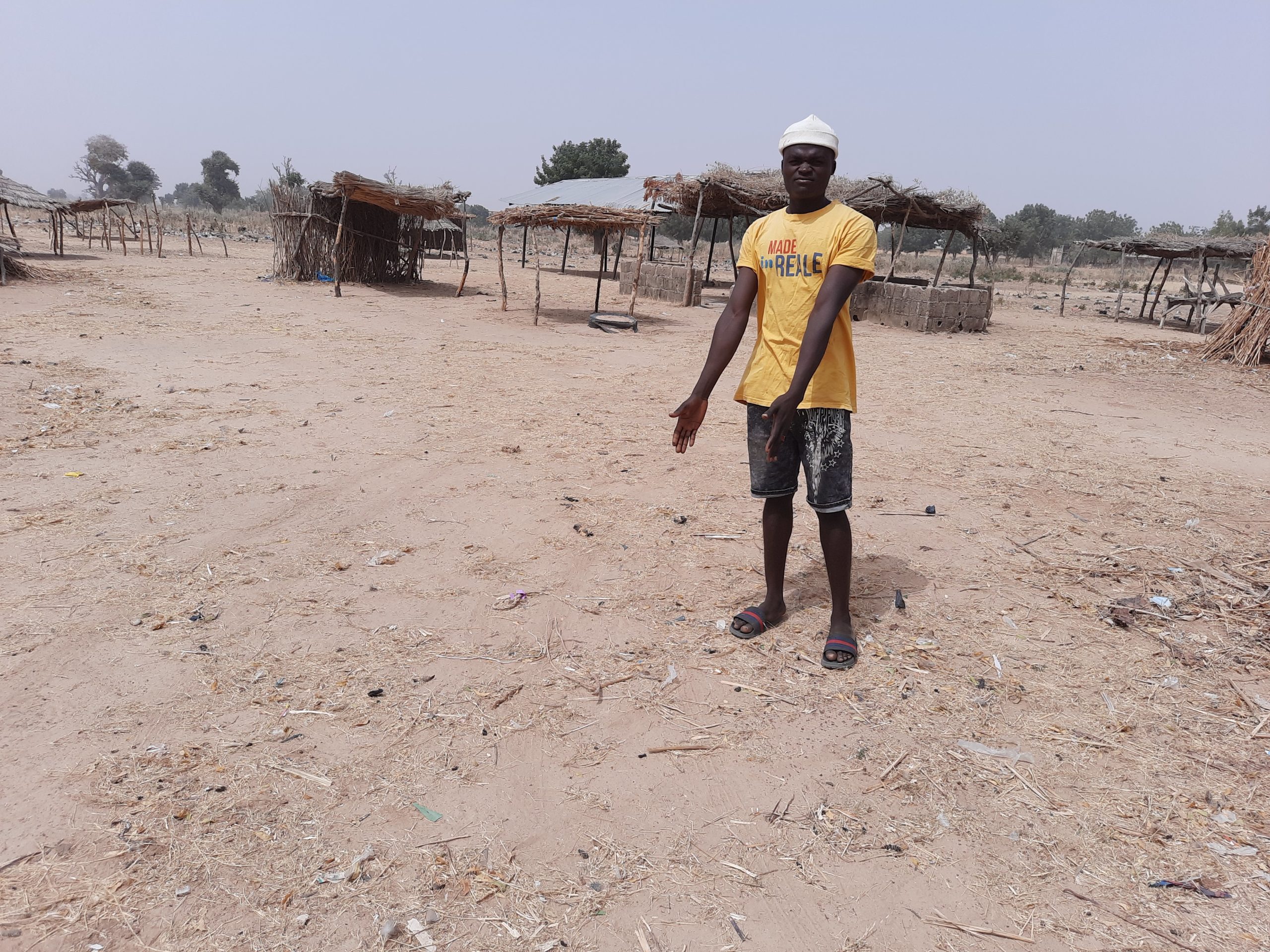
“I was already running but when I heard gunshots, I came back and saw the boy laid there; I took him up,” Kamal says. ‘’I even thought he was not the one, then I realised it was him, Usman. We took him, ran towards there (pointing in a direction) boarded a bike, and rushed him to the hospital.”
Kamal said he witnessed Usman being ‘hit’ by a tear gas shell fired by the policemen, other residents say it was a bullet.
Kamal poinitng to the spot he picked Usman from
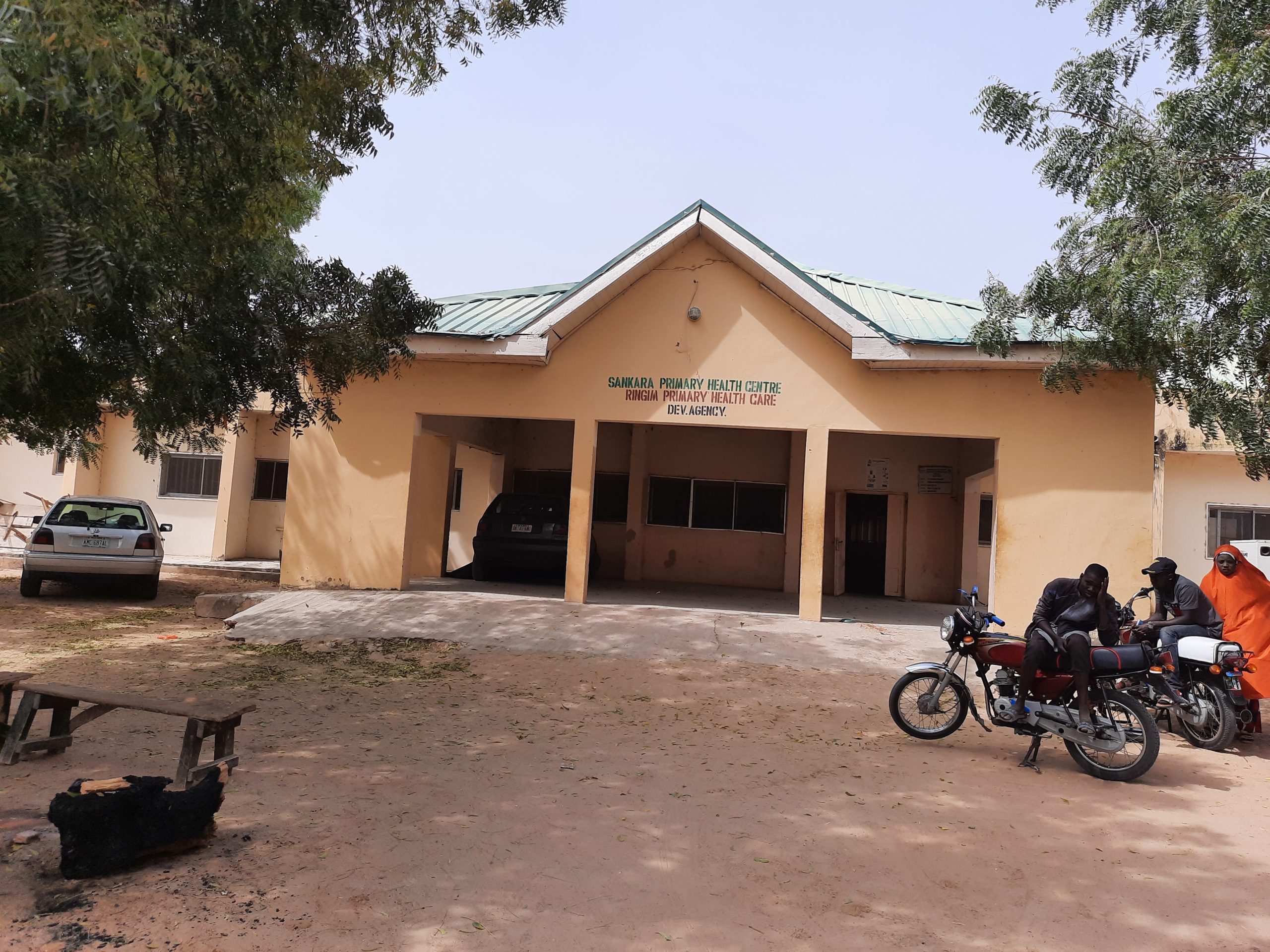
Usman was quickly taken to the Sankara Primary Health Centre, some 500 metres away. By this time, none of his family members was yet aware of the tragedy. Abdulkadir was taking in the evening breeze when the news filtered in.
“I witnessed the pour (influx) of sympathisers crying that Usman was shot in the market by the police. I quickly rushed out to find where he was, he was at the primary health centre in Sankara here. I went down there, I met another crowd of people. When I entered the hospital, I saw him on their bed screaming in pain. I saw the shot (wound) under his ear.”
Usman was given a first aid treatment at the Sankara Primary Health Centre and thereafter transferred to Ringim General Hospital for further treatment.
Sankara Primary Health Centre
Two days later, noticing that his health condition was not improving, medical personnel at Ringim General Hospital advised that he be taken to Rasheed Sekoni Specialist Hospital in Dutse, the state capital.
The family heeded but he was, same day, referred to Aminu Kano Teaching Hospital, Kano where he was to undergo surgery on his skull.
The family arranged for the transfer with high hopes that Usman would get better care. Barely 24 hours after, on Thursday, April 23, Usman breathed his last.
Shortly after Usman was taken to Sankara Primary Health Centre, residents of the community trooped out to protest what they believed was a case of extra-judicial killing of an innocent boy by a police officer. They heard reverberation of gunshots; one of the shots must have hit Usman, they believe. But the police have a contrary narrative.
“The bullet scratched the place (skull) brushed him and went out…I went and confirmed. That was not a stone,” says Abdulkadir.
Abdulkadir added that a stone, as claimed by the police, ‘’would not make a passage through the skull as did the bullet that hit Usman’’.
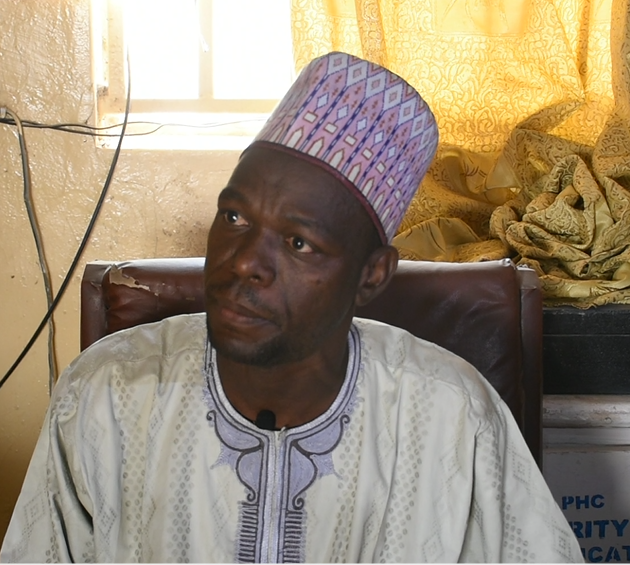
Seeking some answers, PREMIUM TIMES traced the medical officer who first attended to Usman at the primary health centre. Salisu Musa said he only administered first aid on Usman but couldn’t ascertain if it was or wasn’t a bullet wound.
“I just gave him a first aid treatment and referred him to Ringim General Hospital for further management,” he said. “I don’t know whether it’s a gunshot or stone.”
Musa
Since it was only a primary health centre, where such complicated cases rarely surface, the centre lacked facilities for the treatment and kept no such record.
We then made a request, backed by the family, for Usman’s medical record at the Aminu Kano Teaching Hospital. The hospital was yet to issue the information as of the time of publishing this.
Tear gas shell, bullet or stone? The puzzle of what or who killed Usman still hangs in the balance.
No justice
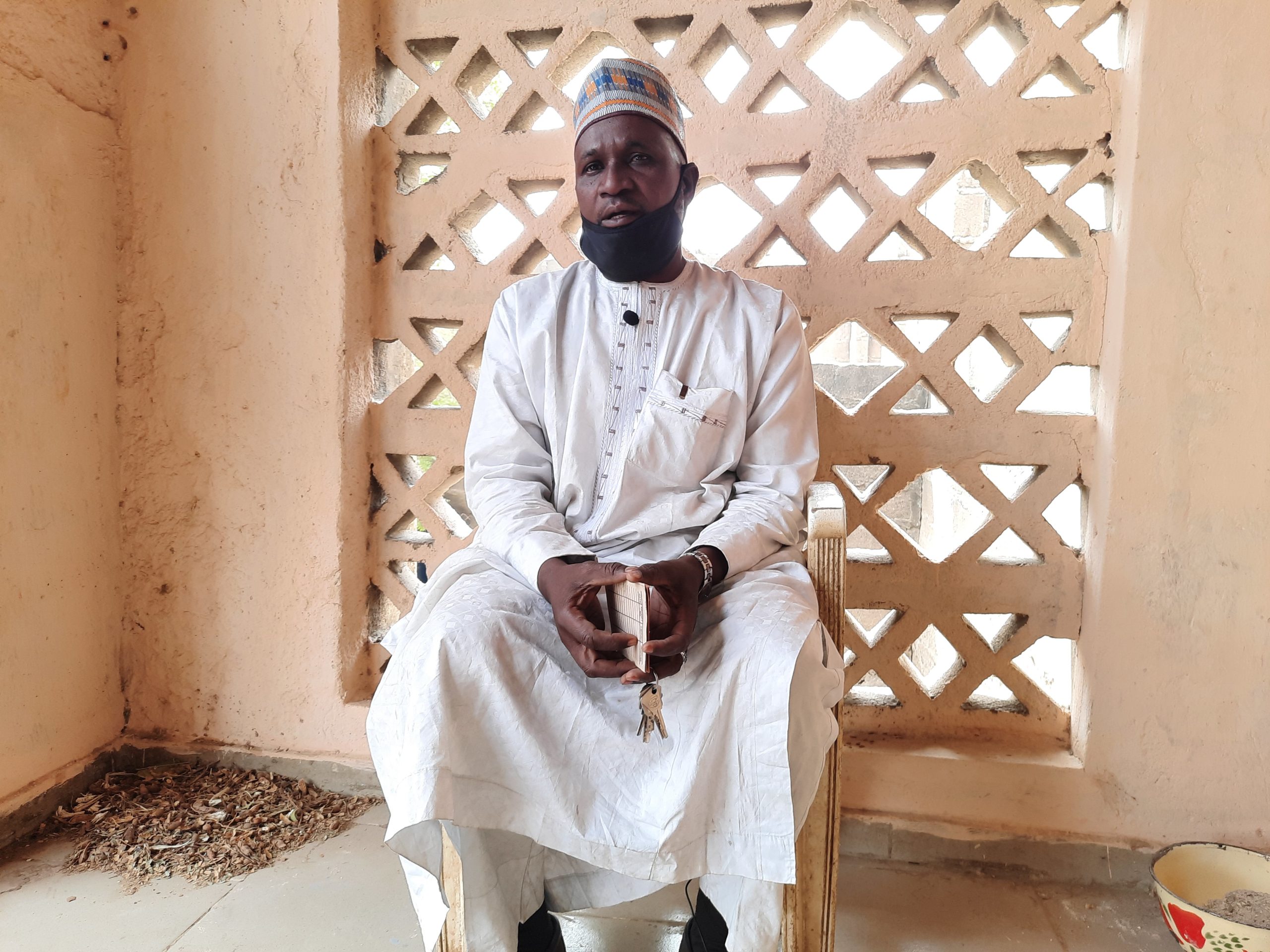
For several months we tried, Abdulkadir turned down this newspaper’s attempt to have him talk about the incident. “I’ve left everything to God,” he would say. He made his reasons known when he finally agreed to an interview.
“I virtually did nothing because I know the kind of society we are living in,” he said adding that the denial by the police is enough pointer to what he would face if he sought justice.
Abdulkadir
Usman’s sister, Summaya, a 400-level law student of Bayero University Kano, does not entirely believe in the efficacy of the system but still wants justice.
“At that time I tried to take legal actions, to go to court and seek justice. Only one thing is that at that time, there were lockdown and corona(virus) issues so I couldn’t do anything but always I’m thinking of what to do,” she said.
Summaya wants the police to take responsibility, identify the erring officer and charge him to court. Should the police fail, she is open to initiating litigation by herself or collaborate with any concerned party.
Cover-up or pseudo investigation?
Two days after Usman’s death, the police released a statement where it promised an investigation, particularly into the allegation that shots fired by officers killed the 10-year-old.
Mr Jinjiri then said all the officers who participated in the lockdown enforcement at Sankara market ‘’were under investigation’’.
“The command has no intention to cover any of its personnel found violating rules of engagement and the outcome of the investigation would be known publicly soon,” Mr Jinjiri said.
About one year after, however, the police are yet to circulate the outcome of their investigation. The current PRO of Jigawa, Aminudeen Zubair, said he only assumed office in January 2021 and has no details of the incident.
When PREMIUM TIMES reached Mr Jinjiri, he asked that all enquiries be directed to the state command as he no longer has the mandate to speak for the police.
The Abdulkadir’s residence
Police denials notwithstanding, the blemish on the officers that stormed Sankara market that day and, at large, the country’s number one security institution will remain until conscious efforts are made to bring closure to the killing.
Abdulkadir says: “It was definite that it was the police but in their usual way, they’ll never accept that they did anything. Coronavirus did not kill as many people as the police did or security operatives did in Nigeria.”
Blood on uniforms
Nigerians continue to air their views on the high-handedness and impunity of the nation’s security forces. This investigation is another pointer to these concerns.
Of the 18 cases tracked, that of Onyedikachi Agbatuwa inclusive although it occurred after the lockdown, none of the victims has gotten justice.
The ‘best records’ were perhaps dismissals of personnel which only happened in Abia and Rivers.
For others, such as the officers who killed five in Kaduna, the warders who opened fire on inmates in Kaduna Correctional Centre, the drunk officer who killed a 22-year-old and inflicted on another life injury in Anambra, justice is yet to be served.
There is also the NSCDC officer who killed a breadwinner, the unknown assailant of a teenager in Ebonyi, the soldier who chased and killed a father of one in Delta and police officer whose actions led to the killing of a 10-year-old brilliant schoolboy. For now, in these cases, it is either denial, zero or slow attempt at justice or a complete cover-up.
Apart from the NSCDC officer who has now been dismissed, all others involved in the cases mentioned above are still in active service feeding off the sweat of Nigerians who pay taxes.
The lethargy of the police cannot be overlooked. In all of the cases, the police promised an investigation. Further, they promised to make the investigation public.
One year down the line, none of such investigations was made public.
These inadequacies by the police snowballed into the famous #EndSARS protest which rocked the country in October 2020.
Addressing protesters, President Muhammadu Buhari assured that the excesses of the police would be checked and that the “fundamental rights of all citizens are (would be) protected.”
But it was only a matter of time after Mr Buhari’s weak assurances, the police has killed again.
THE Nigerian diaspora community is petitioning the leadership of the House of Representatives to clarify its position on the privileges of citizens residing in other countries.
This is in reaction to comments made by Ahmed Idris Wase, deputy speaker, who stood in for the speaker during a plenary session on Thursday, where he said that Nigerians sitting in their comfort zones abroad were not eligible to file petitions against the federal government on issues affecting their kinsmen back at home.
Wase had summarily rejected a petition by the Mutual Unions of Tiv in America (MUTA) on insecurity in Benue, Nasarawa and Taraba states, saying that he was not convinced about the eligibility of MUTA to make such a petition which was brought to the attention of the House by the lawmaker representing Gwer East/Gwer West constituency, Mark Gbillah.
“Did you say Tivs in America? What do they know about Nigeria? They cannot sit in their comfort zones and know what is happening in Nigeria. I will refer you to the functions of the committee on Diaspora. If you go through that, it is nothing relevant to what you are now presenting. I am not convinced that we have to take that petition,” said the deputy speaker.
However, in a letter signed by Nigerians in diaspora worldwide, which was addressed to the speaker, Femi Gbajabiamila, dated 14th March 2021, and made available to The ICIR, the organisation described the comments as ‘an affront to the Constitution of the Federal Republic of Nigeria’ and sought to know whether Nigerians in diaspora were merely seen as ‘cash cows.’
“We, the Nigerians in Diaspora worldwide (Nigerians in Europe, Americas, Asia, Oceania, Middle-East and Africa), are totally appalled by these statements of the Deputy Speaker, Hon Ahmed Idris Wase. His inference, his body language, his facial expression and posture are totally disgusting,” the letter read in part.
It added that it was equally disturbing that none of the House members spoke up during the plenary session to call Wase’s attention to the contributions of Nigerians in diaspora to the development of the country, as well as their rights and privileges, wondering if the view and position expressed by the deputy speaker were the same as those of other members of Nigeria’s political elite.
The organisation is demanding a full retraction of Wase’s comments and an unconditional public apology to the Nigerians in diaspora. It is also asking that Gilbah be allowed to present the motion for and on behalf of MUTA as a concerned group of Nigerians in diaspora and that the speaker convene an urgent virtual meeting with the Nigerians in diaspora community to address this issue and to reassure them of his full support.
“Rt. Honourable Speaker, being someone that had lived and worked in the Diaspora, we request that you personally address this issue openly to allay the fears of Nigerians Diaspora on the true position of NASS and your leadership on all aspects of the relationship between the Nigerian Diaspora and the Nigerian Government, including the pending Diaspora voting right bill,” the letter stated.
It added: “We would like to state that falling short of the above within 14 days upon the receipt of this letter, we might be compelled to take further actions, which might include but not limited to calling out all Nigerians in Diaspora to withhold further home remittances with immediate effect.”
Last month, Godwin Emefiele, Central Bank of Nigeria (CBN) governor, disclosed that weekly diaspora remittances surged by 500 percent from 5 million to 30 million dollars.