Home Blog Page 1875

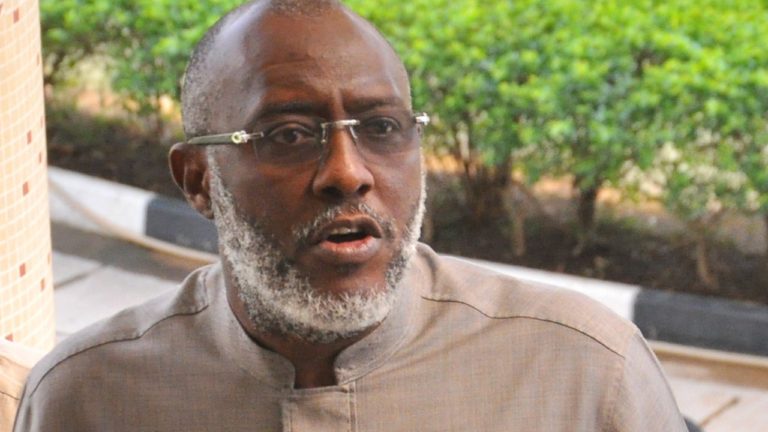
I wrestled with demons in Kuje prison – Olisa Metuh

0

OLISA Metuh, former national publicity secretary of the People’s Democratic Party (PDP), has narrated his ordeal during his 10-month stay at Kuje Correctional Centre, saying that he fought with demons and devils.

Metuh was sentenced to seven years in a correctional facility after an Abuja Federal High Court found him quilty of money laundering in February 2020.

The Economic and Financial Crimes Commission (EFCC) had charged Metuh and his company, Destra Investment, with seven counts bordering on criminal diversion of money received from former national security adviser (NSA), Sambo Dasuki.

Okon Abang found him guilty of illegally receiving monies to the tune of 400m naira from Dasuki.

But the judgement was set aside by the Court of Appeal in December.

Read AlsoCorruption: Lawal, Kalu, Amosu, Metuh top EFCC’s major arraignments for 2021

A three-man panel led by Stephen Adah in a unanimous judgment delivered that the proceedings of the Federal High Court leading to the conviction of Metuh and his company were tainted with bias, and therefore must not be allowed to stand.

Adah, who delivered the lead judgment, held that the utterances of the trial judge, Okon Abang, in the course of the trial, established that he was biased against the convicts.

He, therefore, ordered that trial be conducted afresh and directed that the case file be sent back to the chief judge of the Federal High Court for reassignment to another judge other than Abang.

Tafa Balogun, Olisa Metuh and other prominent Nigerians who own properties in Dubai

While addressing his supporters at a reception held in his honour on Thursday in Awka, Anambra State capital, Metuh described his 10-month stay behind bars as the lowest point in his life.

He vowed to serve God as a result of his harrowing experience.

“I have been to the lowest, deepest end of the valley. I have wrestled with the demons. I wrestled with the devils,” he said.

“The Almighty God has saved me. For that, I commit the rest of my life to the service of God and the people.”

Seven Air Force officers who died in plane crash buried in Abuja

0

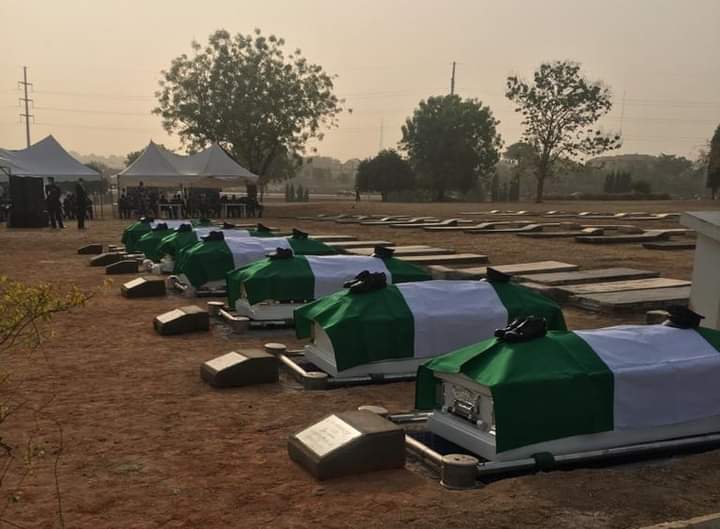
NIGERIANS, on Thursday, mourned as the remains of seven officers of the Nigeria Air Force who died in a plane crash on Sunday were buried in Abuja, the nation’s capital.

The military funeral procession was organised for the seven officers as they were laid to rest at the National Cemetery, Lugbe, Airport Road, Abuja.

The Air Force officials who died in the crash were Haruna Gadzama, flight lieutenant and captain of the aircraft; Henry Piyo, co-pilot and flight lieutenant; Micheal Okpara, a flying officer and airborne tactical observation system (ATOS) specialist; and Bassey Etim, a warrant officer.

Others were Olasunkanmi Olawunmi, a flight sergeant (ATOS Specialist); Ugochukwu Oluka, a sergeant (ATOS Specialist); and Adewale Johnson, an aircraftman who was the onboard technician.

7 officers confirmed dead in military plane crash

According to Ibikunle Daramola, spokesperson for the Nigeria Air Force, the aircraft Beechcraft B350i crashed very close to the Nnamdi Azikwe International Airport in Abuja after reporting an engine failure en-route to Minna, Niger State.

Although the NAF said the burial was strictly by invitation due to compliance with COVID-19 protocol, top military officials were in attendance at the funeral.

Salihi Magash, minister of defence; Lucky Irabor, chief of defence staff; Ibrahim Atahiru, chief of army staff; Isiaka Amao, chief of air staff, and family members of the deceased were in attendance.

Read Also: FCT, Kaduna remain places where Nigerians are most likely to die on the highway

Reacting to the funeral procession, many Nigerians took to the social media to bid farewell to the fallen heroes of the nation’s Air Force.

Pathologist contradicts police at #ENDSARS panel, says Abugu died of anoxia

0

AHMED Abimiku, chief consultant pathologist at the University of Abuja Teaching Hospital (UATH), Gwagwalada, says Ifeoma Abugu died of anoxia. This means that she died of lack of oxygen supply to the lungs or tissues.

Abugu was arrested at Wumba village near the Lokogoma area, Abuja, on September 10, 2020, following an allegation by Special Anti-Robbery Squad (SARS) operatives that Afam Ugwunwa, her fiance, with whom she had just had a marriage introduction, was a drug dealer.

She died on September 11 with the police attributing her death to drug overdose.

But while appearing before the Federal Capital Territory judicial panel of enquiry probing rights abuses by the defunct SARS and other units of the force on Wednesday, Abimiku said lack of oxygen, which led to her death, could be “as a result of strangulation, choking or suffocation.”

He said the result of an autopsy carried out on the deceased showed that her fingernails, lips and tongue were bluish, indicating that she had a respiratory problem before her death. The pathologist also noted that there were bruises on her knees.

READ ALSO#ENDSARS: Lagos judicial panel summons IGP over alleged seizure of 25 acres of land

He said a look at her organs revealed that there was an accumulation of fluid in her lungs, which led to pulmonary congestion, adding that an examination of her kidney also revealed a noncancerous cyst and multiple fibroids.

Explaining further, Abimiku said dead sperm was found in her vagina.

Refuting the testimony of the police, he said body fluid was used to test for all eleven drugs commonly abused, including cocaine, rohypnol, diazepam, barbiturate, marijuana, narcotics, cannabis, tranquillizers, and amphetamines, but all results came back negative.

Under cross-examination by James Idachaba, police counsel, the pathologist said a DNA test could not be carried out on the sperm deposit found in the deceased, because it had been there for over 72 hours.

Following his testimony, the Suleiman Galadima-chaired panel ordered that the corpse of the deceased be released to the family for burial by the police.

The panel further adjourned the case till March 23 for the defendants to appear before the panel.

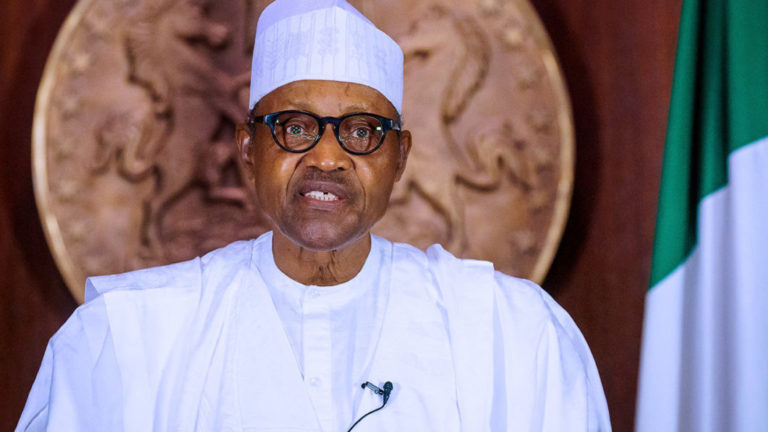
Outrage as Buhari mourns ex-Saudi minister but ignores victims of Maiduguri attack

A CONDOLENCE message released by Muhammadu Buhari on the death of a former Saudi Arabian minister has elicited outrage from Nigerians who were angered that the president ignored victims of a Boko Haram attack in Maiduguri, Borno State capital.

No fewer than 10 persons died, while scores were injured when Islamic insurgents launched rocket-propelled grenades on Maiduguri on February 23.

On the same day Nigerians were killed by insurgents in Maiduguri, Ahmed Zaki Yamani, a former Saudi Arabian minister of petroleum resources, died in a London hospital at the age of 90.

Buhari did not issue any statement to mourn the Maiduguri victims. Rather, he released a condolence message to mourn the Saudi former minister’s passing, whom he described as a ‘world statesman and consummate oil minister.’

Going by the condolence message contents, Buhari and the late Yamani were associates in the Organisation of Petroleum Exporting Countries (OPEC) when Buhari served as Nigeria’s petroleum minister during the Murtala Muhammed regime.

The condolence message, posted on Twitter on February 24 by Garba Shehu, senior special assistant, media and publicity, was praised for the late Saudi politician, and sadness at his demise.

  • Buhari mourns former Saudi oil minister

The condolence message read, “President Muhammadu Buhari has expressed sadness over the death of Saudi Arabia’s longest-serving oil minister, Sheikh Ahmed Zaki Yamani, who died at a London hospital at 90. Reacting to the passing of Yamani, President Buhari said, “Yamani was one of the greatest and most skilful negotiators I ever met when I was minister for Petroleum Resources during the Murtala/Obasanjo regime.”

“According to the President, “the late Yamani was a towering figure in the Organisation of Petroleum Exporting Countries (OPEC) because of his remarkable leadership skills and fierce commitment to protecting the interests of oil-producing countries.”

“President Buhari recalled that the 1973 oil embargo drew world attention to Yamani’s tremendous influence in the oil cartel.

“Whether you love him or loathe him, there is no denying the fact that Zaki Yamani was a powerful force in OPEC affairs who commanded respect and admiration of friends and foes alike,” Buhari said of the late Saudi oil minister.

“The president added that, “as one of the younger oil ministers representing their countries at OPEC, I was awed and inspired by Yamani’s leadership skills and diplomatic finesse.” He described Yamani as a lucky man who survived terrorist captivity after being taken by the notorious terrorist, Carlos the Jackal’ in 1973.

Read AlsoInsecurity: Buhari has abdicated his responsibility-CSOs

“President Buhari extended his condolences to King Salman, the Custodian of the two Holy Mosques and the government of Saudi Arabia over what he called the “immense loss of a world statesman and consummate oil minister.”

  • Buhari ignored Nigerians killed in Maiduguri attack on the same day

Buhari is yet to comment on the February 23 rocket attack in Maiduguri, either to mourn the victims, or to condemn the incident.

The presidency has been silent on the matter, as no statement has been issued concerning it.

According to report,  nine boys, who were playing football, were among the victims. Forty-seven people were also reported to have sustained injuries.

  • Buhari comes under attack for ignoring Nigerians that died in Maiduguri

Most Nigerians, who reacted to Buhari’s condolence message for Yamani, which Shehu tweeted on his official handle – @GarShehu – were furious that the president chose to mourn the late Saudi oil minister but ignored his subjects who were killed and maimed in the Maiduguri terror attack.

The first to comment on the condolence message, Tahir Aliyu, with the Twitter handle @Tahir30, asked, “Fear Allah, what about those that lost their lives in Maiduguri?”

Idara (Coolio) Akpan, also reacting to Buhari’s message, observed, “Nigerians died yesterday at the hands of Boko Haram, you people (presidency) don’t care, but you are concerned about Saudi Arabia that is very far.”

Another Twitter user, Idris Hamza Yana, also asked, “What about the Nigerians who lost their lives in Maiduguri due to Boko Haram attack last night?”

Others accused Buhari of insensitivity, claiming that he did not value Nigerians.

Croesus Ameh noted that “Saudi Arabia is valued more than Nigerians killed almost on daily basis” while Amorous observed that “He (Buhari) hasn’t expressed shock over the attack in Maiduguri”. “Tell him we are waiting for that ‘shock’ part,” he added.

“Maybe he hasn’t heard about the attacks in Borno. When he wakes up, please inform him,” Collins Eze tweeted in reaction to the condolence message. In the same vein, Alhaji Ahmed observed, “He (Buhari) is quiet about what is going on here.”

Sampson Monday, also reacting to the condolence message, said, “He (Buhari) should be sad about all Borno deaths yesterday, not 90 years old Saudi man. Misplacement of priority.”

Viral video on social media shows stranded Nigerians in Saudi Arabia calling for help

Another Twitter user, Sholay Sholay, noted that failure to issue any statement on the Maiduguri victims shows that the Buhari administration is a ‘bad’ government.  “Garba Shehu and his friend Femi Adesina will regret this. Killings in Borno yesterday without any statement. What a bad government,” he said.

A Twitter user who goes by the name, @The Masses Voice, while accusing Buhari of insensitivity, asked, “Are you aware that Boko Haram has taken over one local government in Borno State?” In the same vein, Biola wondered, “What is his (Buhari’s) business with a Saudi minister when bandits are killing us day by day here?”

Buhari was equally accused of incompetence, ‘eye service’ and hypocrisy.

“Nigerians are dying per seconds. Stop wasting condolences. Eye service government,” Sam tweeted in reaction to Buhari’s condolence message for the late Saudi oil minister. On his part, Bernard noted, “He (Buhari) did not express sadness on the deaths of Nigerian youths at Lekki tollgate, Obigbo (Rivers State) and all over Nigeria (during the #EndSARS protests). Shame. Hypocrisy everywhere.”

A Nigerian with the tweeter handle, mumu president, noted that Buhari was interested in issues that were inconsequential to Nigerians but “does not pay any attention to the systematic killings of people in his country.”

“So Buhari did not express sadness over the death of many Nigerians that were killed by herdsmen, bandits and Boko Haram but went ahead to express sadness for a person that is not in Nigeria?” A Twitter user, @MozeyWilly, wondered.

Noting that Buhari’s sadness at the death of the former Saudi oil minister was the president’s personal affair and not a national issue, Jamie said, “What is our business with who dies or lives in Saudi Arabia? If you don’t have anything to say concerning the plight of many Nigerians, don’t say anything.”

  • Buhari’s reluctance to address ‘critical national issues’

Failure to issue any statement on the latest Boko Haram attack in Maiduguri is in keeping with Buhari’s apparent reluctance to address critical national issues. Nigerians have, over time, faulted the president for continuing to remain aloof over attacks by Fulani herdsmen on farming communities in several parts of the country, which has led to the loss of hundreds of lives.

During the #EndSARS protests, Buhari kept mute despite a national and international outcry that ensued after soldiers opened fire on unarmed protesters at Lekki toll plaza in Lagos on October 20, 2020.

Nigerians demanded that Buhari address the nation after no official statement was issued on the Lekki toll gate incident by presidential media aides.

However, despite the public outrage, Buhari refused to talk about the Lekki toll gate shooting when he delivered the highly anticipated national broadcast on October 22, 2020.

Rather, in the 12 minutes address, Buhari cautioned the international community against what he described as hasty comments and conclusions on happenings in Nigeria.

Facebook bans Myanmar military accounts, cites use of force against protesters

0

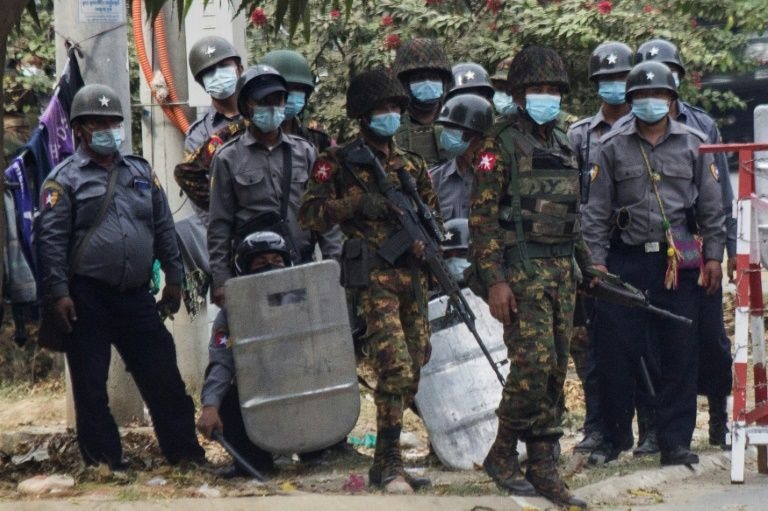
FACEBOOK has announced a further ban on all accounts linked to the Myanmar military on Thursday, citing the junta’s use of deadly force against anti-coup demonstrators.

The move, which takes effect immediately, applies to the military and entities controlled by the armed forces on both Facebook and Instagram.

It also bans “military-linked commercial entities” from advertising on the platforms.

“Events since the February 1 coup, including deadly violence, have precipitated a need for this ban,” the social media giant said in a statement.

“We believe the risks of allowing the Tatmadaw on Facebook and Instagram are too great,” it added, using the Myanmar name for the country’s armed forces.

The junta has steadily increased its use of force against a massive and largely peaceful civil disobedience campaign demanding Myanmar’s army leaders relinquish power since it forcefully seized power earlier this month.

According to the AFP, three anti-coup protesters have been killed in demonstrations, while a man patrolling his Yangon neighbourhood against night arrests was also shot dead.

Facebook said its ban was intended to prevent Myanmar’s generals “from abusing our platform”.

Facebook apologises for flagging as false, images, posts from Lekki shootings

The military has used Facebook to boost its claims that voter fraud marred an election last November after ousted civilian leader Aung San Suu Kyi’s party won in a landslide.

Since seizing power, the junta has arrested hundreds of anti-coup protesters, ordered nightly internet blackouts and banned social media platforms — including Facebook — in an effort to quell resistance.

Thursday’s announcement follows Facebook’s earlier decision to kick off a page run by the regime’s “True News” information service after the tech giant accusing it of inciting violence.

Pages for government offices now run by the junta remain unaffected.

“This ban does not cover government ministries and agencies engaged in the provision of essential public services,” the company said. “This includes the Ministry of Health and Sport and the Ministry of Education.”

In recent years, hundreds of army-linked pages have been blocked by Facebook after the social media giant came under heavy criticism for its ineffective response to malicious posts in the country.

Read AlsoFacebook launches news tab to support journalism

Junta chief Min Aung Hlaing and other top brass were booted from the platform in 2018, a year after a military-led crackdown forced around 750,000 members of the Rohingya Muslim community to flee into neighbouring Bangladesh.

Facebook admitted that year it had failed to do enough to prevent the incitement of violence in Myanmar.

“We can and should do more,” Facebook executive Alex Warofka said at the time.

US sanctions:

Since the coup was staged earlier this month, there are have been several calls by the United Nations including the United States for the military leader to free all arrested leaders and restore the country back to a democratic rule.

Last week, Joe Biden, US President, issued an executive order to impose sanctions on the leaders of the coup.

The sanctions target 10 individuals, including Myanmar’s acting president, and three companies.

BBC reports that additional steps are also being taken to block access by the military to $1bn (£720m) of government funds held in the US.

Ghana receives AstraZeneca COVID-19 vaccine through COVAX

0

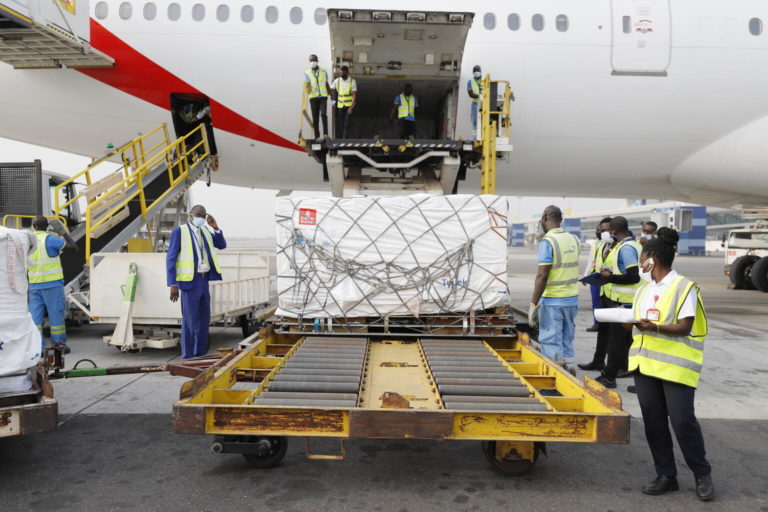
THE Republic of Ghana has received the Oxford-AstraZeneca COVID-19 vaccine from COVAX.

Pascal Soriot, chief executive officer at AstraZeneca, revealed this in a statemen on Wednesday.

He said the delivery marks a major step forward in changing the course of the pandemic globally noting that his company was committed to making “our vaccine available to as many countries as possible and at no profit during the pandemic because no-one is safe until everyone is safe. This delivery is the first of many shipments of the AstraZeneca vaccine expected over the coming weeks and months via COVAX that will take us closer to ensuring broad and equitable access.”

Also, a statement by the World Health Organisation (WHO) confirmed in a series of tweets that the country received 600,000 doses of the vaccine.


COVAX, which is co-led by the World Health Organisation (WHO) and GAVI Alliance, was launched in 2020 to mobilise resources for innovative and equitable access to COVID-19 diagnostics, treatments and vaccines.

Read AlsoNigeria to take delivery of 3.92m doses of AstraZeneca vaccine Tuesday

In a distribution forecast, earlier in the month, a total of 336 million doses were announced to be donated to over 120 countries.

Reacting to the news, Tedros Ghebreyesus, the director-general of WHO, described the development as a first step and a day to celebrate.

The Oxford-AstraZeneca vaccine was approved for use in Nigeria by the National Agency for Food and Drug Administration and Control (NAFDAC) last Thursday.

According to the agency, the evaluation of the vaccine showed that it is effective against the UK variant of the virus-B117- which has been found in Nigeria.

The Nigerian government had said it was expecting 58 million doses of COVID-19 vaccines from COVAX and the African Union AVATT platform.

Osagie Ehanire, minister of health, said COVAX will provide Nigeria with 16 million vaccine doses in the first half of 2020 while African Vaccine Acquisition Task Team (AVATT) will supply over 42 million doses.

Nigeria is unlikely to purchase Covid-19 vaccines except through donor grants

He said the country may receive the doses in 10 days’ time.

Oando, ABC Transport, Japaul lead top gainers on Wednesday

0

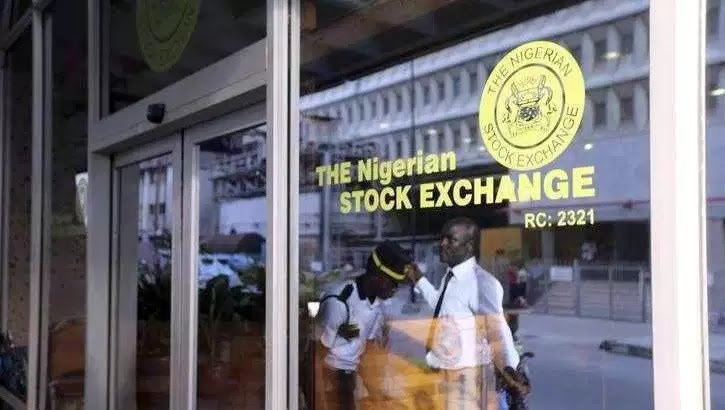
OANDO, ABC Transport, Japaul Gold and Royalex led top gainers in the equities market on Wednesday, with the four gaining an average of 9.33 percent by the close of market.

Oando led the chart, gaining 10 percent, as its share price rose from 3.1 naira to 3.41 naira, according to information shared by the Nigerian Stock Exchange (NSE). The multinational energy company is followed by ABC Transport, whose share price moved from 0.32 naira to 0.35 naira, representing a 9.38 percent gain. Similarly, the share price of Japaul Gold rose 9.23 percent to 0.71 naira, from 0.65 naira reported at the beginning of the market day. Also, Royalex’s share price rose from 0.23 naira to 0.25 naira, indicating 8.70 percent rise in share price.

Read AlsoInvestors pump in N30bn as Wema, Axamansard, Zenith top equities market

On the other hand, LASACO and CHI Plc led the losing chart as their share prices declined by 9.49 percent and 8.33 percent respectively. Oando’s share price moved south to 1.24 naira, from 1.37 naira reported at the start of the market on Wednesday.

NSE: Airtel, Dangote, MRS emerge top gainers on Monday

A total of 5,470 deals were done on Wednesday in deals valued at 7.080 billion naira. Equity capitalisation stood at 21.043 trillion, while the All Share Index moved from 40,164.86 points on Tuesday to 40,221.30 points, representing 0.14 percent increase.

Last week, a total turnover of 1.541 billion shares worth 18.235 billion naira in 22,752 deals was traded by investors on the NSE floor.

Trading in the top three equities such as First Bank Holding Plc, Guaranty Trust Bank Plc and Zenith Bank Plc (measured by volume) accounted for 553.512 million shares valued at 8.931 billion naira in 5,132 deals, contributing 35.92 percent and 48.98 percent to the total equity turnover volume and value respectively.


Senate confirms Bawa as first non-police EFCC chair

0

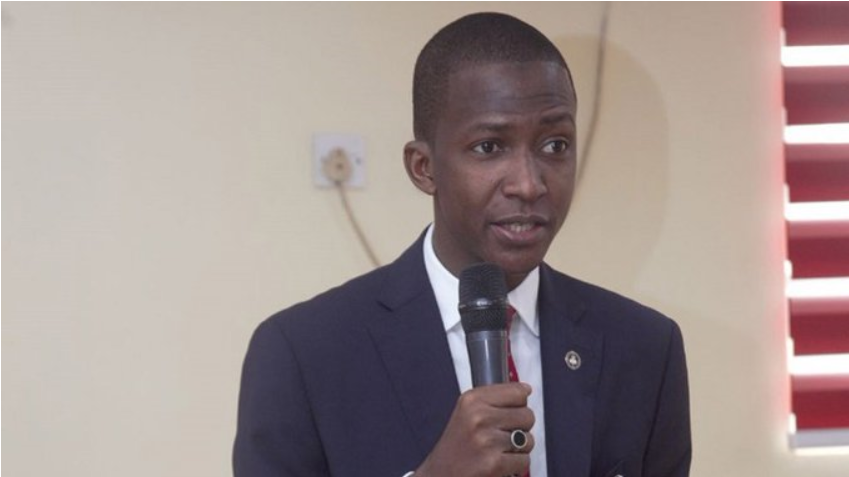
THE Nigerian Senate has confirmed the appointment of 40-year-old Abdulrasheed Bawa as the substantial chairman of the Economic Financial Crimes Commission (EFCC).

Ahmad Lawan, Senate president, made the confirmation on Wednesday after Bawa’s screening.

With his confirmation, Bawa becomes the first chair of the commission who did not serve as an officer of the Nigeria Police Force.

Buhari had, in a letter to the Senate, nominated Bawa as the substantial chairman of the EFCC following the suspension of Ibrahim Magu, former acting chair of the commission.

READ ALSOMagu’s lawyer shocked at nomination of new EFCC chairman

A statement on Bawa’s nomination read that the 40-year-old was “a trained EFCC investigator with vast experience in the investigation and prosecution of advance fee fraud cases, official corruption, bank fraud, money laundering, and other economic crimes.”

Abdulrasheed Bawa
Abdulrasheed Bawa

According to the president, Bawa had undergone several specialised trainings in different parts of the world and was one of the pioneer EFCC Cadet Officers in 2005.

However, there was an allegation of corruption levelled on Bawa during his stint as the head of the Port Harcourt zonal office of the EFCC.

A report published in 2020 said that Bawa was under probe for alleged theft of confiscated proceeds of ill-gotten loot in Port-Harcourt.

After his nomination as the head of the commission in 2021, the EFCC in a statement signed by its spokesperson, Wilson Uwujaren, described the report as ‘illogical.’

“The Commission wishes to state categorically that, Mr Bawa was never arrested or detained over the sale of any assets. As Zonal Head of the Port Harcourt Office of the Commission in 2019, Bawa’s responsibilities did not include the sale of assets as the Commission has a full-fledged Directorate of Assets Forfeiture and Recovery Management, which remit such matters reside,” the statement read in part.

Following his confirmation, Bawa will take over from Mohammed Umar, who has been acting in the commission chairman’s capacity as directed by Buhari.

Cryptocurrencies, other virtual assets are risky for Nigeria – ICPC boss

0

BOLAJI Owasanoye, chairman of the Independent Corrupt Practices and Other Related Offences Commission (ICPC), says virtual assets and cryptocurrencies are risky for Nigeria.

A statement signed by Azuka Ogugua, ICPC spokesperson, quoted Owasanoye as saying this during his presentation to the Senate Committee on Banking, Insurance and Other Financial Institutions on the Central Bank of Nigeria’s decision to stop financial institutions from transacting cryptocurrencies.

“Virtual and cryptocurrencies pose serious legal and law enforcement risks for Nigeria. The current national identification number registration and linking with SIM cards is a pointer to the fact that insurgents, terrorists, kidnappers, bandits, and drug merchants have used the anonymity of unregistered SIM cards to commit their crimes with relative ease,” said Owasanoye.

He noted that anonymity in cryptocurrencies could be used as leverage for terrorism financing and other crimes.

Owasanoye stated that one of the commission’s current investigation on money laundering involving several hundreds of millions of naira had been difficult for the ICPC because the perpetrator used an ICT-aided transfer scheme to cover the tracks of the laundered fund.

The pros, cons of Nigeria’s cryptocurrency ban

Owasonaye further stated that the wallet of the user of the cryptocurrency system only stored information or encrypted links in the blockchain where transaction confirmation could be found,  revealing that over 3.5 billion dollar worth of bitcoin was associated with criminality in 2020.

“This figure includes BTC addresses controlled by dark markets, ransomware actors, hackers, and fraudsters. The bitcoin will ultimately need to be laundered by these criminals, meaning it will make its way into an exchange where it can be converted to fiat currency and transferred to a bank,” the ICPC chairman said.

He stated that the risks involved in the use of virtual assets and cryptocurrencies could pose a threat to finance of government, and could lead to risk of theft and abuse as a medium of payment for hackers and ransomware. He further noted that it could lead to scams, use of crypto assets for Ponzi schemes, tax evasion, and corruption-linked illicit financial flows.

READ ALSO: Cryptocurrency has made naira valueless, claims Sani Musa

However, he noted that if the CBN would ban the use of crypto in Nigeria, there was a need for legal guidance so as to provide a legal force for such directives.

The ICIR had reported the pros and cons associated with the ban earlier placed on the use of cryptocurrencies in Nigeria by the CBN on February 5th, a directive that sparked public outrage on social media.

Like the ICPC boss, the CBN also claimed that crypto could be used to fund terrorism, a crisis that had hit the country before the prevalence of crypto-based transactions. But financial experts have largely disagreed with the government’s position.

10 deaths, 47 injuries reported in Boko Haram Maiduguri attack – Official

0

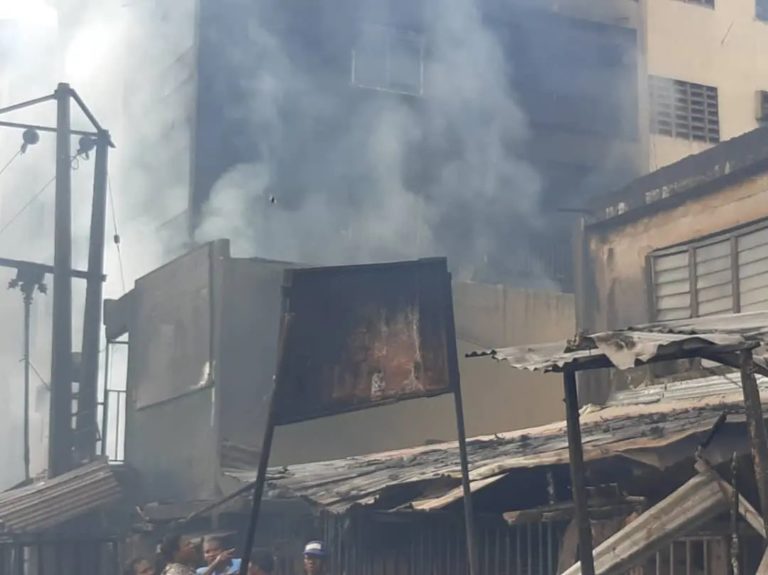
NO fewer than 10 persons have been confirmed dead from multiple attacks launched by Boko Haram insurgents on Maiduguri, Borno State capital, on Tuesday.

Babagana Zulum, Borno State governor, said in a statement shortly after visits to hospitals in the state on Wednesday morning to assess the level of fatalities.

He said about 47 people sustained various degrees of injuries from the attacks.

The insurgents were said to have launched bombs that landed in crowded residential areas of Maiduguri on Tuesday evening.

Daily Trust had reported that nine boys, who were playing football, were among the casualties.

READ ALSONAF apologises for sharing old pictures depicting victory against Boko Haram

Zulum, who said a similar incident occurred a year ago, described the attack as a new trend that must be stopped.

The governor added that there was a need to deploy appropriate technology in tackling the problem.

“Indeed it is a very sad moment for the people and government of Borno State. About 60 persons were affected, among them, 10 have died. It was as a result of long-distance shots fired by the insurgents. I believe this is a new trend we have to raise up and stop. We experienced a similar incident exactly one year ago,” he said.

“The solution is to deploy an appropriate form of technology, which we will have to work on. I share the pains of all those affected, but we are not just visiting hospitals, we do so much behind the scene in our combined responses to the Boko Haram insurgency, and we will keep making these and more efforts.”