Additional report by Damilola Ojetunde, Samson Samuel and Isah Abdul Azeez
SOME prominent Nigerians who had held political offices or had been in the corridors of power are owners of luxury properties in Dubai, a city in the United Arab Emirate (UAE).
The list includes Mustafa Balogun, a former Inspector General of Police, Olisa Metuh, former spokesperson of the People’s Democratic Party, his wife, Kanayo Olisa Metuh, Attahiru Bafarawa, former governor of Sokoto State as well as Orji Uzor Kalu, the former governor of Abia State and senator in the 9th Assembly.
According to a dataset shared with The ICIR by Center for Advanced Defense Studies (C4ADS), a US-based nonprofit newsroom, Nigerians own over 800 properties in Dubai.
Transparency International had in 2019 described Dubai as a ‘Money Laundering Paradise’ due to the heavy flow of illicit funds into the city which is one of the seven emirates of UAE
Most of these Nigerians do not have clean slates, as corruption charges have been hung on their necks in the past.
While some have been acquitted of corruption charges, others are still caught in the web of multiple allegations of financial crimes.
And there are those who yet have not been accused of corruption.
Mustafa Balogun (Former Inspector General of Police)
Balogun served as the IGP of the Nigeria Police between 2002 – 2004 before he resigned his position following several allegations of corruptions.
The Nuhu Ribadu-led Economic Financial Crimes Commission (EFCC) prosecuted Balogun on eight count charges bordering on diversion and embezzlement of public funds.
In 2005, after pleading guilty to the charges levelled against him, Binta Nyako, a judge of the Federal High Court, Abuja sentenced Balogun to six months imprisonment after he had spent 67 days in custody of the EFCC.
Although the EFCC said $150m-worth of cash and property acquired by Balogun would be seized by the government, records made available to The ICIR shows that the former IG still owns 10 choice apartments in Dubai.
Some of the buildings are located in the Lake City Tower, Marina Park, Waterfront, Goldcrest View, Dec Towers T1 and T3 among others.
Orji Uzor Kalu (Former Abia State Governor and sitting Nigerian Senator)
Kalu, a former governor of Abia state and serving senator of Nigeria was convicted by the Lagos Division of the Federal High Court on Thursday, 5 December 2019 over allegations of fraud worth N7. 65 billion fraud.
Idris Mohammed, the justice who sentenced Kalu to 12 years in prison found him guilty of defrauding the Abia State government through his company Slok Nigeria Limited.
After spending six months in jail, his sentence was overturned by the Supreme Court on the basis that the judge who sentenced him had been elevated to the Court of Appeal at the time of the judgement hence had no authority to deliver the judgement.
Although the court did not acquit him of the charges, it only ordered a retrial of the former governor.
The ICIR records show that Kalu currently owns an apartment at Marina Heights in Dubai, UAE capital.
Former PDP spokesperson, Olisa Metuh and his wife, Kanayo
Metuh and his wife Kanayo are owners of four properties including hotel apartments in Dubai. The Metuh’s properties are located in Fakhrudeen Hotel Apartment and the Summit in Dubai.
The former PDP Publicity Secretary was convicted on February 25, 2020, by Okon Abang, a judge of the Federal High Court in Abuja.
Metuh was found guilty among others to have fraudulently received 400 million naira from the Office of the National Security Adviser in November 2014.
Following a review of the High Court’s judgement by the Abuja Division of the Court of Appeal, Metuh was discharged of the sentence.
On December 16, 2020, the Appeal ruled set aside the conviction handed down on him by Abang citing bias, without considering the merits in the money laundering case.
However, his case was not over yet, the EFCC later approached the Supreme Court to set aside the judgment of the Court of Appeal on the grounds that the appellate court erred by restricting itself to only two grounds (12 and 14) of the appeal that dwelt on the alleged bias of the trial judge, without examining the merit of the judgment of Justice Abang,” EFCC Alert, January 2021 edition, said.
He was later sentenced to seven years in jail.
Attahuru Bafarawa, former governor of Sokoto
Bafarawa, served as the governor of Sokoto State between 1999 – 2007, after his eight-year term, he was arraigned alongside four others by the EFCC on 33 count charge of conspiracy, criminal misappropriation, theft and receiving of stolen funds.
The meeting highlighted the dangers of vote-trading for Nigerian politics, democracy and development, while proffering solutions to these challenges.
It noted that vote-buying was a criminal act according to the law and a deliberate creation of poverty by politicians to enable them to occupy their desired political offices.
It also expressed concerns that politics had now become the only available job for politicians, hence the increasing rate of vote-buying.
While stating that poverty was one of the reasons why people sold their votes during elections, the meeting noted that poor awareness against voter inducement was helping vote-buying to gain grounds in Nigerian elections, lamenting that the National Orientation Agency was not sensitising citizens enough on dangers of vote-buying.
It also agreed that vote-buying gained prominence due to competition between the All Progressives Congress {APC} and People’s Democratic Party {PDP), and that vote-buying started from delegate nomination (internal party election). It added that political parties had commercialised candidates’ nomination tickets.
Lack of laws and penalties for perpetrators and institutional frameworks were highlighted as reasons for vote-buying.
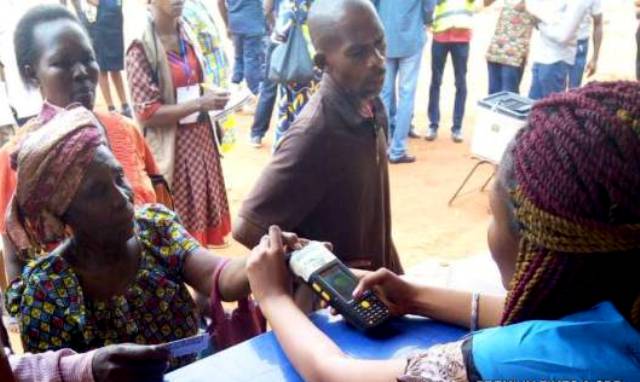
In addition to electronic voting, the meeting called for a serious sensitisation of citizens and youths on the dangers of vote-buying, stressing the need for a truly independent Independent National Electoral Commission (INEC).
The meeting, which called for security operatives to be answerable to INEC on election days, also charged them to be patriotic when involved in the conduct of elections.
It called on Nigerians to desist from selling their votes and canvassed a proper voter education to curb vote-buying.
Participants at the meeting included Shehu Gabam, national secretary, Social Democratic Party; Amos Dunia, editor-in-chief, Forefront Magazine and Online; Ezenwa Nwagwu, convener, Say No Campaign; Fidelia Usman, practitioner, Joe Abraham’s SAN & Co.; Emmanuel Edet, executive director, Youngsmart Development Initiative.
E-election: Is Nigeria ready?
In 2019, INEC ruled out the adoption of electronic voting method in the country in the nearest future because of the absence of ‘robust technical and physical infrastructure.’
Okey Ibeanu, one of INEC national commissioners, had noted at a stakeholders’ meeting in Abuja that there were key factors to be taken into consideration before e-voting could be adopted in the country. According to him, these factors included stable power supply and the ability of electorates to conquer their ‘fundamental trust issues in the system’ by believing in the capability of the electoral body to function independently without external manipulations.
“Each time we are demanding more ‘complexification’ of our election, we should remember that our infrastructure may not be adequate to take care of the process,” he said.
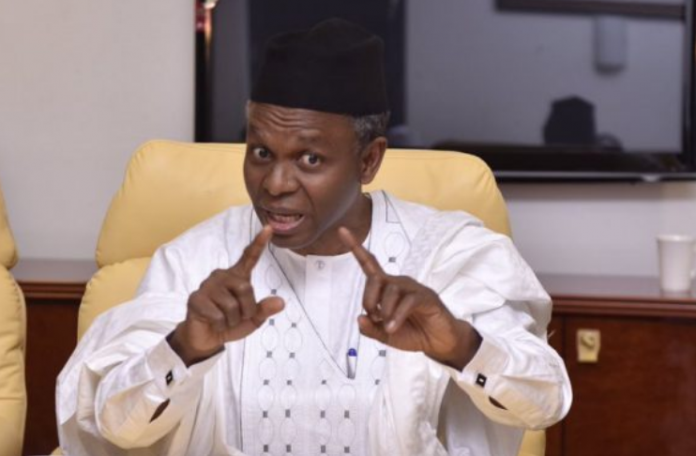
NASIR El-Rufai, Kaduna state governor, has stated that the 1999 Nigeria constitution must be amended to accommodate both state and local policing if the country must overcome its growing insecurity challenges.
He also called for the devolution of the judiciary to save Nigeria from the brink of collapse.
El-Rufai stated these while speaking at a programme called ‘Radio Now’s Urgent Conversation’ aired on Thursday on Channels Television and monitored by The ICIR on Tuesday.
“I will dwell on three of the issues that I believe are critical to the immediate needs of the country to pull back from the brink.
“The first, it is imperative for federal, state, and community policing. We do not have enough police. One centralised police for the country just has not worked.
“Secondly, we must amend the constitution and relevant laws to ensure control of oil and gas, mines, and minerals in the states that already have control over land under the land use Act with royalties and taxes payable to the Federal Government and the Federation Account.
“Number three, we must rectify the anomaly of a federation that has a more or less unitary judiciary,” the governor explained.
The governor said, “My first recommendation is to implement the three key devolution proposals that I mentioned above. Give us state police now, vest all minerals in the state now, and decentralised our judiciary now, not tomorrow, not later.”
El-Rufai also stressed that banditry is a national problem and it is the responsibility of relevant stakeholders to calm nerves through their utterances and not fan the embers of division.
“It is an understatement to say that Nigeria is in one of its most difficult moments. The genuine fears for their lives and property felt by many citizens across the country need to be assuaged. All responsible persons must show compassion to our compatriots that have been affected while calming nerves.
“Banditry is a national problem, with victims from all parts of the country, and we should address it with a common resolve,” El-Rufai said.
According to the governor, the country requires elite consensus to take the poison out of identity politics.
As the country grapples with the rise of killings and kidnappings mostly perpetuated by bandits and armed herders in most parts of the country, there have been calls to amend the Constitution to allow states across the country to cater for the security needs of their people.
Last month, Olusegun Obasanjo, Nigeria’s former president, lent his voice to calls by Darius Ishaku, governor of Taraba State, for Nigeria to consider the creation of both state and local police to address the ravaging insecurity across the country.
Obasanjo, who had in the past dismissed such calls because he believed the action could take Nigeria back to the 1950s, said there was the need for devolution of powers, responsibilities, and resources to allow for healthy competition among states.
THE federal capital territory (FCT) and Kaduna state have consecutively topped Nigeria’s chart of road traffic crashes, deaths in the last six years, The ICIR can report.
This is based on findings obtained from the data published between 2015 and 2020 by the Federal Roads Safety Corps (FRSC).
FRSC is an agency of government vested with regulation, enforcement and coordination of road traffic safety and management.
The corps’ quarterly publication, ‘Statistical Digest’, which reports all its administrative and field activities, shows that Bayelsa, Ekiti and Borno states have the lowest road traffic disasters in the country within the period.
In 2015, the FCT led Nigerian road crash cases with 1,293, followed by Nasarawa, which recorded 772. The number of crashes within the year was 9,074, while the total death was 5,075.
FCT also led the tally in 2016 with 1,373 while Kaduna recorded 715 and Niger had 535. Kaduna topped the chart of deaths with 505, followed by Abuja, which had 311. The cumulative crash that year was 9,694, as total deaths stood at 5,053.
Quarterly analysis of the data between 2017 and 2019 reveals that FCT and Kaduna led in crashes, injuries and fatalities in all quarters in the three years.
In 2017, FCT recorded 1,106 crashes, which had a breakdown of 307, 346, 248 and 205 cases respectively in each of the quarters. The city was followed by Kaduna, which had 755, that is 236, 200, 166 and 153 respectively for each quarter. Niger state came third with 516 cases, 150, 139, 121 and 106 cases in each of the quarters.
Borno, Bayelsa and Ekiti state recorded the least crashes, recording 36, 45 and 56 in all the quarters, respectively.
There was a total of 9,383 road crashes in the nation during the year, according to the FRSC.
State with the highest number of injured persons during the year was Kaduna. It had 3,052 (562, 752, 597 and 449 in each of the quarters). The state was followed by the FCT which recorded 2,360 (562, 752, 597 and 449) and Kogi that witnessed 1,573 (351, 403, 381 and 438).
Bayelsa had the least data for injured persons that year with (97) 15, 23, 28 and 31; Ekiti (168) with 37, 45, 39 and 47 and Cross River (175) with 72, 50, 43 and 10 respectively in each of the quarters. The number of persons who were injured was 31,094.
Meanwhile, deaths tally from the crashes within that year was highest in Kaduna with 558, having a breakdown of 216, 140, 108, 94 for the quarters. FCT came second with (287) 66, 111, 56 and 54; as Kogi was third with (256) 60, 34, 53 and 89.
Borno, Bayelsa and Abia paraded the lowest figures with 21 (10, 2, 4, 7) for Borno; 21 (1, 9, 4 and 7) for Bayelsa; and 26 (11, 9, 2 and 4) for Abia in each of the quarters. Total death toll for the period was 5,121.
FRSC’s table showing number of road crash casualties in 2018
In 2018, FCT topped crash cases with 274, 289, 254 and 234 in each of the quarters, totalling 1051. Kaduna came second with 830 cases, being 198, 238, 179 and 215 respectively; as Nasarawa took the third place with 485 cases, broken down as 131, 128, 103 and 123 for the quarters.
The lowest cases were recorded in Borno, Bayelsa and Cross River. The three states had 46, 53 and 56 throughout the year. Number of crash cases for the year was 9,741.
Kaduna state-led injury chart for the year with 3300 (701, 995, 646 and 958); followed by FCT which had 2347 (618, 634, 569 and 526); and Ogun which recorded 1186 (464, 485, 444 and 493).
States with lowest injuries arising from crashes in the year were Bayelsa, Akwa Ibom and Cross River. They recorded 92, 149, 157 respectively throughout the year.
Total number of injured persons from crashes in that year was 32,220.
Kaduna once again had the highest fatality rate for an accident in 2018 with 597 (150, 180, 82 and 185); Niger was second with 289 (58, 75, 79 and 77); and Ogun was third with 281 (91, 72, 51 and 67) in each of the quarters respectively.
Bayelsa, Taraba and Ekiti recorded the least casualties with 14, 26 and 31 respectively.
5,181 persons were killed in road accidents within the year.
FCT yet again topped the chart of crashes in 2019 with 972 (273, 98, 292 and 309) in each of the quarters. Kaduna followed with 756 (218, 92, 172 and 274), as Lagos came third with 452 (121, 46, 147 and 138).
Bayelsa recorded the least data with 181 (0, 0, 1, 7); followed by Borno, 571 (6, 5, 13 and 23); and Ekiti with 76 (17, 6, 23 and 30). Total case was 9,218.
Injuries recorded within the period were 30,242 altogether. From the tally, Kaduna led with 3,053 (975, 427, 674 and 977); FCT came second with 2,035 (639, 192, 601 and 977); and Ogun was third with 1,900 (473 197, 618 and 612).
Bayelsa had the least figure with 50 (27, 0, 0 and 23) for each of the quarters; and Cross River, which had 176 (54, 33, 30 and 59). 30,242 persons were reportedly injured from road crashes in the year.
Casualties for the year were 4,609 in total. Kaduna recorded 385 (130, 49, 60 and 146); Bauchi came second with 306 (102, 39, 40 and 125), while Niger was third with 265 (66, 23, 91 and 85).
Lowest cases for the year occurred in Bayelsa which had 3 (2, 0, 0 and 1) respectively in each of the quarters. Rivers state followed with 21 (4, 1, 6 and 10) and Borno with 24 (10, 1, 4 and 9).
The situation remains the same in second and third quarters of 2020. (The ICIR could not obtain information for first and fourth quarter of 2020). FCT recorded 165 road crashes while Kaduna and Ogun had 177 and 170 apiece in the second quarter of 2020; the two highest in the country. Borno recorded the least with four, while Bayelsa and Rivers had six and eight each.
Between July and September (third quarter) 2020, the FCT saw 311 crashes. It was the highest in Nigeria. Ogun had 239, as Kaduna and Oyo recorded 219 and 143 respectively. The lowest accidents within the period were recorded by Bayelsa, Borno and Ekiti, which had 3, 13, 22 in that order.
Aggregate road crashes in Nigeria between 2015 and 2019 was 47,110, that is, 9,074 (2015) + 9,694 (2016) + of 9,383 (2017) + 9,741 (2018) + 9,218 (2019), while cumulative death within the five years was 25,039, that is, 5075 (2015) + 5053 (2016) + 5121 (2017) + 5181 (2018) + 4609 (2019).
Scene of a road crash in Nigeria. Source: Premium Times
Many Nigerian roads are dilapidated and plied by thousands of goods-moving articulated and other vehicles. In most cases, commuters spend more than 300 percent of the time required by their journeys because of gridlocks occasioned by accidents and broken down vehicles.
Rail transport system, which is expected to be alternative and better means of transportation in the country, has been moribund for decades. Its resuscitation journey began with former President Goodluck Jonathan administration and received commitments from the Buhari government.
Meanwhile, Abuja is among the few states in Nigeria that enjoy good road networks. The city has better roads than Kaduna – both of which have the highest road crashes, injuries, and deaths.
United Nations had in 2003 projected that the mortality rate from road traffic accident injuries in Africa “is the highest in the world, costing the region 7.3 billion dollars or one percent of its gross domestic product annually.”
Similarly, while addressing the 2017 Africa Road Safety Conference in Cape Town, South Africa, UN Special Envoy for Road Safety, had decried high rate of road crashes on the continent and urged leaders in the region to support measures that could reduce the tragedies, especially the implementation of the Global Plan for the Decade of Action for Road Safety and the African Road Safety Action Plan.
“The continent suffers from the highest road traffic fatality rate than any other region – despite having less than five per cent of the world’s registered vehicles,” Mr. Todt had said at the conference.
Causes of accident in Nigeria, according to the FRSC, include speed violation, use of phone while driving, burst tyre, mechanically-deficient vehicle, brake failure and overloading.
Others are dangerous overtaking, wrongful overtaking, dangerous driving, bad road, route violation, road obstruction and sleeping on steering.
Some Nigerians who have died in road crashes
One of the Nigerians who died in road accidents was James Ocholi, former Minister of State for Labour and Productivity. He died in a ghastly accident on March 6, 2016 along the Abuja-Kaduna highway.
Yusuf Nwoha, director, administration at the Nigerian Supreme Council for Islamic Affairs (NSCIA), died on July 29, 2020, in a ghastly motor accident in Okenne while heading to his home in Owerri, Imo state, to celebrate Sallah.
Tajudeen Idowu, commander for ‘Amotekun’ in Kajola local government area of Oyo state, and Kola Oladunjoye, a senior lecturer and a former head of architecture department at the Polytechnic Ibadan, Oyo state, as well as two other persons died in an accident along Moniya-Iseyin road on Friday January 29, 2021.
A Nigerian medical doctor, Chidera Ifudu, also reportedly died in a motor accident on Friday, February 13, 2021, two months to his wedding. He died after his Lexus SUV crashed along the Port Harcourt/Aba road.
The ICIR had, on December 17, 2020 reported major highway to watch for kidnapping and abduction in the country.
Our strategies to reduce crashes yielding results – FRSC
Bisi Kazeem, FRSC’s spokesperson, told The ICIR that “one of the strategies the corps adopts in minimising road traffic crashes is increased visibility. This is because it has been noticed that drivers and other road users tend to comply with traffic laws whenever they see FRSC personnel on the road. The corps management decided to ensure adequate personnel deployment to ensure compliance and enlighten the motoring public when they go against established regulations. On the Kaduna-Abuja expressway, the corps established more outposts along the highways to caution drivers against bad driving habits and met out punishment where necessary.
Boboye Oyeyemi, Corps Marshal, FRSC. Source: Vanguard newspaper
“Speed has been identified as a major cause of crashes in the mentioned locations in recent time. To tackle the rising cases of speed-related crashes, the corps introduced mandatory installation of the speed limiting device for all commercial vehicles. As we talk at the moment, enforcement is on top gear. We did this because if speed is regulated, crashes will be minimised, and where they occur, the tendency of recording zero fatalities is high.
“We have also broadened the scope of our consultation with stakeholders to ensure that the fleet operators put their vehicles in good working condition. These include the mandatory installation of the speed limiting device, and other safety standards.”
Kazeem, an assistant corps marshal, added that the corps had also broadened its public education scope y sensitising the public in all strategic locations, including motor parks, churches, mosques, market places, and others.
He further explained that intensification of patrol operations is another dimensional tool the corps had deployed to minimise crashes. According to him, when road users refuse to heed to enlightenment campaigns, the corps adopts enforcement to compel them into compliance through a mobile court where offenders are prosecuted.
A case study of road accident in Abuja
A fatal lone accident involving a Honda Accord car with registration number Kano: TRN 489 SY claimed the driver’s life on Tuesday, February 2, 2021, along Airport Road, Abuja.
The accident occurred around 10am and led to heavy gridlock on the ever-busy highway.
TOurreporter witnessed the tragedy occurred few metres from the Kuje overhead bridge, shortly before the NSCDC and NIS headquarters’ headquarters.
Sympathizers expressed shock over the impacts of the accident, as the car’s engine pulled out and flung almost 400 meters away from the body.
The middle-aged late driver was the only occupant of the car.
Many of the sympathizers who blamed the accident on over-speeding said they hadn’t seen such a crash in their lives.
It was not immediately clear if the late driver was heading towards the airport, as many motorists who drive into and out of the airport are fond of over-speeding.
Apart from scores of motorists who parked on both sides of the road to sympathize or catch a glimpse of the tragedy, sympathizers at the scene of the crash included officers of the FRSC, Nigerian Army, NIS, Nigerian Air Force, Nigerian Correctional Service, NSCDC and residents of Sauka, a community around the scene of the crash.
Scene of the accident around Sauka, Airport road, Abuja on February 2, 2021. Source: ICIR
Several vehicles of the FRSC and an ambulance were promptly deployed to the scene.
The driver’s body was pulled out of the mangled car as pool of the deceased’s blood-soaked the asphalt on the edge of the road where the ill-fated vehicle stopped, after crashing heavily on a huge drainage concrete on the road.
Parts of the car, including two of its tyres flew over the tall divider separating each side of the ten-lane highway. Its bumper and other parts were seen about 150 metres from the body while the engine stood almost 400 metres away from location where the heavily-mashed body was.
One of the FRSC officers who said he was not authorized to talk to the press said it was a lone accident, “which according to witnesses resulted from over-speeding.”
The officer urged all motorists to drive with care and ensure their vehicles are roadworthy.
The driver’s body was later moved away from the scene by the FRSC officials and the soldiers, but The ICIR could not confirm the morgue where it would be deposited.
There are only two morgues around the scene, that is the Air Force Hospital (before the airport) and the University of Abuja Teaching Hospital (Gwagwalada).
Abuja Airport road witnesses accidents almost every day because of heavy traffic, over-speeding, unlicensed drivers who usually drive, and use of un-roadworthy vehicles on the highway.
In Late 2020, a red Toyota car crashed in front of the NSCDC headquarters in Abuja.
Similarly, in the early part of last quarter of 2020, an articulated vehicle loaded with diesel burnt completely opposite Sauka village (about 200 metres from the NSCDC headquarters, causing panic and gridlock.
NIGERIA-BORN Tito Daodu has been recognised by the American Pediatric Surgical Association (APSA) as the first black woman pediatric surgeon practising in Canada.
In a tweet to mark the Black History Month celebrated every February, @APSASurgeons wrote: “Dr. @TitoDaodu was born in Nigeria. She is the 1st black woman #pedsurg practicing in Canada @ACHFKids. She believes that by helping the worst off or those with the least access, she does a service to the entire system.”
Daodu was born in Nigeria and emigrated permanently to Canada when she was eight, after first being deported. She grew up in a rough neighbourhood in Winnipeg’s inner city and found early mentors at West Broadway Youth Outreach, a local drop-in centre for kids, which spurred her to become a voice for children and youths.
“I was challenged by the inequality I saw and experienced, especially with regard to safety, security and health. As I looked around at many of my peers, I discovered that the level of safety and security that I felt was not universal –in fact, far from it,” she said.
Daodu later attended medical school at the University of Manitoba and went on to complete her residency and fellowship in Calgary. As a medical student, she co-developed a project in Tanzania focused on adolescent gender and reproductive health. Daodu spent her summers researching childhood pneumonia in Nigeria, and more recently launched a surgical needs assessment for the country.
Currently completing a master’s of public health at Harvard University, Daodu is part of a team led by Dr. Mary Brindle working to revise the safe surgery checklist for high-income countries around the world. She has amassed a long list of peer-reviewed publications and awards on topics including colorectal surgery, pediatric trauma and global health.
She has a passion for Global Health and promoting justice and equity in medicine. She is actively involved in Global and Public Health Research, focusing on improving surgical outcomes and making surgical care more equitable and accessible in Canada and around the world.
In Calgary, her research is focused on the effect of socioeconomic status on surgical outcomes and access to care. She was recognised in 2019 by AvenueCalgary magazine as one of the top 40 people under the age of 40 doing great things, for her contributions to humanity.
THE federal government of Nigeria and the 36 states have resolved to reconstruct homes and pay compensations for property and livelihoods targeted during the recent spate of violence across the country.
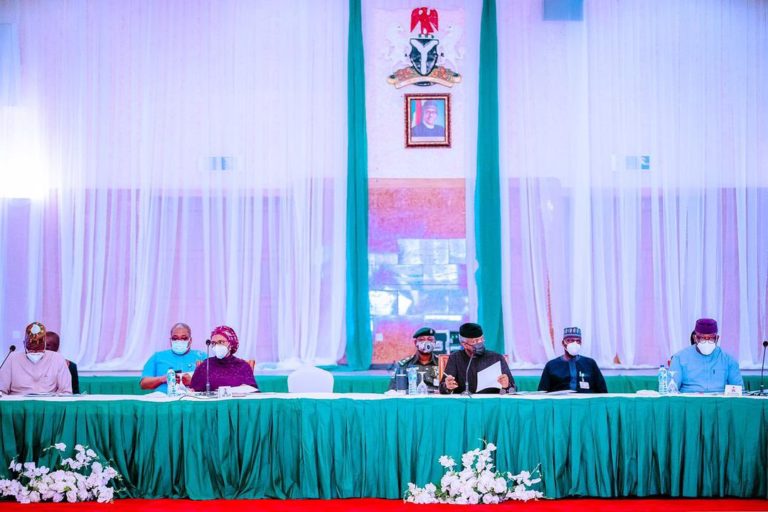
This was part of a 12-point resolution made Thursday during the National Economic Council (NEC) meeting presided by Yemi Osinbajo, vice president of Nigeria.
According to a State House statement released after the NEC meeting, all perpetrators of crime across the country were to be immediately arrested and prosecuted.
Apart from compensating victims of the violence, the NEC said it would also ensure that deceased victims of such violence were duly accorded burial rites.
The council made recommitments to immediately issue public and unequivocal condemnation on all manifestations of hatred, targeted violence, and other hate crimes against ethnic, religious, and minority groups.
On local security initiatives, the council resolved that due consideration be given to adequate representation of non-indigenous or minority resident communities.
Other commitments of the council included ensuring that innocent citizens and entire communities were not slandered, harassed or victimised for the crimes perpetrated by criminal elements within those communities on the basis of ethnic or religious affiliation as well as employing the National Livestock Transformation Plan to address farmers-herders conflicts across the country.
On the jurisdiction of forest reserves, the NEC resolved that state governments had statutory jurisdiction over them and would seek federal support for efforts to eradicate forest-based crime.
The resolution was a result of the recent spate of violence across the country, from banditry in Zamfara State to kidnapping of schoolboys in Kangara, Niger State and Fulani-herders clashes in Oyo and Ogun states.
While some governors have made controversial statements that received critical responses from Nigerians, some stakeholders, including Abdulsalam Abubakar, a former military head of state, have warned state governors to guide their ulterances in order to douse the tension in the country.
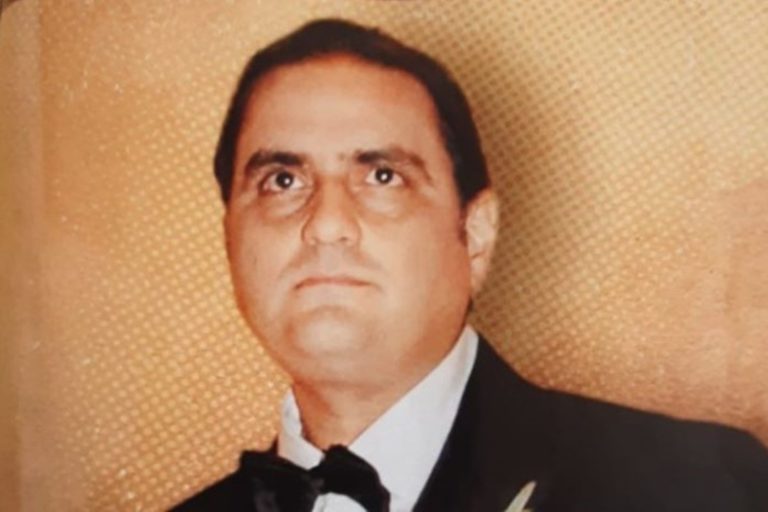
THE Independent and Democratic Cape Verdean Union (UCID), the opposition party in Cape Verde, has blamed the government for dragging the country into an international conflict with Venezuela over the arrest and detention of Alex Saab.
This was contained in a communique, signed by Júlio de Carvalho, vice president of the party, who described the action of the Cape Verdean government as ‘arrogant and incompetent.’
He said the government led by Jorge Carlos Fonseca was escalating an international conflict due to its reluctance to fully comply with the ruling of an Economic Community of West African States (ECOWAS) court on the case.
UCID accused the government of having ‘obscure’ interest while urging it to allow the institutions of justice to function without internal or external political pressure.
The opposition party also warned the government on the implication of its continued non-adherence to international law, including multilateral and bilateral agreements.
“Cape Verde needs to pay attention to obscure diplomatic maneuvers, pressures of any kind or truculent and unreasonable promises”, the statement read in part.
Carvalho called on the government to apply the laws of the Republic with respect for international law, including multilateral and bilateral agreements of which it was a party to.
He further urged the government to take advantage of the ongoing case to show and affirm the country’s respect for democratic rights.
“In this context of alignments and inconsistencies, certain countries have sought to exploit our weaknesses, using pressure factors and pulling their interests, in particular, political and geostrategic conflicts, with complete disregard for our institutions and national interests,” Carvalho noted.
The ICIR had reported the issues behind the detention of Saab, a special envoy of the Venezuelan government under detention in Cape Verde, following an order from the United States.
Femi Falana, counsel to Saab, had written to the ECOWAS court over the partial compliance of Cape Verde to the court’s ruling.
According to Falana, the Cape Verdean government had not stopped the process of extradition despite the court ruling that the process be stopped until the determination of the case brought before it.
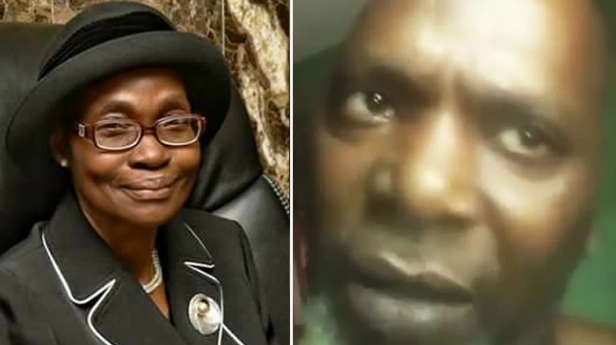
THE Ondo State attorney-general has ordered the discontinuation of the criminal suit against Olupelumi Fagboyegun, alleged brother of Olarewaju Akeredolu, state’s chief judge.
Charles Titiloye, state attorney-general and commissioner of justice, gave the directive in line with the power conferred on him by Section 211 of the Constitution of the Federal Republic of Nigeria 1999.
This was contained in a report of the investigation carried out by the attorney-general to look into the allegation of unlawful detention by Fagboyegun against the state’s chief judge.
He directed contending parties in the case to seek resolution of their dispute in court through civil action or other means of alternative dispute resolution.
Titiloye also invited the state Judicial Service Commission to investigate issues relating to the delay in the hearing of the case before the magistrate court. He also referred the matter to the Ondo State House of Assembly for investigation.
The ICIR had reported how Fagboyegun, who claims to be the chief judge’s half-brother, was seen in a viral video on Monday calling on President Muhammadu Buhari and all well-meaning Nigerians to get justice for him after accusing the judge of using her office and influence to cause his arrest and subsequent detention because he went to their father’s house.
He said he had been arraigned five times while the charges had also been amended five times all in a bid to delay his trial.
While reacting to the allegation, the chief judge told newsmen that the matter had nothing to do with her, lamenting that it was the handiwork of some persons who were using him against her family.
She said that two years after her father died, somebody bearing his name filed a suit against her mum, two of her brothers, and the eldest male of her father’s family, saying he was a son of their father.
The judge said a Writ of Summons demanding that the body of her late father be exhumed for a possible DNA test by Fagboyegun’s lawyer was also served on her mum.
She added that Fagboyegun was only arrested after he invaded one of her father’s premises with thugs wielding cutlasses.
In response, Rotimi Akeredolu, state governor, directed the state’s attorney-general to investigate the allegation with a promise to be thorough and fair to all parties.
Findings
However, in the report, the attorney-general said the case started on the 15th day of March 2018, through the allegation made by one Ibrahim Abdullahi at the area commander’s office of the Nigeria Police Force, Owo, against Fagboyegun.
In his statement before the police, Abdullahi complained that accused locked up JOF Farms, Oke Ogun Owo, that was given to him to use through a license issued by the chief judge of Ondo State. He also stated that on his complaint to Akeredolu of the interference of Fagboyegun who claimed to be the son of Late Jide Fagboyegun (the father of Justice Akeredolu), the chief judge directed him to lodge a complaint of impersonation at the police station against accused while insisting that Fagboyegun was not a son of her father and not a member of Fagboyegun family.
The report stated that the police thereafter arrested Olupelumi Fagboyegun (52 years old as at 2018). In his statement before the police, the accused noted that his mother informed him that his real father was Jide Fagboyegun, the father of Justice O. O. Akeredolu, and that he lived abroad and only returned to Nigeria after the death of his father. Fagboyegun noted that he went to stay at his father’s house at Owo where he was arrested by the police for forcible entry into his father’s house. He said he had met members of Fagboyegun family and Justice O.O Akeredolu on this issue of his paternity and Justice O.O Akeredolu said he was not a member of their family and had threatened him and his kids.
“The police, after taking statement from the Complainant, the Defendant and some members of Fagboyegun family charged the Defendant to Court in Suit No MOW/102C/2018 for Forcible entry thereby committing the offence of conduct likely to cause the breach of peace.”
Contrary to claims by the accused he had been in detention for the past three years, the report noted that “Olupelumi Fagboyegun was granted bail by the trial Magistrate since he was arraigned on 19th March 2018, and he is still on bail till date. It is untrue that he is under any form of custody.”
“That truly there was a change of Magistrate presiding over this matter on three different occasions. The following Magistrates have presided over the case (1.) S. O. Adedapo, (2) O. Aladeniyi. (3) O. W. Dosunmu and there was once a substitution of charge preferred against the suspect Olupelumi Fagboyegun upon which his plea was taken afresh.”
The report, however, added that criminal charge of conduct likely to breach peace had no link with the determination of the issue of paternity of Olupelumi Fagboyegun which was a civil action that could be resolved through a DNA test, noting that intra-family scrambling for the property of the deceased should not have been criminalised but settled through civil suits and alternative dispute resolution means.
The report also regretted that the trial of a case of conduct likely to breach peace, which was a misdemeanour (a simple offence punishable with 1-year imprisonment), had taken a period of three years in a magistrate court with summary jurisdiction.
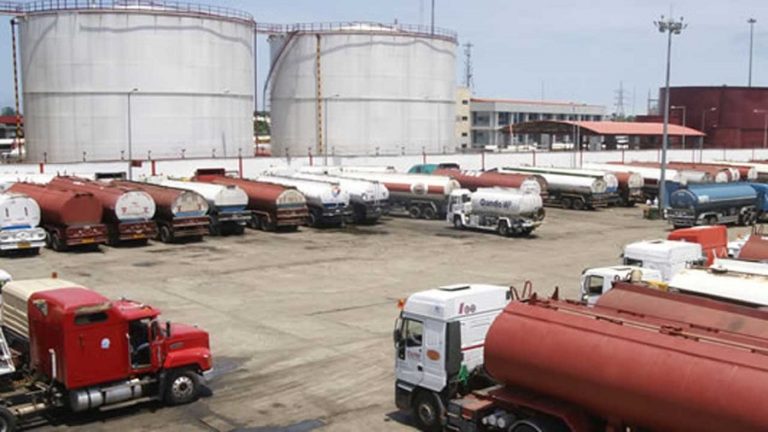
BRENT, Nigeria’s crude oil equivalent, crossed the 60 dollar per barrel mark in February for the first time since the outbreak of the coronavirus last year. This means more revenue for the nation’s economy but also a possible hike in petrol pump price in the country.
Timipre Sylva, minister of state for petroleum resources, at the official inauguration of the Nigerian Upstream Cost Optimisation Programme (NUCOP) in Abuja recently, said Nigerians should prepare for an increase in the pump price of petrol despite the new fortunes of crude oil in the global oil market.
“Since we are optimising everything, the Nigerian National Petroleum Company, NNPC, needs to also think about the optimisation of product cost because as we all know, oil prices are at 60 dollars per barrel.
“As desirable as this is, it has serious consequences as well on product prices. Today the NNPC is taking a big hit from this as we all know that there is no provision in the budget for subsidy payments,” he said.
In March 2020, the Petroleum Products Pricing Regulatory Agency, PPPRA, announced the removal of subsidy on petrol, stating that the prevailing market dynamics would regulate the pump price of petrol.
Data obtained from the Central Bank of Nigeria (CBN) show that the country’s external reserves gained 700 million dollars from the rebound in global oil prices as the reserves increased from 35.37 billion dollars on December 31, 2020, to 36.43 billion dollars in February.
This means that Nigeria could generate more revenue than its intended target of 2 trillion naira, as the current Brent crude price of 63.5 dollars per barrel (as of 10.01 on February 19) has overshot the 40 dollars per barrel benchmark of the 2021 budget.
However, the minister’s comments raised concerns on why Nigerians should bear the pains of an expected hike in the petrol pump price despite the steady recovery of international crude oil prices.
In a tweet on Thursday morning, NNPC’s group general manager, public affairs division, Kennie Obateru, discounted rumours that an upward review of petrol price would occur in February.
“NNPC has not increased its ex-depot price. I am certain that NNPC is not likely to increase its ex-depot price in February,” Obateru stated.
He added that the NNPC had a stock of petrol that could last over 40 days, and allayed fears of an impending scarcity of the product.
With the petrol pump price currently hovering between 165 to 170 naira per litre across the country, The ICIR examines the circumstances likely to lead to an imminent hike in petrol price in confirmation of the minister’s assertion.
Hidden ‘under-recovery’ charges re-surfaces
Nigeria spent 1.09 trillion naira to import petrol within the first six months of 2020, indicating a 42 percent increase when compared to 766.06 billion naira that was spent on the product in 2019, according to data from the National Bureau of Statistics, NBS.
Subsidy payments were initially made directly to petrol importers until President Muhammadu Buhari, in 2015, directed the NNPC to take charge of petrol imports in a bid to absorb the difference between the landing costs and the price at the pump.
The removal of subsidy payments announced by the federal government in April 2020 showed the subsidy payments that were previously deducted from the remittances of the Federation Account Allocation Committee, FAAC, by National Petroleum Investment Management Services, NAPIMS, a subsidiary of the NNPC.
The PPPRA sets the depot price based on a template, and marketers are allowed to fix prices at the pump to balance the oil market modalities.
Data obtained from the Petroleum Product Marketing Company, PPMC, a subsidiary of the NNPC, show that the current landing cost of the importation of petrol is estimated at 180 naira per litre, which is 15 naira higher than the pump price at 165 naira.
In a bid to maintain the current price at 165 naira per litre, the NNPC pays at least 15 naira per litre to sustain supply. Given that the country consumes 57.2 million litres per day, according to the NBS mid-2020 data, the NNPC pays at least 858 million naira each day on subsidy.
The Nigerian government resorts to subsidy payments since its refineries do not have the capacity to refine crude oil.
On Thursday, the West Texas Intermediate (WTI) for March traded above 60 dollars per barrel while the Brent settled at 63 dollars per barrel as crude benchmarks added over 12 percent since the beginning of February.
Data from NBS reveal that 1.003 trillion naira was spent on petrol imports for the first quarter of 2020, as against 190.78 billion naira which was spent in the corresponding quarter in 2019.
About 87.08 billion naira was spent on petrol imports in the second quarter as against 575.28 billion naira in the same quarter in 2019. However, the total petrol imports account for 2.16 percent of the total import into the country for the second quarter of 2020.
Nigeria is ranked as one of the major oil-producing countries with the highest cost of crude oil production in the world which, according to the group managing director of the NNPC Mele Kyari, was unsustainable. Kyari said to produce a barrel of crude oil costs the country 17 dollars, which was one of the highest rates in the world.
In Saudi Arabia, it costs an average of 8.38 dollars to produce a barrel of crude oil, while Iran spends 9.08 dollars on the production of a barrel of crude. On the other hand, Iraq spends 10.57 dollars to produce the same quanitity.
The World Bank had projected that Brent crude oil would be sold at an average of 41 dollars per barrel during the second half of 2020 and 50 dollars per barrel during 2021, stating that unless the price of crude oil production was reduced it would be difficult to maximise revenue to be generated from its sale.
At the Central Bank of Nigeria, CBN, Round Table discussion in Abuja in March 2020, Kyari had said that high oil production costs for countries such as Nigeria might put the country out of business if the oil price dropped below 30 dollars per barrel.
“In a production environment like Saudi Arabia, it is about 5 dollars (to produce) a barrel. You cannot do it here. The best of our production system is at about 15 to 17 dollars to a barrel.
“And beyond that also, there is competition because people are producing at a lower cost than you are, which depresses the potential of coming out of the impact of coronavirus for a long while,” he said.
Nigeria’s break-even crude oil price is 133 dollars, ranked as the highest in the world, based on its high refining costs, according to Fitch Ratings. The implication is that when the global price of crude oil drops below Nigeria’s projected benchmark, the country would generate losses for barrels of crude oil it produces.
An oil-exporting country’s fiscal break-even oil price is the minimum price per barrel for a country to meet its expected spending needs while balancing its budget.
Broken Refineries, Expanded Bills
Between 1976 and 1989, the federal government, through the NNPC, built three refineries in Port Harcourt, Warri and Kaduna. The Port Harcourt refinery was built by Shell and BP in 1965 before it was bought over by the NNPC.
The nation’s major refineries, which are subsidiaries of the NNPC, include Kaduna Refining and Petrochemicals, KRPC; Warri Refining & Petrochemicals Company, WRPC; and Port Harcourt Refining Company, PHRC, Limited.
According to a 2020 report published by the Nigeria Natural Resource Charter,(NNRC), the NNPC spent 396.33 million dollars between 2013 and 2017 to carry out repair works under the Turn Around Maintenance, TAM, scheme on the three refineries which contribute little to the nation’s economy.
Within the same period, the sum of 36 billion dollars was spent on importation of petroleum products, which is sufficient to build four brand new refineries of similar capacity with the 650,000 barrels per day.
The records show that the three refineries reported a combined loss of 154.4 billion naira, with Kaduna refinery posting zero revenue for the 2018 financial year. This was despite the huge investments by the NNPC to renovate the refineries.
In April 2020, the refineries were shut down pending rehabilitation as the NNPC awarded the contracts for repairs and upgrades at the various refineries.
In 2019, the refineries lost some 167 billion naira and only Warri refinery processed crude oil. In April 2020, they were all shut pending rehabilitation.
Nigeria’s four refineries have a combined capacity of 445,000 barrels per day.
OPEC and a Russia led oil-producing nations formed an alliance tagged as OPEC+ which had agreed to cut down inventories and remove 1.2 million barrels per day of crude oil from global markets in a bid to raise oil prices.
With Nigeria’s pressured revenue, petrol subsidy is not sustainable. This is also largely because Africa’s biggest economy cannot refine its crude, which analysts say is unfortunate.
PRESIDENT Muhammadu Buhari has appointed Abubakar Audi and Haliru Nababa as new heads of the Nigeria Security and Civil Defence Corps (NSCDC) and the Nigeria Correctional Service (NCS) respectively.
This was disclosed in a statement signed by Mohammed Manga, director of press & public relations, Ministry of Interior, on Thursday.
According to Manga, the appointment of Audi followed the retirement of Abdullahi Gana Muhammadu, outgoing NSCDC commandant.
“Audi emerged the top best candidate out of those that went through the transparent selection process initiated by the Ministry of Interior through the board to ensure that the most suitable among the top-ranking officers in the service was appointed to replace the out-going commandant,” the statement read.
Manga added that Buhari also nominated Nababa as the new comptroller-general of NCS, subject to the confirmation of the Senate, in line with the provision of the new Act establishing the Nigerian Correctional Service 2019.
Manga wrote that Rauf Aregbesola, minister of interior, who is also the chairman of the Civil Defence, Correctional, Fire and Immigration Board (CDCFIB), had sent his congratulatory messages to the newly appointed heads.
He noted that Aregbesola had called on the appointed heads to ensure full implementation of the mandate of their services and work towards achieving synergy with other security agencies in the country.
He said the minister asked them to ensure synergy with a view to providing efficient internal security services and citizenship integrity for Nigerians and foreigners alike in line with the policy thrust of the Buhari-led administration.