Home Blog Page 1885

Global action is the only way to get ahead of COVID-19

0

By Mark Suzman, CEO, Bill & Melinda Gates Foundation


THIS week, we learned that the COVID-19 vaccine developed by the University of Oxford and AstraZeneca appears to provide no measurable effect on mild or moderate disease caused by the variant of the virus first identified in South Africa, known as B.1.351.

This is deeply disappointing news. People the world over are understandably frustrated and anxious as the pandemic continues to disrupt their lives. In South Africa, where many of my family members live, and in other countries where variants are spreading, people have been waiting for the promising science to translate into lives saved in their communities.

The whole world is grappling with a complicated and fluid situation. We still don’t know, for example, if this vaccine could protect against severe or fatal disease caused by the variant, thereby preventing people from being hospitalized or needing supplemental oxygen, which is in short supply in some countries. Additional information will be needed to answer these and other questions. The World Health Organization and national health authorities will determine the potential public health value of this vaccine in South Africa and other countries and decide where and how it can be used.

While we may all be feeling destabilized now amid this swirl of questions, we must keep the big picture in mind. In science, every outcome is knowledge. Without the researchers in South Africa who were able to quickly identify the variant and incorporate it into this clinical trial, the world would not yet know the effectiveness of the vaccine on this variant. These world-class scientists have generated valuable new knowledge that will enable more targeted interventions, helping governments make important decisions about vaccine rollouts and better protect their people. For example, a version of this vaccine is being rolled out in India, where B.1.351 hasn’t yet been detected. So while questions are being answered, this vaccine will continue to be a valuable tool in other parts of the world.

COVID-19 vaccine

We’ve all been spoiled lately by how good the news on vaccine science has been. The world went from seeing the emergence of a deadly new infectious disease to developing several safe and effective vaccines against it within the space of only 10 months—the fastest humans have ever gone from identifying a novel virus to inoculating against it. Only four months ago, we weren’t sure any vaccine would work. With several additional vaccines coming through the final phases of clinical trials, including those from Johnson & Johnson and Novavax, we are still on a trajectory to get everyone protected against COVID-19. It will take time for doses of those vaccines to become available, following regulatory approvals and manufacturing scale-up, but they will get out.

As philanthropy, we will continue to do our part to keep up the momentum. Building on our longstanding partnerships, we are working with governments, multilateral organizations, and private companies to determine how to respond to the latest data. We will use our funding commitments of more than $1.75 billion to help accelerate the development and distribution of vaccines optimized for lower- and middle-income countries and are effective against the variants. We’ll also make new investments in treatments and diagnostics because we’ve learned that research and development on these important tools must accelerate as additional variants emerge.

Although the path forward is challenging, it is not bleak. We have learned a great deal about what works to control this virus during 2020, and these lessons are increasingly being applied for an even more nimble and effective response in 2021.

A pandemic knows no borders. Leaving half the world without access to vaccines only means that more people will suffer and die at home and abroad. As Bill and Melinda recently wrote in their annual letter, we are fighting against immunity inequality, an injustice that is bad on moral grounds, bad on economic grounds, and bad on public health grounds. The world needs to reach vulnerable communities and health care workers with vaccines as quickly as possible, no matter where they live if we’re going to get ahead of this virus.

To combat a global problem, global action is needed. Many nations and organizations have worked to create, fund, and promote collaborative international mechanisms to boost equitable access to COVID-19 vaccines. COVAX remains far and away the most significant and most important multilateral initiative to tackle this challenge, but only if it urgently receives funding to support enough vaccines to outrace the virus. Unfortunately, global manufacturing and procurement have remained underfunded while a bidding war for doses puts vaccines out of reach for the poorest countries. Nations that understandably want to shore up their own health networks and vaccine delivery systems should also ramp up funding for COVAX and reject the impulse to make bilateral deals that shut out other countries and delay the possibility of a global recovery.

If COVID-19 has taught the world anything over the past year, it is that we’re all in this together. Variants may continue to emerge that could put everyone at risk. We cannot defeat this pandemic unless everyone, everywhere, has a chance to get vaccinated.

 

10 days after appointment, Senate receives letter to confirm service chiefs

AFTER the new service chiefs have spent 10 days in office, the Nigerian Senate has confirmed receiving a letter from President Muhammadu Buhari seeking their confirmation.

During plenary on Tuesday, Ahmad Lawan, Senate president, read the letter dated January 27 seeking the confirmation of the newly appointed service chiefs.

According to Lawan, the letter read “In compliance with the provisions of Section 18(1) of the Armed Forces Act. Cap A20 Laws the Federation of Nigeria 2004, I hereby forward for confirmation by the Senate, the appointment of the under listed officer as the Chief of Defence Staff and Services Chiefs of the Armed forces of the Federal Republic of Nigeria”.

The appointees listed for confirmation include Lucky Eluonye Onyenuchea lrabor as Chief of Defence Staff, Ibrahim Attahiru as Chief of Army Staff, Awwal Zubairu Gambo as Chief of Naval Staff and Isiaka O. Amao as Chief of Air staff.

Although the letter for confirmation sent to the Senate is dated January 27th, Buhari had already appointed the new service chiefs on January 26th. Since then the newly appointed service chiefs have started functioning as substative military heads.

Femi Falana, a Senior Advocate of Nigeria had faulted the process of appointment of the new service chiefs.

Falana said this when he appeared on Channels Tv Sunrise Daily Programme questioning the legality of the appointments.

“The whole essence of democracy, presidential system of government is to ensure that there are checks and balances, section 218 of the constitution which empowers the president to make appointments also empowered the Senate to make laws with respect to the exercise of the power by the president.

“Section 18 of the Armed Forces Act provides that both chambers of the National Assembly shall approve the appointment of the service chiefs,” Falana said.

He added that the law was interpreted in the case of Festus Keyamo versus the President of Nigeria and the decision was rendered in 2018 by retired Justice Adamu Bello.

The Human rights lawyer said the constitutional provision had not been followed in the new service chiefs’ appointment.


Lawyers sue CBN, SEC over prohibition of cryptocurrencies

THE Digital Rights Lawyers Initiative has sued the Central Bank of Nigeria (CBN) and the Securities and Exchange Commission (SEC) over the recent directive by the apex bank banning cryptocurrencies trading.

Last week, a memo from the CBN had warned Deposit Money Banks (DMBs), Non-Bank Financial Institutions (NBFIs), Other Financial Institutions (OFIs and members of the public to desist from dealing in cryptocurrencies and other related transactions because of the “risk associated” with the coins.

It further ordered banks to close all the accounts of customers transacting and dealing in Bitcoin immediately.

In a bid to attend to the public outcries that greeted the decision and further justify itself, the CBN released a statement on Sunday to say it prohibited banks from dealing in cryptocurrencies because of the unregulated nature of the business. The bank also cited the loss of investments, money laundering, terrorism financing, illicit fund flows, and criminal activities.

Why some persons have made arguments in favour of the CBN, some financial experts have also argued that the CBN should have put regulatory frameworks in place instead of prohibiting banks and Nigerians from trading it.

In a 2020 report, Nigeria emerged as the second biggest market for bitcoin, trading over 60,000 bitcoins, valued at $566 million, between 2015 and 2020.

Read AlsoCryptocurrency market spikes by $13 billion after recording poor trades in March

Since 2017, the bitcoin trade volume in Nigeria has increased by 19% while the highest volume of trade (20,504.50) was recorded in 2020, Quartz Africa reports.

The country trails behind only the United States on Paxful, a leading peer-to-peer bitcoin market place. The sharp rise in bitcoin trade, particularly in 2020, has been attributed to the lockdown and the #ENDSARS protest across Nigeria.

However, in Suit No. FHC/L/CS/ 188/2021 filed on Monday, February 8,  before the Federal High Court, Lagos, the group, said the CBN, the first defendant, lacked the power to restrict financial institutions from dealing in cryptocurrency transactions.

The digital rights lawyers argued that the second defendant, SEC, had in a circular dated September 14, 2020, declared cryptocurrencies as legal digital assets “protected under section 44 of the Constitution of the Federal Republic of Nigeria, 1999 (as amended)”.

Therefore, the lawyers asked the court to validate the Investments and Securities Act 2007, which made SEC the apex regulatory body of the Nigerian capital market.

They also prayed the court to declare the CBN action as “ultra vires, unconstitutional, null and void” while also seeking a “perpetual injunction restraining the 1st defendant from regulating and/or further regulating virtual currencies/ cryptocurrencies in Nigeria.”

The suit, which has not yet been assigned to any judge, was filed by the group’s counsel, Irene Chukwukelu.

The pros, cons of Nigeria’s cryptocurrency ban

0

ON February 5, the Central Bank of Nigeria (CBN) sent a circular to financial institutions, instructing them to immediately close the accounts of persons or entities transacting in or operating cryptocurrency exchanges.

The CBN said breaches to the directive would attract severe sanctions. The CBN’s action has since sparked reactions from many Nigerians, with some agreeing with the apex bank and others attacking it for stifling a thriving market. Most of the criticisms of the CBN’s policy have come from young Nigerians participating in the cryptocurrency market who leverage the bulging market.  Nigeria is the world’s second-biggest crypto market after the United States.

Cryptocurrency and How It Works

Cryptocurrency is believed to have been founded by Satoshi Nakamoto, an enigmatic character, in 1998. Up till today, nobody knows whether Nakamoto is a real name or pseudonym, and many players in the industry believe it belongs to a group of people, according to Investopedia, a financial and investment dictionary. Generally, cryptocurrency is a digital currency based on an asset distributed across a network of computers, according to Investopedia. Cryptocurrencies are decentralised based on blockchain technology, and central banks do not issue them. They are unregulated and use online ledgers with strong cryptography to carry out transactions, according to Nerdwallet.com, a cryptocurrency website.

There are 6,700 cryptocurrencies worldwide, but the most popular ones are bitcoin, etherum, tether, ripple and litecoin.

Crypocurrencies are very complicated because they are created through a process called mining, which involves using computers to solve complicated mathematics to generate coins, according to the Telegraph.

Like the stock market, users buy the currencies from brokers, store and spend them via wallets. The crypo market’s upsides are that it gives investors some level of anonymity and investments are mostly secure. However, they are not legal tenders, are speculative and volatile, as prices can nosedive within the shortest possible time.

Moreover, they can be used to launder funds, and carry out illegal transactions, which is why it has been banned in China, Vietnam. Russia, Ecuador, Columbia, Bolivia and now Nigeria. Hackers have also targeted the crypto market.

Why CBN Banned Cryptocurrency

The CBN on February 7 explained why it banned cryptocurrency transactions. According to the apex bank, it could be used to launder money and fund terrorism.

In a  statement, Osita Nwanisobi, acting director, corporate communications, CBN, said the ban on such transactions would not have any negative impact on fintech.

“The use of cryptocurrencies in Nigeria is a direct contravention of existing law. It is also important to highlight a critical difference between a Central Bank issued digital currency and cryptocurrencies. As the names imply, while Central Banks can issue digital currencies, cryptocurrencies are issued by unknown and unregulated entities,” Nwanisobi said.

“The question that one may need to ask therefore is, why any entity would disguise its transactions if they were legal. It is based on this opacity that cryptocurrencies have become well-suited for conducting many illegal activities, including money laundering, terrorism financing, purchase of small arms and light weapons, and tax evasion,” he noted.

Nwanisobi further said that many banks and investors who placed a high value on reputation had been turned off from cryptocurrencies because of the damaging effects of the digital currencies’ widespread use for illegal activities.

He noted that the role of cryptocurrencies in the purchase of hard and illegal drugs on the darknet website called ‘Silk Road’ was well known, stressing that there had also been recent reports that cryptocurrencies were used to finance terror plots, further damaging its image as a legitimate means of exchange.

Experts Disagree 

Financial experts have disagreed with the CBN directive, saying that it could kill an emerging industry that has created thousands of jobs for young people.

“My response as someone who is versed in risk management will be that there is a reality today that the world is going digital and there is a lot of innovation in the world and cryptocurrency are part of it,” Kingsley Moghalu, former CBN deputy governor, said on Channels TV on Sunday. He noted that the CBN’s directive was legal, but he was unsure that it was the right step.

“We have to go back to understand what cryptocurrencies actually are, which are virtual currencies that can be exchanged online to purchase goods and services, and the value of legal tender currencies does not determine the value.

“But you would have to use legal tender currencies to purchase those cryptocurrencies, the most popular which is bitcoin. Also, they don’t have an underlining value, so many people would say it is speculative because unlike a normal currency, that currency is not backed up by either foreign reserves, the productive nature of the economy of the country that owns the currency and various other elements,” he further said.

“I interpret it as a directive to financial institutions under the control and supervisory remit of the central bank not to deal with these cryptocurrencies, and the directive is targeted at exchanges of cryptocurrencies. It makes it difficult, but it does not criminalise it.”

Senator Ihenyen, president of Stakeholders in Blockchain Technology Association of Nigeria (SiBAN), said on his Twitter handle that the “total ban, unlike its January 2017 letter, is arbitrary, illegal, irresponsible, and with all due respect rather lazy.”

He said the CBN might not have the statutory or regulatory power to order banks to deny services to a set of people or an entire emerging industry.

Bitcoin Market Movement as of 05:41 pm on Feb 9, 2021, Source: Coindesk

Obiageli Ezekwesili, former World Bank vice president, said on her Twitter handle on February 6 that it was often difficult for Nigerian and African policymakers to understand disruptive technology.

“I believe in technology much. My biggest worry about disruptive technology was always how much harder it would be for regulatory authorities in our country and continent to understand, gain mastery on their value to economic growth and development to be champions for it,” she said.

Some experts believe that the CBN’s directive was in response to its policy on foreign exchange (FX) market, forcing Nigerians abroad to bypass the official route to send money to their relatives in Nigeria cryptocurrencies. Nigeria’s diaspora inflow is around 24 billion dollars in 2020.

Binance, Providus Bank, Others React

On February 8, Binance, world’s biggest cryptocurrency exchange, announced the removal of Nigerian naira from its platform-a big blow for many Nigerians trading via the exchange.

In a statement, Binance said its Nigerian naira payment partners had suspended deposit services until further notice, starting from 7 p.m. of last  Friday. It noted that it was monitoring the situation closely.

READ MORECryptocurrency market spikes by $13 billion after recording poor trades in March

“Withdrawal services remain normal and will continue to be processed but might take longer time than usual slightly,” the statement said.

Similarly, following CBN’s directive, Providus Bank has deactivated virtual accounts of PiggyVest, Cowrywise and Monnify, meaning that these fintechs can no longer carry out transactions via Providus Bank. The move immediately created panic in the market, but in a swift reaction, Providus Bank released a statement saying that it was a temporary situation.

“Please be informed that the Virtual Account platform has not been permanently shut down as we are currently reviewing them in line with new regulations. Rest assured we would notify the general public via our social media platforms once this review is completed,” Providus Bank said.

Genuine Concerns on Use of Crypto for Fraud, Terrorism 

There are genuine concerns across the world that cryptocurrency transactions could fuel fraud. Imran Khan of Fraud Magazine wrote that some virtual currencies, such as eCache, were completely anonymous. “According to its operators, eCache doesn’t link a person to their transactions; it works like a Digital Bearer Certificate (DBC) that can be transferred to another party just like any other data on the internet,” she said.   Khan noted that other virtual currencies, like bitcoin, would store all transactions in a public ledger called ‘The Blockchain.’

“The Blockchain only records the transactions, not the identities, of the users,” she said. In April 2019, two Nigerians were charged in the United States for defrauding victims in an online bitcoin scheme. ThisDay newspaper reported that the federal government and the CBN were warned by the United States’ Federal Bureau of Investigation (FBI) on the activities of fraudsters using cryptocurrencies to move hundreds of millions of dollars illegally into Nigeria.

These digital  currencies can also fuel terrorism funding. In a research entitled, ‘Terrorist Use of Cryptocurrencies: Technical and Organizational Barriers and Future Threats,’ Cynthia Dion-SchwarzDavid ManheimPatrick B. Johnston noted that current cryptocurrencies were not well-matched with the totality of features that would be needed and desirable to terrorist groups but might be employed for selected financial activities.

“The authors’ research shows that should a single cryptocurrency emerge that provides widespread adoption, better anonymity, improved security, and that is subject to lax or inconsistent regulation, then the potential utility of this cryptocurrency, as well as the potential for its use by terrorist organizations, would increase,” the research-report said.

Any New Channel?

As of the time of filing this report, many Nigerians were looking for ways of circumventing CBN’s directive, saying the apex bank would not stop them from leveraging global opportunities.

Lagos-based Sandra Okums, who plays in the cryptocurrency market, told The ICIR that transactions would continue to go on as the market was unregulated and online. She noted that the CBN directive would not stop her as the bank did not declare cryptocurrency transactions illegal.

As of the time of filing this report, the Bitcoin price was high at 47,802 dollars. Elon Musk, the founder of Tesla and world’s richest man, has purchased 1.5 billion dollars in bitcoin and plans to accept it as currency.

Nigeria risks sanctions as Biden issues foreign policy memorandum on gay rights

Nigeria is among countries that could be sanctioned by the United States in line with a foreign policy memorandum signed by President Joe Biden to promote the rights of lesbians, gays, bisexuals, transgenders, queers and intersexes (LGBTQI+) across the world. 

The ‘Memorandum on Advancing the Human Rights of Lesbian, Gay, Bisexual, Transgender, Queer and Intersex Persons Around the World’, which Biden issued on February 4, 2021, directed heads of US executive departments and agencies to invoke a range of punitive diplomatic actions, including financial sanctions and visa restrictions, on countries that ‘abuse’ the rights of LGBTQI+ persons.

  • Anti-gay law places Nigeria at risk

Gay rights are not recognised in Nigeria.

The Same-Sex Marriage Prohibition Act, which criminalises gay relationships, was signed by former President Goodluck Jonathan in 2014 despite misgivings by the US and the United Kingdom.

The law provides 14-year jail terms for persons convicted for engaging in same-sex relationships in Nigeria.

In December 2019, 47 Nigerian men were charged with public displays of affection with members of the same sex, an act which violated the Same Sex Marriage Prohibition Act.

Nigeria and other countries with similar disposition towards LGBTQI+ persons are likely to experience difficult times in their relationship with the US, as Biden, in the memo, stressed: “I am directing all agencies engaged abroad to ensure that United States diplomacy and foreign assistance promote and protect the human rights of LGBTQI+ persons.”

There are about 70 countries around the world, including Nigeria, that criminalise same-sex relationships, according to the Human Rights Watch.

The agencies, through which the US would fight for the rights of LGBTQI+ persons, according to the memo, include the Departments of State, the Treasury, Defense, Justice, Agriculture, Commerce, Labor, Health and Human Services, and Homeland Security, the United States Agency for International Development (USAID), the United States International Development Finance Corporation (DFC), the Millennium Challenge Corporation, the Export-Import Bank of the United States, and the Office of the United States Trade Representative.

Read AlsoBiden reverses Trump’s travel ban on Nigeria, others

  • Countries that violate rights of LGBTQI+ persons face ‘swift’ US response, including financial sanctions, visa restrictions

Specifically, Biden directed ‘swift and meaningful United States responses to human rights abuses of LGBTQI+ persons abroad.’

“The Department of State shall lead a standing group, with appropriate inter-agency representation, to help ensure the Federal Government’s swift and meaningful response to serious incidents that threaten the human rights of LGBTQI+ persons abroad.

“When foreign governments move to restrict the rights of LGBTQI+ persons or fail to enforce legal protections in place, thereby contributing to a climate of intolerance, agencies engaged abroad shall consider appropriate responses, including using the full range of diplomatic and assistance tools and, as appropriate, financial sanctions, visa restrictions, and other actions,” the memo said.

Further directing US agencies to ‘combat’ criminalisation of LGBTQI+ status, Biden ordered that existing efforts to combat the criminalisation by foreign governments of LGBTQI+ status or conduct should be strengthened with special attention on checking discrimination, homophobia, transphobia, and intolerance.

Biden also directed the US Department of State to, on an annual basis and as part of the annual report submitted to the Congress pursuant to sections 116(d) and 502B(b) of the Foreign Assistance Act of 1961 (22 U.S.C. 2151n(d) and 2304(b)), report on human rights abuses experienced by LGBTQI+ persons globally.

“This reporting shall include anti-LGBTQI+ laws as well as violence and discrimination committed by both state and non-state actors against LGBTQI+ persons,” the memo added.

  • US agencies to consider impact on rights of LGBTQI+ persons when making funding decisions in foreign aid

Another key aspect of the memo is the directive that US agencies involved in foreign aid and assistance should consider the impact of their programmes on the rights of LGBTQI+ persons when making funding decisions.

“Agencies involved with foreign aid, assistance, and development programs should consider the impact of programs funded by the Federal Government on human rights, including the rights of LGBTQI+ persons, when making funding decisions, as appropriate and consistent with applicable law,” the memo said.

Nigeria may lose out in donor funds if US agencies feel funds they provide in foreign aid have no positive impact on the rights of LGBTQI+ persons in the country.

  • US to favour ‘vulnerable’ LGBTQI+ asylum seekers

Biden, in the memo, directed that LGBTQI+ refugees and asylum seekers should be given priority status for purposes of resettlement in the US.

Ordering improved protection for LGBTQI+ refugees and asylum seekers, the memo added, “the Departments of State, Justice, and Homeland Security shall ensure appropriate training is in place so that relevant Federal Government personnel and key partners can effectively identify and respond to the particular needs of LGBTQI+ refugees and asylum seekers, including by providing to them adequate assistance and ensuring that the Federal Government takes all appropriate steps, such as potential increased use of Embassy Priority-1 referrals, to identify and expedite resettlement of highly vulnerable persons with urgent protection needs.”

Read Also10 days after appoitment, Senates receives letter to confirm service chiefs

The implication is that Nigerian LGBTQI+ persons who cite ‘discrimination’ imposed by the country’s anti-gay law are likely to get favourable considerations from US authorities when seeking asylum.

Barely a month since he came into office, Biden has repealed some decisions taken by his predecessor, Donald Trump, including the ban on transgender people serving openly in the army.

To underscore the reversal of policies of the Trump administration that relate to LGBTQI+ persons, Biden further directed that within 100 days, or as soon as possible, “all agencies engaged abroad shall review and, as appropriate and consistent with applicable law, take steps to rescind any directives, orders, regulations, policies, or guidance inconsistent with this memorandum, including those issued from January 20, 2017, to January 20, 2021, to the extent that they are inconsistent with this memorandum.”

The heads of the concerned US agencies were also directed to, within 100 days of the date of the memorandum, report to the President on their progress in implementing the directives and recommend additional opportunities and actions to advance the human rights of LGBTQI+ persons around the world.

Former President Barack Obama had, in 2011, issued the first presidential memorandum directing US agencies abroad to promote LGBTQI rights globally.

Biden said his memorandum “reaffirms and supplements” the principles established in the presidential memorandum earlier issued by Obama.

The federal government under Jonathan had gone ahead to sign the anti-gay law, after it was unanimously passed by the National Assembly, despite the Obama administration’s threats to cut off aid to Nigeria. It is expected that the Biden administration will resume efforts by the US government, under the Democratic Party, to get Nigeria to recognise gay rights.

CACOVID, BUA disagree over payment for 1m doses of COVID-19 vaccines

BUA Group and Coalition against COVID-19 (CACOVID) are in a  disagreement over the purchase of 1 million doses of COVID-19 vaccines.

The disagreement began following an announcement by BUA Group that it had donated 1 million doses of coronavirus vaccine to the federal government of Nigeria.

“BUA decided to secure these 1million vaccines by paying the full amount for the vaccines today because these vaccines became available only last week through AFREXIM,” BUA stated.

Disclaiming BUA’s stand on the payment for the vaccine, CACOVID, a private sector-led group, in a statement released Monday, said there was no such agreement that the BUA group would singlehandedly make the purchase.

Read Also: #EndSARS: Why we delayed distribution of COVID-19 palliatives – CACOVID

“CACOVID is dismayed to learn of reports on social media today alleging that BUA is singlehandedly purchasing 1 million Covid-19 vaccine doses for Nigeria. Alhaji Abdulsamad must have been misquoted because these claims are not factual as CACOVID operates on a collegiate fund contribution model. There is no agreement between BUA, CACOVID and Afreximbank,” the statement read in part.

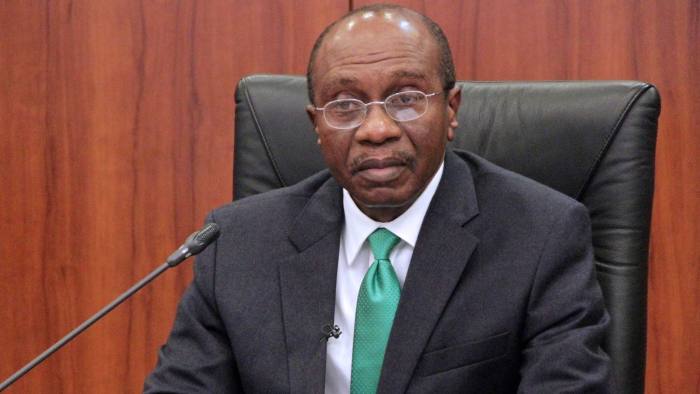
In its explanation, CACOVID further said that Godwin Emefiele, governor of the Central Bank of Nigeria (CBN), had informed the team that he held a call with Aliko Dangote, CEO of Dangote Group,

“During the CACOVID weekly call of February 8th, Governor Emefiele, relayed to the larger group a call that he held with Alhaji Aliko Dangote and Herbert Wigwe, CEO of Access Bank Group and Benedict Oramah, president of Afreximbank, where they were briefed on two billion dollars facility set up by the Apex bank with the African Union Vaccine Taskforce.”

According to CACOVID, Oramah said 1 million doses were ready for shipment to Nigeria in the next two weeks if a down payment was made by Monday, February 8th.

CACOVID stated that the 1 million doses, being the first tranche, were worth 3.45 million dollars and the team agreed to contribute 100 million dollars for that purpose.

CACOVID further said that the purchase of the vaccine was only possible through the federal government and no individual or company could do so on its own.

“CACOVID would like the Nigerian public to understand that vaccine purchase is only possible through the federal government of Nigeria, and that no individual or company can purchase vaccines directly from any legitimate and recognised manufacturer,” the statement further read.

Against the stance of CACOVID, BUA, in a statement made available to The ICIR, warned the private sector group against playing politics with the lives of Nigerians.

According to the BUA group, it took the initiative to pay for the vaccines after other members of the group refused to donate towards purchasing them.

“After extensive deliberations, there was no agreement reached and despite members being offered the opportunity to donate funds towards procuring the doses, none offered.

“BUA then took it upon itself to offer to pay for the 1 million doses at the agreed rate of 3.45 dollars per dose totalling US3.45million dollars which translates to 1.311billion naira,” the BUA statement read in part.

BUA further said it noticed that a ‘prominent member’ of CACOVID was unhappy that it took the initiative to make the payment.

“We find this release by CACOVID to be very petty and unbecoming of seemingly serious corporate citizens because it is tantamount to playing politics with the lives of Nigerians. This is no time for politics.

“It is time for us to come together to help Nigerians and it does not matter who is helping or paying,” the statement further read.

CACOVID was launched in March 2020 as a task force consisting of private sectors in partnership with the CBN and the Nigeria Centre for Disease Control (NCDC) to eradicate COVID-19 and its effect on Nigeria.

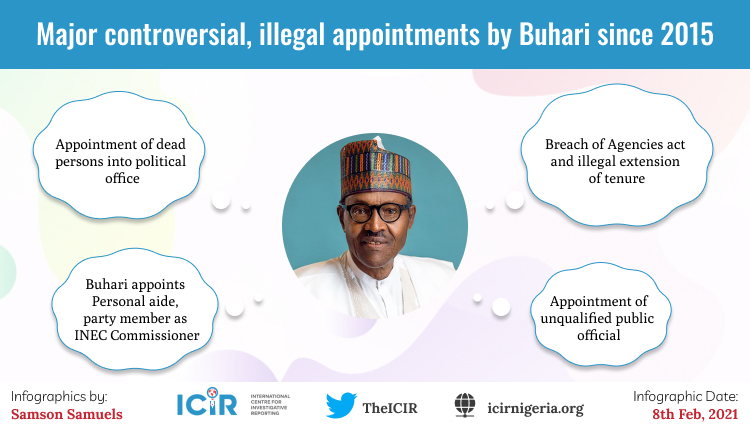
Major controversial, illegal appointments by Buhari since 2015

SINCE the assumption of office by President Muhammadu Buhari in 2015, there have been several cases of the breach of the Nigerian constitution and other laws in the process of appointing public officials.

The administration has made controversial and illegal appointments, sometimes due to the vetting authorities’ carelessness, or sheer disregard for the rules and regulations. The ICIR highlights some of such appointments that have raised questions from many Nigerians.

Appointment of dead persons into political office

On December 30, 2017, Buhari sent names to be appointed into the governing boards of federal government agencies and parastatals. The list contained 209 nominees for chairpersons and 1,258 for board membership positions. However, eight of them are dead persons.

One of the individuals was the late Christopher Utov, a Reverend, appointed as member of the Nigerian Institute of Social and Economic Research. Utov, the proprietor of Fidei Polytechnic, Gboko, passed away since March 17, 2017, nine months before his appointment.

The President also appointed Donald Ugbaja, a former Deputy Inspector General of Police, DIG, of the Nigerian police as a board member of the Consumer Protection Council (CPC) but Ugbaja had passed away several months before the appointment.

Francis Okpozo was also appointed as Chairman of the Nigerian Press Council.He was a senator in the Second Republic but had died on December 16, 2016.

Other dead personalities in the list of appointees include Garba Attahiru, Umar Dange, Magdalene Kumu, Nabbs Imegwu, and Ahmed Bunza into several key positions in federal government agencies.

Repeating the same action, in 2020, Buhari, again appointed a dead person into the Federal Character Commission, (FCC).

The president appointed late Tobias Chukwuemeka Okwuru from Amudo in Ezza South local government area, Ebonyi state.  Okwuru aged 59 was a member who represented Ezza south/Ikwo federal constituency.

In a country of almost 200 million, the president appointed nine dead persons in three years.

Buhari appoints Personal aide, party member as INEC Commissioner

Earlier in October 2020, during a Senate Plenary, Ahmed Lawan, the Senate President, read a letter from Buhari nominating Lauretta Onochie as a state commissioner for the Independent Electoral Commission (INEC).

Onochie, who is a current Special Assistant on Social Media to Buhari, had on multiple times,demonstrated blatant partisanship and her affiliation for All Progressives Congress (APC), The ICIR had reported.

Buhari made this nomination against the constitutional provision of the 1999 Constitution of the Federal Republic of Nigeria as amended.

According to the Nigerian Constitution, Paragraph 14 of Part 1 of the Third Schedule as amended, Section 30, Act No 1 of 2010,  a member of the Independent National Electoral Commission “shall be non-partisan”.

Breach of Agencies Act and illegal extension of tenure

In October 2020, President Buhari violated the establishment Act of the National Pension Commission (PenCom) by nominating a Director-General of the Commission from a different geopolitical zone.

The President sent a letter seeking confirmation of Aisha Umar as the DG of PenCom following the suspension of the former DG Chinelo Anohu-Amazu before her tenure elapsed.

Against the President’s action, the PenCom Act of 2014, part (5), section 21 (2) states clearly that “In the event of a vacancy, the President shall appoint a replacement from the geopolitical zone of the immediate past member that vacated office to complete the remaining tenure”.

Umar went on to become the PenCom Director-General against the establishment Act of the agency.

Apart from Umar’s appointment, THE President recently extended Mohammed Adamu’s tenure by three months despite the completion of his term as the Inspector-General of Police (IGP).

The extension was made in violation of the 2020 amended Police Act, signed into law by Buhari in September.

The Act says the service of any police force personnel shall end when it reaches the retirement age of 60 years or 35 years of service.

As earlier reported by The ICIR, Part 111 Section 7 (6) of the Act, repealed the Police Act Cap. P19, Laws of the Federation of Nigeria, 2004, prescribing a four-year single tenure for a person appointed to the office of the IGP subject to the provisions of clause 18 (8), which stipulates that every police officer shall, on recruitment or appointment, serve in the Nigeria Police Force for a period of 35 years or until he attains the age of 60 years, whichever is earlier.

Femi Falana, a Senior Advocate of Nigeria (SAN) and Human Rights lawyer, said Buhari breached the Armed Forces Act by extending the Nigerian service chiefs’ tenure who recently resigned. Before their resignation a few weeks ago, Buhari extended their tenure despite reaching 60 or completing their 35 years of service.

Falana added that against the President’s action, the extension of tenure is not contained in the Armed Forces Act.

“Under the public service rule, under the harmonised rules for military officers in Nigeria and under Section 6 of the Armed Forces Act, which empowers the President to make rules and regulations for the military, there is no provision for extension of tenure (for Service Chiefs) beyond the period stipulated by law.

“It has been done in the past, but that does not make it right. There is equality before the law, so you can’t extend the service of certain officers while you ask others to go after 35 years of service or the attainment of 60 years of age,” Falana said.

 Appointment of unqualified public official

On December 1, 20020, Garba Shehu, the Presidential spokesperson announced that Buhari had approved Imaan Sulaiman-Ibrahim’s appointment as the new Director-General of the National Agency for the Prohibition of Trafficking in Persons (NAPTIP). However, Sulaiman-Ibrahim does not possess the required qualification to hold the position.

Suleiman-Ibrahim does not have any record of attaining the director cadre in Nigeria public service as she had never held a major office in the country’s civil service. Still, she was appointed against the stipulation of the law.

According to the NAPTIP Act, the agency’s DG shall be someone of the director cadre in the Nigerian public service or its equivalent in any law enforcement agency.

“There shall be for the agency a Director-General who shall be from the Directorate cadre in the public service of the Federation or its equivalent in any law enforcement service and shall be appointed by the President on the recommendation of the Minister,” the section 8 (1) of the NAPTIP Act 2015 reads.

While there have been divergent views on appointments made by the president, some have in the past accused him of making ‘lopsided appointments’.

Abubakar Umar, a retired Army colonel and former military governor of Kaduna State, had warned Buhari about giving undue preference to some sections of the country over others in national appointments.

Youths plan #DefendLagos rally to counter planned #OccupyLekkiTollGate protest

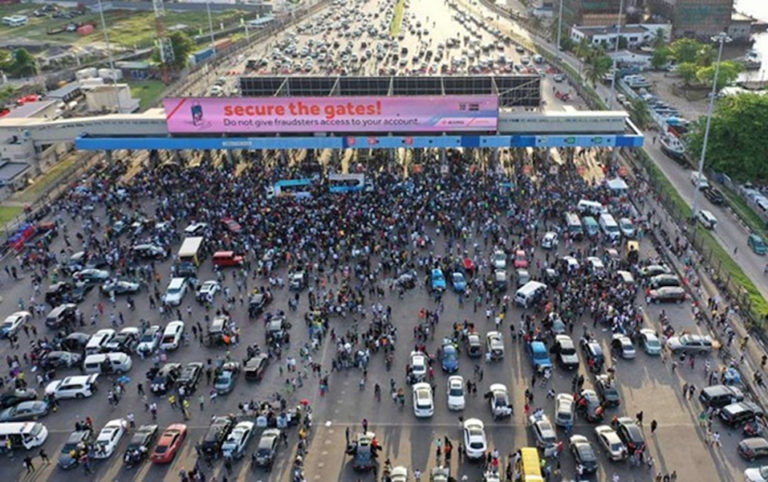
Some youths on Twitter are planning the #DefendLagos rally to counter the #OccupyLekkiTollGate protest scheduled for February 13.

The plan to #OccupyLekkiTollGate came on the backdrop of the controversial ruling of the Lagos Judicial Panel of Inquiry to reopen the Lekki toll gate.

The Doris Okwubi-led panel ruled in favour of the Lekki Concession Company (LCC) to repossess the toll plaza for repairs and insurance claims at its last sitting on Saturday.

The ruling was supported by five members out of the nine-man panel, with four other members, including Ebun-Olu Adegboruwa, a senior advocate of Nigeria (SAN), and the youth representatives opposing the ruling.

The Lekki toll gate has been shut by the panel since last October 20, 2020, when armed soldiers opened fire on unarmed protesters, allegedly killing some and injuring several others.

In addition to the #DefendLagos hashtag on the social media, the youth are also trending #DemNoBornYourPapaWell, a threat to protesters to stay away from the toll plaza.

Read Also: Reactions trail arrest of Mr Macaroni, others at #OccupyLekkiTollGate protest

“Let us protect what the destroyers left behind while we rebuild Lagos. Join the ‘Defend Lagos’ rally at the Lekki toll plaza,” read the #DefendLagos banner shared on various social media platforms.

The banner also has pictures of facilities destroyed during the violence that followed the #EndSARS protest in the state.

Read Also: #OccupyLekkiTollGate: Why Nigerians want to stage another protest

Below are some of the reactions and arguments.

https://twitter.com/fattylincorn01/status/1358789975412600835?s=20

https://twitter.com/trolls_queen/status/1358876384987410432?s=20

https://twitter.com/henryshield/status/1359084807238651904?s=20

https://twitter.com/Alaye_100/status/1359053046274211843?s=20

In the beginning.

The #ENDSARS protest, which started as a peaceful demonstration by thousands of youths against police brutality in October, 2020, degenerated into chaos after the protests were hijacked by hoodlums who unleashed mayhem in the streets of Lagos, burning and vandalising property worth billions of naira.

The Lagos State government revealed that 27 of the burnt Bus Rapid Transit (BRT) vehicles in the Oyingbo and Ojodu Berger areas of the state cost 200,000 dollars each, while 57 of them cost 100,000 dollars each, giving a total of 3.9 billion naira as of then.

Femi Gbajabiamila, speaker of the House of Representatives, shortly after the assessment visit to some of the property destroyed during the protest, had disclosed to newsmen that Lagos State would need about 1 trillion naira for the reconstruction and repair of the property and infrastructure vandalised and destroyed by hoodlums.

President Muhammadu Buhari had vowed to do whatever it would take to ensure that there was no repeat of #ENDSARS protests in Nigeria again.

CBN’s diaspora remittance policy and how Nigerians are reacting

AS part of measures to promote transparency in the management of diaspora payments, the Central Bank of Nigeria (CBN) recently announced an amendment to procedures for receipt of diaspora remittances through International Money Transfer Operators (IMTOs) that would now allow beneficiaries to receive such inflows in US dollars either as cash or in their domiciliary accounts held at designated banks of their choice.

Governor of the CBN, Godwin Emefiele, while justifying the amendment, said investigations and analysed data on IMTO inflows into the country revealed that some IMTOs encouraged the use of unsafe unofficial channels, which also supported diversion of remittance flows meant for Nigeria, thereby undermining the country’s foreign exchange (FX) management framework.

“Some IMTOs, rather than compete on improving transaction volumes and create more efficient ways for Nigerians in the Diaspora to remit funds, resorted to engaging in arbitrage arrangements on the naira-dollar exchange rate, which to a large extent resulted in significant drop inflows into the country,” he said.

Our findings reveal that Nigerians in the diaspora are receiving this policy adjustment with mixed feelings. Nene Oseiwe, who resides in New Jersey with her family, told The ICIR that the regulatory agency’s move was necessary to check the problem of the dual exchange rate in the country.

“I think it should fix the FX crisis. The way it used to work was, if I sent you dollars, they would pay you at CBN’s rate, which is N390. But if I came with that same dollars and gave it to you, you would exchange it at N450 in the open market, so it was problematic,” she said.

“It’s problematic for a country to be having many exchange rates. People would buy dollars from the CBN at N380 and sell it at N460. No value-added, no products, no road, no electricity, nothing; just because they have access,” Oseiwe added.

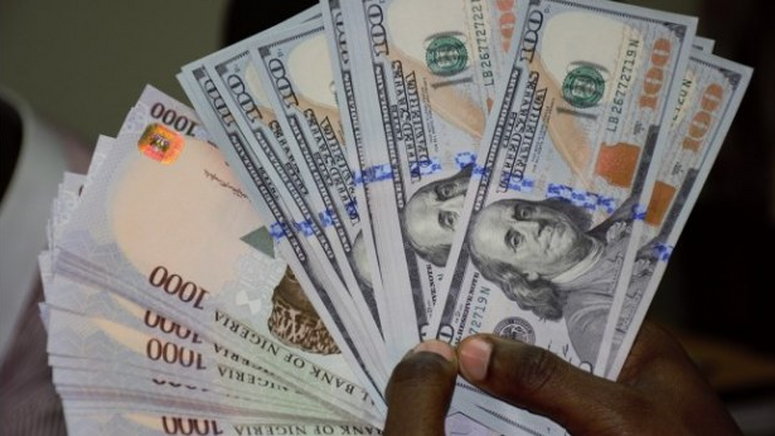
US dollars and Naira
US dollars against the Naira.
Credit: nairametrics.com

Augustine Ogidan, residing in Hurts Texas, told our reporter that the new procedure for diaspora remittance was a welcome development as it was convenient and removed the middlemen short-changing beneficiaries.

“I think it’s the best way to go. It might be a little bit inconvenient to those that wouldn’t know what to do, but it would remove the middlemen that cut into the actual amount that is due to the recipients. There are Western Union and MoneyGram locations in grocery and convenience stores in every city here. One can do it online as well,” he said.

On Twitter, however, the reception is different. Most comments on the diaspora remittance policy adjustment reveal that there is still a gap in understanding the implications of this reform expected to, among other things, help finance a future stream of investment opportunities for Nigerians in the diaspora, while also guaranteeing that recipients of remittances would receive a market-reflective exchange rate for their inflows.

Osaretin Victor Asemota using the handle @asemota wrote: “Dear @cenbank, I am in the diaspora and I have relatives at home that I send money to. I want to use whatever remittance channel works best for me and not what works best for you because IT IS MY MONEY. My money can be sent the way I want it to be sent because it is MY RIGHT.”

Read Also: Our members jobless, consider ‘Diaspora Window’ option for us, BDCs tell CBN

Another tweet by @theafrobeats read: “@cenbank need reverse this new remittance policy because it does (not) benefit both Nigerians in diaspora and home! This is inconvenient, to say the least! If CBN thinks any IMTO cheating Nigerians in the exchange rate, please revoke that IMTO licence! Moreover, we were not complaining!”

According to @lloydatiku, “CBN is only fighting to keep its monopoly power…on diaspora remittance ($26billion annually).” A  Twitter user with the handle @ganXE called for an outright reversal of the policy: “I think the regulator should reinstate direct to naira accounts for IMTOs. This was an own goal against diaspora remittance.”

The Single/Multiple FX Rate

It would be noted that economic experts and business leaders in Nigeria have long argued that a single exchange rate for the naira will put Nigeria at a competitive advantage for the cross-border open trade.

Amine Mati of the International Monetary Fund (IMF) had emphasised that exchange rate unification should be a policy-driven decision that the government must make, arguing that multiple exchange rates had different implications across different countries in the world.

“The IMF’s policy has been consistent on this issue, such that we advise for the unification of exchange rates and the Central Bank of Nigeria and Economic Recovery and Growth Plan are already working in this direction to ensure that the country has a unified exchange rate,” he said during a Special Policy Dialogue Colloquium held in Lagos in 2019.

Managing Director of the Financial Derivatives Company (FDC), Bismarck Rewane, also stressed that unifying the exchange rate would positively impact the Nigerian economy than the current multiple exchange rate regime, which created arbitrage opportunities, would do.

Moving to the Cryptocurrency Market 

Many Nigerians say that since 4th December 2020 when the policy took effect, they have turned to cryptocurrencies which are easier, more convenient option for sending money to their loved ones back in Nigeria.

Using the handle @obi_sage, Obi Sage Okoli tweeted: “We now remit through cryptocurrencies and not CBN because it’s easier and much more efficient. Remittance from the diaspora hasn’t dropped, rather it’s remittance thru CBN that tanked.”

@SuperEmbee also wrote on Twitter: “Foreign currency inflow into Nigeria is at a 4-year low. Nigeria isn’t making $£€. Banks are unable to meet the demands of diaspora remittance withdrawal. Nigeria is unable to pay in foreign currency. Citizens of Nigeria are now remitting funds through crypto exchanges bypassing the banking system. This act does not improve foreign currency supply in the economy. This will affect economic development, our naira value etc.”

“Remittances – It’s all about the benjamins. Diaspora remittance dropped drastically last year signalling one of two things: 1. People were finding non-official channels to send money (e.g. crypto) 2. Covid impacted diaspora earnings so much that people couldn’t send money back,” Hachi @senor_hachi wrote.

In recognition of the escalation in the use of cryptocurrencies by Nigerians and to protect the integrity of the financial system from the risks inherent in crypto assets transactions, the CBN in a statement released on Sunday reiterated that the use of cryptocurrencies in Nigeria was a direct contravention of existing law and remained prohibited.

The acting director of corporate communications, Osita Nwanisobi, said, “In light of the fact that unregulated and unlicensed entities issue them, their use in Nigeria goes against the key mandates of the CBN, as enshrined in the CBN Act (2007), as the issuer of legal tender in Nigeria.”

Meanwhile, as part of measures to improve diaspora remittance flow visibility, the CBN is planning to launch a central reporting portal for all foreign remittances. The portal will be managed by the Nigerian Interbank Settlement System (NIBSS).

Ikpeme sworn in as Cross River CJ after months of protests by CSOs

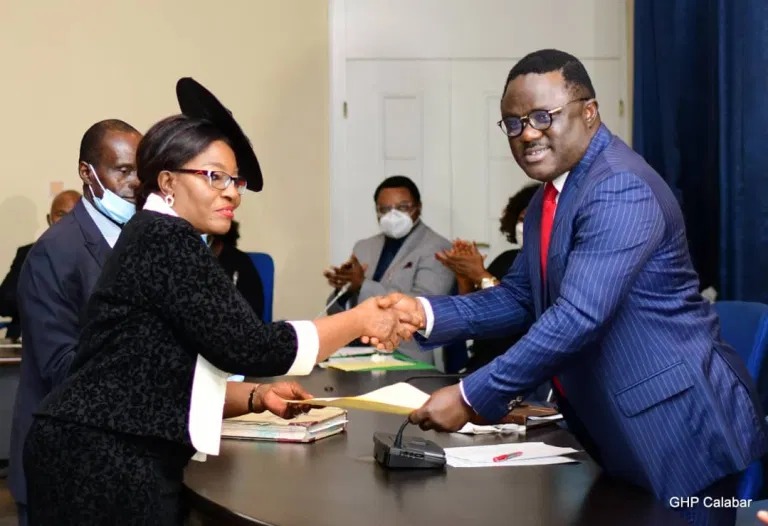
AKON Bassey Ikpeme has been sworn in as chief justice of Cross River State after many months of protests by civil society organisations (CSOs).

Ikpeme, a native of Akwa Ibom State but married to a citizen of Cross River, was rejected twice by the Cross River House of Assembly over what the legislators described as a ‘security threat’ to the state.

Her rejection drew public condemnation both from National Judicial Council (NJC) and CSOs, with the Nigeria Bar Association (NBA) calling on the NJC to compel the state government to do the right thing.

Her nomination was rectified and confirmed by the legislature late last month after allowing two of her junior colleagues to serve in acting capacity for about one year.

Governor Ben Ayade, state governor, who administered the oath of office on her at the government house, said the exercise had brought an end to the internal crisis created by the judge’s initial rejection.

”Today brings to an end the internal concerns of Cross Riverians as it concerns the stability of our Judiciary,” he said.

“God has chosen a woman and not just a woman of God but a covenant child. She is here at the right time and she is the right person for the job. We must put behind all the challenges in the process of getting back here.

“God touched my heart and the heart of every other person in the decision-making process. It was God that fought your fight and not any man,” Ayade said.

In her speech, Ikpeme said it was with deep appreciation that she thanked God who rules in the affairs of men.

“It is with deep appreciation in my heart that I want to thank God who rules in the affairs of men, who has made this day possible.

Read Also: Heartbreaking tales of Southern Cameroonian refugees in Nigeria

“God uses men to fulfil His purpose. I also thank His Excellency, Prof. Ben Ayade, from the depth of my heart, for making this day a reality. In my interactions, I have discovered that he is very humane.

“I want to assure His Excellency and Cross Riverians that the Judiciary under my watch will collaborate with other arms of government to move Cross River State forward.”

Olumide Apata, president of the NBA, who described the swearing-in ceremony as a fitting climax to a long process, expressed delight that the judge became the CJN of the state.

” We are extremely delighted that Justice Akon Ikpeme has finally been sworn in as the chief judge of Cross River State. It is a fitting climax to a long process. In life, the problem is not that there are challenges but what is, however, important is how effectively we are able to solve them,” he said.

“I am glad that between the dramatis personae we have been able to come to this fantastic outcome … and so at the end of the day, all is well that ends well,” Akpata further said.

“Democracy runs on three arms of government, that tripod, and they stand independently, but they must also collaborate for democracy to succeed. She is inheriting a judiciary with issues. I am praying that Lord will give her the strength and have the wisdom to navigate the stormy waters and I expect her to work effectively with other arms of government, but she must uphold the independence of the judiciary which is critical.

“We will continue to watch, and we will continue to be the watchdog, which is the role of the NBA. We will continue to take a special interest in what is happening in Cross River judiciary.

“We will continue to stand on the right side of the law, justice and constitutionality and so we are happy, the NBA is satisfied with the outcome, we cannot rest on our laurels, and we will make sure we will continue to do what is right,” he added.