THE Lagos Chamber of Commerce and Industry (LCCI) has urged the federal government to stop putting severe pressure on its agencies to meet expected revenue targets.
The chamber said such pressure had distracted several revenue-generating agencies from fulfilling their core mandates.
In a January press statement sent to The ICIR, Toki Mabogunje, president of the LCCI, said emphasis on revenue generation often propelled agencies to focus solely on revenue to the detriment of their core mandates of facilitating investment growth, which, in turn, hurt ease of doing business in the country.
Findings show that the Nigerian government is cash-strapped as crude oil prices nosedive. Ben Akabueze, head of the Budget Office, said in May 2020 that the country’s oil revenue had fallen by 80 percent in the previous five years. The situation has forced federal, state and local governments to scavenge for revenue to meet obligations.
The LCCI has severally criticised the federal government for focusing on revenue mobilisation for agencies such as the the Nigerian Customs Service (NCS), the Standards Organisation of Nigeria (SON), the Federal Inland Revenue Service (FIRS), among others, stressing that they should rather be facilitating trade.
Checks show that the 2020 budget has a total spending plan of 13.59 trillion naira, with a revenue projection of 7.99 trillion naira.
Aggregate expenditure comprises N5.99 trillion naira for recurrent non-debt expenditure; 4.37 trillion naira for capital expenditure; 3.32 trillion naira for debt servicing and 496.5 billion naira for statutory transfer, with non-oil and oil revenue sources contributing 70 percent and 30 percent respectively to projected revenue.
Mabogunje commended policies and strategies targeted at improving non-oil revenue in the budget, including the 2020 Finance Act, but noted that some of the assumptions guiding the budget were unrealistic.
“There are assumptions of GDP growth rate of 3 percent; inflation rate of 11.95 percent; 379/$ naira foreign exchange(FX) benchmark; 40 dollars per barrel oil price target and oil production of 1.86 million barrel/day.
“While we consider the oil price and production assumption as realistic, assumptions on inflation, growth, and FX rate do not appear to reflect the current realities,” she cautioned.
She further said that the federal government’s target to source 70 percent of projected revenue from the non-oil sector through taxation was rather ambitious, given that corporate entities were still faced with lingering effects of covid-19 disruptions.
“This goal cannot be accomplished without a supportive macroeconomic and policy environment that encourages the ease of doing business,” Mabogunje stated.
“An enabling environment that supports business growth and expansion provides the impetus to improve revenue mobilisation in the non-oil sector. The creation of an enabling business environment must be at the forefront of government’s revenue mobilisation strategies in year 2021,” she advised.
She recommended that budget monitoring mechanism be strengthened by constituting a private-public stakeholders’ committee to oversee the implementation process.
THE anti-corruption efforts of the President Muhammadu Buhari-led administration may not have recorded much success, as Nigeria slumped to 149 (out of 180) on Transparency International’s 2020 Corruption Perception Index (CPI), scoring 25 points out of 100.
The ranking places Nigeria as West Africa’s most corrupt country after Guinea-Bissau. These numbers are big blows on Buhari who became Nigeria’s president in 2015 mainly on corruption mantra.
In 2019, Nigeria was ranked 146th, with a total score of 26 (out of 100). In 2018 and 2017, the country maintained a CPI score of 27, ranking 144 and 148 respectively.
Nigeria ranked 136 out of 176 with a score of 27 in 2014, one year before Buhari was elected.
The 180-member nations are usually ranked from 0 to 100. While zero indicates the participating country is ‘highly corrupt,’ 100 signifies the highest level of transparency – ‘very clean.’
According to the report, the collected data showed that despite some recorded progress, most countries still failed to tackle corruption effectively.
It stated that, “this year’s CPI shows corruption is more pervasive in countries least equipped to handle the Coronavirus Disease (COVID-19) pandemic and other global crises.”
The report, released by the TI on Thursday, further highlighted the impact of the COVID-19, especially on public procurement and oversight functions.
“Many governments have drastically relaxed procurement processes. These rushed and opaque procedures provide ample opportunity for corruption and the diversion of public resources,” it stated, while calling for more openness in contracting processes and fair pricing.
Flawed procurements during COVID-19
In Nigeria, for instance, the Federal Government, through the Bureau of Public Procurement (BPP), introduced an emergency procurement method for public spending during the COVID-19 outbreak. But the measure resulted in crooked procurements by officials of Ministries, Departments and Agencies (MDAs).
In similar situations, some selected agencies of government also inflated contract prices, among other atrocities, breaching the procurement law.
In her remarks, Delia Ferreira Rubio, chairperson, Transparency International, acknowledged the vulnerability of the procurement process during the pandemic.
The required laws, she said, could be difficult to enforce, especially once procurements were of urgency.
“Corruption undermines an equitable response to COVID-19 and other crises, highlighting the importance of transparency and anti-corruption measures in emergency situations,” Rubio further said.
To reduce corruption rate, the report advised member countries to strengthen oversight institutions, ensure open and transparent contracting as well as defend the nations’ democracy.
The report emphasised the importance of publishing relevant data on public spending and distribution of resources for public consumption.
Though the Nigerian government has embraced the open governance portal, there are still several reported cases of corruption.
The ICIR, in a recent report, showed showed how the president was yet to fulfill his campaign promise on corruption, five years after assuming office.
Nigeria’s Corruption Chart
Nigeria should have topped the TI list – Prof. Akinterinwa
Akinterinwa, in his opinion, said Nigeria should have topped the TI ranking due to high dishonesty and indiscipline in all ramifications across the country.
The Law teacher cited high corruption level in the transportation sector where traffic wardens received bribes after effecting arrests of those who flouted the traffic law. He also identified corruption at the National Identity Management Commission (NIMC) and one-sided fight against corruption by the president.
“Corruption is not simply about embezzlement of public funds, but an expression of indiscipline. If it is not because of indiscipline, why will people steal public money?” he queried. “If you want to find out, for instance, reason for ranking the country high, you realise they see Nigeria as a nation that disrespect the rule of law.”
“You see people commit an offence against the traffic, instead of an arrest, they settle the officials, and you are cleared to go. Those are the things they (TI) look at.”
Akinterinwa, a former director-general of the Nigerian Institute of International Affairs and also the Lagos State coordinator for Volunteer Anti-corruption Corp, simply tagged corrupt practices in the country as dishonesty.
Speaking on Buhari’s efforts, the lawyer said, “the truth is, Buhari is fighting corruption at the top, but allowing it to grow from below.”
“So, how do you cut off a tree from the top when the root is still being wet with water. I have not read the report itself. I only heard it over the radio but the report cannot but be right because we see it on a daily basis. Why will the NIMC be demanding for N5000 to register people? They request for money openly and the TI are there, so these are the reasons. No big deal, in fact, if TI has done its work very well, there is no reason why we should not be the 180th country.”
However, he advised that corruption should be tackled from the lowest ebb to make genuine difference.
Silence in presidency
In 2020 when the country ranked 146th, both anti-graft agencies in the nation – the Economic Financial Crimes Commission (EFCC) and the Independent Corrupt Practices and other Related Offences Commission (ICPC) reacted to the TI rating.
The EFCC, particularly, described the ranking as illogical and baseless, while it restated its commitment to the anti-corruption fight.
“The claim and inference by TI that Nigeria ranks the fourth most corrupt country in West Africa is totally unacceptable, as it is evidently not supported by any empirical data, especially when placed side-by-side with the remarkable achievements of the Commission in the past years,” EFCC stated last year.
However, Wilson Uwujaren, the EFCC spokesperson, while reacting to the new ranking, told The ICIR that the new ranking was Nigeria’s rating and not the EFCC. He disclosed this when asked for comments and referred the reporter to the ‘government.’ Still, The ICIR called Uwujaren’s attention to recommendations of the global report which emphasised strengthening anti-graft bodies playing oversight functions.
“It is Nigeria that is rated, not EFCC. So government should respond to that,” he replied.
The reporter reached out to Mallam Garba Shehu, spokesperson for the president, but he did not respond to a text sent to his phone as of the time of publishing this story.
Aruba Nwunye Ogugua, ICPC spokesperson, responding to a text message sent to seek the reaction of the Commission, promised to inform The ICIR once the ICPC disclosed its ‘official position.’
THE Nigerians in Diaspora Commission (NiDCOM) has announced the return of 384 out of 802 Nigerians from Saudi Arabia on Thursday.
The Ministry of Foreign Affairs disclosed on Twitter that the second batch will arrive in the country on Friday and will be received at the Nnamdi Azikiwe International Airport, Abuja, by the ministry’s officials.
According to a statement by the Ministry, “They (returnees) will be quarantined at the FCT Hajj camp for a period of 14 days in line with established COVID-19 protocols. Thereafter, the ministry will facilitate their movement to their respective home destinations.”
Announcing the return of the first batch, NIDCOM said out of the 384 returnees, 300 were males while 83 were female, with one infant whose gender the Commission didn’t disclose.
NIDCOM said on Twitter, “384 Returnees (300 Males, 83 Females and one Infant) of the 802 stranded Nigerians just arrive at the Nnamdi Azikiwe International Airport, Abuja via Saudi Air flight B773 at about 1:10 pm local time today 28th January 2021.”
A viral video had emerged on the social media last week showing some Nigerians wrapped in black polythene bags lying on the floor in a packed room
A male narrator in the video said they had been stranded in the West Asian country for more than seven months.
“We are here for more than three months, six months, seven months, without any action, no better information on transport to Nigeria,” the male narrator in the video said.
“Most nationals of other countries have been flown back to their countries. Only we Nigerians don’t have any source or way of getting back.
“I’m here on behalf of others to seek your assistance to get us back to our country.”
Abike Dabiri-Erewa, chairman of NIDCOM, while reacting to the video on Friday, said they would be evacuated on the 28th and 29th of January, “pending any unforeseen issues.”
“The evacuation is expected to be carried out in two batches of 400 and 200 by the Ministry of Foreign Affairs,” Dabiri-Erewa said.
FRAYED nerves were relaxed as governors of South-West states signed a peace pact with the leadership of Miyetti-Allah Cattle Breeders Association of Nigeria (MACBAN) on January 25, 2021. The pact neutralized the tension generated by the ‘quit notices’ issued to Fulani by Governor Arakunrin Odunayo Akeredolu, SAN, and activist Sunday Igboho, who operates in Oyo State. Signed in the presence of security agents, the agreement says
Night grazing should be banned henceforth
Underage herding is inimical to security and hence be banned
Occupation of State Forest Reserves illegally is condemned
Free-range grazing must be stopped to avoid conflicts between farmers and herders
Other smooth elements in the agreement, as stated in the communique, say:
MACBAN should embrace and be committed to modern breeding process by creating grazing reserves and practice ranching to prevent cattle roaming about.
Standing Committee comprising of farmers, MACBAN and the Government should be set up in each state (where they don’t exist) to ensure synergy and result
We must create economic opportunities for our people and reduce opportunities for criminality in our country.
But it is noteworthy that some important stakeholders were excluded from the meeting.
Here’s are the actors left out
The insecurity in the South-West and in many parts of Nigeria is a classic case of organised crime. As many peasants have testified, herders and farmers had interacted peacefully in the South-West for decades. Farms were not destroyed. Farmers were not hacked to death. Women were not raped. People were not kidnapped for ransom. What factors or actors led to the current nasty situation? Any deal without taking into account how to tackle the factors and actors who brought the calamity upon Nigeria would amount to empty talks. Below are some actors who should be reined in:
Leaders of Bandits:
There are bandits in forestall over Nigeria. Instead of talking to Miyetti Allah, South-West governors should look for leaders of bandits to hear them out. Sokoto, Katsina, Zamfara and Kaduna States have been in talks with bandits in order to tackle crime and criminality in the North-West. The South-West should seek out the leaders of bandits in their forest and talk with them, instead of relying on Miyetti Allah. There is a chain in the criminality which is not under the control of Miyetti Allah. There are kidnappers, transporters, negotiators, collectors of ransom, telephone operators, policemen who provide bandits with cover to evade the law, and the lords who become rich in the wealth transfer from Nigerian cities to criminals in the forest. With good intelligence, South-West governors should be able to identify these evil but powerful men and speak with them. It is not as if they are reliable, as truce keepers, but it is good to identify them, in the first place. Note that Katsina, Zamfara, Sokoto, Kaduna didn’t sign any agreement with Miyetti-Allah. They fished out bandits and engaged them. Read Katsina Killings: We Signed Peace Accord With Bandits To Avoid Loss Of Lives But They Betrayed Us, Governor Masari Says | Sahara Reporters
There is a chain in the criminality which is not under the control of Miyetti Allah.
Cattle Owners:
Most of the herds of cattle are not owned by herders. Top civil servants, politicians, businessmen, Nigerians in the Diaspora, etc launder [illicit] cash in the cattle business. This is because investments in cattle may not be tracked by the Economic and Financial Crimes Commission (EFCC). Also, at a time when the interest rate on cash deposit in banks is next to nothing, an investment in cattle, which appreciates with inflation, is a smart idea. But cattle owners would not want to invest in ranches, as it will impose on them the additional expenditure of ‘buying pasture’ for cows. They rather use Fulani in the forest who see it as their ancestral duty to live for cattle. These cattle owners in cities may be those who armed herders with sophisticated weapons to terrorize rural farmers. They may have given violent herders the confidence to act with impunity. What to do? The South-West governors (and Nigerian governors) should ask Miyetti Allah and Fulani leaders in the forest to disclose owners of the cattle. The investors should be held responsible if herders who take care of their herds engage in criminal acts. It is time to know who owns the cattle for which Nigerians die on a daily basis. Read the Crisis Group report which says cattle owners are central to solving the herders-farmers conflict in Nigeria: Stopping Nigeria’s Spiralling Farmer-Herder Violence | Crisis Group
Investments in cattle may not be tracked by the Economic and Financial Crimes Commission (EFCC).
Traditional rulers/community leaders:
Traditional rulers and community leaders play devilish roles to fertilize the predicament of farmers and herders. Instead of ensuring justice and fair play when settling disputes between these peasants, community leaders in rural areas use conflicts as an opportunity to drain the resources from peasants. They frustrate farmers by discounting the value of crops destroyed by cattle; they extort herders by forcing them to pay heavy compensation which is never given to farmers. Herders are equipped with the feeling that impunity would bring no punitive consequences, as long as they have cows to sell and bribe community leaders. The government should set up a committee populated with men of integrity to whom peasants could make appeals for redress if they are dissatisfied with the mode and kind of settlement done by community leaders. Read how traditional rulers were found to be involved in banditry in Zamfara State: Zamfara suspends four traditional rulers over banditry allegations – Punch Newspapers (punchng.com)
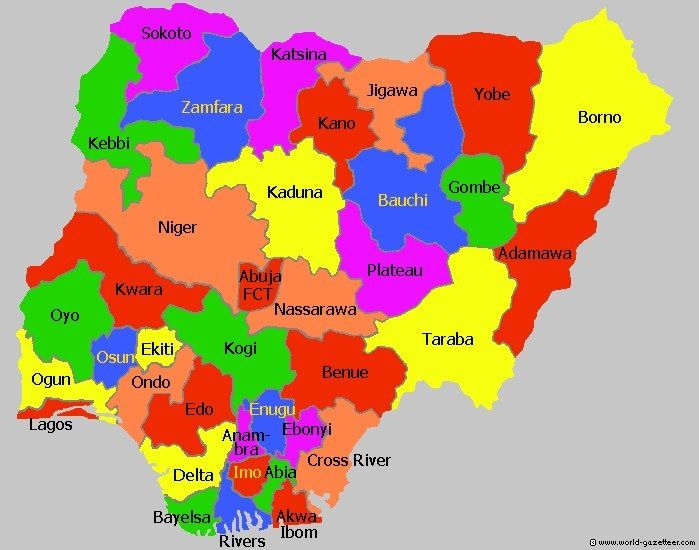
A file photo of the map of Nigeria
Policemen and Judges:
Like traditional rulers and community leaders, policemen and judges extort herders and farmers – to the disadvantage of farmers. Under the cloud of corruption, many rural police posts are excited at ‘Fulani cases’ because such disputes would fetch them cash for palm wine and bush meat. Judges pervert justice by conniving with lawyers who defend Fulani herders that run afoul of the law. Apart from frustrating farmers, the activities of these judicial workers give herders an upper hand and embolden them to act with impunity. Judges and policemen should be educated on how their corrupt practices inflame violence and impunity in the country. Again, a committee where appeals could be made by peasants should be set up to deal with this situation. Read this report that says security personnel are also complicit in banditry: 5 Emirs, 33 District Heads, Top Military Officers Complicit in Zamfara Banditry | THISDAYLIVE
Under the cloud of corruption, many rural police posts are excited at ‘Fulani cases’ because such disputes would fetch them cash for palm wine and bush meat
Immigration and Customs:
Most of the violent Fulani herdsmen who engage in criminality are said to be foreigners who illegally entered into Nigeria from Mali, Niger, Central African Republic (CAR), Chad, Libya, and the rest. Immigration personnel look away when these criminals enter into Nigeria, perpetrate crime, and return to their base, without being questioned. These foreigners have flooded the South-West as menial workers (who actually gather intelligence for criminals in the forest) and they operate without being checked. On their part, Customs has not explained how these criminals entered into Nigeria with a lot of weapons unchallenged. Apparently, Immigration and Customs need fresh orientation and strategies to enable them to rise to the challenge of ensuring tight control of Nigeria’s borders in the 21st Who says Nigeria should not build walls at its borders to ward off criminals? America, Israel, Saudi Arabia, North Korea, Russia, etc have done so. Read this report that emphasizes the failure of immigration and Customs at Nigeria’s borders: Nigeria needs a competent customs and immigration service, not border closure (theconversation.com)
Political heavyweights and agents:
These criminals have backers in high political positions. As soon as they enter into police net, these high net-worth individuals pull the strings, call top police officers and judicial workers to bail out the criminals. The government could investigate how some arrested bandits/criminals were released, track down those who stood as surety for them and ensure they are penalized. Unless these individuals are fished out and dealt with, they will fester in their enterprise and the peace pact signed on January 25, 2020 will be in vain. In the near future, even Amotekun operatives will be compromised. They could become informants for bandits and other elements in the ring of the organized crime. Read this interview with Dr Ahmed Gumi in Daily Trust on how bandits operate based on the information given by persons in society:What herdsmen told me about banditry, how to end it – Sheikh Gumi | Dailytrust
Retired General Marwa, NDLEA Chairman
Drug dealers:
Most bandits are on drugs, especially Indian hemp. By implication, dealers in this illicit drug know some of the bandits who patronize them. If the government would extend their intelligence network to include illicit drug dealers, it is possible to locate bandit who attacks locations and disappear like spirits, evading arrest by security personnel. Read this story that quotes government as saying drug abuse is evident in criminality in Nigeria: Buhari, security chiefs blame heightened insecurity on drugs, influx of illegal aliens – Businessday NG . Fulani herders may be the face of the prevailing criminality in Nigeria, but they are just the tip of the iceberg. Nigeria is contending with chapters of organized crimes, and unless masterminds are captured and dealt with, our forests will continue to be forests of death.
ANALYSIS of data from 38 African countries indicates very few, if any, are on track to reach the UNAIDS targets for HIV testing and condom use by the year 2030.
This was one of the major highlights in HIV prevention research announced Tuesday at the 4th HIV Research for Prevention Conference (HIVR4P), convened by the International AIDS Society (IAS). The annual gathering of researchers, thinktanks, amongst others in the HIV field holds virtually this year, due to the COVID-19 epidemic.
Based on 114 nationally-representative datasets representing more than 1.4 million sexually active people, the study presented by Phuong Nguyen of St. Luke’s International University revealed that overall, the probabilities of reaching the 2030 targets were very low for both HIV testing at 0 percent to 28.5 percent and condom use with 0 percent to 12.1 percent.
The study predicts the countries with the highest coverage of annual HIV testing in 2030 will be Eswatini with 92.6 percent, Lesotho with 90.5 percent and Uganda with 90.5 percent. Eswatini (85 percent), Lesotho with 75.6 percent and Namibia with 75.5 percent respectively, are revealed as the countries which would have the highest proportion of condom use.
CREDIT: Google photo
However, if I were to interpret it as an HIV advocate and expert on prevention, what it means is: the study team estimated that the probability of African countries meeting the UNAIDS testing and condom use targets of 95% coverage by 2030 is not feasible. This estimated expectation is birthed by the poor annual HIV testing and condom use recorded by each country.
HIV phenomenon in Nigeria
No fewer than 1.9 million persons are estimated to be living with HIV in Nigeria. A 2019 national survey partnership conducted by the Joint United Nations Programme on HIV/AIDS (UNAIDS) and the National Agency for the Control of AIDS (NACA) titled: ‘Nigeria National HIV/AIDS Indicator and Impact Survey (NAIIS),’ indicates the national HIV prevalence has reduced to 1.4 percent among adults aged 15-49 years when compared to the previous 2.8 percent, estimate.
The survey states that girls and women between the ages of 15 and 49 are more than twice more likely to be living with the virus than men. A differential ratio of 1.9 versus 0.9 percent is stipulated for both the male and female gender, respectively.
However, the difference in HIV prevalence between women and men is greater among younger adults, with young women aged 20-24 years more than three times more likely to be living with HIV compared to men in the same age group. At the national level, viral suppression among people living with HIV aged 15–49 years stands at 42.3 percent. That is, 45.3 percent among women and 34.5 percent among men.
According to the 2019 national data, Nigeria’s South-South zone has the highest HIV prevalence at 3.1 percent among adults aged 15-49 years. The North-Central zone has a prevalence rate of 2.0 percent while the South-East has a 1.9 percent rate.
The survey indicates South-West has a lower HIV prevalence at 1.1 percent while the North-East and North-West Zones follow in same stride with 1.1 percent and 0.6 percent, respectively.
CREDIT: National Population Commission
The HIV/AIDS virus remains one of humankind’s greatest global health challenges as it has spread across all countries. The spread is on the increase among heterosexuals and bisexual males but predominantly among young persons in African countries like Nigeria. The rapid growth of HIV positive cases in the last few years globally and in Africa shows the majority of Nigerians infected with the virus are the youths. The UNAIDS says the virus is predominant among young people in Africa because they constitute larger percent of the society.
In November 2016, the National Population Commission put Nigeria’s populations at 182 million people with a widening youth bulge because more than half of these persons were under 30 years of age. However, by Friday, June 26th, 2020 at 9.44 am, Worldometer elaboration of the latest United Nations data indicates the current population of Nigeria is 206,018,277.
HIV in the last five years: Nigerian perspective
In the last five years, there has been a significant expansion in the country’s response to HIV. The number of hubs providing treatment has tripled with over 201 centres, unlike previous years. For instance, the number of centres providing services to prevent mother-to-child transmission of HIV has increased eightfold and the number of HIV counselling and testing sites has increased fourfold. A total of 11.3 million adults were counselled and tested for HIV in 2016, four times as many as in 2012. But studies emanating from theHIVR4P 2021 conference indicate this is not enough as Nigeria remains off track in meeting the 2030 UNAIDS testing targets.
Again, the country is still lagging behind in the provision of counselling, test and treatment centres strictly for young persons who make up most of Nigeria’s population. Available statistics and data reveal the West African most populous nation has not prioritized tailor-made policy for HIV control such as testing, even for young persons.
Condom usage in Nigeria
Research findings indicate condom is used both for prophylactic and family planning or pregnancy prevention purposes. However, adverse experiences, gender-related fears, cultural and religious beliefs, amongst others hinder the wide usage of condoms in Nigeria.
CREDIT: Google photo
For instance, purchase and use of condoms are associated with illicit sex in Nigeria, particularly when purchased and introduced by females – married and single – to their partners. Many Nigerian men believe condoms limit sexual pleasure, while others believe condoms have side effects after use. Many beliefs about condoms abound in Nigeria; one of which is it causes vaginal dryness, inflammation and diseases and a woman’s womb could become dry after repeated use of condoms. Some Nigerian men sampled for this story believe condoms are coffins. They claim condoms not only kill sexual pleasures but overtime affects reproductive organs.
Based on the projections revealed at the ongoing HIV4RP Virtual conference, Nguyen while presenting the study titled: ‘Progress toward HIV elimination goals: Trends in and projections of Treatment as Prevention strategy in 38 African Countries’ concluded that there is currently “little prospect of reaching global targets for HIV/AIDS elimination,” and calls for “more attention to funding and expanding testing and treatment” in Africa.
The regulations, which were signed yesterday into law, are part of government’s efforts to boost COVID-19 response in the country.
The guidelines state that any person that contravenes provisions of the regulations, upon conviction, risks a fine or a term of six months imprisonment or both in accordance with Section 5 of the Quarantine Act.
Buhari said the regulations, which would take immediate effect, were given urgent consideration to safeguard the health and well-being of Nigerians, especially in the face of rising COVID-19 cases in the country.
He directed the Nigeria Police Force, Nigeria Security and Civil Defence Corps, Federal Road Safety Corps, Nigeria Immigration Service, Federal Airport Authority of Nigeria, and relevant local, state and federal governments’ agencies to enforce the regulations, warning that any officer that failed, neglected, or refused to enforce the provisions of the regulations would be subjected to disciplinary actions.
“Any person who, without reasonable cause, contravenes a direction given under Parts 1 and 2 of these regulations commits an offence. Any person who, without reasonable cause, obstructs an authorised official from enforcement of these regulations commits an offence,” he said, qouting the document.
According to the regulations, persons confirmed positive for COVID-19 by an NCDC-accredited laboratory may not refuse isolation and or admission to a designated health establishment for management of the disease.
The regulations also state that physical distance of no less than two metres shall be maintained at all gatherings between persons and no gathering of more than 50 persons shall be held in an enclosed space, except for religious purposes, in which case the gathering shall not exceed 50 percent capacity of the space.
Highlights of COVID-19 Health Protection Regulations 2021
The rules stipulate that all persons in public gatherings, whether in enclosed or open spaces, shall adhere to the provisions of the regulations, which may be varied by guidelines and protocol as may be issued, from time to time, by the Presidential Task Force (PTF) on COVID-19 on the recommendation of the Nigeria Centre for Disease Control (NCDC).
Others are that persons should not be allowed within the premises of a market, mall, supermarket, shop, restaurants, hotels, event centres, gardens, leisure parks, recreation centres, motor parks, fitness centres or any other similar establishment (hereinafter collectively referred to as ‘establishments’) except they wear face masks that cover their noses and mouths, wash their hands or clean their hands, using hand sanitisers approved by the National Agency for Food and Drug Administration and Control (NAFDAC). Their body temperatures must also be checked.
“Any person found to have body temperature above 38 degrees Celsius shall be denied entry and advised to immediately seek medical attention. Every establishment occupier shall make provision for regular hand hygiene for any person coming into the premises during opening hours. This includes a hand-washing station with soap and running water, or hand sanitiser approved by NAFDAC.”
In places of worship, the regulations state that all worshippers and users of places of worship shall comply with the provisions of Parts 1 and 2 of the Regulations and should, where and whenever possible, avoid sharing worship items such as mats, bottles, and hymnal materials, among others.
“It is the responsibility of the person in charge of a place of worship to ensure compliance with the provisions of these Regulations within the worship centre,” the Regulations states.
All persons are also required to comply with the provisions of Parts 1 and 2 of the Regulations in workplaces and schools.
Highlights of COVID-19 Health Protection Regulations 2021
It is the responsibility of the person in charge of a workplace or a school to ensure compliance with the provisions of the law.
On banks the rules stipulate that “All employees, customers and visitors of banks shall comply with the provisions of Parts 1 and 2 of the Regulations. All banks shall comply with the guidelines, mode and scope of operations issued by the Central Bank and Federal Ministry of Finance as it relates to the COVID-19 response. All banks shall develop a schedule for regular cleaning of buttons and surfaces of Mantrap Entrance Doors, ATM machines and other commonly used areas.”
All operators and passengers of public transportation vehicles (referred to as operators) shall comply with the provisions of Part 2 of these Regulations and ensure adequate spacing in between passengers, the new rules say.
Operators in the transport sector, according to the Regulations, shall ensure frequent cleaning and disinfection of parts of the vehicle frequently handled by passengers and drivers such as doors and window handles/buttons, steering wheels and dashboards.
Managers of hostels, boarding houses, nursing homes, correctional centres, remand homes, holding cells, military detention facilities, and other similar centres are required to ensure compliance with the provisions of the regulations.
Managers of such facilities are also to ensure that suspected cases of COVID-19 are promptly and appropriately separated from others and are reported to medical officers of the state ministry of health for necessary action.
State governors are to issue regulations on further steps as may be considered necessary, according to the Regulations.
THE umbrella body of the Nigerian Muslim community, Jama’atuNasril Islam, (JNI), has faulted Nigeria’s inclusion among the top 10 countries in the world where Christians are persecuted because of their faith.
The 2021 annual report of a United States-based Christian persecution monitoring group, Open Doors, ranked Nigeria as Number nine on a World Watch List comprising 50 countries where it is ‘most dangerous’ to be a Christian.
The report said more than 2,200 out of 4,761 Christians killed for reasons relating to their faith around the world in 2020 were murdered in Nigeria.
While the JNI objected to the report, the Christian Association of Nigeria (CAN) endorsed the findings made by the US organisation.
CAN said the report was an ‘obvious’ fact that cannot be disputed.
Representatives of the JNI and CAN reacted to the development in separate interviews with The ICIR.
Nigeria ranked alongside North Korea, Afghanistan, others as top 10 Christian-persecuting countries
Open Doors, which had monitored Christian persecution worldwide since 1992, ranked North Korea as Number 1 in the watch list. North Korea has consistently ranked Number 1 for 20 years, since Open Doors started publishing the watch list in 2002.
Communist and post-communist oppression were cited as the sources of persecution for Christians in North Korea.
Other countries in the top 10, listed in order of ranking, are Afghanistan, Somalia, Libya, Pakistan, Eritrea, Yemen, Iran, Nigeria and India.
*Report says Nigerian Christians face ‘Islamic oppression’
‘Islamic oppression’ was the source of Christian persecution in Nigeria, according to the report, which also observed that the administration of President Muhammadu Buhari appoints Muslims to ‘key’ government positions.
The Open Doors report, which was the subject of featured reports by the Voice of America,The Christian Post and Christianity Today, noted that violence against Christians in Nigeria accounted for a large proportion of the 60 percent increase in the number of Christians killed worldwide in 2020.
In a profile on Nigeria, Open Doors stated that “More Christians are murdered for their faith in Nigeria than in any other country”, and specifically identified violent attacks by Boko Haram, Hausa-Fulani Muslim militant herdsmen, Islamic State West Africa Province (ISWAP), an affiliate of the Islamic State group, and other Islamic extremist groups in the North and Middle Belt as common examples of Christian persecution.
It also noted that the attacks on Christian communities in Nigeria are spreading ‘farther South’.
The report added that several Christians who were driven out of their villages and away from their sources of livelihood ended up becoming internally displaced persons (IDPs), often living in informal IDP camps.
Open Doors said Nigeria entered the top 10 of the watch list for the first time due to the effect of the worsening state of insecurity in the country on Christians.
“Nigeria has risen several places on the World Watch List, and persecution has worsened in all areas of public and private life. Violence against Christians perpetrated by Boko Haram, Fulani militants and ISWAP – as well as other unidentified armed attackers – has led to tremendous suffering among the Christian community.
“Nigeria entered the top 10 of the 2021 World Watch List primarily because this violence has increased and began to spill out into other parts of Nigeria, and the government seems unable or unwilling to protect its Christian citizens,” parts of the report said.
The report said Christians in some parts of northern Nigeria, particularly Borno State, were discriminated against in the sharing of COVID-19 palliatives. The report observed that extremists capitalised on the pandemic, which it said had weakened governments, to further oppress vulnerable Christian populations.
Although Nigeria was ranked Number 9 overall on the watch list, the country, which has the largest number of Christians in Africa, came second behind Pakistan in terms of sectarian-related violence, and first in the number of Christians killed because of their faith.
The report also observed that several Christian women and girls have been raped as part of the attacks.
Open Doors said Sudan left the top 10 for the first time in six years after the country’s government abolished the death penalty, while India remained in the top 10 for the third year in a row due to a continuing increase in violence against religious minorities as a result of what the report described as ‘government-sanctioned Hindu extremism’.
China joined the top 20 for the first time in a decade due to “ongoing and increasing surveillance and censorship of Christians and other religious minorities”.
Comprehensive list of ’50 countries where Christians face persecution’ according to Open Doors
The comprehensive list of the 50 countries on Open Doors’ World Watch List of countries where Christians face persecution, by order of ranking: North Korea, Afghanistan, Somalia, Libya, Pakistan, Eritrea, Yemen, Iran, Nigeria, India, Iraq, Syria, Sudan, Saudi Arabia, Maldives, Egypt, China, Myanmar, Vietnam, Mauritania, Uzbekistan, Laos, Turkmenistan, Algeria and Turkey.
Others are Tunisia, Morocco, Mali, Qatar, Colombia, Bangladesh, Burkina Faso, Tajikistan, Nepal, Central African Republic, Ethiopia, Mexico, Jordan, Brunei, Democratic Republic of Congo, Kazakhstan, Cameroon, Bhutan, Oman, Mozambique, Malaysia, Indonesia, Kuwait, Kenya and Comoros.
Report mirrors US Department of State’s designation of Nigeria as ‘Country of Particular Concern’ for violations of religious freedom
Efforts to get the federal government’s reaction to the US faith-based organisation’s report were not successful. Calls to Mr Lai Mohammed, minister of information and culture, could not go through and an SMS sent to his mobile telephone was not replied.
However, in 2020, Mohammed had faulted the US State Department for designating Nigeria as a country of ‘particular concern’ because of religious freedom violations, following a report by the US Commission on International Religious Freedom.
JNI says US group’s report on Christian persecution in Nigeria was biased, baseless
Abubakar Khalid-Aliyu, secretary of the JNI, in an interview with The ICIR, said Nigeria’s inclusion among the top 10 countries in the world where Christians are persecuted was another example of the bias shown by the US against the Nigerian Muslim community.
Khalid-Aliyu, who stressed that the report by Open Doors lacked merit, said Muslims are victims of persecution in parts of Nigeria.
He told The ICIR, “It is not true that Christians are being persecuted in Nigeria and depending on context and location, you will notice that Muslims are being persecuted.”
The JNI scribe added, “That report is an unfortunate example of unbalanced reporting. Unfortunately the United States is not fair and only listens to one side on issues like this. They (US) act based on one source of biased information, listening to only the Christian groups without listening to Muslims. Sometimes the issue of persecution depends on majority and minority in different areas. There are areas in this country where Christians are the majority while Muslims are in the minority, and there are also areas where you have Muslims as majority and Christians are in the minority. In such situations you notice that all the complaints will be the same. In Christian majority areas you notice that Muslims are not allowed several things. For example during the #EndSARS protests many Muslims were killed and their property burnt and destroyed in Christian majority areas in the South-South and South-East. What did they say about that? It depends on from which perspective you are looking at things. So when anybody says Christians are being persecuted I just laugh because that is not true. The report is not balanced and we know that the US had already taken sides.”
Insisting that the US government and its agencies are unfair to Muslims in Nigeria, Khalid-Aliyu added, “I recall that during the time Ayo Oritsejafor was CAN President the US committee on religious freedom invited him twice to the US to address the Congress but they did not invite any Nigerian Muslim leader. You can see how imbalanced that is. You also recall when former US President Donald Trump asked President Buhari to tell Muslims to stop persecuting Christians even when Islamophobia was going on all over the place in the US, with Muslim women in hijab being assaulted. I am tired of these unbalanced and lopsided reports coming out from the US.”
CAN says Christians are truly being persecuted in Nigeria
Joseph Ajujungwa, a bishop and director for ecumenism and inter-faith affairs, CAN, in Enugu State, said the Open Doors report captured the true situation of things in Nigeria.
Ajujungwa, in an interview with The ICIR, insisted that the persecution of Christians in Nigeria was an obvious fact and cannot be denied.
“There is no gain-saying that Christians are being persecuted in Nigeria. It is an obvious fact and anybody in Nigeria will know that it is the truth, especially in the North. In the North Christians hardly get any juicy appointments. Even at the national level you can see what has just happened, the major Christian states in the Southern part of Nigeria were excluded in the appointment of the new service chiefs. None of the South-East states which have large Christian populations got any appointment,” he told The ICIR.
Endorsing the Open Doors’ ranking of Nigeria among the top 10 countries in the world where Christians are persecuted, Ajujungwa added, “The persecution of Christians in Nigeria is quite obvious, it can’t be denied. Look at what is happening in Jos, look at what is happening in Adawawa, look at what is happening in Niger and especially in Southern Kaduna, a predominantly Christian area where indiscriminate attacks and killings have been going on. Those people being persecuted are Christians. They are being persecuted and humiliated, the women are raped by bandits, herdsmen and insurgents. This cannot be denied.”
ROBERT O. Young, a US naturopathic practitioner, recently surfaced online in Africa, claiming that Microsoft founder, Bill Gates, was planning depopulation of Africa.
Young had, in a 2019 video (now trending), suggested that vaccination was a means to depopulate Africa.
The video has been shared in Nigeria, South Africa, and some other African countries.
The claim is trending online amid African countries’ drive to acquire vaccines for its population against the coronavirus.
Young had said in the clip, “For the purpose of sterilisation and population control, there’s too many people on the planet we need to get rid of. In the words of Bill Gates, at least three billion people need to die.”
“So we will just start off in Africa. We will start doing our research there and will eliminate most of the Africans because they are deplorable, they are worthless. They are not part of this world economies. Their rights are taken away and suppress and experimented on.”
He further said, in a response to a panel member, “These are Bill Gates words. Just Google Bill Gates and depopulisation (sic) and sterilisation. You will hear out of his own mouth the plan.”
Young suggested that Bill Gates vaccination drive, which he claimed was a population control project, was zeroed in on Africans because “they are deplorable and worthless.”
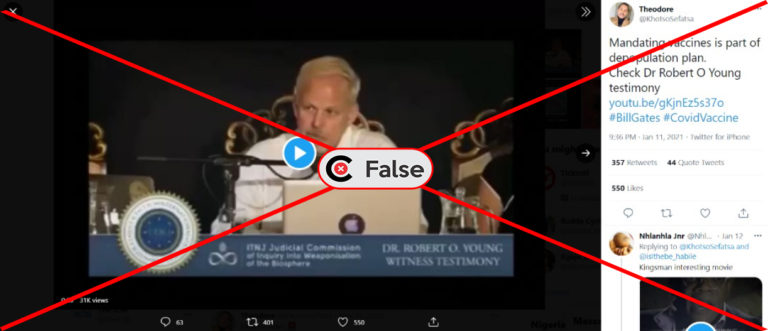
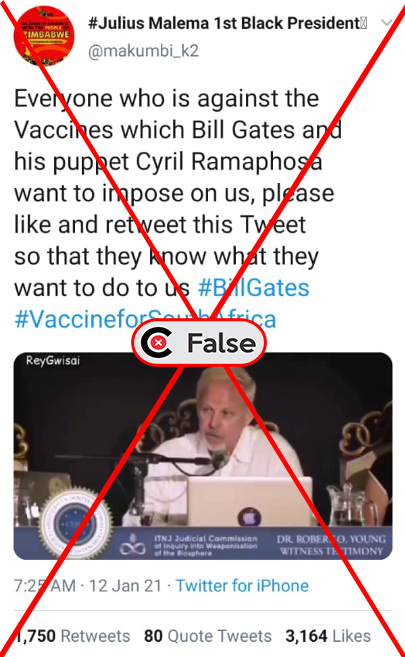
The claim, which was shared by a twitter user @KhotsoSefatsa on the 11th of January, 2021, has generated 357 retweets, 44 quoted tweets and 550 likes.
His tweet read, “Mandating vaccines is part of depopulation plan. Check Dr Robert O. Young testimony https://youtu.be*** #BillGates #CovidVaccine.”
It was also shared on the @makumbi_k2 on the 12th of January 2021 generating 1.7K retweets, 80 quoted tweets and 3.1k likes.
His tweet read, “Everyone who is against the vaccines which Bill Gates and his puppet Cyril Ramaphosa want to impose on us, please like and retweet this Tweet so that they know what they want to do to us #BillGates #VaccineforSouthAfrica.”
The ICIR sent a mail to the media department of the Bill and Melinda Gates Foundation requesting its reaction to the viral claim. In response, it said in a terse mail that the claim was ‘false.’
Findings
Young made the claim while speaking as part of a panel organised by the International Tribunal for Natural Justice (ITNJ) — a group that holds unsanctioned hearings on subjects ranging from child trafficking, vaccines, coronavirus and to the alleged effects of 5G.
On its website, ITNJ, founded by Sacha Stone, a former rock musician and artist in 2015, said it belonged to the people and was not controlled by any nation, state, corporation, or ‘special interests.’
The Daily Mail UK on the 12th of April, 2020, had exposed how this group falsely linked the 5G mobile phone network to coronavirus.
The ICIR had also, in a fact check published in April 2020, found no link between the coronavirus and the 5G mobile network.
The Video
A check by The ICIR showed that the video being shared online about the alleged Bill Gates depopulation plan was a part of a 98-minute video published on the ITNJ’s YouTube channel on November 20, 2019.
Apart from claims on Bill Gates and Africa, Young also alleged in the video that viruses were not real and that vaccines were poison.
The ICIR sent a mail to Robert Young on the 13th of January, 2021, requesting he share with it proof to back up the claim made against the Microsoft founder.
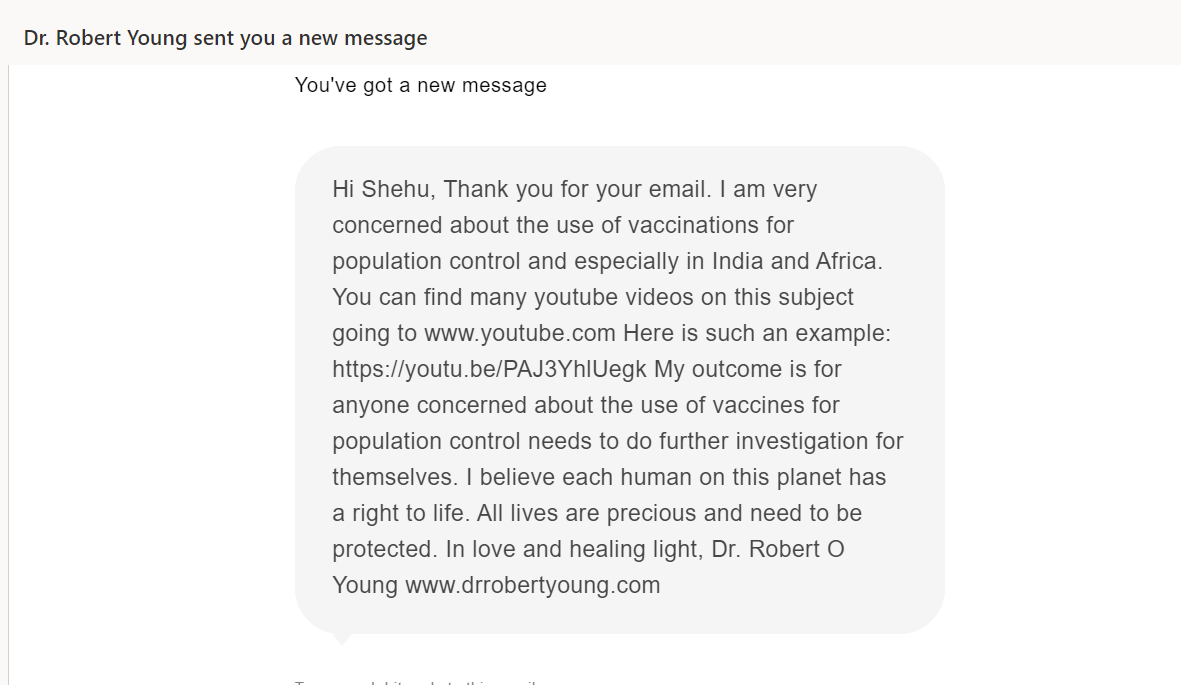
Young, in reply to the ICIR request, said he was very concerned about the use of vaccinations for population control and especially in India and Africa.
Robert O. Young response to ICIR
His mail read, “Hi Shehu, Thank you for your email. I am very concerned about the use of vaccinations for population control and especially in India and Africa. You can find many youtube videos on this subject going to www.youtube.com Here is such an example: https://youtu.be/*** My outcome is for anyone concerned about the use of vaccines for population control needs to do further investigation for themselves. I believe each human on this planet has a right to life. All lives are precious and need to be protected. In love and healing light, Dr. Robert O Young www.***.com.”
Young shared a video link with The ICIR where he alleged Bill Gates made the claim.
The video shared by Young was a 3-minute, 34-second video published on YouTube on the 13th of April, 2020, by Kenya News Media.
The ICIR subjected the video to verification by using the Invid video verifier. It found out that the video published on the YouTube channel was a part of a 2010 Ted Talk video, ‘Innovating to zero,’ where Bill Gates discussed ways the world could reduce carbon emissions, vaccines and healthcare.
Also, part of the video was from a 2012 Bill Gates interview with Larry Cohen shared on GatesNotes titled, ‘A Conversation with Bill Gates: Population Growth.’
Bill Gates on Population growth
This was not the first time conspiracy theorists had made claims about Bill Gates’s depopulation project.
Lately, the outbreak of coronavirus has further pushed this claim by linking it with his effort towards combating the coronavirus pandemic.
The ICIR found a 2010 Ted Talk video, ‘Innovating to zero,’ where Bill Gates discussed ways the world could reduce carbon emissions and suggested ways in which global population growth would be reduced through improving healthcare as the root of where his speech was misinterpreted.
Gates had said in the February 2010 Ted Talk video that “First, we’ve got the population. The world today has 6.8 billion people. That’s headed up to about nine billion. Now, if we do a really great job on new vaccines, health care, reproductive health services, we could lower that by, perhaps, 10 or 15 percent. But there, we see an increase of about 1.3.”
The ’10 or 15 percent’ mentioned by Gates was about slowing global population growth (through improved health) to reduce carbon emissions, rather than reducing the population through the vaccines.
Also, a 2-minute, 2-second 2012 interview video with Larry Cohen published on Bill Gates YouTube channel titled, ‘A Conversation with Bill Gates: Population Growth,’ said by improving healthcare, population growth could actually be slowed down.
He also made mention of it in a video titled, ‘Does saving more lives lead to overpopulation?’ published on his YouTube channel in 2018.
Also in an article published by Reuters news agency in September 2018, titled, ‘Africa’s rapid population growth puts poverty progress at risk,’ Gates said population growth in Africa was a challenge and stated that the best ways of tackling the growing population and poverty challenge was by improving access to birth control, which should be combined with investment in young people’s health and education.
What to know about the Bill and Melinda Gates Foundation $10 Billion vaccine pledge
In 2010, during the World Economic Forum in Davos, Bill Gates, the Microsoft founder and philanthropist, pledged 10 billion dollars over the next decade to develop and deliver new vaccines for the world’s poorest countries.
The donation was one of the biggest ever from a single charitable organisation.
He said the increased investment in vaccines by governments and the private sector could help developing countries dramatically reduce child mortality by the end of the decade, and also called for others to help fill critical financing gaps in both research funding and childhood immunisation programmes.
“We must make this the decade of vaccines,” said Bill Gates. “Vaccines already save and improve millions of lives in developing countries. Innovation will make it possible to save more children than ever before.”
“If additional vaccines are developed and introduced in this decade—such as for tuberculosis—even more lives could be saved. The new funding announced today is in addition to the $4.5 billion that the Gates Foundation has already committed to vaccine research, development and delivery to date across its entire disease portfolio since its inception.”
“Vaccines are a miracle,” said Mrs Gates. “With just a few doses, they can prevent deadly diseases for a lifetime.”
Bill and Melinda Gates Foundation in Nigeria
The Gates Foundation in Nigeria plays a leading role in healthcare provision in partnership with the Nigerian government, private sectors, and the World Health Organisation.
The foundation played a leading role in the eradication of polio in Nigeria, as well as in immunisation and other developmental issues. It focuses on improving family health, strengthening healthcare systems, improving nutrition, increasing agricultural productivity and enhancing access to financial services.
The chairman of the Gates Foundation, Bill Gates, during the expanded National Economic Council, NEC, presided over by Vice President Yemi Osinbajo in March of 2018 said the foundation had committed over 1.6 billion dollars so far, with the intention of increasing his commitment in the country.
Who is Robert O. Young?
According to his profile on Wikipedia, Robert Oldham Young is an American naturopathic practitioner and author of alternative medicine books promoting an alkaline diet.
He is best known as the author of a bestselling book series called ‘The pH Miracle,’ which touts an alkaline diet as a cure for cancer.
In 2017, Young spent several months in jail after being arrested in January 2014 and convicted in 2016 on two out of three charges of theft and practicing medicine without a license.
In November 2018, according to the same Wikipedia profile, a San Diego jury awarded 105m dollars in damages to a former cancer patient he persuaded to forgo effective treatment in favour of his alkaline diet, resulting in her disease progressing to an incurable stage 4.
In 1995, Young allegedly drew blood from two women, told them they were ill, and then sold them herbal products to treat these illnesses. He was charged with two third-degree felony counts of practicing medicine without a license, but pled guilty to a reduced misdemeanor charge.
CONCLUSION
The ICIR found nowhere through its search where Bill Gates made the claim alleged by Robert O. Young.
The video link shared by Robert O. Young to back up his claim was a misinterpretation of what Bill Gates said in his Ted Talk and the interview with Larry Cohen.
The Microsft founder in the 29-minute, 32-second video was discussing ways the world could reduce carbon emissions and also suggesting ways by which global population growth would be reduced through improved healthcare and vaccinations. He was not speaking on the reduction of population, nay African population, as alleged by Young in the video.
A post circulating on the social media claims that the National Identity Management Commission (NIMC) is giving out free internet data.
The NIMC is an agency that operates and regulates matters of national identity in Nigeria.
The post retrieved from a WhatsApp group on January 27, 2021, directed people to claim the data via a link.
The post read:
NIN VERIFICATION Check: If Your Number have (sic) been chosen by NIN to receive 5GB As Part of Verification REWARD Program For Who have (sic) been using the SIM for more than three months FOR ALL NETWORK USERS Deadline: 30-01-2021 Click:
THE CLAIM
The NIMC is giving out 5GB of data to those who have verified their National Identification Number (NIN).
THE FINDINGS
Checks by the FactCheckHub show that the claim is FALSE.
The FactCheckHub observed that the website attached to the claim was different from the official website of the NIMC.
The website in the claim sought to gain traffic by prompting people to share.
For instance, the first page of the website asked people to click a link to check if they had been selected for the 5GB NIN data.
The following page asked for mobile numbers, after which it directed people to another page, asking them to share the post in 12 WhatsApp groups before having access to the data.
The page directing people to share the post multiple times.
The FactCheckHub also reached out to Kayode Adegoke, head of corporate communications, NIMC, who confirmed that the claim was false.
“This is fake,” he replied to The FactCheckHub’s enquiry via a telephone conversation.
In addition, the FactCheckHub had earlier fact-checked and debunked a similar claim asking people to visit a phishing website.
Such claims usually target topics and areas that a lot of people are interested in, such as relief fund, recruitment, free data, among others.
The objective is often to drive traffic to a website – as it often asks for a link to be shared multiple times.
It could also be a survey website getting people to fill out questionnaires under false pretense.
Sometimes such websites are set up to obtain people’s information for nefarious purposes.
In order to avoid falling victims to such false claim, it is important to verify the information by going to the government, institution, agency or company’s social media handles.
A number of such institutions that attract public interest are verified on the social media. Such social media handles usually have accompanying websites included in the bio.
Google searching information using keywords is another way of verifying claims like this.
THE VERDICT
The claim that the NIMC is giving out 5GB of data to those who have verified their NIN is FALSE.
This report was originally published by Factcheckhub.
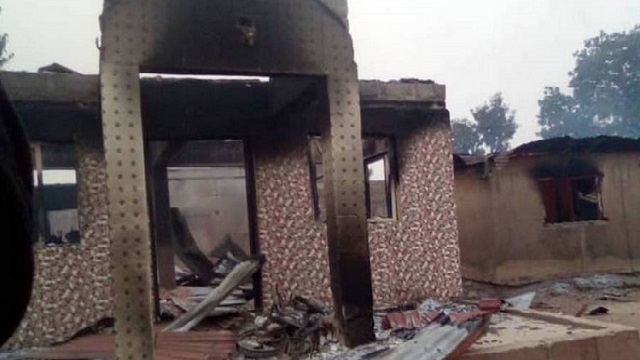
ON January 23, 2021, several images depicting charred remains of burnt buildings were circulated online. The buildings were said to belong to the Seriki Fulani of Oyo State, Saliu Abdulkadir.
A Twitter user with the handle @MFaarees_also shared the photos while making a similar claim.
The tweet had over 2,000 likes and was shared over 772 times in less than 72 hours.
Viral images depict burnt buildings belonging to Seriki Fulani of Oyo State, Saliu Abdulkadir, in Igangan, Ibarapa North Local Government of Oyo State.
THE FINDINGS
In Southwest Nigeria, there have been multiple cases of killings and kidnappings for ransom on highways and farmlands. A number of the victims who regained their freedom had reported that their abductors were herders of the Fulani descent.
The governor of Ondo State, Rotimi Akeredolu, had ordered herders to vacate the forest reserve in the state. This was swiftly countered by the Nigerian presidency.
Amidst this, Sunday Adeyemo, a promoter of Oduduwa nation, had raised the alarm over continuous attacks on the Yoruba communities by persons alleged to be herders in the South-West.
Sunday Adeyemo, who is also known as Sunday Igboho, issued a seven-day ultimatum for the herders – who are mainly Fulani – domiciled in Igangan community to vacate the state.
After his visit to Igangan community, the Seriki Fulani’s house was set ablaze.
This was reported by Sahara Reporters which shared the pictures in question.
In addition, Daily Trust newspaper on Sunday, January 24, also published similar photographs in a report about the crisis in the community.
By Monday, January 25, 2021, Channels Television, in a report on the crisis, showed footage of Ngozi Onadeko, new commissioner of police, Oyo State Command, during her fact-finding visit to the town. Similar photos were shown in the report.
Three days after the incident, on January 26, Sunday Igboho’s house was set ablaze by unidentified hoodlums, said the police.
THE VERDICT
The claim that the images depict burnt house of Seriki Fulani of Oyo State, is TRUE.
This report was originally published by Factcheckhub.