IN A bid to give listening ears to the protesters demanding an end to police brutality in Nigeria and address their concern, the federal government after the National Economic Council (NEC) meeting on Thursday October 16, ordered the establishment of Judicial panels of inquiry across the 36 states of the federation.
Since the establishment of the Judicial Panels of Inquiry across states, it has been an endless story of agony and pain as victims and families recount experience of police brutality and extrajudicial killings.
The ICIR though had earlier reported stories from hearings at some of the panel, last week, there were more gory tales than before as petitioners recounted their grief-stricken ordeal before the panels.
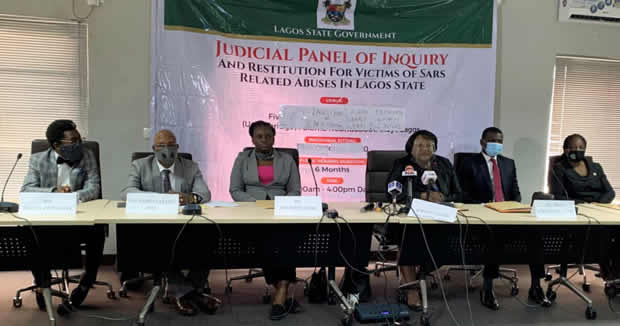
Lamentations at Lagos panel
One of the petitioners that spoke before the panel this week was Hannah Olugbodi, a middle-age hairstylist, who was crippled by the police stray bullet.
Hannah Olugbodi, a petitioner at the Lagos panel
Olugbodi, who appeared before the panel on crutches on Saturday, said the awful incident happened on June 6, 2018, when she was going to buy spices for her family dinner at the Ijesha market.
She alleged that the SARS officers were after the boys, who were watching football at the Ogun City hotel, adding that she got hit by the bullet when the officers started shooting sporadically as the boys refused to settle them.
“On one of those days, some boys were watching a football game when SARS arrived and accosted one of the boys who had tattoos.
“When the SARS men couldn’t extort the boys, they started shooting at them as they ran into the Ijesha market and that’s how I was hit,” she narrated.
She later spent six months at the Lagos State University Teaching Hospital (LUTH), without any of the police officers coming to visit her.
Olugbodi, who appeared before the panel with a large pack of files full of hospital bills said she wants justice, noting that she had spent all she had to pay for surgery, ye she still can’t walk.
Another petitioner, who spoke at the Lagos panel, Adeyemo Rotimi, completely broke down in tears before the panel, as she narrated how her husband lost his life in the hands of police officers.
Adeyemo Rotimi
Rotimi said her husband was a LASTMA official who was shot on November 28, 2018, exactly two years ago.
She said she received a call at exactly 10pm on that day, that her husband had been shot dead by a SARS officer, Olonode Olukunle.
The panel admitted as evidence the photograph the husband soaked in his own blood.
On Tuesday, the panel hearing continued.
SARS bullet killed my 3-day old daughter, man tells Rivers panel
At the panel in Rivers State, one man, Nyordeh Sylvanus has narrated how his 3-day old daughter was allegedly killed by stray bullets from operatives of the disbanded Special Anti-Robbery Squad (SARS), on the eve of August 14, 2014.
“We woke up in the morning of August 15, 2014, to observe that one of the bullets from SARS operatives who were shooting from the night of August 14, 2014, penetrated my roof and killed my only daughter, a three-day-old baby.
“I picked the bullet on August 15 morning and went to SARS office and but was stopped at the entrance of the office by operatives who ordered me to turn back or join my dead daughter,” Sylvanus narrated.
Another petitioner, Lucky Eze, demanded a compensation of N20million and footing of his medical bills from the Nigeria Police for causing damages to his right ear.
Eze, who was a supervisor in a Filling Station in Ahoada Town, said he started having hearing problem with a hole in his inner ear after he was slapped by policemen who invaded his place of work on January 28, 2018.
He said: “I came here to seek for justice for brutality and wickedness did to me by the Police on January 28, 2018. I have been having hearing problem since then. I have five medical reports from five medical doctors of the University of Port Harcourt Teaching Hospital (UPTH) confirming that the slap created a hole in my right ear.
“I am here to seek justice for two reasons; one is to be able to continue with my treatment which I abandoned due to lack of funds. I didn’t deliberately abandon my treatment; I did so because there was no money. Secondly, I am seeking justice for the brutality they meted on me. I ask this panel that I be compensated with the sum of N20milliion.”
The panel headed by Hon. Justice Chukwunenye Uriri (Rtd), however, promised to conclude hearing on all the 171 petitions before it on December 30.
Anambra panel summons notorious James Nwafor
The Anambra State Judicial Panel of Inquiry on Thursday issued a summons on an alleged killer cop with the defunct Special Anti-Robbery Squad (SARS), James Nwafor, and two others to answer questions bordering on police brutality and illegal killing.
James Nwafor was alleged to have perpetrated several brutalities and extra-judicial killings of some innocent people in the state.
The ICIR had earlier reported about a man, Emmanuel Iloanya, who sold N27 million landed properties, including her daughter’s graveyard to secure the release of his 20-year-old son, Chijioke, who was arrested on November 29, 2012.
Iloanya said his son was allegedly killed by the killer cop, James Nwafor, whom he claimed also harassed his wife.
Meanwhile, Veronica Umeh, Chairman of the Anambra judicial panel and a retired judge of the State High Court said the summoned James Nwafor and the two other persons must appear before it on 8th December 2020 to answer allegations against them.
Ekiti panel sets deadline for submission of petitions, recommends N150,000 compensation for complainant
This week, the Ekiti State Judicial Panel of Inquiry announced 30th November, 2020 as deadline for submission of petitions to the panel.
The Chairman of the panel, Justice Cornelius Akintayo (retd) who made the announcement during the panel’s sitting on Wednesday stated that the panel shall not receive any petition beyond the stipulated date.
Justice Cornelius Akintayo (retd)
He added that the deadline would enable the panel to efficiently handle the petitions submitted before it.
Meanwhile, the panel, on Thursday recommended N150,000 as compensation for injustice done to Mr Adaramola Abiodun Olusola.
Olusola had alleged had alleged that his car, a Peugeot 505 Salon car, Reg. No YEE 310 AA was vandalized by hoodlums at about 5:30pm at Dalimore area of the state capital during the EndSARS protest on October 19.
After going through the evidence submitted by Olusola, the panel, however, asked the government to compensate the complainant with a sum of N150,000 to put his car back on the road.
Police demanding N1m bail to release my husband, woman tells Delta panel
Delta panel
A wife and petitioner, Mrs Ese Abugewa, has called on the Delta State government to effect the release of her husband who is being remanded in Ogwashi-Ukwu Prison over alleged trumped up charges.
Abugewa said his husband was arrested by the Anti-Kidnapping Squad of the Inspector General of Police in August 14, 2020.
Counsel to the petitioner, Albert Agbense told the panel that the police refused to allow the woman see her husband, while detaining him illegally.
Agbense said, “The petitioner’s husband was arrested on the 14th of August and they kept moving him from one police station to the other and nobody knew where he was until after a month when we heard that he was kept at the anti kidnapping office by one Azuka Egede, a member of the IG’s team.
“We discovered that they were using his phone to transfer money from her husband’s account. They also shot his ears and they kept him in police cell.
“We actually got a court order from the Magistrate Court to bring him to court at Asaba, but they refused to obey the order until we took the matter to this panel on Monday and adjourned our case to today Wednesday.”
Meanwhile, the panel adjourned the case till December 8 for hearing
Kastina panel receives 30 petitions as inaugural sitting holds
While some states have started hearing the petitions from the victims of police brutality, the Kastina state is just about to set the ball rolling.
Justice Abdullahi Bawale of the Katsina State High Court who is also the panel Chairman said the panel has received not less than 30 petitions submitted before it.
Bawale, however, assured petitioners and the accused that the panel would ensure justice and fairness to all parties in every case.
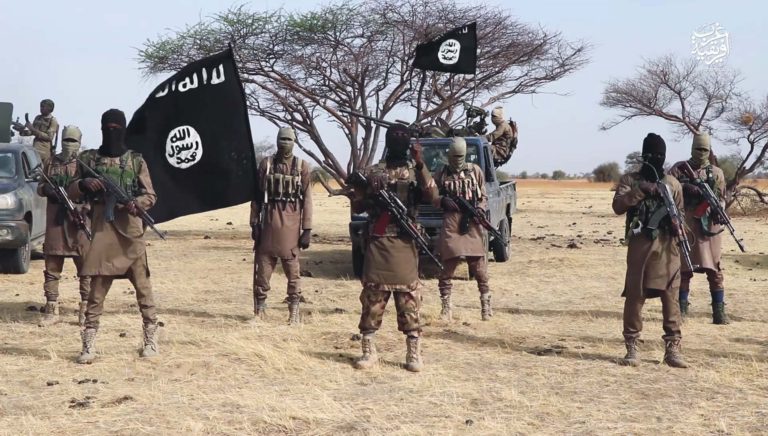
ON Saturday, 28th November, Nigerians were again reminded of the unsafe condition of their country when the news of 43 farmers killed by the dreaded Boko Haram terrorist group were broken.
The northeastern part of the country has been in major crisis due to incessant killings by terrorist groups, bandits and inter-communal clashes.
While this is becoming a fearful norm in the region and other parts of the country, Nigerians are worried over the decreasing hope that the killings would end anytime soon.
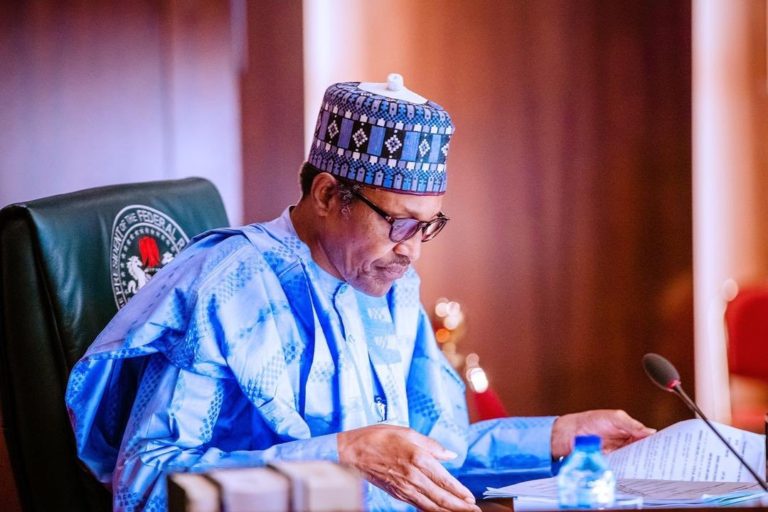
In response to the killing of 43 farmers in Maiduguri, the Borno State capital, President Muhammadu Buhari released a statement through the official Twitter handle of Garba Shehu, the Senior Special Assistant to the President on Media and Publicity.
“President @MBuhari has expressed grief over the killing of farmers on rice fields at Zabarmari, in Jere Local Government of Borno State, describing the terrorist killings as insane.
“I condemn the killing of our hardworking farmers by terrorists in Borno State. The entire country is hurt by these senseless killings. My thoughts are with their families in this time of grief. May their souls Rest In Peace.
President Buhari said the government had given all the needed support to the armed forces “to take all necessary steps to protect the country’s population and its territory,” the statement read.
In a tweet response to the statement, a Twitter user who identifies as PH Made Alpha Male said the Special Assistant has been repeating the same narrative over the ugly incidents in Nigeria.
“Dear Garba, are you not worried that you keep repeating the same narrative to ugly events in this country,” the Twitter user said.
Like the user, some other Nigerians in quote replies to the statement asked similar questions, some are of the opinion that the President is not even aware of the incident.
As they mourn the killing of the farmers, a similar question in their tweets is, does Buhari have a template for condolence messages?
The ICIR takes a look at Buhari’s statement on the 43 farmers in comparison to other statements made about ugly events, killings and deaths in the country.
In the first paragraph, the key-phrase is ‘express grief’ and the description of the terrorists as ‘insane’.
While the word ‘insane’ is uncommon in the president’s statements, on too many occasions, Buharihas been found to have used the same words ‘expressed grief’ over killings or death.
Tuesday, 24th March, Buhari in his reaction to the killing of 47 Nigerian soldiers expressed grief but this time it was ‘profound grief and sorrow’.
January 5, 2019, Buhari ‘expressed grief’ over the death of late Air Vice Marshall Hamza Abdullahi, a former minister and military governor, according to a statement signed by Femi Adesina.
“President Muhammadu Buhari has expressed his profound grief and sorrow over the death of Air Vice Marshall Hamza Abdullahi (Rtd), a one-time Minister of the Federal Capital Territory, FCT who also served as the military Governor of Kano State under him when he was the Military Head of State,” the statement read.
Below are snapshots of the many times the President has expressed ‘grief’ over death and killings in Nigeria.
In the second line of the Borno Farners statement, Buhari said ‘I condemn the killing of our hardworking farmers by terrorists in Borno State. The entire country is hurt by these senseless killings. My thoughts are with their families in this time of grief. May their souls Rest In Peace’.
The keywords are ‘condemn,’ and ‘rest in peace’.
Just seven days ago, Buhari had ‘condemned the killing of Phillip Shekwo, the Chairman of the All Progressives Congress (Nasarawa State) and also said ‘may his soul rest in peace’.
Buhari said: ‘I strongly condemn the killing of Philip Shekwo’ and in the last line said ‘may his soul rest in peace’.
“I strongly condemn the killing of Philip Shekwo. He was kind and jovial. His contribution towards strengthening the party in Nasarawa State will not be forgotten. May his soul Rest in Peace,” Buhari said.
Also in 2017, Buhari in reaction to the killing and attack of a market in Benue state also said he ‘condemns’ such action.
“The President condemns the wicked attack and directs security agencies to begin an immediate investigation with a view to bringing the perpetrators of the dastardly act to book,” Shehu’s statement on behalf of the president read.
Similar occurrences can be seen in the image below:
As usual, the president ‘griefs’, ‘condemns’ after the news of the deaths of innocent Nigerian citizens.
Buhari’s messages on national crises have come under several scrutiny most especially during the ENDSARS protests in Nigeria.
Nigerians still wonder whether the President has a template for condolence messages.
DESPITE domestication of violence against Persons Prohibition (VAPP ACT), signed in 2019 by President Muhammadu Buhari, cases of Sexual and Gender-based Violence, SGBV are on the increase as those saddled with the responsibility of checking the scourge do nothing to stop and protect those affected. The ICIR reports the travail of survivors of SGBV during the COVID-19 lockdown.
THE Nigerian Army and Police Force have remained silent over reported killings of about 40 farmers in Kwashebe Zamarmari axis of Jere Local Government Area, Borno State.
A BBC report says the deceaseds were attacked, tied and beheaded by the Boko Haram insurgents while they were busy harvesting rice on their farms.
The incident which occured Saturday morning had also generated reactions among many Nigerians who expressed grief over the attack.
“I’m stuttered,” Jamilu Haruna tweeted on social media. “God, what is this?” @Crispy_vick, another social media user reacted.
“These madness needs to stop honestly… North was a nice place to visit before but I can’t even go to Jos.,” @NsukkaBoi also tweeted.
However, no official statement has been released by both the Army and the Police.
Sagir Musa, Spokesperson of the Army was contacted by The ICIR but he did not respond to a text message sent to his line.
Repeated calls to Edet Okon, Police Spokesperson in Borno State was not responded to. Text message sent to his line to clarify the information and ascertain the exact casualty figure, if the incident actually occurred was not replied to.
The incident is one of several attacks carried out by the insurgents since about 10 years of its assault on residents in the North-East.
Scores of casualties have been recorded over the years with over 2 million people displaced. While some have taken refuge in the Internally Displaced Persons (IDP) camp, others are still missing. The UN says the violence has also led to the displacement of about 1.4 million children in the country and beyond.
Though, the federal government claimed to have technically defeated the insurgents, killings are recorded on regular basis including ambush of security personnel.
SADE Ale, wife of the Ondo state governor’s chief of staff, Olugbenga Ale, has regained freedom after spending two days in the hands of kidnappers.
Sade was kidnapped on her way from Lagos on Thursday night by some suspected gunmen at Owena area, near Akure.
The details on how she regained her freedom is still sketchy as there are reports that she was freed by the men of the Ondo State Security Network, also known as Amotekun in conjunction with local hunters and vigilantes in the area she was kidnapped.
Adetunji Adeleye, commandant of the Amotekun Corps, who confirmed the release to newsmen said it was too early to disclose how she was rescued.
However, Tee-Leo Ikoro, the state Police Public Relations Officer (PPRO), who also confirmed the release declined to make further comments on her release.
He said the rescue was carried out by operatives of the police command.
“She has been rescued,” he said.
“That is the most important thing. I can’t tell you anything more than that.”
Ondo state has in recent times been a hotbed of criminal activities.
On Thursday, Oba Israel Adeusi, the Olufon of Ifon in Ose Local Government Area (LGA) of Ondo State was killed by suspected gunmen.
The royal father was killed at Elegbeka, a community along the Ifon-Benin highway, while returning from the monthly meeting of the state council of Obas in Akure.
His vehicle was said to have been rained with bullets while the driver was trying to escape from the gunmen. He was rushed to the Federal Medical Centre in Owo, where he died as a result of gunshots he sustained during the attack.
The same day, a commercial bank was robbed at Ode Irele, in Irele Local Government Area, with two reportedly killed and several others injured.
The state government has vowed to bring the perpetrators of these dastardly acts to book.
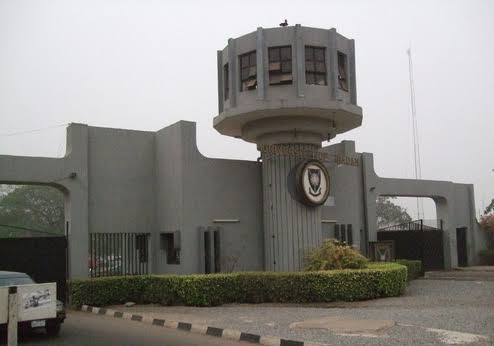
THE federal government has directed the Senate of the University of Ibadan to immediately convene a special meeting to select one of its members to act as acting Vice Chancellor of the institution.
Government said the person the senate would consider must not be a contestant for the position.
Also,the government directed the university’s governing council to suspend its meeting scheduled to hold by 10am Monday to discuss issues on appointment of a new vice chancellor. Rather, it directed that the meeting be shifted to afternoon of same day.
The Minister of Education, Mallam Adamu Adamu, in a letter to the university through the National Universities Commission, NUC, faulted the proposed meeting of the governing council slated for 10am on Monday.
According to the minister, whose letter to the university through its Pro-chancellor,was signed by Dr. Suleiman Ramon-Yusuf, Deputy Executive Secretary (Academics) “since the tenure of the outgoing vice chancellor expires on Monday, it would be inappropriate for the governing council to convene meeting as early as 10am same day to discuss and consider his possible successor.
” The fact that the tenure of the incumbent Vice Chancellor expires on Monday 30th November, 2020, it is pertinent for the Governing Council to meet in the afternoon of Monday 30 November, 2020, to consider and approve the appointment of the Senate nominee as acting Vice Chancellor”.
GROUPS of Niger Delta militants under the umbrella body of Continuous Emancipation of Niger Delta (CEND) have warned foreign embassies in Nigeria to evacuate their citizens from the country as they will not be spared once they commence attack on oil facilities.
The group warned the attacks would commence soon, except the Federal Government satisfy demands made by the South-South governors during the governors’ recent meeting with federal government delegation led by Ibrahim Gambari, the chief of staff to the president.
Some of the demands include true federalism, restructuring, resource control among others. There are also concerns over purchase of Zamfara Gold by the Central Bank of Nigeria (CBN), a situation the South-South leaders widely criticised.
The agitators further tasked the federal government to pay the 13 per cent oil derivation benefits directly to the oil and gas producing communities.
“We are prepared to carry out our threats to the letter without any iota of fear as we have the capacity to bring the oil and gas facilities in the Niger Delta to rubbles if our demands are not met.
“In the coming days, there will be series of attacks on major oil and gas installations in the Niger Delta simultaneously because they are well prepared to push the pawn to the other side of the board without fear and harassment from security agencies and the federal government,” the demands read in a letter to the Punch.
“We want to warn all foreign nationals that this is the time to leave the Niger Delta region, as the attacks which will be total in the coming days, will not spare them. All foreign embassies should as a matter of urgency evacuate their citizens.”
The group which claimed responsibility for the recent attack on crude oil facilities in Ikarama community, Yenagoa of Bayelsa State wants oil companies to relocate their headquarters to the region.
They called for the restructuring of the Niger Delta Development Commission (NDDC) and the Presidential Amnesty Programme in order to realise its primary mandate.
The militants also criticised alleged long-term neglect of the region citing the East-West road as an instance. They claimed the highway which connects the six states of the Niger Delta had been in a deplorable state. According to them, the road would have been fixed if crude oil was being transported through the highway.
The agitators, however, said all field commanders had been briefed not to show mercy on any oil and gas installations, no matter its location until the federal government meets their demands.
“If we do not act now, our children will ask us questions that we will not have answers to, our communities will go into extinction because of underdevelopment, environment degradation, and pollution.”
Several reports in recent years had detailed kidnap cases orchestrated by the militants until they reach a consensus with the government, especially through the amnesty programme.
In October 2009, about six oil workers including two foreigners were kidnapped by the Niger Delta militants.
The following month, eight more oil workers were abducted by the militants. In 2009 alone, about 100 foreign oil workers were reportedly kidnapped by the Niger Delta militants.
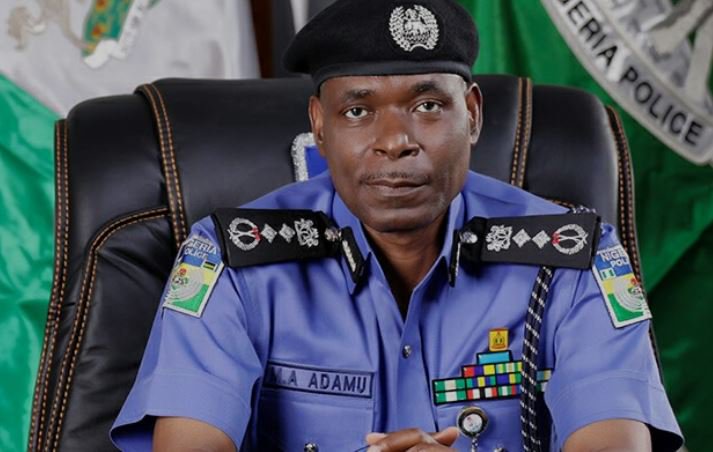
Muhammad Adamu, the Inspector-General of Police, has said that the force would never allow the type of the recent ENDSARS protests in the country again.
Adamu said this on Friday while responding to questions during a meeting with command commissioners of police in Abuja on Friday.
“We will never allow this type of #EndSARS protests again, it was violent. Peaceful protest is allowed in our constitution. When these rallies started peacefully, we provided security for them,” said Adamu.
The IGP added that the protest was being held peacefully and until it turned violent and the protesters attacked the people (police) that were protecting them.
“We were moving with them to make sure they were not molested by any group of people and it was going on well until it turned violent.
“When it turned violent, they then attacked the people that were even giving them protection. So, we shall never allow any violent protest in this country again. When you talk of peaceful protests, yes, it is allowed but violent protests, never,” the IGP stated.
He stated that many of the masterminds of the violence that rocked the #EndSARS protests had been arrested including inmates who escaped from Edo Correctional Centre while calling for the assistance of Nigerians to apprehend other escaped inmates.
“We have made a lot of arrests of those people that escaped from prisons. Some were even arrested in Kano and Kaduna. When they escaped, some of them went back to their business of robbery.
“And the cultists, when they escaped, they went back to the business of cultism, especially in Edo. We’ve been able to arrest a significant number of them and we are still after those that are outside.
“We call on Nigerians, any information you have about an escapee from any of the correctional centres, please inform us or any other security agencies, so that we can get them back to prison,” he stated.
However, in contrast to the IGP’s claim that the ENDSARS protesters were being protected before it turned violent, protesters in most parts of the state were not protected by the police.
In Abuja, while the protesters were calling for the disbandment of the dreaded police unit, Special Anti-Robbery Squad (SARS), police fired water cannons and teargas at the peaceful protesters.
Also in Oyo state, rather than the protection that the IGP claimed was given to the protesters, Jimoh Isiaq was shot and killed by a stray bullet from police as they tried to disperse protestants in Ogbomosho.
In what has now been tagged a Black Tuesday or Lekki massacre, investigations, video evidence and pictures have shown that peaceful protesters were massacred at the Lekki toll gate in Lagos state on October 20.
Following the killings, injuries perpetrated by men of the Nigerian Police, hoodlums used the opportunity to hijack the ENDSARS protests.
Most especially in Lagos state and Abuja, innocent individuals allegedly sponsored by agents of the government attacked peaceful protester.
At the Lekki toll gate, public and private properties were destroyed by hoodlums including attacks on police stations.
ON Friday during the resumed sitting of the Lagos State Judicial Panel of Inquiry, while giving evidence, a petitioner, Nkemakolam Felicia Okpara, 27, said about five police officers beat her until she peed on herself.
Okpara said while she was returning home from a job interview, she met some peaceful protesters on the road and decided to join them.
Shortly after she joined, Okpara said she heard gunshots as protesters and other people in the environment ran for their lives.
The petitioner noted that she was recording the incident before a police officer challenged her and told her to stop recording the event.
For refusing to follow the police’s order, Okpara said she was dragged inside a police station and beaten by two police officers.
She added that when her phone fell off her hand while she was being beaten, one of the police officers smashed it with his leg.
“There is a lady among them, she was so particular about my phone, she kept hitting me until I had to let go because there was no one to call to come to my aid,” she stated.
“While the beating was going on, I lost control of my body and my phone fell on the ground and one of them used his leg to smash it because he believed I was recording with it and I was going to put it on the internet,” Okpara said.
According to her, some others joined the beating and assaulting her until she lost control of her body and peed on herself.
“While we were still at that gate, some were coming out, they joined the beating. Dragged me inside, that was where I lost control of my body, I peed on myself. I managed to get a hold of the phone because I knew that was the only thing I had,” Okpara said in moist eyes.
After narrating her ordeal, Okpara submitted photographs of injuries sustained from the police beating as well as a medical report.
Doris Okuwobi, the Chairman of the Panel admitted the documents as evidence before the panel.
DESPITE joining the Open Government Partnership (OGP) on June 23, 2016, with a commitment to make government more transparent, accountable and responsive to citizens, evidence has shown that, contrary to the spirit of the OGP initiative, the Federal Government is making it more difficult for Nigerians to access information concerning its activities.
The OGP is a multilateral initiative that was launched in 2011 to provide a platform for domestic reformers – in the form of civil society organisations, the private sector and individuals – to partner with the public sector to make governments more responsive, accountable and transparent to the citizens.
While signing on to the OGP initiative, President Muhammadu Buhari had declared the Federal Government’s commitment to increase transparency in governance, stamp out corruption and improve service delivery.
The Federal Government also made commitments to: establish a public central register of company beneficial ownership information; ensure transparency of the ownership and control of all companies involved in property purchase and public contracting; full implementation of the principles of Open Contracting Data Standard, focusing on major projects like building of health centres and the improvement of health services; enhance company disclosure on the payments to governments for the sale of oil, gas and minerals, complementing ongoing work through EITI (Extractive Industries Transparency Initiative); and strengthening asset recovery legislation.
However, investigations by The ICIR shows that, rather than governance becoming more transparent and accountable, in line with the commitments made by President Buhari when the country joined the OGP, government business in Nigeria is becoming increasingly opaque, with the Federal Government and its agencies seemingly wilfully witholding relevant public information from the citizens.
A major indicator of the non-transparent nature of the Federal Government is the abysmally low level of compliance with the Freedom of Information Act by the government and its agencies.
The Freedom of Information law is a major pillar of the OGP initiative. According to the Open Government Partnership, the website of the Open Government Partnership, “Access to information means access to justice. Citizens armed with information can claim what is rightfully theirs. For this reason, OGP members are required to have laws guaranteeing the right to information.”
The Freedom of Information (FOI) Act, 2011, was meant to make public records and information more freely available, provide for public access to public records and information, protect public records and information to the extent consistent with the public interest and the protection of personal privacy, protect serving public officers from adverse consequences of disclosing certain kinds of official information without authorisation and establish procedures for the achievement of those purposes.
The FOI Act established the rights of citizens to apply for information or records in the possession of a public institution or private bodies providing public services, performing public functions or utilising public funds. Such information is to be made available to the applicant within seven days of the receipt of the application. The law also guarantees the citizens’ right to receive information that public institutions are obliged to proactively disclose.
The law equally empowered individuals to take legal action in court to compel public institutions to comply with provisions of the Act, including discharging their proactive disclosure obligations. The FOI Act also stipulated the category on information that may not be disclosed by public institutions, even upon application by applicants.
Section 29 of the FOI Act makes it compulsory for every public institution to submit to the Attorney General of the Federation, an annual report on all FOI requests they received, on or before February 1 of each year.
Access to public information is also a key aspect of the Open Contract Reporting (OCR) Project, which is meant to promote accountability and transparency in public procurement processes.
But, all available records show that the ministries, departments and agencies (MDAs) of the Federal Government are largely not complying with the FOI Act. Most FOI requests are simply ignored outright – in such instances, the applicants do not receive any feedback whatsoever to indicate that the application has been received, or is being considered, or has been approved or denied. In most instances, MDAs only respond to FOI applications just to inform applicants that the request has been denied.
Statistics of FOI requests filed between 2018 and 2020
Between 2018 and August 2020, The ICIR has filed about 310 FOI requests to different Federal Government agencies. Out of the 310 FOI requests, 64 (20.65 percent) received a response; 13 (4.19 percent) were referred to another agency; 187 (60.32 percent) are still pending as there was no response of any form from the concerned agencies, and 46 (14.84 percent) were denied by the agencies.
Also, between August and October 2020, The ICIR has filed 11 different FOI requests to some Federal Government agencies but none of the applications received even an acknowledgment, let alone a response.
The FOI requests were sent to the Niger Delta Development Commission (NDDC), National Primary Health Care Development Agency (NPHCDA), Ecological Fund Office (EFO), Association of Local Governments of Nigeria (ALGON), Federal Road Safety Corps (FRSC), Federal Ministry of Finance, Budget and National Planning and the Federal Ministry of Works and Housing.
In the FOI requests, The ICIR asked for details of procurement contracts approved by the agencies.
Specifically, on August 18, The ICIR requested that the NPHCDA should provide details of capital releases on the construction of primary health care centres (PHCs) in the FCT between 2016 and 2020.
More than two months since the FOI request was filed, The ICIR is yet to get a letter acknowledging the receipt of the request or the actual response to the request.
Again, on September 10, The ICIR filed another FOI request to the NPHCDA seeking details of contractors who got a contract for the renovation of existing primary health centres and construction of new ones in Anambra State. Out of the several requests sent to the NPHCDA, this particular request was only responded to on November 11, a month after the application was made.
Section 4 of the FOI Act provides that public institutions shall within seven days of receiving applications make the information available to the applicant. Despite a reminder sent to the NPHCDA on September 21, The ICIR is yet to get any response on the earlier application for details of contracts for construction of PHCs in the FCT between 2016 and 2020.
In the same vein, on October 2 and October 5, The ICIR requested from the NDDC details of approved contracts and benefiting contractors for road construction/rehabilitation projects in Edo and Abia states. The NDDC is yet to respond.
On October 7, an FOI request was also sent to the Ecological Funds Office (EFO), requesting details of its funded projects in the South-East between 2015 and 2020. More than a month after the application was filed, the request is still pending as the EFO has not responded.
Another FOI request was submitted to the NPHCDA on October 14 seeking details of primary healthcare projects in Kunchi and Lamba local government areas of Kano State. The NPHCDA has also failed to respond to the request.
On October 28, The ICIR sent another FOI request to the Association of Local Governments of Nigeria, (ALGON), seeking details of primary healthcare projects in Kunchi Local Government Area of Kano State. The ICIR equally sent requests to the FRSC, Federal Ministry of Finance, Budget and National Planning, and the Federal Ministry of Works and Housing, seeking different procurement-related information, on the same date.
Only the FRSC has sent an acknowledgment copy confirming the receipt of the request, while others have not made any response as of the time filling this report. However, a month after it acknowledged receipt of the request, the FRSC has not made the information available to The ICIR.
Open Government Partnership has not made government more transparent, accountable in Nigeria
Executive Director of Media Rights Agenda in Nigeria, Edetaen Ojo, was part of the team that drafted the FOI law, and equally served as the civil society co-chair of the National Steering Committee of the OGP. In an interview with The ICIR as part of this report, Ojo noted that, contrary to expectations, so far, the adoption of the Open Government Partnership initiative by the Federal Government had not made governance more transparent and accountable in Nigeria.
”While the Open Government Partnership has the potential to make governance more transparent, accountable and responsive to the needs of citizens, it has not achieved any of these,” he said, noting that there does not appear to be a commitment on the part of all concerned to ensure that governance becomes more transparent, accountable and responsive to the needs of citizens.
Ojo also stated that the implementation of the FOI Act in Nigeria has been extremely disappointing. He blamed the poor implementation of the law on the President Muhammadu Buhari-led administration’s unwillingness to do away with the ‘culture of secrecy’ in government.
Speaking further, Ojo said, “It is particularly so because we have an administration that came to power on the basis that it will eliminate corruption in the country. We know that corruption thrives in an atmosphere of secrecy. In effect, the fight against corruption cannot be won where the government is unable to overcome the challenge of secrecy. But it is clear that the government has no commitment whatsoever to dismantling the culture of secrecy in governance that has engulfed it and enabled corruption to thrive. The major feature of freedom of information laws is their capacity to create openness in government, ensure transparency and accountability on the part of public institutions. Yet, our public institutions continue to disregard their duties and obligations under the FOI Act with impunity, thereby undermining any change.”
He pointed out that there is no single instance where any public institution has been sanctioned or even reprimanded for failure to meet their obligations under the FOI Act or to disclose information to members of the public.
“Indeed, the situation with the FOI Act has thrust on us one of the saddest examples of a public officer misconducting himself. Section 29(6) of the FOI Act provides that: “The Attorney General shall in his oversight responsibility under this Act ensure that all institutions to which this Act applies comply with the provisions of the Act”. Yet, in many instances, we have a situation where public institutions fail to comply with the provisions of the Act and when citizens go to court to compel them to comply, the Attorney-General of the Federation, the person who has oversight responsibility under the Act, the person who ought to ensure that all public institutions comply with the provisions of the Act, sends lawyers to court to defend the public institutions that are willfully violating the provisions of the Act. It is a tragedy. On any index by which you want to assess the implementation of the Act, it is simply scandalous,” Ojo observed.
Although section 29(1) of the FOI Act requires all public institutions to submit annual reports to the Attorney-General of the Federation every year, nine years since the law came into force, there has not been any year where up to 10 percent of public institutions submitted reports.
Yet, despite mamandatory provisions of Section 29(6), which stipulated that the Attorney-General of the Federation shall, in his oversight responsibility, ensure that all government agencies comply with the Act, the AGF does absolutely nothing to ensure that the public institutions complied with this requirement.
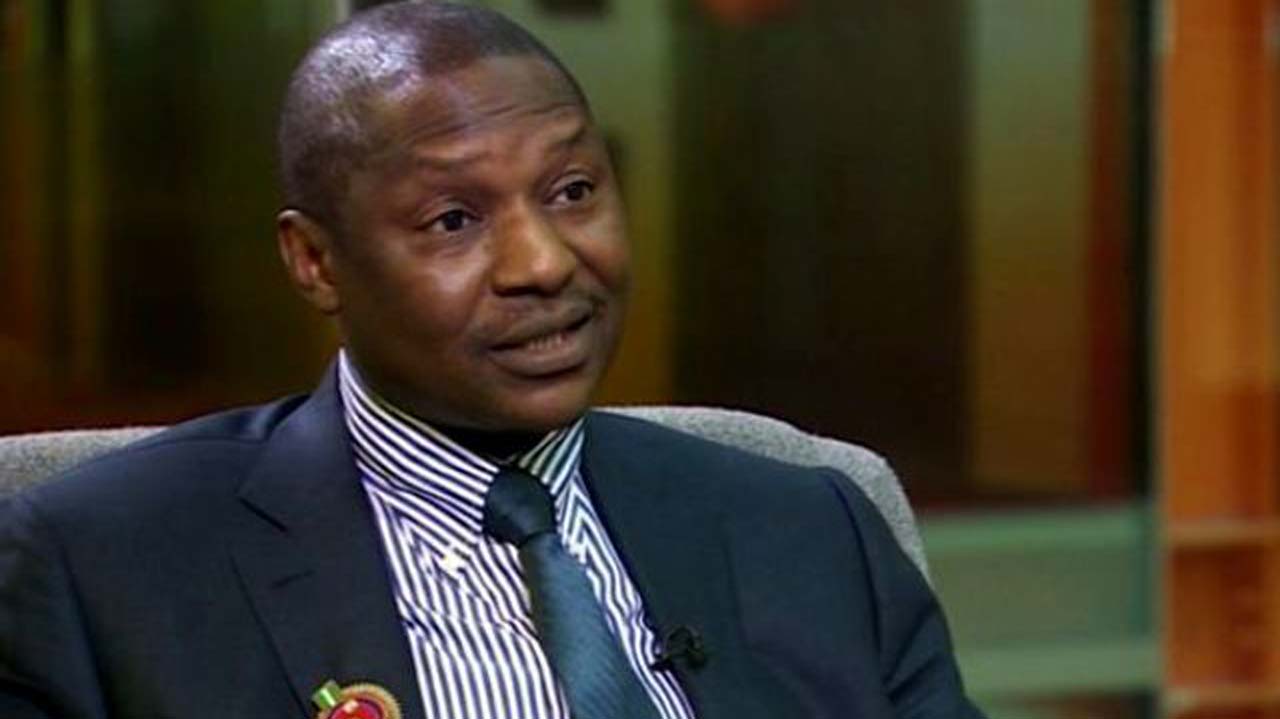
ABUBAKAR Malami, Attorney General and Minister of Justice
Indeed, annual National Freedom of Information Compliance Ranking reports – co-produced by The ICIR, Basic Rights Watch, R2K (Right to Know), Media Rights Agenda, Public and Private Development Centre and BudgIT – indicates that majority of the MDAs do not care about the FOI Act.
The National FOI Compliance Ranking assesses MDAs by a number of parameters, including proactive disclosure of information, level of disclosure, timeliness (responsiveness), FOI training, FOI desk officer and submission of FOI annual report.
The 2020 National FOI Compliance Ranking assessed 213 MDAs.
One hundred and sixty-one (161) out of the 213 MDAs recorded ‘NO’ on all parameters – No Proactive Disclosure, No Response, No Disclosure, No FOI Training, No FOI Annual Report and No Details on FOI Desk Officers – meaning that they did not bother complying with the FOI Act.
The remaining 52 MDAs who registered points on some of the parameters recorded low marks – only the Bureau of Public Service Reforms (BPSR) and the Nigerian Investment Promotion Council (NIPC) got up to 50 points, as they came first and second with 58.75 points and 54 points, respectively.
Ojo told The ICIR that inaction on the part of relevant government officials, particularly the Attorney General of the Federation, was responsible for the high level of non-compliance with the FOI law.
”Nobody in the government says or does anything, thereby signaling all public institutions that they are free to continue to disregard the provisions of the Act and operate in secrecy,” he said.
While most FOI requests do not receive any response from the concerned MDAs, majority of responses, when they are given, are just to notify applicants that the request was denied. The ICIR‘s experience has shown that MDAs reject FOI requests for wrong reasons which do not conform with provisions of the law.
Ojo said the MDAs are able to get away with the practice because they are not being sanctioned for doing so.
Although Section 7(5) of the FOI Act makes it an offence for any public officer or institution to wrongfully deny an applicant access to information and prescribes a fine of N500,000 on conviction, no public officer or institution has ever been punished under this provision because the Attorney-General of the Federation, whose duty it is to prosecute defaulters, has never prosecuted any public officer or institution for wrongful denial of access to information.
The prevailing situation means that there is no instrument to compel the MDAs to disclose information to applicants.
However, Ojo said the MDAs would have no choice than to comply with the law if the President and the Attorney General of the Federation compel them to make necessary information available to applicants.
Edetaen Ojo
“If the President were to signal today to all public institutions that he would no longer condone non-compliance with the provisions of the FOI Act and indeed, if he were to go further and sanction one or a few heads of public institutions that are violating the provisions of the Act, all the others would sit up and begin to comply. But of course, the President is clearly not interested and does not even appear to be paying any attention to the issue. The Attorney-General of the Federation whom the law has given the responsibility to ensure compliance by all public institutions is also not interested and has not made any meaningful effort to get public institutions to implement the Law and comply with its provisions,” Ojo said.
A major challenge with the implementation of the FOI Act is that the law does not provide for any sanctions for non-compliance.
Team Lead, Programs and Administration, OGP National Secretariat, Chidimma Ilechukwu, told The ICIR that efforts are being made to introduce sanctions for non-compliance in a planned amendment of the FOI Act.
Ilechukwu however stressed that the OGP National Secretariat was only a coordinating organ, and was not responsible for implementation of the FOI law.
She explained that the First National Action Plan, 2017 – 2019, developed by the secretariat around commitments to asset recovery, open budgeting and access to information which President Buhari made when signing onto the OGP, focused on developing the capacity of the MDAs to implement the FOI Act. The Second National Action Plan, 2019 – 2022, will continue to focus on providing training for the MDAs and also engaging civil society organisations on advocacy.
”Nigeria joined the OGP for the purpose of transparency and accountability. I can’t speak for the MDAs but there is this culture of secrecy that is already embedded in civil servants. Our own role in the OGP National Secretariat is to keep pushing that the MDAs do the right thing but we are not an implementation agency. Nigeria can do better, we need to get to the stage of proactive disclosure of information,” Ilechukwu added.
Despite records which show that MDAs have largely failed to comply with the FOI Act, Mr Ochibor Joseph Gowon, Head of the FOI Unit in the Federal Ministry of Justice, which coordinates the implementation of the law, told The ICIR that agencies of the Federal Government have been responsive to applications for information from members of the public.
“From reports we get from MDAs, we have more responses than non-responses to requests for access to information,” Gowon said.
He suggested that misgivings over the implementation of the FOI stemmed from lack of understanding of the nature of the public service by the media and the NGOs. “The press and the NGOs should understand the structure of the civil service – you should understand the body language of the people you are dealing with but most of the time you find that most of the NGOs are confrontational. I wouldn’t want to say that the FOI Act is nascent but it is a process that we are getting into. The British law that we got the FOI Act from took five years for implementation to commence but in our case we commenced implementation immediately and those teething challenges are what we are addressing today,” Gowon said.
Further defending the MDAs, Gowon stressed that implementation of the FOI Act includes denying requests. “If I deny all the requests that come to me I am implementing the Act but let it be that the requests were denied for the right reasons,” he said.
Rather than blame the MDAs for non-compliance with the FOI Act, Gowon blamed the media and the civil society for what he described as ‘low level of engagement’ with the FOI Act. “I feel that the challenge here is that the level of engagement has not been much within the private sector. We don’t get as much requests as expected and I think it is because of lack of awareness concerning the law on the part of the citizens,” he said.
Ojo, however, faulted Gowon’s claim that there was a low level of engagement with the FOI Act on the part of the media and the civil society. According to him, it is impossible to determine the extent to which members of the public are making use of the FOI Act because the Office of the Attorney General of the Federation, which should ordinarily be the source of data for the assessment, does not have the records.
“With less than 10 percent of public institutions submitting their reports to the office annually, the Attorney General of the Federation has no way of knowing what is happening in the over 90 percent of the public institutions that are not submitting any report,” Ojo said, adding that a situation where citizens make requests for information and they are wrongfully denied access to the information without consequence would not be encouraging for anyone who might ordinarily want to ask for information.
Ojo stressed that the ministry of justice cannot say that citizens are not making enough use of the FOI Act when it is doing nothing to assist those who are actually trying to use it but are being frustrated.
However, Gowon said the ministry of justice was working with relevant committees of the House of Representatives to consider ways of tying compliance with the FOI Act to approval of MDAs’ budgetary allocations, as a way of improving compliance.
Checks by The ICIR revealed that a ‘naming and shaming’ approach which was adopted by the ministry to encourage compliance in the past did not produce any positive result.
Records in the Federal Ministry of Justice show that 90 out of over 500 MDAs submitted annual reports on FOI Act compliance in 2019. The number (90) is the highest so far in any year since the law came into effect in the country in 2011.
Beyond FG’s lack of political will, implementation of FOI Act undermined by structural, funding, capacity challenges in MDAS
However, beyond the lack of political will by the Federal Government to compel compliance with the law, and the prevailing culture of ‘secrecy’ among civil servants concerning information, The ICIR also discovered that ‘structural challenges’ have contributed to the poor implementation of the FOI Act in the country.
Investigations by The ICIR revealed that only a few MDAs currently have FOI units – the exact figure is vague but only 13 agencies have set up FOI portals.
The FOI unit of the Federal Ministry of Justice, which coordinates the implementation, is ‘struggling’ to set up FOI units in the MDAs, according to sources.
Another major challenge discovered in the course of investigations by The ICIR is that most of the MDAs do not have any budget for implementation of the FOI Act. In the absence of a budget line, in most of the MDAs, the FOI programme is funded with ‘handouts’ from the CEO’s office.
The ICIR further learnt that a memo was submitted to the Federal Executive Council, seeking to authorise the Head of Service of the Federation to direct all MDAs to set up FOI units. The memo was first submitted in December 2019 and resubmitted in March 2020. But no action has been taken on the matter, an indication that there is a lack of political will on the part of the Federal Government to drive the implementation of the FOI Act in the country.
Investigations by The ICIR also revealed that lack of proper record keeping in agencies of the Federal Government is also helping to undermine the implementation of the FOI Act. Civil servants in some FOI units in the MDAs, who spoke to our correspondent in confidence, noted that in most instances, records in government agencies are not kept in such a way that information could be easily made available in seven days as stipulated by the law.
“The best that can be done in most cases is to respond to the applicant within seven days to say we have received the application and that will be all,” a civil servant in one of the FOI units, who pleaded anonymity, told The ICIR.
Ojo noted that the opaque nature of the activities of the Federal Government and the states encourage corruption to thrive in the country, in spite of the President Buhari administration’s anti-corruption campaign.
Ojo told The ICIR, “I believe that the activities of the Federal Government and most of the state governments are becoming increasingly opaque. It is hard to understand why the Federal Government will want its activities to be shrouded in secrecy, unless it really want to encourage rampant corruption in the public sector. But regardless of what its intentions are, the consequence of its attitude is that corruption continues to thrive in many public institutions.”
He observed that series of financial misappropriation that are continually revealed in audit reports by the Office of the Auditor-General of the Federation shows that the opaque nature of government activities was enabling corruption in the public service. Ojo said, “If you need proof of this, just pick up any of the audit reports by the Auditor-General of the Federation for any of the years since this administration has been in power and you will find mind-boggling acts of sheer brigandage and nobody is held accountable.”



 At the panel in Rivers State, one man, Nyordeh Sylvanus has narrated how his 3-day old daughter was allegedly killed by stray bullets from operatives of the disbanded Special Anti-Robbery Squad (SARS), on the eve of August 14, 2014.
 The Anambra State Judicial Panel of Inquiry on Thursday issued a summons on an alleged killer cop with the defunct Special Anti-Robbery Squad (SARS), James Nwafor, and two others to answer questions bordering on police brutality and illegal killing.