Home Blog Page 1976

Dele Momodu, Dino Melaye & Journalism Ethics, by Steve Osuji

0

By Steve OSUJI


FOR THE SOUL OF JOURNALISM PROFESSION: This piece was to be titled: ‘Dele Momodu has done it again,’ but that might diminish the crucial issue at hand.

Our noble profession is at stake here and the matter must not be taken lightly.

In his back page column (PENDULUM) in THISDAY newspaper today,12/09/20, Momodu wrote about Dino Melaye and critics of his lascivious lifestyle.

But the vantage space: the back page of a national newspaper turned out to be what we often describe as column abuse. The piece turns out to be an exercise in self-sterilization and disinfection; shadow-boxing against imaginary enemies and in all these, setting the stage for another journalistic harakiri.

Momodu needed so much to cavort with Dino in the public space and he had deployed two-thirds of the space in circumlocutous self-purgatory before he bagged his quarry.

On his 60th birthday a couple of months ago, yours sincerely had taken the auspicious moment to lay it on his back that though he had done well for himself,  journalism may have borne the brunt of his ‘success.’

In fact I made it known in plain words that what he practised was showbiz as distinct from journalism. That fine art of keeping an eye on the society requires thoroughbred and not just any dog, but this is in a manner of speaking.

That didn’t sit well of course. It was not intended to.

He made reference to my advisory thus: “Now imagine, how a self-professed journalism policeman wrote during my 60th birthday celebration that “Dele Momodu is not a journalist!” The man must have assumed that that was the best congratulatory message he could send to me on my special day. Such is the irresistible effect of hate and envy. I deliberately did not give him the attention he was seeking by not responding and I will not dignify him with a mention of his name.”

Wow, hate… envy… attention! These are Momodu’s response to an article that speaks to  the crucial questions of journalism ethics and best practice.

But then, he went about responding to some of the issues I had called him out over.

One, the infamous Abacha family whitewash and celebration in his photo book, Ovation. Two, the ignoble, spin interview with Diezani Allison-Madueke.

And now this… the showcase of the vain lifestyle of a man who suffers an acute case of Arrested Development Syndrome  (ADS).

In putting up a defense as to why he practise showbiz journalism, it turns out that he has been sitting on erroneous premises all these while.

Hear: “Journalism happens to be the most flexible profession on planet earth. That is the reason anyone can be a media practitioner.”

No sir, journalism is not a highway maiden who is game for all comers. There are still rules of engagement.

Momodu thinks that attacks on him which he says had gone on for 20 years were borne out of envy and vindictiveness for his success and for doing journalism his own way and style.

ABACHA, DIEZANI AND NOW, DINO: He explains away the infamous, blockbuster celebration of the Abacha family about two years after his inglorious demise.

The Abacha junta had allegedly made to vanquish Momodu in the heady, endgame days of military rule and he had escaped by the whiskers, out of Nigeria, through the bush paths. Now to celebrate the family of the same dictator who almost assassinated you two years later is an act that carries a huge, dark question mark.

Of course the tragic trajectories of the Abacha clan hounds Nigeria till date. Let’s say Momodu is not aware of this fact (having never heard of Abacha loot) or he doesn’t give a damn!

Hear his justification: “I found the Abachas newsworthy, I wanted to unveil where and how they lived, and I returned with a monstrous scoop.”

Sounds like the gushing of a rookie reporter! How else would a treasury-raiding family live than in criminal opulence. And that’s what Momodu celebrated in his celebrity photoalbum, Ovation! And he proudly calls it journalism!

It’s the same story about Diezani, the powerful petroleum minister under President Goodluck Jonathan. There are prima facie evidence that Diezani abused here office in a most savage and primitive manner perhaps not known in the land. She practically fled abroad and now has citizenship of some banana republic somewhere. All of these to escape probe and punishment for her numerous financial heists while in office.

But Momodu had interviewed Diezani abroad, selling to the world, the picture of a dying, cancer-ravaged woman being hounded by a wicked government. This was the spin spun on that most dishonest, unprofessional report.

He proudly calls it journalism.

And now, he was recently taken us through a guided tour of ex-senator Dino Melaye’s Shangri La located in the arid sahel of a stinkingly poverty country.

You might as well have a firsthand taste of the tour as curated for you by the great journalist, Dele Momodu: “From his vintage and contemporary cars, artworks, dogs, supebikes, chandeliers, goldplated dinner plates and cutlery, elevator, bars, bedrooms, floating swimming pool, assorted drinks which he doesn’t drink, clothes, shoes, and the most controversial, over 200 pieces of exotic wrist watches.”

Wow! Yours truly would pay to see the designer dog in Dino’sTaj Mahal!

And here’s Momodu final clanger: “I traversed the building inside and out while I was transmitting live on Instagram. I will rate this unprecedented work of journalistic excellence one of my best stories ever even if my critics develop epileptic spasms in the process.”

No, this critic is neither epileptic nor spasmodic but he will not let you get away with this manner of journalistic genocide you seek to inflict on the rest of us. My mother had so much disdain for any of his children who tried to glory in wrongdoing. You revel in this!?

Momodu tells us that it matters not to him how Dino Malaye, known only for being a federal legislator in the last 15 years or so, made money for this infantile show of decadent opulence.

THE MOMODU PRACTICE CODE: Well, if Momodu didn’t care about public interest, if he didn’t care about social welfare, if he gives no hoot about public accountability, then he can’t be described as a journalist in the true sense of practice.

If he has no sense of public opprobrium, if the tragic calamity of the Abacha era, the massive financial malfeasance of Diezani and the Dino bonfires of vanity are all fair game to Momodu, then I repeat again, that Momodu is a mere hustler and showbiz impresario who can write readable articles. HE IS NOT A JOURNALIST.

We will not tire to repeat ad nauseam, that journalism, no matter the genre, has some unassailable codes of practice that anyone who claims to be one must know,  internalize and adhere to.

Some of these are that our reports must bear no ethical dilemmas like conflict of interest. Reports must be seen to be truthful, objective, honest, reliable and serve public interest, among others.

Sorry to say that your encounters with Abacha, Diezani and now Dino, don’t pass muster.
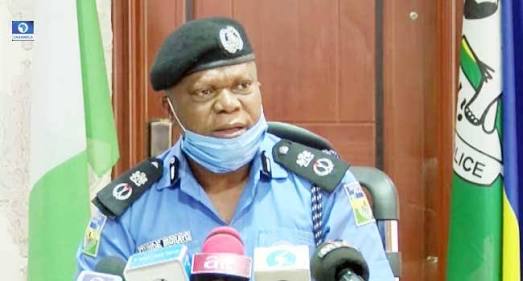
Ekiti State police command alerts residents of plans by hoodlums to attack state


THE Ekiti State Police Command has alerted the residents of the state of plans by suspected hoodlums to attack the state.

Tunde Mobayo, the State Commissioner of Police, who revealed this in a statement said the police through credible intelligence has discovered a planned influx of bandits into the state with the intention to unleash evil and cause havoc in the state.

“It has come to the notice of Ekiti State Police Command through intelligence gathering that some group of persons suspected to be armed hoodlums and criminally minded aliens have concluded their plans to enter Ekiti State in large numbers in order to unleash evil, cause havoc and create apprehension,” Mobayo said.

According to him, the hoodlums will arrive in the state in two batches with the first set pretending to settle down peacefully with their host communities while others will join them later to actualize their planned havoc.

“Further intelligence gathered has it that the first set of the armed and criminally minded hoodlums will arrive in the state with the pretence of settling down peacefully with their host communities while the other set will come later to launch an attack and cause havoc,” the Police Commissioner said.

While appealing to landowners, landlords, and agents to be careful of the identities of those they receive on their properties, Mobayo admonished all commercial drivers and motorcyclists to be watchful and report to the police immediately any suspected traveller(s) arriving in any part of the state.

He also urged residents “to be security conscious, extremely vigilant and report to the police immediately any suspected person or group of persons arriving, residing or found perambulating their environs”.

 Abutu Sunday, the State Police Spokesperson, who confirmed the statement to The ICIR on phone said all police units and personnel in the state have been put on alert.

He urged residents not to panic, adding that the command is prepared to forestall any attack by the hoodlums.

The police warning is coming after three weeks Jide Ijadare, a retired officer of the United States military was kidnapped at his factory by some suspected hoodlums in Ijan Ekiti, Gbonyin Local Government Area of the state.

The hoodlums shot dead one of his staff before abducting him alongside one of his staff.

He was released following a ransom of N20million  paid by his family.

Nigeria’s electricity consumers paid N1.27 trillion for power consumed from 2017 -2019- Report

0

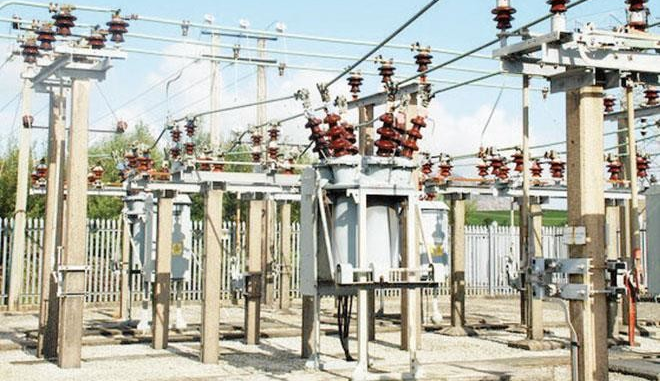
ELECTRICITY Distribution companies in Nigeria collected a total of N1.27 trillion from customers over the past three years, according to data obtained from the Association of Nigerian Electricity Distributors, (ANED).

ANED, the umbrella body for the Distribution companies,  revealed that customers had paid N363 billion in 2017, N437.9 billion in 2018, and N473 billion in 2019.

While the energy billed consumers by the Discos was pegged at 18,882 gigawatt-hours which is estimated at N597.3 billion in 2017, it was  20,852 GWh which is about N661.6 billion in 2018 and 21,702GWh valued at N695 billion in 2019.

Energy received by the power distributors climbed to 26,630GWh in 2019 from 26,385GWh in 2018 and 24,616GWh in 2017, based on the data released.

“The Discos only collect an estimated 24 per cent of the tariff revenue, while the balance goes to the Transmission Company of Nigeria (TCN) generation companies and other industry stakeholders,” ANED revealed in its report.

However, the revenue collection of the Discos rose to a record N127 billion in the first three months of this year

ANED stated that energy billed by the Discos in the first quarter of 2020 was 5,768GWh (equivalent to N187bn), out of the 6,911GWh they received.

“The collection in the first quarter of 2020 hit a new record of N127 billion, 10 per cent more than the same quarter last year,” it added.

The power firms said the energy sent out in the first quarter of this year was much less than what was projected at the last minor review for 2020.

According to them, the Nigerian electricity supply industry has not solved critical issues such as the lack of spinning reserve, load misalignment with Discos and the TCN interface issues, delays in the implementation of TCN´s expansion plan, and lack of investment in Discos’ infrastructure.

According to the group, the number of registered end-users in the industry keeps increasing at a rate of about 75,000 new customers per month, resulting in more than 9.5 million customers.

“Delays and barriers in the implementation of the Meter Asset Providers regulation are making the metering gap to grow, with almost 59.7 per cent of the end-users unmetered.

“Since 2015, there has been no significant improvement in the energy generated and wheeled by the TCN that is finally received by the Discos. It continues to be flat and is only mainly affected by a seasonal effect between the dry and rainy seasons,” the report stated.

The distribution and generation companies created out of the defunct Power Holding Company of Nigeria (PHCN) were handed over to private investors on November 1, 2013, following the privatisation of the power sector.

After 7 months of closure, FG orders reopening of all schools in Nigeria

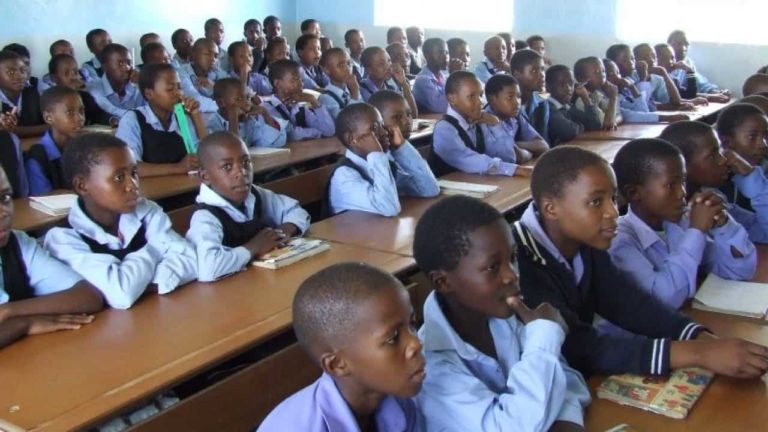
THE Federal Government has ordered the reopening of all schools in the country after seven months of closure.

Adamu Adamu, Nigeria’s Minister of Education gave this directive during a press conference on Friday in Abuja.

“I’m glad to report that there has not been any single case of COVID-19 in all Unity Schools. No single fatality among the students,” Adamu said.

“We have come to the conclusion that we have to review our decisions. After consultation with PTF, we have resolved that our Unity Schools be opened on October 12, 2020.”

Adamu added that the Federal Government has consulted all relevant stakeholders in the education sector before arriving at the decision to reopen all schools.

“We have consulted widely with all stakeholders in the education sector. Our eyes and ears are opened to the international media,” he added.

He added that schools across the country, are at liberty to fix resumption dates and ensure adequate safety measures.

However, the minister warned that schools that fail to adhere strictly to the outlined COVID-19 safety protocols, risk closure if there is an outbreak from such institutions.

Earlier in March, the Federal government ordered the closure of all schools in Nigeria after the COVID-19 index case was confirmed in Ogun State.


US President, Donald Trump, first lady, test positive for COVID-19

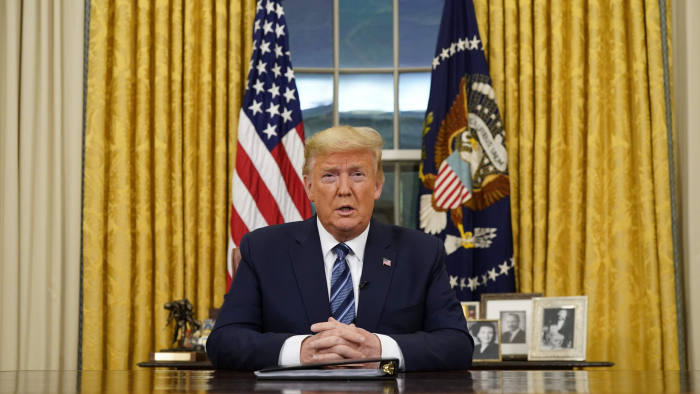
DONALD Trump, President of the United States of America has announced that he and Melania Trump, the First Lady,  have tested positive for COVID-19.

Trump, in a tweet post on his official twitter handle, disclosed his status on Friday morning.

“First Lady of the United States and I tested positive for COVID-19. We will begin our quarantine and recovery process immediately. We will get through this TOGETHER,” Trump tweeted.

The United States President has for a long time dismissed the existence of the virus calling it a hoax.

Some Americans have accused Donald Trump of being defiant to the guidelines of COVID-19 thereby risking the lives of citizens of the country.

Despite the recommendation by the US Centers for Disease Control (CDC) on facemasks or cloth coverings in public to help stop the spread of the virus, Trump said he would not follow the protocols.

“I don’t think I’m going to be doing it,” he said back then. “Wearing a face mask as I greet presidents, prime ministers, dictators, kings, queens – I just don’t see it,” said Trump.

The President failed to wear facemasks until July 12 when he visited Walter Reed military hospital outside Washington DC, where he met wounded soldiers and health care workers.

During the Presidential debate on Wednesday, Trump had mocked his opponent in the 2020 presidential elections, Joe Biden for wearing a mask always.

Pointing to Biden, Trump said “Every time you see him, he’s got a mask, He could be speaking 200 feet away from it. And he shows up with the biggest mask I’ve ever seen.”

The President has now joined the list of prominent people and world leaders who have tested positive for the virus including the United Kingdom Prime Minister, Boris Johnson.

COVID-19: Osun Govt orders full reopening of markets, worship centres

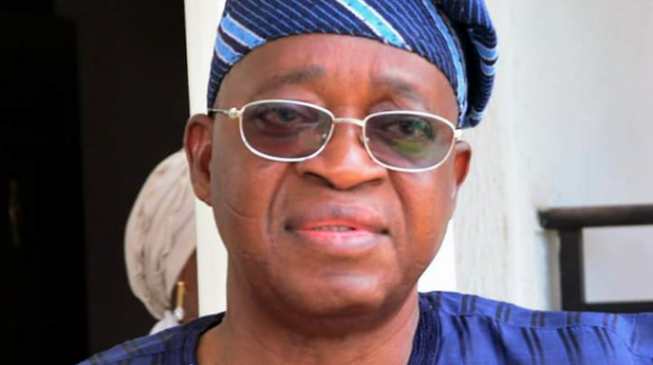
THE Osun State government has ordered the full reopening of markets and places of worship in the State.

In a new guideline on the ease of the lockdown induced by the COVID-19 pandemic, the State Government said that all markets are now allowed to commence full operations, while worship centres that were restricted to once weekly meetings can now commence their weekly services, subject to COVID-19  safety protocol.

Funke Egbemode, the State Commissioner for Information and Civic Orientation, who made the announcement said that the new guideline takes immediate effect.

According to her “The State Government of Osun has appraised the current status of the State in the ongoing fight against the COVID-19 pandemic and has decided to relax some of its lockdown measures following some emerging positive indices.”

She stated that the approval has been given for the full reopening of all markets and worship centres in the state, for the purpose of serving the needs of the people on the one hand and to preserve the means of the traders’ livelihood on the other.

Egbemode added that all citizens, whether traders or clients, are urged to continue to wear nose masks in public places, and also ensure regular use of hand sanitizer especially at the end of every exchange.

“The government has also granted approval for worship centres to commence their normal weekly activities in addition to the Friday jumat and Sunday Services,” she said.

“Worship centres are enjoined to observe the regular precautionary measures of wearing of face masks, hand washing, temperature screening and avoidance of physical contacts in public places.”

While stating that practices that require sharing of materials should be limited’ the Commissioner added that adequate provision should be made for handwashing facilities such as soap, running water and hand sanitizer at entry points and at strategic places, for use by leaders and attendees.

She said there has been significant improvement in the statistics of the state with respect to the infection, but the state is not COVID-19 -free yet.

Egbemode appealed for a collective responsibility by every resident of the state to get rid of the state of the virus.

Since its first outbreak in the country, Osun State accounts 839 confirmed COVID-19 cases. It has recorded 790 recoveries with 17 deaths.

Ikeja electricity company suspends tariff hike for two weeks

THE Ikeja Electricity Distribution Company (IKEDC) has announced the suspension of electricity tariffs for two weeks.

IKEDC made this known in a statement titled ‘ Implementation of NERC’s directive on electricity tarriff posted on its official Twitter handle on Thursday.

“This is to inform you that we have fully complied with the Order from the Nigerian Electricity Regulatory Commission (NERC), to suspend the new Service Reflective Tariff (SRT) for the next two weeks,” the statement read.

The company added that within that period of two weeks, it would charge its customers on rates applicable before the hike.

“Within this period, the tariffs for all customers shall be based on rates applicable as at 31 August, 2020,” it said.

The company’s announcement followed an agreement between the Nigeria Labour Congress (NLC), Trade Union Congress (TUC) and the Federal Government of Nigeria to suspend aa nationwide strike over the increase in electricity tariffs and fuel prices in Nigeria.


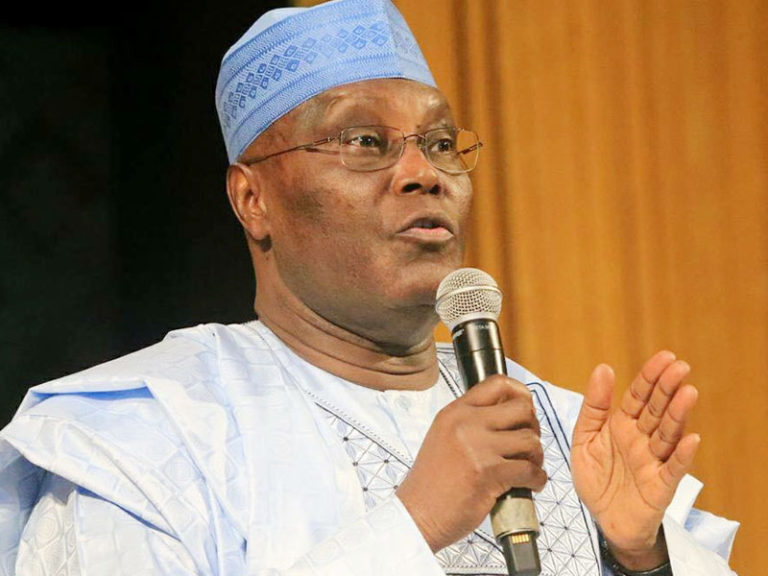
Nigeria @60: Atiku advocates youth investment, says youths of Nigeria represent the future wealth

ATIKU Abubakar, former Vice President, has called for a quality investment into the future of Nigerian youths.

Atiku made the call in his Independent Day’s message to the nation.

He said the Nigerian youths represent the future wealth of Nigeria and the only way of tapping into their potentials is by quality investment in education and skills acquisition for them.

“The youths of Nigeria represent the future wealth of the fatherland and the only way we can tap into them is through quality investments in education and skills acquisition,” he said.

“Through the creativity that they inject in their passion, the excellence of the Nigerian youth is a global signature in diverse fields notably in sports, as they can be found in medicine, in education, in business and finance, agriculture, and in our entertainment industry.

“Indeed they ‘berekete’ in every facet of our life from the rain forest of the south to the Sudan and Sahel Savannah of the north and the guinea Savannah of the midlands of the territories we call home.

“We may have failed to take advantage of the power of the Nigerian youth. But there is something much more significant that their triumphs teach us people looking forward to a better future. When they win, they celebrate Nigeria.”

According to him, Nigerian youths are ready and eager to conquer the world, stressing that  What they lack is the leadership to take them through that process.

“For Nigeria to work for the millions of its people, and to be reckoned with as a global competitive force in the nearest future, we must come up with a development plan that will have our youth at the centre of the plan.

Atiku said the times of idle, lame promises are over, noting that “we urgently need to build a new Nigeria where every dream would be embraced and the potentialities of our youth could be unleashed without the usual fears that have dragged us.”

Drawing reference from Israel Adesanya, UFC star in his recent outing to defend his UFC middleweight title in Abu Dhabi and the joy and pride his victory brought to Nigeria and all Nigerians, the former presidential candidate noted that there are many youths in the country with the indefatigable spirit of Adesanya but the Nigeria state has failed them.

“On Saturday, 26 September, 2020 in far away Abu Dhabi, Israel Adesanya, an illustrious Nigerian, who embodies the indefatigable Nigerian spirit made the nation proud by successfully defending his UFC middleweight title. That victory lifted our spirit and gave us hope in a season of hopelessness when every index of life and human development in our country is trending abysmally negative.

“Nigerians of all hues are united in the celebration of the victory of Adesanya. It is our victory. No one cares if he is from Abia or Zamfara, Rivers or Osun state. Indeed some are wont to adopt Ibrahim or Omesonma as his name. But what is important is that he is a Nigerian, and his victory our collective victory.”

“Truth be told, there are many Adesanyas in every nook and cranny of our land. They give meaning to our aspirations. Sadly we have failed them.

He lamented that the structure on which we have hinged our political and economic emancipation has equally failed us.

“We do not hope to continue doing the same thing with a jaded and unworkable system and expect to get a remarkable result.”

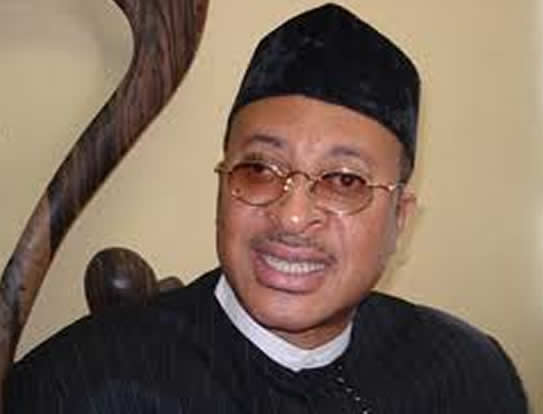
Nigeria @60: Nigeria lacks authentic leaders because we run a transactional leadership model – Pat Utomi

0

PAT Utomi, a Professor of Political Economy, and a management expert has described Nigeria’s leadership model as a transactional system that thrives on instant gains rather than long-term thinking for transformational growth. 

Utomi who spoke on Thursday during a current affairs programme on Arise TV to mark Nigeria’s 60th Independence Anniversary,  described Nigeria’s leaders as mostly short term thinkers who do not care about the future.

“You must think in the long-term if you are a leader. Leadership is sacrificial giving of oneself for the advance of the common good for all with the understanding that the profit of the leader is immortality,” he said.

The founder of the Centre for Value in Leadership (CVL) said Nigeria got to where it is now because of bad leadership and poor governance that didn’t give much thought about the future.

“Great leaders don’t look at the present moment because if you are looking at this moment, you will not be able to do the things that will make a country work. The Chinese are particularly gifted in thinking in a 100-year term. Most Nigerian leaders think in terms of next week, and that is their undoing,” Utomi said.

“One thing Nigeria has lacked is authentic leaders and part of the reason is the leadership selection process that we have put in place in our country. Nigerian leadership is fundamentally transactional, for instance, politicians will say if you vote for me I will build the second Niger bridge.”

Utomi stressed that democracy cannot be sustained without democrats, lamenting that most Nigerian politicians are not democrats but desperate people whose mindset is to win elections.

“In the 1960s, if politicians give you water and the next election you don’t vote for them they went to remove the pipes that go into the homes of their constituents and that kind of transactional leadership orientations does not build nations.”

“It’s a big tragedy for our country because 18 years from now, oil would have become a non-economic value of significance then Nigeria will become clear-headed. Twenty-five years ago, we were saying treat oil revenue as a windfall which should have made us save for the rainy day but unfortunately, that is not the case,” he said.

Abuja, a capital city scarred by terror

WHEN Information minister, Mr Lai Mohammed, ‎announced that all routes leading to the Eagle Square would be blocked from midnight on Wednesday, September 30, as part of measures to beef up security in and around the venue of Nigeria’s 60th independence anniversary celebrations on October 1, 2020, it was clear that Abuja, the country’s capital city, is still haunted by an incident that occurred during the same event, on the same date, exactly 10 years ago.

On October 1, 2010, Nigeria celebrated its 50th independence anniversary – the Golden Jubilee. ‎But the day is remembered for bomb blasts that occurred during the lavish celebrations.

There were three blasts from car bombs. It was the first time bomb blasts were recorded in the Federal Capital Territory. In fact, at that time, bomb blasts have not become a common occurrence in Nigeria, a situation which was to change with the ascendancy of the Boko Haram terrorists. ‎

At least twelve persons, including a policeman, died, while 17 others‎ sustained injuries, in the Independence Day bombing, which was claimed by, and blamed on, a Niger Delta militant group – the Movement for the Emancipation of the Niger Delta (MEND).

The first blast occurred around the Ministry of Justice, a stone throw from the Eagle Square, at 10:30 am,‎ and a second explosion went off moments later, after emergency services had arrived at the scene.

A third, smaller explosion occurred at the Eagle Square, where President ‎Goodluck Jonathan was observing the Golden Jubilee festivities with foreign dignitaries and hundreds of Nigerians, mostly government officials and prominent individuals.

Jonathan, who was inspecting a guard of honour at the time, had to leave the Eagle Square suddenly in an armoured limousine, without making a scheduled address. The celebrations however continued on a sober, tensed note, with military bands, dances by school children and air force displays.‎

As it were, the explosions occurred about an hour after MEND threatened to attack the celebrations, and warned people to evacuate the area.

“Several explosive devices have been successfully planted in and around the venue by our operatives working inside the government security services. In evacuating the area, keep a safe distance from vehicles and thrash bins,” a statement signed by MEND spokesman, Jomo Gbomo, said.

The militant group was fighting to secure a greater share of the oil revenue for the Niger Delta, the country’s oil rich area, and the statement noted‎ that “For 50 years, the people of the Niger Delta have had their land and resources stolen from them”.

… ‎Low-key independence anniversary celebrations devoid of usual parade at Eagle Square

Independence Day Celebration, 2018

Meanwhile, the Independence Day bomb blasts, and subsequent terror attacks in Abuja, including the August 26, 2011 bombing of the UN headquarters, by the Boko Haram sect, had a drastic impact on future celebrations of Nigeria’s Independence Day anniversaries. ‎

About a year later, on September 28, 2011, three days to the celebration of the country’s 51st independence anniversary scheduled for October 1, 2011, another statement came from MEND, again threatening to blow up the Eagle Square. “On October 1, 2011, the Movement for the Emancipation of the Niger Delta intends to place bombs within and in the immediate vicinity of Eagle Square, venue of the proposed 2011 independence anniversary celebrations. After fifty one years of independence, Nigerians still have nothing to celebrate. The general public is strongly advised to consider this as a first and final warning.

“No additional warning will be issued subsequent to the deployment or detonation of these devices which will be novel in nature,” the emailed statement by MEND spokesman, Jomo Gbomo, said.

As if that was not enough, a security report submitted by the Presidential Committee on Security Challenges in the North-East zone revealed that suspected Boko Haram members have sneaked into Abuja to carry out suicide bomb attack on a national asset in order to dent the 51st independence anniversary celebrations. ‎

Amid fears of possible deadly terror attacks in the FCT, the 51st independence anniversary celebrations was a low-key ‎ceremony which held inside the Presidential Villa, with massive security beef up across the nation’s capital.

When, on September 3, 2012, ‎the then Minister of Interior, Abba Moro, announced that that year’s 52nd independence anniversary would again be a low-key event ‘in line with the transformation agenda of the administration which frowns at flamboyance and unnecessary spending’, many Abuja residents believed that the government was only looking for an excuse to, once again, stay away from the Eagle Square to avoid the terrors of another Independence Day bombing.

Gradually, holding the independence anniversary parade inside the heavily protected fortress that is Aso Rock, the Presidential Villa became the tradition.

In fact, it was not until ‎the country’s 58th independence anniversary in 2018 – eight years after the Independence Day bomb blasts of 2010 – that the celebration would be held again in the Eagle Square, as President Muhammadu Buhari inspected the guards parade in a highly secured ceremony.

But, when Nigeria marked its 59th independence anniversary, on October 1, 2019, the celebration was again moved to the Presidential Villa.


… Security measures distort Abuja masterplan

The most striking, and lasting, consequence of the terror attacks in Abuja – starting with the October 1, 2010 bombing and amplified by the deadly activities of the Boko Haram – was the officially sanctioned distortion of the highly revered Abuja Masterplan in the form of road diversions and erection of ‘security infrastructure’ around the premises of major national assets, including key government establishments, in the city.

Heavy concrete barriers were deployed at the entry points, and around the perimeter fences, of offices such as the Central Bank of Nigeria, Nigerian National Petroleum Corporation, Ministry of Foreign Affairs, Ministry of Defence, and several others. The same was replicated, with even more fortifications, at buildings housing security agencies, such as the Army headquarters, the National Defence College, the police headquarters, the Department of State Services, the National Security and Civil Defence Corps, among others. In fact most police stations, and indeed any government office that had a convenient space for the deployment of the concrete barriers, were all equipped with the security facility, which was meant to prevent bomb-laden vehicles from coming into the premises to wreak havoc.

The concrete barriers are still in place today, and in some of the offices, have been painted to look like decorative objects.

The need to paint and decorate the concrete barriers must have been informed by the fact that they defaced and distorted the environment, giving the premises of the concerned establishments a disorganised, crude and shambolic appearance.

Besides, in a bid to ensure that ‎potential terrorists do not get close enough, roads around some key establishments, particularly security outfits, were blocked, with vehicles and pedestrians forbidden from passing. In such situations, vehicular and pedestrian movement was restricted to just one lane on the opposite side of the road, as is the case on the road around the defence headquarters.

Also, military posts manned by heavily armed and highly alert operatives were set up around the entry points at some major government establishments. In most cases, combat ready armoured tanks are stationed at such military posts. Apparently, the government is not taking chances.

From all indications, ‎the concrete barriers, road diversions and security fortifications have come to stay, and might as well have become part of the Abuja masterplan.

‎…Residents still wary

Despite the ‘targeted‎’ security fortifications in parts of the city, some residents of Abuja are still not feeling secure.

A civil servant, Mr Malachy Ibeji, works in the protocol unit of a government agency and was on official duty at the Eagle Square on the day of the Independence Day bomb blasts. In an encounter with our correspondent, he said he has been avoiding large, public gatherings since that incident. ‎”I was on duty at the Eagle Square on that day and because of that experience I always try to avoid large public gatherings. You never can tell what some people are planning and when and where an attack will take place. There are so many issues in the country and a lot of people are aggrieved because of one thing or the other so you can’t rule out another bomb blast especially when there is a large crowd,” he said.

A cab driver, ‎who identified himself as Aniete James, noted that Abuja is not safe. He recalled hearing the breaking news of the Independence Day bombing through his car stereo, just moments after the blasts went off. “At first I thought the news was about something that happened in Baghdad, Iraq, or any other place in the Middle East where bomb blasts are a normal thing. But I realised it was Abuja and I was terrified. I had to stop work immediately for a couple of hours to observe how things were going,” James said. ‎Ten years after, James said he is still conscious of the dangers that residents of the FCT face while going about their daily activities.  ‎

“Abuja is the federal capital so any group that wants to strike the government will launch an attack in Abuja,” he observed.

Janet Ekechukwu, a trader, said she just had her first child around the period the bomb blasts occurred and tried very hard to get her husband to relocate the family to the eastern part of the country.

She said, “It was a fearful period, I was telling my husband that we should leave Abuja and move down to the east. We are from Imo State and I wanted to relocate to Owerri or Enugu, which I still believe are ‎more peaceful and secure than Abuja. My husband refused because of his work but I was afraid for my baby. Even my mother and my husband’s parents wanted us to leave Abuja. Now I have three kids and I still want to relocate because Abuja is not safe.”

…Death, and life imprisonment, for Independence Day bombers

Three alleged masterminds of the Independence Day bombing – Charles Okah, Obi Nwabueze and Edmund Ebiware – have been sentenced to life imprisonment for the incident.

A third person accused of masterminding the attack – Tiemkemfa Francis-Osvwo – died in detention.

Okah, Nwabueze, Ebiware and Francis-Osvwo were first arraigned before an Abuja Federal High Court on December 7, 2010, after they were arrested for their alleged role in the bomb blasts.

At the time the accused persons were arrested, the spokesperson of the Department of State Services, Marilyn Ogar, said they had direct links with a former leader of MEND, Henry Okah, who was in South Africa, as well as some “unscrupulous prominent elements in the society”.

Henry Okah‎, the elder brother of Charles Okah, was arrested in Johannesburg, where he reportedly has a house, a day after the Independence Day bomb blasts in Abuja.

All the accused persons denied the charges filed against them by the Federal Government, through the DSS, which investigated the matter.

Ebiware, who had his trial conducted separately, was convicted in 2013 and sentenced to life imprisonment. Charles Okah and Obi Nwabueze were similarly convicted and handed life jail sentences in 2018. Henry Okah has also been prosecuted and reportedly convicted‎ in South Africa for the bomb attack.