The Society of Environmental Journalists (SEJ) is seeking approximately 50 experienced professionals to serve as judges, screeners and back-up reviewers for the 2025 Awards for Reporting on the Environment.
These volunteers will play a vital role in helping identify and honor the most impactful environmental journalism of the year.
The organiser says they are particularly interested in expanding their pool to include new and diverse voices–including journalists from underrepresented lived experiences, international newsrooms, nonprofit media and a range of disciplines across the journalism ecosystem.
“This is a unique opportunity to help recognise outstanding environmental journalism, expand your professional network and support SEJ’s commitment excellence, equity and representation in media”.
Experienced news professionals, journalism educators and subject-matter experts can volunteer as judges and screeners.
The screening period for the SEJ Awards will begin in September. Screeners will have approximately four to six weeks to evaluate their assigned entries and recommend a shortlist of 35 to 40 entries per category for consideration by the judging panels.
Submit the interest form by September 2, 2025. apply here.
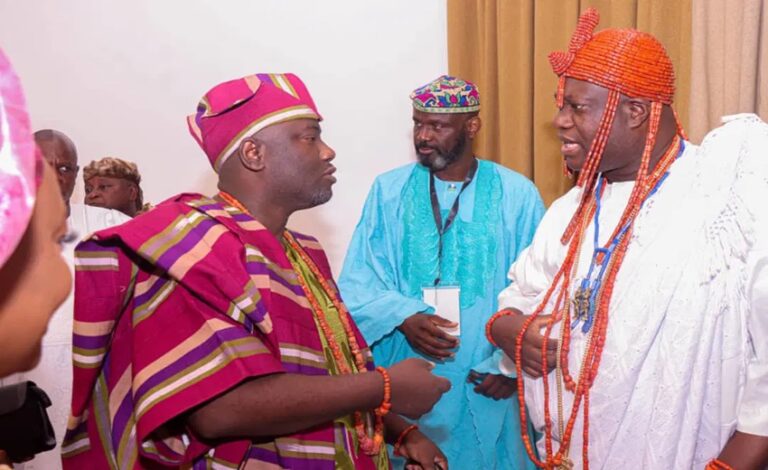
On Monday, August 18, the Alaafin of Oyo, Abimbola Akeem Owoade, issued a 48-hour ultimatum to the Ooni of Ife, Enitan Adeyeye Ogunwusi, demanding the revocation of the chieftaincy title of Okanlomo of Yorubaland he recently conferred on businessman Dotun Sanusi.
In a statement signed by his Director of Media and Publicity, Bode Durojaiye, the Alaafin described the Ooni’s action as an insult to his stool, insisting that only him had the exclusive right to confer titles covering the entire Yorubaland.
He accused the Ooni of exceeding his jurisdiction and ignoring a Supreme Court judgment which, he claimed, confirmed the Alaafin’s sole preeminence on such issues.
As of the time of filing this report, The ICIR could not confirm if such a judgement existed, even though a lawyer, Pelumi Olajengbesi, denied the claim.
According to the Oyo monarch, the conferment of chieftaincy titles that covers the entire Yorubaland is the sole responsibility of the Alaafin.
He argued that the Ooni’s authority, as defined by his instrument of office, did not extend beyond the Oranmiyan Local Government Area (LGA) (now Ife Central, North, and South LGAs), rendering the title conferment invalid.
Alaafin warned Ooni to revoke the title within 48 hours or face serious consequences, saying his peace efforts should not be seen as weakness.
“The Ooni of Ife is behaving as if there is no authority to check and call him to order and because of that ‘above the law’ syndrome of his, he is in the habit of walking on everybody’s’ back including the apex court in the country, the Supreme Court, which had ruled on the exclusive preserve of the Alaafin to confer chieftaincy title that covers the entire Yorubaland on anyone.”
“The instrument of office presented to Oba Ogunwusi, during his installation, specifically limits his traditional area of authority to Oranmiyan Local Government, which has now been split into three Local Governments, viz: Ife Central, Ife North and Ife South,” the statement read in part.
Alaafin stated that the principle that nobody is above the law was being put to the test as he vowed that Ooni would face the consequences of his action if he failed to reverse his decision within 48 hours.
However, in a Facebook post credited to Moses Olafare, spokesperson for the Ooni’s Palace, on Tuesday, August 19, the Palace reportedly said it would not respond to the Alaafin’s ultimatum.
Olafare declared that his principal (Ooni) had directed him against issuing a formal press release on the matter, calling the Alaafin’s demand an “empty threat.”
He suggested that the focus should be on unity of the Yoruba race rather than divisive narratives. “Let’s rather focus on narratives that unite us rather than the ones capable of dividing us. No Press Release please. 48 Hours My Foot!!!” he reportedly said.
Also reacting to the threat, some traditional leaders in Ibadan, Oyo State, faulted the Alaafin.
The leaders in a statement signed by the President of Ibadan Mogajis, Asimiyu Ariori, and the Coordinator of Ibadan Compound Peace Initiative (ICPI), Nurudeen Akinade, defined Alaafin Owoade’s position as an affront on Ibadanland.
They criticised the Alaafin’s stance as “provocative and divisive,” alleging he was trying to stir up unnecessary conflict in Ibadanland.
Similarly, the Olukosi of Ilukosi-Ijesa, Osun State, Omotooyosi Akinleye, warned against actions that could undermine the Ooni’s authority as the custodian of the Yoruba ancestral throne.
Olukosi, in a post on X, claimed that while Yoruba monarchs held influence within their territories, Ooni remained the spiritual father of the race.
He stated that the Ooni’s throne represented the heritage of all Yorubas and urged traditional rulers to avoid conflicts over titles and recognitions.
The Ooni of Ife, Ogunwusi, was born on October 17, 1974. He is the 51st Ooni of Ife.
He ascended to the throne in August 2015 following the demise of Oba Okunade Sijuwade.
Ogunwusi was selected on October 26, 2015, and took his oath of office on December 7, 2015.
The current Alaafin of Oyo, Owoade, was crowned the 46th Alaafin of Oyo on April 5, 2025, at the age of 47 years. He was born on 17 July, 1975.
He took over fromLamidi Adeyemi, who passed away on April 22, 2022, at the age of 83.
The recent clash between the Alaafin of Oyo and the Ooni of Ife highlights a longstanding rivalry over supremacy and traditional jurisdiction between the Oyo and Ile-Ife kingdoms.
Many are now wondering what will happen after the 48-hour ultimatum expires today.
Media reports indicate that several traditional leaders in Yorubaland have intervened to quell the conflict.
With the Ooni reportedly dismissing Alaafin as “Alawada Kerikeri”, meaning a chief comedian, it is clear he is not ready to rescind his decision or back down.
What’s left for the Alaafin, who has been heavily bashed on social media for his threat? What will the ‘consequences’ for Ooni look like? Litigation, more verbal assaults, or a resort to what cannot be immediately pre-empted? Nigerians are waiting to see.
Whichever way the events turn, one thing is clear: the dispute has sparked a heated debate about traditional authority and monarch’s jurisdictional power in Yorubaland.
The stakes are high, with potential implications for traditional institutions, peace, and unity in Yorubaland.
THE Pulitzer Centre is accepting applications for its Ocean Reporting Network (ORN) Fellowship.
The network will establish a collaborative ecosystem of journalists around the world that will uncover the harmful and illegal practices of the fishing and extractive industries, systemic threats to marine biodiversity and coastal communities.
At least nine full-time fellows will be selected for the programme.
Journalists with a proven track record of environmental investigations can apply for a remote fellowship.
The organiser says, “A healthy ocean is vital to tackling the existential environmental threats of global warming, pollution, and biodiversity loss.
Covering more than two-thirds of the planet, the world’s waters absorb carbon dioxide and heat, and produce half the oxygen we breathe.
The ocean provides a habitat for countless plants and animals. Billions of people rely on fish in their daily diet, and the fishing industry provides employment and income around the world”.
The ORN fellows will work on individual and collaborative reporting projects to probe the drivers of the degradation of the marine environment, as well as the socioeconomic impacts.
The yearlong fellowship will cover a reporter’s salary.
The deadline for the application is September 12. 2025. Interested applicants can apply here.
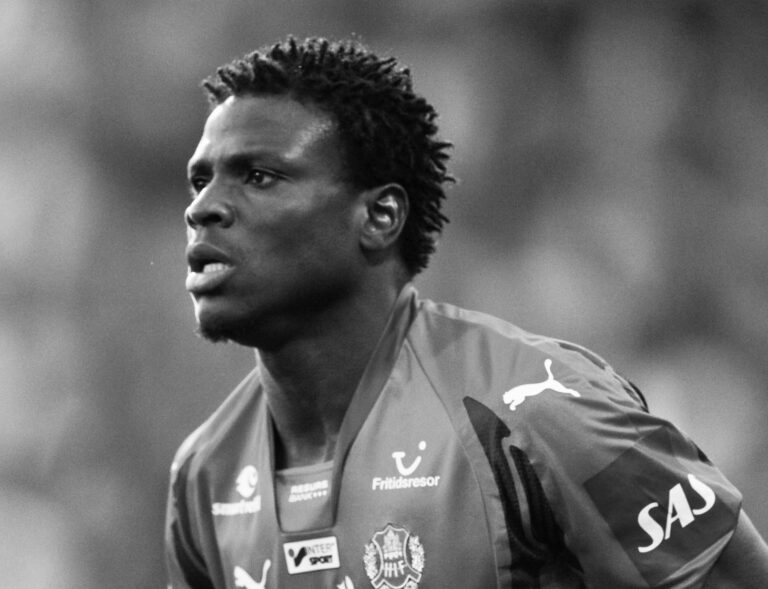
FORMER Benin Republic international and ex-Superligaen striker, Razak Omotoyossi, has died, aged 39.
His passing was confirmed on Tuesday, August 19, by Swedish club Helsingborgs IF, where he once starred.
“Helsingborgs IF is in mourning. We have received the news that our former player Razak Omotoyossi has passed away, 39 years old. Our thoughts are with his family and relatives. Rest in peace, Razak,” the club announced in a statement.
Omotoyossi’s journey from Lagos to Cotonou was shaped by an incident that altered the course of his career.
In 2003, while playing for Sunshine Stars, he was slapped with a five-year ban by the Nigeria Football Federation (NFF) after being accused of assaulting a referee in a league match against Enyimba.
However, Omotoyossi later revealed that it was a case of mistaken identity.
Speaking in a 2021 radio interview, he said a teammate had confronted the referee, but his own jersey number was wrongly submitted.
“There was an issue in the game and one of my teammates with jersey number walked up to the referee and had a hot argument with him,” he said.
“I wore jersey number 23 in that game and rather than submitting the name and number of the player involved, the referee submitted my number and without asking for my own side of the story, I was banned by the NFF which led to my movement to Benin Republic,” he was quoted to have said.
According to him, he was in line to be invited to the national team to participate at the 2005 U-20 World Cup but the incident led to his omission.
“It was a big let down for me because I never did anything wrong but was accused wrongly, which led to the federation banning me,” he added.
The sanction forced him out of Nigeria and ultimately into the arms of Benin Republic, where he naturalised and began representing the national team.
He would go on to score 21 goals in 55 appearances for the Squirrels, becoming their second all-time highest scorer.
Beyond that, Omotoyossi played in Sweden, for Helsingborgs IF in 2007 and 2008, finishing as joint top scorer in the Allsvenskan in 2007.
He later joined FC Metz in France’s Ligue 1 before spells in Saudi Arabia (Al Nassr), Egypt (Zamalek), Syria, and Moldova.
His crowning moment came in the 2008 Africa Cup of Nations qualifiers, when he scored all four goals in Benin’s stunning 4–1 win over Togo, ending the campaign as joint top scorer alongside Samuel Eto’o.
MALI’S former Prime Minister, Choguel Kokalla Maiga, who was dismissed in November 2024 after criticising the country’s ruling junta, was on Tuesday, August 19, charged with embezzlement of public funds and placed in custody following a hearing at the Supreme Court.
The ICIR reports that Maiga was taken into custody last week, soon after the junta initiated a series of arrests to foil an alleged plot within the military to overthrow the government.
Maiga’s lawyer, Cheick Oumar Konare, revealed in a statement that his client faced charges of “embezzlement of public funds,” noting that no trial date had been scheduled.
“We believe in justice, we are calm while awaiting the trial,” Konare said, explaining that Maiga would remain in prison.
“Choguel Maiga says he is calm and believes that a politician should expect anything, including prison and death,” Konare added.
Confirming the embezzlement charge, a judicial source told journalists that Maiga was specifically accused of “misappropriation of public property, forgery, and the use of falsified documents.”
Plagued by jihadist and separatist unrest, Mali has been under military rule since successive coups in 2020 and 2021.
The junta led by President Assimi Goita has distanced itself from Western allies, particularly former colonial power France, while forging political and military ties with Russia.
Appointed after the second coup in 2021, Maiga was dismissed after openly criticising the lack of clarity on when the military planned to relinquish power in the West African nation.
Maiga’s dismissal in November 2024 seemed to confirm that the Army, which had reneged on its pledge to return power to civilians by the end of March 2024, was further tightening its grip on the nation.
Mali’s junta replaced the civilian prime minister with Abdoulaye Maiga, a general, the country’s former government spokesperson.
The ICIR reports that since 2012, impoverished Mali has been engulfed in a security crisis driven by violence from Al-Qaeda and Islamic State affiliates, along with local criminal gangs.
The national Army and its Russian allies are often accused of carrying out atrocities against civilians, while the junta has intensified its crackdown on dissents amid escalating jihadist violence.
In July, the military-appointed legislature passed a bill granting Goita a five-year presidential term, renewable “as many times as necessary” without the need for elections.
THE Federal Government has said that Nigeria spends $10 billion annually on food imports, amid insecurity, access to finance, believed to be critically affecting food production in the country.
Minister of Agriculture and Food Security, Abubakar Kyari, hinted at this at the First Bank of Nigeria Limited 2025 Agric and Export Expo in Lagos on Tuesday, August 19.
Amid a rising rate of food imports, he stressed the need to increase financing in agriculture to boost local production and exports.
“Nigeria spends over $10 billion annually importing food such as wheat, rice, sugar, fish, and even tomato paste.
“Currently, the nation earns less than $400 million from agro exports. To build a non-oil export economy, we must rethink how we finance agriculture,” Kyari, who was represented by his Special Adviser, Ibrahim Alkali, said.
He noted that despite the country having about 85 million hectares of arable land with a youth population of over 70 per cent under the age of 30, Nigeria accounts for less than 0.5 per cent of global agro-exports.
“Agriculture already contributes 35 per cent of our Gross Domestic Product and employs 35 per cent of our workforce,” Kyari stressed.
According to the Minister, there is an urgent need to scale up agricultural financing.
“President Tinubu has made it clear that food sovereignty is the goal. Nigeria must not only feed itself but do so on its terms, free from excessive dependency on imports.
“Sovereignty means ensuring that no Nigerian goes hungry because of shocks in global food supply chains. It means empowering every community to stand on the strength of our land, our people, and our productivity,” he said.
He maintained that boosting domestic production and supporting exports are not separate agendas — they are two sides of the same coin.
“We have the land, the labour, and the markets. What we lack is the system of financing, value addition, and infrastructure that can turn potential into prosperity.
“The fundamentals compel us to pivot from dependence on oil rigs to resilience in food and export earnings; from raw commodity exports to value-added agribusiness; from fragmented farmer credit to structured financial systems that attract significant capital; and from stereotypes to active youth participation in agriculture,” Kyari said.
He further emphasised the need for innovative mechanisms and critical thinking to strengthen food security.
“Nigeria can do better if we begin to think critically and improve mechanisms such as revenue sharing, agricultural financing with performance triggers, factoring forward contracts, Pay-as-Harvest schemes, and more.
“These are not abstract theories. They are proven models working successfully in real economies,” Kyari added.
The ICIRreported recently that for most of the northern states where the huge agricultural foods are produced and supplied to the south, there has been concern over the spread of insecurity, as well as incessant flooding that is impacting food supply.
Earlier this year, the National Emergency Management Agency (NEMA) announced that 15 states were at high risk of flooding, including Kogi, Imo, Enugu, Adamawa, Taraba, Borno, Zamfara, Katsina, and the Federal Capital Territory.
For the most part, the northern region has been battered with insecurity, which has led to the killings of thousands, as most farmers are scared of going back to their farmlands because of the herdsmen-farmers crisis.
While the federal government has hinted at its plan to borrow ¥15 billion (approximately $110 million) in emergency loans to strengthen food security in the country, most commercial banks’ policies do not favour loan access to the agriculture sector, The ICIRreported.
In July 2023, President Bola Tinubu declared a state of emergency to tackle food shortage and rising costs, but the price of foodstuffs and other commodities has continued to surge since his two years in office, with the country’s food inflation peaking at over 40 per cent in June last year.
A FEDERAL High Court in Lagos have sentenced two notorious drug kingpins, Ajetsibo Emami, 37, popularly known as Warri Kinsman, and Solomon Akpomuai, 51, to a combined 10 years imprisonment.
The court, however, gave them a N50 million option each that would make them escape jail.
According to a statement by the spokesperson of the NDLEA, Femi Babafemi, on Tuesday, Emami was arrested in Ikeja, Lagos, on Saturday, June 28, 2025, after NDLEA operatives dismantled his drug trafficking network in a three-day operation.
The agency said three other suspects were arrested during the operation and operatives recovered 24 jumbo bags containing 681 pouches of Canadian loud, a strain of cannabis weighing 414.2 kilogrammes from Emami’s network.
The NDLEA said the bust of Emami’s drug ring followed credible intelligence on his attempt to move the shipment to the Lekki area of Lagos State, from where it would be distributed to other parts of the state and across the country.
He was subsequently arraigned before trial judge, Deinde Dipeolu, of the Federal High Court 8, Lagos, in charge number FHC/L/636C/2025 bordering on dealing in illicit drugs.
In his ruling delivered on Monday, August 18, 2025, the judge, Dipeolu, convicted Emami on the one-count charge filed against him by the NDLEA prosecutor and Assistant Commander of Narcotics, Buhari Shuaibu Abdullah.
He was thereafter sentenced to six years in prison with an option of N50 million instead of jail.
In a similar development, according to the NDLEA, the other convict, Akpomuai, was first arrested by men of the Nigeria Customs Service along Shagamu-Ijebu-Ode expressway with 2,197.8 kilogrammes of skunk, a strain of cannabis, on June 3, 2025. He was transferred to the NDLEA on June 16.
He was arraigned in charge number FHC/L/635C before judge Dipeolu for trafficking illicit drugs in large commercial quantities.
In his judgement on the matter, the trial judge convicted and sentenced Akpomuai to four years in prison with an option of a N50 million fine.
Commenting on the convictions, the Chief Executive Officer of NDLEA, Mohamed Buba Marwa, described the conviction of the two drug kingpins as an indication that Nigeria would sooner than later surmount the menace of substance abuse and illicit drug trafficking as a result of the positive outcomes of the current balanced approach to the agency’s drug supply reduction and drug demand reduction efforts.
He commended the judiciary, NDLEA officers involved in the investigation and prosecution of the cases, as well as other stakeholders, for their commitment to the cause of a drug-free Nigeria.
The ICIR reported that on Wednesday, August 13, 2025, Marwa said the agency arrested 40,887 drug offenders and 45 barons in the past two years.
Besides, the agency seized 5.5 million kilogrammes of illicit substances within the same period.
Marwa stated this in his opening remarks at the commissioning of 46 new vehicles distributed to strategic commands and formations of the NDLEA at the agency’s national headquarters in Abuja, on Wednesday, August 13.
He said 704.445 hectares of cannabis farms, hidden deep in forests, were also destroyed by the agency, adding that the NDLEA had equally secured the conviction of 8,682 traffickers and kingpins, and ensuredtheir assets were forfeited to the Federal Government.
Marwa explained that 24,173 drug users were treated and rehabilitated in its 30 rehab centres across the country during the period.
FIVE alleged terrorists said to be members of the Al Shabab group involved in the June 5, 2022, attack at St. Francis Catholic Church, Owo, Ondo State, have applied for bail.
The defendants, namely Jamiu Abdulmalik, Abdulhaleem Idris, Idris Abdulmalik Omeiza, Momoh Otuho Abubakar, and Al Qasim Idris, on Tuesday, August 19, pleaded with the Federal High Court in Abuja to order their release from the custody of the State Security Service (SSS), also known as Department of State Services (DSS), pending the determination of their trial.
The Federal Government (FG) in the charge marked: FHC/ABJ/CR/301/2025, being prosecuted by the SSS, alleged that the defendants attacked the church, which led to the death of over 40 persons and left over 100 others injured.
The defendants, suspected to be part of an Al-Shabaab terrorist cell operating in Kogi state, allegedly attacked worshippers using IEDs and AK-47 rifles to advance their ideological agenda.
The five accused persons, however, pleaded not guilty when the charges were read to them in court on August 11.
The application came on a day the court gave the Federal Government the nod to shield the identities of witnesses who will testify against the defendants.
During Tuesday’s hearing, the prosecution counsel, Calistus Eze, requested the court to grant an ex parte application to protect witnesses’ identities, citing concerns for their safety given the case’s sensitive nature.
Following a no-objection stance by the defendants, the judge, Emeka Nwite, ordered that the names and identities of the witnesses should not be disclosed during the trial.
Defence counsel Abdullahi Muhammad urged the court to grant bail to his clients, promising to provide suitable sureties and assuring their attendance at trial.
The prosecution vehemently opposed the application, citing concerns that the defendants might flee.
The FG’s lawyer, Eze, argued that the seriousness of the charge and the possible outcome of the trial were enough to motivate the defendants to jump bail and escape from the country.
He therefore urged the court to deny the bail application and instead order an accelerated hearing of the case.
After hearing both sides, the judge, Emeka Nwite, sitting as a vacation judge, adjourned the matter to rule on the application.
Meanwhile, the FG informed the court that it had appointed Adedeji Adedipe, a senior advocate, to head the prosecution.
The court previously ordered the SSS to grant the defendants access to their lawyers and family, enabling them to prepare their defence.
The ICIR reported that the then Chief of Defence Staff (CDS) Lucky Irabor, in 2022, said troops of the Nigerian Army arrested the gunmen involved in the Owo attack.
The CDS spoke during a press briefing at the Defence Headquarters in Abuja.
Irabor said the army arrested the terrorists in collaboration with other security agencies.
THE recent incidents of passengers’ unruly behaviour and airport crew’s negligence on safety protocols have again spotlighted how Nigeria’s justice system favours social standing, with weightier sanctions on an average Nigerian.
Instances abound where Nigeria’s justice system glaringly favours Nigerians with higher social standing getting a tap on the wrist, while others with lower social standing get weightier sanctions for violating the law.
Nigeria’s justice system has been criticised for promoting favouritism, particularly toward the wealthy and powerful. There’s also a notable lack of trust in the legal system among Nigerians, leading some to seek redress through the court of public opinion instead of formal institutions.
Here are some instances to see where social standing influences Nigeria’s justice system;
Davido versus Raye on breach of the NYSC rule
Recently, the National Youth Service Corps (NYSC) punished a serving corps member, Ushie Rita Uguamaye, a.k.a Raye, for going against its rule.
Rita was said to have been sanctioned for failing to attend the April 2025 biometrics clearance, a decision that aligns with the NYSC Bye-Laws. Her service year was therefore extended by two months.
This has elicited public criticism from both local and international bodies, including Amnesty International.
Screenshot showing the corps member, Rita Uguamaye, popularly known as Raye, who described Tinubu as a ‘terrible president.
It had drawn a parallel on how the NYSC acted in a similar breach of its rule by David Adeleke, popularly known as Davido, in August 2018.
The pop star was among the 2,152 Batch ‘B’ Stream 2 corps members sworn in at the NYSC orientation camp, Iyana Ipaja, Lagos State.
Besides arriving at the camp in an official vehicle, Davido did not fully observe the mandatory three-week orientation programme before jetting out of the country to perform at a concert.
His actions violated the code of conduct rule in the National Youth Service Corps (NYSC) Bye-Laws (Revised 2011), specifically rules 3 and 15, respectively.
By the rules, Davido should have been decamped and required to join the next batch for the orientation exercise. That, however, was not applied in his case, pointing to how the justice system is served when influential people are involved.
Lawyers say this is a breach of section 17 (2) (a) of the Constitution of Nigeria, which provides that every citizen shall have equality of rights, obligations and opportunities before the law.
Policeman versus Okoya’s son on naira abuse
Earlier this year, the Nigeria Police Force (NPF) avoided prosecuting two sons of Razaq Okoya, the chairman of Eleganza Group of companies, caught abusing the naira notes in a viral video.
While the NPF shared that a policeman captured close to the Okoya sons was detained for disciplinary action, nothing was said of the steps taken against the Okoya’s sons at the time, pointing to how the laws in Nigeria are often skewed against the poor, thus favouring the wealthy and affluent.
But Section 21(3) of the Central Bank of Nigeria (CBN) Act 2007 states that spraying of, dancing or stepping on the Naira or any note issued by the Bank during social occasions or otherwise constitutes an abuse and defacing of the Naira.
In handling the matters, the Federal Government and its agencies were knocked for their reactions, raising concern about how it applies the law to ordinary Nigerians and differently to influential people in the same or similar circumstances.
Kwam1 versus Emmason on unruly behaviours at the airport
On August 5, a Nigerian popular Fuji musician, Wasiu Ayinde, widely known as K1 De Ultimate or Kwam1, exhibited unruly behaviour when he refused to obey boarding rules and subsequently attempted to stop a ValueJet aircraft from taxiing on the tarmac at the Nnamdi Azikiwe International Airport, Abuja.
Fuji musician Wasiu Ayinde, also known as K1-de-Ultimate.
He was also accused of carrying a flask containing a liquid, suspected to be alcohol, of which the aviation rule provides that carriage of liquids, aerosols and gels on an aircraft must be in a container not bigger than 100 millilitres and put in a transparent plastic bag that must be submitted for screening and approval by cabin crew.
The pilot, Oluranti Ogoyi, and the co-pilot, Ivan Oloba, were immediately sanctioned for neglecting safety protocols. But for public outcry, the popular musician was placed on a no-fly list for six months, two days after the incident.
His action violated the Nigerian Criminal Code Act 1990, Section 459A, which provides that:
“Any person who, by any unlawful act, obstructs, causes an alteration to be made in the course of or in any way whatsoever hinders or impedes the movement of any aircraft, which is in motion on or in flight over any aerodrome, is guilty of a misdemeanour, and is liable to imprisonment for two years.”
On Sunday, August 10, a passenger, Comfort Emmanson, had a similar occurrence with Ibom Air hostesses when the lady allegedly refused to switch off her phone or put it in flight mode. This led to manhandling her after she engaged in a violent confrontation with the aircraft hostesses and security officials at the Lagos Airport.
In a swift reaction, the Airline Operators of Nigeria (AON), an umbrella body for Nigerian airlines, placed her on an indefinite no-fly list across all member carriers. Consequently, she was arrested, remanded to the Kirikiri Correctional Centre, and arraigned at an Ikeja Magistrate’s Court in Lagos.
However, the incident sparked heated debate as Nigerians drew comparisons to Ayinde’s episode.
Screenshot of passenger Comfort Emmanson caught in drama with Ibom Air and Lagos Airport workers
Extant laws, unruly behaviour, breach of safety protocols
While many concerned Nigerians have queried the selective application of justice in the recent aviation incidents and how it speaks well of the Nigerian justice system, below are a few provisions related to the incidents.
The Nigerian Civil Aviation Authority (NCAA) law, Civil Aviation Act 2022, provides penalties for breach of the Aviation rules. Section 45 provides sanctions on security checks of passengers and baggage; section 75 on trespass on aerodromes; section 83 on hijacking and interference; section 81on dangerous flying; and section 85 on interference with crew members.
An aviation security expert, John Ojikitu, told The ICIR that the contravention of the laws and elite favouritism and preference did not start today and exposes the country to higher aviation risk exposure.
“It did not start with the woman on Ibom Air, nor K1, nor did it begin with the former Governor, now Senator Oshiomole. The record showed that the Federal Airport Authority of Nigeria and the Nigeria Civil Aviation Authority (NCAA) will show that it has always been there especially with political office holders,”Ojikitu said.
Undermining of the justice system
This has been a major concern when the arm of the law is wielded against offenders. According to a human rights lawyer, Femi Falana, the government is seen as undermining its moral authority to prosecute unruly air passengers as its decision to pardon Ayinde sets a dangerous precedent.
“By this action, the Federal Government has lost its moral right to arrest and prosecute any passenger who commits an offence at any of the nation’s airports,” the renowned senior advocate said.
He sees the withdrawal of charges against Emmanson — accused of unruly behaviour on an Ibom Air flight — as evidence that the government’s selective handling of such cases risks accusations of discrimination.
“Since citizens have equal rights, obligations, and opportunities before the law, the government will henceforth be accused of discriminatory treatment whenever it prosecutes other passengers for similar conduct,” Falana maintained
The senior advocate believes that pardoning Ayinde without trial contradicts the principle of equal application of the law and erodes public confidence in the justice system.
“I feel that the whole approach in which the matter has been handled so far leaves a lot to be desired from the security standpoint, professionalism standpoint, and most especially from the legal standpoint,” Justice Ojienoh, a legal practitioner, expressed.
Ojienoh, who felt disappointed in how the matters were handled, had earlier shared a legal perspective with The ICIR when the matter unfolded, highlighting what should have been expected under a fair justice system.
But seeing how it later turned out, Ojienoh, a partner at Eko Solicitors and Advocates, said it seems there were various double-dealings on the part of the government.
“They (authorities) first of all went all out against the young woman and walked as fast as the speed of light. It was unbelievable that in a few hours, the lady had already been docked and remanded in prison.
“It looked as though what now made the government have a rethink was the fact that people started drawing parallels between the way the lady was treated and the way Mr Ayinde was treated,” he said.
He struggled not to believe that the double-dealing and double-faced nature of the government was too obvious in balancing the justice system.
“We saw that it was immediately afterwards that (punishing the lady) they extended the punishment for Ayinde from a six-month ban to an indefinite ban.
“We saw again that in less than 24 hours, the government dropped the charges against the lady and also reduced the sentence for King Wasiu Ayinde Marshal and proposed to make him an ambassador,” Ojienoh recounted.
This shows a lot of inconsistencies and loopholes in our justice system, he stressed. “We selectively prosecute our prosecutors, who we want to prosecute and leave out those we do not want to prosecute, especially the Do You Know Who I Am Class.”
“I think that is rather sad for our country and our justice system generally,” he maintained.
Powers of the Attorney General
The Minister of Aviation and Aerospace Development, Festus Keyamo, was mainly a complainant as he did not have prosecutorial powers in this case. It is the Attorney General of the Federation and Minister of Justice, Lateef Fagbemi, who has the powers in such a case, Ojienoh noted.
The aviation minister must have worked in tandem with him because prosecutorial powers, when it comes to federal crime, are jealously warehoused in the office of the Attorney General of the Federation.
“I commend you to the case of State v. Ilori & Ors, where the court said the only limitations to the powers of the Attorney General are the employer, the President, in the case of the Attorney General of the Federation, and public opinion,” Ojienoh explained.
According to him, public opinion is so subjective that the Attorney General can practically decide what it is, and can practically go against it.
“I also commend you to the case of Ezomo v. State,” he added.
Ojienoh reiterated that the aviation minister must have worked in collaboration with the Attorney General for the matter to be withdrawn, stressing that such a state crime requires collaboration before it could be successfully withdrawn from the court.
“When a prosecution tells the court that they are no longer interested in pressing the charges, the necessary action for the court to take is to strike such matter out,” Ojienoh submitted.
Apart from suggestions that airport staff be trained and retrained for them to be seen acting professionally, Ojienoh believes that lawyers must be able to intervene appropriately and conduct a quick investigation and not put the cart before the horse when matters like this come up.
“With these put in place, we already have fantastic laws, local and international, that set restraints and ensure that situations like these do not repeat,” Ojienoh added.
THE Federal Government has vowed to introduce a reciprocal measure in response to the new US visa policy requiring Nigerian applicants to provide details of their social media accounts and activities from the previous five years as part of the application process.
The ICIR reports that the US Mission on Monday, August 18, said that Nigerian visa applicants must submit a detailed list of their social media accounts on the DS-160 visa application form.
It cautioned that failure to provide the information could result in visa denial and possible disqualification from future U.S. visa applications.
“Visa applicants are required to list all social media usernames or handles of every platform they have used from the last 5 years on the DS-160 visa application form.
“Applicants certify that the information in their visa application is true and correct before they sign and submit. Omitting social media information could lead to visa denial and ineligibility for future visas.” the US Mission said.
Responding to the development on Monday, Ministry of Foreign Affairs spokesperson, Kimiebi Ebienfa, said the ministry was aware of the policy, having been briefed in advance by the US Mission in Nigeria.
He, however, noted that the Federal Government would implement a reciprocal policy, emphasising that US citizens seeking entry into Nigeria would be required to undergo the same procedure.
“So, on things of this nature, the best we can do is to carry out reciprocal action. Some people from the US might want to apply for a visa, and we will adopt the same measures.
‘’I think that’s what the government might do because anything visa is reciprocal. What you are mandating our nationals to do, we will also mandate your citizens applying for our visa to do,’’ he said.
He added that the Federal Government would hold an inter-agency meeting to determine the most appropriate response to the new visa policy.
Ebienfa further explained that the government would hold a joint meeting involving the Ministry of Foreign Affairs, the Ministry of Interior, and the National Intelligence Agency.
“So, the stakeholders that are involved will have a meeting and agree on our best way to respond to it holistically.”
In July, The ICIRreported that the United States Department of State announced that non-immigrant visas issued to Nigerian citizens would be limited to single entry and would be valid for only three months.
The ICIRreported that Nigeria Immigration Service (NIS) advised Nigerians to strictly use their US visas for the purposes stated in their applications.
The warning was issued in response to concerns from the US government regarding visa misuse by some Nigerian citizens.