Home Blog Page 2073

FG to schools: Create temporary isolation space and fully equipped clinics before reopening

THE Federal Government has issued stringent guidelines for the reopening of schools, stating that schools must create temporary isolation and fully equipped clinics.

Chukwuemeka Nwajiuba, Minister of State for Education presented the document, “Guidelines for Schools and Learning Facilities Reopening after COVID-19 Pandemic Closure to the National Assembly for review, The PUNCH reported.

Nwajiuba said the guidelines were to ensure maximum possible safety and protection against COVlD-19 infection, and effective response if anyone exhibits symptoms associated with COVID-19 Infection.

According to the guidelines, schools are also to establish a referral system, including protocols and procedures to take if learners, teachers, administrators and other education personnel become unwell while in school.

The document further stated that reopening of schools demands that sufficient provisions, including infrastructure, equipment and expertise, be available in the schools as stipulated in the guidelines.

“School proprietors are also required to construct additional structures and employ more teachers to ensure that they accommodate their pupils by adhering to the two-metre spacing system in classrooms,” it said.

The guidelines also require proprietors of schools to seek grants to procure soap and buckets, ensure regular safe water supply, ensure constant supply of learning and instructional materials and pay salaries on time.

The document stated that schools should ensure that crucial consultations are held and communication exchanged with parents, teachers, learners and communities to understand and address common concerns.”

To observe safe distancing in schools and other learning facilities, the document recommends that students are to stay two metres apart according to the NCDC’s public advice. The ministry, however, cited exceptional cases.

“However, there are exceptions where the two-metres rule cannot be reasonably applied and other risk mitigation strategies may be adopted.”

“Examples include early years, younger primary school children and those with additional needs

“In these circumstances, risk assessments must be undertaken with the best interests of the learners, teachers and other education personnel in mind.”

It further required organising learners and children into small groups with consistent membership and compliance to the two-metres safe distancing guideline.

“The membership of these groups should not change unless the NCDC public health guideline suggests otherwise.

The safety and hygiene measures outlined in this document should, as in all cases, be followed carefully. It is imperative that safe distancing between adult staff working with such groups be maintained.”

The Federal Government also proposed alternative learning models for safe distancing which include the use of shelter outdoors which the ministry said is necessary for the protection and safety of learners and teachers. In addition, safety in all weathers and security measures is required for each location.

The ministry also suggested staggered attendance where learners may arrive and depart at different times to avoid overcrowding, adding that schools might reopen gradually, starting with particular grade levels to ensure compliance with the NCDC guidelines, development and dissemination of safe school reopening checklist to assist appropriate evidence-based decisions to reopen schools.

The government further proposed “platooning” where classes may be divided into morning and afternoon shifts and “decreased interaction where students may remain in one location’ with teachers coming to them and a flexible schedule and creative delivery.

It also suggested a gradual and phased reopening which can then be considered while prioritising learners who are vulnerable, have reduced access to distance learning modalities, and/or are in examination classes.

This, it said would help assess the readiness of schools and learning facilities to reopen fully to all learners. In addition, this would serve to minimise the risk of resurgence of coronavirus infections.”

The review of existing policies, practices and risk mitigation strategies in the use of schools for other purposes, such as distance learning centres, temporary shelters and isolation.

Other conditions listed are “disinfecting and fumigation of facilities, including hostel accommodation, with particular attention given to those used as temporary isolation and treatment centres and for other purposes during the pandemic.

“Sensitise, train and build capacity of teachers, administrators and other education personnel to effectively use and comply with the School COVID-19 Referral System and protocols for safe distancing and hygiene in schools,” the guidelines said.

The Federal Government mandated any state wishing to reopen schools to hold adequate consultations with the Presidential Task Force on COVID-19 and the parents.

 

Creation of jobs, protection of businesses-what N2.3 trillion economic stimulus plan will do

THE Federal Executive Council (FEC)  on Wednesday approved the sum of N2.3 trillion to cushion the economic effects of ( COVID-19) pandemic on the Nigerian economy.

The approval was announced by Zainab Ahmed, Nigeria’s Minister of Finance, Budget and National Planning at the end of the weekly FEC meeting.

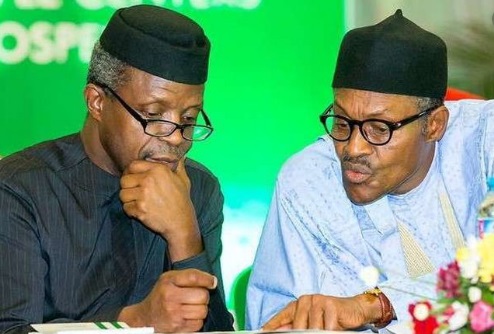
The economic stimulus plan is part of the Nigeria Economic Sustainability Plan (NESP)  recommended by the economic sustainability committee led by Vice President Yemi Osinbajo.

Osinbajo recently submitted the Committee’s report to President Muhammadu Buhari.

It would be recalled that President  Buhari had set up the committee to devise means through which the effects of COVID-19 could be minimized on the Nigerian economy.

Zainab Ahmed, the Minister of , while announcing the approval gave a partial breakdown on the approved sum noting that N500 billion out of the stimulus package  is already provided for in the amended 2020 Appropriations Act.

“The total package that we presented today is in the sum of N2.3 trillion. N500 billion of this is a stimulus package that is already provided for in the amended 2020 Appropriations Act. These are funds that we have sourced from special accounts,” Ahmed said.

“We also have N1.2 trillion of this funds to be sourced as structured low-cost loans which are interventionary from the Central Bank of Nigeria as well as other development partners and institutions.”

She further stated that N344 billion would be sourced from bilateral and external sources and also additional funds that can be sourced locally.

“We have N344 billion that will be sourced from bilateral and external sources and also additional funds that we can source locally,” the Minister added

According to her, there is a strategy that has been adopted which would enable government respond to the triple problem of low exchange rate, youth unemployment as well as negative growth which is facing the country at the moment.

She further stated that the plan has to also support small businesses that have suffered severe impact of COVID-19 as a result of lockdowns, especially, the hotel industry, private schools, restaurants as well as the transport sector have been very well impacted by this.

“We have also seen a significant impact on the poor and the vulnerable and even people that were okay as small traders, have been hard hit …,” she said.

On how the stimulus plan would protect private businesses, the minister revealed that the Council noted interventions in the plan that would prevent businesses from collapsing and also infuse liquidity into the Nigerian economy.

“These will create jobs using labour-intensive methods such as agriculture, facility management, housing, construction, direct labour interventions that will create a lot of jobs very quickly,”  she said.

“We had also proposed in the plan to undertake growth-enhancing jobs, creating infrastructure investments in roads, bridges, solar power, communications technology and several others.”

She said the plan advocates for the use of made in Nigeria in all of  public works that government will be doing as a way of creating jobs opportunities to enhance jobs sufficiency.

Osun Govt set to archive data of youths in the state

THE Osun State Government through the ministry of Youths and Sports has said that it is set to launch a database portal to archive information of youths in the state for engagement and empowerment

Yemi Lawal, the State Commissioner for Youths and Sports of the state, in a meeting with some youths of the state on Wednesday, disclosed that the initiative is to bring youths of the state from various segments onboard.

He added that the effort will enable the State Government to plan and formulate in the direction of engagement and empowerment.

Lawal explained that very soon, the government will release a registration portal for the categories of Youths in the state.

“As Mr Governor approved, we are rolling out a registration portal for all Youths in the state. After it is flagged off, our Youths will be able to register and avail government of relevant information to plan for their welfare.”

“This government is interested in ensuring that the rights of Youths to empowerment and development are guaranteed. We will make sure that as soon as we get that information, they will be processed and kept in a database that will make government plan for the future.” Lawal added.

Ayotunde Rasheed, the media adviser to the commissioner told The ICIR that after the launching of the initiative, the state will be able to boast of a qualified social register for youth.

“I can tell you that the state is planning to end some form old narrative whereby there be opportunities for Osun indigene and it will not circulate to the qualified persons. With this database, if there is an opportunity for a particular position, the state will just look into the register and pick,” Rasheed said.

The register will allow even distribution of resources among the youths of the states, he added.

Sydney to host 2021 Global Investigative Journalism Conference

THE Global Investigative Journalism Network in partner with Judith Neilson Institute for Journalism and Ideas will co-host the 12th Global Investigative Journalism Conference, in Sydney, Australia, during November 2021.

The seminal international event in investigative journalism is a global conference held every two years.


The Global Investigative Journalism Network, founded in 2003, is an association of 184 nonprofit organizations in 77 countries, working to strengthen and expand investigative reporting worldwide. The Sydney-based Judith Neilson Institute was founded in 2018 as a center to support quality journalism in Australia and around the world.

Mark Ryan, Executive Director of JNI, said GIJC21 would be an unparalleled opportunity for journalists from Australia and the Asia Pacific to learn techniques and skills from the best journalists in the world.

“We deeply appreciate the Judith Neilson Institute’s support during these uncertain times,” said Brant Houston, chair of the GIJN board. “This presents GIJN with a great opportunity to hold its first global conference in the region.

“It will also showcase the work of journalists from Australia and the Asia Pacific and share their lessons and experiences with the global journalism community,” he said.

The GIJCs are huge training events, featuring practical panels and workshops on the latest investigative techniques, data analysis, online research, cross-border collaboration, and more by the best journalists in the field.

The conferences have trained over 8,000 journalists and resulted in the founding of investigative teams, nonprofit newsrooms, and headline-making stories around the world. The last conference, GIJC19, was held in Hamburg, Germany, in September 2019, and attracted 1,750 people from 131 countries.

Next year’s conference will again feature a robust fellowship program that brings in journalists from developing and transitioning countries to receive training.

For more information, please read more.


Nigeria gets World Bank’s $750m loan to boost electricity infrastructure

THE World Bank has approved a $750 million loan credit for Nigeria’s Power Sector Recovery Operation in a bid to improve electricity supply in the country.

The Bank stated that the approval of the loan was necessary to expand Nigeria’s electricity transmission and distribution infrastructure considering the economic cost of power cuts in the country which has resulted in an estimated $28 billion loss.

“The economic cost of power shortages in Nigeria is estimated at around $28 billion – equivalent to 2% of its Gross Domestic Product, GDP,” the World Bank said in a statement.

“Improving power sector performance, particularly in the non-oil sectors of manufacturing and services, will be central to unlocking economic growth post-COVID-19.”

Bloomberg reported that the loan is  the first tranche of a $3 billion to be released in four tranches of $750 million each and could be expanded to $4 billion,quoting Nigeria’s Minister of Finance, Zainab Ahmed.

The first instalment of the loan was scheduled to be received in April but the outbreak of the coronavirus stalled the process.

Shubham Chaudhuri, Nigeria’s World Bank Country Director said fluctuating power supply in the country was choking private investment in the country to lift millions of Nigerians out of poverty.

“The lack of reliable power has stifled economic activity and private investment and job creation, which is ultimately what is needed to lift 100 million Nigerians out of poverty,” he said.

He also stated that access to electricity was a major factor that hinders the private sector involvement in the economic progress in the country according to the 2020 Ease of Doing Business report.

Indicating that the objective of the credit facility was to help turn around the power sector and set it on a fiscally sustainable path.

“This is particularly urgent at a time when the government needs all the financial resources it can marshal to help protect lives and livelihoods amidst the COVID-19 pandemic,” he said.

Established in 1960, the International Development Association, IDA, was set up by World Bank to provide assistance to the world’s poorest countries by grants and low-interest loans for projects that boost economic growth, reduce poverty, and improve poor people’s lives.

Report says social condemnation, poverty responsible for excluding women in electoral positions 

A REPORT released by the Rule of Law and Empowerment Initiative has attributed social condemnation, poverty and religion as major factors responsible for preventing women from contesting for political offices.

The report made available to The ICIR, Wednesday in Abuja also identified godfatherism among the notable impediments.

It emphasised how the above reasons have denied women of opportunities to properly legislate on issues affecting the opposite sex.

The report which stressed further some of the challenges confronted by women who might be interested in holding public positions highlighted the bottlenecks based on peculiarities of states across the six geo-political zones.

In the North-East, for instance, the Non-Government Organisation (NGO) mentioned problems of inferiority complex and low education. The challenge of social disapproval, poor education, and poverty were identified in the North-West states.

For the North Central, the NGO also known as Partners for West Africa (PWAN) discovered the lack of women-friendly policies and incentives by political parties. Women in the South-West were reported to have complained about electoral violence and the perception of tagging the women folks who are interested in politics as prostitutes.

The report detailed concerns of women from the South-South to include poor supports from women networks, electoral violence and lack of female leadership at the grassroots. Moreover, in the South-East, the issue of social disapproval and women’s inability to lobby was a notable hindrance discovered during the study.

“In the first phase, PWAN carried out research across the six (6) geopolitical zones in Nigeria to assess the degree of women’s participation in politics and determine the factors that hinder them,” the report stated.

“Findings showed patriarchy godfatherism, economic, religious, and socio-cultural factors are general barriers that women are faced with. However, zonal peculiarities are indicated…”

Rolling out statistics, PWAN report argued that the figure of women occupying political positions in the country has remained unstable in every political dispensation and has continued to decline lately

Citing an instance, it stated that in the early 2000s, the level of women’s political participation was very low – between 3 per cent and 4.7 per cent. But, the number has reportedly increased to 7 per cent between 2007-2010, which, according to the report, was the highest level of participation the nation has experienced.

“In 2015, the political system began to retrogress again in this regard until it came down to 3.38 per cent in 2019,” the report stated.

The Convention on the Elimination of all Forms of Discrimination against Women (CEDAW) was adopted by the UN General Assembly in 1979, enforced in 1981 and ratified by the Federal Government in 1985.

In 2004, the UN Committee on Elimination of Discrimination against Women recognised efforts of the federal government to engendering gender issues, especially through the Trafficking in Persons (Prohibition) Law Enforcement and Administration Act and the Childs Rights Act, it sought full compliance with the child right act and equal opportunities for women.

It also kicked against child marriage, citing the minimum age as 18.

The group, however, called for the implementation of the 35 per cent affirmative action and recommended the domestication of laws to promote girl-child education, the passage of the gender and equal opportunities bill to mention among others.

Finally, Court dismisses suit seeking to stop Obaseki from contesting PDP primaries

A Federal High Court sitting in Port Harcourt, Rivers State has dismissed a suit seeking to stop Godwin Obaseki, Governor of Edo State from participating in the forthcoming Peoples Democratic Party (PDP) governorship primary election in the state.

The party  fixed its primary election to hold on Thursday.

According to Channels TV, this comes after the Federal High Court in Port Harcourt granted the request by one of the governorship aspirants, Omoregie Ogbeide-Ihama, to have the matter stood down to enable an out of court settlement.

Ogbeide-ihama had filed a suit in the court asking it to prevent any member of the party that has purchased forms but not screened within the time stipulated to contest the PDP primary.

He also alleged that Obaseki’s defection to the party, a few days to the primary, was unreasonable and aimed at destabilising other aspirants.

The court, on Wednesday, granted the request for an accelerated hearing of the suit but before the hearing on the application today, Ogbeide-Ihama’s counsel requested that the court stood down the case for some time.

The presiding judge, Justice Emmanuel Obile, granted the prayers after the counsel to all the defendants aligned with the request.

Governor Obaseki got a waiver of the PDP to join the race under its platform after resigning from the All Progressives Congress (APC).

Meanwhile, a High Court of Justice in the Ekpoma judicial division on Tuesday restrained the Peoples Democratic Party (PDP) from excluding Governor Godwin Obaseki and the other cleared aspirants from participating in the Edo State governorship primary.

The court ordered that the PDP and the electoral umpire should not exempt any of the aspirants who have been cleared by the party from participating in the gubernatorial primary slated for the 25th June 2020.


Buhari backs Giadom’s leadership of APC, says law is on his side


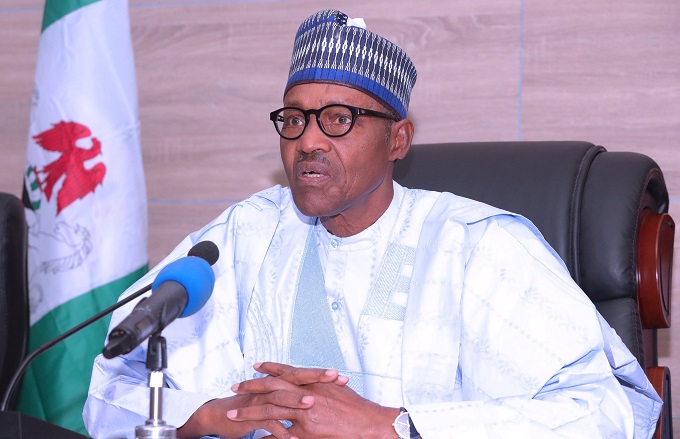
PRESIDENT Muhammadu Buhari on Wednesday broke his silence on the leadership crisis rocking the All Progressives Congress (APC) saying that the law is on the side of Victor Giadom as the party’s acting National Chairman.

“The President has received very convincing advice on the position of the law as far as the situation in the party is concerned and has determined that the law is on the side of Victor Giadom as Acting National Chairman,” Garba Shehu, presidential spokesperson said in a statement.

Shehu said President Buhari would be attending the virtual meeting Giadom called for tomorrow afternoon.

“Because he will always act in accordance with the law, the President will be attending the virtual meeting Giadom called for tomorrow afternoon,”  he said.

Shehu further warned against promotion of ‘manufactured controversies’, urging that mischievous interpretations of the law on this matter should be avoided.

“We urge the media to stop promoting manufactured controversies and to not give any further room for mischievous interpretations of the law on this matter,” he said.

He further stated that governors of the party and leaders of National Assembly would also be attending Giadom’s meeting.

“In addition to the President, the Giadom meeting will, hopefully, be attended by our Governors and the leaders of the National Assembly,” he said.

It would be recalled that Giadom, defiant to a decision of the National Working Committee (NWC) of the APC, declared himself the acting National Chairman of the party, attributing his manifestation to a court order.

As the acting National Chairman, Giadom announced the nullification of the APC screening which led to the disqualification of Godwin Obaseki, Governor of  Edo State from contesting the party governorship primary in Edo State.

However, Obaseki has since defected to the Peoples Democratic Party (PDP), where he’s aiming to secure a ticket to run for re-election in September.

Meanwhile, a High Court in Rivers State has reportedly prevented Giadom from parading himself as an officer or a member of the APC.

Hilliard Eta, the National Vice Chairman (South-South), who is standing in for the acting chairman,  Abiola Ajimobi, former governor of Oyo State who is hospitalised at the moment, told journalists on Tuesday that the membership of Victor Giadom has been suspended by a competent court of jurisdiction in Port Harcourt

“Not only is he no longer a member of the NWC, for today, his membership has been suspended,” Eta added.


Buhari increases TETFund research grants to N7.5b

PRESIDENT Muhammadu Buhari has approved the increase of research grants for the Tertiary Education Trust Fund (TETFund) from N3billion to N7.5billion, Suleiman Bogoro, Executive Secretary of TETFund said.

Disclosing this in Abuja on Wednesday during the 2020 TETFund Board of Trustees (BoT) retreat, Bogoro noted that the latest approval makes the agency the largest holder of research grants in Nigeria.

He further disclosed that Buhari also approved the establishment of six medical simulation research and clinical training facilities in six colleges of medicine in each geopolitical zone within the year.

The TETfund Executive Secretary stated that the approval has provided an opportunity for TETFund to provide 12 COVID-19 and related infectious disease molecular laboratories, two in each geopolitical zone, making the fund the highest single provider of COVID-19 test centres in Nigeria.

He also disclosed that the BoT of TETFund approved over N200 million to sponsor some COVID-19 research proposals mainly from universities and NAFDAC

“In addition, the BOT also endorsed and was subsequently approved by the President, that six Medical Simulation Research and Clinical Training facilities in six Colleges of Medicine (one in each geopolitical zone) are to be established this year,” Bogoro said.

“Individually, this provided an opportunity for twelve COVID-19 and related infectious disease Molecular Laboratories to be provided (two in each geopolitical zone), thus making TETFund the highest single provider of COVID-19 test Centres in Nigeria.”

“TheBOT also approved that TETFund sponsors some COVID-19 research proposals to the tune of over N200 million, mainly from Universities and NAFDAC, this being one of the reasons TETFund has recently been made the Secretariat for the Nigeria Covid-19 Research Consortium R&D,” he added.

Bogoro indicated that approval has been made from the 2020 budget for TETFund to aggressively commit funds to reverse the embarrassing situation of hostel accommodation in tertiary institutions and make learning environment more attractive for local and foreign students.

According to him, only 15 per cent of Nigerian students were living in hostel accommodation in their institutions.

He said the BoT has also directed management of the agency to make recommendations towards migration of e-learning consistent with global best practice.

Speaking on the achievements of TETFund between 2011 and 2019, Kashim Ibrahim-Imam, the BoT Chairman,  said the fund constructed 80 auditoriums and lecture theaters in the 223 beneficiary institutions.

Ibrahim-Imam noted that the fund also constructed 500 classrooms, 2,383 administrative and staff offices, 40 fully equipped libraries, 250 science laboratories, 38 ICT centers, 8 medical centers and sick bays, 100 vehicles and major infrastructures in the 12 newly establsihed federal universities.

He said to consolidate on the achievements, the TETFund has made provision in the 2020 budget for emergency special intervention to the University of Abuja and Special high impact projects to six universities, one from each geopolitical zone.

Ibrahim-Imam further noted that the agency will provide take-off grants to the six newly created Federal polytechnics, one to each geo-political zone, and construction of over 200,000 hostel accommodation in universities, polytechnics and colleges of education to tackle the deficit of accommodation in the institutions.

“We will scale up the provision of fit-for-purpose infrastructure, result-oriented research, and cutting-edge technology to our tertiary institutions. And we will do all these with utmost integrity,” he said.


ICPC arrests account officer who diverted N250m IPPIS funds at UDUTH, Sokoto

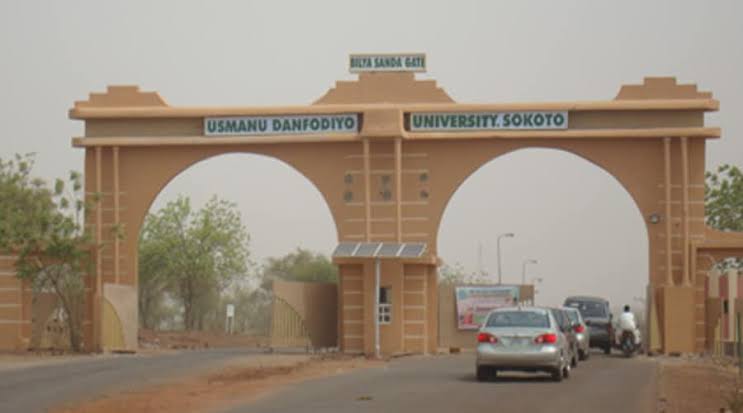
THE Independent Corrupt Practices and Other Related Offences Commission (ICPC), has arrested one Waziri Lukman, a grade 09 Account staff at Usman Danfodio University Teaching Hospital (UDUTH), Sokoto State over diversion of N250 million belonging to the Federal Government. 

A statement by Rasheedat Okoduwa, the Commission’s spokesperson said an ICPC intelligence-led investigation revealed that Lukman who is believed to be the kingpin in the fraudulent act diverted deductions meant for third parties such as the State Board of Internal Revenue and over-payment deductions on the Integrated Personnel and Payroll Information System (IPPIS) into his private accounts and that of a company.

According to the statement, he is being questioned to unravel all those behind this fraudulent act.


READ ALSO:

Okoduwa explained that the Commission has also commenced efforts to recover the proceeds of this fraud through the seizure of exotic cars and real estate properties from him.

She said findings by the Commission have revealed that Lukman and others involved in the act were able to compromise a critical national infrastructure such as the IPPIS as a result of likely negligence on the part of the management of the Teaching Hospital.

“For instance, failure to cross-check and reconcile the execution of its budget and allowing officers from the Finance and Account department to access another officer’s password on the platform, present real threats and vulnerabilities,” Okoduwa explained.

Further checks by the Commission, according to her, revealed that the suspect took advantage of the window of opportunity on the IPPIS platform that “allows Ministries, Department and Agencies (MDAs) to edit salaries that have been processed by the Office of the Accountant General of the Federation (OAGF) before they are finalised or paid,” to substitute the genuine destination account numbers with those of his co-conspirators before payment.

“Again, the Commission’s findings indicate that the platform does not match account names with account numbers. This loophole created the opportunity for the fraudster to divert the funds successfully for the while that the fraud lasted,” she said.

Okoduwa said the investigation into the fraud is ongoing, and that appropriate actions would be taken by the Commission upon conclusion.