Home Blog Page 25

The Case for the Office of Judge Dan Maliki

By Chidi Anselm Odinkalu

Divine right is an old, established principle. It means that kings have the right – ordained by God – to act in any way they wish. Human-made laws are of no consequence beside the awesome power of God, and God’s representative, namely the monarch.”

Vija Prashad, Washington Bullets, 23 (2020)

Sovereignty is a complex concept in law and political science, but its primary attributes entail three inter-dependent monopolies. One is a monopoly of legitimate dispute resolution. The second is a monopoly of legitimate taxation; and the third is a monopoly of the instrumentality of legitimate violence.

Students of political science are most familiar with the last of these monopolies, but it is actually the first that guarantees coexistence in society. The polarising 19th century German philosopher, Georg Hegel, was quite clear about the place of dispute resolution in the job specification of the ruler: “the administration of the law is to be looked upon as the duty quite as much as the right of the public authority. Whether to delegate the discharge of this office to some power or not is not at the option of any individual.”

Few – if any – of the offices in the state rival the judiciary in the skill of the dark arts. Professors in law faculties feed students with a deadly doctrinal diet of judicial independence. Some even manage to persuade themselves that judges are, indeed, independent.

In reality, judicial independence is more about appearances than reality. In his Draught of a new plan for the organisation of the judicial establishment in France issued in 1790, Jeremy Bentham boils down the expectations of a judge to two: “that he be a good one and that he be thought to be so.” To the question who must think the judge a good one, there has never been a straight answer and reasonable people mostly differ.

Judges are not instruments of revolution. In reality, the judge has two primary jobs about which few, least of all lawyers, are willing to be honest: to protect themselves by protecting the sovereign. Put simply, the judiciary is an organ of the status quo. Therefore, strategic defection from the path of dependency on the ruler does not come easily to them.

For this purpose, every country maintains a judicial administration. Of the organs of the public service, few are as hierarchical as the judiciary. Judges may think themselves independent, but every judge is under the authority of an administration which must determine whether the judge measures up. Through this structure, every system determines what quantity and kind of judicial independence it can tolerate or live with in the interest of the ruler(s).

This is why judicial administration is a dark art. Those who run the judicial branch have to perform independence while at all essential times doing dependence. For this purpose, every system needs a “Judge dan Maliki”, that is to say; the judge who best embodies the attributes of a loyal son of the ruler.

Judicial administration under colonial rule found this relatively easy to accomplish because judges under that system held office at the pleasure of the foreign sovereign. They were expendable and there was no pretence about the absence of independence. To the natives, the language of the system and its traditions were foreign. Its location and routines were equally distant. There were also few natives knowledgeable enough in the ways of colonial law.

Following independence, judicial administration did not much depart from the path of fidelity to the interests of the ruler. In Uganda, for instance, the president appoints the Chief Justice, who notionally heads the judiciary; but real power lies in the Chief Administrator of the judiciary, who is the Permanent Secretary and chief accounting officer of the judicial branch. He is also an appointee of the president.

Unlike the Chief Justice who is bound by the optics of judicial independence, the Chief Administrator has latitude to deploy dirty tricks or dark arts as the situation warrants and usually has a direct line to the president. When President Yoweri Museveni appointed a new Chief Administrator in July 2019, the leading newspaper in the country reported it the following day under the caption “[Pius] Bigirimana takes over judiciary.”

Below the office of the Chief Justice, different countries have other designations for the dispersal of hierarchies for judicial management. In Tanzania, the Jaji (Judge) Kiongozi is the name given to the principal judge, with responsibility for the administrative management of the High Court in Tanzania. The Judge Kiongozi is effectively the second-in-command in the country’s judicial hierarchy and manages deployment, postings, and dockets in the high court.

In Nigeria, that role falls to the respective chief judges of the various high courts across the country at both state and federal levels. The chief at this level is both sorcerer and serpent. The most important role of the chief is docket management and case assignment. For this purpose, the chief must have a good nose for the predilections of all the judges under him or her as well as their foibles and failings.

The most important decision made on a case, especially one affecting the essential interests of the sovereign or his party, is which judge is to hear it. With just one stroke of the pen to assigning a case, the outcome is foreclosed. The most important role of the Chief Judge at this level, therefore, is to divine the will or interest of the ruler and to allocate case work so as to ensure that nothing concerning the ruler suffers in his court.

For this purpose, every chief encourages the cultivation of judges deeply solicitous and protective of their ruler. As judges have become the ultimate deciders of electoral fates in Nigeria, the Federal High Court – which has primary jurisdiction in such cases – has emerged as the court system where this species of judging has become a career path and a guarantor of judicial career progression.

The most recent list of elevations to the Court of Appeal demonstrates why or how this works. The most prominent names on the list were judges of the Federal High Court whose claim to fame was that they enjoyed a near monopoly of cases involving high political interests of the ruling party or its acolytes. The predictability with which these cases ended up before them suggested that they had been cultivated or identified by the chief for precisely that talent.

This is why it felt odd recently when it looked as if the Chief Judge of the Federal High Court was in trouble with allegations of code of conduct violations and appearances of high law enforcement interest in the peregrinations of Ghana-Must-Go bags of foreign currency reportedly associated with the movement of his spouse. As magically as they had appeared, those reports vanished with predictable alacrity. Whatever the problem was – assuming there was any – had been quickly settled.

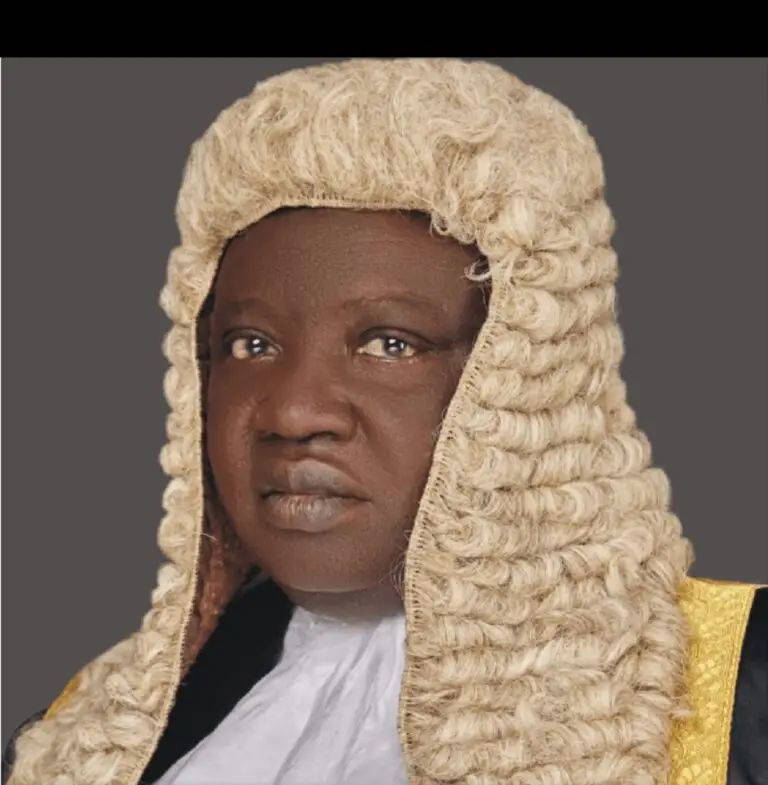
With the resumption of normal judicial service in these circumstances, the search is on for a candidate in the Federal High Court for the role of Judge dan Maliki. The terms of the order granting bail to the former governor of Kaduna State, Nasir el-Rufai, in his on-going trial before the Federal High Court, suggest that the search may already be over. The judge, Abdulmalik, granted him bail in the sum of N100 million. She required his surety to be a senior civil servant with property in the choicest part of Abuja.

The surety, she continued, must deposit their title instrument with the court together with their international passport. Importantly, the judge did not offer the putative civil servant any protection against reprisal. This is the art of the judicial dan Maliki at its finest – performing independence even when under “superior” orders.

Of course, any civil servant who meets these conditions will be neither free nor civil servant for much longer. The cap fits Abdulmalik. All that awaits now is the formalization of the office of Judge dan Maliki.

A lawyer and a teacher, Odinkalu can be reached at chidi.odinkalu@tufts.edu
World fistula day: Nigeria records progress, yet thousands suffer in silence

Every year, on May 23, the world marks the International Day to End Obstetric Fistula, also known as “World Fistula Day.” The day aims to draw global attention to one of the most devastating but preventable childbirth injuries affecting women and girls, especially in Nigeria.

In 2026, the commemoration theme: Her health is a right: Invest in ending fistula and childbirth injuries, comes amid renewed concern that thousands of Nigerian women are still slipping through the cracks in the health system.

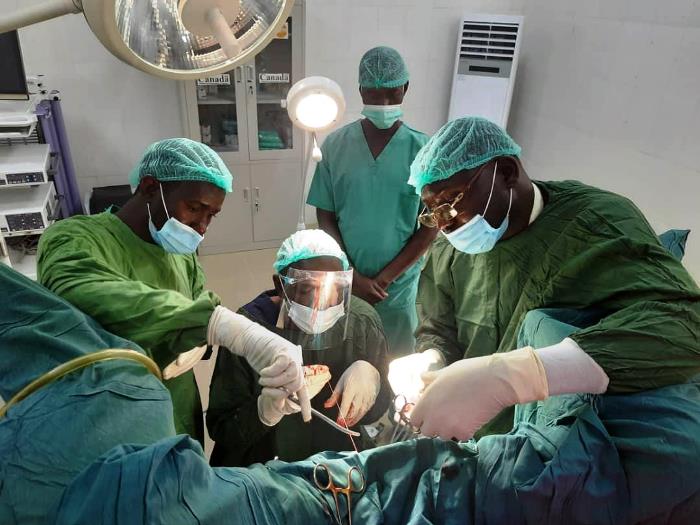
For decades, poverty, weak maternal healthcare systems, child marriage, insecurity and poor access to emergency obstetric care have forced thousands of Nigerian women, especially in the Northern region to live with obstetric fistula (OF), which is caused by prolonged labour that leads to incontinence of urine, faeces or both.

There are two main types of obstetric fistula. Vesicovaginal Fistula, commonly known as VVF is a condition that causes uncontrollable leakage of urine while Recto-vaginal fistula (RVF), where the opening is between the rectum and the vagina results in leakage of faeces.

The ICIR reported that about 114,000 women and girls are currently living with obstetric fistula in Nigeria, while around 12,000 new cases occur every year due to prolonged obstructed labour and lack of timely medical intervention.

Amid this persistent health crisis, medical experts however say Nigeria is also recording measurable progress. According to the Lead surgeon and Project Director of the Evengel Vesicovaginal Fistula Center, Sunday Lengman, the latest figures represent significant progress compared to previous estimates, which showed that Nigeria once had as many as 150,000 women living with fistula. 

“That’s about a third of what used to be, from 150,000 to 114,000,” he said.

Behind these numbers are real women across Nigeria that have shared their stories with The ICIR, many of them young, poor, and abandoned, who see VVF as a life sentence of leaking urine, rejection, poverty and silence.

What is VVF?

Vesicovaginal Fistula is the most common fistula among females. According to United Nations Population Fund, VVF is a type of obstetric fistula with an abnormal hole between the bladder and vagina caused mainly by prolonged obstructed labour. Without timely medical care, it leads to uncontrollable leakage of urine.

The condition often occurs when a woman stays in labour for days without access to emergency obstetric care, particularly Caesarean Section. Medical experts say the prolonged pressure cuts off blood supply to tissues in the birth canal, leaving permanent injuries. In nearly 90 per cent of cases, the baby does not survive.

Living in isolation 

In Bauchi State, The ICIR documented the hidden world of girls and women living with fistula, many of them confined indoors, rejected by their families, and cut off from social life because of constant urine leakage and foul odour. Some were married as teenagers, others became pregnant too early, and many endured prolonged labour without skilled medical help.

Their stories reflect a shared reality of social isolation, as the women described being ostracised by families who are ashamed of their condition, while others lived in silence, believing their situation a was punishment and irreversible. 

Although obstetric fistula has been virtually eliminated in many countries with strong healthcare systems, it remains a major public health crisis in Nigeria. In many rural communities, women still deliver at home or in poorly equipped facilities, while some travel for hours during labour to reach hospitals, often too late.

Nigeria has specialised fistula treatment centres supported by government, donor agencies and organisations like the United Nations Population Fund, but access remains limited. 

Dr. Lengman explained that obstetric fistula is not merely a medical problem but a human rights issue adding that universal access to free and compulsory education may offer a more sustainable path to reducing fistula cases.

“Policies should be developed in the area of ensuring there’s a universal education that is basic and free for all people,” he said.

He said that ensuring that every girl completes primary and secondary education could naturally reduce early marriages and early pregnancies, which significantly increase childbirth complications.

The health expert said that Nigeria’s fistula response will remain relatively stable in 2026 because the biggest supporter of fistula treatment globally is not the US government but the Fistula Foundation, a California-based non-governmental organisation and one of the world’s leading funders of fistula treatment.

“Last year Fistula Foundation increased funding and actually extended their funding to many more national NGOs that are participating in the work in Nigeria. Also, last year the Nigerian government was also interested, so through the National Health Insurance Authority, fistula work is being supported, especially the surgery in several other centres in Nigeria,” he added.

Lengman said that data has shown that there are currently 45,000 women with fistula awaiting surgery because of inadequate funding, shortage of trained surgeons and lack of awareness.

The ICIR reported that in Jigawa State, the structured fistula treatment programmes are transforming lives at facilities such as Jahun General Hospital, where data revealed nearly 5,000 free fistula surgeries have been conducted at the hospital between 2008 to February 2026.

As the world observes this year’s World Fistula Day, thousands of Nigerian women are reminded that safe childbirth should never destroy lives. No woman should endure lifelong injuries simply because she tried to give birth.

Man shot dead after opening fire near White House checkpoint

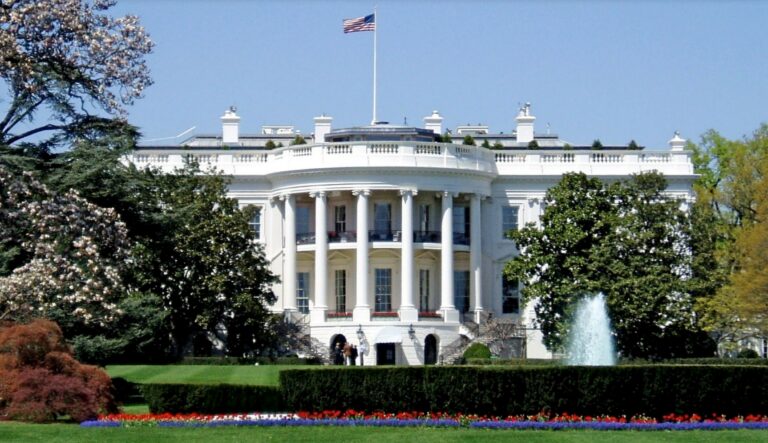
A man was shot dead by United States Secret Service on Saturday after opening fire at a security checkpoint near the White House. A bystander was also wounded in the incident.

The shooting occurred shortly after 6pm local time on Saturday at the intersection of 17th Street and Pennsylvania Avenue in Washington, DC.

According to the Secret Service, the suspect approached the checkpoint, pulled a firearm from a bag and began shooting at stationed officers.

The law enforcement agency said officers immediately returned fire, hitting the suspect, who was later pronounced dead at a nearby hospital.

CBS identified the suspect as 21-year-old Nasire Best, who was reportedly known to the secret service and had a documented history of mental health issues.

Authorities said a bystander was also struck during the incident, although it remained unclear whether the person was hit by the suspect’s gunfire or during the exchange with officers.

No Secret Service personnel were injured.

President Donald Trump was said to be inside the White House when the shooting occurred but was not harmed. The White House was immediately placed under lockdown.

Reacting to the incident, Trump praised the Secret Service and other law enforcement personnel for their swift response.

“Thank you to our great Secret Service and Law Enforcement for the swift and professional action taken this evening against a gunman near the White House,” Trump wrote on Truth Social.

He described the suspect as having a violent history and a possible obsession with the White House, adding that the incident underscored the need for enhanced presidential security.

Saturday’s shooting comes less than a month after what authorities described as an attempted assassination plot involving Trump.

On April 25, law enforcement agents arrested a suspect who was armed with guns after he charged past a security checkpoint in a Washington hotel where President Trump was due to speak.

El-Rufai’s wife demands N2bn damages from ICPC over alleged defamation

AICHATOU El-Rufai, wife of former Kaduna State Governor Nasir El-Rufai, has demanded N2 billion in damages from the Independent Corrupt Practices and Other Related Offences Commission (ICPC) over alleged defamatory statements made against her.

The demand was contained in a pre-action notice filed by her lawyers following an ICPC statement titled, “Clarification on the Access Control Protocol at ICPC Headquarters, Abuja,” issued on May 18.

Her legal team accused the anti-graft agency of damaging her reputation through remarks it described as false, malicious and defamatory.

The lawyers objected to the commission’s description of her as “a woman who identified herself as the wife of a defendant,” arguing that the statement cast doubt on her status as the lawful wife of the former governor.

They also faulted the ICPC’s claim that her earlier statements were “false and misleading,” saying the remark portrayed her as dishonest and deceptive.

The legal team further challenged the commission’s allegation that she violated visitation protocols at its headquarters, insisting the claim painted her as someone who disregards institutional rules.

They also rejected suggestions that she contradicted herself over claims that her husband was denied food while in custody, arguing that the statement was intended to undermine her credibility.

El-Rufai’s lawyers further frowned at claims that she attempted to create a media spectacle to bypass official procedures, describing the suggestion as malicious and unwarranted.

According to the notice, the publication was widely circulated across local and international media platforms, exposing her to ridicule, embarrassment and reputational damage.

Describing their client as a woman of “unblemished character,” the lawyers accused the commission of using its official platform to unfairly target a private citizen.

They demanded an immediate retraction of the statements and a public apology to be published in at least three national newspapers, as well as on the commission’s website and social media platforms.

The legal team is also seeking N2 billion in general, aggravated and exemplary damages, alongside a written undertaking that no similar statements would be made against her.

The ICPC has been given 14 days to comply with the demands or face legal action.

Federal High Court judge collapses, dies in Kano

A JUDGE of the Federal High Court in Kano State, Mohammed Yunusa, has died after reportedly collapsing at his residence in the state.

The judge was rushed to a hospital following the incident but was later pronounced dead.

Confirming the development, the Director of Information of the Federal High Court of Nigeria, Catherine Christopher, said Yunusa died at the Kano State Medical Centre after a brief illness.

She added that the deceased had since been buried in accordance with Islamic rites.

In a statement issued on Saturday May 23, the Federal High Court described the late jurist as a distinguished judge who served with dedication, integrity and an unwavering commitment to the administration of justice.

“The Chief Judge, judges, management, and staff of the Federal High Court extend their heartfelt condolences to his immediate family,” the statement read.

It prayed for the repose of his soul, asking Allah to forgive his shortcomings and grant him Aljannatul Firdaus.

Yunusa was known for handling several high-profile cases during his time on the bench.

One of the notable cases under his watch came after the 2023 general elections when his court clarified that it did not nullify the candidature of former Abia State Governor-elect, Alex Otti.

The court had held that the Labour Party candidates who contested in Abia were not parties before it and could seek redress in the appropriate division.

He also presided over a suit filed by one Ibrahim Haruna-Ibrahim seeking the revocation of certificates of return issued to Labour Party candidates declared winners in Kano, other states and the Federal Capital Territory.

Tuggar, Wunti, lose Bauchi APC governorship ticket to ex-governor Abubakar

0

FORMER Minister of Foreign Affairs, Yusuf Tuggar, and former Nigerian National Petroleum Company Limited (NNPCL) executive, Bala Wunti, have failed to secure the All Progressives Congress (APC) governorship ticket for the 2027 election in Bauchi State.

The party’s primary election, which was delayed for several hours before the final announcement, ended with former Bauchi State Governor, Mohammed Abubakar, emerging as the APC flag bearer after defeating six other aspirants.

The results were announced in the early hours of Saturday by the Chairman of the APC Governorship and House of Assembly Primaries Committee for Bauchi State, John Abang, a retired assistant inspector general of police.

Abang said Abubakar polled 57,517 votes to win the contest, while Tuggar came second with 26,001 votes.

Another aspirant, Nura Soro, secured 13,638 votes, while Wunti garnered 13,648 votes in the exercise.

Other contestants included Kabir Baba Ma’aji, who got 8,157 votes, Baba Abubakar Suleiman with 7,688 votes, and Yakubu Abdullahi, who polled 7,181 votes.

The victory marks a fresh return for Abubakar, who lost his re-election bid in 2019 to the incumbent governor, Bala Mohammed of the Peoples Democratic Party (PDP).

Mohammed had defeated Abubakar during the 2019 governorship election when the former governor was seeking a second term under the APC platform.

THE ICIR reported that Tuggar was among the earliest members of President Bola Tinubu’s cabinet to resign following the directive that political appointees interested in contesting elective offices in 2027 must step down from their positions before March 31, 2027.

The Bauchi APC governorship primary was characterised by a prolonged wait before the final declaration of results, but eventually produced Abubakar as the party’s candidate for the 2027 governorship election.

Kwara APC: Danladi emerges governorship candidate amid controversies

0

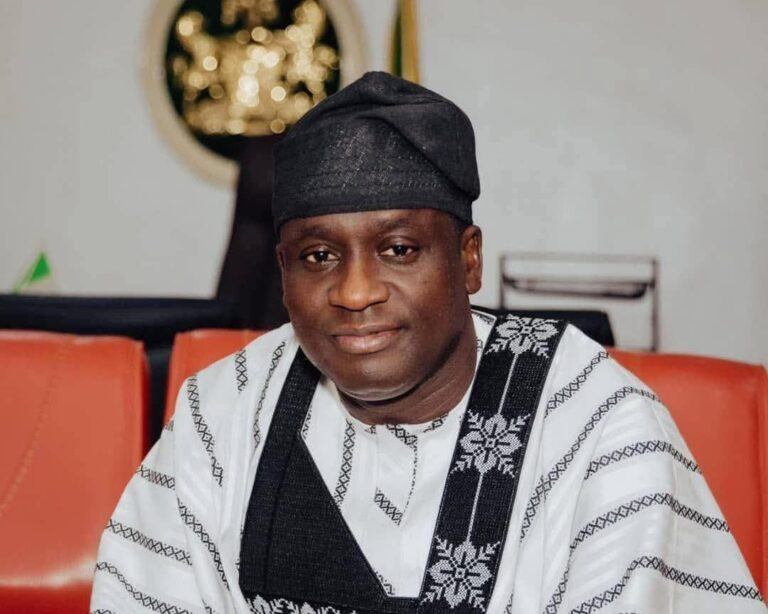
The Speaker of the Kwara State House of Assembly, Salihu Yakubu Danladi, has emerged winner of the All Progressives Congress (APC) governorship primary in Kwara State, in a process that was marred by confusion, tension and accusations of internal power play within the ruling party.

Danladi, from Kwara North, polled 94,990 votes to defeat 14 other aspirants, including a serving senator, in the exercise held across the 16 local government areas of the state.

The result was announced on Friday, May 22, at the Banquet Hall in Ilorin by the Chairman of the APC Governorship Primary Election Committee, Musiliu Obanikoro, who declared the Speaker duly elected after what he described as a peaceful exercise.

“There is no loser in any contest in APC. We are all winners,” Obanikoro said while announcing the final result.

He added that Danladi satisfied all requirements to emerge as the party’s candidate for the 2027 governorship election.

However, the primary was preceded by a storm of controversy after the exercise was abruptly postponed on Thursday, May 21, 2026, despite earlier voting arrangements and mobilisation in several wards across the state.

The postponement came amid reports of unrest at the APC secretariat in Ilorin, where suspected political thugs were said to have stormed the premises during the build-up to the exercise, forcing the deployment of security operatives, including the police and the State Security Service (SSS) to restore order.

The party later shifted the exercise to Friday, May 22, 2026.

The crisis was rooted in deepening internal divisions within the Kwara APC over the screening of aspirants for the 2027 polls, which initially saw more than 100 aspirants disqualified before the party reversed itself and cleared all 159 contenders, including Danladi.

The situation was further complicated by political alignments ahead of the primary, particularly reports of aspirants who stepped down in favour of Yahaya Seriki, who had earlier been endorsed as preferred successor by Governor AbdulRahman AbdulRazaq.

The governor’s endorsement of Seriki, days before the exercise, had stirred controversy within the party, with concerns raised over zoning as stakeholders from Kwara North and Kwara South insisting power should move from Kwara Central after AbdulRazaq’s tenure.


We’ll review court verdict on 2027 election timetable before taking action – INEC

The Independent National Electoral Commission (INEC) has said it would study the court ruling nullifying its timetable for the 2027 general election before deciding on its next action.

According to TheCable, INEC’s director of voter education and publicity, Victoria Eta-Messi, revealed this on Friday in reaction to the judgment of a Federal High Court in Abuja that voided the timelines issued by the commission for the conduct of party primaries and submission of candidates by political parties.

“We have not received the judgement, and we cannot comment on it. Yes, the judgement is in the public domain, and we don’t know the reasons for the decision that was taken. So, there’s need to study the whole judgement and decide on the next step to take,” Eta-Messi said.

Under the revised timetable released by the commission, political parties were expected to submit their membership registers by May 10, conduct primaries to pick candidates, and complete withdrawals and replacements before the end of May ahead of the 2027 polls.

But in a suit marked FHC/ABJ/CS/517/2016 and filed by the Youth Party (YP) on March 11 with INEC as the sole defendant, the court ruled that the commission lacked the statutory powers to abridge timelines provided under the Electoral Act, 2026.

Through its lawyer, J.O. Olotu, the party sought a declaration that INEC’s powers under Sections 29, 82, and 84(1) of the Electoral Act to receive notices of party primaries, candidates’ particulars, and monitor the exercises do not include fixing timelines for political parties to conduct primaries ahead of the 2027 elections.

Delivering judgment, the judge, Mohammed Umar, ruled that INEC could not fix or prescribe the timetable within which political parties may conduct their primary elections for the purpose of nominating candidates for the 2027 general elections.

The judge held that the powers granted to INEC under Sections 29, 82, and 84(1) of the Electoral Act do not extend to determining timelines for party primaries.

Umar also held that INEC could not lawfully shorten the statutory period allowed for political parties to submit the particulars of candidates. 

The ruling comes at a critical stage in the preparations for the 2027 elections, as many political parties across Nigeria have already conducted National Assembly, State Houses of Assembly and gubernatorial primaries while consultations, coalition talks, and internal mobilisations are ongoing ahead of their presidential primaries.

The ICIR reported that over the past months, several parties have intensified activities in preparation for candidate selection processes. INEC had unveiled its revised timetable for the 2027 polls, with most political parties expected to conduct primaries between April and May 2026.

The timetable sparked debates among political stakeholders, with opposition parties and smaller political groups arguing that the deadlines were too restrictive and could undermine internal party democracy.

Primary elections in Nigeria have historically generated major controversies, including disputes over delegate selection, imposition of candidates, parallel primaries, and prolonged legal battles that sometimes affect parties’ participation in general elections.

Court strikes out suit seeking validation of Kingibe’s suspension, awards her N20m damages

0

THE FEDERAL High Court in Abuja has dismissed a case filed to support the suspension of the senator representing the Federal Capital Territory at the Senate, Ireti Kingibe, from the African Democratic Congress (ADC)

The court ruled that matters of party discipline are strictly internal issues that the courts should not interfere with.

Delivering the judgment on Friday, May 22, the judge, Peter Lifu, held that political parties have their structures and procedures for handling disciplinary issues, including suspension of members, and such matters do not fall under judicial control unless there is a clear breach that requires intervention.

The case arose from a move by some executives of the Wuse Ward of the ADC in Abuja who had announced the suspension of the senator and later approached the court seeking approval of their action. The judge faulted this approach, questioning why the same group that carried out the suspension would still come to court to validate it.

According to the court, if the senator was dissatisfied with the decision, she would have been the right person to challenge it rather than the individuals who imposed it seeking judicial backing for their action.

Lifu said the suit was without merit, adding that it lacked legal foundation and amounted to an abuse of court process.

The court also referenced provisions of the Electoral Act in its decision and imposed financial penalties on the plaintiffs. It awarded N10 million against litigants in favour of Kingibe. The judge also ordered another N10 million to be paid by the plaintiffs’ counsel, in favour of the senator, bringing the total penalty to N20 million.

At the heart of the dispute was the claim by the Wuse Ward executives that Kingibe had been suspended on 10 March over alleged misconducts. The ward leadership also said the decision had the backing of a two-thirds majority of its executives.

Following the announcement of the suspension, Okezuo Kanayo and Isaiah Samuel initiated the suit on behalf of themselves and other ward members, naming the senator as the sole respondent. They were represented by, Kolawole Olowookere, a senior advocate.

The plaintiffs had asked the court to restrain Kingibe from presenting herself as a member of the ADC, attending party meetings, or participating in any party-related activities. They also sought orders stopping her from interfering in ward affairs, including access to party records and participation in administrative matters.

They argued that her suspension followed the provisions of the party constitution and was carried out properly by ward executives. They further accused her of continued involvement in parallel meetings and acting in ways that undermined the ward’s authority.

On the other hand, counsel to the senator, Marshal Abubakar, argued that the case should not have been brought before the court. He maintained that the matter was purely an internal party issue and that the plaintiffs had failed to follow the party’s established dispute resolution procedures.

He also informed the court that the plaintiffs were under suspension, adding that they had no legal standing to institute the action.

He urged the court to dismiss the suit and impose punitive costs on the plaintiffs for what he described as a baseless filing.

The plaintiffs’ lawyer, I.G. Ogugua, however, disagreed with the defence position, arguing that political parties could not hide under internal affairs when constitutional rules are allegedly violated.

Kingibe, who was elected to the Senate in 2023 on the platform of the Labour Party before later joining the ADC, has been at the centre of internal disagreements within the ward since her defection.

APC to conduct direct primary for presidential ticket

PRESIDENT Bola Tinubu and other All Progressives Congress (APC) members who obtained the presidential nomination forms for the 2027 election will participate in a direct primary, as the party has released guidelines for the exercise.

The party has also announced members of the presidential primary and appeal committees, as well as state coordinators for the exercise.

In a statement on Thursday, the party’s National Publicity Secretary, Felix Morka, said the collated results from the 774 local government areas would be submitted to the presidential primary election committee in Abuja on May 24.

“The decisions were approved by the Party’s National Working Committee (NWC) in accordance with the constitution of the party, the Electoral Act, and APC’s commitment to transparent and credible primary election process,” Morka said.

He said that the party named the former Secretary to the Government of the Federation, Pius Anyim, as chairman of the presidential primary election committee, while other members of the committee include Ken Nnamani, Victor Ndoma-Egba, Yakubu Dogara, and Idris Wada.

Former Katsina State Governor, Aminu Masari, will serve as the chairman of the presidential primary appeal committee. Other members are Samuel Piwuna, a former director at the Tertiary Education Trust Fund (TETFund), and former Speaker of the House of Representatives, Patricia Etteh.

According to Morka, the party remains committed to a transparent and credible primary election process, noting that the party would adopt the direct primary mode for the presidential election, allowing all registered party members to vote for their preferred candidates across the country’s 8,809 wards.

Morka said that under the arrangement, results from the 774 local government areas will be collated by designated officers, while state coordinators and collation officers will supervise the exercise across the 36 states and the Federal Capital Territory (FCT).

The party further unveiled state coordinators and collation officers who are governors and political leaders drawn from all 36 states and the FCT for the exercise.

The APC primaries are part of preparations for the 2027 general election and have been ongoing across the country in recent weeks. The ruling party earlier released a timetable for the conduct of its primaries for various elective offices, including the House of Representatives, Senate, governorship, state assembly, and presidential contests.

The House of Representatives primary election, initially scheduled for May 15, was later shifted to May 16, while the Senate primary held on May 18 and the governorship primary on May 21. The presidential primary is scheduled for May 23.

The party had also fixed N100 million for the presidential nomination form and commenced the sale of forms in April as part of preparations for the primaries.

Earlier this month, the APC National Working Committee waived the screening requirement for Tinubu ahead of the primary, citing his previous screening before the 2022 APC presidential primaries and endorsements by party stakeholders.

A businessman from Edo State, Osifo Stanley, had purchased the presidential form hours after Tinubu got the form.