Home Blog Page 26

FRSC condemns attack on officers by suspected SSS operative

0

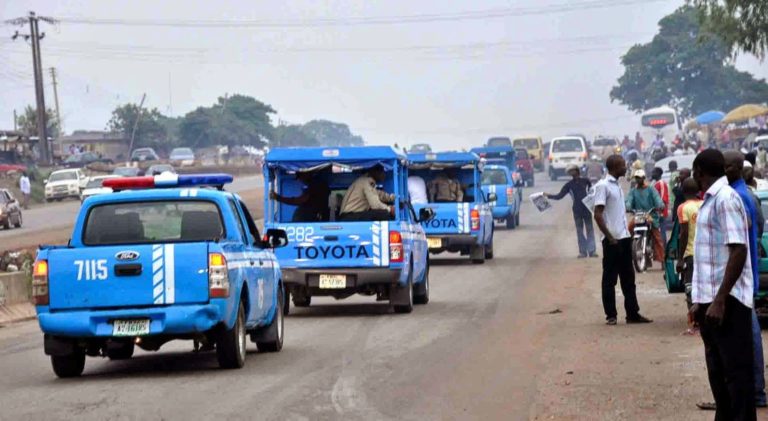
THE Federal Road Safety Corps (FRSC) has condemned an alleged attack on its officers during a routine traffic enforcement operation in Abuja.

In a statement signed by Deputy Corps Commander, Corps Public Education Officer, Osondu Ohaeri, on Friday, May 22, the FRSC Corps Marshal, Shehu Mohammed, described the incident as unacceptable and a threat to public safety and law enforcement.

According to the statement, the incident occurred on Thursday, 21 May, at about 3:20pm, at the RS7.118 Idu Unit Command axis, when an FRSC patrol team flagged down a Toyota Carina driver over a suspected traffic violation.

The Corps noted that the driver initially refused to stop and drove dangerously before eventually being intercepted in traffic near the command area, adding that the situation escalated when the enforcement team approached him for routine checks of vehicle and driver documents.

The FRSC stated that the motorist became hostile, verbally abusive, and resisted lawful directives despite efforts by personnel to de-escalate the confrontation.

It added that the situation further deteriorated when the driver advanced towards officers and pulled out a pistol, firing two shots within the vicinity of the command.

“Despite several tactical and professional attempts by FRSC personnel to de-escalate the situation, the offender escalated the confrontation by physically advancing toward officers and later drawing a pistol, which he fired twice within the vicinity of the Command. 

“In the face of imminent danger to lives and property, FRSC personnel acted with remarkable restraint, professionalism, and tactical discipline to swiftly disarm the assailant without loss of life. One Marshal sustained minor bruises during the process,” the statement read.

The suspect was thereafter handed over to the Nigeria Police Force at Life Camp Police Station, along with the firearm, ammunition components and the vehicle involved in the incident.

Preliminary findings, according to the Corps, identified the suspect as an operative with the State Security Service (SSS). The matter has since been transferred to the appropriate authorities for investigation.

“The armed suspect was immediately handed over to the Nigeria Police Force at Life Camp Police Station alongside the firearm, ammunition components, and the vehicle involved. Preliminary identification later revealed the suspect to be a personnel of the Department of State Services (SSS). The matter has since been transferred to the appropriate State Command for further investigation,” it added.

Reacting to the development, the FRSC Corps Marshal condemned the attack, insisting that no individual, regardless of status or agency affiliation, is above the law.

He warned that firearms and official positions must not be used to intimidate or obstruct law enforcement officers carrying out legitimate duties, adding that security personnel are expected to demonstrate compliance with traffic regulations and respect for constituted authority.

Mohammed also commended the FRSC personnel involved for their “professionalism and restraint under provocation”, noting that their conduct prevented the situation from escalating into a broader security crisis.

He called for stronger inter-agency cooperation and discipline among security operatives, stressing that mutual respect remained essential to national security and public safety.

The ICIR reports that officers of security agencies and civilians in Nigeria have reportedly confronted traffic enforcement officials severally, particularly in cities such as Abuja and Lagos.

In one recent case, an Abuja motorist was convicted after allegedly assaulting and abducting an FRSC officer during a patrol on the Kubwa Expressway.

Similar tensions have previously been reported between FRSC personnel and other security operatives during enforcement activities, including past clashes involving soldiers and police officers.

However, in many instances, Corps officers have also been accused of misconduct, including abuse of power. Viral videos have shown some officers jumping onto vehicle bonnets and being driven off by motorists.

The ICIR contacted the head of Directorate of Public Relations and Strategic Communications (DPRSC) for the SSS, Peter Afunaya, for a reaction to the FRSC’s claim. He did not pick up calls made to him and did not respond to text and WhatsApp messages.
Lawmaker representing Kano governor’s constituency defects to NDC after losing APC primary

0

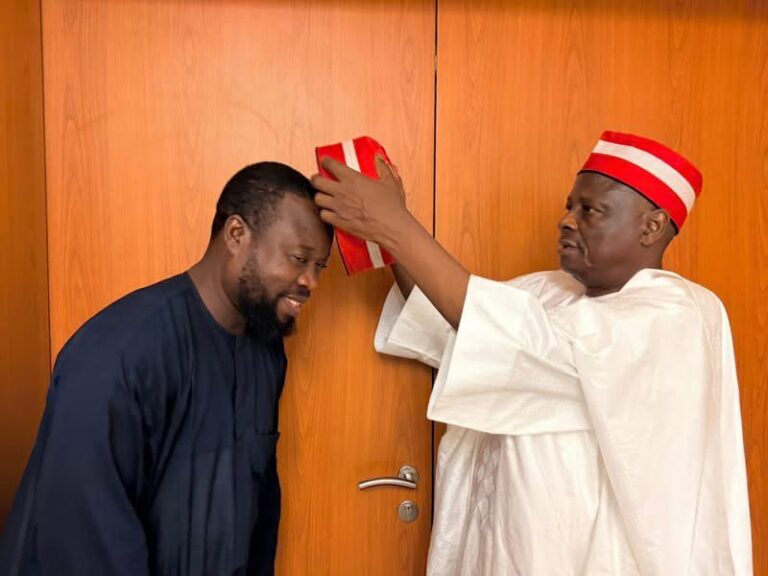
THE lawmaker representing Gwale Constituency in the Kano State House of Assembly, Abdulmajid Umar, has resigned from the All Progressives Congress (APC) and joined the Nigeria Democratic Congress (NDC).

The politician was received on Thursday in Abuja by former Kano State governor and prominent NDC figure, Rabiu Kwankwaso, in Abuja.

Umar represents Governor Abba Yusuf’s Gwale Local Government Area. He moved into the NDC together with former Gwale LGA Vice Chairman, Kabiru Auwal.

News of the development was shared by Kwankwaso’s media aide, Saifullahi Hassan, through a Facebook post released on Thursday.

Hassan wrote, “Today, (Thursday, 21st May 2026), His Excellency, Sen. Rabiu Musa Kwankwaso, welcomed Hon. Abdulmajid Isa Umar Mai Rigar Fata, member representing Gwale Constituency in the Kano State House of Assembly, following his defection from the APC to the Nigeria Democratic Congress (NDC), at his residence in Maitama, Abuja.

“Also received were Hon. Kabiru Sani Auwal Obi, former Vice Chairman of Gwale Local Government, and Mal. Mahadi Isa Umar, who joined the party alongside him.”

Kwankwaso reportedly described the arrival of the new members in the NDC as a positive addition to the party’s support base in Kano.

The assembly member first secured his seat in 2023 through the New Nigeria Peoples Party (NNPP) before later aligning with the APC alongside the governor who defected with many of his cabinet members.

The switch in party loyalty occurred hours after a Federal High Court decision created room for politicians planning to seek alternative political platforms ahead of the 2027 elections.

Speaking after the ruling, ADC spokesperson, Bolaji Abdullahi, said the judgment might encourage many politicians to leave the APC.

“The decision of the court on these issues, including those that directly contradict the Constitution, is therefore a welcome vindication of our position,” the party said.

According to the ADC, the ruling removed barriers affecting politicians who intended to contest elections under different parties, adding that it would encourage freedom of association.

“We believed at the time that that particular restriction was designed to prevent people from leaving the ruling party, APC. Now that the court has ruled against it, we are sure that, in the coming days, we will witness a mass exodus from the ruling party,” the statement added.


Confusion, tension trail Kwara APC governorship primary as party postpones exercise

0

FRESH confusion and tension engulfed the All Progressives Congress in Kwara State on Thursday, May 21, after the party abruptly postponed its governorship primary despite voting activities and mobilisation already commencing in several wards across the state.

The development came amid reports of unrest at the party’s state secretariat in Ilorin, where suspected political thugs allegedly besieged the premises during the exercise.

The APC had announced that the governorship primary would hold today (Thursday), with party members already gathered in many wards before the postponement notice was issued later in the day.

In a statement, the party’s State Publicity Secretary, Abdulwaheed Olawale Babatunde, said the exercise had been shifted to Friday, May 22, 2026.

“The APC governorship primary earlier scheduled to hold today, Thursday, 21st May 2026, has been postponed,” the statement read.

The postponement followed days of internal disputes within the Kwara APC after the controversial screening of House of Assembly aspirants for the 2027 elections.

According to reports, more than 100 aspirants were initially disqualified during the screening exercise, triggering protests and allegations of attempts to impose preferred candidates. The party later reversed the decision and cleared all 159 aspirants, including Speaker Yakubu Danladi-Salihu, whose name had initially been excluded.

The ICIR reports that the Thursday’s governorship primary was also overshadowed by reports that some aspirants had stepped down for Yahaya Seriki, endorsed by Governor AbdulRahman AbdulRazaq.

Amid the uncertainty, suspected thugs and cultists allegedly loyal to one of the aspirants reportedly stormed the APC secretariat in Ilorin, chanting slogans in support of the aspirant.

Security operatives, including officers of the Nigeria Police Force and the Department of State Services, were later reportedly deployed to the area to restore order.

Despite the postponement, Daily Trust reported that voting activities and mobilisation had already gained momentum in some wards before the directive was issued.

On May 19, the state governor publicly endorsed Seriki as his preferred successor ahead of the 2027 governorship election.

In a statement issued after what he described as “extensive consultations” with party leaders and stakeholders, AbdulRazaq threw his weight behind Seriki, describing him as “young, pro-people, astute and broad-minded.”

The governor said Seriki possessed the qualities needed to sustain the APC’s hold on the state and continue the programmes of his administration. He, however, maintained that other aspirants remained free to contest the party’s governorship primary.

The endorsement nevertheless triggered controversies within the party, particularly as both AbdulRazaq and Seriki are from Kwara Central Senatorial District. The development stirred concerns in parts of Kwara North and Kwara South, where some stakeholders have argued that power should rotate to another district after the governor completes his tenure in 2027.


Over 40,000 killed, more than 23,000 abducted in Nigeria since 2019 – Group

NIGERIA lost over 40,000 people and more than 23,000 others to insecurity since 2019, according to data released by Community of Practice Against Mass Atrocities and Global Rights on Thursday, May 21.

They released the data during a public dialogue organised under the National Day of Mourning (NDOM) – an initiative to sustain conversations around insecurity, accountability and justice for victims of violence.

Speaking at the event, the co-chair of the Community of Practice Against Mass Atrocities, Ken Henshaw, said the dialogue was organised to ensure that victims of violence were not forgotten amid growing insecurity across the country.

“We hope this conversation pushes us to think about what is happening, why it continues to happen and what must change…because a society that cannot pause to acknowledge its losses will eventually struggle to protect its living,” Henshaw said.

During the presentation, the stakeholders noted that insecurity had continued despite repeated government promises, with violence affecting several communities, particularly in northern Nigeria.

According to them, insurgency, banditry, farmer-herder clashes and extrajudicial killings contributed to widespread displacement, destruction of livelihoods and worsening humanitarian conditions.

They also raised concerns over the humanitarian crisis in the North-East, noting that over 27,000 people were killed and more than two million others were displaced since Boko Haram insurgency began in 2009.

On his part, the representative of the National Human Rights Commission, Benedict Agu, called for stronger preventive measures, including effective early warning systems and improved documentation of violations.

He also advocated full implementation of the Terrorism Prevention and Prohibition Act 2022.

The organisers said internally displaced persons across affected states continued to face severe shortages of shelter, food and healthcare.

Participants at the event criticised what they described as inadequate government responses to attacks, saying official reactions were often limited to condemnations without proper investigations or prosecutions.

They also faulted amnesty programmes for criminals, arguing that such policies weakened accountability and encouraged impunity.

The dialogue highlighted the growing complexity of Nigeria’s security landscape, with violence now involving insurgents, bandits, vigilante groups, herders, separatist actors and security forces.

According to the data presented, “terror pillages” accounted for a significant percentage of the recorded casualties, adding that extrajudicial killings, including civilian deaths from military operations and airstrikes, remained a major concern.

Speaking on accountability, the stakeholders said official government responses to attacks were often limited to condemnations without meaningful investigations or prosecutions.

They noted that the National Day of Mourning initiative was established in 2018 to document killings and sustain public pressure on authorities over mass atrocities.

The speakers called for a coordinated national response involving security agencies, the judiciary, legislature, civil society organisations, the media and international partners.

They urged the government to strengthen institutions, improve transparency, prosecute perpetrators and prioritise justice and reparations for victims.

They also maintained that continued documentation, advocacy and public engagement remained critical to reducing violence and restoring citizens’ trust in the state.

The stakeholders stressed the need for collaboration among security agencies, civil society organisations, the media and other stakeholders to improve accountability and protect citizens.

Besides, they expressed concern over attacks on journalists and restrictions on media access in conflict areas, saying such challenges limited proper documentation of atrocities.

They warned that insecurity could worsen if urgent reforms were not implemented.

Tinubu appoints 39-year-old professor as JAMB registrar

PRESIDENT Bola Tinubu has appointed Segun Aina, a professor, as the new Joint Admissions and Matriculation Board (JAMB) Registrar.

He will succeed Ishaq Oloyede, also a professor, whose tenure ends on July 31, 2026.

The appointment was announced on Thursday in a statement issued by the President’s Special Adviser on Information and Strategy, Bayo Onanuga.

“Professor Aina, who will be 40 in July, is a distinguished academic and systems expert with extensive experience in national examination systems, digital infrastructure, and public-sector institutional reform,” Onanuga said.

He noted that Aina is a professor of Computer Engineering at Obafemi Awolowo University with expertise in digital infrastructure, national examination systems, and institutional reforms.

“He holds a Bachelor of Engineering in Computer Systems Engineering from the University of Kent, an MSc in Internet Computing and Network Security, and a PhD in Digital Signal Processing, both from Loughborough University, United Kingdom. He has also completed the Senior Management Programme at Lagos Business School,” he added.

The presidential adviser explained that Aina had over 15 years of experience advising federal and state governments on digital transition, system design, and institutional reforms, stressing that the new appointee, “regarded as one of Nigeria’s youngest professors in Computer Engineering” will become the youngest registrar in JAMB’s history.

“He is also a member of professional organisations, including the Council for the Regulation of Engineering in Nigeria, the Nigerian Society of Engineers, the Institute of Electrical and Electronics Engineers and the Institution of Engineering and Technology.”

Onanuga said Tinubu expressed confidence that Aina would build on the achievements recorded under Oloyede’s administration and further strengthen the operations of the examination body.

“President Tinubu expects professor Aina to bring to bear his vast experience, knowledge and practical insight into the operations of the Board, to take the critical educational organisation beyond the laudable heights achieved by his predecessor.”

The ICIR reports that in 2025, Aina became one of Nigeria’s youngest professors of Computer Engineering at the age of 39, a milestone widely recognised in academic and technology circles.

Before the appointment, Aina worked as a consultant to examination bodies, including the National Examinations Council and the National Business and Technical Examinations Board, focusing on ICT systems and examination integrity.

He is also affiliated with professional organisations such as the Council for the Regulation of Engineering in Nigeria, the Nigerian Society of Engineers, the Institute of Electrical and Electronics Engineers, and the Institution of Engineering and Technology.

Fubara withdraws from APC governorship primaries

0

RIIVERS State Governor Siminalayi Fubara has withdrawn from the All Progressives Congress (APC) governorship primaries, citing the need for peace, stability and unity in the state.

Fubara announced his withdrawal in a statement personally signed on Wednesday, May 20, and titled “My decision to withdraw from the Rivers State Gubernatorial Primaries.”

Fubara said the decision followed “deep reflection and extensive consultations” with family members, friends and associates.

“After deep reflection and extensive consultations with my family, friends, and associates, I have taken the difficult but necessary decision to withdraw from the APC gubernatorial primaries,” he said.

The governor added, “I do so with a full heart and with a firm commitment to support whoever emerges as the candidate of our great party.”

The development came days after dozens of aspirants believed to be loyal to the governor were screened out of the APC National Assembly and state House of Assembly primaries in Rivers State.

The ICIR reported on May 11 that 65 aspirants linked to Fubara, including former factional Speaker of the Rivers State House of Assembly, Victor Oko Jumbo, were disqualified from participating in the party’s state assembly primaries.

According to the report, many of the affected aspirants were considered allies of Fubara, while aspirants loyal to the Minister of the Federal Capital Territory, Nyesom Wike, were cleared by the screening committee.

A total of 98 aspirants reportedly purchased nomination forms and appeared before the screening panel, but only 33 were eventually cleared to contest.

Among those denied clearance was Chijioke Ihunwo, a former chairman of Obio/Akpor Local Government Area and a known ally of Fubara.

The report also noted that Fubara had appeared before the APC screening exercise in Abuja but left the venue hurriedly without addressing journalists, replying “No comment” when questioned about the political situation in his state.

Meanwhile, providing more reasons for his withdrawal, Fubara further noted that the leadership demanded sacrifice and that personal ambition should not override the collective interest of the state.

“Rivers State is bigger than any individual, and at this critical moment, the peace, stability, and unity of our dear state must take precedence over every personal interest,” he stated.

The governor also acknowledged the disappointment his supporters might feel, thanking them for their loyalty and sacrifices.

He further hinted at political pressure surrounding the crisis in the state, saying he had faced “immense pressures and difficult choices.”

“As our elders say, not everything a hunter sees in the forest is spoken of in the marketplace,” he added.

He went further, “Some truths are best borne quietly, not out of fear, but out of wisdom and restraint for the sake of peace and a greater purpose.”

The Rivers political crisis has persisted since Fubara fell out with his predecessor, Wike, over the control of the state’s political structure shortly after assuming office in 2023 under the Peoples Democratic Party (PDP).

The crisis led to a split in the Rivers State House of Assembly and prolonged political instability in the oil-rich state.

Fubara later defected from the PDP to the APC in December 2025 amid efforts to resolve the standoff.

In March 2025, President Bola Tinubu declared a state of emergency in Rivers State and suspended Fubara alongside members of the state House of Assembly before restoring them six months later.

In his statement, Fubara thanked the APC leadership and Tinubu for their support and encouragement throughout the process.

He urged party members to remain united, insisting that his withdrawal should not be seen as an act of weakness or surrender.

“Let it be clearly understood that I stepped aside from participating in the upcoming Rivers State governorship election not out of weakness, fear, or surrender, but out of conviction and sacrifice so that Rivers State may move forward in peace and unity,” he said.

Fubara added that he remained committed to serving the people of Rivers State until the end of his tenure.

Desmond Elliot ‘withdraws’ from Lagos APC House of Assembly primary

0

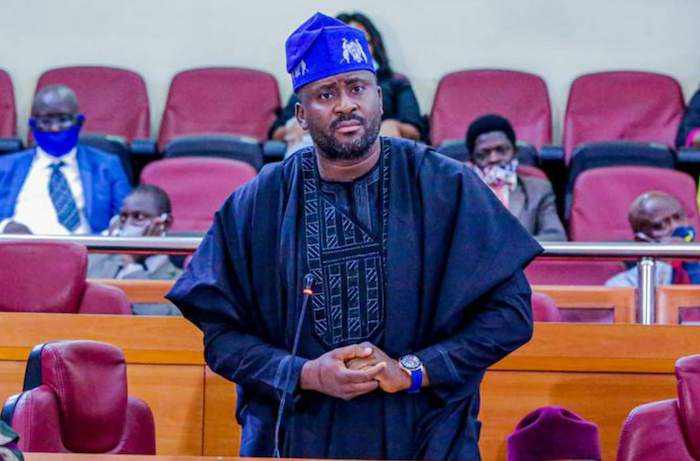
LAGOS State House of Assembly member representing Surulere I, Desmond Elliot, said he had pulled out of the All Progressives Congress (APC) primary for the constituency seat in the state Assembly.

He announced this on Wednesday during the party’s primary held at the Paddington Mini Stadium along Western Avenue in Lagos.

A video from the scene, now viral, showed Elliot explaining his decision while pointing to issues around access for his supporters.

“My name is Demond Elliot. In all zones, they have been intimidating and stopping us. I want to officially announce my withdrawal from this particular race. This is my ward, if you go outside, those are my people outside, and they have not been allowed. So, I am officially announcing my withdrawal from this race. Good luck, thank you,” he stated.

The lawmaker, who has represented Surulere I constituency since 2015, was seeking another term under the APC platform before pulling out of the exercise.

He said he had repeatedly tried to get the attention of electoral officials to allow his supporters into the voting area, but his efforts did not yield results.

After his exit, some of his supporters reportedly held a peaceful protest and later left the venue with him.

THE ICIR reported that the Nollywood actor-turned politician apologised to Femi Gbajabiamila, his political mentor and Chief of Staff to President Bola Tinubu over tensions that arose during recent political developments in Lagos State.

Gbajabiamila had claimed that the roles played by Elliot during the attempted impeachment of the state House of Assembly Speaker, Mudashiru Obasa, in January 2025 could have cost him his job. He said Tinubu was very angry with the uproar caused by the attempted impeachment.

The former speaker of the House of Representatives said he directed Elliot to make a public statement on what led to his role in the saga after Obasa regained his state. According to him, the lawmaker failed to comply.

Meanwhile, Elliot had expressed regret over his action and apologised at different fora, incluinding when he featured recently on TVC’s Your View, noting that any offence caused was unintentional and reaffirming his loyalty to his party and constituency. He said he was not in Nigeria when the impeachment process started and thought it was backed by the president.

He also had apologised to a woman he referred to as the “matriarch of Surulere” for any wrong he might have caused.


Police confirm kidnap of CRIN staff in Oyo, nab two suspects

OYO State Police Command has confirmed the abduction of two staff members of the Cocoa Research Institute of Nigeria (CRIN) in Ibadan by gunmen.

The command, however, debunked viral claims that pupils and staff of a school in Abanla, Oluyole Local Government Area were kidnapped in a mass attack.

In a telephone conversation with The ICIR on Wednesday, May 20, the command’s spokesperson, Olushola Ayanlade, confirmed that two CRIN staff members were kidnapped on Monday, May 18, at the staff lodge.

“Two staff of the Fokuyo Research Institute were abducted and upon the receipt of the information, the police command has started an investigation,” he said.

According to Ayanlade, two suspects were apprehended on Tuesday by tactical teams currently combing nearby forests, adding that security operatives are also relying on technology-driven tracking methods to locate and rescue the victims.

“As I speak to you, we have two suspects in custody in connection with the kidnapping,” he said.

He declined to disclose the identities of the abducted CRIN staff, stating that the investigation was at a sensitive stage.

He said, “The investigation is still ongoing. I can’t tell you specifically what and where we are. But of course, our men are inside the bushes, combing the bushes, and also using technology to ensure that they are rescued,” he added.

Reacting to reports that pupils and staff of a school in Abanla in Oluyole LGA were abducted, the officer clarified that no pupils were kidnapped in the incident. He explained that an individual was actually abducted on 16 May in Abanla area, but the incident did not occur within a school environment as reported.

He identified the victim as Adeleke Ridwan, stressing that there had been no arrest or rescue in connection with the case.

As of the time of filing this report, neither CRIN nor families of the abducted victims had issued public statements on the attack.

The latest abduction case is coming two days after the state governor Seyi Makinde revealed that seven teachers were kidnapped during attacks on schools in Oriire LGA of the state. He confirmed that one of the victims was killed.

ADC screens over 80 governorship aspirants for 2027 polls

0

THE African Democratic Congress has said more than 80 governorship aspirants participated in its screening exercise ahead of the 2027 polls, as political parties continue early preparations following the release of election timetable by the Independent National Electoral Commission (INEC) 

The party’s screening exercise comes as political parties intensify consultations, zoning arrangements, and internal contests ahead of the elections, which will see Nigerians vote for a new president, senators, House of Representatives members, governors, and state legislators.

In a post on its official X handle on Wednesday, May 20, the ADC said its screening exercise attracted over 80 governorship aspirants from different states of the federation seeking the party’s ticket for the 2027 elections.

“The African Democratic Congress (ADC) continues to witness massive participation nationwide as over 80 gubernatorial aspirants took part in the party’s screening exercise ahead of the 2027 General Elections,” the party said.

The ADC described the turnout as evidence of growing public confidence in its platform, adding that the process reflected increasing trust in its internal democracy and leadership selection process.

“As momentum continues to build across the country, the ADC remains focused on strengthening internal democracy and providing Nigerians with capable leaders ready to move the nation forward,” the party stated.

The development came amid Independent National Electoral Commission’s (INEC) revised election schedule, which fixed January 16, 2027, for the presidential and National Assembly elections, while governorship and state Houses of Assembly polls are scheduled for February 6, 2027.

According to the timetable, political parties are expected to conclude primaries by May 30, 2026, as part of key pre-election activities already underway across the country.

The ADC primaries were scheduled to commence on May 21, with contests for state Houses of Assembly, Federal House of Representatives, and Senate seats to be conducted simultaneously at the ward level.

Governorship primaries will follow on May 22, while the presidential primary has been fixed for May 25.

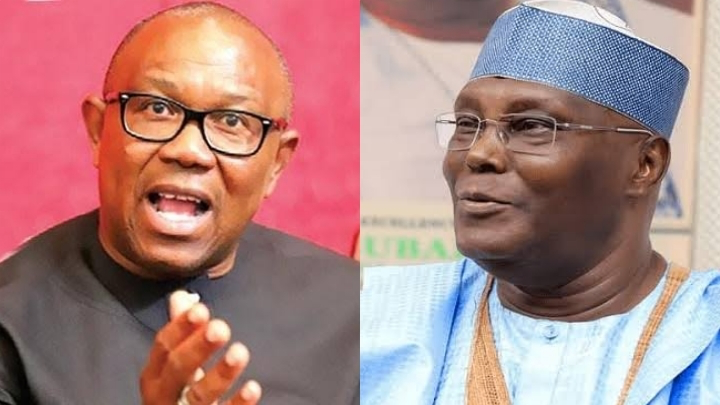
2027: Atiku faces ADC screening panel as NDC clears Obi as sole aspirant

FORMER vice president Atiku Abubakar on Wednesday, May 20, appeared before the presidential Screening Panel of his party – the African Democratic Party (ADC)

Abubakar, who seeks to unseat President Bola Tinubu of the All Progressives Congress (APC) in the 2027 election, presented his credentials and blueprint for governance to the panel.

He appeared before the panel with party stalwarts and allies, including former Sokoto State governor Aminu Tambuwal, and former attorney-general of the federation and minister of justice, Abubakar Malami.

The ICIR reports that Abubakar is seeking Nigeria’s highest political office for the seventh time. His last attempt was in 2023 when he contested on the platform of the Peoples’ Democratic Party (PDP). The Independent National Electoral Commission (INEC) declared him a runner-up in the poll.

In a statement reportedly issued by his Senior Special Assistant on Public Communication, Phrank Shaibu, after appearing before the screening panel on Wednesday, Abubakar said the nation could not continue on the current trajectory of insecurity, unemployment, gloom, and hardship.

He decried misgovernance, rising poverty and mismanagement of resources and other ills mitigating against the nation, promising to create jobs, expand investments and make Nigeria an investment destination.

“At this defining moment in our national life, Nigeria does not need experiments. It needs tested leadership, clarity of vision, and the courage to make difficult but necessary decisions in the national interest,” he said.

His appearance before the committee came barely 24 hours after the Nigeria Democratic Congress (NDC) cleared the former Anambra State governor Peter Obi as its sole candidate to contest the 2027 presidential election after successfully completing the party’s screening process.

The former Labour Party presidential candidate arrived at the venue on Tuesday evening alongside party chieftain Victor Umeh, who represents Anambra Central in the National Assembly.

The screening exercise was conducted by a committee led by former minister of education, Sam Egwu.

Speaking after the exercise, Egwu said the committee was pleased with Obi’s outing during the screening, adding that he responded satisfactorily to all questions asked by the panel.

Following the exercise, the committee officially presented Obi with his clearance letter as well as the party’s nomination form carrying the number 001.

Obi defected from the ADC to NDC recently after planned consensus candidate failed, leaving Abubakar and former minister of transportation, Rotimi Amaechi, as major contenders for the ADC’s presidential ticket.

The former Anambra governor defected to the NDC with former Kano State governor, Rabiu Kwankwaso, widely believed to be his running mate in the 2027 election.