Home Blog Page 313

US Embassy rolls out new visa interview requirements for Nigerians

0

THE United States  Embassy has announced updated visa interview requirements for Nigerian applicants, effective from April 22.

In a statement issued on Friday, April 11, the US Mission stated that all applicants attending interviews in Abuja and Lagos must bring a DS-160 visa application form that includes a confirmation barcode starting with “AA” followed by two zeros.

This barcode must exactly match the one used to book the interview appointment online.

This barcode must exactly match the one used to book the interview appointment online.

The embassy warned that applicants who fail to present a matching barcode will be denied entry to the consular section and disqualified from the interview.

“If the confirmation/barcode number on your DS-160 form does not match the one you used to book your appointment, you will not be allowed to enter the Consular Section or attend your visa interview,” the statement read.

Applicants are also advised to verify the alignment at least two weeks before their appointment.

The statement further clarified that previously used DS-160 forms are not reusable. In cases of a mismatch, applicants are advised to log into their AVITS account and submit a correction request at least ten days before their scheduled interview.

The US mission noted, “At least two weeks before your interview, please double-check that the barcode number on your DS-160 form matches the one you used to schedule your appointment.

“You cannot reuse a DS-160 from a previous application. If your DS-160 barcode is incorrect, you must log into your AVITS account  at least 10 days before your appointment to create a support ticket requesting correction of your barcode number.”

Additionally, the US mission reminded applicants to ensure that their visa appointment is scheduled at the location indicated in their DS-160 form.

“If you are turned away from your appointment because your barcode numbers do not match, once you correct the problem, you will need to book a new appointment to proceed with your visa application. You may book a new appointment by logging into your AVITS account. If your visa fee has expired, you may have to pay a new fee before booking,” it added.

These changes are part of ongoing efforts to streamline visa processing and reduce administrative errors.

Since January 1, all visa applicants have been required to visit the US Consulate General in Lagos twice as part of the application process.

NUPRC puts Nigeria oil reserves at 37 billion barrels

0

THE Nigerian Upstream Petroleum Regulatory Commission (NUPRC) says the country’s oil reserves stood at 37.28 billion barrels as of January 1 this year.

The apex regulator in the upstream oil and gas sector declared this in a statement on Friday, April 11, issued by its chief executive, Gbenga Komolafe.

He disclosed that the total gas reserves were officially  at 210.54 trillion cubic feet.

Komolafe, in the statement noted that he acted in line with the commission’s mandate as stipulated in the Petroleum Industry Act 2021.

He further said, as against the foregoing, he was pleased to present an overview of the Nation’s oil, condensate, associated gas, and non-associated gas reserves as of January 1, 2025.

“2P Crude Oil and Condensate reserves stand at 31.44 bllion barrels and 5.84 billion barrels respectively, amounting to a total of 37.28 billion barrels.

“2P Associated Gas and Non-Associated Gas reserves stand at 101.03 Trillion Cubic Feet and 109.51 TCF, respectively, resulting in total Gas reserves of 210.54 TCF,” Komolafe stated.

He noted that the reserves life index stands at 64 years for oil and 93 years for gas.

This, he said, signals Nigeria’s potential to remain a dominant player in the global energy space for generations.

The NUPRC boss maintained the figures represent not just a statistical update but a bold reaffirmation of the Commission’s Regulatory Action Plan for 2024.

He said the aim was directed at ramping up exploration, enhancing upstream investment, and unlocking value from Nigeria’s vast energy resources.

He believes that boosting the efficiency and effectiveness of the upstream oil and gas sector, growing the nation’s reserves, and driving a sustainable rise in production for shared prosperity remain key priorities, as outlined in the 2024 Regulatory Action Plan and near-term strategy.

“Given the above, and furtherance of Chapter 1, Part III, Section 7 (g), (i). (i). (k), (m). (a). (r), and other powers enabling me in this respect, I hereby declare the Total Oil and Condensate reserves of 37.28 Billion Barrels and Total Gas reserves of 210.54 Trillion Cubic Feet as the official National Petroleum Reserves Position as of 1st January 2025,” he noted in the statement.

The growth in the reserves is expected to help the country achieve its 2.06 million barrels per day oil production output set by the government.

The NUPRC had last year launched an aggressive plan to increase Nigeria’s oil production by 1 million barrels per day.

In pursuit of this aim, The ICIR  reported that the NUPRC opened up the country for investment with successful bid rounds, which were to allow an increase in oil production.

Its 2024 bid round saw 25 winners emerge after a competitive bidding process.

Major winners included Petroli Energy Marketing & Supply Limited (PPL 269), Sahara Deepwater Resource Limited (PPLs 270 and 271), Panout Oil and Gas Limited (PPL 300/301-CS), and TotalEnergies E&P Nigeria (PPL 2000/2001).

The round, with a focus on fallow assets, was aimed at boosting Nigeria’s energy production.

US tariff: Budget reset looms as FG sets up assessment sub-committee

THERE is the possibility and likelihood of an annual budget reset as the  Federal Government has constituted a subcommittee to evaluate the potential economic impact of the recent tariff measures announced by the United States government.

The decision followed a meeting of the Economic Management Team (EMT), chaired by Minister of Finance and Coordinating Minister of the economy, Wale Edun, according to a statement issued on Friday, April 11, by Mohammed Manga, Director of Information and Public Relations at the ministry, Mohammed Manga.

The ICIR reported that US President Trump slammed a 14 per cent tariff on Nigerian exports, arguing that Nigeria had already imposed a 27 per cent tariff on US exports to the country.

He, however, exempted oil and minerals-related exports from the new tariff.

A few days later, Edun said Nigeria is well-positioned to withstand global trade disruptions, including the United States import tariffs.

He said plans were underway for possible budget adjustments and prioritisation where possible.

To assess the impact of the tariffs, Manga said the EMT convened earlier in the week with key ministries and agencies to review the fiscal and macroeconomic implications of emerging global trade dynamics.

He said the EMT noted that while Nigeria’s major export — crude oil — has not been directly targeted by the new tariffs, the policy shift has coincided with a dip in international oil prices, raising concern over potential revenue and budgetary pressures.

“To support evidence-based policymaking, the EMT has established a subcommittee tasked with conducting a detailed review of the direct and indirect economic impacts of both the emerging tariff measures and the global commodity price shifts,” Manga said.

“The subcommittee includes representatives from the Ministry of Finance, the Ministry of Budget and Economic Planning (including the budget office of the Federation), and the Central Bank of Nigeria (CBN).”

Manga also said the subcommittee has already held its inaugural meeting and is expected to present its findings to the full EMT without delay.

The ICIR reported that Edun expressed concerns that amid the huge impact of the tariff on the oil slump, the government has to adjust, possibly, where necessary, its 2025 budget plans as a result of the global shift in Trump’s policies.

“We are monitoring developments globally, and we are adjusting accordingly. We’ll be speaking to the National Economic Council on this. It’s not our exclusive decision to make, however, we’ll make adjustments where necessary,” he said.

“Budget adjustment and prioritisation, where possible, as well as innovative non-debt financing strategies, would be embraced,” Edun was quoted in an earlier report by The ICIR.


Scorching heat: NiMet issues warning to 18 northern states

THE Nigerian Meteorological Agency (NiMet) has warned about severe heat stress affecting Gombe and 17 other northern states.

According to its weather outlook released on Friday, April 11, by the Meteorological Manager for Gombe State, Gayus Musa.

The affected states include Borno, Adamawa, Taraba, Yobe, Bauchi, Jigawa, Kano, Katsina, Kaduna, Zamfara, Sokoto, Kebbi, Niger, Kogi, Nasarawa, Benue, and the Federal Capital Territory (FCT)

The agency stated that starting Saturday, April 12, temperatures in the affected states could soar up to 40 degrees Celsius(°C), leading to thermal discomfort.

“After three days of rainfall, discomfort levels are set to rise from April 12 due to high temperatures and clear skies.

Maximum temperatures in the north are reaching up to 40°C; with clear skies and moisture in the air, heat and discomfort will be more intense,” part of the statement read.

Musa encouraged residents of Gombe to take precautionary steps, noting that extreme heat could pose serious health risks.

He further cautioned that the combination of soaring temperatures and high humidity might lead to thermal discomfort.

He, therefore, advised people to limit their exposure to the sun, stay in cooler places, stay well-hydrated, and avoid intense physical activities during peak heat hours.

“Also, let’s always check up on vulnerable persons like our children and the elderly in our communities,” The statement further read.

He called on stakeholders to raise greater awareness about the dangers of heat stress and promote preventive actions crucial for maintaining good health.

In 2024, The ICIR reported how heat stress is affecting poultry farming in Sokoto state.

The report noted that heat stress is one of the most significant challenges of poultry farming. It occurs mostly during periods of high temperatures, causing birds difficulty in balancing heat production and loss.

States like Kebbi, Kano and Sokoto are among the hottest in the country, and in 2023, Sokoto state was predicted to be one of the states to exceed 40 degrees, according to the Nigerian Meteorological Agency (NiMET).

For farmers in Sokoto, high temperatures pose a major business challenge, as older birds are usually more prone to developing respiratory and other diseases during the heat, usually after a lot of investments have been made by the farmers.

Again, Atiku stirs merger talks during visit to Buhari

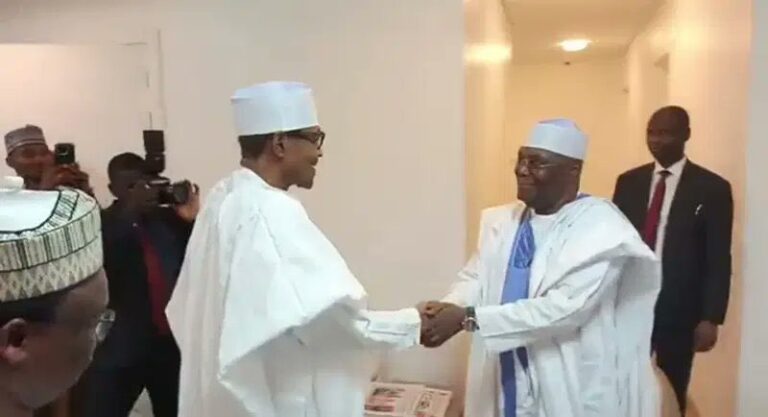
FORMER Peoples Democratic Party (PDP) presidential candidate in the 2023 general election, Atiku Abubakar, has again stirred up coalition speculation talks in some quarters during a visit to former President Muhammadu Buhari at his residence in Kaduna on Friday, April 11.

Atiku met the former Nigerian leader in the company of former Governor of Kaduna State, Nasir El-Rufai, as the build-up to the 2027 election gears up.

Also in the delegation  were an ex-governor of Sokoto State, Aminu Tambuwal, former Benue State Governor, Gabriel Suswam,  former Governor of Imo State, Achike Udenwa, and former Adamawa State Governor, Jubirila Bindow.

Atiku disclosed the visit to Buhari in a post via X on Friday.

He wrote: “As the Waziri Adamawa, I was obligated to be in Adamawa during the Sallah celebrations. I held forth for the Lamido Fombina in some of the activities of the Sallah celebrations.

“Today, I had the opportunity to pay a post-Sallah visit to His Excellency Muhammadu Buhari, former President of the Federal Republic of Nigeria, 2015- 2023. It was a wonderful time with him. As usual, he cracked me up (to the extent that my ribs were hurting with his peculiar humour).”

The former Vice President, however, did not disclose the details of the visit.

As political activities heat up for the 2027 elections, there are rumours that Atiku, El-Rufai, and Peter Obi of the Labour Party are planning to form a coalition to remove President Bola Tinubu from power in 2027.

Atiku hinted about the formation of the coalition during a press conference by a group known as Concerned Leaders and Political Stakeholders in Nigeria.

The ICIR reported that the former  Vice President and El-Rufai had raised alarm over what they described as a growing threat to Nigeria’s democracy.

Speaking at a national conference on strengthening democracy in Abuja on Monday, January 27, 2025, the leaders warned that if urgent action was not taken, the country could lose its hard-fought democracy.

Abubakar highlighted the erosion of democratic values, arguing that Nigeria was at crossroads.

He criticised the growing influence of the judiciary in determining electoral outcomes, arguing that the courts, not the people, decided candidates and winners.

He further accused the Federal Government of undermining opposition parties through financial inducements, adding that some political party leaders were given N50 million each.

On his part, El-Rufai said he shared similar concerns with Atiku, describing the current situation in the country as a “national emergency.”
He warned that the opposition risks extinction unless it unites.

The former Kaduna State governor claimed that there was a deliberate effort to destroy parties like the PDP and the Labour Party (LP).

He urged opposition leaders to prioritise internal democracy and adopt stricter standards for party delegates and candidates.

FCTA to land owners: Develop your land in 2 years or risk revocation

0

THE Federal Capital Territory Administration (FCT) has announced some land reforms, including a new law which seeks to revoke undeveloped plots after two years of issuance of Rights of Occupancy.

Addressing a news conference in Abuja on Friday, April 11, the Director of Land Administration in the FCTA, Chijioke Nwankwoeze, said the reforms will become operational from April 21, 2025.

He said the reforms cover specific areas like conditions of grant of Statutory Right of Occupancy, contents of the Statutory Right of Occupancy Bill, contents of Letter of Acceptance/Refusal of offer of grant of Right of Occupancy, titling of Mass Housing and sectional interests, as well as regularisation of Area Council Land documents.

The director noted that before now, the deadline for payment of bills, rents, and fees was not specified in the Statutory Right of Occupancy bill, and there was no penalty for failure to make payment promptly.

He explained that the development has caused a delay in revenue receivable due to non-collection of Right of Occupancy and non-payment of bills, slower pace of infrastructural development, sustained land speculation, and racketeering.

He further said that as a result, the FCT administration has incurred huge expenses through repeated advertisements and publications notifying the public on the need for collection of R-of-O and timely payment of bills and charges.

“Consequently, as against the unspecified period within which to collect the Right of Occupancy and make full payment of the Statutory Right of Occupancy bills and charges, land allottees now have 21 days from the date of offer, to make full payment of all bills, fees, rents and charges prescribed on offers of Statutory Rights of Occupancy and submit a duly completed Letter of acceptance alongside evidence of payments, or lose the offer.

“Also, as against the lengthy period within which to develop allocated lands, the period within which to erect and complete developments on any land granted in the FCT is now two years from the date of the commencement of the R-of-O.

“Therefore, any R-of-O bills and any other payments made outside the stipulated 21 days shall be considered invalid, while any land granted should be developed within two years”, he stated.

On lands previously allocated by Area Councils, Nwankwoeze said the law stipulates that all lands in the FCT are urban land.

He said it, therefore, becomes necessary that all land documents issued by the Area Councils are considered for regularization to statutory titles in line with relevant statutes.

“It should be noted that in 2006, the Zonal Land, Planning and Survey offices of the six Area Councils were directed to submit all Area Council allocation lists, layouts, files, and registers to Abuja Geographic Information System (AGIS)/Lands Department, and the Area Councils did this.

“However, to date, out of the 261,914 Area Council land documents submitted for regularization, only 8,287 have been vetted, out of which only 2,358 were cleared, validated and regularized to statutory titles. The 8,287 were vetted from 2006 to 2023 (17 years), and this represents just 3.2% of the total land documents submitted for vetting and regularization as of today; the FCT Administration is still left with 253,627 submissions in its database.

“Area Council land documents successfully vetted and confirmed would have statutory titles on such lands issued, and the allottees will have sixty days to make full payments of all bills, fees, rents, and charges prescribed, failure of which the offers shall become invalid,” he said.

The ICIR reported that  Minister of FCT, Nyesom Wike, has approved the revocation of 4,794 land titles in the nation’s capital due to alleged non-payment of ground rent for over 40 years.

The minister’s Senior Special Assistant on Public Communications and Social Media, Lere Olayinka, and the Federal Capital Territory Administration (FCTA) Director of Lands, Chijioke Nwankwoeze, disclosed this at a press briefing on Monday, March 17.

Olayinka noted that the revocation followed multiple publications and announcements on broadcast media by the FCT Administration since 2023, adding that payment of ground rents was backed by extant laws.

Trade war: China hits back at Trump with 125% retaliatory tariff hike

BEIJING has increased tariffs on imports from the United States to 125 per cent, in response to President Donald Trump’s decision to raise tariffs on Chinese goods to 145 per cent.

The announcement was made by China’s Ministry of Finance on Friday, 11 April, with officials stating this would be the last time China would match further U.S. tariff hikes.

“Even if the U.S. continues to impose even higher tariffs, it would no longer have any economic significance and would go down as a joke in the history of world economics,” the finance ministry statement added.

“If the U.S. continues to play a numbers game with tariffs, China will not respond,” it added, however, leaving the door open for Beijing to turn to other types of retaliation, and reiterating that China would fight the U.S. to the end,” the ministry said.

While China signalled it would stop matching further U.S. tariff increases, it hinted at the possibility of other forms of retaliation. The ministry stressed that China is ready to fight to the end, should tensions continue to escalate.

This latest move deepens the U.S.–China trade war, sparking more uncertainty in global supply chains. Markets continued to decline, with foreign leaders scrambling to respond to what many see as the most serious threat to global trade in decades.

Earlier in the week, Trump announced a 90-day tariff pause for countries that had not retaliated against U.S. tariffs, including Nigeria, but confirmed that China would not be spared, raising duties on Chinese imports to 145 per cent.

After days of vowing to stick to his hardline trade approach, Trump announced that all countries that hadn’t retaliated against United States tariffs would be granted a reprieve, facing only a flat 10 per cent United States tariff until July.

White House press secretary Karoline Leavitt defended the decision, saying, “When you punch at the United States of America, President Trump is going to punch back harder.”

The announcement shook global markets. According to Reuters., U.S. stocks fell, the dollar weakened, and there was a sharp sell-off in government bonds.

Despite market instability, U.S. Treasury Secretary Scott Bessent dismissed concerns, suggesting that new trade deals with other countries would soon restore confidence.

At the White House, President Trump struck a more optimistic tone, saying he hoped for a mutually beneficial deal with China.

“In a true sense, [President Xi] has been a friend of mine for a long time. I believe we’ll work out something very good for both countries,” he said.

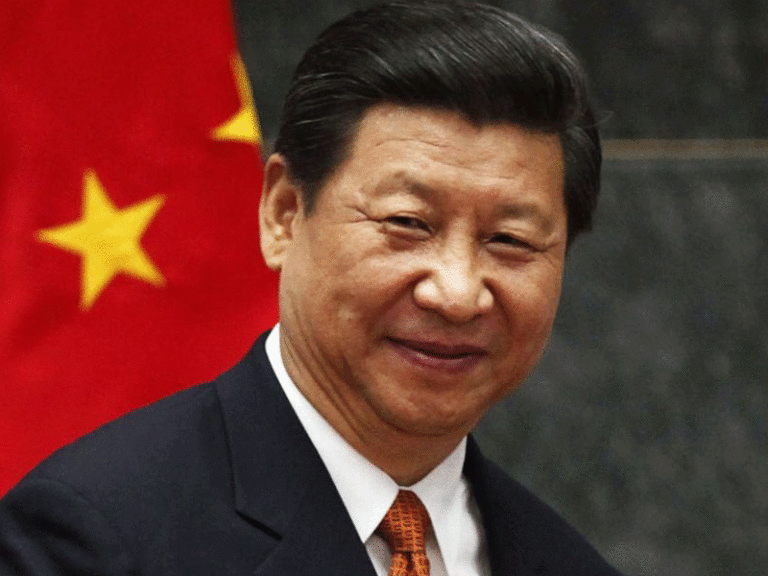
In his first public response, Chinese President Xi Jinping criticised Trump’s tariffs during a meeting with Spanish Prime Minister Pedro Sánchez in Beijing.

“There are no winners in a trade war,” Xi said, urging China and the European Union to work together against “unilateral acts of bullying.”

Meanwhile, Trump’s administration is working on “tailored deals” with key allies such as Japan and South Korea. Talks have already been scheduled with both countries, and Italian Prime Minister Giorgia Meloni is expected to visit Washington next week.

Japan’s Prime Minister Shigeru Ishiba has also set up a trade task force and is planning a visit to the U.S. soon.

Stay too long, pay the price: Nigeria to fine visa overstayers $15 daily from August

THE Nigerian government has announced that from August 2025, travellers who overstay their visas will be fined $15 for each extra day they remain in the country.

The Minister of Interior, Olubunmi Tunji-Ojo, made the announcement during a stakeholders’ meeting held on Friday, 11 April. He said the fine is part of the new Nigeria Visa Policy (NVP) 2025, aimed at curbing visa abuse.

In addition to the daily fines, overstayers may also face entry bans:

  • A five-year ban for overstaying by three months,
  • A ten-year ban for overstaying by one year or more.

Grace period before enforcement

Although the policy will officially come into effect in May 2025, Tunji-Ojo explained there will be a grace period lasting until August 2025.

During this time, travellers who overstay their visas will not be fined. The minister said the grace period is to allow visa holders to adjust and comply with the new rules.

Part of broader immigration reforms

The ICIR reports that the meeting also covered other reforms led by the Ministry of Interior and the Nigeria Immigration Service (NIS). These include updates to the Expatriate Quota system and a fully revised Nigeria Visa Policy 2025.

Tunji-Ojo noted that the fine system is part of broader efforts to improve compliance, enhance national security, and promote responsible migration. The NIS will be in charge of enforcing the new penalties.

E-Visa system launching in May

As part of the visa reform process, the minister in a separate statement also announced that Nigeria will launch a digital visa system (e-visa) on May 1, 2025. The system will allow travellers to:

  • Apply for visas online,
  • Track their applications in real time,
  • Receive approvals electronically.

In addition, the government plans to digitise landing and exit cards at international airports across the country, as part of efforts to modernise immigration services and improve efficiency at border points.

JP Morgan warns naira could hit ₦1,700/$1 if oil prices keep falling

0

GLOBAL financial services giant, JP Morgan Chase, has raised concerns that Nigeria’s exchange rate could worsen significantly if global crude oil prices continue to fall below $60 per barrel.

In its latest publication titled “Frontier Local Market Strategy: Reducing Risk Further”, released on 9 April, JP Morgan warned that sustained low oil prices may push the USD/NGN exchange rate beyond ₦1,700/$1 and place Nigeria’s current account at risk of slipping into a deficit within months.

At present, the naira trades around ₦1,500/$1, but this level is highly dependent on foreign currency inflows.

“While Nigeria may well avoid a recession,” the report stated, “he substantial decline in oil prices below its break-even of US$60/bbl… would push Nigeria’s current account balance into deficit.”

Budget and oil production woes

As reported by The ICIR, the falling oil price now below $65 per barrel, poses a threat to Nigeria’s 2025 budget, which is based on an oil price benchmark of $75 per barrel.

Compounding the challenge is Nigeria’s failure to meet its 2.06 million barrels per day (bpd) oil production target, even as the naira continues to weaken beyond the budgeted exchange rate of ₦1,500/$1.

A mixed economic picture

JP Morgan’s warning comes despite signs of economic recovery. Nigeria recorded a Balance of Payments (BOP) surplus of $6.83 billion in 2024, a major turnaround from deficits of $3.34 billion in 2023 and $3.32 billion in 2022.

The bank noted that the naira has depreciated by 3.6 per cent against the dollar in the past week, which it considers relatively moderate compared to other similar markets. However, it acknowledged that the currency had been as much as 6.5 per cent weaker at certain points.

“In our view, it’s been as much as 6.5 per cent weaker at some points.

“More importantly, as expected, given the FX market’s significant dependence on CBN flows, the central bank has had to increase its dollar sales interventions to avoid convertibility risks and limit a disorderly move higher,” the firm said

JP Morgan estimates that the CBN sold around $550 million into the market in the past week alone – more than half the $1 billion sold in the entire month of March.

The bank expects further intervention, especially as foreign portfolio outflows are projected to rise. It estimates that foreign portfolio investment (FPI) holdings still stand at over $10 billion, though some of these may be tied up in private placements and not immediately available for sale on the open market.

CBN reports stronger external position

Earlier this week, the CBN announced an improvement in the country’s Balance of Payments, highlighting stronger trade performance, increased investor confidence, and the impact of macroeconomic reforms.

During the review period, Nigeria recorded a current and capital account surplus of $17.22 billion, driven by a $13.17 billion trade surplus in goods.

  • Petroleum imports dropped by 23.2 per cent to $14.06 billion,
  • Non-oil imports fell by 12.6 per cent  to $25.74 billion,
  • Gas exports surged by 48.3 per cent to $8.66 billion,
  • Non-oil exports rose by 24.6 per cent to $7.46 billion.

Strong remittances support economy

Remittance inflows also showed resilience:

  • Personal remittances increased by 8.9 per cent to $20.93 billion,
  • IMTO (International Money Transfer Operator) inflows climbed by 43.5 per cent to $4.73 billion, up from $3.30 billion in 2023.

Outlook hinges on reforms, external factors

JP Morgan concluded that Nigeria’s economic outlook will depend largely on how well the country manages external shocks and maintains momentum on economic reforms amid global uncertainties.

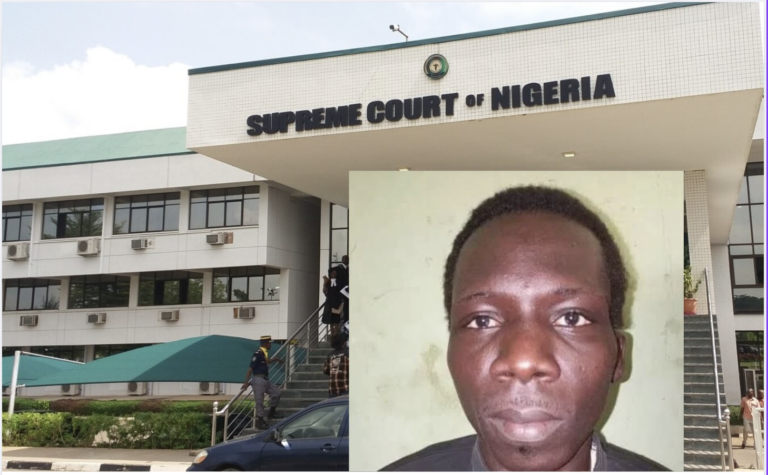
Stabbed twice, then sentenced to death: The controversial story of Sunday Jackson

CAN you be guilty of murder for defending yourself after being stabbed twice? In Sunday Jackson v. The State, the Supreme Court upheld a death sentence, rejecting a self-defence claim many legal experts say should have stood.

However, one of the judges, Helen Ogunwumiju’s dissent has sparked fresh debate over what counts as reasonable force in life-or-death moments. The core of the controversy lies in the Supreme Court’s affirmation of lower court decisions that convicted Jackson of culpable homicide, a verdict many legal minds find inconsistent with the principles of self-preservation.

Background 

The case originated from an incident in January 2015 in Kodomti village, Adamawa State. Jackson was charged under Section 221(a) of the Penal Code Laws of Adamawa State 1997 for the death of a herdsman.

According to court documents, Jackson testified that the deceased approached him on his farm, questioned him about the whereabouts of some passerby, and then allowed his cattle to graze on Jackson’s land. When confronted, the man allegedly drew a knife and attacked Jackson, stabbing him in the back of the head and then the leg as Jackson tried to flee.

“On the 27th January 2015, I went to the farm, I was working, one Fulani (Buba Barowa) man rushing with his cattle, then he asked me, that there are some people that came through here, where are they? I answer that I don’t know, then he put his cattle into my farm, then I asked him why did he put his cattle in my farm, he did not say anything, then I pursued the cattle out of my farm,” Jackson was quoted. 

Jackson recounted that, fearing for his life during a subsequent attack, he managed to disarm the Barowa and, in the struggle, stabbed him. During cross-examination, Jackson stated he did not believe his actions would result in the man’s death.

However, the prosecution presented Jackson’s confessional statement  to the police where he admitted to the stabbing. The trial court, relying on this statement and rejecting the self-defence plea, found Jackson guilty and sentenced him to death.

Dissatisfied, Jackson proceeded to the Court of Appeal, seeking to overturn the trial court’s decision. However, the appellate court upheld the initial conviction and sentence, leading to the final appeal at the Supreme Court.

Again, Jackson approached the Supreme Court, which would ultimately render the judgment that is now the subject of intense legal scrutiny.

In a majority judgment delivered by a justice, Mohammed Baba Idris, the Supreme Court sided with the lower courts. The crux of their reasoning was that once Jackson had dispossessed the deceased of the knife, any subsequent fatal stabbings were deemed to exceed the bounds of justifiable self-defence. The court emphasised the disproportionate nature of stabbing the deceased multiple times in the throat after the initial threat had been neutralised.

Key component of the supreme court ruling

Idris stated that “once the appellant dispossessed the deceased of the knife, the subsequent stabbing of the deceased thrice on the throat was disproportionate to the initial threat.”

The court also highlighted the absence of a medical report corroborating Jackson’s injuries from the initial attack and noted the availability of an escape route for him after disarming the deceased.

“The Appellant has no medical report to show or prove that the stab wound was sustained from the actions of the deceased and unfortunately, there are no eyewitnesses to the incident between the appellant and the deceased. Only the appellant knows what happened between him and the deceased and he made an unequivocal statement in exhibits B1 and B2 about what transpired and the same was admitted in evidence without any objection. It is trite that a court can convict on the extra judicial confession of an accused person which is voluntary and true but inconsistent with his evidence in court…

Furthermore, the majority judgment dismissed the self-defence argument, stating, “Contrary to the argument of the appellant, the defence of self-defence is not available to the appellant on a closer consideration of the evidence, and in the light of the circumstances of this particular case.” 

Ogunwumiju’s dissenting opinion

In contrast, Helen Moronkeji Ogunwumiju, one of the lead judges on the case at the Supreme Court, offered a different perspective on the issue of self-defence. 

She argued that the lower courts had correctly identified the deceased as the initial aggressor who inflicted injuries on Jackson. Ogunwumiju questioned the majority’s assessment of proportionality in the context of a life-threatening situation.

She argued that a person who has already been stabbed twice and is still under attack cannot be expected to immediately cease fighting for their life the moment they gain a temporary advantage.

According to her, the deceased was the initial aggressor, and Jackson was acting in reasonable fear for his life.  

She also addressed the issue of the confessional statement, arguing that it consistently maintained Jackson’s self-defence claim.  

Ogunwumiju further highlighted the necessity and proportionality of self-defence, suggesting that Jackson’s actions were justifiable in the face of imminent danger.  

Ogunwumiju criticised the lower courts for not adequately evaluating the evidence ofJackson’s injuries. She stated, “In this case, since the evidence of the wounds on the appellant which he claimed were inflicted by the deceased was not evaluated by the trial Judge, and it deals with evidence on record, this Court is on the same footing as the trial Judge and I choose to believe the evidence of the Appellant in that regard as the trial Court after making a record of seeing the wounds, did not evaluate the evidence or make a finding on it.”

She challenged the notion that Jackson’s failure to immediately flee after disarming his attacker indicated premeditation. Citing legal precedent, she noted that while fleeing is a primary reaction in self-preservation, the possibility of disengagement depends on the specific circumstances.

“I cannot agree that a reasonable man who had been stabbed twice already and who was still being attacked with a herdsman’s stick would hesitate to fight for his life. It would have been a different thing altogether if there had been an intervening period in the fight. The appellant took advantage of the fact that the person who had stabbed him on the back of his head, an equally dangerous place to be stabbed, had become temporarily weak and took the opportunity to save his own life,” she noted.

“I acquit and discharge the Appellant. Since I appear to be in the minority, I recommend this Appellant as a proper candidate for the Governor of Adamawa State to exercise his prerogative of mercy,” the judge ended her judgement. 

The dissenting opinion of  Ogunwumiju has resonated with many legal experts who believe it offers a more pragmatic and humane understanding of self-defence.  There have been calls and concerted efforts to get clemency for Jackson.  This will mean the governor granting him pardon.