Home Blog Page 319

Grazing as usual: Despite Wike threats, cows continue to roam Abuja streets

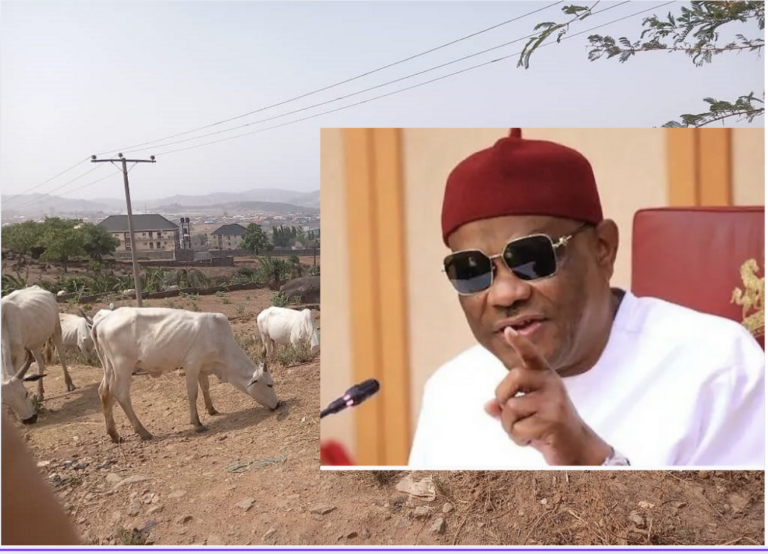
EIGHTEEN months ago, Nyesom Wike, the Minister of the Federal Capital Territory (FCT), pledged to ban open grazing, warning that cows (cattle) roaming the streets would no longer be tolerated. However, a recent survey of the FCT reveals little change; cows continue to wander freely, seemingly unchallenged by authorities.

Despite the minister’s firm warning, the status quo remains, prompting many to question whether Wike’s threat was merely rhetoric.

We will consult with the herdsmen to see how we will stop open grazing because we cannot allow cows inside the city. They can be outside the city because the grasses are outside the city,” Wike stated in August 2023. He reiterated this stance in March 2024 during a meeting with the Belgian Ambassador to Nigeria, Daniel Bertrand.

Cows still dominate major locations in FCT

By August 2025, it will be two years since  Wike promised to end open grazing in Abuja. The ICIR monitored major spots around the city to assess the implementation of the policy. The findings reveal that cows are still grazing in the city.

The ICIR observed cows continue to roam Abuja’s streets unimpeded, defying Wike’s vow. 

Recent sighting of cows include a large herd spotted around the Berger Bridge heading towards the Jabi area in March 2025.

Photo collage of cows seen at Berger Bridge, Wuse, FCT.

Cattle were also seen calmly walking along a roadside in Maitama, near the General Hospital, on a sunny Saturday in March 2025.

Similarly, another herd of cows was spotted in the Katampe axis of Mpape recently.

The Wuye axis of the FCT was not spared, with cows grazing on highway grasses and almost blocking roads. In Pyakassa side cows stopping traffic is almost an every other day occurrence. 

Despite the minister’s threat, cows continue to graze openly in many other areas of the city, including Bwari, Guzape, Airport Road, and Dei Dei, a rapidly growing satellite town in the FCT.

In some cases, vehicles are forced to stop to allow cows, which are mostly shepherded by young boys, to cross the road.

Residents react

Residents attribute the inaction to the politicisation of the issue, with some suggesting Wike’s directive is perceived as targeting a community predominantly engaged in cattle rearing. Others propose more practical solutions, such as coordinating herders’ movements and activities.

A taxi driver operating between Wuse and Lugbe told The ICIR  that Wike’s initial threat was suppressed by influential figures who own the cattle.

“Its big men, and politicians that own all these cows you are seeing here. It will be difficult for Wike to stop them,he said, pointing to a herd near the Military Cemetery at the city gate.

Despite Wike's threat, cows continue to roam FCT roads unchallenged 18 months later
Cows seen at Katampe, Mpape, FCT. Photo: The ICIR/2025

Another resident in Mpape, Genesis, told The ICIR that open grazing can never stop in the FCT and Nigeria as a whole because, according to him, the leaders lack the political will to stop it due toselfishpolitical interests.

He suggested ranching, where cattle are kept and fed in designated areas, as a viable solution.

Residents have also expressed concern over the damage roaming cattle inflict on public infrastructure, including roads and footpaths. The ongoing issue of open grazing is a major concern, with many residents feeling it needs urgent resolution to prevent further deterioration of the city’s infrastructure.

Creation of livestock ministry’s impact questioned

Some residents were pinning their hopes on the newly created Ministry of Livestock, believing it could bring about more practical solutions to the issue of open grazing in the FCT.

For instance, the Miyetti Allah Cattle Breeders Association of Nigeria (MACBAN) urged the federal government to emulate other nations in West Africa by establishing a livestock ministry to harness the full potentials of the sub-sector of the nation’s economy.

In 2020, the then National Secretary of MACBAN, Othman Ngelzarma, in an interview, said the action will help to confront and solve some of the sector’s challenges.

He stressed that a mere department under the Ministry of Agriculture will not be able to address the challenges and allow Nigeria to benefit fully from the endowments of the livestock sector.

According to him, some of the challenges confronting the sector include cattle rustling, farmer-herder conflicts, kidnapping, banditry, and neglect, especially with regard to the demarcation of grazing reserves.

President Bola Tinubu, on Tuesday, July 9, announced the creation of the Federal Ministry of Livestock Development.

According to the president, the move is expected to end the constant clashes between herders and farmers. 

The president, on Wednesday, October 23, appointed Idi Mukhtar Maiha as the minister for the new ministry.

The development attracted optimism that the government might finally address the longstanding problem in a more effective and sustainable manner.

But months after the creation of the ministry, open grazing persists in most parts of the FCT, and the country as a whole.

Not the first broken promise

Findings show that this is not the first time Wike’s orders have been disregarded since he became the minister of the FCT.

For instance, in October 2024, Wike declared war on beggars, accusing them of desecrating Abuja city and posing a security risk.

Wike made the declaration during the official commencement of the access road construction from the  Nnamdi Azikiwe Expressway to Judges Quarters in Katampe district.

The minister said the move was necessary following concerns that Abuja was turning into a beggars’ city.

The ICIR reports that while Wike, battles sleepless nights over the rising influx of indigenous beggars into the nation’s capital city, their foreign counterparts have also found their way into Abuja and are taking refuge at some satellite locations within the the city thereby compounding the issue.

Begging without borders: Security concerns as foreign beggars are ‘smuggled’ into Abuja in trucks

These beggars, comprising young, aged, and disabled, mount both sides of some bridges from 7 am daily. Some squat on the hard concrete, while others stand, plates stretched out, in a silent plea for alms from commuters.

A visit to the location showed mothers cradling crying infants, their weary faces etched with struggles, while barefoot children weaved between the clusters of pedestrians.

Similarly, the minister on Monday, January 13, also banned used item markets, popularly known asPanteka,in the FCT for two weeks.

Wike said the ban on Panteka markets in the FCT took effect from Tuesday,  January 14, 2025.

However, Panteka operators were seen still operating during the period, especially at Mpape in the Bwari Area Council.

Attempts to get Wike’s reaction on the open grazing issue in the FCT were unsuccessful, as his media aide, Lere Olayinka, didn’t respond to calls or messages sent to his mobile phone.

CBN gives reason for naira depreciation despite $197 million intervention

0

THE Central Bank of Nigeria (CBN) has given reasons for Nigeria’s naira depreciation, despite its intervention to the tune of $197.71 million to boost liquidity and stability in the country’s foreign exchange (FX) market.

The naira saw its worst decline on Friday, April 4, but the Apex bank said the country’s currency problems are caused by a global macroeconomic shift triggered by Trump tariff tension, which saw the American government impose tariffs on most countries to protect its economy.

The ICIR reports that the weakening of the naira may also be  not be unconnected to the recent drop in global oil price which is the main revenue accrual for the Nigerian government.

According to data from the CBN, the official exchange rate crashed to N1,600/$1 at the end of trading on Friday.

It was the worst decline since December 4, 2024, when it closed at N1,608/$1.

On Thursday, April 3, the naira had closed at N1,569/$1; compared to Friday’s closing figure, the naira depreciated by 1.9 per cent.

Amid its weakest level on Friday, the naira also weakened by 3.9 per cent in the first four days of April, after closing March at N1,537/$1.

In a statement on Saturday, April 5, CBN’s Director of the Financial Markets Department, Omolara Duke, the apex bank, said the United States (U.S) tariffs measures have continued to rattle the global markets.

“In line with its commitment to ensuring adequate liquidity and supporting orderly market functioning, the CBN facilitated market activity on Friday, April 4, 2025, with the provision of US$197.71 million through sales to Authorised Dealers,” CBN said.

It noted recent movements in the FX market between April 3 and 4, which reflected broader global macroeconomic shifts currently affecting several emerging market and developing economies.

Nigeria, like most other countries, is currently experiencing economic shock with the tariffs imposed by U.S. President Donald Trump.

The American president had recently imposed a 14 per cent import tariff on products from Nigeria.

This development has affected the value of the naira to the dollar in the last few days, CBN further stated.

These developments were a result of the recent announcement of new import tariffs by the United States government on imports from several economies, which has triggered a period of adjustment across global markets.

“Crude oil prices have also weakened, declining by over 12% to approximately US$65.50 per barrel – presenting new dynamics for oil-exporting countries such as Nigeria,” the apex bank pointed out.

According to the CBN, the injection of FX into the market aligns with the bank’s broader objective of fostering a stable, transparent, and efficient foreign exchange market.

“The CBN continues to monitor global and domestic market conditions and remains confident in the resilience of Nigeria’s foreign exchange framework, which is designed to adjust appropriately to evolving fundamentals.

“All Authorised Dealers are reminded to adhere strictly to the principles outlined in the Nigeria FX Market Code and to uphold the highest standards in their dealings with clients and market counterparties,” it added.

Ukachukwu, Muoghalu, clinch Anambra governorship tickets

0

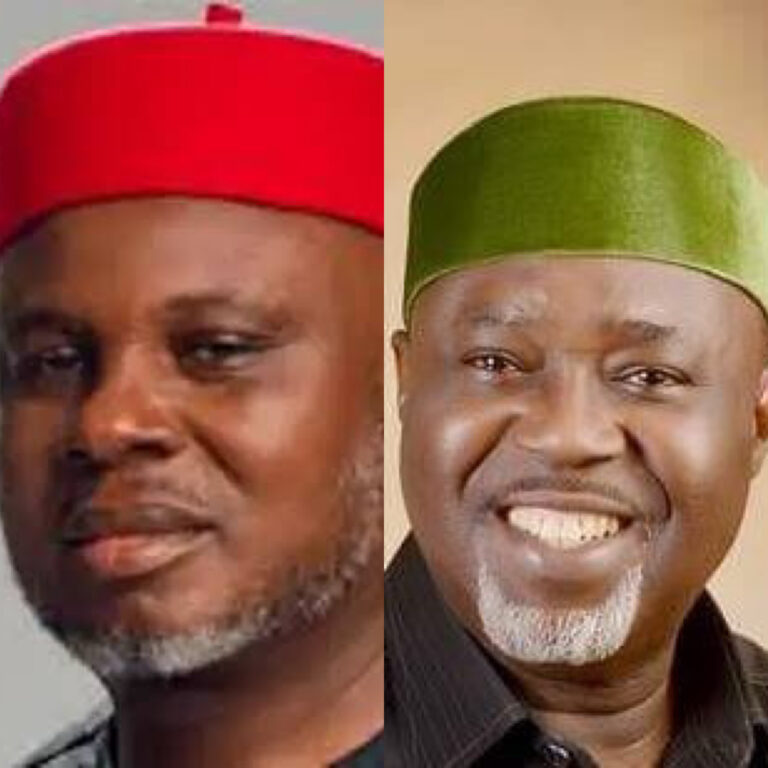
A FORMER member of the House of Representatives, Nicholas Ukachukwu, has won the All Progressive Congress (APC) governorship primary in Anambra, defeating Valentine Ozigbo in the contest.

Ukachukwu became the party’s flag bearer on Saturday, April 5, by a landslide vote, ahead of the Anambra governorship election, which will be held on November 8, 2025.

He secured 1,455 votes, while Ozigbo secured 67 votes.

Johnbosco Onunkwo came third with 26 votes, while Edozie Madu polled 8 votes.

Before Saturday’s primary, three aspirants withdrew from the exercise due to violence that erupted earlier in the morning when thugs attacked some delegates, according to reports.

The aspirants who withdrew are, former federal lawmaker, Chukwuma Umeoji, Obiora Okonkwo, and Paul Chukwuma.

According to reports, Chukwuma resigned from the APC in its entirety after he withdrew from the polls, citing the presence of “unprogressive elements” in the party.

Also, confirming his withdrawal, Okonkwo expressed concern over the safety of his supporters.

“This decision to withdraw from the race was a difficult but necessary one because of some developments that are inconsistent with my principles and values. The project is not worth risking the lives of my supporters,” Okonkwo said in his withdrawal letter.

Meanwhile, in his acceptance speech, Ukachukwu said he wants to be the ‘father of the father’ as he has had a hand in the past winners of the Anambra governorship election.

“We shall deliver Anambra to the APC. One thing I want to say here; nobody has won the governorship of Anambra without my support; it has never happened before. I have been playing godfather, but now I want to be the father of the father — no more godfather,” he said.

Barring any development, Ukachukwu will be contesting for the Anambra governorship seat with the incumbent governor of the state, Chukwuma Soludo, and former Managing Director of the National Inland Waterways Authority (NIWA), George Muoghalu.

Muoghalu, also on Saturday, won the Labour Party’s governorship ticket ahead of the state governorship elections.

Muoghalu polled 575 votes at the party’s primary held in Awka, the Anambra State capital.

His closest rival, John Nwosu, who had withdrawn from the contest earlier on Saturday, secured nineteen votes during the election.

This was as Soludo won the All Progressives Grand Alliance’s (APGA) primary for the November 8, 2025, governorship election in the state.

The governor emerged as the flag bearer unopposed while also securing 3,168 votes from the delegates of the party during the primary on Saturday, April 5. 

Anambra 2025: Soludo emerges winner of APGA primary election unopposed

0

ANAMBRA State Governor Chukwuma Soludo has won the All Progressives Grand Alliance’s (APGA) primary for the November 8, 2025, governorship election in the state.

The governor emerged as the flag bearer unopposed while also securing 3,168 votes from the delegates of the party during the primary.

The election was conducted at the Alex Ekwueme Square, Awka, on Saturday, April 5.

While announcing the results, the returning officer for the election, Uche Nwegbo, stated out of the 3,260 delegates, 3,175 delegates were accredited to vote during the primary.

“Total delegates for this election are 3,260, 3,175 are accredited delegates, 3,172 are the total votes, while four votes were invalid.

“The total yes-votes garnered by the governor are 3,168, while there were no no-votes. So, in line with the INEC guidelines and with the powers conferred on me as the chief returning officer for this election, I, Uche Nwegbo, hereby declare the governor, Prof. Chukwuma Soludo, as returned, as the candidate of our party,” the returning officer said.

In his acceptance speech, the governor expressed his gratitude to the support he received and assured the party members that the state will continue to rise with the progressive leadership.

“I want to say that I am humbled by this historic display of solidarity to be able to raise the flag of our party again, and I want to say that I accept this nomination wholeheartedly.

“Anambra keeps rising with the progressive leadership that we have had through APGA, and I will continue to appreciate the leadership of the party.

“I appreciate the members of our party and the INEC observers. I do not think that we have ever had this kind of peaceful election where everything was orderly and in one hour everyone was able to cast their votes,” he stressed.

Soludo also announced that he would retain his current deputy, Onyekachukwu Ibezim, as his running mate.

Tinubu condemns Plateau killings, as Atiku faults security architecture

0

PRESIDENT Bola Tinubu has vowed that those behind the gruesome attacks on several communities in Plateau State will be apprehended and made to face the full weight of the law. 

Reacting to the spate of killings in Bokkos Local Government Area, the President, in a statement on Saturday, April 5, described the violence as “unacceptable” and directed security agencies to hunt down the perpetrators.

The statement, which was released by Special Adviser on Information and Strategy to the president, Bayo Onanuga, extended his condolences to the families of victims in Ruwi, Hurti, Tadai, Manguna, and Dafo communities, where dozens were killed and homes destroyed. 

The renewed violence, which began on March 28, 2025, escalated with a series of coordinated attacks on villages across Bokkos LGA.

The ICIR reported that the death toll, which rose after the recovery of 40 additional bodies to 52, on Wednesday and Thursday, has left communities in mourning and further exposed the vulnerability of rural populations to violent attacks. 

According to the Bokkos Cultural Development Council (BCDC) Vanguard, 31 victims were buried in a mass grave, including five children burned beyond recognition in Hurti village. 

Other victims were killed in Ruwi, Manguna, and Daffo villages. 

Reacting to this, Tinubu commiserated with Governor Caleb Mutfwang and the people of Plateau State, assuring them of his support in ending the spate of ‘wanton bloodletting on the Plateau.’

He further directed the National Emergency Management Agency (NEMA) to work closely with state authorities to bring immediate relief to survivors and help rebuild affected communities.

“These intermittent attacks should have no place in our country at a time when we are working so hard to restore peace and order in all parts of our country. This unfortunate incident will never dampen or slow us down in our duty to protect every Nigerian citizen. Instead, we will work harder to exterminate forces of evil wherever they are lurking in our country,” the president read.

Background 

On Wednesday, April 2 alone, over 10 people were reportedly killed when gunmen stormed several communities, burning homes, injuring dozens, and leaving many still unaccounted for.

This was according to the initial comment by the Bokkos Cultural Development Council (BCDC) Vanguard.

The affected communities include Mongor, Daffo, Manguna, Hurti, and Tadai.

These attacks came just six days after gunmen killed 10 others during a wake in the Ruwi community, bringing the weekly death toll to 20. 

However, local leaders and rescue teams have said the actual number has now hit 52.

Speaking to journalists after the  Wednesday attack, Chairman of the Bokkos Cultural Development Council (BCDC), Farmasum Fuddang, said more than 50 villages in Bokkos have been attacked in the past six months. 

He accused suspected Fulani herders of carrying out the assaults, an allegation denied by the Plateau Gan Allah Fulani Development Association (GAFDAN), which called it “a mere fabrication.”

The chairman of the Fulani Association, Garba Abdullahi, dismissed the allegation that Fulani carried out the attacks, describing it as “a mere fabrication.”

He said, “While we sympathise with all the affected communities, we condemn the attacks in totality. It is barbaric and uncalled for. The Fulani community wishes to state categorically that the allegations by Bokkos Cultural Development Council of Fulani’s involvement in attacking their communities are a mere fabrication and falsehood.”

Atiku blames attack on  ‘failed’ security architecture

Meanwhile, former Vice President Atiku Abubakar has blamed President Bola Tinubu’s administration for the deteriorating security situation in the country, following the death of 52 people in a recent attack on communities in the Bokkos Local Government Area of Plateau State.

Atiku, reacting to the tragedy, said the persistent loss of lives across Nigeria is a direct consequence of the government’s failed security architecture, which he described as “an endemic nationwide phenomenon.”

The failure of Bola Tinubu’s security architecture has now become an endemic nationwide phenomenon with repeated killings, more of which do not even make the headlines.

“Nigerians are now being forced to get used to such news of wanton killings, and I again offer my condolences to the bereaved communities of Bokkos Local Government Area of Plateau State and the affected families.

“I wish to restate my counsel to the Tinubu-led FG to reconfigure its security architecture to meet the needs of protecting the lives and properties of our people,” he wrote.

Education minister proposes 2 service years for corps members

0

THE Minister of Education, Tunji Alausa, has proposed the extension of the National Youth Service Corps (NYSC) to run for two years for serving corps members.

Alausa made the call when the NYSC Director-General, Olakunle Nafiu, visited him in Abuja on Friday, April 4.

According to a statement on Saturday, April 5, by the NYSC Public Relations Director, Caroline Embu, the minister advocates for the extension of national service from one to two years.

He believes it will enable the expansion of the NYSC Skill Acquisition and Entrepreneurship Development (SAED) training programme content for corps members.

“You have done so well as an organisation. Let NYSC give people more opportunities to become job creators that will meet the needs of the country,” Alausa told the NYSC boss.

Responding, Nafiu said the scheme is ready to comply with policy guidelines as directed by the federal government.

“We are also trying to reform the scheme to conform to the present national needs,” the NYSC DG said in response.

The minister was quoted to have hinting at ongoing reform efforts to tackle certificate racketeering.

He commented that efforts were ongoing in the ministry to digitise the verification of foreign-trained graduates of Nigerian origin.

Alausa stressed that the ministry and NYSC would further strengthen their alliance towards the improvement of education for national development.

Further in his remarks, Nafiu called for the establishment of a database of Nigerian youths going abroad to study for degree programmes.

The NYSC DG added that it would help the government have detailed records of Nigerians studying abroad and also eliminate fake graduates.

The ICIR reported in August 2024 that a federal probe revealed that about 22,789 Nigerians were parading fake foreign degree certificates, which were then used to enrol for the NYSC scheme.

It showed that between 2019 and 2023, about 21,600 Nigerians obtained fake certificates from unaccredited universities in the Benin Republic, while another 1,105 got theirs from unaccredited universities in Togo.

In that same year, the government initiated probes and sweeping reforms to block certificate rackets exploiting the system as a result.

Nigerian government holds talk with U.S. amid tariff tension

0

AMID President Donald Trump’s impact on global trade, the Nigerian Foreign Affairs Minister Yusuf Tuggar held bilateral talks with the United States Secretary of State, Christopher Landau, to strengthen the relationship between the two countries.

This comes amid the recent U.S. imposition of a  14 per cent tariff on imports from Nigeria, and the announcement of new tariff measures on other countries, including China and the European Union.

According to a post on Friday, April 4, by the U.S. Department of State, the phone conversation focused on a range of issues, including the enhancement of commercial ties, improving security, and furthering the bilateral relationship between the two nations.

Quoting the spokesperson, Tammy Bruce, the statement read, “Deputy Secretary of State Christopher Landau spoke today with Nigerian Foreign Minister Yusuf Tuggar. The call highlighted the United States’ commitment to a strong and enduring partnership with Nigeria.

“Deputy Secretary Landau and Foreign Minister Tuggar discussed several key areas of mutual interest, including strengthening commercial ties, enhancing security, and deepening the bilateral relationship.”

President Donald Trump announced on Wednesday, April 2, that exports from Nigeria to the U.S. would be subject to a 14 per cent tariff.

The decision that he made public during a “Make America Wealthy Again” event in the Rose Garden on Wednesday was part of his plan to address what he perceives as unfair trade practices.

Trump had pointed out that Nigeria imposes a 27 per cent tariff on U.S. exports, which he claimed has been disadvantageous to American businesses.

He sees the imposition of the 14 per cent tariff on exported goods from Nigeria as necessary to address the imbalance.

The U.S. president also framed the tariff as a key part of a larger initiative aimed at protecting American industries.

He emphasised the need for foreign nations to follow what he described as “fair” trade practices.

The ICIR reported earlier that Trump’s new tariffs, which came with immediate effect immediately, affected over 50 countries, including major trade partners such as China, the European Union (EU), India, and Japan, along with developing economies across Asia, Africa, and Latin America.

Trump’s sweeping tariffs are already intensifying a global trade war, sending the international markets into a tailspin and challenging long-established free trade norms.

China and the European Union have vowed retaliation against the levies, The ICIR reported.

Nigeria’s debt profile hits N145 trillion in December 2024 – DMO

0

NIGERIA’s total public debt rose to N144.67 trillion as of December 31, 2024, the Debt Management Office (DMO) has disclosed.

The debt office revealed this in its latest publication on Nigeria’s debt portfolio on Friday, April 4.

It indicates that the country’s debt stock rose by 48.58 per cent from N97.34 trillion reported as of December 31, 2023.

In dollar terms, Nigeria’s debt profile stood at $94.23 billion as of December 31, 2024 relative to $108.23 billion as of the same period in 2023.

Analysis of the report shows that Nigeria’s public debt worsened by N47.32 trillion in one year under review.

The surge in public debt was driven primarily by significant increases in both external and domestic borrowings.

According to the report, Nigeria’s external debt rose by 83.89 per cent to N70.29 trillion from N38.22 trillion.

This sharp increase was largely attributed to new external borrowings obtained during the year, as well as the impact of the naira depreciation, which inflated the naira equivalent of dollar-denominated debt.

Domestic debt also increased by 25.77 per cent to N74.38 trillion from N59.12 trillion

On a quarter-on-quarter basis, the debt stock rose by N2.35 trillion from N142.32 trillion reported as of September 30, 2024.

The increase can be traced to the additional foreign loans obtained within the last three months to the end of 2024, coupled with the weakening of the naira against major international currencies.

A look at the report indicates that the composition of the debts of December 2024 shows external debt constituted 48.59 per cent against 51.41 per cent of domestic debt.

The continued increase in external borrowings, however, suggests a growing reliance on foreign debt to bridge budgetary shortfalls.

Economic analysts have been wary of the continued rise in Nigeria’s public debt, given its huge implications to the country’s fiscal stability.

The ICIR reports that the federal government depends on both external and domestic borrowing to fund critical projects as it has always witnessed revenue shortfalls.

Amid the revenue shortfalls, there have been calls on the government to be more prudent in its spending while utilising its limited resources for strategic purposes.

The ICIR reported in January this year that each Nigerian was owing over N656,000 in debt per capita as of September 30, 2024.

Abimbola Owoade crowned new Alaafin of Oyo

0

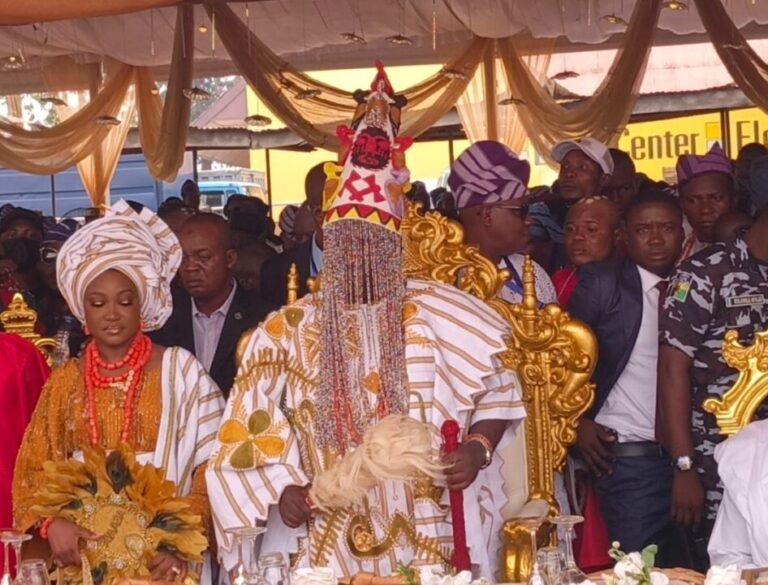
ABIMBOLA Owoade has been officially crowned as the 46th Alaafin of Oyo.

He succeeds the 45th Alaafin of Oyo, Lamidi Adeyemi II, who died in April 2022.

His coronation, held on Saturday, April 5, at Oliveth Baptist High School in Oyo town, drew a crowd of traditional rulers and dignitaries led by Oyo State Governor Seyi Makinde.

Among those present were the Olubadan of Ibadan, Oba Owolabi Olakulehin; the Ooni of Ife, Oba Adeyeye Ogunwusi; the Soun of Ogbomoso, Oba Ghandi Olaoye; Oluwo of Iwo, Oba Abdulrasheed Akanbi; and the Aare Ona Kakanfo of Yorubaland, Iba Gani Adams.

The state governor had on January 13  presented the staff of office to Owoade at the Governor’s Office in Agodi, Ibadan, formally recognising him as the new custodian of the ancient Oyo Kingdom. 

At the time, the governor expressed confidence in the monarch’s ability to unify the kingdom and uphold its rich cultural legacy.

Makinde described the monarch as a custodian of Oyo’s rich heritage, expressing optimism that the new Alaafin’s reign would foster unity and preserve the cultural legacy of the historic kingdom.

He said, “We are assured that Oba Owoade will lead with wisdom, integrity, and a strong commitment to fostering unity.”

The ICIR reports that the new Alaafin’s installation came over a year after the demise of Oba Adeyemi III, who reigned for over five decades.

His installation also followed months of deliberations by the Oyomesi, with the traditional kingmakers, who had earlier recommended Lukuman Gbadegesin as the preferred choice to occupy the revered stool. 

However, despite his selection by the Oyomesi, who have the responsibility of vetting and recommending kings, Owoade was appointed by the state government on January 10, paving the way for his coronation.

Consequently, the Oyomesi opposed the appointment, describing it as illegal and invalid.

In a letter addressed to the governor and signed by their lawyer, Adekunle Sobaloju, on Friday, January 10, five of the Oyo kingmakers declared the appointment null and void, asserting that they had not recommended the appointee to the state government.

The kingmakers, who made this declaration include Yusuf Akínade, Bashorun of Oyo; Wakeel Akindele, Lagunna of Oyo; and Hamzat Yusuf, Akinniku of Oyo.

Others are Wahab Oyetunji, a warrant chief stand-in for Asipa of Oyo; and Gbadebo Mufutau, a warrant chief stand-in for Alapinní of Oyo.

Although there were controversies surrounding Gbadegesin’s recommendation, the Bashorun of Oyo, Yusuf Akinade, in 2023, insisted that the selection process adhered to due process and was unanimously approved by all seven kingmakers.

Edo killing: ‘Fake’ Police officer nabbed in Kaduna over retaliation threats

0

THE Kaduna State Police command has disowned and arrested a man identified as Hadaina Hussaini, also known as Dan-Taki, after he threatened violent reprisals over the recent killings in Edo State.

A statement by the command’s spokesperson, Deputy Superintendent of Police (DSP), Mansir Hassan, stressed that Hussaini, who was seen on social media dressed in a police uniform while making the threat, is not a member of the Nigeria Police Force. 

Hussaini’s threats surfaced after the murder of 16 northern residents in Uromi, Esan North-East Local Government Area of Edo State. 

The ICIR had reported that the victims, who were travelling in a Dangote Cement truck were waylaid around 1.30 pm in the Udune Efandion community by local security.

The incident sparked outrage, with political leaders, including President Bola Tinubu, former Vice President Atiku Abubakar, and former Anambra State Governor and Labour Party (LP) presidential candidate in the 2023 election, Peter Obi, strongly condemning the attack.

Reacting to the attack, in a Facebook post on Tuesday, Hussaini vowed that northerners would retaliate against southerners living in the North.

“I swear to Almighty God, we must do something for you guys, have you forgotten all your brothers that are leaving here in the North? Mark my word, after one week, you shall see the result,” he wrote.

While dismissing the suspect as a police officer, the command’s spokesperson said Hussaini was a former volunteer under the Police Special Constabulary attached to the Kaduna State command.

He noted that he had lost the position two years ago due to ‘questionable character.’

“To set the records straight, Hadian Hussaini is neither a member of the Nigeria Police Force nor a personnel of Kaduna State Police command.

“It is pertinent to note that his picture captured on police uniform as displayed on the social media, which is an improper dressing, is that of him when he was a member of the Police Special Constabulary attached to Kaduna State Constabulary Office. But he was dismissed from the voluntary outfit two years ago due to his questionable character.”

While urging members of the public to carefully observe the identity card attached to the uniform, which he said contains the word ‘PSC/KD’, he stressed that the pictures of him in uniform were posted on the Facebook platform two years ago,  before his dismissal.

The police said Hussaini had been taken into custody and would face charges once preliminary investigations are completed.

“The suspect has been arrested and will be charged in court upon the completion of preliminary investigations by extant laws,” he added.