THE South-South Governors’ Forum has urged President Bola Tinubu to reverse the state of emergency he declared in Rivers State on March 18.
In a statement issued on Thursday, March 20, in Yenagoa, Bayelsa State capital, the forum chairman, Governor Douye Diri, pointed out that the situation in Rivers State did not meet the criteria for the declaration of a state of emergency as outlined in Section 305(3) of the 1999 Constitution (as amended)
“To reduce tensions and establish a foundation for enduring peace, we propose the rescission of the state of emergency,” said the forum.
It emphasised that the constitution outlined procedures for the removal of a governor, deputy governor, and members of the state House of Assembly.
According to the forum, the political crisis in Rivers State should ideally be resolved through legal and constitutional means rather than executive fiat.
“We recognise the president’s constitutional duty to maintain law and order throughout Nigeria, just as we are equally mandated to ensure peace and stability in our states.
“However, the South-South Governors’ Forum expresses concern that the current political situation in Rivers State does not satisfy the criteria for declaring a state of emergency as outlined in Section 305(3) of the Nigerian Constitution (as amended).
“This section suggests that such a declaration should be considered under specific conditions like war, external aggression, imminent invasion, breakdown of public order, existential threats to Nigeria, natural disasters, or other significant public dangers” the group said.
While encouraging all parties involved to stay calm, maintain peace, and uphold the nation’s constitution, the forum called for dialogue as the way forward.
“In the meantime, we encourage all parties to remain calm and uphold peace and the constitution of the Federal Republic of Nigeria. The time for dialogue is now,” the group stressed.
The ICIR reported that the former Vice President Atiku Abubakar and legal experts in their separate reactions to the declaration condemned the president’s action.
Atiku described the decision as a politically motivated move designed to punish perceived opponents, while the Nigerian Bar Association, the umbrella body of Nigerian lawyers, described it as unconstitutional.
A COALITION of opposition leaders have demanded the immediate reversal of President Bola Ahmed Tinubu’s declaration of a state of emergency in Rivers State.
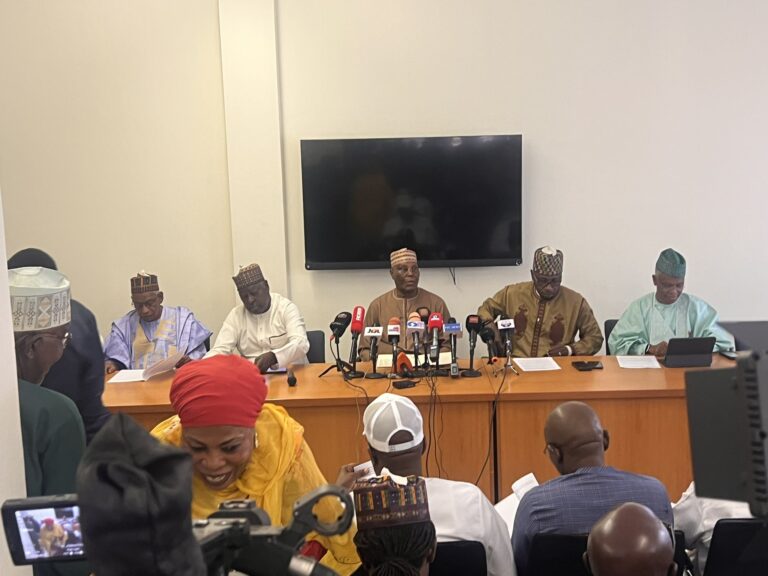
At a press conference on Thursday, March 20, in Abuja, the group, comprising the former vice president and People’s Democratic Party (PDP) presidential candidate in the 2023 election, Atiku Abubakar, former Kaduna state governor, Nasil El-Rufai, among others, described the declaration as an unconstitutional move to dismantle an elected government.
They denounced the suspension of Governor Siminalayi Fubara, his deputy, Ngozi Odu, and the Rivers State House of Assembly, calling it an illegal power grab that must not stand.
Their outrage followed Tinubu’s March 18 national broadcast, where he cited a breakdown of law and order and alleged threats to national security as justification for emergency rule in Rivers State.
The president referred to prolonged political unrest, particularly the dispute between Fubara and lawmakers loyal to his predecessor and Minister of the Federal Capital Territory (FCT) Nyesom Wike, as the reason for his decision.
He said Fubara failed to act on vandalisation of pipelines by some militants in the state and the governor took no action to contain them.
He also accused the governor of failing to condemn the attack, including the groups that had threatened mayhem and destruction of oil facilities should the governor be impeached.
Besides, Tinubu said the governor failed to contact him after the attack on the oil facility.
However, the stakeholders accused the Federal Government of ignoring the nation’s constitution and making an illegal attempt to take over the state.
They argued that no conditions under the constitution warranted a state of emergency in the state, as the Niger Delta region was neither at war nor experiencing a total breakdown of law and order.
“We, a cross-section of leaders and political stakeholders from across the country, have come together to address the dangerous and unconstitutional actions taken by President Bola Ahmed Tinubu, GCFR, on March 18, 2025 – to wit, the declaration of a state of emergency in Rivers State and the illegal suspension of the Governor, Deputy Governor, and the State House of Assembly.
“This action is not only unlawful but a clear attempt to subvert democracy and impose federal control over a duly elected state government. We strongly condemn this development and call on all Nigerians of good conscience to resist this brazen assault on constitutional governance.
“Seemingly, Mr President’s illegal and unconstitutional proclamation was driven by the protracted insidious political crisis in Rivers State, culminating in the recent ruling of the Supreme Court. Ordinarily, all parties involved would have been expected to follow laid-down procedures, motivated by good faith, to quickly implement the judgment of the highest court of the land.
“We note that Governor Fubara’s disposition is geared towards full implementation of the ruling of the Supreme Court, despite provocative statements from opposing quarters,” the group said.
It insisted that the National Assembly must reject the move, warning lawmakers against setting a precedent that could allow any president to remove elected governors at will.
The group also called on the judiciary to act swiftly in striking down the proclamation, describing it as a test of Nigeria’s democracy.
“We urge the judiciary to act swiftly in striking down this proclamation, as it sets a dangerous precedent that could be used to arbitrarily remove any governor in the future.
“Nigerians must defend democracy: We call on all civil society organisations, political groups, and Nigerians of good conscience to stand firm in the defence of this democracy that we have all toiled to build,” the group added.
AT least 70 Palestinians were killed and dozens injured in Israeli airstrikes across Gaza on Thursday, as Israel resumed its bombing campaign and ground operations in the enclave, according to Reuters.
A Gaza health official confirmed the figures, stating that Israeli strikes targeted multiple houses in both the northern and southern regions of the Gaza Strip.
However, when asked for comment, the Israeli military said it was investigating the claims.
The Israeli military resumed airstrikes on Gaza on Tuesday and launched ground offensives on Wednesday, effectively ending a ceasefire that had been in place since January.
On Thursday, the military said that its forces had been conducting a targeted ground operation over the past 24 hours to expand the Netzarim corridor, a buffer zone separating Gaza’s northern and southern regions.
The military also instructed residents to avoid Salahuddin Road, the main north-south route and advised them to use the coastal road instead.
According to the spokesperson for the territory’s health ministry, Khalil Al-Deqran, Tuesday’s airstrikes claimed the lives of over 400 Palestinians, and in the past three days, at least 510 Palestinians have been killed, more than half of them women and children.
In a statement, the Palestinian militant group, Hamas, condemned the bombardments and Israeli incursion into the Netzarim Corridor, calling it a “new and dangerous violation” of the two-month-old ceasefire agreement.
Hamas reaffirmed its commitment to the ceasefire agreement and urged mediators to “fulfil their responsibilities.”
The initial phase of the ceasefire ended at the beginning of this month but Hamas seeks to advance to a negotiated second phase, which would require Israel to discuss ending the war and withdrawing its troops, while Israeli hostages in Gaza would be exchanged for Palestinian prisoners.
However, Israel has only proposed a temporary extension of the truce, halted all supplies to Gaza, and announced the resumption of its military campaign to pressure Hamas into releasing the remaining hostages.
The ICIR reported that Trump issued what he described as a “final warning” to Hamas on March 5, demanding the immediate release of all hostages in Gaza.
Trump vowed that he would provide Israel with “everything it needs to finish the job,” warning that “not a single Hamas member will be safe if you don’t do as I say.”
After holding secret talks with Hamas last week, Trump on March 14, accused the group of making “entirely impractical” demands and delaying a deal to release a US-Israeli hostage in exchange for extending the Gaza ceasefire.
“Hamas is making a very bad bet that time is on its side. It is not,” the office of Donald Trump’s envoy, Steve Witkoff, and the US National Security Council said in a statement.
“Hamas is well aware of the deadline, and should know that we will respond accordingly if that deadline passes,” it said, adding that Trump had already vowed Hamas would “pay a severe price” for not freeing hostages.
UNITED States (US) President Donald Trump and his Ukrainian counterpart Volodymyr Zelensky have agreed to collaborate and end the latter’s war with Russia.
In their first conversation since an Oval Office shouting match on February 28, Trump and Zelensky spoke on Wednesday in what the White House called a “fantastic one-hour phone call.”
Zelensky expressed gratitude for US support, and both leaders agreed that their technical teams would meet in Saudi Arabia in the coming days.
The ICIRreported that Trump announced plans to discuss ending the war in Ukraine with Russian President Vladimir Putin next week Tuesday.
According to the White House, Zelensky requested additional air defence support from Trump to safeguard Ukraine against Russian attacks, and the US president pledged to help secure the necessary military equipment in Europe.
Trump briefed Zelenskiy about his phone call with Putin on Tuesday, in which Putin rejected his proposal for a full 30-day ceasefire that Ukraine was willing to accept, but agreed to halt attacks on energy infrastructure.
Reacting, Zelensky described his conversation with Trump as “positive, very substantive, and frank,” stating that he reaffirmed Kyiv’s willingness to stop strikes on Russian infrastructure and accept an unconditional frontline ceasefire, as previously proposed by the US.
“One of the first steps toward fully ending the war could be ending strikes on energy and other civilian infrastructure. I supported this step, and Ukraine confirmed that we are ready to implement it,” he said on social media.
Later, in a video call with reporters, Zelensky said Trump understood that Kyiv would not recognise the occupied territory as Russian’s. He noted that Russian strikes, carried out after Trump’s call with Putin, demonstrated that Moscow was not ready for peace.
He also emphasised that the US should oversee any ceasefire and suggested that a halt to infrastructure attacks could be swiftly implemented.
However, the US administration in a statement, said Trump suggested to Zelenskiy that the US could assist in operating—and potentially owning—Ukraine’s nuclear power plants.
Recall that Europe’s largest nuclear power plant, located in Ukraine’s Zaporizhzhia region, has remained shut since Russian forces occupied it in 2022.
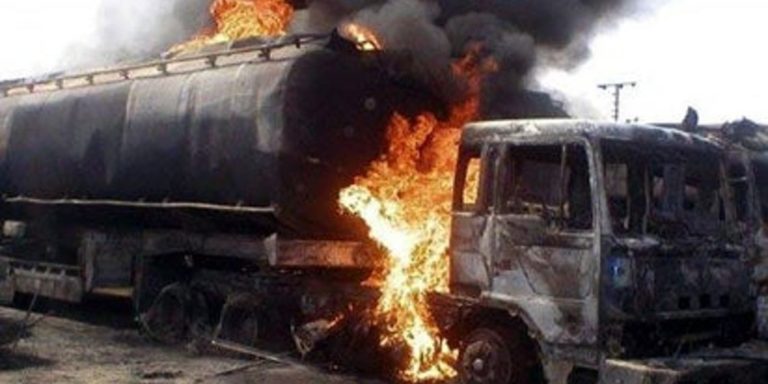
THE Federal Capital Territory (FCT) Police Command has confirmed that six people lost their lives, and 14 vehicles were burnt in the explosion from a tanker accident at Nyanya Bridge, Abuja, on Wednesday night.
The FCT police, in a statement by its Public Relations Officer, Josephine Adeh, Thursday morning, described the incident as devastating.
According to the police, a heavily loaded Dangote truck lost control and crashed into vehicles in traffic, leading to the explosion.
“A Dangote trailer carrying cement lost control while approaching Nyanya Bridge from AYA and rammed into multiple vehicles, triggering a massive inferno,” the police said.
The police added that emergency responders battled the raging flames and thick smoke to rescue people trapped in the inferno.
However, six victims were confirmed dead from the tragedy.
The police said their remains had been deposited at Karu General Hospital morgue.
According to the statement, police operatives, fire service personnel, and other security agencies struggled to contain the fire and restore free movement of vehicles on the route.
The police condole with victims’ families and urge motorists to drive carefully, while investigations are ongoing into the incident.
The ICIR reported on Wednesday, March 19 that an explosion from a tanker crash rocked the Abuja-Keffi expressway near Karu Bridge.
The incident occurred during rush hour as commuters returned from work along the ever-busy highway.
Massive explosions could be heard from videos from the scene on social media, as hundreds of commuters fled from their vehicles for dear lives.
The explosion engulfed several vehicles and causedgridlock, as thick smoke from the blast billowed in the air.
ACCESSING loans has been one of the pressing challenges that small and medium-sized enterprises (SMEs) face in Nigeria.
The challenge adds to the reasons many SMEs fail just a few years after startup.
According to a 2023 report by the Nigerian Bureau of Statistics (NBS), 80 per cent of small businesses do not survive beyond five years.
It identifies poor financial management for businesses, lack of market research, and inadequate government support as major contributors to business failure.
In its latest survey on SMEs in Nigeria, PricewaterhouseCoopers (PwC), an accounting firm, indicates that SMEs contribute significantly to the Nigerian economy.
The survey, quoting NBS and Small and Medium Development Agency of Nigeria (SMEDAN) 2021 data, stated that SMEs account for 46.32 per cent of Nigeria’s gross domestic product (GDP), 6.21 per cent of exports, 96.9 per cent of businesses, and 87.9 per cent of employment.
The PwC expressed further that it was important the Nigerian government funds initiatives that adequately support the pressing needs of SMEs both on paper and in reality.
But despite the critical role the SMEs hold in the Nigerian economy, the sector has continued to lack adequate access to finance.
Anthony Chinwe, chief executive officer (CEO), De-SME Facilitators Limited
In an exclusive interview with The ICIR, the chief executive officer of De-SME Facilitators Limited and who is also a former group head of SME banking at Fidelity Bank, Anthony Chinwe, highlighted five conditions (5 C’s) SMEs should meet to access bankable loans.
According to him, one of the things about accessing credit is meeting the conditions, viz, capacity, cash flow, character, collateral and capital.
Capacity
An SME willing to obtain a loan from any financial institution must have the capacity to pay to loan.
Chinwe explained that for a credit to do well, a borrower must have the capacity to pay the loan he or she or the entity applied for.
Cash flow
The cash flow of an SME must be robust or be stimulated to be robust so that that business will be able to pay over time, Chinwe said.
He expressed concerns that SMEs lack proper record-keeping, owing to not having real professionals to put their financial records in order.
Character
The borrower must have the character, that is, the integrity, willingness, and genuineness to apply the loan for the purpose for which it was approved.
“Character is very important. It’s about the most important in the credit lexicon,” the former banker said.
Collateral
Another condition is the stability, quality, and nature of the collateral to be provided by the borrower.
He explained collateral to mean the secondary comfort position that comes up when the primary repayment source fails.
According to him, SMEs oftentimes lack collateral, which he said is not necessarily their fault but the problem of the Nigerian financial structural environment.
“This is because what we take as collateral not all SMEs can afford it. For instance, not all SMEs can afford a legal mortgage as collateral or have enough shares to mortgage or pay down as collateral.
“As such, you walk around their cash flow and create that flexibility to enable you to lend to them based on their cash flow. You need to understand their business and build their loan around it, rather than emphasising too much on collateral,” the De-SME Facilitators boss said.
Capital
The capital speaks to the promoters’ commitment to the project, that is, how much they have in their equity contributions and how strong it is.
Other conditions could come up depending on the nature of the transaction, but Chinwe maintained the five conditions are fundamental credit issues that need to be addressed.
He said the three types of finances include equity, debt, and hybrid, but noted that SMEs lack access to equity financing and cannot easily go to the stock market to access funds.
“This is where we have been advocating that the government should create a platform that will enable SMEs to access equity funding,” he said.
The De-SME Facilitators boss added, however, that once SMEs can package their transactions and projects in such a bankable way, they could access loans.
THE Nigerian Senate’s decision to suspend Natasha Akpoti-Uduaghan, representing Kogi Central, for six months over alleged rule violations has sparked controversy, with many questioning its legality.
Despite a restraining court order, the Senate went ahead with the suspension, citing a breach of its standing orders.
The move has been criticised by the Nigerian Bar Association (NBA), opposition parties, and various lawyers, who argue that the suspension was hasty and unfair.
Human rights lawyer and activist, Femi Falana, condemned the suspension, describing it as legislative recklessness and demanded its immediate reversal.
In a statement on Sunday, March 9, Falana, a Senior Advocate of Nigeria (SAN), criticised the Nigerian Senate for ignoring multiple court rulings that have declared lawmakers’ suspension illegal.
He also pointed out that despite a Federal High Court order restraining the Senate Ethics Committee from taking action against Natasha, the Senate proceeded with the suspension, openly defying judicial precedents.
Falana urged that, “suspending legislators at the whims and caprices of leaders of the federal and state legislative houses must not be allowed to continue in Nigeria.”
He cited past court rulings, including those by the Court of Appeal, as evidence that the Kogi Central senator’s suspension could be overturned.
Femi Falana SAN
Falana demanded an immediate end to the “illegal suspension,” referencing past legal precedents, including a 2010 case in which the House of Representatives suspended Dino Melaye and 10 others.
He also referenced another senator, Abdul Ningi, who was suspended for three months over his allegation that Nigeria’s 2024 budget was padded.
The court case versus the suspension
On Tuesday, March 4, a Federal High Court in Abuja issued an interim order stopping the Senate from proceeding with its plan to investigate the senator representing Kogi Central, Akpoti-Uduaghan.
The court, presided over by Obiora Egwuatu, issued the order blocking the Senate Committee on Ethics, Privileges and Public Petitions from deliberating on Akpoti-Udughan’s actions at the Red Chamber.
The order followed an ex parte application filed by counsels to Akpoti-Uduaghan.
The ICIR reported on February 20 that during a plenary, Akpoti-Uduaghan caused an uproar at the Senate when she discovered that her seat had been reassigned without prior notice.
She resisted the reassignment, arguing that it was an attempt to silence her.
Her refusal led to a tense confrontation with Senate President Godswill Akpabio, who ordered the sergeant-at-arms to order her out of the chamber.
Following the seating arrangement dispute, the Senate unanimously voted to refer Akpoti-Uduaghan to the Committee on Ethics, Privileges, and Public Petitions for a disciplinary review.
The committee, led by Neda Imaseun, was tasked with submitting its findings within two weeks.
The ICIR reported that despite the court restraining, Akpoti-Uduaghan was suspended for six months on Thursday, May 6.
Senator Natasha Akpoti-Uduaghan
The committee ignored the court order and recommended a six-month suspension, adding that the punishment could be reduced if the lawmaker publicly apologised.
The Senate approved the committee’s report and suspended Akpoti-Uduaghan for “gross misconduct” during plenary.
Reacting to the suspension, Falana noted that courts had reinstated all lawmakers previously suspended by the national or state legislatures.
Other lawyers react
Other lawyers have also condemned the action of the Senate, describing it as illegal.
A legal practitioner, Moshood Ibrahim, in a chat with The ICIR, said the action of the Senate by suspending Natasha despite a court order restraining the ethics committee from probing her is illegal.
He said the legal implication of the suspension is that if an institution like the National Assembly, which makes laws, does not respect the law they made, it could cause a “big problem.
“The implication is that our democracy as well as the rule of law will be dwindling in strength day in and day out instead of them becoming stronger.
“However, I personally have reservations about the order of the Court. A court of law is not expected to give orders that it cannot execute or is impossible to follow,” Ibrahim stated.
According to him, the Supreme Court has held in a plethora of cases that the court of law is not a classroom and cases that have no effect other than academic purpose should not be taken there.
“If a court gives an order to a Committee of the Senate, how can the court execute the same in case of breach?” he asked.
He also hinted that it should not be forgotten that the Senate has its rules and regulations, too.
In his remarks, Marvelous Monday, a lawyer, said it is within the Senate’s power to discipline members based on the Standing Rules of the Senate.
He said, however, where an aggrieved senator approaches the court, and the court gives an interim order, the Senate ought to wait.
This is how we maintain sanity and the rule of law in the country. Therefore, it is another episode of flagrant disrespect for the court by the other arm of government,” he added.
While maintaining that that it is contempt to disobey an express order of the court, he noted that after Ningi took the matter to the Federal High Court, the Senate reinstated him and paid his withheld salaries and allowances.
Sexual allegation against Akpabio
Meanwhile, The ICIRreported on March 5 that Akpoti-Uduaghan submitted a sexual harassment petition against Akpabio.
Amid the crisis, Akpoti-Uduaghan also filed a N100 billion defamation lawsuit against Akpabio and his aide, Mfon Patrick.
The lawsuit sought damages and a public apology, claiming the publication harmed her reputation and subjected her to public ridicule.
Speaking during an interview on Arise Television on Friday, February 28, Akpoti-Uduaghan accused Akpabio of making sexual advances towards her severally, which she said she turned down.
She said her stance towards the advances was the reason for her incessant conflicts with the Senate President at plenaries.
According to her, some of Akpabio’s love proposals were made with her on the phone and face-to-face in her husband’s presence. She further claimed that she had all the evidence for her claims.
A HUGE explosion caused by a gas tanker crash rocked the Abuja-Keffi expressway near Karu Bridge late Wednesday, leaving an unconfirmed number of people dead and many others injured.
Several cars were also reportedly burnt in the tragedy.
The incident occurred during rush hour as commuters returned from work along the ever-busy highway.
Massive explosions could be heard from videos from the scene on social media, as hundreds of commuters fled from their vehicles for dear lives.
The explosion engulfed several vehicles and caused a gridlock, as thick smoke from the blast billowed in the air.
Reports indicate that the tanker was transporting compressed natural gas (CNG) cylinders along with liquid fuel, triggering multiple blasts of fire. Fireballs and shrapnel were seen soaring up to 700 meters into the sky.
Eyewitnesses said that emergency responders, including fire service personnel and medical teams, rushed to the scene to contain the blaze and assist victims.
“I saw the tanker coming at high speed, swerving dangerously before it crashed. Within seconds, there was an explosion, and fire spread everywhere,” said a survivor who managed to escape from a nearby vehicle.
While the number of casualties remains unclear at press time, reports indicate significant loss of lives due to the intensity of the explosion.
Authorities have yet to confirm the number of victims. The inferno also caused heavy damage to nearby structures and vehicles.
The ICIR reports that two people died and three others were injured in a tanker explosion on the Otedola Bridge in Lagos last week Tuesday.
The tanker loaded with gas burst into flames, causing residents and motorists to flee to safety.
MOTORISTS and other petroleum users are likely to pay higher costs as Dangote Petroleum Refinery said it has temporarily suspended the sales of petroleum products in naira pending when it resumes receiving an allocation of naira-denominated crude cargoes from the Nigerian National Petroleum Company (NNPC) Limited.
By implication, most Nigerian petroleum users are likely to pay for higher cost of petroleum products at filling station retail outlets since the naira-for-crude deal with NNPC has been suspended and exposing consumers to payment of the product in direct dollar cost equivalent.
The management of the Dangote Group said in a statement issued on Wednesday, March 19.
It said, “We wish to inform you that Dangote Petroleum Refinery has temporarily halted the sale of petroleum products in Naira.
“This decision is necessary to avoid a mismatch between our sales proceeds and our crude oil purchase obligations, which are currently denominated in United States dollars.”
According to the refinery, the sales of its petroleum products in naira have exceeded the value of naira-denominated crude it has received to date.
“As a result, we must temporarily adjust our sales currency to align with our crude procurement currency,” it said.
The refinery, however, denied media reports making the rounds that it was stopping the loading of petroleum products due to an incident of ticketing fraud.
“This is a malicious falsehood. Our systems are robust, and we have had no fraud issues.
“We remain committed to serving the Nigerian market efficiently and sustainably. As soon as we receive an allocation of Naira-denominated crude cargoes from NNPC, we will promptly resume petroleum product sales in Naira,” Dangote management added.
The ICIRreported on March 10 that the naira-for-crude deal ends this month, but that the NNPCL said it had initiated a conversation with the Dangote refinery for possible renewal.
In a statement to refute reports that it had suspended the naira-for-crude deal, the state-owned oil company clarified it was in talks with Dangote refinery to extend the contract.
This comes as the 650,000 barrels per day (bpd) refinery gradually increases its output.
In a later publication, The ICIR also reported that the Dangote refinery was sourcing crude oil from multiple international suppliers, including Angola and Algeria, to ramp up production.
The report revealed specifically that Dangote Refinery has taken delivery of more than three million barrels of American crude since the start of the month.
It has also made purchases closer home, importing a shipment of Angola’s Pazflor grade and a cargo of Algeria’s Saharan blend from Glencore Plc in recent weeks.
PRESIDENT Bola Tinubu has sworn in Ibok-Ete Ibas as Rivers State’s sole administrator following his suspension of the state government, headed by Siminalayi Fubara, and the lawmakers on Tuesday, March 18.
Ibas was sworn in after a short meeting with the president at the State House in Abuja, on Wednesday, March 19.
In a nationwide broadcast, the president suspended the state governor, his deputy, Ngozi Odu, and all members of the state House of Assembly for six months.
However, he retained the state judiciary.
He then declared what he described as “extraordinary measures” to restore good governance, peace, order, and security in the state.
“It has become inevitably compelling for me to evoke the provision of section 305 of the constitution of the Federal Republic of Nigeria (1999 as amended to declare a state of emergency in River State with effect from today 18th March 2025, and I so do.
“By this declaration, the governor of River State, Mr. Siminalayi Fubara, his deputy, Mrs. Ngozi Odu, and all elected members of the House of Assembly are hereby suspended for an initial period of six months.
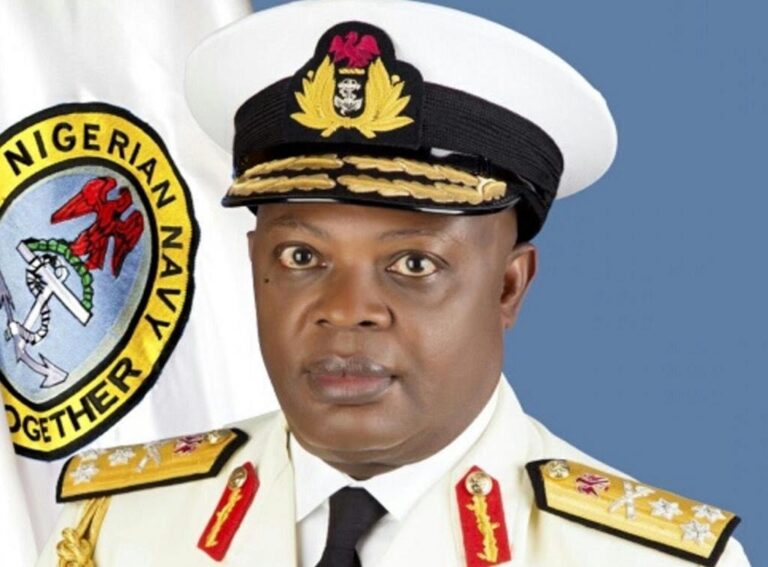
“In the meantime, I hereby nominate Vice-Admiral Ibok-Ete Ekwe Ibas (retired) as administrator to take charge of the affairs of the state and the interests of the good people of River State,” the president declared.
He added that the declaration did not affect the state judiciary, which he said must continue to function in accordance with its constitutional mandate.
He added that the administrator would not make any new laws. He will, however, be free to formulate regulations that may be necessary to aid his job, but such regulations will need to be considered and approved by the Federal Executive Council and promoted by the president for the state.
Ibok-Ete Ekwe Ibas, born on September 27, 1960, served as Nigeria’s 22nd chief of naval staff from 2015 to 2021. In this role, he led efforts to strengthen Nigeria’s maritime security, combat oil theft, and modernise the Navy’s operational capabilities.