Home Blog Page 34

2026 NMMA opens to journalists in Nigeria

THE Nigeria Media Merit Award (NMMA) is seeking applications for its award established in 1990 to recognise, encourage, and reward excellence in Nigerian media practice across print, radio, and television.

For the 2026 NMMA programme, journalists are to submit entries for works done in 2025.

In addition to its prestige, each award winner is presented with a trophy, a certificate, and a specific prize money.

The award categories include print, radio and television. Entry should be accompanied by the curriculum vitae and two passport-size photographs of the author.

The deadline for applications is May 15, 2026. Interested applicants can apply here.

NBA condemns misuse of criminal process in civil, defamation cases

0

THE NIGERIAN Bar Association (NBA) has faulted what it described as an increasing resort to criminal prosecution and police intervention in disputes that are essentially civil, particularly cases tied to defamation and alleged reputational harm.

The NBA made this position known at its National Executive Council (NEC) meeting held on Thursday in Awka, Anambra State, where members reviewed recent developments involving arrests linked to social media publications.

The association pointed to an incident involving the arrest and detention of individuals over a viral online post about businessman Tony Elumelu, saying such situation reflected a growing pattern of treating civil disagreements as criminal matters.

“The National Executive Council (NEC) of the Nigerian Bar Association (NBA)… adopted a resolution condemning the increasing misuse of criminal law enforcement mechanisms in disputes fundamentally civil in nature, particularly matters relating to defamation and reputational injury,” the body said.

The NBA NEC noted that although allegations of false or damaging publications might carry legal implications, the appropriate response would lie within civil litigation rather than arrest or detention.

“Civil remedies such as defamation proceedings provide lawful and adequate avenues for redress without resort to arrest, detention, or criminal prosecution,” the association stated..

It added, “NEC considered recent reports involving the arrest of individuals over a viral social media publication concerning businessman Mr. Tony Elumelu and expressed concern over the growing tendency to deploy police powers in matters that ought properly to be resolved through civil legal processes.”

It further warned that treating civil disputes as criminal cases could weaken constitutional protections..

The association also noted that such practices could discourage open communication and public discourse.

The NBA said that the abuse of police powers in civil disputes could create a chilling effect on lawful expression and public discourse.

It called on security agencies to be cautious in the use of criminal procedures, especially where no recognised offence exists under Nigerian law.

The NBA also demanded the release of anyone detained solely over such publications where no criminal offence has been established.

Meanwhile, the group also commented on recent statements attributed to the Minister of the Federal Capital Territory, Nyesom Wike, over possible actions against a faction of the Peoples Democratic Party (PDP)

The council expressed concern over statements suggesting that party offices or bank accounts could be sealed in internal party disputes.

It maintained that such matters must follow due legal process and not be handled through unilateral executive action.

“NEC stated unequivocally that no public office holder possesses unilateral authority to seal private premises, organisations, or institutions except pursuant to lawful procedures, judicial authorisation, and clearly established statutory powers,” it said.

It warned that public statements suggesting otherwise could weaken democratic institutions and governance structures.

The association stressed that all public officials must operate strictly within constitutional limits and established legal procedures.

.

Power minister-designate promises to address grid collapse in three months

MINISTER of Power-designate, Joseph Tegbe, has assured Nigerians that the country’s repeated national grid failures will soon reduce significantly.

He promised visible progress in the nation’s sector within the next three months.

Tegbe gave the assurance while addressing the Senate during his screening at the National Assembly Complex in Abuja on Thursday, May 7.

He admitted that Nigeria’s electricity industry was facing serious challenges but said his team would adopt a more organised and accountable system to tackle the crisis.

“There may be small pain, but we will get there, because we’re going to have a disciplined approach to addressing this,” Tegbe told lawmakers.

He further promised to present a clear reform plan with measurable targets, stressing that Nigerians should begin to see results within a short period.

“I’ll come and present to you what our plan is, with clear milestones. If you don’t see this in three months, it means you won’t see it in six months. So you must see it in three months, and you must hold us accountable for it,” he added.

According to him, a detailed strategy to improve electricity supply and strengthen the sector would be unveiled within the next two weeks. He said the plan would focus on ending financial leakages, improving liquidity and restoring stability to the national grid.

“We’ll put a stop to the leakages, to the bleeding and all the challenges that we have,” he stated.

Nigeria’s power sector has continued to struggle with unstable electricity supply for years, as repeated grid breakdowns have left homes, businesses and industries without power on several occasions.

Despite having more than 13,000 megawatts of installed generation capacity, electricity supply across the country remains far below demand due to transmission problems, poor infrastructure, weak maintenance culture and financial difficulties within the industry.

Tegbe lamented that the sector was also battling huge debts estimated at nearly N6 trillion.

“Today, we have an estimated almost six trillion debt in the sector,” he said.

He explained that government interventions, including bond arrangements, had reduced part of the burden to about N3.3 trillion, though the industry still remained under pressure.

“A lot of work has been done to reduce that to N3.3 trillion through bond. Even when the industry is struggling, only N3.3 trillion is a lot of pressure,” he stated.

Tegbe linked the ongoing liquidity problems to the inability of generation companies to fully meet payment obligations for gas supply.

“Today, GenCos can’t even pay adequately for their gas supply because there are shortfalls,” he explained.

On electricity billing, Tegbe defended efforts toward cost-reflective tariffs, saying the sector must gradually grow into a sustainable market system because electricity remains an essential service.

He also spoke on efforts to reduce estimated billing through mass metering, noting that one million electricity meters were distributed nationwide last year.

“And then, we need to roll out metering. Last year, we rolled out one million meters across the country. It has never been done before,” he said.

He noted that his first 100 days in office would focus heavily on stabilising the national grid and enforcing stricter operational standards within the sector.

“The first phase in the 100 days is to stabilise that grid,” he told the senators, adding that stronger discipline, better coordination and improved reserve systems would help reduce the frequent grid disturbances affecting the country.

President Bola Ahmed Tinubu appointed Tegbe following the resignation of former power minister Adebayo Adelabu, who stepped down to pursue his governorship ambition in Oyo State.

Nigeria’s national grid has recorded several collapses since 2023, leading to repeated blackouts across the country and worsening operating conditions for businesses already struggling with rising energy costs.

During the screening, Senate President Godswill Akpabio warned Tegbe against powerful interests within the electricity industry who might resist reforms.

“When they’re having meeting in the ministry of power and they take light, the minister will become agitated and worried and then, the engineers will be relaxed taking tea because they know more jobs are coming,” Akpabio said.

He also alleged that some businesses benefiting from generator imports may not want stable electricity in the country because of their commercial interests.

After the screening, the Senate confirmed Tegbe through a voice vote. He is expected to be officially sworn into office by Tinubu in the coming days.


I declined my ambassadorial posting to Germany, opted for South Africa – Fani-Kayode

0

FORMER Aviation Minister, Femi Fani-Kayode, has dismissed reports that Germany rejected his nomination as Nigeria’s ambassador, insisting that he personally declined the posting and requested redeployment to South Africa.

In a statement on Thursday, May 7, Fani-Kayode said President Bola Tinubu approved his posting as Nigeria’s ambassador-designate to South Africa after he formally appealed to former Minister of Foreign Affairs, Yusuf Tuggar, to reconsider his deployment to Germany.

According to him, he informed Tuggar that he was ‘not comfortable’ with the Germany posting for ‘a number of personal reasons.’

He explained that having spent most of his life in Europe, he preferred South Africa, a country he said he had never visited but had always admired and wanted to explore.

“I would rather serve in a country that shares some of my convictions, beliefs and values when it comes to world affairs, that has the biggest economy in Africa, that has closer ties to Nigeria and that is more proximate to my political thinking when it comes to foreign affairs and a pan African vision,” he stated.

Fani-Kayode said he applied for redeployment to South Africa two days after the initial diplomatic postings were announced, adding that Tuggar, who resigned from Tinubu’s cabinet afterwards to contest governorship election in Bauchi State, later conveyed the request to the president, who eventually approved it.

He also thanked Sam Enang, who was originally posted to South Africa, for agreeing to swap postings and move to Germany instead.

The former minister dismissed reports alleging that Germany formally rejected him, describing the claims as ‘false,’ ‘malicious,’ and “a complete fabrication.”

He accused an unnamed online publication of publishing sensational and defamatory reports aimed at embarrassing him, the Federal Government, and Tinubu.

The development comes amid growing scrutiny over the acceptance of Nigeria’s newly appointed ambassadors by several countries.

In March, the Presidency confirmed that only 10 out of more than 60 ambassadors and envoys nominated by Tinubu had received approval from their host countries weeks after their nomination.

The spokesperson for the Ministry of Foreign Affairs, Kimiebi Ebienfa, had said countries including the United Kingdom, France, the United States, Ireland, Qatar, Benin Republic, Ethiopia, Djibouti, Senegal and Sierra Leone had accepted Nigeria’s envoys, while responses from other countries were still being awaited.

Before ambassadors can formally assume office, receiving countries are required to grant diplomatic approval known as agrément.

Reports had also indicated that some countries, including India, were hesitant to approve a number of the nominees, allegedly because President Tinubu has less than two years left in his current tenure.

The ICIR reports that Fani-Kayode is expected to help address xenophobic attacks on Nigerians and citizens of other countries residing in South Africa as part of his roles.

Wike under fire over Wuye Hospital land converted to private estate

OUTRAGE has continued to trail the conversion of a plot of land originally designated for a public health facility in Abuja’s Wuye District into a private residential estate under the administration of the Minister of the Federal Capital Territory (FCT) Nyesom Wike.

In April, the Federal Capital Territory Administration converted a large parcel of land originally designated for public use and allocated it to a private developer, Full Moon Estate Developers Ltd, for a residential project.

The land, identified as Plot 546, Cadastral Zone B03, Wuye District, Abuja, covers 3.171 hectares, located directly opposite the Wuye Ultra-Modern Market and adjacent to the Wuye Police Station. Reports show that the entire site has been fenced with barbed wire, while construction activities by the developer are already underway.

According to Daily Trust, information displayed on the project signboard lists the development as a “Residential Development” on “Plot No. 546 CAD Zone B03 Wuye. A developer, Full Moon Estate Developers Ltd is handling the project, with file number FCDA/DC/BP/RSD/PHSII/31854. Approval date for the project was March 5, 2026, and the site engineer is listed as Ose Peter Afeanaje.

Construction has been ongoing at the site, with trucks transporting building materials and heavy equipment into the premises. A review of the Abuja Master Plan for Wuye District by the newspaper indicates that Plot 546 was originally designated for the construction of a health facility, consistent with provisions made for similar districts across the FCT.

Critics say the conversion of the land from public healthcare use to private residential development undermines the integrity of the capital city’s planning and raises broader concerns over the increasing alteration of lands originally reserved for public infrastructure.

A 2025 report shows that healthcare delivery has remained a huge challenge in the nation’s capital as public hospitals, including the National Hospital Abuja and the University of Abuja Teaching Hospital, are frequently overwhelmed, forcing some patients to wait in hallways, sit on floors, or be referred elsewhere because of a lack of available bed space.

The crisis had become so severe that the House of Representatives recently called on the Federal Government and the FCT Administration to declare a state of emergency in Abuja’s health sector.

Lawmakers warned that hospitals in the city are “overwhelmed and understaffed,” citing inadequate infrastructure, shortages of doctors and nurses, and insufficient medical equipment. They also noted that Abuja’s population has grown significantly over the last two decades without a corresponding expansion in public healthcare facilities.

Experts said that instead of establishing more healthcare facilities to reduce pressure on existing hospitals and improve emergency response capacity across the capital city, the minister and his team at the FCTA are focused on allocating land to private developer.

Urban development stakeholders have also raised concerns over what they describe as growing encroachment on lands earmarked for public utilities, including healthcare, green areas, drainage systems, and recreational facilities.

Town planners and architects familiar with the Abuja Master Plan argue that plots designated for hospitals are strategically selected based on population projections, accessibility, and emergency response considerations, warning that replacing such infrastructure with residential housing could have long-term consequences for residents.

The controversy has further intensified scrutiny of the Wike administration’s land allocation policies, with critics accusing the FCT Administration of prioritising commercial interests over public welfare.

Analysts warn that the ease with which a plot reserved for public healthcare could be converted into a private estate raises concerns about the security of other lands designated for schools, parks, and essential infrastructure within the capital city.

The Abuja Master Plan, conceived to guide orderly urban development in the nation’s capital, has long been regarded as a foundational framework intended to protect Abuja from the chaotic expansion and infrastructural pressures experienced in other major Nigerian cities.


Court convicts ex-power minister Saleh Mamman over N33.8bn fraud

0

THE Federal High Court in Abuja has convicted a former minister of power, Saleh Mamman, on a 12-count charge bordering on money laundering involving ₦33.8 billion.

Mamman served as minister of power between 2019 and 2021 and was arrested by the Economic and Financial Crimes Commission (EFCC) in May 2021 shortly after he left office.

A statement by the commission on Thursday, May 7, stated that the presiding judge, James Omotosho, found Mamman guilty of offences bothering on alleged diversion and laundering of funds linked to major power infrastructure projects, including the Mambilla and Zungeru Hydroelectric Power Plant projects.

It noted that the court, however, deferred sentencing until May 13, 2026, after noting that the former minister was not physically present in court at the time of judgment.

During the trial, counsel to the EFCC, Rotimi Oyedepo applied for a bench warrant for Mamman’s arrest to ensure he is produced in court for sentencing to prevent what it described as a possible flight risk ahead of sentencing.

The conviction comes amid months of proceedings marked by repeated delays and procedural disputes. Just weeks earlier, on April 16, 2026, proceedings were stalled when Mamman failed to file his final written address before the court.

At the sitting, scheduled for adoption of final written addresses, Mamman’s counsel, Femi Atteh, a senior advocate, informed the court that although the defence had received the prosecution’s final written address, they had filed a motion on April 1 seeking an extension of time to respond.

Background

The ICIR reports that Mamman was initially arraigned by the EFCC on July 11, 2024, on charges of conspiracy and money laundering involving ₦33,804,830,503.73.

The prosecution alleged that while serving as power minister, he conspired with ministry officials and private companies to indirectly convert funds believed to be proceeds of unlawful activity.

The EFCC also accused him of making a cash payment of $655,700 without going through a financial institution, in violation of the Money Laundering (Prohibition) Act.

At the time of arraignment, Mamman pleaded not guilty to all charges, leading to a full trial. Proceedings had earlier been marked by drama, including a reported collapse of the defendant within the court premises, which briefly stalled proceedings and led to adjournments.


Channels TV counters Wike, says Abuja headquarters land legally acquired

CHANNELS Television has countered the claims by Minister of the Federal Capital Territory (FCT), Nyesom Wike, over the allocation of a parcel of land housing its headquarters in Abuja.

Wike had questioned the allocation of the Guzape plot to the television station during a media chat on Wednesday, arguing that the media organisation was benefiting commercially from government-allocated public property.

“The land that you built Channels on is public land. You are making money out of the public property. Did you buy it? No. It was allocated to you,” the minister alleged.

He also defended the payments made for the live broadcast of the media chat, stating that media organisations do not provide such coverage free of charge.

Responding to the minister’s claim on Thursday, Channels Television in a statement described the minister’s claim as inaccurate, stating that the land was legally allocated to the station for commercial use on March 6, 2007.

“It is not correct. The property which houses our national headquarters in the Guzape area of Abuja was allocated to CTV on March 6, 2007, for commercial purposes by the then FCT minister,” the station said.

It added that all statutory charges and required fees related to the property had been fully paid.

“We can confirm that all required fees and charges were fully paid,” it added.

The organisation also defended the payments it received for the live broadcast of the minister’s media chat, explaining that such transmissions require the deployment of outside broadcasting vans, technical personnel, and airtime resources.

“Our fees are out there. We are a news and broadcast media organisation. So, if you are going to lock down one, two, or three hours of airtime, of course you will pay,” the statement added.

Channels Television added that it would continue to ask “the right questions” while upholding the credibility and public trust it has built over the past three decades.

The ICIR reports that during the media chat, Wike also ordered a crackdown on abandoned and poorly developed areas surrounding Jabi Lake, calling the situation an eyesore that is unbefitting of Nigeria’s capital city.

Wike’s directive followed a viral video in which a popular pastor appealed to the minister to “leave Jabi Lake for Nigerians,” warning against developments that could restrict public access to the recreational hub.

The minister revealed that plots of land around the lake, originally allocated for high-end projects, had remained undeveloped for years and were filled with makeshift structures.

“For 15 years, nothing happened. We cannot continue like that. If you are not ready to develop, we will take back the land and give it to those who are serious,” Wike said.


Stakeholders raise alarm over rising attacks on journalists, push for stronger media protection

MEDIA stakeholders have raised concerns over the increasing attacks on journalists and the growing threats to media safety in Nigeria.

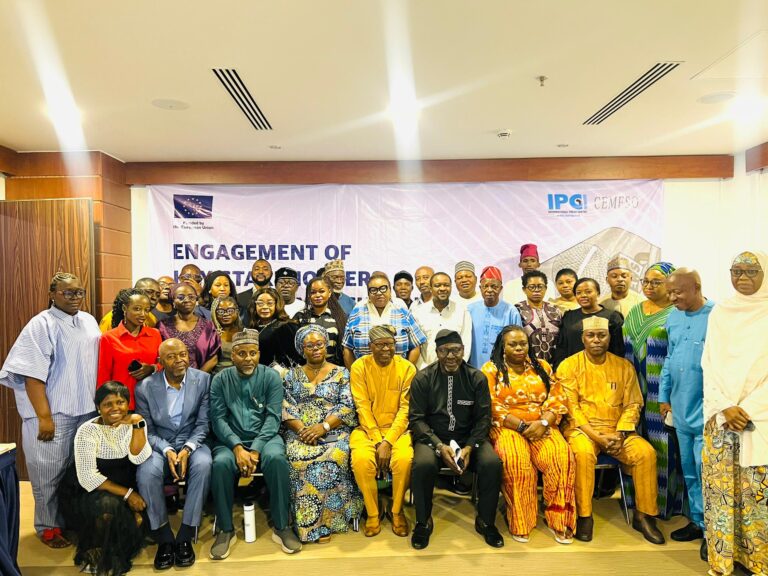
The concerns were raised during a stakeholder engagement organised by the International Press Centre (IPC) and the Centre for Media and Society (CEMESO) on Wednesday, May 6, in Abuja.

They also proposed solutions to strengthen protection mechanisms and improve institutional response to violations against media professionals.

The event, themed “Engagement of Key Stakeholders to Tackle Attacks on Media Professionals and Strengthen Media Protection”, brought together key media professionals, regulators, and civil society organisations.

Speaking at the event, the Executive Director of the Centre for Media and Society, Akin Akingbulu, said the engagement was convened as a direct response to mounting pressure on press freedom and the need for institutional accountability.

According to him, the current situation demands more than statements or communiqués that are “filed and forgotten,” stressing that institutions represented at the meeting must confront documented evidence and take responsibility for their role in either enabling or curbing violations against journalists.

Akingbulu emphasised that press freedom is not merely a media-sector issue but a constitutional and democratic necessity. Citing Sections 22 and 39 of the 1999 Constitution, he noted that freedom of expression and the media’s watchdog role are fundamental to accountability and governance.

He warned that continued attacks on journalists and the failure to investigate and prosecute perpetrators undermine democratic accountability and weaken the quality of information available to citizens.

Every erosion in the ability of journalists to report freely, every legal instrument turned against legitimate expression, every act of violence that goes uninvestigated and unpunished compounds into an information environment that is less equipped to support informed democratic participation. What we do — and do not do — in this room today has a direct bearing on the quality of Nigeria’s democratic process in 2027,” he said.

The CEMESO director also drew attention to findings from field engagements with journalists ahead of upcoming off-cycle elections in Ekiti and Osun states, showing widespread anxiety among reporters over safety, harassment, and impunity experienced during previous electoral cycles.

He cautioned that without urgent institutional reforms, patterns of intimidation and violence against journalists risk becoming entrenched in Nigeria’s electoral process.

“The journalists of Ekiti deserve to cover that election freely. So do the journalists of Osun and every state that will go to the polls after them,” he added.

Akingbulu explained that the engagement would proceed through a structured format, beginning with the presentation of verified data on attacks against journalists, followed by contextual analysis, testimonies from affected media practitioners, and a policy dialogue culminating in working group recommendations and formal resolutions.

Also speaking at the event, the Executive Director of International Press Centre, Lanre Arogundade, noted that journalism in Nigeria had become increasingly dangerous due to rising cases of harassment, intimidation, and attacks on reporters.

He also stressed that media protection should not be treated as a narrow sectoral issue but as a broader societal responsibility tied to democratic governance. 

According to him, a protected media environment is essential for accountability, informed citizenship, and the proper functioning of democracy.

“The International Press Centre, through its Safety and Protection of Journalists (IPC-SPJ) Hub documented not less than 20 attacks on journalists during the last 2023 general elections in Nigeria. These attacks vary from physical assaults, unlawful arrest and detention, and several other forms of attacks,” he said.

Arogundade further described the engagement as timely, noting that it was designed to move beyond discussion to actionable outcomes involving government institutions, security agencies, civil society, and the media.

He further presented report titled “Nigeria’s Media Under Pressure: Press Freedom and Digital Rights in 2026”, which shows that journalists and media organisations in Nigeria face increasing threats from security agencies, political actors, and surveillance systems. 

The report shows that 74 per cent of attacks against journalists were allegedly carried out by security forces, particularly the police, while attacks on journalists have surged by 40 per cent between 2022 and 2026. It also alleges that political and corporate interests have compromised the editorial independence of about 42 per cent of media outlets in the country.

On digital rights, the report states that Nigeria has invested over $470 million in surveillance technologies, including facial recognition and tracking systems, raising concerns about privacy and state monitoring.

The Director-General of the National Orientation Agency, Lanre Onilu, represented at the event by Olukemi Afolayan, stressed the need for ethical journalism alongside protection efforts.

“While advocating for the protection of journalists, we must continue to promote ethical and responsible media practice. Professionalism, fact-checking, fairness, patriotism and conflict-sensitive reporting remain essential in strengthening public confidence in the media ecosystem,” he said.

A representative of the National Human Rights Commission, Fatimah Mohammed, also underscored the human rights implications of attacks on journalists.

“A free, safe and independent press is not a privilege. It is a constitutional guarantee… When journalists are attacked or harassed, it is not only the media that suffers. Truth suffers, accountability suffers, and democracy suffers,” she said.

The engagement also featured multiple sessions focused on examining the state of media safety and press freedom in Nigeria, including presentations of documented evidence of attacks and discussions on institutional responsibilities in addressing them.

A stakeholder dialogue session brought together representatives of security agencies, regulatory bodies, civil society groups, and media associations to examine accountability gaps, barriers to effective response, and the need for stronger coordination and rapid response mechanisms to protect journalists.

Stakeholders at the event stressed the need for stronger collaboration, improved protection frameworks, and concrete, implementable commitments to ensure a safer environment for journalists across Nigeria.


Aisha Yesufu joins NDC, declares for FCT Senatorial seat

NIGERIAN activist, Aisha Yesufu, has announced her defection from the African Democratic Congress (ADC) to the Nigeria Democratic Congress (NDC)

She also declared her intention to contest for the Federal Capital Territory (FCT) senatorial seat in the 2027 elections.

In a video shared on Facebook, Yesufu described her decision as deliberate and driven by a “deeper understanding” of Nigeria’s political future, stressing that the coming days would be critical in shaping the country’s direction.

“I’ve moved from ADC, I’m now in NDC, Nigeria Democratic Congress. The next couple of days we define the future of this nation. This deeper understanding is why I resigned from the African Democratic Congress, ADC, to join the Nigeria Democratic Congress, NDC,” she said.

She linked her defection to her continued support for former Anambra State governor Peter Obi, whom she described as embodying “the hope and aspiration of a Nigeria that works.” 

She added that her initial alignment with the ADC was influenced by her commitment to supporting Obi, and her latest move to the NDC is a continuation of that pledge.

She added, “To continue to honour that promise, I am joining the NDC. This time, I am joining the NDC not just as a member, but as one running for the FCT senatorial seat. I have tidied up all my obligations to the ADC, ensuring a clean transition,” she said.

She expressed gratitude for the roles she previously held, including subcommittee chair, deputy committee chair, and secretary at different levels in the ADC.

Yesufu also acknowledged colleagues within the ADC, appealing directly to citizens as she framed her candidacy as a call for constitutional authority to represent the people.

“I’m putting myself forth. I’ve always used my constitutional voice to make demands, to speak for a better country. Today, I’m asking you for constitutional  authority,” she added.

She urged residents of the FCT to support her ambition, pledging to be their voice in the National Assembly.

“I want to serve, and I need your support. I need you to give me the authority to be able to stand in the Red Chamber and fight for our country, and be there for our country, and be there for our people, and be the voice of our people, and represent,” she said.

IPI Nigeria renews campaign against Eno, Bago, Egbetokun, others for ‘violating’ press freedom

THE International Press Institute (IPI) Nigeria has announced a global escalation of its campaign against actors it accused of violating press freedom in Nigeria.

The organisation named Niger State Governor Mohammed Bago, Akwa Ibom State Governor Umo Eno, and the former Inspector General of Police, Kayode Egbetokun, among those it said violated press freedom in the country.

The President of IPI Nigeria and Editor-in-Chief of Premium Times, Musikilu Mojeed, accused the officials of engaging in actions undermining media independence and vowed that they would be held accountable through a renewed global advocacy campaign.

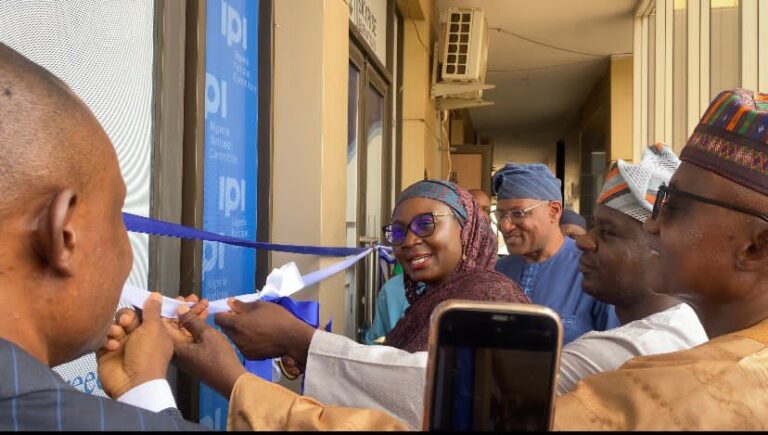
Mojeed made the vow on Wednesday, May 6, at the commissioning of IPI Nigeria’s new headquarters in Abuja.

The commissioning was part of activities marking 2026 World Press Freedom Day.

He recalled that in December 2025, IPI Nigeria named the three individuals in its “Book of Infamy” for clamping down on the media.

Mojeed said the organisation had refrained from a broader campaign out of deference to Vice President Kashim Shettima, who had intervened earlier.

However, the group’s leader noted that no corrective measure had been taken since the intervention, leading to the decision to broaden the scope of advocacy against their actions.

He said: “Regrettably, no such action has been taken. As we stand here today, the concerns that led to their inclusion in that list remain valid, unaddressed, and ongoing. Therefore, from this very platform, we are announcing the relaunch and escalation of our efforts against these individuals and others whose names are in the Book. IPI Nigeria will initiate a global campaign to hold these individuals accountable.”

Speaking on the new facility, Mojeed said it represented the first permanent office established by IPI Nigeria in the country since the 1970s.

On her part, the Deputy Director of the MacArthur Foundation, Amina Salihu, applauded her organisation’s long partnership with the IPI Nigeria, emphasising that the work of philanthropy only holds meaning when paired with “worthy partners and pathfinders.”

Highlighting the link between journalism and national stability, Salihu described the media as the essential information infrastructure for any surviving democracy.

“Every work that philanthropy would do in this country only makes meaning when you find worthy partners, and IPI has been an ally and a friend, and also a pathfinder in terms of how best to use resources in this country,” Salihu said.

“Without it, you cannot have an enduring democracy. And without an enduring democracy, you cannot have development. And if there’s no development, what then is a nation?