Home Blog Page 35

Aisha Yesufu joins NDC, declares for FCT Senatorial seat

NIGERIAN activist, Aisha Yesufu, has announced her defection from the African Democratic Congress (ADC) to the Nigeria Democratic Congress (NDC)

She also declared her intention to contest for the Federal Capital Territory (FCT) senatorial seat in the 2027 elections.

In a video shared on Facebook, Yesufu described her decision as deliberate and driven by a “deeper understanding” of Nigeria’s political future, stressing that the coming days would be critical in shaping the country’s direction.

“I’ve moved from ADC, I’m now in NDC, Nigeria Democratic Congress. The next couple of days we define the future of this nation. This deeper understanding is why I resigned from the African Democratic Congress, ADC, to join the Nigeria Democratic Congress, NDC,” she said.

She linked her defection to her continued support for former Anambra State governor Peter Obi, whom she described as embodying “the hope and aspiration of a Nigeria that works.” 

She added that her initial alignment with the ADC was influenced by her commitment to supporting Obi, and her latest move to the NDC is a continuation of that pledge.

She added, “To continue to honour that promise, I am joining the NDC. This time, I am joining the NDC not just as a member, but as one running for the FCT senatorial seat. I have tidied up all my obligations to the ADC, ensuring a clean transition,” she said.

She expressed gratitude for the roles she previously held, including subcommittee chair, deputy committee chair, and secretary at different levels in the ADC.

Yesufu also acknowledged colleagues within the ADC, appealing directly to citizens as she framed her candidacy as a call for constitutional authority to represent the people.

“I’m putting myself forth. I’ve always used my constitutional voice to make demands, to speak for a better country. Today, I’m asking you for constitutional  authority,” she added.

She urged residents of the FCT to support her ambition, pledging to be their voice in the National Assembly.

“I want to serve, and I need your support. I need you to give me the authority to be able to stand in the Red Chamber and fight for our country, and be there for our country, and be there for our people, and be the voice of our people, and represent,” she said.

IPI Nigeria renews campaign against Eno, Bago, Egbetokun, others for ‘violating’ press freedom

THE International Press Institute (IPI) Nigeria has announced a global escalation of its campaign against actors it accused of violating press freedom in Nigeria.

The organisation named Niger State Governor Mohammed Bago, Akwa Ibom State Governor Umo Eno, and the former Inspector General of Police, Kayode Egbetokun, among those it said violated press freedom in the country.

The President of IPI Nigeria and Editor-in-Chief of Premium Times, Musikilu Mojeed, accused the officials of engaging in actions undermining media independence and vowed that they would be held accountable through a renewed global advocacy campaign.

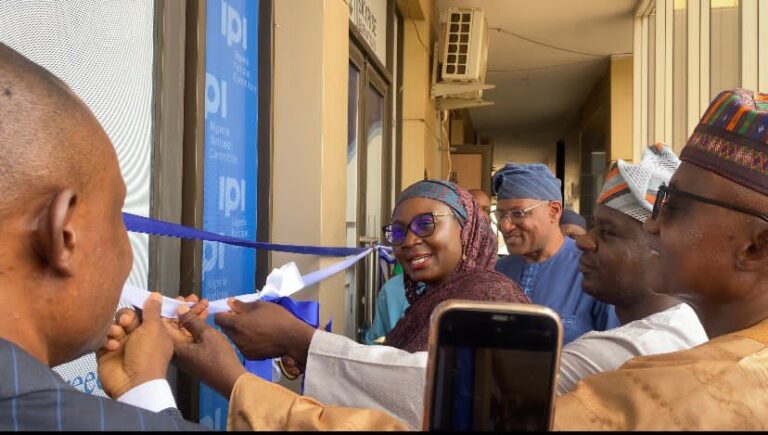
Mojeed made the vow on Wednesday, May 6, at the commissioning of IPI Nigeria’s new headquarters in Abuja.

The commissioning was part of activities marking 2026 World Press Freedom Day.

He recalled that in December 2025, IPI Nigeria named the three individuals in its “Book of Infamy” for clamping down on the media.

Mojeed said the organisation had refrained from a broader campaign out of deference to Vice President Kashim Shettima, who had intervened earlier.

However, the group’s leader noted that no corrective measure had been taken since the intervention, leading to the decision to broaden the scope of advocacy against their actions.

He said: “Regrettably, no such action has been taken. As we stand here today, the concerns that led to their inclusion in that list remain valid, unaddressed, and ongoing. Therefore, from this very platform, we are announcing the relaunch and escalation of our efforts against these individuals and others whose names are in the Book. IPI Nigeria will initiate a global campaign to hold these individuals accountable.”

Speaking on the new facility, Mojeed said it represented the first permanent office established by IPI Nigeria in the country since the 1970s.

On her part, the Deputy Director of the MacArthur Foundation, Amina Salihu, applauded her organisation’s long partnership with the IPI Nigeria, emphasising that the work of philanthropy only holds meaning when paired with “worthy partners and pathfinders.”

Highlighting the link between journalism and national stability, Salihu described the media as the essential information infrastructure for any surviving democracy.

“Every work that philanthropy would do in this country only makes meaning when you find worthy partners, and IPI has been an ally and a friend, and also a pathfinder in terms of how best to use resources in this country,” Salihu said.

“Without it, you cannot have an enduring democracy. And without an enduring democracy, you cannot have development. And if there’s no development, what then is a nation?


SERAP, editors react as court bars NBC from punishing broadcasters for expressing views

0

A FEDERAL High Court in Lagos has barred the National Broadcasting Commission (NBC) from implementing its recent directive seeking to penalise broadcast organisations and on-air personalities for expressing their views on the nation’s politics.

The decision was delivered by a judge, Daniel Osiagor, who approved temporary order stopping the regulator from taking action under the disputed sections of the broadcasting rules. The order followed an urgent application brought before the court by the Socio-Economic Rights and Accountability Project (SERAP) and the Nigerian Guild of Editors.

Recall that The ICIR reported that the NBC issued a notice warning broadcasters over alleged rising violations of its codes.

It said some programmes had fallen short of accuracy and fairness, calling for stricter enforcement of the codes ahead of the 2027 elections. The commission also flagged presenters for pushing personal views as facts, intimidating guests, and limiting opposing opinions, warning that such actions would attract sanctions.

The litigation, filed by Adeyinka Olumide-Fusika, a senior advocate, questioned the legality of the commission’s move, which the litigants said attempted to gag presenters.

In granting the order, the judge directed that the NBC and its representatives must not enforce or rely on the identified sections of the 6th edition of the Nigeria Broadcasting Code to issue fines or sanctions against any station until the court fully decides the matter.

“It is hereby ordered as follows: That an order of interim injunction is granted restraining the defendant [NBC], its officers, agents, privies, assigns, associates or any other person or group of persons from enforcing, imposing sanctions, or levying fines on any broadcasting station based on the provisions of Sections 1.10.3, 3.3.1(b), 3.4.1(b), 5.3.3(b), 3.1.1, 3.11.1(a), 5.4.1(f), 3.11.1(b), and 5.5.1(b) of the 6th Edition of the Nigeria Broadcasting Code pending the hearing and determination of the Motion on notice for an order of interlocutory injunction filed simultaneously in this suit.”

The matter has been fixed for June 1, 2026, when the court will hear further arguments on whether those provisions should be permanently set aside.

In their suit, SERAP and the editors’ body are asking the court to decide if the rules being used by the NBC go against the Nigerian Constitution and international treaties on human rights.

They argued that without the court’s intervention, broadcasters could continue to face punishment for simply carrying out their duties and exercising their rights.

“Unless the reliefs sought are granted, the NBC will continue to use the provisions of the 6th Edition of the Broadcasting Code to threaten and sanction broadcast stations and presenters solely for carrying out their constitutional responsibilities and exercising their rights,” they said.

The groups also stressed that freedom of expression covers more than just reporting facts.

“The Nigerian Constitution and international human rights law protect both the absolute right to hold opinions and the qualified right to express ideas of all kinds. Journalistic opinion is protected expression.”

Court documents further explained why they believe the restrictions are excessive.

“Value judgments are not susceptible of proof and enjoy heightened protection. Journalism necessarily includes analysis and commentary. The right to impart ideas necessarily includes opinions, commentary, and analysis. A blanket prohibition on the expression of personal opinions by anchors and presenters’ amounts to an impermissible restriction of this right.”

They maintained that media professionals should not be stopped from analysing issues or sharing informed perspectives, as that forms a key part of journalism and democratic engagement.

“Journalists are entitled to express their opinions as a matter of professional standard, including commentary and analytical expression, which lie at the very core of journalistic practice and democratic discourse.”

Reacting to the ruling, SERAP and the Nigerian Guild of Editors described it as a major step for press freedom and accountability.

“This is a significant victory for freedom of expression, media freedom, and the rule of law in Nigeria. The court’s decision to restrain the NBC from enforcing these vague and overly broad provisions affirms the fundamental principle that regulatory powers must be exercised within constitutional limits.”

They urged the NBC to obey the court’s directive and review its guidelines to align with constitutional protections and global human rights standards.

“This ruling sends a clear message: freedom of expression is not a privilege to be granted or withdrawn by regulators, it is a fundamental right that must be respected, protected, and upheld at all times.”

Nigeria gains in passport rankings as visa-free reach dips

NIGERIA’S passport has improved from 95th to 89th in global rankings but its real travel access is declining.

The country’s visa-free destinations currently stand at 44.

According to the latest Henley Passport Index, Nigeria moved from 95th in January 2024 to 89th in April 2026. Despite this upward movement, Nigeria’s visa-free destinations stand at 44, down from 46 in January 2025 and 45 in January 2024.

The Henley Passport Index revealed that several countries like Ethiopia, Zambia, Zimbabwe, Lesotho, Somalia, Mauritania, and São Tomé and Príncipe have all shifted Nigerians into the “visa required” category.

Ethiopia ended visa-on-arrival for Nigerians in October 2022, requiring travellers to obtain visas before departure, Zambia now mandates visas for all West African passport holders, while Zimbabwe has also removed visa-on-arrival access.

Data from successive editions of the index show that Nigeria’s higher position is partly due to other countries falling further down the rankings, rather than a significant improvement in Nigeria’s passport strength.

Now in its 21st year, the Henley Passport Index Nigerian passport dropped 27 positions, falling from 62nd place in 2006 to 89th in 2026. It ranks 199 passports worldwide using exclusive data from the International Air Transport Association.

Although Nigeria gained access to new destinations between 2025 and 2026 including Fiji, Micronesia, Mozambique, Rwanda, Togo, Samoa, Palau, Niue and Montserrat, it ranks low among its West African peers, as Ghana ranks 67th globally with access to 67 destinations, while The Gambia ranks 66th with 68 destinations, Senegal, Burkina Faso and Côte d’Ivoire also outperform Nigeria.

Across Africa, South Africa maintains the strongest passport, ranked 46th globally with access to 100 destinations, followed by Botswana, Namibia, Morocco, Kenya and Ghana. Globally, Singapore holds the most powerful passport, with visa-free access to 192 destinations, while Japan and South Korea follow closely, alongside the United Arab Emirates.

At the bottom of the ranking, Afghanistan remains the weakest passport globally, with access to just 23 destinations. Other low-ranking countries include Syria, Iraq, Pakistan and Yemen.

INEC resumes voter registration nationwide May 11

0

THE INDEPENDENT National Electoral Commission (INEC) has fixed May 11, 2026, for the restart of voter enrollment across Nigeria, marking the last stage of the Continuous Voter Registration (CVR) exercise scheduled to end on July 10.

The update was shared on Tuesday in a statement by the commission’s head of Information and Voter Education Committee, Mohammed Haruna, as activities gradually build toward the 2027 general elections.

“The Independent National Electoral Commission wishes to inform the general public that the current nationwide Continuous Voter Registration exercise will resume for its third and final phase on Monday, 11th May 2026,” the statement read in part.

The electoral body noted that the earlier phase was put on hold on April 17 to allow for proper review and correction of the voters’ list after it had been published for verification.

Nigerians who recently turned 18 and those who were unable to register previously have been encouraged to make use of the fresh opportunity.

INEC also urged already registered voters who need to make changes to their records to act within this period. This includes people who want to move their registration to a new location, replace missing or damaged Permanent Voter Cards, or fix errors in their personal information.

The commission advised such individuals to access its online portal or visit INEC state and local government area offices nationwide more information on the exercise.

In addition, it disclosed plans to open the voter register again for public verification later in July as part of its transparency process.

The commission expressed confidence in its level of preparedness for the 2027 elections. It also called on Nigerians to take part actively in strengthening the electoral system.

The announcement comes after the conclusion of the second phase of the exercise, during which a total of 3,748,704 registrations were successfully processed nationwide through both digital pre-enrolment and physical capture.

Court awards N100m damages against SERAP in SSS defamation suit

THE Federal Capital Territory (FCT) High Court in Abuja has awarded N100 million damages against Socio-Economic Rights and Accountability Project (SERAP) in a defamation suit filed against it by Nigeria’s secret police – the State Security Service (SSS) and two of its officers. 

Delivering the judgment on Tuesday, the judge, Yusuf Halilu, awarded N100 million damages against SERAP, a leading public accountability non-profit. The court also ordered SERAP to apologise to the SSS in national dailies and on television.

“From the context of the documents before the court, it is settled there was a publication,” Halilu said.

The ICIR reports that in October 2024, SSS operatives filed a lawsuit against SERAP, accusing the organisation of falsely alleging that its agents invaded the accused’s Abuja office in September 2024.

Two SSS operatives, Sarah John and Gabriel Ogundele, who were said to have been defamed by the claim, were listed as co-claimants in the suit that sought N5 billion in damages. The litigants argued that the allegation harmed their reputations.

They said SERAP had alleged that the SSS invaded its office, a claim that was widely circulated on Twitter and reported by several media organisations, adding that the allegation had a serious impact on them.

The agency denied invading SERAP’s office or harassing its staff, with two officers testifying in support.

The SSS argued further that the incident occurred after SERAP had written to President Bola Tinubu, urging him to investigate alleged corruption in the Nigerian National Petroleum Company Limited and to reverse the increase in petrol prices.

However, SERAP presented a rebuttal during the trial.

In his judgment, Halilu said defamation remained a distinct cause of action, “legally and historically,” and involved exposing a person to hatred or ridicule, stressing that it covered libel (written) and slander (spoken)

He explained that the key issue was whether the claimants proved defamation and were entitled to be granted their prayers, explaining that the defendants did not challenge the evidence on oath put forward by the plaintiffs.

He said libel becomes actionable once a false and harmful statement is published, pointing to March 21, 2025, when Sarah John submitted social media posts as evidence. He added that Exhibit 3 showed that SERAP published statements about the officers.

The judge opined further that although SERAP did not mention names, the description identified the officers and the court must decide whether the words in question were defamatory, noting that they could amount to a derogatory innuendoes.

“The evidence of the SSS officer is tall, large, dark, slim, dark skin. I have taken judicial notice of their features, and all suit the claimants in this case. It cannot be challenged that there was defamation against the claimants,” the judge ruled.

He said the publication implied that the officers unlawfully occupied SERAP’s office and intimidated its staff, portraying them as acting without proper authority and lacking professionalism.

“Allegations of intimidation and harassment should not be attributed to SSS officers as in this case. The publication clearly injured the claimants in their profession. Once there is publication, it does not require further proof. The publication is indeed libellous,” he added.

He ruled that the statements might have spread widely beyond Nigeria, potentially affecting the claimants’ physical and psychological well-being.

17 ADC Rep members defect to NDC

0

SEVENTEEN members of the House of Representatives have defected from the African Democratic Congress (ADC) to the Nigerian Democratic Congress (NDC).

The defections were announced during Tuesday’s plenary by Deputy Speaker, Benjamin Kalu, who read out the notices on the floor of the House.

Kalu also announced the defection of Leke Abejide from the ADC to the All Progressives Congress (APC).

Lawmakers who joined the NDC include Yusuf Datti, Uchenna Okonkwo, Adamu Wakili, Thaddeus Attah, George Ozodinobi, Lilian Orogbu, Oluwaseyi Sowunmi, Peter Aniekwe, Mukhtar Zakari, George Oluwande, Munachim Umezuruike, Emeka Idu, Jesse Onuakalusi, Ifeanyi Uzokwe, Afam Ogene and Abdulhakeem Ado.

The development followed recent political alignments involving top opposition figures, including former governors Peter Obi and Musa Kwankwaso, who quit the ADC for NDC just a day apart.

They were received into the party by the NDC National Leader, Seriake Dickson, a senator and former Bayelsa governor, after a closed-door meeting with party leaders.

They were issued their membership cards in a video shared on Facebook by Dickson on Sunday evening. Footage from the event showed Kwankwaso receiving his card first, followed by Obi, marking their formal entry into the party, as they brace up to face other heavyweights, possibly President Bola Tinubu of the APC and former vice president Atiku Abubakar of the ADC in the 2027 poll.

There are indications that Kwankwaso may be Obi’s running mate for the NDC’s ticket.

Obi, who had earlier left the Labour Party to join the ADC in December 2025, said his exit was driven by worsening internal conflicts, external interference, and rising hostility within the party. He also pointed to what he described as a toxic political environment marked by intimidation, insecurity, and constant scrutiny.

He said systems meant to protect citizens were increasingly failing, while individuals committed to public service faced growing pressure both publicly and privately.

The ICIR reports that APC, currently with 31 of Nigeria’s 36 governors, controls the major seats in the lower and upper chambers of Nigeria’s National Assembly.

US, Iran intensify fight for control of Strait of Hormuz

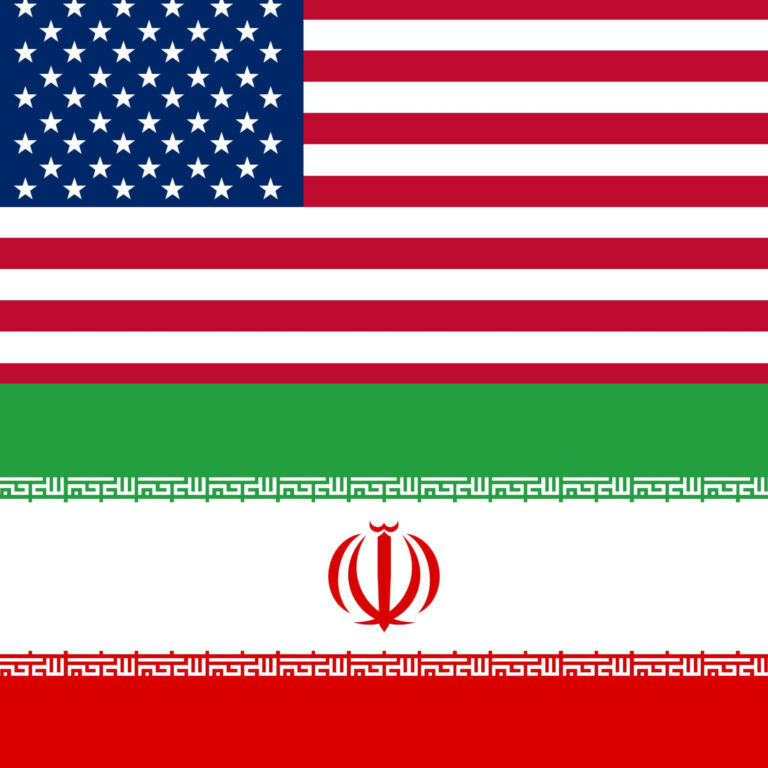
FRESH clashes between the United States and Iran on Tuesday raised tensions over the control of the Strait of Hormuz.

Iran’s Parliament Speaker, Mohammad Baqer Qalibaf, said in a social media post that violations of the four-week ceasefire by the United States and its allies had put the safety of maritime shipping and energy flows at risk.

The ICIR reported that US military said on Monday that it destroyed several Iranian boats, along with cruise missiles and drones, after President Donald Trump ordered naval escorts for stranded oil tankers through the Strait in a campaign he called “Project Freedom”.

The Strait of Hormuz, crucial for transporting global supplies of oil, fertilizer, and other commodities, has been largely shut since hostilities escalated earlier this year, contributing to rising fuel prices worldwide.

According to Reuters, on Monday, multiple commercial vessels in the Gulf reported explosions, while an oil facility in the United Arab Emirates was set ablaze following missile strikes attributed to Iran and Tehran.

The US said some merchant ships successfully transited the Strait under naval protection. Iran denied that any vessels had successfully passed through the waterway, but shipping company Maersk said its US-flagged vessel, Alliance Fairfax, left the Gulf via the Strait of Hormuz on Monday under US military escort.

Meanwhile, the commander of US forces in the region said American troops had destroyed six small Iranian boats, an account Tehran denied. Iranian media, citing a military official, claimed instead that US forces struck civilian vessels, killing five people.

Iranian Foreign Minister Abbas Araqchi said the situation underscored the need for a diplomatic solution, noting that talks mediated by Pakistan were ongoing. He also cautioned against deeper US or UAE involvement.

Iranian officials published a map showing what they described as a widened maritime zone under their control, stretching well beyond the Strait and covering extensive sections of the UAE’s coastline.

Iran’s state television said military officials confirmed the strike on the UAE was carried out in retaliation for what they described as “US military adventurism.”

Following the reports of drone and missile strikes across the UAE during the day, including one that sparked a fire at the key oil port of Fujairah, the Emirati government said the Iranian attacks represented a major escalation and warned it reserved the right to respond.

Oil prices eased one per cent on Tuesday after climbing by as much as six per cent in the previous days on signs the US Navy was loosening Iran’s grip on the Strait of Hormuz.

The conflict in the Middle East has claimed thousands of lives and unsettled the global economy. Although US and Iranian officials have held one round of direct peace talks, efforts to arrange further negotiations have so far been unsuccessful.

Soldier assaults TheCable editor in Lagos

A NIGERIAN soldier has assaulted Olalekan Fakoyejo, assistant business editor with TheCable, following alleged about traffic obstruction in Ikeja, Lagos State.

According to a report by TheCable, the incident occurred on Saturday, May 2, while Fakoyejo commuted from Ikeja to Ogba in a commercial tricycle, popularly known as “Keke Napep”.

TheCable reported that soldiers were controlling traffic near Pleasant Event Centre, off Ajao Road, when one of them stopped a tricycle rider and ordered him to carry a soldier as punishment.

This move reportedly worsened traffic congestion in the area.

Fakoyejo’s tricycle became trapped in the resulting gridlock, which prompted the journalist to have told other passengers that the soldier’s action contributed to the standstill.

A soldier who overheard the comment allegedly ordered Fakoyejo and other passengers to disembark before dragging the journalist aside and confronting him.

Despite explaining himself, Fakoyejo was asked to report to other soldiers nearby. However, as he attempted to speak with another officer approaching the scene, the soldier allegedly slapped him.

TheCable further reported that a video recorded by an eyewitness showed the soldier pushing the journalist repeatedly and attempting to strike him with a stick. During the altercation, Fakoyejo’s phone reportedly fell and shattered.

The ICIR also sighted a video showing two soldiers harassing and dragging the journalist while attempting to hit him with a long stick. In the footage, bystanders are seen intervening and urging Fakoyejo to leave the scene to avoid further assault.

As he tried to exit the area, he was again confronted by other soldiers, who reportedly threatened him before members of the public stepped in to de-escalate the situation.

The assault came amid growing concern over soldiers’ conduct following the killing of Abdulsamad Jamiu, a 24-year-old member of the National Youth Service Corps (NYSC), in Dei-Dei, Abuja.

Jamiu was killed in the early hours of April 25, 2026, at his family residence in Shagari Quarters.

The Guards Brigade of the Nigerian Army had stated that its troops were responding to a distress call over an alleged armed robbery when they engaged fleeing suspects in a “brief but intense exchange”, during which the corps member was reportedly caught in crossfire.

However, the family rejected the Army’s account, describing it as false and misleading, and has demanded an independent investigation.

In a statement on April 27, the family alleged that soldiers scaled the fence of their residence around 2:00 a.m. and entered without warning. They claimed that Jamiu was inside his room when a soldier fired through the closed door, hitting him in the head and killing him instantly.

According to the family, the trajectory of the bullet contradicts claims of a gun battle, insisting that only a single shot was heard and that there was no evidence of any exchange of gunfire in the area.

They called for the identification, suspension, and prosecution of the officers involved, as well as a retraction of the Army’s initial statement and a public apology.

IPI Nigeria unveils Press Freedom Hub as media crackdown concerns mount

THE International Press Institute (IPI) Nigeria has announced plans to commission a new Press Freedom Hub in Abuja as part of activities to commemorate 2026 World Press Freedom Day.

In a statement on May 4, the organisation said the facility, located along Kado Expressway, Abuja, would be officially opened on Wednesday, May 6.

IPI Nigeria is affiliated with the International Press Institute, a global network of editors, media executives, and journalists operating in over 100 countries.

Established in 1950, the organisation has played a significant role in promoting press freedom worldwide.

According to IPI Nigeria’s Secretary, Ahmed Shekarau, the new headquarters will serve as a central base for advancing press freedom and supporting journalists and media professionals across the country.

“The centre will anchor our media advocacy programmes and accelerate efforts to promote press freedom and protect journalists facing threats and censorship,” the President of IPI Nigeria, Musikilu Mojeed, said.

Mojeed added that the hub would also function as a platform for periodic assessments of media freedom and journalist safety, while promoting policy and legal reforms aimed at strengthening independent journalism.

He noted that it would further provide a space for dialogue between the media and government institutions.

The development is against the backdrop of persistent harassment, intimidation, and arrests of journalists in Nigeria.

The ICIR reports that in recent years, media practitioners have reported increasing pressure from security agencies and public officials, with cases ranging from unlawful detention to the use of cybercrime and defamation laws to silence critical reporting.

According to a recent report by the Reporters Without Borders (RSF), Nigeria currently ranks 112th out of 180 countries in the 2026 World Press Freedom Index.