Home Blog Page 341

Tinubu to PANDEF leaders: Tell Fubara to implement Supreme Court ruling on Rivers

1

PRESIDENT Bola Ahmed Tinubu has called on Rivers State Governor Siminalayi Fubara and leaders of the Pan-Niger Delta Forum (PANDEF) to ensure the peaceful implementation of the Supreme Court’s verdict on the prolonged political crisis in the state.

Speaking at a meeting with political leaders from Rivers State and representatives of the Niger Delta, under the aegis of PANDEF, at the State House in Abuja, on Tuesday, March 11, Tinubu emphasised that upholding judicial decisions was crucial for democracy and stability.

The call came amid heightened tensions in the state following a prolonged power struggle between Fubara and his predecessor, Nyesom Wike. 

This development also followed the March 3, Supreme Court ruling, which reinstated Martin Amaewhule and his faction as the legitimate members of the Assembly.

In dismissing Fubara’s appeal, the court directed Amaewhule to resume sitting immediately with other elected members of the Rivers State House of Assembly.

The court also nullified the recent local government election in the state, consequently sacking all council chairpersons and councillors in the state.

Speaking on the issues, Tinubu assured PANDEF leaders that he had been closely monitoring developments and had intervened before the crisis worsened.

Tinubu told the PANDEF leaders, “I got your signal and your concern, particularly on Rivers State. I have been on it for quite some time. I foresaw this crisis festering for too long. We reached a written agreement with both parties signing it, but some leaders thought the governor of Rivers State was wrong to have signed it. But where did we find ourselves today?” he asked.

Tinubu further urged the political stakeholders to find a solution to the crisis while also implementing the court ruling.

“Please, go back home and help implement the court rulings within the shortest possible time. I am putting the ball in your court. Help! Privately and openly, intervene and counsel the governor. Pursue the path of peace and stability.”

The crisis in Rivers State has raised questions on the Fubara government’s lifespan, as opposition voices intensify their demands for his removal.

The ICIR reported that the Rivers state chairman of the All Progressives Congress (APC), Tony Okocha, on Monday, March 10, gave Fubara a 48-hour ultimatum to resign or face impeachment.

He said the governor disrespected President Bola Tinubu and violated the Nigerian Constitution.

He also accused Fubara of insulting Tinubu when he attempted to propose a political solution to the crisis.

Meanwhile, the Amaewhule-led Assembly, which regained control following the Supreme Court ruling, has taken several actions since its reinstatement.

The ICIR reported that the Assembly had, on Monday, March 3, given Fubara 48 hours to re-present the state’s 2025 budget.           

Lagos residents face power outage as TCN announces transmission lines cut

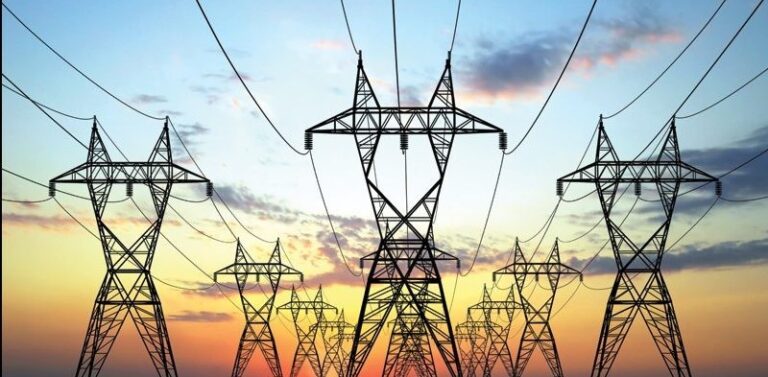
LAGOS State residents will suffer power outages for an undisclosed number of days as the Transmission Company of Nigeria (TCN) announced that transmission lines had been cut to the state.

In a statement issued on Tuesday, March 11, by its Group Manager, Public Affairs, Ndidi Mbah, TCN said the incident would impact bulk power supply to electricity customers.

It said the transmission line snap occurred between Towers 420 to 422 on the Omotoso – Ikeja West 330kV transmission line on Saturday, March 9.

“The lines cut have resulted in a reduction of approximately 350MW of bulk electricity supply to the Lagos area, affecting both Eko and Ikeja Electricity Distribution Companies.

“This temporary drop in bulk power supply has caused significant load shedding within the Eko and Ikeja franchise areas,” TCN stated.

The Federal Government-owned electric utility company responsible for transmitting bulk electricity from power generating companies (GenCos) to distribution companies (DisCos) nationwide, said it had mobilised its engineers to the site.

It added that it had conveyed the necessary materials to repair the snapped sections of the 330kV Omotoso – Ikeja West transmission line.

“Repair work is expected to be completed within three days, after which the full bulk power supply will be restored through the transmission line route.

“TCN apologises for any inconvenience caused to the government, Eko, and Ikeja Electricity Distribution companies, and electricity consumers in Lagos State.”

Power outages have been a recurring issue in Lagos and other states in Nigeria, occasioned by incessant reports of grid collapse.

The impact is heavily felt by households, businesses, and critical sectors like healthcare, where a consistent power supply is essential.

In a recent publication on February 12, The ICIR reported that many Nigerian cities were plunged into blackout as the national grid collapsed for the second time this year.

Last year, the national grid collapsed about 11 times, raising concerns over grid stability and reliance on a centralised grid system.

With states now keying into the new electricity and establishing their regulatory commissions to attract investments, energy analysts believe that the decentralisation of the grid is feasible.

Tinubu appoints principal officers for federal educational institutions

0

PRESIDENT Bola Tinubu has appointed new principal officers for the Federal University of Medicine and Medical Sciences, Abeokuta, and the Federal College of Education (Technical), Yauri, Kebbi State. 

The appointments, announced by his Special Adviser on Information and Strategy, Bayo Onanuga, on Tuesday, March 11, in separate statements, also include leadership positions at the National Business and Technical Examinations Board (NABTEB) and the Universal Basic Education Commission (UBEC).

According to one of the statements, Fatiu Abiola Arogundade, a professor, will lead the Federal University of Medicine and Medical Sciences, Abeokuta, as vice-chancellor. 

Arogundade is a professor of medicine at Obafemi Awolowo University, Ile-Ife, and the Registrar of the National Postgraduate Medical College of Nigeria, with over three decades of experience in teaching, research, and administration. 

Alongside him, Obayomi Gregory, Adedokun Omolola Olufunso, and Idiat Odunola Agboola were appointed as Registrar, Bursar, and Librarian, respectively. 

The president urged them to provide visionary leadership and ensure the university fulfils its mandate of training world-class medical professionals.  

Similarly, Sa’adu Umar, a professor, who previously served as deputy vice-chancellor (Research and Innovation) at Kebbi State University of Science and Technology, Aliero was named Provost of the Federal College of Education (Technical), Yauri.

The statement stressed that Abdullahi Ahmed, Muhammad Yusuf Alkali, and Maimuna Mohammed Ahmed were also appointed as the school registrar, bursar, and librarian, respectively.

The appointees have five-year tenure each, without extension, as stipulated by the Federal Colleges of Education Act, 2023. 

“The tenures of the principal officers at the Federal College of Education (Technical), Yauri, Kebbi State, are set at five years each, with no extensions, as stipulated in the Federal Colleges of Education Act, 2023.

“Established by an Act of the National Assembly, the Federal College of Education (Technical), Yauri, Kebbi State, offers full-time courses in teaching, instruction, and training across disciplines such as technology, applied science, arts, social sciences, humanities, and management,” the statement added.

In addition to these appointments, Tinubu also named Mohammed Aminu as the new registrar and chief executive officer of the National Business and Technical Examinations Board (NABTEB). 

Before his appointment, he was director of procurement at the National Agency for Science and Engineering Infrastructure (NASENI). 

Tinubu also appointed Mr Idris Olorunnimbe as Chairman of the Universal Basic Education Commission (UBEC) Board.

Rasaq Olajuwon, from South-West, was named UBEC’s deputy executive secretary (Technical), while Tunde Ajibulu, from North-Central, will serve as deputy executive secretary (Services).

“Mr. Olorunnimbe brings years of experience in innovative leadership and commitment to youth empowerment and education.

As Group CEO of The Temple Company, which he founded in 2016, he has spearheaded transformative initiatives across education, entertainment, and sports.

“He previously served on the Board of the Lagos State Employment Trust Fund (LSETF), where he chaired the Stakeholder and Governance Committees, driving impactful youth employment and entrepreneurship programmes,” the statement added.

Lawmakers ask CBN to suspend new ATM charges

THE House of Representatives (Reps) has asked the Central Bank of Nigeria (CBN) to suspend the recent charges imposed on bank customers using the Automated Teller Machine (ATM) to withdraw cash, given the economic situation in the country.

The lawmakers made the call during Tuesday’s, March 11 plenary.

Its decision followed the adoption of a motion of urgent public importance sponsored by a member representing Esan Central /Esan West/Igueben Federal Constituency, Edo State, Marcus Onobun.

While addressing his colleagues, Onobun argued that CBN’s recent increase in ATM charges was imposing additional financial burdens on Nigerians.

The apex bank had, in a circular on February 11, announced the new charges, which took effect from March 1.

According to the new policy, customers withdrawing from their bank’s ATMs (on-us transactions) would continue to enjoy free withdrawals while a N100 fee per N20,000 withdrawal would be applied at on-site ATMs (those located at bank branches).

It also stated that withdrawals at ATMs of other banks (Not-on-Us transactions) and an off-site withdrawal will attract an N100 fee plus a surcharge of up to N450 per N20,000 withdrawal, The ICIR reported.

At Tuesday’s plenary, Onobun stressed that Nigerians were already grappling with multiple economic hardships, including high inflation, increased fuel prices, electricity tariff hikes, numerous banking and service charges that significantly reduce disposable income and negatively impact their welfare.

“We are worried that the imposition of additional ATM withdrawal charges will further limit the financial inclusion of Nigerians by discouraging low-income earners from accessing banking services, thereby contradicting the CBN’s financial inclusion agenda.

“The banking sector has continued to record significant profits, imposing further charges on consumers without corresponding improvements in service delivery or infrastructure is unjustifiable,” the lawmaker posited.

The speaker, Tajudeen Abbas, who presided over the plenary, put the motion to voice vote, and it was overwhelmingly supported by the lawmakers.

The Representatives, thereafter, urged the CBN to immediately suspend the implementation of the policy, pending proper engagement with the relevant committees on Banking, Finance, and Financial Institutions.

Only 1 in 5 applicants for Nigeria’s Education Loan Fund is female – Official

THE Nigerian Education Loan Fund (NELFUND) has revealed that only one in five applicants for its funds is female.

The Fund’s Managing Director, Akintunde Sawyerr, disclosed this in Abuja on Monday, March 10, during the International Women’s Day celebration.

Sawyerr, represented by Oluwatosin Sanusi, NELFUND’s Head of Investments and Funds Management, said the ratio of females in tertiary institutions accessing the loans compared to males was unimpressive.

“The NELFUND initiative is all about providing loans for students in tertiary institutions to pay for their fees and to take care of their welfare.

“Currently, we have a ratio of four to one, which means for every four male applicants, we have just one female, which isn’t impressive,” he said.

However, Sawyerr said that NELFUND was collaborating with women stakeholders to raise awareness about the initiative.

He encouraged female students to participate and benefit from the loan, which he described as part of dividends of democracy.

The ICIR reported that NELFUND had announced the student loan would be accessible to students of state universities starting June 25, 2024.

It stated that the student loan fund’s website had received over 60,000 applications since its launch, with 30,000 students successfully completing the process to access the loan.

As at February 3, 2025, the Fund revealed that 192,906 students had benefited from the Fund since its launch in 2024.

The ICIR reported that out of the number, N20 billion (N20,074,050,000) was disbursed for institutional fees, which directly benefited 192,906 students across various tertiary institutions.

In its latest update, the Fund introduced a new component of the initiative, focused on skill acquisition, which is not limited to tertiary students alone.

“It is underway, and it would also cover educational fees and fund purchases of equipment for entrepreneurship training.

“The skills acquisition programme places students on a monthly stipend, which is laudable. However, we have fewer women who are taking advantage of this initiative” he added.

He stressed that repaying the loan after graduation and securing employment was essential for the programme’s sustainability, noting that timely repayment would ensure the initiative’s expansion, allowing more students in government-owned institutions to benefit.

Encouraging female students to apply, he explained that the education loan fund was available to students at various levels in universities and polytechnics within federal and state-owned institutions.

Responding, the National President of Female Students of Nigeria, Choice Enebeli, commended NELFUND for encouraging female students to apply for and benefit from education loans.

“Women’s rights are human rights, and we must continue to strive for a world where women and girls have equal access to education, healthcare, economic opportunities, and leadership positions,” Uchenna said.

She also promised to spearhead a nationwide awareness campaign on educational loans for female students’ benefits.


Sokoto, Kebbi, confirm multiple cases of meningitis, warn residents

THE governments of Sokoto and Kebbi states have confirmed multiple cases of meningitis and urged residents to take preventive measures as the disease spreads in some local government areas.

In Sokoto, Commissioner for Health, Faruk Wurno, confirmed the outbreak in a statement on Tuesday, March 11, through the ministry’s Information/Public Relations Officer, Nura Maikwanci.

He said laboratory tests identified several cases in the state.

Residents were further advised to remain vigilant and seek immediate medical attention if they experienced symptoms such as fever, severe headache, or neck stiffness.

“To curb its spread, the ministry has intensified surveillance, case management, and public health interventions.

“We call on residents to take preventive measures, including seeking immediate medical attention if they experience symptoms such as fever, severe headache, or neck stiffness,” the statement added.

Wurno urged the public to report suspected cases to the nearest health facility, assuring that the state Governor Ahmed Aliyu had provided essential medications to health centres across the state.

Meanwhile, the Kebbi State government has reportedly confirmed that 26 people died from a suspected outbreak of cerebrospinal meningitis in Aliero, Gwandu, and Jega local government areas.

These deaths were confirmed by the state government on Tuesday, March 11, according to a report by Punch.

The World Health Organization (WHO) defines meningitis as the inflammation of the tissues surrounding the brain and spinal cord.

Meningitis can be caused by several species of bacteria, viruses, fungi and parasites, with most infections being transmitted from person to person.

The global health body noted that injuries, cancers and drugs cause a small number of cases.

Meningitis occurrence is influenced by multiple factors, with climatic variability and seasonal changes playing a significant role in its distribution.

Studies have shown that climate change may be driving an increase in meningitis cases, as higher temperatures can boost the bacteria’s ability to withstand the human immune response.

The WHO describes meningitis as a devastating disease with a high case fatality rate, which could lead to serious long-term complications (sequelae).

The risk increases when individuals live in close proximity, such as in overcrowded households, refugee camps, mass gatherings, or communal settings like student dormitories and military barracks.

According to the WHO, the common symptoms of meningitis are neck stiffness, fever, confusion or altered mental status, headaches, nausea and vomiting.

Less frequent symptoms include seizures, coma and neurological deficits (for example hearing or vision loss, cognitive impairment, or weakness of the limbs).

The disease can affect people of all ages.

Supreme Court upholds Aiyedatiwa’s victory, dismisses Ajayi’s suit

0

THE Supreme Court has dismissed an appeal by the Peoples Democratic Party (PDP) and its governorship candidate, Agboola Ajayi, contesting the legitimacy of Ondo State Governor Lucky Orimisan Aiyedatiwa’s candidacy in the November 16, 2024, governorship election.

In the lead judgment delivered by Garba Lawal on Tuesday, March 11, the apex court threw out the litigants’ appeal for lacking in merit, being baseless, and frivolous.

The court validated the earlier rulings of the Federal High Court and the Court of Appeal regarding Aiyedatiwa’s candidacy in the poll.

Ajayi had attempted to overturn Aiyedatiwa’s victory by accusing the governor’s deputy, Olayide Adelami, of forgery, impersonation, and identity fraud.

Ajayi’s lawsuit, submitted on June 7, 2024, alleged that Adelami forged documents tainted his eligibility to stand in the election.

However, his efforts were thwarted as both the Federal High Court and the Court of Appeal dismissed his case on technical grounds, thereby upholding Aiyedatiwa’s victory.

The Federal High Court ruled that the accusations of forgery against Adelami required more substantial evidence, which couldn’t be presented through an originating summons.

Additionally, the petition was deemedstatute-barredsince it was filed after the constitutionally mandated deadline.

The Court of Appeal upheld this decision on January 18, and also imposed a N500,000 fine on the litigant.

Dissatisfied with the ruling, Ajayi proceeded to the Supreme Court.

The Supreme Court, after taking arguments from counsel to the parties on February 25, reserved its judgment till today, March 11.

The ICIR reported that Aiyedatiwa of the All Progressives Congress (APC) secured victory in the Ondo State governorship election held on November 16, 2024.

He secured 366,781 votes, winning in all 18 local government areas, while his closest contender, Ajayi, trailed with 117,845 votes.

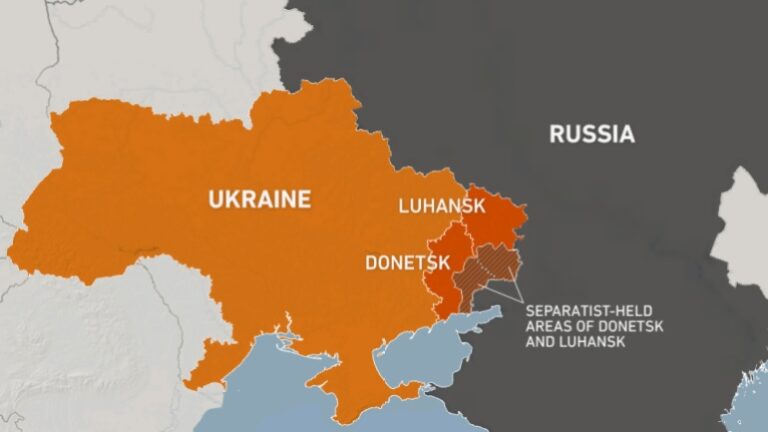
Ukraine’s drones hit Russian capital, spark fires, airports closures

UKRAINE launched its biggest drone attack on Moscow in the early hours of Tuesday, March 11, with at least 91 drones targeting the Russian capital. 

Moscow Region Governor, Andrei Vorobyov, confirmed that the assault killed at least two workers at a meat warehouse and injured 18 others.

The attack also sparked fires, forced a sudden airports shutdown, and diversion of dozens of flights.

Vorobyov who posted a picture of a wrecked apartment with its windows blown out, said that some residents were forced to evacuate a multi-storey building in the Ramenskoye district of Moscow region, about 50 km (31 miles) southeast of Kremlin.

Russia’s defence ministry reported that 337 Ukrainian drones were shot down across the country, including 91 over the Moscow region and 126 over the Kursk region, where Ukrainian forces have been retreating.

The ICIR reports that the massive drone attack at dawn came as a Ukrainian delegation prepared to meet with U.S. officials in Saudi Arabia to explore potential grounds for peace talks in the three-year-old war.

Kyiv which has endured repeated mass strikes from Russia and was reportedly being targeted by a ballistic missile and 126 drones on Tuesday.

The ICIR reported that Trump paused intelligence sharing with Kyiv on Wednesday, March 5, after suspending all U.S. military aid to Ukraine on Tuesday, March 4.

However, Moscow Mayor, Sergei Sobyanin, said that air defences were still repelling attacks on the city with a population of at least 21 million, including the surrounding region.

“The most massive attack of enemy unmanned aerial vehicles on Moscow has been repelled,” Sobyanin said in a post on Telegram.

Sobyanin said Tuesday’s was the biggest Ukrainian drone attack on the city, which along with the surrounding region has a population of at least 21 million.

Russia’s aviation watchdog said flights were suspended at all four of Moscow’s airports and two other airports, in the Yaroslavl and Nizhny Novgorod regions, both east of Moscow, to ensure air safety after the attacks.

Mob set monarch’s palace, LG secretariat ablaze in Benue

PROTESTERS burnt down the palace of the Ter Nagi, Daniel Abomtse, and parts of the Gwer West Local Government Secretariat in Benue State while protesting the killing of three people in the area on Tuesday, March 11.

The protest, which erupted in Naka community, turned violent after the bodies of three victims, killed by suspected armed herders, were brought to the area Tuesday morning.

The protests quickly escalated into violence, resulting in the destruction of property, including the palace of the traditional ruler, Abomtse, and parts of the Gwer West Local Government Secretariat.

Chairman of Gwer West LGA, Victor Omirin, confirmed the incident, highlighting the growing tensions and insecurity in the region.

In a chat with The ICIR on Tuesday, the Benue State Police Public Relations Officer, Catherine Anene, confirmed that the protest was still ongoing in the Naka community.

She said the police hierarchy in the state swiftly responded by deploying tactical teams to the affected area.

“Information has been received about the protest in Naka and the Commissioner of Police has moved this morning to the area with other tactical teams. Further development will be communicated to you,” she stated.

The ICIR reports that insecurity and farmers-herders clash in Benue have resulted in loss of hundreds of lives and property.

In 2023, The ICIR reported that no fewer than 40 primary and secondary schools were shut down due to insecurity in the state. 

The ICIR further reported that about 5,138 people were killed and 18 local government areas were attacked by suspected herdsmen under former Governor Samuel Ortom’s administration as of March 13, 2023, according to figures released by the Benue State Emergency Management Agency (SEMA).

Also, about 18,000 people were displaced at the beginning of April of the same year following attacks on some communities in the state.

Risks, opportunities private-sector businesses will face in 2025 – NESG

THE Nigerian Economic Summit Group (NESG) has highlighted some risks and opportunities businesses within the private sector would face in 2025.

The NESG highlighted this in its latest report titled ‘Nigeria’s Private Sector in 2025: Adapting to Economic Uncertainty for Growth and Resilience.’

It said a complex mix of economic, political, and regulatory uncertainties would shape the Nigerian business environment this year.

It pointed out that ongoing government reforms, shifting global economic dynamics, and internal structural challenges would continue to influence market conditions, investment decisions, and business operations.

Key policy changes it noted include the removal of fuel and electricity subsidies, exchange rate harmonisation, and tax reforms.

While these measures are aimed at stabilising the economy and addressing fiscal deficits, they have fuelled inflationary pressures, currency volatility, and rising borrowing costs, complicating the operating landscape for businesses.

Added to the risks are regulatory unpredictability and security concerns facing the private sector.

According to NESG, some of the risks stem from long-standing structural issues, recent economic policies, global market shifts, and evolving socio-political dynamics.

“These risks, if not adequately managed, could undermine business sustainability, investment confidence, and overall economic growth,” it warned.

It categorised the risks more broadly into macroeconomic, political and security, structural and infrastructure, financial and credit, social, and global economic and trade, with each having distinct implications for private sector operations.

The macroeconomic risks include inflationary pressures, high exchange rates, high borrowing costs, and fiscal uncertainties, all of which influence business performance and investment decisions.

A combination of political, security and social risks encompass labour market disruptions, rising unemployment, security concerns, and demographic shifts that affect workforce stability and consumer demand.

It said structural and infrastructure risks such as energy (power) crises, and logistics and transport bottlenecks pose long-term threats to business continuity and resilience.

Further, the emerging risks from global economic and trade dynamics are also creating some level of uncertainty for businesses in Nigeria this year.

“Given the interconnected nature of these risks, Nigerian businesses must assess their potential impact and develop effective mitigation strategies.

The ICIR can report that Nigeria’s public debt worsened to N142.3 trillion in the third quarter of 2024.

With an approved budget of N54.99 trillion for 2025, additional borrowing will likely be required to finance fiscal deficits if revenue targets are missed.

Borrowing costs for businesses remained high as the apex bank recently retained the benchmark interest rate at 27.5 per cent and other parameters.

“These challenges may dampen investor confidence, complicate financial planning, and raise operational costs, further constraining Nigeria’s economic growth in 2025,” NESG stated.

Since the return of Donald Trump to the White House as United States president, Nigeria’s business environment has changed and facing significant challenges due to global supply chain disruptions driven by geopolitical tensions, trade restrictions, and rising shipping costs.

These disruptions will lead to supply shortages, price volatility, and production delays, placing additional pressure on businesses across various industries.

Opportunities

Nigeria’s private sector, if well-positioned, could capitalise on key opportunities that enhance productivity, improve efficiency, reduce costs, and boost profitability, the NESG projected.

It said the opportunities range from cost-effective tax reforms to increased Foreign Direct Investment (FDI) to productivity-enhancing technologies and the revitalisation of local oil refineries that span critical sectors of the economy.

It, however, stated that the level of impact these opportunities would have would vary.

“Notably, six of the twenty economic sectors—Agriculture, Manufacturing, Construction, Trade, Transport, and Financial & Insurance Services—are exposed to at least three direct impacts of these opportunities.

“These high-impact sectors collectively accounted for about 59 per cent of Nigeria’s real GDP, recorded positive growth rates, and contributed about 91 per cent to total real GDP growth in 2024.”

The NESG said it was optimistic that Nigeria remains an attractive destination for investment and business expansion despite global economic uncertainties.

“The country’s large consumer market, expanding digital economy, and ongoing economic reforms create a conducive environment for growth.

“Businesses that embrace localisation, technological innovation, and trade diversification will be best positioned to navigate challenges and seize emerging opportunities,” NESG.

It urged entrepreneurs and investors to strategically align with Nigeria’s evolving economic landscape, land leverage government incentives and reform programmes.

It also urged them to adopt emerging technologies and explore both domestic and international markets to drive sustainable growth and long-term profitability.

Commenting on the report, the president of the Nigerian Association of Chambers of Commerce, Industry, Mines and Agriculture (NACCIMA) and chairman of Organised Private Sector of Nigeria (OPSN), Dele Oye, said, “Government must act as a facilitator, not a competitor, in economic affairs. Business organisations should always be in the room when key negotiations take place to ensure broad-based economic benefits.”