Home Blog Page 340

OPEC confirms petroleum regulator data on oil quota drop in February

0

THE Organisation of Petroleum Exporting Countries (OPEC) has affirmed data from Nigeria’s petroleum regulator, reporting that Nigeria’s average daily crude oil production declined to 1.465 million barrels per day (bpd) in February, falling below its quota.

In its monthly crude oil data released on Wednesday, March 12, the OPEC report corroborates the Nigeria Upstream Petroleum Regulatory Commission (NUPRC) data released on Tuesday, March 11.

Both data indicated that Nigeria’s oil production fell below the 1.5 million bpd OPEC quota.

According to OPEC, Nigeria’s crude oil production dropped by 72 million bpd from 1.539 million bpd reported in January.

The oil cartel, at its ministerial meeting on November 30, 2023, set a daily production target of 1.5 million barrels per day (bpd) for Nigeria and, in December 2024, extended the quota until 2026.

However, Nigeria has continued to produce below OPEC’s quota, exceeding the target only in January this year.

According to OPEC, its crude oil production figures are based on direct communication with the Nigerian government.

The NUPRC, which regulates the country’s upstream petroleum operations, reported a day earlier that Nigeria’s average daily crude oil production declined by about five per cent in February.

Its data showed that average crude oil production dropped to 1,465,006 bpd in February from 1,538,697 bpd in January, falling below OPEC’s quota of 1.5 million bpd.

“The average crude oil production was 98% of OPEC quota (1.5 Mbps),” NUPRC said.

According to the NUPRC, the figures exclude condensates which OPEC does not include in its calculations of its monthly crude oil report.

But with condensates, the NUPRC data showed daily average production was 1,671,953 in February. It comprises 1,465,006 crude oil and 206,948 condensate barrels of oil per day.

The NUPRC stated further that Nigeria recorded a total production of 41,020,155 barrels of crude oil in February, with 1,599,693  and 4,194,849 barrels of blended and unblended condensates, respectively.

This was below the output in January, when the total production of crude oil was 47,699,593 barrels, excluding 1,910,213 barrels and 4,252,071 barrels in blended and unblended condensates.

Daily average production peaked at 1.7 million and was lowest at 1.6 million in the review month, the NUPRC data added.

Analysts observed that the drop in crude oil quota for February could impact negatively on the 2025 budget implementation.

While presenting the 2025 budget to the National Assembly on December 18, 2024, the president highlighted that the government was targeting N34.8 trillion in revenue to fund the budget of which the bulk of the revenue will come from crude oil proceeds.

He projected that oil revenue would bring in N19.6 trillion while non-oil sources would come in N15.22 trillion.

He set a 2.06 million barrels per day (bpd) crude oil production target at a benchmark rate of $75perr per barrel and adjusted the exchange rate benchmark to N1,500 per dollar.
Anti-Natasha protesters storm Eagle Square for Akpabio, say they were hired for money

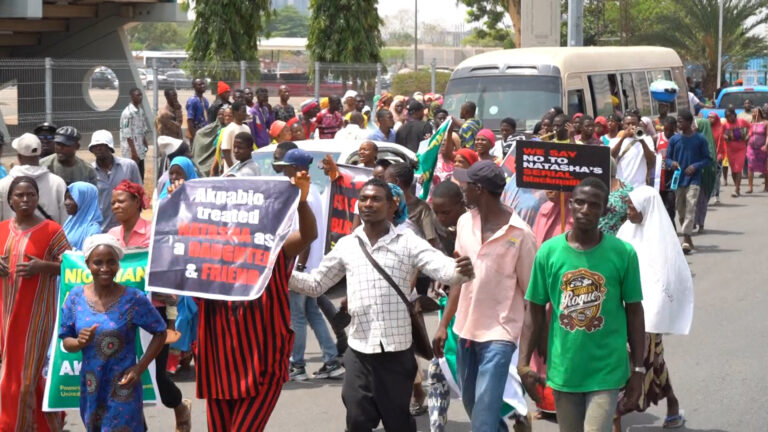
A GROUP of protesters converged on Eagle Square on Wednesday, March 12, to drum support for Nigerian Senate President, Godswill Akpabio, against the suspended senator representing Kogi Central, Natasha Akpoti Uduaghan.

The ICIR crew at the venue observed that many of the protesters did not know why they were at the venue.

Some of those interviewed admitted they were promised financial rewards ranging from N3,000 to N5,000 to hold placards and walk to the National Assembly gate in Akpabio’s support.

Most of the protesters, holding banners and placards with different inscriptions, admitted they had no idea why they were at the venue.

One of the protesters, Saratu Ismail, who held a placard with the inscription, “Senator Natasha is a serial blackmailer,” admitted that she and 50 others were brought from Karmajiji and Lugbe by a women leader she identified as Salamatu Jibrin, who promised to pay them after the demonstration.

“Aunty asked fifty of us to gather here, but I don’t know what it’s about or if it is political. She promised us something, which is why we came, ”Saratu said in the Hausa language.

Another protester, Blessing Samuel, who came from Kubi Makaranta in Asokoro area of the city, said she had no idea what the protest was about but joined because she was promised some money in return.

“One of the leaders in Kubi Makaranta asked us to come and join her. I don’t understand what the protest is about, but she said there would be a gift afterward,” she said.

Meanwhile, Alice Samuel, also from Kubi Makaranta, said that more than a hundred members of her community were transported in buses to the venue.

Confused about the reason for the protest, Alice said she had an inkling that the gathering was political.

Alice said the person who brought her to the venue promised to pay her and others between N3,000 and N5,000.

Similarly, Rauta Samson, a middle-aged woman, said she was transported to the Eagle Square with a promise to be compensated with money if she supported Akpabio.

“I’m happy about the money they’ll give me because it will be helpful,” she said.

Maryamu Yahaya, who came from Kobi Sarki in Asokoro, explained that idleness and poverty drove her and her fellow protesters to join the demonstration.

“We were idle at home when our leader called and told us something was happening at Eagle Square and that we would be given money afterward. That’s why we came,” she said.

Maryamu lamented that most of the women who joined the protest, including herself, had no source of livelihood or businesses. She urged the government to empower women so they wouldn’t have to participate in protests they knew nothing about.

However, the secretary of United Women for Good Governance, Enakeme Ojineme, who admitted to mobilising the women, said that she stood in solidarity with the Senate President and the Senate for suspending Akpoti-Uduaghan.

While acknowledging that most of the women didn’t understand the purpose of the protest, Enakemia denied offering them money, insisting that she only promised refreshments.

“I did not hire women to come here today. I mobilised women to join. These are community women who engage with local gatekeepers to advocate for our policies.”

However, the convener of Northern Youths Maja Group, Mujahid Zaitawa, claimed he mobilised people from 19 northern states to support Akpabio as he accused Akpoti-Uduaghan of blackmailing the Senate President over the 2025 budget approval.

The protesters eventually moved to the National Assembly, chanting songs in Akpabio’s support.

The ICIR reported that the Senate suspended Akpoti-Uduaghan for six months, after her clash with the Senate leadership during plenary over a change in her seat in the Chamber without her consent, which she resisted on February 20.

The female lawmaker was at the Inter-Parliamentary Union (IPU) on March 11, seeking international intervention over her suspension from the Senate, which she believes was politically motivated.

Akpoti-Uduaghan spoke at an IPU Assembly held at the United Nations headquarters in New York on Tuesday, where she restated her allegation of sexual harassment by the Senate President.

“I came with a heavy heart from Nigeria. But first, I would like to apologise to Hon. Kafilat Ogbara. I am not here to bring shame to our country, I am here to seek help for the women of Nigeria,” she said.

Nothing will happen if Rivers Assembly impeaches Fubara – Wike

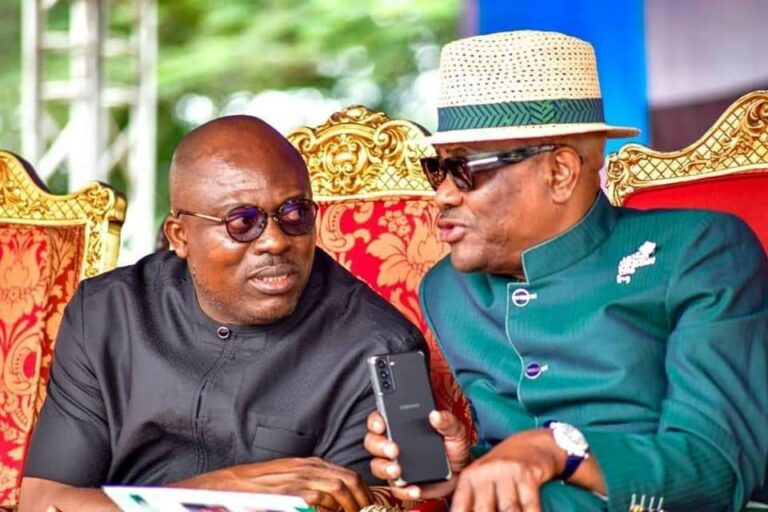
THE Minister of the Federal Capital Territory (FCT), Nyesom Wike, said should the Rivers State House of Assembly impeach the state Governor Siminalayi Fubara after finding him guilty of abusing his power, the governor’s ouster would not disrupt the peace in the state.

Speaking during a media chat on Wednesday, March 12, Wike dismissed concerns that impeaching Fubara could lead to chaos.

Politics is not play. If you have committed an offence to be impeached, what’s wrong? Is it a criminal offence? It’s provided in the constitution…

“If you have committed an infraction of the constitution, and the Assembly deems it fit to say you should be impeached. I have heard people say, ‘Oh, if they impeach him, there will be a breakdown of law and order.’ Rubbish! Nothing will happen,” the minister said.

Wike, Fubara’s predecessor, further criticised what he described as the governor’s disregard for due process, particularly in legislative affairs. 

He questioned the legitimacy of a small faction of lawmakers enacting laws and seeking validation from the courts.

“I cannot believe that in this country, we are now at the point where Nigerians are talking about where three members of the House will sit and make a law, and they are talking about going to the Supreme Court.”

He also expressed concerns about the state judiciary, saying, “The worst State High Court we have is the Rivers State High Court.

“Speakers and Assembly members are not our children; they were elected. They are not your boys or your girls. You sit with them and play with them. I travelled with my speakers, and I created relationships. It’s not a master-servant thing,” Wike, who severally insulted journalists interviewing him, said.

The ICIR reports that Wike’s latest remarks came amid increasing pressure on Fubara following the Supreme Court’s March 3 ruling, which reinstated Martin Amaewhule and his faction as the legitimate members of the Rivers State House of Assembly. 

The court also nullified the recent local government elections and removed newly elected council chairmen.

Following the judgment, Rivers State APC chairman, Tony Okocha, issued a 48-hour ultimatum on Monday, March 10, demanding that Fubara resign or face impeachment. 

Okocha accused the governor of disrespecting President Bola Tinubu and violating the Nigerian Constitution.

Meanwhile, the Amaewhule-led Assembly has taken several steps since its reinstatement, including a directive on March 3 for Fubara to re-present the 2025 budget within 48 hours.

Amid the turmoil, The ICIR reported that President Bola Tinubu on Tuesday, March 11, urged Fubara and leaders of the Pan-Niger Delta Forum (PANDEF) to ensure the peaceful implementation of the Supreme Court ruling.  

Speaking at a meeting with political leaders from Rivers and representatives of PANDEF at the State House in Abuja, Tinubu emphasised that upholding judicial decisions was crucial for democracy and stability.

Tinubu told the PANDEF leaders, “I got your signal and your concern, particularly on Rivers State. I have been on it for quite some time. I foresaw this crisis festering for too long. We reached a written agreement with both parties signing it, but some leaders thought the governor of Rivers State was wrong to have signed it. But where did we find ourselves today?” he asked.

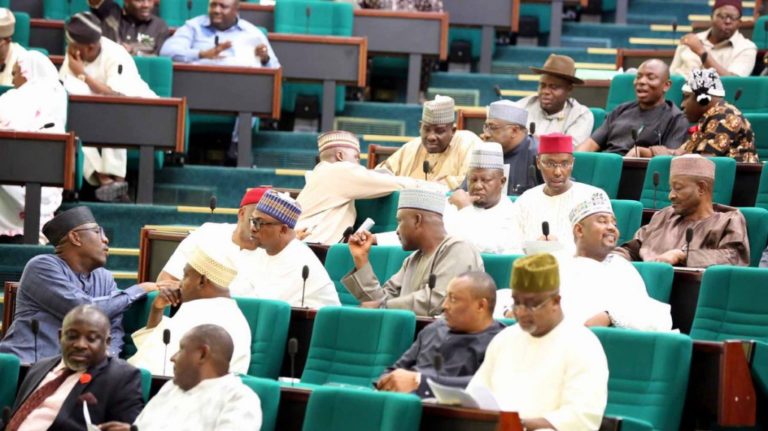
Reps demand urgent nationwide diphtheria vaccination after disease killed Lagos student

0

THE House of Representatives has urged the Federal Government to launch an urgent nationwide diphtheria vaccination campaign in schools following an outbreak at King’s College, Lagos, that led to the death of a 12-year-old student and the hospitalisation of several others.

Caused by a toxin produced by corynebacterium, diphtheria is a vaccine-preventable disease covered by one of the vaccines provided routinely through a childhood immunisation schedule.

The bacterial infection usually affects the mucous membranes of the nose and throat.

During plenary on Wednesday, March 12, lawmakers expressed concerns over the growing number of diphtheria cases in the country and the potential threat it posed to schoolchildren.

The motion, moved by the House spokesperson, Akin Rotimi, called for swift intervention to prevent further spread of the highly contagious infection.

Citing data from the Nigeria Centre for Disease Control (NCDC), Rotimi highlighted that diphtheria had been on the rise, with over 24,000 confirmed cases and more than 1,200 deaths recorded across multiple states since 2022. 

He warned that without an immediate and effective vaccination drive, more schools could experience similar outbreaks, putting millions of children at risk.

Beyond calling for mass vaccination, the lawmakers also demanded an urgent review of health and safety measures in federal unity colleges. 

They emphasised the need for improved infection prevention strategies and a stronger emergency response framework to ensure student safety. 

Additionally, they urged relevant agencies to step up public awareness campaigns to educate parents and school authorities about the risks and prevention of diphtheria.

Following the motion’s adoption, the House directed the Federal Ministry of Health, the NCDC, and the National Primary Health Care Development Agency (NPHCDA) to intensify efforts to curb the outbreak. 

It also called on the Federal Ministry of Education to assess health infrastructure in unity schools and establish clear guidelines for handling infectious disease outbreaks. The lawmakers further urged the government to provide support and compensation to the family of the deceased student.

Lagos outbreak raises alarm

The call for a nationwide vaccination drive was in the wake of the diphtheria outbreak at King’s College, Victoria Island Annexe, where a 12-year-old student died after developing complications. 

The Lagos State Government confirmed that 14 other students were hospitalised, out of which 12 responded well to antibiotics and diphtheria antitoxin therapy.

The state commissioner for Health, Akin Abayomi, revealed on Tuesday, March 11, that the late student had initially reported symptoms at the school’s health facility before being transferred to the Lagos University Teaching Hospital (LUTH). 

The Lagos health authorities have since launched an emergency response, screening students, distributing antibiotics, and implementing stricter infection control measures in classrooms and dormitories. 

The state government also announced plans to extend the vaccination exercise to other schools.

The outbreak at King’s College has reignited concerns about Nigeria’s preparedness for handling infectious diseases in school environments. 

“We were very concerned about what is going on in this King’s College annex, following an outbreak of diphtheria fever, which has been going on now for a little over 10 days, and we have had a number of children falling sick.

“Unfortunately, the very first child that developed the fever passed away at the Lagos University Teaching Hospital from the severe complications of diphtheria. That happens when we don’t intervene fast enough, when the child is not diagnosed and the disease progresses and starts to produce complications.

“Subsequently, once we identified that this was diphtheria, we were able to screen other children, and we took the children to various hospitals where they were screened, assessed, and given appropriate antibiotics, the appropriate antiserum. Twelve of those 14 received antibiotics and the antiserum, and they are all being observed, both in the hospital and some of them back here, and all of them are doing well,” the commissioner said.

Dangote buys more crude from Angola, others amid NNPC renewal talks

0

THE Dangote Refinery and Petrochemical Company are reportedly sourcing crude oil from multiple international suppliers, including Angola, to ramp up production.

The decision to source from international suppliers follows ongoing discussions with the Nigerian National Petroleum Company Limited (NNPCL) regarding the naira-for-crude deal, which is set to expire this month

According to a report by Bloomberg on Tuesday, March 11, Dangote refinery has been securing feedstock from across the world in addition to its domestic deliveries. As the 650,000 barrels per day (bpd) refinery gradually increases its output, it is reshaping the region’s import and export landscape.

“It has taken delivery of more than three million barrels of American crude since the start of the month.

“The refinery has also made purchases closer home, importing a shipment of Angola’s Pazflor grade and a cargo of Algeria’s Saharan Blend from Glencore Plc in recent weeks,” it stated.

The Dangote Refinery’s increased sourcing of crude oil from foreign suppliers comes amid ongoing discussions regarding the NNPCL’s naira-for-crude deal with local refineries, which is yet to be finalised.

The deal ends this month, but the NNPCL said it had initiated a conversation with the Dangote refinery for possible renewal.

In a statement on Monday, March 10, to refute reports that it had suspended the naira-for-crude deal, the state-owned oil company said it was in talks with Dangote refinery to extend the contract.

As the 650,000 barrels per day (bpd) refinery gradually increases its output, it is reshaping the region’s import and export landscape.

It explained that the crude oil sale agreement in naira was structured as a six-month contract and is set to expire at the end of March 2025.

According to the NNPCL, it has supplied over 48 million barrels of crude oil to the Dangote Refinery since October 2024 under this arrangement.

In total, the NNPCL stated that it has provided over 84 million barrels of crude oil to the Dangote Refinery since the facility began operations in 2023.

Despite these developments, the Dangote Refinery has disclosed plans to increase its production capacity this month.

The Vice President of Dangote Industries Limited (DIL), Edwin Devakumar, revealed in February that the refinery could begin operating at full capacity within 30 days.

At the time, he noted that the refinery was operating around 85 per cent of its capacity.

Earlier, Devakumar had said the refinery was not getting delivery of the 385,000 barrels per day agreed to be supplied to the refinery by the NNPCL.

As the talk over the naira-for-crude oil swap deal unfolds, analysts have warned that a suspension of the deal could trigger importation and high fuel costs.

An oil governance expert, Henry Ademola Adigun told The ICIR that the termination of the agreement would push Nigerian refineries, including the Dangote refiner, to source crude oil from international suppliers, paying in dollars instead of naira.

He said, “Crude-for-naira swap wasn’t a transparent deal between Dangote and the Nigeria National Petroleum Company Limited. The market is experiencing some form of dynamism and the marketers are incurring losses currently.

“Let me tell you the landing cost is now between N845-N850 and many of them are still selling at a price close to that. Maybe from henceforth, we will get a clearer picture of what the price is.”

While the Dangote refinery sources more crude oil from foreign suppliers, Bloomberg noted that the mega refinery runs mostly on local feedstock, as it took in more than ten million barrels of Nigerian crude last month alone.

DIG Awards seek submissions for best Investigative stories

The DIG Awards 2025 have opened entries for submissions of exceptional investigative stories worldwide.

The awards recognise excellence in investigative journalism across various media formats, including video and audio storytelling.

Submissions are accepted in ‘video’ and “audio & podcast’ categories, with the deadline set for June 1, 2025. The awards aim to highlight impactful storytelling that addresses critical global issues.

In addition to recognising outstanding investigative work, the DIG Awards offer finalists the opportunity to present their projects at the DIG Festival in Riccione, Italy.

The festival serves as a hub for journalists, media professionals, and the public to engage in discussions on global affairs, media innovation, and investigative practices.

The competition is open to journalists, filmmakers, and producers worldwide, regardless of nationality, and encourages submissions that reveal hidden truths, challenge power structures, and shed light on underreported topics.

Interested applicants can apply here 

Assembly doors shut as Fubara attempts to re-present 2025 budget

0

THE doors of the Rivers State House of Assembly were shut as Governor Siminalayi Fubara attempted to re-present the 2025 budget on Wednesday, March 12.

The drama unfolded when Fubara arrived at the Assembly complex, only to find the entrance gate locked.

Security personnel had secured the gates as the governor’s convoy arrived, citing the lack of official communication between the governor and the Assembly as the reason for their action.

However, Fubara claimed he informed the Speaker, Martins Amaewhule, of his intention to visit the Assembly through a formal letter.

He also said his efforts to speak with the speaker on the phone for days had proved abortive.

The ongoing power struggle between the governor and the Amaewhule-led Assembly has reached its peak after the Supreme Court’s judgment, which ordered the Central Bank of Nigeria and the Attorney General of the Federation to suspend Rivers State’s statutory allocation.

The governor’s attempt to extend an olive branch by inviting the Assembly members for a peace talk was rebuffed, while he also failed to meet the 48-hour ultimatum to re-present the 2025 budget.

This development has further deepened the rift between the two arms of government.

The ICIR reported that the Supreme Court, in a judgement, affirmed the leadership of the Amaewhule-led Assembly, dismissing Fubara’s appeal challenging the leadership. The court also ordered the governor to pay N2 million to the lawmakers.

The ICIR reported that after the apex court ruling, Fubara invited the Amaewhule-led House of Assembly for a dialogue.

The request for the meeting followed the court judgment which recognised Amaewhule as the speaker of the state House of Assembly.

The meeting sought to, among others, discuss the provision of a befitting space for the Assembly’s sittings; payment of all outstanding remuneration or allowances of members; presentation of the 2025 budget and sundry matters; and any other matter(s) that might be necessary for the good of the state.

The ICIR reported that following the court’s ruling, the Assembly gave Fubara 48 hours to re-present the 2025 budget.

The judgment invalidated the previous budget presentation by Fubara to a splinter faction of the Assembly. 

The court deemed Fubara’s presentation of an appropriation bill before a small faction of the Assembly as absurd.

It also annulled the recent local government election conducted in the state by Fubara.

Fubara had signed the N1.18 trillion 2025 appropriation bill into law on January 2 after presenting it to a four-member assembly led by Victor Oko-Jumbo.

The ICIR reports that Fubara and his predecessor, Nyesom Wike, currently the Minister of the Federal Capital Territory (FCT), have been at loggerheads over who controls the PDP structure in the state, with President Bola Tinubu’s efforts to resolve the stalemate yielding no result. 

Fubara has vehemently resisted Wike’s insistence on controlling the party in the state, with both leaders, who were allies before the 2023 governorship election, turning into arch-rivals months after Fubara assumed power.

At the onset of the crisis, 27 members of the state House of Assembly who were loyal to the former governor decamped to the All Progressives Congress – the party in which Wike serves as minister in Abuja.

In addition to declaring the defectors’ seats vacant, Fubara sacked all 23 local government chairmen elected under Wike and declared that their tenure had expired.

He went on to conduct a new poll, which the Supreme Court annulled.

US to resume security support for Ukraine as Kyiv agrees to ceasefire

THE United States has agreed to resume military aid and intelligence sharing with Ukraine following Kyiv’s announcement of its willingness to back Washington’s proposal for a 30-day ceasefire with Russia.

This followed more than eight hours of discussions between US and Ukrainian officials in Jeddah, Saudi Arabia on Tuesday, March 11.

U.S. Secretary of State, Marco Rubio, stated that the U.S. would present the offer to Russia, placing the next move in Moscow’s hands.

“Our hope is that the Russians will answer ‘yes’ as quickly as possible, so we can get to the second phase of this, which is real negotiations,” Rubio told reporters.

Russia launched a full-scale invasion of Ukraine three years ago and has been making territorial gains. It now controls approximately one-fifth of Ukraine, including Crimea, which it annexed in 2014.

Rubio stated that Washington aimed to reach a comprehensive agreement with both Russia and Ukraine “as soon as possible.”

“Every day that goes by, this war continues, people die, people are bombed, people are hurt on both sides of this conflict,” he said.

The ICIR reports that even though Russian President Vladimir Putin has expressed openness to peace talks, many of his officials have consistently opposed a ceasefire, insisting on a deal that ensures Russia’s long-term security.

On January 20, Putin told his Security Council that there “should not be a short truce or a temporary pause for regrouping and rearmament to resume the conflict later, but rather a lasting peace.”

He has also rejected any territorial concessions, insisting that Ukraine must completely withdraw from four regions that Russia claims and partially controls.

Ukrainian President Volodymyr Zelensky, who was in Saudi Arabia but did not take part in the talks, called the ceasefire a “positive proposal” that applies to the entire frontline, not just aerial and naval combat.

The ICIR reported that Trump ordered a halt to US military aid and intelligence sharing to Ukraine three days after clashing with the Ukrainian leader, at his Oval Office on February 28.


NYU Stern opens applications for Climate Economics Journalism Fellowship

THE New York University’s Leonard N. Stern School of Business has opened applications for its Climate Economics Journalism Fellowship.

This programme aims to enhance journalists’ understanding of the complex relationship between climate change and economic systems.

The fellowship is open to journalists worldwide, including staff reporters, editors, and freelancers, interested in exploring the nexus of climate and economics. While aspects of the course focus on U.S. policies and institutions, applications from journalists based outside the United States are welcome.

Selected fellows will receive stipends to cover travel and accommodation expenses:
$2,000 for those residing outside the New York Metro Area and $1,000 for local participants.

All programme-related meals will be provided, and there is no corporate or advocacy-group sponsorship. The programme is fully funded by NYU Stern.

Interested journalists should submit their application here.

Deadline by April 20, 2025.

Kidnappers reportedly abduct 8, including village head, grandchildren in Abuja

0

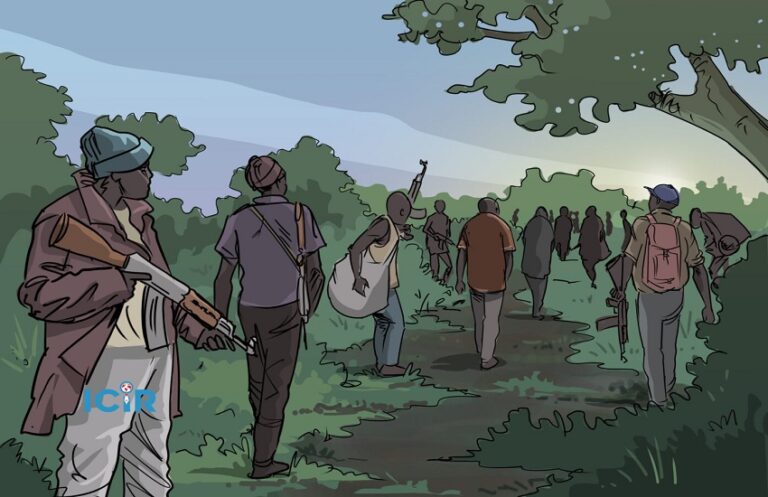
KIDNAPPERS have reportedly stormed the Dnako community in the Bwari Area Council, Abuja, and abducted the village head, Yuda Garba, two of his grandchildren, and five other residents.

The incident, which occurred around 12:03 am on Wednesday, sent shock waves through the community, highlighting growing concerns about insecurity in the area.

According to Daily Trust, a resident, Tanko Baba, who confirmed the incident, said the kidnappers invaded the community, wielding AK-47 rifles, and abducted five people from four houses before proceeding to the home of the village head and abducting him and two of his grandchildren.   

He said the gunmen, dressed in military uniforms, stormed the village head’s residence, burst into the rooms where his grandchildren slept and abducted them while shooting sporadically.

Baba added that one of the victims, Nicholas, had just returned from the hospital where his wife had given birth before he was abducted by the kidnappers.

He said the kidnappers managed to escape with their captives before soldiers arrived at the village.

Eyewitnesses revealed that the kidnappers operated undetected for approximately 30 minutes, only opening fire as they fled with the victims to deter any would-be pursuers, particularly security forces.

In a chat with The ICIR on Wednesday, the spokesperson of the FCT Police Command, Josephine Adeh, a superintendent of police, promised to confirm the incident and get back to this organisation, but had yet to do so when when filing this report.

Abuja, especially the Bwari area, has been the hotbed of terrorists attacks.

In January 2025, The ICIR reported that bandits attacked the Chikakore community in Kubwa, Abuja, and abducted five residents.

The bandits raided the Health Center extension area of the community around 11 pm, abducting a family of four, including one Adesiyan Akinropo, his wife, son, and a person who visited them. A neighbour to the abducted family was also whisked away.

Reports indicated that a woman was brutally hit with a gun butt during the attack, leading to a severe head injury that left her bleeding profusely, and she had to be rushed to the hospital for treatment.

By the time police operatives from the Byzahin Division arrived at the scene, the bandits had vanished with their hostages.

The FCT Police Command confirmed the incident in a statement through its spokesperson, Adeh.

Similarly, in January 2024, the abduction of five young Nigerian sisters in Bwari sparked a national outcry and raised fears about insecurity in the country’s capital.

According to a family member, the sisters were kidnapped by armed men who burst into their home.      

The attackers later killed one of the sisters, 21-year-old Nabeeha Al-Kadriyar, after they failed to meet the ransom deadline.