
COVERING Climate Now invites journalists globally to send entries for its 2025 Awards.
The organisers say, “This is the fifth year of our annual awards programme, and every year we’re amazed by the quality and variety of work entrants send our way.

COVERING Climate Now invites journalists globally to send entries for its 2025 Awards.
The organisers say, “This is the fifth year of our annual awards programme, and every year we’re amazed by the quality and variety of work entrants send our way.
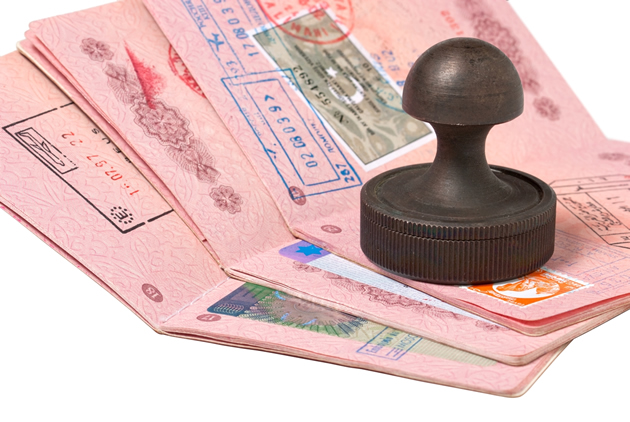
THE United States (US) has once again excluded Nigeria and other African countries from its 2025 Visa Waiver Programme (VWP) as part of policy updates on permit eligibility and other travel regulations.
The US Department of State recently announced a revised list of eligible countries and new travel policies, excluding African countries such as Nigeria, Ghana, and South Africa. Under the updated list, no African country is granted visa-free entry.
Citizens from 40 countries can now travel to the US without a visa for business, tourism, and transit travel for up to 90 days in the latest policy.
While the United Kingdom (UK) and Taiwan previously eligible were left out of the programme, they could benefit if they meet certain conditions.
However, Romania made the list as a new entrant this year, highlighting the U.S. government’s emphasis on strengthening diplomatic ties and prioritising nations with robust border security.
According to the US Bureau of Consular Affairs website, the VWP allows most citizens of countries cleared for the programme to travel to the US for tourism or business for up to 90 days without obtaining a visa.
The agency said eligible individuals could apply for an electronic system for travel authorisation (ESTA) before departure instead of going through a lengthy visa process.
Nigeria has never been part of the US VWP, because the programme primarily includes countries with strong security protocols, low visa overstay rates, and reciprocal travel arrangements with the US.

THE Magistrate Court, Yaba, Lagos State, has cleared Abdulazeez Fashola, widely known as Naira Marley, from complicity in the death of Aloba Oladimeji llerioluwa, also known as Mohbad.
The magistrate, Ejiro Kubenje, who read and executed the legal advice of the Directorate of Public Prosecution (DPP) Lagos State on the case on Tuesday, February 25, said Marley had no case to answer.
The magistrate also cleared a music promoter, Samson Balogun Eletu, fondly known as Sam Larry, and Owodunni Ibrahim (Primeboy) The court also freed Mohbad’s former manager, Opere Babatunde.
However, the DPP said it would prosecute the nurse who treated Mohbad, Feyisayo Ogedengbe, and his friend, Ayobami Sadiq, for reckless and negligent acts.
Both Marley and Larry were arrested and charged by the Lagos Police Command in connection with the death of singer Mohbad in 2024.
The ICIR reported that they were granted N20 million bail on November 17, 2024, and regained freedom after spending 40 days in police custody.
The late Mohbad was signed to Marlian Records between 2020 and 2022 as he started his music career.
He died on Tuesday, September 12, in controversial circumstances. He was 27.
Shortly after his passing and his burial in the Ikorodu area of the state the following day, a petition emerged online revealing that he had submitted a complaint to the police over alleged threats to his life two months before his death.
In the petition addressed to the Assistant Inspector-General of Police, Force Criminal Investigation Department Annex, Alagbon Close, Ikoyi, Lagos State, and shared by a music blogger, Ayo Jaguda, on X, Mohbad named individuals, including Sam Larry Elegushi and Elele, detailing alleged threats from them to his life and the destruction of equipment worth over N5 million he was using for a video shoot with another artiste, Zlatan Ibile.
The petition was dated June 27, 2023.
Another suspect who was freed on Tuesday, Primeboy, was declared wanted by the Lagos State Police Command in October 2023 over the singer’s death.
The declaration followed Primeboy’s failure to honour an invitation sent to him by the police since the commencement of the investigation into the circumstances leading to Mohbad’s death.
The Spokesperson of State Police Command, Benjamin Hundeyin, disclosed this in a statement posted on X on Wednesday, October 4.
Primeboy later submitted himself to the police.
The ICIR reported that the police exhumed Mohab’s body a day after he was buried and he has since not been buried again.
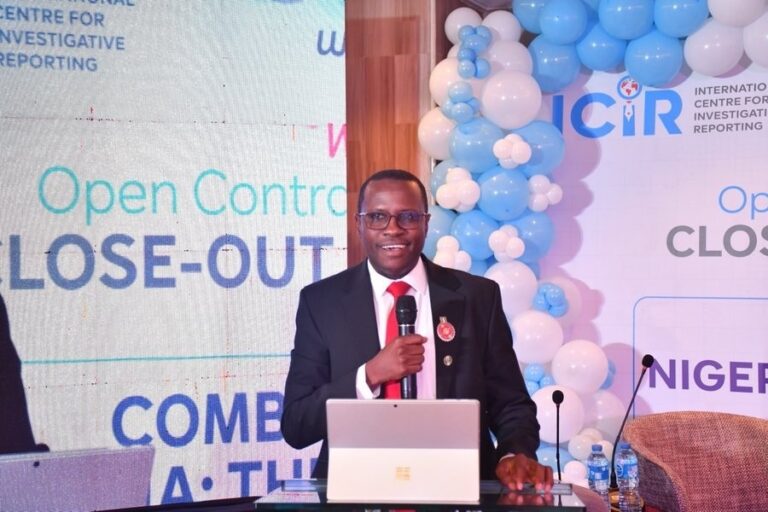
THE Association of Local Government Chairmen (ALGON) in Kano State chapter has asked the Legal Practitioners’ Privileges Committee (LPPC) to strip the Chairman of the Independent Corrupt Practices and Other Related Offences Commission (ICPC), Musa Aliyu, of his Senior Advocate of Nigeria (SAN) title.
In a petition, dated September 17, 2024, and filed by lawyer Shamsi Jibril on behalf of the Kano ALGON, and the state government, the chairmen accused Aliyu of defying a court order and using intimidation tactics under the guise of anti-corruption investigation.
In response, the ICPC Chairman has dismissed the accusations, insisting that the agency’s investigation is lawful and targeted caretaker committees, not elected council chairmen.
ALGON claimed that despite a Kano State High Court injunction barring the ICPC from harassing or arresting them, the anti-graft agency continued its probe, targeting local government officials with invitations and attempted arrests.
“An Order of Interim Injunction is hereby granted restraining the Respondents, either by themselves, their agents, privies or any other officer(s) serving under them from disturbing, harassing threat to arrest and or detain the applicants pending the hearing and determination of the Motion on Notice.
“That an order of Interim Injunction is hereby granted restraining the respondents from taking further steps in connection with the matter and maintaining status quo or staying all actions pending the hearing and determination of the Motion on Notice,” the petitioners quoted the injunction to have read.
According to the petitioners, the ICPC, along with the Economic and Financial Crimes Commission (EFCC) and the Nigeria Police Force, has launched parallel investigations into the same allegations, which they argue violate their constitutional rights to personal liberty, dignity, and fair hearing.
In the petition, which was summarised in 13 paragraphs, the association also noted that the continued investigation amounts to abuse of legal process, double jeopardy, and forum shopping.
The petitioners specifically cited an incident on September 10, 2024, when ICPC officers allegedly attempted to arrest Zangina Galadima Zango, the caretaker chairman of Rimin Gado Local Government, despite the court order.
“Despite the above measures, Musa Adamu Aliyu defied the authority of this honourable court (and as well ignored the professional courtesy accorded to him by our humble selves) and directed his men to invade the house of the 35th applicant in the suit, the Chairman of Rimin Gado Local Government, Kano on September 13, 2024 at night, arrested him and illegally detained him at their head office in Abuja in connection with the subject matter of the pending case, and in clear violation of the order of the court.”
The LG chairmen are demanding that the ICPC Chairman be sanctioned, and that any further arrest or detention of their officials be declared unlawful.
“The ICPC under the leadership, legal advice and representation of Musa Adamu Aliyu, a Senior Advocate of Nigeria (SAN), has shown utmost disdain for the courts and the independence of the judiciary, and Musa Adamu Aliyu has conducted himself in a manner unbecoming of a Senior Advocate of Nigeria (SAN).
“We urge you to investigate this matter with a view to ensuring that learned Silks admitted to the Inner Bar by your exalted Committee conform to the highest standard of behaviours and adherence to the rule of law.” the petitioners sought.
Meanwhile, in response, the ICPC Chairman has dismissed the accusations, insisting that the agency’s investigation is lawful and targeted caretaker committees, not elected council chairmen.
Aliyu, in a letter dated February 17, 2024, to the LPPC, stated that the ICPC was acting in line with a Supreme Court ruling in June 2024 (AG Federation v. AG Abia State & Others), which declared that local governments must be headed by democratically elected officials.
He emphasised that the investigation was solely focused on caretaker committees unlawfully holding power, as the tenure of the elected LG chairmen had expired on February 12, 2024.
He further accused the caretaker chairmen of mismanaging local government funds and governing local councils in violation of the 1999 Constitution and Supreme Court decisions that have declared caretaker committees unconstitutional.
“The persons under ICPC’s investigation are the Caretaker Chairmen of the Local Government Areas in Kano State and the leadership of the Kano State House of Assembly for alleged corrupt practices and abuse of office. This is because the Kano State House of Assembly had screened a list of Caretaker Chairmen or Interim Management Committee members forwarded to it by the Governor of Kano State to manage the affairs of the Local Government Councils and extended their tenure.
“The individuals whose names were submitted to the Assembly by the Governor allowed themselves to be used to mismanage local government funds and govern the Councils contrary to the provision of the 1999 Constitution and in contravention of many decisions of Supreme Court declaring the appointment of any person or group of persons to run affairs of local government areas as Caretaker Committee Chairmen unconstitutional,” Aliyu wrote.
Aliyu clarified that the ICPC had only invited the caretaker chairmen to respond to allegations of corruption and abuse of office, but all of them, except Abdul Labran Madari, a lawmaker, ignored the invitations.
The ICPC’s probe began in early 2024, following the Supreme Court’s ruling that declared caretaker committees illegal and recognised only elected LG chairmen. The agency launched an investigation into allegations of mismanagement of public funds and abuse of office by caretaker committees in Kano’s 44 LGAs.
During its investigation, the ICPC claimed to have uncovered various corrupt practices involving large sums of public funds and invited the caretaker chairmen to address the findings. Consequently, it invited the caretaker chairmen to confront them with its findings. However, the chairmen reportedly ignored the invitations.
This lead to the arrest of Zangina Galadima Zango, the caretaker chairman of Rimin Gado Local Government.
Subsequently, the ICPC filed three charges against him before the Federal High Court.
But the arrest took place after the state government and the Association of Local Government Chairmen (ALGON), Kano chapter, dragged the Commission to court over what they described as the harassment of LG chairmen, on August 26, 2024.
In their lawsuit, the local government chairmen argued that anti-corruption agencies were conducting parallel investigations into the same allegations, which they claimed constituted an abuse of legal process and amounted to double jeopardy.
On August 27, 2024, the Kano State High Court issued an injunction barring the ICPC and other federal agencies from making further arrests pending the determination of the case.
However, at the time of the court order, Kano had no elected LG chairmen, as the state government had dissolved its caretaker committees on September 19, 2024, and only held local government elections on October 26, 2024—two months after the ICPC was sued.
The ICPC chairman maintained that since February 2024, Kano State had no legally recognised LG chairmen, meaning its investigations did not violate the court ruling.
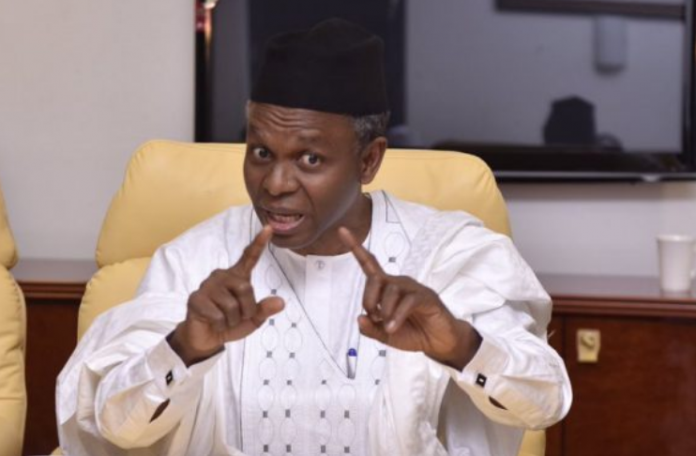
FORMER Kaduna State Governor, Nasir El-Rufai, has accused the National Security Adviser (NSA) Nuhu Ribadu of planning to eliminate key northern politicians ahead of the 2031 presidential election.
Speaking during an interview on ARISE Television, on Monday, February 24, El-Rufai alleged that Ribadu was using anti-corruption agencies to target him and tarnish his reputation as part of a scheme to clear the path for his presidential bid.
“This project of destroying Nasir el-Rufai is Nuhu Ribadu’s conception. He is the architect and builder of that project. He is the one working with Uba Sani (Kaduna State Governor and El-Rufai’s successor) to implement it. So far, it has been frustrating for them.
“Somebody wants to destroy my reputation. Why? Nuhu Ribadu wants to be president in 2031. He has to eliminate every northerner that he thinks is on the radar,” he said.
According to him, Ribadu has been leveraging the Independent Corrupt Practices and Other Related Offences Commission (ICPC) to coerce officials into implicating him in corruption claims.
“In fact, what they have resorted to doing is to call low-level people and some of my officials to say ‘implicate El-Rufai and your problems will go away’. This is what ICPC has become,” El Rufai said.
He maintained that the corruption allegations against his administration, particularly the claim of siphoning N423 billion, had been investigated without any evidence of wrongdoing.
“My administration was accused of siphoning N423 billion; the ICPC has investigated and found nothing. They are asking lower officials to implicate me,” he further claimed.
El-Rufai suggested that his refusal to be sidelined politically made him a target, emphasising that he had no plans to retire from politics and might consider another platform if the ruling All Progressives Congress (APC) continued to drift from its founding principles.
He further expressed concerns over the party’s failure to uphold its foundational mission, stating that internal democracy within the APC had collapsed.
“I am not ready to retire from politics, so sooner or later, I may have to find another platform to pursue those progressive values that I believe in if I can’t find them in the APC,” he warned.
However, the former governor ruled out the possibility of joining the People’s Democratic Party (PDP), stating that the party was not an option for him.
“One thing I can tell you for sure is that PDP is not a party that I will go to, ever. In fact, if anything, PDP has gotten worse, so you can rule that out. Other parties? Possibly.”
He also dismissed speculations that his recent political activities were geared toward a presidential bid, maintaining that he had not begun consultations for any political office.
Ribadu dismisses allegations
Meanwhile, Ribadu, in a statement, denied El-Rufai’s allegations against him, stating that he remained focused on his duties as the NSA and had no interest in engaging in political battles with El-Rufai.
“If my silence wouldn’t risk being construed as consent, I would have ignored him. I am too preoccupied with my current assignment as to get into a media fight with Nasir El-Rufai or anyone else,” he said.
He also refuted claims that he was using federal agencies to target northern politicians ahead of the 2031 elections, insisting that he had never discussed any presidential ambition.
“For the avoidance of doubt, I want to put it on record that I have never discussed running for president in 2031 with anybody. All my focus and energy are geared completely towards the advancement of Nigeria and the success of the President Tinubu administration,” Ribadu said.
The ICIR reports that El-Rufai’s remarks came amid continued criticism of the ruling APC, which he co-founded, and his call for opposition parties to unite against the current administration.
The former governor has had a fallout with the Tinubu government following his rejection during screening for a ministerial slot in 2023 due to “security concerns” raised by the National Assembly.
But El-Rufai dismissed the claim, noting that the president deliberately excluded him from his cabinet.
ALMOST a year after its major price preview, Multichoice Nigeria, the parent company of DStv and GOtv, is set to increase the prices of its packages effective March 1, 2025.
In a message to its customers on Monday, February 24, titled “Price Adjustment on DStv and GOtv packages,” MultiChoice chief executive officer, John Ugbe, explained the decision for the upward review in price.
“Dear Customer, please note that effective 1 March 2025, there will be a price adjustment on all DStv packages. This enables us to continue offering our customers world-class homegrown and international content, delivered through the best technology.”
According to the company, its latest price review will hike the DStv compact bouquet from N15,700 to N19,000, the compact plus to N30,000, and the premium subscription to N44,500.
Similarly, GOtv customers, who currently pay N3,600, will now pay N3,900, while the tariff on GOtv Plus will rise from N4,850 to N5,800. The GoTV max package will now cost N8,500 while the Supa will cost 11,400 and the Supa Plus, 16,800.
The cable television company has claimed the price increase is due to the increasing cost of running a business in Nigeria. It further points to currency depreciation, with the naira’s value dropping significantly, and high inflation ballooning its operation expenses.
Meanwhile, there have been growing concerns about the price preview, despite the dwindling economic fortunes of most Nigerian workers.
Nigeria has been grappling with one of its worst inflationary periods in decades, with inflation reaching 24.48 per cent as of January 2025, according to the National Bureau of Statistics (NBS).
The naira’s depreciation against the dollar has also compounded the challenges for businesses, particularly those with international obligations like MultiChoice.
In September 2024, MultiChoice Nigeria defended its opposition to a “pay-as-you-watch” model in court, stating that such a system is not commercially or technically feasible in satellite broadcasting due to current technological limitations. This stance was in response to consumer advocacy groups pushing for more flexible payment options.
Additionally, between April and September 2024, the company reported a loss of 243,000 subscribers, attributed to rising subscription costs and a shift towards more affordable streaming alternatives.
In May 2024, the Competition and Consumer Protection Tribunal in Abuja issued an interim order restraining MultiChoice from implementing a planned price hike for its DStv and GOtv services, following a suit that accused the company of unjustly increasing subscription fees without adequate notice.
The ICIR, also reported that the cable television company has vowed to appeal the ruling of the Competition and Consumer Protection Tribunal (CCPT) after being fined N150 million for disobeying the court.
MultiChoice announced its position in a statement rejecting the order on Friday, June, 7.
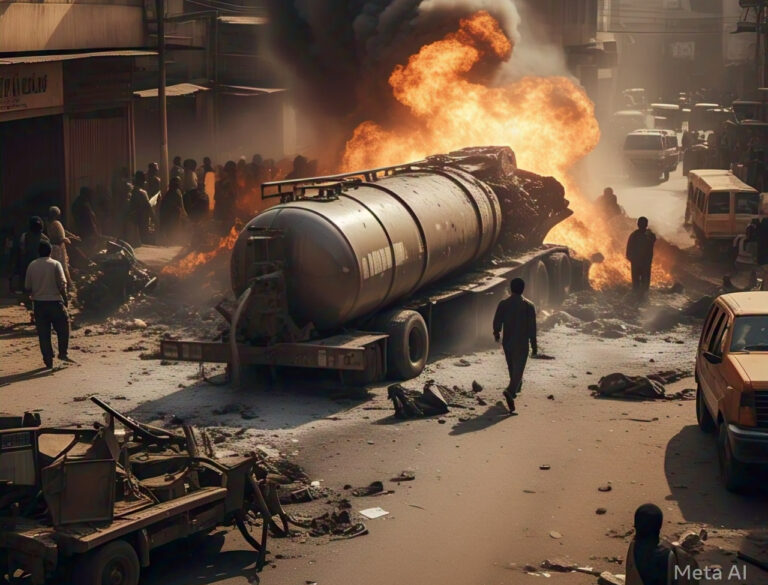
ON January 20, 2025, a gasoline tanker accident led to an explosion that claimed at least 86 lives near the Suleja area of Niger State. The tanker overturned, spilling its contents, and later exploded moments after people began scooping fuel.
According to the National Emergency Management Agency (NEMA), 52 other people suffered severe burns from the explosion, and 15 shops were destroyed.
Sector commander for Niger State with the Federal Road Safety Corps (FRSC), Kumar Tsukwam, said that people rushed to scoop the spilled petrol after the truck overturned. “The tanker burst into flames, engulfing another tanker,” he said in a statement.
Niger State Governor Mohammed Bago confirmed the incident in a statement, noting that many people perished in the massive fire caused by the explosion. He described the incident as “worrisome, heartbreaking, and unfortunate.”
Such accidents have become common in Africa’s largest oil producing country, which is grappling with its worst cost-of-living crisis in a generation. In recent years, Nigeria has witnessed numerous fuel tanker explosions, each resulting in significant loss of life and property. Experts say the frequency of these incidents points to systemic regulatory failures.
Fuel prices have increased by more than 400 percent in the last 18 months following the economic policies by President Bola Tinubu, including the removal of long-standing fuel subsidies. The changes have pushed millions into poverty, forcing many to take desperate measures for survival.
Earlier in October 2024, a similar incident occurred in Majiya, Jigawa State. A fuel tanker overturned, and as residents rushed to fetch the spilling fuel—a practice driven by economic desperation—the tanker exploded, resulting in over 150 deaths. Many victims were burned beyond recognition, while about 100 others were injured. The victims were buried together in a mass funeral organised by authorities.
In September of the same year, another 59 people were killed in Niger State after a fuel tanker collided with a truck carrying passengers and cattle.
According to Nigeria’s Federal Road Safety Corps (FRSC), there were about 1,500 tanker accidents in 2020. Nigeria has an ageing 5,000-kilometre-long oil pipeline, but most of the 50 million litres of gasoline consumed daily are transported by road.
The Petrol Tanker Drivers Association blames the frequency of these crashes on poor road conditions and a lack of enforcement of road safety measures, including speed and load limits.
“I’m a tanker driver, I know how it is. The roads are bad,” Augustine Egbon, chairman of the Petrol Tanker Drivers Association, told VOA. “Secondly, my advice to everybody is that as soon as a tanker has an accident, nobody should go there because sometimes when a tanker falls, it will take almost two or three hours before catching fire, but when people start gathering, that’s when the fire starts.”
Speaking with The ICIR, a public affairs analyst, Ambali Abdulkabeer, explained that fuel tanker accidents stem from both human and infrastructural factors, adding that many tanker drivers are reckless, lack proper training, and are often ignorant of traffic regulations.
He pointed out that fuel tankers are not regularly maintained to ensure roadworthiness.
“Beyond these human factors, Nigerian roads are in poor condition and unfit for fuel tankers. The absence of designated routes for these vehicles worsens the situation, increasing the risk of accidents,” he said.
Beyond these human factors, Nigerian roads are in poor condition and unfit for fuel tankers. The absence of designated routes for these vehicles worsens the situation, increasing the risk of accidents
Abdulkabeer emphasised the need for the government to enforce stricter safety standards for fuel tanker operators and recommended consistent vehicle inspections and awareness campaigns on the dangers of tanker explosions.
“Drivers must be educated on the risks involved, and stringent traffic laws must be enforced to reduce recklessness on the roads,” he added.
On fuel scooping incidents, Abdulkabeer linked them to economic hardship, stating that while desperation may push people into risky behaviours, it does not justify endangering lives. “Nigerians have to take responsibility, too. Carelessness contributes to these avoidable deaths,” he noted.
He urged the government to address economic hardship, invest in road infrastructure, and create specific routes for fuel tankers to ensure safer movement. “It is unwise to allow fuel tankers to ply roads close to cities without restrictions,” he said.
Amid recurring fuel-related tragedies, Abdulkabeer stressed the need for proactive governance saying that such incidents expose failures in policy implementation, stakeholder collaboration, and leadership. “These avoidable deaths tell a disgusting story about poor management in the country. The government must wake up to its responsibilities,” he concluded.
After the fuel tanker fire in Enugu, Vice President Kashim Shettima stated that it was time to end avoidable tanker accidents and explosions. He emphasised that President Tinubu is seriously concerned about the frequency of these incidents and has directed relevant agencies to take decisive action.
Speaking with The ICIR, the Federal Road Safety Corps (FRSC) spokesperson, Segun Ogungbemide reiterated the agency’s commitment to curbing fuel tanker explosions while calling for a more structured approach to fuel transportation.
Ogungbemide acknowledged that while the FRSC has been working to manage the situation, the sheer volume of fuel-laden tankers on Nigerian roads poses a significant challenge.
“You will agree with me that 98 per cent of fuel movement is done on the road compared to other countries where pipelines or rail are used? We have about 6,000 tankers loaded with fuel moving across Nigeria daily. When a crash occurs, it becomes very loud because of the nature of the cargo, but when you compare it to the daily movement of tankers, you will see that the frequency of accidents is relatively low,” Ogungbemide said.
He emphasised that one of the FRSC’s primary strategies is public enlightenment. “We believe the major role we have to play is educating both the operators and the public. We engage tanker owners and drivers, ensuring they meet minimum safety standards before loading from depots,” he said.
Ogungbemide pointed out that the absence of a structured training system for truck drivers contributes to the problem. “Imagine a company buying 500 tankers and looking for 500 drivers. Where are they getting these drivers from? We should be asking ourselves these questions,” he noted.
He called for a multi-stakeholder approach, urging road maintenance agencies, fuel regulators, and tanker integrity inspectors to play their part in ensuring safer transport conditions. “This is not something the FRSC alone can solve. It is a shared responsibility,” he stated.
On fuel scooping, he revealed that the FRSC has consistently launched awareness campaigns through traditional and social media. “We have released multiple jingles and advisories warning against scooping fuel from crashed tankers. Sadly, many explosions occur after people rush in to collect fuel,” he said.
Ogungbemide criticised Nigeria’s over-reliance on road transport for fuel distribution, which contradicts the original fuel distribution system design.
“Ideally, pipelines should transport fuel from refineries to depots, and tankers should only cover short distances. Unfortunately, we now see tankers moving from Lagos to Enugu or Kano, covering nearly 1,000 kilometres on bad roads, increasing the risk of accidents,” he explained.
He assured the public that the FRSC would continue implementing safety measures and advocating for safer transport alternatives. “We will keep educating the public, monitoring tanker conditions, and engaging stakeholders to ensure road safety,” he concluded.
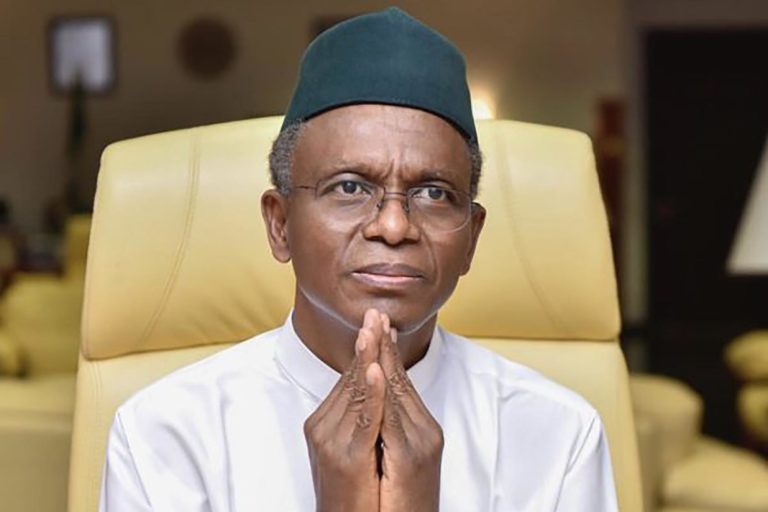
FORMER Kaduna State Governor, Nasir El-Rufai, has raised concerns over the implementation of President Bola Tinubu’s economic reforms, questioning the competence of those overseeing the policies.
While acknowledging that some of the policies are rooted in orthodox economic principles, El-Rufai argued that their implementation had been flawed.
Speaking during an interview on Arise TV, El-Rufai, on Monday, February 24, argued that the government’s approach to some of the policies was wrong.
Recall that El-Rufai, who was nominated by Tinubu for a ministerial position in 2023, was among those denied confirmation by the Senate.
The Senate had declined to confirm his nomination, alongside Stella Okotete (Delta) and Abubakar Danladi (Taraba), citing unresolved security reports.
But the former governor stated that the National Assembly had no role in his exclusion and that Tinubu personally decided against appointing him.
Meanwhile, speaking on Tinubu’s policies, the minister said “I don’t want to pass any judgment or make any opinion about the government because anything I say can be interpreted as a criticism. I supported some of the policies, most of the economic policies are the right orthodox policies but the sequencing is wrong, the quality of the people implementing the reforms is least much to be desired.”
El-Rufai further noted that some of the measures, particularly those aimed at curbing food inflation, could be counterproductive.
“I think some of the reforms are just wrong. You don’t address food inflation by destroying domestic agriculture through importation, for instance. Food prices may be going down but farmers are being impoverished because they are being made to compete with subsidised agricultural products from Europe and other countries. So I have issues with many of them,” El Rufai said.
The ICIR reports that since assuming office in May 2023, President Tinubu has embarked on a series of economic reforms aimed at stabilising the nation’s economy.
These measures, which include the removal of fuel subsidies, exchange rate unification, and increased reliance on food importation to lower consumer prices, have been both lauded and criticised.
While the government argues that these steps are necessary for long-term stability, their impacts have not yet been seen in the country as many Nigerians continue to face hardship.
Many Nigerians have also pointed out the immediate hardship they have caused, with inflation and food prices remaining high.

FORMER Kaduna State Governor Nasir El-Rufai has disclosed that President Bola Tinubu deliberately excluded him from his cabinet, dismissing claims that his rejection during screening for a ministerial slot in 2023 was due to “security concerns” raised by the National Assembly.
The Senate had declined to confirm El-Rufai’s nomination, alongside Stella Okotete (Delta) and Abubakar Danladi (Taraba), citing unresolved security reports.
However, in an interview with Arise TV, on Monday, February 24, the former governor stated that the National Assembly had no role in his exclusion and that Tinubu personally decided against appointing him.
El-Rufai stated that Tinubu had publicly appealed to him to join his administration despite his initial reluctance.
He insisted that his decision to support Tinubu’s presidential bid was not motivated by personal gain.
“Since I left office and the president begged me publicly to come and serve in his cabinet, I have my plans and I told President Tinubu from day one when he asked me to support him. I said I would but I don’t want anything because politics in Nigeria is always about what do I get for giving you support.”
Despite his reservations, El-Rufai said he eventually agreed to Tinubu’s request after two months of negotiations, but only under certain conditions.
However, he alleged that Tinubu later changed his mind about including him in his government.
“President publicly appealed to me to put my plans on hold. After two months of negotiations, we finally agreed that he would nominate me as minister and there were certain conditions I attached to that. I think along the line either the president changed his mind or something else because please don’t believe the story that the National Assembly rejected me.
“National Assembly had nothing to do with this, President Tinubu didn’t want me in his cabinet. He changed his mind whatever it is, frankly, I don’t care and I told him and I moved on.”
El-Rufai’s latest remarks aligns with his previous public statements in which he downplayed his exclusion and insisted that he never sought a position in Tinubu’s administration.
El Rufai had on January 30, 2025, while responding to the president’s media aide, Daniel Bwala, on his X handle, stated that he was not interested in being a member of Tinubu’s cabinet.
“I was cabinet minister 22 years ago and was clear to Asiwaju that I was not interested in any position in his future government. The pathetic manner all of you latter-day converts to the Tinubu government make an issue of something that I never wanted in the first place is perhaps a reflection of the level of your moral flexibility,” he wrote on his X handle.
His remarks also came amid his recent criticism of the ruling All Progressives Congress (APC), which he co-founded, and his call for opposition parties to unite against the current administration.
His fallout with the Tinubu government has sparked reactions, with some political analysts interpreting his statements as a signal of deeper cracks within the APC.
El-Rufai was initially nominated alongside 47 others as part of President Tinubu’s first ministerial list.
However, during the Senate screening on August 7, 2023, Senator Sunday Karimi from Kogi West raised a petition against him, citing alleged security issues.
Following deliberations, the Senate declined to confirm El-Rufai, along with two other nominees – Stella Okotete from Delta State and Abubakar Danladi from Taraba State.
Tinubu later replaced El-Rufai with Balarabe Abbas, a former Secretary to the Kaduna State Government, who was assigned to the Ministry of Environment.
IN celebration of 50 years of regional integration and development, the Economic Community of West African States (ECOWAS) is seeking entries to its Media Excellence Awards 2025.
The awards will celebrate outstanding journalists and media professionals whose work has significantly contributed to informing, educating, and shaping public awareness of ECOWAS’s achievements and impact in the region and globally.
The ECOWAS invites applicants to submit their work portfolio for the ECOWAS Media Excellence Awards 2025.
The award ceremony will recognise impact stories, news publications, video films and photography that highlight the achievements and milestones of the ECOWAS Commission.
Journalists and media professionals from the ECOWAS Member States with original, impactful and professionally produced content in English, French or Portuguese can apply.
The deadline for the application is March 20, 2025. Interested applicants can apply here.