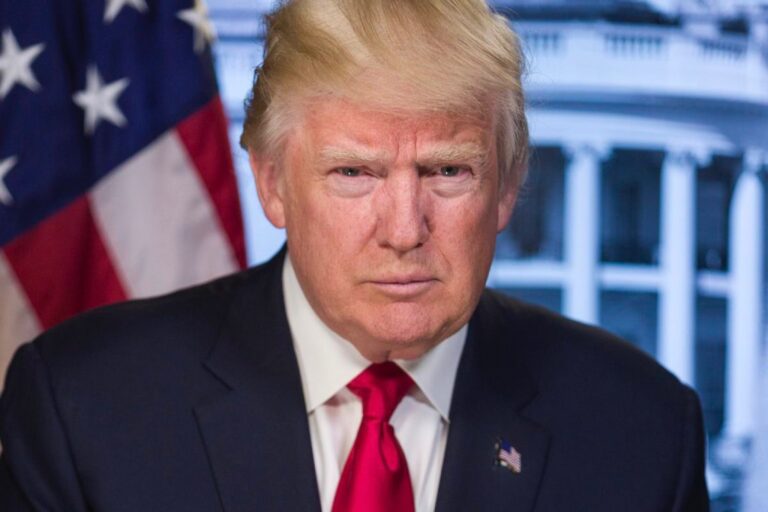
A UNITED States (US) Appeals Court has rejected an emergency request from President Donald Trump to vacate a ruling blocking his birthright citizenship order as part of the Republican’s hardline crackdown on immigration and illegal border crossings.
According to AFP, the San Francisco-based 9th US Circuit Court of Appeals rejected the request for an emergency order putting on hold an injunction issued by a federal judge in Seattle blocking the president’s directive.
The ICIRreported that Trump issued an executive order on January 20 – the day he assumed office as the 47th US president, directing relevant public institutions to deny citizenship for children born in the US to undocumented immigrants or people with temporary status in the country. It was one of the 42 orders issued by the president that day.
According to Reuters, this was the first time an appellate court had weighed in on Trump’s executive order on birthright citizenship, whose fate may ultimately be decided by the Supreme Court. Judges in Maryland, Massachusetts and New Hampshire have likewise blocked the order, and appeals are underway in two of the cases.
About the executive order
Trump is seeking to end birthright citizenship for children whose parents are undocumented or are in the United States temporarily.
Under an 1868 constitutional amendment, anyone born on American soil is deemed a US citizen.
The ICIRreported that 22 Democratic-led states, along with the District of Columbia and the city of San Francisco, on January 21, filed lawsuits in federal courts in Boston and Seattle claiming Trump violated the U.S. Constitution.
On February 5, another federal judge, Deborah Boardman, placed a lid on the order, which compelled Trump’s legal team to take the case to the Appeal Court.
The three-judge panel in the 9th US Circuit Court of Appeals ruled that birthright citizenship “is beyond the president’s authority to condition or deny” because it is “about citizenship.
The ICIR reports that anyone born in the U.S. is considered a citizen at birth, which derives from the Citizenship Clause of the 14th Amendment that was added to the Constitution in 1868.
The amendment reads: “All persons born or naturalized in the United States and subject to the jurisdiction thereof, are citizens of the United States and of the State wherein they reside.”
THE Federal Government has announced a ban on fuel tankers carrying 60,000 litres of petroleum products on Nigerian roads, effective March 1.
The decision aims at curbing accidents involving heavy-duty petroleum trucks, was reached after consultations with key industry stakeholders on Wednesday, February 19.
Speaking after the meeting, the Executive Director of Distribution Systems, Storage, and Retailing Infrastructure at the Nigerian Midstream and Downstream Petroleum Regulatory Authority (NMDPRA), Ogbugo Ukoha, said the measure was introduced following a rise in road crashes involving fuel tankers.
”The first stakeholder’s technical committee met today to drill down and put timelines for about 10 resolutions that had been taken on how to drive down the significant increase that had been recorded in relation to trucks and transit incidents and fatalities, ” he said.
He noted that discussions with agencies such as the Department of State Services (DSS), Federal Fire Service, Federal Road Safety Corps (FRSC), National Association of Road Transport Owners (NARTO), and National Union of Petroleum and Natural Gas Workers (NUPENG), among others, led to a unanimous resolution that from March 1, any tanker with an axle load exceeding 60,000 litres of hydrocarbon will be barred from loading at petroleum depots.
Ukoha emphasised that yesterday was the first time all stakeholders reached a consensus on the issue and assured that collaboration would continue to ensure the safe transportation of petroleum products across the country.
”The important thing about this is that, for the first time, consensus was built amongst all stakeholders, and we’re continuing to encourage that we will work together cohesively to deliver safe transportation of petroleum products across the country,” he said.
Regulator dismisses fuel quality concerns
Addressing concerns about the quality of fuel in circulation, Ukoha dismissed recent claims questioning fuel standards as bogus, misleading, and unscientific.
He reaffirmed that all imported and locally refined petroleum products met regulatory standards before distribution to consumers.
The NMDPRA, he stated, remained committed to enforcing petroleum industry standards, ensuring product quality, and supporting local refineries in line with the Petroleum Industry Act (PIA) 2021.
He urged Nigerians to disregard unfounded social media claims regarding fuel quality.
”As a regulator, we’re working very hard in compliance with the presidential and statutory mandates to support the local refineries and build capacity to a point that Nigerians will have sufficient products. Not just quality, but pricing is also done in a transparent, competitive and fair way. That’s the priority we have as the regulator, and that is what we concern ourselves with every day, ” he said.
Ukoha further assured that the regulatory authority adhered to the specifications set by the Standards Organisation of Nigeria (SON), which include parameters such as the Research Octane Number (RON), sulfur content, density, and oxygenate levels.
”Before any product is distributed in Nigeria, the regulator ensures that from the load port of the product, whether from a domestic refinery or imported from outside the country, and as well as at the discharge port, accredited laboratories must test every product and duly issue certificates of quality to indicate that the product on board the vessel meets those specifications.
”It’s only on that basis that products are then discharged and distributed across the country,’’ he said.
Recent tanker explosions in Nigeria
The Federal Government’s decision to ban fuel tankers carrying over 60,000 litres followed a series of tragic explosions that have resulted in significant loss of lives and properties in recent months.
The nation has witnessed a disturbing trend of fuel-related explosions, often linked to poor road conditions, reckless driving, inadequate enforcement of safety regulations, and public ignorance of the dangers associated with scooping fuel.
One of the most recent incidents occurred in Dikko junction, Niger State, in January, when a fuel tanker overturned, leading to a massive explosion that killed over 86 people and injured dozens who were scooping fuel.
Similarly, in October 2024, a fuel tanker explosion in Taura Local Government Area, Jigawa State, claimed over 160 lives who were also attempting to scoop fuel from the tanker.
NIGERIAN singer Habeeb Okikiola, popularly known as Portable, has surrendered to the Lagos State Police Command after he was declared wanted by the Ogun State Police Command.
Confirming the development, on Wednesday, February 19, the Lagos State Police Public Relations Officer, Benjamin Hundeyin, noted that the singer had turned himself in and was set to be transferred to Ogun State.
The Ogun State Police Command also confirmed Portable’s arrival at the State Criminal Investigation Department (SCID), Eleweran, Abeokuta, in a statement by its spokesperson, Omolola Odutola.
“His presence at the SCID is connected to an ongoing investigation. The command assures the public that due process will be followed in handling this matter, and updates will be provided as necessary.”
While reiterating the command commitment to fairness and justice, Odutola urged the public to remain calm and avoid spreading unverified information.
“We urge members of the public to remain calm and refrain from spreading unverified information. The Ogun State Police Command remains committed to upholding justice and maintaining public order,” Odutola stated.
Background
The ICIR reports that Portable’s arrest followed an incident on February 5, 2025, in which he was accused of leading a violent attack on government officials from the Ogun State Ministry of Physical Planning and Urban Development during an enforcement exercise in Ota.
The officials were reportedly inspecting buildings when they were assaulted by the singer and a group of men armed with dangerous weapons.
Nine of his associates were arrested and charged in court, but Portable, who had escaped arrest on the day of the incident, was said to have evaded multiple police invitations.
This prompted the Ogun State Police Command to declare him wanted on Monday, February 17. The police noted that it had secured a court order declaring him wanted.
The command further urged the public to provide any useful information that could lead to his immediate arrest.
Reacting to the declaration, the singer took to social media and declared himself a mentally unstable person undergoing treatment at the Federal Neuropsychiatric Hospital, Aro, Abeokuta.
He said, “I fear government. I am a federal government liability. Then I’m a madman; I have medications that I usually take. You can confirm from Aro Hospital. I have a card that certifies me as one of their patients.
“I am from Abeokuta and they are taking care of me there. I am not a thief, I help people around me without even looking at their background.”
Portable has had several legal run-ins in the past, including arrests for assaulting police officers and failing to settle debts.
THE Nigerian Senate has summoned the country’s security chiefs over an allegation that the United States Agency for International Development (USAID) funded terrorism in Nigeria.
The decision followed a motion by the senator representing Borno South Senatorial District, Mohammed Ali Ndume, over the issue.
Ndume emphasised that the allegation was too significant to ignore, given the devastating impact of terrorism on the country, particularly in the hands of Boko Haram fighters.
Security chiefs invited include the National Intelligence Agency (NIA), Directorate of Intelligence Agency (DIA), State Security Services (SSS), and the National Security Adviser (NSA)
While endorsing the motion, the Senate President, GodswillAkpabio, noted that security issues should be discussed behind closed doors rather than in public to ensure a more informed and effective approach to addressing the situation.
The ICIR reported that aUS Congressman, Scott Perry, accused the embattled USAID of allegedly funding terrorist organisations, including Boko Haram, although he did not provide any evidence to back his claims.
Perry made the allegation during the inaugural hearing of the Subcommittee on Delivering on Government Efficiency (DOGE) on Thursday, February 13.
In his presentation titled “The War on Waste: Stamping Out the Scourge of Improper Payments and Fraud,“ Perry, a Republican from Pennsylvania, asked several questions about USAID’s operations.
In a video that has gone viral, Perry queried, “Who gets some of that money? Does that name ring a bell to anybody in the room? Because your money, your money, $697 million annually, plus the shipments of cash funds in Madrasas, ISIS, Al-Qaeda, Boko Haram, ISIS Khorasan, and terrorist training camps. That’s what it’s funding.”
Perry also claimed that USAID spent $136 million to build 120 schools in Pakistan, but there was no evidence that the schools were ever constructed.
The lawmaker alleged that the programmes under Operation Enduring Sentinel, specifically the Women’s Scholarship Endowment and Young Women Lead, which receive $60 million and $5 million annually, respectively, were not benefiting the women in Afghanistan as intended.
He stated that according to the inspector general’s report, the Taliban did not allow women to speak in public, making it unlikely that the funds were used for their betterment.
Perry argued that the money was being used to fund terrorism through USAID and that the issue was not limited to Afghanistan but also affected neighbouring Pakistan.
Perry in the past has made allegations without evidence. The Washington Post noted that he played a key role in promoting false claims of fraud following the last US presidential election. In 2018, he was also accused of linking ISIS with the Las Vegas massacre without substantiating the claim.
The ICIR reports that Boko Haram is a terrorist organisation based in northeastern Nigeria. The group has carried out numerous violent attacks, including massacres and mass abductions, such as the killing of 59 schoolchildren and the kidnapping of 276 schoolgirls in 2014.
The USAID has been under fire since Donald Trump was sworn in as president on January 20. The administration immediately revealed its plan to dismantle the organisation.
The ICIR reported that USAID announced that it would be placing its staff on administrative leave, both in the US and abroad, following Trump’s decision.
The move, seen as controversial by many, sparked widespread criticisms from Democrats and human rights organisations, who argued that it would have a devastating impact on global humanitarian efforts.
The USAID supports health and emergency programmes in over 120 countries, including some of the world’s poorest regions.
The decision to restrict USAID’s activities is led by billionaire Elon Musk.
Musk, considered a “special government employee” by the White House, heads the Department of Government Efficiency (DOGE).
He has been vocal in his criticism of USAID, describing it as a hub of “radical-left Marxists” who are anti-American.
THE Anambra State Police Command has launched a manhunt for two suspected killers of a member of the state House of Assembly, Justice Azuka, who escaped from its custody.
The police spokesperson in the state, Tochukwu Ikenga, disclosed this in a statement Tuesday night.
However, a security team found the lawmaker’s decomposing body at Second Niger Bridge in Onitsha, Anambra State, on February 6, 2025.
The police command in the state later confirmed that nine suspected killers of the lawmaker had been arrested.
However, in a statement on Tuesday, Ikenga said the commissioner of police (CP) in the state, Ikioye Orutugu, received a report that two of the suspected killers had escaped from custody.
According to the police spokesperson, the two suspects were cooperating with the police and had accompanied officers on an investigation to apprehend a person who had been buying vehicles stolen by the gang.
The police said that they arrested a suspect and recovered two stolen vehicles during the operation but noted that two other suspects escaped during an arrest.
The police spokesperson stated that the commissioner of police has deployed personnel, operational resources, and intelligence to re-apprehend the fleeing suspects.
The statement said the commissioner was taking swift action to address the situation and had ordered immediate disciplinary action against officers who were negligent in allowing the suspects to escape.
The commissioner said he would no stone unturned to ensure that those responsible are held accountable and that the suspects are caught and prosecuted.
The lifeless body of Azuka, a Labour Party (LP) lawmaker kidnapped in December while returning home for Christmas, was found 44 days after his kidnapping.
Azuka had regained his mandate following a court ruling that overturned the initial declaration of Douglas Egbuna of the Peoples Democratic Party as the winner of the 2023 election.
A similar incident occurred on May 21, 2022, when Okechukwu Okoye, the lawmaker representing Aguata 2 Constituency was abducted and subsequently killed alongside his aide, Cyril Chiegboka.
COVERING Climate Now and Agence France Presse (AFP) invite applications for partnership with media outlets from Latin America, Africa, and Asia to offer free access to AFP’s climate news materials.
The programme is designed to provide newsrooms with high-quality climate journalism and build capacity for original reporting. This initiative already includes 10 newsrooms from around the world.
Media outlets from Latin America, Africa and Asia are invited to apply.
The organisers say accepted newsrooms will receive free access to AFP stories for one year, a multimedia collection of approximately 150 ready-to-publish articles per month in English, complete with photos, videos or infographics.
Others are training and support, customised training and coaching from CCNow as well as access to CCNow’s community of journalists dedicated to improving climate coverage. This opportunity is funded by CCNow through a grant from the Rockefeller Foundation.
The deadline for the submission of the application is March 11, 2025. Interested applicants can apply here.
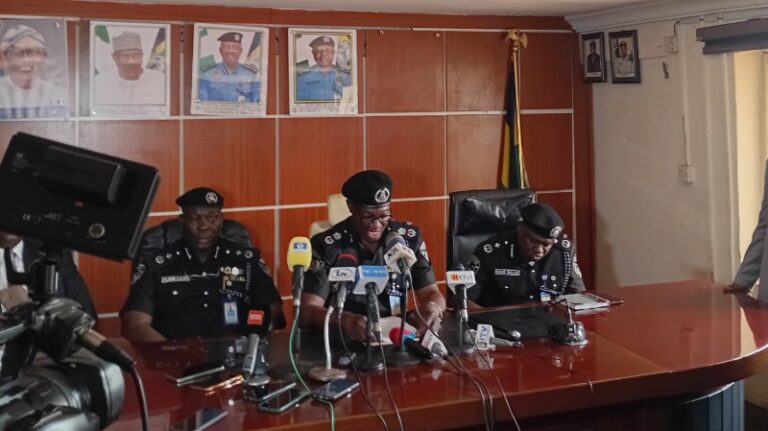
THE new Commissioner of Police (CP), Lagos State Command, Olohundare Moshood Jimoh, said more than 50 suspected cultists were facing prosecution in the state.
Jimoh stated this on Tuesday, February 18, while briefing journalists at the command headquarters, in Ikeja.
He said the command under his watch would address all forms of crimes and criminalities in the state.
“We, therefore, call on parents and guardians to prevail on their children and wards to desist from cult-related activities or face the full wrath of the law as the command will stop at nothing to rid the state of all acts of cultism,” Jimoh said.
He said the command would adopt and implement new crime prevention, control, and management strategies to prevent all forms of crime, especially violent crimes.
“The command will be more proactive in crime fighting and prevention to detect, act and deal according to the laws with early warning signals of crimes and other threats that can snowball into disturbances of public peace and public safety, or break down of law and order appropriately,” Jimoh stressed.
He promised to foster communication, discussions and collaboration between the police and the public.
“The people of the state will have unhindered opportunity to interact with the police freely at all levels to strengthen the trust, accountability, and mutual respect on both sides.
“Human rights abuses will not be tolerated no matter how minor it may be. Our approach to policing will be firmly rooted in the dictates of international best practices in policing. At the same time, professionalism, respect for human rights, and human dignity of every Lagosian will be religiously observed,” he said.
The CP, while urging the people of the state to respect the police officers and be law-abiding, promised to uphold zero-tolerance against corruption and all forms of unethical practices among his officers.
In curbing the menace of cultism in the state, he said the command would sustain its onslaught on the practice, urging criminally-minded persons to beware.
“They are hereby strongly warned and advised to repent, abandon the crimes, or leave Lagos State.
“The state will be too hot henceforth for the men of the underworld, and it will be a no-go area for criminals and their cohorts,” Jimoh added.
The ICIR reports that Lagos State is known for all forms of crimes, such as traffic robbery, robbery, cultism, violent crimes around identified black spots, and other crimes.
In an investigative report published in June last year, The ICIR spotlighted how the state and Abuja became hotbeds for crimes.
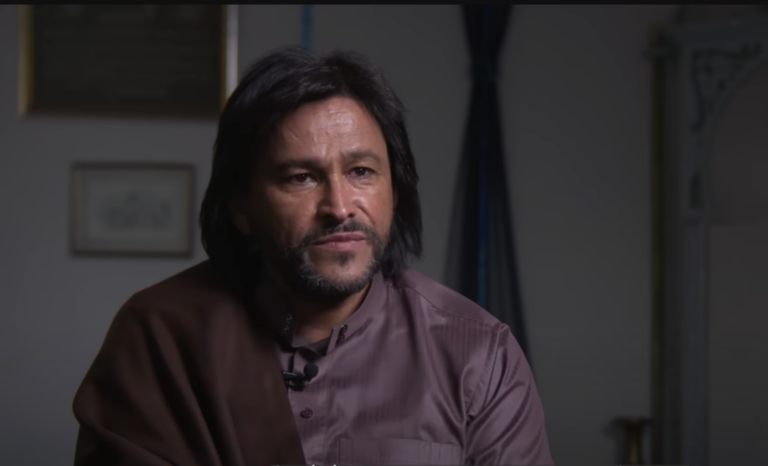
DUBBED the “world’s first openly gay Imam”, South African religious leader Muhsin Hendrickswas gunned down on February 15, 2025 in an attack that many believe was targeted. Tributes have poured in across the world, but so have online comments that his death was justified.
His passing intensifies a global debate about whether queer Muslims belong in the faith. Amanullah De Sondy was a friend of his and is a scholar of Muslim sexuality and masculinity, including the contributions of Hendricks. He pays tribute and discusses the bigger issues.
Who was Imam Muhsin Hendricks?
Muhsin Hendricks was born in 1967 in Cape Town and raised in a Muslim household. He married and started a family with a woman before coming out as gay in 1996. He would later marry a Hindu man. His marriage touched on two complex issues for many Muslims: that it was between two men, and that it was with someone of a different faith.
Muhsin Hendricks was a learned scholar of Islam who had become a globally renowned religious leader. He created and managed large queer Muslim organisations in South Africa that brought people together from Karachi to London.
He worked first as an Arabic language teacher and fashion designer before studying globally, in particular at a religious seminary in Pakistan. He trained as an Imam and he led congregations at mosques.
He was fired from his teaching position at a Cape Town mosque when he came out.
At pivotal moments in his life, Hendricks spoke of his time praying and fasting to arrive at his reconciliation between faith and sexuality. Ultimately he believed that there could be many different colours to Islam.
What were his contributions to the pluralism debate?
There is a perception that the estimated two billion Muslims in the world are all the same, united in their belief and practice.
This in reality is not true.
Islam is lived differently in different locations and among different denominations. There are no two Muslims alike. They share a central creed of belief but the diversity of living that out is very different. For example, Islam in South Africa is very different to Islam in Islamabad or in Singapore.
I have argued that gender and sexuality, especially notions of masculinity, are causing a crisis in the Muslim world today. Through his teaching, his religious leadership, his organisations and his activism, Hendricks was an emblem of these complexities, difficulties and tensions that exist in making sure that people don’t stuff Muslims into one box. He never sat in just one box. He was open and vocal that he was both Muslim and queer.
Hendricks didn’t seek affirmation from those who would never agree with him. The quote often cited is that Islam says homosexuality is a sin. There have been renewedstatementsagainst aligning Islam with homosexuality globally.
Hendricks moved beyond convincing fellow Muslims that he believed that there was space to be queer and Muslim. He aimed to promote pluralism amongst Muslims – that there was more than one way to live Islam. He wanted to support other Muslims who were battling with the conundrum of being wholly queer and wholly Muslim. He nurtured spaces where an opportunity was given to reflect, heal and strengthen.
Can you tell us more about his work?
Hendricks’ organisation The Inner Circle did research and movement building work, but he was working on many levels. He was creating a safe space amongst Muslims but also working at an interfaith level, at the intra level – trying to build bridges with very conservative streams of Islam – in South Africa and globally.
At the very least the organisation wanted to empower queer Muslims to accept who they were. Studies have shown that LGBTIQ+ young people are twice as likely to contemplate suicide. Hendricks said that he was driven in his work to help stop them from killing themselves.
Warning: sensitive content.
Hendricks had a vision to see the training of the next generation of leaders and Imams. He made sure to create organisations that were training and learning centres with a focus on Islamic studies and for recruits to then implement those teachings in an inclusive and loving way.
He also created the Al-Ghurbaah Foundation to create a space for psychological and spiritual support.
He was a target of conservative Muslim anger because of the impact of this work. He was very public about his sexuality where many religious leaders and other Muslims are not. There remains a very strong culture of “don’t ask and don’t tell” when it comes to sexual practices amongst Muslims globally.
Why is this such a divisive issue?
The intellectual arguments about queer Muslims have been made for well over a decade now. Hendricks was almost always included in these kinds of academic studies.
He also took part in an important 2007 documentary A Jihad for Love. Made by Parvez Sharma, it follows the lives of queer Muslims and the threats they face around the world. There’s a conversation in that documentary where he sits with a conservative Islamic scholar, who says to him that he’s interpreting the text incorrectly, reprimands him by telling him that he is out of the fold of Islam, that he would not be buried in a Muslim graveyard and that no Muslim should pray at his funeral. Hendricks listened quietly and remained strong in his belief.
The conservative Islamic view on gender and sexuality upholds the traditional roles of men and women – namely the role of being a husband, a wife, marriage and procreation, having children.
Warning: sensitive content.
Hendricks was among others globally who started a conversation asking: can we reinterpret some of these passages that claim Islam is heterosexual, that they are not necessarily homophobic? Is there space for queer Islam?
He highlighted that there may never be full consensus on these issues amongst Muslims. His life showed that Islam is diverse.
Many Muslims in the world would disagree that the killing of the Imam is the Islamic way of living. An important list of Muslims condemning homophobia has already started circulating in response to his death. Yet there are some who are posting comments on social media saying that he deserved it, that Islam says he should be killed.
Whoever killed him, it has become clear in the hours and days after his shooting that his death has once again raised the difficult questions facing Muslims all over the world on sexuality.
How do you remember him?
Hendricks was born into a country where the liberation theology of some church leaders, including Imams, formed part of the fight against systemic racism. He continued this history of activism.
His life was a masterclass on how different forms of discrimination can intersect. He was a Muslim, a person of colour and a sexual minority. In his life he faced both homophobia and Islamophobia.
He knew that the threat to his life was very real but he reportedly refused bodyguards because he wanted to live his life authentically.
He was a formidable communicator, including his use of social media. In his TikTok and Instagram accounts you’ll see he started moving in a direction of miming to very popular Bollywood songs and doing a little dance to them. I think he’d be delighted that these are now being shared as a tribute.
Hendricks had a way of capturing many people’s minds at different levels. His reach was challenging. He wanted Muslims to embrace differences within and beyond the letters of Islamic law and theology. Hendricks offered a fully embodied way of living Islam that he believed had room for something more inclusive and queer.
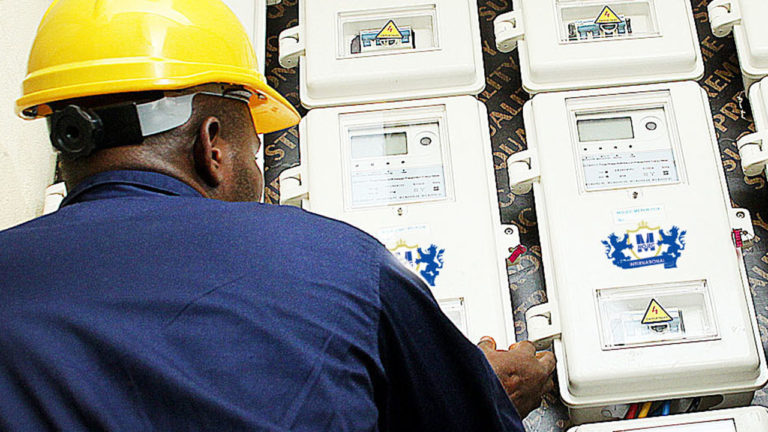
THE Nigerian Electricity Regulatory Commission (NERC) has warned electricity consumers and businesses found guilty of bypassing electricity meters, of a new fine order while reinforcing its stance against power theft.
The regulator in a revised Order on “Unauthorised Access, Meter Tampering, and Bypass” posted on its X (formerly Twitter) account, NERC outlined new regulations to curb illegal connections.
The new order, NERC said seeks to reduce unauthorised access to electricity, meter tampering, and by-pass, and to also establish transparent reconnection guidelines to ensure compliance.
This replaces the previous directive, Order No: NERC/REG/41/2017, and took effect on 22 January 2025.
The order aligns with the Electricity Act 2023 and the Customer Protection Regulations (CPR) 2023, reinforcing compliance measures and ensuring better enforcement against meter violations.
Under the new framework, distribution companies (DisCos) now have the authority to disconnect illegal connections without prior notice. According to the order, clear reconnection guidelines have also been established, ensuring transparency and discouraging repeat offences.
The regulator warned that consumers caught tampering with their meters will face significant financial penalties.
For non-Maximum Demand (MD) meters, the fine for a first offence is set at N100,000 for single-phase meters and N200,000 for three-phase meters. Subsequent violations will attract higher penalties of N150,000 and N300,000, respectively.
The commission has urged consumers to ensure compliance with metering regulations to avoid fines and disconnection.
Notably, DisCos have been directed to launch awareness campaigns to educate customers on the legal and financial consequences of meter tampering, emphasising the need to regularise their electricity connections.
The ICIRreported that 6,156,726, representing 46.15 per cent of 13,339,635 registered electricity customers have been metered as of September 30, 2024.
This means that 7,182,909 customers are yet to be metered, representing 53.85 per cent of unmetered electricity customers across the country.
It stated, “184,507 end-user customers were metered across all the Electricity Distribution Companies (DisCos) with Ikeja, Ibadan, and Abuja DisCos recording the highest number of meter installations – they accounted for 25.45 per cent, 21.48 per cent, and 14.61per cent respectively, of the total installations.
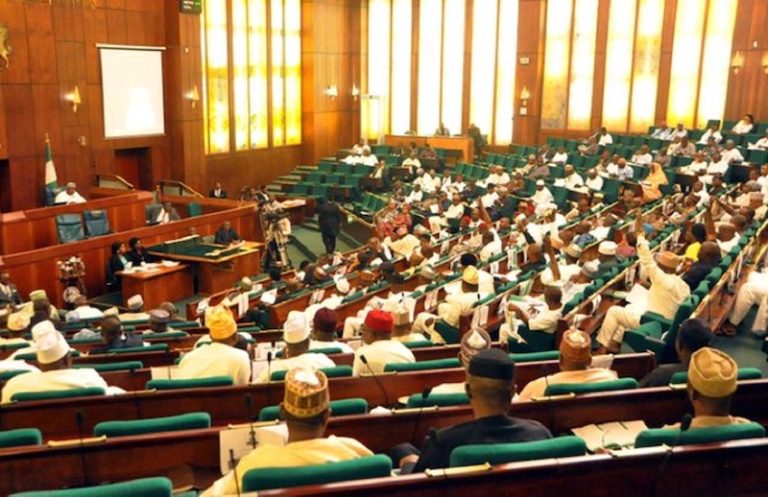
THE House of Representatives has urged relevant Federal Government agencies to enforce stricter penalties against homicide and femicide in Nigeria.
The House took the stance after adopting a motion sponsored by Rivers lawmaker Awaji-Inombek Abiante and three others during Tuesday’s plenary.
While highlighting the increasing cases of homicide, including murder, manslaughter, and other violent crimes, which have sparked public outcry for justice across the country, Abiante emphasised that the right to life was a fundamental human right enshrined in the Constitution.
He said, “Fernicide, which is the intentional killing of women and girls due to their gender, has become a significant concern, with several reported cases in recent years.”
Following the adoption of the motion, the House urged the National Judicial Council to establish special divisions within existing courts at all levels to swiftly handle homicide, femicide, and related cases.
Current trends of femicide
The ICIR reported the recent murder of one Lawal Yetunde, a young lady and private school teacher, allegedly by a cleric Abdulrahman Ballo, in Kwara State on Monday, February 10 2025.
The suspect was said to have lured Yetunde after connecting with her on Facebook and obtaining her phone number.
Bello confessed that the lady died of an asthma attack after police discovered dismembered remains hidden in a bowl, along with the tools used in the killing.
In January 2025 alone, data shows that 21 cases of femicide were reported in Nigeria.
One of the cases that caused a major outrage in the country was the case of Salome Adaidu, a 24-year-old corps member murdered in New Karshi, Nasarawa State, by a suspect, Timileyin Ajayi, on January 12.
The ICIR reported that Ajayi, who lives in the Pablana area, was caught around Angwan Bako near the Kaja Estate in the New Karu LGA when conveying the severed head of Salomey to an undisclosed destination on a commercial motorcycle.
While the family of the deceased demanded justice for the lady whose life was cut short in a gruesome manner, Ajayi pleaded not guilty on his first appearance in court on January 27.