THE Police Command in Rivers has confirmed that two persons were rescued from a collapsed three-storey building under construction along Odili Road in Port Harcourt.
The incident occurred on Wednesday, with reports indicating that one person was feared dead while several workers remained trapped beneath the rubble.
The command’s spokesperson, Blessing Agabe, a superintendent of police, told the News Agency of Nigeria (NAN) on Thursday in Port Harcourt that rescue operations were ongoing at the site.
Agabe said the police could not immediately confirm the number of casualties but disclosed that two persons were rescued alive.
“Rescue workers are still clearing the debris from the collapsed building, and as such, I cannot provide an accurate account of the casualties.
“However, I can confirm that two persons have been rescued from the rubble,” she said.
According to her, emergency responders are continuing efforts to locate and rescue other victims believed to be trapped under the debris.
Eyewitnesses at the scene attributed the collapse to possible structural defects, although the exact cause was yet to be determined.
A survivor, identified simply as Gift, said no fewer than eight workers were trapped when the building suddenly collapsed.
He claimed that some construction workers were rescued alive shortly after the incident on Wednesday.
“About eight persons were working inside the building when it collapsed,” he said.
Also speaking, Vincent Wachukwu, a doctor and Acting Permanent Secretary of the Rivers State Ministry of Health, said emergency personnel were immediately deplored after reports of the collapse.
Wachukwu said ambulances were mobilised to evacuated survivors for urgent medical attention.
“So far, two severely injured persons have been rescued and taken to the Rivers State University Teaching Hospital for treatment,” he said.
NAN reports that another person has been rescued from the debris by the rescue operations which are being coordinated by the Rivers State Ministry of Urban Development and Physical Planning and the Ministry of Health.
Other agencies involved include the Nigeria Police Force, the Nigeria Security and Civil Defence Corps and the Federal Road Safety Corps.
Excavation of the debris continues on Thursday as rescue teams intensified efforts to reach those still trapped beneath the collapsed structure. (NAN)
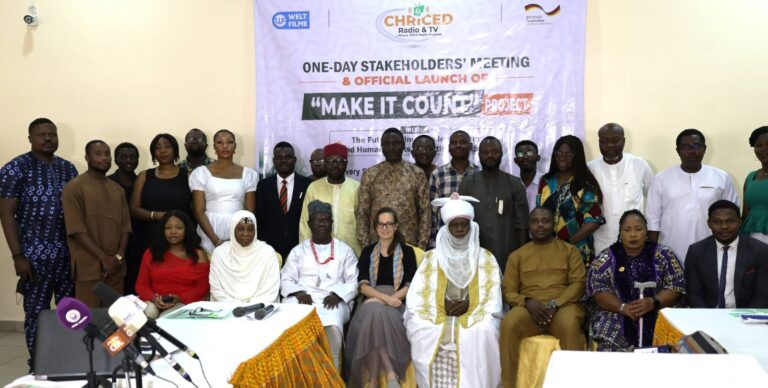
THE Resource Centre for Human Rights and Civic Education (CHRICED) has unveiled the “Make It Count” project, a new initiative aimed at strengthening independent media, promoting ethical human rights reporting and amplifying the voices of marginalised communities in Nigeria.
CHRICED Executive Director, Ibrahim Zikirullahi, launched the project themed “The Future of Independent Media and Human Rights Reporting in Nigeria,” during a stakeholders’ meeting in Abuja on Wednesday, June 24.
The initiative is being implemented by CHRICED in partnership with Weltfilme, Germany, with financial support from the German Federal Ministry for Economic Cooperation and Development (BMZ).
“Across Nigeria, the space for independent voices is shrinking. Journalists face intimidation, civic actors confront repression, and communities – especially the most vulnerable – struggle to have their stories heard,” Zikirullahi said.
He described the project as more than a programme but a movement designed to strengthen independent media, expand human rights reporting and ensure that the voices of women, youth, persons with disabilities and other marginalised groups influence democratic governance.
According to him, the initiative will train citizen reporters, support community-based storytellers and build collaborative networks that enable journalists and civic actors to expose corruption, document human rights abuses and report stories that inspire positive social change.
“We will invest in training, technology and collaborative networks that enable journalists and civic actors to document abuses, expose corruption, and highlight stories of resilience and hope,” he said.
Presenting an overview of the initiative, Project Team Lead at Weltfilme, Julia Krojer, said Make It Count was designed to strengthen human rights-oriented journalism through ethical storytelling.
She explained that many local journalists continued to operate with limited resources and training despite playing a critical role in informing citizens and amplifying marginalised voices, adding that the initiative aimed to bridge those gaps by equipping journalists and content creators with practical multimedia storytelling skills that produce accurate, ethical and impactful reporting.
Krojer added that expected outcomes include improved media professionalism, stronger collaboration among journalists and civil society organisations, increased public awareness of governance and human rights issues, and deeper citizen engagement in democratic processes.
Delivering the keynote address, veteran journalist and labour activist Owei Lakemfa urged journalists and media organisations to remain committed to ethical reporting and the defence of human rights despite mounting political and economic pressures.
Lakemfa’s presentation focused on the future of independent journalism in Nigeria and the need to protect press freedom as a pillar of democratic governance.
Meanwhile, participants who include civil society actors, and government officials, engaged in extensive discussions on the growing threats confronting the media, including shrinking civic space, economic hardship affecting newsrooms, digital misinformation, declining public trust, and safety concerns for journalists covering sensitive issues.
Several media practitioners emphasised the need for stronger collaboration between journalists, civil society organisations and development partners to ensure investigative and human rights reporting remains sustainable.
Others advocated greater investment in grassroots media, arguing that community journalists are often the first to document human rights abuses and governance failures in remote areas.
The launch concluded with a renewed commitment by participating organisations to support ethical journalism and expand opportunities for grassroots reporters to produce stories that promote accountability, protect human rights and strengthen Nigeria’s democracy.
THE Senate on Wednesday, June 24, passed a constitutional amendment bill seeking to establish state police services across Nigeria.
The bill was approved after lawmakers considered the report of the Senate Committee on the Review of the Constitution, chaired by Deputy Senate President, Barau Jibrin.
Senate President Godswill Akpabio announced the passage of the legislation after more than two-thirds of senators voted in support through a manual voting process following the failure of the chamber’s electronic voting system.
The proposed legislation seeks to create a dual policing structure comprising a Federal Police Service and State Police Services operating alongside each other.
Leading debate on the bill, Senate Leader, Opeyemi Bamidele, described the proposal as one of the most significant constitutional reforms since Nigeria’s return to democratic rule in 1999.
He argued that the country’s centralised policing system had struggled to cope with rising security threats, including terrorism, banditry, kidnapping, communal violence, cybercrime and organised criminal networks.
According to the bill, the Federal Police Service will retain responsibility for national security matters such as counterterrorism, organised crime, cybercrime, border security and policing of the Federal Capital Territory (FCT), while state police services will focus on enforcing state laws, maintaining public order and protecting lives and property within their jurisdictions.
The amendment further seeks to update constitutional references by replacing the National Police Council and Federal Police Service Commission with the Nigeria Police Council and Police Service Commission.
The passage was also coming about two weeks after the House of Representatives endorsed the constitutional amendment for the creation of state police forces.
Governors to appoint commissioners
A key provision of the bill empowers state governors to appoint Commissioners of Police to head state police services, subject to confirmation by their respective State Houses of Assembly.
Clause 17 of the bill provides that while the Inspector-General of Police will head the Federal Police Service, each State Police Service will be led by a Commissioner of Police appointed by the governor.
The legislation also authorises governors to issue lawful written directives of a general policy nature to state police commissioners on matters relating to public safety and public order.
To address concerns about potential abuse, the bill states that a state police commissioner shall not arrest, detain, investigate or deploy force against any person, political party or group for criticising the government except in accordance with the law.
Several lawmakers who supported the bill, including Enyinnaya Abaribe and Aminu Tambuwal, stressed the need for adequate safeguards to prevent political interference and abuse of police powers.
Backstory
The ICIR reports that the push for state police gained momentum in recent months as Nigeria continues to grapple with insecurity across several regions.
Many have argued that the Nigeria Police Force has limited ability to respond quickly to local threats and that officers familiar with local languages, culture and terrain would be better positioned to gather intelligence and tackle crime.
The proposal also received a boost in November 2025 when President Bola Tinubu publicly backed the establishment of state police and called on the National Assembly to review existing laws to allow states willing to establish their own police services to do so.
However, some critics have warned that governors could use state police to intimidate political opponents, suppress dissent or influence elections. Concerns have also been raised about funding, oversight and the capacity of some states to maintain independent police formations.
The Senate’s approval does not immediately establish state police services. As a constitutional amendment, the bill must secure the endorsement of at least two-thirds of the 36 State Houses of Assembly before it can be transmitted to President Tinubu for assent.
Should it eventually become law, the amendment is expected to establish a multi-layered policing structure aimed at improving efforts to combat kidnapping, terrorism, banditry and other security challenges confronting the nation.
APPLICATIONS are now open for the prestigious Harvard Radcliffe Fellowship Program 2027–2028, offering accomplished journalists, scholars, scientists, public intellectuals, writers, and artists an opportunity to pursue ambitious projects at Harvard University for a full academic year.
The fellowship is hosted by the Harvard Radcliffe Institute and supports innovative work that addresses pressing social, scientific, and policy challenges.
Each year, approximately 50 fellows are selected to join a multidisciplinary community of thinkers and creators. Fellows receive a stipend of $78,000, an additional $5,000 for project expenses, access to Harvard’s extensive research resources, office or studio space, and eligibility for relocation, housing, childcare, and healthcare support.
The fellowship welcomes applications from professionals across a wide range of disciplines, including humanities, social sciences, journalism, nonfiction writing, creative arts, science, engineering, and mathematics. Applicants must meet discipline-specific eligibility requirements.
For journalism applicants, candidates must have at least five years of professional journalism experience. The programme is not intended for current students, and individuals enrolled in degree programmess are not eligible to apply.
Journalists must submit three substantive published works and may also include up to 15 minutes of audio or video journalism work.
Successful applicants will be notified of the outcome of their applications by March 2027.
Application deadline is September 10, 2026 (Journalism and related fields) | October 1, 2026 (STEM fields). Interested applicants can apply here.
A DNA test has confirmed that an unidentified body at the Lagos State University Teaching Hospital (LASUTH) is that of Pelumi Onifade, a journalist with Gboah TV who went missing during the #EndSARS protests nearly six years ago.
The Lagos State DNA and Forensic Centre made the confirmation on Tuesday at a Coroner Court in Lagos, where investigating magistrate Temitope Oladele announced that the centre had matched the body, tagged No. 1385, to a DNA sample submitted by Onifade’s mother, Adebose Onifade.
The journalist’s parents, who were both present in court alongside their father, Olatunde Onifade, broke down in tears as the magistrate read out the findings.
Onifade was reportedly shot and arrested while covering the protests on October 24, 2020. His body was among six brought to LASUTH on November 3, 2020, on which autopsies were subsequently conducted.
The inquest was convened on the orders of a Federal High Court in Lagos following a wrongful death suit filed by Media Rights Agenda (MRA) against the police and the Lagos State Government, demanding, among others, an investigation into Onifade’s death and the prosecution of those responsible.
Delivering judgment on July 19, 2024, the judge, Ayokunle Faji, directed the Attorney-General to ensure an investigation into the circumstances of Onifade’s death, conduct a coroner’s inquest to ascertain the cause of death and identify and prosecute those responsible.
On May 22, 2026, the coroner ordered LASUTH’s Chief Medical Examiner to produce the autopsy report on the body within 21 days. She also ordered the Director of the DNA and Forensic Centre to submit the corresponding DNA test results within the same period, following LASUTH’s earlier disclosure in a March 24, 2026, report that DNA samples had been collected from the bodies and cross-referenced against samples submitted by families of those who died during the #EndSARS events.
Although the DNA and Forensic Centre complied with the directive, LASUTH had yet to submit its autopsy report as of Tuesday’s proceedings.
MRA’s lead counsel, Alimi Adamu, who appeared alongside Monday Arunsi and Victor John, argued that the family had shown considerable restraint despite repeated police denials of any involvement in Onifade’s death and their insistence that he did not die in their custody.
He added that the need for a second court order was itself evidence of non-compliance with the court’s earlier directives. He also drew attention to the growing concern within the media community over the death of a journalist killed while discharging his constitutional role.
The coroner acknowledged the delay and said the hospital was overwhelmed, adding that she believed the autopsy had already been done, or should have been done. Tensions rose when she cautioned counsel against pushing too hard, warning that she could order the arrest of the Chief Medical Examiner.
The coroner opted against immediate coercive action, directing instead that a final administrative reminder be sent to LASUTH and urging MRA’s lawyers to visit the hospital in person to press for the report rather than relying solely on formal correspondence. She warned, however, that she would invoke the court’s full powers if the hospital continued to delay, including taking measures against the relevant officials.
Expressing sympathy with the family, the coroner acknowledged that the matter had been ongoing long before it reached her court. She told counsel she understood their desire for justice and commended them for their persistence.
FRANCE on Wednesday confirmed its first Ebola case in the country during the current outbreak, as a doctor returning from a humanitarian mission in the Democratic Republic of the Congo tested positive.
The Ministry of Health in a statement said the patient has been placed in isolation and health authorities are tracing contacts, adding that the risk to the wider European population was low.
It has infected more than 1,000 people and killed 267, generating the largest number of confirmed cases within the first month of any episode of the disease, the World Health Organisation said this week.
Experts say the disease was probably circulating for months before it was officially declared on May 15.
Early confirmed cases were identified in urban areas, and infections have since been reported in at least three densely populated displacement camps.
The two largest previous Ebola outbreaks occurred in West Africa in Guinea, Sierra Leone and Liberia between 2014 and 2016 and in Congo in 2018.
A United States citizen treated for Ebola in Germany was discharged earlier this month after no virus had been detected in the patient since May 30. (Xinhua/NAN)
PRESIDENT Bola Tinubu’s Special Adviser on Information and Strategy, Bayo Onanuga, has stirred controversy after claiming he could not see the level of hunger many Nigerians complain about.
This was despite widespread reports of rising food prices, declining purchasing power and growing economic hardship across Nigeria.
Speaking on Arise Television’s Prime Time programme on Tuesday, June 23, Onanuga suggested that narratives about hunger had become entrenched shortly after the Tinubu administration came into office.
“It’s like in the early days of this government. Somebody did a voice-over saying that we are hungry. Since then, people have been saying that.
“I am a Nigerian; I have people working for me privately. I don’t see the level of hunger people are talking about because I see them (the workers) and I keep asking them questions. How are things? How are they adjusting? What are the problems?” he said.
His remarks come at a time when many households are struggling with the effects of subsidy removal, naira devaluation, policies introduced shortly after Tinubu assumed office in May 2023. The policies have fueled inflation, leaving many citizens unable to afford basic necessities, including food.
Rising prices squeeze household budgets
Since 2023, the prices of staple foods have risen sharply across many parts of Nigeria.
Several reports also indicate how many households spend a larger share of their income on food and transportation than they did before the current administration took over power.
The crisis followed the removal of petrol subsidy and other reforms that triggered higher transportation, production and importation costs.
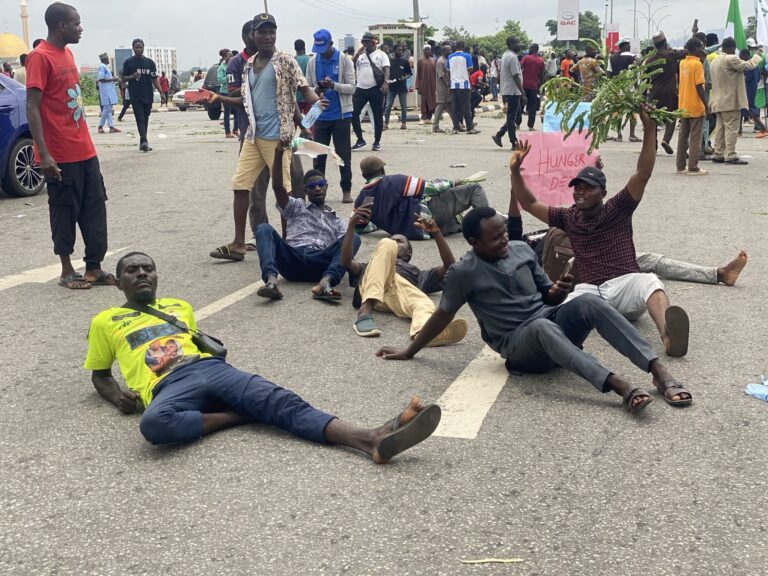
The economic strain sparked nationwide protests in August 2024, with thousands of Nigerians taking to the streets under the #EndBadGovernance banner to protest hunger, inflation and deteriorating living conditions.
Although the Nigeria government introduced several palliative measures, increased minimum wage, the impact of Tinubu’s economic reforms has continued to strain people’s livelihood.
Many Nigerians, including the Nigeria Democratic Congress (NDC) presidential candidate, Obi, have said the minimum wage could no longer guarantee a decent standard of living.
More recently, the cost of Liquefied Petroleum Gas (LPG) rose significantly across major cities, forcing many households to reconsider their energy choices amid worsening economic hardship.
Daily Trust reported that recent market checks showed cooking gas now sells for between N1,800 and N2,000 per kilogramme in several parts of the country, including Lagos, Ibadan, Abeokuta, Ilorin and Port Harcourt.
The concerns raised by Nigerians are also reflected in reports by humanitarian and development organisations.
Reports on food security assessments have consistently warned that millions of Nigerians, particularly in northern states affected by economic reforms, conflict and climate shocks, face varying levels of food insecurity.
In October 2025, the Food and Agriculture Organization of the United Nations (FAO), projected that 34.7 million Nigerians could face severe food insecurity by mid 2026 as climate pressures combine with economic challenges and conflict to reduce access to food.
Student loans
In defending the administration, Onanuga cited the Nigerian Education Loan Fund (NELFUND) as evidence that Nigerians are benefiting from government policies.
“If you are a parent and you have four children in the university, and they are able to access a federal loan which is interest-free, are they not benefiting?” he asked.
However, The ICIR reports that the introduction of NELFUND came amid widespread increases in tuition and other charges across tertiary institutions following the economic reforms introduced by the administration.
Several federal universities reviewed their fees upward between 2023 and 2025, citing rising operational costs. In some institutions, students were reportedly paying two to five times what they paid before the reforms.
The fee increases triggered protests on several campuses, with student groups arguing that access to education was becoming increasingly difficult for children from low-income families.
Nigerians had also argued that while NELFUND provides access to credit, it emerged in response to a financing crisis that was partly driven by the same economic conditions that pushed universities to increase charges.
FORTY days after armed men attacked schools in Oyo and Borno states and abducted dozens of pupils and teachers, the victims have since remained in captivity, leaving families trapped between hope and despair.
The attacks occurred on May 15, 2026. In Oyo, gunmen launched coordinated raids on Baptist Nursery and Primary School, Yawota; Community Grammar School, Ahoro-Esiele; and L.A. Primary School in Oriire Local Government Area, whisked away 39 pupils and seven teachers. The attackers reportedly killed at least one teacher during the operation before marching the victims into the forest.
On the same day, suspected insurgents stormed Primary and Junior Day Secondary School, Mussa, and surrounding communities in Askira-Uba Local Government Area of Borno State, abducting 42 students and teachers.
Since then, relatives in both states have endured weeks of uncertainty, with many saying they have received little information about the condition of their loved ones. Parents, community leaders and civil society groups have repeatedly appealed to authorities to intensify efforts to secure the victims’ release.
Forty days later, the abductees in both attacks are yet to regain their freedom.
The prolonged captivity has transformed the incidents from isolated security breaches into a broader test of Nigeria’s commitment to school safety more than a decade after the Chibok abduction prompted sweeping promises of reform.
In Oyo, the weeks following the attack have been marked by mounting public pressure and an escalating government response.
The continued detention of the victims prompted the Nigeria Union of Teachers (NUT) in Oyo State to embark on industrial action, arguing that teachers could not continue normal academic activities while their colleagues and pupils remained in captivity. The Union insisted that schools won’t reopen in the state until the security situation improves.
As frustration grew, the union expanded its campaign beyond Oyo, organising protests in several states and calling on the Federal Government and security agencies to secure the immediate release of the abductees.
The crisis also attracted federal attention. A high-level delegation comprising security officials and government representatives visited the affected communities to reassure families that efforts were underway to rescue the captives. The visit came amid criticism over the slow pace of progress and growing fears among relatives.
Meanwhile, security agencies intensified operations around the Old Oyo National Park after intelligence reports suggested the abductees were being held within the vast forest. Search-and-rescue operations involving the military, police, Amotekun Corps and other security agencies have focused on the area, although officials say the difficult terrain has complicated efforts to locate the victims without endangering their lives.
Governor Seyi Makinde later confirmed that intelligence reports pointed to the National Park as the likely location of the abductees and described the terrain as one of the biggest obstacles confronting rescue teams.
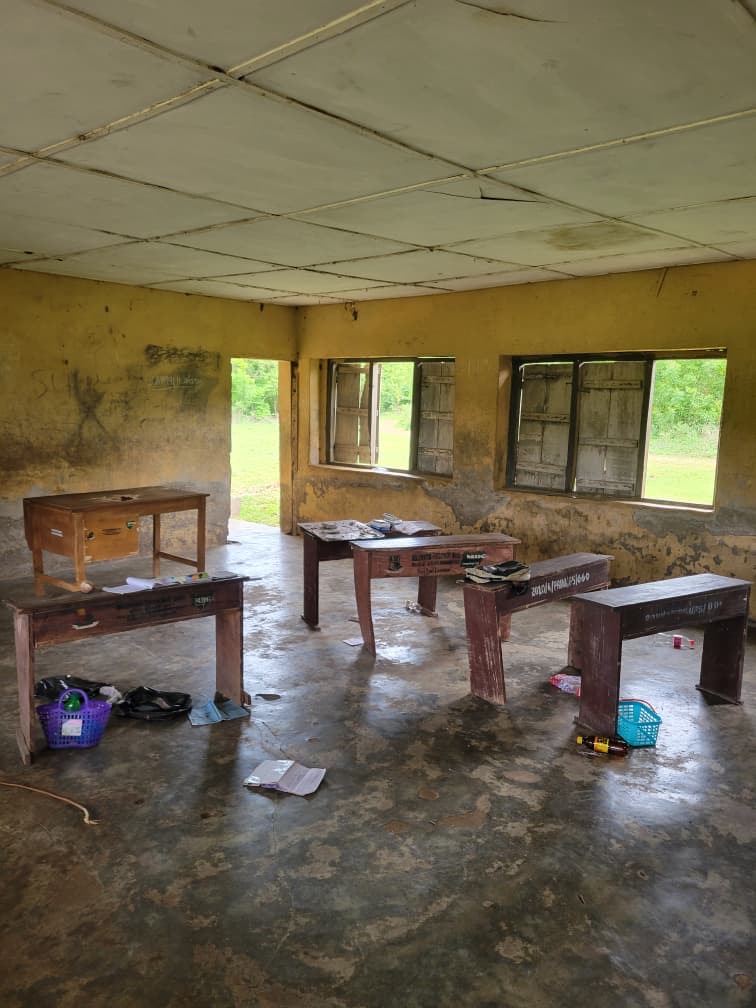
School items left behind by students after terrorist attack in Esin Ele community
“One thing I can say is that our security reports indicate that they remain within the wider Old Oyo National Park axis. This is a vast area that stretches across parts of 10 local government areas in our state, covering approximately 2,500 square kilometres,” Makinde said.
“I mention this not to discourage anyone, but to help us understand the scale of the challenge before us. This is not an issue affecting only Oriire Local Government Area. It is an issue that concerns all of us. The size and terrain of the area require patience, coordination and persistence. It also means that vigilance from members of the public remains extremely important.”
In the latest escalation, the Oyo State Government imposed a 16-hour curfew across 10 local government areas bordering the park.
The restriction, which runs daily from 4 p.m. to 8 a.m., affects Oriire, Oorelope, Irepo, Saki West, Saki East, Atisbo, Itesiwaju, Iseyin, Olorunsogo and Atiba local government areas. According to the government, the measure is intended to strengthen ongoing security operations aimed at rescuing the victims and dismantling criminal networks operating around the forest corridor.
Despite all the efforts by stakeholders, including protests, strikes, and military operations in the state, the captives have yet to return home.
In Borno, the trajectory has been different but equally troubling.
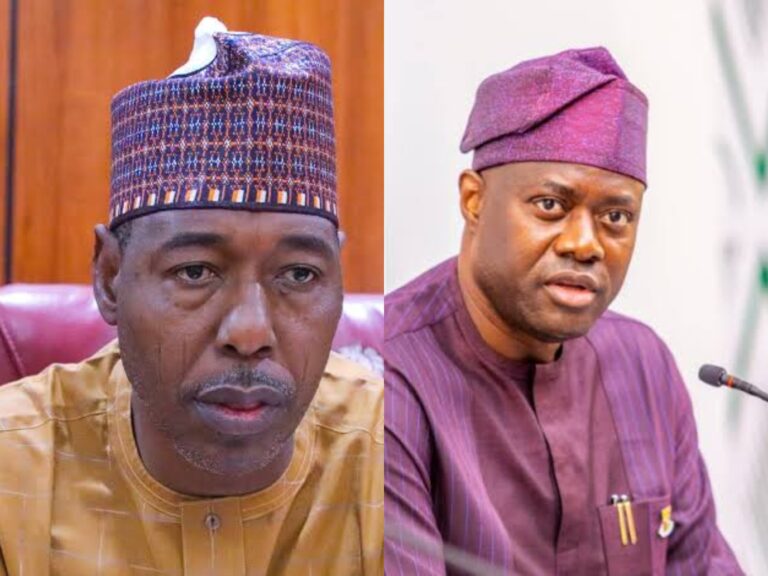
Governor Babagana Zulum visited the affected community shortly after the attack and assured families that efforts were underway to secure the release of the abductees. However, as weeks passed without a breakthrough, frustration began to mount among parents and community leaders.
The NUT later marched through Maiduguri, demanding urgent government action. Led by the union’s National Publicity Secretary, Yusuf Ibn-Tom, the protesters urged both the federal and state governments to intensify rescue efforts and prioritise the safe return of the victims.
Parents and political leaders from Askira-Uba also staged demonstrations, accusing authorities of failing to provide sufficient information about the status of rescue operations. Unlike in Oyo, where officials have publicly disclosed the suspected location of the abductees and announced successive security measures, little information has emerged about the whereabouts of the victims abducted from Mussa.
The absence of regular public updates has fueled anxiety among families who have now spent more than six weeks waiting for news of their loved ones in a state that has arguably witnessed the most terrorists’ onslaughts in Nigeria.
The two incidents have also become a rallying point for wider public discontent over insecurity in the country. On June 12, demonstrators gathered in Abuja and Lagos to demand the safe release of the abductees and call for stronger action against kidnapping and insurgency.
In his Democracy Day address, President Bola Tinubu acknowledged the pain caused by the abductions, saying the mood of the nation had been dampened by the continued captivity of children taken from schools in Oyo and Borno states.
“We remain hopeful for their safe return,” the president said.
He defended his administration’s security strategy, noting that the government had declared a security emergency, approved the recruitment of more than 50,000 police officers and thousands of military personnel, and allocated N5.41 trillion to defence and security in the 2026 budget.
The president also issued a warning to armed groups. “To bandits, kidnappers, and sponsors of terror: surrender or face the full force of the Nigerian State,” he said, adding, “No mercy will be shown to those who trade in the blood of Nigerians.”
But forty days after the attacks, the victims abducted from classrooms in Oyo and Borno remain in captivity.
THE Special Adviser to President Bola Tinubu on Information and Strategy, Bayo Onanuga, has accused Nigerian media of creating a false impression that Nigeria is overwhelmed by insecurity, despite thousands of killings and kidnappings recorded across the country since the current administration came into office.
Speaking during an in on Arise Television on Tuesday, June 24, Onanuga argued that media reports often portray insecurity as though it has engulfed every part of Nigeria.
“The problem is that the media in Nigeria, they’re even creating the problem. The way they’re reporting security is as if the entire country is consumed,” he said.
His remarks came amid persistent attacks by bandits, insurgents, armed herders and other criminal groups across several states.
Data analysed by The ICIR show that at least 19,980 people have been killed across Nigeria between 2023 and April 2026.
The figures, compiled from the Mass Atrocities Tracker, indicate that violence linked to insurgency, banditry, communal clashes and separatist activities has continued to claim lives despite repeated assurances from the government that security is improving.
A breakdown of the data shows that 4,416 people were killed in 2023. The figure rose to 5,353 in 2024 and increased further to 6,518 in 2025. Between January and April 2026 alone, at least 3,693 people had already been killed.
The data further show that kidnapping remains widespread.
Between 2023 and April 2026, at least 12,362 people were abducted across the country. While 2,653 kidnappings were recorded in 2023, the figure nearly doubled to 5,171 in 2024. In 2025. At least 3,033 people were kidnapped, while another 1,505 abductions were recorded in the first four months of 2026.
Recent incidents have heightened concerns about the country’s security situation. On May 15, gunmen abducted dozens of pupils from Government Day Junior Secondary School in Askira-Uba Local Government Area of Borno State.
On the same day, armed men attacked three schools in Oyo State, kidnapping pupils and teachers in incidents that revived fears of mass school abductions.
However, Onanuga insisted that while security breaches occur, Nigeria is not under siege.
“Don’t let people frighten you that the entire country is under siege. It’s not. There are security breaches,” he said.
The presidential aide argued that many Nigerians continued to travel safely across the country and cited examples of individuals undertaking long-distance road journeys without incident.
He also suggested that many attacks occur at night, adding that said there were longstanding security advisories against night travel.
“Any time I read about either a kidnap or an attack somewhere, sometimes, I look at the time. I say, wow, it happened 8 p.m., it happened 9 p.m., sometimes 1 a.m. A long time ago, the police told people to stop travelling at night,” he said.
The TV host further presented to Onanuga insecurity data from Beacon Security and Intelligence Limited and the Armed Conflict Location and Event Data Project (ACLED), which reportedly showed that terror-related fatalities linked to terror groups increased by 4.6 per cent between 2015 and 2025.
The figures appeared to contradict Tinubu’s recent claim that insecurity-related fatalities had declined by 81 per cent.
Defending the government’s position, Onanuga said the Presidency relied on statistics supplied by the Office of the National Security Adviser.
“The data we’re offering is the data provided by the Office of National Security Adviser. That’s the data we use. Whoever is compiling that, where did they get it from?, he queried.
When informed that the alternative figures were compiled by internationally recognised conflict-monitoring organisations, he questioned their accuracy.
“They may be wrong. The data we have is the data from the Office of National Security Adviser. You cannot say the data is wrong and only this one is right,” he added.
THE United States government has sanctioned a Nigeria-based financial facilitator and several international operatives accused of helping the Islamic State of Iraq and Syria (ISIS) move funds across borders to support terrorist activities worldwide.
Among those identified is a France-based facilitator who provided information concerning the use of explosives to ISIS supporters, a Syria-based operator who used cryptocurrency to transfer funds on behalf of ISIS associates in multiple countries including the United States, and a Nigeria-based facilitator whose money exchange businesses served as conduits for ISIS financing.
In a statement released on Monday, the US Department of State announced sanctions against three individuals and six entities operating across Europe, the Middle East, and West Africa, describing them as key actors in a transnational network that enabled ISIS to finance its operations.
The State Department did not immediately disclose the individual’s identity.
“Today’s designations target three individuals and six entities operating across Europe, the Middle East, and West Africa who have enabled ISIS to move money across borders – exposing a network that spans from France and Syria to Türkiye and Nigeria,” part of the statement reads.
The sanctions form part of President Donald Trump administration’s broader strategy to dismantle ISIS’s financial infrastructure and cut off funding channels used to support attacks, regional affiliates, and extremist activities.
“Under the leadership of President Trump, the United States is dismantling ISIS’s ability to finance terrorism around the world,” it argued.
The US government said the designated network stretched from France and Syria to Türkiye and Nigeria, highlighting the increasingly decentralised nature of ISIS operations and its reliance on intermediaries to move money globally.
“The United States also reaffirms its strong partnership with Nigeria, which joined the United States in the May 16, 2026, operation that resulted in the killing of Abu-Bilal al-Minuki, the number two official in ISIS,” the statement stressed.