Babafemi Ojudu is a Nigerian senator, who served in the 7th National Assembly. He also served as a special adviser on political matters to one of Nigeria’s Presidents. In this interview, Ojudu, a veteran journalist, speaks with EHIME ALEX on salience issues and why the current National Assembly appears not to be performing its oversight functions.
The ICIR: What do you consider to be the major oversight functions of the National Assembly? Could you highlight these responsibilities?
Ojudu: Well, it has to do with the national budget processes. All of the agencies, ministries and departments of government (MDAs) are supposed to come under the oversight of the National Assembly, including the presidency.
The ICIR: Nigerians have been going through severe hardships for the past year. What should have been done by the National Assembly to ameliorate the suffering?
Ojudu: The first thing would have been to, in the appointment of government officials, ministers and others, to ascertain that those appointed are competent and able to carry out their functions effectively.
If we have appointees who know their onions and are capable of doing their jobs, then when the government comes in place and brings about the budget, the National Assembly should be able to determine what is good for the people and what is not good for the people.
They will ensure that the budget is operated to the maximum and that issues of corruption, and incompetence are eliminated. That in itself would have helped serve the people very well.
Babafemi Ojudu is a Nigerian senator, who served in the 7th National Assembly.
The ICIR: Can we agree that it is the responsibility of the National Assembly to guarantee that accountability and transparency of government activities are maintained to curb misuse of public funds? If so, is the legislature leaving up to this responsibility?
Ojudu: Again, it depends on who you elect. The matter starts with the nomination by the parties for the offices, it then moves to the electorates. Depending on the quality of the people elected, what you get is determined by the qualifications of those elected. If you elect the wrong people, you get the wrong legislation and the wrong oversight functions.
But if you elect very competent persons who are not there to serve personal interests, they will be able to do quite a lot to ensure that the interests of the people are defended and that the people are served both by the executive and judiciary. But if inappropriate people, who are not educated and committed and lack participation, are elected into those positions, then nothing good can come out of it.
The ICIR: How well is the current National Assembly carrying out its role of screening nominees for top government positions?
Ojudu: If you look back, the process of screening was more like a rubber stamp, which for me is not what we termed as a proper screening. Everyone who came in there was shabbily screened and asked to bow and go. I think the process itself has been bastardised. It has now begun as envisaged by those who drafted the constitution that made the provision of screening of the appointees of government.
I think what should be done is to ensure the proper independence of the legislature from the executive. As it stands, the executive can get anything through the legislature as it is constituted now because all of the people elected, most of them are at the beck and call of the executive.
The ICIR: An assessment of the National Assembly could prove that Nigerians have already lost the trust of the legislative. Sometimes you hear the name like rubber-stamp National Assembly. How should the National Assembly rebuild this trust?
Ojudu: Well it cannot [be rebuilt] if they decide to be an appendage of the executive. But the process can start, for example, with the political parties – the process of domination of election to the National Assembly – and the election process itself.
If we have visionary people, independent in their thoughts, and committed to the progress of the country, then they will go there and serve properly. But if people are there to serve their interests, and their interests could be better served if they made themselves an appendage of the president, then we will not see any positive service. That is the way it works.
The ICIR: In the tax reform bills being proposed to the National Assembly, we have seen some sort of drama played out in the chambers, but if it were in the time at the 7th National Assembly, what would you have pushed for, to your members?
Ojudu: Well, it is to properly scrutinise it; and see if it is in the best interest of the country or not. If it is in the best interest of the country and the people of Nigeria, we will look at it and pass it. If it is not in our best interest, we will throw it away. When I was there [in the National Assembly], I was in the opposition party. If such a thing had come, we would meet, participate in our caucuses to discuss it thoroughly and take a common position. After that, we will take the common position on the floor of the National Assembly.
The ICIR: In your personal view as a stakeholder, looking at your background as a journalist and politician, what do you recommend should be done with these bills?
Ojudu: I have not studied it closely and critically. So, it will be unfair of me to say it is a good one or not a good one. I have not had time to but if I have a copy of the draft bills, I will go through it and put it into a text.
The ICIR: When it comes to knowing exactly what the National Assembly members take home in the form of salaries and allowances, there seems to be some sort of secrecy. Why is it so?
Ojudu: It is because the journalists have not done their work. The journalists are positioned to bring out all of these things. Even where they [the information] are not given to them, the law allows them to go to court and demand for it. So, you should blame the journalists for the secrecy surrounding the salaries, allowances and emoluments of the lawmakers in Nigeria.
THE inspector-general of police (IGP) Kayode Egbetokun, has warned against l unorganised distribution of palliatives and relief items during this festive period, following the recent incidents that have led to the death of dozens of Nigerians.
The IGP gave the warning in a statement issued by the force’s public relations officer, Olumuyiwa Adejobi on Saturday, December 21.
He said the avoidable incidents were worrisome and called for urgent concerns to save the lives of Nigerians, especially the vulnerable youths and elderly.
He said the warning followed “a series of tragic incidents that highlighted the urgent need for a more structured and effective approach to delivering aid to vulnerable communities and members of the public in general.”
Egbetokun recalled that on December 18, a tragic incident occurred in Ibadan, Oyo State, where a stampede at a children’s fun fair resulted in the deaths of at least 35 children and left many others critically injured.
In the early hours of today, Saturday, December 21, another tragedy struck at the Holy Trinity Catholic Church, Maitama, in Abuja during the distribution of food items to vulnerable and elderly individuals.
About 10 persons died in the stampede, leaving many others injured.
A similar incident also occurred at Okija, Ihiala Local Government, Anambra State, at a palliative distribution set up by a philanthropist identified as Obi Jackson.
It led to the death of several individuals and three persons were confirmed dead while many injured were taken to various hospitals for adequate treatment, the IGP said.
Egbetokun said the Nigeria Police Force was concerned about the dangers posed to public safety during these “unorganised distributions” and funfairs set up by groups, individuals and non-governmental organisations (NGOs), including the potential for stampedes and other incidents that could endanger lives.
He blamed the avoidable incidents on the lack of a well-defined plan for distributing palliatives, leading to long lines and unnecessary confrontations among citizens seeking assistance.
As a result, the IGP urged government officials, community leaders, and non-governmental organisations to work collaboratively towards establishing a comprehensive and organised framework for distributing palliatives.
He warned groups and organisers of similar events to ensure the involvement of security agencies as negligence on their part would be criminal and would not be overlooked, as provided for in Section 196 of the Penal Code and Section 344 of the Criminal Code, Laws of the Federal Republic of Nigeria.
Egbetokun urged the public who would want to benefit from such distributions to tread with caution, prioritise their safety, to avoid unforeseen calamities.
“The IGP has ordered the commissioners of the affected states to carry out thorough investigations into these ugly incidences for further legal actions. The inspector-general of police therefore sympathises with the bereaved families and wishes those injured quick recovery.”
He assured of police support for a safer and more structured environment for aid distribution in Nigerian communities.
The ICIR reported the two incidents of stampedes during food sharing which led to deaths in Anambra State and Abuja.
DANGOTE Refinery said it had reached an agreement with MRS Oil Nigeria to sell petrol at N935 per litre nationwide at the marketer’s retail outlets.
The group’s chief branding and communications officer, Anthony Chiejina, made this known in a statement on Saturday, December 21.
He said the price reduction had taken effect in Lagos, and would be offered nationwide from Monday.
“To ensure that this price reduction gets to the end consumer, we have signed a partnership with MRS to sell petrol from its retail outlets nationwide at N935 per litre,” Chiejina said.
He said the Dangote Refinery called on other oil marketers including the Nigerian National Petroleum Company (NNPC) Retail outlets to collaborate to ensure Nigerians enjoy high-quality petrol at discounted prices.
“The Dangote Refinery is for the benefit of Nigeria and Nigerians. We will therefore continue to work with various value chain players to deliver high-quality petrol at cheaper prices.
“Our aim is for all Nigerians to have ready access to high-quality petroleum products that are good for their vehicles, good for their health, and good for their pockets,” Chiejina added.
The Dangote Refinery had on December 19 slashed its petrol price to N899.50 per litre from N970 at its refinery loading gantry to marketers to provide succour to Nigerians during the Yuletide.
Meanwhile, the president of Dangote Industries Limited, Aliko Dangote, has commended President Bola Ahmed Tinubu for the positive impact of the naira for crude swap deal on the Nigerian economy, which he said had led to a reduction in prices of petroleum products in the country.
In September, the Federal Executive Council (FEC) approved the sale of crude to local refineries in Naira and the corresponding purchase of petroleum products in naira.
The move, which commenced on October 1, led to reduced pressure on the dollar and ensured the stability of the local currency, the billionaire businessman and Africa’s richest man said.
He further commended Nigerians for their unwavering support and the government for creating an enabling environment for the domestic refining industry.
THE Federal Capital Territory (FCT) Police Command has confirmed the death of 10 people, including four children, during a stampede at the Holy Trinity Catholic Church in Maitama, Abuja, on Saturday, December 21.
The stampede, according to the Police spokesperson Josephine Adeh, in a statement, occurred during a food distribution event for vulnerable and elderly members of the community.
In addition to the fatalities, the police said eight others sustained varying degrees of injury, noting that four of the injured were treated and discharged at the hospital, while the remaining victims were receiving medical care.
The Command urged all organisations, religious groups, and individuals planning public events, charitable activities, or large gatherings to notify it in advance.
This directive, it said, would ensure the deployment of adequate security measures to safeguard public safety and prevent the kind of tragedy seen in the church.
The police warned that organisers who fail to comply with the advice would be held responsible for any incidents or loss of life due to negligence.
The Command expressed sympathy for the victims’ families and wished a speedy recovery to the injured.
Background
The stampede in Maitama is the latest in a series of tragic events involving overcrowded public gatherings across Nigeria.
A day before, on Friday, December 21, a rice distribution event in Okija, Anambra State, also resulted in a deadly stampede, claiming the lives of several residents, mostly women.
Social media footage showed lifeless bodies on the ground, and some victims were rushed to nearby hospitals.
Earlier in the week, a deadly stampede during a Christmas funfair in Ibadan, Oyo State, left at least 35 children dead. Over 5,000 children attended the event, which promised cash handouts and free food.
Six children were hospitalised as a result of the stampede, and eight people, including event organiser Naomi Silekunola, a former wife of the Ooni of Ife, were arrested over the tragedy.
BARELY one month after the 60,000-capacity Port Harcourt Refinery came on stream, the facility is said to have shut down operations.
A Punch report alleged that the lifting of petrol from the refinery had stopped since last Friday, December 13, as the 18-arm loading bay of the re-streamed refinery was empty.
According to the report, about 18 trucks littered the stretch of the busy road leading to the refinery, while the loading bay was empty.
It further claimed that the depot, usually a beehive of activities where tankers scramble for space at the parking yard, was a shadow of itself with literally no vehicular or human activity relating to operations.
However, the Nigerian National Petroleum Company Limited (NNPCL) refuted the claims.
In a statement on Saturday, December 21, the NNPCL said the allegation of the Old Port Harcourt Refinery being shut down was false.
In the statement issued by its chief corporate communications officer, Olufemi Soneye, the NNPCL said, “We wish to clarify that such reports are totally false as the refinery is fully operational as verified a few days ago by former group managing directors of NNPC.
“Preparation for the day’s loading operation is currently ongoing.”
It urged the public to disregard the report as a figment of the imagination of those who want to create artificial scarcity and rip off Nigerians.
The Port Harcourt Refinery resumed operations on Tuesday, November 26 but not without controversies.
The ICIR reported that the management of the state-owned oil refinery has been faced with a deluge of questions arising from the re-streaming of operations from the facility.
For instance, the operational capacity of the refinery came under intense scrutiny hours after its reopening.
The scrutiny followed controversies that petroleum products loaded from the facilities were not newly refined but products stored in the storage tank of the facility in the last three years.
In a monitored interview at Arise Television, the secretary of the Alesa Community stakeholders, Timothy Mgbere, who appeared as a guest alleged that the 60,000 barrels per day had yet to become fully operational, contrary to the position of the NNPCL.
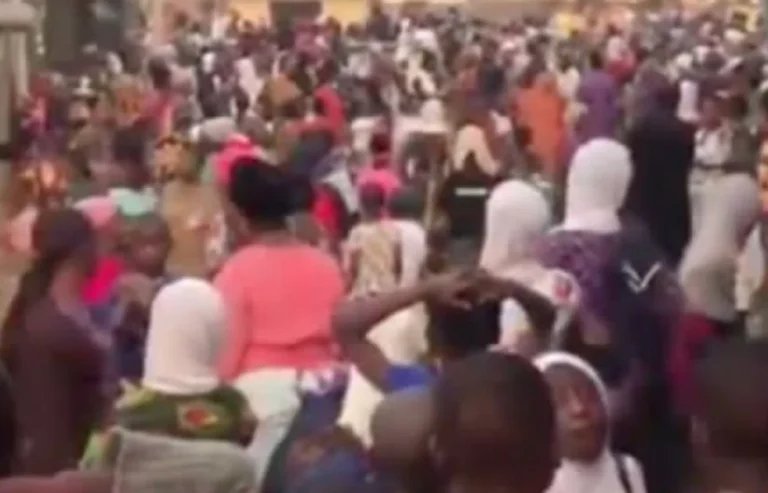
A TRAGIC stampede at the Holy Trinity Catholic Church in Maitama, Abuja, on Saturday, December 21, has left 10 people dead and four others injured.
The incident occurred during a special event organised by the church to distribute Christmas packages to less privileged residents in the nation’s capital.
An eyewitness confirmed that the stampede broke out when people in a large crowd were eager to receive the packages.
The crowd became chaotic, leading to the stampede and the eventual deaths.
A church member who spoke with The ICIR claimed that the police, who were invited to provide security during the event, arrived late, only showing up after the stampede had already occurred.
The incident raises another serious concern about crowd management and security protocols at public gatherings after a similar incident in Ibadan, Oyo State, earlier this week.
The Abuja stampede occurred a day after a similar occurrence in the Okija community of Anambra State, on Friday, December 20, during a rice distribution event, which resulted in the deaths of an unconfirmed number of residents, mostly women.
Video footage of the deaths on social media showed lifeless bodies on the ground, with some victims being rushed to nearby hospitals.
The Anambra State Government has since confirmed the incident, noting that it had launched an investigation into the cause of the stampede.
These two incidents followed another tragic stampede in Oyo State earlier in the week, where 35 children died during a Christmas funfair in the Bashorun District of Ibadan.
Over 5,000 children had attended the event, drawn by promises of cash and free food.
Six children were hospitalised as a result of the stampede, and eight people, including event organiser, Naomi Silekunola, a former wife of the Ooni of Ife, were arrested in connection with the tragedy.
The ICIR reports that these series of incidents have led to outrages on social media, with the Nigerian government and the police under pressure to ensure that better safety measures are put in place to prevent such incidents from occurring.
The incidents also arise from pervasive hunger in the country, ocassioned by the policies of President Bola Tinubu’s government.
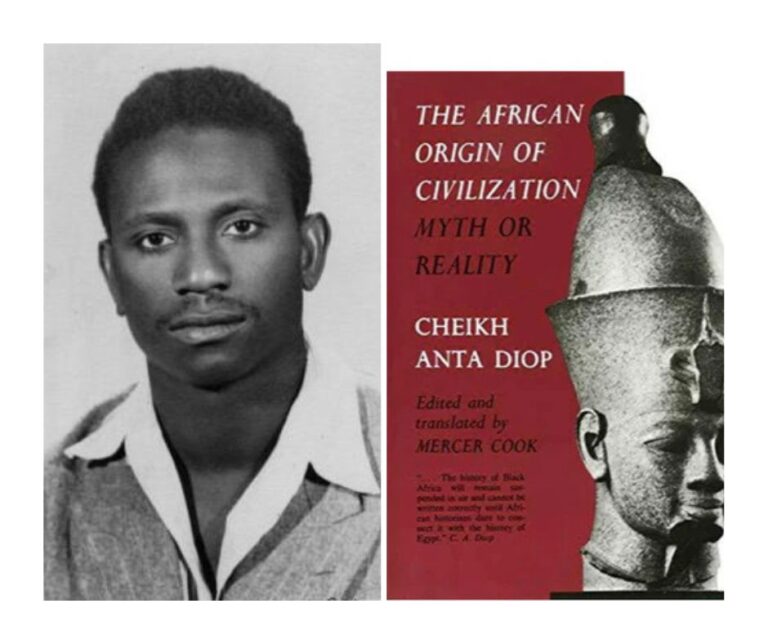
BOOK title: The African Origin of Civilization : Myth or Reality Author: Cheikh Anta Diop Publisher: Lawrence Hill Books Year: 1974 ISBN: 155-652-072-7
There is a narrative that the black race native to sub-Saharan Africa has not contributed anything to human civilisation. We have no old monuments; no histories of empires comparable to those of Eurasia and the Mediterranean; no medicine or literature or mathematics or astrology or even agriculture that we taught the rest of the world. This is disgraceful since we are the original humans and have been residing here in Africa forever. It is even more disgraceful that we have remained at the bottom of human development. This is something I am really sensitive about.
This book makes the argument that the feeling of inferiority is unnecessary because black people founded Egypt which civilised everybody else. He takes on assertions that Egypt was a white or at least brown civilisation. The author makes his argument using:
1. Egyptian art which gives pre-eminence to black people when showing people of different races. Further, their gods were depicted as black. And interestingly, the white man was shown in last place wearing animal skins; evidence that he was at the bottom of the civilisational hierarchy and evidence that no condition is permanent.
Similarities between ancient Egyptian cosmogeny and contemporary traditional, African cosmogeny and religion, especially that of the Yoruba.
How ancient Egyptian accounts stated that their origin was south, in Ethiopia, which in antiquity was Sudan, not present-day Ethiopia. A bit like how the original Ghana was in present day Mali.
He quotes descriptions written by Greek historians (Herodotus and the usual suspects) which said the ancient Egyptians were black with woolly hair.
Comparisons between words in the ancient Egyptian language and contemporary African languages like (especially) Wolof, which is his native language; Yoruba, Laobe, Peul, Serer and other languages.
It is a persuasive argument because firstly, I want to be persuaded since it is a claim that, if true, benefits me.
It is a persuasive argument because firstly, I want to be persuaded since it is a claim that, if true, benefits me.
Secondly, parts of it are sensible and logical because since black Africa is the origin of humanity, and it is where humans have occupied for the longest time, it is not implausible that the oldest occupants (black people) developed civilisation and exported it.
Thirdly, it has been proven that at least 13,000 years ago, the Sahara was wet and peopled, most probably by black people. It is possible that Egypt is a remnant of a civilisation now lost to time; especially since the harshness of the desert might have destroyed evidence of that civilisation or it is under the sand.
Fourthly, Sudan is part of black Africa. It has more pyramids than Egypt and some of the pyramids there seem to be prototypes of the ones in Egypt, so it is plausible that there was a precursor civilisation there.
However, I am skeptical of his argument because of motivated thinking. That I want something to be true does not mean I should not question it to see if it aligns with what I already know (or think I know). There are parts of his argument that I find hard to accept.
I find it hard to believe that the civilisations in Arabia, China, Mesopotamia and India were established by colonies of civilised black people who eventually became white or slitty eyed.
Firstly, I think that too little time would have passed for those physical changes to happen. Further, the presence of Red Indians in the Americas, who are genetically closer to Orientals and the historical evidence of people crossing the Bering strait means Asiatics had diverged at an earlier time in the past than the timeline he claims. While it is evident that humans migrated, it was a slow process. And since the migrants were wandering about in the wild, I imagine the population growth was too slow to allow for the mass that would enable specialisation and thus civilisation. The point here is that while it is not worth debating whether it was black people who migrated from Africa, it is worth debating whether by the time civilisation developed in Asia, the people were still negroid.
Related to the bit about the Bering Strait, his descriptions of biological negroid markers found on Egyptian skeletons seems like dated knowledge. It appears dated because I have read claims that skeletons have no racial characteristics. I am inclined to believe him though, because it does not make sense for there to be differences in say facial structure and then for someone to say these differences do not go down to the bones. The claims that say otherwise are probably just political correctness gone wild.
Another weakness of his argument is the similarity he claims exists between ancient Egyptian and contemporary black African languages.
Another weakness of his argument is the similarity he claims exists between ancient Egyptian and contemporary black African languages. He gave too few examples and that means the similarity could just be coincidental.
My criticism of this argument is itself weak since studies of Proto-Indo-European (PIE), which existed 4,500 years ago have claimed similarities between languages in India and Europe. However, those claims are backed up by a lot of evidence and supposedly more rigorous studies. His claim does not have such support. Further, given how mutable language is, I find it hard to believe traces of a 5,000 year old ancestral language would be easily discovered.
Although I repeat, this criticism is weak, and I am probably just including it here to pretend erudition at knowledge of PIE. Speaking of erudition, the guy was quite learned. He had degrees in anthropology, history and physics. The book uses jargon precisely, even though as I said earlier, some of the scientific proofs he presents seem like they have been superseded by new findings. I have mentioned the Bering Strait above. And so, I sometimes felt like I was reading a discredited science like phrenology, especially in his arguments about biological negroid features like dolichocephalic heads.
However, the biggest weakness of his thesis is related to something I said in my opening paragraph. Why are we the most backward now? If we were civilised before, why have we not been able to become civilised again? And if Egypt is descended from a sophisticated black African civilisation, one which branched out in other directions, why did those other places not thrive?
There may be an argument that the conditions of the Nile valley enabled the building of the pyramids and other archaeological remains. If so, why are there no impressive remains of African civilisations in the forested parts of Africa like what is found in Central and South America? There are no monuments in clement populated places like Uganda, which was rich enough and populated enough to generate the surpluses necessary for a complex society. If a conducive environment is what enables civilisation, one should have developed there, since that is what is said to have enabled those in the Middle East. There are also none in the harsher places like the Sahel.
So, given the range of environments on the continent, there should have been more civilisations with more impressive records.
So, given the range of environments on the continent, there should have been more civilisations with more impressive records. But there is no evidence. If such evidence existed, we would not have to fight to claim Egypt, even if the claim is true. Because we would have other history just as impressive.
This is an interesting book that is worth reading. However, it is not an enjoyable read. I did not enjoy it because it is dense academic writing. It felt a bit like Wole Soyinka’s work. But it is highly recommended because of the new knowledge I have been made aware of even though it does not fit in well with what I have previously accepted as most probably correct.
Bashir Abdulrahman writes about books he has read. He can be reached via bashirhimma@gmail.com
THE Court of Appeal in Kaduna has ruled that the Nigeria Customs Service (NCS) lacked the power to seize imported rice in open markets.
A three-member panel of justices, led by Ntong Ntong, made the ruling while dismissing an appeal by the NCS against the judgment of the Federal High Court, Kaduna.
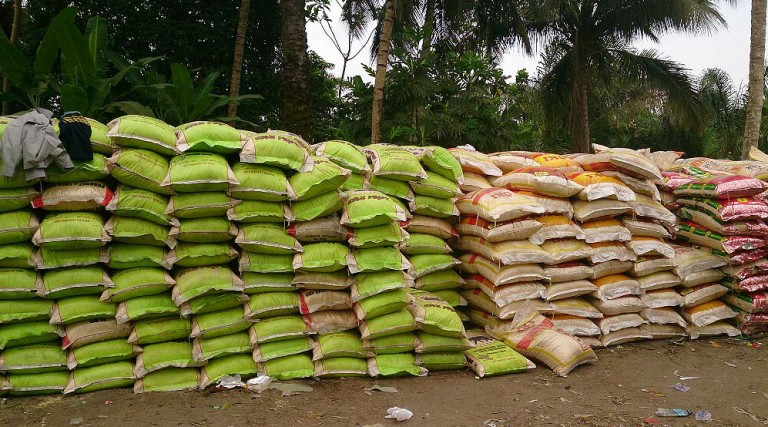
In its judgment delivered on December 6, and reported by The Cable on Friday, December 20, the appellate court ordered the release of 613 bags of foreign rice, alongside 80 bags of millet worth about N200 million and a truck impounded from the respondent in the appeal, Suleiman Mohammed, a 37-year-old businessman.
This decision followed a legal battle that began in 2019, when Customs officers intercepted Mohammed’s truck on the Kaduna-Zaria Expressway, arrested him and confiscated his goods.
Mohammed was later arraigned on a two-count charge for allegedly importing foreign rice in violation of the Federal Government’s directives.
In November 2021, Z.B. Abubakar, a justice of the Federal High Court, Kaduna, acquitted Mohammed, citing insufficient evidence.
The trial court ruled that the Customs failed to prove the defendant imported the goods through banned land borders, noting that the 2016 circular banning foreign rice importation applied solely to land borders, not seaports.
Dissatisfied with the outcome, the NCS filed an appeal. However, the Court of Appeal, upheld the trial court’s decision, while further reinforcing the limitations of Customs’ enforcement authority.
The court held that “Kaduna-Zaria Expressway is not a land border,” adding that “the Nigeria Customs Service has no right to arrest Suleiman Mohammed on June 14, 2019, and confiscate his goods on the Kaduna-Zaria Expressway, which is outside the contemplation or application of the ban on the importation of foreign rice.”
The court further emphasised that the NCS did not have the authority to patrol highways, such as the Kaduna-Zaria Expressway, for the purpose of arresting individuals or seizing imported foreign rice, as these areas fall outside the jurisdiction of land border enforcement.
EFFORTS at improving healthcare services in Oyo State through the 721 Primary Healthcare Centres (PHCs) have been hampered by a shortage of workers and quackery. There is a nexus between the increased workload on staff, and the high incidence of mortality and morbidity from preventable diseases. Stakeholders insist that these lapses must be timeously addressed as they are forcing the public to patronise unlicensed practitioners and substandard medical facilities.
When Temilade Moshood was two months pregnant with twins, she registered for antenatal care at Gbagi Primary Health Centre (PHC) in Lagelu Local Council of Oyo State. But despite registering early and regularly attending check-ups, the incompetence of a health worker and a severe shortage of staff turned her delivery into a nightmare.
“Ordinarily, the facility should be manned by at least 10 health workers, but when I got there, there were just two (one nurse and the matron). They seemed overworked. The matron was inside attending to one woman, who was also in labour. It was too obvious that there was a shortage of workers,” Moshood recalled.
“I registered for antenatal care in Gbagi PHC after it was confirmed that I was pregnant with twins, I regularly attended the facility until my delivery date. When I started feeling labour pains during my last trimester, I went to the health facility as instructed, and I was taken to the labour room by a nurse. After delivering the first baby, we waited for the second one, but the nurse seemed unsettled and unsure. Despite my attempts to push, the second baby didn’t come out. It got to a point where the nurse was confused and admitted she didn’t know what to do. She was asking questions like, ‘What kind of situation is this?’
“In a panic, my husband, who was agitated asked the nurse to do something fast. At that point, part of the baby- a hand was already sticking out while the other hand was trapped inside of me. My husband quickly rushed me to the nearest private hospital, where I went through a C-section to deliver the second child, and it was there that I was told that the baby couldn’t make it. The quack nurse made me lose my child. So, I went home with one of my twins.
“Losing a baby is traumatic, sad, and painful. The government needs to do the right thing by employing competent workers for the PHCs to prevent avoidable deaths. Also, there must be consequences meted out to health workers, who are negligent in carrying out their duties of saving lives,” Moshood emphasised.
Another tragic tale is that of Omowunmi Owolabi, who suffered from neglect by nurses in September 2009. Stricken with severe malaria, high fever, and relentless vomiting, Omowunmi was taken by her mother to the Oniyanrin PHC in Ibadan North Local Government Area.
“The nurses were preoccupied with something else despite our plea for quick medical attention,” Omowunmi recalled.
“It was more than two hours before one of the nurses finally attended to me. The nurse told us that we had to wait for a card to be issued before treatment began. My mother begged for at least first aid, but it took a long while before they responded.”
Omowunmi eventually collapsed and was taken to another hospital, where she spent hours in a coma.
Reflecting on the experience, she said, “It was the worst day of my life. I keep wondering what would have happened if my mother had not rushed me to another hospital. Many people face similar neglect from so-called medical professionals, ending up worse off, or even losing their lives due to such negligence.
“Approximately four health workers were present. It was early in the morning, so I cannot attribute their behaviour to fatigue or exhaustion unless they worked overnight. I assume it was purely a lack of zeal to do the right thing and a lack of proper monitoring and supervision,” she added.
Temilade and Omowunmi’s experiences are more than mere happenstances; they highlight a broader issue in Oyo State’s primary healthcare system, which includes inadequate manpower and burnout among health workers.
Manpower shortage aids burnout, quackery
According to findings from the administration department and the record and research unit of the Oyo State Primary Healthcare Board (OYSPHCB), as well as the office of the Executive Secretary of OYSPHCB, the state has 721 Primary Healthcare Centres (PHCs) staffed by only 2,149 workers across the 33 local councils. This staffing level is grossly inadequate when compared to the 24 staff members per PHC stated in the National Primary Healthcare Development Agency (NPHCDA) guidelines.
The NPHCDA also maintains that each PHC should ideally be staffed with a medical officer, community health officers (CHO), nurse/midwives, Community Health Extension Workers (CHEW), a pharmacy technician, Junior Community Health Extension Worker (JCHEW), environmental officer, medical record officer, laboratory technician, and supporting staff such as health attendants, security personnel, and general maintenance workers.
Governor Seyi Makinde
A source within the OYSPHCB, who requested anonymity, since he is not authorised to speak with the press, revealed that there has been no mass recruitment of qualified personnel into the primary healthcare system for 19 years.
This has resulted in severe burnout among existing staff and a rise in quackery, as facilities struggle to meet the growing demand for services.
Despite the Basic Health Care Provision Fund (BHCPF) being implemented in 342 facilities, the core issue of understaffing remains unresolved.
The executive secretary of OYSPHCB, Muideen Olatunji, noted that while 10 per cent of the BHCPF is allocated for staff engagement, the number of workers remains insufficient.
Various facilities visited across five council areas; health workers acknowledged the benefits of the BHCPF but stressed the persistent staffing shortages.
In Ibadan North council, Tunrayo Adijat Bello, the deputy officer in charge of Agbowo Primary Healthcare Centre, said, “We have seven permanent staff and two ad hoc officers from the BHCPF scheme. Ideally, we need at least 18 staff to run three shifts smoothly.”
The Chief Nursing Officer at OluwoNla PHC, Helen Aderinto, revealed, “We have 10 staff on the government payroll, but we should ideally have 24. The work overload is affecting my health. I am not the type that usually falls sick, but now I fall sick regularly due to the huge workload.”
The Chief Nursing Officer at Alegongo PHC, Bukola Ajala noted, “With only seven state-recognised staff, we need 15 to manage three shifts effectively.”
At the Olorunda Aba PHC, a Community Health Officer, Funmilayo Adeyemi said, “We have three permanent staff and six volunteers. Ideally, there should be 15 health workers here.”
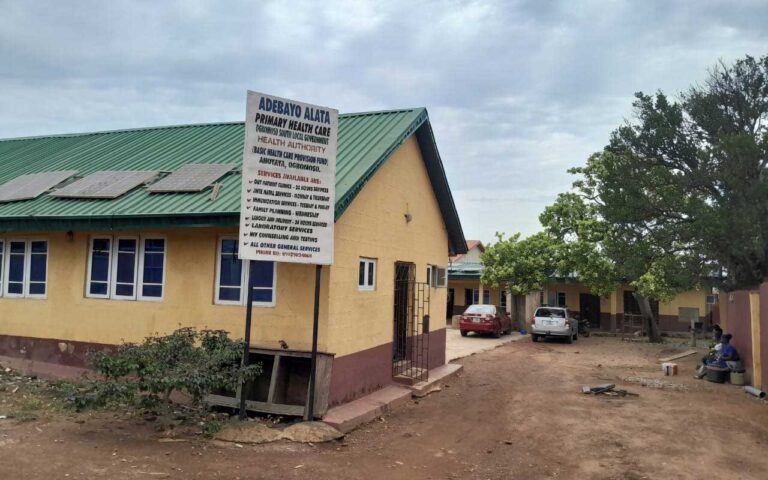
The situation is similar in Ogbomoso South and Iseyin local councils. Abigail Adegboyega, nurse and officer in charge at Adebayo Alata PHC, in Ogbomoso, revealed that her facility, with eight staff members, needs at least 20. “We are struggling with severe staff shortages. The current number is insufficient for providing adequate care,” she said.
At Arowomole PCH, also in Ogbomoso, Falilat Amoke Oladele, the only permanent health worker, is supported by a corps member, and one BHCPF worker. She lamented the situation adding that the facility requires 10 permanent staff for it to function efficiently.
“We desperately need at least 10 permanent workers to manage the facility effectively, but I am the only permanent worker here. I am literally doing the work of eight people. There is no way I won’t be overstressed and my productivity impacted,” she said.
The head of Ilogbo PHC in Ogbomoso, Abel Ojo, a medical doctor, reported that with only three permanent staff and six volunteers, including one BHCPF worker, the facility operates far below its required strength. “Ideally, we should have 24 permanent health workers to run this centre properly. The workload is beyond normal. We are suffering here, and we do three shifts and work on Saturdays,” he stressed.
In Iseyin Local Council, Hamzat Rianat Adenike, who is the head of Faramora PHC, said: “Our facility should have 12 permanent staff, but we only have four. This shortage impacts the quality of care that we can provide.”
At Oke-Ola PHC, also in Iseyin, Raji Yusuf Adekunle, a nurse, and the only permanent staff is assisted by about three volunteers.
He said: “With just one permanent staff and several volunteers, it’s challenging to keep up with the demands of the centre.”
Health worker’s strikes shorten service shortfall
The staffing crisis in these health centres has been further worsened by a series of strikes that have taken place this year. So far this year, three major labour unions in the health sector have gone on strike over issues including the lack of new recruitments, delayed promotions, and inadequate hazard allowances. On March 4, 2024, the Nigerian Union of Allied Health Professionals (NUAHP) in the state staged a seven-day warning strike.
The unit chairman, Olanrewaju Ajani, explained: “We took this action because the state government failed to meet our demands for a new hazard allowance, promotion letters for qualified members, and more recruitment.”
On May 21, the state council of the National Association of Nigeria Nurses and Midwives (NANNM) commenced an indefinite strike.
According to the state chairman, Adeyemi Samuel, and the state secretary, Aina Emmanuel, the group’s demands include mass recruitment for various health institutions and the implementation of a 25 per cent CONHESS salary adjustment.
“The shortage of nurses and midwives is critical. We need immediate action to improve healthcare delivery,” Samuel stressed in a press release.
Adding to the unrest, on June 24, 2024, the Medical and Health Workers Union of Nigeria (MHWUN) went on a seven-day warning strike. MHWUN President John Fabunmi said: “Despite our repeated reminders, the government has yet to address our concerns about staff shortages and other critical issues.”
This mounting frustration over working conditions is affecting both staff and patients.
According to Aderinto of OluwoNla PHC: “Patients are complaining about our slow pace of service delivery. As a result, some go to unlicensed pharmacy stores to buy drugs, or they take herbs prescribed by quacks. When the drugs don’t work, they return here for better treatment. We attended to one such case on July 24.”
High prevalence of quackery in Oyo
Medical quackery in Oyo State has become a significant issue and is worsened by the shortage of qualified healthcare workers, and the resulting burnout among existing staff.
Burnout among medical professionals often diminishes the quality of care that they can provide. This inadequate staffing results in longer waiting times, and reduced access to healthcare services, pushing desperate individuals toward unqualified and unlicensed practitioners, according to experts.
The Oyo State government has been actively combating this problem, yet the problem persists. Recently, the state government sealed several clinics and hospitals in Ibadan and Saki. These closures were part of a broader effort to eliminate unlicensed and unqualified medical practitioners.
According to media reports, the state’s Task Force on Private Health Facilities, led by the then Commissioner for Health, Basiru Bello, shut down five facilities due to the engagement of quack staff and a lack of proper approvals.
According to Adewale Moshood, a medical researcher and team lead at Cure My Nation Initiative, and Oluwatosin Adeluwoye, a former lecturer at the department of Science Laboratory Technology, Lead City University, Ibadan, the shortage of licensed healthcare professionals at the primary healthcare level creates a fertile ground for quack clinics to flourish. These unregulated facilities promise quick and affordable treatment that is appealing to individuals who cannot afford to wait for care in overburdened and understaffed hospitals.
Reflecting on the impact of quackery, Temitope Farombi, a Consultant Neurologist at the University College Hospital (UCH), Ibadan, shared a personal tragedy.
“I lost my sister to a quack in 2005. She got pregnant and delivered a baby, but the quack forgot a swab inside her, causing an infection. Instead of referring her to a specialist, they performed a D and C, rupturing her womb. She bled to death three weeks after delivery.”
She stressed the severe consequences of quackery, including poor health outcomes, health complications, loss of lives, and distrust in the health system, adding that the public health implications of quackery are often untold.
Farombi said that patients treated by unqualified practitioners face increased risks of misdiagnosis, inappropriate treatment, and complications from unsterile procedures.
“This does not only endanger individual health but also worsens the burden on legitimate healthcare facilities when patients eventually seek help for worsened conditions. In addition, the proliferation of quack clinics also undermines public trust in the healthcare system and complicates efforts to implement effective public health measures.”
Reacting to these unsavoury findings, experts maintain that the state government must invest in its workforce and strengthen enforcement actions against illegal medical practices.
Specifically, a consultant Radiation and Clinical Oncologist at the Federal Medical Centre (FMC), Idi-Aba, Abeokuta, Dr Bolaji Lateef Salako, called on the state government to employ qualified and competent health workers to curb quackery.
He warned that the shortage of workers at PHCs cannot be dissociated from high incidences of mortality and morbidity from preventable diseases, and increased workloads, amongst other issues.
“It is evident that our healthcare facilities are understaffed. This is one of the major reasons we are losing many people to the cold hand of death. Our health workers are overstretched thereby leading to low productivity and untimely death”.
The founder of Pabokede Initiative for Child Protection and Family Life Education and former lecturer at the College of Medicine, University of Ibadan, Patricia Abokede noted: “Many quacks exploit the ignorance and shortage of manpower to provide unprofessional healthcare services. Quackery has led to increased maternal and infant mortality and morbidity.”
Adebayo Alata PHC, Ogbomosho
She recalled handling a case where a boy’s genital was mistakenly severed by a traditionalist. The boy’s parents could not afford the N5,000 circumcision fee at a government medical center and opted for the traditionalist’s services.
“I once handled the case of a boy whose manhood was chopped off due to quackery. The parent could not afford N5,000 for circumcision at the government medical centre and decided to visit a traditionalist who cut off the innocent boy’s private part.”
These tragic outcomes are not isolated incidents within Oyo State’s healthcare. Chronic understaffing of PHCs, particularly in rural and hard-to-reach areas plays a significant role in the state’s dismal health statistics, particularly maternal and infant mortality rates.
The state’s maternal mortality rate stands at 262 deaths per 100,000 live births, which, while lower than the national average of 576, is still high. The infant mortality rate is 41 deaths per 1000 live births, according to 2018 data estimates.
A UNICEF report under the Accelerated Action for Improving Maternal, Newborn, and Child Health (IMPACT) initiative further reveals that Oyo State is characterised by high neonatal mortality and low immunisation rates. The state ranks third, after Kano and Jigawa in terms of neonatal deaths, contributing to more than a third of all infant deaths in Nigeria.
Despite some progress in child health since 2011, the report stressed that approximately 38 babies die each day in Oyo, primarily from sepsis and birth asphyxia, with fewer than four in 10 children fully immunised. Moreover, researchers in 2022 estimated that the maternal mortality ratio in selected local councils averaged 489 deaths per 100,000 live births.
The researchers identified the scarcity of qualified healthcare workers, which forces many residents to turn to unqualified practitioners, as a key factor exacerbating the risks associated with childbirth and early childhood, especially in underserved areas.
‘Recruitment into PHCs is ongoing’
The Executive Secretary of the Oyo State Primary Healthcare Board, Muideen Olatunji, acknowledged the staffing challenges in a recent interview, revealing that Oyo State PHC data indicates a need for 13,574 health personnel to meet the obligatory healthcare needs of residents.
Olatunji explained that while recruitment efforts for Primary Healthcare Centres (PHCs) are ongoing, the process has yet to reach completion.
“We have started the process since 2021. We are ready for the next stage. The primary healthcare board is supposed to recruit for PHCs. I cannot predict when the process will be concluded,” he said.
Addressing the issue of quackery, Olatunji stressed: “There is no quackery in the system. Even if the facilities are short-staffed, there is no quackery in the government establishment. It may be outside the government establishment.”
Olatunji lauded the Basic Health Care Provision Fund (BHCPF) for its role in addressing manpower issues but advocated for increasing the fund from one per cent to between 2.5 and 5 per cent to better meet the public health sector’s needs.
This report is supported by the International Budget Partnership IBP and the International Centre for Investigative Reporting (ICIR).
THE Plateau State Police Command has banned night grazing, farming, and other nocturnal activities across five local government areas of the state from December 23, 2024, to January 3, 2025.
The move, aimed at ensuring a peaceful Christmas and New Year celebration, was announced by the state commissioner of police, Emmanuel Adesina, in a statement by the command’s spokesperson, Alabo Alfred.
It warned that violators of the restrictions would face the full weight of the law.
Yuletide, celebrated from late December into the New Year, sees a surge in mobility, public gatherings, and commercial activities, often leading to heightened security challenges.
It typically spans from December 21 to January 1 (New Year’s Day), with the primary focus being on December 25 (Christmas Day).
The police said the decision to ban night grazing among others followed a strategic security meeting held at the command headquarters in Jos, the state capital, with council chairmen from the affected areas.
The local governments include Bassa, Barkin Ladi, Riyom, Bokkos, and Mangu, which have previously experienced security challenges.
According to the statement, the restrictions cover night grazing by herders, night farming by farmers, late-night operations of beer parlours, night mining activities, and the operation of commercial motorcycles (Okada).
The statement further revealed that commercial tricycles, popularly known as “Keke NAPEP,” would also be banned from operating within the Jos-Bukuru metropolis on December 25, 26, and January 1, 2025.
The police emphasised that these restrictions, which will be enforced between 6 p.m. and 6 a.m., were part of efforts to maintain peace in the state during the festive season.
The statement read in part, “The Plateau State commissioner of police has put in place effective security arrangements and made all necessary deployments to all the 17 local government areas to ensure that there are no threats to the peace currently being enjoyed in the state.
“After due consultation with his management team and critical stakeholders within the state, the Plateau State commissioner of police during a stakeholders meeting today has placed restrictions on the following activities from 23rd December 2024 to 3rd January 2025 in Bassa, Barkin Ladi, Riyom, Bokkos, and Mangu Local Government Areas: night grazing by herders, night farming by farmers, late night operation of beer parlours, night mining activities and operation of commercial motorcycles (Okada).
“The CP also wishes to announce to the general public that there will be a ban on the activities of commercial tricycles also known as “Keke NAPEP” within the Jos Bukuru metropolis from 25th to 26th December 2024 and on the 1st of January, 2025. He also wishes to reiterate that the total ban on the activities of commercial motorcycles remains in force.”
Adesina assured residents that the command had deployed officers to major flashpoints and was working with the military, other security agencies, and local vigilante groups to ensure the safety of lives and property.
The command appealed to residents to cooperate with security agencies during the festive season and report any suspicious activity to the nearest police station, stressing that the measures were not meant to intimidate anyone but to safeguard public safety.
“We want you to note that all of our policies are for the peace and security of all Plateau residents, and not meant to intimidate or inconvenience anyone”, the statement added.