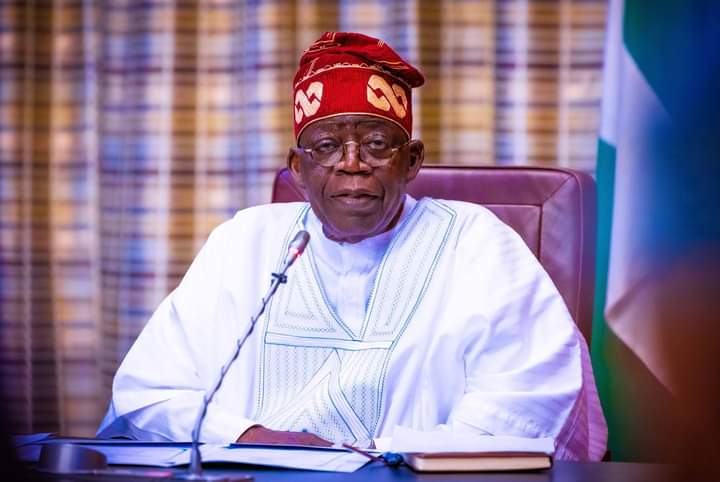
NIGERIANS have reacted to the chat that President Bola Tinubu had on Monday, December 23, at his Bourdillon residence in Lagos State.
In the chat where the President touched on economic reforms, security, tax bills, the size of his cabinet, and deadly stampedes over food sharing, among others, he promised to work more to reverse the current trend of hardship in the country.
While some citizens lauded him, others faulted his positions during the chat – his first since he took over power on May 29, 2023.
Major takeaways from Tinubu’s maiden media chat
Following the loss of lives due to stampedes in different parts of the country where foods and other items were shared preparatory to the Yuletide, Tinubu warned that those who do not have enough to share should stop publicising their events.
He sympathised with families who lost relations to the tragedies while noting that giving to the less privileged is good.
“I have been giving out foodstuff, commodities, etc., in Bourdillon. If you know you don’t have enough to give, don’t attempt or publicise,” the President stated.
Speaking on security, Tinubu expressed confidence in the national security architecture, cautioning that decades-long violence could not be solved overnight.
According to him, “It is safer now to travel on Nigerian roads,” unlike a few years back when he said he often paid condolence visits to victims of violence.
“Today, you can still travel the roads. Before now, it was impossible,” he said.
On the removal of the fuel subsidy, Tinubu defended his administration’s decision to remove the fuel subsidy and reconcile foreign exchange rates, describing them as necessary steps for Nigeria’s economic recovery.
Fielding questions on tax reform, whose bills before the National Assembly had generated controversies, Tinubu said the reform was good for a modern economy.
He reaffirmed his administration’s commitment to implementing tax reforms, describing them as non-negotiable for Nigeria’s economy.
“Tax reform is here to stay; we cannot continue to do what we were doing yesterday in today’s economy,” the President emphasised.
Acknowledging the hardships caused by his administration’s policies, Tinubu urged Nigerians to remain patient and hopeful. He said he was convinced that things would get better.
Nigerians react to media chat
Meanwhile, Nigerians have reacted to the President’s positions during the chat. While some commended him, others scored him low. Here are some of the reactions.
A former media aide to former President Muhammadu Buhari, Bashir Ahmad , tweeting on his X handle, lauded the President for holding the chat.
“This was an excellent presidential media chat from President Tinubu. Kudos to his media team for making it happen. The President’s policies will pay off in the long run, and I personally believe that it is too early to give him marks; 18 months is not enough time to fully judge his administration,” he tweeted.
An X user with the name Isaac Olatunde said the President was vocal in his response to questions during the chat.
“President Bola Ahmed Tinubu did well during his media chat, and no President since independence has been as eloquent and sincere with his answers.”
An X user. Obiasogu David raised some questions concerning the interview.
“Have you seen Tinubu’s media chat? Did you see the cut-and-join edits, the emptiness of thought, the embarrassing ‘mis-yarn,’ and the docility of the pressmen interviewing him?” he asked.
In his post, a public affairs commentator Mahdi Shehuscored Tinubu low on his response to questions during the chat.
“Tinubu’s Belated Media Chart (sic): Tinubu’s responses to all the questions posed to him were × unintelligently answered × full of arrogance × Evasive × Lacking in a clear direction. × Rooted in guesses & derailment × Slippery slopes × Confirmation of tragedy in stewardship. × Depressive × Instilled fear and hopelessness. NB: Empty and nothing to celebrate,” he tweeted.
Reuben Abati, one of the anchors of Arise TV “Morning Show” and former spokesperson to former President Goodluck Jonathan, said on the show on Tuesday, December 24, that all his efforts to rattle the President during the interview did not succeed.
He also claimed he noticed the President had settled into the job.
“He is not all the things we used to say during the campaign period. He knows what he is doing. He spoke with a lot of confidence. In fact, I was shocked that they didn’t even prepare him,” Abati stated.
ON August 1, 2024, many Nigerians took to the streets to protest President Bola Tinubu’s policies and the hardship affecting the livelihoods of millions of households. However, they were met with resistance from the government and security operatives. In this report, The ICIR tracked down 15 victims of arbitrary police arrests and abductions, across Abuja, Kano, and Sokoto, to document their plights, while also speaking with some of their family members about these individuals’ personalities.
The array of the sun at the Intelligence Response Team (IRT) premises cast a harsh glow on Daniel Akande’s face. Seated under a tree shade, his posture slumped with a mix of sadness and suspicion. His eyes appeared sunken and tired when The ICIR reporter posed as his brother to gain entry into the police intelligence Response Team (IRT) office in Abuja and speak with him about his plights. Beside him were his wife, Esther, and sister (name withheld). Both were attending to Akande’s only son, while repeatedly glancing at his investigating police officer (IPO), standing nearby.
Akande was in the middle of a Sunday service with his wife and his one-year-old son, on September 1, just 21 days after the EndBadGovernance that shook the entire country, when a man, with plaited hair moved towards him and suddenly grabbed him by his collar.
The mood in the Church, which had earlier been filled with the sounds of the congregation, shifted as Akande struggled to fight off the man’s hand from his neck. However, his efforts proved abortive as the man, firmly declared that he was being arrested for an alleged murder. At that point, Akande’s wife felt helpless. She looked around desperately for help from the Church members, but the officers already had her husband by the arms.
His arrest followed a chillingly consistent pattern: protesters of the #EndBadGovernance movement, which took place in many states across Nigeria between August 1 and 10, were often singled out after being identified as vocal participants or organisers.
They were typically abducted either in the dead of night or in a coordinated manner. Some were taken directly from their homes, while others went missing after protests or during encounters with security forces. In many cases, families and friends raised the alarm about these unlawful arrests on social media, sometimes hours or even days later.
Akande was one of the protesters who were arrested and are now facing treasonable charges. Beyond that, he belongs to some youth movement that boasts of holding the government to account and protesting against some of the economic policies of Bola Tinubu’s administration. But that was all he said about his contribution during the demonstrations.
Despite that, Akande spent 27 days at the IRT office in Abuja, before he was charged to court on September 28. On September 17, about 17 days after his arrest, Akande celebrated his 31st birthday in the cell, with several EndBadGovernance protesters. When he was first taken into police custody, he was kept incommunicado from his loved ones and lawyers until five days later when his wife would be allowed to see him.
“While at the IRT, nobody mentioned any murder case to me. Most of the questions they grilled me revolved around EndBadGovernance and who our sponsors were as if we had any. Nigerians are the sponsors of this protest, and that’s because of the economic policies [sic],” he said.
He would later spend 16 days in prison before he regained freedom under bail.
Daniel Akande (in polo) with friends. Photo: Francis Nwapa/X
Akande was not alone. Across the Federal Capital Territory (FCT), Kano, and Sokoto, over 1,000 young persons were arrested and abducted by security operatives, including children and citizens who had nothing to do with the protest.
The movement, which gained momentum in the first few days of August, began as a collective outcry against biting hardships, unfriendly economic policies, and rising insecurity. However, for many families, it turned into a nightmare and the little they had for sustenance is now being channelled to secure the release of their loved ones.
It was past evening prayer when *Hassan’s (name changed) family last heard from him. He had gone to his usual makeshift shop near the Sokoto State government house, where he sells newspapers and other small provisions.
Hassan tending to his small provisions. He was picked up by the police at the exact location where he is now back to attending to customers. Photo: The ICIR
That day, protests were ongoing in the city, and like many others in the state, Hassan was caught in the chaos that unfolded. The police fired tear gas to disperse the crowd, and in the ensuing panic, people scattered in all directions.
However, Hassan, who was only tending to his business beside his goods, found himself dragged into a police van. The officer seized the kola nuts he was holding, and his newspapers were thrown to the ground.
He was consequently taken to the State CID office, where he, alongside dozens of others, was locked up. “That was how they took me and other people to the State CID office and locked us up. An elderly man near my shop took my belongings and kept them for me,” he said.
That night, his family became worried when he didn’t return home at his usual time. It wasn’t until later that they learned he had been arrested during the police crackdown on protesters.
The next day, the detainees, including Hassan, were presented before a mobile court hastily set up at the police station. There, the magistrate declared that each of them had to pay a fine of about N130,000 for their release. “Those who were able to pay the money were released, while those of us who couldn’t were left there before we were later transferred to prison, where I spent six days,” Hassan narrated.
Hassan, a father of seven children, spent a gruelling six days in prison under very dire conditions. Although he mentioned that he wasn’t subjected to physical abuse during his time in both the police cell and the prison, he did experience emotional and psychological distress.
“It was after six days that my family and relatives were able to contribute N130,000 to pay for my bail. Throughout my six days in prison, I was just thinking about my family, as I have one wife and seven children. You see this small business of mine, I just thank God,” Hassan said, with tearful eyes and a breaking voice.
In Sokoto alone, the state police command estimated that 89 citizens branded as ‘suspected vandals’ were arrested on the first day of the protests and remanded in prison custody by a mobile court during its sessions on Thursday, August 1, and Friday, August 2, at the state police command.
Human rights activists and lawyers stated that about 80 of these individuals were abducted and tried illegally by the state government following the protests. The total number is difficult to quantify, as some victims’ families are too scared to come forward.
However, what is clear is that these abductions were part of a broader strategy to quell dissenting voices in the country.
Arrested in the dead of night, incommunicado for days
Babatunde Sankara, his nephew, and two others were fast asleep when, around 2 a.m. on August 5 in Abuja, he began hearing voices and banging on his door. The steps were heavy as the officers moved through the two-storey building where he lives.
Babatunde Sankara, endured hours of being handcuffed on his legs, denied medication during captivity
Initially, the officers who, he said, were many, stormed the second floor. Finding nothing of interest there, they proceeded to turn the entire building upside down in their search. Moments later, they stood at his door, pounding heavily on the wood as they demanded entry.
Standing a few steps away from the door, half-awake and gripped by confusion, Sankara initially thought they were kidnappers. It wasn’t until they started demanding to know who Michael Adaramoye (Lenin) was that he realised they were security officers. Once they confirmed Lenin was in the building, they asked Sankara to step aside, ransacked the room, and eventually whisked their target away.
Although Sankara, a human rights activist, was not involved in the protests, Lenin, whom he had been housing, had actively participated in the demonstrations in Abuja. Determined not to let Lenin be taken without knowing his whereabouts, Sankara became a target himself and was arrested alongside Lenin.
“About five masked men came in. Everyone who came upstairs was in plain clothes. Initially, I thought they were DSS, but later I realised they were National Intelligence Agency (NIA) operatives. Once Michael identified himself, they asked him to stand aside. At that point, it became clear to me that he was the one they wanted, and that he had to go with them.
“Actually, Lenin stays with me on and off. He’s a DJ and a graphic artist, and his work often takes him between Lagos and other cities. When he’s in Abuja, he stays with me.”
Not long after the officers, who arrived with several vehicles, drove through the estate’s back gate, they returned to pick up the remaining roommates, bringing the total to four. Just as they did with Sankara and Lenin, they blindfolded Mosiu Sadiq, his nephew, and the other person (name withheld) until they arrived at the NIA office, where they were placed in a cold cell.
“They came in through the back gate, and that’s also where they took us out. I think we were somewhere outside the gate when they suddenly stopped. I could hear their conversation over the radio; they received instructions to go back and pick up the others in the house. That was how the other two were also taken.
”The journey from my house to the NIA shouldn’t have taken more than 15 minutes at that hour, considering the speed we were traveling. However, they stretched it to almost an hour, taking multiple detours before we finally arrived. At that point, we had no idea where we were,” Sankara said.
With his leg cuffed and his brothers’ hands cuffed behind their backs, Sankara endured over 15 hours in what he described as a ‘cold room,’ blindfolded. His medical condition “diabetes” was ignored, and despite his repeated requests for medication, none was provided. “We were blindfolded the whole time at the NIA. The only time they removed the blindfold was when we got to the IRT,” he said, adding, “They wanted to handcuff me behind my back, but I told them I have a medical condition and it would affect my blood flow, so they should cuff me in front. There was a guy there, I don’t know what came over him, but the next thing, he punched me in the nose, and I bled for more than 10 minutes.”
The interrogation continued intermittently for about 15 hours, with no access to legal representations before dumping them at the IRT. Sankara was released three days after his arrest by the NIA operatives, on Thursday, August 8. However, Lenin and Sadiq spent 28 days at the IRT before they were eventually arraigned in court.
Alongside eight others linked to the #EndBadGovernance protests, they were arraigned on September 2, by the Nigerian government on six count charges bordering on plotting an attempt to topple President Bola Tinubu, felony, and cybercrime. The 10 individuals were alleged to be sponsored by Briton Wynne, who has been declared a wanted person by the police, for funding the alleged plot to overthrow President Tinubu and the waving of Russian flags in some parts of the country.
Wynne, whose bookshop was raided by the police at the Nigeria Labour Congress (NLC) headquarters in Abuja during the protests, has denied all allegations.
Starved, denied medication, and kept in an underground cell for 28 days
For 28 days, Lenin and Sadiq were held in an underground cell said to house no fewer than 40 inmates. While speaking with The ICIR, they were careful with their words but did not hold back in describing how they were crammed into the cell.
During the first three days of their detention at the IRT, Sadiq, and Lenin were starved and denied medication. “For three days, both Lenin and I didn’t eat anything, only water,” Sadiq says, his voice cracking with emotion. The situation worsened for him when he fell ill, likely due to the accumulated cold from the ‘cold room’ at the NIA and IRT, and the unhealthy conditions of the cell.
Mosiu Sadiq, 28, spent 28 days in police detention and 30 days in prison, and was only granted bail despite not participating in the protest.
“It was a very bad experience for me. There was a time at the IRT when I was very sick. I told my IPO about it. Lenin had been called out to write a statement, and I asked him to tell my IPO that I needed medication. The IPO didn’t even come to check on me.
“I was nursing that sickness for two weeks, but thankfully, one of my neighbours, a police officer, later helped me with some drugs.”
‘I was forced to confess’
From the first evening, the officers pressured Sadiq to confess to specific crimes, including participating in the design of fliers for the protest organisers, but he refused. According to him, nothing incriminating was on his laptop and phone, which had been seized during the night raid. Despite this, he was charged with severe crimes, including treason.
“After that first day I wrote my statement, the only other time I was called out was to open my laptop. The IPO asked me if I had designed the EndBadGovernance t-shirts and fliers, as I’m a graphic designer. I told him that while I do graphic design, I hadn’t made any fliers for that. I didn’t even attend the protests.
After their gruelling 28 days at the IRT, Sadiq, Lenin, and other young protesters were remanded at Kuje Correctional Centre, where they spent another 30 days. Although life at the correctional centre was better, conditions were still dismal. “Even at the correctional centre, I was getting rashes and infections. You know, sharing the same toilets with about 20 people or more,” Sadiq says, adding, “It was a very bad experience. I was mentally depressed. It’s very bitter, I wouldn’t wish it on anyone. It’s a terrible experience, I swear.”
A history of human rights abuse
Nigeria has a history of human rights abuse and use of force and security operatives against protesters. In fact, the Nigerian government is notorious for clamping down dissenting voices, and journalists alike.
In 2020, after the #EndSARS protest, several reports indicted the government for killing peaceful protesters, including a journalist covering the protest, for abducting many others. Most of them were kept in jail for weeks without trial and later faced ridiculous charges for protesting against police brutality and harassment in the country.
According to Amnesty International, at least 56 people died across the country during the protests. In 2023, which was three years after the protest, Amnesty International stated that at least fifteen protesters were still being arbitrarily detained, with the majority of them being held without trial in Kirikiri Medium Correctional Centre and Ikoyi Medium Security Correctional Centre in Lagos.
The organisation listed the detainees as Daniel Joy-Igbo, Sodiq Adigun, Sunday Okoro, Olumide Fatai, Oluwole Isa, Shehu Anas, and Akiniran Oyetakin, all arrested in Lagos in 2020 and were being arbitrarily held in Kirikiri Medium Correctional Centre.
Segun Adeniyi, Onuorah Odih, Jeremiah Lucky, Gideon Ikwujomah, Irinyemi Olorunwanbe, Quadri Azeez, Olamide Lekan, and Sadiq Riliwan, were being detained without trial in Ikoyi Medium Security Correctional Centre in Lagos since 2020.
‘Manufactured’ charges, stringent bail conditions
Michael Lenin, one of the protesters arrested during the #EndBadGovernance protest in Abuja
On August 1, Lenin joined the #EndBadGovernance protest at the Moshood Abiola Stadium in Abuja. The protest was largely peaceful until demonstrators attempted to march to Eagle Square, where security forces resisted, using force to disperse them.
For the next few days, Lenin remained at the protest grounds, returning home after each day’s demonstrations. But by midnight of Thursday, August 5, his routine was disrupted when a group of officers arrived at his residence to arrest him.
He was accused of conspiring with a foreign national, Wynee, whose only connection to Lenin, according to him, was the fact that he was aware of Wynee’s bookshop located at the NLC headquarters in Abuja. Despite this, the officers seemed fixated on linking Lenin to a broader conspiracy.
During his incarceration at the IRT, Lenin wrote statements about five times, and each time he was called upon by the officers, they asked him the same questions: about his sponsor and his relationship with Wynne. Even after denying any involvement with Wynne and the waving of flags in various parts of the state, he was charged with felony, treason, and working with Wynne and groups waving Russian flags, accusations Lenin firmly rejected.
The ICIR reported that over 800 people were arrested in Kano in connection with the protests. While speaking with The ICIR, Lenin acknowledged he participated in the peaceful protests in Abuja but maintained his innocence regarding any foreign interference. He also claimed that the police found no incriminating evidence on his phone and laptop, which they held for about a month.
Michael Lenin spent 58 days in custody and was accused of trying to unseat President Tinubu
On September 11, Lenin, along with Sadiq and eight others, was granted bail by the Federal High Court. The court presided over by Emeka Nwite, set the bail at N10 million each, along with a surety in like sum. The sureties were required to reside in Abuja, own property within the city, and deposit the property documents with the court registrar. Additionally, they had to swear an affidavit of means.
Lenin described the bail conditions and charges as stringent and seemingly designed to deter any immediate efforts to secure their release. He noted that his people were able to meet the bail requirements 22 days later.
Lenin (middle), Sadiq (right) and one other protester after regaining freedom
A human rights lawyer, Abdul Mahmud, said slamming such bail conditions on the protesters is ‘pernicious’. He noted that the Nigerian Constitution grants citizens the right to peaceful assembly and expression under Sections 39 and 40, emphasising that peaceful protesters should not be criminalised solely for exercising these rights.
“Furthermore, it is my view that detaining individuals incommunicado (without access to legal counsel, family, or outside communication) is a serious violation of their right to personal liberty, protected under Section 35 of the Constitution. This section mandates that anyone arrested must be informed of the reason for their arrest and be brought before a court within a reasonable time, usually 24 to 72 hours,” he said.
“The arrest, detention, and subsequent imposition of treason charges on peaceful protesters cannot be justified under the law. Such actions violate the Constitution of the Federal Republic of Nigeria (1999, as amended),” he added.
The ICIR sought clarification on these and other allegations from Josephine Adeh, the Spokesperson for the Federal Capital Territory Police Command. She asked that the questions be sent via text, explaining that she was attending a conference. However, the message concerning human rights abuses and arbitrary arrests, sent to her phone, is yet to receive a reply.
Innocent, yet guilty
Murtala Auwal, a resident of Kurana Babban Layi in Ungogo LGA, in Kano state was standing by the roadside near his house during the protest when the police picked him up.
Murtala Auwal, he became the victim of the police arrest and spent weeks in custody
Auwal, known to his family as a very calm young man, did not participate in the protest. However, he was arrested when the police started apprehending thugs who were vandalising government properties near the government house.
“I was standing by the road, just watching. Suddenly, the police started arresting whoever they saw without asking any questions. I stood my ground and refused to run because I knew I hadn’t committed any offense. Two police officers approached me and grabbed my trousers. I tried to explain that I wasn’t part of the vandals, but they didn’t listen. Instead, they manhandled me and threw me into their vehicle,” he narrated.
Auwal was taken to the Kano State Police Command and locked in a cell. He ended up spending three days in the cell with no access to his family or legal representation.
Before going to court, he said the authorities had already written a statement declaring him guilty of violating state orders and vandalising state property.
“I pleaded not guilty and explained to the court what had happened, but the judge sentenced us to prison pending trial. I spent 47 days in prison. It was after about 11 days that I was finally able to see my parents when they paid me a visit,” he recalled.
When The ICIR contacted the Kano State police command spokesperson, Abdullahi Haruna Kiyawa, about Haruna’s plight and several other allegations against the command, he refused to pick up his calls or respond to text messages sent to his contact.
Tried by environmental sanitation mobile court in Sokoto
In Sokoto, a number of families and witnesses accused security forces of orchestrating these arbitrary arrests of citizens. The Nigerian police and the State Security Services (SSS) have denied involvement, repeatedly dismissing allegations as “baseless” and accusing protesters of vandalism and incitement of further unrest. The ICIR’s findings revealed unfair treatment and arbitrary arrests of citizens, with gaps in the judicial process that negatively impacted many of the victims.
In separate interviews with the chairman of the EndBadGovernance protest panel in Sokoto, the vice president of the Nigerian Bar Association (NBA), as well as lawyers and insiders at the state’s ministry of justice, it was established that the victims, without recourse to their fundamental rights, were tried by an ‘Environmental Mobile Court.’ This court, which legally oversees environmental sanitation offenders, was leveraged as a tool to fast-track convictions of these individuals without appropriate legal representation or a fair hearing.
The vice president of the NBA, Mansur Aliyu, stated that the police tried the victims without witnesses, legal representation, or a fair trial.
Mansur Aliyu, Chairman, Human rights Committee, NBA Sokoto
“On the first day, there was a mass arrest and even the following day, there was another mass arrest. Our attention was drawn to the fact that some people were arrested by the Sokoto State Police command, and many of them were minors. We started receiving complaints from our lawyers that they were being prevented from accessing the detainees at the Criminal Investigation Department (CID).
“We met a mobile court sitting right there at the CID, under the police roof. Those arrested were being tried at the CID. Some pleaded guilty, some were attending to their bails, and you saw all kinds of things. Under those circumstances, you can’t expect someone to have a fair trial. When you arrest someone, detain them, and then bring the court to try them on the same premises, how can they freely decide whether they are guilty or not?”
During the ordeal, some of the detainees pleaded guilty to offenses they didn’t commit and were given the option to pay a fine of about N130,000. However, many were unable to pay the amount immediately and were transferred to prison until they could perfect their bail.
While the case is still pending in court, the NBA’s vice president, Muhammad stressed that the police have called no single witness.
Regarding the legitimacy of the mobile court, Muhammad emphasised that the court was created specifically for sanitation offenses in Sokoto and shouldn’t have the power to pass judgment on penal cases.
“As far as we are concerned, the mobile court, even from the case number they are assigned with, apart from the case is in Sokoto, also has Environmental Sanitation Mobile Court ( ESMC). It’s a court purposely created for the Sokoto sanitation. Nobody should be outside from 7 am to 10 am every last Saturday of the month, and the mobile court is there to fine offenders. Nobody should litter the streets and so on.
“Now the same court is being used to try offenses under penal court, which to the best of our belief and knowledge of law, they don’t have authority to try.”
Meanwhile, this was also the opinion of Mahmud (earlier mentioned), who said the legality of trying individuals charged with protests and breaches of peace in a mobile environmental court is questionable.
According to him, mobile environmental courts are designed to try cases related to environmental offenses, such as violations of sanitation laws, environmental degradation, and pollution. Protests and breaches of peace usually fall under criminal or public order laws and are not typically categorised as environmental offenses.
“Trying individuals involved in protests in a mobile environmental court raises significant legal issues regarding jurisdiction and the right to a fair trial. Under the Constitution 1999, every individual is entitled to a procedural hearing in a court of competent jurisdiction, and trying protest-related cases in an environmental court creates procedural unfairness and abuse of legal process,” Mahmud said.
The Sokoto State Police Command refused to comment on these matters when The ICIR reached out to its spokesperson, Ahmad Rufa’i. He neither answered his calls nor responded to our text.
THE Nigerian National Petroleum Company Limited (NNPCL) has reportedly dropped the pump price of petrol to N965 per litre in Abuja.
Energy watchers believe competition and exchange rate stability will lead to further price downward trend.
A private car driver, Anthony Emenime, told The ICIR reporter that petrol was sold at N1,015 at an NNPCL filling station at Ago-Palace Way, Okuta in Lagos.
This could mean that the slight price reduction may not have been reflected by the NNPCL across its retail outlets nationwide.
On Sunday at an NNPCL filling station close to Inter-change junction along the Lagos Ibadan-Express Way, the reporter observed the NNPCL pump price at N1,020 per litre.
However, on Monday, at the Federal Capital Territory, Abuja, some NNPCL’s retail outlets sold petrol at N965 per litre.
The NNPCL price drop expected to reflect in other parts of the country came barely two days after Dangote Refinery reached an agreement with MRS Oil Nigeria to sell petrol at N935 per litre nationwide at the marketer’s retail outlets.
An NNPCL’s mega station located along Wuse Zone 4 and Olusegun Obasanjo Way, Central Area, reportedly sold petrol at N965 per litre with commuters scrambling to join the long queue.
Despite the drop in NNPCL and Dangote, however, independent and major marketers are yet to effect any price change at their outlets.
The ICIR can report that petrol is still being sold at N1,030 in some filling station in Lagos and about N1,060 in Ogun states.
On Sunday, the Independent Petroleum Marketers Association of Nigeria (IPMAN) hinted at a price drop to N935 per litre starting from Monday.
It said the price drop was based on the latest arrangement with the Dangote Refinery.
IPMAN’s National President, Maigandi Garima, was quoted as saying that the reduction in Dangote refinery’s ex-depot price for petrol and the uniform arrangement put in place, would enable marketers to sell at N935 in their outlets nationwide, incurring a cost of N36 on logistics.
The ICIR earlier reported the Dangote Refinery had on December 19 slashed its petrol price to N899.50 per litre from N970 at its refinery loading gantry to marketers to provide succour to Nigerians during the Yuletide.
IN apparent response to criticisms of over-bloated cabinet size by some Nigerians, President Bola Tinubu has said he is unprepared to reduce his cabinet size.
“I am not ready to shrink the size of my cabinet”, the President said during a media chat at his Bourdillon residence in the highbrow Ikoyi area of Lagos State on Monday, December 23.
He argued that efficiency had been at the core of his selection of ministers.
Tinubu also said he had no regret in removing the petrol subsidy in May 2023, adding that Nigeria could not continue to be Father Christmas to neighbouring West African countries.
“I don’t have any regrets whatsoever in removing petrol subsidy. We are spending our future, we were just deceiving ourselves, that reform was necessary,” he told journalists during the chat.
Recall that Tinubu appointed 48 ministers in August 2023, three months after his inauguration. The Senate immediately screened and confirmed the ministers.
One of the ministers, Betta Edu, was suspended in January 2024 while another, Simon Lalong, moved to the Senate.
There were calls for the President to reshuffle his cabinet as many Nigerians have not been impressed by the performance of some of the ministers, especially in the face of unprecedented inflation, excruciating economic situation and insecurity.
In October 2024, Tinubu re-assigned 10 ministers to new portfolios and appointed seven new ones for Senate confirmation.
He also sacked five of his ministers but critics insist that the cabinet remained large, especially with the creation of a Livestock Ministry with a minister.
Despite calls for a review of the size of government, Tinubu said he was more concerned about the efficiency of his team than reducing its numbers.
The ICIR in August reported that the chief of staff to the President, Femi Gbajabiamila, has said the implementation of the Oronsaye’s report would not be immediate as the government had promised.
The Oronsanye’s report seeks to enforce fiscal discipline in federal government’s institutions by merging ministries, agencies and departments with similar mandates while also downsizing others where necessary as recommended in its 2012 report.
PRESIDENT Bola Tinubu has expressed confidence in the national security architecture, cautioning that decades-long violence can’t be solved overnight.
Speaking during a media chat on Monday, December 23, at his Bourdillon residence in Lagos State, the President said “It is safer now to travel on Nigerian roads”, unlike a few years back when he said he often paid condolence visits to victims of violence.
“Today, you can still travel the roads. Before now, it was impossible,” he said.
Following the loss of lives due to stampedes at various places where foods and other items were being shared across the country preparatory to the Yuletide, Tinubu warned that those who do not have enough to share should stop publicising their events.
He sympathised with families who lost relations to the tragedies while noting that giving to the less privileged is good.
“I have been giving out foodstuff, commodities, etc., in Bourdillon. If you know you don’t have enough to give,don’t attempt or publicise,” the President stated.
Recall that three incidents of stampedes during food sharing recently led to deaths in Anambra,Oyo states and Abuja recently.
Reacting to question on the size of his cabinet, Tinubu stated that he had no intention to reduce it. He argued that the current structure was designed to ensure efficient governance for a large nation like Nigeria.
According to him, the country’spopulation of over 200 million requires a substantial number of officials to manage its affairs.
“I’m not prepared to bring down the number of my cabinet. I saw the need for them when I created the portfolio. Nigeria is a large country. If you are to entertain over 200 million persons, calculate how many stewards will be required,” the President said.
He added that efficiency was the driving force behind the cabinet’s formation, and he was not willing to shrink it.
Speaking on the controversial tax reform, Tinubu said it is “here to stay” and vital for the country’s long-term prosperity.
He said Nigeria’s old economic ways were no longer sustainable, and a change was necessary.
While reflecting on his experience as Lagos State Governor, he emphasised the need for a new approach to taxation. The President also highlighted the importance of tax reform, designed to benefit the poor by expanding the tax base and increasing the country’s resources.
He argued that the tax reform aimed to reduce poverty by creating a more inclusive tax system.
He said the government’s decision to continue with the tax reform was a crucial step towards Nigeria’s economic growth. “By widening the tax net, the country can tap into a larger pool of resources.
“The hallmark of a leader is the ability to do what must be done. You have given me the mandate to govern, and I’m laser-focused on what Nigerians need. It will not be Eldorado for everybody, but the new dawn is here,” Tinubu added.
PRESIDENT Bola Tinubu has reaffirmed his administration’s commitment to implementing tax reforms, describing them as non-negotiable for Nigeria’s economy.
Speaking on Monday, December 23, at a media chat, Tinubu said the reforms were ‘pro-poor’ and sought to eliminate colonial rule’s influence on Nigeria’s economy.
“Tax reform is here to stay. We cannot continue to do what we were doing yesterday in today’s economy. The essence of the tax reform bills is to eliminate the influence of colonial rule on Nigeria’s economy,” Tinubu said.
He further emphasised the importance of an efficient tax system in addressing Nigeria’s challenges and ensuring sustainable development.
“We cannot just continue to do what we were doing year after year in today’s economy. We cannot retool this economy with the old broken books, and I believe I have that capacity; that is why I went into the race…
“I am focused on what Nigeria needs and what I must do for Nigeria. It is not just going to be eldorado for everybody, but the new dawn is here. I am convinced, and you should be convinced,” Tinubu declared.
Controversies surrounding tax reform bills
The ICIR reports that the administration’s push for tax reforms has faced scrutiny from lawmakers, stakeholders, political leaders and other Nigerians.
On December 4, the Senate suspended further deliberation on the proposed tax reform bills, following the continued disagreements over key provisions.
The decision came after the Senate leadership constituted a special committee to resolve controversies surrounding the legislation.
The presidency variously defended the bills, stating that they had the potential to transform Nigeria’s tax system.
According to the senior special assistant to the President on media and publicity, Temitope Ajayi, on December 5, the reforms aimed to simplify tax laws, repeal outdated legislation, and empower states to generate more revenue.
Ajayi listed 10 ways the bills would serve the states better and enhance their capacity to earn more revenue.
Among the proposed benefits of the bills are an increase in states’ share of VAT revenue from 15 per cent to 20 per cent and exclusive rights for states to collect income from the electronic money transfer levy.
Others are new frameworks for taxing lotteries, gaming, and limited liability partnerships, autonomy for state revenue services and enhanced collaboration between federal and state tax authorities.
Earlier, on October 31, the National Economic Council (NEC) urged Tinubu to withdraw the bills, citing the need for further consultations and consensus-building.
According to Oyo State Governor Seyi Makinde, who briefed newsmen after the meeting, on Thursday, October 31, the NEC acknowledged Nigeria’s underperformance in major revenue sources, including the tax-to-GDP ratio and other critical indicators.
The new tax framework is part of the government’s plan to increase non-oil revenue amid fiscal challenges.
Makinde noted that NEC agreed that more sensitisation on the bill would foster consensus building and help Nigerians have a better understanding of their contents.
PRESIDENT Bola Tinubu has again defended his decision to remove the petrol subsidy, stating that he had no regrets over the controversial policy.
Tinubu made this declaration on Monday, December 23, during a presidential a media chat.
He said the subsidy was unsustainable and primarily benefited neighbouring West African countries at Nigeria’s expense.
“I don’t have any regrets removing fuel subsidy. We can’t be subsidising the entire West Africa sub-region. Either we slice it in half or in bits, we still have to completely remove it,” Tinubu said.
The President described the subsidy system as turning Nigeria into “Father Christmas” for its neighbours, noting that funds meant to develop critical sectors like healthcare, education, and infrastructure were being wasted on subsidising fuel consumed beyond Nigeria’s borders.
The ICIR reports that for decades, the government spent billions of naira annually to subsidise petrol, a policy that Tinubu argued encouraged inefficiency.
Under the subsidy regime, Nigeria reportedly lost vast amounts of revenues, with subsidised fuel smuggled into neighbouring countries where prices were significantly higher.
According to the World Bank, Nigeria lost around N10 trillion in foregone revenue to fuel subsidies and multiple exchanges as of 2022 before the implementation of President Tinubu’s reforms.
Also, according to the Nigeria Extractive Industries Transparency Initiative (NEITI), the country spent $74.39 billion on fuel subsidies between 2005 and 2021.
But upon his assumption of office, Tinubu first announced the removal of the subsidy in his inaugural address on May 29, 2023, a decision that led to a sharp rise in fuel prices and increased living costs for Nigerians.
The move has been met with widespread criticism and protests, with many questioning the government’s ability to cushion its economic impact on citizens.
Since the subsidy removal, fuel prices have tripled, leading to a rise in transportation costs, food prices, and inflation.
Although the government introduced palliative measures such as rice palliatives and cash transfers which are clogged by a lack of transparency, many Nigerians have expressed frustration over the worsening cost-of-living crisis.
However, the President has repeatedly defended the subsidy removal, stating that the system drained the nation’s resources, enriched a greedy few, and needed to be scrapped to stabilise the economy.
The President noted that the money from the subsidy removal would be redirected toward infrastructure projects and economic reforms.
“We were spending our future. We were spending our generations’ fortune. We were not investing. We were just deceiving ourselves. The reforms are necessary!” Tinubu said.
He added: “We want this country to grow. There’s no other way out of it unless we invest in our today’s prosperity and opportunity”
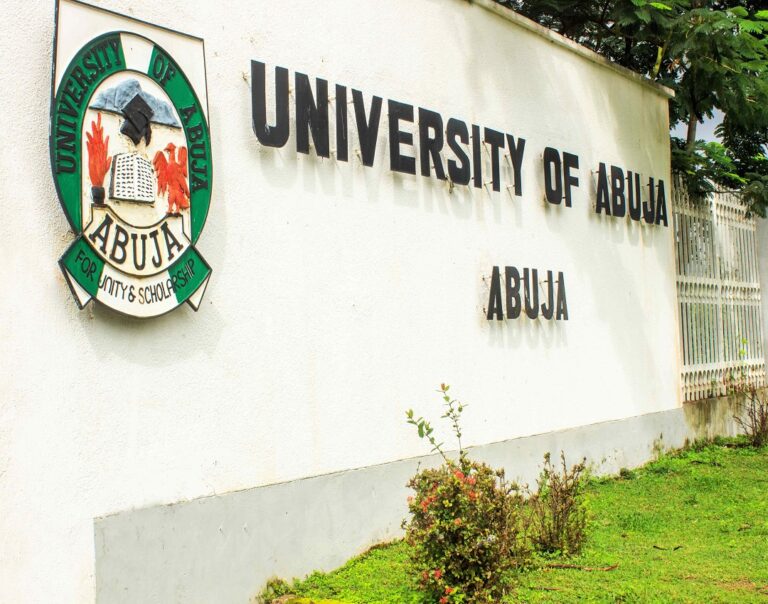
THE University of Abuja’s Alumni Association and Ex-students Leaders have rejected the Federal Government’s proposal to rename the institution after former Head of State, Yakubu Gowon.
This was disclosed in a statement signed and made available to journalists by the group’s convener and a former National Association of Nigerian Students (NANS) vice president (National Affairs), Habeeb Abdulkadir.
In the statement titled “Proposed Renaming of University of Abuja to Yakubu Gowon University – A Right Step in the Wrong Direction,”the association cited the potential destruction of the school’s legacy, significant social and financial costs, and logistical challenges as some of the reasons it rejected the renaming.
The group acknowledged the need to honour Gowon’s contributions to national unity, citing how he led the nation through the civil war and restored unity among the nation’s heterogeneous population, despite the devastations and human toll that accompanied the war.
However, it argued that renaming the university would negate its branding efforts, complicate administrative processes, and diminish its prestige.
Instead, the group suggested alternative ways to honour Gowon, which include renaming Eagle Square in Abuja after him or establishing a new institution or research centre in his name.
Besides, the body said the government could rename the proposed University of Science and Technology Abuja after the nonagenarian retired general.
The association also said it had petitioned President Bola Tinubu, leaders of the National Assembly, the minister of education, and the executive secretary of the National Universities Commission (NUC) to formally register its displeasure with the planned renaming.
It explained that “University of Abuja is indeed a national symbol, having reflected the institution’s geographical and national identity, which symbolises a connection to Abuja, the nation’s centre for unity, which represents the convergence of Nigeria’s diverse cultures, ethnicities, and histories.”
The alumni and former student leaders urged the government to focus on funding the institution’s infrastructure and improving its curriculum rather than renaming it. It argued that in addition to losing its prestige, a huge resources would be wasted in the renaming process, which would necessitate “costly rebranding efforts and adjustment to official documentation, signage, and affiliation, among many other things.”
It also cautioned that changing the school’s name would eroding the sense of pride and identity that its’ alumni, students, and staff had built.
“The move to rename the university raises questions about consultation and public involvement in national decisions affecting education. Stakeholders (including students, faculty, staff, and alumni) feel excluded in the decision process, which we perceive as a top-down imposition.
“Transparency and inclusive dialogue in such matters could have led to a more widely accepted change, or reasons would have been adduced not to go on with the renaming ab initio while minimising polarisation and resistance within academic and public circles. The reverse is completely the case here.”
The ICIR reported that the Federal Government renamed the University after Gowonon Monday, December 16.
The minister of information and national orientation, Mohammed Idris, announced the Tinubu-led government’s decision while discussing with State House correspondents after the council’s meeting at the Aso Rock Villa, Abuja.
Established in January 1988 under Decree No. 110 of 1992 (as amended), the University of Abuja, widely known as UniAbuja, functions as a dual-mode institution, providing both conventional and distance learning programmes.
Currently, the university comprises nine faculties, the College of Health Sciences, a School of Remedial Studies, a Centre for Distance Learning, an Institute of Education, and a School of Postgraduate Studies, among others.
Gowon, who served as Nigeria’s Head of State from 1966 to 1975, is widely remembered for introducing the National Youth Service Corps (NYSC) in 1973, a programme aimed at fostering national integration after the nearly three-year civil war he led.
THE inspector-general of police (IGP), Kayode Egbetokun, has promised justice to the family of 35-year-old Jimoh AbdulQodir, who reportedly died in police custody in Ilorin, Kwara State.
Egbedokun gave the assurance when he visited the deceased family on Sunday, December 22.
Jimoh was reportedly tortured to death in police custody on Saturday, December 21.
Police operatives arrested him on December 19 for allegedly owing a colleague N220,000 after his employer petitioned the police over the purported debt.
He died at midnight in custody.
An online medium reported on Saturday that the victim’s family told its reporter that the police claimed the suspect hanged himself while being detained at the SIB Unit of the police headquarters but the family believed the police might have tortured the deceased to death.
When The ICIR contacted the police public relations officer (PPRO) of the Kwara State Police Command, Toun Ejire-Adeyemi at about 1:30 pm on Saturday, she claimed not to be aware but promised to confirm and get back to the reporter.
“I am not aware of that incident, I will confirm. Let me confirm and get back to you,” she said.
Ejire-Adeyemi did not respond to a reminder sent to her phone line at about 5:20 pm.
Addressing the deceased family at the Balogun Fulani’s palace, Egbetokun urged the community, especially the youths, not to take laws into their hands.
He said he had directed a thorough investigation into the circumstances surrounding the death, assuring the matter would not be swept under the carpet.
“Justice would be served. I am very saddened to be here today on a condolence visit on the death of Jimoh, whose circumstances surrounding his death are very worrisome.
“Justice must be served. I have already directed investigation, I have given the necessary directive to the CP here. We will get to the root of this case,” he assured.
He urged the community not to rush to a conclusion but to wait for the findings of the investigative that would be made public.
“Let us not jump into conclusion. I have visited the command and I have directed a thorough investigation,” he pleaded.
Egbetokun pledged police support for the family of the deceased as the Balogun Fulani, youths, and the Ilorin Emirate descendants progressive union were said to have demanded justice for their son’s death.
The incident followed a similar allegation against the Kwara State Police Command, accused of involvement in the deaths of one Suleiman Olayinka, a 27-year-old man and ex-student of the Kwara State University.
Ejire-Adeyemi confirmed the student’s killing.
“The Kwara State Police Command is aware of this unfortunate incident which led to the sudden death of Suleiman Olayinka (M) 27 years.
“A complaint of cheating and criminal breach of trust was reported against the deceased. Police detectives were immediately detailed to investigate the case,” she confirmed at the time.
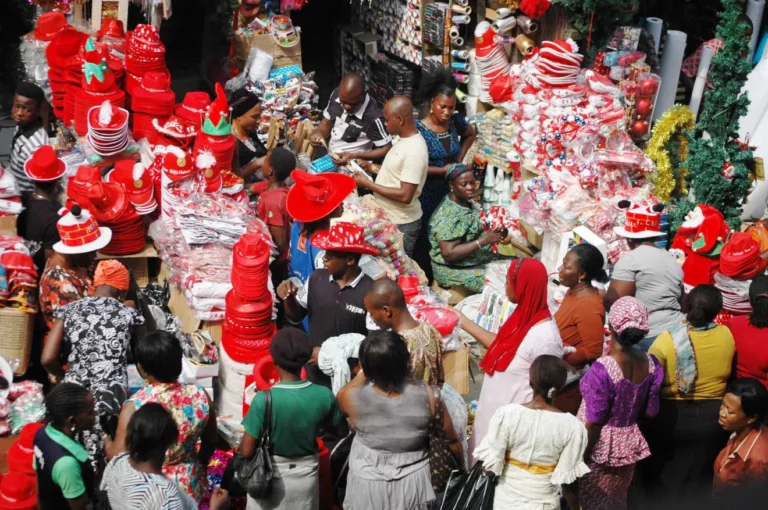
THE Federal Government (FG) has declared Wednesday, December 25, Thursday 26, 2024, and Wednesday, January 1, 2025, as public holidays to celebrate Christmas, Boxing Day, and New Year, respectively.
The permanent secretary of the Ministry of Interior, Magdalene Ajani, disclosed this in a statement on Monday, December 23.
Magdalene said the minister, Olubunmi Tunji-Ojo, made the declaration on behalf of the FG.
According to her, the minister sent warm greetings to all Nigerians and encouraged them to reflect on the values of love, peace, and unity during the festive season.
She emphasised the importance of the season to promote harmony and strengthen family and community bonds.
She said the minister urged Nigerians to prioritise national peace, unity, and progress to drive development.
The minister added that Christmas presents an opportunity for spiritual reflection and national renewal.
He urged Nigerians to demonstrate kindness and extend goodwill to one another, regardless of their differences, as they celebrate the birth of Jesus.
Tunji-Ojo assured citizens of the Federal Government’s continued commitment to ensuring peace, security, and prosperity across the nation.
Meanwhile, as residents of Nigeria’s capital, Abuja, and other parts of the country rev preparations for the Christmas and New Year celebrations, the Federal Capital Territory (FCT) Police Command has provided safety tips and emergency contacts for residents to boost security during the festivities.
In a statement by the command’s spokesperson, Josephine Adeh, on Thursday, December 19, the FCT Police assured residents of their dedication to ensuring the safety and protection of lives and property throughout the Yuletide season.
The command urged all residents to take measures to secure their homes and surroundings, particularly for those planning to embark on a journey and would be unavailable at their residences.
To improve safety and prevent crime, the FCT Police Command offered the following safety tips:
Light up your surroundings: Ensure your homes and surroundings are adequately lit. Well-lit environments deter criminal activities and improve visibility.
Maintain clear visibility: Remove visual obstructions such as overgrown grasses, bushes, or debris that may provide hiding spots for criminals.
Stay vigilant: Be alert and report any suspicious activities or unfamiliar persons loitering within your area of responsibility (AOR). Prompt reporting can prevent potential security threats.
Engage neighbours: If you plan to travel, inform your neighbours and ask them to keep an eye on your property. A watchful community can deter criminal activities and enhance security.
Lock up: Ensure all doors, windows, and gates are securely locked before leaving your home. Consider using additional security measures like alarms or surveillance cameras.
Avoid sharing travel plans: Be discreet about your travel plans on social media or with acquaintances to avoid alerting potential thieves.
Citizens were urged to contact the police immediately via these emergency lines to report crime situations and suspicious activities: 08061581938, 08032003913, and 07057337653.
The command promised to intensify prompt surveillance and strategic patrols throughout the festive season to provide a peaceful and secure environment for all.
It further called for residents’ collaboration to boost security in the city.
Recall that The ICIR reported that the inspector-general of police (IGP) Kayode Egbetokun, also ordered the deployment of police personnel to strategic locations nationwide to curb traffic congestion, highway robberies, and other criminal activities during the festive period.

![Disappearing voices [part 1]: Silent abductions of EndBadGovernance protesters in Abuja, Kano, Sokoto](https://www.icirnigeria.org/wp-content/uploads/2024/10/WhatsApp-Image-2024-10-21-at-05.45.57-2-768x734.jpeg "Disappearing voices [part 1]: Silent abductions of EndBadGovernance protesters in Abuja, Kano, Sokoto")