Home Blog Page 404

Abuja in darknesss as transmission line vandalised again – TCN

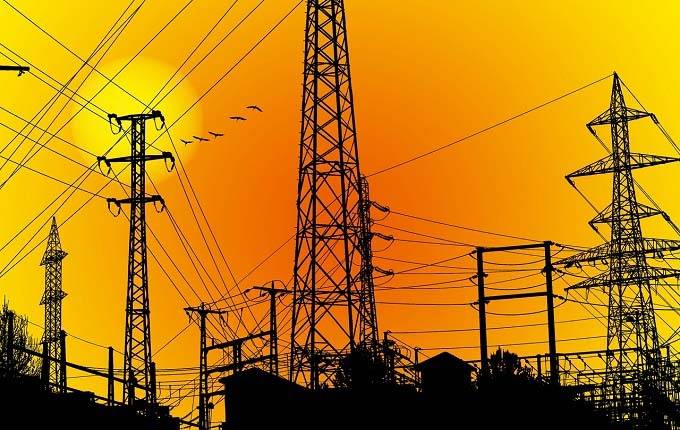
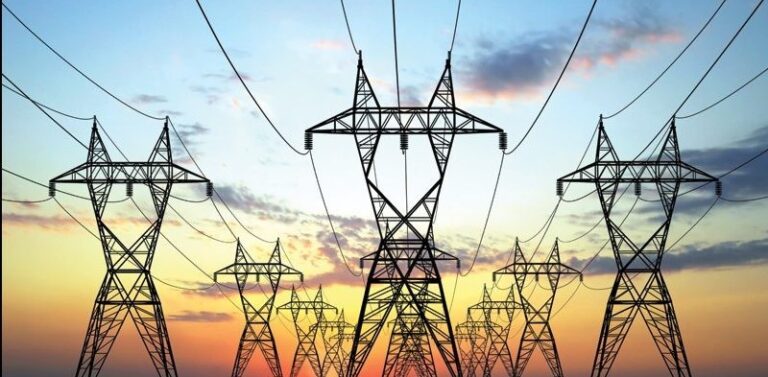
NIGERIA’s Federal Capital Territory (FCT)Abuja is currently in darkness as the Transmission Company of Nigeria (TCN) has announced that its 330kV Shiroro –Katampe transmission line was vandalised on Wednesday, December 18, 2024.

The vandalised transmission lines also supply lights to some parts of Nigeria’s northern region.

In a statement issued late  Thursday, December 19, by TCN’s general manager, Ndidi Mbah, the company said the incident occurred at approximately 11:43 pm, when the 330kV Shiroro – Katampe circuit lost supply on the grid.

She said a trial reclosure was attempted, but the line tripped again immediately.

“TCN lines patrol team was dispatched from the Abuja Regional office of TCN to investigate the cause of the fault.

“The team discovered that vandals had stolen part of the conductor between towers T216 and T218,” the company’s statement said.

The company further stated that the  TCN lines maintenance crew has since mobilised to the site and is working assiduously to replace the vandalised 330kV power conductor. Restoration of bulk power supply through the affected line is expected soon.

The transmission company also appealed to the general public to assist in identifying and reporting suspicious activities around power transmission infrastructure, to curb activities of vandals and apprehend the culprits.

The ICIR in November reported that   128 transmission towers were destroyed by vandals in 2024, raising concern over the recurrent epileptic power supply in the country.

The transmission company also said it has so  far spent about N8.8 billion to repair and put into adequate use the vandalised transmission towers within the year.

The ICIR also reported that  Shiroro-Kaduna transmission line, which supplies power to Northern Nigeria, was in October vandalised by insurgents and deploying engineers without security support was not feasible.

The transmission line is a critical infrastructure that supplies electricity to the Northern region.
Can ordinary Nigerians afford a balanced meal?

EATING healthy is essential for a thriving life, yet for many Nigerians, it feels increasingly out of reach.


Food inflation and economic challenges have left households prioritising calories over nutrition, often at the expense of their health.

As of June 2024, The ICIR reports that Nigeria’s food inflation rate was 40.87 per cent year-on-year, which is a 15.62 per cent increase from June 2023. The average annual rate of food inflation for the 12 months ending June 2024 was 35.35 per cent.

Families across the country grapple with the harsh reality of skyrocketing food prices, forcing them to question if eating a balanced diet is even possible.

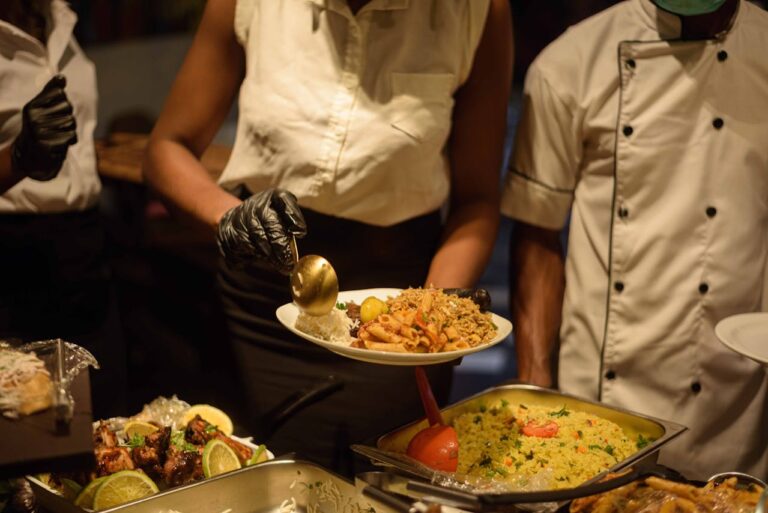
A balanced meal is more than just food on a plate. It’s a combination of macronutrients like carbohydrates, proteins, and fats, alongside essential vitamins and minerals. For Nigerians, meals like rice and beans with vegetables and beef, amala with ewedu and fish, or yam porridge with greens and eggs or chicken traditionally meet these criteria.

Yet, as food costs rise, cultural staples are being stripped of vital ingredients. What was once a vibrant and nutrient-packed plate of food is now reduced to its barest form ; mainly carbohydrates without proteins and vitamins or in simple terms, rice and stew without meat or egg.

The cost of eating healthy in Nigeria today

According to the National Bureau of Statistics (NBS), the national average Cost of Healthy Diet (CoHD) was N1,346 per adult per day in September 2024 which the statistics office say shows an increase of 7.3 per cent when compared to the amount recorded in the previous month (August 2024, was N1,255).

A market survey by The ICIR of food items such as a mudu of rice rose from 2000-2500 earlier in the year to  currently, 2500-3000, a mudu of beans from 1800-2500 to 2400-4000, palm oil from 1500-2000, groundnut oil from 2000-2500 to 2800-3200 and a crate of egg from 3500-5000 to 5200-8000.

Speaking with The ICIR, Ahmad Abdulwahab, a Lagos resident explained that the high cost of healthy food has made it difficult to maintain a balanced diet and proper nutrition, forcing him to rely on fast food instead.

“It has actually made it hard to get healthy food, they are literally expensive, I had to let go of eating balanced diet and proper nutrition. I just eat fast food” he said.

Cheaper alternatives to healthy eating

Hassanah Abubakar from Niger State shared that her household has shifted from eating chicken to more affordable options like dried fish due to the fluctuating economy.

“Before now in my house we used to eat chicken, whenever we are having lunch or dinner but now if we are eating, we eat it with dried fish.

Emphasising that while nutrition is no longer a priority, for her and her family, meals such as tuwon shinkafa with beans soup and dried fish or jollof rice with eggs still provide a form of balanced diet.

Abubakar’s reality is that of most Nigerians as most families substitute or opt for cheaper forms of protein or eat without protein.

Protein is important for many reasons, including building muscle, repairing cells, and helping maintain a healthy weight. A balanced diet should include 10–35 per cent of calories from protein.

Foods that have high contents of protein include lean meats, poultry, seafood, dairy, legumes, nuts and seeds.

Speaking to another respondent from Kano, Zainab Aliyu, she stated that the current economy has negatively impacted her ability to choose healthy food, as high prices force her to prioritise affordability over nutrition.

“The current economy did not influence my choice of healthy food in a positive way because if I should consider the economy, I would just eat what I can afford not what is healthier that I need to eat because of the prices of the food.

The healthier food options are becoming more expensive and it is getting harder for people to afford it” Aliyu highlighted.

She noted that healthier food options are becoming increasingly expensive, making it difficult for many, including herself, to afford them, unlike cheaper alternatives that simply serve to sustain life.

A rich Nigerian balanced diet might include jollof rice prepared with basmati rice, served with grilled chicken, steamed mixed vegetables, fresh fruit salad, and a glass of freshly squeezed juice, while a cheaper alternative could use local rice for the jollof, fried eggs or tofu instead of chicken, sautéed pumpkin leaves as vegetables, a banana for dessert, and zobo drink in place of juice.


READ ALSO:


The obstacles to eating healthy are systemic, the weakening naira, increase in fuel prices, are some of these issues while  Nigeria’s agricultural infrastructure remains underdeveloped, with poor transportation networks increasing the cost of moving fresh produce from farms to cities and insecurity remains a constant threat to farmers in the rural area.

In today’s Nigeria, eating healthily is a daily struggle for millions, but it’s not an impossible feat.

By embracing local foods, adopting cost-saving techniques, and advocating for systemic agricultural reforms, individuals and families can navigate these challenging times.

Court slams N8.5bn damages on Kano government over demolition

0

A KANO State High Court has awarded N8.5 billion in damages against the state government over the demolition spree it embarked upon when it assumed office in 2023.

The judgement was in favour of Lamash Properties Limited, owner of one of the buildings ordered for demolition by the state Governor Abba Kabir Yusuf.

The court ordered the state government, the governor, and the state attorney-general to pay Lamash Properties N10 million as the cost of filing a lawsuit against them.

This comes after the governor ordered the demolition of Lamash Properties’ buildings in June 2023, which the company claimed was illegal.

Lamash Properties had obtained the property legally through an agreement with the state government under former governor Abdullahi Ganduje’s administration.

The company, through its counsel, Nureini Jimoh, a senior advocate, sought a declaration that the agreement was valid and enforceable when Yusuf decided to demolish the site.

The judge, Sunusi Ma’aji, granted the reliefs sought by the litigant and agreed that the company had an enforceable contract.

He faulted the demolition and ordered the defendants to pay the present monetary value of the buildings pulled down to the plaintiff.

The ICIR reported in September 2023 that a Federal High Court in Kano ruled that the state government pay N30 billion as compensation to the Incorporated Trustees of Massallacin Eid Shop Owners following the demolition of their buildings.

The judge, Samuel Amobeda, ruled that the demolition was illegal.

The compensation includes N10 billion in damages for violation of the applicants’ rights to life, dignity, and ownership of property, and N20 billion for highhandedness, impunity, and disregard for the rule of law exhibited by the government during the process.

The state government embarked on a demolition spree under Yusuf’s leadership few days after his inauguration, pulling down several shops, offices, and other buildings worth billions of naira.

The governor said the buildings were on government land sold to private individuals by his predecessor, Ganduje. He also said the exercise fulfilled his campaign promises, adding that residents were satisfied with his actions.

However, many residents of the state believe that the exercise was politically motivated and was a vendetta against the previous government.


Wike revokes Buhari, Onnoghen’s land titles, 760 others over non-payment of fee

0

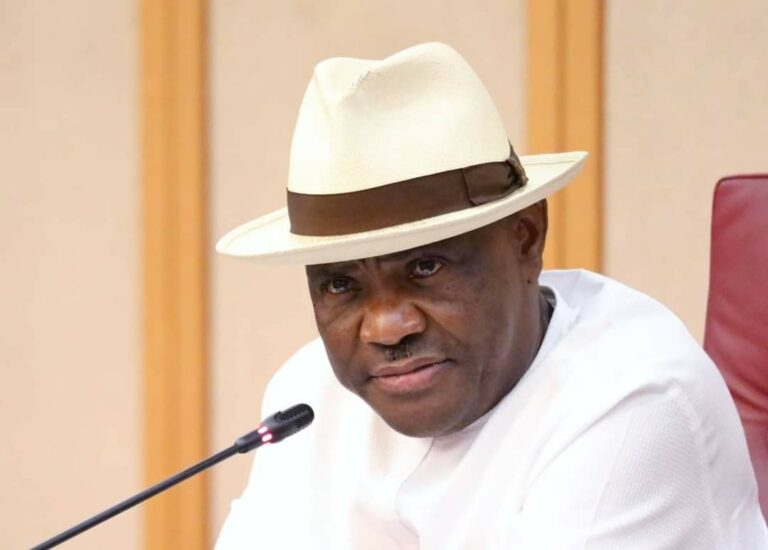
THE Federal Capital Territory (FCT) minister, Nyesom Wike, has revoked ownership of 762 plots of land in Abuja’s upscale Maitama district due to non-payment of statutory fees.

A public notice issued by the Federal Capital Territory Administration (FCTA) on Thursday revealed that the affected individuals and entities failed to settle their certificate of occupancy (C-of-O) bills. 

Notable figures affected by the revocation include former President Muhammadu Buhari and former Chief Justice of Nigeria (CJN) Walter Onnoghen.

The FCTA also warned an additional 614 plot owners, comprising individuals and companies, to pay their outstanding bills within two weeks or risk losing their rights of occupancy (R-of-O).

“The Federal Capital Territory Administration wishes to inform the allottee(s)/title holder(s) of plots of land in Maitama 1 who have failed to make payment for their certificate of occupancy (C-of-O) bills that their right of occupancy to the land/property has been withdrawn,” the FCTA notice stated.

The action was taken under Section 28 of the Land Use Act of 1978, which grants the minister power to revoke occupancy rights over unpaid obligations or breaches of allocation terms.

Names on the revocation list include the Muhammadu Buhari Trust Foundation; former CJN Walter Onnoghen; Speaker of the House of Representatives, Abbas Tajudeen; Secretary to the Government of the Federation (SGF), George Akume; his wife Regina; and Kaduna State Governor, Uba Sani.

Others are Senate Chief Whip, Tahir Monguno; former Deputy Speaker of the House of Representatives, Chibudom Nwuche; former Senate Leader, Teslim Folarin; former House of Representatives member, Nnenna Ukeje; and former senators Andy Uba and Smart Adeyemi.

This move came as part of Wike’s broader strategy to ensure that statutory obligations are met by property owners in Abuja, the FCTA said. 

In November 2023, Wike reduced the cost of obtaining a C-of-O to N3.5 million following public backlash over the initial fee. 

He had earlier pegged the cost of obtaining the document at N5 million, based on the recommendations of a task force set up to recover land use contravention fees in the FCT.

However, the minister’s decision did not go down well with many of the city’s residents, who believed the new fee would stifle their desire to own land in the city.

He emphasised that this reduction applied only to new issuances, while enforcement of ground rent payment continued.

The minister also disclosed that payment of ground rent would be enforced and threatened land owners who failed to comply with the revocation of titles.

“Over the years, nobody has been able to enforce the payment of ground rent. I came on board, and I said, okay, it can’t be business as usual. You have property; you are given a C of O to back up your property. In that C of O, you are told to be paying annual ground rent. For the past 15 years, you didn’t pay. Some people, for the past 20 years, they have never paid.

The minister stated that the lack of enforcement in previous years led to significant revenue losses, with some property owners neglecting payments for up to 20 years. 

JAMB, others scored high, Supreme Court gets zero as ICPC releases integrity ranking

0

THE Joint Admissions and Matriculation Board (JAMB), Nigerian Railway Corporation (NRC), and Nigerian Bulk Electricity Trading Plc (NBET) have emerged as the top performers in the Independent Corrupt Practices and Other Related Offences Commission (ICPC) 2024 Ethics and Integrity Compliance Scorecard (EICS), with all of them scoring above 80 per cent, respectively.

However, several prominent institutions, including the Supreme Court, Nigeria Press Council (NPC), and Federal Civil Service Commission (FCSC), obtained zero points in the integrity test conducted by the anti-graft agency.

Other institutions that fared poorly in the test include the Federal University of Agriculture Umudike, Federal College of Forestry Mechanisation, Obafemi Awolowo University (OAU) Ile-Ife, Federal Polytechnic Ede, Osun State, and the University of Ibadan, Oyo State. All of which received zero points.

This poor showing raises serious concerns about the state of corruption and accountability in these institutions and highlights the need for urgent reform and improvement, the ICPC said.

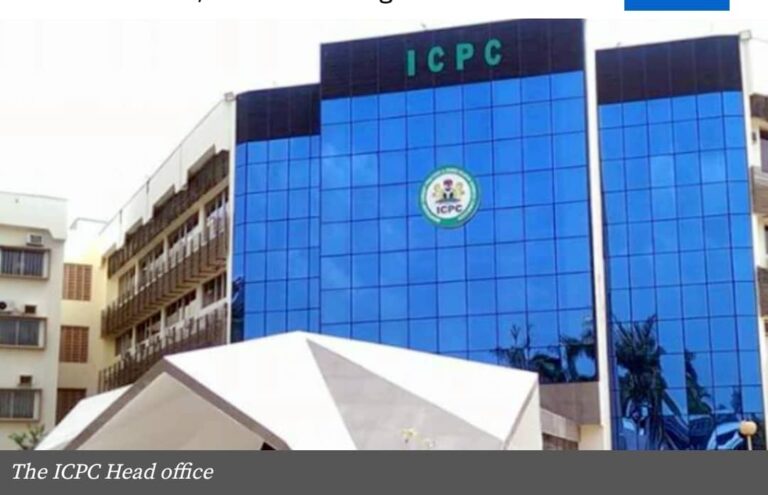
At the report unveiling on Thursday, December 19, at the ICPC headquarters in Abuja, the agency, through its spokesperson, Demola Bakare, said the report was a result of a nationwide assessment of 330 government institutions.

According to him, the commission through the evaluation examined the ethical standards, corruption prevention measures, and governance practices of the organisations.

He added that the key areas included leadership and management, financial management, and policies related to ethics, education, and whistleblower protection.

“The EICS serves as a preventive tool used to assess and enhance the compliance of ministries, departments, and agencies (MDAs) with ethical standards, policies, and anti-corruption measures.

“The objectives of the initiative are to identify organisational gaps and provide actionable insights; advise the government on policy development for oversight; promote self-evaluation and remedial actions within MDAs; and establish an objective rating of MDAs to foster improvement,” Bakare stated.

The report shows that none of the 330 government agencies evaluated achieved perfect compliance. Instead, the agencies fell into various compliance categories: 29.55 per cent showed significant compliance, 51.62 per cent had moderate compliance, 15.91 per cent demonstrated weak compliance, and 2.92 per cent failed to comply.

The ICPC identified common weaknesses among the agencies, including a lack of policies to protect whistleblowers, an absence of strategic plans and ineffective inventory management.

Others are failure to conduct regular internal audits and delayed or missing financial and audit reports.

The commission said these gaps undermined the MDA’s ability to operate efficiently and transparently.

The ICIR reported on Wednesday, December 18, that the ICPC secured 16 convictions and tracked 1,500 projects valued at N610 billion in one year.

The ICPC chairman, Musa Adamu Aliyu, a senior advocate, disclosed this in Abuja on Tuesday, December 17, during his first anniversary in office.

He said that in the past year, the commission processed 851 petitions, fully investigated 95 cases, and filed 72 cases in court, securing 16 convictions.

He added that the agency recovered over N29.7 billion in cash and made significant progress in tracking government projects nationwide.

Besides, Aliyu stated that the commission recovered N10.986 billion in value-added tax (VAT) and remitted it to the Federal Inland Revenue Service (FIRS).

The commission also finalised the forfeiture of assets valued at N2.5 billion and blocked the diversion of public funds amounting to N5.8 billion.


NERC transfers electricity oversight in Lagos to state regulatory commission

0

NIGERIAN Electricity Regulatory Commission (NERC), has announced the transfer of regulatory oversight of the electricity market in Lagos State to the newly established Lagos State Electricity Regulatory Commission (LASERC).

This was disclosed in a statement released by the NERC on X on Thursday, December 19.

This transfer follows a comprehensive process that aligns with the requirements outlined in the Electricity Act 2023, which allows states to assume regulatory control over their intrastate electricity markets, provided they notify the NERC and meet the necessary conditions.

As prescribed by the Electricity Act (2023), the regulatory oversight of Lagos State’s electricity market is now under the jurisdiction of LASERC.

The  Act mandates any state that intends to establish and regulate intrastate electricity markets to deliver a formal notification of its processes and requests NERC to transfer regulatory authority over electricity operations in the state to the state Regulator.

It also retains NERC’s role as the central regulator overseeing inter-state and international electricity operations, including generation, transmission, supply, trading, and system management.

While NERC continues to regulate national activities, LASERC will be the designated authority for Lagos’ intrastate electricity market.

Recall that the Lagos State Electricity Law 2024 was enacted and signed into law by Governor Babajide Sanwo-Olu on December 3, 2024.

Among other benefits, the NERC’s order aims to enhance local governance over energy supply and encourage private sector investment in Lagos, Nigeria’s commercial capital.

Sanwo-Olu emphasised that this regulatory autonomy was crucial to improving power supply reliability and attracting investments.

According to the NERC order, all transfers of responsibility, including the incorporation of subsidiaries and licensing processes, must be completed by June 4, 2025.

This timeline ensures that the transition to LASERC’s oversight is achieved in a structured and timely manner, setting the stage for the state’s full control over its electricity market.

The transfer of regulatory authority represents a significant step toward empowering Lagos State to better manage its electricity supply and distribution systems.

With LASERC assuming control, it is expected that the state will have more flexibility to tailor energy policies to local needs, improve service delivery, foster growth in the electricity sector, and attract investments which could lessen pressure on the national grid.

The ICIR reported that the state governments could attract more investments into Nigeria’s power sector and improve access to electricity in their respective states with the 2023 Electricity Act that President Bola Ahmed Tinubu signed into law on Thursday, June 8.

The National Assembly had, in July 2022, passed the bill leading to the Electricity Act 2023 to repeal the Electricity and Power Sector Reform Act of 2005.

The Electricity Act consolidates all legislation dealing with the electricity supply industry to provide an ideal institutional framework to guide the post-privatisation phase and encourage private sector investments in the sector.

The primary aim of the Act, as stated in its first section, is to create a comprehensive legal and institutional framework to guide the Nigerian electricity supply industry (NESI).

States like Enugu, Ekiti, and Oyo have also set up their regulatory bodies, marking a significant shift towards decentralised grid-power management which has been experiencing collapse.


FCT Police offer safety tips during Yuletide

0

AS residents of Nigeria’s capital, Abuja, and other parts of the country rev preparations for the Christmas and New Year celebrations, the Federal Capital Territory (FCT) Police Command has provided safety tips and emergency contacts for residents to boost security during the festivities. 

In a statement by the command’s spokesperson, Josephine Adeh, on Thursday, December 19, the FCT Police assured residents of their dedication to ensuring safety and protection of lives and property throughout the Yuletide season.

The command urged all residents to take measures to secure their homes and surroundings, particularly for those planning to embark on a journey and would be unavailable at their residence.

Recall that The ICIR reported that the inspector-general of police (IGP) Kayode Egbetokun, had ordered the deployment of police personnel to strategic locations nationwide to curb traffic congestion, highway robberies, and other criminal activities during the festive period.

To improve safety and prevent crime, the FCT Police Command offered the following safety tips:

  •  Light up your surroundings: Ensure your homes and surroundings are adequately lit. Well-lit environments deter criminal activities and improve visibility.
  • Maintain clear visibility: Remove visual obstructions such as overgrown grasses, bushes, or debris that may provide hiding spots for criminals.
  • Stay vigilant: Be alert and report any suspicious activities or unfamiliar persons loitering within your area of responsibility (AOR). Prompt reporting can prevent potential security threats.
  • Engage neighbors: If you plan to travel, inform your neighbours and ask them to keep an eye on your property. A watchful community can deter criminal activities and enhance security.
  • Lock up: Ensure all doors, windows, and gates are securely locked before leaving your home. Consider using additional security measures like alarms or surveillance cameras.
  • Avoid sharing travel plans: Be discreet about your travel plans on social media or with acquaintances to avoid alerting potential thieves

Citizens are urged to contact the police immediately via these emergency lines to report crime situations and  suspicious activities: 08061581938, 08032003913, and 07057337653.

The command promised to intensify prompt surveillance and strategic patrols throughout the festive season to provide a peaceful and secure environment for all.

The command further called for residents collaboration to boost security in the city.

EFCC probes suspended Edo council chairmen

0

THE Economic and Financial Crimes Commission (EFCC) has launched an investigation into the activities of the suspended chairpersons of the 18 local government areas in Edo State.

In a letter dated December 17, 2024, signed by the director of investigation, Abdulkarim Chukkol, the EFCC invited the suspended council leaders for questioning. 

The letter, addressed to the secretary to the Edo State Government, requested comprehensive documentation regarding financial operations in the councils.

The commission summoned the chairpersons of Akoko-Edo, Egor, Esan Central, Esan North East, Esan South East, and Esan West to appear today, Thursday, December 19, while others, including those from Igueben, Ikpoba Okha, Orhionmwon, and Ovia South West, are to report on Friday, December 20.

Documents requested include certified true copies of records related to staff strength and payroll, details of accounts used for salary payments, and bank statements of these accounts from January 1, 2024, to date. 

The EFCC stated that the request aligned with its (Establishment) Act of 2004.

The investigation came in the wake of the suspension of the chairpersons and their deputies by the Edo State House of Assembly on December 17. 

The ICIR reported on December 17, that the Assembly suspended the chairmen and vice for two months.

The Assembly had accused the officials of insubordination and misconduct, particularly for failing to submit financial statements as directed by Governor Monday Okpebholo.

The decision followed a petition submitted by the governor, accusing the council heads of refusing to submit their financial records to the state government.

The governor described their actions as insubordination and gross misconduct, urging lawmakers to address the matter.

During deliberations, Isibor Adeh, representing Esan North East 1, moved the motion for suspension, which was seconded by Donald Okogbe, representing Akoko-Edo 2.

The House Speaker, Blessing Agbebaku, directed the clerk, Yahaya Omogbai, to do a head count of the members who supported or opposed the suspension of the council chairmen and their deputies.

Out of the 23 lawmakers present, 14 voted in favour of the suspension, six opposed it, and three abstained. 

FG’s N199bn electricity subsidy failed to stop grid collapse, epileptic power

INTERVENTIONIST payments in the power sector by the Federal Government as electricity subsidies increased to N199.64 billion in December 2024, according to data sourced from the Nigerian Electricity Regulatory Commission (NERC).

These payments are made amid worries over incidences of recurrent grid collapse and epileptic power supply across the country by most electricity consumers.

According to the newly released report by the regulator, ‘December 2024 Multi-Year Tariff Order,’ electricity subsidies rose by 2.76 per cent to N199.64 billion this month from N194.26 billion in November.

NERC explained that the rise in the exchange rate, which it pegged at N1,687.45 to the dollar, the increase in inflation to 33.9 per cent, and changes in available generation capacity necessitated the minor review.

The report showed that the Federal Government retained electricity tariffs across all customer categories.

While Band-A customers continued to pay N209/kWh,(kilowatts) tariffs for customers in Bands B to E were allowed to remain frozen at the rate payable from December 2022.

With the policy, the Federal Government is expected to pay N29.10 billion (up from N27.86 in November) as subsidies for consumers under Abuja DisCo, while consumers under Ikeja Electric would enjoy electricity subsidies of N26.68 billion from the government.

On wholesale gas-to-power prices, NERC stated: “The review maintains the benchmark gas-to-power price of $2.42/MMBTU based on the established benchmark price of gas-to-power by the Nigerian Midstream and Downstream Petroleum Regulatory Authority, NMDPRA”.

The Commission maintained that the “approved tariffs shall remain in force subject to monthly adjustment of pass-through indices including inflation rate, NGN/dollar exchange rate and gas-to-power prices”.

The development comes following the removal of petrol subsidies by President Bola Tinubu in May 2023.

The removal of petrol subsidies has since shot up petrol prices at the pump from around N189 per litre to above N1300 per litre.

With regard to epileptical power supply, the the ICIR reported lights out in most Nigerian universities despite being classified under the Band A supply channel which ought to get 20 hours daily power.

The report noted that hike in electricity tariffs have brought a new threat to the Nigerian tertiary education system; a sector almost totally crippled by poor funding, brain drains and insecurity.

The new tariffs, which in some cases are up to a 300 per cent increase to what institutions used to pay, now cast another dark pall on the nation’s campuses raising further concern over improved power supply despite electricity subsidies and tariff hike.

The ICIR, in April, reported that the  Federal Government has said despite the new electricity tariff hike, approximately 85 per cent of Nigerians still benefit from electricity subsidy.


Travel fellowships available for UN Ocean Conference 2025

WITH support from the Bloomberg Ocean Fund, Internews’ Earth Journalism Network (EJN) is accepting candidates for a fellowship to cover the United Nations Ocean Conference (UNOC) from June 9 to 13, 2025 in Nice, France.

The fellowship is part of EJN’s UN Ocean Project.

The programme will select five to eight fellows. Prior to the start of the UNOC, fellows will receive informational resources and technical support to help prepare for reporting at the conference.

While in Nice, fellows will participate in an orientation session with ocean experts, attend daily briefings led by EJN’s media trainers and interview high-level officials.
Professional journalists can apply for this programme.

Candidates must provide a letter of support from an editor, producer or supervisor who can confirm that their news reports will be published or broadcast in an established media outlet.

Fellows will receive airfare, accommodation, meals, travel medical insurance and transportation. Fellows will also receive a per diem to cover daily expenses.

The deadline for the submission of application is January 15, 2025.

Interested applicants can apply here.